

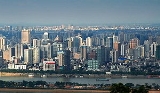
Changsha

Encyclopedia
Changsha is the capital city
of Hunan
, in south-central China
, located on the lower reaches of Xiang river
, a branch of the Yangtze River
. Its municipality covers an area of 11,819 sq. kilometers and, according to the 2010 Census
, a population of 7,044,118 inhabitants.
Changsha was important from the time of the Qin dynasty
(221–207 BC). In AD 750–1100 Changsha was an important commercial city, and its population increased greatly. Under the Qing dynasty
, from 1664, it was the capital of Hunan province, and it was a major rice
market. It was besieged during the Taiping Rebellion
but never fell. Changsha was the site of Mao Zedong
's conversion to communism
. It was the scene of major battles in the Sino-Japanese War of 1937–45
and was briefly occupied by the Japan
ese. Rebuilt since 1949, the city is now a major port and a commercial and industrial center.
(市 shi), and 3 counties (县 xian) :
. In 1935–36 some Chu graves excavated nearby produced important evidences of Chu culture, for instance, the Chu Silk Manuscript
. The city's most ancient name was Qingyang
.
Under the Qin dynasty
(221–206 BC) it became a staging post for Qin expeditions into Guangdong
province. By 202 BC it was already a fortified city. During the Han Dynasty
it was also the capital of Changsha kingdom.
From Han times (206 BC–AD 220) it was named Linxiang County and was the seat of the Changsha commandery. The county was renamed Changsha in 589, when it became the administrative seat of Tan prefecture. It lost some importance at this period, however, because traffic from Guangdong was mostly diverted up the Gan River valley in Jiangxi
.
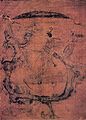 The celebrated Mawangdui Tombs of the Han Dynasty were constructed between 186 and 165 BC. The earliest tomb (no. 2), when excavated in the 1970s, had preserved the corpse of Lady Xin Zhui
in a surprisingly good condition. Also found in the tomb were the earliest versions of Dao De Jing
(道德经), the main text of Taoism
, among many other historical documents.
During the Three Kingdoms
period, Changsha was a much-fought-over territory. During the Sui Dynasty
, Changsha was a county and under the Tang
it was known as Tanzhou.
After the fall of the Tang dynasty
(618–907), it became the capital of the independent Chu state and later fell to the Later Tang dynasty
(923–937). Between 750 and 1100, as Changsha became an important commercial city, the population of the area increased tenfold.
Under the Ming
(1368–1644) and Qing
(1644–1911/12) dynasties it was made a superior prefecture and from 1664 onward was the capital of Hunan and prospered as one of China's chief rice markets. During the Taiping Rebellion
the city was besieged by the rebels (1854) but never fell; it then became the principal base for the suppression of the rebellion. Changsha was opened to foreign trade in 1904. Further development followed the opening of the railway to Hankou in Hubei
province in 1918, which was extended to Guangzhou
in Guangdong
province in 1936. Although Changsha's population grew, the city remained primarily commercial in character and before 1937 had little industry, apart from some small cotton
-textile
, glass, and nonferrous-metal plants and handicraft
enterprises.
Yuelu Academy
(岳麓书院) was founded in AD 976 (Song Dynasty
), destroyed by war in 1127, and rebuilt in 1165 (Southern Song Dynasty). The celebrated philosopher Zhu Xi
(朱熹) taught at the Academy in 1165. It was destroyed by the Mongols
but was restored in the late 15th century (Ming Dynasty
). In 1903 it became Hunan High School. The modern day Hunan University
is a descendant of the academy. The architecture of some of the buildings was restored from 1981–1986, presumably according to the Song design.
In 1852 the Taiping
forces laid a siege on Changsha, through 3 months, the Taiping gave up offensive and toward Wuhan
.( Battle of Changsha (1852) )
The 1903 Treaty of Shanghai
between the Qing Dynasty
and Japan
opened the city to foreign trade. Consequently, factories, churches and schools were built. A college was started by Yale University
bachelors, and later became a medical center named Xiangya and a secondary school named the Yali School
.
Mao Zedong
, founder of the People's Republic of China
began his political career in Changsha. He was a student at the Hunan
Number 1 Teachers' Training School from 1913 to 1918. He later returned as a teacher and principal from 1920 to 1922. The school was destroyed during the Chinese Civil War
but has since been restored. The Former Office of the Hunan
Communist Party
Central Committee where Mao Zedong once lived is now a museum that includes Mao's living quarters, photographs and other historical items from the 1920s.
During the Second Sino-Japanese War
(1937–45), the strategic location of Changsha made it the focus of four campaigns by the Japan
ese to capture it from the hands of the Chinese Nationalists
which resulted in the battles of 1st Changsha
, 2nd Changsha
, 3rd Changsha
, and 4th Changsha
. The city was able to repulse the first three attacks thanks to Bai Chongxi
's leadership, but ultimately fell for a short time into Japanese hands in 1944 for another year until they were defeated in a counterattack and forced to surrender. The city itself was virtually destroyed by fire in 1938–39.
The city later became the territory of the People's Republic of China
when it was formed in 1949 after the Kuomintang
were driven to Taiwan
.
. Its terrain is high in the west and low in the east. There are many mountainous areas in the west and in the north. The Xiangjiang River flows south to northwest; 296 m high Mt. Yuelushan is in the west; and Liuyanghe River (Liuyang River) and Laodaohe River (Laodao River) east.
(Köppen
Cfa), with annual average temperature being 17 °C (62.6 °F), with a mean of 4.6 °C (40.3 °F) in January and 29 °C (84.2 °F) in July. Average annual precipitation is 1330 millimetres (52 in), and the yearly frost-free period is 275 days.
The four seasons are distinct. The summers are long and hot, with heavy rainfall, and autumn is comfortable with abundant sunlight. Winter is comparatively dry (but somewhat damp and overcast) and rather brief, but cold snaps occur with temperatures occasionally dropping below freezing.
Changsha neighboring areas include: Jiangxi
province, cities and counties of Hunan, such as Tonggu County
, Wanzai County
, Yichun
City, Pingxiang
City of Jiangxi province. Pingjiang County
, Miluo city, Xiangyin County
of Yueyang
; Heshan District
, Taojiang County
, Anhua County
of Yiyang
; Lianyuan
city of Loudi
; Zhuzhou County
, Liling
City of Zhuzhou
; Xiangtan County
, Xiangxiang
city of Xiangtan
.
-Xiangtan
Express Way connect the Changsha metro area nationally. There are three main bus terminals in Changsha: South Station, East Station and West Station, dispatching long- and short-haul trips to cities within and outside Hunan Province.
is a regional hub for China Southern Airlines
, which serves major cities in China, including Hong Kong
. Other major airlines also provide daily service between Changsha and other domestic and international destinations.The airport provides direct flights to 45 major cities such as HongKong, Bangkok, Seoul, Pusan, Osaka and etc. In 2008 the airport handled 8,454,800 people.
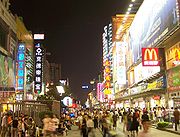 Rebuilt since 1949, its population nearly tripled between the late 1940s and the early 1980s. The city is now a major port, handling rice
, cotton
, timber
, and livestock
, and is also a collection and distribution point on the railway from Hankou to Guangzhou
. It is a centre of rice milling
and also has oil
-extraction, tea
- and tobacco
-curing, and meat-processing plants. Its textile industry produces cotton yarn and fabrics and engages in dyeing
and printing
. Agricultural chemicals and fertilizers, farm implements, and pump
ing machinery are also produced.
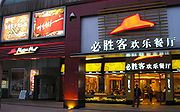 Changsha has a large thermal generating station linked by a power grid with the nearby industrial centres of Zhuzhou
and Xiangtan
; the three cities were designated in the 1970s as the nucleus of a major industrial complex. In the 1960s there was some development of heavy industry
. The manufacture of machinery, especially machine tools and precision tools, became important, and Changsha became a center of China's aluminum industry. The city also has cement, rubber, ceramic, and papermaking plants and is a centre for many types of traditional handicrafts, producing hsiang embroidery, leather goods, umbrellas, and buttons. Coal
is mined in the vicinity.
In 2008, Changsha's nominal GDP was ¥300.1 billion (US$43 billion), a year-on-year growth of 15.1% from the previous year. Its per capita GDP was ¥45,765 (US$6,589).
Changsha is one of China's top 20 "economically advanced" cities. Its GDP has grown at an average of 14% per year from 2001–2005, compared with the national average of 9%. During the year 2005, the service sector represented roughly half of Changsha's GDP (at 49%), up 112% from 2001 figures, and it is expected to continue driving the city's economic growth. Leading to a disposable income for urban residents of 12,343 RMB annually. The manufacturing and construction sectors have grown relatively steadily, growing 116% during 2001-2005. The primary sector, including agriculture, forestry, animal husbandry, and fishery, has grown slightly over this same period. In addition, the consumer market has grown dramatically with income levels. With a minimum salary level of 600 RMB per month in comparison to Beijing 640 RMB or Shanghai at 750 RMB per month. Urban residents in 2005 had average income of about USD 1,500, 15% higher than national average, and up 10% from 2001 figures.
The city has also attracted a tremendous amount of foreign investment. In 2005, for example, nearly USD 1 billion worth of foreign direct investment
(FDI) poured into the city, mainly in hi-tech, manufacturing, food production, and services. This figure is up 40% from 2001. 59% of the total FDI has come from Hong Kong
, South Korea
, Singapore
, and Japan
; 28% has come from the Americas
and 9% from Europe
. By the end of 2008 more than 500 foreign companies had made over USD 10 million worth of investments in Changsha. Retail sales for Changsha in 2006 were 74 RMB per Billion Per Annum.
Along with economic growth, environmental pollution in Changsha has become a serious problem, with rapidly increasing numbers of private cars, construction fields everywhere, and numerous industrial facilities on the outskirts of the city (2007).
 In recent years, Changsha has become an important creative center for TV and entertainment arts, with its many TV stations producing some of the most popular programs in China, including Super Girl, a Chinese female version of the UK Pop Idol
or American Idol
that is the most watched program ever to air on Chinese TV. These programs have also brought a new entertainment industry, including singing bars, dance clubs, theater shows, as well as related businesses like hair salons, fashion stores, and hot spicy snacks at night(esp. in the summer time).
Changsha is home to the Lei Feng
Memorial (Lei Feng Jinianguan) and statue.
In May 2008, the BBC broadcast, as part of its Storyville documentary series, the four-part The Biggest Chinese Restaurant in the World, explores the inner workings of the 5000-seat capacity West Lake Restaurant
(Xihu Lou Jiujia) located in Changsha.
.
National
Public
Note: Institutions without full-time bachelor programs are not listed.
with the following cities and regions:
Gumi, South Korea Kagoshima, Japan Kimberley, Northern Cape
, South Africa Latenapula, Sri Lanka Mons
, Belgium Saint Paul, Minnesota
, United States
.
Capital City
Capital City was a television show produced by Euston Films which focused on the lives of investment bankers in London living and working on the corporate trading floor for the fictional international bank Shane-Longman....
of Hunan
Hunan
' is a province of South-Central China, located to the south of the middle reaches of the Yangtze River and south of Lake Dongting...
, in south-central China
South Central China
South Central China is a region of the People's Republic of China defined by governmental bureaus that includes the provinces of Guangdong, Hainan, Henan, Hubei, and Hunan, and the Guangxi Zhuang Autonomous Region, however excluding the 2 special administrative regions : Hong Kong and...
, located on the lower reaches of Xiang river
Xiang River
The Xiang River , in older transliterations as the Siang River or Hsiang River, is a river in southern China...
, a branch of the Yangtze River
Yangtze River
The Yangtze, Yangzi or Cháng Jiāng is the longest river in Asia, and the third-longest in the world. It flows for from the glaciers on the Tibetan Plateau in Qinghai eastward across southwest, central and eastern China before emptying into the East China Sea at Shanghai. It is also one of the...
. Its municipality covers an area of 11,819 sq. kilometers and, according to the 2010 Census
Sixth National Population Census of the People's Republic of China
The Sixth National Population Census of the People's Republic of China, also referred to as the 2010 Chinese Census, was conducted by the National Bureau of Statistics of the People's Republic of China with a zero hour of November 1, 2010....
, a population of 7,044,118 inhabitants.
Changsha was important from the time of the Qin dynasty
Qin Dynasty
The Qin Dynasty was the first imperial dynasty of China, lasting from 221 to 207 BC. The Qin state derived its name from its heartland of Qin, in modern-day Shaanxi. The strength of the Qin state was greatly increased by the legalist reforms of Shang Yang in the 4th century BC, during the Warring...
(221–207 BC). In AD 750–1100 Changsha was an important commercial city, and its population increased greatly. Under the Qing dynasty
Qing Dynasty
The Qing Dynasty was the last dynasty of China, ruling from 1644 to 1912 with a brief, abortive restoration in 1917. It was preceded by the Ming Dynasty and followed by the Republic of China....
, from 1664, it was the capital of Hunan province, and it was a major rice
Rice
Rice is the seed of the monocot plants Oryza sativa or Oryza glaberrima . As a cereal grain, it is the most important staple food for a large part of the world's human population, especially in East Asia, Southeast Asia, South Asia, the Middle East, and the West Indies...
market. It was besieged during the Taiping Rebellion
Taiping Rebellion
The Taiping Rebellion was a widespread civil war in southern China from 1850 to 1864, led by heterodox Christian convert Hong Xiuquan, who, having received visions, maintained that he was the younger brother of Jesus Christ, against the ruling Manchu-led Qing Dynasty...
but never fell. Changsha was the site of Mao Zedong
Mao Zedong
Mao Zedong, also transliterated as Mao Tse-tung , and commonly referred to as Chairman Mao , was a Chinese Communist revolutionary, guerrilla warfare strategist, Marxist political philosopher, and leader of the Chinese Revolution...
's conversion to communism
Communism
Communism is a social, political and economic ideology that aims at the establishment of a classless, moneyless, revolutionary and stateless socialist society structured upon common ownership of the means of production...
. It was the scene of major battles in the Sino-Japanese War of 1937–45
Second Sino-Japanese War
The Second Sino-Japanese War was a military conflict fought primarily between the Republic of China and the Empire of Japan. From 1937 to 1941, China fought Japan with some economic help from Germany , the Soviet Union and the United States...
and was briefly occupied by the Japan
Japan
Japan is an island nation in East Asia. Located in the Pacific Ocean, it lies to the east of the Sea of Japan, China, North Korea, South Korea and Russia, stretching from the Sea of Okhotsk in the north to the East China Sea and Taiwan in the south...
ese. Rebuilt since 1949, the city is now a major port and a commercial and industrial center.
Administration
The city of Changsha has direct jurisdiction over 5 districts (区 qu), 1 county-level citiesCounty-level city
A county-level city is a county-level administrative division of mainland China. County-level cities are usually governed by prefecture-level divisions, but a few are governed directly by province-level divisions....
(市 shi), and 3 counties (县 xian) :
 |
Subdivision | Pop. | Area | Dens. | |||
|---|---|---|---|---|---|---|---|
| English English language English is a West Germanic language that arose in the Anglo-Saxon kingdoms of England and spread into what was to become south-east Scotland under the influence of the Anglian medieval kingdom of Northumbria... |
Simplified | Traditional | Pinyin Pinyin Pinyin is the official system to transcribe Chinese characters into the Roman alphabet in China, Malaysia, Singapore and Taiwan. It is also often used to teach Mandarin Chinese and spell Chinese names in foreign publications and used as an input method to enter Chinese characters into... |
2010 | km² | /km² | |
| Changsha City Proper | |||||||
| ■ Furong District Furong District Furong District is a district of Hunan, China. It is under the administration of Changsha city.... |
芙蓉区 | 芙蓉區 | Fúróng Qū | 523,730 | 42 | 12,470 | |
| ■ Tianxin District Tianxin District Tianxin District is a district of Hunan, China. It is under the administration of Changsha city.... |
天心区 | 天心區 | Tiānxīn Qū | 475,663 | 74 | 6,428 | |
| ■ Yuelu District Yuelu District Yuelu is one of five urban districts of Changsha, the capital of Hunan province, China. It is located on the west bank of Xiang River , and named after the Yuelu Mountain, one of National Historical Interest and Scenic Beauties of China.... |
岳麓区 | 嶽麓區 | Yuèlù Qū | 801,861 | 552 | 1,453 | |
| ■ Kaifu District Kaifu District, Changsha Kaifu District is a district of Hunan, China. It is under the administration of Changsha city.... |
开福区 | 開福區 | Kāifú Qū | 567,373 | 187 | 3,034 | |
| ■ Yuhua District Yuhua District, Changsha Yuhua District is a district of Changsha, the capital of Hunan province, China.... |
雨花区 | 雨花區 | Yǔhuā Qū | 725,353 | 114 | 6,363 | |
| Changsha Sub-urban and Rural | |||||||
| ■ Liuyang City Liuyang Liuyang is a county-level city in Changsha, the capital of Hunan province in China. Liuyang is well known for its fireworks industry. It has an area of 5,008 square kilometres and a population of 1,380,000 as of 2003.... |
浏阳市 | 瀏陽市 | Liúyáng Shì | 1,278,928 | 4,999 | 256 | |
| ■ Changsha County Changsha County Changsha County is a part of Changsha city, the capital of Hunan province in China. As of 2006 it had a population of 750,500.-Administrative divisions:... |
长沙县 | 長沙縣 | Chángshā Xiàn | 979,665 | 1,997 | 491 | |
| ■ Wangcheng County | 望城县 | 望城縣 | Wàngchéng Xiàn | 523,489 | 970 | 540 | |
| ■ Ningxiang County Ningxiang -Archeology:In 2004, a Chinese team excavated ruins from the Western Zhou period at Tanheli. The findings were of a city site that included two large yellow earth artificial building sites and two even larger sites that may have been palace dwellings. Remnants of moats were found both inside and... |
宁乡县 | 寧鄉縣 | Níngxiāng Xiàn | 1,168,056 | 2,906 | 402 | |
History
During the 1st millennium BC, it was the centre of the southern part of the Yangtze River valley state of ChuChu (state)
The State of Chu was a Zhou Dynasty vassal state in present-day central and southern China during the Spring and Autumn period and Warring States Period . Its ruling house had the surname Nai , and clan name Yan , later evolved to surname Mi , and clan name Xiong...
. In 1935–36 some Chu graves excavated nearby produced important evidences of Chu culture, for instance, the Chu Silk Manuscript
Chu silk manuscript
The Chu Silk Manuscript , also known as the Chu Silk Manuscript from Zidanku in Changsha , is a Chinese astrological and astronomical text. It was discovered in a Warring States period tomb from the southern Chinese state of Chu.-History:...
. The city's most ancient name was Qingyang
Qingyang
Qingyang is a prefecture-level city in China's Gansu province.-Geography and climate:Qingyang is in eastern Gansu province and is sometimes referred to in Chinese as "Longdong" . Ningxia province is to the north west and Shaanxi is to the east. It is in the lower middle part of the Yellow River on...
.
Under the Qin dynasty
Qin Dynasty
The Qin Dynasty was the first imperial dynasty of China, lasting from 221 to 207 BC. The Qin state derived its name from its heartland of Qin, in modern-day Shaanxi. The strength of the Qin state was greatly increased by the legalist reforms of Shang Yang in the 4th century BC, during the Warring...
(221–206 BC) it became a staging post for Qin expeditions into Guangdong
Guangdong
Guangdong is a province on the South China Sea coast of the People's Republic of China. The province was previously often written with the alternative English name Kwangtung Province...
province. By 202 BC it was already a fortified city. During the Han Dynasty
Han Dynasty
The Han Dynasty was the second imperial dynasty of China, preceded by the Qin Dynasty and succeeded by the Three Kingdoms . It was founded by the rebel leader Liu Bang, known posthumously as Emperor Gaozu of Han. It was briefly interrupted by the Xin Dynasty of the former regent Wang Mang...
it was also the capital of Changsha kingdom.
From Han times (206 BC–AD 220) it was named Linxiang County and was the seat of the Changsha commandery. The county was renamed Changsha in 589, when it became the administrative seat of Tan prefecture. It lost some importance at this period, however, because traffic from Guangdong was mostly diverted up the Gan River valley in Jiangxi
Jiangxi
' is a southern province in the People's Republic of China. Spanning from the banks of the Yangtze River in the north into hillier areas in the south, it shares a border with Anhui to the north, Zhejiang to the northeast, Fujian to the east, Guangdong to the south, Hunan to the west, and Hubei to...
.
Xin Zhui
Xin Zhui , also known as the lady of Dai, is the world's best-preserved mummy. She was the wife of the ruler of the Han imperial fiefdom of Dai in China.Xin Zhui was born in 100 BCE....
in a surprisingly good condition. Also found in the tomb were the earliest versions of Dao De Jing
Tao Te Ching
The Tao Te Ching, Dao De Jing, or Daodejing , also simply referred to as the Laozi, whose authorship has been attributed to Laozi, is a Chinese classic text...
(道德经), the main text of Taoism
Taoism
Taoism refers to a philosophical or religious tradition in which the basic concept is to establish harmony with the Tao , which is the mechanism of everything that exists...
, among many other historical documents.
During the Three Kingdoms
Three Kingdoms
The Three Kingdoms period was a period in Chinese history, part of an era of disunity called the "Six Dynasties" following immediately the loss of de facto power of the Han Dynasty rulers. In a strict academic sense it refers to the period between the foundation of the state of Wei in 220 and the...
period, Changsha was a much-fought-over territory. During the Sui Dynasty
Sui Dynasty
The Sui Dynasty was a powerful, but short-lived Imperial Chinese dynasty. Preceded by the Southern and Northern Dynasties, it ended nearly four centuries of division between rival regimes. It was followed by the Tang Dynasty....
, Changsha was a county and under the Tang
Tang Dynasty
The Tang Dynasty was an imperial dynasty of China preceded by the Sui Dynasty and followed by the Five Dynasties and Ten Kingdoms Period. It was founded by the Li family, who seized power during the decline and collapse of the Sui Empire...
it was known as Tanzhou.
After the fall of the Tang dynasty
Tang Dynasty
The Tang Dynasty was an imperial dynasty of China preceded by the Sui Dynasty and followed by the Five Dynasties and Ten Kingdoms Period. It was founded by the Li family, who seized power during the decline and collapse of the Sui Empire...
(618–907), it became the capital of the independent Chu state and later fell to the Later Tang dynasty
Tang Dynasty
The Tang Dynasty was an imperial dynasty of China preceded by the Sui Dynasty and followed by the Five Dynasties and Ten Kingdoms Period. It was founded by the Li family, who seized power during the decline and collapse of the Sui Empire...
(923–937). Between 750 and 1100, as Changsha became an important commercial city, the population of the area increased tenfold.
Under the Ming
Ming Dynasty
The Ming Dynasty, also Empire of the Great Ming, was the ruling dynasty of China from 1368 to 1644, following the collapse of the Mongol-led Yuan Dynasty. The Ming, "one of the greatest eras of orderly government and social stability in human history", was the last dynasty in China ruled by ethnic...
(1368–1644) and Qing
Qing Dynasty
The Qing Dynasty was the last dynasty of China, ruling from 1644 to 1912 with a brief, abortive restoration in 1917. It was preceded by the Ming Dynasty and followed by the Republic of China....
(1644–1911/12) dynasties it was made a superior prefecture and from 1664 onward was the capital of Hunan and prospered as one of China's chief rice markets. During the Taiping Rebellion
Taiping Rebellion
The Taiping Rebellion was a widespread civil war in southern China from 1850 to 1864, led by heterodox Christian convert Hong Xiuquan, who, having received visions, maintained that he was the younger brother of Jesus Christ, against the ruling Manchu-led Qing Dynasty...
the city was besieged by the rebels (1854) but never fell; it then became the principal base for the suppression of the rebellion. Changsha was opened to foreign trade in 1904. Further development followed the opening of the railway to Hankou in Hubei
Hubei
' Hupeh) is a province in Central China. The name of the province means "north of the lake", referring to its position north of Lake Dongting...
province in 1918, which was extended to Guangzhou
Guangzhou
Guangzhou , known historically as Canton or Kwangchow, is the capital and largest city of the Guangdong province in the People's Republic of China. Located in southern China on the Pearl River, about north-northwest of Hong Kong, Guangzhou is a key national transportation hub and trading port...
in Guangdong
Guangdong
Guangdong is a province on the South China Sea coast of the People's Republic of China. The province was previously often written with the alternative English name Kwangtung Province...
province in 1936. Although Changsha's population grew, the city remained primarily commercial in character and before 1937 had little industry, apart from some small cotton
Cotton
Cotton is a soft, fluffy staple fiber that grows in a boll, or protective capsule, around the seeds of cotton plants of the genus Gossypium. The fiber is almost pure cellulose. The botanical purpose of cotton fiber is to aid in seed dispersal....
-textile
Textile
A textile or cloth is a flexible woven material consisting of a network of natural or artificial fibres often referred to as thread or yarn. Yarn is produced by spinning raw fibres of wool, flax, cotton, or other material to produce long strands...
, glass, and nonferrous-metal plants and handicraft
Handicraft
Handicraft, more precisely expressed as artisanic handicraft, sometimes also called artisanry, is a type of work where useful and decorative devices are made completely by hand or by using only simple tools. It is a traditional main sector of craft. Usually the term is applied to traditional means...
enterprises.
Yuelu Academy
Yuelu Academy
The Yuelu Academy is located on the east side of Yuelu Mountain in Changsha, the capital of Hunan province, China, on the west bank of the Xiang River....
(岳麓书院) was founded in AD 976 (Song Dynasty
Song Dynasty
The Song Dynasty was a ruling dynasty in China between 960 and 1279; it succeeded the Five Dynasties and Ten Kingdoms Period, and was followed by the Yuan Dynasty. It was the first government in world history to issue banknotes or paper money, and the first Chinese government to establish a...
), destroyed by war in 1127, and rebuilt in 1165 (Southern Song Dynasty). The celebrated philosopher Zhu Xi
Zhu Xi
Zhū Xī or Chu Hsi was a Song Dynasty Confucian scholar who became the leading figure of the School of Principle and the most influential rationalist Neo-Confucian in China...
(朱熹) taught at the Academy in 1165. It was destroyed by the Mongols
Mongols
Mongols ) are a Central-East Asian ethnic group that lives mainly in the countries of Mongolia, China, and Russia. In China, ethnic Mongols can be found mainly in the central north region of China such as Inner Mongolia...
but was restored in the late 15th century (Ming Dynasty
Ming Dynasty
The Ming Dynasty, also Empire of the Great Ming, was the ruling dynasty of China from 1368 to 1644, following the collapse of the Mongol-led Yuan Dynasty. The Ming, "one of the greatest eras of orderly government and social stability in human history", was the last dynasty in China ruled by ethnic...
). In 1903 it became Hunan High School. The modern day Hunan University
Hunan University
Hunan University , located in Changsha, Hunan province, is one of the oldest and most important national universities in China.- History :Hunan University traces its history back to the Yuelu Shuyuan founded in the Song Dynasty, originally in 976, over 1000 years ago...
is a descendant of the academy. The architecture of some of the buildings was restored from 1981–1986, presumably according to the Song design.
In 1852 the Taiping
Taiping Heavenly Kingdom
The Taiping Heavenly Kingdom was an oppositional state in China from 1851 to 1864, established by Hong Xiuquan, the leader of the Taiping Rebellion...
forces laid a siege on Changsha, through 3 months, the Taiping gave up offensive and toward Wuhan
Wuhan
Wuhan is the capital of Hubei province, People's Republic of China, and is the most populous city in Central China. It lies at the east of the Jianghan Plain, and the intersection of the middle reaches of the Yangtze and Han rivers...
.( Battle of Changsha (1852) )
The 1903 Treaty of Shanghai
Shanghai
Shanghai is the largest city by population in China and the largest city proper in the world. It is one of the four province-level municipalities in the People's Republic of China, with a total population of over 23 million as of 2010...
between the Qing Dynasty
Qing Dynasty
The Qing Dynasty was the last dynasty of China, ruling from 1644 to 1912 with a brief, abortive restoration in 1917. It was preceded by the Ming Dynasty and followed by the Republic of China....
and Japan
Japan
Japan is an island nation in East Asia. Located in the Pacific Ocean, it lies to the east of the Sea of Japan, China, North Korea, South Korea and Russia, stretching from the Sea of Okhotsk in the north to the East China Sea and Taiwan in the south...
opened the city to foreign trade. Consequently, factories, churches and schools were built. A college was started by Yale University
Yale University
Yale University is a private, Ivy League university located in New Haven, Connecticut, United States. Founded in 1701 in the Colony of Connecticut, the university is the third-oldest institution of higher education in the United States...
bachelors, and later became a medical center named Xiangya and a secondary school named the Yali School
Yali School
Yali School , also simply known as Yali is a secondary school located in Changsha, Hunan Province in the People's Republic of China. It is a first-tier key school in Hunan's public school system and is one of the most selective schools in the nation...
.
Mao Zedong
Mao Zedong
Mao Zedong, also transliterated as Mao Tse-tung , and commonly referred to as Chairman Mao , was a Chinese Communist revolutionary, guerrilla warfare strategist, Marxist political philosopher, and leader of the Chinese Revolution...
, founder of the People's Republic of China
People's Republic of China
China , officially the People's Republic of China , is the most populous country in the world, with over 1.3 billion citizens. Located in East Asia, the country covers approximately 9.6 million square kilometres...
began his political career in Changsha. He was a student at the Hunan
Hunan
' is a province of South-Central China, located to the south of the middle reaches of the Yangtze River and south of Lake Dongting...
Number 1 Teachers' Training School from 1913 to 1918. He later returned as a teacher and principal from 1920 to 1922. The school was destroyed during the Chinese Civil War
Chinese Civil War
The Chinese Civil War was a civil war fought between the Kuomintang , the governing party of the Republic of China, and the Communist Party of China , for the control of China which eventually led to China's division into two Chinas, Republic of China and People's Republic of...
but has since been restored. The Former Office of the Hunan
Hunan
' is a province of South-Central China, located to the south of the middle reaches of the Yangtze River and south of Lake Dongting...
Communist Party
Communist party
A political party described as a Communist party includes those that advocate the application of the social principles of communism through a communist form of government...
Central Committee where Mao Zedong once lived is now a museum that includes Mao's living quarters, photographs and other historical items from the 1920s.
During the Second Sino-Japanese War
Second Sino-Japanese War
The Second Sino-Japanese War was a military conflict fought primarily between the Republic of China and the Empire of Japan. From 1937 to 1941, China fought Japan with some economic help from Germany , the Soviet Union and the United States...
(1937–45), the strategic location of Changsha made it the focus of four campaigns by the Japan
Japan
Japan is an island nation in East Asia. Located in the Pacific Ocean, it lies to the east of the Sea of Japan, China, North Korea, South Korea and Russia, stretching from the Sea of Okhotsk in the north to the East China Sea and Taiwan in the south...
ese to capture it from the hands of the Chinese Nationalists
National Revolutionary Army
The National Revolutionary Army , pre-1928 sometimes shortened to 革命軍 or Revolutionary Army and between 1928-1947 as 國軍 or National Army was the Military Arm of the Kuomintang from 1925 until 1947, as well as the national army of the Republic of China during the KMT's period of party rule...
which resulted in the battles of 1st Changsha
Battle of Changsha (1939)
Battle of Changsha was the first attempt by Japan to take the city of Changsha, China, during the second Sino-Japanese War. It was the first major battle of the war to fall within the timeframe of what's widely considered World War II.- Background and strategy :The war had already reached a...
, 2nd Changsha
Battle of Changsha (1941)
The Battle of Changsha was Japan's second attempt at taking the city of Changsha, China, the capital of Hunan Province, as part of the Second Sino-Japanese War.-Overview:...
, 3rd Changsha
Battle of Changsha (1942)
The third Battle of Changsha was the first major offensive in China by Imperial Japanese forces following the Japanese attack on the Western Allies....
, and 4th Changsha
Battle of Changsha (1944)
The Battle of Changsha , was an invasion of the Chinese province of Hunan by Japanese troops near the end of the Second Sino-Japanese War...
. The city was able to repulse the first three attacks thanks to Bai Chongxi
Bai Chongxi
Bai Chongxi , , also spelled Pai Chung-hsi, was a Chinese general in the National Revolutionary Army of the Republic of China and a prominent Chinese Nationalist Muslim leader. He was of Hui ethnicity and of the Muslim faith...
's leadership, but ultimately fell for a short time into Japanese hands in 1944 for another year until they were defeated in a counterattack and forced to surrender. The city itself was virtually destroyed by fire in 1938–39.
The city later became the territory of the People's Republic of China
People's Republic of China
China , officially the People's Republic of China , is the most populous country in the world, with over 1.3 billion citizens. Located in East Asia, the country covers approximately 9.6 million square kilometres...
when it was formed in 1949 after the Kuomintang
Kuomintang
The Kuomintang of China , sometimes romanized as Guomindang via the Pinyin transcription system or GMD for short, and translated as the Chinese Nationalist Party is a founding and ruling political party of the Republic of China . Its guiding ideology is the Three Principles of the People, espoused...
were driven to Taiwan
Taiwan
Taiwan , also known, especially in the past, as Formosa , is the largest island of the same-named island group of East Asia in the western Pacific Ocean and located off the southeastern coast of mainland China. The island forms over 99% of the current territory of the Republic of China following...
.
Geography
Changsha is located between 111° 53'–114° 5' E longitude and 27° 51'–28° 40' N latitude, situated in east central HunanHunan
' is a province of South-Central China, located to the south of the middle reaches of the Yangtze River and south of Lake Dongting...
. Its terrain is high in the west and low in the east. There are many mountainous areas in the west and in the north. The Xiangjiang River flows south to northwest; 296 m high Mt. Yuelushan is in the west; and Liuyanghe River (Liuyang River) and Laodaohe River (Laodao River) east.
Climate
Changsha experiences a humid subtropical climateHumid subtropical climate
A humid subtropical climate is a climate zone characterized by hot, humid summers and mild to cool winters...
(Köppen
Köppen climate classification
The Köppen climate classification is one of the most widely used climate classification systems. It was first published by Crimea German climatologist Wladimir Köppen in 1884, with several later modifications by Köppen himself, notably in 1918 and 1936...
Cfa), with annual average temperature being 17 °C (62.6 °F), with a mean of 4.6 °C (40.3 °F) in January and 29 °C (84.2 °F) in July. Average annual precipitation is 1330 millimetres (52 in), and the yearly frost-free period is 275 days.
The four seasons are distinct. The summers are long and hot, with heavy rainfall, and autumn is comfortable with abundant sunlight. Winter is comparatively dry (but somewhat damp and overcast) and rather brief, but cold snaps occur with temperatures occasionally dropping below freezing.
Changsha neighboring areas include: Jiangxi
Jiangxi
' is a southern province in the People's Republic of China. Spanning from the banks of the Yangtze River in the north into hillier areas in the south, it shares a border with Anhui to the north, Zhejiang to the northeast, Fujian to the east, Guangdong to the south, Hunan to the west, and Hubei to...
province, cities and counties of Hunan, such as Tonggu County
Tonggu County
Tonggu County is a county of Jiangxi province, People's Republic of China. It is under the jurisdiction of the prefecture-level city of Yichun.- External links : -...
, Wanzai County
Wanzai County
Wanzai County is a county of Yichun in the Chinese province of Jiangxi. The name Wanzai literally means "10,000 loads" and is most likely related to its past importance as a center of trade. It is located along the Long He or Dragon River, a tributary of the main river of the province, the Gan River...
, Yichun
Yichun, Jiangxi
Yichun is a mountainous prefecture-level city in the Chinese province of Jiangxi. Yichun literally means "pleasant spring". It is located in the northwest of the province along a river surrouneded by mountains. Its area is 18,669 km²; 50% forested, 35% mountainous. It has a total population...
City, Pingxiang
Pingxiang, Jiangxi
Pingxiang is a medium-sized prefecture-level city located in western Jiangxi province, China.-Geography and climate:Pingxiang is located in the remote mountainous region of the border between Jiangxi and Hunan. It is approximately 100 miles from Changsha, the capital of Hunan, and about 200 from...
City of Jiangxi province. Pingjiang County
Pingjiang County
Pingjiang is a county in the municipal region of Yueyang, Hunan. It fronts on the Yangzijiang River and contains a good deal of the Lake Dongting shoreline.-Administration:...
, Miluo city, Xiangyin County
Xiangyin County
Xiangyin County is a county of Hunan, China. It is under the administration of Yueyang city.-References:*...
of Yueyang
Yueyang
Yueyang is a prefecture-level city at the northeastern corner of Hunan province, South Central China, on the southern shores of Dongting Lake.The Yueyang metropolitan area occupies 14,896 km². and the city proper occupies 304 km²...
; Heshan District
Heshan District, Yiyang
Heshan District, Yiyang is a district of Hunan, China. It is under the administration of Yiyang city.-References:*...
, Taojiang County
Taojiang County
Taojiang County is a county of Hunan, China. It is under the administration of Yiyang city.-References:*...
, Anhua County
Anhua County
Anhua County is a county of Hunan, China. It is under the administration of Yiyang city.-References:*...
of Yiyang
Yiyang
Yiyang is a prefecture-level city at the Zi River in Hunan province, China. According to the 2010 Census, Yiyang has a population of 4,313,084 inhabitants residing in an area of 12,144 km². It can be said that the population of the city hasn't changed since the last census in 2000, when the data...
; Lianyuan
Lianyuan
Lianyuan is a county-level city in Hunan province, China, ascribed to the prefecture-level city of Loudi. According to the 2010 Census, Lianyuan has a population of 995,712 inhabitants.- Subdivisions :...
city of Loudi
Loudi
Loudi is a prefecture-level city located in central Hunan province, China. It is situated about 110km south west of the provincial capital of Changsha and is considered a small to medium size city within the province...
; Zhuzhou County
Zhuzhou County
Zhuzhou County is a county of Hunan, China. It is under the administration of Zhuzhou city.-References:*...
, Liling
Liling
Liling is a county-level city in the eastern part of Hunan province of the People's Republic of China. Liling is about 5 miles from Jiangxi province and it is south of Hunan's capital, Changsha. Liling has an area of 2,157km2 and a population of about 1,020,000....
City of Zhuzhou
Zhuzhou
Zhuzhou , formerly Jianning, is a city in Hunan Province, China, southeast of Changsha beside the Xiangjiang River. It is part of the "ChangZhuTan Golden Triangle"...
; Xiangtan County
Xiangtan County
Xiangtan County is a county of Hunan, China. It is under the administration of Xiangtan city.-References:*...
, Xiangxiang
Xiangxiang
Xiangxiang is a county-level city in Xiangtan, Hunan Province.It has an area of 2011 square kilometers and a population of 900,000.It is the home of late Qing general Zeng Guofan. The late leader of China, Mao Zedong attended high school here....
city of Xiangtan
Xiangtan
Xiangtan is a city in China's Hunan Province that is located on the lower reaches of Xiang river. The hometowns of several founding leaders of the Chinese Communist Party, including Mao Zedong, Liu Shaoqi, and Peng Dehuai are in the Xiangtan Municipal District, as well as the hometowns of Qing...
.
Transportation
Changsha is well connected by roads, river, rail, and air transportation modes, and is a regional hub for industrial, tourist, and service sectors.Public Transport
The city's public transportation system consists of an extensive bus network with over a hundred lines as well as taxis.Subway
Changsha Metro is planning a 6 lines network. The first two lines under construction are planned to open on 2015. Line 1 runs north to south and Line 2 runs west to eastRoads
National Highways 107 and 319, as well as Changsha-ZhuzhouZhuzhou
Zhuzhou , formerly Jianning, is a city in Hunan Province, China, southeast of Changsha beside the Xiangjiang River. It is part of the "ChangZhuTan Golden Triangle"...
-Xiangtan
Xiangtan
Xiangtan is a city in China's Hunan Province that is located on the lower reaches of Xiang river. The hometowns of several founding leaders of the Chinese Communist Party, including Mao Zedong, Liu Shaoqi, and Peng Dehuai are in the Xiangtan Municipal District, as well as the hometowns of Qing...
Express Way connect the Changsha metro area nationally. There are three main bus terminals in Changsha: South Station, East Station and West Station, dispatching long- and short-haul trips to cities within and outside Hunan Province.
River
Changsha is surrounded by major rivers, including the Xiangjiang, the Liuyanghe, and the Laodaohe. Ships transport mainly goods from Xianing port located in North Changsha domesticly and internationally.Rail
Changsha Railway Station is located at city center and provides express and regular services to most cities in China, new passenger only high speed railway station under construction in Yuhua district, with two main high speed rail way line across in next ten years (Beijing -> Hong Kong, Shanghai -> Changsha).Air
Changsha Huanghua International AirportChangsha Huanghua International Airport
Changsha Huanghua International Airport is the airport serving Changsha, Hunan province, People's Republic of China, as well as nearby cities such as Zhuzhou and Xiangtan. Located about of the city centee in the town of Huanghua in Changsha County, the airport has two terminal buildings and is...
is a regional hub for China Southern Airlines
China Southern Airlines
China Southern Airlines is an airline headquartered in Baiyun District, Guangzhou, Guangdong Province, People's Republic of China. It is the world's sixth-largest airline measured by passengers carried, and Asia's largest airline in terms of both fleet size and passengers carried...
, which serves major cities in China, including Hong Kong
Hong Kong
Hong Kong is one of two Special Administrative Regions of the People's Republic of China , the other being Macau. A city-state situated on China's south coast and enclosed by the Pearl River Delta and South China Sea, it is renowned for its expansive skyline and deep natural harbour...
. Other major airlines also provide daily service between Changsha and other domestic and international destinations.The airport provides direct flights to 45 major cities such as HongKong, Bangkok, Seoul, Pusan, Osaka and etc. In 2008 the airport handled 8,454,800 people.
Economy
Rice
Rice is the seed of the monocot plants Oryza sativa or Oryza glaberrima . As a cereal grain, it is the most important staple food for a large part of the world's human population, especially in East Asia, Southeast Asia, South Asia, the Middle East, and the West Indies...
, cotton
Cotton
Cotton is a soft, fluffy staple fiber that grows in a boll, or protective capsule, around the seeds of cotton plants of the genus Gossypium. The fiber is almost pure cellulose. The botanical purpose of cotton fiber is to aid in seed dispersal....
, timber
Timber
Timber may refer to:* Timber, a term common in the United Kingdom and Australia for wood materials * Timber, Oregon, an unincorporated community in the U.S...
, and livestock
Livestock
Livestock refers to one or more domesticated animals raised in an agricultural setting to produce commodities such as food, fiber and labor. The term "livestock" as used in this article does not include poultry or farmed fish; however the inclusion of these, especially poultry, within the meaning...
, and is also a collection and distribution point on the railway from Hankou to Guangzhou
Guangzhou
Guangzhou , known historically as Canton or Kwangchow, is the capital and largest city of the Guangdong province in the People's Republic of China. Located in southern China on the Pearl River, about north-northwest of Hong Kong, Guangzhou is a key national transportation hub and trading port...
. It is a centre of rice milling
Gristmill
The terms gristmill or grist mill can refer either to a building in which grain is ground into flour, or to the grinding mechanism itself.- Early history :...
and also has oil
Oil
An oil is any substance that is liquid at ambient temperatures and does not mix with water but may mix with other oils and organic solvents. This general definition includes vegetable oils, volatile essential oils, petrochemical oils, and synthetic oils....
-extraction, tea
Tea
Tea is an aromatic beverage prepared by adding cured leaves of the Camellia sinensis plant to hot water. The term also refers to the plant itself. After water, tea is the most widely consumed beverage in the world...
- and tobacco
Tobacco
Tobacco is an agricultural product processed from the leaves of plants in the genus Nicotiana. It can be consumed, used as a pesticide and, in the form of nicotine tartrate, used in some medicines...
-curing, and meat-processing plants. Its textile industry produces cotton yarn and fabrics and engages in dyeing
Dyeing
Dyeing is the process of adding color to textile products like fibers, yarns, and fabrics. Dyeing is normally done in a special solution containing dyes and particular chemical material. After dyeing, dye molecules have uncut Chemical bond with fiber molecules. The temperature and time controlling...
and printing
Printing
Printing is a process for reproducing text and image, typically with ink on paper using a printing press. It is often carried out as a large-scale industrial process, and is an essential part of publishing and transaction printing....
. Agricultural chemicals and fertilizers, farm implements, and pump
Pump
A pump is a device used to move fluids, such as liquids, gases or slurries.A pump displaces a volume by physical or mechanical action. Pumps fall into three major groups: direct lift, displacement, and gravity pumps...
ing machinery are also produced.
Zhuzhou
Zhuzhou , formerly Jianning, is a city in Hunan Province, China, southeast of Changsha beside the Xiangjiang River. It is part of the "ChangZhuTan Golden Triangle"...
and Xiangtan
Xiangtan
Xiangtan is a city in China's Hunan Province that is located on the lower reaches of Xiang river. The hometowns of several founding leaders of the Chinese Communist Party, including Mao Zedong, Liu Shaoqi, and Peng Dehuai are in the Xiangtan Municipal District, as well as the hometowns of Qing...
; the three cities were designated in the 1970s as the nucleus of a major industrial complex. In the 1960s there was some development of heavy industry
Heavy industry
Heavy industry does not have a single fixed meaning as compared to light industry. It can mean production of products which are either heavy in weight or in the processes leading to their production. In general, it is a popular term used within the name of many Japanese and Korean firms, meaning...
. The manufacture of machinery, especially machine tools and precision tools, became important, and Changsha became a center of China's aluminum industry. The city also has cement, rubber, ceramic, and papermaking plants and is a centre for many types of traditional handicrafts, producing hsiang embroidery, leather goods, umbrellas, and buttons. Coal
Coal
Coal is a combustible black or brownish-black sedimentary rock usually occurring in rock strata in layers or veins called coal beds or coal seams. The harder forms, such as anthracite coal, can be regarded as metamorphic rock because of later exposure to elevated temperature and pressure...
is mined in the vicinity.
In 2008, Changsha's nominal GDP was ¥300.1 billion (US$43 billion), a year-on-year growth of 15.1% from the previous year. Its per capita GDP was ¥45,765 (US$6,589).
Changsha is one of China's top 20 "economically advanced" cities. Its GDP has grown at an average of 14% per year from 2001–2005, compared with the national average of 9%. During the year 2005, the service sector represented roughly half of Changsha's GDP (at 49%), up 112% from 2001 figures, and it is expected to continue driving the city's economic growth. Leading to a disposable income for urban residents of 12,343 RMB annually. The manufacturing and construction sectors have grown relatively steadily, growing 116% during 2001-2005. The primary sector, including agriculture, forestry, animal husbandry, and fishery, has grown slightly over this same period. In addition, the consumer market has grown dramatically with income levels. With a minimum salary level of 600 RMB per month in comparison to Beijing 640 RMB or Shanghai at 750 RMB per month. Urban residents in 2005 had average income of about USD 1,500, 15% higher than national average, and up 10% from 2001 figures.
The city has also attracted a tremendous amount of foreign investment. In 2005, for example, nearly USD 1 billion worth of foreign direct investment
Foreign direct investment
Foreign direct investment or foreign investment refers to the net inflows of investment to acquire a lasting management interest in an enterprise operating in an economy other than that of the investor.. It is the sum of equity capital,other long-term capital, and short-term capital as shown in...
(FDI) poured into the city, mainly in hi-tech, manufacturing, food production, and services. This figure is up 40% from 2001. 59% of the total FDI has come from Hong Kong
Hong Kong
Hong Kong is one of two Special Administrative Regions of the People's Republic of China , the other being Macau. A city-state situated on China's south coast and enclosed by the Pearl River Delta and South China Sea, it is renowned for its expansive skyline and deep natural harbour...
, South Korea
South Korea
The Republic of Korea , , is a sovereign state in East Asia, located on the southern portion of the Korean Peninsula. It is neighbored by the People's Republic of China to the west, Japan to the east, North Korea to the north, and the East China Sea and Republic of China to the south...
, Singapore
Singapore
Singapore , officially the Republic of Singapore, is a Southeast Asian city-state off the southern tip of the Malay Peninsula, north of the equator. An island country made up of 63 islands, it is separated from Malaysia by the Straits of Johor to its north and from Indonesia's Riau Islands by the...
, and Japan
Japan
Japan is an island nation in East Asia. Located in the Pacific Ocean, it lies to the east of the Sea of Japan, China, North Korea, South Korea and Russia, stretching from the Sea of Okhotsk in the north to the East China Sea and Taiwan in the south...
; 28% has come from the Americas
Americas
The Americas, or America , are lands in the Western hemisphere, also known as the New World. In English, the plural form the Americas is often used to refer to the landmasses of North America and South America with their associated islands and regions, while the singular form America is primarily...
and 9% from Europe
Europe
Europe is, by convention, one of the world's seven continents. Comprising the westernmost peninsula of Eurasia, Europe is generally 'divided' from Asia to its east by the watershed divides of the Ural and Caucasus Mountains, the Ural River, the Caspian and Black Seas, and the waterways connecting...
. By the end of 2008 more than 500 foreign companies had made over USD 10 million worth of investments in Changsha. Retail sales for Changsha in 2006 were 74 RMB per Billion Per Annum.
Along with economic growth, environmental pollution in Changsha has become a serious problem, with rapidly increasing numbers of private cars, construction fields everywhere, and numerous industrial facilities on the outskirts of the city (2007).
Changsha National Economic and Technical Development Zone
The Changsha National Economic and Technology Development Zone was founded in 1992. It is located east of Changsha. The total planned area is 38.6sqkm and the current area is 14sqkm. Near the zone is National Highways G319 and G107 as well as Jingzhu Highway. Besides that, it is very close to the downtown and the railway station. The distance between the zone and the airport is 8 km. The major industries in the zone include high-tech industry, biology project technology and new material industry.Culture
Pop Idol
Pop Idol is a British television series which debuted on ITV on 6 October 2001. The show was a talent contest to decide the best new young pop singer in the United Kingdom, based on viewer voting and participation. Two series were broadcast - one in 2001-02 and a second in 2003...
or American Idol
American Idol
American Idol, titled American Idol: The Search for a Superstar for the first season, is a reality television singing competition created by Simon Fuller and produced by FremantleMedia North America and 19 Entertainment...
that is the most watched program ever to air on Chinese TV. These programs have also brought a new entertainment industry, including singing bars, dance clubs, theater shows, as well as related businesses like hair salons, fashion stores, and hot spicy snacks at night(esp. in the summer time).
Changsha is home to the Lei Feng
Lei Feng
Lei Feng was a soldier of the People's Liberation Army in the People's Republic of China. After his death, Lei was characterised as a selfless and modest person who was devoted to the Communist Party, Chairman Mao Zedong, and the people of China...
Memorial (Lei Feng Jinianguan) and statue.
In May 2008, the BBC broadcast, as part of its Storyville documentary series, the four-part The Biggest Chinese Restaurant in the World, explores the inner workings of the 5000-seat capacity West Lake Restaurant
West Lake Restaurant
West Lake Restaurant is a restaurant in Changsha, capital of the central Chinese province of Hunan, and one of the largest restaurants in the world...
(Xihu Lou Jiujia) located in Changsha.
Colleges and universities
Changsha was the seat of many ancient schools and academies. It is the site of Hunan Medical University (1914) and has several colleges and institutes of higher learningHigher education
Higher, post-secondary, tertiary, or third level education refers to the stage of learning that occurs at universities, academies, colleges, seminaries, and institutes of technology...
.
National
- Hunan UniversityHunan UniversityHunan University , located in Changsha, Hunan province, is one of the oldest and most important national universities in China.- History :Hunan University traces its history back to the Yuelu Shuyuan founded in the Song Dynasty, originally in 976, over 1000 years ago...
(湖南大学) - Central South UniversityCentral South UniversityCentral South University is located in Changsha, a historic and cultural city in Hunan province, central south of the People's Republic of China...
(中南大学) - National University of Defense TechnologyNational University of Defense TechnologyNational University of Defense Technology is a comprehensive national key university based in Changsha, Hunan Province, China.It is under the dual supervision of the Ministry of National Defense and the Ministry of Education, designated for Project 211 and Project 985, the two national plans for...
(国防科技大学)
Public
- Changsha University of Science and TechnologyChangsha University of Science and TechnologyChangsha University of Science and Technology is located in Changsha, a historic and cultural city in Hunan province, central south of China...
(长沙理工大学) - Hunan Agricultural UniversityHunan Agricultural UniversityHunan Agricultural University, or HUNAU , is a key provincial university of Hunan located in the Furong District of Changsha, with a campus of 2.27 square kilometers....
(湖南农业大学) - Hunan Normal UniversityHunan Normal UniversityHunan Normal University , founded in 1938, is a higher education institution located in Changsha, Hunan Province, People's Republic of China. It has existed for 72 years...
(湖南师范大学) - Hunan College of Traditional Chinese Medicine www.hnctcm.com (湖南中医学院)
- Changsha University (长沙学院)
- Central South University of Forestry and Technology (中南林业科技大学)
- Changsha Medical UniversityChangsha Medical UniversityChangsha Medical University/College is located in Changsha, Hunan Province, China.Changsha Medical University/College , China's first non-governmental medical university for undergraduates,was founded by the famous educator Binsheng He in 1989...
(长沙医学院) - Hunan University of CommerceHunan University of CommerceHunan University of Commerce,or HUC ,is a government-sponsored full-time college,and one of the universities and colleges specially supported by the overall economic and social development program of Hunan province...
(湖南商学院)
Note: Institutions without full-time bachelor programs are not listed.
Notable people
Changsha is the birthplace of:- Xiong Ni - Olympic diver and gold medalist
- Yang KaihuiYang KaihuiYáng Kāihuì , who was the second wife of Mao Zedong from 1920 to 1930, was born in a small village named Bancang, in Changsha, Hunan Province, on November 6, 1901. She had three children with Mao Zedong, named Mao Anying, Mao Anqing, and Mao Anlong...
- Mao's first wife - Zhu RongjiZhu RongjiZhū Róngjī is a prominent Chinese politician who served as the Mayor and Party chief in Shanghai between 1987 and 1991, before serving as Vice-Premier and then the fifth Premier of the People's Republic of China from March 1998 to March 2003.A tough administrator, his time in office saw the...
- Prime Minister of China, 1997–2002 - Tian HanTian HanTian Han , born in Changsha, Hunan, was a Chinese drama activist, playwright, a leader of revolutionary music and films, as well as a translator and poet. Tian contributed a great deal to the development of Chinese modern drama as well as Chinese opera...
- Author of the lyricLyricsLyrics are a set of words that make up a song. The writer of lyrics is a lyricist or lyrist. The meaning of lyrics can either be explicit or implicit. Some lyrics are abstract, almost unintelligible, and, in such cases, their explication emphasizes form, articulation, meter, and symmetry of...
s to China's national anthemMarch of the VolunteersMarch of the Volunteers is the national anthem of the People's Republic of China , written by the noted poet and playwright Tian Han with music composed by Nie Er. This composition is a musical march... - Huang XingHuang XingHuang Xing or Huang Hsing , was a Chinese revolutionary leader, militarist, and statesman, was the first army commander-in-chief of the Republic of China. As one of the founders of the Kuomintang and the Republic of China, his position was next to Sun Yat-sen. Together they were known as...
- Chinese revolutionRevolutionA revolution is a fundamental change in power or organizational structures that takes place in a relatively short period of time.Aristotle described two types of political revolution:...
ary leader and the first army commander-in-chiefCommander-in-ChiefA commander-in-chief is the commander of a nation's military forces or significant element of those forces. In the latter case, the force element may be defined as those forces within a particular region or those forces which are associated by function. As a practical term it refers to the military...
of the Republic of ChinaRepublic of ChinaThe Republic of China , commonly known as Taiwan , is a unitary sovereign state located in East Asia. Originally based in mainland China, the Republic of China currently governs the island of Taiwan , which forms over 99% of its current territory, as well as Penghu, Kinmen, Matsu and other minor... - Liang HengLiang HengLiang Heng is a Chinese writer and scholar.Heng was born in Changsha, Hunan Province. He led a difficult life as a child, dealing with hardships of the Cultural Revolution, Party Bureaucracy, and poverty...
- Writer and literary scholar. - Hu YaobangHu YaobangHu Yaobang was a leader of the People's Republic of China who served as both Chairman and Party General Secretary. Hu joined the Chinese Communist Party in the 1930s, and rose to prominence as a comrade of Deng Xiaoping...
- CPC General Secretary (1980–1987) - Lei FengLei FengLei Feng was a soldier of the People's Liberation Army in the People's Republic of China. After his death, Lei was characterised as a selfless and modest person who was devoted to the Communist Party, Chairman Mao Zedong, and the people of China...
- Army soldier - Li XiaopengLi Xiaopeng (gymnast)Li Xiaopeng is a male Chinese gymnast, who specializes in parallel bars and vault. He currently holds 16 world titles, more than any other gymnasts in China...
- Olympic gymnast and gold medalist - Liu ShaoqiLiu ShaoqiLiu Shaoqi was a Chinese revolutionary, statesman, and theorist. He was Chairman of the People's Republic of China, China's head of state, from 27 April 1959 to 31 October 1968, during which he implemented policies of economic reconstruction in China...
- President of People's Republic China, 1959-1968. - Tan DunTan DunTan Dun is a Chinese contemporary classical composer, most widely known for his scores for the movies Crouching Tiger, Hidden Dragon and Hero.-Early life in China:...
- Contemporary composer (Crouching Tiger, Hidden DragonCrouching Tiger, Hidden DragonCrouching Tiger, Hidden Dragon is a 2000 wuxia film. An American-Chinese-Hong Kong-Taiwanese co-production, the film was directed by Ang Lee and featured an international cast of ethnic Chinese actors, including Chow Yun-Fat, Michelle Yeoh, Zhang Ziyi, and Chang Chen...
, HeroHero (2002 film)Hero is a 2002 wuxia film directed by Zhang Yimou. Starring Jet Li as the nameless protagonist, the film is based on the story of Jing Ke's assassination attempt on the King of Qin in 227 BC....
soundtracks)
Associated people
- Jia YiJia YiJia Yi was a Chinese poet and statesman of the Han Dynasty.- Life:Jia Yi was born in 201 BCE in Luoyang....
- Mao ZedongMao ZedongMao Zedong, also transliterated as Mao Tse-tung , and commonly referred to as Chairman Mao , was a Chinese Communist revolutionary, guerrilla warfare strategist, Marxist political philosopher, and leader of the Chinese Revolution...
- Yuan LongpingYuan LongpingYuan Longping is a Chinese agricultural scientist and educator, known for developing the first hybrid rice varieties in the 1970s. His "hybrid rice" has since been grown in dozens of countries in Africa, America, and Asia—providing a robust food source in high famine risk areas. He is called "The...
- Qi BaishiQi BaishiQi Baishi was an influential Chinese painter.Born to a peasant family from Xiangtan, Hunan, Qi became a carpenter at 14, and learned to paint by himself. After he turned 40, he traveled, visiting various scenic spots in China...
- Zhu XiZhu XiZhū Xī or Chu Hsi was a Song Dynasty Confucian scholar who became the leading figure of the School of Principle and the most influential rationalist Neo-Confucian in China...
- Zhang ZhongjingZhang ZhongjingZhang Zhongjing , formal name Zhang Ji, was a Han Dynasty physician and one of the most eminent Chinese physicians during the later years of the Han Dynasty...
Sister cities and friendship cities
Changsha has city partnershipsTown twinning
Twin towns and sister cities are two of many terms used to describe the cooperative agreements between towns, cities, and even counties in geographically and politically distinct areas to promote cultural and commercial ties.- Terminology :...
with the following cities and regions:
Gumi, South Korea Kagoshima, Japan Kimberley, Northern Cape
Kimberley, Northern Cape
Kimberley is a city in South Africa, and the capital of the Northern Cape. It is located near the confluence of the Vaal and Orange Rivers. The town has considerable historical significance due its diamond mining past and siege during the Second Boer War...
, South Africa Latenapula, Sri Lanka Mons
Mons
Mons is a Walloon city and municipality located in the Belgian province of Hainaut, of which it is the capital. The Mons municipality includes the old communes of Cuesmes, Flénu, Ghlin, Hyon, Nimy, Obourg, Baudour , Jemappes, Ciply, Harmignies, Harveng, Havré, Maisières, Mesvin, Nouvelles,...
, Belgium Saint Paul, Minnesota
Saint Paul, Minnesota
Saint Paul is the capital and second-most populous city of the U.S. state of Minnesota. The city lies mostly on the east bank of the Mississippi River in the area surrounding its point of confluence with the Minnesota River, and adjoins Minneapolis, the state's largest city...
, United States
Astronomy
Changsha was represented by the star Zeta Corvi in a Chinese constellationChinese constellation
Chinese constellations are the way the ancient Chinese grouped the stars. They are very different from the modern IAU recognized constellations. This is because the IAU was based on Greco-Roman astronomy instead of Chinese astronomy....
.