
|
|
|
|
Carotene
|
| |
|
| |
The term carotene is used for several related substances having the formula C40Hx, which are synthesized by plants but cannot be made by animals. Carotene is an orange photosynthetic pigment important for photosynthesis. Carotenes are responsible for the orange colour of the carrot and many other fruits and vegetables (for example, sweet potatoes and orange cantaloupe melon).

Discussion
Ask a question about 'Carotene'
Start a new discussion about 'Carotene'
Answer questions from other users
|
Recent Posts

Encyclopedia
The term carotene is used for several related substances having the formula C40Hx, which are synthesized by plants but cannot be made by animals. Carotene is an orange photosynthetic pigment important for photosynthesis. Carotenes are responsible for the orange colour of the carrot and many other fruits and vegetables (for example, sweet potatoes and orange cantaloupe melon). Carotenes are also responsible for the orange colours in dry foliage. They also (in lower concentrations) impart the yellow colouration to milk-fat, butter, and egg yolk. Omnivorous animal species which are poor converters of coloured dietary carotenoids to colourless retinoids, have yellowed-coloured body fat as a result of the carotenoid retention. The typical yellow-coloured fat of humans and chickens is a result of fat storage of carotenes from their diets.
Carotenes contributes to photosynthesis by transmitting the light energy they absorb from chlorophyll. They also protect plant tissues by helping to absorb the energy from singlet oxygen, an excited form of the oxygen molecule O2 which is formed during photosynthesis.
Chemically, carotene is a terpene, synthesized biochemically from eight isoprene units. It comes in two primary forms designated by characters from the Greek alphabet: alpha-carotene (a-carotene) and beta-carotene (ß-carotene). Gamma, delta, epsilon, and zeta (?, d, e, and ?-carotene) also exist. As hydrocarbons which contain no oxygen, carotenes are fat-soluble and insoluble in water (in contrast with other carotenoids, such as xanthophylls, which are slightly less chemically hydrophobic).
Beta-carotene is composed of two retinyl groups, and is broken down in the mucosa of the small intestine by beta-carotene 15,15'-monooxygenase to retinal, a form of vitamin A. Carotene can be stored in the liver and body fat and converted to retinal as needed, thus making it a form of vitamin A for humans and some other mammals.
Animal species differ greatly in their ability to convert carotene to retinals. Carnivores in general are poor converters of dietary carotenoids, and pure carnivores such as cats and ferets lack beta-carotene 15,15'-monooxygenase and cannot convert carotenoids to retinals at all (resulting in carotenes not being a form of vitamin A for these species).
Dietary sources The following foods are particularly rich in carotenes (see Vitamin A article for amounts):
Absorption from these foods is enhanced if eaten with fats, as carotenes are fat soluble, and if the food is cooked for a few minutes until the plant cell wall splits and the colour is released into any liquid. 6 µg of dietary ß-carotene supplies the equivalent of 1 µg of retinol, or 1 RE (Retinol Equivalent). This is equivalent to 3? IU of vitamin A.
The multiple forms
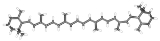
The two primary isomers of carotene, a-carotene and ß-carotene, differ in the position of double bonds in the cyclic group at the end.
ß-Carotene is the more common form and can be found in yellow, orange, and green leafy fruits and vegetables. As a rule of thumb, the greater the intensity of the orange colour of the fruit or vegetable, the more ß-carotene it contains.
Carotene protects plant cells against the destructive effects of ultraviolet light. ß-Carotene is an anti-oxidant.
Beta-carotene and cancer
It has been shown in trials that the ingestion of beta carotene at about 30 mg/day (10 times the Reference Daily Intake) increases the rate of lung cancer and prostate cancer, and increases mortality in smokers and people with a history of asbestos exposure.
An article on the American Cancer Society says that The Cancer Research Campaign has called for warning labels on beta carotene supplements to caution smokers that such supplements may increase the risk of lung cancer.
The New England Journal of Medicine published an article in 1994 about a trial which examined the relationship between daily supplementation of beta carotene and vitamin E (alpha-tocopherol) and the incidence of lung cancer. The study was done using supplements and researchers were aware of the epidemiological correlation between carotenoid-rich fruits and vegetables and lower lung cancer rates. The research concluded that no reduction in lung cancer was found in the participants using these supplements (beta-carotene), and furthermore, these supplements may, in fact, have harmful effects.
The Journal of the National Cancer Institute published an article in 1996 about a trial that was conducted to determine if vitamin A (in the form of retinyl palmitate) and beta carotene had any beneficial effects to prevent cancer. The results indicate an increased risk of lung cancer for the participants who consumed the beta-carotene supplement.
A randomised trial into the use of ß-carotene and vitamin A for prevention of lung cancer had to be stopped early due to the apparent increase in the incidence of lung cancer in those with lung irritation from smoking or asbestos exposure.
A review of all randomized controlled trials in the scientific literature by the Cochrane Collaboration published in JAMA in 2007 found that beta carotene increased mortality by something between 1 and 8% (Relative Risk 1.05, 95% confidence interval 1.01-1.08). However, this meta-analysis included two large studies of smokers, so it is not clear that the results apply to the general population.
Beta carotene and cognition
A recent report demonstrated that 50mg of beta carotene every other day prevented cognitive decline in a study of over 4000 physicians at a mean treatment duration of 18 years.
Beta carotene and photosensitivity
Oral Beta-carotene is prescribed to people suffering from Erythropoietic protoporphyria. It provides them some relief of the photosensitivity.
Carotenemia
Carotenemia or hypercarotenemia is excess carotene, but unlike excess vitamin A, carotene is non-toxic. Although hypercarotenemia is not particularly dangerous, it can lead to a yellowing of the skin (carotenodermia), but not the conjunctiva of eyes (thus easily distingishing it visually from jaundice). It is most commonly associated with consumption of an abundance of carrots, but it also can be a medical sign of more dangerous conditions.
Production
Most of the world's synthetic supply of carotene comes from a manufacturing complex located in Freeport, Texas and owned by DSM. The other major supplier BASF also uses a chemical process to produce beta carotene. Together these suppliers account for about 85% of the beta carotene on the market. In Spain Vitatene produces natural beta carotene from Blakeslea trispora, as does DSM but at much lower amount when compared to its synthetic beta carotene operation. In Australia, organic beta-carotene is produced by Aquacarotene Limited from dried marine algae Dunaliella salina grown in harvesting ponds situated in Karratha, Western Australia. Cognis Australia Pty. Ltd., a subsidiary of the Germany-based company Cognis, is also producing beta carotene from microalgae grown in two sites in Australia that are the world’s largest algae farms. In Portugal, the industrial biotechnology company Biotrend is producing natural all-trans beta carotene from a non genetically modified bacteria of the Sphingomonas genus isolated from soil.
Carotene is also found in palm oil, corn, and in the milk of dairy cows, causing cow's milk to be light yellow, depending on the feed of the cattle, and the amount of fat in the milk (high-fat milks, such as those produced by Guernsey cows, tend to be more yellow because their fat content causes them to contain more carotene).
Carotenes are also found in some species of termites, where they apparently have been picked up from the diet of the insects.
Total synthesis
There are currently two commonly used methods of total synthesis of ß-carotene. The first was developed by the Badische Anilin- & Soda-Fabrik (BASF) and is based on the Wittig reaction. The second is a Grignard reaction, elaborated by Hoffman-La Roche from the original synthesis of Inhoffen et al. They are both symmetrical; the BASF synthesis is C20 + C20 , and the Hoffman-La Roche synthesis is C19 + C2 + C19.
Nomenclature
Carotenes are carotenoids containing no oxygen. Carotenoids containing some oxygen are known as xanthophylls.
The two ends of the ß-carotene molecule are structurally identical, and are called ß-rings. Specifically, the group of nine carbon atoms at each end form a ß-ring.
The a-carotene molecule has a ß-ring at one end; the other end is called an e-ring. There is no such thing as an "a-ring".
These and similar names for the ends of the carotenoid molecules form the basis of a systematic naming scheme, according to which:
- a-carotene is ß,e-carotene;
- ß-carotene is ß,ß-carotene;
- ?-carotene (with one ß ring and one uncyclized end that is labelled psi) is ß,?-carotene;
- d-carotene (with one e ring and one uncyclized end) is e,?-carotene;
- e-carotene is e,e-carotene
- lycopene is ?,?-carotene
That leaves ?-carotene; ?-carotene is the biosynthetic precursor of neurosporene, which is the precursor of of lycopene, which, in turn, is the precursor of the carotenes a through e. ? comes first.
See also
External links
|
| |
|
|