


Carnivorous plant

Encyclopedia
Carnivorous plants are plant
s that derive some or most of their nutrient
s (but not energy
) from trapping and consuming animal
s or protozoans, typically insect
s and other arthropod
s. Carnivorous plants appear adapted to grow in places where the soil is thin or poor in nutrients, especially nitrogen
, such as acidic bog
s and rock outcroppings. Charles Darwin
wrote Insectivorous Plants
, the first well-known treatise on carnivorous plants, in 1875.
True carnivory is thought to have evolved independently six times in five different orders
of flowering plants, and these are now represented by more than a dozen genera
. These include about 630 species that attract and trap prey, produce digestive enzymes, and absorb the resulting available nutrients. Additionally, over 300 protocarnivorous plant
species in several genera show some but not all these characteristics.
 Five basic trapping mechanisms are found in carnivorous plants.
These traps may be active or passive, depending on whether movement aids the capture of prey. For example, Triphyophyllum
is a passive flypaper that secretes mucilage, but whose leaves do not grow or move in response to prey capture. Meanwhile, sundew
s are active flypaper traps whose leaves undergo rapid acid growth
, which is an expansion of individual cells as opposed to cell division
. The rapid acid growth allows the sundew tentacle
s to bend, aiding in the retention and digestion of prey.
, the marsh pitcher plant
. In this genus
, the traps are clearly derived evolution
arily from a simple rolled leaf whose margins have sealed together. These plants live in areas of high rainfall in South America such as Mount Roraima and consequently have a problem ensuring their pitchers do not overflow. To counteract this problem, natural selection
has favoured the evolution of an overflow similar to that of a bathroom sink
—a small gap in the zipped-up leaf margins allows excess water to flow out of the pitcher.
Heliamphora is a member of the Sarraceniaceae
, a New World
family in the order Ericales
(heathers
and allies). Heliamphora is limited to South America, but the family contains two other genera, Sarracenia
and Darlingtonia, which are endemic to the Southeastern United States
(with the exception of one species) and California
respectively. Sarracenia purpurea
subsp. purpurea (the northern pitcher plant) can be found as far north as Canada
. Sarracenia is the pitcher plant genus most commonly encountered in cultivation, because it is relatively hardy and easy to grow.
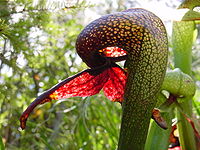 In the genus Sarracenia, the problem of pitcher overflow is solved by an operculum
, which is essentially a flared leaflet that covers the opening of the rolled-leaf tube and protects it from rain. Possibly because of this improved waterproofing, Sarracenia species secrete enzymes such as protease
s and phosphatase
s into the digestive fluid at the bottom of the pitcher; Heliamphora relies on bacterial digestion alone. The enzymes digest the protein
s and nucleic acid
s in the prey, releasing amino acid
s and phosphate
ions, which the plant absorbs.
Darlingtonia californica
, the cobra
plant, possesses an adaptation also found in Sarracenia psittacina
and, to a lesser extent, in Sarracenia minor
: the operculum is balloon-like and almost seals the opening to the tube. This balloon-like chamber is pitted with areola
e, chlorophyll
-free patches through which light can penetrate. Insects, mostly ants, enter the chamber via the opening underneath the balloon. Once inside, they tire themselves trying to escape from these false exits, until they eventually fall into the tube. Prey access is increased by the "fish tails", outgrowths of the operculum that give the plant its name. Some seedling Sarracenia species also have long, overhanging opercular outgrowths; Darlingtonia may therefore represent an example of neoteny
.
 The second major group of pitcher plants are the monkey cups or tropical pitcher plants of the genus Nepenthes
. In the hundred or so species of this genus, the pitcher is borne at the end of a tendril
, which grows as an extension to the midrib of the leaf. Most species catch insects, although the larger ones, particularly N. rajah
, also occasionally take small mammal
s and reptile
s. These pitchers represent a convenient source of food to small insectivores. Nepenthes bicalcarata
possesses two sharp thorns that project from the base of the operculum over the entrance to the pitcher. These likely serve to lure insects into a precarious position over the pitcher mouth, where they may lose their footing and fall into the fluid within.
The pitfall trap has evolved independently in at least two other groups. The Albany pitcher plant Cephalotus
follicularis is a small pitcher plant from Western Australia
, with moccasin
-like pitchers. The rim of its pitcher's opening (the peristome
) is particularly pronounced (both secrete nectar) and provides a thorny overhang to the opening, preventing trapped insects from climbing out. The lining of most pitcher plants is covered in a loose coating of wax
y flakes, which are slippery for insects, prey that are often attracted by nectar bribes secreted by the peristome and by bright flower-like anthocyanin
patterning. In at least one species, Sarracenia flava
, the nectar bribe is laced with coniine
, a
toxic alkaloid
also found in hemlock
, which probably increases the efficiency of the traps by intoxicating prey.
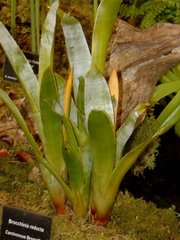
The final carnivore with a pitfall-like trap is the bromeliad Brocchinia reducta
. Like most relatives of the pineapple
, the tightly-packed, waxy leaf bases of the strap-like leaves of this species form an urn
. In most bromeliads, water collects readily in this urn and may provide habitats
for frog
s, insect
s and, more useful for the plant, diazotroph
ic (nitrogen-fixing) bacteria. In Brocchinia, the urn is a specialised insect trap, with a loose, waxy lining and a population of digestive bacteria.

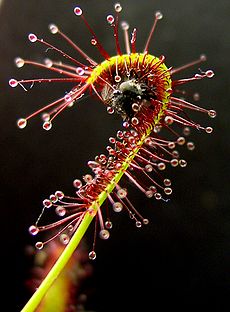 The flypaper trap is based on a sticky mucilage, or glue. The leaf of flypaper traps is studded with mucilage
-secreting glands, which may be short and nondescript (like those of the butterworts), or long and mobile (like those of many sundew
s). Flypapers have evolved independently at least five times.
In the genus Pinguicula
, the mucilage glands are quite short (sessile
), and the leaf, while shiny (giving the genus its common name of 'butterwort'), does not appear carnivorous. However, this belies the fact that the leaf is an extremely effective trap of small flying insects (such as fungus gnat
s), and its surface responds to prey by relatively rapid growth. This thigmotropic
growth may involve rolling of the leaf blade (to prevent rain from splashing the prey off the leaf surface) or dishing of the surface under the prey to form a shallow digestive pit.
The sundew
genus (Drosera) consists of over 100 species of active flypapers whose mucilage glands are borne at the end of long tentacle
s, which frequently grow fast enough in response to prey (thigmotropism
) to aid the trapping process. The tentacles of D. burmanii can bend 180° in a minute or so. Sundews are extremely cosmopolitan and are found on all the continents except the Antarctic mainland. They are most diverse in Australia
, the home to the large subgroup of pygmy sundews such as D. pygmaea and to a number of tuberous sundews such as D. peltata, which form tubers that aestivate
during the dry summer months. These species are so dependent on insect sources of nitrogen that they generally lack the enzyme nitrate reductase
, which most plants require to assimilate soil-borne nitrate into organic forms.
Closely related to Drosera is the Portuguese
dewy pine, Drosophyllum
, which differs from the sundews in being passive. Its leaves are incapable of rapid movement or growth. Unrelated, but similar in habit, are the Australian rainbow plants (Byblis). Drosophyllum is unusual in that it grows under near-desert
conditions; almost all other carnivores are either bog
plants or grow in moist tropical areas.
Recent molecular data (particularly the production of plumbagin
) indicate that the remaining flypaper
, Triphyophyllum peltatum
, a member of the Dioncophyllaceae
, is closely related to Drosophyllum and forms part of a larger clade
of carnivorous and non-carnivorous plants with the Droseraceae
, Nepenthaceae, Ancistrocladaceae
and Plumbaginaceae
. This plant is usually encountered as a liana
, but in its juvenile phase, the plant is carnivorous. This may be related to a requirement for specific nutrients for flowering.
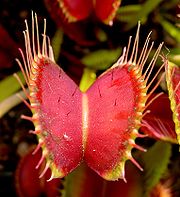 The only two active snap traps—the Venus flytrap
(Dionaea muscipula) and the waterwheel plant (Aldrovanda
vesiculosa)—are believed to have had a common ancestor with similar adaptations. Their trapping mechanism has also been described as a "mouse trap" , "bear trap" or "man trap", based on their shape and rapid movement. However, the term snap trap is preferred as other designations are misleading, particularly with respect to the intended prey. Aldrovanda is aquatic and specialised in catching small invertebrates; Dionaea is terrestrial and catches a variety of arthropods, including spiders.
The traps are very similar, with leaves whose terminal section is divided into two lobes, hinged along the midrib. Trigger hairs (three on each lobe in Dionaea muscipula, many more in the case of Aldrovanda) inside the trap lobes are sensitive to touch. When a trigger hair is bent, stretch-gated ion channel
s in the membranes
of cells at the base of the trigger hair open, generating an action potential
that propagates to cells in the midrib. These cells respond by pumping out ions, which may either cause water to follow by osmosis (collapsing the cells in the midrib) or cause rapid acid growth
. The mechanism is still debated, but in any case, changes in the shape of cells in the midrib allow the lobes, held under tension, to snap shut, flipping rapidly from convex to concave and interring the prey. This whole process takes less than a second. In the Venus flytrap, closure in response to raindrops and blown-in debris is prevented by the leaves having a simple memory: for the lobes to shut, two stimuli
are required, 0.5 to 30 seconds apart.
The snapping of the leaves is a case of thigmonasty
(undirected movement in response to touch). Further stimulation of the lobe's internal surfaces by the struggling insects causes the lobes to close even tighter (thigmotropism
), sealing the lobes hermetically
and forming a stomach
in which digestion occurs over a period of one to two weeks. Leaves can be reused three or four times before they become unresponsive to stimulation, depending on the growing conditions.
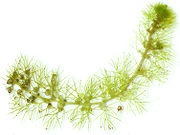
s. The bladders (vesicula) pump ion
s out of their interiors. Water follows by osmosis
, generating a partial vacuum
inside the bladder. The bladder has a small opening, sealed by a hinged door. In aquatic species, the door has a pair of long trigger hairs. Aquatic invertebrates such as Daphnia
touch these hairs and deform the door by lever
action, releasing the vacuum. The invertebrate is sucked into the bladder, where it is digested. Many species of Utricularia (such as U. sandersonii) are terrestrial
, growing on waterlogged soil, and their trapping mechanism is triggered in a slightly different manner. Bladderworts lack root
s, but terrestrial species have anchoring stems that resemble them. Temperate aquatic bladderworts generally die back to a resting turion during the winter months, and U. macrorhiza appears to regulate the number of bladders it bears in response to the prevailing nutrient content of its habitat.
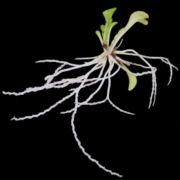 A lobster-pot trap is a chamber that is easy to enter, and whose exit is either difficult to find or obstructed by inward-pointing bristles. Lobster pots are the trapping mechanism in Genlisea
, the corkscrew
plants. These plants appear to specialise in aquatic protozoa
. A Y-shaped modified leaf allows prey to enter but not exit. Inward-pointing hairs force the prey to move in a particular direction. Prey entering the spiral entrance that coils around the upper two arms of the Y are forced to move inexorably towards a stomach in the lower arm of the Y, where they are digested. Prey movement is also thought to be encouraged by water movement through the trap, produced in a similar way to the vacuum in bladder traps, and probably evolutionarily related to it.
Outside of Genlisea, features reminiscent of lobster-pot traps can be seen in Sarracenia psittacina
, Darlingtonia californica
, and, some horticulturalists argue, Nepenthes aristolochioides
.
prey; and it must benefit from absorbing the products of the digestion (mostly amino acid
s and ammonium
ions). To many horticulturalists, these distinctions are a matter of taste. There is a spectrum of carnivory found in plants: from completely non-carnivorous plants like cabbage
s, to borderline carnivores, to unspecialised and simple traps, like Heliamphora, to extremely specialised and complex traps, like that of the Venus flytrap.
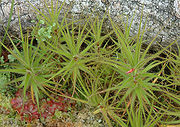 The borderline carnivores include Roridula
and Catopsis berteroniana
. Catopsis is a borderline carnivorous bromeliad, like Brocchinia reducta
. However, unlike B. reducta, which produces the enzyme phosphatase
, C. berteroniana has not been shown to produce any digestive enzymes at all. In these pitfall traps, prey simply fall into the urn, assisted by the waxy scales located on the rim. Roridula has a more intricate relationship with its prey. The plants in this genus produce sticky leaves with resin-tipped glands and look extremely similar to some of the larger sundews. However, they do not directly benefit from the insects they catch. Instead, they form a mutualistic symbiosis
with species of assassin bug (genus Pameridea
), which eat the trapped insects. The plant benefits from the nutrients in the bugs' faeces
.
A number of species in the Martyniaceae
(previously Pedaliaceae
), such as Ibicella lutea
, have sticky leaves that trap insects. However, these plants have not been shown conclusively to be carnivorous. Likewise, the seeds of Shepherd's Purse
, urns of Paepalanthus bromelioides, bract
s of Passiflora foetida
, and flower stalks and sepal
s of triggerplants (Stylidium) appear to trap and kill insects, but their classification as carnivores is contentious.
The production of specific prey-digesting enzymes (protease
s, ribonuclease
s, phosphatase
s, etc.) is sometimes used as a criterion for carnivory. However, this would probably discount Heliamphora and Darlingtonia, both of which appear to rely on the enzymes of symbiotic bacteria to break down their prey but are generally considered as carnivores. However, discounting the enzyme-based definition leaves open the question of Roridula.
 The evolution of carnivorous plants is obscured by the paucity of their fossil record. Very few fossil
s have been found, and then usually only as seed
or pollen
. Carnivorous plants are generally herbs, and their traps primary growth. They generally do not form readily fossilisable structures such as thick bark or wood. The traps themselves would probably not be preserved in any case.
Still, much can be deduced from the structure of current traps. Pitfall traps are quite clearly derived from rolled leaves. The vascular tissues of Sarracenia is a case in point. The keel along the front of the trap contains a mixture of leftward- and rightward-facing vascular bundles, as would be predicted from the fusion of the edges of an adaxial (stem-facing) leaf surface. Flypapers also show a simple evolutionary gradient from sticky, non-carnivorous leaves, through passive flypapers to active forms. Molecular data show the Dionaea–Aldrovanda clade is closely related to Drosera, but the traps are so dissimilar that the theory of their origin—very fast-moving flypapers became less reliant on glue—remains rather speculative.
There are over a quarter of a million species of flowering plant
s. Of these, only around 630 are known to be carnivorous. True carnivory has probably evolved independently at least six times; however, some of these "independent" groups probably descended from a recent common ancestor with a predisposition to carnivory. Some groups (the Ericales
and Caryophyllales
) seem particularly fertile ground for carnivorous preadaptation
, although in the former case, this may be more to do with the ecology
of the group than its morphology
, as most of the members of this group grow in low-nutrient habitats such as heath
and bog
.
It has been suggested that all trap types are modifications of a similar basic structure—the hairy leaf. Hairy (or more specifically, stalked-glandular) leaves can catch and retain drops of rainwater, especially if shield-shaped or peltate, thus promoting bacteria growth. Insects land on the leaf, become mired by the surface tension
of the water, and suffocate
. Bacteria jumpstart decay
, releasing from the corpse nutrients that the plant can absorb through its leaves. This foliar feeding
can be observed in most non-carnivorous plants. Plants that were better at retaining insects or water therefore had a selective advantage. Rainwater can be retained by cupping the leaf, leading to pitfall traps. Alternatively, insects can be retained by making the leaf stickier by the production of mucilage
, leading to flypaper traps.
The pitfall traps may have evolved simply by selection pressure for the production of more deeply cupped leaves, followed by "zipping up" of the margins and subsequent loss of most of the hairs, except at the bottom, where they help retain prey.
The lobster-pot traps of Genlisea are difficult to interpret. They may have developed from bifurcated pitchers that later specialised on ground-dwelling prey; or, perhaps, the prey-guiding protrusions of bladder traps became more substantial than the net-like funnel found in most aquatic bladderworts. Whatever their origin, the helical shape of the lobster pot is an adaptation that displays as much trapping surface as possible in all directions when buried in moss
.
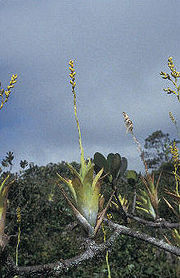 The traps of the bladderworts may have derived from pitchers that specialised in aquatic prey when flooded, like Sarracenia psittacina does today. Escaping prey in terrestrial pitchers have to climb or fly out of a trap, and both of these can be prevented by wax, gravity and narrow tubes. However, a flooded trap can be swum out of, so in Utricularia, a one-way lid may have developed to form the door of a proto-bladder. Later, this may have become active by the evolution of a partial vacuum inside the bladder, tripped by prey brushing against trigger hairs on the door of the bladder.
Flypaper traps include the various true flypapers and the snap traps of Aldrovanda and Dionaea. The production of sticky mucilage is found in many non-carnivorous genera, and the passive glue traps in Byblis and Drosophyllum could easily have evolved.
The active glue traps use rapid plant movement
s to trap their prey. Rapid plant movement can result from actual growth, or from rapid changes in cell turgor, which allow cells to expand or contract by quickly altering their water content. Slow-moving flypapers like Pinguicula exploit growth, but the Venus flytrap uses such rapid turgor changes that glue became unnecessary. The stalked glands that once made it and which are so evident in Drosera have become the teeth and trigger hairs—an example of natural selection hijacking preexisting structures
for new functions.
Recent taxonomic analysis of the relationships within the Caryophyllales
indicate that the Droseraceae
, Triphyophyllum
, Nepenthaceae and Drosophyllum, while closely related, are embedded within a larger clade
that includes non-carnivorous groups such as the tamarisks
, Ancistrocladaceae
, Polygonaceae
and Plumbaginaceae
. Interestingly, the tamarisks possess specialised salt-excreting glands on their leaves, as do several of the Plumbaginaceae (such as the sea lavender, Limonium), which may have been co-opted for the excretion of other chemicals, such as proteases and mucilage. Some of the Plumbaginaceae (e.g. Ceratostigma) also have stalked, vascularised glands that secrete mucilage on their calyces and aid in seed dispersal and possibly in protecting the flowers from crawling parasitic insects. These are probably homologous with the tentacles of the carnivorous genera. Perhaps carnivory evolved from a protective function, rather than a nutritional one. The balsams (such as Impatiens
), which are closely related to the Sarraceniaceae
and Roridula
, similarly possess stalked glands.
The only traps that are unlikely to have descended from a hairy leaf or sepal are the carnivorous bromeliads (Brocchinia and Catopsis). These plants use the urn—a fundamental part of a bromeliad—for a new purpose and build on it by the production of wax and the other paraphernalia of carnivory.
such as bog
s, where soil nutrients are extremely limiting, but where sun
light and water are readily available. Only under such extreme conditions is carnivory favoured to an extent that makes the adaptations obvious.
The archetypal
carnivore, the Venus flytrap, grows in soils with almost immeasurable nitrate
and calcium
levels. Plants need nitrogen for protein synthesis, calcium for cell wall
stiffening, phosphate for nucleic acid
synthesis, and iron for chlorophyll
synthesis. The soil is often waterlogged
, which favours the production of toxic ions such as ammonium
, and its pH
is an acidic 4 to 5. Ammonium can be used as a source of nitrogen by plants, but its high toxicity means that concentrations high enough to fertilise are also high enough to cause damage.
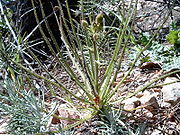 However, the habitat is warm, sunny, constantly moist, and the plant experiences relatively little competition from low growing Sphagnum
moss. Still, carnivores are also found in very atypical habitats. Drosophyllum lusitanicum is found around desert edges and Pinguicula valisneriifolia on limestone
(calcium-rich) cliffs.
In all the studied cases, carnivory allows plants to grow and reproduce using animals as a source of nitrogen, phosphorus and possibly potassium. However, there is a spectrum of dependency on animal prey. Pygmy sundews are unable to use nitrate from soil because they lack the necessary enzymes (nitrate reductase
in particular). Common butterworts (Pinguicula vulgaris) can use inorganic sources of nitrogen better than organic sources, but a mixture of both is preferred. European bladderworts seem to use both sources equally well. Animal prey makes up for differing deficiencies in soil nutrients.
Plants use their leaves to intercept sunlight. The energy is used to reduce carbon dioxide from the air with electron
s from water to make sugars (and other biomass
) and a waste product, oxygen
, in the process of photosynthesis
. Leaves also respire
, in a similar way to animals, by burning their biomass to generate chemical energy. This energy is temporarily stored in the form of ATP
(adenosine triphosphate), which acts as an energy currency for metabolism in all living things. As a waste product, respiration produces carbon dioxide
.
For a plant to grow, it must photosynthesise more than it respires. Otherwise, it will eventually exhaust its biomass and die. The potential for plant growth is net photosynthesis, the total gross gain of biomass by photosynthesis, minus the biomass lost by respiration. Understanding carnivory requires a cost-benefit analysis
of these factors.
In carnivorous plants, the leaf is not just used to photosynthesise, but also as a trap. Changing the leaf shape to make it a better trap generally makes it less efficient at photosynthesis
. For example, pitchers have to be held upright, so that only their opercula directly intercept light. The plant also has to expend extra energy on non-photosynthetic structures like glands, hairs, glue and digestive enzymes. To produce such structures, the plant requires ATP and respires more of its biomass. Hence, a carnivorous plant will have both decreased photosynthesis and increased respiration, making the potential for growth small and the cost of carnivory high.
Being carnivorous allows the plant to grow better when the soil contains little nitrate or phosphate. In particular, an increased supply of nitrogen and phosphorus makes photosynthesis more efficient, because photosynthesis depends on the plant being able to synthesise very large amounts of the nitrogen-rich enzyme
RuBisCO
(ribulose
-1,5-bis-phosphate carboxylase/oxygenase
), the most abundant protein on Earth.
It is intuitively clear that the Venus flytrap is more carnivorous than Triphyophyllum peltatum. The former is a full-time moving snap-trap; the latter is a part-time, non-moving flypaper. The energy "wasted" by the plant in building and fuelling its trap is a suitable measure of the carnivory of the trap.
Using this measure of investment in carnivory, a model can be proposed. Above is a graph of carbon dioxide uptake (potential for growth) against trap respiration (investment in carnivory) for a leaf in a sunny habitat containing no soil nutrients at all. Respiration is a straight line sloping down under the horizontal axis (respiration produces carbon dioxide). Gross photosynthesis is a curved line above the horizontal axis: as investment increases, so too does the photosynthesis of the trap, as the leaf receives a better supply of nitrogen and phosphorus. Eventually another factor (such as light intensity or carbon dioxide
concentration) will become more limiting to photosynthesis than nitrogen or phosphorus supply. As a result, increasing the investment will not make the plant grow better. The net uptake of carbon dioxide, and therefore, the plant's potential for growth, must be positive for the plant to survive. There is a broad span of investment where this is the case, and there is also a non-zero optimum
. Plants investing more or less than this optimum will take up less carbon dioxide than an optimal plant, and hence growing less well. These plants will be at a selective disadvantage. At zero investment the growth is zero, because a non-carnivorous plant cannot survive in a habitat with absolutely no soil-borne nutrients. Such habitats do not exist, so for example, Sphagnum
absorbs the tiny amounts of nitrates and phosphates in rain very efficiently and also forms symbioses with diazotrophic cyanobacteria.
In a habitat with abundant soil nutrients but little light (as shown above), the gross photosynthesis curve will be lower and flatter, because light will be more limiting than nutrients. A plant can grow at zero investment in carnivory; this is also the optimum investment for a plant, as any investment in traps reduces net photosynthesis (growth) to less than the net photosynthesis of a plant that obtains its nutrients from soil alone.
Carnivorous plants exist between these two extremes: the less limiting light and water are, and the more limiting soil nutrients are, the higher the optimum investment in carnivory, and hence the more obvious the adaptations will be to the casual observer.
The most obvious evidence for this model is that carnivorous plants tend to grow in habitats where water and light are abundant and where competition is relatively low: the typical bog. Those that do not tend to be even more fastidious in some other way. Drosophyllum lusitanicum grows where there is little water, but it is even more extreme in its requirement for bright light and low disturbance than most other carnivores. Pinguicula valisneriifolia grows in soils with high levels of calcium but requires strong illumination and lower competition
than many butterworts.
In general, carnivorous plants are poor competitors, because they invest too heavily in structures that have no selective advantage in nutrient-rich habitats. They succeed only where other plants fail. Carnivores are to nutrients what cacti
are to water. Carnivory only pays off when the nutrient stress is high and where light is abundant. When these conditions are not met, some plants give up carnivory temporarily. Sarracenia spp. produce flat, non-carnivorous leaves (phyllodes) in winter. Light levels are lower than in summer, so light is more limiting than nutrients, and carnivory does not pay. The lack of insects in winter exacerbates the problem. Damage to growing pitcher leaves prevent them from forming proper pitchers, and again, the plant produces a phyllode instead.
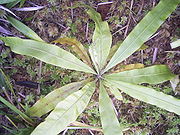 Many other carnivores shut down in some season. Tuberous sundews die back to tubers in the dry season, bladderworts to turions in winter, and non-carnivorous leaves are made by most butterworts and Cephalotus
in the less favourable seasons. Utricularia macrorhiza varies the number of bladders it produces based on the expected density of prey. Part-time carnivory in Triphyophyllum peltatum may be due to an unusually high need for potassium at a certain point in the life cycle, just before flowering.
The more carnivorous a plant is, the less conventional its habitat is likely to be. Venus flytraps live in a very specialised habitat, whereas less carnivorous plants (Byblis, Pinguicula) are found in less unusual habitats (i.e., those typical for non-carnivores). Byblis and Drosophyllum both come from relatively arid regions and are both passive flypapers, arguably the lowest maintenance form of trap. Venus flytraps filter their prey using the teeth around the trap's edge, so as not to waste energy on hard-to-digest prey. In evolution, laziness pays, because energy can be used for reproduction, and short-term benefits in reproduction will outweigh long-term benefits in anything else.
Carnivory rarely pays, so even carnivorous plants avoid it when there is too little light or an easier source of nutrients, and they use as few carnivorous features as are required at a given time or for a given prey item. There are very few habitats stressful enough to make investing biomass and energy in trigger hairs and enzymes worthwhile. Many plants occasionally benefit from animal protein rotting on their leaves, but carnivory that is obvious enough for the casual observer to notice is rare.
Bromeliads seem very well preadapted to carnivory, but only one or two species can be classified as truly carnivorous. By their very shape, bromeliads will benefit from increased prey-derived nutrient input. In this sense, bromeliads are probably carnivorous, but their habitats are too dark for more extreme, recognisable carnivory to evolve. Most bromeliads are epiphyte
s, and most epiphytes grow in partial shade on tree branches. Brocchinia reducta, on the other hand, is a ground dweller.
the Cronquist system
, the Droseraceae and Nepenthaceae were placed in the order
Nepenthales, based on the radial symmetry of their flowers and their possession
of insect traps. The Sarraceniaceae was placed either in the Nepenthales, or
in its own order, the Sarraceniales. The Byblidaceae, Cephalotaceae, and Roridulaceae
were placed in the Saxifragales; and the Lentibulariaceae in the Scrophulariales (now subsumed
into the Lamiales).
In more modern classification, such as that of the Angiosperm Phylogeny Group
, the
families have been retained, but they have been redistributed amongst several disparate
orders. It is also recommended that Drosophyllum be considered in a monotypic family outside the rest of the Droseraceae, probably more closely allied to the Dioncophyllaceae. The current recommendations are shown below (only carnivorous genera are listed):

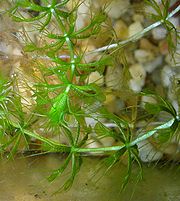
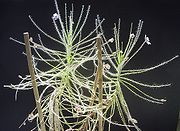
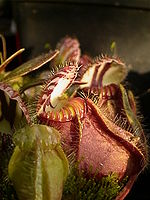
 Although different species of carnivorous plants have different requirements in terms of sunlight, humidity, soil moisture, etc., there are commonalities.
Most carnivorous plants require rainwater, or water that has been distilled, deionised by reverse osmosis
, or acidified to around pH 6.5 using sulfuric acid
.
Common tap or drinking water contains minerals (particularly calcium
salts) that will quickly build up and kill the plant. This is because most carnivorous plants have evolved in nutrient-poor, acidic soils and are consequently extreme calcifuge
s. They are therefore very sensitive to excessive soil-borne nutrients. Since most of these plants are found in bogs, almost all are very intolerant of drying. There are exceptions:
tuberous sundews require a dry (summer) dormancy
period, and Drosophyllum requires much drier conditions than most.
Outdoor-grown carnivorous plants generally catch more than enough insects to keep themselves properly fed. Insects may be fed to the plants by hand to supplement their diet; however, carnivorous plants are generally unable to digest large non-insect food items; bits of hamburger, for example, will simply rot, and this may cause the trap, or even the whole plant, to die.
A carnivorous plant that catches no insects at all will rarely die, although its growth may be impaired. In general, these plants are best left to their own devices: after underwatering with tap-water, the most common cause of Venus flytrap death is prodding the traps to watch them close and feeding them cheese and other inappropriate items.
Most carnivorous plants require bright light, and most will look better under such conditions, as this encourages them to synthesise red and purple anthocyanin
pigments. Nepenthes and Pinguicula will do better out of full sun, but most other species are happy in direct sunlight.
Carnivores mostly live in bogs, and those that do not are generally tropical. Hence, most require high humidity. On a small scale, this can be achieved by placing the plant in a wide saucer containing pebbles that are kept permanently wet. Small Nepenthes species grow well in large terraria.
Many carnivores are native to cold temperate regions and can be grown outside in a bog garden year-round. Most Sarracenia can tolerate temperatures well below freezing, despite most species being native to the southeastern United States. Species of Drosera and Pinguicula also tolerate subfreezing temperatures. Nepenthes species, which are tropical, require temperatures from 20 to 30 °C to thrive.
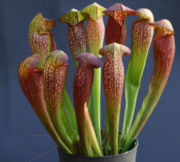 Carnivorous plants require appropriate nutrient-poor soil. Most appreciate a 3:1 mixture of Sphagnum
peat to sharp horticultural sand (coir
is an acceptable, and more ecofriendly substitute for peat). Nepenthes will grow in orchid compost or in pure Sphagnum
moss.
Ironically, carnivorous plants are themselves susceptible to infestation by parasites such as aphids or mealybug
s. Although small infestations can be removed by hand, larger infestations necessitate use of an insecticide
.
Isopropyl alcohol
(rubbing alcohol) is effective as a topical insecticide, particularly on scale insect
s.
Diazinon
is an excellent systemic insecticide that is tolerated by most carnivorous plants.
Malathion
and Acephate
(Orthene) have also been reported as tolerable by carnivorous plants.
Although insects can be a problem, by far the biggest killer of carnivorous plants (besides human maltreatment) is grey mould
(Botrytis cinerea). This thrives under warm, humid conditions and can be a real problem in winter. To some extent, temperate carnivorous plants can be protected from this pathogen by ensuring that they are kept cool and well ventilated in winter and that any dead leaves are removed promptly. If this fails, a fungicide
is in order.
The easiest carnivorous plants for beginners are those from the cool temperate zone. These plants will do well under cool greenhouse conditions (minimum 5 °C in winter, maximum 25 °C in summer) if kept in wide trays of acidified or rain water during summer and kept moist during winter:
Venus flytraps will do well under these conditions but are actually rather difficult to grow: even if treated well, they will often succumb to grey mould in winter unless well ventilated. Some of the lowland Nepenthes are very easy to grow as long as they are provided with relatively constant, hot and humid conditions.
indicates that secretions produced by carnivorous plants contain compounds that have anti-fungal properties and may lead to the development of a new class of anti-fungal drugs that will be effective against infections
that are resistant to current anti-fungal drugs.
. The most famous examples of fictional carnivorous plants in popular culture include the 1960s black comedy
The Little Shop of Horrors
, the triffid
s of John Wyndham's The Day of the Triffids
, and others. Other movies, such as The Hellstrom Chronicle
(1971), and television series utilize accurate depictions of carnivorous plants for cinematic purposes.
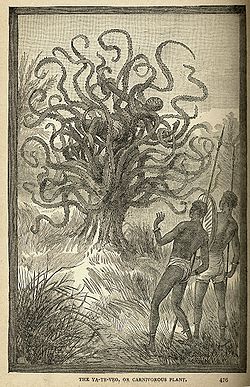 The earliest known depiction of carnivorous plants in popular culture was a case where a large man-eating tree
was reported to have consumed a young woman in Madagascar
in 1878, as witnessed by Dr. Carl Liche. Liche reported the events in the South Australian Register
in 1881. The woman, pictured in an accompanying artwork, was supposed to have been a member of the Mkodos, a "little known but cruel tribe". The account has been debunked as pure myth as it appears Dr. Liche, the Mkodos, and the tree were all fabrications.
Plant
Plants are living organisms belonging to the kingdom Plantae. Precise definitions of the kingdom vary, but as the term is used here, plants include familiar organisms such as trees, flowers, herbs, bushes, grasses, vines, ferns, mosses, and green algae. The group is also called green plants or...
s that derive some or most of their nutrient
Nutrient
A nutrient is a chemical that an organism needs to live and grow or a substance used in an organism's metabolism which must be taken in from its environment. They are used to build and repair tissues, regulate body processes and are converted to and used as energy...
s (but not energy
Energy
In physics, energy is an indirectly observed quantity. It is often understood as the ability a physical system has to do work on other physical systems...
) from trapping and consuming animal
Animal
Animals are a major group of multicellular, eukaryotic organisms of the kingdom Animalia or Metazoa. Their body plan eventually becomes fixed as they develop, although some undergo a process of metamorphosis later on in their life. Most animals are motile, meaning they can move spontaneously and...
s or protozoans, typically insect
Insect
Insects are a class of living creatures within the arthropods that have a chitinous exoskeleton, a three-part body , three pairs of jointed legs, compound eyes, and two antennae...
s and other arthropod
Arthropod
An arthropod is an invertebrate animal having an exoskeleton , a segmented body, and jointed appendages. Arthropods are members of the phylum Arthropoda , and include the insects, arachnids, crustaceans, and others...
s. Carnivorous plants appear adapted to grow in places where the soil is thin or poor in nutrients, especially nitrogen
Nitrogen
Nitrogen is a chemical element that has the symbol N, atomic number of 7 and atomic mass 14.00674 u. Elemental nitrogen is a colorless, odorless, tasteless, and mostly inert diatomic gas at standard conditions, constituting 78.08% by volume of Earth's atmosphere...
, such as acidic bog
Bog
A bog, quagmire or mire is a wetland that accumulates acidic peat, a deposit of dead plant material—often mosses or, in Arctic climates, lichens....
s and rock outcroppings. Charles Darwin
Charles Darwin
Charles Robert Darwin FRS was an English naturalist. He established that all species of life have descended over time from common ancestry, and proposed the scientific theory that this branching pattern of evolution resulted from a process that he called natural selection.He published his theory...
wrote Insectivorous Plants
Insectivorous Plants (book)
Insectivorous Plants is a book by British naturalist and evolutionary theory pioneer Charles Darwin, first published on 2 July 1875 in London....
, the first well-known treatise on carnivorous plants, in 1875.
True carnivory is thought to have evolved independently six times in five different orders
Order (biology)
In scientific classification used in biology, the order is# a taxonomic rank used in the classification of organisms. Other well-known ranks are life, domain, kingdom, phylum, class, family, genus, and species, with order fitting in between class and family...
of flowering plants, and these are now represented by more than a dozen genera
Genus
In biology, a genus is a low-level taxonomic rank used in the biological classification of living and fossil organisms, which is an example of definition by genus and differentia...
. These include about 630 species that attract and trap prey, produce digestive enzymes, and absorb the resulting available nutrients. Additionally, over 300 protocarnivorous plant
Protocarnivorous plant
A protocarnivorous plant , according to some definitions, traps and kills insects or other animals but lacks the ability to either directly digest or absorb nutrients from its prey like a carnivorous plant...
species in several genera show some but not all these characteristics.
Trapping mechanisms
- Pitfall traps (pitcher plantPitcher plantPitcher plants are carnivorous plants whose prey-trapping mechanism features a deep cavity filled with liquid known as a pitfall trap. It has been widely assumed that the various sorts of pitfall trap evolved from rolled leaves, with selection pressure favouring more deeply cupped leaves over...
s) trap prey in a rolled leaf that contains a pool of digestive enzymes or bacteriaBacteriaBacteria are a large domain of prokaryotic microorganisms. Typically a few micrometres in length, bacteria have a wide range of shapes, ranging from spheres to rods and spirals...
. - Flypaper traps use a sticky mucilageMucilageMucilage is a thick, gluey substance produced by most plants and some microorganisms. It is a polar glycoprotein and an exopolysaccharide.It occurs in various parts of nearly all classes of plant, usually in relatively small percentages, and is frequently associated with other substances, such as...
. - Snap traps utilize rapid leaf movementsThigmonastyThigmonasty or seismonasty is the nastic response of a plant or fungus to touch or vibration. It differs from thigmotropism in that it is independent of the direction of the stimulus. For example, tendrils from a climbing plant are thigmotropic because they twine around any support they touch. ...
. - Bladder traps suck in prey with a bladder that generates an internal vacuumVacuumIn everyday usage, vacuum is a volume of space that is essentially empty of matter, such that its gaseous pressure is much less than atmospheric pressure. The word comes from the Latin term for "empty". A perfect vacuum would be one with no particles in it at all, which is impossible to achieve in...
. - Lobster-potLobster trapNot to be confused with Lobster-tailed potA lobster trap or lobster pot is a portable trap that traps lobsters or crayfish and is used in lobster fishing. A lobster trap can hold several lobsters. Lobster traps are constructed of wire and wood. An opening permits the lobster to enter a tunnel of...
traps force prey to move towards a digestive organ with inward-pointing hairsTrichomeTrichomes are fine outgrowths or appendages on plants and certain protists. These are of diverse structure and function. Examples are hairs, glandular hairs, scales, and papillae.- Algal trichomes :...
.
These traps may be active or passive, depending on whether movement aids the capture of prey. For example, Triphyophyllum
Triphyophyllum
Triphyophyllum is a monotypic plant genus, containing the single species Triphyophyllum peltatum. It is native to tropical western Africa, in Sierra Leone and Liberia, growing in tropical rainforests....
is a passive flypaper that secretes mucilage, but whose leaves do not grow or move in response to prey capture. Meanwhile, sundew
Sundew
Drosera, commonly known as the sundews, comprise one of the largest genera of carnivorous plants, with at least 194 species. These members of the family Droseraceae lure, capture, and digest insects using stalked mucilaginous glands covering their leaf surface. The insects are used to supplement...
s are active flypaper traps whose leaves undergo rapid acid growth
Acid growth
Acid growth refers to the ability of plant cells and plant cell walls to elongate or expand quickly at low pH. This form of growth does not involve an increase in cell number. During acid growth, plant cells enlarge rapidly because the cell walls are made more extensible by expansin, a...
, which is an expansion of individual cells as opposed to cell division
Cell division
Cell division is the process by which a parent cell divides into two or more daughter cells . Cell division is usually a small segment of a larger cell cycle. This type of cell division in eukaryotes is known as mitosis, and leaves the daughter cell capable of dividing again. The corresponding sort...
. The rapid acid growth allows the sundew tentacle
Tentacle
A tentacle or bothrium is one of usually two or more elongated flexible organs present in animals, especially invertebrates. The term may also refer to the hairs of the leaves of some insectivorous plants. Usually, tentacles are used for feeding, feeling and grasping. Anatomically, they work like...
s to bend, aiding in the retention and digestion of prey.
Pitfall traps
Pitfall traps are thought to have evolved independently on at least four occasions. The simplest ones are probably those of HeliamphoraHeliamphora
The genus Heliamphora contains 23 species of pitcher plants endemic to South America. The species are collectively known as sun pitchers, based on the mistaken notion that the heli of Heliamphora is from the Greek helios, meaning "sun"...
, the marsh pitcher plant
Pitcher plant
Pitcher plants are carnivorous plants whose prey-trapping mechanism features a deep cavity filled with liquid known as a pitfall trap. It has been widely assumed that the various sorts of pitfall trap evolved from rolled leaves, with selection pressure favouring more deeply cupped leaves over...
. In this genus
Genus
In biology, a genus is a low-level taxonomic rank used in the biological classification of living and fossil organisms, which is an example of definition by genus and differentia...
, the traps are clearly derived evolution
Evolution
Evolution is any change across successive generations in the heritable characteristics of biological populations. Evolutionary processes give rise to diversity at every level of biological organisation, including species, individual organisms and molecules such as DNA and proteins.Life on Earth...
arily from a simple rolled leaf whose margins have sealed together. These plants live in areas of high rainfall in South America such as Mount Roraima and consequently have a problem ensuring their pitchers do not overflow. To counteract this problem, natural selection
Natural selection
Natural selection is the nonrandom process by which biologic traits become either more or less common in a population as a function of differential reproduction of their bearers. It is a key mechanism of evolution....
has favoured the evolution of an overflow similar to that of a bathroom sink
Sink
A sink is a bowl-shaped plumbing fixture used for washing hands, for dishwashing or other purposes. Sinks generally have taps that supply hot and cold water and may include a spray feature to be used for faster rinsing...
—a small gap in the zipped-up leaf margins allows excess water to flow out of the pitcher.
Heliamphora is a member of the Sarraceniaceae
Sarraceniaceae
Sarraceniaceae is a family of pitcher plants , belonging to order Ericales .The family comprises three extant genera: Sarracenia , Darlingtonia , and Heliamphora . The extinct Archaeamphora longicervia may also belong to this family...
, a New World
New World
The New World is one of the names used for the Western Hemisphere, specifically America and sometimes Oceania . The term originated in the late 15th century, when America had been recently discovered by European explorers, expanding the geographical horizon of the people of the European middle...
family in the order Ericales
Ericales
The Ericales are a large and diverse order of dicotyledons, including for example tea, persimmon, blueberry, Brazil nut, and azalea. The order includes trees and bushes, lianas and herbaceous plants. Together with ordinary autophytic plants, the Ericales include chlorophyll-deficient...
(heathers
Calluna
Calluna vulgaris is the sole species in the genus Calluna in the family Ericaceae. It is a low-growing perennial shrub growing to tall, or rarely to and taller, and is found widely in Europe and Asia Minor on acidic soils in open sunny situations and in moderate shade...
and allies). Heliamphora is limited to South America, but the family contains two other genera, Sarracenia
Sarracenia
Sarracenia is a genus comprising 8 to 11 species of North American pitcher plants. The genus belongs to the family Sarraceniaceae, which also contain the closely allied genera Darlingtonia and Heliamphora....
and Darlingtonia, which are endemic to the Southeastern United States
Southeastern United States
The Southeastern United States, colloquially referred to as the Southeast, is the eastern portion of the Southern United States. It is one of the most populous regions in the United States of America....
(with the exception of one species) and California
California
California is a state located on the West Coast of the United States. It is by far the most populous U.S. state, and the third-largest by land area...
respectively. Sarracenia purpurea
Sarracenia purpurea
Sarracenia purpurea, commonly known as the purple pitcher plant, northern pitcher plant, or side-saddle flower, is a carnivorous plant in the family Sarraceniaceae...
subsp. purpurea (the northern pitcher plant) can be found as far north as Canada
Canada
Canada is a North American country consisting of ten provinces and three territories. Located in the northern part of the continent, it extends from the Atlantic Ocean in the east to the Pacific Ocean in the west, and northward into the Arctic Ocean...
. Sarracenia is the pitcher plant genus most commonly encountered in cultivation, because it is relatively hardy and easy to grow.
Operculum (botany)
An operculum, in botany, is a term generally used to describe a structure within a plant, moss, or fungus acting as a cap, flap, or lid. In plants, it may also be called a bud cap.Examples of structures identified as opercula include:...
, which is essentially a flared leaflet that covers the opening of the rolled-leaf tube and protects it from rain. Possibly because of this improved waterproofing, Sarracenia species secrete enzymes such as protease
Protease
A protease is any enzyme that conducts proteolysis, that is, begins protein catabolism by hydrolysis of the peptide bonds that link amino acids together in the polypeptide chain forming the protein....
s and phosphatase
Phosphatase
A phosphatase is an enzyme that removes a phosphate group from its substrate by hydrolysing phosphoric acid monoesters into a phosphate ion and a molecule with a free hydroxyl group . This action is directly opposite to that of phosphorylases and kinases, which attach phosphate groups to their...
s into the digestive fluid at the bottom of the pitcher; Heliamphora relies on bacterial digestion alone. The enzymes digest the protein
Protein
Proteins are biochemical compounds consisting of one or more polypeptides typically folded into a globular or fibrous form, facilitating a biological function. A polypeptide is a single linear polymer chain of amino acids bonded together by peptide bonds between the carboxyl and amino groups of...
s and nucleic acid
Nucleic acid
Nucleic acids are biological molecules essential for life, and include DNA and RNA . Together with proteins, nucleic acids make up the most important macromolecules; each is found in abundance in all living things, where they function in encoding, transmitting and expressing genetic information...
s in the prey, releasing amino acid
Amino acid
Amino acids are molecules containing an amine group, a carboxylic acid group and a side-chain that varies between different amino acids. The key elements of an amino acid are carbon, hydrogen, oxygen, and nitrogen...
s and phosphate
Phosphate
A phosphate, an inorganic chemical, is a salt of phosphoric acid. In organic chemistry, a phosphate, or organophosphate, is an ester of phosphoric acid. Organic phosphates are important in biochemistry and biogeochemistry or ecology. Inorganic phosphates are mined to obtain phosphorus for use in...
ions, which the plant absorbs.
Darlingtonia californica
Darlingtonia californica
Darlingtonia californica , also called the California Pitcher plant, Cobra Lily, or Cobra Plant, is a carnivorous plant, the sole member of the genus Darlingtonia in the family Sarraceniaceae. It is native to Northern California and Oregon, growing in bogs and seeps with cold running water...
, the cobra
Cobra
Cobra is a venomous snake belonging to the family Elapidae. However, not all snakes commonly referred to as cobras are of the same genus, or even of the same family. The name is short for cobra capo or capa Snake, which is Portuguese for "snake with hood", or "hood-snake"...
plant, possesses an adaptation also found in Sarracenia psittacina
Sarracenia psittacina
Sarracenia psittacina, also known as the parrot pitcher plant, is a carnivorous plant in the genus Sarracenia. Like all the Sarracenia, it is native to North America, in the Southeastern United States....
and, to a lesser extent, in Sarracenia minor
Sarracenia minor
Sarracenia minor, also known as the Hooded pitcher plant, is a perennial, terrestrial, rhizomatous, herbaceous, carnivorous plant in the genus Sarracenia. Like all the Sarracenia, it is native to the New World.-Etymology:...
: the operculum is balloon-like and almost seals the opening to the tube. This balloon-like chamber is pitted with areola
Areola
This article is about the breast tissue. For the entomology term, see the glossary of Lepidopteran terms. For an artistic cloud motif, see aureola. For the cactus feature, see Areole....
e, chlorophyll
Chlorophyll
Chlorophyll is a green pigment found in almost all plants, algae, and cyanobacteria. Its name is derived from the Greek words χλωρος, chloros and φύλλον, phyllon . Chlorophyll is an extremely important biomolecule, critical in photosynthesis, which allows plants to obtain energy from light...
-free patches through which light can penetrate. Insects, mostly ants, enter the chamber via the opening underneath the balloon. Once inside, they tire themselves trying to escape from these false exits, until they eventually fall into the tube. Prey access is increased by the "fish tails", outgrowths of the operculum that give the plant its name. Some seedling Sarracenia species also have long, overhanging opercular outgrowths; Darlingtonia may therefore represent an example of neoteny
Neoteny
Neoteny , also called juvenilization , is one of the two ways by which paedomorphism can arise. Paedomorphism is the retention by adults of traits previously seen only in juveniles, and is a subject studied in the field of developmental biology. In neoteny, the physiological development of an...
.
Nepenthes
The Nepenthes , popularly known as tropical pitcher plants or monkey cups, are a genus of carnivorous plants in the monotypic family Nepenthaceae. The genus comprises roughly 130 species, numerous natural and many cultivated hybrids...
. In the hundred or so species of this genus, the pitcher is borne at the end of a tendril
Tendril
In botany, a tendril is a specialized stem, leaf or petiole with a threadlike shape that is used by climbing plants for support, attachment and cellular invasion by parasitic plants, generally by twining around suitable hosts. They do not have a lamina or blade, but they can photosynthesize...
, which grows as an extension to the midrib of the leaf. Most species catch insects, although the larger ones, particularly N. rajah
Nepenthes rajah
Nepenthes rajah is an insectivorous pitcher plant species of the Nepenthaceae family. It is endemic to Mount Kinabalu and neighbouring Mount Tambuyukon in Sabah, Malaysian Borneo. Nepenthes rajah grows exclusively on serpentine substrates, particularly in areas of seeping ground water where the...
, also occasionally take small mammal
Mammal
Mammals are members of a class of air-breathing vertebrate animals characterised by the possession of endothermy, hair, three middle ear bones, and mammary glands functional in mothers with young...
s and reptile
Reptile
Reptiles are members of a class of air-breathing, ectothermic vertebrates which are characterized by laying shelled eggs , and having skin covered in scales and/or scutes. They are tetrapods, either having four limbs or being descended from four-limbed ancestors...
s. These pitchers represent a convenient source of food to small insectivores. Nepenthes bicalcarata
Nepenthes bicalcarata
Nepenthes bicalcarata , also known as the Fanged Pitcher-Plant, is a tropical pitcher plant endemic to northwestern Borneo.-Botanical history:...
possesses two sharp thorns that project from the base of the operculum over the entrance to the pitcher. These likely serve to lure insects into a precarious position over the pitcher mouth, where they may lose their footing and fall into the fluid within.
The pitfall trap has evolved independently in at least two other groups. The Albany pitcher plant Cephalotus
Cephalotus
Cephalotus is a genus which contains one species, Cephalotus follicularis, a small carnivorous pitcher plant. The pit-fall traps of the modified leaves have inspired the common names for this plant, which include Albany Pitcher Plant, Western Australian Pitcher Plant, fly-catcher plant or...
follicularis is a small pitcher plant from Western Australia
Western Australia
Western Australia is a state of Australia, occupying the entire western third of the Australian continent. It is bounded by the Indian Ocean to the north and west, the Great Australian Bight and Indian Ocean to the south, the Northern Territory to the north-east and South Australia to the south-east...
, with moccasin
Moccasin
A Moccasin is a form of shoe worn by Native Americans, as well as by hunters, traders, and settlers in the frontier regions of North America.Moccasin may also refer to:* Moccasin , an American Thoroughbred racehorse-Places:...
-like pitchers. The rim of its pitcher's opening (the peristome
Peristome
The word peristome is derived from the Greek peri, meaning 'around' or 'about', and stoma, 'mouth'. It is a term used to describe various anatomical features that surround an opening to an organ or structure. The term is used in plants and invertebrate animals, such as in describing the shells of...
) is particularly pronounced (both secrete nectar) and provides a thorny overhang to the opening, preventing trapped insects from climbing out. The lining of most pitcher plants is covered in a loose coating of wax
Wax
thumb|right|[[Cetyl palmitate]], a typical wax ester.Wax refers to a class of chemical compounds that are plastic near ambient temperatures. Characteristically, they melt above 45 °C to give a low viscosity liquid. Waxes are insoluble in water but soluble in organic, nonpolar solvents...
y flakes, which are slippery for insects, prey that are often attracted by nectar bribes secreted by the peristome and by bright flower-like anthocyanin
Anthocyanin
Anthocyanins are water-soluble vacuolar pigments that may appear red, purple, or blue according to pH...
patterning. In at least one species, Sarracenia flava
Sarracenia flava
Sarracenia flava, the Yellow pitcher plant, is a carnivorous plant in the family Sarraceniaceae. Like all the Sarraceniaceae, it is native to the New World. Its range extends from southern Alabama, through Florida and Georgia, to the coastal plains of southern Virginia, North Carolina and South...
, the nectar bribe is laced with coniine
Coniine
Coniine is a poisonous alkaloid found in poison hemlock and the yellow pitcher plant, and contributes to hemlock's fetid smell. It is a neurotoxin which disrupts the peripheral nervous system. It is toxic to humans and all classes of livestock; less than 0.2g is fatal to humans, with death caused...
, a
toxic alkaloid
Alkaloid
Alkaloids are a group of naturally occurring chemical compounds that contain mostly basic nitrogen atoms. This group also includes some related compounds with neutral and even weakly acidic properties. Also some synthetic compounds of similar structure are attributed to alkaloids...
also found in hemlock
Conium
Conium is a genus of two species of highly poisonous perennial herbaceous flowering plants in the family Apiaceae, native to Europe and the Mediterranean region as Conium maculatum, and to southern Africa as Conium chaerophylloides....
, which probably increases the efficiency of the traps by intoxicating prey.
The final carnivore with a pitfall-like trap is the bromeliad Brocchinia reducta
Brocchinia reducta
Brocchinia reducta is one of few carnivorous bromeliads. It is native to southern Venezuela, Brazil and Guyana, and is found in nutrient-poor soil....
. Like most relatives of the pineapple
Pineapple
Pineapple is the common name for a tropical plant and its edible fruit, which is actually a multiple fruit consisting of coalesced berries. It was given the name pineapple due to its resemblance to a pine cone. The pineapple is by far the most economically important plant in the Bromeliaceae...
, the tightly-packed, waxy leaf bases of the strap-like leaves of this species form an urn
Urn
An urn is a vase, ordinarily covered, that usually has a narrowed neck above a footed pedestal. "Knife urns" placed on pedestals flanking a dining-room sideboard were an English innovation for high-style dining rooms of the late 1760s...
. In most bromeliads, water collects readily in this urn and may provide habitats
Habitat (ecology)
A habitat is an ecological or environmental area that is inhabited by a particular species of animal, plant or other type of organism...
for frog
Frog
Frogs are amphibians in the order Anura , formerly referred to as Salientia . Most frogs are characterized by a short body, webbed digits , protruding eyes and the absence of a tail...
s, insect
Insect
Insects are a class of living creatures within the arthropods that have a chitinous exoskeleton, a three-part body , three pairs of jointed legs, compound eyes, and two antennae...
s and, more useful for the plant, diazotroph
Diazotroph
Diazotrophs are bacteria and archaea that fix atmospheric nitrogen gas into a more usable form such as ammonia.A diazotroph is an organism that is able to grow without external sources of fixed nitrogen. Examples of organisms that do this are rhizobia and Frankia and Azospirillum. All diazotrophs...
ic (nitrogen-fixing) bacteria. In Brocchinia, the urn is a specialised insect trap, with a loose, waxy lining and a population of digestive bacteria.
Flypaper traps
Mucilage
Mucilage is a thick, gluey substance produced by most plants and some microorganisms. It is a polar glycoprotein and an exopolysaccharide.It occurs in various parts of nearly all classes of plant, usually in relatively small percentages, and is frequently associated with other substances, such as...
-secreting glands, which may be short and nondescript (like those of the butterworts), or long and mobile (like those of many sundew
Sundew
Drosera, commonly known as the sundews, comprise one of the largest genera of carnivorous plants, with at least 194 species. These members of the family Droseraceae lure, capture, and digest insects using stalked mucilaginous glands covering their leaf surface. The insects are used to supplement...
s). Flypapers have evolved independently at least five times.
In the genus Pinguicula
Pinguicula
The butterworts are a group of carnivorous plants comprising the genus Pinguicula. Members of this genus use sticky, glandular leaves to lure, trap, and digest insects in order to supplement the poor mineral nutrition they obtain from the environments. Of the roughly 80 currently known species, 12...
, the mucilage glands are quite short (sessile
Sessility (botany)
In botany, sessility is a characteristic of plants whose flowers or leaves are borne directly from the stem or peduncle, and thus lack a petiole or pedicel...
), and the leaf, while shiny (giving the genus its common name of 'butterwort'), does not appear carnivorous. However, this belies the fact that the leaf is an extremely effective trap of small flying insects (such as fungus gnat
Fungus gnat
Fungus gnats are small, dark, short-lived flies, of the families Sciaridae, Diadocidiidae, Ditomyiidae, Keroplatidae, Bolitophilidae and Mycetophilidae , sometimes placed in the superfamily Mycetophiloidea, whose larvae feed on plant roots or fungi and aid in the decomposition of organic matter...
s), and its surface responds to prey by relatively rapid growth. This thigmotropic
Thigmotropism
Thigmotropism is a movement in which an organism moves or grows in response to touch or contact stimuli. The prefix thigmo- θιγμος comes from the Greek for "touch". Usually thigmotropism occurs when plants grow around a surface, such as a wall, pot, or trellis. Climbing plants, such as vines,...
growth may involve rolling of the leaf blade (to prevent rain from splashing the prey off the leaf surface) or dishing of the surface under the prey to form a shallow digestive pit.
The sundew
Sundew
Drosera, commonly known as the sundews, comprise one of the largest genera of carnivorous plants, with at least 194 species. These members of the family Droseraceae lure, capture, and digest insects using stalked mucilaginous glands covering their leaf surface. The insects are used to supplement...
genus (Drosera) consists of over 100 species of active flypapers whose mucilage glands are borne at the end of long tentacle
Tentacle
A tentacle or bothrium is one of usually two or more elongated flexible organs present in animals, especially invertebrates. The term may also refer to the hairs of the leaves of some insectivorous plants. Usually, tentacles are used for feeding, feeling and grasping. Anatomically, they work like...
s, which frequently grow fast enough in response to prey (thigmotropism
Thigmotropism
Thigmotropism is a movement in which an organism moves or grows in response to touch or contact stimuli. The prefix thigmo- θιγμος comes from the Greek for "touch". Usually thigmotropism occurs when plants grow around a surface, such as a wall, pot, or trellis. Climbing plants, such as vines,...
) to aid the trapping process. The tentacles of D. burmanii can bend 180° in a minute or so. Sundews are extremely cosmopolitan and are found on all the continents except the Antarctic mainland. They are most diverse in Australia
Australia
Australia , officially the Commonwealth of Australia, is a country in the Southern Hemisphere comprising the mainland of the Australian continent, the island of Tasmania, and numerous smaller islands in the Indian and Pacific Oceans. It is the world's sixth-largest country by total area...
, the home to the large subgroup of pygmy sundews such as D. pygmaea and to a number of tuberous sundews such as D. peltata, which form tubers that aestivate
Estivation
Aestivation is a state of animal dormancy, characterized by inactivity and a lowered metabolic rate, that is entered in response to high temperatures and arid conditions...
during the dry summer months. These species are so dependent on insect sources of nitrogen that they generally lack the enzyme nitrate reductase
Nitrate reductase
Nitrate reductases are molybdoenzymes that reduce nitrate to nitrite .* Eukaryotic nitrate reductases are part of the sulfite oxidase family of molybdoenzymes....
, which most plants require to assimilate soil-borne nitrate into organic forms.
Closely related to Drosera is the Portuguese
Portugal
Portugal , officially the Portuguese Republic is a country situated in southwestern Europe on the Iberian Peninsula. Portugal is the westernmost country of Europe, and is bordered by the Atlantic Ocean to the West and South and by Spain to the North and East. The Atlantic archipelagos of the...
dewy pine, Drosophyllum
Drosophyllum
Drosophyllum is a genus of carnivorous plants containing the single species Drosophyllum lusitanicum...
, which differs from the sundews in being passive. Its leaves are incapable of rapid movement or growth. Unrelated, but similar in habit, are the Australian rainbow plants (Byblis). Drosophyllum is unusual in that it grows under near-desert
Desert
A desert is a landscape or region that receives an extremely low amount of precipitation, less than enough to support growth of most plants. Most deserts have an average annual precipitation of less than...
conditions; almost all other carnivores are either bog
Bog
A bog, quagmire or mire is a wetland that accumulates acidic peat, a deposit of dead plant material—often mosses or, in Arctic climates, lichens....
plants or grow in moist tropical areas.
Recent molecular data (particularly the production of plumbagin
Plumbagin
Plumbagin or 5-hydroxy-2-methyl-1,4-naphthoquinone is an organic compound with the chemical formula . It is regarded as a toxin.Plumbagin is a yellow dye, formally derived from naphthoquinone....
) indicate that the remaining flypaper
Flypaper
Flypaper is a fly-killing device made of paper coated with a sweetly fragrant, but extremely sticky or poisonous substance that traps flies and other flying insects when they land upon it.- Effectiveness :...
, Triphyophyllum peltatum
Triphyophyllum
Triphyophyllum is a monotypic plant genus, containing the single species Triphyophyllum peltatum. It is native to tropical western Africa, in Sierra Leone and Liberia, growing in tropical rainforests....
, a member of the Dioncophyllaceae
Dioncophyllaceae
Dioncophyllaceae is a family of flowering plants consisting of three species of lianas native to the rainforests of western Africa.Its closest relative is Ancistrocladaceae. Both of these families lie within a clade of mostly carnivorous plants which since 1998 or so have been moved to the order...
, is closely related to Drosophyllum and forms part of a larger clade
Clade
A clade is a group consisting of a species and all its descendants. In the terms of biological systematics, a clade is a single "branch" on the "tree of life". The idea that such a "natural group" of organisms should be grouped together and given a taxonomic name is central to biological...
of carnivorous and non-carnivorous plants with the Droseraceae
Droseraceae
Droseraceae is the botanical name for a family of flowering plants. The family is also known under its common name, the sundew family.It consists of carnivorous plants: besides the sundews, the genus Drosera, it also contains the even more-famous Venus fly trap Dionaea muscipula...
, Nepenthaceae, Ancistrocladaceae
Ancistrocladaceae
Ancistrocladaceae is the botanical name for a family of flowering plants. Such a family has been widely recognized by taxonomists.The APG II system, of 2003 , also recognizes this family and assigns it to the order Caryophyllales in the clade core eudicots...
and Plumbaginaceae
Plumbaginaceae
Plumbaginaceae is a family of flowering plants, with a cosmopolitan distribution. The family is sometimes referred to as the leadwort family or the plumbago family....
. This plant is usually encountered as a liana
Liana
A liana is any of various long-stemmed, woody vines that are rooted in the soil at ground level and use trees, as well as other means of vertical support, to climb up to the canopy to get access to well-lit areas of the forest. Lianas are especially characteristic of tropical moist deciduous...
, but in its juvenile phase, the plant is carnivorous. This may be related to a requirement for specific nutrients for flowering.
Snap traps
Venus Flytrap
The Venus Flytrap , Dionaea muscipula, is a carnivorous plant that catches and digests animal prey—mostly insects and arachnids. Its trapping structure is formed by the terminal portion of each of the plant's leaves and is triggered by tiny hairs on their inner surfaces...
(Dionaea muscipula) and the waterwheel plant (Aldrovanda
Aldrovanda
Aldrovanda is a genus of carnivorous plants encompassing one extant species and numerous extinct taxa. The genus is named in honor of the Italian naturalist Ulisse Aldrovandi, the founder of the Botanical Garden of Bologna, Orto Botanico dell'Università di Bologna.The extinct species are known...
vesiculosa)—are believed to have had a common ancestor with similar adaptations. Their trapping mechanism has also been described as a "mouse trap" , "bear trap" or "man trap", based on their shape and rapid movement. However, the term snap trap is preferred as other designations are misleading, particularly with respect to the intended prey. Aldrovanda is aquatic and specialised in catching small invertebrates; Dionaea is terrestrial and catches a variety of arthropods, including spiders.
The traps are very similar, with leaves whose terminal section is divided into two lobes, hinged along the midrib. Trigger hairs (three on each lobe in Dionaea muscipula, many more in the case of Aldrovanda) inside the trap lobes are sensitive to touch. When a trigger hair is bent, stretch-gated ion channel
Ion channel
Ion channels are pore-forming proteins that help establish and control the small voltage gradient across the plasma membrane of cells by allowing the flow of ions down their electrochemical gradient. They are present in the membranes that surround all biological cells...
s in the membranes
Cell membrane
The cell membrane or plasma membrane is a biological membrane that separates the interior of all cells from the outside environment. The cell membrane is selectively permeable to ions and organic molecules and controls the movement of substances in and out of cells. It basically protects the cell...
of cells at the base of the trigger hair open, generating an action potential
Action potential
In physiology, an action potential is a short-lasting event in which the electrical membrane potential of a cell rapidly rises and falls, following a consistent trajectory. Action potentials occur in several types of animal cells, called excitable cells, which include neurons, muscle cells, and...
that propagates to cells in the midrib. These cells respond by pumping out ions, which may either cause water to follow by osmosis (collapsing the cells in the midrib) or cause rapid acid growth
Acid growth
Acid growth refers to the ability of plant cells and plant cell walls to elongate or expand quickly at low pH. This form of growth does not involve an increase in cell number. During acid growth, plant cells enlarge rapidly because the cell walls are made more extensible by expansin, a...
. The mechanism is still debated, but in any case, changes in the shape of cells in the midrib allow the lobes, held under tension, to snap shut, flipping rapidly from convex to concave and interring the prey. This whole process takes less than a second. In the Venus flytrap, closure in response to raindrops and blown-in debris is prevented by the leaves having a simple memory: for the lobes to shut, two stimuli
Stimulus (physiology)
In physiology, a stimulus is a detectable change in the internal or external environment. The ability of an organism or organ to respond to external stimuli is called sensitivity....
are required, 0.5 to 30 seconds apart.
The snapping of the leaves is a case of thigmonasty
Thigmonasty
Thigmonasty or seismonasty is the nastic response of a plant or fungus to touch or vibration. It differs from thigmotropism in that it is independent of the direction of the stimulus. For example, tendrils from a climbing plant are thigmotropic because they twine around any support they touch. ...
(undirected movement in response to touch). Further stimulation of the lobe's internal surfaces by the struggling insects causes the lobes to close even tighter (thigmotropism
Thigmotropism
Thigmotropism is a movement in which an organism moves or grows in response to touch or contact stimuli. The prefix thigmo- θιγμος comes from the Greek for "touch". Usually thigmotropism occurs when plants grow around a surface, such as a wall, pot, or trellis. Climbing plants, such as vines,...
), sealing the lobes hermetically
Hermetic seal
A hermetic seal is the quality of being airtight. In common usage, the term often implies being impervious to air or gas. When used technically, it is stated in conjunction with a specific test method and conditions of usage.-Etymology :...
and forming a stomach
Stomach
The stomach is a muscular, hollow, dilated part of the alimentary canal which functions as an important organ of the digestive tract in some animals, including vertebrates, echinoderms, insects , and molluscs. It is involved in the second phase of digestion, following mastication .The stomach is...
in which digestion occurs over a period of one to two weeks. Leaves can be reused three or four times before they become unresponsive to stimulation, depending on the growing conditions.
Bladder traps
Bladder traps are exclusive to the genus Utricularia, or bladderwortBladderwort
Utricularia, commonly and collectively called the bladderworts, is a genus of carnivorous plants consisting of approximately 233 species . They occur in fresh water and wet soil as terrestrial or aquatic species across every continent except Antarctica...
s. The bladders (vesicula) pump ion
Ion
An ion is an atom or molecule in which the total number of electrons is not equal to the total number of protons, giving it a net positive or negative electrical charge. The name was given by physicist Michael Faraday for the substances that allow a current to pass between electrodes in a...
s out of their interiors. Water follows by osmosis
Osmosis
Osmosis is the movement of solvent molecules through a selectively permeable membrane into a region of higher solute concentration, aiming to equalize the solute concentrations on the two sides...
, generating a partial vacuum
Vacuum
In everyday usage, vacuum is a volume of space that is essentially empty of matter, such that its gaseous pressure is much less than atmospheric pressure. The word comes from the Latin term for "empty". A perfect vacuum would be one with no particles in it at all, which is impossible to achieve in...
inside the bladder. The bladder has a small opening, sealed by a hinged door. In aquatic species, the door has a pair of long trigger hairs. Aquatic invertebrates such as Daphnia
Daphnia
Daphnia are small, planktonic crustaceans, between 0.2 and 5 mm in length. Daphnia are members of the order Cladocera, and are one of the several small aquatic crustaceans commonly called water fleas because of their saltatory swimming style...
touch these hairs and deform the door by lever
Lever
In physics, a lever is a rigid object that is used with an appropriate fulcrum or pivot point to either multiply the mechanical force that can be applied to another object or resistance force , or multiply the distance and speed at which the opposite end of the rigid object travels.This leverage...
action, releasing the vacuum. The invertebrate is sucked into the bladder, where it is digested. Many species of Utricularia (such as U. sandersonii) are terrestrial
Terrestrial plant
A terrestrial plant is one that grows on land. Other types of plants are aquatic , epiphytic , lithophytes and aerial ....
, growing on waterlogged soil, and their trapping mechanism is triggered in a slightly different manner. Bladderworts lack root
Root
In vascular plants, the root is the organ of a plant that typically lies below the surface of the soil. This is not always the case, however, since a root can also be aerial or aerating . Furthermore, a stem normally occurring below ground is not exceptional either...
s, but terrestrial species have anchoring stems that resemble them. Temperate aquatic bladderworts generally die back to a resting turion during the winter months, and U. macrorhiza appears to regulate the number of bladders it bears in response to the prevailing nutrient content of its habitat.
Lobster-pot traps
Genlisea
Genlisea is a genus of carnivorous plants also known as corkscrew plants. The 21 species grow in wet terrestrial to semi-aquatic environments distributed throughout Africa and Central and South America. The plants use highly modified underground leaves to attract, trap and digest minute...
, the corkscrew
Corkscrew
A corkscrew is a kitchen tool for drawing stopping corks from wine bottles. Generally, a corkscrew consists of a pointed metallic helix attached to a handle. The user grips the handle and screws the metal point into the cork, until the helix is firmly embedded, then a vertical pull on the...
plants. These plants appear to specialise in aquatic protozoa
Protozoa
Protozoa are a diverse group of single-cells eukaryotic organisms, many of which are motile. Throughout history, protozoa have been defined as single-cell protists with animal-like behavior, e.g., movement...
. A Y-shaped modified leaf allows prey to enter but not exit. Inward-pointing hairs force the prey to move in a particular direction. Prey entering the spiral entrance that coils around the upper two arms of the Y are forced to move inexorably towards a stomach in the lower arm of the Y, where they are digested. Prey movement is also thought to be encouraged by water movement through the trap, produced in a similar way to the vacuum in bladder traps, and probably evolutionarily related to it.
Outside of Genlisea, features reminiscent of lobster-pot traps can be seen in Sarracenia psittacina
Sarracenia psittacina
Sarracenia psittacina, also known as the parrot pitcher plant, is a carnivorous plant in the genus Sarracenia. Like all the Sarracenia, it is native to North America, in the Southeastern United States....
, Darlingtonia californica
Darlingtonia californica
Darlingtonia californica , also called the California Pitcher plant, Cobra Lily, or Cobra Plant, is a carnivorous plant, the sole member of the genus Darlingtonia in the family Sarraceniaceae. It is native to Northern California and Oregon, growing in bogs and seeps with cold running water...
, and, some horticulturalists argue, Nepenthes aristolochioides
Nepenthes aristolochioides
Nepenthes aristolochioides is a tropical pitcher plant endemic to Sumatra, where it grows at elevations of 1800–2500 m above sea level. It has an extremely unusual pitcher morphology, having an almost vertical opening to its traps....
.
Borderline carnivores
To be a fully fledged carnivore, a plant must attract, kill, and digestDigestion
Digestion is the mechanical and chemical breakdown of food into smaller components that are more easily absorbed into a blood stream, for instance. Digestion is a form of catabolism: a breakdown of large food molecules to smaller ones....
prey; and it must benefit from absorbing the products of the digestion (mostly amino acid
Amino acid
Amino acids are molecules containing an amine group, a carboxylic acid group and a side-chain that varies between different amino acids. The key elements of an amino acid are carbon, hydrogen, oxygen, and nitrogen...
s and ammonium
Ammonium
The ammonium cation is a positively charged polyatomic cation with the chemical formula NH. It is formed by the protonation of ammonia...
ions). To many horticulturalists, these distinctions are a matter of taste. There is a spectrum of carnivory found in plants: from completely non-carnivorous plants like cabbage
Cabbage
Cabbage is a popular cultivar of the species Brassica oleracea Linne of the Family Brassicaceae and is a leafy green vegetable...
s, to borderline carnivores, to unspecialised and simple traps, like Heliamphora, to extremely specialised and complex traps, like that of the Venus flytrap.
Roridula
Roridula is a South African genus of plants that, whilst having many of the adaptations of a carnivorous plant, such as the possession of insect-trapping sticky hairs, does not directly digest the animals it traps. Instead, it has a mutualistic relationship with Pameridea roridulae, a species of...
and Catopsis berteroniana
Catopsis berteroniana
Catopsis berteroniana is an epiphytic bromeliad thought to be a possible carnivorous plant, similar to Brocchinia reducta, although the evidence is equivocal. Its native range is from southern Florida to southern Brazil. It generally grows on the unshaded twigs of trees, and appears to trap more...
. Catopsis is a borderline carnivorous bromeliad, like Brocchinia reducta
Brocchinia reducta
Brocchinia reducta is one of few carnivorous bromeliads. It is native to southern Venezuela, Brazil and Guyana, and is found in nutrient-poor soil....
. However, unlike B. reducta, which produces the enzyme phosphatase
Phosphatase
A phosphatase is an enzyme that removes a phosphate group from its substrate by hydrolysing phosphoric acid monoesters into a phosphate ion and a molecule with a free hydroxyl group . This action is directly opposite to that of phosphorylases and kinases, which attach phosphate groups to their...
, C. berteroniana has not been shown to produce any digestive enzymes at all. In these pitfall traps, prey simply fall into the urn, assisted by the waxy scales located on the rim. Roridula has a more intricate relationship with its prey. The plants in this genus produce sticky leaves with resin-tipped glands and look extremely similar to some of the larger sundews. However, they do not directly benefit from the insects they catch. Instead, they form a mutualistic symbiosis
Symbiosis
Symbiosis is close and often long-term interaction between different biological species. In 1877 Bennett used the word symbiosis to describe the mutualistic relationship in lichens...
with species of assassin bug (genus Pameridea
Pameridea
Pameridea is a genus of insects comprising two species.- Symbiosis :Pameridea roridulae lives in a symbiotic relationship with the carnivorous plant Roridula. There are two Roridula species: Roridula gorgonias and Roridula dentata. Pameridea marlothii only occurs on R. dentata, while P...
), which eat the trapped insects. The plant benefits from the nutrients in the bugs' faeces
Feces
Feces, faeces, or fæces is a waste product from an animal's digestive tract expelled through the anus or cloaca during defecation.-Etymology:...
.
A number of species in the Martyniaceae
Martyniaceae
Martyniaceae is a family of flowering plants in the Lamiales order that are restricted to the New World. The family was included in Pedaliaceae in the Cronquist system but is recognized as a separate family by the Angiosperm Phylogeny Group on the basis of phylogenetic studies that show that the...
(previously Pedaliaceae
Pedaliaceae
Pedaliaceae is a flowering plant family classified in the order Scrophulariales in the Cronquist system and Lamiales in the Angiosperm Phylogeny Group system...
), such as Ibicella lutea
Ibicella lutea
Ibicella lutea |syn.]] Martynia lutea, Proboscidea lutea) is a species of flowering plant known by the common names devil's claw, unicorn plant, martynia, proboscis flower, and ram's horn. It grows in dry conditions, such as those in desert regions...
, have sticky leaves that trap insects. However, these plants have not been shown conclusively to be carnivorous. Likewise, the seeds of Shepherd's Purse
Shepherd's Purse
Capsella bursa-pastoris, known by its common name shepherd's-purse because of its triangular, purse-like pods, is a small annual and ruderal species, and a member of the Brassicaceae or mustard family...
, urns of Paepalanthus bromelioides, bract
Bract
In botany, a bract is a modified or specialized leaf, especially one associated with a reproductive structure such as a flower, inflorescence axis, or cone scale. Bracts are often different from foliage leaves. They may be smaller, larger, or of a different color, shape, or texture...
s of Passiflora foetida
Passiflora foetida
Passiflora foetida is a species of passion flower that is native to the southwestern United States , Mexico, the Caribbean, Central America, and much of South America...
, and flower stalks and sepal
Sepal
A sepal is a part of the flower of angiosperms . Collectively the sepals form the calyx, which is the outermost whorl of parts that form a flower. Usually green, sepals have the typical function of protecting the petals when the flower is in bud...
s of triggerplants (Stylidium) appear to trap and kill insects, but their classification as carnivores is contentious.
The production of specific prey-digesting enzymes (protease
Protease
A protease is any enzyme that conducts proteolysis, that is, begins protein catabolism by hydrolysis of the peptide bonds that link amino acids together in the polypeptide chain forming the protein....
s, ribonuclease
Ribonuclease
Ribonuclease is a type of nuclease that catalyzes the degradation of RNA into smaller components. Ribonucleases can be divided into endoribonucleases and exoribonucleases, and comprise several sub-classes within the EC 2.7 and 3.1 classes of enzymes.-Function:All organisms studied contain...
s, phosphatase
Phosphatase
A phosphatase is an enzyme that removes a phosphate group from its substrate by hydrolysing phosphoric acid monoesters into a phosphate ion and a molecule with a free hydroxyl group . This action is directly opposite to that of phosphorylases and kinases, which attach phosphate groups to their...
s, etc.) is sometimes used as a criterion for carnivory. However, this would probably discount Heliamphora and Darlingtonia, both of which appear to rely on the enzymes of symbiotic bacteria to break down their prey but are generally considered as carnivores. However, discounting the enzyme-based definition leaves open the question of Roridula.
Evolution
Fossil
Fossils are the preserved remains or traces of animals , plants, and other organisms from the remote past...
s have been found, and then usually only as seed
Seed
A seed is a small embryonic plant enclosed in a covering called the seed coat, usually with some stored food. It is the product of the ripened ovule of gymnosperm and angiosperm plants which occurs after fertilization and some growth within the mother plant...
or pollen
Pollen
Pollen is a fine to coarse powder containing the microgametophytes of seed plants, which produce the male gametes . Pollen grains have a hard coat that protects the sperm cells during the process of their movement from the stamens to the pistil of flowering plants or from the male cone to the...
. Carnivorous plants are generally herbs, and their traps primary growth. They generally do not form readily fossilisable structures such as thick bark or wood. The traps themselves would probably not be preserved in any case.
Still, much can be deduced from the structure of current traps. Pitfall traps are quite clearly derived from rolled leaves. The vascular tissues of Sarracenia is a case in point. The keel along the front of the trap contains a mixture of leftward- and rightward-facing vascular bundles, as would be predicted from the fusion of the edges of an adaxial (stem-facing) leaf surface. Flypapers also show a simple evolutionary gradient from sticky, non-carnivorous leaves, through passive flypapers to active forms. Molecular data show the Dionaea–Aldrovanda clade is closely related to Drosera, but the traps are so dissimilar that the theory of their origin—very fast-moving flypapers became less reliant on glue—remains rather speculative.
There are over a quarter of a million species of flowering plant
Flowering plant
The flowering plants , also known as Angiospermae or Magnoliophyta, are the most diverse group of land plants. Angiosperms are seed-producing plants like the gymnosperms and can be distinguished from the gymnosperms by a series of synapomorphies...
s. Of these, only around 630 are known to be carnivorous. True carnivory has probably evolved independently at least six times; however, some of these "independent" groups probably descended from a recent common ancestor with a predisposition to carnivory. Some groups (the Ericales
Ericales
The Ericales are a large and diverse order of dicotyledons, including for example tea, persimmon, blueberry, Brazil nut, and azalea. The order includes trees and bushes, lianas and herbaceous plants. Together with ordinary autophytic plants, the Ericales include chlorophyll-deficient...
and Caryophyllales
Caryophyllales
Caryophyllales is an order of flowering plants that includes the cacti, carnations, amaranths, ice plants, and many carnivorous plants. Many members are succulent, having fleshy stems or leaves.-Description:...
) seem particularly fertile ground for carnivorous preadaptation
Preadaptation
In evolutionary biology, preadaptation describes a situation where a species evolves to use a preexisting structure or trait inherited from an ancestor for a potentially unrelated function...
, although in the former case, this may be more to do with the ecology
Ecology
Ecology is the scientific study of the relations that living organisms have with respect to each other and their natural environment. Variables of interest to ecologists include the composition, distribution, amount , number, and changing states of organisms within and among ecosystems...
of the group than its morphology
Morphology (biology)
In biology, morphology is a branch of bioscience dealing with the study of the form and structure of organisms and their specific structural features....
, as most of the members of this group grow in low-nutrient habitats such as heath
Heath (habitat)
A heath or heathland is a dwarf-shrub habitat found on mainly low quality acidic soils, characterised by open, low growing woody vegetation, often dominated by plants of the Ericaceae. There are some clear differences between heath and moorland...
and bog
Bog
A bog, quagmire or mire is a wetland that accumulates acidic peat, a deposit of dead plant material—often mosses or, in Arctic climates, lichens....
.
It has been suggested that all trap types are modifications of a similar basic structure—the hairy leaf. Hairy (or more specifically, stalked-glandular) leaves can catch and retain drops of rainwater, especially if shield-shaped or peltate, thus promoting bacteria growth. Insects land on the leaf, become mired by the surface tension
Surface tension
Surface tension is a property of the surface of a liquid that allows it to resist an external force. It is revealed, for example, in floating of some objects on the surface of water, even though they are denser than water, and in the ability of some insects to run on the water surface...
of the water, and suffocate
Suffocation
Suffocation is the process of Asphyxia.Suffocation may also refer to:* Suffocation , an American death metal band* "Suffocation", a song on Morbid Angel's debut album, Altars of Madness...
. Bacteria jumpstart decay
Decomposition
Decomposition is the process by which organic material is broken down into simpler forms of matter. The process is essential for recycling the finite matter that occupies physical space in the biome. Bodies of living organisms begin to decompose shortly after death...
, releasing from the corpse nutrients that the plant can absorb through its leaves. This foliar feeding
Foliar feeding
Foliar feeding is a technique of feeding plants by applying liquid fertilizer directly to their leaves.It has been known for many years that plants are able to absorb essential elements through their leaves. The absorption takes place through the stomata of the leaves and also through the epidermis...
can be observed in most non-carnivorous plants. Plants that were better at retaining insects or water therefore had a selective advantage. Rainwater can be retained by cupping the leaf, leading to pitfall traps. Alternatively, insects can be retained by making the leaf stickier by the production of mucilage
Mucilage
Mucilage is a thick, gluey substance produced by most plants and some microorganisms. It is a polar glycoprotein and an exopolysaccharide.It occurs in various parts of nearly all classes of plant, usually in relatively small percentages, and is frequently associated with other substances, such as...
, leading to flypaper traps.
The pitfall traps may have evolved simply by selection pressure for the production of more deeply cupped leaves, followed by "zipping up" of the margins and subsequent loss of most of the hairs, except at the bottom, where they help retain prey.
The lobster-pot traps of Genlisea are difficult to interpret. They may have developed from bifurcated pitchers that later specialised on ground-dwelling prey; or, perhaps, the prey-guiding protrusions of bladder traps became more substantial than the net-like funnel found in most aquatic bladderworts. Whatever their origin, the helical shape of the lobster pot is an adaptation that displays as much trapping surface as possible in all directions when buried in moss
Moss
Mosses are small, soft plants that are typically 1–10 cm tall, though some species are much larger. They commonly grow close together in clumps or mats in damp or shady locations. They do not have flowers or seeds, and their simple leaves cover the thin wiry stems...
.
Flypaper traps include the various true flypapers and the snap traps of Aldrovanda and Dionaea. The production of sticky mucilage is found in many non-carnivorous genera, and the passive glue traps in Byblis and Drosophyllum could easily have evolved.
The active glue traps use rapid plant movement
Rapid plant movement
Rapid plant movement encompasses movement in plant structures occurring over a very short period of time, usually under one second. For example, the Venus Flytrap closes its trap in about 100 milliseconds. The Dogwood Bunchberry's flower opens its petals and fires pollen in less than 0.5 milliseconds...
s to trap their prey. Rapid plant movement can result from actual growth, or from rapid changes in cell turgor, which allow cells to expand or contract by quickly altering their water content. Slow-moving flypapers like Pinguicula exploit growth, but the Venus flytrap uses such rapid turgor changes that glue became unnecessary. The stalked glands that once made it and which are so evident in Drosera have become the teeth and trigger hairs—an example of natural selection hijacking preexisting structures
Preadaptation
In evolutionary biology, preadaptation describes a situation where a species evolves to use a preexisting structure or trait inherited from an ancestor for a potentially unrelated function...
for new functions.
Recent taxonomic analysis of the relationships within the Caryophyllales
Caryophyllales
Caryophyllales is an order of flowering plants that includes the cacti, carnations, amaranths, ice plants, and many carnivorous plants. Many members are succulent, having fleshy stems or leaves.-Description:...
indicate that the Droseraceae
Droseraceae
Droseraceae is the botanical name for a family of flowering plants. The family is also known under its common name, the sundew family.It consists of carnivorous plants: besides the sundews, the genus Drosera, it also contains the even more-famous Venus fly trap Dionaea muscipula...
, Triphyophyllum
Triphyophyllum
Triphyophyllum is a monotypic plant genus, containing the single species Triphyophyllum peltatum. It is native to tropical western Africa, in Sierra Leone and Liberia, growing in tropical rainforests....
, Nepenthaceae and Drosophyllum, while closely related, are embedded within a larger clade
Cladistics
Cladistics is a method of classifying species of organisms into groups called clades, which consist of an ancestor organism and all its descendants . For example, birds, dinosaurs, crocodiles, and all descendants of their most recent common ancestor form a clade...
that includes non-carnivorous groups such as the tamarisks
Tamarix
The genus Tamarix is composed of about 50-60 species of flowering plants in the family Tamaricaceae, native to drier areas of Eurasia and Africa...
, Ancistrocladaceae
Ancistrocladaceae
Ancistrocladaceae is the botanical name for a family of flowering plants. Such a family has been widely recognized by taxonomists.The APG II system, of 2003 , also recognizes this family and assigns it to the order Caryophyllales in the clade core eudicots...
, Polygonaceae
Polygonaceae
Polygonaceae is a family of flowering plants known informally as the "knotweed family" or "smartweed family"— "buckwheat family" in the United States. The name is based on the genus Polygonum and was first used by Antoine Laurent de Jussieu in 1789 in his book, Genera Plantarum. The name refers...
and Plumbaginaceae
Plumbaginaceae
Plumbaginaceae is a family of flowering plants, with a cosmopolitan distribution. The family is sometimes referred to as the leadwort family or the plumbago family....
. Interestingly, the tamarisks possess specialised salt-excreting glands on their leaves, as do several of the Plumbaginaceae (such as the sea lavender, Limonium), which may have been co-opted for the excretion of other chemicals, such as proteases and mucilage. Some of the Plumbaginaceae (e.g. Ceratostigma) also have stalked, vascularised glands that secrete mucilage on their calyces and aid in seed dispersal and possibly in protecting the flowers from crawling parasitic insects. These are probably homologous with the tentacles of the carnivorous genera. Perhaps carnivory evolved from a protective function, rather than a nutritional one. The balsams (such as Impatiens
Impatiens
Impatiens is a genus of about 850–1,000 species of flowering plants, widely distributed throughout the Northern Hemisphere and tropics. Together with the puzzling Hydrocera triflora, this genus makes up the family Balsaminaceae...
), which are closely related to the Sarraceniaceae
Sarraceniaceae
Sarraceniaceae is a family of pitcher plants , belonging to order Ericales .The family comprises three extant genera: Sarracenia , Darlingtonia , and Heliamphora . The extinct Archaeamphora longicervia may also belong to this family...
and Roridula
Roridula
Roridula is a South African genus of plants that, whilst having many of the adaptations of a carnivorous plant, such as the possession of insect-trapping sticky hairs, does not directly digest the animals it traps. Instead, it has a mutualistic relationship with Pameridea roridulae, a species of...
, similarly possess stalked glands.
The only traps that are unlikely to have descended from a hairy leaf or sepal are the carnivorous bromeliads (Brocchinia and Catopsis). These plants use the urn—a fundamental part of a bromeliad—for a new purpose and build on it by the production of wax and the other paraphernalia of carnivory.
Ecology and modelling of carnivory
Carnivorous plants are widespread but rather rare. They are almost entirely restricted to habitatsHabitat (ecology)
A habitat is an ecological or environmental area that is inhabited by a particular species of animal, plant or other type of organism...
such as bog
Bog
A bog, quagmire or mire is a wetland that accumulates acidic peat, a deposit of dead plant material—often mosses or, in Arctic climates, lichens....
s, where soil nutrients are extremely limiting, but where sun
Sun
The Sun is the star at the center of the Solar System. It is almost perfectly spherical and consists of hot plasma interwoven with magnetic fields...
light and water are readily available. Only under such extreme conditions is carnivory favoured to an extent that makes the adaptations obvious.
The archetypal
Archetype
An archetype is a universally understood symbol or term or pattern of behavior, a prototype upon which others are copied, patterned, or emulated...
carnivore, the Venus flytrap, grows in soils with almost immeasurable nitrate
Nitrate
The nitrate ion is a polyatomic ion with the molecular formula NO and a molecular mass of 62.0049 g/mol. It is the conjugate base of nitric acid, consisting of one central nitrogen atom surrounded by three identically-bonded oxygen atoms in a trigonal planar arrangement. The nitrate ion carries a...
and calcium
Calcium
Calcium is the chemical element with the symbol Ca and atomic number 20. It has an atomic mass of 40.078 amu. Calcium is a soft gray alkaline earth metal, and is the fifth-most-abundant element by mass in the Earth's crust...
levels. Plants need nitrogen for protein synthesis, calcium for cell wall
Cell wall
The cell wall is the tough, usually flexible but sometimes fairly rigid layer that surrounds some types of cells. It is located outside the cell membrane and provides these cells with structural support and protection, and also acts as a filtering mechanism. A major function of the cell wall is to...
stiffening, phosphate for nucleic acid
Nucleic acid
Nucleic acids are biological molecules essential for life, and include DNA and RNA . Together with proteins, nucleic acids make up the most important macromolecules; each is found in abundance in all living things, where they function in encoding, transmitting and expressing genetic information...
synthesis, and iron for chlorophyll
Chlorophyll
Chlorophyll is a green pigment found in almost all plants, algae, and cyanobacteria. Its name is derived from the Greek words χλωρος, chloros and φύλλον, phyllon . Chlorophyll is an extremely important biomolecule, critical in photosynthesis, which allows plants to obtain energy from light...
synthesis. The soil is often waterlogged
Waterlogging (agriculture)
Waterlogging refers to the saturation of soil with water. Soil may be regarded as waterlogged when the water table of the groundwater is too high to conveniently permit an anticipated activity, like agriculture....
, which favours the production of toxic ions such as ammonium
Ammonium
The ammonium cation is a positively charged polyatomic cation with the chemical formula NH. It is formed by the protonation of ammonia...
, and its pH
PH
In chemistry, pH is a measure of the acidity or basicity of an aqueous solution. Pure water is said to be neutral, with a pH close to 7.0 at . Solutions with a pH less than 7 are said to be acidic and solutions with a pH greater than 7 are basic or alkaline...
is an acidic 4 to 5. Ammonium can be used as a source of nitrogen by plants, but its high toxicity means that concentrations high enough to fertilise are also high enough to cause damage.
Sphagnum
Sphagnum is a genus of between 151 and 350 species of mosses commonly called peat moss, due to its prevalence in peat bogs and mires. A distinction is made between sphagnum moss, the live moss growing on top of a peat bog on one hand, and sphagnum peat moss or sphagnum peat on the other, the...
moss. Still, carnivores are also found in very atypical habitats. Drosophyllum lusitanicum is found around desert edges and Pinguicula valisneriifolia on limestone
Limestone
Limestone is a sedimentary rock composed largely of the minerals calcite and aragonite, which are different crystal forms of calcium carbonate . Many limestones are composed from skeletal fragments of marine organisms such as coral or foraminifera....
(calcium-rich) cliffs.
In all the studied cases, carnivory allows plants to grow and reproduce using animals as a source of nitrogen, phosphorus and possibly potassium. However, there is a spectrum of dependency on animal prey. Pygmy sundews are unable to use nitrate from soil because they lack the necessary enzymes (nitrate reductase
Nitrate reductase
Nitrate reductases are molybdoenzymes that reduce nitrate to nitrite .* Eukaryotic nitrate reductases are part of the sulfite oxidase family of molybdoenzymes....
in particular). Common butterworts (Pinguicula vulgaris) can use inorganic sources of nitrogen better than organic sources, but a mixture of both is preferred. European bladderworts seem to use both sources equally well. Animal prey makes up for differing deficiencies in soil nutrients.
Plants use their leaves to intercept sunlight. The energy is used to reduce carbon dioxide from the air with electron
Electron
The electron is a subatomic particle with a negative elementary electric charge. It has no known components or substructure; in other words, it is generally thought to be an elementary particle. An electron has a mass that is approximately 1/1836 that of the proton...
s from water to make sugars (and other biomass
Biomass
Biomass, as a renewable energy source, is biological material from living, or recently living organisms. As an energy source, biomass can either be used directly, or converted into other energy products such as biofuel....
) and a waste product, oxygen
Oxygen
Oxygen is the element with atomic number 8 and represented by the symbol O. Its name derives from the Greek roots ὀξύς and -γενής , because at the time of naming, it was mistakenly thought that all acids required oxygen in their composition...
, in the process of photosynthesis
Photosynthesis
Photosynthesis is a chemical process that converts carbon dioxide into organic compounds, especially sugars, using the energy from sunlight. Photosynthesis occurs in plants, algae, and many species of bacteria, but not in archaea. Photosynthetic organisms are called photoautotrophs, since they can...
. Leaves also respire
Cellular respiration
Cellular respiration is the set of the metabolic reactions and processes that take place in the cells of organisms to convert biochemical energy from nutrients into adenosine triphosphate , and then release waste products. The reactions involved in respiration are catabolic reactions that involve...
, in a similar way to animals, by burning their biomass to generate chemical energy. This energy is temporarily stored in the form of ATP
Adenosine triphosphate
Adenosine-5'-triphosphate is a multifunctional nucleoside triphosphate used in cells as a coenzyme. It is often called the "molecular unit of currency" of intracellular energy transfer. ATP transports chemical energy within cells for metabolism...
(adenosine triphosphate), which acts as an energy currency for metabolism in all living things. As a waste product, respiration produces carbon dioxide
Carbon dioxide
Carbon dioxide is a naturally occurring chemical compound composed of two oxygen atoms covalently bonded to a single carbon atom...
.
For a plant to grow, it must photosynthesise more than it respires. Otherwise, it will eventually exhaust its biomass and die. The potential for plant growth is net photosynthesis, the total gross gain of biomass by photosynthesis, minus the biomass lost by respiration. Understanding carnivory requires a cost-benefit analysis
Cost-benefit analysis
Cost–benefit analysis , sometimes called benefit–cost analysis , is a systematic process for calculating and comparing benefits and costs of a project for two purposes: to determine if it is a sound investment , to see how it compares with alternate projects...
of these factors.
In carnivorous plants, the leaf is not just used to photosynthesise, but also as a trap. Changing the leaf shape to make it a better trap generally makes it less efficient at photosynthesis
Photosynthetic efficiency
The photosynthetic efficiency is the fraction of light energy converted into chemical energy during photosynthesis in plants and algae. Photosynthesis can be described by the simplified chemical reactionwhere CH2O represents carbohydrates such as sugars, cellulose, and lignin.The value of the...
. For example, pitchers have to be held upright, so that only their opercula directly intercept light. The plant also has to expend extra energy on non-photosynthetic structures like glands, hairs, glue and digestive enzymes. To produce such structures, the plant requires ATP and respires more of its biomass. Hence, a carnivorous plant will have both decreased photosynthesis and increased respiration, making the potential for growth small and the cost of carnivory high.
Being carnivorous allows the plant to grow better when the soil contains little nitrate or phosphate. In particular, an increased supply of nitrogen and phosphorus makes photosynthesis more efficient, because photosynthesis depends on the plant being able to synthesise very large amounts of the nitrogen-rich enzyme
Enzyme
Enzymes are proteins that catalyze chemical reactions. In enzymatic reactions, the molecules at the beginning of the process, called substrates, are converted into different molecules, called products. Almost all chemical reactions in a biological cell need enzymes in order to occur at rates...
RuBisCO
RuBisCO
Ribulose-1,5-bisphosphate carboxylase oxygenase, commonly known by the shorter name RuBisCO, is an enzyme involved in the first major step of carbon fixation, a process by which atmospheric carbon dioxide is converted by plants to energy-rich molecules such as glucose. RuBisCo is an abbreviation...
(ribulose
Ribulose
Ribulose is a ketopentose — a monosaccharide containing five carbon atoms, and including a ketone functional group. It has chemical formula 5105. Two enantiomers are possible, D-ribulose and L-ribulose . D-Ribulose is the diastereomer of D-xylulose.Ribulose sugars are composed in the...
-1,5-bis-phosphate carboxylase/oxygenase
Oxygenase
An oxygenase is any enzyme that oxidizes a substrate by transferring the oxygen from molecular oxygen O2 to it. The oxygenases form a class of oxidoreductases; their EC number is EC 1.13 or EC 1.14....
), the most abundant protein on Earth.
It is intuitively clear that the Venus flytrap is more carnivorous than Triphyophyllum peltatum. The former is a full-time moving snap-trap; the latter is a part-time, non-moving flypaper. The energy "wasted" by the plant in building and fuelling its trap is a suitable measure of the carnivory of the trap.
Using this measure of investment in carnivory, a model can be proposed. Above is a graph of carbon dioxide uptake (potential for growth) against trap respiration (investment in carnivory) for a leaf in a sunny habitat containing no soil nutrients at all. Respiration is a straight line sloping down under the horizontal axis (respiration produces carbon dioxide). Gross photosynthesis is a curved line above the horizontal axis: as investment increases, so too does the photosynthesis of the trap, as the leaf receives a better supply of nitrogen and phosphorus. Eventually another factor (such as light intensity or carbon dioxide
Carbon dioxide
Carbon dioxide is a naturally occurring chemical compound composed of two oxygen atoms covalently bonded to a single carbon atom...
concentration) will become more limiting to photosynthesis than nitrogen or phosphorus supply. As a result, increasing the investment will not make the plant grow better. The net uptake of carbon dioxide, and therefore, the plant's potential for growth, must be positive for the plant to survive. There is a broad span of investment where this is the case, and there is also a non-zero optimum
Optimization (mathematics)
In mathematics, computational science, or management science, mathematical optimization refers to the selection of a best element from some set of available alternatives....
. Plants investing more or less than this optimum will take up less carbon dioxide than an optimal plant, and hence growing less well. These plants will be at a selective disadvantage. At zero investment the growth is zero, because a non-carnivorous plant cannot survive in a habitat with absolutely no soil-borne nutrients. Such habitats do not exist, so for example, Sphagnum
Sphagnum
Sphagnum is a genus of between 151 and 350 species of mosses commonly called peat moss, due to its prevalence in peat bogs and mires. A distinction is made between sphagnum moss, the live moss growing on top of a peat bog on one hand, and sphagnum peat moss or sphagnum peat on the other, the...
absorbs the tiny amounts of nitrates and phosphates in rain very efficiently and also forms symbioses with diazotrophic cyanobacteria.
In a habitat with abundant soil nutrients but little light (as shown above), the gross photosynthesis curve will be lower and flatter, because light will be more limiting than nutrients. A plant can grow at zero investment in carnivory; this is also the optimum investment for a plant, as any investment in traps reduces net photosynthesis (growth) to less than the net photosynthesis of a plant that obtains its nutrients from soil alone.
Carnivorous plants exist between these two extremes: the less limiting light and water are, and the more limiting soil nutrients are, the higher the optimum investment in carnivory, and hence the more obvious the adaptations will be to the casual observer.
The most obvious evidence for this model is that carnivorous plants tend to grow in habitats where water and light are abundant and where competition is relatively low: the typical bog. Those that do not tend to be even more fastidious in some other way. Drosophyllum lusitanicum grows where there is little water, but it is even more extreme in its requirement for bright light and low disturbance than most other carnivores. Pinguicula valisneriifolia grows in soils with high levels of calcium but requires strong illumination and lower competition
Competition
Competition is a contest between individuals, groups, animals, etc. for territory, a niche, or a location of resources. It arises whenever two and only two strive for a goal which cannot be shared. Competition occurs naturally between living organisms which co-exist in the same environment. For...
than many butterworts.
In general, carnivorous plants are poor competitors, because they invest too heavily in structures that have no selective advantage in nutrient-rich habitats. They succeed only where other plants fail. Carnivores are to nutrients what cacti
Cactus
A cactus is a member of the plant family Cactaceae. Their distinctive appearance is a result of adaptations to conserve water in dry and/or hot environments. In most species, the stem has evolved to become photosynthetic and succulent, while the leaves have evolved into spines...
are to water. Carnivory only pays off when the nutrient stress is high and where light is abundant. When these conditions are not met, some plants give up carnivory temporarily. Sarracenia spp. produce flat, non-carnivorous leaves (phyllodes) in winter. Light levels are lower than in summer, so light is more limiting than nutrients, and carnivory does not pay. The lack of insects in winter exacerbates the problem. Damage to growing pitcher leaves prevent them from forming proper pitchers, and again, the plant produces a phyllode instead.
Cephalotus
Cephalotus is a genus which contains one species, Cephalotus follicularis, a small carnivorous pitcher plant. The pit-fall traps of the modified leaves have inspired the common names for this plant, which include Albany Pitcher Plant, Western Australian Pitcher Plant, fly-catcher plant or...
in the less favourable seasons. Utricularia macrorhiza varies the number of bladders it produces based on the expected density of prey. Part-time carnivory in Triphyophyllum peltatum may be due to an unusually high need for potassium at a certain point in the life cycle, just before flowering.
The more carnivorous a plant is, the less conventional its habitat is likely to be. Venus flytraps live in a very specialised habitat, whereas less carnivorous plants (Byblis, Pinguicula) are found in less unusual habitats (i.e., those typical for non-carnivores). Byblis and Drosophyllum both come from relatively arid regions and are both passive flypapers, arguably the lowest maintenance form of trap. Venus flytraps filter their prey using the teeth around the trap's edge, so as not to waste energy on hard-to-digest prey. In evolution, laziness pays, because energy can be used for reproduction, and short-term benefits in reproduction will outweigh long-term benefits in anything else.
Carnivory rarely pays, so even carnivorous plants avoid it when there is too little light or an easier source of nutrients, and they use as few carnivorous features as are required at a given time or for a given prey item. There are very few habitats stressful enough to make investing biomass and energy in trigger hairs and enzymes worthwhile. Many plants occasionally benefit from animal protein rotting on their leaves, but carnivory that is obvious enough for the casual observer to notice is rare.
Bromeliads seem very well preadapted to carnivory, but only one or two species can be classified as truly carnivorous. By their very shape, bromeliads will benefit from increased prey-derived nutrient input. In this sense, bromeliads are probably carnivorous, but their habitats are too dark for more extreme, recognisable carnivory to evolve. Most bromeliads are epiphyte
Epiphyte
An epiphyte is a plant that grows upon another plant non-parasitically or sometimes upon some other object , derives its moisture and nutrients from the air and rain and sometimes from debris accumulating around it, and is found in the temperate zone and in the...
s, and most epiphytes grow in partial shade on tree branches. Brocchinia reducta, on the other hand, is a ground dweller.
Classification
The classification of all flowering plants is currently in a state of flux. Inthe Cronquist system
Cronquist system
The Cronquist system is a taxonomic classification system of flowering plants. It was developed by Arthur Cronquist in his texts An Integrated System of Classification of Flowering Plants and The Evolution and Classification of Flowering Plants .Cronquist's system places flowering plants into two...
, the Droseraceae and Nepenthaceae were placed in the order
Nepenthales, based on the radial symmetry of their flowers and their possession
of insect traps. The Sarraceniaceae was placed either in the Nepenthales, or
in its own order, the Sarraceniales. The Byblidaceae, Cephalotaceae, and Roridulaceae
were placed in the Saxifragales; and the Lentibulariaceae in the Scrophulariales (now subsumed
into the Lamiales).
In more modern classification, such as that of the Angiosperm Phylogeny Group
Angiosperm Phylogeny Group
The Angiosperm Phylogeny Group, or APG, refers to an informal international group of systematic botanists who came together to try to establish a consensus on the taxonomy of flowering plants that would reflect new knowledge about plant relationships discovered through phylogenetic studies., three...
, the
families have been retained, but they have been redistributed amongst several disparate
orders. It is also recommended that Drosophyllum be considered in a monotypic family outside the rest of the Droseraceae, probably more closely allied to the Dioncophyllaceae. The current recommendations are shown below (only carnivorous genera are listed):
Dicots
- AsteralesAsteralesAsterales is an order of dicotyledonous flowering plants that includes the composite family and its related families.The order is a cosmopolite, and includes mostly herbaceous species, although a small number of trees and shrubs are also present.The Asterales can be characterized on the...
(sunflowerSunflowerSunflower is an annual plant native to the Americas. It possesses a large inflorescence . The sunflower got its name from its huge, fiery blooms, whose shape and image is often used to depict the sun. The sunflower has a rough, hairy stem, broad, coarsely toothed, rough leaves and circular heads...
and daisy order)- StylidiaceaeStylidiaceaeThe family Stylidiaceae is a taxon of dicotyledonous flowering plants. It consists of five genera with over 240 species, most of which are endemic to Australia and New Zealand. Members of Stylidiaceae are typically grass-like herbs or small shrubs and can be perennials or annuals...
- StylidiumTriggerplantStylidium is a genus of dicotyledonous plants that belong to the family Stylidiaceae. The genus name Stylidium is derived from the Greek στύλος or stylos , which refers to the distinctive reproductive structure that its flowers possess...
(trigger plants, a borderline carnivore)
- Stylidium
- Stylidiaceae
- CaryophyllalesCaryophyllalesCaryophyllales is an order of flowering plants that includes the cacti, carnations, amaranths, ice plants, and many carnivorous plants. Many members are succulent, having fleshy stems or leaves.-Description:...
, (carnationCarnationDianthus caryophyllus is a species of Dianthus. It is probably native to the Mediterranean region but its exact range is unknown due to extensive cultivation for the last 2,000 years. It is the wild ancestor of the garden carnation.It is a herbaceous perennial plant growing to 80 cm tall...
order)- DioncophyllaceaeDioncophyllaceaeDioncophyllaceae is a family of flowering plants consisting of three species of lianas native to the rainforests of western Africa.Its closest relative is Ancistrocladaceae. Both of these families lie within a clade of mostly carnivorous plants which since 1998 or so have been moved to the order...
- TriphyophyllumTriphyophyllumTriphyophyllum is a monotypic plant genus, containing the single species Triphyophyllum peltatum. It is native to tropical western Africa, in Sierra Leone and Liberia, growing in tropical rainforests....
(a tropicalTropicsThe tropics is a region of the Earth surrounding the Equator. It is limited in latitude by the Tropic of Cancer in the northern hemisphere at approximately N and the Tropic of Capricorn in the southern hemisphere at S; these latitudes correspond to the axial tilt of the Earth...
lianaLianaA liana is any of various long-stemmed, woody vines that are rooted in the soil at ground level and use trees, as well as other means of vertical support, to climb up to the canopy to get access to well-lit areas of the forest. Lianas are especially characteristic of tropical moist deciduous...
)
- Triphyophyllum
- Drosophyllaceae
- DrosophyllumDrosophyllumDrosophyllum is a genus of carnivorous plants containing the single species Drosophyllum lusitanicum...
(Portuguese dewy pine)
- Drosophyllum
- DroseraceaeDroseraceaeDroseraceae is the botanical name for a family of flowering plants. The family is also known under its common name, the sundew family.It consists of carnivorous plants: besides the sundews, the genus Drosera, it also contains the even more-famous Venus fly trap Dionaea muscipula...
(sundewSundewDrosera, commonly known as the sundews, comprise one of the largest genera of carnivorous plants, with at least 194 species. These members of the family Droseraceae lure, capture, and digest insects using stalked mucilaginous glands covering their leaf surface. The insects are used to supplement...
family)- AldrovandaAldrovandaAldrovanda is a genus of carnivorous plants encompassing one extant species and numerous extinct taxa. The genus is named in honor of the Italian naturalist Ulisse Aldrovandi, the founder of the Botanical Garden of Bologna, Orto Botanico dell'Università di Bologna.The extinct species are known...
(waterwheel plant) - Dionaea (Venus FlytrapVenus FlytrapThe Venus Flytrap , Dionaea muscipula, is a carnivorous plant that catches and digests animal prey—mostly insects and arachnids. Its trapping structure is formed by the terminal portion of each of the plant's leaves and is triggered by tiny hairs on their inner surfaces...
) - Drosera (sundewSundewDrosera, commonly known as the sundews, comprise one of the largest genera of carnivorous plants, with at least 194 species. These members of the family Droseraceae lure, capture, and digest insects using stalked mucilaginous glands covering their leaf surface. The insects are used to supplement...
s) - †DroserapollisDroserapollisDroserapollis is a genus of extinct plants in the family Droseraceae. It is a form taxon known only from fossil pollen.Droserapollis pollen grains are united in tetrahedral tetrads . Individual grains are possibly porate-like...
- †DroserapitesDroserapitesDroserapites is a genus of extinct plants of somewhat uncertain droseracean affinity. It is a form taxon known only from fossil pollen.Droserapites pollen grains are united in tetrads . Individual grains are inaperturate...
- †DroseriditesDroseriditesDroseridites is a genus of extinct plants of possible droseracean or nepenthacean affinity. It is a form taxon known only from fossil pollen...
- †FischeripollisFischeripollisFischeripollis is a genus of extinct plants in the family Droseraceae. Several species have been formally described and another has been temporarily designated Fischeripollis sp. A....
- †Palaeoaldrovanda
- †Saxonipollis
- Aldrovanda
- Nepenthaceae (tropical pitcher-plant family)
- NepenthesNepenthesThe Nepenthes , popularly known as tropical pitcher plants or monkey cups, are a genus of carnivorous plants in the monotypic family Nepenthaceae. The genus comprises roughly 130 species, numerous natural and many cultivated hybrids...
(tropical pitcher plants or monkey-cups, including Anurosperma)
- Nepenthes
- Dioncophyllaceae
- EricalesEricalesThe Ericales are a large and diverse order of dicotyledons, including for example tea, persimmon, blueberry, Brazil nut, and azalea. The order includes trees and bushes, lianas and herbaceous plants. Together with ordinary autophytic plants, the Ericales include chlorophyll-deficient...
(heather order)- Roridulaceae
- RoridulaRoridulaRoridula is a South African genus of plants that, whilst having many of the adaptations of a carnivorous plant, such as the possession of insect-trapping sticky hairs, does not directly digest the animals it traps. Instead, it has a mutualistic relationship with Pameridea roridulae, a species of...
(a borderline carnivore)
- Roridula
- SarraceniaceaeSarraceniaceaeSarraceniaceae is a family of pitcher plants , belonging to order Ericales .The family comprises three extant genera: Sarracenia , Darlingtonia , and Heliamphora . The extinct Archaeamphora longicervia may also belong to this family...
(trumpet pitcher family)- †Archaeamphora
- SarraceniaSarraceniaSarracenia is a genus comprising 8 to 11 species of North American pitcher plants. The genus belongs to the family Sarraceniaceae, which also contain the closely allied genera Darlingtonia and Heliamphora....
(North American trumpet pitchers) - Darlingtonia (cobra plant/lily)
- HeliamphoraHeliamphoraThe genus Heliamphora contains 23 species of pitcher plants endemic to South America. The species are collectively known as sun pitchers, based on the mistaken notion that the heli of Heliamphora is from the Greek helios, meaning "sun"...
(sun or marsh pitchers)
- Roridulaceae
- LamialesLamialesLamiales is an order in the asterid group of dicotyledonous flowering plants. It includes approximately 11,000 species divided into about 20 families...
(mintMenthaMentha is a genus of flowering plants in the family Lamiaceae . The species are not clearly distinct and estimates of the number of species varies from 13 to 18. Hybridization between some of the species occurs naturally...
order)- Byblidaceae
- ByblisByblis (plant)Byblis is a small genus of carnivorous plants, sometimes termed the rainbow plants for the attractive appearance of their mucilage-covered leaves in bright sunshine. Native to western Australia, it is the only genus in the family Byblidaceae. The first species in the genus was described by the...
(rainbowRainbowA rainbow is an optical and meteorological phenomenon that causes a spectrum of light to appear in the sky when the Sun shines on to droplets of moisture in the Earth's atmosphere. It takes the form of a multicoloured arc...
plants)
- Byblis
- LentibulariaceaeLentibulariaceaeLentibulariaceae is a family of carnivorous plants containing three genera, Genlisea, the corkscrew plants, Pinguicula, the butterworts, and Utricularia, the bladderworts....
(bladderwortBladderwortUtricularia, commonly and collectively called the bladderworts, is a genus of carnivorous plants consisting of approximately 233 species . They occur in fresh water and wet soil as terrestrial or aquatic species across every continent except Antarctica...
family)- PinguiculaPinguiculaThe butterworts are a group of carnivorous plants comprising the genus Pinguicula. Members of this genus use sticky, glandular leaves to lure, trap, and digest insects in order to supplement the poor mineral nutrition they obtain from the environments. Of the roughly 80 currently known species, 12...
(butterworts) - GenliseaGenliseaGenlisea is a genus of carnivorous plants also known as corkscrew plants. The 21 species grow in wet terrestrial to semi-aquatic environments distributed throughout Africa and Central and South America. The plants use highly modified underground leaves to attract, trap and digest minute...
(corkscrew plant) - Utricularia (bladderwortBladderwortUtricularia, commonly and collectively called the bladderworts, is a genus of carnivorous plants consisting of approximately 233 species . They occur in fresh water and wet soil as terrestrial or aquatic species across every continent except Antarctica...
s, including Polypompholyx, the fairy aprons or pink petticoats and Biovularia an obsolete genus)
- Pinguicula
- MartyniaceaeMartyniaceaeMartyniaceae is a family of flowering plants in the Lamiales order that are restricted to the New World. The family was included in Pedaliaceae in the Cronquist system but is recognized as a separate family by the Angiosperm Phylogeny Group on the basis of phylogenetic studies that show that the...
(all borderline carnivores, related to the sesameSesameSesame is a flowering plant in the genus Sesamum. Numerous wild relatives occur in Africa and a smaller number in India. It is widely naturalized in tropical regions around the world and is cultivated for its edible seeds, which grow in pods....
plant)- IbicellaIbicella luteaIbicella lutea |syn.]] Martynia lutea, Proboscidea lutea) is a species of flowering plant known by the common names devil's claw, unicorn plant, martynia, proboscis flower, and ram's horn. It grows in dry conditions, such as those in desert regions...
- Ibicella
- Byblidaceae
- OxalidalesOxalidalesThe Oxalidales are an order of flowering plants, included within the rosid subgroup of eudicots. The following families are typically placed here:* Family Brunelliaceae* Family Cephalotaceae * Family Connaraceae...
(wood sorrel order)- CephalotusCephalotusCephalotus is a genus which contains one species, Cephalotus follicularis, a small carnivorous pitcher plant. The pit-fall traps of the modified leaves have inspired the common names for this plant, which include Albany Pitcher Plant, Western Australian Pitcher Plant, fly-catcher plant or...
(AlbanyAlbany, Western AustraliaAlbany is a port city in the Great Southern region of Western Australia, some 418 km SE of Perth, the state capital. As of 2009, Albany's population was estimated at 33,600, making it the 6th-largest city in the state....
pitcher plant)
- Cephalotus
Monocots
- PoalesPoalesPoales is a large order of flowering plants in the monocotyledons, and includes families of plants such as the grasses, bromeliads, and sedges. Sixteen plant families are currently recognized by botanists to be part of Poales....
(grassGrassGrasses, or more technically graminoids, are monocotyledonous, usually herbaceous plants with narrow leaves growing from the base. They include the "true grasses", of the Poaceae family, as well as the sedges and the rushes . The true grasses include cereals, bamboo and the grasses of lawns ...
order)- BromeliaceaeBromeliaceaeBromeliaceae is a family of monocot flowering plants of around 3,170 species native mainly to the tropical Americas, with a few species found in the American subtropics and one in tropical west Africa, Pitcairnia feliciana...
(bromeliad or pineapplePineapplePineapple is the common name for a tropical plant and its edible fruit, which is actually a multiple fruit consisting of coalesced berries. It was given the name pineapple due to its resemblance to a pine cone. The pineapple is by far the most economically important plant in the Bromeliaceae...
family)- BrocchiniaBrocchinia reductaBrocchinia reducta is one of few carnivorous bromeliads. It is native to southern Venezuela, Brazil and Guyana, and is found in nutrient-poor soil....
(a terrestrial bromeliad) - CatopsisCatopsis berteronianaCatopsis berteroniana is an epiphytic bromeliad thought to be a possible carnivorous plant, similar to Brocchinia reducta, although the evidence is equivocal. Its native range is from southern Florida to southern Brazil. It generally grows on the unshaded twigs of trees, and appears to trap more...
(a borderline carnivore)
- Brocchinia
- EriocaulaceaeEriocaulaceaeThe Eriocaulaceae or pipewort family is a family of monocotyledonous flowering plants in the order Poales. The family is large, with about 1,150-1,200 species described in ten genera. The family is widely distributed, with the centers of diversity for the group occurring in tropical regions,...
(pipewort family)- Paepalanthus bromelioides (a borderline carnivore)
- Bromeliaceae
Cultivation
Most carnivorous plants require rainwater, or water that has been distilled, deionised by reverse osmosis
Reverse osmosis
Reverse osmosis is a membrane technical filtration method that removes many types of large molecules and ions from solutions by applying pressure to the solution when it is on one side of a selective membrane. The result is that the solute is retained on the pressurized side of the membrane and...
, or acidified to around pH 6.5 using sulfuric acid
Sulfuric acid
Sulfuric acid is a strong mineral acid with the molecular formula . Its historical name is oil of vitriol. Pure sulfuric acid is a highly corrosive, colorless, viscous liquid. The salts of sulfuric acid are called sulfates...
.
Common tap or drinking water contains minerals (particularly calcium
Calcium
Calcium is the chemical element with the symbol Ca and atomic number 20. It has an atomic mass of 40.078 amu. Calcium is a soft gray alkaline earth metal, and is the fifth-most-abundant element by mass in the Earth's crust...
salts) that will quickly build up and kill the plant. This is because most carnivorous plants have evolved in nutrient-poor, acidic soils and are consequently extreme calcifuge
Calcifuge
A calcifuge is a plant that does not tolerate alkaline soil. The word is derived from the Latin 'to flee from chalk'. These plants are also described as ericaceous, as the prototypical calcifuge is the genus Erica...
s. They are therefore very sensitive to excessive soil-borne nutrients. Since most of these plants are found in bogs, almost all are very intolerant of drying. There are exceptions:
tuberous sundews require a dry (summer) dormancy
Estivation
Aestivation is a state of animal dormancy, characterized by inactivity and a lowered metabolic rate, that is entered in response to high temperatures and arid conditions...
period, and Drosophyllum requires much drier conditions than most.
Outdoor-grown carnivorous plants generally catch more than enough insects to keep themselves properly fed. Insects may be fed to the plants by hand to supplement their diet; however, carnivorous plants are generally unable to digest large non-insect food items; bits of hamburger, for example, will simply rot, and this may cause the trap, or even the whole plant, to die.
A carnivorous plant that catches no insects at all will rarely die, although its growth may be impaired. In general, these plants are best left to their own devices: after underwatering with tap-water, the most common cause of Venus flytrap death is prodding the traps to watch them close and feeding them cheese and other inappropriate items.
Most carnivorous plants require bright light, and most will look better under such conditions, as this encourages them to synthesise red and purple anthocyanin
Anthocyanin
Anthocyanins are water-soluble vacuolar pigments that may appear red, purple, or blue according to pH...
pigments. Nepenthes and Pinguicula will do better out of full sun, but most other species are happy in direct sunlight.
Carnivores mostly live in bogs, and those that do not are generally tropical. Hence, most require high humidity. On a small scale, this can be achieved by placing the plant in a wide saucer containing pebbles that are kept permanently wet. Small Nepenthes species grow well in large terraria.
Many carnivores are native to cold temperate regions and can be grown outside in a bog garden year-round. Most Sarracenia can tolerate temperatures well below freezing, despite most species being native to the southeastern United States. Species of Drosera and Pinguicula also tolerate subfreezing temperatures. Nepenthes species, which are tropical, require temperatures from 20 to 30 °C to thrive.
Sphagnum
Sphagnum is a genus of between 151 and 350 species of mosses commonly called peat moss, due to its prevalence in peat bogs and mires. A distinction is made between sphagnum moss, the live moss growing on top of a peat bog on one hand, and sphagnum peat moss or sphagnum peat on the other, the...
peat to sharp horticultural sand (coir
Coir
Coir is a natural fibre extracted from the husk of coconut and used in products such as floor mats, doormats, brushes, mattresses etc. Technically coir is the fibrous material found between the hard, internal shell and the outer coat of a coconut. Other uses of brown coir are in upholstery...
is an acceptable, and more ecofriendly substitute for peat). Nepenthes will grow in orchid compost or in pure Sphagnum
Sphagnum
Sphagnum is a genus of between 151 and 350 species of mosses commonly called peat moss, due to its prevalence in peat bogs and mires. A distinction is made between sphagnum moss, the live moss growing on top of a peat bog on one hand, and sphagnum peat moss or sphagnum peat on the other, the...
moss.
Ironically, carnivorous plants are themselves susceptible to infestation by parasites such as aphids or mealybug
Mealybug
Mealybugs are insects in the family Pseudococcidae, unarmored scale insects found in moist, warm climates. They are considered pests as they feed on plant juices of greenhouse plants, house plants and subtropical trees and also acts as a vector for several plant diseases.-Distribution:Mealybugs...
s. Although small infestations can be removed by hand, larger infestations necessitate use of an insecticide
Insecticide
An insecticide is a pesticide used against insects. They include ovicides and larvicides used against the eggs and larvae of insects respectively. Insecticides are used in agriculture, medicine, industry and the household. The use of insecticides is believed to be one of the major factors behind...
.
Isopropyl alcohol
Isopropyl alcohol
Isopropyl alcohol is a common name for a chemical compound with the molecular formula C3H8O. It is a colorless, flammable chemical compound with a strong odor...
(rubbing alcohol) is effective as a topical insecticide, particularly on scale insect
Scale insect
The scale insects are small insects of the order Hemiptera, generally classified as the superfamily Coccoidea. There are about 8,000 species of scale insects.-Ecology:...
s.
Diazinon
Diazinon
Diazinon , a colorless to dark brown liquid, is a thiophosphoric acid ester developed in 1952 by Ciba-Geigy, a Swiss chemical company...
is an excellent systemic insecticide that is tolerated by most carnivorous plants.
Malathion
Malathion
Malathion is an organophosphate parasympathomimetic which binds irreversibly to cholinesterase. Malathion is an insecticide of relatively low human toxicity, however one recent study has shown that children with higher levels of organophosphate pesticide metabolites in their urine are more likely...
and Acephate
Acephate
Acephate is an organophosphate foliar insecticide of moderate persistence with residual systemic activity of about 10-15 days at the recommended use rate. It is used primarily for control of aphids, including resistant species, in vegetables and in horticulture...
(Orthene) have also been reported as tolerable by carnivorous plants.
Although insects can be a problem, by far the biggest killer of carnivorous plants (besides human maltreatment) is grey mould
Botrytis cinerea
Botrytis cinerea is a necrotrophic fungus that affects many plant species, although its most notable hosts may be wine grapes. In viticulture, it is commonly known as botrytis bunch rot; in horticulture, it is usually called grey mould or gray mold.The fungus gives rise to two different kinds of...
(Botrytis cinerea). This thrives under warm, humid conditions and can be a real problem in winter. To some extent, temperate carnivorous plants can be protected from this pathogen by ensuring that they are kept cool and well ventilated in winter and that any dead leaves are removed promptly. If this fails, a fungicide
Fungicide
Fungicides are chemical compounds or biological organisms used to kill or inhibit fungi or fungal spores. Fungi can cause serious damage in agriculture, resulting in critical losses of yield, quality and profit. Fungicides are used both in agriculture and to fight fungal infections in animals...
is in order.
The easiest carnivorous plants for beginners are those from the cool temperate zone. These plants will do well under cool greenhouse conditions (minimum 5 °C in winter, maximum 25 °C in summer) if kept in wide trays of acidified or rain water during summer and kept moist during winter:
- Drosera capensis, the Cape sundew: attractive strap-leaved sundew, pink flowers, very tolerant of maltreatment.
- Drosera binataDrosera binataDrosera binata, commonly known as the Fork-leaved sundew, is a large, perennial sundew native to Australia and New Zealand. The specific epithet is Latin for "having pairs" - a reference to the leaves, which are dichotomously divided or forked...
, the fork-leaved sundew: large, Y-shaped leaves. - Sarracenia flavaSarracenia flavaSarracenia flava, the Yellow pitcher plant, is a carnivorous plant in the family Sarraceniaceae. Like all the Sarraceniaceae, it is native to the New World. Its range extends from southern Alabama, through Florida and Georgia, to the coastal plains of southern Virginia, North Carolina and South...
, the yellow trumpet pitcher: yellow, attractively veined leaves, yellow flowers in spring. - Pinguicula grandifloraPinguicula grandifloraPinguicula grandiflora, commonly known as the large-flowered butterwort, is a temperate insectivorous plant in the Lentibulariaceae family. One distinguishing feature of the species is its flower, which is much larger than the average for the genus....
, the common butterwort: purple flowers in spring, hibernates as a bud (hibernaculumHibernaculum (botany)Hibernaculum is the term often applied to a winter bud of certain aquatic plants, such as the bladderworts . The buds are heavier than water, and, being developed at the approach of cold weather, they become detached, sink to the bottom of the pond, and thus survive the winter...
) in winter. Fully hardy. - Pinguicula moranensisPinguicula moranensisPinguicula moranensis is a perennial rosette-forming insectivorous herb native to Mexico and Guatemala. A species of butterwort, it forms summer rosettes of flat, succulent leaves up to 10 centimeters long, which are covered in mucilagenous glands that attract, trap, and digest arthropod...
, the Mexican butterwort: pink flowers, non-carnivorous leaves in winter.
Venus flytraps will do well under these conditions but are actually rather difficult to grow: even if treated well, they will often succumb to grey mould in winter unless well ventilated. Some of the lowland Nepenthes are very easy to grow as long as they are provided with relatively constant, hot and humid conditions.
Medicinal uses
A study published in 2009 by researchers from Tel Aviv UniversityTel Aviv University
Tel Aviv University is a public university located in Ramat Aviv, Tel Aviv, Israel. With nearly 30,000 students, TAU is Israel's largest university.-History:...
indicates that secretions produced by carnivorous plants contain compounds that have anti-fungal properties and may lead to the development of a new class of anti-fungal drugs that will be effective against infections
Mycosis
A mycosis is a fungal infection of animals, including humans. Mycoses are common, and a variety of environmental and physiological conditions can contribute to the development of fungal diseases...
that are resistant to current anti-fungal drugs.
Cultural depictions
Carnivorous plants have long been the subject of popular interest and exposition, much of it highly inaccurate. Fictional plants have been featured in a number of books, movies, television series, and video games. Typically, these fictional depictions include exaggerated characteristics, such as enormous size or possession of abilities beyond the realm of reality, and can be viewed as a kind of artistic licenseArtistic license
Artistic licence is a colloquial term, sometimes euphemism, used to denote the distortion of fact, alteration of the conventions of grammar or language, or rewording of pre-existing text made by an artist to improve a piece of...
. The most famous examples of fictional carnivorous plants in popular culture include the 1960s black comedy
Black comedy
A black comedy, or dark comedy, is a comic work that employs black humor or gallows humor. The definition of black humor is problematic; it has been argued that it corresponds to the earlier concept of gallows humor; and that, as humor has been defined since Freud as a comedic act that anesthetizes...
The Little Shop of Horrors
The Little Shop of Horrors
The Little Shop of Horrors is a 1960 American comedy film directed by Roger Corman. Written by Charles B. Griffith, the film is a farce about an inadequate young florist's assistant who cultivates a plant that feeds on human flesh and blood. The film's concept is thought to be based on a 1932...
, the triffid
Triffid
The triffid is a tall, mobile, carnivorous, prolific and highly venomous fictional plant species—the titular antagonist in John Wyndham's 1951 novel The Day of the Triffids and Simon Clark's 2001 sequel The Night of the Triffids....
s of John Wyndham's The Day of the Triffids
The Day of the Triffids
The Day of the Triffids is a post-apocalyptic novel published in 1951 by the English science fiction author John Wyndham Parkes Lucas Beynon Harris, under the pen-name John Wyndham. Although Wyndham had already published other novels using other pen-name combinations drawn from his lengthy real...
, and others. Other movies, such as The Hellstrom Chronicle
The Hellstrom Chronicle
The Hellstrom Chronicle is an American film released in 1971 which combines elements of documentary and science fiction to present a gripping depiction of the Darwinian struggle for survival between humans and insects. It was conceived and produced by David L...
(1971), and television series utilize accurate depictions of carnivorous plants for cinematic purposes.
Man-eating tree
Man-eating tree can refer to any of various legendary or cryptid carnivorous plants that are large enough to kill and consume a person or other large animal. In actuality, the carnivorous plant with the largest known traps is probably Nepenthes rajah, which produces pitchers up to tall with a...
was reported to have consumed a young woman in Madagascar
Madagascar
The Republic of Madagascar is an island country located in the Indian Ocean off the southeastern coast of Africa...
in 1878, as witnessed by Dr. Carl Liche. Liche reported the events in the South Australian Register
South Australian Register
The Register, originally the South Australian Gazette and Colonial Register, was the first South Australian newspaper. It was first published in London in June 1836 and folded almost a century later in February 1931....
in 1881. The woman, pictured in an accompanying artwork, was supposed to have been a member of the Mkodos, a "little known but cruel tribe". The account has been debunked as pure myth as it appears Dr. Liche, the Mkodos, and the tree were all fabrications.
Further reading
- Carnivorous Plant Database provides an up-to-date, searchable database of all the published species of carnivorous plants.
- Carnivorous Plant FAQ at Sarracenia.com
- List of films and TV shows that feature carnivorous plants-most of them fictional
- Botanical Society of America - Carnivorous Plants Online
- Ellison, A.M. 2006. Plant Biol. 8: 740–747.