

Carabobo

Encyclopedia
Carabobo State is one of the 23 states
of Venezuela
, located in the north of the country, about two hours by car from Caracas
. The capital city of this state is Valencia
, which is also the country's main industrial center. The state's area is 4,650 km² and had an estimated population of 2,227,000 in 2007.
Carabobo was the site of the Battle of Carabobo
on June 24, 1821. This was a decisive win in the war of independence from Spain
, and was led by Simón Bolívar
.
The municipalities are made up of one or more civic parishes. Carabobo has a total of 38 parishes.
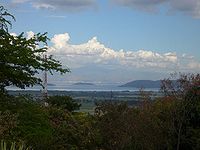
There is a central low plain around the Valencia Lake and towards the south, where Venezuela's Llanos start.
There is a large amount of anticlinals, synclinals, diaclases, fractures and faults. One of the most important is the one of the Victoria, south of Valencia. This area has moderate tectonic activity.
Mountains are very steep; some slopes are over 80%. On the plains, slopes are less than 1%. In the Tocuyito area, slopes can reach 5%.
There are a group of small island
s near Puerto Cabello. The main ones are Isla Larga, Isla Santo Domingo, Isla Alcatraz and Isla del Rey. Isla Larga is the largest and is 1855 metres long. It makes part of the San Esteban National Park
.
There are also a couple of islands on Lake Valencia. Some more have disappeared after the rise in sea level
since the 1970s. Isla del Burro ("Donkey Island") is the largest island of the lake.
Carabobo's soils are fertile. Entisole soils predominate (above all Fluvents and Orthents). There are also threats of vertisoles with suborders of Usterts.
s typical in Carabobo include: bengalí (Sporophila bouvronides), chirulí (Carduelis psaltria), various species of humming birds, guacharaca (Ortalis ruficauda), picoplata (Ramphocelus carbo)
Typical mammal
s include peccaries
, agouti
s, deers, opossums, pumas (Felis concolor)
Reptiles include green iguanas, mapanares (Bothrops atrox
), tigras mariposa
(Bothrops venezuelensis) and boa
s constrictor. There are also coast crocodiles (Crocodylus acutus), which are under threat.
, apamates (Tabebuia rosea
), camorucos, mahogany
, cedars, guamo
s Carabobo palms, and Samanea saman
.
On the coast there mangrove
s like the red Rhizophora mangle
, as well as coconut trees (Cocoloba uvifera).
. A large volume of residual water pours into them without any processing. In the mid-20th century, people could still bathe Valencia Lake. There have been various projects for improving the quality of its waters, but little progress has been made. Sewage
regulations are often ignored. There are some processing plants in the area of Los Guayos, but this is far from optimal and does not cover all possible flows into the Valencia Lake.
There are also many unofficial rubbish depots that do not comply with international standards.
The rapid demographic growth has led to the loss of large forest and agricultural areas. Even if many regions around the Valencia Lake have been officially reserved for agricultural purposes, they are often being turned into urbanized zones.

s and ceramics remain from this time.
There are signs of human presence in the Valencia region from the fourth millennium BC onwards. Humans were also present earlier in other areas of what is now Carabobo, like in Bejuma
.
An important human settlement occurred around the Valencia Lake between 200 and 1000 AD. These people already practiced some kind of agriculture.
region, probably via the El Pao River. From the eighth century onwards the Orinoco populations started to merge with the older groups. This fusion produced what is known as Valenciode culture .
People lived in houses built on artificial mounds in the very fruitful valleys to the East and West of the Valencia Lake. They produced specially anthropomorphic sculptures.
Around the year 1200 the Valencoid culture reached the whole area of the Valencia Lake basin, the centre of Northern Venezuela and several islands in the Caribbean. The Indians would trade see products like the (Strombus gigas
), salt (specially from the Paraguana Peninsula), turtles and fish from coral riffs. The trade took place in villages along the coast.
Taramainas, Tacariguas and other tribes inhabited the Valencia Lake region when the Europeans arrived.
The different groups spoke mostly Arawac languages, but there were also several Carib groups.
The Indians grew maize, a typical product of Western South American cultures and also Manioc, a typical product of groups from the East. Many metates or grinding stones for maize as well as budares for the preparation of cassava remain from those times.
The Jirajara Indians from Nirgua (now a region between Yaracuy and Carabobo), would go to the Valencia Lake and from there through the mountains to the Sea at the level of Borburata to get salt.
 In 1577 and 1583 the region of Valencia suffered a series of raids by Carib tribes coming from the Low Orinoco
. The Spanish troops led by Garci-González repelled and went after them.
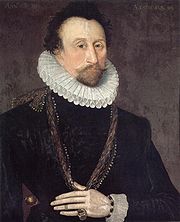
During the late 16th and 17th centuries, the region suffered many attacks by French and British pirates
. The town of Borburata was eventually abandoned for a long period, and settlers moved to Valencia, which was less likely to be raided as it was a day walk from the Caribbean. Some of the attacks included:
Attacks by English and French pirates continued during a great part of the century. In 1659, the English pirate Myngs plundered Puerto Cabello
on a raid that had taken him to Cumaná and later Coro.
In 1677, Valencia was plundered by French pirates, who burnt down the Ayuntamiento or "City Hall" and destroyed most historical documents.
At the beginning of 1694, the governor of Venezuela, Francisco Berroterán, declared the growing Guacara, Los Guayos and San Diego doctrinas, "towns of Indians".
In 1800, German scientist Alexander von Humboldt
explored the area in his South American trip.
 Venezuela's independence was declared on 19 April 1810 in the Casa de la Estrella, in Valencia. The Independence act was signed there the next year, 5 July.
Several very important battles between Spanish royalist forces and the pro-Independence troops under Bolivar took place in the Carabobo region. The most important was the Battle of Carabobo
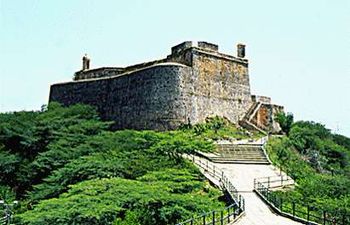
, fought on 24 June 1821 and considered a key battle in the struggle for Venezuelan independence. After the battle, what was left of the Spanish forces holed up in the San Felipe Castle in Puerto Cabello until 10 November 1823, when they surrendered and left Venezuela.
On 29 March 1832 the central government created the province of Barquisimeto from a part of Carabobo.
In 1858, during the March Revolution, Valencia became again capital of Venezuela.
On 27 April 1881 the central government reforms the administrative divisions and creates the state of Carabobo, which at that time had a part that later was given to Yaracuy.
, the crews of several Italian ships and one German ship took refuge on the Puerto Cabello bay. On 31 March 1941, they set fire to their ships to prevent US troops from capturing them. A big fire in the haven of Puerto Cabello ensued. Several hundred marines were captured. Many of the Italians eventually would decide to settle down in Venezuela.
In the second half of the 20th century, Carabobo experienced a population explosion. Many immigrants arriving from Europe to Venezuela after WW2 settled down in Valencia and surrounding areas. From the 1970s onwards, immigration came mainly from other Latin American countries.
The first local elections for governors took place in 1988. Salas Römer became elected governor of Carabobo.
After the Vargas flood of 1999, thousands of homeless people from that area moved to Carabobo and settled in slums in the Naguanagua and Valencia regions.
Since 1999 and specially after 2004, Carabobo suffered a dramatic increase in crime. The state is now one of the areas with the highest murder rates in Venezuela.
Hugo Chávez
's proposal for constitutional reform was defeated in Carabobo during the 2nd December 2007 referendom by 52.82% of the population.
On 24 November opposition Salas Feo was elected as new governor of Carabobo.
, textile
s, galvanizing, chemical, petrochemical, metal-mechanic, car assembling, fuel, liquified gas, ceramics and paper factories. The industrial centres are located in southern Valencia and in Guacara. The state-owned petrochemical and oil industrial complex of PDVSA (Complejo de Refinería El Palito) is located on the western coast, close to Morón
. A major oil distribution centre is in Yagua
.
There are many farms of pigs and cows, specially to the South of the Valencia Lake and on the Western part of the state.
an insectarium and a small zoo with animals proper to Venezuela.
, with around 40000 students.
There are also a series of private universities and colleges, like:
specially the Faculty for Science and Technology.

The coastal regions have many traditions heavily influenced by African traditions. The mountain regions have rather European and Native American influences.
Drum
-based music is very popular in the towns along the coast, from Morón to the Patanemo area.
On the 23rd June, those towns celebrate the cult to San Juan Bautista (Saint John the Baptist). The village of Borburata is specially known for its festivities.
The town of Yagua has a Festivity of the Flowers (Fiesta de las Flores) starting with a procession to the nearby mountain, with a parade
where the most different flower motives are shown through the village and the usual town celebrations.
s, Arepa
s and Hallaca
s. Local specialities include:
s of the region are El Carabobeño and Notitarde.
The main channels of the region re NCtv and DATtv
The journalistic web page is ACN - Agencia Carabobeña de Noticias (Carabobo's News Agency)
States of Venezuela
Venezuela is divided into 23 states , 1 Capital District and the Federal Dependencies that consist of a large number of Venezuelan islands...
of Venezuela
Venezuela
Venezuela , officially called the Bolivarian Republic of Venezuela , is a tropical country on the northern coast of South America. It borders Colombia to the west, Guyana to the east, and Brazil to the south...
, located in the north of the country, about two hours by car from Caracas
Caracas
Caracas , officially Santiago de León de Caracas, is the capital and largest city of Venezuela; natives or residents are known as Caraquenians in English . It is located in the northern part of the country, following the contours of the narrow Caracas Valley on the Venezuelan coastal mountain range...
. The capital city of this state is Valencia
Valencia, Venezuela
Valencia is the capital city of Carabobo State, and the third largest city of Venezuela.The city is an economic hub that contains Venezuela's top industries and manufacturing companies. The population of Valencia reached some 1.5 million in the year 2003, and it is expected to grow dramatically...
, which is also the country's main industrial center. The state's area is 4,650 km² and had an estimated population of 2,227,000 in 2007.
Carabobo was the site of the Battle of Carabobo
Battle of Carabobo
The Battle of Carabobo, 24 June 1821, was fought between independence fighters, led by Simón Bolívar, and the Royalist forces, led by Spanish Field Marshal Miguel de la Torre. Bolívar's decisive victory at Carabobo led to the independence of Venezuela....
on June 24, 1821. This was a decisive win in the war of independence from Spain
Spain
Spain , officially the Kingdom of Spain languages]] under the European Charter for Regional or Minority Languages. In each of these, Spain's official name is as follows:;;;;;;), is a country and member state of the European Union located in southwestern Europe on the Iberian Peninsula...
, and was led by Simón Bolívar
Simón Bolívar
Simón José Antonio de la Santísima Trinidad Bolívar y Palacios Ponte y Yeiter, commonly known as Simón Bolívar was a Venezuelan military and political leader...
.
Administrative regions
Carabobo has 14 municipalities:| Municipio | Capital | Population | Area (km²) | Density (inhab./km²) | Parishes |
|---|---|---|---|---|---|
| Bejuma Bejuma Municipality The Bejuma Municipality is one of the 14 municipalities that makes up the Venezuelan state of Carabobo and, according to a 2007 population estimate by the National Institute of Statistics of Venezuela, the municipality has a population of 45,306... |
Bejuma Bejuma Bejuma is a small town in Carabobo State, Venezuela, seat of the Bejuma Municipality.- History :The town of Bejuma was founded in 1843 by the landowners of the "Fundo Bejuma" hacienda.- Economy :The economy of the region is based on agriculture... |
46041 | 469 | 98,17 | Bejuma, Canoabo, Simón Bolívar |
| Carlos Arvelo Carlos Arvelo Municipality The Carlos Arvelo Municipality is one of the 14 municipalities that makes up the Venezuelan state of Carabobo and, according to a 2007 population estimate by the National Institute of Statistics of Venezuela, the municipality has a population of 146,598... |
Güigüe Güigüe Güigüe is a city in the south of the Valencia Lake, in Carabobo, Venezuela. It is the capital of the Carlos Arvelo Municipality and of the Güigüe parish.- History :Güigüe was founded in 1724... |
149313 | 835 | 178,82 | Güigüe, Belén, Tacarigua |
| Diego Ibarra Diego Ibarra Municipality The Diego Ibarra Municipality is one of the 14 municipalities that makes up the Venezuelan state of Carabobo and, according to a 2007 population estimate by the National Institute of Statistics of Venezuela, the municipality has a population of 110,131... |
Mariara Mariara Mariara is a city capital of the Diego Ibarra Municipality in Carabobo State, Venezuela.It was founded by bishop Mariano Marti on 3 December 1781.... |
111938 | 79 | 1416,94 | Aguas Calientes, Mariara |
| Guacara Guacara Municipality The Guacara Municipality is one of the 14 municipalities that makes up the Venezuelan state of Carabobo and, according to a 2007 population estimate by the National Institute of Statistics of Venezuela, the municipality has a population of 171,123... |
Guacara Guacara Guacara is a city in Carabobo State, Venezuela, seat of Guacara Municipality.It was founded as "town of Indians" in the year 1624 with the official name of "San Agustin of Guacara". It has an estimated population for July 1, 2009 of 178,000 inhabitants. It is located at 438 meters over sea level... |
174868 | 165 | 1059,81 | Guacara, Yagua, Ciudad Alianza |
| Juan José Mora Juan José Mora Municipality The Juan José Mora Municipality is one of the 14 municipalities that makes up the Venezuelan state of Carabobo and, according to a 2007 population estimate by the National Institute of Statistics of Venezuela, the municipality has a population of 65,239... |
Morón Morón, Venezuela Morón is a Venezuelan town located on the coast of Carabobo State. It is the capital of the Juan José Mora Municipality.Several important industries are located close by, like El Palito refinery and the most important electricity centre of Venezuela, Planta Centro... |
66269 | 453 | 146,29 | Morón, Urama |
| Libertador Libertador Municipality, Carabobo The Libertador Municipality is one of the 14 municipalities that makes up Carabobo State of Venezuela and, according to a 2007 population estimate by the National Institute of Statistics of Venezuela, the municipality has a population of 175,255. The town of Tocuyito is the shire town of the... |
Tocuyito Tocuyito Tocuyito is a city of Venezuela, capital of the Libertador Municipality in Carabobo State. It is part of the metropolitan area of Valencia. This city is considered the entry point to Valencia from the motorways that lead to the Southwest and South .-Geography:Tocuyito is located in the flatlands... |
178904 | 558 | 320,62 | Tocuyito, Independencia |
| Los Guayos Los Guayos Municipality The Los Guayos Municipality is one of the 14 municipalities that makes up the Venezuelan state of Carabobo and, according to a 2007 population estimate by the National Institute of Statistics of Venezuela, the municipality has a population of 157,787... |
Los Guayos Los Guayos Los Guayos is a town in Carabobo State, Venezuela, Northwest of the Valencia Lake. It is the capital of the Los Guayos Municipality and is currently part of Valencia's metropolitan area.- Etymology :... |
161341 | 73 | 2210,15 | Los Guayos |
| Miranda Miranda Municipality, Carabobo The Miranda Municipality is one of the 14 municipalities that makes up the Venezuelan state of Carabobo and, according to a 2007 population estimate by the National Institute of Statistics of Venezuela, the municipality has a population of 27,609. The town of Miranda is the shire town of the... |
Miranda (Carabobo) | 28135 | 161 | 174,75 | Miranda |
| Montalbán Montalbán Municipality The Montalbán Municipality is one of the 14 municipalities that makes up the Venezuelan state of Carabobo and, according to a 2007 population estimate by the National Institute of Statistics of Venezuela, the municipality has a population of 23,712... |
Montalbán | 24154 | 107 | 225,74 | Montalbán |
| Naguanagua Naguanagua Municipality The Naguanagua Municipality is one of the 14 municipalities that makes up the Venezuelan state of Carabobo and, according to a 2007 population estimate by the National Institute of Statistics of Venezuela, the municipality has a population of 143,315... |
Naguanagua Naguanagua Naguanagua is a city in Carabobo State that forms part of the greater Valencia Metropolitan Area in Venezuela. It is in the valley of the Cabriales River at the base of Cerro El Café and the El Trigal Mountain. Valencia and Naguanagua form a continuous urban area... |
144308 | 188 | 767,70 | Naguanagua |
| Puerto Cabello Puerto Cabello Municipality The Puerto Cabello Municipality is one of the 14 municipalities that makes up the Venezuelan state of Carabobo and, according to a 2007 population estimate by the National Institute of Statistics of Venezuela, the municipality has a population of 194,593... |
Puerto Cabello Puerto Cabello Puerto Cabello is a city on the north coast of Venezuela. It is located in Carabobo State about 75 km west of Caracas. As of 2001, the city has a population of around 154,000 people. The city is the home to the largest port in the country and is thus a vital cog in the country's vast oil... |
196942 | 729 | 270,15 | Bartolomé Salón, Democracia, Fraternidad, Goaigoaza, Juan José Flores, Unión, Borburata, Patanemo |
| San Diego San Diego Municipality The San Diego Municipality is one of the 14 municipalities that makes up the Venezuelan state of Carabobo and, according to a 2007 population estimate by the National Institute of Statistics of Venezuela, the municipality has a population of 74,941... |
San Diego San Diego, Carabobo San Diego is a city and civic parish, capital of San Diego Municipality.It is located to the North of Valencia Lake in Carabobo State, Venezuela. It is part of the metropolitan area of Valencia.... |
77154 | 106 | 727,87 | San Diego |
| San Joaquín | San Joaquín San Joaquín, Carabobo San Joaquín is a city and municipality located in Carabobo State, Venezuela. It borders Aragua State to the north, the Lake Valencia to the south, the Diego Ibarra Municipality to the east, and the Guacara Municipality to the west.... |
62777 | 127 | 494,31 | San Joaquín |
| Valencia Valencia Municipality The Valencia Municipality is one of the 14 municipalities that makes up the Venezuelan state of Carabobo and, according to a 2007 population estimate by the National Institute of Statistics of Venezuela, the municipality has a population of 830,420... |
Valencia | 839926 | 623 | 1348,2 | Candelaria, Catedral, El Socorro, Miguel Peña Miguel Peña Miguel Peña is by far the largest civil parish in the municipality of Valencia, Carabobo, and one of the most populous in Venezuela.It is located in the Southern part of the city and it has most of Valencia's poorest slums... ,Rafael Urdaneta, San Blas, San José, Santa Rosa, Negro Primero |
The municipalities are made up of one or more civic parishes. Carabobo has a total of 38 parishes.
Terrain and soil
Around 75% of the region is covered by mountains that make up part of Venezuela's Cost Mountain Range. The highest peaks are found on the north and west of the state and south of the Valencia Lake. The Cobalongo or Caobal peak is the highest point of the state, at 1990 metres above sea level.There is a central low plain around the Valencia Lake and towards the south, where Venezuela's Llanos start.
There is a large amount of anticlinals, synclinals, diaclases, fractures and faults. One of the most important is the one of the Victoria, south of Valencia. This area has moderate tectonic activity.
Mountains are very steep; some slopes are over 80%. On the plains, slopes are less than 1%. In the Tocuyito area, slopes can reach 5%.
There are a group of small island
Island
An island or isle is any piece of sub-continental land that is surrounded by water. Very small islands such as emergent land features on atolls can be called islets, cays or keys. An island in a river or lake may be called an eyot , or holm...
s near Puerto Cabello. The main ones are Isla Larga, Isla Santo Domingo, Isla Alcatraz and Isla del Rey. Isla Larga is the largest and is 1855 metres long. It makes part of the San Esteban National Park
San Esteban National Park
The San Esteban National Park is located in Carabobo, Venezuela.The park lies on the Northeastern part of Carabobo and it links with the Henri Pittier National Park of Aragua....
.
There are also a couple of islands on Lake Valencia. Some more have disappeared after the rise in sea level
Sea level
Mean sea level is a measure of the average height of the ocean's surface ; used as a standard in reckoning land elevation...
since the 1970s. Isla del Burro ("Donkey Island") is the largest island of the lake.
Carabobo's soils are fertile. Entisole soils predominate (above all Fluvents and Orthents). There are also threats of vertisoles with suborders of Usterts.
Fauna and flora
Fauna
Wild birdBird
Birds are feathered, winged, bipedal, endothermic , egg-laying, vertebrate animals. Around 10,000 living species and 188 families makes them the most speciose class of tetrapod vertebrates. They inhabit ecosystems across the globe, from the Arctic to the Antarctic. Extant birds range in size from...
s typical in Carabobo include: bengalí (Sporophila bouvronides), chirulí (Carduelis psaltria), various species of humming birds, guacharaca (Ortalis ruficauda), picoplata (Ramphocelus carbo)
Typical mammal
Mammal
Mammals are members of a class of air-breathing vertebrate animals characterised by the possession of endothermy, hair, three middle ear bones, and mammary glands functional in mothers with young...
s include peccaries
Peccary
A peccary is a medium-sized mammal of the family Tayassuidae, or New World Pigs. Peccaries are members of the artiodactyl suborder Suina, as are the pig family and possibly the hippopotamus family...
, agouti
Agouti
Agouti refers to a number of species of rodents as well as a number of genes affecting coat coloration in several different animals. Agouti fur contains a pattern of pigmentation in which individual hairs have several bands of light and dark pigment with black tips.* When referring to a rodent,...
s, deers, opossums, pumas (Felis concolor)
Reptiles include green iguanas, mapanares (Bothrops atrox
Bothrops atrox
Bothrops atrox is a venomous pitviper species found in the tropical lowlands of northern South America east of the Andes. No subspecies are currently recognized.-Description:...
), tigras mariposa
Mariposa
Mariposa is the Spanish word for "butterfly". In Portuguese, it is both a synonym for "moth" and "butterfly" .It may also refer to:-Canada:* Mariposa, Saskatchewan, a rural municipality...
(Bothrops venezuelensis) and boa
Boa
The Boidae are a family of nonvenomous snakes found in America, Africa, Europe, Asia and some Pacific Islands. Relatively primitive snakes, adults are medium to large in size, with females usually larger than the males. Two subfamilies comprising eight genera and 43 species are currently...
s constrictor. There are also coast crocodiles (Crocodylus acutus), which are under threat.
Flora
Carabobo has a typical tropical vegetation, including prosopisProsopis
Prosopis is a genus of flowering plants in the pea family, Fabaceae. It contains around 45 species of spiny trees and shrubs found in subtropical and tropical regions of the Americas, Africa, Western Asia, and South Asia. They often thrive in arid soil and are resistant to drought, on occasion...
, apamates (Tabebuia rosea
Tabebuia rosea
Tabebuia rosea is a neotropical tree that grows up to and can reach a diameter at breast height of up to . The name Roble de Sabana is widely used in Costa Rica meaning "savannah oak" in Spanish, probably because it often remains in heavily deforested areas, where people prize its intense...
), camorucos, mahogany
Mahogany
The name mahogany is used when referring to numerous varieties of dark-colored hardwood. It is a native American word originally used for the wood of the species Swietenia mahagoni, known as West Indian or Cuban mahogany....
, cedars, guamo
Guamo
Guamo is a town and municipality in the Tolima department of Colombia. The population of the municipality was 32,416 as of the 1993 census....
s Carabobo palms, and Samanea saman
Samanea saman
Albizia samanalso known as samanea saman, is a species of flowering tree in the pea family, Fabaceae, that is native to the Neotropics. Its range extends from Mexico south to Peru and Brazil, but it has been widely introduced to South and Southeast Asia, as well as the Pacific Islands, including...
.
On the coast there mangrove
Mangrove
Mangroves are various kinds of trees up to medium height and shrubs that grow in saline coastal sediment habitats in the tropics and subtropics – mainly between latitudes N and S...
s like the red Rhizophora mangle
Rhizophora mangle
Rhizophora mangle, known as the red mangrove, is distributed in estuarine ecosystems throughout the tropics. Its viviparous "seeds," in actuality called propagules, become fully mature plants before dropping off the parent tree...
, as well as coconut trees (Cocoloba uvifera).
Environment
The Valencia Lake and several main rivers are very pollutedPollution
Pollution is the introduction of contaminants into a natural environment that causes instability, disorder, harm or discomfort to the ecosystem i.e. physical systems or living organisms. Pollution can take the form of chemical substances or energy, such as noise, heat or light...
. A large volume of residual water pours into them without any processing. In the mid-20th century, people could still bathe Valencia Lake. There have been various projects for improving the quality of its waters, but little progress has been made. Sewage
Sewage
Sewage is water-carried waste, in solution or suspension, that is intended to be removed from a community. Also known as wastewater, it is more than 99% water and is characterized by volume or rate of flow, physical condition, chemical constituents and the bacteriological organisms that it contains...
regulations are often ignored. There are some processing plants in the area of Los Guayos, but this is far from optimal and does not cover all possible flows into the Valencia Lake.
There are also many unofficial rubbish depots that do not comply with international standards.
The rapid demographic growth has led to the loss of large forest and agricultural areas. Even if many regions around the Valencia Lake have been officially reserved for agricultural purposes, they are often being turned into urbanized zones.
Prehistory
First cultures
When Europeans arrived to what would become Venezuela, one of the most important cultural centres was located around the Valencia Lake. The native Americans in the region were hunters, gatherers, but also fishers and farmers. Many petroglyphPetroglyph
Petroglyphs are pictogram and logogram images created by removing part of a rock surface by incising, picking, carving, and abrading. Outside North America, scholars often use terms such as "carving", "engraving", or other descriptions of the technique to refer to such images...
s and ceramics remain from this time.
There are signs of human presence in the Valencia region from the fourth millennium BC onwards. Humans were also present earlier in other areas of what is now Carabobo, like in Bejuma
Bejuma
Bejuma is a small town in Carabobo State, Venezuela, seat of the Bejuma Municipality.- History :The town of Bejuma was founded in 1843 by the landowners of the "Fundo Bejuma" hacienda.- Economy :The economy of the region is based on agriculture...
.
An important human settlement occurred around the Valencia Lake between 200 and 1000 AD. These people already practiced some kind of agriculture.
Second wave
At the end of the first millennium new populations started to arrive from the OrinocoOrinoco
The Orinoco is one of the longest rivers in South America at . Its drainage basin, sometimes called the Orinoquia, covers , with 76.3% of it in Venezuela and the remainder in Colombia...
region, probably via the El Pao River. From the eighth century onwards the Orinoco populations started to merge with the older groups. This fusion produced what is known as Valenciode culture .
People lived in houses built on artificial mounds in the very fruitful valleys to the East and West of the Valencia Lake. They produced specially anthropomorphic sculptures.
Around the year 1200 the Valencoid culture reached the whole area of the Valencia Lake basin, the centre of Northern Venezuela and several islands in the Caribbean. The Indians would trade see products like the (Strombus gigas
Strombus gigas
Lobatus gigas, commonly known as the queen conch, is a species of large edible sea snail, a marine gastropod mollusk in the family of true conchs, the Strombidae...
), salt (specially from the Paraguana Peninsula), turtles and fish from coral riffs. The trade took place in villages along the coast.
Taramainas, Tacariguas and other tribes inhabited the Valencia Lake region when the Europeans arrived.
The different groups spoke mostly Arawac languages, but there were also several Carib groups.
The Indians grew maize, a typical product of Western South American cultures and also Manioc, a typical product of groups from the East. Many metates or grinding stones for maize as well as budares for the preparation of cassava remain from those times.
The Jirajara Indians from Nirgua (now a region between Yaracuy and Carabobo), would go to the Valencia Lake and from there through the mountains to the Sea at the level of Borburata to get salt.
15th and 16th centuries
Villegas founded the town of Borburata in 1548. Seven years later, in 1555, he founded Valencia in the central plains to the West of the Tacarigua (Valencia) Lake.Orinoco
The Orinoco is one of the longest rivers in South America at . Its drainage basin, sometimes called the Orinoquia, covers , with 76.3% of it in Venezuela and the remainder in Colombia...
. The Spanish troops led by Garci-González repelled and went after them.
During the late 16th and 17th centuries, the region suffered many attacks by French and British pirates
Piracy in the Caribbean
] The era of piracy in the Caribbean began in the 16th century and died out in the 1830s after the navies of the nations of Western Europe and North America with colonies in the Caribbean began combating pirates. The period during which pirates were most successful was from the 1690s until the 1720s...
. The town of Borburata was eventually abandoned for a long period, and settlers moved to Valencia, which was less likely to be raided as it was a day walk from the Caribbean. Some of the attacks included:
- 1555: French pirates attacked Borburata for 6 days
- 1564: British pirates led by John HawkinsJohn HawkinsAdmiral Sir John Hawkins was an English shipbuilder, naval administrator and commander, merchant, navigator, and slave trader. As treasurer and controller of the Royal Navy, he rebuilt older ships and helped design the faster ships that withstood the Spanish Armada in 1588...
forced the Borburata settlers to buy his cargo. - 1566: Lowell attacked Borburata
- 1567: French pirates led by Nicolas Vallier invaded Borburata and the inhabitants had to abandon the town
- 1568: John Hawkins attacked Borburata again and forced them to buy his cargo again. The main part of that cargo was a group of 400 Africans he had captured and enslaved in Western Africa.
17th century
In 1624 Indians to the Northwest of the Valencia Lake established the settlement of Guacara.Attacks by English and French pirates continued during a great part of the century. In 1659, the English pirate Myngs plundered Puerto Cabello
Puerto Cabello
Puerto Cabello is a city on the north coast of Venezuela. It is located in Carabobo State about 75 km west of Caracas. As of 2001, the city has a population of around 154,000 people. The city is the home to the largest port in the country and is thus a vital cog in the country's vast oil...
on a raid that had taken him to Cumaná and later Coro.
In 1677, Valencia was plundered by French pirates, who burnt down the Ayuntamiento or "City Hall" and destroyed most historical documents.
At the beginning of 1694, the governor of Venezuela, Francisco Berroterán, declared the growing Guacara, Los Guayos and San Diego doctrinas, "towns of Indians".
18th century
The Compañía Guipuzcoana de Caracas, a company organized by Basque entrepreneurs, received the monopoly of trade between Venezuela and the rest of the world. In that context, the company built in 1730 the haven of what would become Puerto Cabello.In 1800, German scientist Alexander von Humboldt
Alexander von Humboldt
Friedrich Wilhelm Heinrich Alexander Freiherr von Humboldt was a German naturalist and explorer, and the younger brother of the Prussian minister, philosopher and linguist Wilhelm von Humboldt...
explored the area in his South American trip.
Independence war
Several very important battles between Spanish royalist forces and the pro-Independence troops under Bolivar took place in the Carabobo region. The most important was the Battle of Carabobo
Battle of Carabobo
The Battle of Carabobo, 24 June 1821, was fought between independence fighters, led by Simón Bolívar, and the Royalist forces, led by Spanish Field Marshal Miguel de la Torre. Bolívar's decisive victory at Carabobo led to the independence of Venezuela....
, fought on 24 June 1821 and considered a key battle in the struggle for Venezuelan independence. After the battle, what was left of the Spanish forces holed up in the San Felipe Castle in Puerto Cabello until 10 November 1823, when they surrendered and left Venezuela.
Post-colonial times and civil war period
On 6 May 1830 the Congress of Valencia takes place. There, Venezuela declared the independence from the Great Colombia and Valencia was declared Venezuela's capital.On 29 March 1832 the central government created the province of Barquisimeto from a part of Carabobo.
In 1858, during the March Revolution, Valencia became again capital of Venezuela.
On 27 April 1881 the central government reforms the administrative divisions and creates the state of Carabobo, which at that time had a part that later was given to Yaracuy.
20th century
During World War IIWorld War II
World War II, or the Second World War , was a global conflict lasting from 1939 to 1945, involving most of the world's nations—including all of the great powers—eventually forming two opposing military alliances: the Allies and the Axis...
, the crews of several Italian ships and one German ship took refuge on the Puerto Cabello bay. On 31 March 1941, they set fire to their ships to prevent US troops from capturing them. A big fire in the haven of Puerto Cabello ensued. Several hundred marines were captured. Many of the Italians eventually would decide to settle down in Venezuela.
In the second half of the 20th century, Carabobo experienced a population explosion. Many immigrants arriving from Europe to Venezuela after WW2 settled down in Valencia and surrounding areas. From the 1970s onwards, immigration came mainly from other Latin American countries.
The first local elections for governors took place in 1988. Salas Römer became elected governor of Carabobo.
After the Vargas flood of 1999, thousands of homeless people from that area moved to Carabobo and settled in slums in the Naguanagua and Valencia regions.
Since 1999 and specially after 2004, Carabobo suffered a dramatic increase in crime. The state is now one of the areas with the highest murder rates in Venezuela.
Hugo Chávez
Hugo Chávez
Hugo Rafael Chávez Frías is the 56th and current President of Venezuela, having held that position since 1999. He was formerly the leader of the Fifth Republic Movement political party from its foundation in 1997 until 2007, when he became the leader of the United Socialist Party of Venezuela...
's proposal for constitutional reform was defeated in Carabobo during the 2nd December 2007 referendom by 52.82% of the population.
On 24 November opposition Salas Feo was elected as new governor of Carabobo.
Industry
The most important industries in Carabobo include food processingFood processing
Food processing is the set of methods and techniques used to transform raw ingredients into food or to transform food into other forms for consumption by humans or animals either in the home or by the food processing industry...
, textile
Textile
A textile or cloth is a flexible woven material consisting of a network of natural or artificial fibres often referred to as thread or yarn. Yarn is produced by spinning raw fibres of wool, flax, cotton, or other material to produce long strands...
s, galvanizing, chemical, petrochemical, metal-mechanic, car assembling, fuel, liquified gas, ceramics and paper factories. The industrial centres are located in southern Valencia and in Guacara. The state-owned petrochemical and oil industrial complex of PDVSA (Complejo de Refinería El Palito) is located on the western coast, close to Morón
Morón, Venezuela
Morón is a Venezuelan town located on the coast of Carabobo State. It is the capital of the Juan José Mora Municipality.Several important industries are located close by, like El Palito refinery and the most important electricity centre of Venezuela, Planta Centro...
. A major oil distribution centre is in Yagua
Yagua
The Yagua are a people in northeastern Peru numbering approximately 3,000 to 4,000. Currently, they live near the Amazon, Napo, Putumayo and Yavari Rivers and their tributaries. Ethnographic descriptions of the Yagua are found in Fejos and P. Powlison . The history and migrations of the Yagua...
.
Service industry
The region is seat to important shopping and entertainment centres. Tourism, mainly local, plays an important role.Agriculture
Carabobo has very productive soils for agriculture. There are important areas for farming in the North and South of the Valencia Lake. Unfortunately, high urbanization has led to the loss of very valuable lands that could otherwise be used for cultivations.There are many farms of pigs and cows, specially to the South of the Valencia Lake and on the Western part of the state.
Tourism
- Valencia's historical centre and parks
- Valencia's AquariumValencia's AquariumValencia's Aquarium is a recreational park located in Valencia, Venezuela. It is the largest aquarium in Latin America and it also has a small zoo with species from Venezuela. It is operated by the J.V. Seijas Foundation.This aquarium has the only trained tamed river dolphins in the world...
or Acuario de Valencia, which contains a large amount of endemic fish, as well as pink dolphins,
an insectarium and a small zoo with animals proper to Venezuela.
- Historic zone of Puerto CabelloPuerto CabelloPuerto Cabello is a city on the north coast of Venezuela. It is located in Carabobo State about 75 km west of Caracas. As of 2001, the city has a population of around 154,000 people. The city is the home to the largest port in the country and is thus a vital cog in the country's vast oil...
- Spanish fortress of Puerto CabelloSolano CastleSolano Castle is located in the San Esteban National Park, south of Puerto Cabello, in Carabobo, Venezuela. It is a military castle built in 1766 by order of governor of Venezuela, Don José Solano y Bote. It was constructed in the area referred to as Cresta de Vigía and was intended to protect the...
(Solano Castle) - Termal baths and spa centre of Las Trincheras (described by Alexander von Humboldt)
- Indian petroglyphs in Vigirima
- Patanemo beach
- Mountains of Canoabo region in the Western part of the state
- Colonial church of Los GuayosLos GuayosLos Guayos is a town in Carabobo State, Venezuela, Northwest of the Valencia Lake. It is the capital of the Los Guayos Municipality and is currently part of Valencia's metropolitan area.- Etymology :...
- Colonial church of San Diego
- Abbey of St. JosephAbbey of GüigüeGüigüe Abbey or St. Joseph's Abbey, Güigüe, is a Benedictine monastery located in Güigüe, to the south of the Valencia Lake in Carabobo, Venezuela.-History:...
, in GüigüeGüigüeGüigüe is a city in the south of the Valencia Lake, in Carabobo, Venezuela. It is the capital of the Carlos Arvelo Municipality and of the Güigüe parish.- History :Güigüe was founded in 1724... - Campo Carabobo, Southwest of Valencia: a monument to the most important battle of independence
Education
The main university in the region is the University of CaraboboUniversity of Carabobo
The University of Carabobo is an autonomous, public university of Venezuela located in Valencia, Venezuela. It offers graduate and postgraduate studies in different areas...
, with around 40000 students.
There are also a series of private universities and colleges, like:
- Universidad Arturo Michelena
- Universidad José Antonio Páez.
- Universidad Tecnológica del Centro.
- Colegio Universitario Padre Isaías Ojeda (CUPIO)
- Universidad Nacional Experimental Politécnica de la Fuerza Armada (Núcleos en Valencia y Puerto Cabello).
- Universidad Nacional Experimental Simón Rodríguez (Decanato Valencia y Nucleo Canoabo)
- Instituto Universitario de Tecnología Valencia
- Universidad Santiago Mariño
- Universidad Alejandro Humboldt
Science and Technology
Among the main research centres Carabobo counts with FUNDACITE (Foundation for the Development of Technology in Carabobo) as well as the University of Carabobo,specially the Faculty for Science and Technology.
Culture
Folklore
Carabobo's folklore shows the influence of Native American, European and African components, as in most of Venezuela.The coastal regions have many traditions heavily influenced by African traditions. The mountain regions have rather European and Native American influences.
Drum
Drum
The drum is a member of the percussion group of musical instruments, which is technically classified as the membranophones. Drums consist of at least one membrane, called a drumhead or drum skin, that is stretched over a shell and struck, either directly with the player's hands, or with a...
-based music is very popular in the towns along the coast, from Morón to the Patanemo area.
On the 23rd June, those towns celebrate the cult to San Juan Bautista (Saint John the Baptist). The village of Borburata is specially known for its festivities.
The town of Yagua has a Festivity of the Flowers (Fiesta de las Flores) starting with a procession to the nearby mountain, with a parade
Parade
A parade is a procession of people, usually organized along a street, often in costume, and often accompanied by marching bands, floats or sometimes large balloons. Parades are held for a wide range of reasons, but are usually celebrations of some kind...
where the most different flower motives are shown through the village and the usual town celebrations.
Food
Carabobo's cuisine shares many components with other Venezuelan regions, like CachapaCachapa
Cachapas are a traditional Venezuelan dish made from corn. Like arepas, they are popular at roadside stands. They can be made like pancakes of fresh corn dough, or wrapped in dry corn leaves and boiled...
s, Arepa
Arepa
An arepa is a dish made of ground corn dough or cooked flour, popular in Colombia, Venezuela and other Spanish-speaking countries. It is similar in shape to the Salvadoran pupusa...
s and Hallaca
Hallaca
In Venezuelan cuisine, an hallaca typically involves a mixture of beef, pork, chicken, capers, raisins, and olives wrapped in maize , bound with string within plantain leaves, and boiled or steamed afterwards. It is typically served during the Christmas holiday...
s. Local specialities include:
- MaizeMaizeMaize known in many English-speaking countries as corn or mielie/mealie, is a grain domesticated by indigenous peoples in Mesoamerica in prehistoric times. The leafy stalk produces ears which contain seeds called kernels. Though technically a grain, maize kernels are used in cooking as a vegetable...
chicha - Fried fishFishFish are a paraphyletic group of organisms that consist of all gill-bearing aquatic vertebrate animals that lack limbs with digits. Included in this definition are the living hagfish, lampreys, and cartilaginous and bony fish, as well as various extinct related groups...
with tostones (fried salty plantainPlantainPlantain is the common name for herbaceous plants of the genus Musa. The fruit they produce is generally used for cooking, in contrast to the soft, sweet banana...
) with riceRiceRice is the seed of the monocot plants Oryza sativa or Oryza glaberrima . As a cereal grain, it is the most important staple food for a large part of the world's human population, especially in East Asia, Southeast Asia, South Asia, the Middle East, and the West Indies...
and salad, specially served on the coast - OrangeOrange (fruit)An orange—specifically, the sweet orange—is the citrus Citrus × sinensis and its fruit. It is the most commonly grown tree fruit in the world....
and lemonLemonThe lemon is both a small evergreen tree native to Asia, and the tree's ellipsoidal yellow fruit. The fruit is used for culinary and non-culinary purposes throughout the world – primarily for its juice, though the pulp and rind are also used, mainly in cooking and baking...
cakes - Panelas de San Joaquín produced in San JoaquínSan Joaquín, CaraboboSan Joaquín is a city and municipality located in Carabobo State, Venezuela. It borders Aragua State to the north, the Lake Valencia to the south, the Diego Ibarra Municipality to the east, and the Guacara Municipality to the west....
, a kind of bizcochitoBizcochitoBizcochito or biscochito is a crisp butter or lard based cookie flavored with anise and cinnamon. It was developed by residents of New Mexico over the centuries from the first Spanish colonists of New Mexico...
Newspapers
The main newspaperNewspaper
A newspaper is a scheduled publication containing news of current events, informative articles, diverse features and advertising. It usually is printed on relatively inexpensive, low-grade paper such as newsprint. By 2007, there were 6580 daily newspapers in the world selling 395 million copies a...
s of the region are El Carabobeño and Notitarde.
The main channels of the region re NCtv and DATtv
The journalistic web page is ACN - Agencia Carabobeña de Noticias (Carabobo's News Agency)
Famous citizens
- Antonio Herrera ToroAntonio Herrera ToroAntonio Herrera Toro was a Venezuelan painter. He worked with Martin Tovar y Tovar on some of his decorations of the Federal Palace, but was also an artist in his own right, known especially for his portraits...
, painter. - Braulio SalazarBraulio Salazar- Biography :Salazar was born on 23 December 1919 in Valencia. His first exhibition took place in 1935. As he suffered from hemotitis, doctors banned him from using chemical products...
, painter. - Arturo MichelenaArturo MichelenaArturo Michelena was a Venezuelan painter born in Valencia, Carabobo State. He began to paint at a young age under his father's tutelage. Traveled to Paris where he studied in the famous Académie Julian...
, painter. - Aldemaro RomeroAldemaro RomeroAldemaro Romero was a Venezuelan pianist, composer, arranger and orchestral conductor. He was born in Valencia, Carabobo State.-Biography:...
, musician - Italo PizzolanteItalo PizzolanteItalo Pizzolante was a Venezuelan poet, composer, musician, professor and engineer of Italian descent. Author of famous songs like Motivos, Mi Puerto Cabello, among others. Pizzolante was married to Nelly Negrón....
, composer. - Vicente GerbasiVicente GerbasiVicente Gerbasi was a representative poet of Venezuelan 20th century.- Biography :...
, poet. - Renny OttolinaRenny OttolinaRenaldo José "Renny" Ottolina Pinto was a Venezuelan-born producer and entertainer. His mother died when he was two years old. At the age of six his father moved him to Caracas with his paternal grandmother, for he was going to Germany...
, TV celebrity. - Eugenio MontejoEugenio MontejoEugenio Montejo was a Venezuelan poet and essay writer, founder of the literary magazine Azar and co-founder of Revista Poesía, a poetry magazine published by the University of Carabobo....
, poet (born in CaracasCaracasCaracas , officially Santiago de León de Caracas, is the capital and largest city of Venezuela; natives or residents are known as Caraquenians in English . It is located in the northern part of the country, following the contours of the narrow Caracas Valley on the Venezuelan coastal mountain range...
, but studied and lived specially in Valencia) - Guillermo Tell VillegasGuillermo Tell VillegasGuillermo Tell Villegas , was interim President of Venezuela in 1868, 1870 and 1892.-Early career:...
, interim president of Venezuela. - Hermógenes LópezHermógenes LópezHermógenes López was a Venezuelan soldier, farmer and acting president of his country between 1887 and 1888, after the resignation of General Antonio Guzmán Blanco as cause of his voluntary exile in Paris.There is no such information about his childhood, only that was limited to elementary...
, interim president of Venezuela. - Luis Pérez Carreño, physician, creator of the Clinic for the Poor Children.
- Robert MachadoRobert MachadoRobert Alexis Machado [ma-CHAH-do] is a former catcher in Major League Baseball who played most recently with the Texas Rangers organization. Previously, Machado played for the Chicago White Sox , Montreal Expos , Seattle Mariners , Chicago Cubs , Milwaukee Brewers , and Baltimore Orioles...
, MLB player for the Chicago White SoxChicago White SoxThe Chicago White Sox are a Major League Baseball team located in Chicago, Illinois.The White Sox play in the American League's Central Division. Since , the White Sox have played in U.S. Cellular Field, which was originally called New Comiskey Park and nicknamed The Cell by local fans...
, Montreal ExposMontreal ExposThe Montreal Expos were a Major League Baseball team located in Montreal, Quebec from 1969 through 2004, holding the first MLB franchise awarded outside the United States. After the 2004 season, MLB moved the Expos to Washington, D.C. and renamed them the Nationals.Named after the Expo 67 World's...
, Seattle MarinersSeattle MarinersThe Seattle Mariners are a professional baseball team based in Seattle, Washington. Enfranchised in , the Mariners are a member of the Western Division of Major League Baseball's American League. Safeco Field has been the Mariners' home ballpark since July...
, Chicago CubsChicago CubsThe Chicago Cubs are a professional baseball team located in Chicago, Illinois. They are members of the Central Division of Major League Baseball's National League. They are one of two Major League clubs based in Chicago . The Cubs are also one of the two remaining charter members of the National...
, Milwaukee BrewersMilwaukee BrewersThe Milwaukee Brewers are a professional baseball team based in Milwaukee, Wisconsin, currently playing in the Central Division of Major League Baseball's National League...
, and the Baltimore OriolesBaltimore OriolesThe Baltimore Orioles are a professional baseball team based in Baltimore, Maryland in the United States. They are a member of the Eastern Division of Major League Baseball's American League. One of the American League's eight charter franchises in 1901, it spent its first year as a major league...
. - Ruben QuevedoRubén QuevedoRubén Quevedo [IPA ru βen' ke βe' do] is a former starting pitcher in Major League Baseball who played with the Chicago Cubs and Milwaukee Brewers . He batted and threw right-handed....
, MLB player for the Chicago CubsChicago CubsThe Chicago Cubs are a professional baseball team located in Chicago, Illinois. They are members of the Central Division of Major League Baseball's National League. They are one of two Major League clubs based in Chicago . The Cubs are also one of the two remaining charter members of the National...
and Milwaukee BrewersMilwaukee BrewersThe Milwaukee Brewers are a professional baseball team based in Milwaukee, Wisconsin, currently playing in the Central Division of Major League Baseball's National League...
. - Pablo SandovalPablo SandovalPablo E. Sandoval , nicknamed Kung Fu Panda, is a Venezuelan professional baseball infielder for the San Francisco Giants of Major League Baseball. Sandoval is a 5'11", 237 pound switch hitter. He was born left handed, but did not want to have to play outfield all of his career. He therefore...
, MLB player for the San Francisco GiantsSan Francisco GiantsThe San Francisco Giants are a Major League Baseball team based in San Francisco, California, playing in the National League West Division....
. - Oscar Celli Gerbasi, Politician.