

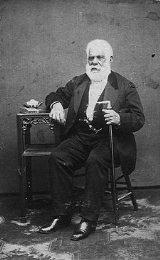
Californio

Encyclopedia
Californio is a term used to identify a Spanish-speaking Catholic people, regardless of race, born in California before 1848. The much larger population of California Indians
living there are not Californios because they did not speak Spanish and/or were not Catholic.
Alta California
("Upper California") was nominally controlled by an appointed governor. The governors of California were appointed under the auspices of the Viceroyalty of New Spain nominally under the control of the Spanish Kings and after 1821 by the approximate 40 Mexican Presidents of Mexico from 1821 to 1846—the Mexican governments were notoriously unstable.
The instability of the New Spain
(Mexican) government made governing the large area but small population in Alta California difficult, confusing and usually neglected as almost isolated Alta California contributed little if anything to the tax collectors. The cost of the Alta California government (what little there was) was borne by a roughly 40-100% import tariff collected at the entry port of Monterey, California
. The United States
conquered and annexed
the thinly settled territories of Alta California
, New Mexico
and what later became the territories of several states in 1846-1848 during the Mexican-American War and paid $15 million for the territory.
Californios included the descendants of agricultural settlers and retired escort soldiers from what is today Mexico. Most were of mixed backgrounds, usually Mestizo
(Spanish and Native American) or mixed Negro and Indian backgrounds. Despite the depictions of the popular shows like Zorro, very few Californios were of "pure" Spanish (Peninsular
or Criollo
) ancestry. Most with Spanish
ancestry were Franciscan
priests and a few officers probably less than 5% of the population.
As a creation of the Spain's monarchical State Church
system, Spanish California society was joint structure that was hierarchical and authoritarian. The governor was appointed by the Viceroy
in New Spain
(Mexico) or later by Mexican
President in Mexico City
. The California Governor usually united in himself the military, executive, legislative and judicial powers common in a monarchical system. Communication time, distance and interest of viceroy
, commandante general, audencia
or President meant the appointed governor usually had a free hand. Under the governor the captains of presidio
s and commisonados were under his direct control. The 5-10 soldiers at each of the Spanish Missions of California were nominally under the control of the two (or more) friars there. These soldiers were used to maintain order in the Missions, enforce Mission discipline and run down and recapture runaway Mission Indians
. The alcaldes of the small pueblos (towns) nominally held local executive and judicial control in local matters.
The other center of power was the Franciscan
Missionaries in the Missions under the father president who often resisted the powers of governor. The governor largely gave the approval for the where and when Missions were built. The family was characteristically patriarchal, with the son of whatever age, deferring to his father's wishes. Women had full rights of property ownership and control unless she was married or had a father—the males had almost complete control of all family members. There was no formal education system in California. The few that knew how to read or write had to learn from hired private tutors or their parents. Since few of their parents knew how to read or write the number that knew how to read and write was only a few hundred. The military, religious and civil components of California society were embodied in the thinly populated presidios, missions, pueblos and ranchos. The Missions, with their thousands of more or less captive Native Americans
, controlled the most (about 1000000 acres (4,046.9 km²) per Mission) and best land, had large numbers of workers, grew the most crops and had the most sheep, cattle and horses.
The Spanish colonial
government, and later, Mexican
officials encouraged people from the northern and western provinces of Mexico like Sonora
to settle in California; but the lack of support and California's isolation were severe barriers to colonization. Many of the wives of officers considered California to be a cultural wasteland and a hardship assignment. Most of California's early settlers were retired soldiers with a few settlers from Mexico. As a frontier society the initial ranchos built were characterized as rude and crude--little more than mud huts with thatched roofs. As the rancho owners, after several years occupancy, got further ahead these residents were often upgraded to bigger, adobe structures with tiled roofs. Today, when they are "restored" they are, in most cases, much grander than they ever were during the Californio period.
Before Alta California became a part of the Mexican state in 1821, about 30 Spanish land grants had already been granted (at little or no cost) in all of Alta California
nearly all to a few friends and family of the Alta California Governors. The 1824 Mexican General Colonization Law
established rules for petitioning for land grants in California; and by 1828, the rules for establishing land grants were codified in the Mexican Reglamento (Regulation). The Acts sought to break the monopoly of the Catholic Franciscan missions while paving the way for additional settlers to California by making land grants easier to obtain. When the Missions were secularized in 1834-1836 the Mission property and livestock were supposed to be mostly allocated to the Mission Indians
.
After agriculture, cattle, sheep and horses were established by the Missions, Friar
s, soldiers and Mission Indians
the Rancho owners dismissed the Friars and the soldiers and took over the Mission land and livestock starting in 1834—the Mission Indians
were left to survive however they could. The rancho owners tried to live in a grand manner similar to what he believed the rich hidalgo
s in Spain
lived. They expected the rest of the population to support them in their lifestyle. Nearly all males rode to where ever they were going at nearly all times making them excellent riders. They indulged in many fiesta
s, fandango
s, rodeo
s and roundups as the rancho owners often went from rancho to rancho on a large horse bound party circuit. Weddings, christenings, and funerals were all "celebrated" with large gatherings.
In practice nearly all Mission property and livestock were taken over by the about 455 large Ranchos (See: Ranchos of California
) of Californios granted by the Californio authorities—mostly to friends and family at little or no cost—money was a very scare commodity in early California. The Californio rancho owners claimed about 8600000 acres (34,803 km²) averaging about 18900 acres (76.5 km²) each. This land was nearly all distributed on former mission land within about 30 miles (48.3 km) of the coast. The Mexican land grants were provisional for five years until a ranch and herds were started. The ranchos often had very indefinite boundaries and sometimes conflicting ownership claims. The boundaries of each rancho were almost never surveyed and marked and often depended on local landmarks that often changed over time. Some Ranchos were later determined to have been granted after the Californio's surrender in January 1847 and used post dated documents to try to establish an existing ownership.
Since the government (what little there was) depended on import tariff
s (also called Custom duties and Ad-valorem taxes) for its income there was virtually no property tax—the property tax when introduced with U.S. statehood was a big shock. As nominally good Catholics all were expected to pay 10%, the Diezmo
, a compulsory payment to the Catholic Church of one tenth of the fruits of agriculture or animal husbandry, business profits or salaries. This tax was collected by the government who took a share of it for their trouble. Priest salaries and Mission expenses were paid out of this money or collected goods. While the Spanish Missions of California were being founded (1769–1821) the Spanish monarchy
(state) financed all additional expenses, not covered by the diezmo, till the Diezmo
collections were large enough to cover expenses. Later, after the Missions began to prosper, many Spanish governments borrowed money from the Catholic Church to support their officials and laws.
There were so many horses that they were often left, after being broken in, to wander around with a rope around their neck for easy capture. It was not unusual for a rider to use one horse till it was wore out and then swap his gear to another horse—letting the first horse free to wander. Horse ownership for all except a few exceptional animals were almost community property. Horses were so common and of so little use that they were often destroyed to keep them from eating the grass needed by the cattle. California Indians later developed a taste for horse flesh as food and helped keep the number of horses under control. An unusual use for horses was found in shuck
ing wheat or barley. The wheat and its stems were cut from the gain fields by Indians bearing sickle
s. The grain with its stems still attached was transported to the harvesting area by solid wheeled ox-cart (about the only wheeled transport in California) and put into a circular packed earth corral. A herd of horses were then driven into the same corral or "threshing field". By keeping the horses moving around the corral their hoofs would, in time, separate the wheat
or barley
from the chaff
. Later the horses would be allowed to escape and the wheat and chaff
were collected and then separated by tossing it into the air on a windy day as the wind carry the chaff
away. Presumably the wheat was washed before use to remove some of the dirt.
For these very few ranchos owners and their families this was the Californio’s Golden Age; for the vast majority it was not golden. Much of the agriculture, vineyards and orchards established by the Missions were allowed to deteriorate as the rapidly declining Mission Indian population went from over 80,000 in 1800 to only a few thousand by 1846. Less Indians required less food and the Franciscan
Friars and soldiers supporting the Missions disappeared after 1834 when the Missions were abolished (secularized). After the Friars and soldiers disappeared many of the Mission Indians
deserted the Missions and returned to other tribes or found work elsewhere. The new Ranchos often gave work to some of the former Mission Indians
. The Indians worked for room, board and clothing (and no pay) got the former Mission Indians
to do the majority of the work herding cattle and planting and harvesting the Californios crops. The slowly increasing Ranchos and Pueblos at Los Angeles, San Diego
, Monterey
, Santa Cruz
, San Jose
and Yerba Buena
mostly only grew enough food to eat and to trade. The exception were the cattle and horses who grew wild on unfenced range land usually originally owned by the Missions and were killed for their hide and tallow.
Leather, one of the most common material available, was used for a wide variety of products from saddle
s, chaps
, whip
s, window and door coverings, riatas (leather braided rope), trousers, hats, stools, chairs, bed frames, etc. Leather was even used for leather "armor" where soldier's jackets were made of several layers of hardened leather sewn together. This stiff leather jacket was sufficient to stop most Indian arrows and worked well when fighting the Indians. Beef was a common constituent of most Californio meals and since it couldn't be kept long in the days before refrigeration a beef was often slaughtered to get a few steak
s or cuts of meat. The property and yards around the ranchos were often marked by the large number of dead cow heads, horns or other animal parts. The cow hides were kept for later trading purposes with Yankee or British traders who started showing up once or twice a year after 1825. Beef, wheat
bread products, corn
(maize), several types of bean
s, peas
and several types of squash were common meal items with wine
and olive oil
used when they could be found. The mestizo
population probably subsisted mostly on what they were used to: corn or maize, beans, and squash with some beef donated by the rancho owners. What the average Native American
ate is unknown since they were in transition from a hunter gatherer type society to and agricultural one. Formerly, many lived at least part of the year on ground acorns, fish, seeds, wild game, etc.. It is known that many of the ranchers complained about Indians stealing their cattle and horses to eat.
The occasional trading ship or whaler that put in to a California port to trade, get fresh water, replenish their firewood and obtain fresh vegetable
s became more common after 1824. Prior to 1824, when Mexico liberalized the trade rules, California averaged about 2.5 ships
per year with 13 years showing no ships coming to California. As California after about 1821 finally had something to trade, the hide-and-tallow a sailing ship
trade developed. The average number of ships from 1825 to 1845 jumped to 25 ships per year versus the 2.5 ships per year earlier. The Californio rancho
society produced the largest cowhide and tallow business in North America, which provided exports for trading with merchant ships from Boston, Massachusetts, Britain
and other trading ports. Ships put in to San Diego, San Juan Capistrano
, San Pedro
, San Buenaventura
(Ventura), Monterey
and Yerba Buena
(San Francisco) after stopping and paying the import tariff
at the entry port of Monterey California. California was not alone in using the import duty to pay for government as the U.S. import tariff at this time was also the way the United States paid for its Federal Government. An U.S. average tariff
(also called custom duties and ad valorem taxes) of about 25% raised about 89% of all Federal income in 1850.
and his under 200 men expedition founded the Presidio of San Diego
(military post), and on July 16, Franciscan
friars Junípero Serra
, Juan Viscaino and Fernando Parron raised and 'blessed a cross', establishing the first mission in upper Las Californias
, Mission San Diego de Alcala
. Colonists began arriving in 1774.
Monterey, California
was established in 1770 by Father Junípero Serra
and Gaspar de Portolà
(governor of Baja
and Alta California
(1767–1770), explorer and founder of San Diego and Monterey). Monterey was settled with about two friars and 40 men and served as the capital of California from 1777 to 1849. The nearby Carmel Mission, in Carmel, California was moved there from Monterey to keep the Mission and its Mission Indians
away from the Monterey Presidio
's soldiers. It was the headquarters of the original upper Las Californias
Province missions headed by Father-President Junípero Serra
from 1770 until his death in 1784—he is buried there. Monterey was originally the only port of entry for all taxable goods in California. All ships were supposed to clear through Monterey and pay the roughly 42% tariff
(customs
) on imported goods before trading anywhere else in Alta California. The oldest governmental building in the state is the Monterey Custom House and California's Historic Landmark Number One. The Californian
, California's oldest newspaper, was first published in Monterey on 15 August 1846 after the city's occupation by the U.S. Navy's Pacific Squadron
on 7 July 1846.
Late in 1775, Colonel
Juan Bautista de Anza
led an overland expedition over the Gila River
trail
he had discovered in 1774 to bring colonists from Sonora
New Spain
(Mexico) to California to settle two mission
s, one presidio
, and one pueblo (town). Anza led 240 friars, soldiers and colonists with their families. They started out with 695 horses and mules and 385 Texas Longhorn
bulls and cows—starting the cattle and horse industry in California. About 600 horses and mules and 300 cattle survived the trip. In 1776 about 200 leather-jacketed soldiers, Friars, and colonists with their families moved to what was called Yerba Buena
(San Francisco) to start building a mission and a presidio there. The leather jackets the soldiers wore consisted of several layers of hardened leather and were strong enough body armor to usually stop an Indian arrow. In California the cattle and horses had few enemies and plentiful grass in all but drought years and essentially grew and multiplied as feral animals—doubling roughly every two years. They partially displaced the Tule Elk
and pronghorn
antelope who had lived there in large herds previously.
Anza selected the sites of the Presidio of San Francisco
and Mission San Francisco de Asís
in what is now San Francisco; on his way back to Monterey, he sited Mission Santa Clara de Asís
and the pueblo San Jose
in the Santa Clara Valley
but didn’t initially leave settlers to settle them. Mission San Francisco de Asís
, or Mission Dolores, the sixth Spanish Mission
, was founded on June 29, 1776, by Lieutenant
José Joaquin Moraga
and Father Francisco Palóu
(a companion of Father Junipero Serra
), both members of the 1775–1776 de Anza Expedition.
On November 29, 1777, El Pueblo de San José de Guadalupe
(The Town of Saint Joseph
of Guadalupe now called simply San Jose) was founded by José Joaquín Moraga
on the first pueblo
-town not associated with a Mission or a military post (presidio) in Alta California. The original San Jose settlers were part of the original group of 200 settlers and soldiers that had originally settled in Yerba Buena (San Francisco). Mission Santa Clara
, founded in 1777, was the eighth mission founded and closest mission to San Jose. Mission Santa Clara was three miles (5 km) from the original San Jose pueblo site in neighboring Santa Clara
. Mission San José was not founded until 1797, about 20 miles (30 km) north of San Jose in what is now Fremont
.
The Los Angeles pobladores
("townspeople") is the name given to the 44 original settlers, 22 adults and 22 children, who founded the Pueblo of Los Angeles
in 1781. The pobladores were agricultural settler families from Sonora
, Mexico. They were the last settlers to use the Anza trail
as the Quechan
s (Yumas) closed the trail for the next 40 years shortly after they had passed over it. Almost none of the settlers were españoles (Spanish); the rest had casta
(caste) designations such as mestizo
, indio, and negro. Some classifications were changed in the California Census of 1790, as often happened in colonial Spanish America.
The settlers and escort soldiers who founded the towns of San José de Guadalupe
, Yerba Buena (San Francisco), Monterey, San Diego and La Reina de Los Ángeles
were primarily mestizo and of mixed Negro
and Indian ancestry from the province of Sonora y Sinaloa
in Mexico. Recruiters in Mexico of the Fernando Rivera y Moncada
expedition and other expeditions later, who were charged with founding an agricultural community in Alta California, had a difficult time persuading people to emigrate to such an isolated outpost with no agriculture, no towns, no stores or developments of almost any kind. The majority of settlers were recruited from the northwestern parts of Mexico. The only tentative link with Mexico was via ship after the Quechans (Yumas) closed the Colorado River
's Yuma Crossing
in 1781. For the next 40 years, an average of only 2.5 ships per year visited California with 13 years showing no recorded ships arriving.
In a frontier society, casta designations did not carry the same weight as they did in older communities of central Mexico. The significant criterion was the concept of the gente de razón
, a term literally meaning “people of reason”. It designated peoples who were culturally Hispanic (that is, they were not living in traditional Indian communities) and had adopted Catholicism
. This served to distinguish the Mexican Indio settlers and converted Californian Indios from the barbaro (barbarian) Californian Indians, who had not converted or become part of the Hispanic towns. California’s Governor Pío Pico
was descended from mestizo and mulato (mulatto
) settlers.
, to flee back to Mexico with most of his troops. Pío Pico
, a Californio, was the governor of California during the conflict.
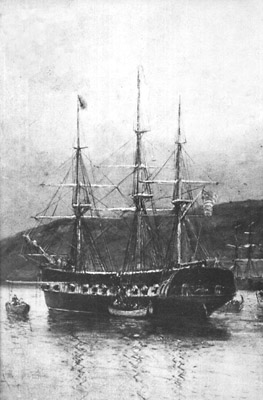 The Pacific Squadron
, the United States Naval force stationed in the Pacific
was instrumental in the capture of Alta California
in the Mexican–American War
of 1846-1848 after war was declared on 24 April 1846. The American navy with its force 350-400 marines and bluejacket sailors on board several naval ships near California were essentially the only significant United States military force on the Pacific coast in the early months of the Mexican–American War. The British navy
ships in the Pacific had more men and were more heavily armed ships available than the Pacific Squadron
; but did not have orders to help or hinder the occupation of California—new orders would have taken almost two years to get back to the British ships. U.S. Marines were stationed aboard each ship
to assist in close in ship to ship combat as snipers in the rigging and defending against boarders and could be detached for use as armed infantry
. In addition there were some bluejacket sailors on each ship that could be detached from each vessel for shore duty as artillery
crews and infantry and still leave the ship functional though short handed. The artillery used were often small Naval cannon
converted to land use. The Pacific Squadron had orders, in the event of war with Mexico, to seize the ports in Mexican California and elsewhere along the Pacific Coast
. The only other United States military force in California was a small exploratory force of Lieutenant Colonel
John C. Fremont
's 30 topographical, surveying, etc. army troops and about 25 men hired as guides and hunters. His exploratory expedition was part of the United States Army
Corps of Topographical Engineers
. Under John D. Sloat
, Commodore of the Pacific Squadron, the USS Savannah (1842)
with USS Cyane (1837)
and USS Levant (1837)
captured
the Alta California
capital city of Monterey, California
on 7 July 1846. Two days later on 9 July, USS Portsmouth, under Captain John S. Montgomery, lands 70 marines and bluejacket sailors at Clark's Point in San Francisco Bay
and captured Yerba Buena
(now named San Francisco) without firing a shot. There he meets John C. Fremont
and gives him some lead and powder to support the Bear Flag Revolt militia Fremont is now leading. On July 11 the British Royal Navy sloop HMS Juno (1844) enters San Francisco Bay causing Montgomery to man his defenses. The large British ship, 2,600 tons with a crew of 600, man-of-war HMS Collingwood (1841)
, flagship under Sir George S. Seymour, also shows up about this time outside Monterey Harbor. Both British ships observe, but did not enter the conflict.
Shortly after July 9 when it became clear the US Navy was taking action the short-lived Bear Flag Republic
was converted into a United States military conflict for possession of California and the Bear Flag was replaced by the U.S. Flag. Fremont expeditionary forces joined forces with a volunteer force of California residents to form a small volunteer militia. The frigate USS Congress (1841)
was the flagship of Commodore Robert F. Stockton
when he took over as the senior United States military commander in California in late July 1846. In July 1846 Stockton asked Fremont to muster the troops and volunteers under his command into the California Battalion
to help garrison the towns rapidly being captured from the Mexican Californio governments. Most towns surrendered without a shot being fired. Fremont's California Battalion
members were sworn in and the volunteers paid the regular US Army salary of $25.00/month for privates with higher pay for officers. The California Battalion varied in size with time from about 160 initially to over 450 by January 1847. Pacific Squadron war ships and storeships
served as floating store houses keeping Fremont's volunteer force in the California Battalion supplied with black powder, lead shot
and supplies as well as transporting them to different California ports. The USS Cyane (1837)
transported Fremont and about 160 of his men to the small port of San Diego
which was captured on 29 July 1846 without a shot being fired.
Leaving about forty men to garrison San Diego, Fremont continued on to the Pueblo de Los Angeles
where on 13 August, with the United States Navy band playing and colors flying, the combined forces of Stockton and Frémont entered the town without a man killed or gun fired. United States Marine Major Archibald Gillespie, Fremont's second in command, was appointed military commander of Los Angeles, the largest settlement in Alta California with about 3,000 residents. Gillespie had an inadequate force of from thirty to fifty troops stationed there to keep order and garrison the city. The USS Congress (1841)
is credited with capturing the Los Angeles harbor
and port
at San Pedro Bay
on 6 August 1846. The USS Congress (1841)
later helped capture Mazatlan, Mexico on 11 November 1847.
The revolt of about 200 Californios in Los Angeles forced Gillespie and his troops to depart on about 24 September 1847. Commodore Stockton of the Pacific Squadron
used marines and bluejacket sailors with dismounted artillery field pieces from the frigates USS Congress (1841)
and USS Savannah (1842)
and the sloop USS Portsmouth (1843) in a joint operation with the approximate 70 Calvary troops supplied by US Army Brigadier General Stephen W. Kearny
(who had arrived from New Mexico
) and two companies of Fremont's California Battalion
to peacefully retake Los Angeles on 10 January 1847. The results of the Battle of Providencia
was the Californios signing the Treaty of Cahuenga
on 13 January 1847—terminating the warfare and disbanding the Californio lancers in Alta California
. On January 16, 1847, Commodore Stockton appointed Frémont military governor of U.S. territorial California - a move later contested by General Kearny.
Some Califonios fought on both sides of the conflict (U.S. and Mexico). The battlefield memorials attest to the heroic fight and loss on both sides.
Most cities in California surrendered without a shot being fired on either side. What little fighting that did occur usually involved small groups of disaffected Californios and small groups of soldiers, marines or militia
The war campaign in California ended on January 13, 1847, after the signing of Treaty of Cahuenga
and they disband their Californio forces—the war in California is over.
s, Friar
s, Bishops etc. and other expenses. The Catholic Church was the largest and richest land owner in Mexico and its provinces. In California the situation was even more pronounced as the Franciscan
Friars held over 90% of all settled property supposedly in trust for the Mission Indians
.
In 1834 secularization laws were enacted that voided the mission control of lands in the northern settlements under Mexican rule. The Missions controlled over 90% of the settled land in California as well as directing thousands of Indians in herding livestock, growing crops and orchards, weaving cloth, etc. for the Missions and the presidio
s and pueblo (town) dewellers. The Mission lands and herds formerly controlled by the Missions were usually distributed to the settlers around each Mission. Since most had almost no money the land was distributed or granted free or at very little cost to friends and families (or those who paid the highest bribes) of the government officials.
Mariano Guadalupe Vallejo
, for example, was reputed to be the richest man in California before the California Gold Rush
. Vallejo oversaw the secularization of Mission San Francisco Solano
and the distributions of its roughly 1000000 acres (4,046.9 km²). He founded the town of Sonoma, California
and Petaluma, California
, owned Mare Island
and the future town site of Benicia, California
and was granted the 66622 acres (269.6 km²) Rancho Petaluma
, the 84000 acres (339.9 km²) Rancho Suscol and other properties by Governor José Figueroa
in 1834 and later. Vallejo's younger brother, Jose Manuel Salvador Vallejo (1813–1876), was granted the 22718 acres (91.9 km²) Rancho Napa
and other additional grants known as Salvador's Ranch. Over the hills of Mariano Vallejo's princely estate of Petaluma roamed ten thousand cattle, four to six thousand horses, and many thousands of sheep. He occupied a baronial castle on the plaza at Sonoma, where he entertained all who came with most royal hospitality and few travelers of note came to California without visiting him. At Petaluma he had a great ranch house called La Hacienda and on his home farm called Lachryma Montis (Tear of the Mountain), he built, about 1849, a modern frame house where he spent the later years of his life.
Vallejo tried to get the California State Capital moved permanently to Benicia, California
on land he sold to the state government in December 1851. It was named Benicia for the General's wife, Francisca Benicia Carillo de Vallejo. The General intended that the prospective city be named "Francisca" after his wife, but this name was dropped when the former city of "Yerba Buena
" changed its name to "San Francisco" on 30 January 1847. Benicia was the third site selected to serve as the California state capital, and its newly constructed city hall was California's capitol from February 11, 1853 to February 25, 1854. Vallejo gave the 84000 acres (339.9 km²) Rancho Suscol to his oldest daughter, Epifania Guadalupe Vallejo, April 3, 1851, as a wedding present, when she married U.S. Army General John H. Frisbie. It is unknown what he gave as a wedding present when his two daughters Natalia and Jovita married the brothers Attila Haraszthy and Agoston Haraszthy
on the same day—June 1, 1863.
In some cases particular Mission land and livestock were split into parcels and then distributed by drawing lots. In nearly all cases the Mission Indians
got very little of the Mission land or livestock. Whether any of the proceeds of these sales made its way back to Mexico City is unknown. These lands had been worked by settlers and the much larger settlements of local Native American Kumeyaay
peoples on the Missions for in some cases several generations. When the Missions were secularized or dismantled and the Indians did not have to live under continued Friar and military control they were left essentially to survive on their own. Many of the Native Americans reverted to their former tribal existence and left the Missions while others found they could get room and board and some clothing by working for the large ranches that took over the former Mission lands and livestock. Many natives who had learned to ride horses and had a smattering of Spanish were recruited to be become vaquero
s (cowboy
s or cattle herders) that worked the cattle and horses on the large ranchos and did other work. Some of these rancho owners and their hired hands would make up the bulk of the few hundred Californios forces fighting in the brief Mexican-American war conflicts in California. Some of the Californios and California Indians
would fight on the side of the U.S. settlers during the conflict with some even joining the California Battalion
.
In 1848, Congress set up a Board of Land Commissioners to determine the validity of Mexican land grants in California. California Senator William M. Gwin
presented a bill that, when approved by the Senate and the House, became the Act of March 3, 1851. It stated that unless grantees presented evidence supporting their title within two years, the property would automatically pass back into the public domain
.
Ranch owners sited the articles VIII and X of the Treaty of Guadalupe Hidalgo
, wherein it guaranteed full protection of all property rights for Mexican citizens—with an unspecified time limit. Much of the former mission/settlement lands were given back and many ranches were divided up as a result. The tens of thousands of acres of what was once ranch and mission lands making up was is present day California.
Many ranch owners with their thousands of acres and large herds of cattle, sheep and horses went on to live prosperous lives under U.S. rule. Former commander of the California Lancers Andrés Pico
became a U.S. citizen after his return to California and acquired the Rancho Ex-Mission San Fernando
ranch which makes up large part of what is present day Los Angeles. He went on to become a California State Assemblyman and later a California State Senator. His brother former governor of Alta California
(under Mexican rule) Pío Pico
also became a U.S. citizen and a prominent ranch owner/businessman in California after the war. Many others were not so fortunate as droughts decimated their herds in the early 1860s and they could not pay back the high cost mortgages (poorly understood by the mostly illiterate ranchers) they had taken out to improve their lifestyle and subsequently lost much or all of their property when they could not be repaid.
The history of Californios has fueled the politically volatile issues of the La Raza
movement by some Chicano
activists, who depict Mexican Californios or Hispanics as the state's original people. They discount the claims to this status by the approximate 50,000 to 80,000 indigenous peoples
, such as Coast Miwok
, Ohlone
, Wintun
, Yokuts and other Native American ancestors. Many of these tribes ancestors inhabited the California region for thousands of years before European contact.
Other Californio descendants claim they had an integrated society of Mexicans, Indians, Mestizos and American immigrants, which had evolved over 77 years beginning with the founding of Misión San Diego
in the Alta California territory in 1769.
The developing agricultural economy of California allowed many Californios to continue living in pueblos alongside Native peoples and Mexicanos well into the 20th century. These settlements grew into modern California cities, including Santa Ana
, San Diego, San Fernando
, San Jose
, Monterey
, Los Alamitos
, San Juan Capistrano, San Bernardino
, Santa Barbara
, Arvin
, Mariposa
, Hemet
and Indio
.
A portrayal of Californio culture is depicted in the novel Ramona
(1884), written by Helen Hunt Jackson
.
The fictional character of Zorro
has become the most identifiable Californio due to short stories
, motion pictures
and the 1950s television
series. The historical facts of the era are sometimes lost in the story-telling.
Indigenous peoples of California
The Indigenous peoples of California are the indigenous inhabitants who have lived or currently live in the geographic area within the current boundaries of California before and after the arrival of Europeans. With over one hundred federally recognized tribes, California has the largest Native...
living there are not Californios because they did not speak Spanish and/or were not Catholic.
Alta California
Alta California
Alta California was a province and territory in the Viceroyalty of New Spain and later a territory and department in independent Mexico. The territory was created in 1769 out of the northern part of the former province of Las Californias, and consisted of the modern American states of California,...
("Upper California") was nominally controlled by an appointed governor. The governors of California were appointed under the auspices of the Viceroyalty of New Spain nominally under the control of the Spanish Kings and after 1821 by the approximate 40 Mexican Presidents of Mexico from 1821 to 1846—the Mexican governments were notoriously unstable.
The instability of the New Spain
New Spain
New Spain, formally called the Viceroyalty of New Spain , was a viceroyalty of the Spanish colonial empire, comprising primarily territories in what was known then as 'América Septentrional' or North America. Its capital was Mexico City, formerly Tenochtitlan, capital of the Aztec Empire...
(Mexican) government made governing the large area but small population in Alta California difficult, confusing and usually neglected as almost isolated Alta California contributed little if anything to the tax collectors. The cost of the Alta California government (what little there was) was borne by a roughly 40-100% import tariff collected at the entry port of Monterey, California
Monterey, California
The City of Monterey in Monterey County is located on Monterey Bay along the Pacific coast in Central California. Monterey lies at an elevation of 26 feet above sea level. As of the 2010 census, the city population was 27,810. Monterey is of historical importance because it was the capital of...
. The United States
United States
The United States of America is a federal constitutional republic comprising fifty states and a federal district...
conquered and annexed
Annexation
Annexation is the de jure incorporation of some territory into another geo-political entity . Usually, it is implied that the territory and population being annexed is the smaller, more peripheral, and weaker of the two merging entities, barring physical size...
the thinly settled territories of Alta California
Alta California
Alta California was a province and territory in the Viceroyalty of New Spain and later a territory and department in independent Mexico. The territory was created in 1769 out of the northern part of the former province of Las Californias, and consisted of the modern American states of California,...
, New Mexico
Santa Fe de Nuevo México
Santa Fe de Nuevo México was a province of New Spain and later Mexico that existed from the late 16th century up through the mid-19th century. It was centered on the upper valley of the Rio Grande , in an area that included most of the present-day U.S. state of New Mexico...
and what later became the territories of several states in 1846-1848 during the Mexican-American War and paid $15 million for the territory.
Californios included the descendants of agricultural settlers and retired escort soldiers from what is today Mexico. Most were of mixed backgrounds, usually Mestizo
Mestizo
Mestizo is a term traditionally used in Latin America, Philippines and Spain for people of mixed European and Native American heritage or descent...
(Spanish and Native American) or mixed Negro and Indian backgrounds. Despite the depictions of the popular shows like Zorro, very few Californios were of "pure" Spanish (Peninsular
Peninsulares
In the colonial caste system of Spanish America, a peninsular was a Spanish-born Spaniard or mainland Spaniard residing in the New World, as opposed to a person of full Spanish descent born in the Americas or Philippines...
or Criollo
Criollo people
The Criollo class ranked below that of the Iberian Peninsulares, the high-born permanent residence colonists born in Spain. But Criollos were higher status/rank than all other castes—people of mixed descent, Amerindians, and enslaved Africans...
) ancestry. Most with Spanish
Spanish people
The Spanish are citizens of the Kingdom of Spain. Within Spain, there are also a number of vigorous nationalisms and regionalisms, reflecting the country's complex history....
ancestry were Franciscan
Franciscan
Most Franciscans are members of Roman Catholic religious orders founded by Saint Francis of Assisi. Besides Roman Catholic communities, there are also Old Catholic, Anglican, Lutheran, ecumenical and Non-denominational Franciscan communities....
priests and a few officers probably less than 5% of the population.
As a creation of the Spain's monarchical State Church
State church
State churches are organizational bodies within a Christian denomination which are given official status or operated by a state.State churches are not necessarily national churches in the ethnic sense of the term, but the two concepts may overlap in the case of a nation state where the state...
system, Spanish California society was joint structure that was hierarchical and authoritarian. The governor was appointed by the Viceroy
Viceroy
A viceroy is a royal official who runs a country, colony, or province in the name of and as representative of the monarch. The term derives from the Latin prefix vice-, meaning "in the place of" and the French word roi, meaning king. A viceroy's province or larger territory is called a viceroyalty...
in New Spain
New Spain
New Spain, formally called the Viceroyalty of New Spain , was a viceroyalty of the Spanish colonial empire, comprising primarily territories in what was known then as 'América Septentrional' or North America. Its capital was Mexico City, formerly Tenochtitlan, capital of the Aztec Empire...
(Mexico) or later by Mexican
Mexico
The United Mexican States , commonly known as Mexico , is a federal constitutional republic in North America. It is bordered on the north by the United States; on the south and west by the Pacific Ocean; on the southeast by Guatemala, Belize, and the Caribbean Sea; and on the east by the Gulf of...
President in Mexico City
Mexico City
Mexico City is the Federal District , capital of Mexico and seat of the federal powers of the Mexican Union. It is a federal entity within Mexico which is not part of any one of the 31 Mexican states but belongs to the federation as a whole...
. The California Governor usually united in himself the military, executive, legislative and judicial powers common in a monarchical system. Communication time, distance and interest of viceroy
Viceroy
A viceroy is a royal official who runs a country, colony, or province in the name of and as representative of the monarch. The term derives from the Latin prefix vice-, meaning "in the place of" and the French word roi, meaning king. A viceroy's province or larger territory is called a viceroyalty...
, commandante general, audencia
Audencia
Audencia Nantes School of Management is one of the foremost business schools in France, accredited by EQUIS , AACSB and AMBA...
or President meant the appointed governor usually had a free hand. Under the governor the captains of presidio
Presidio
A presidio is a fortified base established by the Spanish in North America between the sixteenth and nineteenth centuries. The fortresses were built to protect against pirates, hostile native Americans and enemy colonists. Other presidios were held by Spain in the sixteenth and seventeenth...
s and commisonados were under his direct control. The 5-10 soldiers at each of the Spanish Missions of California were nominally under the control of the two (or more) friars there. These soldiers were used to maintain order in the Missions, enforce Mission discipline and run down and recapture runaway Mission Indians
Mission Indians
Mission Indians is a term for many Native California tribes, primarily living in coastal plains, adjacent inland valleys and mountains, and on the Channel Islands in central and southern California, United States. The tribes had established comparatively peaceful cultures varying from 250 to 8,000...
. The alcaldes of the small pueblos (towns) nominally held local executive and judicial control in local matters.
The other center of power was the Franciscan
Franciscan
Most Franciscans are members of Roman Catholic religious orders founded by Saint Francis of Assisi. Besides Roman Catholic communities, there are also Old Catholic, Anglican, Lutheran, ecumenical and Non-denominational Franciscan communities....
Missionaries in the Missions under the father president who often resisted the powers of governor. The governor largely gave the approval for the where and when Missions were built. The family was characteristically patriarchal, with the son of whatever age, deferring to his father's wishes. Women had full rights of property ownership and control unless she was married or had a father—the males had almost complete control of all family members. There was no formal education system in California. The few that knew how to read or write had to learn from hired private tutors or their parents. Since few of their parents knew how to read or write the number that knew how to read and write was only a few hundred. The military, religious and civil components of California society were embodied in the thinly populated presidios, missions, pueblos and ranchos. The Missions, with their thousands of more or less captive Native Americans
Indigenous peoples of the Americas
The indigenous peoples of the Americas are the pre-Columbian inhabitants of North and South America, their descendants and other ethnic groups who are identified with those peoples. Indigenous peoples are known in Canada as Aboriginal peoples, and in the United States as Native Americans...
, controlled the most (about 1000000 acres (4,046.9 km²) per Mission) and best land, had large numbers of workers, grew the most crops and had the most sheep, cattle and horses.
The Spanish colonial
New Spain
New Spain, formally called the Viceroyalty of New Spain , was a viceroyalty of the Spanish colonial empire, comprising primarily territories in what was known then as 'América Septentrional' or North America. Its capital was Mexico City, formerly Tenochtitlan, capital of the Aztec Empire...
government, and later, Mexican
History of Mexico
The history of Mexico, a country located in the southern portion of North America, covers a period of more than two millennia. First populated more than 13,000 years ago, the country produced complex indigenous civilizations before being conquered by the Spanish in the 16th Century.Since the...
officials encouraged people from the northern and western provinces of Mexico like Sonora
Sonora
Sonora officially Estado Libre y Soberano de Sonora is one of the 31 states which, with the Federal District, comprise the 32 Federal Entities of Mexico. It is divided into 72 municipalities; the capital city is Hermosillo....
to settle in California; but the lack of support and California's isolation were severe barriers to colonization. Many of the wives of officers considered California to be a cultural wasteland and a hardship assignment. Most of California's early settlers were retired soldiers with a few settlers from Mexico. As a frontier society the initial ranchos built were characterized as rude and crude--little more than mud huts with thatched roofs. As the rancho owners, after several years occupancy, got further ahead these residents were often upgraded to bigger, adobe structures with tiled roofs. Today, when they are "restored" they are, in most cases, much grander than they ever were during the Californio period.
Before Alta California became a part of the Mexican state in 1821, about 30 Spanish land grants had already been granted (at little or no cost) in all of Alta California
Alta California
Alta California was a province and territory in the Viceroyalty of New Spain and later a territory and department in independent Mexico. The territory was created in 1769 out of the northern part of the former province of Las Californias, and consisted of the modern American states of California,...
nearly all to a few friends and family of the Alta California Governors. The 1824 Mexican General Colonization Law
General Colonization Law
The Colonization Law of August 18, 1824 was a Mexican statute allowing foreigners to immigrate to the country.-Background:Under Spanish rule, New Spain was populated almost solely with native peoples or Spanish settlers. Foreign immigration was forbidden for much of the country...
established rules for petitioning for land grants in California; and by 1828, the rules for establishing land grants were codified in the Mexican Reglamento (Regulation). The Acts sought to break the monopoly of the Catholic Franciscan missions while paving the way for additional settlers to California by making land grants easier to obtain. When the Missions were secularized in 1834-1836 the Mission property and livestock were supposed to be mostly allocated to the Mission Indians
Mission Indians
Mission Indians is a term for many Native California tribes, primarily living in coastal plains, adjacent inland valleys and mountains, and on the Channel Islands in central and southern California, United States. The tribes had established comparatively peaceful cultures varying from 250 to 8,000...
.
After agriculture, cattle, sheep and horses were established by the Missions, Friar
Friar
A friar is a member of one of the mendicant orders.-Friars and monks:...
s, soldiers and Mission Indians
Mission Indians
Mission Indians is a term for many Native California tribes, primarily living in coastal plains, adjacent inland valleys and mountains, and on the Channel Islands in central and southern California, United States. The tribes had established comparatively peaceful cultures varying from 250 to 8,000...
the Rancho owners dismissed the Friars and the soldiers and took over the Mission land and livestock starting in 1834—the Mission Indians
Mission Indians
Mission Indians is a term for many Native California tribes, primarily living in coastal plains, adjacent inland valleys and mountains, and on the Channel Islands in central and southern California, United States. The tribes had established comparatively peaceful cultures varying from 250 to 8,000...
were left to survive however they could. The rancho owners tried to live in a grand manner similar to what he believed the rich hidalgo
Hidalgo
Hidalgo officially Estado Libre y Soberano de Hidalgo is one of the 31 states which, with the Federal District, comprise the 32 Federal Entities of Mexico. It is divided in 84 municipalities and its capital city is Pachuca de Soto....
s in Spain
History of Spain
The history of Spain involves all the other peoples and nations within the Iberian peninsula formerly known as Hispania, and includes still today the nations of Andorra, Gibraltar, Portugal and Spain...
lived. They expected the rest of the population to support them in their lifestyle. Nearly all males rode to where ever they were going at nearly all times making them excellent riders. They indulged in many fiesta
Fiesta
Fiesta, a Spanish word that means "party", "feast" or "festival", may refer to:-Film:*Fiesta , a 1941 American film directed by LeRoy Prinz*Fiesta , a 1947 MGM film starring Esther Williams and Ricardo Montalbán-Music:...
s, fandango
Fandango
Fandango is a lively couple's dance, usually in triple metre, traditionally accompanied by guitars and castanets or hand-clapping . Fandango can both be sung and danced. Sung fandango is usually bipartite: it has an instrumental introduction followed by "variaciones"...
s, rodeo
Rodeo
Rodeo is a competitive sport which arose out of the working practices of cattle herding in Spain, Mexico, and later the United States, Canada, South America and Australia. It was based on the skills required of the working vaqueros and later, cowboys, in what today is the western United States,...
s and roundups as the rancho owners often went from rancho to rancho on a large horse bound party circuit. Weddings, christenings, and funerals were all "celebrated" with large gatherings.
In practice nearly all Mission property and livestock were taken over by the about 455 large Ranchos (See: Ranchos of California
Ranchos of California
The Spanish, and later the Méxican government encouraged settlement of territory now known as California by the establishment of large land grants called ranchos, from which the English ranch is derived. Devoted to raising cattle and sheep, the owners of the ranchos attempted to pattern themselves...
) of Californios granted by the Californio authorities—mostly to friends and family at little or no cost—money was a very scare commodity in early California. The Californio rancho owners claimed about 8600000 acres (34,803 km²) averaging about 18900 acres (76.5 km²) each. This land was nearly all distributed on former mission land within about 30 miles (48.3 km) of the coast. The Mexican land grants were provisional for five years until a ranch and herds were started. The ranchos often had very indefinite boundaries and sometimes conflicting ownership claims. The boundaries of each rancho were almost never surveyed and marked and often depended on local landmarks that often changed over time. Some Ranchos were later determined to have been granted after the Californio's surrender in January 1847 and used post dated documents to try to establish an existing ownership.
Since the government (what little there was) depended on import tariff
Tariff
A tariff may be either tax on imports or exports , or a list or schedule of prices for such things as rail service, bus routes, and electrical usage ....
s (also called Custom duties and Ad-valorem taxes) for its income there was virtually no property tax—the property tax when introduced with U.S. statehood was a big shock. As nominally good Catholics all were expected to pay 10%, the Diezmo
Diezmo
The diezmo was a compulsory ecclesiastical tithe collected in Spain and its empire from the Middle Ages until the reign of Isabella II in the mid-19th century.-History:...
, a compulsory payment to the Catholic Church of one tenth of the fruits of agriculture or animal husbandry, business profits or salaries. This tax was collected by the government who took a share of it for their trouble. Priest salaries and Mission expenses were paid out of this money or collected goods. While the Spanish Missions of California were being founded (1769–1821) the Spanish monarchy
Spanish monarchy
The Monarchy of Spain, constitutionally referred to as The Crown and commonly referred to as the Spanish monarchy or Hispanic Monarchy, is a constitutional institution and an historic office of Spain...
(state) financed all additional expenses, not covered by the diezmo, till the Diezmo
Diezmo
The diezmo was a compulsory ecclesiastical tithe collected in Spain and its empire from the Middle Ages until the reign of Isabella II in the mid-19th century.-History:...
collections were large enough to cover expenses. Later, after the Missions began to prosper, many Spanish governments borrowed money from the Catholic Church to support their officials and laws.
There were so many horses that they were often left, after being broken in, to wander around with a rope around their neck for easy capture. It was not unusual for a rider to use one horse till it was wore out and then swap his gear to another horse—letting the first horse free to wander. Horse ownership for all except a few exceptional animals were almost community property. Horses were so common and of so little use that they were often destroyed to keep them from eating the grass needed by the cattle. California Indians later developed a taste for horse flesh as food and helped keep the number of horses under control. An unusual use for horses was found in shuck
Shuck
Shuck may refer to:*The shell sections of grains*Black Shuck, mythical dog*Ryan Shuck, guitarist*William E. Shuck, Jr., Medal of Honor recipient...
ing wheat or barley. The wheat and its stems were cut from the gain fields by Indians bearing sickle
Sickle
A sickle is a hand-held agricultural tool with a variously curved blade typically used for harvesting grain crops or cutting succulent forage chiefly for feeding livestock . Sickles have also been used as weapons, either in their original form or in various derivations.The diversity of sickles that...
s. The grain with its stems still attached was transported to the harvesting area by solid wheeled ox-cart (about the only wheeled transport in California) and put into a circular packed earth corral. A herd of horses were then driven into the same corral or "threshing field". By keeping the horses moving around the corral their hoofs would, in time, separate the wheat
Wheat
Wheat is a cereal grain, originally from the Levant region of the Near East, but now cultivated worldwide. In 2007 world production of wheat was 607 million tons, making it the third most-produced cereal after maize and rice...
or barley
Barley
Barley is a major cereal grain, a member of the grass family. It serves as a major animal fodder, as a base malt for beer and certain distilled beverages, and as a component of various health foods...
from the chaff
Chaff
Chaff is the dry, scaly protective casings of the seeds of cereal grain, or similar fine, dry, scaly plant material such as scaly parts of flowers, or finely chopped straw...
. Later the horses would be allowed to escape and the wheat and chaff
Chaff
Chaff is the dry, scaly protective casings of the seeds of cereal grain, or similar fine, dry, scaly plant material such as scaly parts of flowers, or finely chopped straw...
were collected and then separated by tossing it into the air on a windy day as the wind carry the chaff
Chaff
Chaff is the dry, scaly protective casings of the seeds of cereal grain, or similar fine, dry, scaly plant material such as scaly parts of flowers, or finely chopped straw...
away. Presumably the wheat was washed before use to remove some of the dirt.
For these very few ranchos owners and their families this was the Californio’s Golden Age; for the vast majority it was not golden. Much of the agriculture, vineyards and orchards established by the Missions were allowed to deteriorate as the rapidly declining Mission Indian population went from over 80,000 in 1800 to only a few thousand by 1846. Less Indians required less food and the Franciscan
Franciscan
Most Franciscans are members of Roman Catholic religious orders founded by Saint Francis of Assisi. Besides Roman Catholic communities, there are also Old Catholic, Anglican, Lutheran, ecumenical and Non-denominational Franciscan communities....
Friars and soldiers supporting the Missions disappeared after 1834 when the Missions were abolished (secularized). After the Friars and soldiers disappeared many of the Mission Indians
Mission Indians
Mission Indians is a term for many Native California tribes, primarily living in coastal plains, adjacent inland valleys and mountains, and on the Channel Islands in central and southern California, United States. The tribes had established comparatively peaceful cultures varying from 250 to 8,000...
deserted the Missions and returned to other tribes or found work elsewhere. The new Ranchos often gave work to some of the former Mission Indians
Mission Indians
Mission Indians is a term for many Native California tribes, primarily living in coastal plains, adjacent inland valleys and mountains, and on the Channel Islands in central and southern California, United States. The tribes had established comparatively peaceful cultures varying from 250 to 8,000...
. The Indians worked for room, board and clothing (and no pay) got the former Mission Indians
Mission Indians
Mission Indians is a term for many Native California tribes, primarily living in coastal plains, adjacent inland valleys and mountains, and on the Channel Islands in central and southern California, United States. The tribes had established comparatively peaceful cultures varying from 250 to 8,000...
to do the majority of the work herding cattle and planting and harvesting the Californios crops. The slowly increasing Ranchos and Pueblos at Los Angeles, San Diego
San Diego, California
San Diego is the eighth-largest city in the United States and second-largest city in California. The city is located on the coast of the Pacific Ocean in Southern California, immediately adjacent to the Mexican border. The birthplace of California, San Diego is known for its mild year-round...
, Monterey
Monterey, California
The City of Monterey in Monterey County is located on Monterey Bay along the Pacific coast in Central California. Monterey lies at an elevation of 26 feet above sea level. As of the 2010 census, the city population was 27,810. Monterey is of historical importance because it was the capital of...
, Santa Cruz
Santa Cruz, California
Santa Cruz is the county seat and largest city of Santa Cruz County, California in the US. As of the 2010 U.S. Census, Santa Cruz had a total population of 59,946...
, San Jose
San Jose, California
San Jose is the third-largest city in California, the tenth-largest in the U.S., and the county seat of Santa Clara County which is located at the southern end of San Francisco Bay...
and Yerba Buena
Yerba Buena
Yerba buena is a rambling aromatic herb of western and northwestern North America, ranging from maritime Alaska southwards to Baja California Sur...
mostly only grew enough food to eat and to trade. The exception were the cattle and horses who grew wild on unfenced range land usually originally owned by the Missions and were killed for their hide and tallow.
Leather, one of the most common material available, was used for a wide variety of products from saddle
Saddle
A saddle is a supportive structure for a rider or other load, fastened to an animal's back by a girth. The most common type is the equestrian saddle designed for a horse, but specialized saddles have been created for camels and other creatures...
s, chaps
Chaps
Chaps are sturdy coverings for the legs consisting of leggings and a belt. They are buckled on over trousers with the chaps' integrated belt, but unlike trousers they have no seat and are not joined at the crotch. They are designed to provide protection for the legs and are usually made of leather...
, whip
Whip
A whip is a tool traditionally used by humans to exert control over animals or other people, through pain compliance or fear of pain, although in some activities whips can be used without use of pain, such as an additional pressure aid in dressage...
s, window and door coverings, riatas (leather braided rope), trousers, hats, stools, chairs, bed frames, etc. Leather was even used for leather "armor" where soldier's jackets were made of several layers of hardened leather sewn together. This stiff leather jacket was sufficient to stop most Indian arrows and worked well when fighting the Indians. Beef was a common constituent of most Californio meals and since it couldn't be kept long in the days before refrigeration a beef was often slaughtered to get a few steak
Steak
A steak is a cut of meat . Most are cut perpendicular to the muscle fibers, improving the perceived tenderness of the meat. In North America, steaks are typically served grilled, pan-fried, or broiled. The more tender cuts from the loin and rib are cooked quickly, using dry heat, and served whole...
s or cuts of meat. The property and yards around the ranchos were often marked by the large number of dead cow heads, horns or other animal parts. The cow hides were kept for later trading purposes with Yankee or British traders who started showing up once or twice a year after 1825. Beef, wheat
Wheat
Wheat is a cereal grain, originally from the Levant region of the Near East, but now cultivated worldwide. In 2007 world production of wheat was 607 million tons, making it the third most-produced cereal after maize and rice...
bread products, corn
Corn
Corn is the name used in the United States, Canada, and Australia for the grain maize.In much of the English-speaking world, the term "corn" is a generic term for cereal crops, such as* Barley* Oats* Wheat* Rye- Places :...
(maize), several types of bean
Bean
Bean is a common name for large plant seeds of several genera of the family Fabaceae used for human food or animal feed....
s, peas
PEAS
P.E.A.S. is an acronym in artificial intelligence that stands for Performance, Environment, Actuators, Sensors.-Performance:Performance is a function that measures the quality of the actions the agent did....
and several types of squash were common meal items with wine
Wine
Wine is an alcoholic beverage, made of fermented fruit juice, usually from grapes. The natural chemical balance of grapes lets them ferment without the addition of sugars, acids, enzymes, or other nutrients. Grape wine is produced by fermenting crushed grapes using various types of yeast. Yeast...
and olive oil
Olive oil
Olive oil is an oil obtained from the olive , a traditional tree crop of the Mediterranean Basin. It is commonly used in cooking, cosmetics, pharmaceuticals, and soaps and as a fuel for traditional oil lamps...
used when they could be found. The mestizo
Mestizo
Mestizo is a term traditionally used in Latin America, Philippines and Spain for people of mixed European and Native American heritage or descent...
population probably subsisted mostly on what they were used to: corn or maize, beans, and squash with some beef donated by the rancho owners. What the average Native American
Indigenous peoples of the Americas
The indigenous peoples of the Americas are the pre-Columbian inhabitants of North and South America, their descendants and other ethnic groups who are identified with those peoples. Indigenous peoples are known in Canada as Aboriginal peoples, and in the United States as Native Americans...
ate is unknown since they were in transition from a hunter gatherer type society to and agricultural one. Formerly, many lived at least part of the year on ground acorns, fish, seeds, wild game, etc.. It is known that many of the ranchers complained about Indians stealing their cattle and horses to eat.
The occasional trading ship or whaler that put in to a California port to trade, get fresh water, replenish their firewood and obtain fresh vegetable
Vegetable
The noun vegetable usually means an edible plant or part of a plant other than a sweet fruit or seed. This typically means the leaf, stem, or root of a plant....
s became more common after 1824. Prior to 1824, when Mexico liberalized the trade rules, California averaged about 2.5 ships
Sailing ship
The term sailing ship is now used to refer to any large wind-powered vessel. In technical terms, a ship was a sailing vessel with a specific rig of at least three masts, square rigged on all of them, making the sailing adjective redundant. In popular usage "ship" became associated with all large...
per year with 13 years showing no ships coming to California. As California after about 1821 finally had something to trade, the hide-and-tallow a sailing ship
Sailing ship
The term sailing ship is now used to refer to any large wind-powered vessel. In technical terms, a ship was a sailing vessel with a specific rig of at least three masts, square rigged on all of them, making the sailing adjective redundant. In popular usage "ship" became associated with all large...
trade developed. The average number of ships from 1825 to 1845 jumped to 25 ships per year versus the 2.5 ships per year earlier. The Californio rancho
Ranchos of California
The Spanish, and later the Méxican government encouraged settlement of territory now known as California by the establishment of large land grants called ranchos, from which the English ranch is derived. Devoted to raising cattle and sheep, the owners of the ranchos attempted to pattern themselves...
society produced the largest cowhide and tallow business in North America, which provided exports for trading with merchant ships from Boston, Massachusetts, Britain
United Kingdom
The United Kingdom of Great Britain and Northern IrelandIn the United Kingdom and Dependencies, other languages have been officially recognised as legitimate autochthonous languages under the European Charter for Regional or Minority Languages...
and other trading ports. Ships put in to San Diego, San Juan Capistrano
San Juan Capistrano, California
San Juan Capistrano is a city in southern Orange County, California, located approximately southeast of Downtown Santa Ana. The current OMB metropolitan designation for San Juan Capistrano and the Orange County Area is “Santa Ana-Anaheim-Irvine, CA.” The population was 34,593 at the 2010 census,...
, San Pedro
San Pedro, Los Angeles, California
San Pedro is a port district of the city of Los Angeles, California, United States. It was annexed in 1909 and is a major seaport of the area...
, San Buenaventura
Ventura, California
Ventura is the county seat of Ventura County, California, United States, incorporated in 1866. The population was 106,433 at the 2010 census, up from 100,916 at the 2000 census. Ventura is accessible via U.S...
(Ventura), Monterey
Monterey, California
The City of Monterey in Monterey County is located on Monterey Bay along the Pacific coast in Central California. Monterey lies at an elevation of 26 feet above sea level. As of the 2010 census, the city population was 27,810. Monterey is of historical importance because it was the capital of...
and Yerba Buena
Yerba Buena (town)
Yerba Buena was the original name of San Francisco when in the Spanish Las Californias Province of New Spain, and then after 1822 in the Mexican territory of Alta California, until the Mexican American War ended with the 1848 Treaty of Guadalupe Hidalgo, when California became a territory of the...
(San Francisco) after stopping and paying the import tariff
Tariff
A tariff may be either tax on imports or exports , or a list or schedule of prices for such things as rail service, bus routes, and electrical usage ....
at the entry port of Monterey California. California was not alone in using the import duty to pay for government as the U.S. import tariff at this time was also the way the United States paid for its Federal Government. An U.S. average tariff
Tariff
A tariff may be either tax on imports or exports , or a list or schedule of prices for such things as rail service, bus routes, and electrical usage ....
(also called custom duties and ad valorem taxes) of about 25% raised about 89% of all Federal income in 1850.
Early colonization
In 1769, Gaspar de PortolàGaspar de Portolà
Gaspar de Portolà i Rovira was a soldier, governor of Baja and Alta California , explorer and founder of San Diego and Monterey. He was born in Os de Balaguer, province of Lleida, in Catalonia, Spain, of Catalan nobility. Don Gaspar served as a soldier in the Spanish army in Italy and Portugal...
and his under 200 men expedition founded the Presidio of San Diego
Presidio of San Diego
El Presidio Reál de San Diego is an historical fort established on May 14, 1769, by Commandant Pedro Fages for Spain. It was the first permanent European settlement on the Pacific Coast of the United States. As the first of the presidios and Spanish missions in California, it was the base of...
(military post), and on July 16, Franciscan
Franciscan
Most Franciscans are members of Roman Catholic religious orders founded by Saint Francis of Assisi. Besides Roman Catholic communities, there are also Old Catholic, Anglican, Lutheran, ecumenical and Non-denominational Franciscan communities....
friars Junípero Serra
Junípero Serra
Blessed Junípero Serra, O.F.M., , known as Fra Juníper Serra in Catalan, his mother tongue was a Majorcan Franciscan friar who founded the mission chain in Alta California of the Las Californias Province in New Spain—present day California, United States. Fr...
, Juan Viscaino and Fernando Parron raised and 'blessed a cross', establishing the first mission in upper Las Californias
Las Californias
The Californias, or in — - was the name given by the Spanish to their northwestern territory of New Spain, comprising the present day states of Baja California and Baja California Sur on the Baja California Peninsula in Mexico; and the present day U.S. state of California in the United States of...
, Mission San Diego de Alcala
Mission San Diego de Alcalá
Mission Basilica San Diego de Alcalá, in San Diego, California, was the first Franciscan mission in the Las Californias Province of the Viceroyalty of New Spain. It was founded in 1769 by Spanish friar Junípero Serra in an area long inhabited by the Kumeyaay Indians...
. Colonists began arriving in 1774.
Monterey, California
Monterey, California
The City of Monterey in Monterey County is located on Monterey Bay along the Pacific coast in Central California. Monterey lies at an elevation of 26 feet above sea level. As of the 2010 census, the city population was 27,810. Monterey is of historical importance because it was the capital of...
was established in 1770 by Father Junípero Serra
Junípero Serra
Blessed Junípero Serra, O.F.M., , known as Fra Juníper Serra in Catalan, his mother tongue was a Majorcan Franciscan friar who founded the mission chain in Alta California of the Las Californias Province in New Spain—present day California, United States. Fr...
and Gaspar de Portolà
Gaspar de Portolà
Gaspar de Portolà i Rovira was a soldier, governor of Baja and Alta California , explorer and founder of San Diego and Monterey. He was born in Os de Balaguer, province of Lleida, in Catalonia, Spain, of Catalan nobility. Don Gaspar served as a soldier in the Spanish army in Italy and Portugal...
(governor of Baja
Baja California
Baja California officially Estado Libre y Soberano de Baja California is one of the 31 states which, with the Federal District, comprise the 32 Federal Entities of Mexico. It is both the northernmost and westernmost state of Mexico. Before becoming a state in 1953, the area was known as the North...
and Alta California
Alta California
Alta California was a province and territory in the Viceroyalty of New Spain and later a territory and department in independent Mexico. The territory was created in 1769 out of the northern part of the former province of Las Californias, and consisted of the modern American states of California,...
(1767–1770), explorer and founder of San Diego and Monterey). Monterey was settled with about two friars and 40 men and served as the capital of California from 1777 to 1849. The nearby Carmel Mission, in Carmel, California was moved there from Monterey to keep the Mission and its Mission Indians
Mission Indians
Mission Indians is a term for many Native California tribes, primarily living in coastal plains, adjacent inland valleys and mountains, and on the Channel Islands in central and southern California, United States. The tribes had established comparatively peaceful cultures varying from 250 to 8,000...
away from the Monterey Presidio
Presidio of Monterey, California
The Presidio of Monterey, located in Monterey, California, is an active US Army installation with historic ties to the Spanish colonial era. Currently it is the home of the Defense Language Institute Foreign Language Center .-Spanish fort:...
's soldiers. It was the headquarters of the original upper Las Californias
Las Californias
The Californias, or in — - was the name given by the Spanish to their northwestern territory of New Spain, comprising the present day states of Baja California and Baja California Sur on the Baja California Peninsula in Mexico; and the present day U.S. state of California in the United States of...
Province missions headed by Father-President Junípero Serra
Junípero Serra
Blessed Junípero Serra, O.F.M., , known as Fra Juníper Serra in Catalan, his mother tongue was a Majorcan Franciscan friar who founded the mission chain in Alta California of the Las Californias Province in New Spain—present day California, United States. Fr...
from 1770 until his death in 1784—he is buried there. Monterey was originally the only port of entry for all taxable goods in California. All ships were supposed to clear through Monterey and pay the roughly 42% tariff
Tariff
A tariff may be either tax on imports or exports , or a list or schedule of prices for such things as rail service, bus routes, and electrical usage ....
(customs
Customs
Customs is an authority or agency in a country responsible for collecting and safeguarding customs duties and for controlling the flow of goods including animals, transports, personal effects and hazardous items in and out of a country...
) on imported goods before trading anywhere else in Alta California. The oldest governmental building in the state is the Monterey Custom House and California's Historic Landmark Number One. The Californian
The Californian (1840s newspaper)
The Californian was the first California newspaper.The Californian was first published in Monterey, California on August 15, 1846, by Alcalde Walter Colton and his friend Robert B. Semple, from a well-used Ramage printing press that Agustín V. Zamorano brought from Hawaii to Monterey in 1834....
, California's oldest newspaper, was first published in Monterey on 15 August 1846 after the city's occupation by the U.S. Navy's Pacific Squadron
Pacific Squadron
The Pacific Squadron was part of the United States Navy squadron stationed in the Pacific Ocean in the 19th and early 20th centuries. Initially with no United States ports in the Pacific, they operated out of storeships which provided naval supplies and purchased food and obtained water from local...
on 7 July 1846.
Late in 1775, Colonel
Colonel
Colonel , abbreviated Col or COL, is a military rank of a senior commissioned officer. It or a corresponding rank exists in most armies and in many air forces; the naval equivalent rank is generally "Captain". It is also used in some police forces and other paramilitary rank structures...
Juan Bautista de Anza
Juan Bautista de Anza
Juan Bautista de Anza Bezerra Nieto was a Novo-Spanish explorer and Governor of New Mexico for the Spanish Empire.-Early life:...
led an overland expedition over the Gila River
Gila River
The Gila River is a tributary of the Colorado River, 650 miles long, in the southwestern states of New Mexico and Arizona.-Description:...
trail
Juan Bautista de Anza National Historic Trail
thumb|325px|MAP: [[Juan Bautista de Anza]] National Historic Trail routes in [[Arizona]] and [[California]].The Juan Bautista de Anza National Historic Trail is a National Park Service unit in the United States National Historic Trail and National Millennium Trail programs...
he had discovered in 1774 to bring colonists from Sonora
Sonora
Sonora officially Estado Libre y Soberano de Sonora is one of the 31 states which, with the Federal District, comprise the 32 Federal Entities of Mexico. It is divided into 72 municipalities; the capital city is Hermosillo....
New Spain
New Spain
New Spain, formally called the Viceroyalty of New Spain , was a viceroyalty of the Spanish colonial empire, comprising primarily territories in what was known then as 'América Septentrional' or North America. Its capital was Mexico City, formerly Tenochtitlan, capital of the Aztec Empire...
(Mexico) to California to settle two mission
Mission (Christian)
Christian missionary activities often involve sending individuals and groups , to foreign countries and to places in their own homeland. This has frequently involved not only evangelization , but also humanitarian work, especially among the poor and disadvantaged...
s, one presidio
Presidio
A presidio is a fortified base established by the Spanish in North America between the sixteenth and nineteenth centuries. The fortresses were built to protect against pirates, hostile native Americans and enemy colonists. Other presidios were held by Spain in the sixteenth and seventeenth...
, and one pueblo (town). Anza led 240 friars, soldiers and colonists with their families. They started out with 695 horses and mules and 385 Texas Longhorn
Texas longhorn (cattle)
The Texas Longhorn is a breed of cattle known for its characteristic horns, which can extend to tip to tip for steers and exceptional cows, and tip to tip for bulls. Horns can have a slight upward turn at their tips or even triple twist. Texas Longhorns are known for their diverse coloring...
bulls and cows—starting the cattle and horse industry in California. About 600 horses and mules and 300 cattle survived the trip. In 1776 about 200 leather-jacketed soldiers, Friars, and colonists with their families moved to what was called Yerba Buena
Yerba Buena
Yerba buena is a rambling aromatic herb of western and northwestern North America, ranging from maritime Alaska southwards to Baja California Sur...
(San Francisco) to start building a mission and a presidio there. The leather jackets the soldiers wore consisted of several layers of hardened leather and were strong enough body armor to usually stop an Indian arrow. In California the cattle and horses had few enemies and plentiful grass in all but drought years and essentially grew and multiplied as feral animals—doubling roughly every two years. They partially displaced the Tule Elk
Tule Elk
The tule elk is a subspecies of elk found only in California, ranging from the grasslands and marshlands of the Central Valley to the grassy hills on the coast. The subspecies name derives from the tule that it feeds off of, which grows in the marshlands...
and pronghorn
Pronghorn
The pronghorn is a species of artiodactyl mammal endemic to interior western and central North America. Though not an antelope, it is often known colloquially in North America as the prong buck, pronghorn antelope, or simply antelope, as it closely resembles the true antelopes of the Old World and...
antelope who had lived there in large herds previously.
Anza selected the sites of the Presidio of San Francisco
Presidio of San Francisco
The Presidio of San Francisco is a park on the northern tip of the San Francisco Peninsula in San Francisco, California, within the Golden Gate National Recreation Area...
and Mission San Francisco de Asís
Mission San Francisco de Asís
Mission San Francisco de Asís, or Mission Dolores, is the oldest surviving structure in San Francisco and the sixth religious settlement established as part of the California chain of missions...
in what is now San Francisco; on his way back to Monterey, he sited Mission Santa Clara de Asís
Mission Santa Clara de Asís
Mission Santa Clara de Asís was founded on January 12, 1777 and named for Santa Clara de Asis , the foundress of the order of the Poor Clares. Although ruined and rebuilt six times, the settlement was never abandoned.-History:...
and the pueblo San Jose
History of San Jose, California
-Site chosen by De Anza:For thousands of years before the arrival of European settlers, the area now known as San Jose was inhabited by several groups of Ohlone Native Americans...
in the Santa Clara Valley
Santa Clara Valley
The Santa Clara Valley is a valley just south of the San Francisco Bay in Northern California in the United States. Much of Santa Clara County and its county seat, San José, are in the Santa Clara Valley. The valley was originally known as the Valley of Heart’s Delight for its high concentration...
but didn’t initially leave settlers to settle them. Mission San Francisco de Asís
Mission San Francisco de Asís
Mission San Francisco de Asís, or Mission Dolores, is the oldest surviving structure in San Francisco and the sixth religious settlement established as part of the California chain of missions...
, or Mission Dolores, the sixth Spanish Mission
Spanish missions in California
The Spanish missions in California comprise a series of religious and military outposts established by Spanish Catholics of the Franciscan Order between 1769 and 1823 to spread the Christian faith among the local Native Americans. The missions represented the first major effort by Europeans to...
, was founded on June 29, 1776, by Lieutenant
Lieutenant
A lieutenant is a junior commissioned officer in many nations' armed forces. Typically, the rank of lieutenant in naval usage, while still a junior officer rank, is senior to the army rank...
José Joaquin Moraga
José Joaquín Moraga
José Joaquín de la Santísima Trinidad Moraga was an early explorer to Alta California...
and Father Francisco Palóu
Francisco Palóu
Francesc Palou was a Franciscan missionary, administrator, and historian on the Baja California peninsula and in Alta California. Father Palou's made significant contributions to the Alta California and Baja California mission systems...
(a companion of Father Junipero Serra
Junípero Serra
Blessed Junípero Serra, O.F.M., , known as Fra Juníper Serra in Catalan, his mother tongue was a Majorcan Franciscan friar who founded the mission chain in Alta California of the Las Californias Province in New Spain—present day California, United States. Fr...
), both members of the 1775–1776 de Anza Expedition.
On November 29, 1777, El Pueblo de San José de Guadalupe
History of San Jose, California
-Site chosen by De Anza:For thousands of years before the arrival of European settlers, the area now known as San Jose was inhabited by several groups of Ohlone Native Americans...
(The Town of Saint Joseph
Saint Joseph
Saint Joseph is a figure in the Gospels, the husband of the Virgin Mary and the earthly father of Jesus Christ ....
of Guadalupe now called simply San Jose) was founded by José Joaquín Moraga
José Joaquín Moraga
José Joaquín de la Santísima Trinidad Moraga was an early explorer to Alta California...
on the first pueblo
Pueblo
Pueblo is a term used to describe modern communities of Native Americans in the Southwestern United States of America. The first Spanish explorers of the Southwest used this term to describe the communities housed in apartment-like structures built of stone, adobe mud, and other local material...
-town not associated with a Mission or a military post (presidio) in Alta California. The original San Jose settlers were part of the original group of 200 settlers and soldiers that had originally settled in Yerba Buena (San Francisco). Mission Santa Clara
Mission Santa Clara de Asís
Mission Santa Clara de Asís was founded on January 12, 1777 and named for Santa Clara de Asis , the foundress of the order of the Poor Clares. Although ruined and rebuilt six times, the settlement was never abandoned.-History:...
, founded in 1777, was the eighth mission founded and closest mission to San Jose. Mission Santa Clara was three miles (5 km) from the original San Jose pueblo site in neighboring Santa Clara
Santa Clara, California
Santa Clara , founded in 1777 and incorporated in 1852, is a city in Santa Clara County, in the U.S. state of California. The city is the site of the eighth of 21 California missions, Mission Santa Clara de Asís, and was named after the mission. The Mission and Mission Gardens are located on the...
. Mission San José was not founded until 1797, about 20 miles (30 km) north of San Jose in what is now Fremont
Fremont, California
Fremont is a city in Alameda County, California. It was incorporated on January 23, 1956, from the merger of five smaller communities: Centerville, Niles, Irvington, Mission San Jose, and Warm Springs...
.
The Los Angeles pobladores
Los Angeles Pobladores
The Pobladores of Los Angeles refers to the 44 original settlers and 4 soldiers who founded city of Los Angeles, California in 1781....
("townspeople") is the name given to the 44 original settlers, 22 adults and 22 children, who founded the Pueblo of Los Angeles
History of Los Angeles, California
Los Angeles changed rapidly after 1848, when California was transferred to the United States as a result of the Treaty of Guadalupe Hidalgo that ended the Mexican-American War...
in 1781. The pobladores were agricultural settler families from Sonora
Sonora
Sonora officially Estado Libre y Soberano de Sonora is one of the 31 states which, with the Federal District, comprise the 32 Federal Entities of Mexico. It is divided into 72 municipalities; the capital city is Hermosillo....
, Mexico. They were the last settlers to use the Anza trail
Juan Bautista de Anza National Historic Trail
thumb|325px|MAP: [[Juan Bautista de Anza]] National Historic Trail routes in [[Arizona]] and [[California]].The Juan Bautista de Anza National Historic Trail is a National Park Service unit in the United States National Historic Trail and National Millennium Trail programs...
as the Quechan
Quechan
The Quechan are a Native American tribe who live on the Fort Yuma Indian Reservation on the lower Colorado River in Arizona and California just north of the border with Mexico...
s (Yumas) closed the trail for the next 40 years shortly after they had passed over it. Almost none of the settlers were españoles (Spanish); the rest had casta
Casta
Casta is a Portuguese and Spanish term used in seventeenth and eighteenth centuries mainly in Spanish America to describe as a whole the mixed-race people which appeared in the post-Conquest period...
(caste) designations such as mestizo
Mestizo
Mestizo is a term traditionally used in Latin America, Philippines and Spain for people of mixed European and Native American heritage or descent...
, indio, and negro. Some classifications were changed in the California Census of 1790, as often happened in colonial Spanish America.
The settlers and escort soldiers who founded the towns of San José de Guadalupe
History of San Jose, California
-Site chosen by De Anza:For thousands of years before the arrival of European settlers, the area now known as San Jose was inhabited by several groups of Ohlone Native Americans...
, Yerba Buena (San Francisco), Monterey, San Diego and La Reina de Los Ángeles
Pueblo de Los Angeles
El Pueblo de Nuestra Señora la Reina de los Ángeles was the Spanish civilian pueblo founded in 1781, which by the 20th century became the American metropolis of Los Angeles....
were primarily mestizo and of mixed Negro
Negro
The word Negro is used in the English-speaking world to refer to a person of black ancestry or appearance, whether of African descent or not...
and Indian ancestry from the province of Sonora y Sinaloa
Sonora y Sinaloa
Sonora y Sinaloa was a province in the Provincias Internas and under the jurisdiction of the Real Audiencia of Guadalajara of Viceroyalty of New Spain. After Independence Sonora y Sinaloa became one of the constituent states of the Mexican Republic...
in Mexico. Recruiters in Mexico of the Fernando Rivera y Moncada
Fernando Rivera y Moncada
Fernando Javier Rivera y Moncada was a soldier from New Spain who served in the Baja California peninsula and upper Las Californias, participating in several early overland explorations. Fernando Rivera y Moncada served as a Spanish Miilitary Governor from 1774-1777. -Biography:Rivera was born...
expedition and other expeditions later, who were charged with founding an agricultural community in Alta California, had a difficult time persuading people to emigrate to such an isolated outpost with no agriculture, no towns, no stores or developments of almost any kind. The majority of settlers were recruited from the northwestern parts of Mexico. The only tentative link with Mexico was via ship after the Quechans (Yumas) closed the Colorado River
Colorado River
The Colorado River , is a river in the Southwestern United States and northwestern Mexico, approximately long, draining a part of the arid regions on the western slope of the Rocky Mountains. The watershed of the Colorado River covers in parts of seven U.S. states and two Mexican states...
's Yuma Crossing
Yuma Crossing
Yuma Crossing is a site in Arizona and California that is significant for its association with transportation and communication across the Colorado River. It connected New Spain and Las Californias in the Spanish Colonial period in and also during the Western expansion of the United States. ...
in 1781. For the next 40 years, an average of only 2.5 ships per year visited California with 13 years showing no recorded ships arriving.
In a frontier society, casta designations did not carry the same weight as they did in older communities of central Mexico. The significant criterion was the concept of the gente de razón
Gente de razón
Gente de razón is a Spanish term used in colonial and modern Hispanic America to refer to people who were culturally Hispanic. It was a social distinction that existed alongside the racial categories of the sistema de castas...
, a term literally meaning “people of reason”. It designated peoples who were culturally Hispanic (that is, they were not living in traditional Indian communities) and had adopted Catholicism
Catholicism
Catholicism is a broad term for the body of the Catholic faith, its theologies and doctrines, its liturgical, ethical, spiritual, and behavioral characteristics, as well as a religious people as a whole....
. This served to distinguish the Mexican Indio settlers and converted Californian Indios from the barbaro (barbarian) Californian Indians, who had not converted or become part of the Hispanic towns. California’s Governor Pío Pico
Pío Pico
Pío de Jesús Pico was the last Governor of Alta California under Mexican rule.-Origins:...
was descended from mestizo and mulato (mulatto
Mulatto
Mulatto denotes a person with one white parent and one black parent, or more broadly, a person of mixed black and white ancestry. Contemporary usage of the term varies greatly, and the broader sense of the term makes its application rather subjective, as not all people of mixed white and black...
) settlers.
Mexican Governors of California
The Californios had a succession of Mexican appointed governors who nearly all either died in office or were driven from office. Many of governors appointed by Mexico proved to be mediocre, autocratic and indifferent to Californio concerns or needs and were driven from office. The native Californio governors were usually self appointed and acted as governor pro tempore till Mexico heard about the previous Governor's death or ouster and they could appoint a new governor or approve the existing governor—often a slow process. The Californio's had such poor luck with Mexican troops (often unpaid convicts) and Mexican appointed governors that many resented Mexican interference in what they considered their internal affairs.- List of Governors
- 1822-1825: Luis Antonio ArgüelloLuis Antonio ArgüelloLuis Antonio Argüello was the first native governor of Alta California from 1822 to 1825, during the period California was under Mexican rule, twelfth overall. He was the only governor to serve under the Mexican empire, and the first native Californian to hold that office...
(born in San Francisco, he was the first native-born Californio to govern Alta California) - 1825-1831: José María de Echeandía Mexico appointed; first of two terms
- 1831-1832: Manuel VictoriaManuel VictoriaManuel Victoria was Governor of the Mexican territory of Alta California from January 1831 to 6 December 1831.The revolt leading to his twelve month abbreviated tenure and subsequent exile were due to his nullifying the order of his predecessor, José María de Echeandía, to secularize the missions...
Mexico appointed; forced from office after one year - 1832: Pío PicoPío PicoPío de Jesús Pico was the last Governor of Alta California under Mexican rule.-Origins:...
native-born Californio, native of San Diego and favored British acquisition of California, moved capital from Monterey to Los Angeles - 1832-1833: Agustín V. Zamorano a secretary to Manuel Victoria and was governor pro tempore of northern California. and José María de Echeandía Echeandía reappointed governor pro tempore but could only gain control of southern California. Both were only temporary appointments
- 1833-1835: José FigueroaJosé FigueroaGeneral José Figueroa , was a General and the Mexican territorial Governor of Alta California from 1833 to 1835.Figueroa oversaw the initial secularization of the missions of upper California, which included the expulsion of the Spanish Franciscan mission officials.This also involved the issuing of...
Mexico appointed; started secularization of Missions; died in office - 1835: José Castro Californio; governor pro tempore
- 1836: Nicolás GutiérrezNicolás GutiérrezLieutenant Colonel Nicolás Gutiérrez was a twice acting governor of Alta California in 1836 from January to May and July to November.Gutierrez served two abbreviated terms in less than a year as acting governor of Alta California in 1836...
Mexico appointed; governor pro tempore - 1836: Mariano ChicoMariano ChicoColonel Mariano Chico served one of the briefest terms as Alta California governor from April 1836 to July 1836. He was both preceded and succeeded by the equally unpopular Lieutenant Colonel Nicolas Gutierrez, who joined him in exile in Mexico on November 5, 1836, by a northern...
Mexican governor expelled from office after three months and exiled to Mexico - 1836: Nicolás GutiérrezNicolás GutiérrezLieutenant Colonel Nicolás Gutiérrez was a twice acting governor of Alta California in 1836 from January to May and July to November.Gutierrez served two abbreviated terms in less than a year as acting governor of Alta California in 1836...
Mexico appointed; governor pro tempore reassumed office - 1836-1837: Juan Bautista AlvaradoJuan Bautista AlvaradoJuan Bautista Valentín Alvarado y Vallejo was a Californio and twice Governor of Alta California from 1836 to 1837, and 1838 to 1842.-Early years:...
Californio; ousted Gutierrez - 1837-1838: Carlos Antonio CarrilloCarlos Antonio CarrilloCarlos Antonio Carrillo , Governor of Alta California from 1837 to 1838. He took his oath as governon in Pueblo de Los Angeles, present day Los Angeles, on December 6, 1836. aCarlos Antonio Carrillo was the son of a prominent California family...
Californio governor pro tempore - 1838-1842: Juan Bautista AlvaradoJuan Bautista AlvaradoJuan Bautista Valentín Alvarado y Vallejo was a Californio and twice Governor of Alta California from 1836 to 1837, and 1838 to 1842.-Early years:...
Californio, reassumed office - 1842-1845: Manuel MicheltorenaManuel MicheltorenaManuel Micheltorena was a Brigadier General of the Mexican Army, Adjutant-General of the same, Governor, Commandant-General and Inspector of the Department of the California...
Mexico appointed governor came in with 300 troops and served from December 30, 1842 until his ouster in 1845 when he and his troops (most unpaid convicts) were driven back to Mexico. - 1845-1846: Pío PicoPío PicoPío de Jesús Pico was the last Governor of Alta California under Mexican rule.-Origins:...
Californio, reassumed office - 1846-1847: José Mariá FloresJosé Mariá FloresGeneral José María Flores was an officer in the Mexican Army and was a member of la otra banda. He was appointed Governor and Comandante General pro tem of Alta California from 1846 to 1847.-Mexican-America War:...
Mexican Army officer, secretary to Micheltorena, fled California when Mexican American War started - 1847: Andrés PicoAndrés PicoAndrés Pico was a Californio who became a successful rancher, served as a military commander during the Mexican-American War; and was elected to the state assembly and senate after California became a state, when he was also commissioned as a brigadier general in the state militia.-Early...
Californio, commanded Californio lancers against General Kearny, provisional governor of rebellion, signed Treaty of CahuengaTreaty of CahuengaThe Treaty of Cahuenga, also called the "Capitulation of Cahuenga," ended the fighting of the Mexican-American War in Alta California in 1847. It was not a formal treaty between nations but an informal agreement between rival military forces in which the Californios gave up fighting...
12 January 1847 ceasing strife in California.
The Mexican-American War
Prior to the Mexican-American War the Californios forced the Mexican appointed governor, Manuel MicheltorenaManuel Micheltorena
Manuel Micheltorena was a Brigadier General of the Mexican Army, Adjutant-General of the same, Governor, Commandant-General and Inspector of the Department of the California...
, to flee back to Mexico with most of his troops. Pío Pico
Pío Pico
Pío de Jesús Pico was the last Governor of Alta California under Mexican rule.-Origins:...
, a Californio, was the governor of California during the conflict.
Pacific Squadron
The Pacific Squadron was part of the United States Navy squadron stationed in the Pacific Ocean in the 19th and early 20th centuries. Initially with no United States ports in the Pacific, they operated out of storeships which provided naval supplies and purchased food and obtained water from local...
, the United States Naval force stationed in the Pacific
Pacific Ocean
The Pacific Ocean is the largest of the Earth's oceanic divisions. It extends from the Arctic in the north to the Southern Ocean in the south, bounded by Asia and Australia in the west, and the Americas in the east.At 165.2 million square kilometres in area, this largest division of the World...
was instrumental in the capture of Alta California
Alta California
Alta California was a province and territory in the Viceroyalty of New Spain and later a territory and department in independent Mexico. The territory was created in 1769 out of the northern part of the former province of Las Californias, and consisted of the modern American states of California,...
in the Mexican–American War
Mexican–American War
The Mexican–American War, also known as the First American Intervention, the Mexican War, or the U.S.–Mexican War, was an armed conflict between the United States and Mexico from 1846 to 1848 in the wake of the 1845 U.S...
of 1846-1848 after war was declared on 24 April 1846. The American navy with its force 350-400 marines and bluejacket sailors on board several naval ships near California were essentially the only significant United States military force on the Pacific coast in the early months of the Mexican–American War. The British navy
Royal Navy
The Royal Navy is the naval warfare service branch of the British Armed Forces. Founded in the 16th century, it is the oldest service branch and is known as the Senior Service...
ships in the Pacific had more men and were more heavily armed ships available than the Pacific Squadron
Pacific Squadron
The Pacific Squadron was part of the United States Navy squadron stationed in the Pacific Ocean in the 19th and early 20th centuries. Initially with no United States ports in the Pacific, they operated out of storeships which provided naval supplies and purchased food and obtained water from local...
; but did not have orders to help or hinder the occupation of California—new orders would have taken almost two years to get back to the British ships. U.S. Marines were stationed aboard each ship
Sailing ship
The term sailing ship is now used to refer to any large wind-powered vessel. In technical terms, a ship was a sailing vessel with a specific rig of at least three masts, square rigged on all of them, making the sailing adjective redundant. In popular usage "ship" became associated with all large...
to assist in close in ship to ship combat as snipers in the rigging and defending against boarders and could be detached for use as armed infantry
Infantry
Infantrymen are soldiers who are specifically trained for the role of fighting on foot to engage the enemy face to face and have historically borne the brunt of the casualties of combat in wars. As the oldest branch of combat arms, they are the backbone of armies...
. In addition there were some bluejacket sailors on each ship that could be detached from each vessel for shore duty as artillery
Artillery
Originally applied to any group of infantry primarily armed with projectile weapons, artillery has over time become limited in meaning to refer only to those engines of war that operate by projection of munitions far beyond the range of effect of personal weapons...
crews and infantry and still leave the ship functional though short handed. The artillery used were often small Naval cannon
Cannon
A cannon is any piece of artillery that uses gunpowder or other usually explosive-based propellents to launch a projectile. Cannon vary in caliber, range, mobility, rate of fire, angle of fire, and firepower; different forms of cannon combine and balance these attributes in varying degrees,...
converted to land use. The Pacific Squadron had orders, in the event of war with Mexico, to seize the ports in Mexican California and elsewhere along the Pacific Coast
West Coast of the United States
West Coast or Pacific Coast are terms for the westernmost coastal states of the United States. The term most often refers to the states of California, Oregon, and Washington. Although not part of the contiguous United States, Alaska and Hawaii do border the Pacific Ocean but can't be included in...
. The only other United States military force in California was a small exploratory force of Lieutenant Colonel
Lieutenant colonel
Lieutenant colonel is a rank of commissioned officer in the armies and most marine forces and some air forces of the world, typically ranking above a major and below a colonel. The rank of lieutenant colonel is often shortened to simply "colonel" in conversation and in unofficial correspondence...
John C. Fremont
John C. Frémont
John Charles Frémont , was an American military officer, explorer, and the first candidate of the anti-slavery Republican Party for the office of President of the United States. During the 1840s, that era's penny press accorded Frémont the sobriquet The Pathfinder...
's 30 topographical, surveying, etc. army troops and about 25 men hired as guides and hunters. His exploratory expedition was part of the United States Army
United States Army
The United States Army is the main branch of the United States Armed Forces responsible for land-based military operations. It is the largest and oldest established branch of the U.S. military, and is one of seven U.S. uniformed services...
Corps of Topographical Engineers
Corps of Topographical Engineers
The U.S. Army Corps of Topographical Engineers, was separately authorized on 4 July 1838, consisted only of officers, and was used for mapping and the design and construction of federal civil works such as lighthouses and other coastal fortifications and navigational routes. It included such...
. Under John D. Sloat
John D. Sloat
John Drake Sloat was a commodore in the United States Navy who, in 1846, claimed California for the United States.-Life:...
, Commodore of the Pacific Squadron, the USS Savannah (1842)
USS Savannah (1842)
The second USS Savannah was a frigate in the United States Navy. She was named after the city of Savannah, Georgia.Savannah was begun in 1820 at the New York Navy Yard, but she remained on the stocks until 5 May 1842, when she was launched...
with USS Cyane (1837)
USS Cyane (1837)
The second USS Cyane was a sloop-of-war in the United States Navy during the Mexican-American War.Cyane was launched 2 December 1837 by Boston Navy Yard. She was commissioned in May 1838, Commander John Percival in command....
and USS Levant (1837)
USS Levant (1837)
The first USS Levant was a second-class sloop-of-war in the United States Navy.Levant was launched on 28 December 1837 by New York Navy Yard; and commissioned on 17 March 1838, with Commander Hiram Paulding in command....
captured
Battle of Monterey
-Preliminaries:Prior to the Mexican-American War the Californio forces had already driven the Mexican appointed Governor Manuel Micheltorena and most of his soldiers from Alta California...
the Alta California
Alta California
Alta California was a province and territory in the Viceroyalty of New Spain and later a territory and department in independent Mexico. The territory was created in 1769 out of the northern part of the former province of Las Californias, and consisted of the modern American states of California,...
capital city of Monterey, California
Monterey, California
The City of Monterey in Monterey County is located on Monterey Bay along the Pacific coast in Central California. Monterey lies at an elevation of 26 feet above sea level. As of the 2010 census, the city population was 27,810. Monterey is of historical importance because it was the capital of...
on 7 July 1846. Two days later on 9 July, USS Portsmouth, under Captain John S. Montgomery, lands 70 marines and bluejacket sailors at Clark's Point in San Francisco Bay
San Francisco Bay
San Francisco Bay is a shallow, productive estuary through which water draining from approximately forty percent of California, flowing in the Sacramento and San Joaquin rivers from the Sierra Nevada mountains, enters the Pacific Ocean...
and captured Yerba Buena
Yerba Buena
Yerba buena is a rambling aromatic herb of western and northwestern North America, ranging from maritime Alaska southwards to Baja California Sur...
(now named San Francisco) without firing a shot. There he meets John C. Fremont
John C. Frémont
John Charles Frémont , was an American military officer, explorer, and the first candidate of the anti-slavery Republican Party for the office of President of the United States. During the 1840s, that era's penny press accorded Frémont the sobriquet The Pathfinder...
and gives him some lead and powder to support the Bear Flag Revolt militia Fremont is now leading. On July 11 the British Royal Navy sloop HMS Juno (1844) enters San Francisco Bay causing Montgomery to man his defenses. The large British ship, 2,600 tons with a crew of 600, man-of-war HMS Collingwood (1841)
HMS Collingwood (1841)
HMS Collingwood was an 80-gun two-deck second rate ship of the line of the Royal Navy, launched on 17 August 1841 at Pembroke Dockyard.She was fitted with screw propulsion in 1861, and sold out of the navy in 1867.-References:...
, flagship under Sir George S. Seymour, also shows up about this time outside Monterey Harbor. Both British ships observe, but did not enter the conflict.
Shortly after July 9 when it became clear the US Navy was taking action the short-lived Bear Flag Republic
California Republic
The California Republic, also called the Bear Flag Republic, is the name used for a period of revolt against Mexico initially proclaimed by a handful of American settlers in Mexican California on June 14, 1846, in Sonoma. This was shortly before news of the Mexican–American War had reached the area...
was converted into a United States military conflict for possession of California and the Bear Flag was replaced by the U.S. Flag. Fremont expeditionary forces joined forces with a volunteer force of California residents to form a small volunteer militia. The frigate USS Congress (1841)
USS Congress (1841)
USS Congress — the fourth United States Navy ship to carry that name — was a sailing frigate, like her predecessor, .Congress served with distinction in the Mediterranean, South Atlantic Ocean, and in the Pacific Ocean...
was the flagship of Commodore Robert F. Stockton
Robert F. Stockton
Robert Field Stockton was a United States naval commodore, notable in the capture of California during the Mexican-American War. He was a naval innovator and an early advocate for a propeller-driven, steam-powered navy. Stockton was from a notable political family and also served as a U.S...
when he took over as the senior United States military commander in California in late July 1846. In July 1846 Stockton asked Fremont to muster the troops and volunteers under his command into the California Battalion
California Battalion
The first California Volunteer Militia was commonly called the California Battalion was organized by John C. Fremont during the Mexican-American War in Alta California, present day California, United States.-Formation:...
to help garrison the towns rapidly being captured from the Mexican Californio governments. Most towns surrendered without a shot being fired. Fremont's California Battalion
California Battalion
The first California Volunteer Militia was commonly called the California Battalion was organized by John C. Fremont during the Mexican-American War in Alta California, present day California, United States.-Formation:...
members were sworn in and the volunteers paid the regular US Army salary of $25.00/month for privates with higher pay for officers. The California Battalion varied in size with time from about 160 initially to over 450 by January 1847. Pacific Squadron war ships and storeships
Combat stores ship
Combat stores ships, or Storeships were originally a designation given to captured ships in the Age of Sail and immediately afterward, used to stow supplies and other goods for naval purposes. Modern combat store ships are operated by the United States Navy...
served as floating store houses keeping Fremont's volunteer force in the California Battalion supplied with black powder, lead shot
Lead shot
Lead shot is a collective term for small balls of lead. These were the original projectiles for muskets and early rifles, but today lead shot is fired primarily from shotguns. It is also used for a variety of other purposes...
and supplies as well as transporting them to different California ports. The USS Cyane (1837)
USS Cyane (1837)
The second USS Cyane was a sloop-of-war in the United States Navy during the Mexican-American War.Cyane was launched 2 December 1837 by Boston Navy Yard. She was commissioned in May 1838, Commander John Percival in command....
transported Fremont and about 160 of his men to the small port of San Diego
San Diego, California
San Diego is the eighth-largest city in the United States and second-largest city in California. The city is located on the coast of the Pacific Ocean in Southern California, immediately adjacent to the Mexican border. The birthplace of California, San Diego is known for its mild year-round...
which was captured on 29 July 1846 without a shot being fired.
Leaving about forty men to garrison San Diego, Fremont continued on to the Pueblo de Los Angeles
Pueblo de Los Angeles
El Pueblo de Nuestra Señora la Reina de los Ángeles was the Spanish civilian pueblo founded in 1781, which by the 20th century became the American metropolis of Los Angeles....
where on 13 August, with the United States Navy band playing and colors flying, the combined forces of Stockton and Frémont entered the town without a man killed or gun fired. United States Marine Major Archibald Gillespie, Fremont's second in command, was appointed military commander of Los Angeles, the largest settlement in Alta California with about 3,000 residents. Gillespie had an inadequate force of from thirty to fifty troops stationed there to keep order and garrison the city. The USS Congress (1841)
USS Congress (1841)
USS Congress — the fourth United States Navy ship to carry that name — was a sailing frigate, like her predecessor, .Congress served with distinction in the Mediterranean, South Atlantic Ocean, and in the Pacific Ocean...
is credited with capturing the Los Angeles harbor
Harbor
A harbor or harbour , or haven, is a place where ships, boats, and barges can seek shelter from stormy weather, or else are stored for future use. Harbors can be natural or artificial...
and port
Port
A port is a location on a coast or shore containing one or more harbors where ships can dock and transfer people or cargo to or from land....
at San Pedro Bay
San Pedro Bay (California)
San Pedro Bay is an inlet on the Pacific Ocean coast of southern California, United States. It is the site of the Port of Los Angeles and the Port of Long Beach, which together form the fifth-busiest port facility in the world and easily the busiest in the Western Hemisphere...
on 6 August 1846. The USS Congress (1841)
USS Congress (1841)
USS Congress — the fourth United States Navy ship to carry that name — was a sailing frigate, like her predecessor, .Congress served with distinction in the Mediterranean, South Atlantic Ocean, and in the Pacific Ocean...
later helped capture Mazatlan, Mexico on 11 November 1847.
The revolt of about 200 Californios in Los Angeles forced Gillespie and his troops to depart on about 24 September 1847. Commodore Stockton of the Pacific Squadron
Pacific Squadron
The Pacific Squadron was part of the United States Navy squadron stationed in the Pacific Ocean in the 19th and early 20th centuries. Initially with no United States ports in the Pacific, they operated out of storeships which provided naval supplies and purchased food and obtained water from local...
used marines and bluejacket sailors with dismounted artillery field pieces from the frigates USS Congress (1841)
USS Congress (1841)
USS Congress — the fourth United States Navy ship to carry that name — was a sailing frigate, like her predecessor, .Congress served with distinction in the Mediterranean, South Atlantic Ocean, and in the Pacific Ocean...
and USS Savannah (1842)
USS Savannah (1842)
The second USS Savannah was a frigate in the United States Navy. She was named after the city of Savannah, Georgia.Savannah was begun in 1820 at the New York Navy Yard, but she remained on the stocks until 5 May 1842, when she was launched...
and the sloop USS Portsmouth (1843) in a joint operation with the approximate 70 Calvary troops supplied by US Army Brigadier General Stephen W. Kearny
Stephen W. Kearny
Stephen Watts Kearny surname also appears as Kearney in some historic sources; August 30, 1794 October 31, 1848), was one of the foremost antebellum frontier officers of the United States Army. He is remembered for his significant contributions in the Mexican-American War, especially the conquest...
(who had arrived from New Mexico
New Mexico
New Mexico is a state located in the southwest and western regions of the United States. New Mexico is also usually considered one of the Mountain States. With a population density of 16 per square mile, New Mexico is the sixth-most sparsely inhabited U.S...
) and two companies of Fremont's California Battalion
California Battalion
The first California Volunteer Militia was commonly called the California Battalion was organized by John C. Fremont during the Mexican-American War in Alta California, present day California, United States.-Formation:...
to peacefully retake Los Angeles on 10 January 1847. The results of the Battle of Providencia
Battle of Providencia
Battle of Providencia took place in 1845 on Rancho Providencia in the San Fernando Valley of southern California....
was the Californios signing the Treaty of Cahuenga
Treaty of Cahuenga
The Treaty of Cahuenga, also called the "Capitulation of Cahuenga," ended the fighting of the Mexican-American War in Alta California in 1847. It was not a formal treaty between nations but an informal agreement between rival military forces in which the Californios gave up fighting...
on 13 January 1847—terminating the warfare and disbanding the Californio lancers in Alta California
Alta California
Alta California was a province and territory in the Viceroyalty of New Spain and later a territory and department in independent Mexico. The territory was created in 1769 out of the northern part of the former province of Las Californias, and consisted of the modern American states of California,...
. On January 16, 1847, Commodore Stockton appointed Frémont military governor of U.S. territorial California - a move later contested by General Kearny.
Some Califonios fought on both sides of the conflict (U.S. and Mexico). The battlefield memorials attest to the heroic fight and loss on both sides.
Californio battles
- 1846
Most cities in California surrendered without a shot being fired on either side. What little fighting that did occur usually involved small groups of disaffected Californios and small groups of soldiers, marines or militia
California Battalion
The first California Volunteer Militia was commonly called the California Battalion was organized by John C. Fremont during the Mexican-American War in Alta California, present day California, United States.-Formation:...
-
- Battle of Dominguez RanchoBattle of Dominguez RanchoThe Battle of Dominguez Rancho or The Battle of the Old Woman's Gun was a military engagement of the Mexican-American War...
, 9 October 1846. José Antonio CarrilloJosé Antonio CarrilloCaptain José Antonio Ezequiel Carrillo was a Californio rancher, officer, and politician in the early years of Mexican Alta California and U.S...
, near Los AngelesCarson, CaliforniaCarson is a city in Los Angeles County, California. As of the 2010 census, Carson had a total population of 91,714. Located south of downtown Los Angeles and approximately 14 miles away from the Los Angeles International Airport, it is known as a suburb of the city....
, leads Californio forces against 350 marines and sailors who retreated.
- Battle of Dominguez Rancho
-
- Battle of San PasqualBattle of San PasqualThe Battle of San Pasqual, also spelled San Pascual, was a military encounter that occurred during the Mexican-American War in what is now the San Pasqual Valley community of the city of San Diego, California. On December 6 and December 7, 1846, General Stephen W...
, 6 December 1846. US Cavalry General Stephen Kearny'sStephen W. KearnyStephen Watts Kearny surname also appears as Kearney in some historic sources; August 30, 1794 October 31, 1848), was one of the foremost antebellum frontier officers of the United States Army. He is remembered for his significant contributions in the Mexican-American War, especially the conquest...
dragoonDragoonThe word dragoon originally meant mounted infantry, who were trained in horse riding as well as infantry fighting skills. However, usage altered over time and during the 18th century, dragoons evolved into conventional light cavalry units and personnel...
s, after a grueling journey across New MexicoNew MexicoNew Mexico is a state located in the southwest and western regions of the United States. New Mexico is also usually considered one of the Mountain States. With a population density of 16 per square mile, New Mexico is the sixth-most sparsely inhabited U.S...
and ArizonaArizonaArizona ; is a state located in the southwestern region of the United States. It is also part of the western United States and the mountain west. The capital and largest city is Phoenix...
cross into California with about 100 men and is joined with Kit CarsonKit CarsonChristopher Houston "Kit" Carson was an American frontiersman and Indian fighter. Carson left home in rural present-day Missouri at age 16 and became a Mountain man and trapper in the West. Carson explored the west to California, and north through the Rocky Mountains. He lived among and married...
's 20 scouts and about 40 men under Gillespie north of San Diego. In a poorly thought out and uncoordinated attack with wet powder and worn out mules Kearny loses about 19 of his men in a fight with about 150 Californio lancers led by Andrés PicoAndrés PicoAndrés Pico was a Californio who became a successful rancher, served as a military commander during the Mexican-American War; and was elected to the state assembly and senate after California became a state, when he was also commissioned as a brigadier general in the state militia.-Early...
--brother of Pio PicoPío PicoPío de Jesús Pico was the last Governor of Alta California under Mexican rule.-Origins:...
. Californio casualties are unknown. After reinforcements came from U.S. forces in San Diego the Californio forces retreated.
- Battle of San Pasqual
-
- Temecula MassacreTemecula MassacreThe Temecula Massacre took place in December 1846 east of present-day Temecula, California. It was part of a series of related events in the Mexican-American War. A combined force of Californio militia and Cahuilla Indians attacked and killed an estimated 33-40 Luiseño Indians...
, December 1846. Californios and CahuillaCahuillaThe Cahuilla, Iviatim in their own language, are Indians with a common culture whose ancestors inhabited inland areas of southern California 2,000 years ago. Their original territory included an area of about . The traditional Cahuilla territory was near the geographic center of Southern California...
Indians combine to wipe out a party of Pauma Band Luiseno Indians responsible for a massacrePauma MassacreThe Pauma Massacre occurred in December 1846, north of Escondido, California. Luiseño Indians killed eleven Mexicans, Californio lancers who had stolen horses from them...
of eleven Californios, near TemeculaTemecula, CaliforniaTemecula is a city in southwestern Riverside County, California, United States with a population of 100,097 according to the 2010 United States Census, making it the lowest populated American city over 100,000 population. It was incorporated on December 1, 1989...
.
- Temecula Massacre
- 1847
-
- 5 January 1847. Fremont near the San Buenaventura Mission with about 400 men and six field pieces disperses a force of 60-70 Californio Lancers.
-
- Battle of Rio San GabrielBattle of Rio San GabrielThe Battle of Rio San Gabriel fought on January 8, 1847 was a decisive action of the California campaign of the Mexican-American War and occurred at a ford of the San Gabriel River, at what are today parts of the cities of Whittier, Pico Rivera and Montebello, about ten miles south-east of downtown...
, 8 January 1847. Stephen Kearny'sStephen W. KearnyStephen Watts Kearny surname also appears as Kearney in some historic sources; August 30, 1794 October 31, 1848), was one of the foremost antebellum frontier officers of the United States Army. He is remembered for his significant contributions in the Mexican-American War, especially the conquest...
, Fremont's and Stockton's combined force of about 600 men (roughly a battalionBattalionA battalion is a military unit of around 300–1,200 soldiers usually consisting of between two and seven companies and typically commanded by either a Lieutenant Colonel or a Colonel...
equivalent) defeat the about 160 man Californio Lancer force near Los AngelesLos ÁngelesLos Ángeles is the capital of the province of Biobío, in the commune of the same name, in Region VIII , in the center-south of Chile. It is located between the Laja and Biobío rivers. The population is 123,445 inhabitants...
. Casualties are about one man on each side.
- Battle of Rio San Gabriel
-
- Battle of La MesaBattle of La MesaThe Battle of La Mesa of the Mexican-American War occurred on January 9, 1847, in present-day Vernon, California, the day after the Battle of Rio San Gabriel during the California Campaign.-Background:...
, 9 January 1847. Kearny, Robert F. StocktonRobert F. StocktonRobert Field Stockton was a United States naval commodore, notable in the capture of California during the Mexican-American War. He was a naval innovator and an early advocate for a propeller-driven, steam-powered navy. Stockton was from a notable political family and also served as a U.S...
and John Frémont'sJohn C. FrémontJohn Charles Frémont , was an American military officer, explorer, and the first candidate of the anti-slavery Republican Party for the office of President of the United States. During the 1840s, that era's penny press accorded Frémont the sobriquet The Pathfinder...
combined US forces, defeat the Californios in the final battle in California, at present day MontebelloMontebello, CaliforniaMontebello is a city in Los Angeles County, California, United States, in the southwestern part of the San Gabriel Valley. It is located on of land just east of downtown Los Angeles. It is considered part of the Gateway Cities, and the city is a member of the Gateway Cities Council of...
, east of Los Angeles. Casualties are about one man on each side.
- Battle of La Mesa
The war campaign in California ended on January 13, 1847, after the signing of Treaty of Cahuenga
Treaty of Cahuenga
The Treaty of Cahuenga, also called the "Capitulation of Cahuenga," ended the fighting of the Mexican-American War in Alta California in 1847. It was not a formal treaty between nations but an informal agreement between rival military forces in which the Californios gave up fighting...
and they disband their Californio forces—the war in California is over.
The end of Mexican rule
In the 1830s the newly formed Mexican government was experiencing difficulties having gone through several revolts, wars, and internal conflicts and a seemingly never ending string of Mexican Presidents. One of the problems in Mexico was the large amount of land controlled by the Catholic Church (estimated then at about one-third of all settled property) who were continually granted property by many land owners when they died or controlled property supposedly held in trust for the Indians. This land, as it gradually accumulated, was seldom sold as it cost nothing to keep but could be rented out to gain additional income for the Catholic Church to pay its priestPriest
A priest is a person authorized to perform the sacred rites of a religion, especially as a mediatory agent between humans and deities. They also have the authority or power to administer religious rites; in particular, rites of sacrifice to, and propitiation of, a deity or deities...
s, Friar
Friar
A friar is a member of one of the mendicant orders.-Friars and monks:...
s, Bishops etc. and other expenses. The Catholic Church was the largest and richest land owner in Mexico and its provinces. In California the situation was even more pronounced as the Franciscan
Franciscan
Most Franciscans are members of Roman Catholic religious orders founded by Saint Francis of Assisi. Besides Roman Catholic communities, there are also Old Catholic, Anglican, Lutheran, ecumenical and Non-denominational Franciscan communities....
Friars held over 90% of all settled property supposedly in trust for the Mission Indians
Mission Indians
Mission Indians is a term for many Native California tribes, primarily living in coastal plains, adjacent inland valleys and mountains, and on the Channel Islands in central and southern California, United States. The tribes had established comparatively peaceful cultures varying from 250 to 8,000...
.
In 1834 secularization laws were enacted that voided the mission control of lands in the northern settlements under Mexican rule. The Missions controlled over 90% of the settled land in California as well as directing thousands of Indians in herding livestock, growing crops and orchards, weaving cloth, etc. for the Missions and the presidio
Presidio
A presidio is a fortified base established by the Spanish in North America between the sixteenth and nineteenth centuries. The fortresses were built to protect against pirates, hostile native Americans and enemy colonists. Other presidios were held by Spain in the sixteenth and seventeenth...
s and pueblo (town) dewellers. The Mission lands and herds formerly controlled by the Missions were usually distributed to the settlers around each Mission. Since most had almost no money the land was distributed or granted free or at very little cost to friends and families (or those who paid the highest bribes) of the government officials.
Mariano Guadalupe Vallejo
Mariano Guadalupe Vallejo
Mariano Guadalupe Vallejo was a Californian military commander, politician, and rancher. He was born a subject of Spain, performed his military duties as an officer of Mexico, and shaped the transition of California from a Mexican district to an American state...
, for example, was reputed to be the richest man in California before the California Gold Rush
California Gold Rush
The California Gold Rush began on January 24, 1848, when gold was found by James W. Marshall at Sutter's Mill in Coloma, California. The first to hear confirmed information of the gold rush were the people in Oregon, the Sandwich Islands , and Latin America, who were the first to start flocking to...
. Vallejo oversaw the secularization of Mission San Francisco Solano
Mission San Francisco Solano
Mission San Francisco Solano was founded on July 4, 1823, and named for Francis Solanus, a missionary to the Indians of Peru born in Montilla, Spain, known as the "Wonder Worker of the New World." Originally planned as an asistencia to Mission San Rafael Arcángel, it is the northernmost Alta...
and the distributions of its roughly 1000000 acres (4,046.9 km²). He founded the town of Sonoma, California
Sonoma, California
Sonoma is a historically significant city in Sonoma Valley, Sonoma County, California, USA, surrounding its historic town plaza, a remnant of the town's Mexican colonial past. It was the capital of the short-lived California Republic...
and Petaluma, California
Petaluma, California
Petaluma is a city in Sonoma County, California, in the United States. In the 2010 Census the population was 57,941.Located in Petaluma is the Rancho Petaluma Adobe, a National Historic Landmark. It was built beginning in 1836 by General Mariano Guadalupe Vallejo, then Commandant of the San...
, owned Mare Island
Mare Island
Mare Island is a peninsula in the United States alongside the city of Vallejo, California, about northeast of San Francisco. The Napa River forms its eastern side as it enters the Carquinez Strait juncture with the east side of San Pablo Bay. Mare Island is considered a peninsula because no full...
and the future town site of Benicia, California
Benicia, California
Benicia is a waterside city in Solano County, California, United States. It was the first city in California to be founded by Anglo-Americans, and served as the state capital for nearly thirteen months from 1853 to 1854. The population was 26,997 at the 2010 census. The city is located in the San...
and was granted the 66622 acres (269.6 km²) Rancho Petaluma
Rancho Petaluma
Rancho Petaluma was a Mexican land grant in present day Sonoma County, California given in 1834 by Governor José Figueroa to Mariano Guadalupe Vallejo...
, the 84000 acres (339.9 km²) Rancho Suscol and other properties by Governor José Figueroa
José Figueroa
General José Figueroa , was a General and the Mexican territorial Governor of Alta California from 1833 to 1835.Figueroa oversaw the initial secularization of the missions of upper California, which included the expulsion of the Spanish Franciscan mission officials.This also involved the issuing of...
in 1834 and later. Vallejo's younger brother, Jose Manuel Salvador Vallejo (1813–1876), was granted the 22718 acres (91.9 km²) Rancho Napa
Rancho Napa
Rancho Napa was a Mexican land grant in present day Napa County, California given in 1838 by Governor Juan Alvarado to Salvador Vallejo. The grant extends along the Napa Valley, north of present day Napa.-History:...
and other additional grants known as Salvador's Ranch. Over the hills of Mariano Vallejo's princely estate of Petaluma roamed ten thousand cattle, four to six thousand horses, and many thousands of sheep. He occupied a baronial castle on the plaza at Sonoma, where he entertained all who came with most royal hospitality and few travelers of note came to California without visiting him. At Petaluma he had a great ranch house called La Hacienda and on his home farm called Lachryma Montis (Tear of the Mountain), he built, about 1849, a modern frame house where he spent the later years of his life.
Vallejo tried to get the California State Capital moved permanently to Benicia, California
Benicia, California
Benicia is a waterside city in Solano County, California, United States. It was the first city in California to be founded by Anglo-Americans, and served as the state capital for nearly thirteen months from 1853 to 1854. The population was 26,997 at the 2010 census. The city is located in the San...
on land he sold to the state government in December 1851. It was named Benicia for the General's wife, Francisca Benicia Carillo de Vallejo. The General intended that the prospective city be named "Francisca" after his wife, but this name was dropped when the former city of "Yerba Buena
Yerba Buena
Yerba buena is a rambling aromatic herb of western and northwestern North America, ranging from maritime Alaska southwards to Baja California Sur...
" changed its name to "San Francisco" on 30 January 1847. Benicia was the third site selected to serve as the California state capital, and its newly constructed city hall was California's capitol from February 11, 1853 to February 25, 1854. Vallejo gave the 84000 acres (339.9 km²) Rancho Suscol to his oldest daughter, Epifania Guadalupe Vallejo, April 3, 1851, as a wedding present, when she married U.S. Army General John H. Frisbie. It is unknown what he gave as a wedding present when his two daughters Natalia and Jovita married the brothers Attila Haraszthy and Agoston Haraszthy
Agoston Haraszthy
Agoston Haraszthy was a Hungarian-American traveler, writer, town-builder, and pioneer winemaker in Wisconsin and California, often referred to as the "Father of California Viticulture," or the "Father of Modern Winemaking in California"...
on the same day—June 1, 1863.
In some cases particular Mission land and livestock were split into parcels and then distributed by drawing lots. In nearly all cases the Mission Indians
Mission Indians
Mission Indians is a term for many Native California tribes, primarily living in coastal plains, adjacent inland valleys and mountains, and on the Channel Islands in central and southern California, United States. The tribes had established comparatively peaceful cultures varying from 250 to 8,000...
got very little of the Mission land or livestock. Whether any of the proceeds of these sales made its way back to Mexico City is unknown. These lands had been worked by settlers and the much larger settlements of local Native American Kumeyaay
Kumeyaay
The Kumeyaay, also known as Tipai-Ipai, Kamia, or formerly Diegueño, are Native American people of the extreme southwestern United States and northwest Mexico. They live in the states of California in the US and Baja California in Mexico. In Spanish, the name is commonly spelled...
peoples on the Missions for in some cases several generations. When the Missions were secularized or dismantled and the Indians did not have to live under continued Friar and military control they were left essentially to survive on their own. Many of the Native Americans reverted to their former tribal existence and left the Missions while others found they could get room and board and some clothing by working for the large ranches that took over the former Mission lands and livestock. Many natives who had learned to ride horses and had a smattering of Spanish were recruited to be become vaquero
Vaquero
The vaquero is a horse-mounted livestock herder of a tradition that originated on the Iberian peninsula. Today the vaquero is still a part of the doma vaquera, the Spanish tradition of working riding...
s (cowboy
Cowboy
A cowboy is an animal herder who tends cattle on ranches in North America, traditionally on horseback, and often performs a multitude of other ranch-related tasks. The historic American cowboy of the late 19th century arose from the vaquero traditions of northern Mexico and became a figure of...
s or cattle herders) that worked the cattle and horses on the large ranchos and did other work. Some of these rancho owners and their hired hands would make up the bulk of the few hundred Californios forces fighting in the brief Mexican-American war conflicts in California. Some of the Californios and California Indians
Indigenous peoples of California
The Indigenous peoples of California are the indigenous inhabitants who have lived or currently live in the geographic area within the current boundaries of California before and after the arrival of Europeans. With over one hundred federally recognized tribes, California has the largest Native...
would fight on the side of the U.S. settlers during the conflict with some even joining the California Battalion
California Battalion
The first California Volunteer Militia was commonly called the California Battalion was organized by John C. Fremont during the Mexican-American War in Alta California, present day California, United States.-Formation:...
.
In 1848, Congress set up a Board of Land Commissioners to determine the validity of Mexican land grants in California. California Senator William M. Gwin
William M. Gwin
William McKendree Gwin was an American medical doctor and politician.Born near Gallatin, Tennessee, his father, the Reverend James Gwin, was a pioneer Methodist minister under the Rev. William McKendree, his son's namesake. Rev. James Gwin also served as a soldier on the frontier under General...
presented a bill that, when approved by the Senate and the House, became the Act of March 3, 1851. It stated that unless grantees presented evidence supporting their title within two years, the property would automatically pass back into the public domain
Public domain
Works are in the public domain if the intellectual property rights have expired, if the intellectual property rights are forfeited, or if they are not covered by intellectual property rights at all...
.
Ranch owners sited the articles VIII and X of the Treaty of Guadalupe Hidalgo
Treaty of Guadalupe Hidalgo
The Treaty of Guadalupe Hidalgo is the peace treaty, largely dictated by the United States to the interim government of a militarily occupied Mexico City, that ended the Mexican-American War on February 2, 1848...
, wherein it guaranteed full protection of all property rights for Mexican citizens—with an unspecified time limit. Much of the former mission/settlement lands were given back and many ranches were divided up as a result. The tens of thousands of acres of what was once ranch and mission lands making up was is present day California.
Many ranch owners with their thousands of acres and large herds of cattle, sheep and horses went on to live prosperous lives under U.S. rule. Former commander of the California Lancers Andrés Pico
Andrés Pico
Andrés Pico was a Californio who became a successful rancher, served as a military commander during the Mexican-American War; and was elected to the state assembly and senate after California became a state, when he was also commissioned as a brigadier general in the state militia.-Early...
became a U.S. citizen after his return to California and acquired the Rancho Ex-Mission San Fernando
Rancho Ex-Mission San Fernando
Rancho Ex-Mission San Fernando was a Mexican land grant in present day Los Angeles County, California granted in 1846 by Governor Pío Pico to Eulogio de Celis...
ranch which makes up large part of what is present day Los Angeles. He went on to become a California State Assemblyman and later a California State Senator. His brother former governor of Alta California
Alta California
Alta California was a province and territory in the Viceroyalty of New Spain and later a territory and department in independent Mexico. The territory was created in 1769 out of the northern part of the former province of Las Californias, and consisted of the modern American states of California,...
(under Mexican rule) Pío Pico
Pío Pico
Pío de Jesús Pico was the last Governor of Alta California under Mexican rule.-Origins:...
also became a U.S. citizen and a prominent ranch owner/businessman in California after the war. Many others were not so fortunate as droughts decimated their herds in the early 1860s and they could not pay back the high cost mortgages (poorly understood by the mostly illiterate ranchers) they had taken out to improve their lifestyle and subsequently lost much or all of their property when they could not be repaid.
Californios after U.S. annexation
Californios did not disappear. Some people in the area still have strong identities as Californios. For instance, numerous people descended from the Sepulveda family meet and keep in contact via the Internet. Thousands of people who are descended from the Californios have well-documented genealogies of their families.The history of Californios has fueled the politically volatile issues of the La Raza
La Raza
In the Spanish language the term Raza translates to "race". Its meaning varies amongst various Spanish-speaking peoples. For instance, in Spain, "Raza" may denote specifically Spanish and often of a something or someone of a European Christian heritage. The Francoist film Raza, from 1944, which...
movement by some Chicano
Chicano
The terms "Chicano" and "Chicana" are used in reference to U.S. citizens of Mexican descent. However, those terms have a wide range of meanings in various parts of the world. The term began to be widely used during the Chicano Movement, mainly among Mexican Americans, especially in the movement's...
activists, who depict Mexican Californios or Hispanics as the state's original people. They discount the claims to this status by the approximate 50,000 to 80,000 indigenous peoples
Indigenous peoples of California
The Indigenous peoples of California are the indigenous inhabitants who have lived or currently live in the geographic area within the current boundaries of California before and after the arrival of Europeans. With over one hundred federally recognized tribes, California has the largest Native...
, such as Coast Miwok
Coast Miwok
The Coast Miwok were the second largest group of Miwok Native American people. The Coast Miwok inhabited the general area of modern Marin County and southern Sonoma County in Northern California, from the Golden Gate north to Duncans Point and eastward to Sonoma Creek...
, Ohlone
Ohlone
The Ohlone people, also known as the Costanoan, are a Native American people of the central California coast. When Spanish explorers and missionaries arrived in the late 18th century, the Ohlone inhabited the area along the coast from San Francisco Bay through Monterey Bay to the lower Salinas Valley...
, Wintun
Wintun
Wintun is the name generally given to a group of related Native American tribes who live in Northern California, including the Wintu , Nomlaki , and Patwin tribes. Their range is from approximately present-day Lake Shasta to San Francisco Bay, along the western side of the Sacramento River to the...
, Yokuts and other Native American ancestors. Many of these tribes ancestors inhabited the California region for thousands of years before European contact.
Other Californio descendants claim they had an integrated society of Mexicans, Indians, Mestizos and American immigrants, which had evolved over 77 years beginning with the founding of Misión San Diego
Mission San Diego de Alcalá
Mission Basilica San Diego de Alcalá, in San Diego, California, was the first Franciscan mission in the Las Californias Province of the Viceroyalty of New Spain. It was founded in 1769 by Spanish friar Junípero Serra in an area long inhabited by the Kumeyaay Indians...
in the Alta California territory in 1769.
The developing agricultural economy of California allowed many Californios to continue living in pueblos alongside Native peoples and Mexicanos well into the 20th century. These settlements grew into modern California cities, including Santa Ana
Santa Ana, California
Santa Ana is the county seat and second most populous city in Orange County, California, and with a population of 324,528 at the 2010 census, Santa Ana is the 57th-most populous city in the United States....
, San Diego, San Fernando
San Fernando, California
San Fernando is a city located in the San Fernando Valley, in northwestern region of Los Angeles, California, United States. The population was 23,645 at the 2010 census, up from 23,564 at the 2000 census.-History:...
, San Jose
San Jose, California
San Jose is the third-largest city in California, the tenth-largest in the U.S., and the county seat of Santa Clara County which is located at the southern end of San Francisco Bay...
, Monterey
Monterey, California
The City of Monterey in Monterey County is located on Monterey Bay along the Pacific coast in Central California. Monterey lies at an elevation of 26 feet above sea level. As of the 2010 census, the city population was 27,810. Monterey is of historical importance because it was the capital of...
, Los Alamitos
Los Alamitos
Los Alamitos can mean:* Los Alamitos, California, a city in Orange County, California**Los Alamitos High School**Los Alamitos Army Airfield...
, San Juan Capistrano, San Bernardino
San Bernardino, California
San Bernardino is a city located in the Riverside-San Bernardino metropolitan area , and serves as the county seat of San Bernardino County, California, United States...
, Santa Barbara
Santa Barbara, California
Santa Barbara is the county seat of Santa Barbara County, California, United States. Situated on an east-west trending section of coastline, the longest such section on the West Coast of the United States, the city lies between the steeply-rising Santa Ynez Mountains and the Pacific Ocean...
, Arvin
Arvin, California
Arvin is a city in Kern County, in the United States. Arvin is located southeast of Bakersfield, at an elevation of 449 feet . As of the 2010 census, the population was 19,304, up from 12,956 at the 2000 census....
, Mariposa
Mariposa, California
Mariposa is a census-designated place in and the county seat of Mariposa County, California, United States. The population was 2,173 at the 2010 census, up from 1,373 at the 2000 census. Its name is Spanish for "butterfly", after the flocks of Monarchs seen overwintering there by early...
, Hemet
Hemet, California
Hemet is a city in the San Jacinto Valley in Riverside County, California, United States. It covers a total area of , about half of the valley, which it shares with the neighboring city of San Jacinto. The population was 78,657 at the 2010 census....
and Indio
Indio, California
Indio is a city in Riverside County, California, United States, located in the Coachella Valley of Southern California's Colorado Desert region. It lies east of Palm Springs, east of Riverside, and east of Los Angeles. It is about north of Mexicali, Baja California on the U.S.-Mexican border...
.
Californio identity today
Alexander V. King has estimated that there were between 300,000 and 500,000 descendants of Californios in 2004.Notable Californios
- José María AlvisoJosé María AlvisoJosé María de Jesus Alviso was an early settler of the Silicon Valley in California, alcalde of San José, and grantee of Rancho Milpitas. Alviso's house, the Jose Maria Alviso Adobe, is listed on National Register of Historic Places.-Biography:Alviso was born in 1798 and baptized at Mission Santa...
, grantee of Rancho Milpitas, Alcalde of San José - Juan Bautista de AnzaJuan Bautista de AnzaJuan Bautista de Anza Bezerra Nieto was a Novo-Spanish explorer and Governor of New Mexico for the Spanish Empire.-Early life:...
- Arcadia BandiniArcadia Bandini de Stearns BakerArcadia Bandini de Stearns Baker was a wealthy Los Angeles landowner.-Early life in San Diego:Arcadia Bandini born 1825 in San Diego, California, the eldest of three daughters of Juan Bandini and Marie de los Dolores Estudio. Arcadia and her two sisters were considered the most beautiful women of...
, co-founder of Santa Monica, CaliforniaSanta Monica, CaliforniaSanta Monica is a beachfront city in western Los Angeles County, California, US. Situated on Santa Monica Bay, it is surrounded on three sides by the city of Los Angeles — Pacific Palisades on the northwest, Brentwood on the north, West Los Angeles on the northeast, Mar Vista on the east, and... - Santiago ArguelloSantiago Argüello-Life:Santiago Argüello was born in Monterey, California, the son of José Darío Argüello, a soldier, and María Ignacia Moraga, a niece of the acting governor of Alta California. Argüello was tall and stout. His fair complexion and black hair, along with his reserved manner gave him a regal...
- Santiago E. ArguelloSantiago E. ArguelloSantiago E. Arguello Santiago E. Arguello, son of Santiago Arguello, was born August 18, 1813. Collector of revenue at San Diego he took part in the civil conflict against Alvarado in 1836-1837 and was a Deputy in assembly in 1845-46...
- Juan BandiniJuan BandiniJuan Bandini was an early settler of what would become San Diego, California.-Early history:Juan Bandini was born 1800 in Lima, Peru to José Bandini, a Spanish sea captain. His father came to California in 1819 and 1821 and participated in the Mexican War of Independence...
- Berreyesa familyBerreyesa familyThe Berreyesa family was a substantial clan of Basque-heritage Spanish-speaking settlers in early Northern California who held extensive land in the greater San Francisco Bay Area...
, various early settlers holding land grants - José Raimundo CarrilloJosé Raimundo CarrilloCaptain José Raimundo Carrillo was an early Spanish settler of San Diego, California and founder of the Carrillo family in Spanish California.-Biography:Carrillo was born in 1749 in New Spain at Loreto, Baja California...
- José Antonio CarrilloJosé Antonio CarrilloCaptain José Antonio Ezequiel Carrillo was a Californio rancher, officer, and politician in the early years of Mexican Alta California and U.S...
- Leo CarrilloLeo CarrilloLeopoldo Antonio Carrillo , was an American actor, vaudevillian, political cartoonist, and conservationist.-Family roots:...
- José Castro, general of the Mexican army in Alta California
- Manuel DominguezManuel DominguezManuel Dominguez , born at the Mission San Juan Capistrano in Alta California, Viceroyalty of New Spain, and was the heir to the vast Rancho San Pedro land grant.-Juan Jose Dominguez:...
- José Antonio EstudilloJosé Antonio EstudilloJosé Antonio Estudillo was a Californio and an early settler of San Diego, California when California was part of New Spain.-Life:...
- José María EstudilloJosé María EstudilloJosé María Estudillo , was an early settler of San Diego, California and was a governing official during San Diego's Mexican period.-Life:...
- José María FloresJosé Mariá FloresGeneral José María Flores was an officer in the Mexican Army and was a member of la otra banda. He was appointed Governor and Comandante General pro tem of Alta California from 1846 to 1847.-Mexican-America War:...
- Myrtle GonzalezMyrtle GonzalezMyrtle Gonzalez was an American actress. She starred in at least 78 silent era motion pictures from 1913 to 1917, of which 66 were one and two-reel shorts...
- José de la Guerra y NoriegaJosé de la Guerra y NoriegaJosé Antonio de la Guerra y Noriega was a soldier and early settler of California.-Biography:José de la Guerra was born 1779 at Novales, Cantabria, Spain. As a boy he wished to be a friar...
- Antonio Maria de la GuerraAntonio Maria de la GuerraAntonio Maria de la Guerra, , Mayor of Santa Barbara, California, several times a member of the Santa Barbara County Board of Supervisors, California State Senator and Captain of California Volunteers in the American Civil War....
- William Edward Petty HartnellWilliam Edward Petty HartnellWilliam Edward Petty Hartnell, a.k.a. Don Guillermo Arnel was a prominent early immigrant to Alta California who played a vital role in the history of Monterey County, California as well as the history of California.-Early life:William Hartnell was born in Backbarrow, Lancashire, England, and...
, also known as Don Guillermo Arnel - Robert LivermoreRobert LivermoreRobert Thomas Livermore was a rancher and landowner in the early days of California, whose holdings eventually formed the basis of the city that bears his name: Livermore, California....
, namesake of Livermore, CaliforniaLivermore, CaliforniaLivermore is a city in Alameda County. The population as of 2010 was 80,968. Livermore is located on the eastern edge of California's San Francisco Bay Area.... - Don Antonio Lugo
- Eulalia Perez de Guillén MarinéEulalia Perez de Guillén MarinéEulalia Pérez de Guillén Mariné was a Californio who was mayordoma of Missión San Gabriel Arcángel and grantee of Rancho del Rincón de San Pascual in the San Rafael Hills, in present day Los Angeles County, California...
- Joaquin Murietta, basis for fictional hero ZorroZorroZorro is a fictional character created in 1919 by New York-based pulp writer Johnston McCulley. The character has been featured in numerous books, films, television series, and other media....
- Luís María PeraltaLuís María PeraltaLuis María Peralta was a soldier in the Spanish Army, who received one of the largest of the Spanish land grants, Rancho San Antonio, a plot that encompassed most of the East Bay region of California.-Biography:...
, Peralta AdobePeralta AdobeThe Peralta Adobe is the oldest building in San Jose, California, built in 1797. It is named after Luis María Peralta, its most famous resident. The original builder was probably Manuel González, an Apache Indian....
in San Jose, recipient of the Rancho San Antonio (Peralta) land grant in the San Francisco East Bay - Andrés PicoAndrés PicoAndrés Pico was a Californio who became a successful rancher, served as a military commander during the Mexican-American War; and was elected to the state assembly and senate after California became a state, when he was also commissioned as a brigadier general in the state militia.-Early...
- José Maria PicoJosé María PicoJosé Darío María Pico was the founder of the Pico family, an important family to Southern California...
- Pío PicoPío PicoPío de Jesús Pico was the last Governor of Alta California under Mexican rule.-Origins:...
, the last MexicanMexicoThe United Mexican States , commonly known as Mexico , is a federal constitutional republic in North America. It is bordered on the north by the United States; on the south and west by the Pacific Ocean; on the southeast by Guatemala, Belize, and the Caribbean Sea; and on the east by the Gulf of...
governor of Alta CaliforniaAlta CaliforniaAlta California was a province and territory in the Viceroyalty of New Spain and later a territory and department in independent Mexico. The territory was created in 1769 out of the northern part of the former province of Las Californias, and consisted of the modern American states of California,...
, namesake of Pico Rivera, CaliforniaPico Rivera, CaliforniaPico Rivera is a city located in southeastern Los Angeles County, California, United States. The city is situated approximately 11 miles southeast of downtown Los Angeles, on the eastern edge of the Los Angeles basin, and on the southern edge of the area known as the San Gabriel Valley... - Louis Robidoux, namesake of Mount Rubidoux, held Rancho JurupaRancho JurupaRancho Jurupa was a Mexican land grant in California, United States, that is divided by the present-day counties of Riverside and San Bernardino. The land was granted to Juan Bandini by Governor Juan B. Alvarado in 1838...
and Rancho San Jacinto y San GorgonioRancho San Jacinto y San GorgonioRancho San Jacinto y San Gorgonio was a Mexican land grant in present day Riverside County, California given in 1843 by Governor Manuel Micheltorena to James Johnson. At the time of the US Patent, Rancho San Jacinto y San Gorgonio was a part of San San Bernardino County... - Juan Matias Sanchez, Juan Matias Sanchez Adobe, Rancho La MercedRancho La MercedRancho La Merced was a Mexican land grant in present day Los Angeles County, California given in 1844 by Governor Manuel Micheltorena to Casilda Soto de Lobo. The name means "Mercy of God". The northwest section of Montebello and the southeastern part of Monterey Park now occupy the area of...
, Montebello, California - Tomas Avila SanchezTomas Avila SanchezTomas Avila Sanchez , Californio soldier and public official. He served on the Los Angeles County Board of Supervisors and served as Los Angeles County Sheriff.-Biography:...
- Francisco Xavier SepulvedaFrancisco Xavier SepulvedaFrancisco Xavier Sepúlveda was a Mexican colonial soldier and patriarch of the prominent Spanish Mexican Sepúlveda family in the early days of Las Californias and Alta California in present day Southern California, United States...
- Juan Jose Sepulveda
- Francisco Sepulveda
- Abel Stearns
- Jonathan TempleJonathan TempleJonathan Temple came to Los Angeles in 1828 and became a large landowner, cattle rancher and one of the area's wealthiest citizens.-Biography:...
, early Long Beach rancher - Mariano Guadalupe VallejoMariano Guadalupe VallejoMariano Guadalupe Vallejo was a Californian military commander, politician, and rancher. He was born a subject of Spain, performed his military duties as an officer of Mexico, and shaped the transition of California from a Mexican district to an American state...
, the namesake of Vallejo, CaliforniaVallejo, CaliforniaVallejo is the largest city in Solano County, California, United States. The population was 115,942 at the 2010 census. It is located in the San Francisco Bay Area on the northeastern shore of San Pablo Bay... - Tiburcio VasquezTiburcio VasquezTiburcio Vásquez was a Californio bandit who was active in California from 1854 to 1874. The Vasquez Rocks, 40 miles north of Los Angeles, were one of his many hideouts and are named for him.-Early life:...
, bandit - Elena VerdugoElena VerdugoElena Verdugo is an American actress who began in films at the age of six in Cavalier of the West . Her career in radio, television, and film spanned six decades....
- Jose Maria VerdugoJose Maria VerdugoJosé María Verdugo was a soldier from the Presidio of San Diego who was assigned to the Mission San Gabriel Arcángel at the time his land was granted by the Spanish Empire in 1784.-Spanish soldier:...
, recipient of Rancho San RafaelRancho San RafaelRancho San Rafael was a Spanish land grant bordering the Los Angeles River and the Arroyo Seco in present day Los Angeles County, California, given in 1784 to Jose Maria Verdugo. The rancho includes the present day cities of Glendale, Eagle Rock, La Cañada, Montrose, and Verdugo City...
land grant - Benjamin Davis Wilson, also known as Don Benito Wilson
- Bernardo YorbaBernardo YorbaBernardo Yorba , was a native of Nueva California and the son of Spanish soldier, José Antonio Yorba. Bernardo became one of the most successful ranchers in Alta California with thousands of cattle and horses grazing on land grants totaling more than 35,000 acres...
, major land grant recipient, namesake of Yorba Linda, CaliforniaYorba Linda, CaliforniaYorba Linda is a suburban city in northeastern Orange County, California, approximately northeast of Downtown Santa Ana, and southeast of Downtown Los Angeles.... - Jose Antonio YorbaJosé Antonio YorbaJosé Antonio Yorba , also known as Don José Antonio Yorba I, was a Spanish soldier and early settler of Spanish California.-Spanish Soldier:...
, major land grant recipient
Californios in literature
- Richard Henry Dana, Jr.Richard Henry Dana, Jr.Richard Henry Dana Jr. was an American lawyer and politician from Massachusetts, a descendant of an eminent colonial family who gained renown as the author of the American classic, the memoir Two Years Before the Mast...
, recounted aspects of Californio culture which he saw during his 1834 visit as a sailor in Two Years Before the MastTwo Years Before the MastTwo Years Before the Mast is a book by the American author Richard Henry Dana, Jr., published in 1840, having been written after a two-year sea voyage starting in 1834. A film adaptation under the same name was released in 1946.- Background :...
. - Joseph Chapman, a land realtor noted as the first Yankee to reside in the old Pueblo de Los Angeles in 1831, described Southern California as a paradise yet to be developed. He mentions a civilization of Spanish-speaking colonists, "Californios," who thrived in the pueblos, the missions, and ranchos.
- Maria Amparo Ruiz de Burton, The Squatter and the Don, a novel set in 1880s California, depicts a very wealthy Californio family's legal struggles with immigrant squatters on their land. The novel was based on the legal struggles of General Mariano G. Vallejo, a friend of the author. The novel depicts the legal process by which Californios were often "relieved" of their land. This process was long (most Californios spent up to 15 years defending their grants before the courts), and the legal fees were enough to make many Californios landless. Californios resented having to pay land taxes to United States officials, because the principle of paying taxes for land ownership did not exist in Mexican law. In some cases Californios had little available capital, because their economy had operated on a barter system; they often lost land because of the inability to pay the taxes. They could not compete economically with the European and Anglo-American immigrants who arrived in the region with large amounts of cash.
A portrayal of Californio culture is depicted in the novel Ramona
Ramona
Ramona is a 1884 United States historical novel written by Helen Hunt Jackson. It is the story of a Scots-Native American orphan girl in Southern California, who suffers racial discrimination and hardship. Originally serialized in the Christian Union on a weekly basis, the novel became immensely...
(1884), written by Helen Hunt Jackson
Helen Hunt Jackson
Helen Maria Hunt Jackson, born Helen Fiske , was a United States writer who became an activist on behalf of improved treatment of Native Americans by the U.S. government. She detailed the adverse effects of government actions in her history A Century of Dishonor...
.
The fictional character of Zorro
Zorro
Zorro is a fictional character created in 1919 by New York-based pulp writer Johnston McCulley. The character has been featured in numerous books, films, television series, and other media....
has become the most identifiable Californio due to short stories
Short story
A short story is a work of fiction that is usually written in prose, often in narrative format. This format tends to be more pointed than longer works of fiction, such as novellas and novels. Short story definitions based on length differ somewhat, even among professional writers, in part because...
, motion pictures
Film
A film, also called a movie or motion picture, is a series of still or moving images. It is produced by recording photographic images with cameras, or by creating images using animation techniques or visual effects...
and the 1950s television
Television
Television is a telecommunication medium for transmitting and receiving moving images that can be monochrome or colored, with accompanying sound...
series. The historical facts of the era are sometimes lost in the story-telling.
Culture, race and ethnicity
- HispanicHispanicHispanic is a term that originally denoted a relationship to Hispania, which is to say the Iberian Peninsula: Andorra, Gibraltar, Portugal and Spain. During the Modern Era, Hispanic sometimes takes on a more limited meaning, particularly in the United States, where the term means a person of ...
- CastaCastaCasta is a Portuguese and Spanish term used in seventeenth and eighteenth centuries mainly in Spanish America to describe as a whole the mixed-race people which appeared in the post-Conquest period...
- PeninsularesPeninsularesIn the colonial caste system of Spanish America, a peninsular was a Spanish-born Spaniard or mainland Spaniard residing in the New World, as opposed to a person of full Spanish descent born in the Americas or Philippines...
- MestizoMestizoMestizo is a term traditionally used in Latin America, Philippines and Spain for people of mixed European and Native American heritage or descent...
- MulattoMulattoMulatto denotes a person with one white parent and one black parent, or more broadly, a person of mixed black and white ancestry. Contemporary usage of the term varies greatly, and the broader sense of the term makes its application rather subjective, as not all people of mixed white and black...
- Spanish peopleSpanish peopleThe Spanish are citizens of the Kingdom of Spain. Within Spain, there are also a number of vigorous nationalisms and regionalisms, reflecting the country's complex history....
- Spanish AmericanSpanish AmericanA Spanish American is a citizen or resident of the United States whose ancestors originate from the southwestern European nation of Spain. Spanish Americans are the earliest European American group, with a continuous presence since 1565.-Immigration waves:...
- TejanoTejanoTejano or Texano is a term used to identify a Texan of Mexican heritage.Historically, the Spanish term Tejano has been used to identify different groups of people...
History and government
- History of CaliforniaHistory of CaliforniaThe history of California can be divided into several periods: the Native American period; European exploration period from 1542 to 1769; the Spanish colonial period, 1769 to 1821; the Mexican period, 1821 to 1848; and United States statehood, which continues to the present day...
- History of California to 1899History of California to 1899Human history in California begins with indigenous Americans first arriving in California some 13,000-15,000 years ago. Exploration and settlement by Europeans along the coasts and in the inland valleys began in the 16th century...
- Commandancy General of the Provincias InternasCommandancy General of the Provincias InternasThe Provincias Internas or Commandancy General of the Internal Provinces of the North was a colonial, administrative district of the Spanish Empire, created in 1776 to provide more autonomy for the frontier provinces in the Viceroyalty of New Spain, present day northern Mexico and southwestern...
- Las CaliforniasLas CaliforniasThe Californias, or in — - was the name given by the Spanish to their northwestern territory of New Spain, comprising the present day states of Baja California and Baja California Sur on the Baja California Peninsula in Mexico; and the present day U.S. state of California in the United States of...
- Alta CaliforniaAlta CaliforniaAlta California was a province and territory in the Viceroyalty of New Spain and later a territory and department in independent Mexico. The territory was created in 1769 out of the northern part of the former province of Las Californias, and consisted of the modern American states of California,...
External links
- Californios, a People and a Culture, a personal website
- Pitti, José; Antonia Castaneda and Carlos Cortes (1988). "A History of Mexican Americans in California," in Five Views: An Ethnic Historic Site Survey for California. California Department of Parks and Recreation, Office of Historic Preservation.
- Guide to the Amador, Yorba, López, and Cota families correspondence. Special Collections and Archives, The UC Irvine Libraries, Irvine, California.
- Guide to the Orange County Californio Families Portrait Photograph Album. Special Collections and Archives, The UC Irvine Libraries, Irvine, California.