
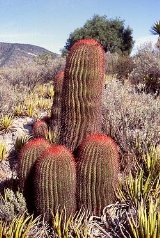
Cactus
Cactus is the name given to any member of the
flowering plant family Cactaceae. The cacti have adapted to extreme arid
environments and show a wide range of
anatomical and physiological features which conserve water. Cacti are often used as ornamental plants, but some are also crop plants.
Encyclopedia
- This article is about the plant family. For the genus Cactus, see Mammillaria is one of the largest in the cactus family Cactaceae [i], with curr ...
, Melocactus
...
and
Opuntia.
- For other meanings, see Cactus .
Cactus is the name given to any member of the
flowering plant family Cactaceae. The cacti have adapted to extreme arid
environments and show a wide range of
anatomical and physiological features which conserve water. Cacti are often used as ornamental plants, but some are also crop plants.
Distribution and evolution
Cacti are almost exclusively
New World plants. This means that they are native only in
North America,
South America, and the
West Indies. There is however one exception,
Rhipsalis baccifera; this species has a pantropical distribution, occurring in the Old World in tropical
Africa,
Madagascar and
Sri Lanka as well as in tropical America. This plant is thought to be a relatively recent colonist in the Old World , probably carried as
seeds in the
digestive tracts of
migratory birds. Many other cacti have become naturalized to similar environments in other parts of the world after being introduced by people.
Cacti are believed to have
evolved in the last 30 to 40 million years. Long ago, the Americas were joined to the other continents, but separated due to continental drift. Unique species in the New World must have developed after the continents had moved apart. Significant distance between the continents was only achieved around in the last 50 million years. This may explain why cacti are so rare in Africa; the continents had already separated when cacti evolved. Many
succulent plants in both the Old and New World bear a striking resemblance to cacti, and are often called "cactus" in common usage. This is, however, due to
parallel evolution; none of these are closely related to the Cactaceae.
Prickly pears were imported into
Australia in the
19th century for use as a natural agricultural fence and to establish a
cochineal dye industry, but quickly became a widespread weed. This
invasive species is inedible for local
herbivores and has rendered 40,000 kmē of farming land unproductive.
Adaptations to dry environment
Like other succulents, cacti are well-adapted to life with little precipitation. The
leaves have evolved into spines, which in addition to allowing less water to evaporate through transpiration than regular leaves, defend the cactus against water-seeking animals. The spines grow from specialised structures called areole.
Photosynthesis is carried out by enlarged stems, which also store water. Unlike many other succulents, the stem is the only part of a true cactus where this takes place. Very few members of the family have leaves, and when present these are usually rudimentary and soon fall off; they are typically awl-shaped and only 1-3 mm long. Two genera,
Pereskia comprises 25 tropical [i] species [i] and varieties [i] of leafy cacti [i] ...
and
Pereskiopsis, do however retain large, non-succulent leaves 5-25 cm long, and also non-succulent stems.
Pereskia has now been determined to be the ancestral genus from which all other cacti evolved . The roots are often extensive and close to the surface of the ground, an adaptation to infrequent rains. Cacti use the Crassulacean acid metabolism process.
Cacti come in a wide range of shapes and sizes. Some grow to great size. Some cacti produce beautiful
flowers, which like spines and branches arise from areoles. Many cactus species are night-blooming, as they are
pollinated by
nocturnal insects or small animals, principally
moths and
bats. Cacti range from small and round to pole-like and tall, such as the
Saguaro.
Uses
A number of cactus species are cultivated for use as houseplants, as well as for ornamental gardens. They often form part of
xerophilic gardens in arid regions. Some cacti bear edible
fruit.
Etymology
The word
cactus is ultimately derived from Greek ?a?t??
kaktos, used in classical Greek for a species of spiny
thistle, possibly the
cardoon, and used as a generic name,
Cactus, by
Linnaeus in 1753 . There is some dispute as to the proper plural form of the word; as a Greek loan into English, the correct plural in English would be "cactuses". However, as a word in Botanical Latin , "cactus" would follow standard Latin rules for pluralization and become "cacti", which has become the prevalent usage in English.
Selected important genera
- For a full list see Taxonomy of the Cactaceae
- Acanthocalycium
- Acanthocereus is a genus [i] of cacti [i]. ...
- Acharagma
- Ariocarpus is a genus [i] of cacti [i]....
- Armatocereus is a genus [i] of mostly tree-like cacti [i] from South America [i]. ...
- Arrojadoa
- Arthrocereus
- Astrophytum is a genus [i] of four species of cacti [i]. ...
- Austrocactus
- Austrocylindropuntia
- Aztekium contains only two species [i] of small globulary cactus [i]. ...
- Bergerocactus
- Blossfeldia
- Brachycereus
- Brasilicereus
- Brasiliopuntia. ...
- Browningia
- Calymmanthium
- Carnegia...
- Cephalocereus is a small genus [i] of slow-growing, columnar-shaped, blue-green cacti [i]. ...
- Cephalocleistocactus is a genus [i] of columnar cacti [i] from Peru [i], Uruguay [i], Bolivia [i] and Argentina [i] ...
- Cereus is a genus [i] of cacti [i]. ...
- Cintia
- Cipocereus
- Cleistocactus is a genus [i] of columnar cacti [i] from Peru [i], Uruguay [i], Bolivia [i] and Argentina [i] ...
- Cochemiea is one of the largest in the cactus family Cactaceae [i], with curr ...
- Coleocephalocereus
- Consolea
- Copiapoa is a genus [i] of cacti [i] from the dry coastal desert [i]s of northern Chile [i]. ...
- Corryocactus
- Coryphantha is a genus [i] of small to middle-sized, globous to short-columnar cacti [i]. ...
| CumulopuntiaCylindropuntia is a genus [i] of cacti [i]. The genus is also treated as a subgenus [i] of...
Dendrocereus is a genus [i] of cacti [i]. ...
Denmoza is a genus [i] of cactus [i] found in Argentina [i], comprised of only 2 species [i]. ...
DiscocactusDisocactus is genus [i] of epiphytic [i] cacti [i] from Mexico [i] to South America [i] ...
Echinocactus is a genus of large and beautiful barrel-shaped [i] cacti [i], usu ...
EchinocereusEchinomastus is a genus of cacti [i]....
Echinopsis is a large genus [i] of cacti [i] native to South America [i], sometimes referred ...
Epiphyllum is a genus [i] of 19 species [i] of epiphytic [i] plant [i]s in the cactus [i] f ...
EpithelanthaEriosyceEscobaria is a genus [i] of low-growing cacti [i] that range from the southernmost parts of c ...
EscontriaEspostoaEspostoopsisEulychniaFacheiroaFerocactusFrailea is a genus [i] of globular to short cylindrical cacti [i] native to Brazil [i]. ...
GeohintoniaGrusoniaGymnocalycium, commonly called chin catcus, is a genus of about 70 South America [i]n species [i] ...
HaageocereusHarrisiaHatiora is a genus [i] of epiphytic [i] cacti [i] from Brazil [i]. ...
Hylocereus is a genus [i] of cacti [i], often referred to as nightblooming cactus [i]....
Isolatocereus is a genus [i] of columnar or tree-like cacti [i] from the Baja California Peninsula [i] ...
Jasminocereus is a genus [i] of cacti [i]. ...
Lasiocereus | Leocereus is a species [i] of cactus [i] and the only species of the genus [i] Leocer...
LepismiumLeptocereusLeuchtenbergia, the sole species of the genus [i] Leuchtenbergia, is a species [i] ...
Lophophora is a genus [i] of spineless, button-like cacti [i] native to the southwestern United States [i] ...
MaihueniaMaihueniopsis is a genus [i] of the cactus family, containing less than 20 species [i].
...
- Mammillaria is one of the largest in the cactus family Cactaceae [i], with curr ...
- Mammilloydia
- Matucana is a genus [i] of cacti [i], containing approximately 20 species [i] of mostly globu ...
- Melocactus is genus [i] of cactus [i] with about 40 species [i].
...
- Micranthocereus
- Mila
- Miqueliopuntia
- Myrtillocactus is a genus [i] of cacti [i]. ...
- Neobuxbaumia
- Neolloydia
- Neoraimondia
- Neowerdermannia
- Obregonia
- Opuntia is a genus [i] in the cactus family Cactaceae [i]. ...
- Oreocereus is a genus [i] of cacti [i], known only from high altitudes of the Andes [i]. ...
- Oroya
- Ortegocactus
- Pachycereus is a genus [i] of 9-12 species of large cacti [i], native to Mexico [i] and just ...
- Parodia is a genus [i] of cacti [i]. ...
- Pediocactus is a genus [i] of cacti [i]. ...
- Pelecyphora
- Peniocereus
- Pereskia comprises 25 tropical [i] species [i] and varieties [i] of leafy cacti [i] ...
| PereskiopsisPilosocereus is genus [i] of cactus [i]. ...
PolaskiaPraecereusPseudoacanthocereusPseudorhipsalisPterocactusPygmaeocereusQuiabentiaRauhocereusRebutia is a genus [i] in the family Cactaceae [i], containing 41 species [i]. ...
Rhipsalis is a genus [i] of epiphytic [i], mostly spineless cacti [i].
...
- Samaipaticereus
- Schlumbergera is a genus [i] of 6 known tree [i]-dwelling cacti [i] from Brazil [i]. ...
- Sclerocactus
- Selenicereus
- Stenocactus is a genus [i] of cacti [i]. ...
- Stenocereus is a genus [i] of columnar or tree-like cacti [i] from the Baja California Peninsula [i] ...
- Stephanocereus
- Stetsonia
- Strombocactus is a rare species [i] of cacti [i] and the only species of the genus [i] ...
- Tacinga
- Tephrocactus is a genus [i] of the cactus family. ...
- Thelocactus
- Tunilla is a South America [i]n genus [i] of the cactus family. ...
- Turbinicarpus is a genus [i] of small to medium-sized cacti [i], originating from the arid l ...
- Uebelmannia
- Weberbauerocereus
- Weberocereus
- Yungasocereus
|
References and external links
- Anderson, Edward F. The Cactus Family ISBN 0-88192-498-9 - Comprehensive and lavishly illustrated
- Benson, Lyman The Cacti of Arizona ISBN 0-8165-0509-8 - Thorough treatment of the Arizona, U.S.A., species
-