


Bustle

Encyclopedia
A bustle is a type of framework used to expand the fullness or support the drapery
of the back of a woman's dress, occurring predominantly in the mid-to-late 19th century. Bustles were worn under the skirt
in the back, just below the waist, to keep the skirt from dragging. Heavy fabric tended to pull the back of a skirt down and flatten it. Thus, a woman's petticoat
ed or crinolined skirt would lose its shape during everyday wear (from merely sitting down or moving about). The word "bustle" has become synonymous with the fashion to which the bustle was integral.
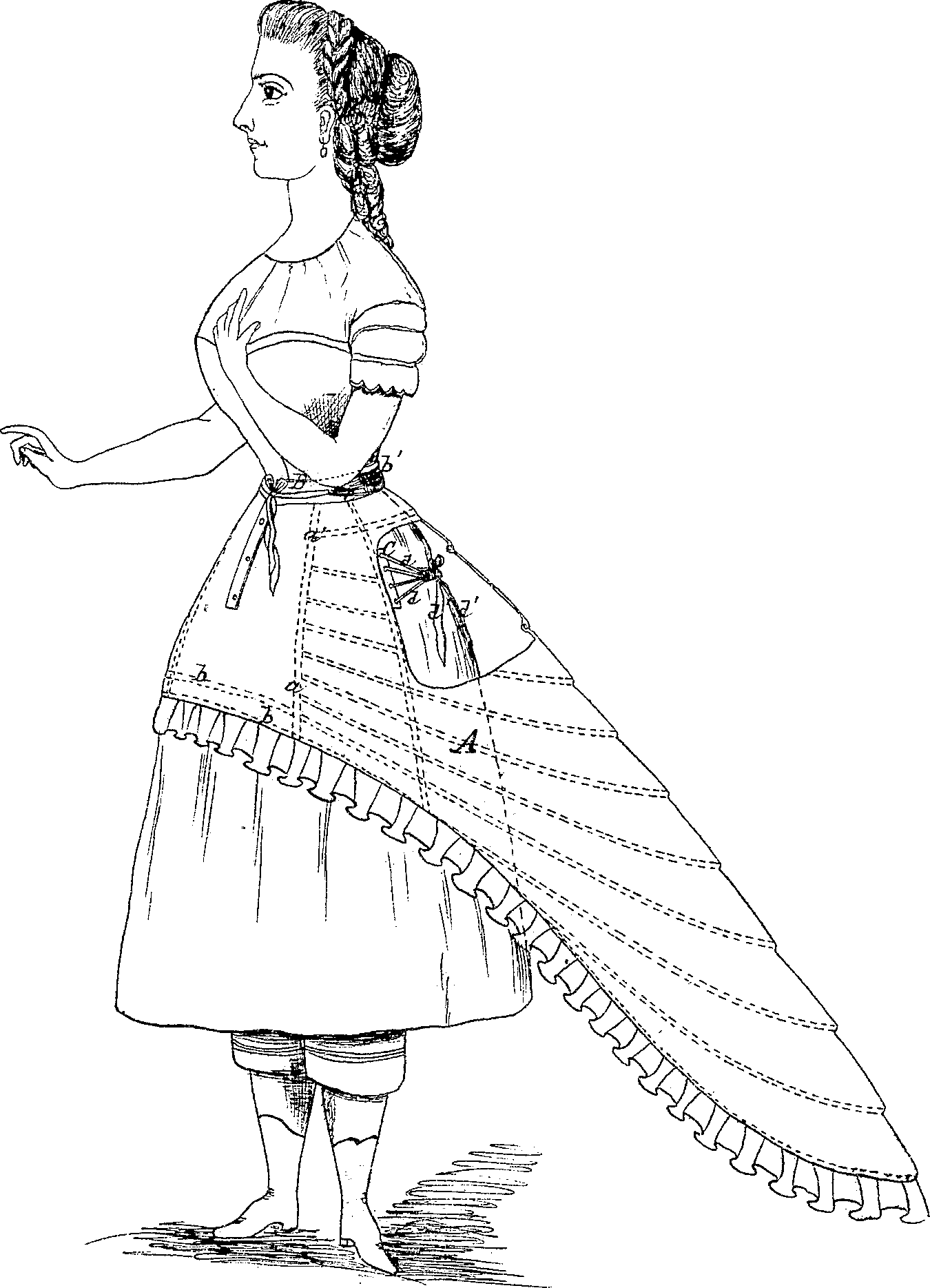 As the fashion for crinoline
s wore on, their shape changed. Instead of the large bell-like silhouette previously in vogue, they began to flatten out at the front and sides, creating more fullness at the back of the skirts. One type of crinoline, the crinolette, created a shape very similar to the one produced by a bustle. The excess skirt fabric created by this alteration in shape was looped around to the back, again creating increased fullness.
In the early stages of the fashion for the bustle, the fullness to the back of the skirts was carried quite low and often fanned out to create a train. The transition from the voluminous crinoline enhanced skirts of the 1850s and 1860s can be seen in the loops and gathers of fabric and trimmings worn during this period. The bustle later evolved into a much more pronounced humped shape on the back of the skirt immediately below the waist, with the fabric of the skirts falling quite sharply to the floor, changing the shape of the silhouette.
by George Bernard Shaw
. The fashion for large bustles ended in 1889.
of the early 20th century was now successful in shaping the body to protrude behind.
. Although most bustle gowns covered nearly all of a woman, the shape created by the combination of a bustle and corset
(accentuating the rump, waist, and bosom) resulted in highly idealized representations of female sexual identity, at once exaggerated and concealed by the structures of adornment. A notable comparison is with the exaggerated images of the South African woman known as "Hottentot Venus" exhibited throughout Europe in the first part of the 19th century.
Bustles and bustle gowns are rarely worn in contemporary society. Notable exceptions occur in the realm of haute couture
, bridal fashion
and Lolita Fashion. A dress in the bustle style may be worn as a costume. For example, in 1993 Eiko Ishioka won an Academy Award
for her costume designs from Bram Stoker's Dracula. The film features several extravagant bustle gowns created for female leads Winona Ryder
and Sadie Frost
.
Drapery
Drapery is a general word referring to cloths or textiles . It may refer to cloth used for decorative purposes – such as around windows – or to the trade of retailing cloth, originally mostly for clothing, formerly conducted by drapers.In art history, drapery refers to any cloth or...
of the back of a woman's dress, occurring predominantly in the mid-to-late 19th century. Bustles were worn under the skirt
Skirt
A skirt is a tube- or cone-shaped garment that hangs from the waist and covers all or part of the legs.In the western world, skirts are usually considered women's clothing. However, there are exceptions...
in the back, just below the waist, to keep the skirt from dragging. Heavy fabric tended to pull the back of a skirt down and flatten it. Thus, a woman's petticoat
Petticoat
A petticoat or underskirt is an article of clothing for women; specifically an undergarment to be worn under a skirt or a dress. The petticoat is a separate garment hanging from the waist ....
ed or crinolined skirt would lose its shape during everyday wear (from merely sitting down or moving about). The word "bustle" has become synonymous with the fashion to which the bustle was integral.
Transition from crinoline (1867–1872)
Crinoline
Crinoline was originally a stiff fabric with a weft of horse-hair and a warp of cotton or linen thread. The fabric first appeared around 1830, but by 1850 the word had come to mean a stiffened petticoat or rigid skirt-shaped structure of steel designed to support the skirts of a woman’s dress into...
s wore on, their shape changed. Instead of the large bell-like silhouette previously in vogue, they began to flatten out at the front and sides, creating more fullness at the back of the skirts. One type of crinoline, the crinolette, created a shape very similar to the one produced by a bustle. The excess skirt fabric created by this alteration in shape was looped around to the back, again creating increased fullness.
Early bustle (1869–1876)
The bustle later developed into a feature of fashion on its own after the overskirt of the late 1860s was draped up toward the back and some kind of support was needed for the new draped shape. Fullness of some sort was still considered necessary to make the waist look smaller and the bustle eventually replaced the crinoline completely. The bustle was worn in different shapes for most of the 1870s and 1880s, with a short period of non-bustled, flat-backed dresses from 1878 to 1882.In the early stages of the fashion for the bustle, the fullness to the back of the skirts was carried quite low and often fanned out to create a train. The transition from the voluminous crinoline enhanced skirts of the 1850s and 1860s can be seen in the loops and gathers of fabric and trimmings worn during this period. The bustle later evolved into a much more pronounced humped shape on the back of the skirt immediately below the waist, with the fabric of the skirts falling quite sharply to the floor, changing the shape of the silhouette.
Late bustle (1881–1889)
The bustle reappeared in late 1881, and was exaggerated to become a major fashion feature in the mid and late 1880s, in 1885 reaching preposterous proportions to modern eyes, as used in the play Arms and the ManArms and the Man
Arms and the Man is a comedy by George Bernard Shaw, whose title comes from the opening words of Virgil's Aeneid in Latin:"Arma virumque cano" ....
by George Bernard Shaw
George Bernard Shaw
George Bernard Shaw was an Irish playwright and a co-founder of the London School of Economics. Although his first profitable writing was music and literary criticism, in which capacity he wrote many highly articulate pieces of journalism, his main talent was for drama, and he wrote more than 60...
. The fashion for large bustles ended in 1889.
1889–1913
The bustle then survived into the 1890s and early 20th century as a skirt support was still needed and the stylish shape dictated a curve in the back of the skirt to balance the curve of the bust in front. The bustle had completely disappeared by 1905, as the long corsetCorset
A corset is a garment worn to hold and shape the torso into a desired shape for aesthetic or medical purposes...
of the early 20th century was now successful in shaping the body to protrude behind.
Fashion
The bustle was a typically Victorian fashionVictorian fashion
Victorian fashion comprises the various fashions and trends in British culture that emerged and grew in province throughout the Victorian era and the reign of Queen Victoria, a period which would last from June 1837 to January 1901. Covering nearly two thirds of the 19th century, the 63 year reign...
. Although most bustle gowns covered nearly all of a woman, the shape created by the combination of a bustle and corset
Corset
A corset is a garment worn to hold and shape the torso into a desired shape for aesthetic or medical purposes...
(accentuating the rump, waist, and bosom) resulted in highly idealized representations of female sexual identity, at once exaggerated and concealed by the structures of adornment. A notable comparison is with the exaggerated images of the South African woman known as "Hottentot Venus" exhibited throughout Europe in the first part of the 19th century.
Bustles and bustle gowns are rarely worn in contemporary society. Notable exceptions occur in the realm of haute couture
Haute couture
Haute couture refers to the creation of exclusive custom-fitted clothing. Haute couture is made to order for a specific customer, and it is usually made from high-quality, expensive fabric and sewn with extreme attention to detail and finished by the most experienced and capable seamstresses,...
, bridal fashion
Wedding dress
A wedding dress or wedding gown is the clothing worn by a bride during a wedding ceremony. Color, style and ceremonial importance of the gown can depend on the religion and culture of the wedding participants.- Western culture :...
and Lolita Fashion. A dress in the bustle style may be worn as a costume. For example, in 1993 Eiko Ishioka won an Academy Award
Academy Awards
An Academy Award, also known as an Oscar, is an accolade bestowed by the American Academy of Motion Picture Arts and Sciences to recognize excellence of professionals in the film industry, including directors, actors, and writers...
for her costume designs from Bram Stoker's Dracula. The film features several extravagant bustle gowns created for female leads Winona Ryder
Winona Ryder
Winona Ryder is an American actress. She made her film debut in the 1986 film Lucas. Ryder's first significant role came in Tim Burton's Beetlejuice as a goth teenager, which won her critical and commercial recognition...
and Sadie Frost
Sadie Frost
Sadie Frost is an English actress, who currently runs fashion label Frost French and has designed the kitchens for a new development in the East End of London.-Biography:Frost was born Sadie Liza Vaughan in London...
.
Other usage
- 'bustle' was also the term used for an additional external space at the rear a a tankTankA tank is a tracked, armoured fighting vehicle designed for front-line combat which combines operational mobility, tactical offensive, and defensive capabilities...
's turret used for storing extra equipment, a notable usage being the added box at the rear of the turret on the Sherman FireflySherman FireflyThe Sherman Firefly was a World War II British variant of the American Sherman tank, fitted with the powerful British 17 pounder anti-tank gun as its main weapon...
variant. Its positioning on the vehicle resembling the similar placement of the bustle as used on the dress item.
See also
- 1870s in fashion1870s in fashion1870s fashion in European and European-influenced clothing is characterized by a gradual return to a narrow silhouette after the full-skirted fashions of the 1850s and 1860s.-Overview:...
- 1880s in fashion1880s in fashionFashion in the 1880s in European and European-influenced countries is characterized by the return of the bustle. The long, lean line of the 1870s was replaced by a full, curvy silhouette with gradually widening shoulders. Fashionable waists were low and tiny below a full, low bust supported by a...
- CrinolineCrinolineCrinoline was originally a stiff fabric with a weft of horse-hair and a warp of cotton or linen thread. The fabric first appeared around 1830, but by 1850 the word had come to mean a stiffened petticoat or rigid skirt-shaped structure of steel designed to support the skirts of a woman’s dress into...
- CorsetCorsetA corset is a garment worn to hold and shape the torso into a desired shape for aesthetic or medical purposes...
- Victorian fashionVictorian fashionVictorian fashion comprises the various fashions and trends in British culture that emerged and grew in province throughout the Victorian era and the reign of Queen Victoria, a period which would last from June 1837 to January 1901. Covering nearly two thirds of the 19th century, the 63 year reign...