
All Topics  
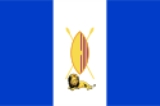
Buganda


   Email Print
   Bookmark   Link


Buganda


Buganda is the kingdom of the Baganda people, the largest of the traditional kingdoms in present-day Uganda
Uganda

The Republic of Uganda is a landlocked country in East Africa. It is bordered on the east by Kenya, on the north by Sudan, on the west by the Democratic Republic of the Congo, on the southwest by Rwanda, and on the south by Tanzania....
. The three million Baganda (singular Muganda; often referred to simply by the root word and adjective, Ganda) make up the largest Ugandan ethnic group, although they represent only about 16.7 percent of the population. The name Uganda, the Swahili
Swahili language

Swahili is the first language of the Swahili people , who inhabit several large stretches of the Indian Ocean coastline from southern Somalia to northern Mozambique, including the Comoros Islands....
 term for Buganda, was adopted by British officials in 1894 when they established the Uganda Protectorate, centered in Buganda.


Discussion
Ask a question about 'Buganda'
Start a new discussion about 'Buganda'
Answer questions from other users
Full Discussion Forum


Recent Posts


Encyclopedia


Buganda is the kingdom of the Baganda people, the largest of the traditional kingdoms in present-day Uganda
Uganda

The Republic of Uganda is a landlocked country in East Africa. It is bordered on the east by Kenya, on the north by Sudan, on the west by the Democratic Republic of the Congo, on the southwest by Rwanda, and on the south by Tanzania....
. The three million Baganda (singular Muganda; often referred to simply by the root word and adjective, Ganda) make up the largest Ugandan ethnic group, although they represent only about 16.7 percent of the population. The name Uganda, the Swahili
Swahili language

Swahili is the first language of the Swahili people , who inhabit several large stretches of the Indian Ocean coastline from southern Somalia to northern Mozambique, including the Comoros Islands....
 term for Buganda, was adopted by British officials in 1894 when they established the Uganda Protectorate, centered in Buganda. Buganda's boundaries are marked by Lake Victoria
Lake Victoria

Lake Victoria or Victoria Nyanza is one of the Great Lakes of Africa.Lake Victoria is 68,800 square kilometres in size, making it the continent's largest lake, the largest tropical lake in the world, and the second widest fresh water lake in the world in terms of surface area ....
 on the south, the Victoria Nile River on the east, and Lake Kyoga
Lake Kyoga

Lake Kyoga is a large shallow lake complex of Uganda, about 1,720 km? in area and at an elevation of 914 m. The Victoria Nile flows through the lake on its way from Lake Victoria to Lake Albert....
 on the north. The Luganda language
Luganda language

Luganda, sometimes known as Ganda, is a major language of Uganda, spoken by over ten million people mainly in Southern Uganda which includes the Ugandan capital city Kampala....
 is widely spoken in Buganda, and is one of the most popular second languages in Uganda along with English
English language

English is a West Germanic language that originated in Anglo-Saxon England and has lingua franca status in many parts of the world as a result of the military, economic, scientific, political and cultural influence of the British Empire in the 18th, 19th and early 20th centuries and that of the United States from the mid 20th century onwa...
. It is also taught in some primary and secondary schools in Uganda including Makerere University
Makerere University

Makerere University, Uganda's largest university, was first established as a technical school in 1922, and in 1963 it became the University of East Africa, offering courses leading to general degrees of the University of London....
. The Luganda language
Luganda language

Luganda, sometimes known as Ganda, is a major language of Uganda, spoken by over ten million people mainly in Southern Uganda which includes the Ugandan capital city Kampala....
 was also used as a means of instruction in schools outside the region of Buganda up to the late sixties.

In literature and common discourse, Buganda is often said to be in central Uganda. However, this does not refer to its geographical location, but to its political prominence, and to the fact that Kampala
Kampala

Kampala is the capital city of Uganda. With a population of 1,208,544 it is the largest city in Uganda. It is coterminous with the Kampala . The city is divided into five boroughs that oversee local planning: Central, Kawempe, Makindye, Nakawa and Rubaga....
, the nation's capital, is located in Buganda.

Geography and environment

Ganda villages, sometimes as large as forty or fifty homes, were generally located on hillsides, leaving hilltops and swampy lowlands
Swamp

A swamp is a wetland featuring temporary or permanent inundation of large areas of land, by shallow bodies of water. A swamp generally has a substantial number of hammock , or dry-land protrusions, covered by aquatic vegetation, or vegetation that tolerates periodical inundation....
 uninhabited, to be used for crops or pastures. Early Ganda villages surrounded the home of a chief or headman, which provided a common meeting ground for members of the village. The chief collected tribute from his subjects, provided tribute to the kabaka
Kabaka

Kabaka may refer to:*Kabaka of Buganda: the title of the king of Buganda*Kabaka Puttur: a village in the state of Karnataka, India...
, who was the ruler of the kingdom, distributed resources among his subjects, maintained order, and reinforced social solidarity through his decision-making skills. Late nineteenth-century Ganda villages became more dispersed as the role of the chiefs diminished in response to political turmoil, population migration, and occasional popular revolts.

History of modern Buganda


Demographics


Social structure


Ganda social organization emphasized descent through males. Four or five generations of descendants of one man, related through male forebears, constituted a patrilineage. A group of related lineages constituted a clan
Clan

A clan is a group of people united by kinship and descent, which is defined by actual or perceived descent from a common ancestor. Even if actual lineage patterns are unknown, clan members may nonetheless recognize a founding member or apical ancestor....
. Clan leaders could summon a council of lineage heads, and council decisions affected all lineages within the clan. Many of these decisions regulated marriage, which had always been between two different lineages, forming important social and political alliances for the men of both lineages. Lineage and clan leaders also helped maintain efficient land use practices, and they inspired pride in the group through ceremonies and remembrances of ancestors.

Most lineages maintained links to a home territory (butaka) within a larger clan territory, but lineage members did not necessarily live on butaka land. Men from one lineage often formed the core of a village; their wives, children, and in-laws joined the village. People were free to leave if they became disillusioned with the local leader to take up residence with other relatives or in-laws, and they often did so.

Culture

The family in Buganda is often described as a microcosm of the kingdom. The father is revered and obeyed as head of the family. His decisions are generally unquestioned. A man's social status is determined by those with whom he establishes patron/client relationships, and one of the best means of securing this relationship is through one's children. Baganda children, some as young as three years old, are sent to live in the homes of their social superiors, both to cement ties of loyalty among parents and to provide avenues for social mobility for their children. Even in the 1980s, Baganda children were considered psychologically better prepared for adulthood if they had spent several years living away from their parents at a young age.

Baganda recognize at a very young age that their superiors, too, live in a world of rules. Social rules require a man to share his wealth by offering hospitality, and this rule applies more stringently to those of higher status. Superiors are also expected to behave with impassivity, dignity, self-discipline, and self-confidence, and adopting these mannerisms sometimes enhances a man's opportunities for success.

Authoritarian control
Authoritarianism

Authoritarianism describes a form of government characterized by an emphasis on the authority of the state in a republic or union. It is a political system controlled by nonelected rulers who usually permit some degree of individual freedom....
 is an important theme of Ganda culture. In precolonial times, obedience to the king was a matter of life and death. However, a second major theme of Ganda culture is the emphasis on individual achievement. An individual's future is not entirely determined by status at birth. Instead, individuals carve out their fortunes by hard work as well as by choosing friends, allies, and patrons carefully.

Ganda culture tolerates social diversity more easily than many other African societies. Even before the arrival of Europeans, many Ganda villages included residents from outside Buganda. Some had arrived in the region as slaves
Slavery

Slavery is a form of forced labor where a person is compelled to Labor for another . Slaves are held against their will from the time of their capture, purchase, or birth, and are deprived of the right to leave, to refuse to work, or to receive Remuneration in return for their labor....
, but by the early 20th century, many non-Baganda migrant workers stayed in Buganda to farm. Marriage with non-Baganda was fairly common, and many Baganda marriages ended in divorce. After independence, Ugandan officials estimated that one-third to one-half of all adults marry more than once during their lives.

Clans of Buganda

There are at least fifty recognised clans within the Kingdom of Buganda, with at least another six making a claim to clan status. Within this group of clans are four distinct sub-groups which reflect historical waves of immigration to Buganda.

Nansangwa
The oldest clans trace their lineage to the Tonda Kings, who are supposed to have ruled in the region from 400 to approx. 1200-1350 AD. These six clans are referred to as the Nansangwa, or the indigenous:

  • Fumbe
  • Lugave
  • Mamba
  • Ngeye
  • Njaza
  • Nnyonyi.


Kintu Migration
The Abalasangeye dynasty came to power through the conquests of Kabaka
Kabaka

Kabaka may refer to:*Kabaka of Buganda: the title of the king of Buganda*Kabaka Puttur: a village in the state of Karnataka, India...
 Kintu Kato
Kintu of Buganda

Kintu Kato was the first Kabaka of Buganda of the Buganda kingdom.Kintu created the kingdom of Buganda by forcefully taking over the five clans that lived in the region....
, which are estimated to have occurred sometime between 1200 and 1400 AD. Kintu is said to have come from the north, from among the Bunyoro
Bunyoro

Bunyoro is a region of Uganda, and from the sixteenth to the nineteenth century one of the most powerful kingdoms of East Africa. It was ruled by the Omukama of Bunyoro....
 in the Empire of Kitara
Empire of Kitara

The Empire of Kitara is a strong part of oral tradition in the area of the Great Lakes of Africa, including the modern countries of Uganda, northern Tanzania, eastern Democratic Republic of the Congo, Rwanda and Burundi....
.

Thirteen to sixteen clans are purported to have come with Kintu, including;
  • Ekkobe
  • Mamba
  • Mbwa
  • Mpeewo
  • Mpologoma
  • Namung’oona
  • Ngo
  • Ng’onge
  • Njovu
  • Nkejje
  • Nkima
  • Ntalaganya
  • Nvubu
  • Nvuma.


Kimera Migration
Around 1420 another wave of immigration assisted by Kabaka Kimera
Kimera of Buganda

Kimera was the third king of Buganda....
, also from the Empire of Kitara. With him came another eleven clans, some of whom are said to have been clans that had been exiled under the last king of the Tonda dynasty, Bemba Musota.

These eleven clans are
  • oBugeme
  • oButiko
  • aKasimba
  • aKayozi
  • eKibe
  • eMbogo
  • oMusu
  • eNgabi
  • eNkerebwe
  • eNsuma
  • eNseenene.


Other clans
Since Kimera twenty further clans have either immigrated to Buganda, or been created internally (largely by kings).

These clans are;
  • aBabiito
  • aBasambo
  • aBaboobi
  • aKasanke
  • eKikuba
  • eKinyomo
  • eKiwere
  • oLukato
  • eMbuzi (goat)
  • eMpindi (cowpea-Vigna unguiculata),
  • oMutima (heart)
  • Nakinsige
  • eNdiga (sheep)
  • eNdiisa
  • Ng’aali (crested crane)
  • eNjobe
  • eNkebuka
  • eNkula (Rhino)
  • eNsunu
  • eNte (cattle)
  • eNswaaswa.


Economy

The traditional Ganda economy relied on crop cultivation. In contrast with many other East Africa
East Africa

East Africa or Eastern Africa is the easterly region of the African continent, variably defined by geography or geopolitics. In the UN subregion, 19 territories constitute Eastern Africa:...
n economic systems, cattle
Cattle

Cattle, colloquially referred to as cows, are domestication ungulates, a member of the subfamily Bovinae of the family Bovidae. They are raised as livestock for meat , dairy products , leather and as draft animals ....
 played only a minor role. Many Baganda hired laborers from the north as herders. Banana
Banana

File:Banana and cross section.jpgBanana is the common name for a fruit and also the herbaceous plants of the genus Musa which produce this commonly eaten fruit....
s were the most important staple food, providing the economic base for the region's dense population growth. This crop does not require shifting cultivation or bush fallowing to maintain soil fertility, and as a result, Ganda villages were quite permanent. Women did most of the agricultural work, while men often engaged in commerce and politics
Politics

Politics is the process by which groups of people make decisions. The term is generally applied to behaviour within civil governments, but politics has been observed in all human group interactions, including corporation, academia, and religion institutions....
 (and in precolonial times, war
War

...
fare). Before the introduction of woven cloth, traditional clothing was manufactured from the bark of trees.

See also

  • Luganda language
    Luganda language

    Luganda, sometimes known as Ganda, is a major language of Uganda, spoken by over ten million people mainly in Southern Uganda which includes the Ugandan capital city Kampala....
  • Kabaka of Buganda
    Kabaka of Buganda

    Kabaka is the title of the king of Buganda. According to the traditions of the Baganda they are ruled by two kings, one spiritual and the other material....
    • Mutesa II of Buganda
      Mutesa II of Buganda

      Sir Edward Mutesa II, Order of the British Empire was the Kabaka of Buganda of Buganda from 1939 until his death, and List of Presidents of Uganda of Uganda from 1963 to 1966....
    • Muwenda Mutebi II of Buganda
      Muwenda Mutebi II of Buganda

      Ronald Muwenda Mutebi II, born April 13, 1955, is the current King or Kabaka of Buganda of Buganda, a kingdom in modern Uganda.He was crowned as the 36th Kabaka in 1993 after the executive of President Yoweri Museveni reinstated the position of Kabaka in a new constitution....
    • Baganda Music
      Baganda Music

      Baganda music is a music culture developed by the people of Uganda with many features that distinguish African music from other world music traditions....
Ugandan monarchies
  • The legend of Kintu
    The legend of Kintu

    The legend of Kintu is told by the Baganda of Uganda as a creation myth. According to this legend, Kintu was the first man or woman, the father of all people....
  • Uganda Cowries
    Uganda Cowries

    The Uganda Cowries, also known as the Uganda Missionaries, were the first adhesive postage stamps of Uganda. Because there was no printing press in Uganda the stamps were made on a typewriter by Rev....


External links

  • of Buganda
  • found online
  • Get the most up to date news on Buganda from all over the world.
  • Find and buy art from Ganda artists online
  • Find headlines on Buganda from all over the world
  • Support the Buganda kingdom by buying certificates online, also find Buganda flags and other gifts
  • Watch Music videos from Ugandan and East African artists