


Bruno Walter

Encyclopedia
Bruno Walter was a German
-born conductor
. He is considered one of the best known conductors of the 20th century. Walter was born in Berlin
, but is known to have lived in several countries between 1933 and 1939, before finally settling in the United States in 1939. Though he was born Bruno Schlesinger, he began using Walter as his surname in 1896, and officially changed his surname to Walter upon becoming a naturalised Austrian
in 1911. Walter was for many years active as a composer, but his works have not entered the repertoire.
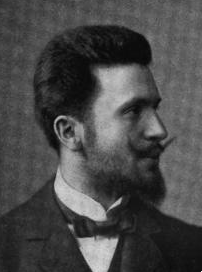
in Berlin
to a middle-class Jewish family as Bruno Schlesinger, he began his musical education at the Stern Conservatory
at the age of eight, making his first public appearance as a pianist
when he was nine. However, following visits to one of Hans von Bülow
's concerts in 1889 and to Bayreuth
in 1891, he changed his mind and decided upon a conducting career. He made his conducting début at the Cologne Opera
with Albert Lortzing
's Der Waffenschmied in 1894. Later that year he left for the Hamburg Opera
to work as a chorus director. There he first met and worked with Gustav Mahler
, whom he idolized and with whose music he later became strongly identified.
n, "because of its frequent occurrence in the capital of Silesia", although other sources attribute the change to a desire to make his name sound less Jewish. (Note: It is often stated that Walter was his middle name and he merely dropped the surname Schlesinger. This is not true; he had no middle name and "Walter" had never been one of his names.) In 1897, he took an opera-conducting position at Pressburg, and in 1898 he took one at the Riga Opera
, Latvia
. Then Walter returned in 1900 to Berlin
, where he assumed the post of Royal Prussian Conductor at the Staatsoper Unter den Linden, succeeding Franz Schalk
; his colleagues there included Richard Strauss
and Karl Muck
. While in Berlin he also conducted the premiere of Der arme Heinrich
by Hans Pfitzner
, who became a lifelong friend.
In 1901, Walter accepted Mahler's invitation to be his assistant at the Court Opera in Vienna
. Walter led Verdi's Aida
at his debut. In the following years Walter's conducting reputation soared as he was invited to conduct across Europe
– in Prague
, in London
where in 1910 he conducted Tristan und Isolde
and Ethel Smyth
's The Wreckers at Covent Garden
, and in Rome
. A few months after Mahler's death in 1911, Walter led the first performance of Das Lied von der Erde in Munich
, as well as Mahler's Symphony No. 9
in Vienna
the next year.
n citizen in 1911, he left Vienna to become the Royal Bavarian Music Director in Munich in 1913. In January of the following year Walter conducted his first concert in Moscow
. During the First World War
he remained actively involved in conducting, giving premieres to Erich Wolfgang Korngold
's Violanta
and Der Ring des Polykrates
as well as Hans Pfitzner
's Palestrina
. In 1920 he conducted the premiere of Walter Braunfels
' Die Vögel
.
In Munich, Walter was good friends with Cardinal Eugenio Pacelli (later Pope Pius XII
).
in Carnegie Hall
; he later conducted in Detroit, Minnesota
and Boston
.
in 1929. He made his debut at La Scala
in 1926. In London
, Walter was chief conductor of the German seasons at Covent Garden
from 1924 to 1931.
In his speeches in the late 1920s, Nazi leader Adolf Hitler
complained bitterly about the presence of Jewish conductors at the Berlin opera, and mentioned Walter a number of times, adding to Walter's name the phrase, "alias Schlesinger." In 1933, when the Nazis took power, they undertook a systematic process of barring Jews from artistic life. Walter left for Austria, which became his main center of activity for the next several years, although he was also a frequent guest conductor of the Amsterdam
Concertgebouw Orchestra from 1934 to 1939, and made guest appearances such as in annual concerts with the New York Philharmonic
from 1932 to 1936. At the time of the Anschluss
in 1938, Walter was at a recording session in Paris
; France
offered Walter citizenship, which he accepted. (His elder daughter Lotte was in Vienna
at the time, and was arrested by the Nazis; Walter was able to use his influence to free her. He also used his influence to find safe quarters for his brother and sister in Scandinavia
during the war.)
Walter's daughter Marguerite was murdered on August 21 of 1939 in Berlin by her husband, who then killed himself; his motive was jealousy over her growing relationship with the Italian basso Ezio Pinza
. Walter's wife fell into a permanent depression, and Walter blamed himself for the tragedy, as his daughter had met Pinza only because Walter had made special efforts to hire him to sing the role of Don Giovanni
.
, which became his permanent home. He settled in Beverly Hills, California
, where his many expatriate
neighbors included the German writer Thomas Mann
.
While Walter had many influences within music, in his Of Music and Making (1957) he notes a profound influence from the philosopher Rudolf Steiner
. He notes, "In old age I have had the good fortune to be initiated into the world of anthroposophy
and during the past few years to make a profound study of the teachings of Rudolf Steiner. Here we see alive and in operation that deliverance of which Friedrich Hölderlin
speaks; its blessing has flowed over me, and so this book is the confession of belief in anthroposophy. There is no part of I my inward life that has not had new light shed upon it, or been stimulated, by the lofty teachings of Rudolf Steiner ... I am profoundly grateful for having been so boundlessly enriched ... It is glorious to become a learner again at my time of life. I have a sense of the rejuvenation of my whole being which gives strength and renewal to my musicianship, even to my music-making."
During his years in the United States, Walter worked with many famous American orchestras, including the Chicago Symphony Orchestra
, the Los Angeles Philharmonic
, the NBC Symphony Orchestra
, the New York Philharmonic
(where he was musical adviser from 1947 to 1949, but declined an offer to be music director), and the Philadelphia Orchestra
. From 1946 onwards, he made numerous trips back to Europe, becoming an important musical figure in the early years of the Edinburgh Festival
and in Salzburg
, Vienna and Munich. His late life was marked by stereo recordings with the Columbia Symphony Orchestra
, an ensemble of professional musicians assembled by Columbia Records
for recordings. He made his last live concert appearance on December 4, 1960 with the Los Angeles Philharmonic
and pianist Van Cliburn
. His last recording was a series of Mozart
overtures with the Columbia Symphony Orchestra at the end of March in 1961. Although raised a Jew, near the end of his life Walter converted to Catholicism.
in his Beverly Hills home in 1962.
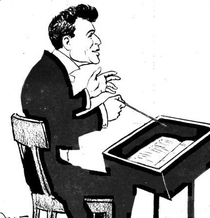 Walter's work was documented on hundreds of recordings made between 1900 (when he was 24) and 1961. Most listeners became familiar with him through the stereo recordings made in his last few years, when his health was declining. But many critics agree that these recordings do not fully convey what Walter's art must have sounded like in its prime. For one thing, the late recordings sometimes have a geniality that contrasts with the more mercurial, intense, and energetic performances Walter recorded in earlier decades. For another, the late recordings focus mostly on music from Mozart through Mahler, but in Walter's youth he often conducted what was then newer music (including Mahler).
Walter worked closely with Mahler
as an assistant and protege. Mahler did not live to perform his Das Lied von der Erde
or Symphony No. 9
, but his widow, Alma Mahler
, asked Walter to premiere both. Walter led the first performance of Das Lied in 1911 in Munich and of the Ninth in 1912 in Vienna with the Vienna Philharmonic. Decades later, Walter and the Vienna Philharmonic (with Mahler's brother-in-law Arnold Rose still the concertmaster) made the first recordings of Das Lied von der Erde
in 1936 and of the Ninth Symphony in 1938. Both were recorded live in concert, the latter only two months before the Nazi Anschluss
drove Walter (and Rose) into exile.
These recordings are of special interest for the performance practices of the orchestra and also for intensity of expression. Walter was to re-record both works successfully in later decades. His famous Decca
Das Lied von der Erde
with Kathleen Ferrier
, Julius Patzak
, and the Vienna Philharmonic was made in May, 1952, and he recorded it again in studio with the New York Philharmonic in 1960. He conducted the New York Philharmonic in the 1957 stereo recording of the second symphony. He recorded the Ninth in stereo in 1961. These recordings, as well as his other American recordings, were released initially by Columbia Records
and later on CD by Sony
.
Since Mahler himself never conducted the Ninth Symphony and Das Lied von der Erde, Walter's performances cannot be taken as documentations of Mahler's interpretations. But in the light of Walter's personal connection with the composer, and his having given the original performances, they have another kind of primary authenticity. In his other (greatly esteemed) recordings of Mahler – various songs and the First, Second, Fourth, and Fifth symphonies – there is the great added interest that he had heard Mahler's own performances of most of them.
Walter made many highly acclaimed recordings of other great Germanic composers, such as Mozart
, Haydn
, Beethoven
, Schubert, Johannes Brahms
, Johann Strauss Jr., and Anton Bruckner
, as well as of Bach, Wagner, Schumann, Dvorak, Richard Strauss, Tchaikovsky, Smetana, and others. Walter was a leading conductor of opera, particularly known for his Mozart, and recordings of some from the Metropolitan Opera
and the Salzburg Festival are now available on CD. So are performances of Wagner, Verdi, and Beethoven's Fidelio
. Also of great interest are recordings from the 1950s of his rehearsals of Mozart, Mahler, and Brahms, which give insight into his musical priorities and into the warm and non-tyrannical manner (as contrasted with some of his colleagues) with which he related to orchestras.
Source: Grove Music Online
Germany
Germany , officially the Federal Republic of Germany , is a federal parliamentary republic in Europe. The country consists of 16 states while the capital and largest city is Berlin. Germany covers an area of 357,021 km2 and has a largely temperate seasonal climate...
-born conductor
Conducting
Conducting is the art of directing a musical performance by way of visible gestures. The primary duties of the conductor are to unify performers, set the tempo, execute clear preparations and beats, and to listen critically and shape the sound of the ensemble...
. He is considered one of the best known conductors of the 20th century. Walter was born in Berlin
Berlin
Berlin is the capital city of Germany and is one of the 16 states of Germany. With a population of 3.45 million people, Berlin is Germany's largest city. It is the second most populous city proper and the seventh most populous urban area in the European Union...
, but is known to have lived in several countries between 1933 and 1939, before finally settling in the United States in 1939. Though he was born Bruno Schlesinger, he began using Walter as his surname in 1896, and officially changed his surname to Walter upon becoming a naturalised Austrian
Austrians
Austrians are a nation and ethnic group, consisting of the population of the Republic of Austria and its historical predecessor states who share a common Austrian culture and Austrian descent....
in 1911. Walter was for many years active as a composer, but his works have not entered the repertoire.
Biography
Early life
Born near AlexanderplatzAlexanderplatz
Alexanderplatz is a large public square and transport hub in the central Mitte district of Berlin, near the Fernsehturm. Berliners often call it simply Alex, referring to a larger neighborhood stretching from Mollstraße in the northeast to Spandauer Straße and the City Hall in the southwest.-Early...
in Berlin
Berlin
Berlin is the capital city of Germany and is one of the 16 states of Germany. With a population of 3.45 million people, Berlin is Germany's largest city. It is the second most populous city proper and the seventh most populous urban area in the European Union...
to a middle-class Jewish family as Bruno Schlesinger, he began his musical education at the Stern Conservatory
Stern conservatory
The Stern Conservatory was a private music school in Berlin with many notable tutors and alumni.-History:It was originally founded in 1850 as the Berliner Musikschule by Julius Stern, Theodor Kullak and Adolf Bernhard Marx. Kullak withdrew from the conservatory in 1855 in order to create a new...
at the age of eight, making his first public appearance as a pianist
Pianist
A pianist is a musician who plays the piano. A professional pianist can perform solo pieces, play with an ensemble or orchestra, or accompany one or more singers, solo instrumentalists, or other performers.-Choice of genres:...
when he was nine. However, following visits to one of Hans von Bülow
Hans von Bülow
Hans Guido Freiherr von Bülow was a German conductor, virtuoso pianist, and composer of the Romantic era. He was one of the most famous conductors of the 19th century, and his activity was critical for establishing the successes of several major composers of the time, including Richard...
's concerts in 1889 and to Bayreuth
Bayreuth Festspielhaus
The or Bayreuth Festival Theatre is an opera house north of Bayreuth, Germany, dedicated solely to the performance of operas by the 19th-century German composer Richard Wagner...
in 1891, he changed his mind and decided upon a conducting career. He made his conducting début at the Cologne Opera
Cologne Opera
The Cologne Opera refers both to the main opera house in Cologne, Germany and to its resident opera company.-History of the company:...
with Albert Lortzing
Albert Lortzing
Gustav Albert Lortzing was a German composer, actor and singer. He is considered to be the main representative of the German Spieloper, a form similar to the French opéra comique, which grew out of the Singspiel.-Biography:Lortzing was born in Berlin to Johann Gottlieb Lortzing and Charlotte Sophie...
's Der Waffenschmied in 1894. Later that year he left for the Hamburg Opera
Hamburg State Opera
The Hamburg State Opera is one of the leading opera companies in Germany.Opera in Hamburg dates back to 2 January 1678 when the "Opern-Theatrum" was inaugurated with a performance of a biblical Singspiel by Johann Theile...
to work as a chorus director. There he first met and worked with Gustav Mahler
Gustav Mahler
Gustav Mahler was a late-Romantic Austrian composer and one of the leading conductors of his generation. He was born in the village of Kalischt, Bohemia, in what was then Austria-Hungary, now Kaliště in the Czech Republic...
, whom he idolized and with whose music he later became strongly identified.
Conducting
In 1896, Schlesinger took a conducting position at the opera house in Breslau – a job found for him by Mahler. The conductor recorded that the director of this theater, Theodor Löwe, required that before taking up this position he change his name of Schlesinger, which literally means SilesiaSilesia
Silesia is a historical region of Central Europe located mostly in Poland, with smaller parts also in the Czech Republic, and Germany.Silesia is rich in mineral and natural resources, and includes several important industrial areas. Silesia's largest city and historical capital is Wrocław...
n, "because of its frequent occurrence in the capital of Silesia", although other sources attribute the change to a desire to make his name sound less Jewish. (Note: It is often stated that Walter was his middle name and he merely dropped the surname Schlesinger. This is not true; he had no middle name and "Walter" had never been one of his names.) In 1897, he took an opera-conducting position at Pressburg, and in 1898 he took one at the Riga Opera
Latvian National Opera
The Latvian National Opera , Riga, is the national opera of Latvia. The opera company includes the Latvian National Ballet , LNO Chorus, and LNO Orchestra.-History:...
, Latvia
Latvia
Latvia , officially the Republic of Latvia , is a country in the Baltic region of Northern Europe. It is bordered to the north by Estonia , to the south by Lithuania , to the east by the Russian Federation , to the southeast by Belarus and shares maritime borders to the west with Sweden...
. Then Walter returned in 1900 to Berlin
Berlin
Berlin is the capital city of Germany and is one of the 16 states of Germany. With a population of 3.45 million people, Berlin is Germany's largest city. It is the second most populous city proper and the seventh most populous urban area in the European Union...
, where he assumed the post of Royal Prussian Conductor at the Staatsoper Unter den Linden, succeeding Franz Schalk
Franz Schalk
Franz Schalk was an Austrian conductor. From 1918 to 1929 he was director of the Vienna State Opera, a post he held jointly with Richard Strauss from 1919 to 1924. Later, Schalk was involved in the establishment of the Salzburg Festival.-Biography:Schalk was born in Vienna, Austria, where he later...
; his colleagues there included Richard Strauss
Richard Strauss
Richard Georg Strauss was a leading German composer of the late Romantic and early modern eras. He is known for his operas, which include Der Rosenkavalier and Salome; his Lieder, especially his Four Last Songs; and his tone poems and orchestral works, such as Death and Transfiguration, Till...
and Karl Muck
Karl Muck
Karl Muck was a German-born conductor of classical music. He based his activities principally in Europe and mostly in opera. His American career comprised two stints at the Boston Symphony Orchestra. He endured a public outcry in 1917 that questioned whether his loyalties lay with Germany or the...
. While in Berlin he also conducted the premiere of Der arme Heinrich
Der arme Heinrich
Der Arme Heinrich is a Middle High German narrative poem by Hartmann von Aue. It was probably written in the 1190s and was the second to last of Hartmann's four epic works...
by Hans Pfitzner
Hans Pfitzner
Hans Erich Pfitzner was a German composer and self-described anti-modernist. His best known work is the post-Romantic opera Palestrina, loosely based on the life of the great sixteenth-century composer Giovanni Pierluigi da Palestrina.-Biography:Pfitzner was born in Moscow, Russia, where his...
, who became a lifelong friend.
In 1901, Walter accepted Mahler's invitation to be his assistant at the Court Opera in Vienna
Vienna
Vienna is the capital and largest city of the Republic of Austria and one of the nine states of Austria. Vienna is Austria's primary city, with a population of about 1.723 million , and is by far the largest city in Austria, as well as its cultural, economic, and political centre...
. Walter led Verdi's Aida
Aida
Aida sometimes spelled Aïda, is an opera in four acts by Giuseppe Verdi to an Italian libretto by Antonio Ghislanzoni, based on a scenario written by French Egyptologist Auguste Mariette...
at his debut. In the following years Walter's conducting reputation soared as he was invited to conduct across Europe
Europe
Europe is, by convention, one of the world's seven continents. Comprising the westernmost peninsula of Eurasia, Europe is generally 'divided' from Asia to its east by the watershed divides of the Ural and Caucasus Mountains, the Ural River, the Caspian and Black Seas, and the waterways connecting...
– in Prague
Prague
Prague is the capital and largest city of the Czech Republic. Situated in the north-west of the country on the Vltava river, the city is home to about 1.3 million people, while its metropolitan area is estimated to have a population of over 2.3 million...
, in London
London
London is the capital city of :England and the :United Kingdom, the largest metropolitan area in the United Kingdom, and the largest urban zone in the European Union by most measures. Located on the River Thames, London has been a major settlement for two millennia, its history going back to its...
where in 1910 he conducted Tristan und Isolde
Tristan und Isolde
Tristan und Isolde is an opera, or music drama, in three acts by Richard Wagner to a German libretto by the composer, based largely on the romance by Gottfried von Straßburg. It was composed between 1857 and 1859 and premiered in Munich on 10 June 1865 with Hans von Bülow conducting...
and Ethel Smyth
Ethel Smyth
Dame Ethel Mary Smyth, DBE was an English composer and a leader of the women's suffrage movement.- Early career :...
's The Wreckers at Covent Garden
Royal Opera House
The Royal Opera House is an opera house and major performing arts venue in Covent Garden, central London. The large building is often referred to as simply "Covent Garden", after a previous use of the site of the opera house's original construction in 1732. It is the home of The Royal Opera, The...
, and in Rome
Rome
Rome is the capital of Italy and the country's largest and most populated city and comune, with over 2.7 million residents in . The city is located in the central-western portion of the Italian Peninsula, on the Tiber River within the Lazio region of Italy.Rome's history spans two and a half...
. A few months after Mahler's death in 1911, Walter led the first performance of Das Lied von der Erde in Munich
Munich
Munich The city's motto is "" . Before 2006, it was "Weltstadt mit Herz" . Its native name, , is derived from the Old High German Munichen, meaning "by the monks' place". The city's name derives from the monks of the Benedictine order who founded the city; hence the monk depicted on the city's coat...
, as well as Mahler's Symphony No. 9
Symphony No. 9 (Mahler)
The Symphony No. 9 by Gustav Mahler was written between 1909 and 1910, and was the last symphony that he completed.Though the work is often described as being in the key of D major, the tonal scheme of the symphony as whole is progressive...
in Vienna
Vienna
Vienna is the capital and largest city of the Republic of Austria and one of the nine states of Austria. Vienna is Austria's primary city, with a population of about 1.723 million , and is by far the largest city in Austria, as well as its cultural, economic, and political centre...
the next year.
Munich
Although Walter became an AustriaAustria
Austria , officially the Republic of Austria , is a landlocked country of roughly 8.4 million people in Central Europe. It is bordered by the Czech Republic and Germany to the north, Slovakia and Hungary to the east, Slovenia and Italy to the south, and Switzerland and Liechtenstein to the...
n citizen in 1911, he left Vienna to become the Royal Bavarian Music Director in Munich in 1913. In January of the following year Walter conducted his first concert in Moscow
Moscow
Moscow is the capital, the most populous city, and the most populous federal subject of Russia. The city is a major political, economic, cultural, scientific, religious, financial, educational, and transportation centre of Russia and the continent...
. During the First World War
World War I
World War I , which was predominantly called the World War or the Great War from its occurrence until 1939, and the First World War or World War I thereafter, was a major war centred in Europe that began on 28 July 1914 and lasted until 11 November 1918...
he remained actively involved in conducting, giving premieres to Erich Wolfgang Korngold
Erich Wolfgang Korngold
Erich Wolfgang Korngold was an Austro-Hungarian film and romantic music composer. While his compositional style was considered well out of vogue at the time he died, his music has more recently undergone a reevaluation and a gradual reawakening of interest...
's Violanta
Violanta
Violanta is a one-act opera by Erich Wolfgang Korngold. The libretto is by the Austrian playwright Hans Müller-Einigen. It is Korngold's second opera, written when he was only seventeen years old.-Performance history:...
and Der Ring des Polykrates
Der Ring des Polykrates (opera)
Der Ring des Polykrates , Op. 7 is a one-act opera by Erich Wolfgang Korngold. The libretto, written by Leo Feld and reworked by the composer's father Julius Korngold, is based on a drama by Heinrich Teweles....
as well as Hans Pfitzner
Hans Pfitzner
Hans Erich Pfitzner was a German composer and self-described anti-modernist. His best known work is the post-Romantic opera Palestrina, loosely based on the life of the great sixteenth-century composer Giovanni Pierluigi da Palestrina.-Biography:Pfitzner was born in Moscow, Russia, where his...
's Palestrina
Palestrina (opera)
Palestrina is an opera by the German composer Hans Pfitzner, first performed in 1917. The composer referred to it as a Musikalische Legende , and wrote the libretto himself, based on a legend about the Renaissance musician Giovanni Pierluigi da Palestrina, who saves the art of contrapuntal music ...
. In 1920 he conducted the premiere of Walter Braunfels
Walter Braunfels
-Life:Walter Braunfels was born in Frankfurt am Main. His first music teacher was his mother, the great-niece of the composer Louis Spohr . He continued his piano studies in Frankfurt at the Hoch Conservatory with James Kwast....
' Die Vögel
Die Vögel (opera)
Die Vögel , Op. 30 is an opera in a prologue and two acts by Walter Braunfels. The libretto, written by the composer, is a free adaptation of Aristophanes' comedy The Birds which was performed at the Dionysos Theatre in Athens in 414 BC....
.
In Munich, Walter was good friends with Cardinal Eugenio Pacelli (later Pope Pius XII
Pope Pius XII
The Venerable Pope Pius XII , born Eugenio Maria Giuseppe Giovanni Pacelli , reigned as Pope, head of the Catholic Church and sovereign of Vatican City State, from 2 March 1939 until his death in 1958....
).
United States
Walter ended his Munich appointment in 1922 and left for New York in 1923, working with the New York Symphony OrchestraNew York Symphony Orchestra
The New York Symphony Orchestra was founded as the New York Symphony Society in New York City by Leopold Damrosch in 1878. For many years it was a fierce rival to the older Philharmonic Symphony Society of New York. It was supported by Andrew Carnegie who built Carnegie Hall expressly for the...
in Carnegie Hall
Carnegie Hall
Carnegie Hall is a concert venue in Midtown Manhattan in New York City, United States, located at 881 Seventh Avenue, occupying the east stretch of Seventh Avenue between West 56th Street and West 57th Street, two blocks south of Central Park....
; he later conducted in Detroit, Minnesota
Minnesota
Minnesota is a U.S. state located in the Midwestern United States. The twelfth largest state of the U.S., it is the twenty-first most populous, with 5.3 million residents. Minnesota was carved out of the eastern half of the Minnesota Territory and admitted to the Union as the thirty-second state...
and Boston
Boston
Boston is the capital of and largest city in Massachusetts, and is one of the oldest cities in the United States. The largest city in New England, Boston is regarded as the unofficial "Capital of New England" for its economic and cultural impact on the entire New England region. The city proper had...
.
Berlin
Back in Europe Walter was re-engaged for several appointments, including Berlin in 1925 as musical director at the Städtische Opera, Charlottenburg, and in LeipzigLeipzig
Leipzig Leipzig has always been a trade city, situated during the time of the Holy Roman Empire at the intersection of the Via Regia and Via Imperii, two important trade routes. At one time, Leipzig was one of the major European centres of learning and culture in fields such as music and publishing...
in 1929. He made his debut at La Scala
La Scala
La Scala , is a world renowned opera house in Milan, Italy. The theatre was inaugurated on 3 August 1778 and was originally known as the New Royal-Ducal Theatre at La Scala...
in 1926. In London
London
London is the capital city of :England and the :United Kingdom, the largest metropolitan area in the United Kingdom, and the largest urban zone in the European Union by most measures. Located on the River Thames, London has been a major settlement for two millennia, its history going back to its...
, Walter was chief conductor of the German seasons at Covent Garden
Covent Garden
Covent Garden is a district in London on the eastern fringes of the West End, between St. Martin's Lane and Drury Lane. It is associated with the former fruit and vegetable market in the central square, now a popular shopping and tourist site, and the Royal Opera House, which is also known as...
from 1924 to 1931.
In his speeches in the late 1920s, Nazi leader Adolf Hitler
Adolf Hitler
Adolf Hitler was an Austrian-born German politician and the leader of the National Socialist German Workers Party , commonly referred to as the Nazi Party). He was Chancellor of Germany from 1933 to 1945, and head of state from 1934 to 1945...
complained bitterly about the presence of Jewish conductors at the Berlin opera, and mentioned Walter a number of times, adding to Walter's name the phrase, "alias Schlesinger." In 1933, when the Nazis took power, they undertook a systematic process of barring Jews from artistic life. Walter left for Austria, which became his main center of activity for the next several years, although he was also a frequent guest conductor of the Amsterdam
Amsterdam
Amsterdam is the largest city and the capital of the Netherlands. The current position of Amsterdam as capital city of the Kingdom of the Netherlands is governed by the constitution of August 24, 1815 and its successors. Amsterdam has a population of 783,364 within city limits, an urban population...
Concertgebouw Orchestra from 1934 to 1939, and made guest appearances such as in annual concerts with the New York Philharmonic
New York Philharmonic
The New York Philharmonic is a symphony orchestra based in New York City in the United States. It is one of the American orchestras commonly referred to as the "Big Five"...
from 1932 to 1936. At the time of the Anschluss
Anschluss
The Anschluss , also known as the ', was the occupation and annexation of Austria into Nazi Germany in 1938....
in 1938, Walter was at a recording session in Paris
Paris
Paris is the capital and largest city in France, situated on the river Seine, in northern France, at the heart of the Île-de-France region...
; France
France
The French Republic , The French Republic , The French Republic , (commonly known as France , is a unitary semi-presidential republic in Western Europe with several overseas territories and islands located on other continents and in the Indian, Pacific, and Atlantic oceans. Metropolitan France...
offered Walter citizenship, which he accepted. (His elder daughter Lotte was in Vienna
Vienna
Vienna is the capital and largest city of the Republic of Austria and one of the nine states of Austria. Vienna is Austria's primary city, with a population of about 1.723 million , and is by far the largest city in Austria, as well as its cultural, economic, and political centre...
at the time, and was arrested by the Nazis; Walter was able to use his influence to free her. He also used his influence to find safe quarters for his brother and sister in Scandinavia
Scandinavia
Scandinavia is a cultural, historical and ethno-linguistic region in northern Europe that includes the three kingdoms of Denmark, Norway and Sweden, characterized by their common ethno-cultural heritage and language. Modern Norway and Sweden proper are situated on the Scandinavian Peninsula,...
during the war.)
Walter's daughter Marguerite was murdered on August 21 of 1939 in Berlin by her husband, who then killed himself; his motive was jealousy over her growing relationship with the Italian basso Ezio Pinza
Ezio Pinza
Ezio Pinza was an Italian basso opera singer with a rich, smooth and sonorous voice. He spent 22 seasons at New York's Metropolitan Opera, appearing in more than 750 performances of 50 operas...
. Walter's wife fell into a permanent depression, and Walter blamed himself for the tragedy, as his daughter had met Pinza only because Walter had made special efforts to hire him to sing the role of Don Giovanni
Don Giovanni
Don Giovanni is an opera in two acts with music by Wolfgang Amadeus Mozart and with an Italian libretto by Lorenzo Da Ponte. It was premiered by the Prague Italian opera at the Teatro di Praga on October 29, 1787...
.
Return to the United States
On November 1, 1939, he set sail for the United StatesUnited States
The United States of America is a federal constitutional republic comprising fifty states and a federal district...
, which became his permanent home. He settled in Beverly Hills, California
Beverly Hills, California
Beverly Hills is an affluent city located in Los Angeles County, California, United States. With a population of 34,109 at the 2010 census, up from 33,784 as of the 2000 census, it is home to numerous Hollywood celebrities. Beverly Hills and the neighboring city of West Hollywood are together...
, where his many expatriate
Expatriate
An expatriate is a person temporarily or permanently residing in a country and culture other than that of the person's upbringing...
neighbors included the German writer Thomas Mann
Thomas Mann
Thomas Mann was a German novelist, short story writer, social critic, philanthropist, essayist, and 1929 Nobel Prize laureate, known for his series of highly symbolic and ironic epic novels and novellas, noted for their insight into the psychology of the artist and the intellectual...
.
While Walter had many influences within music, in his Of Music and Making (1957) he notes a profound influence from the philosopher Rudolf Steiner
Rudolf Steiner
Rudolf Joseph Lorenz Steiner was an Austrian philosopher, social reformer, architect, and esotericist. He gained initial recognition as a literary critic and cultural philosopher...
. He notes, "In old age I have had the good fortune to be initiated into the world of anthroposophy
Anthroposophy
Anthroposophy, a philosophy founded by Rudolf Steiner, postulates the existence of an objective, intellectually comprehensible spiritual world accessible to direct experience through inner development...
and during the past few years to make a profound study of the teachings of Rudolf Steiner. Here we see alive and in operation that deliverance of which Friedrich Hölderlin
Friedrich Hölderlin
Johann Christian Friedrich Hölderlin was a major German lyric poet, commonly associated with the artistic movement known as Romanticism. Hölderlin was also an important thinker in the development of German Idealism, particularly his early association with and philosophical influence on his...
speaks; its blessing has flowed over me, and so this book is the confession of belief in anthroposophy. There is no part of I my inward life that has not had new light shed upon it, or been stimulated, by the lofty teachings of Rudolf Steiner ... I am profoundly grateful for having been so boundlessly enriched ... It is glorious to become a learner again at my time of life. I have a sense of the rejuvenation of my whole being which gives strength and renewal to my musicianship, even to my music-making."
During his years in the United States, Walter worked with many famous American orchestras, including the Chicago Symphony Orchestra
Chicago Symphony Orchestra
The Chicago Symphony Orchestra is an American orchestra based in Chicago, Illinois. It is one of the five American orchestras commonly referred to as the "Big Five". Founded in 1891, the Symphony makes its home at Orchestra Hall in Chicago and plays a summer season at the Ravinia Festival...
, the Los Angeles Philharmonic
Los Angeles Philharmonic
The Los Angeles Philharmonic is an American orchestra based in Los Angeles, California, United States. It has a regular season of concerts from October through June at the Walt Disney Concert Hall, and a summer season at the Hollywood Bowl from July through September...
, the NBC Symphony Orchestra
NBC Symphony Orchestra
The NBC Symphony Orchestra was a radio orchestra established by David Sarnoff of the National Broadcasting Company especially for conductor Arturo Toscanini...
, the New York Philharmonic
New York Philharmonic
The New York Philharmonic is a symphony orchestra based in New York City in the United States. It is one of the American orchestras commonly referred to as the "Big Five"...
(where he was musical adviser from 1947 to 1949, but declined an offer to be music director), and the Philadelphia Orchestra
Philadelphia Orchestra
The Philadelphia Orchestra is a symphony orchestra based in Philadelphia, Pennsylvania, in the United States. One of the "Big Five" American orchestras, it was founded in 1900...
. From 1946 onwards, he made numerous trips back to Europe, becoming an important musical figure in the early years of the Edinburgh Festival
Edinburgh Festival
The Edinburgh Festival is a collective term for many arts and cultural festivals that take place in Edinburgh, Scotland each summer, mostly in August...
and in Salzburg
Salzburg
-Population development:In 1935, the population significantly increased when Salzburg absorbed adjacent municipalities. After World War II, numerous refugees found a new home in the city. New residential space was created for American soldiers of the postwar Occupation, and could be used for...
, Vienna and Munich. His late life was marked by stereo recordings with the Columbia Symphony Orchestra
Columbia Symphony Orchestra
The Columbia Symphony Orchestra was an orchestra formed by Columbia Records. It provided a vehicle for some of Columbia's better known recording artists to record using only company resources.-Bruno Walter:...
, an ensemble of professional musicians assembled by Columbia Records
Columbia Records
Columbia Records is an American record label, owned by Japan's Sony Music Entertainment, operating under the Columbia Music Group with Aware Records. It was founded in 1888, evolving from an earlier enterprise, the American Graphophone Company — successor to the Volta Graphophone Company...
for recordings. He made his last live concert appearance on December 4, 1960 with the Los Angeles Philharmonic
Los Angeles Philharmonic
The Los Angeles Philharmonic is an American orchestra based in Los Angeles, California, United States. It has a regular season of concerts from October through June at the Walt Disney Concert Hall, and a summer season at the Hollywood Bowl from July through September...
and pianist Van Cliburn
Van Cliburn
Harvey Lavan "Van" Cliburn Jr. is an American pianist who achieved worldwide recognition in 1958 at age 23, when he won the first quadrennial International Tchaikovsky Piano Competition in Moscow, at the height of the Cold War....
. His last recording was a series of Mozart
Wolfgang Amadeus Mozart
Wolfgang Amadeus Mozart , baptismal name Johannes Chrysostomus Wolfgangus Theophilus Mozart , was a prolific and influential composer of the Classical era. He composed over 600 works, many acknowledged as pinnacles of symphonic, concertante, chamber, piano, operatic, and choral music...
overtures with the Columbia Symphony Orchestra at the end of March in 1961. Although raised a Jew, near the end of his life Walter converted to Catholicism.
Death
Bruno Walter died of a heart attackMyocardial infarction
Myocardial infarction or acute myocardial infarction , commonly known as a heart attack, results from the interruption of blood supply to a part of the heart, causing heart cells to die...
in his Beverly Hills home in 1962.
Recordings
Walter worked closely with Mahler
Gustav Mahler
Gustav Mahler was a late-Romantic Austrian composer and one of the leading conductors of his generation. He was born in the village of Kalischt, Bohemia, in what was then Austria-Hungary, now Kaliště in the Czech Republic...
as an assistant and protege. Mahler did not live to perform his Das Lied von der Erde
Das Lied von der Erde
Das Lied von der Erde is a large-scale work for two vocal soloists and orchestra by the Austrian composer Gustav Mahler...
or Symphony No. 9
Symphony No. 9 (Mahler)
The Symphony No. 9 by Gustav Mahler was written between 1909 and 1910, and was the last symphony that he completed.Though the work is often described as being in the key of D major, the tonal scheme of the symphony as whole is progressive...
, but his widow, Alma Mahler
Alma Mahler
Alma Maria Mahler Gropius Werfel was a Viennese-born socialite well known in her youth for her beauty and vivacity. She became the wife, successively, of composer Gustav Mahler, architect Walter Gropius, and novelist Franz Werfel, as well as the consort of several other prominent men...
, asked Walter to premiere both. Walter led the first performance of Das Lied in 1911 in Munich and of the Ninth in 1912 in Vienna with the Vienna Philharmonic. Decades later, Walter and the Vienna Philharmonic (with Mahler's brother-in-law Arnold Rose still the concertmaster) made the first recordings of Das Lied von der Erde
Das Lied von der Erde
Das Lied von der Erde is a large-scale work for two vocal soloists and orchestra by the Austrian composer Gustav Mahler...
in 1936 and of the Ninth Symphony in 1938. Both were recorded live in concert, the latter only two months before the Nazi Anschluss
Anschluss
The Anschluss , also known as the ', was the occupation and annexation of Austria into Nazi Germany in 1938....
drove Walter (and Rose) into exile.
These recordings are of special interest for the performance practices of the orchestra and also for intensity of expression. Walter was to re-record both works successfully in later decades. His famous Decca
Decca Records
Decca Records began as a British record label established in 1929 by Edward Lewis. Its U.S. label was established in late 1934; however, owing to World War II, the link with the British company was broken for several decades....
Das Lied von der Erde
Das Lied von der Erde
Das Lied von der Erde is a large-scale work for two vocal soloists and orchestra by the Austrian composer Gustav Mahler...
with Kathleen Ferrier
Kathleen Ferrier
Kathleen Mary Ferrier CBE was an English contralto who achieved an international reputation as a stage, concert and recording artist, with a repertoire extending from folksong and popular ballads to the classical works of Bach, Brahms, Mahler and Elgar...
, Julius Patzak
Julius Patzak
Julius Patzak was an Austrian tenor distinguished in operatic and concert work. He was particularly noted in Mozart, Beethoven and in early 20th century German repertoire.-Biography:...
, and the Vienna Philharmonic was made in May, 1952, and he recorded it again in studio with the New York Philharmonic in 1960. He conducted the New York Philharmonic in the 1957 stereo recording of the second symphony. He recorded the Ninth in stereo in 1961. These recordings, as well as his other American recordings, were released initially by Columbia Records
Columbia Records
Columbia Records is an American record label, owned by Japan's Sony Music Entertainment, operating under the Columbia Music Group with Aware Records. It was founded in 1888, evolving from an earlier enterprise, the American Graphophone Company — successor to the Volta Graphophone Company...
and later on CD by Sony
Sony
, commonly referred to as Sony, is a Japanese multinational conglomerate corporation headquartered in Minato, Tokyo, Japan and the world's fifth largest media conglomerate measured by revenues....
.
Since Mahler himself never conducted the Ninth Symphony and Das Lied von der Erde, Walter's performances cannot be taken as documentations of Mahler's interpretations. But in the light of Walter's personal connection with the composer, and his having given the original performances, they have another kind of primary authenticity. In his other (greatly esteemed) recordings of Mahler – various songs and the First, Second, Fourth, and Fifth symphonies – there is the great added interest that he had heard Mahler's own performances of most of them.
Walter made many highly acclaimed recordings of other great Germanic composers, such as Mozart
Wolfgang Amadeus Mozart
Wolfgang Amadeus Mozart , baptismal name Johannes Chrysostomus Wolfgangus Theophilus Mozart , was a prolific and influential composer of the Classical era. He composed over 600 works, many acknowledged as pinnacles of symphonic, concertante, chamber, piano, operatic, and choral music...
, Haydn
Joseph Haydn
Franz Joseph Haydn , known as Joseph Haydn , was an Austrian composer, one of the most prolific and prominent composers of the Classical period. He is often called the "Father of the Symphony" and "Father of the String Quartet" because of his important contributions to these forms...
, Beethoven
Ludwig van Beethoven
Ludwig van Beethoven was a German composer and pianist. A crucial figure in the transition between the Classical and Romantic eras in Western art music, he remains one of the most famous and influential composers of all time.Born in Bonn, then the capital of the Electorate of Cologne and part of...
, Schubert, Johannes Brahms
Johannes Brahms
Johannes Brahms was a German composer and pianist, and one of the leading musicians of the Romantic period. Born in Hamburg, Brahms spent much of his professional life in Vienna, Austria, where he was a leader of the musical scene...
, Johann Strauss Jr., and Anton Bruckner
Anton Bruckner
Anton Bruckner was an Austrian composer known for his symphonies, masses, and motets. The first are considered emblematic of the final stage of Austro-German Romanticism because of their rich harmonic language, complex polyphony, and considerable length...
, as well as of Bach, Wagner, Schumann, Dvorak, Richard Strauss, Tchaikovsky, Smetana, and others. Walter was a leading conductor of opera, particularly known for his Mozart, and recordings of some from the Metropolitan Opera
Metropolitan Opera
The Metropolitan Opera is an opera company, located in New York City. Originally founded in 1880, the company gave its first performance on October 22, 1883. The company is operated by the non-profit Metropolitan Opera Association, with Peter Gelb as general manager...
and the Salzburg Festival are now available on CD. So are performances of Wagner, Verdi, and Beethoven's Fidelio
Fidelio
Fidelio is a German opera in two acts by Ludwig van Beethoven. It is Beethoven's only opera. The German libretto is by Joseph Sonnleithner from the French of Jean-Nicolas Bouilly which had been used for the 1798 opera Léonore, ou L’amour conjugal by Pierre Gaveaux, and for the 1804 opera Leonora...
. Also of great interest are recordings from the 1950s of his rehearsals of Mozart, Mahler, and Brahms, which give insight into his musical priorities and into the warm and non-tyrannical manner (as contrasted with some of his colleagues) with which he related to orchestras.
Compositions
Walter composed actively until at least 1910. As detailed in the biography by Erik Ryding and Rebecca Pechefsky (referenced below) his compositions include:- Symphony No. 1 in D minor (composed circa 1907; premiered in Vienna, 1909; recorded by CPO #777 163-2, 2008)
- Symphony No. 2 in E (composed circa 1910)
- Symphonic Fantasia (composed 1904; premiered by Richard Strauss in 1904)
- String Quartet in D major (1903; premiered in Vienna by the Rose QuartetRosé QuartetThe Rosé Quartet was a string quartet formed by Arnold Rosé in 1882.It was active for 55 years, until 1938.- Members :Its members changed over time....
) - Piano Quintet (premiered in 1905 in Vienna by the Rose QuartetRosé QuartetThe Rosé Quartet was a string quartet formed by Arnold Rosé in 1882.It was active for 55 years, until 1938.- Members :Its members changed over time....
) - Piano Trio (premiered in 1906 in Vienna by Walter and members of the Rose QuartetRosé QuartetThe Rosé Quartet was a string quartet formed by Arnold Rosé in 1882.It was active for 55 years, until 1938.- Members :Its members changed over time....
) - Sonata for Violin and Piano in A (circa 1908; premiered by Walter and Rose in Vienna in February 1909; recorded VAI vaia #1155, 1997)
- Incidental music for "King Oedipus" (1910. The production was an adaptation of the Sophocles play by Hugo von HofmannsthalHugo von HofmannsthalHugo Laurenz August Hofmann von Hofmannsthal ; , was an Austrian novelist, librettist, poet, dramatist, narrator, and essayist.-Early life:...
. It was directed by Max ReinhardtMax Reinhardt----Max Reinhardt was an Austrian theater and film director and actor.-Biography:...
, and premiered in September, 1910 in Munich, followed by performances in Berlin, Cologne, and Vienna. - Numerous songs
- Choral Works
Written works
- Gustav Mahler's III. Symphonie. In: Der Merker 1 (1909), 9–11
- Mahlers Weg: ein Erinnerungsblatt. In: Der Merker 3 (1912), 166–171
- Über Ethel Smyth: ein Brief von Bruno Walter. In: Der Merker 3 (1912), 897–898
- Kunst und Öffentlichkeit. In: Süddeutsche Monatshefte (Oktober 1916), 95–110
- Beethovens Missa solemnis. In: Münchner Neueste Nachrichten (30. Oct. 1920), Beethoven suppl., 3–5
- Von den moralischen Kräften der Musik. Vienna 1935
- Gustav Mahler. Wien 1936
- Bruckner and Mahler. In: Chord and Discord 2/2 (1940), 3–12
- Thema und Variationen - Erinnerungen und Gedanken. Stockholm 1947
- Von der Musik und vom Musizieren. Frankfurt 1957
- Mein Weg zur Anthroposophie. In: Das Goetheanum 52 (1961), 418–21
- Briefe 1894–1962. Hg. L.W. Lindt, Frankfurt a.M. 1969
Notable recordings
- 1935: Richard WagnerRichard WagnerWilhelm Richard Wagner was a German composer, conductor, theatre director, philosopher, music theorist, poet, essayist and writer primarily known for his operas...
, Die WalküreDie WalküreDie Walküre , WWV 86B, is the second of the four operas that form the cycle Der Ring des Nibelungen , by Richard Wagner...
(Act I), with the Vienna Philharmonic OrchestraVienna Philharmonic OrchestraThe Vienna Philharmonic is an orchestra in Austria, regularly considered one of the finest in the world....
, feat. soloists Lotte LehmannLotte LehmannCharlotte "Lotte" Lehmann was a German soprano who was especially associated with German repertory. She gave memorable performances in the operas of Richard Strauss, Richard Wagner, Ludwig van Beethoven, Puccini, Mozart and Massenet. The Marschallin in Der Rosenkavalier was considered her greatest...
, Lauritz MelchiorLauritz MelchiorLauritz Melchior was a Danish and later American opera singer. He was the pre-eminent Wagnerian tenor of the 1920s, 1930s, and 1940s, and has since come to be considered the quintessence of his voice type.-Biography:...
, Emanuel ListEmanuel ListEmanuel List was an Austrian-American opera bass. He is best remembered for his performances in Wagnerian operas....
, et al. (EMI Great Recordings of the Century, Naxos Historical) - 1938: Gustav MahlerGustav MahlerGustav Mahler was a late-Romantic Austrian composer and one of the leading conductors of his generation. He was born in the village of Kalischt, Bohemia, in what was then Austria-Hungary, now Kaliště in the Czech Republic...
, Symphony No. 9Symphony No. 9 (Mahler)The Symphony No. 9 by Gustav Mahler was written between 1909 and 1910, and was the last symphony that he completed.Though the work is often described as being in the key of D major, the tonal scheme of the symphony as whole is progressive...
, with the Vienna Philharmonic OrchestraVienna Philharmonic OrchestraThe Vienna Philharmonic is an orchestra in Austria, regularly considered one of the finest in the world....
. (Dutton, EMI Great Artists of the Century, Naxos Historical) - 1941: Ludwig van BeethovenLudwig van BeethovenLudwig van Beethoven was a German composer and pianist. A crucial figure in the transition between the Classical and Romantic eras in Western art music, he remains one of the most famous and influential composers of all time.Born in Bonn, then the capital of the Electorate of Cologne and part of...
, FidelioFidelioFidelio is a German opera in two acts by Ludwig van Beethoven. It is Beethoven's only opera. The German libretto is by Joseph Sonnleithner from the French of Jean-Nicolas Bouilly which had been used for the 1798 opera Léonore, ou L’amour conjugal by Pierre Gaveaux, and for the 1804 opera Leonora...
, with the Metropolitan OperaMetropolitan OperaThe Metropolitan Opera is an opera company, located in New York City. Originally founded in 1880, the company gave its first performance on October 22, 1883. The company is operated by the non-profit Metropolitan Opera Association, with Peter Gelb as general manager...
, feat. soloists Kirsten FlagstadKirsten FlagstadKirsten Målfrid Flagstad was a Norwegian opera singer and a highly regarded Wagnerian soprano...
, Alexander KipnisAlexander KipnisAlexander Kipnis , was a Ukrainian-born operatic bass of great artistry and vocal endowment.Having initially established his artistic reputation in Europe, Kipnis became an American citizen in 1931, following his marriage to an American...
, Herbert JanssenHerbert JanssenHerbert Janssen was a leading German operatic baritone who had an international career in Europe and the United States.- Biography :...
, et al. (Naxos Historical) - 1952: Gustav MahlerGustav MahlerGustav Mahler was a late-Romantic Austrian composer and one of the leading conductors of his generation. He was born in the village of Kalischt, Bohemia, in what was then Austria-Hungary, now Kaliště in the Czech Republic...
, Das Lied von der ErdeDas Lied von der ErdeDas Lied von der Erde is a large-scale work for two vocal soloists and orchestra by the Austrian composer Gustav Mahler...
, with the Vienna Philharmonic OrchestraVienna Philharmonic OrchestraThe Vienna Philharmonic is an orchestra in Austria, regularly considered one of the finest in the world....
, feat. soloists Kathleen FerrierKathleen FerrierKathleen Mary Ferrier CBE was an English contralto who achieved an international reputation as a stage, concert and recording artist, with a repertoire extending from folksong and popular ballads to the classical works of Bach, Brahms, Mahler and Elgar...
and Julius PatzakJulius PatzakJulius Patzak was an Austrian tenor distinguished in operatic and concert work. He was particularly noted in Mozart, Beethoven and in early 20th century German repertoire.-Biography:...
. (Decca Legends, Naxos Historical) - 1956: The Birth of a Performance: Walter's rehearsals and finished performance of MozartWolfgang Amadeus MozartWolfgang Amadeus Mozart , baptismal name Johannes Chrysostomus Wolfgangus Theophilus Mozart , was a prolific and influential composer of the Classical era. He composed over 600 works, many acknowledged as pinnacles of symphonic, concertante, chamber, piano, operatic, and choral music...
's "Linz" SymphonySymphony No. 36 (Mozart)The Symphony No. 36 in C major, KV 425, was written by Wolfgang Amadeus Mozart during a stopover in the Austrian town of Linz on his and his wife's way back home to Vienna from Salzburg in late 1783. The entire symphony was written in four days to accommodate the local count's announcement, upon...
, with the Columbia Symphony OrchestraColumbia Symphony OrchestraThe Columbia Symphony Orchestra was an orchestra formed by Columbia Records. It provided a vehicle for some of Columbia's better known recording artists to record using only company resources.-Bruno Walter:...
. A then-rare instance of rehearsals of a performance being issued on a commercial recording. (Sony Masterworks) - 1958–1961: Ludwig van BeethovenLudwig van BeethovenLudwig van Beethoven was a German composer and pianist. A crucial figure in the transition between the Classical and Romantic eras in Western art music, he remains one of the most famous and influential composers of all time.Born in Bonn, then the capital of the Electorate of Cologne and part of...
, Symphony No. 4Symphony No. 4 (Beethoven)Symphony No. 4 in B Flat Major , is a symphony by Ludwig van Beethoven, written in the summer of 1806. It was premiered in March of 1807 at a private concert of the home of Prince Franz Joseph von Lobkowitz...
and Symphony No. 6Symphony No. 6 (Beethoven)Symphony No. 6 in F major, Op. 68, also known as the Pastoral Symphony , is a symphony composed by Ludwig van Beethoven, and was completed in 1808...
, with the Columbia Symphony OrchestraColumbia Symphony OrchestraThe Columbia Symphony Orchestra was an orchestra formed by Columbia Records. It provided a vehicle for some of Columbia's better known recording artists to record using only company resources.-Bruno Walter:...
. (Sony Bruno Walter Edition) - 1960: Johannes BrahmsJohannes BrahmsJohannes Brahms was a German composer and pianist, and one of the leading musicians of the Romantic period. Born in Hamburg, Brahms spent much of his professional life in Vienna, Austria, where he was a leader of the musical scene...
, Symphony No. 2Symphony No. 2 (Brahms)The Symphony No. 2 in D major, Op. 73, was composed by Johannes Brahms in the summer of 1877 during a visit to Pörtschach am Wörthersee, a town in the Austrian province of Carinthia. Its composition was brief in comparison with the fifteen years it took Brahms to complete his First Symphony...
and Symphony No. 3Symphony No. 3 (Brahms)The Symphony No. 3 in F major, Op. 90, is a symphony written by Johannes Brahms. The work was written in the summer of 1883 at Wiesbaden, nearly six years after he completed his Second Symphony...
, with the Columbia Symphony OrchestraColumbia Symphony OrchestraThe Columbia Symphony Orchestra was an orchestra formed by Columbia Records. It provided a vehicle for some of Columbia's better known recording artists to record using only company resources.-Bruno Walter:...
. (Sony Bruno Walter Edition)
Source: Grove Music Online
External links
- The Bruno Walter Foundation
- The Bruno Walter Papers in the Music Division of The New York Public Library for the Performing Arts
- Bruno Walters Heritage at Vienna Music University
- Page with an mp3 file: Bruno Walter conducts Gustav Mahler (1. Symphony, Trio of 2d Movement)
- Bruno Walter biography at Sony Classical
- Conducting the London Philharmonic