

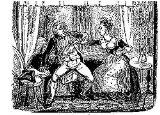
Brothel

Encyclopedia
Brothels are business establishments where patrons can engage in sexual activities with prostitutes
. Brothels are known under a variety of names, including bordello, cathouse, knocking shop, whorehouse, strumpet house, sporting house, house of ill repute, house of prostitution, and bawdy house. In places when prostitution or the operation of brothels is illegal, establishments such as massage parlor
s, bar
s or strip club
s may also offer sexual services to patrons, and illegal brothels usually also exist.
The size and style of brothels vary considerably, as do the range of sexual services available.
Laws which regulate brothels vary considerably. These laws vary between countries as well as within countries, and have varied over time. In some jurisdictions, brothels are legal and regulated, while in others they are illegal. However, even in jurisdictions which regulate brothels, there are brothels which operate outside the officially approved system.
, except in rural Nevada
. In many countries where brothels are officially illegal, the laws are ignored; often brothels in such countries are not only tolerated, but also regulated by authorities. Such situations exist in many parts of the world, but the region most often associated with these policies is Asia—a notable example being Thailand
. Such brothels often operate (thinly) disguised as legitimate business, such as massage parlors, saunas or spas. See also massage parlor
.
In other countries, prostitution itself is legal, but most activities which surround it (such as operating a brothel, pimping, soliciting in a public place etc.) are prohibited, often making it very difficult for people to engage in prostitution without breaking any law. This is the situation, for example in the United Kingdom.
In a few countries, prostitution and operating a brothel is legal and regulated. The degree of regulation varies widely by country. Most of these countries favor brothels, at least in theory, as they are considered to be less problematic than street prostitution
. In parts of Australia, for example, brothels are legal and regulated. Regulation includes planning controls and licensing and registration requirements. Brothels are not permitted to advertise and there are other restrictions. However, the existence of licensed brothels does not stop illegal brothels from existing. According to a report in the Daily Telegraph (Australia), illegal brothels in Sydney
now outnumber licensed operations by four to one; according to a 2009 report, in Queensland
only 10% of prostitution happens in licensed brothels, the rest remains either unregulated or illegal.
The Netherlands
has one of the most liberal prostitution policies in the world, and attracts sex tourists from many other countries. Amsterdam
is well known for its red-light district and is a destination for sex tourism
. The largest brothel in Europe (the Pascha) is situated in Cologne
, Germany
.
State brothels with regulated prices were created in ancient Athens
by the legendary lawmaker Solon
. These brothels catered for a predominantly male clientele, with prostitutes being women of all ages and young men. (see Prostitution in ancient Greece
.) In ancient Rome, soldiers had sexual access to female slaves, with brothels being located close to barracks and city walls. Brothels opened everywhere. They displayed candles to signal that they were open.
Before the appearance of effective contraception
, infanticide
was a common occurrence in brothels. Unlike usual infanticide—where historically girls have been more likely to be killed—prostitutes in ancient times preferred to kill their male offspring.
From the 12th century, brothels in London were located in a district known as the Liberty of the Clink
. This area was traditionally under the authority of the Bishop of Winchester
, not the civil authorities. From 1161, the bishop was granted the power to licence prostitutes and brothels in the district. This gave rise to the slang term Winchester Goose for a prostitute. Women who worked in these brothels were denied Christian burial and buried in the unconsecrated graveyard known as Cross Bones
.
By the 16th century, the area was also home to many theaters, (including the Globe Theatre
, associated with William Shakespeare
), but brothels continued to thrive. A famous London brothel of the time was Holland's Leaguer. Patrons supposedly included James I of England
and his favourite, George Villiers, 1st Duke of Buckingham
. It was located in a street that still bears its name and also inspired the 1631 play, Holland's Leaguer
.
The authorities of Medieval Paris followed the same path as those in London and attempted to confine prostitution to a particular district. Louis IX
(1226-1270) designated nine streets in the Beaubourg quartier
where it would be permitted. In the early part of the 19th century, state controlled legal brothels (then known as "maisons de tolérance" or "maisons closes") started to appear in several French cities. By law, they had to be run by a woman (typically a former prostitute) and their external appearance had to be discreet. The maisons were required to light a red lantern when they were open (from which is derived the term red-light district
) and the prostitutes were only permitted to leave the maisons on certain days and only if accompanied by its head. By 1810, Paris alone had 180 officially approved brothels.
During the first half of the 20th century, some Paris brothels, such as le Chabanais
and le Sphinx
, were internationally known for the luxury they provided. The French government sometimes included a visit to the Chabanais as part of the program for foreign guests of state, disguising it as visit with the President of the Senate in the official program. The Hotel Marigny, established in 1917 in the 2nd arrondissement of Paris, was one of several that were well known for catering to gay male clients. Premises suspected of being gay brothels, including the Hotel Marigny, were however subject to frequent police raids, perhaps indicating less tolerance for them from the authorities.
In most European countries brothels were made illegal after World War II. France outlawed brothels in 1946, after a campaign by Marthe Richard
. The backlash against them was, in part, due to their wartime collaboration with the Germans during the occupation of France. Twenty-two Paris brothels had been commandeered by the Germans for their exclusive use; some had made a great deal of money by catering for German soldiers and officials.
Italy made brothels illegal in 1959.
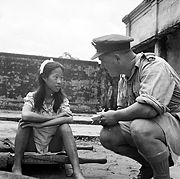
Until recently, in several armies around the world, a mobile brothel service was attached to the army as an auxiliary unit, especially attached to combat units on long-term deployments abroad.
Because it is a touchy subject, military brothels were often designated with creative euphemism
s. Examples of such jargon are ("the candy box"), replacing the term "".
Women were forced into prostitution by the Japanese occupation armies as a form of sexual slavery
by the Japanese
military during World War II
. Drawn from throughout East Asia, the prostitutes were individually referred to as "military comfort women" or and were collectively known as "comfort battalions".
It has been estimated that 34,140 women from occupied states, particularly in Poland, were also forced to work as involuntary prostitute
s for the Nazis during WWII.
Prostitution
Prostitution is the act or practice of providing sexual services to another person in return for payment. The person who receives payment for sexual services is called a prostitute and the person who receives such services is known by a multitude of terms, including a "john". Prostitution is one of...
. Brothels are known under a variety of names, including bordello, cathouse, knocking shop, whorehouse, strumpet house, sporting house, house of ill repute, house of prostitution, and bawdy house. In places when prostitution or the operation of brothels is illegal, establishments such as massage parlor
Massage parlor
A massage parlor is a business where customers can receive a massage. Sometimes the term is synonymous with brothel as the term "massage" may be used as a euphemism for paid sexual favours....
s, bar
Bar (establishment)
A bar is a business establishment that serves alcoholic drinks — beer, wine, liquor, and cocktails — for consumption on the premises.Bars provide stools or chairs that are placed at tables or counters for their patrons. Some bars have entertainment on a stage, such as a live band, comedians, go-go...
s or strip club
Strip club
A strip club is an adult entertainment venue in which striptease or other erotic or exotic dance is regularly performed. Strip clubs typically adopt a nightclub or bar style, but can also adopt a theatre or cabaret-style....
s may also offer sexual services to patrons, and illegal brothels usually also exist.
The size and style of brothels vary considerably, as do the range of sexual services available.
Laws which regulate brothels vary considerably. These laws vary between countries as well as within countries, and have varied over time. In some jurisdictions, brothels are legal and regulated, while in others they are illegal. However, even in jurisdictions which regulate brothels, there are brothels which operate outside the officially approved system.
Legality
Prostitution and the operation of brothels are illegal in many countries, though known illegal brothels may be tolerated. Brothels are illegal in the United StatesProstitution in the United States
Prostitution in the United States is illegal except in some small rural communities in Nevada. In the United States, each state has the power to regulate prostitution in that state. Only in parts of Nevada is prostitution legal. In all other states prostitution is usually classified as a...
, except in rural Nevada
Prostitution in Nevada
Nevada is the only U.S. state to allow some legal prostitution, in the form of regulated brothels. Prostitution outside these licensed brothels is illegal....
. In many countries where brothels are officially illegal, the laws are ignored; often brothels in such countries are not only tolerated, but also regulated by authorities. Such situations exist in many parts of the world, but the region most often associated with these policies is Asia—a notable example being Thailand
Prostitution in Thailand
Prostitution in Thailand is illegal, although in practice it is tolerated and partly regulated. Prostitution is practised openly throughout the country. Local officials with commercial interests in prostitution often protect the practice. The precise number of prostitutes is difficult to assess;...
. Such brothels often operate (thinly) disguised as legitimate business, such as massage parlors, saunas or spas. See also massage parlor
Massage parlor
A massage parlor is a business where customers can receive a massage. Sometimes the term is synonymous with brothel as the term "massage" may be used as a euphemism for paid sexual favours....
.
In other countries, prostitution itself is legal, but most activities which surround it (such as operating a brothel, pimping, soliciting in a public place etc.) are prohibited, often making it very difficult for people to engage in prostitution without breaking any law. This is the situation, for example in the United Kingdom.
In a few countries, prostitution and operating a brothel is legal and regulated. The degree of regulation varies widely by country. Most of these countries favor brothels, at least in theory, as they are considered to be less problematic than street prostitution
Street prostitution
Street prostitution is a form of prostitution in which a sex worker solicits customers from a public place, most commonly a street, while waiting at street corners or walking alongside a street, but also other public places such as parks, beaches, etc. The street prostitute is often dressed in a...
. In parts of Australia, for example, brothels are legal and regulated. Regulation includes planning controls and licensing and registration requirements. Brothels are not permitted to advertise and there are other restrictions. However, the existence of licensed brothels does not stop illegal brothels from existing. According to a report in the Daily Telegraph (Australia), illegal brothels in Sydney
Sydney
Sydney is the most populous city in Australia and the state capital of New South Wales. Sydney is located on Australia's south-east coast of the Tasman Sea. As of June 2010, the greater metropolitan area had an approximate population of 4.6 million people...
now outnumber licensed operations by four to one; according to a 2009 report, in Queensland
Queensland
Queensland is a state of Australia, occupying the north-eastern section of the mainland continent. It is bordered by the Northern Territory, South Australia and New South Wales to the west, south-west and south respectively. To the east, Queensland is bordered by the Coral Sea and Pacific Ocean...
only 10% of prostitution happens in licensed brothels, the rest remains either unregulated or illegal.
The Netherlands
Netherlands
The Netherlands is a constituent country of the Kingdom of the Netherlands, located mainly in North-West Europe and with several islands in the Caribbean. Mainland Netherlands borders the North Sea to the north and west, Belgium to the south, and Germany to the east, and shares maritime borders...
has one of the most liberal prostitution policies in the world, and attracts sex tourists from many other countries. Amsterdam
Amsterdam
Amsterdam is the largest city and the capital of the Netherlands. The current position of Amsterdam as capital city of the Kingdom of the Netherlands is governed by the constitution of August 24, 1815 and its successors. Amsterdam has a population of 783,364 within city limits, an urban population...
is well known for its red-light district and is a destination for sex tourism
Sex tourism
Sex tourism is travel to engage in sexual activity with prostitutes.The World Tourism Organization, a specialized agency of the United Nations, defines sex tourism as "trips organized from within the tourism sector, or from outside this sector but using its structures and networks, with the primary...
. The largest brothel in Europe (the Pascha) is situated in Cologne
Cologne
Cologne is Germany's fourth-largest city , and is the largest city both in the Germany Federal State of North Rhine-Westphalia and within the Rhine-Ruhr Metropolitan Area, one of the major European metropolitan areas with more than ten million inhabitants.Cologne is located on both sides of the...
, Germany
Germany
Germany , officially the Federal Republic of Germany , is a federal parliamentary republic in Europe. The country consists of 16 states while the capital and largest city is Berlin. Germany covers an area of 357,021 km2 and has a largely temperate seasonal climate...
.
History
The earliest recorded mention of prostitution as an occupation, appears in Sumerian records from before 4000 BC, and describes a temple-bordello operated by Sumerian priests in the city of Uruk. The 'kakum' or temple, was dedicated to the goddess Isthar and housed three grades of women. The first group performed only in the temple sex-rites, the second group had the run of the grounds and catered to its visitors as well, and the third and lowest class lived on the temple grounds but were free to seek out customers in the streets. In later years, similar 'temple' or 'sacred' bordellos and similar classifications of females were known to have existed in Greece, Rome, India, China and Japan.State brothels with regulated prices were created in ancient Athens
Athens
Athens , is the capital and largest city of Greece. Athens dominates the Attica region and is one of the world's oldest cities, as its recorded history spans around 3,400 years. Classical Athens was a powerful city-state...
by the legendary lawmaker Solon
Solon
Solon was an Athenian statesman, lawmaker, and poet. He is remembered particularly for his efforts to legislate against political, economic and moral decline in archaic Athens...
. These brothels catered for a predominantly male clientele, with prostitutes being women of all ages and young men. (see Prostitution in ancient Greece
Prostitution in Ancient Greece
Prostitution was a common aspect of ancient Greece. In the more important cities, and particularly the many ports, it employed a significant number of people and represented a notable part of economic activity...
.) In ancient Rome, soldiers had sexual access to female slaves, with brothels being located close to barracks and city walls. Brothels opened everywhere. They displayed candles to signal that they were open.
Before the appearance of effective contraception
Contraception
Contraception is the prevention of the fusion of gametes during or after sexual activity. The term contraception is a contraction of contra, which means against, and the word conception, meaning fertilization...
, infanticide
Infanticide
Infanticide or infant homicide is the killing of a human infant. Neonaticide, a killing within 24 hours of a baby's birth, is most commonly done by the mother.In many past societies, certain forms of infanticide were considered permissible...
was a common occurrence in brothels. Unlike usual infanticide—where historically girls have been more likely to be killed—prostitutes in ancient times preferred to kill their male offspring.
From the 12th century, brothels in London were located in a district known as the Liberty of the Clink
Liberty of the Clink
The Liberty of the Clink was an area in Southwark, on the south bank of the River Thames, opposite the City of London. Although situated in Surrey the liberty was exempt from the jurisdiction of the county's high sheriff and was under the jurisdiction of the Bishop of Winchester who was usually...
. This area was traditionally under the authority of the Bishop of Winchester
Bishop of Winchester
The Bishop of Winchester is the head of the Church of England diocese of Winchester, with his cathedra at Winchester Cathedral in Hampshire.The bishop is one of five Church of England bishops to be among the Lords Spiritual regardless of their length of service. His diocese is one of the oldest and...
, not the civil authorities. From 1161, the bishop was granted the power to licence prostitutes and brothels in the district. This gave rise to the slang term Winchester Goose for a prostitute. Women who worked in these brothels were denied Christian burial and buried in the unconsecrated graveyard known as Cross Bones
Cross Bones
Cross Bones is a post-medieval disused burial ground in The Borough, Southwark, south London, in what is now known as Redcross Way.It is believed to have been established originally as an unconsecrated graveyard for "single women," a euphemism for prostitutes, known locally as "Winchester Geese,"...
.
By the 16th century, the area was also home to many theaters, (including the Globe Theatre
Globe Theatre
The Globe Theatre was a theatre in London associated with William Shakespeare. It was built in 1599 by Shakespeare's playing company, the Lord Chamberlain's Men, and was destroyed by fire on 29 June 1613...
, associated with William Shakespeare
William Shakespeare
William Shakespeare was an English poet and playwright, widely regarded as the greatest writer in the English language and the world's pre-eminent dramatist. He is often called England's national poet and the "Bard of Avon"...
), but brothels continued to thrive. A famous London brothel of the time was Holland's Leaguer. Patrons supposedly included James I of England
James I of England
James VI and I was King of Scots as James VI from 24 July 1567 and King of England and Ireland as James I from the union of the English and Scottish crowns on 24 March 1603...
and his favourite, George Villiers, 1st Duke of Buckingham
George Villiers, 1st Duke of Buckingham
George Villiers, 1st Duke of Buckingham KG was the favourite, claimed by some to be the lover, of King James I of England. Despite a very patchy political and military record, he remained at the height of royal favour for the first two years of the reign of Charles I, until he was assassinated...
. It was located in a street that still bears its name and also inspired the 1631 play, Holland's Leaguer
Holland's Leaguer
Holland's Leaguer is a Caroline era stage play, a comedy written by Shackerley Marmion. It premiered onstage in 1631 and was first published in 1632...
.
The authorities of Medieval Paris followed the same path as those in London and attempted to confine prostitution to a particular district. Louis IX
Louis IX of France
Louis IX , commonly Saint Louis, was King of France from 1226 until his death. He was also styled Louis II, Count of Artois from 1226 to 1237. Born at Poissy, near Paris, he was an eighth-generation descendant of Hugh Capet, and thus a member of the House of Capet, and the son of Louis VIII and...
(1226-1270) designated nine streets in the Beaubourg quartier
Paris districts
Most of the Paris we see today is a result of a nineteenth-century renovation, but its boulevards and arrondissements were but a new grid bisecting quarters built by centuries of Parisian habit; as a result of this, Paris has many quarters that are not necessarily mentioned on any administrative...
where it would be permitted. In the early part of the 19th century, state controlled legal brothels (then known as "maisons de tolérance" or "maisons closes") started to appear in several French cities. By law, they had to be run by a woman (typically a former prostitute) and their external appearance had to be discreet. The maisons were required to light a red lantern when they were open (from which is derived the term red-light district
Red-light district
A red-light district is a part of an urban area where there is a concentration of prostitution and sex-oriented businesses, such as sex shops, strip clubs, adult theaters, etc...
) and the prostitutes were only permitted to leave the maisons on certain days and only if accompanied by its head. By 1810, Paris alone had 180 officially approved brothels.
During the first half of the 20th century, some Paris brothels, such as le Chabanais
Le Chabanais
Le Chabanais was one of the best known and most luxurious brothels in Paris, operating near the Louvre at 12 rue Chabanais from 1878 until 1946, when brothels were outlawed in France....
and le Sphinx
Le Sphinx
Le Sphinx was a brothel, which was opened in 1931 in Paris. In 1946, France outlawed all brothels.Le Sphinx was among the most expensive and best known maisons de tolérance in the Paris of the 1930's...
, were internationally known for the luxury they provided. The French government sometimes included a visit to the Chabanais as part of the program for foreign guests of state, disguising it as visit with the President of the Senate in the official program. The Hotel Marigny, established in 1917 in the 2nd arrondissement of Paris, was one of several that were well known for catering to gay male clients. Premises suspected of being gay brothels, including the Hotel Marigny, were however subject to frequent police raids, perhaps indicating less tolerance for them from the authorities.
In most European countries brothels were made illegal after World War II. France outlawed brothels in 1946, after a campaign by Marthe Richard
Marthe Richard
Marthe Richard, née Betenfeld was a prostitute and spy. She later became a politician and worked towards the closing of brothels in France in 1946.-Early life:...
. The backlash against them was, in part, due to their wartime collaboration with the Germans during the occupation of France. Twenty-two Paris brothels had been commandeered by the Germans for their exclusive use; some had made a great deal of money by catering for German soldiers and officials.
Italy made brothels illegal in 1959.
Military brothels
Until recently, in several armies around the world, a mobile brothel service was attached to the army as an auxiliary unit, especially attached to combat units on long-term deployments abroad.
Because it is a touchy subject, military brothels were often designated with creative euphemism
Euphemism
A euphemism is the substitution of a mild, inoffensive, relatively uncontroversial phrase for another more frank expression that might offend or otherwise suggest something unpleasant to the audience...
s. Examples of such jargon are ("the candy box"), replacing the term "".
Women were forced into prostitution by the Japanese occupation armies as a form of sexual slavery
Sexual slavery
Sexual slavery is when unwilling people are coerced into slavery for sexual exploitation. The incidence of sexual slavery by country has been studied and tabulated by UNESCO, with the cooperation of various international agencies...
by the Japanese
Empire of Japan
The Empire of Japan is the name of the state of Japan that existed from the Meiji Restoration on 3 January 1868 to the enactment of the post-World War II Constitution of...
military during World War II
World War II
World War II, or the Second World War , was a global conflict lasting from 1939 to 1945, involving most of the world's nations—including all of the great powers—eventually forming two opposing military alliances: the Allies and the Axis...
. Drawn from throughout East Asia, the prostitutes were individually referred to as "military comfort women" or and were collectively known as "comfort battalions".
It has been estimated that 34,140 women from occupied states, particularly in Poland, were also forced to work as involuntary prostitute
Forced prostitution
Forced prostitution, also known as involuntary prostitution, is the act of performing sexual activity in exchange for money on a non-voluntary basis. There are a wide range of entry routes into prostitution, ranging from "voluntary and deliberate" entry, "semi-voluntary" based on pressure of...
s for the Nazis during WWII.
See also
- Gay bathhouseGay bathhouseGay bathhouses, also known as gay saunas or steam baths, are commercial bathhouses for men to have sex with other men. In gay slang in some regions these venues are also known colloquially as "the baths" or "the tubs," and should not be confused with public bathing.Not all men who visit gay...
- Dumas BrothelDumas BrothelThe Dumas Brothel was a famous bordello in Butte, Montana in the United States. Located in the heart of uptown Butte, the brothel has been proclaimed America’s longest running house of prostitution...
- Sex industrySex industryThe sex industry consists of businesses which either directly or indirectly provide sex-related products and services or adult entertainment...
- Sex workerSex workerA sex worker is a person who works in the sex industry. The term is usually used in reference to those in the sex industry that actually provide such sexual services, as opposed to management and staff of such industries...
- SoaplandSoaplandA ' is a Japanglish and indicates a paradise for men in Japanese. It is said, since in Japan prostitution is officially prohibited by the government, that it is a type of brothel in Japan where male clients can engage in sexual activity with female prostitutes, although officially the clubs do...
- SpintriaSpintriaA spintria is a small bronze or brass Roman token, possibly for use in brothels, usually depicting sexual acts or symbols.-Use:Some scholars have argued that spintriae were used to pay prostitutes...
Further reading
- Burford, E. J. The Bishop's Brothels. London: Robert Hale, 1993. ISBN 9780709051138.
- Ka-tzetnik 135633 (Karol Cetinsky). House of Dolls. Moshe M. Kohn (trans.). New York: Simon and Schuster, 1955. A novel about the Holocaust, including a description of a brothel staffed by concentration camp inmates.
External links
- "Inside a brothel"—interview by Richard FidlerRichard FidlerRichard Fidler is a well-known Australian Republican and Australian ABC TV and radio presenter. He first came to prominence in the 1980s as a member of the Doug Anthony All Stars , an Australian musical comedy group also comprising Tim Ferguson and Paul McDermott...
with three brothel owners, June 2006 on ABC Local RadioABC Local RadioABC Local Radio is a network of publicly owned radio stations in Australia, operated by the Australian Broadcasting Corporation.ABC Local Radio stations broadcast across the continent using terrestrial transmitters and satellites...
(audio download available)