

British Israelism

Encyclopedia
British Israelism is the belief that people of Western Europe
an descent, particularly those in Great Britain, are the direct lineal descendants of the Ten Lost Tribes
of Israel. The concept often includes the belief that the British Royal Family
is directly descended from the line of King David. There has never been a single head or an organisational structure to the movement. However, various British Israelite organisations were set up across the British Commonwealth and America
from the 1870s, and many still continue to exist. Adherents may hold a diverse set of beliefs and claims that are ancillary to the core genealogical theory, however there are central tenets all British Israelites follow, including Two House Theology
which is the core essence of British Israelism. A central teaching of the British Israelites Two House Theology is that while Jews are considered to be Israelites, not all Israelites are considered to be Jews. British Israelites believe that Jews descend only from Judah (and the tribe of Benjamin), while the House of Israel
they believe are the White British
or Anglo-Saxon
-Celtic kindred peoples of North-Western Europe today.
(1320) which connects the Scots to Scythia
and Israel. Another is King Alfred
's Doom Book
(c. 893 AD), which describes a legend that the Anglo-Saxons were once 'strangers in Egypt' hinting a possible belief in Hebrew ancestry.
One of the earliest advocates of British Israelism from the Early Modern Period
was M. le Loyer, a French magistrate of Huguenot
ancestry, who in 1590 wrote in his book The Ten Lost Tribes Found that "The Israelites came to and founded the English Isles". The idea is also found briefly mentioned in Vincenzo Galilei
's Dialogue of Ancient and Modern Music (1581) which notes Galilei's belief that the Irish descend from King David. Modern British Israelites also point out that James I of England
(1567–1625) believed he was a king of Israel and that in Sir Francis Drake's famous letter to John Foxe
, he equated Britain with Israel.
English antiquarian Henry Spelman
by 1620 had claimed that the Danes were the Israelite Tribe of Dan (see Nordic Israelism
). One of the first published accounts of the theory of an Israelite genealogy of the British was The Rights of the Kingdom by John Sadler, published in 1649. But, it was only in the late 18th century, during a religious climate of Millenarianism
, that British Israelism became a distinct ideology, based on the preaching and writings of two men, Richard Brothers
and John Wilson.
It is generally considered that British Israelism as an 'ideology' was first founded in England, from where it spread to the United States. The belief appears to have gained momentum since the English Revolution
of the 17th century. It increased during the "Christian Restorationism" movement of the late 19th and early 20th centuries.
Brothers was the first to expound upon his version of British Israelism, but he lacked credibility due to alleged mental illness
. Having prophesied the end of the British monarchy, he was imprisoned in an asylum as criminally insane. Modern adherents of British Israelism however have denounced the view that Richard Brothers had anything to do with originating their doctrine. They point out that Brothers only considered himself a descendant of King David, and not the British monarchy. As the Canadian British Israel Association for example notes:
'This is not British-Israel belief; we teach that it is the royal family of Great Britain who are descended from King David, not Richard Brothers!'.
Modern British Israelites however accept that John Wilson was a British Israelite, but point out that he converted to this view after reading Robert Henry
's six-volume History Of Great Britain on a new plan (1771) and therefore point out that there must have been earlier British Israelites. Wilson adopted and promoted the idea that the "European 'race', in particular the Anglo-Saxons, were descended from certain Scythian tribes, and these Scythian tribes (as many had previously stated from the Middle Ages onward) were in turn descended from the ten Lost Tribes of Israel." (Parfitt, 2003. p. 54) Wilson's ideas were to be refined, and new ideas were developed, well into the second half of the 19th century. Wilson gave public lectures to spread his message but did not form any organisation or movement. Cruden's Concordance
once contained an opening note in its second edition (printed June 11, 1761) declaring that King George III
descended from Hezekiah
, the 14th King of Judah.
Other books from this period detailing the British Israel theory were Jakob Abbadie
's Triomphe de la Providence et de la Religion (1723) which notes "Unless the Ten Tribes have flown into the air, or have been plunged to the centres of the earth, they must be sought for in the north and west... and in the British Isles." Abbadie believed the ten lost tribes were Goths
who moved into Britain and France (see French Israelism). Another key text of this period was Ezra Stiles' The United States elevated to Glory and Honor
(1783), and Richard Brothers' A Revealed Knowledge of the Prophecies and Times (1794). Also cited as an early original work is Rev. John Wilson's Our Israelitish Origins (1840). Julius Oppert
's Gutian-Goth theory was also embraced by British Israelites during this period.
, Edward Hine
, Hibbert Newton
, John Cox Gawler
, Charles Ottley Groom Napier
, John Pym Yeatman
, Herbert Aldersmith
, William Carpenter
, Elieser Bassin
, William H. Poole
, Thomas Rosling Howlett
, Charles Piazzi Smyth
, George Moore
, C. A. L. Totten
and Edward Wheeler Bird
developed the ideas further. Hine departed England for the United States in 1884, where he promoted the idea that Americans were the lost tribe of Manasseh
, whereas England was the lost tribe of Ephraim
. He also first developed the link between Germany and ancient Assyria (see Assyria and Germany in Anglo-Israelism
and linked sub-beliefs below). John Fisher, 1st Baron Fisher (1841–1920) was also a prominent early British Israelite. Of Britain, Admiral Fisher said:
The British-Israel movement achieved organisational status from the 1870s onwards in a melee of rival groups and amalgamations. In 1875, the British-Israel Association and the Anglo-Israel Association were formed followed by the British-Israel Conference Association, in 1876, the Metropolitan Anglo-Israel Association, in 1879, and The British-Israel Identity Corporation, in 1880. Amalgamation under The Earl of Dysart led to The British-Israel Association in 1886, which mutated to the Imperial British-Israel Association, in 1908 and finally the British-Israel-World Federation
, in 1919. The Banner of Israel, first published in 1877 by Robert Banks of Fleet Street, London, continued until its incorporation in The National Message in 1926. The National Message quarterly magazine was first published in 1922 by the British-Israel-World Federation
, and continued until 1981.
By the end of the 19th century there were over two million British Israelites in England and the United States.
In 1892, an 'enquirers' book of British Israelism was printed entitled British-Israel Truth written by Denis Hanan. It was highly popular, reprinted, and sold about 75000 copies, while Hine's book The British Nation identified with Lost Israel (1871) sold up to 250,000. In 1922 the British-Israel-World Federation
set up its own book publisher called Covenant Publishing
which still exists today. During this time, several prominent figures patronized the organisation: Princess Alice, Countess of Athlone
, was Patron-in-chief in pre-World War II days. One of the most notable members was William Massey
, then Prime Minister of New Zealand
. Due to the expansive nature of the British Empire
, believers in British Israelism spread worldwide. It became most prevalent in the United States
, England
, and various Commonwealth
nations. The theory was widely promoted in the United States during the 20th century. Key British Israelite writers of the late 19th and early 20th centuries included Richard Reader Harris, as well as J. H. Allen
who wrote several books, one now considered a 'classic' by modern British Israelites called Judah's Sceptre and Joseph's Birthright (1902), another was John Cox Gawler
(1830–1882), a Colonel and Keeper of the Monarch's Crown Jewels. Gawler is best remembered for his books Dan: The Pioneer of Israel (1880) and Our Scythian Ancestors (1875) both of which have been republished numerous times. Another key figure was William Pascoe Goard
who in 1921 become Vice-President of the British-Israel-World Federation
and remained so until the time of his death in 1937. He authored over a dozen books on the British Israel teaching most notably including: Our Heritage: the Bible (1926), The Empire In Solution With Chapters On Anglo-Saxon Civilization (1931) and The Post-Captivity Names of Israel (1934). The Canadian geologist and professor Edward Faraday Odlum
was also an influential British Israelite during this period, he wrote God's Covenant Man: British-Israel (1927). Another prominent British Israelite of this period was evangelist F. F. Bosworth
whose 1920 radio lecture entitled The Bible Distinction Between the House of Israel and the House of Judah was printed as a popular booklet. Another was L.G.A. Roberts who wrote 'British History Traced From Egypt And Palestine' (1927) which is still popular amongst British Israelites today. Howard Rand promoted the British Israelite theory and became National Commissioner of the Anglo-Saxon Federation of America in 1928. He published The Bulletin, later renamed The Messenger of the Covenant. More recently, it has been renamed Destiny. It is issued by Destiny Publishers.
One of the most prolific authors just before and during the Second World War promoting the British Israel message was Alexander James Ferris
, who authored: British-Israel teaching concerning the Signs of the approaching end of the age (1933), The Coronation and The Throne of David (1937), Great Britain & The U.S.A. Revealed as Israel The New Order (1941), The British Commonwealth & The United States Foretold in The Bible (1941) and Germany's Doom Foretold (1942) which sold 60,000 copies and was reviewed by George Orwell
.
Covenant Publishing
have reprinted many old British Israelite texts from the 19th and early 20th century in their "Classic Series" including many of the above cited.
) were persecuted or suppressed by the Nazis during World War II
. In Nazi occupied territories in Europe, British Israelite or related literature was banned because it was considered as having a Jewish agenda or considered to be anti-German (see Assyria and Germany in Anglo-Israelism
). Nederlandsche Israël-Kring, a Netherlands based organisation teaching the Dutch offshoot of British Israelism was closed down by the Nazis. Like the Jehovah’s Witnesses and other minority Christian groups who were persecuted by the Nazis, British Israelites or related adherents of offshoot teachings were arrested by the Gestapo
and placed in Nazi concentration camps (see Purple triangle
), where some died. The son of Nordic Israelite identity preacher Albert Hiorth
, Frederik Hiorth, died in a Nazi concentration camp for his related British Israelite beliefs. While most British Israelites or related offshoots were persecuted by the Nazis because they were philo-semites (Philo-Semitism
), paradoxically the Christian Identity
movement which sprung from British Israelism turned into antisemitism and supported Nazism.
in the 1950s founder and former Pastor General of the Worldwide Church of God. Armstrong wrote United States in Prophecy
(also printed as "United States and Britain in Prophecy") published in 1945, followed by further editions. Armstrong believed the was a key to understanding biblical prophecy: "One might ask, were not biblical prophecies closed and sealed? Indeed they were—until now! And even now they can be understood only by those who possess the master key to unlock them." (Armstrong, 1967, p. 5) Armstrong believed that he was called by God to proclaim the prophecies to the "ten lost tribes of Israel" before the "End Times
".
Armstrong's belief caused his separation from the Church of God Seventh Day because of its refusal to adopt the theory. Armstrong created his own church, first called the "Radio Church of God" and later renamed the "Worldwide Church of God". He described British Israelism as a "central plank" of his theology. (See 'Armstrongism
'.)
After Armstrong's death, his former church, which changed its name to Grace Communion International (GCI) in 2009, abandoned all of his teachings, including a belief in British Israelism. It offers an explanation of the doctrine's origin and its abandonment by the church at its official website. Church members who disagreed with such doctrinal changes left the Worldwide Church of God/GCI to form offshoot churches. Many of these organizations, including the Philadelphia Church of God
and the United Church of God
, still teach British Israelism. Armstrong promoted other genealogical history theories, such as teaching that modern-day Germany
now represents ancient Assyria
. He wrote in chapter 5 of his Mystery of the Ages (1985), "The Assyrians settled in central Europe, and the Germans, undoubtedly, are, in part, the descendants of the ancient Assyrians." (p. 183).
The late Professor Roger Rusk (1906–1994), brother of former U.S. Secretary of State Dean Rusk
, was a prominent teacher of British Israelism. He worked for 13 years as a public school teacher. After completing his doctorate in physics, he worked for 28 years as a professor at the University of Tennessee
, where he became Emeritus Professor of Physics. He was also a member of the American Physical Society
and the "Tennessee Academy of Science". In 1976, the British Israelite and fellow of the Royal Geographical Society
William Howard Bennett published Symbols of our Celto-Saxon heritage with the aim of establishing an Israelite origin of British heraldry. The poetess Patience Strong
(1907–1990) was also a British Israelite.
In 1961 George F. Jowett published The Drama of the Lost Disciples
which as of 2009 has gone through 16 printed editions by Covenant Publishing
and has sold many thousands of copies. Despite modern works on British Israelism continue to be published, Jowett's book is considered to be the last prominent British Israelite work of notable success.
organisation continues to exist, with its main headquarters located in Bishop Auckland
in County Durham
. It maintains local chapters throughout the British Isles. The most recently established chapter is in BIWF-USA, based in Heber Springs, Arkansas
. In London the Orange Street Congregational Church teaches a form of British Israelism, and the Ensign Trust publishes The Ensign Message in its furtherance. In Australia the Christian Revival Crusade, founded by Leo Harris, once taught this theology but abandoned it. The Revival Centres International
, a prominent group that separated from the Crusade, and other splinter groups, continue to teach the doctrine. The "Churches of God" in Ireland are also known for their teaching on this subject. There is also the "British-Israel Church of God" http://www.british-israel.ca/. British Israelite literature also continues to be produced. Historical Research Projects is a modern British Israelite based publisher and research group who have published In Search of... The Origin of Nations (2003) which mainly attempts to establish Northern Europeans descended from Shem. Another modern British Israelite author is Steven M. Collins, who has published at least three books tracing the Israelite origins of certain European nations. A recent source puts only 5,000 members or adherents of British Israelism in Britain, with an unknown amount in America or the British Commonwealth.
Brit-Am is an organization (founded ca.1993) based in Israel, which also identifies the Lost Ten Tribes with the British and related peoples. Brit-Am uses biblical and rabbinical exegesis to justify its beliefs, supplemented by secular studies.
, Nordic Israelism
and French Israelism. A more racialized form of British Israelism which promotes antisemitism emerged in the 1920s and 1930s called Christian Identity
. Paradoxically while early British Israelites were philo-semites, such as Edward Hine
and John Wilson
, Christian Identity emerged to be strongly anti-Jewish, teaching that Jews do not descend from Judah (as British Israelites maintain) but instead Satan. Another key teaching of Christian Identity is that non-Caucasian people do not have a soul and therefore cannot be saved.
A research paper, published in 2002 on the British-Israel movement has noted:
the Primate
of the Anglican Church of Canada
(1904–1906) was a British Israelite.
Jonathan Holt Titcomb
the first Anglican bishop of Rangoon in the 19th century published several works on his belief in British Israelism. One of his works was republished in 1928 by Covenant Publishing as "British-Israel: How I Came to Believe It", Titcomb believed that during End Times
the two Houses (Judah and Israel) would be re-united, and that the Teutonic or Celtic peoples were Israel:
Samuel Thornton (bishop)
was an eminent Anglican bishop of Ballarat, Victoria, Australia who wrote:
, a Methodist minister, published Anglo-Israel or the Saxon Race?: Proved to be the Lost Tribes of Israel (1899).
J. H. Allen
of the Wesleyan Methodist Church, who later founded the Church of God (Holiness) wrote Judah's Sceptre and Joseph's Birthright (1902), which is still today considered a 'classic' text by modern British Israelites.
The prominent English barrister, King's Counsel and Methodist minister Richard Reader Harris (KC) in 1908 wrote his book The Lost Tribes of Israel, which expressed his belief in the theory that the Anglo-Saxons are descended from the Ten Lost Tribes:
Robert Bradford, a Methodist clergymen, who served as an Ulster Unionist Member of Parliament from 1974–1981, was a British Israelite.
William Pascoe Goard
who in 1921 become Vice-President of the British-Israel-World Federation
was a Methodist minister.
who believed in British Israelism include Mordecai Ham
(1877–1961). Ham gave a speech at the Seventh Annual Conference of the British-Israel-World Federation
on October 4, 1926. His speech was recorded and published in 1954 and as of 2002 continues to be reprinted in booklet form by British Israelites.
Revd T. R. Howlett B.A. minister of Calvary Baptist Church in Washington D.C was a British Israelite who wrote Anglo-Israel, the Jewish Problem: The Ten Lost Tribes of Israel Found and identified in the Anglo-Saxon Race (1896).
English Fundamentalist Independent Baptist
Rev. James Mountain authored British Israel Truth Defended (1926) and The Triumph of British-Israel (1930) both of which have been republished apart of Covenant Publishings "classic" series in 2004.
in 1900 published Anglo-American Alliance in Prophecy, which is considered one of the earliest key publications of British Israelism in America.
has a long history with British Israelism. Many early founders of pentecostalism were British Israelites including Charles Fox Parham
.
George Jeffreys (pastor)
who founded the Elim Pentecostal Church
was a British Israelite.
Christian Revival Crusade (CRC Churches International) a Pentecostal Protestant Christian denomination based in Australia, which was founded by Leo Cecil Harris in 1945 originally subscribed to British Israelism.
(1862–1948) was a British Israelite.
Faith healer John Alexander Dowie
who founded the Christian Catholic Apostolic Church
believed in British Israelism. Covenant Publishing sell a 34 page booklet entitled "Leaves of Healing" which quotes Dowie's identification of Britain with Israel from his miscellaneous writings.
The famous faith healer
and author of Christ the Healer F. F. Bosworth
in 1920 broadcast a radio lecture entitled The Bible Distinction Between the House of Israel and the House of Judah which promoted his views on British Israelism and Two House Theology
.
but rejected the religious or Christian aspect of standard British Israelism. Charles Bradlaugh
for example, one of the most famous English atheists of the 19th century after going to hear a speech on British Israelism, declared:
in 1924. A. A. Beauchamp was the owner and publisher of a popular British Israelite magazine called The Watchman of Israel. Beauchamp’s conversion to Christian Science was due to the complex interaction between Christian Science and British Israelism which had began In Mary Baker Eddy
’s lifetime by a number of well known Christian Scientists. Julia Field King, an American Christian Scientist from Iowa who was a friend and student of Mrs Eddy, sailed to England under Mary Baker Eddy's orders to study British Israelism in 1896. She had already read the works of the Anglo Israelite C. A. L. Totten
and was impressed by the works of Totten. Totten engaged in a genealogical exercise, attempting to prove the Davidic ancestry of the British royal family. Julia Field King put extensive research into trying to prove this; she went even further into trying to prove that Mary Baker Eddy herself was a descendant of King David. Mrs Eddy came to be a believer in British Israelism; Eddy was also attracted to this notion as she believed it may boost the Christian Science movement in England. In 1898, Mary Baker Eddy wrote a poem titled “The United States To Great Britain” In this poem, Mrs. Eddy refers to the United States and Great Britain as "Anglo-Israel," and our "brother," Great Britain, as "Judah's sceptred race".
In a letter in 1902 to Julia Field King of a work tracing the lineage of Queen Victoria back to King David, Mary Baker Eddy wrote: "Your work, The Royal House of Britain an Enduring Dynasty, is indeed masterful: one of the most remarkable Biblical researches in that direction ever accomplished. Its data and the logic of its events sustain its authenticity, and its grandeur sparkles in the words, 'King Jesus.'" In the words of Jeremiah, quoted in the book: "David shall never want a man to sit upon the throne of the House of Israel." (Jer. 33:17) Mrs. Eddy states: "Christian Science ... restores the lost Israel." In many of Mary Baker Eddy's writings, she addressed the Israelites as Christian Scientists. Until her death Mary Baker Eddy continued to keep an interest in British Israelism, early members of the Christian Science Mother Church accepted the Anglo Israel message of Mrs Eddy however after Mrs Eddy’s death in 1910 The Mother Church denied anything to do with British Israelism and any Christian Scientists supporting British Israelism in The Mother Church were excommunicated. The attractions of British Israelism in the Christian Science movement still remained after Mary Baker Eddy’s death. Because The Mother Church no longer wanted to teach British Israelism, a number of offshoot Christian Science Churches and groups were set up to continue teaching British Israelism. One notable example was the British Israelite Christian Science Church called “The Christian Science Parent Church”. It was organised by an English Christian Scientist Annie Cecilia Bill. Annie Bill became convinced that she was the true successor of Mary Baker Eddy and in 1912 organized what became known as the Christian Science Parent Church. After World War I, she moved to the United States and in 1924 established the church in America. As soon as Annie Bill set up The Christian Science Parent Church many Christian Scientists left The Mother Church to join it. Annie Bill believed The Mother Church was no longer teaching Christian Science the way it should be taught. Annie Bill wrote The Universal Design of Life (1924) that acknowledged Eddy's authority. The Church was a mixture of Mary Baker Eddy’s Christian Science with Annie Bill’s teachings on British Israelism and spirituality. The Christian Science Parent Church had high respect for Mrs Eddy they would read her textbook Science and Health with Keys to the Scriptures as well as Annie bill's textbook, the members of the church believed the English speaking peoples were the lost tribes of Israel and were in bible prophecy.
Another Christian Scientist who was a firm believer in British Israelism was John V Dittmore he joined Annie Bill's Christian Science Parent Church, he was a well known contributor to A. A. Beauchamp's British Israel magazine called The Watchman of Israel, he communicated with A. A. Beauchamp and told her Annie Bill's doctrines were correct, later A. A. Beauchamp joined the Christian Science Parent Church. A. A. Beauchamp’s magazine, published on behalf of British Israelism, became the magazine of the Parent Church and the central perspective adopted by Bill. The Christian Science Parent Church had a messianic view of history they believed the English speaking peoples were the lost Israel and that they were in bible prophecy to bring about spiritual perfection on earth, Annie Bill believed the northern and western European and North American peoples were the descendants of the ten ancient tribes of Israel and destined to lead world, spiritually, to the millennial dispensation. A number of members also came to believe in pyramidology
, the idea that the measurements and geometric design of the Great Pyramid in Egypt had religious and prophetic significance.
The British Israelism of Beauchamp and Dittmore brought many members to the church many who were already Anglo Israelites. Many of the members of The Watchman of Israel magazine became full time Christian Scientists. In 1924 Beauchamp left the church and pursued other interests but rejoined in the 1940s. The census of religious bodies reported that in 1926 the church had 29 congregations and 582 members in the United States. There were over 44 churches in Great Britain, Australia and Canada by 1928, by 1930 there was 88 churches and over 1200 members. In the late 1920s Annie Bill denounced Mary Baker Eddy’s writings, she wrote a new textbook called “The Science of Reality” which replaced her other textbook which acknowledged Eddy’s authority. The Christian Science Parent Church was renamed The Church of Universal Design. Annie Bill led the church up until her death which was in 1937. After her death a new leader Francis J Mott took over, he continued the Anglo Israel message and the work of Annie Bill and renamed the Church The Society of Life in 1937. The Church later changed its name to the Church of Integration. A. A. Beauchamp’s British Israel magazine The Watchman became The Universal Design, A Journal of Applied Metaphysics. Mott initially published his views in a several books published by A. A. Beauchamp. The British branch of the church was destroyed in the chaos of World War II. In America the church survived and briefly revived after the war. A new magazine, Integration, was issued from the church's headquarters in Washington, D.C., beginning in 1946. Eventually, however, the church, which was never numerically strong, dissolved. At least one follower of Bill who opposed Mott's leadership, Mary Sayles Atkins, continued to write, under her pen name, Mary Sayles Moore, about Bill and during the 1950s published several volumes with A. A. Beauchamp, who had left the Church of Integration in the 1940s. Her most important volume was Conquest of Chaos, which reviewed Bill's career and the rise of Mott.
Mary Beecher Longyear (1851–1931), the founder of the Longyear Museum was a British Israel proponent. Mrs. Longyear and her husband John were very helpful to Eddy and the early Christian Science church in providing the funds to purchase land for the church and for the Christian Science Benevolent Association in Chestnut Hill. Mrs. Longyear was a pioneer in the field of historic preservation. She searched the back roads of Massachusetts and New Hampshire to locate and purchase four houses in which Eddy once lived. She had portraits painted of Mrs. Eddy and Mrs. Eddy's early students and had reminiscences written by many of those who knew her. For over three-quarters of a century, the Longyear Museum has provided exhibits and resources about the life and achievements of Mary Baker Eddy. The Museum moved into its new building in Chestnut Hill, Massachusetts.
The Christian Science Endtime Center founded in 1996 by Stanley C. Larkin is the only active Christian Science organisation which supports Mary Baker Eddy's Anglo Israel studies.
(1567–1625) believed he was a king of Israel.
In 1996, The Independent
, reprinted the facsimile of a 1922 letter by George VI
(then Duke of York). He wrote:
Princess Alice, Countess of Athlone was a chief patron of the British-Israel-World Federation
from 1920 until her death. Her daughter Lady May Abel Smith
was also a patron of the Federation until her own death in 1994.
It is also claimed by modern British Israelites that Queen Victoria believed herself she descended from King David, they quote a letter she wrote supposedly supporting this view that she occupied the throne of David. In 1876, The Banner of Israel proudly announced that both Queen Victoria and Princess Louise, Duchess of Argyll
had both accepted copies of John Wilson
's Our Israelitish Origin. On the occasion of Queen Victoria ’s Diamond Jubilee, in 1897, the British-Israel Association presented an illuminated parchment stating:
, M.A.
, B.Sc., F.R.F.S. (1850–1935); Roger Rusk the brother of US secretary of state Dean Rusk
, Hebrew scholar and professor in physics for 28 years at the University of Tennessee
; British General Sir Walter Walker KCB
, CBE
, DSO & bar (1912–2001); William Ferguson Massey, Prime Minister of New Zealand 1912–1925; Patience Strong
(1907–1990), English Poetess; John Fisher, 1st Baron Fisher (1841–1920), GCB, OM
, GCVO, Admiral of the Fleet
; C. A. L. Totten
, professor of Military Tactics at Yale University
(1889–1892); John Cox Gawler
(1830–1882), Keeper of the Monarch's Crown Jewels; John Bracken
, PC
(1883–1969), 11th Premier of Manitoba (1922–1943) and leader of the Progressive Conservative Party
of Canada (1942–1948); Thomas Bavin KCMG (1874–1941), 24th Premier of New South Wales; Robert Randolph Bruce
, Lieutenant Governor of British Columbia
(1926–1931), Arthur Cherep-Spiridovich
(1858—1926); Sir Standish G. Crauford, Brigadier-General, Bart., C.B., C.M.G., C.I.E., D.S.O, author of Our Celtic Heritage (1867); David Davidson
, Esq., C.E., M.C., F.R.S.A., (1844–1956), famous British structural engineer; Sir Errol Manners
K.B.E
(1883–1953), distinguished Royal Navy
admiral
; Lt.-Col. J.A.McQueen, D.S.O., M.C. Military Intelligence; Joseph Cockfield Dimsdale
PC, KCVO
, Bt, Lord Mayor of London
(1901–1902); William Henry Fasken, Brigadier-General, author of Israel's Racial Origin and Migrations (1934); James Bernard Nicklin, (b. 1881); inventor and author of Testimony in Stone (1961), Sir George Grey
, KCB
(1812–1898), Governor-General of New Zealand
; Reader Harris, K.C. (1847–1909), barrister and King's Counsel; George Jowett (1891–1969), world-class gymnast, author of The Drama of the Lost Disciples
(1961); Oliver Lodge FRS (1851–1940), prominent British physicist; L.G.A. Roberts, Commander of the Royal Navy, author of British History Traced From Egypt And Palestine (1927); Herbert Aldersmith
, F.R.C.S
M.B. LSA
(1847–1918), renowned English physician, Adam Rutherford, F.R.A.S., F.R.G.S.; founder of the Institute for Pyramidology and E. Raymond Capt
As late as the 1860s and 1870s, several highly-educated men such as Professor Charles Piazzi Smyth
, Astronomer Royal for Scotland, Fellow of the Royal Astronomical Society, and Fellow of the Royal Societies of London and Edinburgh, Dr. George Moore
, Member of the Royal College of Physicians, John Pym Yeatman
, Esq., Fellow of the Royal Historical Society, C.O. Groom Napier
, geologist and Fellow of the Royal Statistical Society, Dr. Herbert Aldersmith
, Fellow of the Royal College of Surgeons and others – though not professional anthropologists or ethnologists – were able to authoritatively voice the British-Israel message, which won over many converts. Charles Marston
, Fellow of the Society of Antiquaries of London
who funded major archaeological excavations across Palestine between 1929-1938 was also a notable academic proponent of British Israelism.
Despite a significant clerical membership of British Israelites, it was admitted, by British-Israel in 1880, that British-Israelism was reviled by the clergy, as a whole.
In the Church Times, of 12 June 1885, British-Israel was compared to the Mormons in what was declared to be the latest development of “Chosen Peopleism”, a phenomenon which has ‘perpetually appeared and re-appeared in the world, but always with disastrous results’, dismissing British-Israel as a religious equivalent of craving for aristocratic distinction.
The broad spectrum of Christian denominations do not teach British Israelism, and some consider it speculative. Some critics have claimed British Israelism to be a cult or racist.
Modern British Israelites have responded that these criticisms and accusations do not represent their views and further claim their beliefs are neither cult like, nor racist.
, has been a strong opponent of the British Israel doctrine because of its own interpretations of Israelite identity. Robert Roberts
an early Christadelphian founder debated British Israelite pioneer Edward Hine
, at least twice, the first in Birmingham where he delivered his speech Anglo-Israelism Refuted followed by a further lengthy debate hosted over three days, held on April 21–23, 1879, at Exeter Hall, London, with Lord William Lennox presiding. The latter debate was later published in booklet form in 1919 as "Are Englishmen Israelites?", (Birmingham: C. C. Walker).
and John Wilson
in the 19th century. The Roman Catholic Church has no official statement on the British Israelism belief that a church was founded in Britain by Joseph of Arimathea
during the Roman Empire. Roman Catholics believe that the first church began in Rome. For this reason Edward Hine, John Wilson and most other early British Israelites were strongly anti-Catholic. Edward Hine regarded nuns as ‘silly women’ with cross appendages round their necks and priests were ‘feminine men', while John Wilson wrote the pope was the anti-christ. The Two Babylons
is a popular anti-Catholic work still cited by British Israelites.
, and therefore strongly oppose British Israelism. There are very few Jews who support British Israelism..
Several early Jewish sources are used to support Two House Theology, which is a key tenet of British Israelism. However these sources do not state where the ten lost tribes of Israel are located, neither if they were really lost. The Babylonian Talmud (Mishnah) Sanhedrin 110b for example notes:
Most Jews have never subscribed to Two House Theology, and continue to reject this doctrine and therefore oppose British Israelism. Despite this, there have been few historic Jews who talked about "lost tribes". Several Medieval Rabbis and Jewish Torah scholars began to locate the ten lost tribes, but the location greatly varied. Modern British Israelites often quote from Maimonides
who wrote:
Brit-Am has compiled many more of these Rabbinic sources, including the testimony of Nahmanides
who placed the lost tribes of Israel in France and Northern Europe.
Moses ben Isaac Edrehi (1774–1842), a Moroccan-born Rabbi
and Kabbalist believed the lost tribes of Israel were also located in Europe, writing in his Historical Account Of The Ten Tribes (1836):
Dr. Moses Margoliouth, an anglican priest from Jewish heritage, in his History of the Jews in Great Britain (1851) wrote:
Elieser Bassin
, a 19th century Russian Jew of aristocratic origins and a convert to Christianity, in his British and Jewish Fraternity (1884) equated Britain with the Israelite tribe of Ephraim
:
After Bassin's publication more Jews began to embrace British Israelism from the late 19th century.
The Jewish Encyclopedia
, although not supporting the British Israel teachings, noticed: "The identification of the Sacae, or Scythians, with the Ten Tribes because they appear in history at the same time, and very nearly in the same place, as the Israelites removed by Shalmanesar, is one of the chief supports of the theory which identifies the English people, and indeed the whole Teutonic race, with the Ten tribes" (Jewish Encyclopedia, 1901, Vol. 12, p. 250).
In 1900, SJ Deutschberger, a Jew and head of ‘The Industrial Mission to the Jews’ became General Secretary of the British-Israel Association.
Since British Israelism teaches Jews descend from Judah
, while the British and related kindred from the other tribes it was not perceived to be antisemitic. However, Christian Identity
, an offshoot sect which sprung from British Israelism in the 1920s emerged to be strongly antisemitic teaching that the Jews do not descend from Judah, but instead Satan or the Edomite-Khazars
. The Anti-Defamation League
(ADL) describes the emergence of Christian Identity from British Israelism as an 'ugly turn':
The Anti-Defamation League, and most other modern Jews do not consider British Israelism to be antisemitic, only its offshoot Christian Identity. There are even modern Jewish proponents of British Israelism, and modern British Israelites usually cite these authorities or sources to refute the often confusion between British Israelism and Christian Identity regarding antisemitism.
, Catholics and Palestine
. In essence, the character of movement was pro-Conservative, Nationalist, Imperialist and anti-Home Rule. British Israelism did have followers in both legislative houses from the 19th century, however, limited by significant elected representation it promoted, through various publications, those influential public figures who blindly reflected its own theologically driven policies and prophecies. It is only in from the 1870s that the British-Israel press really started to roll enabling commentary on their domestic political stance. Prior to the United Kingdom general election, 1874
Edward Hine asserted, that the British-Israel movement had "no motive to endeavour to operate any influence, in a political sense", however, in the same year, Hine appealed for representatives in Parliament and stressed the importance of selecting MPs indoctrinated by British-Israel philosophy. There was is no record of how successful his campaign was but in the event the Conservatives, under Disraeli, won with a majority of 52 seats which pleased the British-Israel pundits. Hine was not alone and Viscount Folkestone, president of the Metropolitan Anglo-Israel Association and MP, asserted, in 1880:
This 1880 election did, however, indicate the low influence of British-Israel in the hustings. Despite pleading its non-political stance, British-Israel backed Disraeli. British-Israelites encouraged the nation to support the party that would achieve God’s destiny. The Liberals, under Gladstone
, won by a majority of 176 seats but true to form they found biblical prophecy to cover the non-Imperial policies of Gladstone ‘Come, My people, enter those into thy chambers, and shut thy doors about thee; hide thyself as it were for a little moment, until the indignation be overpast.’ (Isa. 16:20) to mark Britain's withdrawal from expansion. It followed that British-Israel did not expect Liberals to have long enough in power to affect foreign policies. Post 1880 election, British-Israel were gladdened to hear the Liberals intended maintaining the empire but deplored its repudiation of further colonial annexations therefore not fulfilling Britain’s destiny to rule the world. Sure enough the appropriate biblical prophecy was found ’And the kingdom and dominion, and the greatness of the kingdom under the whole heaven, shall be given to the people of the saints of the most High, whose kingdom is an everlasting kingdom, and all dominions shall serve and obey him’ (Daniel 7:27). Palestine was the apex of the British-Israel geographical agenda due to the Biblical prophecy ‘Unto thy seed have I given this land, from the river of Egypt unto the great river, the river Euphrates’ (Genesis 15:18). British-Israel believed that promises to Israel, as contracted with Judah, must be fulfilled. The key biblical passage indicated that Palestine would be shared with the Jews and ‘In these day the house of Judah shall walk to or with the house of Israel, and they shall come together out of the land of the north to the land that I have given for an inheritance unto your fathers.’ (Jer. iii. 18, 19). Most British-Israelites of the 19th century and early 20th century were therefore Christian Zionists, as many continue to be. British-Israelites in the late 19th century equated Edom with the Ottoman empire
hence the deposition of the Sultan could only be actioned by Anglo-Saxon Israel in the form of England ‘I will inflict vengeance upon Edom by the hand of My people Israel‘ (eze. 25:14). In 1902, noting the stormy political situation in the Balkans exasperating the Turkish, British-Israel declared on Palestine ‘The land must be cleansed, and the intruder turned out of it, to allow of the return of the People of Zion’. Disraeli’s acquisition of the Suez Canal and Cyprus between 1874 and 1878 made physical conquest of Palestine inevitable. British-Israel applauded the government’s bold stroke in acquiring half the shares in the Suez canal proclaiming it as the beginning of the restoration movement and an Act of God. The Suez Canal shortened the sea trip to India by 5000 miles and part fulfilled biblical prophecy ‘in the same day the Lord made a Covenant with Abraham, saying, Unto thy seed have I given this Land, from the River of Egypt into the great river, the river Euphrates’.
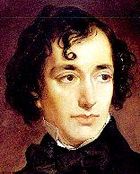 Disraeli was also praised by British-Israelites in that his surname ‘Of Israel’ was seen as fulfillment of ‘One shall say, I [am] the LORD'S; and another shall call [himself] by the name of Jacob; and another shall subscribe [with] his hand unto the LORD, and surname [himself] by the name of Israel‘. In 1875, Lionel de Rothschild
supplied Disraeli with the £4 million to purchase the
Khedive of Egypt’s controlling shares in the Suez Canal Company. However, there was one problem here in that Biblical prophecy maintained of Ephraim ‘He shall not return to Egypt.’ Hine remarked on the coincidence that at a time, national identity with Israel, Benjamin Disraeli was selected as Prime Minister and ‘I have faith to look upon this man as one specially raised by God as a deliverer for our nation’ and ‘under the auspices of a Premier, of Jewish or Israelitish origin, and raised, we cannot but believe, to his high and influential position by Divine Providence to exert a prominent influence on the coming events’. His prophetic feelings were backed up by staff writer Harrison Oxley in ‘We identify Benjamin Disraeli, Esq., as one called in a most distinguished manner to lead the Nation to glory, and by the Identity, we see clearly how Judah and Israel became united, how Palestine comes into the possession of the British Nation’. One offshoot of The Anglo-Israel Association was The International Universal Alliance whose purpose was ‘to secure the neutralisation of Palestine under the guarantee of the great Powers, with the view of assuring the security of Christian and Israelitish populations.
British-Israel maintained that British Imperialism was a direct result of Gladstone’s Home Rule policy, which was viewed as sign of weakness in that electors had to choose between Britain existing as an Empire or falling to pieces by a series of secessions. In 1880, British-Israel commentating on foreign policy asked ‘Shall the colonies be retained by Israel? Shall the great “company of nations” in federation with the “little island of the North” fulfill their grand destiny as marked out in the Word of God? “Nay”, say the Opposition, “federation is a mistake; the greatest injury that might happen to this empire.’ Imperialism
strengthened ties with the Mother country and British-Israel dived this into Political and Biblical. Under Biblical Imperialism, Britain’s appointed destiny was to annex regions of the world in fulfillment of Biblical covenant such as Palestine. Judah had been employed for this purpose in that a Jew, Disraeli, had purchased the Suez canal shares and a Jew, Rothschild, had financed the acquisition. British-Israel referred to Salisbury’s election, in 1900’ as a thoroughly Imperial party and attributed election victory to Joseph Chamberlain
, whose role as Colonial secretary, had struck blows against Home rule and Kruger’s Boers, and proof that electors wanted an extension of the Empire. In fact British-Israel displayed intense relief that, in their opinion, the two greatest disasters of modern times - the handing of Transvaal to the Boers and the abandonment of Sudan - were now behind the country. The establishment, in 1907, of a permanent annual Imperial Conference was seen as part fulfillment of the prophecy of ‘Company of Nations’ and attributed to the enterprise ‘ the chosen race’ topped by the inauguration of Empire Day in 1909.
In order to fulfill biblical prophecy, British-Israelites wished to see unification of the colonies under the security of a United Empire of Great Britain. In this respect they were buoyed by the 1897 Federal Convention of Australia to unify the antipodean colonies based on successes in Canada. As with Disraeli, they used an influential individual as a symbolic vehicle for their Imperial aspirations - Joseph Chamberlain
. Speaking at the Royal Colonial Institute, in 1897, ‘As regards the self-governing Colonies, we no longer talk of them as dependencies. We think of them and we speak of them as part of ourselves, as part of the British Empire.’ They applauded him for acting ‘honourably, generously and nobly’ to the defeated Boers and opined that South Africa would bloom under Britain as had other lands brought under subjection. A subject they reminded Edward VII, on his coronation:
Joseph Chamberlain had great sympathy with the Jewish Community. He promoted the aims of Zionism
aiding Herzl
’s project to found a Jewish settlement between Egypt and Palestine securing an offer from the British government for a Zionist colony in East Africa and in particular appealing to British-Israel through his aversion to Home Rule. In an obituary to Joseph Chamberlain, ‘the missionary of Empire‘, British-Israelites proclaimed:
While most British-Israelites well received Zionism
in the early 20th century, they criticised most Jewish Zionists as being forgetful of all what the Biblical prophecy implied, as do modern British Israel adherents. Since British Israelism maintains both Houses (Judah and Israel) would one day be re-united, British Israelites only viewed the Israeli Declaration of Independence (1948) as fulfilling part of the Biblical prophecy (Jer. 3: 18) and continue to do so. Most modern British-Israelites claim to be apolitical
, or supporters of monarchism
. However some British Israelite members or groups support British Nationalism
. During the British National Party
leaked membership list in 2008, it was revealed several BNP members belonged to the British-Israel-World Federation
. British-Israelism is also popular in Northern Ireland, amongst Ulster
Loyalists. Tara (Northern Ireland)
was a British-Israelite Loyalist faction, it existed from the 1960s - 1980's.
, Welsh
, Cornish
or Manx
languages is a core tenent of British Israelism. Numerous scholars since the 18th century have attempted to link British tongue to Hebrew or a Semitic origin, James Cowles Pritchard connected the Celtic languages to Hebrew in his Eastern Origin of the Celtic Nations (1857), writing that the Celtic language "forms an intermediate link between [the Indo-European] and the Semitic, or perhaps indicates a state of transition" (p. 349). Earlier, Henry Rowlands
(1655–1723) author of Mona Antiqua Restaurata: An Archaeological Discourse on the Antiquities, Natural and Historical, of the Isle of Anglesey, the Ancient Seat of the British Druids (1723) already connected British dialect to Hebrew. However, there was an even earlier publication linking Hebrew to Welsh, written by Charles Edwards in 1676 entitled Hebraismorum Cambro-Britannicorum specimen. John Wilson
quoted Dr James Andrew, who in his Hebrew Dictionary and Grammar (1823) maintained ‘The dispersion and incorporation of the Ten Tribes of Israel amongst the Assyrian and other northern nations, accounts most satisfactorily for the numerous traces of the Hebrew language that still remain amongst the languages of Europe’. Another early authority British Israelites cite on language is Charles Vallancey
who in his An Essay on the Antiquity of the Irish Language (1772) wrote of similarities between Phoenician and Irish. Distinguished Celtic scholar John Rhys
, also usually is found referenced by British Israelites, since in his book The Welsh People (with D. B. Jones, 1900) he wrote of, "convincing evidence of the presence of some element other than Celtic... We allude to an important group of Irish names formed much in the same way as Hebrew names are represented in the Old Testament." A research paper was presented to the British Archaeological Association in 1877 which proposed that the very names the Welsh used for their own people, “Gael” and “Kymry”, were “of purely Hebrew origin.” This paper is usually found cited in British Israelite literature, amongst others.
British Israelites also quote William Tyndale
who famously wrote:
As well as the ancient Welsh poet Taliesin
in the Book of Taliesin
:
British Israelites believe that the Israelites lost their original language (Hebrew) after they were captured and resettled by the Assyrians, they usually quote Isaiah 28: 11 which notes: “For with stammering lips and another tongue will he speak to this people”. This was first cited by Edward Hine as one of his identity evidences.
 British Israelites often cite legends and historical sources which establish an early Jewish (Judahite) or Phoenicia
n miner settlement in Cornwall, well before the mainstream accepted date of the first Jews in England (1070). According to British Israelites there were supposedly several hundred Jewish miners having traveled there in early BC times for tin for Solomon's Temple
. The British Isle's were well known for tin mines in classical antiquity (see Cassiterides
). The idea that early Jewish miners were in Cornwall is found in numerous history books on Cornwall from the 19th century, including Richard Polwhele
's History of Cornwall (1803) which notes that the oldest pits containing smelted tin in Cornwall were nicknamed Jew's Houses. A very old town in Cornwall is also known as Market Jew and British Israelites and others point out that this suggests an early Jewish settlement. Max Muller
however opposed this idea and wrote an article entitled Are there Jews in Cornwall? attempting to debunk it. The idea continued to be discussed in later works, Albert Montefiore Hyamson
dedicated a chapter in his History of the Jews in England (1928) discussing the legends and historical sources of an early Jewish miner presence in Cornwall.
or Nordic race related kindred. British Israelites point out that King David is described as adomi meaning ruddy
(reddish or rosy) in the Old Testament (1 Samuel 16: 12; 17: 42) which means he either had red hair
or that he had a rosy complexion, which is a notable trait of Caucasians
who throughout history have been known to blush or have rosy cheeks. Red hair is most frequent in northern and western Europe, with Scotland and Ireland who have the highest percentage of redheads in the world. It has never been agreed by any Bible scholar as to what adomi precisely means in 1 Samuel 16: 12 and 17: 42 (either the hair colour or the skin complexion of David). Adam Clarke
for example in his Commentary on the Bible (1831) wrote that these passages related to red hair colour, Bible translations also vary either translating adomi as red hair or a ruddy skin complexion.
British Israelites often quote the ethnological work of Assyriologist Archibald Sayce
who discovered from ancient artwork and tablet descriptions in Palestine, that the Amorites (Akkadian: Amurru) were a pale skinned, blue eyed, red haired race. Flinders Petrie also wrote they were fair haired. British Israelites point out that these Amorites were not the descendants of Canaan
who sprung from Ham (Genesis 10: 6) but that the term Amorite or Amurru became applied to non-Hamitic groups who inhabited that same region. Cambridge Ancient History (Vol 1, 1929, p. 230) for examples notes that the term Amurru was used to label more than one ethnic-group, but who occupied the same region. British Israelites therefore conclude that the pale skinned fair haired Amurru Sayce and Petrie wrote about were a Hebrew kindred peoples. These Amorite features of red hair, blue eyes and pale skin are pointed out to be Nordic (or Northern European) racial features, thus establishing a link between ancient Hebrew physiognomy and the Nordic race. Often cited as further evidence is the ancient Egyptian mural on Seti I
's tomb which depicts four racial types - the Asiatic, Nubian, Libyan and Egyptian. British Israelites point out that the Asiatic (who they consider a Hebrew) has painted blue eyes, and a reddish beard.
The race of Jesus
is also a recurrent theme in British Israelism literature. Since the early 19th century British Israelites have maintained that Jesus was white skinned and fair haired. They often quote the testimony of William Holman Hunt
who studied Hebrew physiognomy for 10 years before painting his The Light of the World which depicts Jesus as blonde haired and pale skinned. Apocryphal historical texts are also often cited which describe Jesus as golden or red haired, these include the Description of Jesus by Publius Lentulus which describes the hair of Jesus as chestnut (reddish-brown) and his eyes bright blue (see Publius Lentulus
).
British Israelites however believe the physiognomy of the Jews (Judahites) changed in 538 BCE (see below).
. They believe while most modern Jews (Ashkenazi, Sephardi) are lineal descendants (purely or partly) of the tribe of Judah (or in some cases from the tribe of Benjamin
) that the other tribes (see ten lost tribes
) are not Jewish, but that the White British
or Northern European related kindred descend from them. It is accepted by British Israelites that during the United Monarchy of Israel (1020 BCE - c. 930 BCE) all the tribes became known as Israel under King David. For example II Samuel 5: 5 mentions King David ruling over over all Israel and Judah, while I Kings 2: 11 describes David ruling Israel for 40 years (meaning all tribes). Jacob
who all twelve tribes of Israel descended from was also named Israel (Genesis 32: 28). British Israelites therefore assert that while all Jews are Israelites, not all Israelites are Jews. The Jews (Judahites) they point descend only from the tribe of Judah (or Benjamin) who split with the other ten tribes during the collapse of the United Monarchy (930 BCE). After the collapse of the United Monarchy during the succession of Solomon's son Rehoboam
, the ten tribes formed the Kingdom of Israel in the north (with its first capital Shechem
, followed by Samaria
), while the tribe of Judah formed the Southern Kingdom of Judah
(containing Jerusalem). British Israelites point out that after the split of United Monarchy and formation of the two kingdoms, the ten tribes of the Kingdom of Israel became known as a distinctive 'House' which differentiated them to the southern Judahites.
Old Testament passages which show the House of Israel (northern 10 tribes) to be distinct or separate from the House of Judah (Jews) are cited by British Israelites to support their Two House Theology. Examples include 1 Samuel 11: 8; Jeremiah 3: 18; 13: 11; 31: 31; 37; 33: 24; Ezekiel 8: 1; 14: 1. British Israelites also note that the House of Israel (ten lost tribes
) were never called Jewish or Jews, and that the first place the Judahites (or Jews) appear in the Bible (II Kings 6: 6) is when they were at war with the House of Israel. British Israelites believe the two 'Houses' will be united during End Times
and cite the prophecies in Ezekiel chapter 37 which notes that one day the two 'Houses' will be united under a King from the stock of David (see Davidic line
). As further evidence, British Israelites cite the geographical description in Jeremiah 3: 18, which notes when the two 'Houses' will be united they will come from the far north, which British Israelites interpret to mean Northern Europe or Britain.
Critics of the above interpretation point out that Jeremiah 3: 18 describes both 'Houses' coming from the north (and not just the House of Israel). However British Israelites point out that according to II Kings 18: 13, a small portion of the tribe of Judah was deported with the House of Israel (10 lost tribes). This happened when Sennacherib
invaded a portion of Judah in the 8th century BC during the reign of Hezekiah
, but did not manage to capture its capital Jerusalem. Most Judahites (Jews) therefore were not captured and deported but remained in their land until the Babylonian Captivity
(6th century BC). As secular evidence, British Israelites often quote from the prism of Sennacherib (see Taylor and Sennacherib Prisms
) which records that 200,150 Judahites (Jews) were captured and deported by Sennacherib from 46 towns across Judah. Most archeologists today consider this number to be an exaggeration and that the figure was actually 2,150. Nonetheless the accuracy of II Kings 18: 13 of a real historic event has been verified by archeology. British Israelites believe that this small portion of deported Judahites (who joined the deported House of Israel, see II Kings 17), whether 2,150 or 200,150 founded a Davidic bloodline and monarchy in Ireland or Britain (confirming the north location of the House of Judah in Jeremiah 3: 18).
This small portion of Jews or Judahites who left Judah centuries before the Babylonian Captivity are contrasted by British Israelites to the Jews who remained there (from who the modern Jews they believe descend). British Israelites maintain that the physiognomy of the Jew changed when they were freed by Cyrus in 538 BCE and returned to Judah, where they mixed with other racial or ethnic types who had settled there when the Judahites had been deported by the Babylonians. As scriptural evidence, British Israelites point to Isaiah 3: 9 which notes that the people of Judah changed in countenance or their faces (i.e. skin complexion, or facial features). This teaching was first published by Edward Hine
in his The British Nation identified with Lost Israel (1871). British Israelites therefore point out the physical appearance of Jews has changed, but that prior to the Babylonian Captivity
, the Jews physically resembled the Israelites, and were a Nordic racial type.
's Hebrew Dictionary (1890) which defines a mamzer as a mongrel, the Luther Bible
(1584) which defines it as a mischling
(mixed race or cross-breed) as well as Webster's Dictionary
which also defines mamzer as a mongrel or mixed race. British Israelites point out the racial nature of this verse (and others), proves that the Old Testament law concerning the Israelites was established so they were to remain unmixed, as apart of God's plan of ethnic preservation and essentialism.
Critics of the British Israelite teaching that the Israelites are an unmixed race often attempt to debunk the theory by asserting that the White British
are mixed of many different ethnicities or ancient tribes, for example the Celts, Picts
, Anglo-Saxons
, Jutes
, Vikings and Normans
. British Israelites however defend their position and teaching by explaining that these ancient peoples all sprung from the same root and were kinsmen of the same blood. British Israelite literature on this topic typically quotes several notable 19th century scientists and historians who agreed with their position that the British race is unmixed. For example Edward Augustus Freeman
wrote in his Origin of the English Nation (1879):
, British Israelites believe that the House of Israel became lost (see lost ten tribes) after they were captured and deported by the Assyrians in the 8th century BC. The core essence of British Israelism rests on the belief that the House of Israel never returned to the Kingdom of Israel. As evidence British Israelites cite Biblical passages such as II Kings 15: 29; 17: 6; 18: 11 which note that the Israelites were taken by the Assyrians and settled in several Assyrian cities (see Halah
) as well as the Medes
, and II Kings 17: 18 which notes only the tribe of Judah was left (with some Benjamites and Levites amongst them ). Also cited is secular evidence from archeology which records the Assyrian deportation of the House of Israel, namely the Nimrud Prism which records that Sargon II
deported 27,290 Israelites to Assyria.
However despite the Israelites becoming lost themselves (which British Israelites point out fulfills the prophecy of Isaiah 62: 2 which states the Israelites were to lose their name i.e. identity) after their deportation and settlement in the Medes
, British Israelites have always maintained that the authors of the New Testament (and others, such as Josephus
) knew who the Israelites were and where they settled. Hence British Israelites maintain that Jesus knew where precisely the Israelites were when he sent the apostles to the lost sheep of the House of Israel (Matthew 10: 6; 15: 24).
British Israelites believe that the deported Israelites in Assyria
and the Medes
became the ancient Parthian
, Scythian (Saka
) and Cimmerian peoples of that same region in the 8th or 7th century BC. They often stress two points on this topic (often quoting Encyclopædia Britannica
): that the Scythians and Parthians emerged at the exact same time the Israelites were deported and secondly that they sprung up in the exact same region. The geographical linked boundaries or overlaps of Scythia
and Parthia
with Assyria
and the Medes
are further cited as establishing a link. British Israelites also note that the author(s) of 2 Kings 17:23 and 1 Chron 5:26 wrote that several tribes of the Israelites (including Gad
, Reuben
and half the Tribe of Manasseh
) were still in the region of the Medes
or Assyria during their own day. Since the Book of Chronicles dates to the 5th or 4th century BC, British Israelites believe that the author(s) knew that some tribes of the House of Israel remained in exile during their own period, specifically in the region of the Medes and Assyria (see Neo-Assyrian Empire). Certain tribes however are stressed by British Israelites to have migrated west into Europe since the territory of the Scythians stretched into Ukraine
and Romania
(see Scythia Minor
). The Tribe of Dan
is also earlier thought to have migrated into Europe by British Israelites, since they had access to ships (Judges 5: 17.)
Adherents of British Israelism believe that the Behistun Inscription
as well as Assyrian tablets connect the Scythians with the people known in Babylonian as Gimirri or Cimmerian to the Israelite House of Omri
. The theory suggests that the "Cimmerians / Scythians" are synonymous with the deported Israelites. George Rawlinson
wrote:
British Israelites claim that the Babylonian term Gimirri or Assyrian word Khumri derived from Cimmerian:
The archeologist and British Israelite, E. Raymond Capt, claimed that there were similarities between King Jehu
's pointed headdress and that of the captive Saka king seen to the far right on the Behistun Inscription. He also posited that the Assyrian word for the House of Israel, Khumri, after Israel's King Omri of the 8th century B.C., is phonetically similar to Gimirri. (Cimmerian)
British Israelites quote the testimony of Josephus
, who in his Antiquities of the Jews
(93 AD) wrote:
Josephus believed the House of Israel (ten lost tribes
) were beyond the Euphrates during his own era, which scholars have asserted was the western border of where he believed the Israelites were located in the 1st century AD. Josephus believed the Israelites during his own time were an immense multitude, and therefore countless which British Israelites claim fulfills the prophecy of Hosea 1: 10: Yet the number of the children of Israel shall be as the sand of the sea, which cannot be measured nor numbered. British Israelites maintain that as the Scythians and Cimmerians extended their territory into Europe (Scythia Minor
and Sarmatia
) they increased their multitude, and that the Israelites by the early first few centuries AD had a great territory (see Sarmatians
).
British Israelites believe that most of the ten tribes of Israel were stationed in Scythia
and the Parthian Empire
(which included the territory of the ancient Medes
as Acts 2: 9 connects them) during the first century AD when Jesus sent the Apostles to these precise regions. One or two of the tribes however British Israelites believe moved into Europe from an earlier time (such as the Tribe of Dan
); this teaching began with Edward Hine
and John Wilson
who noted that Dan were a maritime tribe, and that certain Biblical passages indicated they entered Europe long before the other tribes. As evidence to support their teaching that the apostles were sent to the exact region the Israelites were settled, British Israelites cite 1 Peter 1: 11 which notes the apostle Simon Peter was sent to Pontus
, Galatia
, Cappadocia
, Asia Minor
and Bithynia
, to 'God's elect' (which British Isralites believes means Israel, quoting Deuteronomy 7: 6) while calling them 'strangers'. British Israelites note that the Greek word translated 'strangers' parepidēmois means a foreigner or someone residing in a strange country. British Israelites note that these regions Peter was sent to were adjacent to Scythia and Parthia, and that they were colonised by Celtic tribes, who sprung from the Scythians. British Israelites quote ancient authors, such as Strabo
who connected the Scythians to the Celts, calling them Keltoskythai, Celtic Scythians (Geographica, 11.6.2) while also noting similarity in culture and archeology. British Israelites also point out that Galatia
in etymology is related to the Celts and that these supposed Celts were called 'strangers' in 1 Peter 1: 11 because the original inhabitants of those regions were Japhethites, and not from the line of Shem.
The opening verse to the Epistle of James
is also cited by British Israelites, which notes:
British Israelites point out that James also was therefore sent only to the lost Israelites, as well as the small segment of Judah who had been deported (II Kings 18: 13). Also cited is Origen
's testimony (recorded by Eusebius) concerning where the apostle Saint Andrew went, that being Scythia
. British Israelites also quote other historical sources and apocrpyha which places the rest of the apostles in the area of the Scythians or Europe. British Israelites also connect Simon the Zealot
to Britain by quoting Dorotheus of Tyre
who wrote in the 4th century AD that Simon Zealot visited Britain.
Adherents of British Israelism further connect the Saka-Scythians (whom they believe to be the Lost Tribes of Israel) to being progenitors to other ancient peoples. When the Scythians vanished and Parthian Empire
collapsed (2nd - 4th century AD) British Israelites maintain that they became known under other tribal names. British Israelites note that the Sarmatians were also called “Scythians” by the Greeks but Herodotus
wrote that the former “Scythians” were called "Germain Scythians" (meaning "True Scythian") whereas the Sarmatians were simply called “Scythians.” It is suggested that the term "Germain Scythian" is synonymous with "Germanii" or, in modern times, "Germanic" or "German." However adherents of the Germany-Assyria equation reject this link (see Assyria and Germany in Anglo-Israelism
). The Cimmerians
who were connected to the Scythians in territory by Herodotus, are linked to the Cimbri
and Cymry (Welsh) by British Israelites, but also by 19th century Celticists. The late 19th-century Celtic language scholar John Rhys
for example stated that Rhys argued that both Celts and the Scythians came from an area south-east of the Black Sea
, and migrated westward to the coast of Europe. He compared the Welsh
autonym, Cymru, with the name of the Cimmerians, Kumri. He believed that the names Iberia for Spain
, and Hibernia for Ireland
were connected to a variation of "Hebrew" and that this was evidenced in philology.
British Israelites link the Scythians to various early British peoples such as the Picts
by quoting ancient writers such as Claudian and Virgil, who both considered the Picts to have sprung from the Scythians or Goths. British Israelites also quote Procopius
who wrote the Goths sprung from the Thracian Getae
, as well as Henry Rawlinson who wrote:
Getic (Getae) links to the Picts or Scythian-Gothic-Pictish links are further cited by British Israelites. Examples include the Pictish Chronicle
which mentions Scithe et Gothi, 'the scythians and Goths', as being the ancestors of the Picts. The Anglo Saxon Chronicle also opens by stating the Picts came from Scythia. Another link is the Agathyrsi
a Thraco-Scythian people who Servius in his Commentary on Aeneid 4.v.146 wrote traveled to Scotland, Raphael Holinshed
eleborated on this connection. British Israelites also quote the Historia Brittonum which connects the Scots to Scythia and the Declaration of Arbroath
(1320) which links not only the Scots to the Scythians, but also to the Israelites.
Abraham Ortelius
's Theatrum Orbis Terrarum
(1570) is also quoted by British Israelites as it connects the Scythian to the Thracians (Getae
)
Regarding the Anglo Saxons British Israelites quote from Sharon Turner
's History of the Anglo-Saxons (1799) which links in etymology the Scythians to the Saxons.
British Israelites maintain that all these migrating tribes who sprung from the Scythians and migrated into Northern Europe were all directed into 'Islands' or 'coastlands' - as their final resting place. These 'Islands' are described in Isaiah 24: 15; 42: 4; 49: 1; 51: 5 and Jeremiah 31: 10. British Israelites point out that Isaiah states these 'Islands' sat in the far north, at the ends of the earth i.e Northern Europe. British Israelites thus believe the White British
people of Britain
and several other Nordic countries, are who the modern Israelites descend from. Who exactly these other Nordic countries are depends on the indidividual view of the British Israelite, there is no standard established identification.
 A key tenet of British Israelism is the belief that the Israelite Tribe of Dan
migrated into Europe before the other tribes of Israel because they were a maritime people (Judges 5: 17). John Cox Gawler
(1830–1882) wrote Dan: The Pioneer of Israel in 1880 tracing signs of the Tribe of Dan
across Europe, but the idea can first be traced to Edward Hine's The British Nation identified with Lost Israel (1871). While some British Israelites place Dan's migration into Europe at the start of the 8th century BC others place the migration even earlier: 1200BC or 1500BC. Gawler believed that the Tribe of Dan had escaped in ships during the Exodus. British Israelites identify the Exodus with the migration of Danaus
, which is preserved in ancient Greek historical accounts. They identify in turn Danaus
with the Tribe of Dan
, often citing Hecataeus of Abdera
who wrote:
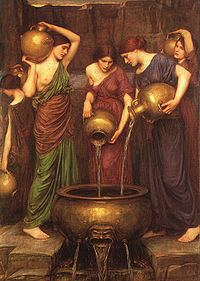
British Israelites therefore believe a portion of the Tribe of Dan (whom they equate with Danaus) split from the other tribes who were led by Moses out of Egypt. The migration of Danaus
from Egypt to Greece is found preserved in Herodotus
and Aeschylus
. British Israelites believe that an early Israelite colony was established in Greece and quote from Josephus
who wrote that the Spartans descended from Abraham and from 1 Maccabees
12: 21 which says the same thing, as well as quoting Stephanus of Byzantium
who established genealogical links between the Greeks and Israelites. Links between Danaus and other ancient European peoples are further established in British Israelism literature. J. C Gawler and Edward Hine first connected Danaus
or the Danaids (see Daughters of Danaus
) to the legendary Irish Tuatha Dé Danann
. British Israelites believe the Tribe of Dan
left a trail all over Europe, pointing out that Jacob prophesied that Dan would be a 'Serpent by the way, an adder by the path' (Genesis 49: 17) meaning that he would leave a trail wherever he would go. British Israelites specifically believe that this trail would contain the word 'Dan' (or words similar) since Joshua 19: 47 notes that the Tribe of Dan named territory after their own name. Often pointed out where the Tribe of Dan settled across Europe leaving their name are Denmark (Danish: DANmark) and Danube (DANube), amongst many others. British Israelites however believe that the Tribe of Dan
's final resting place was the Islands in the far north, meaning the British Isles. Often quoted is a place called Dan's Resting Place in Ireland on Ptolemy
's world map.
). British Israelites cite I Kings 9: 5; I Chron. 17: 12, II Chron, 17: 18 and II Sam. 7: 13 which state that the throne of King David over Israel will be established forever. However the idea that the early British or Irish kings descended from King David is found in numerous early writings from the Early Modern Period
, not solely British Israelite literature, for example Vincenzo Galilei
's Dialogue of Ancient and Modern Music (1581) notes Galilei's belief that the Irish descend from King David. The idea however became prevalent and central to British Israelite teaching in the 19th century. John Wilson
and Edward Hine
briefly touched on the subject in their works, but the first thorough research and attempt to link King David to the British monarchy was conducted by Revd F. R. A. Glover, M.A., of London who in 1861 published England, the Remnant of Judah, and the Israel of Ephraim.
Glover in 1861 claimed that the Irish princess Tea Tephi was one of Zedekiah
's daughters. Since King Zedekiah of Judah had all his sons killed during the Babylonian Captivity
no male successors could continue the bloodline of King David, but as Glover noted Zedekiah had daughters who escaped death (Jeremiah 43: 6). Glover believed that Tea Tephi was a surviving Judahite princess who had escaped and traveled to Ireland, and who married a local High King of Ireland
in the 6th century BC. This theory was later expanded upon by Rev. A.B. Grimaldi who published in 1877 a successful chart entitled Pedigree of Queen Victoria from the Bible Kings and later by W.M.H. Milner in his booklet The Royal House of Britain an Enduring Dynasty (1902, revised 1909). The latter work has been republished in over 30 editions, and is still sold by Covenant Publishing. A collection of bardic traditions and Irish manuscripts which detail Tea Tephi were also published by J. A. Goodchild in 1897 as The Book of Tephi. Charles Fox Parham
also authored an article tracing Queen Victoria's linage back to King David, and further all the way back to Adam entitled Queen Victoria: Heir to King David's Royal Throne.
Grimaldi and Milner expanded on Glover's research by claiming that Jeremiah
himself in the company of his scribe Baruch ben Neriah
traveled to Ireland with Tea Tephi, and that they are found described in Irish folklore and old Irish manuscripts. British Israelites identify Baruch ben Neriah with a figure called Simon Berac or Berak in Irish myth, while Jeremiah with Ollom Fotla (or Ollam, Ollamh Fodhla). However there has long been a debate and controversy about these identifications, mainly because of conflicting or inconsistent dates In 2001, the British-Israel-World Federation
wrote an article claiming they no longer subscribed to these two identifications, but still strongly stick to the belief that the British monarchy is of Judahite origin. Several other genealogical links are claimed by British Israelites to connect the bloodline of King David to the British monarchy, one identifies Dara (or Darda) the son of Zerah
of Judah
as Dardanus
, an early ancestor of the Trojans in Greek mythology. British Israelites believe an early Trojan colony settled in Britain establishing a monarchy.
, used for centuries in the coronation of the monarchs of Scotland, later the monarchs of England and since 1603, British monarchs. The Stone of Scone has traditionally been known as Jacob's pillow, since Jacob rested on a stone for his pillow (Genesis 28: 11). British Israelites cite early myths and historical writings which identify the Stone of Scone
with the Stone of Jacob, as well as pointing out that when the Stone of Scone
was housed at Westminister a small plaque next to it reported the legend it was Jacob's Pillow. The stone is a key part of the British Israel teaching, since British Israelites believe wherever the Israelites are today, they would have the stone with them because the stone was a sign of Jacob's birthright.
.jpg) Several works have been published by British Israelites on the subject, most notably The Coronation Stone and England's Interest in It by Ellen M. Rogers (1881, revised 1928) and Stone of Destiny by F. Wallace Connon (1951).
Several works have been published by British Israelites on the subject, most notably The Coronation Stone and England's Interest in It by Ellen M. Rogers (1881, revised 1928) and Stone of Destiny by F. Wallace Connon (1951).
was promised to have nations (plural) spring from him (Genesis 17: 4; 6; 18: 18), that the descendants of Jacob
(Israel) were to "spread abroad to the west and the east, to the north and the south" (Genesis 28: 14) and that God specifically told Jacob that through him would come "a nation and a company of nations" (Genesis 35: 11). These passages British Israelites interpret as being the British Empire, the nation of Genesis 35: 11 is considered to be Britain whiles its 'company' of nations - the British colonies (see British Commonwealth) which belt the world, west east, north and south (Genesis 28: 14). As the British-Israel-World Federation notes under their statement of beliefs:
The British-Israel-World Federation
also cites Genesis 12: 2 in which God declares to Abraham
"And I will make thee a great nation, and I will bless thee, and make thy name great", they interpret 'great' as being a reference to Great Britain
.
Furthermore British Israelites believe that Ephraim
is England, quoting Genesis 48: 19 in which Jacob
(Israel) revealed that the descendants of Joseph would become two great peoples—brother nationalities. Those that descended through his son Manasseh
would become a 'great' people, while those who would come through his other son, Ephraim
, would become a group or multitude of nations and would even be more 'greater'. There has long been a dispute between British Israelites on this passage. Traditionally the earliest British Israelites (Edward Hine
, John Wilson
, J. H. Allen
) identified Ephraim
with England
(or Britain
) while Manasseh
with America
, an early publication on this topic was Ephraim England by Robert Douglas (1886). However some British Israelites in contrast in the early 20th century began to identify Ephraim with America, while Britain or England with Manasseh. This started a slight rift in the British Israel movement, and works have been put out on each identification in attempt to try and refute the other, including most notebly the short booklet Epraim and Manasseh: Role Reversal Refuted. Most British Israelites today however continue traditionally to identify Ephraim with England or Britain, while America with Manesseh. The reverse identification has become the minority position.
Numerous works have been written by British Israelites on the British Empire or America in prophecy. Examples include: Our Inheritance in the Great Seal of Manasseh, the United States of America by C. A. L. Totten
(1897), Anglo-American Alliance in Prophecy by Martin Lyman Streator (1900), The British Empire by W.A. Holme Twentyman (1903), The Destiny of the British Empire and the USA by Roadbuilder (1921), The Empire in Solution With Chapters on Anglo-Saxon Civilization by William Pascoe Goard (1931), The British Commonwealth & The United States Foretold in The Bible by A.J. Ferris (1940), Great Britain & The U.S.A. Revealed as Israel The New Order by A.J. Ferris (1941), The Path To Peace In Our Time - Outlined From The Great Pyramid's Prophecy - The Supreme War Objective And Britain And America In Submission by David Davidson (1942) and The British Empire in the Light of Prophecy by Bernard L. Bateson (1947). Herbert Armstrong wrote United States in Prophecy
(1945, revised 1951, 1967, 1980).
There are also a minority of British Israelites who believe America is not in prophecy. These British Isrealites hold the position that the Israelites must always have the throne of King David ruling over them (I Chron. 17: 12; II Sam. 7: 13). Since the Thirteen Colonies
in 1776 declared their independence and formed the United States of America, they lost their loyalty to the British monarch and no longer had a monarchy to rule over them. Some British Israelites therefore strongly reject the idea that America are Israel (Ephraim or Manessah). An example of a British Israelite who held this minority view was William H. Poole
who only believed the nations of the 'British crown' were Israelites, including Canada
where he served as a Methodist minister. Since Canada
, Australia
and New Zealand
remain a part of the British Commonwealth, modern British Israelites who hold this minority view within British Israelism have no problem with accepting these countries as Israel, alongside Britain.
origin of the Druids has been a tenet of British Israelism since the early 20th century. It is not however tracable back to John Wilson
or Edward Hine
but instead seems to have emerged around as a tenet or teaching around the 1920s. Early British Israelite publications on this topic include Our Descent from Israel (1931, revised 1940) by Hew. B Colquhoun and
Druidism in Britain: A Preparation for the Gospel (Covenant Publishing Co., Ltd, 1935) by Rev. L. G. A. Roberts. Both these works argue that Druidism sprung from an early Levite migration to Britain. Often cited as evidence, are earlier sources which attempted to establish this link. William Blake
for example in his preface to chapter two of And did those feet in ancient time
explained that the British “derived their origin from Abraham, Heber, Shem, and Noah, who were Druids.” Earlier John Milton
in his Areopagitica
said something very similar about the Hebrew origin of the Druids. British Israelites also quote Charles Hulbert
, who in his The Religions of Britain (1826) announced that:
Other works cited by British Israelites are William Cooke's An Enquiry into the Patriarchal and Druidical Religion, Temples (London, 1754) and Edward Davies, The Mythology and Rites of the British Druids, Ascertained by National Documents (London, 1809). British Israelites believe that Jesus and Joseph of Arimathea
met Druids in the early 1st century AD, and claim that the Gaulish god known as Esus
described in Lucan
's Bellum civile
was actually Jesus. In recent times, non-British Israelite scholars have stumbled on this topic and have begun to research into the claim that Esus could have been Jesus.
origin. British Israelites believe that many of the apostles visited Britain, including most notably Simon the Zealot
. The idea that Simon the Zealot visited Britain is traceable to Dorotheus of Tyre
who wrote in the 4th century AD that Simon Zealot visited Britain. Nikephoros I of Constantinople also wrote in the early 9th century AD that:
Caesar Baronius
dated Simon's visit to Britain in 44 AD. British Israelites also place Aristobulus of Britannia
in Britain around 60 AD and note that an ancient epitaph of his name was unearthed in Dorchester
. A popular British Israelite publication discussing these theories that Christianity entered Britain long before the orthodox date of 597 AD (see Gregorian mission
) is George F. Jowett's The Drama of the Lost Disciples
(1961). Often quoted by British Israelites is Tertullian
's and Eusebius's testimony that Christianity had entered the British Isles already by the 1st or 2nd century AD. British Israelites also connect Joseph of Arimathea
to Britain, who they believe arrived in Britain in the early 1st century AD, citing Gildas
who wrote in his De Excidio et Conquestu Britanniae that:
The 'last year' of Tiberius
was 37 AD and so British Israelites believe Joseph was in Britain as early as that date. Many legends from Glastonbury
also connect Joseph to that region (see Glastonbury Thorn
and Chalice Well
) and furthermore British Israelites believe Jesus himself may have traveled with Joseph to Glastonbury. Stories of the settlement of Joseph of Arimathea
in Britain are best found preserved in
Rabanus Maurus
's 9th century Life of Mary Magdalene, William of Malmesbury
Chronicle of the English Kings (1120), Polydore Virgil, James Ussher
and Hugh Paulinus de Cressy
's The Church History of Brittanny or England, from the beginning of Christianity to the Norman Conquest (1668). Cressy even claimed he had found an ancient tombstone bearing Joseph's name, dating his death to 82 AD at Glastonbury, which read:
British Israelites stress the fact that the first four Church councils (Council of Pisa
1409, Council of Constance
1414, Council of Siena 1423 and Council of Basle 1431), all agreed:
British Israelites also claim that William of Malmesbury
's account of Joseph in Britain has been verified by a passage in the Domesday Book
. Malmesbury specifically claimed that Joseph was granted twelve hides of land in England, while the Domesday Book
notes that the Church of Glastonbury had twelve hides that never paid tax. British Israelites further believe that Jesus built the first Christian church at Glastonbury. They usually quote from a letter Augustine of Canterbury sent to Pope Gregory I which notes that at Glastonbury a wattle church was constructed by the 'hands of Christ Himself'. Many British Israelite or related works were put out in the 19th and early 20th century discussing all these historical sources and legends which connect Jesus, Joseph of Arimathea
and the apostles in Britain. Notable examples include: The Origin and Early History of Christianity in Britain from its dawn to the death of Augustine by Andrew Gray (1897), Christ in Cornwall? by H. A Lewis (1900), The Coming of the Saints by J. W Tarlor (1906), St Joseph of Arimathea at Glastonbury by Rev L. S Lewis (1924), Glastonbury Traditions Concerning Joseph of Arimathea by H. Kendra Baker (1930), Did Our Lord Visit Britain, as they say in Cornwall and Somerset? by Cyril Comyn Dobson (1936) and Glastonbury by P. W Thompson (1937). Claims of Joseph or Jesus having traveled in Britain are not however limited to British Israelites. In 2009, a documentary was released in support of the British legends claiming Jesus visited Britain by the Church of Scotland minister Dr Gordon Strachan. Recent books on this topic, include Strachan's own work Jesus the Master Builder: Druid Mysteries and the Dawn of Christianity (2000) and more recently The Missing Years Of Jesus: The Extraordinary Evidence that Jesus Visited the British Isles by Dennis Price (1 Nov 2010).
British Israelites also believe that Paul the Apostle 'the apostle (of the Gentiles)' (Romans 11: 13; 2 Timothy 1: 11) visited Britain. As evidence they cite Theodoret
of Cyrus' account of Paul who entered Britain in the early 1st century AD and the First Epistle of Clement
which notes that Paul traveled to the utmost parts of the west (3: 10–15) which they interpret as meaning the western limits of Europe. R. W Morgan in 1928 published St. Paul in Britain: or, the origin of British as opposed to Papal Christianity which is still highly popular amongst British Israelites today. Some British Israelites also cite the The Lost Chapter of the Acts of the Apostles
to support their claims that Paul visited Britain.
) from who they believe the Anglo-Saxon-Celtic kindred or Nordic race ultimately descended from and therefore reject the theory of evolution. Most British Israelites believe that only Caucasians
descend from Adam, while the other non-white races sprung from a separate Pre-Adamite
creation or a polygenist origin. However a few British Israelites in contrast believe that the whole of mankind (including all races) sprung from Adam, but this remains the minority position. Herbert Armstrong for example took this minority position within the British Israel teaching (which itself is popular in mainstream Christianity), but still maintained that Adam was racially himself a Caucasian
and that the races were a result of different ovaries in Eve containing different genes being dispersed at the Tower of Babel
through various descendants of Noah. This view has been, and still is though strongly rejected or criticised by most British Israelites, who instead believe Adam and all his descendants were only Caucasian
, and that the Bible is a book for the Adamic (white) race only. A notable British Israelite who defended this position included C. A. L. Totten
who wrote in his Our Race that pre-adamism is essential to the British Israelite teaching, and Adam was only the father of the Caucasian
. British Israelite literature on the internet is well known for rejecting the theory of evolution.
Most British Israelites hold a unique position on the actual creation of the earth or universe and man, accepting the scientific evidence that the universe and earth is old (see Old Earth Creationism
) but believing that (Adamic) man is only 6,000 - 20,000 years old. For example Herbert Armstrong was a Gap Creationist believing in an old earth and universe but believed man was only 6,000 years old, the United Church of God
(which follows Armstrong's teachings) still holds to this form of creationism. The British-Israel-World Federation
has not made it clear what their exact views are on creationism, but their publisher Covenant Publishing, sells Old Earth Creationist and anti-evolution literature while at the same time genealogical charts which date the creation of Adam to around 4,000BC. Most British Israelites also believe the flood of Noah was only local.
) or they included the Germans (John Wilson) and other European peoples (including the Dutch and Scandinavians). Hine maintained that only the Ten Tribes of Israel were included within the British race and excluded the Continental Teutonic or German peoples, who he instead believed descended from Assyrians not Israelites. Hine believed all the tribes of Israel settled in Britain only, with Manasseh
who became the Americans (who mostly descended from British stock). Hine had identified the Ten Tribes as being together in Britain in that Ephraim were the drunkards and ritualists, Reuben the farmers, Dan the mariners, Zebulon the lawyers and writers, Asher the soldiers etc, or that these tribes were regional or local people in Britain. Hine's particularist view was received with some hostility by other British-Israelites, who maintained that other Europeans descended from the lost tribes of Israel, not solely Britain. See Assyria and Germany in Anglo-Israelism
for a more detailed discussion about this British Israelite sub-belief.
, believing that parts of the British or Irish population are descended from ancient Phoenicians. However most British Israelites believe that the Phoenicians ultimately in origin were Canaanites, Hebrews
, or Israelites not a separate ethnic group. Often linked to this is the view that the Phoenicians brought paganism
or polytheism
to Britain. British Israelites connect the Semitic God Baʿal
or Bel of Phoenician Canaanite religion
to the Celtic God Belenus
as well as Belinus
, a legendary king of the Britons, as recounted by Geoffrey of Monmouth
.
British Israelite or related works on Phoenicianism include most notably Phoenician Ireland by by Henry O'Brien (1837) and The Phoenician Origin of Britons, Scots, and Anglo-Saxons (1924, 2nd Ed. 1925) by British explorer Laurence Waddell, which remains a key text British Isrealites still cite from.
identified the Irish as descending from Canaanites. However this identification remained unpopular, since it later began to contradict claims of the Davidic line having sprung from Ireland. In 1879, a British Israelite publication expanded on Hine's identification of the Irish as Canaanites:
This was referencing Hine's Biblical identification of the Irish with the Canaanites based on Numbers 33: 55, which reads: ‘if the children of Israel did not drive them out then it shall come to pass that those which ye let remain of them shall be pricks in your eyes, and thorns in your sides, and shall vex you in the land wherein ye dwell.’ It was Hine's opinion that the Irish were 'thorns in the side' of the English (Israel) because of their complicated relationship with Britain during the United Kingdom of Great Britain and Ireland
.
shows a difference between Jews and Western Europeans. Genetic research on the Y-chromosomes of Jews has found that Jews are closely related to other populations originating in the Middle East
, such as Kurds, Turks
, Armenians
and Arabs, and concluded that:
Y-DNA Haplogroups J2
and, to a lesser extent, J1
are most commonly identified in Jewish people. Western Europeans are mostly identified as Haplogroup R1b.
, author of The Lost Tribes: The History of a Myth, states that the proof cited by adherents of British Israelism is "of a feeble composition even by the low standards of the genre." (Parfitt,2003. p. 61.) Other critics note:
Proponents of British Israelism claim numerous links in historical linguistics
between ancient Hebrew and various European place names and languages. As an example; proponents claim that “British” is derived from the Hebrew words “Berit” and “Ish”, and should therefore be understood as “Covenant Man”. Critics, however, argue that these words have other roots and that this interpretation of the Hebrew is incorrect. Another example is Rhys' assertion of equivalence between Cymry and Cimmerian, which is at odds with the generally accepted derivation of Cymry from an earlier Celtic
form *kom-broges, meaning "people of the same country"; only the modern form of the word looks similar. Yet another example is the alleged connection between the 'Tuatha Dé Danann
' and the Tribe of Dan
. Secular sources indicate that the true root of this phrase is the 'People of the Goddess Danu'. Other links are claimed, but cannot be substantiated and contradict the findings of academic linguistic
research. This shows conclusively that English
belongs to the Indo-European
language family and is unrelated to Hebrew, which is a Semitic language
of the Afro-Asiatic language family
. “No trace of the slightest real connection can be discovered” between English and ancient Hebrew. (Greer, 2004. p74.)
Adherents of British Israelism cite various scriptures in support of the argument that the Northern Israelite Tribes were lost. Critics argue that British Israelists misunderstand and misinterpret the meaning of these scriptures.
customs, metalwork, clothing, dietary customs, and more. Critics argue that the customs of the Scythians and the Cimmerians are in contrast with those of the Ancient Israelites.
Further, the so-called similarities and theories proposed by adherents are contradicted by the weight of evidence and research on the history of ancient populations. It does not provide support for the purported links.
Western Europe
Western Europe is a loose term for the collection of countries in the western most region of the European continents, though this definition is context-dependent and carries cultural and political connotations. One definition describes Western Europe as a geographic entity—the region lying in the...
an descent, particularly those in Great Britain, are the direct lineal descendants of the Ten Lost Tribes
Ten Lost Tribes
The Ten Lost Tribes of Israel refers to those tribes of ancient Israel that formed the Kingdom of Israel and which disappeared from Biblical and all other historical accounts after the kingdom was destroyed in about 720 BC by ancient Assyria...
of Israel. The concept often includes the belief that the British Royal Family
British Royal Family
The British Royal Family is the group of close relatives of the monarch of the United Kingdom. The term is also commonly applied to the same group of people as the relations of the monarch in her or his role as sovereign of any of the other Commonwealth realms, thus sometimes at variance with...
is directly descended from the line of King David. There has never been a single head or an organisational structure to the movement. However, various British Israelite organisations were set up across the British Commonwealth and America
United States
The United States of America is a federal constitutional republic comprising fifty states and a federal district...
from the 1870s, and many still continue to exist. Adherents may hold a diverse set of beliefs and claims that are ancillary to the core genealogical theory, however there are central tenets all British Israelites follow, including Two House Theology
Two House Theology
The concept of Two House Theology is found in the Hebrew Scriptures and primarily focuses on the division of the ancient Kingdom of Israel into two kingdoms, Israel and Judah...
which is the core essence of British Israelism. A central teaching of the British Israelites Two House Theology is that while Jews are considered to be Israelites, not all Israelites are considered to be Jews. British Israelites believe that Jews descend only from Judah (and the tribe of Benjamin), while the House of Israel
House of Israel
The House of Israel is a Jewish community in Ghana. This ethnic group claim to be one of the Ten Lost Tribes of Israel.-History of Jews in Ghana:...
they believe are the White British
White British
White British was an ethnicity classification used in the 2001 United Kingdom Census. As a result of the census, 50,366,497 people in the United Kingdom were classified as White British. In Scotland the classification was broken down into two different categories: White Scottish and Other White...
or Anglo-Saxon
Anglo-Saxon
Anglo-Saxon may refer to:* Anglo-Saxons, a group that invaded Britain** Old English, their language** Anglo-Saxon England, their history, one of various ships* White Anglo-Saxon Protestant, an ethnicity* Anglo-Saxon economy, modern macroeconomic term...
-Celtic kindred peoples of North-Western Europe today.
History of the movement
The idea that the British descend from the ten lost tribes of Israel is traceable to various fragments of works from the early modern period, although modern adherents of British Israelism claim earlier sources exist, such as ancient or medieval manuscripts. One example is the Scottish Declaration of ArbroathDeclaration of Arbroath
The Declaration of Arbroath is a declaration of Scottish independence, made in 1320. It is in the form of a letter submitted to Pope John XXII, dated 6 April 1320, intended to confirm Scotland's status as an independent, sovereign state and defending Scotland's right to use military action when...
(1320) which connects the Scots to Scythia
Scythia
In antiquity, Scythian or Scyths were terms used by the Greeks to refer to certain Iranian groups of horse-riding nomadic pastoralists who dwelt on the Pontic-Caspian steppe...
and Israel. Another is King Alfred
Alfred the Great
Alfred the Great was King of Wessex from 871 to 899.Alfred is noted for his defence of the Anglo-Saxon kingdoms of southern England against the Vikings, becoming the only English monarch still to be accorded the epithet "the Great". Alfred was the first King of the West Saxons to style himself...
's Doom Book
Doom Book
The Doom Book was a list of 117 names created in the 1930s by United States censor Will Hays. The list included actors, actresses, directors, and others in the film industry whose private lives were "contrary to public morals" and who as a result should not be employed by Hollywood studios...
(c. 893 AD), which describes a legend that the Anglo-Saxons were once 'strangers in Egypt' hinting a possible belief in Hebrew ancestry.
One of the earliest advocates of British Israelism from the Early Modern Period
Early modern period
In history, the early modern period of modern history follows the late Middle Ages. Although the chronological limits of the period are open to debate, the timeframe spans the period after the late portion of the Middle Ages through the beginning of the Age of Revolutions...
was M. le Loyer, a French magistrate of Huguenot
Huguenot
The Huguenots were members of the Protestant Reformed Church of France during the 16th and 17th centuries. Since the 17th century, people who formerly would have been called Huguenots have instead simply been called French Protestants, a title suggested by their German co-religionists, the...
ancestry, who in 1590 wrote in his book The Ten Lost Tribes Found that "The Israelites came to and founded the English Isles". The idea is also found briefly mentioned in Vincenzo Galilei
Vincenzo Galilei
Vincenzo Galilei was an Italian lutenist, composer, and music theorist, and the father of the famous astronomer and physicist Galileo Galilei and of the lute virtuoso and composer Michelagnolo Galilei...
's Dialogue of Ancient and Modern Music (1581) which notes Galilei's belief that the Irish descend from King David. Modern British Israelites also point out that James I of England
James I of England
James VI and I was King of Scots as James VI from 24 July 1567 and King of England and Ireland as James I from the union of the English and Scottish crowns on 24 March 1603...
(1567–1625) believed he was a king of Israel and that in Sir Francis Drake's famous letter to John Foxe
John Foxe
John Foxe was an English historian and martyrologist, the author of what is popularly known as Foxe's Book of Martyrs, , an account of Christian martyrs throughout Western history but emphasizing the sufferings of English Protestants and proto-Protestants from the fourteenth century through the...
, he equated Britain with Israel.
Elaboration late 17th to mid 19th centuries
British Israelism as an established movement traces itself back to the 17th century. Adriaan van der Schrieck (1560–1621) a Flemish language researcher in 1614 wrote:English antiquarian Henry Spelman
Henry Spelman
Sir Henry Spelman was an English antiquary, noted for his detailed collections of medieval records, in particular of church councils.-Life:...
by 1620 had claimed that the Danes were the Israelite Tribe of Dan (see Nordic Israelism
Nordic Israelism
Nordic Israelism or Norse Israelism is the belief that Scandinavian peoples, or the Nordic countries descend from the Ten Lost Tribes of Israel...
). One of the first published accounts of the theory of an Israelite genealogy of the British was The Rights of the Kingdom by John Sadler, published in 1649. But, it was only in the late 18th century, during a religious climate of Millenarianism
Millenarianism
Millenarianism is the belief by a religious, social, or political group or movement in a coming major transformation of society, after which all things will be changed, based on a one-thousand-year cycle. The term is more generically used to refer to any belief centered around 1000 year intervals...
, that British Israelism became a distinct ideology, based on the preaching and writings of two men, Richard Brothers
Richard Brothers
Richard Brothers was born in Port Kirwan, Newfoundland and Labrador and became well known as both an early believer and teacher of Anglo-Israelism...
and John Wilson.
It is generally considered that British Israelism as an 'ideology' was first founded in England, from where it spread to the United States. The belief appears to have gained momentum since the English Revolution
English Revolution
"English Revolution" has been used to describe two different events in English history. The first to be so called—by Whig historians—was the Glorious Revolution of 1688, whereby James II was replaced by William III and Mary II as monarch and a constitutional monarchy was established.In the...
of the 17th century. It increased during the "Christian Restorationism" movement of the late 19th and early 20th centuries.
Brothers was the first to expound upon his version of British Israelism, but he lacked credibility due to alleged mental illness
Mental illness
A mental disorder or mental illness is a psychological or behavioral pattern generally associated with subjective distress or disability that occurs in an individual, and which is not a part of normal development or culture. Such a disorder may consist of a combination of affective, behavioural,...
. Having prophesied the end of the British monarchy, he was imprisoned in an asylum as criminally insane. Modern adherents of British Israelism however have denounced the view that Richard Brothers had anything to do with originating their doctrine. They point out that Brothers only considered himself a descendant of King David, and not the British monarchy. As the Canadian British Israel Association for example notes:
'This is not British-Israel belief; we teach that it is the royal family of Great Britain who are descended from King David, not Richard Brothers!'.
Modern British Israelites however accept that John Wilson was a British Israelite, but point out that he converted to this view after reading Robert Henry
Robert Henry
Robert Henry was a Scottish historian.Born into a farming family at St. Ninians, Stirlingshire, Henry was educated at Stirling High School and the University of Edinburgh. After teaching at Annan, he entered the Church of Scotland, becoming minister at New Greyfriars in Edinburgh in 1768...
's six-volume History Of Great Britain on a new plan (1771) and therefore point out that there must have been earlier British Israelites. Wilson adopted and promoted the idea that the "European 'race', in particular the Anglo-Saxons, were descended from certain Scythian tribes, and these Scythian tribes (as many had previously stated from the Middle Ages onward) were in turn descended from the ten Lost Tribes of Israel." (Parfitt, 2003. p. 54) Wilson's ideas were to be refined, and new ideas were developed, well into the second half of the 19th century. Wilson gave public lectures to spread his message but did not form any organisation or movement. Cruden's Concordance
Cruden's Concordance
A Complete Concordance to the Holy Scriptures, generally known as Cruden's Concordance, is a concordance of the King James Bible that was singlehandedly created by Alexander Cruden...
once contained an opening note in its second edition (printed June 11, 1761) declaring that King George III
George III of the United Kingdom
George III was King of Great Britain and King of Ireland from 25 October 1760 until the union of these two countries on 1 January 1801, after which he was King of the United Kingdom of Great Britain and Ireland until his death...
descended from Hezekiah
Hezekiah
Hezekiah was the son of Ahaz and the 14th king of Judah. Edwin Thiele has concluded that his reign was between c. 715 and 686 BC. He is also one of the most prominent kings of Judah mentioned in the Hebrew Bible....
, the 14th King of Judah.
Other books from this period detailing the British Israel theory were Jakob Abbadie
Jakob Abbadie
Jakob Abbadie , also known as Jacques or James Abbadie, was a Protestant divine and writer. He became dean of Killaloe, in Ireland.-Life:...
's Triomphe de la Providence et de la Religion (1723) which notes "Unless the Ten Tribes have flown into the air, or have been plunged to the centres of the earth, they must be sought for in the north and west... and in the British Isles." Abbadie believed the ten lost tribes were Goths
Goths
The Goths were an East Germanic tribe of Scandinavian origin whose two branches, the Visigoths and the Ostrogoths, played an important role in the fall of the Roman Empire and the emergence of Medieval Europe....
who moved into Britain and France (see French Israelism). Another key text of this period was Ezra Stiles' The United States elevated to Glory and Honor
The United States elevated to Glory and Honor
The United States elevated to Glory and Honor is a book by Ezra Stiles, published in 1783.- Transcript of title page :"The United States elevated to Glory and Honor" A SERMON Preached before His Excellency JONATHAN TRUMBEULL, Esq., L.L.D...
(1783), and Richard Brothers' A Revealed Knowledge of the Prophecies and Times (1794). Also cited as an early original work is Rev. John Wilson's Our Israelitish Origins (1840). Julius Oppert
Julius Oppert
Julius Oppert , French-German Assyriologist, was born at Hamburg, of Jewish parents.After studying at Heidelberg, Bonn and Berlin, he graduated at Kiel in 1847; and the next year went to France, where he was teacher of German at Laval and at Reims...
's Gutian-Goth theory was also embraced by British Israelites during this period.
Heyday late 19th and early 20th centuries
In the latter half of the 19th century, Canon Samuel LysonsCanon Samuel Lysons
Canon Samuel Lysons was an antiquarian and early proponent of British Israelism.-Life:Canon Samuel Lysons was the eldest surviving son of Daniel Lysons...
, Edward Hine
Edward Hine
Edward Hine was an influential proponent of British Israelism in the 1870s and 1880s, drawing on the earlier work of Richard Brothers and John Wilson . Hine went as far as to conclude that "It is an utter impossibility for England ever to be defeated...
, Hibbert Newton
Hibbert Newton
Rev. Hibbert Newton D.D. was a poet and an early proponent of British Israelism.-Career:Hibbert Newton was educated at Trinity College, Dublin obtaining a B.A. in divinity studies, followed by a doctorate. He was ordained in 1847 and became vicar of St Michael's, Southwark, London, serving from...
, John Cox Gawler
John Cox Gawler
Col. John Cox Gawler was a Keeper of the Crown Jewels and British Israelite author.-Life:John Cox Gawler was the son of Lieutenant-Colonel George Gawler. Like his father he served in the military, he first joined the 73rd Regiment and fought in the 8th Xhosa War, 1850 to 1853, later being promoted...
, Charles Ottley Groom Napier
Charles Ottley Groom Napier
Charles Ottley Groom Napier also known as C. O. G Napier FGS FLS was a natural historian, geologist, mineral collector, as well a writer on vegetarianism, ornithology and an early proponent of British Israelism...
, John Pym Yeatman
John Pym Yeatman
John Pym Yeatman was a barrister and influential proponent of British Israelism.-Life:Yeatman obtained a degree in law at Cambridge and later became a Fellow of the Royal Historical Society, he authored several successful works on law and history...
, Herbert Aldersmith
Herbert Aldersmith
Dr. Herbert Aldersmith F.R.C.S M.B. LSA was an English physician and author known for his studies on pyramidology and British Israelism.-Medecine:...
, William Carpenter
William Carpenter (1797-1874)
William Carpenter, born in 1797 at St James, Westminster, London, England, died on April 21, 1874 at Islington, London, was a 19th Century theological and political writer, journalist, and editor.-Early life:Carpenter was the son of a London tradesman...
, Elieser Bassin
Elieser Bassin
Elieser Bassin was a Russian-Jewish convert to Christianity, and an author and proponent of British Israelism.-Life:Born in 1840 to a wealthy Russian Jewish family in Mogilev Elieser later converted to Christianity in 1869 and became a missionary and member of the "London Jewish Society for...
, William H. Poole
William H. Poole
Rev. William H. Poole. LL.D was a minister known for his 1889 book called Anglo-Israel or the Saxon Race?: Proved to be the Lost Tribes of Israel...
, Thomas Rosling Howlett
Thomas Rosling Howlett
Thomas Rosling Howlett was a Baptist pastor and early proponent of British Israelism. He authored Anglo-Israel, the Jewish problem considered one of the most influential works on the British-Israel teaching.- References :...
, Charles Piazzi Smyth
Charles Piazzi Smyth
Charles Piazzi Smyth , was Astronomer Royal for Scotland from 1846 to 1888, well-known for many innovations in astronomy and his pyramidological and metrological studies of the Great Pyramid of Giza....
, George Moore
George Moore (physician)
Dr. George Moore MD was a physician and British Isrealite.-Career:Moore became a Doctor of Medicine and a Fellow of the Royal College of Physicians in the 1830's...
, C. A. L. Totten
C. A. L. Totten
Charles Adelle Lewis Totten was an American military officer, a professor of military tactics, a prolific writer, and an influential early advocate of British Israelism....
and Edward Wheeler Bird
Edward Wheeler Bird
Edward Wheeler Bird a retired Anglo-Indian judge founded the British Israelite Movement. Bird was involved in promoting the movement in the late 19th Century.- References :*The Ark at the seat of kings, Eileen Battersby, Irish Times, 19 April 2003...
developed the ideas further. Hine departed England for the United States in 1884, where he promoted the idea that Americans were the lost tribe of Manasseh
Tribe of Manasseh
According to the Hebrew Bible, the Tribe of Manasseh was one of the Tribes of Israel. Together with the Tribe of Ephraim, Manasseh also formed the House of Joseph....
, whereas England was the lost tribe of Ephraim
Ephraim
Ephraim ; was, according to the Book of Genesis, the second son of Joseph and Asenath. Asenath was an Egyptian woman whom Pharaoh gave to Joseph as wife, and the daughter of Potipherah, a priest of On. Ephraim was born in Egypt before the arrival of the children of Israel from Canaan...
. He also first developed the link between Germany and ancient Assyria (see Assyria and Germany in Anglo-Israelism
Assyria and Germany in Anglo-Israelism
In Anglo-Israelism and some currents of U.S. Christian fundamentalism influenced thereby , the idea has been advanced that modern Germans are partly descended from the ancient Assyrians, or, more metaphorically draw parallels between the militarism of the Nazi Germany and the Assyrian one.-British...
and linked sub-beliefs below). John Fisher, 1st Baron Fisher (1841–1920) was also a prominent early British Israelite. Of Britain, Admiral Fisher said:
The British-Israel movement achieved organisational status from the 1870s onwards in a melee of rival groups and amalgamations. In 1875, the British-Israel Association and the Anglo-Israel Association were formed followed by the British-Israel Conference Association, in 1876, the Metropolitan Anglo-Israel Association, in 1879, and The British-Israel Identity Corporation, in 1880. Amalgamation under The Earl of Dysart led to The British-Israel Association in 1886, which mutated to the Imperial British-Israel Association, in 1908 and finally the British-Israel-World Federation
British-Israel-World Federation
The British-Israel-World Federation is an organization that was founded in London July 3 1919, although its roots can be traced back to the 19th century. At one time this organization enjoyed the patronage of members of the British Establishment including HRH Princess Alice of Athlone, the Duke of...
, in 1919. The Banner of Israel, first published in 1877 by Robert Banks of Fleet Street, London, continued until its incorporation in The National Message in 1926. The National Message quarterly magazine was first published in 1922 by the British-Israel-World Federation
British-Israel-World Federation
The British-Israel-World Federation is an organization that was founded in London July 3 1919, although its roots can be traced back to the 19th century. At one time this organization enjoyed the patronage of members of the British Establishment including HRH Princess Alice of Athlone, the Duke of...
, and continued until 1981.
By the end of the 19th century there were over two million British Israelites in England and the United States.
In 1892, an 'enquirers' book of British Israelism was printed entitled British-Israel Truth written by Denis Hanan. It was highly popular, reprinted, and sold about 75000 copies, while Hine's book The British Nation identified with Lost Israel (1871) sold up to 250,000. In 1922 the British-Israel-World Federation
British-Israel-World Federation
The British-Israel-World Federation is an organization that was founded in London July 3 1919, although its roots can be traced back to the 19th century. At one time this organization enjoyed the patronage of members of the British Establishment including HRH Princess Alice of Athlone, the Duke of...
set up its own book publisher called Covenant Publishing
Covenant Publishing
Covenant Publishing Co., Ltd has been a major publisher of books and pamphlets of British Israelism since 1921, set up by the British-Israel-World Federation.-History:...
which still exists today. During this time, several prominent figures patronized the organisation: Princess Alice, Countess of Athlone
Princess Alice, Countess of Athlone
Princess Alice, Countess of Athlone was a member of the British Royal Family. She was the longest-lived Princess of the Blood Royal of the British Royal Family and the last surviving grandchild of Queen Victoria...
, was Patron-in-chief in pre-World War II days. One of the most notable members was William Massey
William Massey
William Ferguson Massey, often known as Bill Massey or "Farmer Bill" served as the 19th Prime Minister of New Zealand from 1912 to 1925, and was the founder of the Reform Party. He is widely considered to have been one of the more skilled politicians of his time, and was known for the particular...
, then Prime Minister of New Zealand
New Zealand
New Zealand is an island country in the south-western Pacific Ocean comprising two main landmasses and numerous smaller islands. The country is situated some east of Australia across the Tasman Sea, and roughly south of the Pacific island nations of New Caledonia, Fiji, and Tonga...
. Due to the expansive nature of the British Empire
British Empire
The British Empire comprised the dominions, colonies, protectorates, mandates and other territories ruled or administered by the United Kingdom. It originated with the overseas colonies and trading posts established by England in the late 16th and early 17th centuries. At its height, it was the...
, believers in British Israelism spread worldwide. It became most prevalent in the United States
United States
The United States of America is a federal constitutional republic comprising fifty states and a federal district...
, England
England
England is a country that is part of the United Kingdom. It shares land borders with Scotland to the north and Wales to the west; the Irish Sea is to the north west, the Celtic Sea to the south west, with the North Sea to the east and the English Channel to the south separating it from continental...
, and various Commonwealth
Commonwealth
Commonwealth is a traditional English term for a political community founded for the common good. Historically, it has sometimes been synonymous with "republic."More recently it has been used for fraternal associations of some sovereign nations...
nations. The theory was widely promoted in the United States during the 20th century. Key British Israelite writers of the late 19th and early 20th centuries included Richard Reader Harris, as well as J. H. Allen
J. H. Allen
John Harden Allen was an American minister. He was associated with the Church of God , and is also heavily associated with British Israelism. He came from Illinois, later moving to Missouri in 1879. Originally a pastor in the Methodist Episcopal Church, he later became a pastor in the Wesleyan...
who wrote several books, one now considered a 'classic' by modern British Israelites called Judah's Sceptre and Joseph's Birthright (1902), another was John Cox Gawler
John Cox Gawler
Col. John Cox Gawler was a Keeper of the Crown Jewels and British Israelite author.-Life:John Cox Gawler was the son of Lieutenant-Colonel George Gawler. Like his father he served in the military, he first joined the 73rd Regiment and fought in the 8th Xhosa War, 1850 to 1853, later being promoted...
(1830–1882), a Colonel and Keeper of the Monarch's Crown Jewels. Gawler is best remembered for his books Dan: The Pioneer of Israel (1880) and Our Scythian Ancestors (1875) both of which have been republished numerous times. Another key figure was William Pascoe Goard
William Pascoe Goard
William Pascoe Goard F.R.G.S was a Methodist minister and prominent British Israelite of the first half of the 20th century.-Life:...
who in 1921 become Vice-President of the British-Israel-World Federation
British-Israel-World Federation
The British-Israel-World Federation is an organization that was founded in London July 3 1919, although its roots can be traced back to the 19th century. At one time this organization enjoyed the patronage of members of the British Establishment including HRH Princess Alice of Athlone, the Duke of...
and remained so until the time of his death in 1937. He authored over a dozen books on the British Israel teaching most notably including: Our Heritage: the Bible (1926), The Empire In Solution With Chapters On Anglo-Saxon Civilization (1931) and The Post-Captivity Names of Israel (1934). The Canadian geologist and professor Edward Faraday Odlum
Edward Faraday Odlum
Edward Faraday Odlum was a Canadian geologist, educator a businessman. He studied the ethnography of the people of Australia and Northern Europe, and investigated the Stone of Scone.-Biography:...
was also an influential British Israelite during this period, he wrote God's Covenant Man: British-Israel (1927). Another prominent British Israelite of this period was evangelist F. F. Bosworth
F. F. Bosworth
Fred Francis Bosworth was an evangelist, an early religious broadcaster, and a 1920s and Depression-era Pentecostal faith healer who was later a bridge to the mid-20th century healing revival. He was born on a farm near Utica, Nebraska and was raised in a Methodist home...
whose 1920 radio lecture entitled The Bible Distinction Between the House of Israel and the House of Judah was printed as a popular booklet. Another was L.G.A. Roberts who wrote 'British History Traced From Egypt And Palestine' (1927) which is still popular amongst British Israelites today. Howard Rand promoted the British Israelite theory and became National Commissioner of the Anglo-Saxon Federation of America in 1928. He published The Bulletin, later renamed The Messenger of the Covenant. More recently, it has been renamed Destiny. It is issued by Destiny Publishers.
One of the most prolific authors just before and during the Second World War promoting the British Israel message was Alexander James Ferris
Alexander James Ferris
Alexander James Ferris or A. J Ferris was a profilic author on British Israelism. His most successful work When Russia Bombs Germany sold over 60,000 copies.-When Russia Bombs Germany:...
, who authored: British-Israel teaching concerning the Signs of the approaching end of the age (1933), The Coronation and The Throne of David (1937), Great Britain & The U.S.A. Revealed as Israel The New Order (1941), The British Commonwealth & The United States Foretold in The Bible (1941) and Germany's Doom Foretold (1942) which sold 60,000 copies and was reviewed by George Orwell
George Orwell
Eric Arthur Blair , better known by his pen name George Orwell, was an English author and journalist...
.
Covenant Publishing
Covenant Publishing
Covenant Publishing Co., Ltd has been a major publisher of books and pamphlets of British Israelism since 1921, set up by the British-Israel-World Federation.-History:...
have reprinted many old British Israelite texts from the 19th and early 20th century in their "Classic Series" including many of the above cited.
Persecution by Nazis
British Israelites, or adherents of related offshoots (e.g. Nordic IsraelismNordic Israelism
Nordic Israelism or Norse Israelism is the belief that Scandinavian peoples, or the Nordic countries descend from the Ten Lost Tribes of Israel...
) were persecuted or suppressed by the Nazis during World War II
World War II
World War II, or the Second World War , was a global conflict lasting from 1939 to 1945, involving most of the world's nations—including all of the great powers—eventually forming two opposing military alliances: the Allies and the Axis...
. In Nazi occupied territories in Europe, British Israelite or related literature was banned because it was considered as having a Jewish agenda or considered to be anti-German (see Assyria and Germany in Anglo-Israelism
Assyria and Germany in Anglo-Israelism
In Anglo-Israelism and some currents of U.S. Christian fundamentalism influenced thereby , the idea has been advanced that modern Germans are partly descended from the ancient Assyrians, or, more metaphorically draw parallels between the militarism of the Nazi Germany and the Assyrian one.-British...
). Nederlandsche Israël-Kring, a Netherlands based organisation teaching the Dutch offshoot of British Israelism was closed down by the Nazis. Like the Jehovah’s Witnesses and other minority Christian groups who were persecuted by the Nazis, British Israelites or related adherents of offshoot teachings were arrested by the Gestapo
Gestapo
The Gestapo was the official secret police of Nazi Germany. Beginning on 20 April 1934, it was under the administration of the SS leader Heinrich Himmler in his position as Chief of German Police...
and placed in Nazi concentration camps (see Purple triangle
Purple triangle
The purple triangle was a concentration camp badge used by the Nazis to identify Bibelforscher , the German name for Jehovah’s Witnesses in Nazi Germany. A small number of Adventists, Baptists and pacifists were also identified by the badge...
), where some died. The son of Nordic Israelite identity preacher Albert Hiorth
Albert Hiorth
Albert Karl Fredrik Hiorth was a Norwegian engineer.He was born in Kristiania as a son of engineer Fredrik Hiorth. He took his education at Kristiania Technical School and the University of Geneva. He was a member of the Faraday Society...
, Frederik Hiorth, died in a Nazi concentration camp for his related British Israelite beliefs. While most British Israelites or related offshoots were persecuted by the Nazis because they were philo-semites (Philo-Semitism
Philo-Semitism
Philo-Semitism or Judeophilia is an interest in, respect for, and appreciation of the Jewish people, their historical significance and the positive impacts of Judaism in the history of the western world, in particular, generally on the part of a gentile...
), paradoxically the Christian Identity
Christian Identity
Christian Identity is a label applied to a wide variety of loosely affiliated believers and churches with a racialized theology. Many promote a Eurocentric interpretation of Christianity.According to Chester L...
movement which sprung from British Israelism turned into antisemitism and supported Nazism.
Mid 20th century
J. Llewellyn Thomas in defense of British Israelism wrote Objections to British Israel Teachings Examined (1951). The theory of British Israelism was also vigorously promoted by Herbert W. ArmstrongHerbert W. Armstrong
Herbert W. Armstrong founded the Worldwide Church of God in the late 1930s, as well as Ambassador College in 1946, and was an early pioneer of radio and tele-evangelism, originally taking to the airwaves in the 1930s from Eugene, Oregon...
in the 1950s founder and former Pastor General of the Worldwide Church of God. Armstrong wrote United States in Prophecy
United States in Prophecy
United States in Prophecy was the original title of a publication that became known by its longer name of United States and British Commonwealth in Prophecy and published in various editions and formats after 1945. It was written under the byline of Herbert W. Armstrong who had assistance from...
(also printed as "United States and Britain in Prophecy") published in 1945, followed by further editions. Armstrong believed the was a key to understanding biblical prophecy: "One might ask, were not biblical prophecies closed and sealed? Indeed they were—until now! And even now they can be understood only by those who possess the master key to unlock them." (Armstrong, 1967, p. 5) Armstrong believed that he was called by God to proclaim the prophecies to the "ten lost tribes of Israel" before the "End Times
End times
The end time, end times, or end of days is a time period described in the eschatological writings in the three Abrahamic religions and in doomsday scenarios in various other non-Abrahamic religions...
".
Armstrong's belief caused his separation from the Church of God Seventh Day because of its refusal to adopt the theory. Armstrong created his own church, first called the "Radio Church of God" and later renamed the "Worldwide Church of God". He described British Israelism as a "central plank" of his theology. (See 'Armstrongism
Armstrongism
Armstrongism refers to the teachings and doctrines of Herbert W. Armstrong while leader of the Worldwide Church of God , and is professed by him and his followers to be the restored true Gospel of the Bible. Armstrong said they were revealed to him by God during his study of the Bible....
'.)
After Armstrong's death, his former church, which changed its name to Grace Communion International (GCI) in 2009, abandoned all of his teachings, including a belief in British Israelism. It offers an explanation of the doctrine's origin and its abandonment by the church at its official website. Church members who disagreed with such doctrinal changes left the Worldwide Church of God/GCI to form offshoot churches. Many of these organizations, including the Philadelphia Church of God
Philadelphia Church of God
The Philadelphia Church of God is an international church based in Edmond, Oklahoma. The Philadelphia Church of God was founded by Gerald Flurry and his assistant pastor John Amos and incorporated in the United States on December 20, 1989....
and the United Church of God
United Church of God
The United Church of God, an International Association is a Christian denomination based in the United States with members in various countries around the world...
, still teach British Israelism. Armstrong promoted other genealogical history theories, such as teaching that modern-day Germany
Germany
Germany , officially the Federal Republic of Germany , is a federal parliamentary republic in Europe. The country consists of 16 states while the capital and largest city is Berlin. Germany covers an area of 357,021 km2 and has a largely temperate seasonal climate...
now represents ancient Assyria
Assyria
Assyria was a Semitic Akkadian kingdom, extant as a nation state from the mid–23rd century BC to 608 BC centred on the Upper Tigris river, in northern Mesopotamia , that came to rule regional empires a number of times through history. It was named for its original capital, the ancient city of Assur...
. He wrote in chapter 5 of his Mystery of the Ages (1985), "The Assyrians settled in central Europe, and the Germans, undoubtedly, are, in part, the descendants of the ancient Assyrians." (p. 183).
The late Professor Roger Rusk (1906–1994), brother of former U.S. Secretary of State Dean Rusk
Dean Rusk
David Dean Rusk was the United States Secretary of State from 1961 to 1969 under presidents John F. Kennedy and Lyndon B. Johnson. Rusk is the second-longest serving U.S...
, was a prominent teacher of British Israelism. He worked for 13 years as a public school teacher. After completing his doctorate in physics, he worked for 28 years as a professor at the University of Tennessee
University of Tennessee
The University of Tennessee is a public land-grant university headquartered at Knoxville, Tennessee, United States...
, where he became Emeritus Professor of Physics. He was also a member of the American Physical Society
American Physical Society
The American Physical Society is the world's second largest organization of physicists, behind the Deutsche Physikalische Gesellschaft. The Society publishes more than a dozen scientific journals, including the world renowned Physical Review and Physical Review Letters, and organizes more than 20...
and the "Tennessee Academy of Science". In 1976, the British Israelite and fellow of the Royal Geographical Society
Royal Geographical Society
The Royal Geographical Society is a British learned society founded in 1830 for the advancement of geographical sciences...
William Howard Bennett published Symbols of our Celto-Saxon heritage with the aim of establishing an Israelite origin of British heraldry. The poetess Patience Strong
Patience Strong
Winifred Emma May was a poet from the United Kingdom, best known for her work under the pen name Patience Strong. Her poems were usually short, simple and imbued with sentimentality, the beauty of nature and inner strength...
(1907–1990) was also a British Israelite.
In 1961 George F. Jowett published The Drama of the Lost Disciples
The Drama of the Lost Disciples
The Drama of the Lost Disciples is a 1961 book by George Jowett, a former bodybuilder and fitness instructor, which purports to trace several of Christ's disciples and other associates, including Joseph of Arimathea, St. Paul, St...
which as of 2009 has gone through 16 printed editions by Covenant Publishing
Covenant Publishing
Covenant Publishing Co., Ltd has been a major publisher of books and pamphlets of British Israelism since 1921, set up by the British-Israel-World Federation.-History:...
and has sold many thousands of copies. Despite modern works on British Israelism continue to be published, Jowett's book is considered to be the last prominent British Israelite work of notable success.
Contemporary movement
The British-Israel-World FederationBritish-Israel-World Federation
The British-Israel-World Federation is an organization that was founded in London July 3 1919, although its roots can be traced back to the 19th century. At one time this organization enjoyed the patronage of members of the British Establishment including HRH Princess Alice of Athlone, the Duke of...
organisation continues to exist, with its main headquarters located in Bishop Auckland
Bishop Auckland
Bishop Auckland is a market town and civil parish in County Durham in north east England. It is located about northwest of Darlington and southwest of Durham at the confluence of the River Wear with its tributary the River Gaunless...
in County Durham
County Durham
County Durham is a ceremonial county and unitary district in north east England. The county town is Durham. The largest settlement in the ceremonial county is the town of Darlington...
. It maintains local chapters throughout the British Isles. The most recently established chapter is in BIWF-USA, based in Heber Springs, Arkansas
Arkansas
Arkansas is a state located in the southern region of the United States. Its name is an Algonquian name of the Quapaw Indians. Arkansas shares borders with six states , and its eastern border is largely defined by the Mississippi River...
. In London the Orange Street Congregational Church teaches a form of British Israelism, and the Ensign Trust publishes The Ensign Message in its furtherance. In Australia the Christian Revival Crusade, founded by Leo Harris, once taught this theology but abandoned it. The Revival Centres International
Revival Centres International
The Revival Centres International is a Pentecostal Church, with its headquarters in Melbourne, Australia, it has approximately 300 centres in 22 countries including Australia, New Zealand, Canada, Fiji, Italy, Kenya, Papua New Guinea, Malawi, the United Kingdom and the United States of America...
, a prominent group that separated from the Crusade, and other splinter groups, continue to teach the doctrine. The "Churches of God" in Ireland are also known for their teaching on this subject. There is also the "British-Israel Church of God" http://www.british-israel.ca/. British Israelite literature also continues to be produced. Historical Research Projects is a modern British Israelite based publisher and research group who have published In Search of... The Origin of Nations (2003) which mainly attempts to establish Northern Europeans descended from Shem. Another modern British Israelite author is Steven M. Collins, who has published at least three books tracing the Israelite origins of certain European nations. A recent source puts only 5,000 members or adherents of British Israelism in Britain, with an unknown amount in America or the British Commonwealth.
Brit-Am is an organization (founded ca.1993) based in Israel, which also identifies the Lost Ten Tribes with the British and related peoples. Brit-Am uses biblical and rabbinical exegesis to justify its beliefs, supplemented by secular studies.
Offshoots
There are various linked offshoots to British Israelism, most which emerged in the late 19th or early 20th century: Dutch IsraelismDutch Israelism
Dutch Israelism is the belief the Dutch people, or people of the Netherlands, particularly the Frisians of the province Friesland, descend from the Ten Lost Tribes of Israel.-Early Sources:...
, Nordic Israelism
Nordic Israelism
Nordic Israelism or Norse Israelism is the belief that Scandinavian peoples, or the Nordic countries descend from the Ten Lost Tribes of Israel...
and French Israelism. A more racialized form of British Israelism which promotes antisemitism emerged in the 1920s and 1930s called Christian Identity
Christian Identity
Christian Identity is a label applied to a wide variety of loosely affiliated believers and churches with a racialized theology. Many promote a Eurocentric interpretation of Christianity.According to Chester L...
. Paradoxically while early British Israelites were philo-semites, such as Edward Hine
Edward Hine
Edward Hine was an influential proponent of British Israelism in the 1870s and 1880s, drawing on the earlier work of Richard Brothers and John Wilson . Hine went as far as to conclude that "It is an utter impossibility for England ever to be defeated...
and John Wilson
John Wilson (historian)
John Wilson was one of the ideological architects of British Israelism alongside Richard Brothers....
, Christian Identity emerged to be strongly anti-Jewish, teaching that Jews do not descend from Judah (as British Israelites maintain) but instead Satan. Another key teaching of Christian Identity is that non-Caucasian people do not have a soul and therefore cannot be saved.
Support
British Israelism has received support from many notable individuals, including scholars, historians, members of British royalty, scientists, theologians, politicians, military generals, as well as clergymen and bishops of various Christian denominations. Adherents of British Israelism cite many of these individuals (particularly believers of mainstream Christian denominations) to prove they are not a cult.A research paper, published in 2002 on the British-Israel movement has noted:
Anglican
William Bennett BondWilliam Bennett Bond
William Bennett Bond was a Canadian priest, archbishop, and the 2nd Primate of the Anglican Church of Canada.- Early life :...
the Primate
Primate
A primate is a mammal of the order Primates , which contains prosimians and simians. Primates arose from ancestors that lived in the trees of tropical forests; many primate characteristics represent adaptations to life in this challenging three-dimensional environment...
of the Anglican Church of Canada
Anglican Church of Canada
The Anglican Church of Canada is the Province of the Anglican Communion in Canada. The official French name is l'Église Anglicane du Canada. The ACC is the third largest church in Canada after the Roman Catholic Church and the United Church of Canada, consisting of 800,000 registered members...
(1904–1906) was a British Israelite.
Jonathan Holt Titcomb
Jonathan Holt Titcomb
Jonathan Holt Titcomb was an English clergyman, and the first Anglican bishop of Rangoon.-Education:Jonathan Holt Titcomb was born in London on 29 July, 1819, and educated at Brompton in 1826, and at Clapham from 1827 to 1830. In 1831, he moved to King's College School, from where he went in 1834...
the first Anglican bishop of Rangoon in the 19th century published several works on his belief in British Israelism. One of his works was republished in 1928 by Covenant Publishing as "British-Israel: How I Came to Believe It", Titcomb believed that during End Times
End times
The end time, end times, or end of days is a time period described in the eschatological writings in the three Abrahamic religions and in doomsday scenarios in various other non-Abrahamic religions...
the two Houses (Judah and Israel) would be re-united, and that the Teutonic or Celtic peoples were Israel:
Samuel Thornton (bishop)
Samuel Thornton (bishop)
The Rt Rev Samuel Thornton, DD, was an eminent Anglican bishop in the late quarter of the 19th century and the start of the 20th. He was born in London on 16 April 1835 and educated at Merchant Taylors' School and Queen’s College, Oxford. He was ordained in 1859 and after a spell at the London...
was an eminent Anglican bishop of Ballarat, Victoria, Australia who wrote:
Methodist
William H. PooleWilliam H. Poole
Rev. William H. Poole. LL.D was a minister known for his 1889 book called Anglo-Israel or the Saxon Race?: Proved to be the Lost Tribes of Israel...
, a Methodist minister, published Anglo-Israel or the Saxon Race?: Proved to be the Lost Tribes of Israel (1899).
J. H. Allen
J. H. Allen
John Harden Allen was an American minister. He was associated with the Church of God , and is also heavily associated with British Israelism. He came from Illinois, later moving to Missouri in 1879. Originally a pastor in the Methodist Episcopal Church, he later became a pastor in the Wesleyan...
of the Wesleyan Methodist Church, who later founded the Church of God (Holiness) wrote Judah's Sceptre and Joseph's Birthright (1902), which is still today considered a 'classic' text by modern British Israelites.
The prominent English barrister, King's Counsel and Methodist minister Richard Reader Harris (KC) in 1908 wrote his book The Lost Tribes of Israel, which expressed his belief in the theory that the Anglo-Saxons are descended from the Ten Lost Tribes:
Robert Bradford, a Methodist clergymen, who served as an Ulster Unionist Member of Parliament from 1974–1981, was a British Israelite.
William Pascoe Goard
William Pascoe Goard
William Pascoe Goard F.R.G.S was a Methodist minister and prominent British Israelite of the first half of the 20th century.-Life:...
who in 1921 become Vice-President of the British-Israel-World Federation
British-Israel-World Federation
The British-Israel-World Federation is an organization that was founded in London July 3 1919, although its roots can be traced back to the 19th century. At one time this organization enjoyed the patronage of members of the British Establishment including HRH Princess Alice of Athlone, the Duke of...
was a Methodist minister.
Baptist
A famous baptistBaptist
Baptists comprise a group of Christian denominations and churches that subscribe to a doctrine that baptism should be performed only for professing believers , and that it must be done by immersion...
who believed in British Israelism include Mordecai Ham
Mordecai Ham
Mordecai Fowler Ham, Jr. , was an American Independent Baptist evangelist and temperance movement leader. He entered the ministry in 1901 and in 1936 began a radio broadcast reaching into seven southern states...
(1877–1961). Ham gave a speech at the Seventh Annual Conference of the British-Israel-World Federation
British-Israel-World Federation
The British-Israel-World Federation is an organization that was founded in London July 3 1919, although its roots can be traced back to the 19th century. At one time this organization enjoyed the patronage of members of the British Establishment including HRH Princess Alice of Athlone, the Duke of...
on October 4, 1926. His speech was recorded and published in 1954 and as of 2002 continues to be reprinted in booklet form by British Israelites.
Revd T. R. Howlett B.A. minister of Calvary Baptist Church in Washington D.C was a British Israelite who wrote Anglo-Israel, the Jewish Problem: The Ten Lost Tribes of Israel Found and identified in the Anglo-Saxon Race (1896).
English Fundamentalist Independent Baptist
Independent Baptist
Independent Baptist churches are Christian churches generally holding to conservative Baptist beliefs. They are characterized by being independent from the authority of denominations or similar bodies. Members of such churches comprised three percent of the United States adult population according...
Rev. James Mountain authored British Israel Truth Defended (1926) and The Triumph of British-Israel (1930) both of which have been republished apart of Covenant Publishings "classic" series in 2004.
Congregationalist
Martin Lyman Streator (1843–1926) one of the early founders of the Christian Church (Disciples of Christ)Christian Church (Disciples of Christ)
The Christian Church is a Mainline Protestant denomination in North America. It is often referred to as The Christian Church, The Disciples of Christ, or more simply as The Disciples...
in 1900 published Anglo-American Alliance in Prophecy, which is considered one of the earliest key publications of British Israelism in America.
Pentecostal
PentecostalismPentecostalism
Pentecostalism is a diverse and complex movement within Christianity that places special emphasis on a direct personal experience of God through the baptism in the Holy Spirit, has an eschatological focus, and is an experiential religion. The term Pentecostal is derived from Pentecost, the Greek...
has a long history with British Israelism. Many early founders of pentecostalism were British Israelites including Charles Fox Parham
Charles Fox Parham
Charles Fox Parham was an American preacher and evangelist. Together with William J. Seymour, Parham was one of the two central figures in the development and early spread of Pentecostalism...
.
George Jeffreys (pastor)
George Jeffreys (pastor)
George Jeffreys was a Welsh minister who founded the Elim Pentecostal Church, one of the first Pentecostal organisations.As a fifteen-year-old from Nantyffylon, Maesteg, Wales, George became a Christian during the 1904-1905 Welsh Revival, along with his older brother Stephen...
who founded the Elim Pentecostal Church
Elim Pentecostal Church
The Elim Pentecostal Church is a UK-based Pentecostal Christian denomination.-History:George Jeffreys , a Welshman, founded the Elim Pentecostal Church in Monaghan, Ireland in 1915. Jeffreys was an evangelist with a Welsh Congregational church background. He was converted at age 15 during the...
was a British Israelite.
Christian Revival Crusade (CRC Churches International) a Pentecostal Protestant Christian denomination based in Australia, which was founded by Leo Cecil Harris in 1945 originally subscribed to British Israelism.
Faith Healer
Frank SandfordFrank Sandford
Frank Weston Sandford was the founder and leader of an apocalyptic Christian sect, informally called "Shiloh" and eventually known officially as "The Kingdom." Sandford was early attracted to premillennialism, the Higher Life movement, the indwelling power of the Holy Spirit, and divine healing;...
(1862–1948) was a British Israelite.
Faith healer John Alexander Dowie
John Alexander Dowie
John Alexander Dowie was a Scottish evangelist and faith healer who ministered in Australia and the United States. He founded the city of Zion, Illinois, and the Christian Catholic Apostolic Church...
who founded the Christian Catholic Apostolic Church
Christian Catholic Apostolic Church
Christ Community Church in Zion, Illinois, formerly the Christian Catholic Church or Christian Catholic Apostolic Church, is an evangelical Protestant church founded in 1896 by John Alexander Dowie. The city of Zion was founded by Dowie as a religious community to establish a society on the...
believed in British Israelism. Covenant Publishing sell a 34 page booklet entitled "Leaves of Healing" which quotes Dowie's identification of Britain with Israel from his miscellaneous writings.
The famous faith healer
Faith Healer
Faith Healer is a play by Brian Friel about the life of faith healer Francis Hardy as monologued through the shifting memories of Hardy, his wife, Grace, and stage manager, Teddy.-Synopsis:...
and author of Christ the Healer F. F. Bosworth
F. F. Bosworth
Fred Francis Bosworth was an evangelist, an early religious broadcaster, and a 1920s and Depression-era Pentecostal faith healer who was later a bridge to the mid-20th century healing revival. He was born on a farm near Utica, Nebraska and was raised in a Methodist home...
in 1920 broadcast a radio lecture entitled The Bible Distinction Between the House of Israel and the House of Judah which promoted his views on British Israelism and Two House Theology
Two House Theology
The concept of Two House Theology is found in the Hebrew Scriptures and primarily focuses on the division of the ancient Kingdom of Israel into two kingdoms, Israel and Judah...
.
Atheist
Several atheists from the 19th century embraced the identification of Britain with the Ten lost tribesTen Lost Tribes
The Ten Lost Tribes of Israel refers to those tribes of ancient Israel that formed the Kingdom of Israel and which disappeared from Biblical and all other historical accounts after the kingdom was destroyed in about 720 BC by ancient Assyria...
but rejected the religious or Christian aspect of standard British Israelism. Charles Bradlaugh
Charles Bradlaugh
Charles Bradlaugh was a political activist and one of the most famous English atheists of the 19th century. He founded the National Secular Society in 1866.-Early life:...
for example, one of the most famous English atheists of the 19th century after going to hear a speech on British Israelism, declared:
Christian Science
A well known British Israelite advocate A. A. Beauchamp converted to Christian ScienceChristian Science
Christian Science is a system of thought and practice derived from the writings of Mary Baker Eddy and the Bible. It is practiced by members of The First Church of Christ, Scientist as well as some others who are nonmembers. Its central texts are the Bible and the Christian Science textbook,...
in 1924. A. A. Beauchamp was the owner and publisher of a popular British Israelite magazine called The Watchman of Israel. Beauchamp’s conversion to Christian Science was due to the complex interaction between Christian Science and British Israelism which had began In Mary Baker Eddy
Mary Baker Eddy
Mary Baker Eddy was the founder of Christian Science , a Protestant American system of religious thought and practice religion adopted by the Church of Christ, Scientist, and others...
’s lifetime by a number of well known Christian Scientists. Julia Field King, an American Christian Scientist from Iowa who was a friend and student of Mrs Eddy, sailed to England under Mary Baker Eddy's orders to study British Israelism in 1896. She had already read the works of the Anglo Israelite C. A. L. Totten
C. A. L. Totten
Charles Adelle Lewis Totten was an American military officer, a professor of military tactics, a prolific writer, and an influential early advocate of British Israelism....
and was impressed by the works of Totten. Totten engaged in a genealogical exercise, attempting to prove the Davidic ancestry of the British royal family. Julia Field King put extensive research into trying to prove this; she went even further into trying to prove that Mary Baker Eddy herself was a descendant of King David. Mrs Eddy came to be a believer in British Israelism; Eddy was also attracted to this notion as she believed it may boost the Christian Science movement in England. In 1898, Mary Baker Eddy wrote a poem titled “The United States To Great Britain” In this poem, Mrs. Eddy refers to the United States and Great Britain as "Anglo-Israel," and our "brother," Great Britain, as "Judah's sceptred race".
In a letter in 1902 to Julia Field King of a work tracing the lineage of Queen Victoria back to King David, Mary Baker Eddy wrote: "Your work, The Royal House of Britain an Enduring Dynasty, is indeed masterful: one of the most remarkable Biblical researches in that direction ever accomplished. Its data and the logic of its events sustain its authenticity, and its grandeur sparkles in the words, 'King Jesus.'" In the words of Jeremiah, quoted in the book: "David shall never want a man to sit upon the throne of the House of Israel." (Jer. 33:17) Mrs. Eddy states: "Christian Science ... restores the lost Israel." In many of Mary Baker Eddy's writings, she addressed the Israelites as Christian Scientists. Until her death Mary Baker Eddy continued to keep an interest in British Israelism, early members of the Christian Science Mother Church accepted the Anglo Israel message of Mrs Eddy however after Mrs Eddy’s death in 1910 The Mother Church denied anything to do with British Israelism and any Christian Scientists supporting British Israelism in The Mother Church were excommunicated. The attractions of British Israelism in the Christian Science movement still remained after Mary Baker Eddy’s death. Because The Mother Church no longer wanted to teach British Israelism, a number of offshoot Christian Science Churches and groups were set up to continue teaching British Israelism. One notable example was the British Israelite Christian Science Church called “The Christian Science Parent Church”. It was organised by an English Christian Scientist Annie Cecilia Bill. Annie Bill became convinced that she was the true successor of Mary Baker Eddy and in 1912 organized what became known as the Christian Science Parent Church. After World War I, she moved to the United States and in 1924 established the church in America. As soon as Annie Bill set up The Christian Science Parent Church many Christian Scientists left The Mother Church to join it. Annie Bill believed The Mother Church was no longer teaching Christian Science the way it should be taught. Annie Bill wrote The Universal Design of Life (1924) that acknowledged Eddy's authority. The Church was a mixture of Mary Baker Eddy’s Christian Science with Annie Bill’s teachings on British Israelism and spirituality. The Christian Science Parent Church had high respect for Mrs Eddy they would read her textbook Science and Health with Keys to the Scriptures as well as Annie bill's textbook, the members of the church believed the English speaking peoples were the lost tribes of Israel and were in bible prophecy.
Another Christian Scientist who was a firm believer in British Israelism was John V Dittmore he joined Annie Bill's Christian Science Parent Church, he was a well known contributor to A. A. Beauchamp's British Israel magazine called The Watchman of Israel, he communicated with A. A. Beauchamp and told her Annie Bill's doctrines were correct, later A. A. Beauchamp joined the Christian Science Parent Church. A. A. Beauchamp’s magazine, published on behalf of British Israelism, became the magazine of the Parent Church and the central perspective adopted by Bill. The Christian Science Parent Church had a messianic view of history they believed the English speaking peoples were the lost Israel and that they were in bible prophecy to bring about spiritual perfection on earth, Annie Bill believed the northern and western European and North American peoples were the descendants of the ten ancient tribes of Israel and destined to lead world, spiritually, to the millennial dispensation. A number of members also came to believe in pyramidology
Pyramidology
Pyramidology is a term used, sometimes disparagingly, to refer to various pseudoscientific speculations regarding pyramids, most often the Giza Necropolis and the Great Pyramid of Giza in Egypt...
, the idea that the measurements and geometric design of the Great Pyramid in Egypt had religious and prophetic significance.
The British Israelism of Beauchamp and Dittmore brought many members to the church many who were already Anglo Israelites. Many of the members of The Watchman of Israel magazine became full time Christian Scientists. In 1924 Beauchamp left the church and pursued other interests but rejoined in the 1940s. The census of religious bodies reported that in 1926 the church had 29 congregations and 582 members in the United States. There were over 44 churches in Great Britain, Australia and Canada by 1928, by 1930 there was 88 churches and over 1200 members. In the late 1920s Annie Bill denounced Mary Baker Eddy’s writings, she wrote a new textbook called “The Science of Reality” which replaced her other textbook which acknowledged Eddy’s authority. The Christian Science Parent Church was renamed The Church of Universal Design. Annie Bill led the church up until her death which was in 1937. After her death a new leader Francis J Mott took over, he continued the Anglo Israel message and the work of Annie Bill and renamed the Church The Society of Life in 1937. The Church later changed its name to the Church of Integration. A. A. Beauchamp’s British Israel magazine The Watchman became The Universal Design, A Journal of Applied Metaphysics. Mott initially published his views in a several books published by A. A. Beauchamp. The British branch of the church was destroyed in the chaos of World War II. In America the church survived and briefly revived after the war. A new magazine, Integration, was issued from the church's headquarters in Washington, D.C., beginning in 1946. Eventually, however, the church, which was never numerically strong, dissolved. At least one follower of Bill who opposed Mott's leadership, Mary Sayles Atkins, continued to write, under her pen name, Mary Sayles Moore, about Bill and during the 1950s published several volumes with A. A. Beauchamp, who had left the Church of Integration in the 1940s. Her most important volume was Conquest of Chaos, which reviewed Bill's career and the rise of Mott.
Mary Beecher Longyear (1851–1931), the founder of the Longyear Museum was a British Israel proponent. Mrs. Longyear and her husband John were very helpful to Eddy and the early Christian Science church in providing the funds to purchase land for the church and for the Christian Science Benevolent Association in Chestnut Hill. Mrs. Longyear was a pioneer in the field of historic preservation. She searched the back roads of Massachusetts and New Hampshire to locate and purchase four houses in which Eddy once lived. She had portraits painted of Mrs. Eddy and Mrs. Eddy's early students and had reminiscences written by many of those who knew her. For over three-quarters of a century, the Longyear Museum has provided exhibits and resources about the life and achievements of Mary Baker Eddy. The Museum moved into its new building in Chestnut Hill, Massachusetts.
The Christian Science Endtime Center founded in 1996 by Stanley C. Larkin is the only active Christian Science organisation which supports Mary Baker Eddy's Anglo Israel studies.
British Royal Family
James I of EnglandJames I of England
James VI and I was King of Scots as James VI from 24 July 1567 and King of England and Ireland as James I from the union of the English and Scottish crowns on 24 March 1603...
(1567–1625) believed he was a king of Israel.
In 1996, The Independent
The Independent
The Independent is a British national morning newspaper published in London by Independent Print Limited, owned by Alexander Lebedev since 2010. It is nicknamed the Indy, while the Sunday edition, The Independent on Sunday, is the Sindy. Launched in 1986, it is one of the youngest UK national daily...
, reprinted the facsimile of a 1922 letter by George VI
George VI of the United Kingdom
George VI was King of the United Kingdom and the Dominions of the British Commonwealth from 11 December 1936 until his death...
(then Duke of York). He wrote:
Princess Alice, Countess of Athlone was a chief patron of the British-Israel-World Federation
British-Israel-World Federation
The British-Israel-World Federation is an organization that was founded in London July 3 1919, although its roots can be traced back to the 19th century. At one time this organization enjoyed the patronage of members of the British Establishment including HRH Princess Alice of Athlone, the Duke of...
from 1920 until her death. Her daughter Lady May Abel Smith
Lady May Abel Smith
Lady May Abel Smith born Princess May of Teck was a descendant of the British Royal Family, a great-granddaughter of Queen Victoria. From her birth, she was known as Princess May of Teck, a title in the Kingdom of Württemberg...
was also a patron of the Federation until her own death in 1994.
It is also claimed by modern British Israelites that Queen Victoria believed herself she descended from King David, they quote a letter she wrote supposedly supporting this view that she occupied the throne of David. In 1876, The Banner of Israel proudly announced that both Queen Victoria and Princess Louise, Duchess of Argyll
Princess Louise, Duchess of Argyll
The Princess Louise was a member of the British Royal Family, the sixth child and fourth daughter of Queen Victoria and her husband, Albert, Prince Consort.Louise's early life was spent moving between the various royal residences in the...
had both accepted copies of John Wilson
John Wilson (historian)
John Wilson was one of the ideological architects of British Israelism alongside Richard Brothers....
's Our Israelitish Origin. On the occasion of Queen Victoria ’s Diamond Jubilee, in 1897, the British-Israel Association presented an illuminated parchment stating:
Scholars, academics, and others
Numerous prominent scholars, academics and other notable figures have supported British Israelism including: the Canadian geologist and Bible scholar Edward Faraday OdlumEdward Faraday Odlum
Edward Faraday Odlum was a Canadian geologist, educator a businessman. He studied the ethnography of the people of Australia and Northern Europe, and investigated the Stone of Scone.-Biography:...
, M.A.
Master of Arts (postgraduate)
A Master of Arts from the Latin Magister Artium, is a type of Master's degree awarded by universities in many countries. The M.A. is usually contrasted with the M.S. or M.Sc. degrees...
, B.Sc., F.R.F.S. (1850–1935); Roger Rusk the brother of US secretary of state Dean Rusk
Dean Rusk
David Dean Rusk was the United States Secretary of State from 1961 to 1969 under presidents John F. Kennedy and Lyndon B. Johnson. Rusk is the second-longest serving U.S...
, Hebrew scholar and professor in physics for 28 years at the University of Tennessee
University of Tennessee
The University of Tennessee is a public land-grant university headquartered at Knoxville, Tennessee, United States...
; British General Sir Walter Walker KCB
Order of the Bath
The Most Honourable Order of the Bath is a British order of chivalry founded by George I on 18 May 1725. The name derives from the elaborate mediæval ceremony for creating a knight, which involved bathing as one of its elements. The knights so created were known as Knights of the Bath...
, CBE
CBE
CBE and C.B.E. are abbreviations for "Commander of the Order of the British Empire", a grade in the Order of the British Empire.Other uses include:* Chemical and Biochemical Engineering...
, DSO & bar (1912–2001); William Ferguson Massey, Prime Minister of New Zealand 1912–1925; Patience Strong
Patience Strong
Winifred Emma May was a poet from the United Kingdom, best known for her work under the pen name Patience Strong. Her poems were usually short, simple and imbued with sentimentality, the beauty of nature and inner strength...
(1907–1990), English Poetess; John Fisher, 1st Baron Fisher (1841–1920), GCB, OM
Order of Merit
The Order of Merit is a British dynastic order recognising distinguished service in the armed forces, science, art, literature, or for the promotion of culture...
, GCVO, Admiral of the Fleet
Admiral of the Fleet
An admiral of the fleet is a military naval officer of the highest rank. In many nations the rank is reserved for wartime or ceremonial appointments...
; C. A. L. Totten
C. A. L. Totten
Charles Adelle Lewis Totten was an American military officer, a professor of military tactics, a prolific writer, and an influential early advocate of British Israelism....
, professor of Military Tactics at Yale University
Yale University
Yale University is a private, Ivy League university located in New Haven, Connecticut, United States. Founded in 1701 in the Colony of Connecticut, the university is the third-oldest institution of higher education in the United States...
(1889–1892); John Cox Gawler
John Cox Gawler
Col. John Cox Gawler was a Keeper of the Crown Jewels and British Israelite author.-Life:John Cox Gawler was the son of Lieutenant-Colonel George Gawler. Like his father he served in the military, he first joined the 73rd Regiment and fought in the 8th Xhosa War, 1850 to 1853, later being promoted...
(1830–1882), Keeper of the Monarch's Crown Jewels; John Bracken
John Bracken
John Bracken, PC was an agronomist, the 11th Premier of Manitoba and leader of the Progressive Conservative Party of Canada ....
, PC
Privy Council of the United Kingdom
Her Majesty's Most Honourable Privy Council, usually known simply as the Privy Council, is a formal body of advisers to the Sovereign in the United Kingdom...
(1883–1969), 11th Premier of Manitoba (1922–1943) and leader of the Progressive Conservative Party
Progressive Conservative Party of Canada
The Progressive Conservative Party of Canada was a Canadian political party with a centre-right stance on economic issues and, after the 1970s, a centrist stance on social issues....
of Canada (1942–1948); Thomas Bavin KCMG (1874–1941), 24th Premier of New South Wales; Robert Randolph Bruce
Robert Randolph Bruce
Robert Randolph Bruce was an engineer, mining proprietor and the 13th Lieutenant Governor of British Columbia from 1926 to 1931....
, Lieutenant Governor of British Columbia
Lieutenant Governor of British Columbia
The Lieutenant Governor of British Columbia is the viceregal representative in British Columbia of the Canadian monarch, Queen Elizabeth II, who operates distinctly within the province but is also shared with equally the ten other jurisdictions of Canada and resides predominantly in her oldest...
(1926–1931), Arthur Cherep-Spiridovich
Arthur Cherep-Spiridovich
Not to be confused with Alexander Spiridovich.Arthur Cherep-Spiridovich was a Russian Count who moved to the United States following the Bolshevik Revolution. He was a Tsarist general and white Russian loyalist. He was involved in Pan-Slavism and White Russian activism, including various chivalric...
(1858—1926); Sir Standish G. Crauford, Brigadier-General, Bart., C.B., C.M.G., C.I.E., D.S.O, author of Our Celtic Heritage (1867); David Davidson
David Davidson (engineer)
David Davidson, F.R.S.A., MIStructE was a Scottish structural engineer and early proponent of pyramidology.-Early life:David Davidson was born in Glasgow, but later moved to England where he became a qualified structural engineer, working in the City of Leeds...
, Esq., C.E., M.C., F.R.S.A., (1844–1956), famous British structural engineer; Sir Errol Manners
Errol Manners
Sir Errol Manners K.B.E was a distinguished Royal Navy admiral and author on theology and British Israelism. He completed fifty-two ocean convoys during the Second World War, including ONM 249 which consisted of 153 ships. He was Lieutenant Commander aboard HMS Viceroy when it sank U-1274 on 16...
K.B.E
Order of the British Empire
The Most Excellent Order of the British Empire is an order of chivalry established on 4 June 1917 by George V of the United Kingdom. The Order comprises five classes in civil and military divisions...
(1883–1953), distinguished Royal Navy
Royal Navy
The Royal Navy is the naval warfare service branch of the British Armed Forces. Founded in the 16th century, it is the oldest service branch and is known as the Senior Service...
admiral
Admiral
Admiral is the rank, or part of the name of the ranks, of the highest naval officers. It is usually considered a full admiral and above vice admiral and below admiral of the fleet . It is usually abbreviated to "Adm" or "ADM"...
; Lt.-Col. J.A.McQueen, D.S.O., M.C. Military Intelligence; Joseph Cockfield Dimsdale
Joseph Cockfield Dimsdale
Sir Joseph Cockfield Dimsdale, 1st Baronet, PC, KCVO, Bt was a distinguished public figure in the late nineteenth and early twentieth centuries.He was born on 19 January 1849 and educated at Eton....
PC, KCVO
Royal Victorian Order
The Royal Victorian Order is a dynastic order of knighthood and a house order of chivalry recognising distinguished personal service to the order's Sovereign, the reigning monarch of the Commonwealth realms, any members of her family, or any of her viceroys...
, Bt, Lord Mayor of London
Lord Mayor of London
The Right Honourable Lord Mayor of London is the legal title for the Mayor of the City of London Corporation. The Lord Mayor of London is to be distinguished from the Mayor of London; the former is an officer only of the City of London, while the Mayor of London is the Mayor of Greater London and...
(1901–1902); William Henry Fasken, Brigadier-General, author of Israel's Racial Origin and Migrations (1934); James Bernard Nicklin, (b. 1881); inventor and author of Testimony in Stone (1961), Sir George Grey
George Grey
George Grey may refer to:*Sir George Grey, 2nd Baronet , British politician*George Grey, 2nd Earl of Kent *Sir George Grey , Governor of Cape Colony, South Australia and New Zealand...
, KCB
Order of the Bath
The Most Honourable Order of the Bath is a British order of chivalry founded by George I on 18 May 1725. The name derives from the elaborate mediæval ceremony for creating a knight, which involved bathing as one of its elements. The knights so created were known as Knights of the Bath...
(1812–1898), Governor-General of New Zealand
Governor-General of New Zealand
The Governor-General of New Zealand is the representative of the monarch of New Zealand . The Governor-General acts as the Queen's vice-regal representative in New Zealand and is often viewed as the de facto head of state....
; Reader Harris, K.C. (1847–1909), barrister and King's Counsel; George Jowett (1891–1969), world-class gymnast, author of The Drama of the Lost Disciples
The Drama of the Lost Disciples
The Drama of the Lost Disciples is a 1961 book by George Jowett, a former bodybuilder and fitness instructor, which purports to trace several of Christ's disciples and other associates, including Joseph of Arimathea, St. Paul, St...
(1961); Oliver Lodge FRS (1851–1940), prominent British physicist; L.G.A. Roberts, Commander of the Royal Navy, author of British History Traced From Egypt And Palestine (1927); Herbert Aldersmith
Herbert Aldersmith
Dr. Herbert Aldersmith F.R.C.S M.B. LSA was an English physician and author known for his studies on pyramidology and British Israelism.-Medecine:...
, F.R.C.S
Fellowship of the Royal College of Surgeons
Fellowship of the Royal College of Surgeons is a professional qualification to practise as a surgeon in the United Kingdom and Republic of Ireland...
M.B. LSA
Worshipful Society of Apothecaries
The Worshipful Society of Apothecaries of London is one of the Livery Companies of the City of London. Originally, apothecaries were members of the Grocers' Company and before this members of the Guild of Pepperers formed in London in 1180...
(1847–1918), renowned English physician, Adam Rutherford, F.R.A.S., F.R.G.S.; founder of the Institute for Pyramidology and E. Raymond Capt
As late as the 1860s and 1870s, several highly-educated men such as Professor Charles Piazzi Smyth
Charles Piazzi Smyth
Charles Piazzi Smyth , was Astronomer Royal for Scotland from 1846 to 1888, well-known for many innovations in astronomy and his pyramidological and metrological studies of the Great Pyramid of Giza....
, Astronomer Royal for Scotland, Fellow of the Royal Astronomical Society, and Fellow of the Royal Societies of London and Edinburgh, Dr. George Moore
George Moore (physician)
Dr. George Moore MD was a physician and British Isrealite.-Career:Moore became a Doctor of Medicine and a Fellow of the Royal College of Physicians in the 1830's...
, Member of the Royal College of Physicians, John Pym Yeatman
John Pym Yeatman
John Pym Yeatman was a barrister and influential proponent of British Israelism.-Life:Yeatman obtained a degree in law at Cambridge and later became a Fellow of the Royal Historical Society, he authored several successful works on law and history...
, Esq., Fellow of the Royal Historical Society, C.O. Groom Napier
Charles Ottley Groom Napier
Charles Ottley Groom Napier also known as C. O. G Napier FGS FLS was a natural historian, geologist, mineral collector, as well a writer on vegetarianism, ornithology and an early proponent of British Israelism...
, geologist and Fellow of the Royal Statistical Society, Dr. Herbert Aldersmith
Herbert Aldersmith
Dr. Herbert Aldersmith F.R.C.S M.B. LSA was an English physician and author known for his studies on pyramidology and British Israelism.-Medecine:...
, Fellow of the Royal College of Surgeons and others – though not professional anthropologists or ethnologists – were able to authoritatively voice the British-Israel message, which won over many converts. Charles Marston
Charles Marston
Sir Charles Marston, F.S.A., K.St.J PEF was a successful businessman who funded several major archaeological excavations across Palestine between 1929-1938.-Life:Born in Wolverhampton, Charles was the son of John Marston the founder of Sunbeam...
, Fellow of the Society of Antiquaries of London
Society of Antiquaries of London
The Society of Antiquaries of London is a learned society "charged by its Royal Charter of 1751 with 'the encouragement, advancement and furtherance of the study and knowledge of the antiquities and history of this and other countries'." It is based at Burlington House, Piccadilly, London , and is...
who funded major archaeological excavations across Palestine between 1929-1938 was also a notable academic proponent of British Israelism.
Reactions
British Israelism has had opposition and criticism by some Christian groups since the 19th century, and in modern times has received less attention from the broad spectrum of Christian denominations.Despite a significant clerical membership of British Israelites, it was admitted, by British-Israel in 1880, that British-Israelism was reviled by the clergy, as a whole.
In the Church Times, of 12 June 1885, British-Israel was compared to the Mormons in what was declared to be the latest development of “Chosen Peopleism”, a phenomenon which has ‘perpetually appeared and re-appeared in the world, but always with disastrous results’, dismissing British-Israel as a religious equivalent of craving for aristocratic distinction.
The broad spectrum of Christian denominations do not teach British Israelism, and some consider it speculative. Some critics have claimed British Israelism to be a cult or racist.
Modern British Israelites have responded that these criticisms and accusations do not represent their views and further claim their beliefs are neither cult like, nor racist.
Christadelphians
The Christadelphian movement, since its foundation by John ThomasJohn Thomas (Christadelphian)
Dr. John Thomas was the founder of the Christadelphian movement, a Restorationist religion with doctrines similar in part to some 16th century Antitrinitarian Rationalist Socinians and the 16th century Swiss-German pacifist Anabaptists.-Early life:John Thomas M.D., born in Hoxton Square, Hackney,...
, has been a strong opponent of the British Israel doctrine because of its own interpretations of Israelite identity. Robert Roberts
Robert Roberts (Christadelphian)
Robert Roberts is the man generally considered to have continued the work of organising and establishing the Christadelphian movement founded by Dr. John Thomas...
an early Christadelphian founder debated British Israelite pioneer Edward Hine
Edward Hine
Edward Hine was an influential proponent of British Israelism in the 1870s and 1880s, drawing on the earlier work of Richard Brothers and John Wilson . Hine went as far as to conclude that "It is an utter impossibility for England ever to be defeated...
, at least twice, the first in Birmingham where he delivered his speech Anglo-Israelism Refuted followed by a further lengthy debate hosted over three days, held on April 21–23, 1879, at Exeter Hall, London, with Lord William Lennox presiding. The latter debate was later published in booklet form in 1919 as "Are Englishmen Israelites?", (Birmingham: C. C. Walker).
Catholics
The Roman Catholic Church does not teach British Israelism as a doctrine. It became recognized as a distinct teaching under Edward HineEdward Hine
Edward Hine was an influential proponent of British Israelism in the 1870s and 1880s, drawing on the earlier work of Richard Brothers and John Wilson . Hine went as far as to conclude that "It is an utter impossibility for England ever to be defeated...
and John Wilson
John Wilson (historian)
John Wilson was one of the ideological architects of British Israelism alongside Richard Brothers....
in the 19th century. The Roman Catholic Church has no official statement on the British Israelism belief that a church was founded in Britain by Joseph of Arimathea
Joseph of Arimathea
Joseph of Arimathea was, according to the Gospels, the man who donated his own prepared tomb for the burial of Jesus after Jesus' Crucifixion. He is mentioned in all four Gospels.-Gospel references:...
during the Roman Empire. Roman Catholics believe that the first church began in Rome. For this reason Edward Hine, John Wilson and most other early British Israelites were strongly anti-Catholic. Edward Hine regarded nuns as ‘silly women’ with cross appendages round their necks and priests were ‘feminine men', while John Wilson wrote the pope was the anti-christ. The Two Babylons
The Two Babylons
The Two Babylons is an anti-Catholic religious pamphlet produced initially by the Scottish theologian and Presbyterian Alexander Hislop in 1853. It was later expanded in 1858 and finally published as a book in 1919...
is a popular anti-Catholic work still cited by British Israelites.
Jews
Many Jews reject Two House TheologyTwo House Theology
The concept of Two House Theology is found in the Hebrew Scriptures and primarily focuses on the division of the ancient Kingdom of Israel into two kingdoms, Israel and Judah...
, and therefore strongly oppose British Israelism. There are very few Jews who support British Israelism..
Several early Jewish sources are used to support Two House Theology, which is a key tenet of British Israelism. However these sources do not state where the ten lost tribes of Israel are located, neither if they were really lost. The Babylonian Talmud (Mishnah) Sanhedrin 110b for example notes:
Most Jews have never subscribed to Two House Theology, and continue to reject this doctrine and therefore oppose British Israelism. Despite this, there have been few historic Jews who talked about "lost tribes". Several Medieval Rabbis and Jewish Torah scholars began to locate the ten lost tribes, but the location greatly varied. Modern British Israelites often quote from Maimonides
Maimonides
Moses ben-Maimon, called Maimonides and also known as Mūsā ibn Maymūn in Arabic, or Rambam , was a preeminent medieval Jewish philosopher and one of the greatest Torah scholars and physicians of the Middle Ages...
who wrote:
Brit-Am has compiled many more of these Rabbinic sources, including the testimony of Nahmanides
Nahmanides
Nahmanides, also known as Rabbi Moses ben Naḥman Girondi, Bonastruc ça Porta and by his acronym Ramban, , was a leading medieval Jewish scholar, Catalan rabbi, philosopher, physician, kabbalist, and biblical commentator.-Name:"Nahmanides" is a Greek-influenced formation meaning "son of Naḥman"...
who placed the lost tribes of Israel in France and Northern Europe.
Moses ben Isaac Edrehi (1774–1842), a Moroccan-born Rabbi
Rabbi
In Judaism, a rabbi is a teacher of Torah. This title derives from the Hebrew word רבי , meaning "My Master" , which is the way a student would address a master of Torah...
and Kabbalist believed the lost tribes of Israel were also located in Europe, writing in his Historical Account Of The Ten Tribes (1836):
Dr. Moses Margoliouth, an anglican priest from Jewish heritage, in his History of the Jews in Great Britain (1851) wrote:
Elieser Bassin
Elieser Bassin
Elieser Bassin was a Russian-Jewish convert to Christianity, and an author and proponent of British Israelism.-Life:Born in 1840 to a wealthy Russian Jewish family in Mogilev Elieser later converted to Christianity in 1869 and became a missionary and member of the "London Jewish Society for...
, a 19th century Russian Jew of aristocratic origins and a convert to Christianity, in his British and Jewish Fraternity (1884) equated Britain with the Israelite tribe of Ephraim
Ephraim
Ephraim ; was, according to the Book of Genesis, the second son of Joseph and Asenath. Asenath was an Egyptian woman whom Pharaoh gave to Joseph as wife, and the daughter of Potipherah, a priest of On. Ephraim was born in Egypt before the arrival of the children of Israel from Canaan...
:
After Bassin's publication more Jews began to embrace British Israelism from the late 19th century.
The Jewish Encyclopedia
Jewish Encyclopedia
The Jewish Encyclopedia is an encyclopedia originally published in New York between 1901 and 1906 by Funk and Wagnalls. It contained over 15,000 articles in 12 volumes on the history and then-current state of Judaism and the Jews as of 1901...
, although not supporting the British Israel teachings, noticed: "The identification of the Sacae, or Scythians, with the Ten Tribes because they appear in history at the same time, and very nearly in the same place, as the Israelites removed by Shalmanesar, is one of the chief supports of the theory which identifies the English people, and indeed the whole Teutonic race, with the Ten tribes" (Jewish Encyclopedia, 1901, Vol. 12, p. 250).
In 1900, SJ Deutschberger, a Jew and head of ‘The Industrial Mission to the Jews’ became General Secretary of the British-Israel Association.
Since British Israelism teaches Jews descend from Judah
Tribe of Judah
According to the Hebrew Bible, the Tribe of Judah was one of the Tribes of Israel.Following the completion of the conquest of Canaan by the Israelite tribes after about 1200 BCE, Joshua allocated the land among the twelve tribes....
, while the British and related kindred from the other tribes it was not perceived to be antisemitic. However, Christian Identity
Christian Identity
Christian Identity is a label applied to a wide variety of loosely affiliated believers and churches with a racialized theology. Many promote a Eurocentric interpretation of Christianity.According to Chester L...
, an offshoot sect which sprung from British Israelism in the 1920s emerged to be strongly antisemitic teaching that the Jews do not descend from Judah, but instead Satan or the Edomite-Khazars
Khazars
The Khazars were semi-nomadic Turkic people who established one of the largest polities of medieval Eurasia, with the capital of Atil and territory comprising much of modern-day European Russia, western Kazakhstan, eastern Ukraine, Azerbaijan, large portions of the northern Caucasus , parts of...
. The Anti-Defamation League
Anti-Defamation League
The Anti-Defamation League is an international non-governmental organization based in the United States. Describing itself as "the nation's premier civil rights/human relations agency", the ADL states that it "fights anti-Semitism and all forms of bigotry, defends democratic ideals and protects...
(ADL) describes the emergence of Christian Identity from British Israelism as an 'ugly turn':
The Anti-Defamation League, and most other modern Jews do not consider British Israelism to be antisemitic, only its offshoot Christian Identity. There are even modern Jewish proponents of British Israelism, and modern British Israelites usually cite these authorities or sources to refute the often confusion between British Israelism and Christian Identity regarding antisemitism.
Politics
British Israelism was not ostensibly a political movement but it was inevitable that any association that interpreted Biblical prophecy against the background of actual historic, real-time and future events would attempt to influence, take credit or comment on the relevance of those events. Primarily an Anglican organisation, it was inevitable that the British-Israel movemant would contribute to political issues concerning the JewsJews
The Jews , also known as the Jewish people, are a nation and ethnoreligious group originating in the Israelites or Hebrews of the Ancient Near East. The Jewish ethnicity, nationality, and religion are strongly interrelated, as Judaism is the traditional faith of the Jewish nation...
, Catholics and Palestine
Palestine
Palestine is a conventional name, among others, used to describe the geographic region between the Mediterranean Sea and the Jordan River, and various adjoining lands....
. In essence, the character of movement was pro-Conservative, Nationalist, Imperialist and anti-Home Rule. British Israelism did have followers in both legislative houses from the 19th century, however, limited by significant elected representation it promoted, through various publications, those influential public figures who blindly reflected its own theologically driven policies and prophecies. It is only in from the 1870s that the British-Israel press really started to roll enabling commentary on their domestic political stance. Prior to the United Kingdom general election, 1874
United Kingdom general election, 1874
-Seats summary:-References:* F. W. S. Craig, British Electoral Facts: 1832-1987* British Electoral Facts 1832-1999, compiled and edited by Colin Rallings and Michael Thrasher *...
Edward Hine asserted, that the British-Israel movement had "no motive to endeavour to operate any influence, in a political sense", however, in the same year, Hine appealed for representatives in Parliament and stressed the importance of selecting MPs indoctrinated by British-Israel philosophy. There was is no record of how successful his campaign was but in the event the Conservatives, under Disraeli, won with a majority of 52 seats which pleased the British-Israel pundits. Hine was not alone and Viscount Folkestone, president of the Metropolitan Anglo-Israel Association and MP, asserted, in 1880:
This 1880 election did, however, indicate the low influence of British-Israel in the hustings. Despite pleading its non-political stance, British-Israel backed Disraeli. British-Israelites encouraged the nation to support the party that would achieve God’s destiny. The Liberals, under Gladstone
William Ewart Gladstone
William Ewart Gladstone FRS FSS was a British Liberal statesman. In a career lasting over sixty years, he served as Prime Minister four separate times , more than any other person. Gladstone was also Britain's oldest Prime Minister, 84 years old when he resigned for the last time...
, won by a majority of 176 seats but true to form they found biblical prophecy to cover the non-Imperial policies of Gladstone ‘Come, My people, enter those into thy chambers, and shut thy doors about thee; hide thyself as it were for a little moment, until the indignation be overpast.’ (Isa. 16:20) to mark Britain's withdrawal from expansion. It followed that British-Israel did not expect Liberals to have long enough in power to affect foreign policies. Post 1880 election, British-Israel were gladdened to hear the Liberals intended maintaining the empire but deplored its repudiation of further colonial annexations therefore not fulfilling Britain’s destiny to rule the world. Sure enough the appropriate biblical prophecy was found ’And the kingdom and dominion, and the greatness of the kingdom under the whole heaven, shall be given to the people of the saints of the most High, whose kingdom is an everlasting kingdom, and all dominions shall serve and obey him’ (Daniel 7:27). Palestine was the apex of the British-Israel geographical agenda due to the Biblical prophecy ‘Unto thy seed have I given this land, from the river of Egypt unto the great river, the river Euphrates’ (Genesis 15:18). British-Israel believed that promises to Israel, as contracted with Judah, must be fulfilled. The key biblical passage indicated that Palestine would be shared with the Jews and ‘In these day the house of Judah shall walk to or with the house of Israel, and they shall come together out of the land of the north to the land that I have given for an inheritance unto your fathers.’ (Jer. iii. 18, 19). Most British-Israelites of the 19th century and early 20th century were therefore Christian Zionists, as many continue to be. British-Israelites in the late 19th century equated Edom with the Ottoman empire
Ottoman Empire
The Ottoman EmpireIt was usually referred to as the "Ottoman Empire", the "Turkish Empire", the "Ottoman Caliphate" or more commonly "Turkey" by its contemporaries...
hence the deposition of the Sultan could only be actioned by Anglo-Saxon Israel in the form of England ‘I will inflict vengeance upon Edom by the hand of My people Israel‘ (eze. 25:14). In 1902, noting the stormy political situation in the Balkans exasperating the Turkish, British-Israel declared on Palestine ‘The land must be cleansed, and the intruder turned out of it, to allow of the return of the People of Zion’. Disraeli’s acquisition of the Suez Canal and Cyprus between 1874 and 1878 made physical conquest of Palestine inevitable. British-Israel applauded the government’s bold stroke in acquiring half the shares in the Suez canal proclaiming it as the beginning of the restoration movement and an Act of God. The Suez Canal shortened the sea trip to India by 5000 miles and part fulfilled biblical prophecy ‘in the same day the Lord made a Covenant with Abraham, saying, Unto thy seed have I given this Land, from the River of Egypt into the great river, the river Euphrates’.
Lionel de Rothschild
Baron Lionel Nathan de Rothschild was a British banker and politician.-Biography:The son of Nathan Mayer Rothschild and Hanna Barent Cohen, he was a member of the prominent Rothschild family....
supplied Disraeli with the £4 million to purchase the
Khedive of Egypt’s controlling shares in the Suez Canal Company. However, there was one problem here in that Biblical prophecy maintained of Ephraim ‘He shall not return to Egypt.’ Hine remarked on the coincidence that at a time, national identity with Israel, Benjamin Disraeli was selected as Prime Minister and ‘I have faith to look upon this man as one specially raised by God as a deliverer for our nation’ and ‘under the auspices of a Premier, of Jewish or Israelitish origin, and raised, we cannot but believe, to his high and influential position by Divine Providence to exert a prominent influence on the coming events’. His prophetic feelings were backed up by staff writer Harrison Oxley in ‘We identify Benjamin Disraeli, Esq., as one called in a most distinguished manner to lead the Nation to glory, and by the Identity, we see clearly how Judah and Israel became united, how Palestine comes into the possession of the British Nation’. One offshoot of The Anglo-Israel Association was The International Universal Alliance whose purpose was ‘to secure the neutralisation of Palestine under the guarantee of the great Powers, with the view of assuring the security of Christian and Israelitish populations.
British-Israel maintained that British Imperialism was a direct result of Gladstone’s Home Rule policy, which was viewed as sign of weakness in that electors had to choose between Britain existing as an Empire or falling to pieces by a series of secessions. In 1880, British-Israel commentating on foreign policy asked ‘Shall the colonies be retained by Israel? Shall the great “company of nations” in federation with the “little island of the North” fulfill their grand destiny as marked out in the Word of God? “Nay”, say the Opposition, “federation is a mistake; the greatest injury that might happen to this empire.’ Imperialism
Imperialism
Imperialism, as defined by Dictionary of Human Geography, is "the creation and/or maintenance of an unequal economic, cultural, and territorial relationships, usually between states and often in the form of an empire, based on domination and subordination." The imperialism of the last 500 years,...
strengthened ties with the Mother country and British-Israel dived this into Political and Biblical. Under Biblical Imperialism, Britain’s appointed destiny was to annex regions of the world in fulfillment of Biblical covenant such as Palestine. Judah had been employed for this purpose in that a Jew, Disraeli, had purchased the Suez canal shares and a Jew, Rothschild, had financed the acquisition. British-Israel referred to Salisbury’s election, in 1900’ as a thoroughly Imperial party and attributed election victory to Joseph Chamberlain
Joseph Chamberlain
Joseph Chamberlain was an influential British politician and statesman. Unlike most major politicians of the time, he was a self-made businessman and had not attended Oxford or Cambridge University....
, whose role as Colonial secretary, had struck blows against Home rule and Kruger’s Boers, and proof that electors wanted an extension of the Empire. In fact British-Israel displayed intense relief that, in their opinion, the two greatest disasters of modern times - the handing of Transvaal to the Boers and the abandonment of Sudan - were now behind the country. The establishment, in 1907, of a permanent annual Imperial Conference was seen as part fulfillment of the prophecy of ‘Company of Nations’ and attributed to the enterprise ‘ the chosen race’ topped by the inauguration of Empire Day in 1909.
In order to fulfill biblical prophecy, British-Israelites wished to see unification of the colonies under the security of a United Empire of Great Britain. In this respect they were buoyed by the 1897 Federal Convention of Australia to unify the antipodean colonies based on successes in Canada. As with Disraeli, they used an influential individual as a symbolic vehicle for their Imperial aspirations - Joseph Chamberlain
Joseph Chamberlain
Joseph Chamberlain was an influential British politician and statesman. Unlike most major politicians of the time, he was a self-made businessman and had not attended Oxford or Cambridge University....
. Speaking at the Royal Colonial Institute, in 1897, ‘As regards the self-governing Colonies, we no longer talk of them as dependencies. We think of them and we speak of them as part of ourselves, as part of the British Empire.’ They applauded him for acting ‘honourably, generously and nobly’ to the defeated Boers and opined that South Africa would bloom under Britain as had other lands brought under subjection. A subject they reminded Edward VII, on his coronation:
Joseph Chamberlain had great sympathy with the Jewish Community. He promoted the aims of Zionism
Zionism
Zionism is a Jewish political movement that, in its broadest sense, has supported the self-determination of the Jewish people in a sovereign Jewish national homeland. Since the establishment of the State of Israel, the Zionist movement continues primarily to advocate on behalf of the Jewish state...
aiding Herzl
Theodor Herzl
Theodor Herzl , born Benjamin Ze’ev Herzl was an Ashkenazi Jew Austro-Hungarian journalist and the father of modern political Zionism and in effect the State of Israel.-Early life:...
’s project to found a Jewish settlement between Egypt and Palestine securing an offer from the British government for a Zionist colony in East Africa and in particular appealing to British-Israel through his aversion to Home Rule. In an obituary to Joseph Chamberlain, ‘the missionary of Empire‘, British-Israelites proclaimed:
While most British-Israelites well received Zionism
Zionism
Zionism is a Jewish political movement that, in its broadest sense, has supported the self-determination of the Jewish people in a sovereign Jewish national homeland. Since the establishment of the State of Israel, the Zionist movement continues primarily to advocate on behalf of the Jewish state...
in the early 20th century, they criticised most Jewish Zionists as being forgetful of all what the Biblical prophecy implied, as do modern British Israel adherents. Since British Israelism maintains both Houses (Judah and Israel) would one day be re-united, British Israelites only viewed the Israeli Declaration of Independence (1948) as fulfilling part of the Biblical prophecy (Jer. 3: 18) and continue to do so. Most modern British-Israelites claim to be apolitical
Apolitical
The state or quality of being apolitical can be the apathy and/or the antipathy towards all political affiliations. Being apolitical can also refer to situations in which people take an unbiased position in regard to political matters.-References:...
, or supporters of monarchism
Monarchism
Monarchism is the advocacy of the establishment, preservation, or restoration of a monarchy as a form of government in a nation. A monarchist is an individual who supports this form of government out of principle, independent from the person, the Monarch.In this system, the Monarch may be the...
. However some British Israelite members or groups support British Nationalism
British nationalism
Far right politics in the United Kingdom have existed since at least the 1930s, with the formation of fascist and anti-semitic movements. It went on to acquire more explicitly racial connotations, being dominated in the 1960s and 1970s by self-proclaimed white nationalist organisations that oppose...
. During the British National Party
British National Party
The British National Party is a British far-right political party formed as a splinter group from the National Front by John Tyndall in 1982...
leaked membership list in 2008, it was revealed several BNP members belonged to the British-Israel-World Federation
British-Israel-World Federation
The British-Israel-World Federation is an organization that was founded in London July 3 1919, although its roots can be traced back to the 19th century. At one time this organization enjoyed the patronage of members of the British Establishment including HRH Princess Alice of Athlone, the Duke of...
. British-Israelism is also popular in Northern Ireland, amongst Ulster
Ulster
Ulster is one of the four provinces of Ireland, located in the north of the island. In ancient Ireland, it was one of the fifths ruled by a "king of over-kings" . Following the Norman invasion of Ireland, the ancient kingdoms were shired into a number of counties for administrative and judicial...
Loyalists. Tara (Northern Ireland)
Tara (Northern Ireland)
Tara was a loyalist movement in Northern Ireland that espoused a brand of evangelical Protestantism.The group was first formed in 1966 by William McGrath from an independent Orange lodge that he controlled. It was intended as an outlet for virulent anti-Catholicism...
was a British-Israelite Loyalist faction, it existed from the 1960s - 1980's.
Hebrew-English language connection
That Hebrew is linked to the EnglishEnglish language
English is a West Germanic language that arose in the Anglo-Saxon kingdoms of England and spread into what was to become south-east Scotland under the influence of the Anglian medieval kingdom of Northumbria...
, Welsh
Welsh language
Welsh is a member of the Brythonic branch of the Celtic languages spoken natively in Wales, by some along the Welsh border in England, and in Y Wladfa...
, Cornish
Cornish language
Cornish is a Brythonic Celtic language and a recognised minority language of the United Kingdom. Along with Welsh and Breton, it is directly descended from the ancient British language spoken throughout much of Britain before the English language came to dominate...
or Manx
Manx language
Manx , also known as Manx Gaelic, and as the Manks language, is a Goidelic language of the Indo-European language family, historically spoken by the Manx people. Only a small minority of the Island's population is fluent in the language, but a larger minority has some knowledge of it...
languages is a core tenent of British Israelism. Numerous scholars since the 18th century have attempted to link British tongue to Hebrew or a Semitic origin, James Cowles Pritchard connected the Celtic languages to Hebrew in his Eastern Origin of the Celtic Nations (1857), writing that the Celtic language "forms an intermediate link between [the Indo-European] and the Semitic, or perhaps indicates a state of transition" (p. 349). Earlier, Henry Rowlands
Henry Rowlands
Henry Rowlands was the author of Mona Antiqua Restaurata: An Archaeological Discourse on the Antiquities, Natural and Historical, of the Isle of Anglesey, the Antient Seat of the British Druids The Bridestones were among the sites described by Rowlands....
(1655–1723) author of Mona Antiqua Restaurata: An Archaeological Discourse on the Antiquities, Natural and Historical, of the Isle of Anglesey, the Ancient Seat of the British Druids (1723) already connected British dialect to Hebrew. However, there was an even earlier publication linking Hebrew to Welsh, written by Charles Edwards in 1676 entitled Hebraismorum Cambro-Britannicorum specimen. John Wilson
John Wilson (historian)
John Wilson was one of the ideological architects of British Israelism alongside Richard Brothers....
quoted Dr James Andrew, who in his Hebrew Dictionary and Grammar (1823) maintained ‘The dispersion and incorporation of the Ten Tribes of Israel amongst the Assyrian and other northern nations, accounts most satisfactorily for the numerous traces of the Hebrew language that still remain amongst the languages of Europe’. Another early authority British Israelites cite on language is Charles Vallancey
Charles Vallancey
General Charles Vallancey FRS was a British military surveyor sent to Ireland. He remained there and became an authority on Irish antiquities, though his theories were later judged to be fanciful and groundless.-Early life:...
who in his An Essay on the Antiquity of the Irish Language (1772) wrote of similarities between Phoenician and Irish. Distinguished Celtic scholar John Rhys
John Rhys
Sir John Rhys was a Welsh scholar, fellow of the British Academy, celticist and the first Professor of Celtic at Oxford University.-Early years and education:...
, also usually is found referenced by British Israelites, since in his book The Welsh People (with D. B. Jones, 1900) he wrote of, "convincing evidence of the presence of some element other than Celtic... We allude to an important group of Irish names formed much in the same way as Hebrew names are represented in the Old Testament." A research paper was presented to the British Archaeological Association in 1877 which proposed that the very names the Welsh used for their own people, “Gael” and “Kymry”, were “of purely Hebrew origin.” This paper is usually found cited in British Israelite literature, amongst others.
British Israelites also quote William Tyndale
William Tyndale
William Tyndale was an English scholar and translator who became a leading figure in Protestant reformism towards the end of his life. He was influenced by the work of Desiderius Erasmus, who made the Greek New Testament available in Europe, and by Martin Luther...
who famously wrote:
As well as the ancient Welsh poet Taliesin
Taliesin
Taliesin was an early British poet of the post-Roman period whose work has possibly survived in a Middle Welsh manuscript, the Book of Taliesin...
in the Book of Taliesin
Book of Taliesin
The Book of Taliesin is one of the most famous of Middle Welsh manuscripts, dating from the first half of the 14th century though many of the fifty-six poems it preserves are taken to originate in the 10th century. The manuscript, known as Peniarth MS 2 and kept at the National Library of Wales,...
:
British Israelites believe that the Israelites lost their original language (Hebrew) after they were captured and resettled by the Assyrians, they usually quote Isaiah 28: 11 which notes: “For with stammering lips and another tongue will he speak to this people”. This was first cited by Edward Hine as one of his identity evidences.
Jewish or Phoenician miners in Cornwall
Phoenicia
Phoenicia , was an ancient civilization in Canaan which covered most of the western, coastal part of the Fertile Crescent. Several major Phoenician cities were built on the coastline of the Mediterranean. It was an enterprising maritime trading culture that spread across the Mediterranean from 1550...
n miner settlement in Cornwall, well before the mainstream accepted date of the first Jews in England (1070). According to British Israelites there were supposedly several hundred Jewish miners having traveled there in early BC times for tin for Solomon's Temple
Solomon's Temple
Solomon's Temple, also known as the First Temple, was the main temple in ancient Jerusalem, on the Temple Mount , before its destruction by Nebuchadnezzar II after the Siege of Jerusalem of 587 BCE....
. The British Isle's were well known for tin mines in classical antiquity (see Cassiterides
Cassiterides
The Cassiterides, meaning Tin Islands , are an ancient geographical name of islands that were regarded as situated somewhere near the west coasts of Europe...
). The idea that early Jewish miners were in Cornwall is found in numerous history books on Cornwall from the 19th century, including Richard Polwhele
Richard Polwhele
Richard Polwhele was a Cornish clergyman, poet and topographer.-Biography:Born at Truro, Cornwall, Polwhele met literary luminaries Catharine Macaulay and Hannah More at an early age. He was educated at Truro Grammar School, where he precociously published The Fate of Llewellyn...
's History of Cornwall (1803) which notes that the oldest pits containing smelted tin in Cornwall were nicknamed Jew's Houses. A very old town in Cornwall is also known as Market Jew and British Israelites and others point out that this suggests an early Jewish settlement. Max Muller
Max Müller
Friedrich Max Müller , more regularly known as Max Müller, was a German philologist and Orientalist, one of the founders of the western academic field of Indian studies and the discipline of comparative religion...
however opposed this idea and wrote an article entitled Are there Jews in Cornwall? attempting to debunk it. The idea continued to be discussed in later works, Albert Montefiore Hyamson
Albert Montefiore Hyamson
Albert Montefiore Hyamson OBE was a British zionist and historian who served as chief immigration officer in the British Mandate of Palestine from 1921 to 1934....
dedicated a chapter in his History of the Jews in England (1928) discussing the legends and historical sources of an early Jewish miner presence in Cornwall.
Physiognomy
A key factor of British Israelism is the belief that the ancient physical appearance of the Hebrews, Jews (Judahites) or Israelites (lost ten tribes) closely matches that of the White BritishWhite British
White British was an ethnicity classification used in the 2001 United Kingdom Census. As a result of the census, 50,366,497 people in the United Kingdom were classified as White British. In Scotland the classification was broken down into two different categories: White Scottish and Other White...
or Nordic race related kindred. British Israelites point out that King David is described as adomi meaning ruddy
Ruddy
Ruddy is a reddish-rosy crimson colour, closer to red than to rose.A brownish shade of ruddy called ruddy brown is often referred to simply as ruddy when referring to animals....
(reddish or rosy) in the Old Testament (1 Samuel 16: 12; 17: 42) which means he either had red hair
Red hair
Red hair occurs on approximately 1–2% of the human population. It occurs more frequently in people of northern or western European ancestry, and less frequently in other populations...
or that he had a rosy complexion, which is a notable trait of Caucasians
Caucasian race
The term Caucasian race has been used to denote the general physical type of some or all of the populations of Europe, North Africa, the Horn of Africa, Western Asia , Central Asia and South Asia...
who throughout history have been known to blush or have rosy cheeks. Red hair is most frequent in northern and western Europe, with Scotland and Ireland who have the highest percentage of redheads in the world. It has never been agreed by any Bible scholar as to what adomi precisely means in 1 Samuel 16: 12 and 17: 42 (either the hair colour or the skin complexion of David). Adam Clarke
Adam Clarke
Adam Clarke was a British Methodist theologian and Biblical scholar, born in the townland of Moybeg Kirley near Tobermore in Ireland...
for example in his Commentary on the Bible (1831) wrote that these passages related to red hair colour, Bible translations also vary either translating adomi as red hair or a ruddy skin complexion.
British Israelites often quote the ethnological work of Assyriologist Archibald Sayce
Archibald Sayce
The Rev. Archibald Henry Sayce , was a pioneer British Assyriologist and linguist, who held a chair as Professor of Assyriology at the University of Oxford from 1891 to 1919.- Life :...
who discovered from ancient artwork and tablet descriptions in Palestine, that the Amorites (Akkadian: Amurru) were a pale skinned, blue eyed, red haired race. Flinders Petrie also wrote they were fair haired. British Israelites point out that these Amorites were not the descendants of Canaan
Canaan
Canaan is a historical region roughly corresponding to modern-day Israel, Palestine, Lebanon, and the western parts of Jordan...
who sprung from Ham (Genesis 10: 6) but that the term Amorite or Amurru became applied to non-Hamitic groups who inhabited that same region. Cambridge Ancient History (Vol 1, 1929, p. 230) for examples notes that the term Amurru was used to label more than one ethnic-group, but who occupied the same region. British Israelites therefore conclude that the pale skinned fair haired Amurru Sayce and Petrie wrote about were a Hebrew kindred peoples. These Amorite features of red hair, blue eyes and pale skin are pointed out to be Nordic (or Northern European) racial features, thus establishing a link between ancient Hebrew physiognomy and the Nordic race. Often cited as further evidence is the ancient Egyptian mural on Seti I
Seti I
Menmaatre Seti I was a Pharaoh of Ancient Egypt , the son of Ramesses I and Queen Sitre, and the father of Ramesses II...
's tomb which depicts four racial types - the Asiatic, Nubian, Libyan and Egyptian. British Israelites point out that the Asiatic (who they consider a Hebrew) has painted blue eyes, and a reddish beard.
The race of Jesus
Race of Jesus
The race and appearance of Jesus have been discussed on a number of grounds since early Christianity, although the New Testament includes no description of the physical appearance of Jesus before his death and its narrative is generally indifferent to racial appearances.Despite the lack of direct...
is also a recurrent theme in British Israelism literature. Since the early 19th century British Israelites have maintained that Jesus was white skinned and fair haired. They often quote the testimony of William Holman Hunt
William Holman Hunt
William Holman Hunt OM was an English painter, and one of the founders of the Pre-Raphaelite Brotherhood.-Biography:...
who studied Hebrew physiognomy for 10 years before painting his The Light of the World which depicts Jesus as blonde haired and pale skinned. Apocryphal historical texts are also often cited which describe Jesus as golden or red haired, these include the Description of Jesus by Publius Lentulus which describes the hair of Jesus as chestnut (reddish-brown) and his eyes bright blue (see Publius Lentulus
Publius Lentulus
Publius Lentulus is an allegedly fictitious person, said to have been Governor of Judea before Pontius Pilate, and to have written a letter to the Roman Senate, concerning Jesus.-Authenticity:...
).
British Israelites however believe the physiognomy of the Jews (Judahites) changed in 538 BCE (see below).
Two House Theology
British Israelites are advocates of Two House TheologyTwo House Theology
The concept of Two House Theology is found in the Hebrew Scriptures and primarily focuses on the division of the ancient Kingdom of Israel into two kingdoms, Israel and Judah...
. They believe while most modern Jews (Ashkenazi, Sephardi) are lineal descendants (purely or partly) of the tribe of Judah (or in some cases from the tribe of Benjamin
Benjamin
Benjamin was the last-born of Jacob's twelve sons, and the second and last son of Rachel in Jewish, Christian and Islamic tradition. He was the founder of the Israelite Tribe of Benjamin. In the Biblical account, unlike Rachel's first son, Joseph, Benjamin was born in Canaan. He died in Egypt on...
) that the other tribes (see ten lost tribes
Ten Lost Tribes
The Ten Lost Tribes of Israel refers to those tribes of ancient Israel that formed the Kingdom of Israel and which disappeared from Biblical and all other historical accounts after the kingdom was destroyed in about 720 BC by ancient Assyria...
) are not Jewish, but that the White British
White British
White British was an ethnicity classification used in the 2001 United Kingdom Census. As a result of the census, 50,366,497 people in the United Kingdom were classified as White British. In Scotland the classification was broken down into two different categories: White Scottish and Other White...
or Northern European related kindred descend from them. It is accepted by British Israelites that during the United Monarchy of Israel (1020 BCE - c. 930 BCE) all the tribes became known as Israel under King David. For example II Samuel 5: 5 mentions King David ruling over over all Israel and Judah, while I Kings 2: 11 describes David ruling Israel for 40 years (meaning all tribes). Jacob
Jacob
Jacob "heel" or "leg-puller"), also later known as Israel , as described in the Hebrew Bible, the Talmud, the New Testament and the Qur'an was the third patriarch of the Hebrew people with whom God made a covenant, and ancestor of the tribes of Israel, which were named after his descendants.In the...
who all twelve tribes of Israel descended from was also named Israel (Genesis 32: 28). British Israelites therefore assert that while all Jews are Israelites, not all Israelites are Jews. The Jews (Judahites) they point descend only from the tribe of Judah (or Benjamin) who split with the other ten tribes during the collapse of the United Monarchy (930 BCE). After the collapse of the United Monarchy during the succession of Solomon's son Rehoboam
Rehoboam
Rehoboam was initially king of the United Monarchy of Israel but after the ten northern tribes of Israel rebelled in 932/931 BC to form the independent Kingdom of Israel he was king of the Kingdom of Judah, or southern kingdom. He was a son of Solomon and a grandson of David...
, the ten tribes formed the Kingdom of Israel in the north (with its first capital Shechem
Shechem
Shechem was a Canaanite city mentioned in the Amarna letters, and is mentioned in the Hebrew Bible as an Israelite city of the tribe of Manasseh and the first capital of the Kingdom of Israel...
, followed by Samaria
Samaria
Samaria, or the Shomron is a term used for a mountainous region roughly corresponding to the northern part of the West Bank.- Etymology :...
), while the tribe of Judah formed the Southern Kingdom of Judah
Kingdom of Judah
The Kingdom of Judah was a Jewish state established in the Southern Levant during the Iron Age. It is often referred to as the "Southern Kingdom" to distinguish it from the northern Kingdom of Israel....
(containing Jerusalem). British Israelites point out that after the split of United Monarchy and formation of the two kingdoms, the ten tribes of the Kingdom of Israel became known as a distinctive 'House' which differentiated them to the southern Judahites.
Old Testament passages which show the House of Israel (northern 10 tribes) to be distinct or separate from the House of Judah (Jews) are cited by British Israelites to support their Two House Theology. Examples include 1 Samuel 11: 8; Jeremiah 3: 18; 13: 11; 31: 31; 37; 33: 24; Ezekiel 8: 1; 14: 1. British Israelites also note that the House of Israel (ten lost tribes
Ten Lost Tribes
The Ten Lost Tribes of Israel refers to those tribes of ancient Israel that formed the Kingdom of Israel and which disappeared from Biblical and all other historical accounts after the kingdom was destroyed in about 720 BC by ancient Assyria...
) were never called Jewish or Jews, and that the first place the Judahites (or Jews) appear in the Bible (II Kings 6: 6) is when they were at war with the House of Israel. British Israelites believe the two 'Houses' will be united during End Times
End times
The end time, end times, or end of days is a time period described in the eschatological writings in the three Abrahamic religions and in doomsday scenarios in various other non-Abrahamic religions...
and cite the prophecies in Ezekiel chapter 37 which notes that one day the two 'Houses' will be united under a King from the stock of David (see Davidic line
Davidic line
The Davidic line refers to the tracing of lineage to the King David referred to in the Hebrew Bible, as well as the New Testament...
). As further evidence, British Israelites cite the geographical description in Jeremiah 3: 18, which notes when the two 'Houses' will be united they will come from the far north, which British Israelites interpret to mean Northern Europe or Britain.
Critics of the above interpretation point out that Jeremiah 3: 18 describes both 'Houses' coming from the north (and not just the House of Israel). However British Israelites point out that according to II Kings 18: 13, a small portion of the tribe of Judah was deported with the House of Israel (10 lost tribes). This happened when Sennacherib
Sennacherib
Sennacherib |Sîn]] has replaced brothers for me"; Aramaic: ) was the son of Sargon II, whom he succeeded on the throne of Assyria .-Rise to power:...
invaded a portion of Judah in the 8th century BC during the reign of Hezekiah
Hezekiah
Hezekiah was the son of Ahaz and the 14th king of Judah. Edwin Thiele has concluded that his reign was between c. 715 and 686 BC. He is also one of the most prominent kings of Judah mentioned in the Hebrew Bible....
, but did not manage to capture its capital Jerusalem. Most Judahites (Jews) therefore were not captured and deported but remained in their land until the Babylonian Captivity
Babylonian captivity
The Babylonian captivity was the period in Jewish history during which the Jews of the ancient Kingdom of Judah were captives in Babylon—conventionally 587–538 BCE....
(6th century BC). As secular evidence, British Israelites often quote from the prism of Sennacherib (see Taylor and Sennacherib Prisms
Taylor and Sennacherib Prisms
The Taylor Prism and Sennacherib Prism are clay prisms inscribed with the same text, the annals of the Assyrian king Sennacherib notable for describing his siege of Jerusalem in 701 BC during the reign of king Hezekiah. This event is recorded in several books contained in Bible including Isaiah...
) which records that 200,150 Judahites (Jews) were captured and deported by Sennacherib from 46 towns across Judah. Most archeologists today consider this number to be an exaggeration and that the figure was actually 2,150. Nonetheless the accuracy of II Kings 18: 13 of a real historic event has been verified by archeology. British Israelites believe that this small portion of deported Judahites (who joined the deported House of Israel, see II Kings 17), whether 2,150 or 200,150 founded a Davidic bloodline and monarchy in Ireland or Britain (confirming the north location of the House of Judah in Jeremiah 3: 18).
This small portion of Jews or Judahites who left Judah centuries before the Babylonian Captivity are contrasted by British Israelites to the Jews who remained there (from who the modern Jews they believe descend). British Israelites maintain that the physiognomy of the Jew changed when they were freed by Cyrus in 538 BCE and returned to Judah, where they mixed with other racial or ethnic types who had settled there when the Judahites had been deported by the Babylonians. As scriptural evidence, British Israelites point to Isaiah 3: 9 which notes that the people of Judah changed in countenance or their faces (i.e. skin complexion, or facial features). This teaching was first published by Edward Hine
Edward Hine
Edward Hine was an influential proponent of British Israelism in the 1870s and 1880s, drawing on the earlier work of Richard Brothers and John Wilson . Hine went as far as to conclude that "It is an utter impossibility for England ever to be defeated...
in his The British Nation identified with Lost Israel (1871). British Israelites therefore point out the physical appearance of Jews has changed, but that prior to the Babylonian Captivity
Babylonian captivity
The Babylonian captivity was the period in Jewish history during which the Jews of the ancient Kingdom of Judah were captives in Babylon—conventionally 587–538 BCE....
, the Jews physically resembled the Israelites, and were a Nordic racial type.
Claims of an unmixed race
A key teaching of British Israelism is that the Israelites are a homogeneous race and are unmixed. British Israelites often point out Bible passages and laws which condemn the Israelites (or Hebrews) from intermarriage or mixing with other races, and for them to remain a separate people (Amos 9: 9; Deuteronomy 7: 3; Exodus 34: 16). They also often point out that Isaac was not allowed to marry outside of his own people (Genesis 24: 4; 28: 1), nor Jacob (Genesis 28: 6) and that the sin of Solomon was taking wives from other ethnic-groups or races (1 Kings 11: 2). Critics of this (particularly mainstream Christians) state that the reason the ancient Israelites and Hebrews were not allowed to intermarry was because other races or ethnic-groups were idolaters and it would lead the Israelites astray. Therefore they teach it was not racial or ethnocentric related but religious. In response, British Israelites point to Biblical passages which seem to refute this position, for example Deuteronomy 23: 2 which notes that the ancient Israelites were not to produce mamzers. British Israelites cite James StrongJames Strong (theologian)
James Strong was an American Methodist biblical scholar and educator, and the creator of Strong's Concordance.-Biography:...
's Hebrew Dictionary (1890) which defines a mamzer as a mongrel, the Luther Bible
Luther Bible
The Luther Bible is a German Bible translation by Martin Luther, first printed with both testaments in 1534. This translation became a force in shaping the Modern High German language. The project absorbed Luther's later years. The new translation was very widely disseminated thanks to the printing...
(1584) which defines it as a mischling
Mischling
Mischling was the German term used during the Third Reich to denote persons deemed to have only partial Aryan ancestry. The word has essentially the same origin as mestee in English, mestizo in Spanish and métis in French...
(mixed race or cross-breed) as well as Webster's Dictionary
Webster's Dictionary
Webster's Dictionary refers to the line of dictionaries first developed by Noah Webster in the early 19th century, and also to numerous unrelated dictionaries that added Webster's name just to share his prestige. The term is a genericized trademark in the U.S.A...
which also defines mamzer as a mongrel or mixed race. British Israelites point out the racial nature of this verse (and others), proves that the Old Testament law concerning the Israelites was established so they were to remain unmixed, as apart of God's plan of ethnic preservation and essentialism.
Critics of the British Israelite teaching that the Israelites are an unmixed race often attempt to debunk the theory by asserting that the White British
White British
White British was an ethnicity classification used in the 2001 United Kingdom Census. As a result of the census, 50,366,497 people in the United Kingdom were classified as White British. In Scotland the classification was broken down into two different categories: White Scottish and Other White...
are mixed of many different ethnicities or ancient tribes, for example the Celts, Picts
Picts
The Picts were a group of Late Iron Age and Early Mediaeval people living in what is now eastern and northern Scotland. There is an association with the distribution of brochs, place names beginning 'Pit-', for instance Pitlochry, and Pictish stones. They are recorded from before the Roman conquest...
, Anglo-Saxons
Anglo-Saxons
Anglo-Saxon is a term used by historians to designate the Germanic tribes who invaded and settled the south and east of Great Britain beginning in the early 5th century AD, and the period from their creation of the English nation to the Norman conquest. The Anglo-Saxon Era denotes the period of...
, Jutes
Jutes
The Jutes, Iuti, or Iutæ were a Germanic people who, according to Bede, were one of the three most powerful Germanic peoples of their time, the other two being the Saxons and the Angles...
, Vikings and Normans
Normans
The Normans were the people who gave their name to Normandy, a region in northern France. They were descended from Norse Viking conquerors of the territory and the native population of Frankish and Gallo-Roman stock...
. British Israelites however defend their position and teaching by explaining that these ancient peoples all sprung from the same root and were kinsmen of the same blood. British Israelite literature on this topic typically quotes several notable 19th century scientists and historians who agreed with their position that the British race is unmixed. For example Edward Augustus Freeman
Edward Augustus Freeman
Edward Augustus Freeman was an English historian. His reputation as a historian rests largely on his History of the Norman Conquest , his longest completed book...
wrote in his Origin of the English Nation (1879):
Fate of the Israelites
As advocates of Two House TheologyTwo House Theology
The concept of Two House Theology is found in the Hebrew Scriptures and primarily focuses on the division of the ancient Kingdom of Israel into two kingdoms, Israel and Judah...
, British Israelites believe that the House of Israel became lost (see lost ten tribes) after they were captured and deported by the Assyrians in the 8th century BC. The core essence of British Israelism rests on the belief that the House of Israel never returned to the Kingdom of Israel. As evidence British Israelites cite Biblical passages such as II Kings 15: 29; 17: 6; 18: 11 which note that the Israelites were taken by the Assyrians and settled in several Assyrian cities (see Halah
Halah
Halah is a city that is mentioned in the Bible. It is noted when the Assyrians invaded Israel and enslaved the people. They were sent into exile in Halah, in Gozan on the Khabur River, and in the towns of the Medes. Halah was in Assyria, which was a major power in northern Mesopotamia...
) as well as the Medes
Medes
The MedesThe Medes...
, and II Kings 17: 18 which notes only the tribe of Judah was left (with some Benjamites and Levites amongst them ). Also cited is secular evidence from archeology which records the Assyrian deportation of the House of Israel, namely the Nimrud Prism which records that Sargon II
Sargon II
Sargon II was an Assyrian king. Sargon II became co-regent with Shalmaneser V in 722 BC, and became the sole ruler of the kingdom of Assyria in 722 BC after the death of Shalmaneser V. It is not clear whether he was the son of Tiglath-Pileser III or a usurper unrelated to the royal family...
deported 27,290 Israelites to Assyria.
However despite the Israelites becoming lost themselves (which British Israelites point out fulfills the prophecy of Isaiah 62: 2 which states the Israelites were to lose their name i.e. identity) after their deportation and settlement in the Medes
Medes
The MedesThe Medes...
, British Israelites have always maintained that the authors of the New Testament (and others, such as Josephus
Josephus
Titus Flavius Josephus , also called Joseph ben Matityahu , was a 1st-century Romano-Jewish historian and hagiographer of priestly and royal ancestry who recorded Jewish history, with special emphasis on the 1st century AD and the First Jewish–Roman War, which resulted in the Destruction of...
) knew who the Israelites were and where they settled. Hence British Israelites maintain that Jesus knew where precisely the Israelites were when he sent the apostles to the lost sheep of the House of Israel (Matthew 10: 6; 15: 24).
British Israelites believe that the deported Israelites in Assyria
Assyria
Assyria was a Semitic Akkadian kingdom, extant as a nation state from the mid–23rd century BC to 608 BC centred on the Upper Tigris river, in northern Mesopotamia , that came to rule regional empires a number of times through history. It was named for its original capital, the ancient city of Assur...
and the Medes
Medes
The MedesThe Medes...
became the ancient Parthian
Parthian Empire
The Parthian Empire , also known as the Arsacid Empire , was a major Iranian political and cultural power in ancient Persia...
, Scythian (Saka
Saka
The Saka were a Scythian tribe or group of tribes....
) and Cimmerian peoples of that same region in the 8th or 7th century BC. They often stress two points on this topic (often quoting Encyclopædia Britannica
Encyclopædia Britannica
The Encyclopædia Britannica , published by Encyclopædia Britannica, Inc., is a general knowledge English-language encyclopaedia that is available in print, as a DVD, and on the Internet. It is written and continuously updated by about 100 full-time editors and more than 4,000 expert...
): that the Scythians and Parthians emerged at the exact same time the Israelites were deported and secondly that they sprung up in the exact same region. The geographical linked boundaries or overlaps of Scythia
Scythia
In antiquity, Scythian or Scyths were terms used by the Greeks to refer to certain Iranian groups of horse-riding nomadic pastoralists who dwelt on the Pontic-Caspian steppe...
and Parthia
Parthia
Parthia is a region of north-eastern Iran, best known for having been the political and cultural base of the Arsacid dynasty, rulers of the Parthian Empire....
with Assyria
Assyria
Assyria was a Semitic Akkadian kingdom, extant as a nation state from the mid–23rd century BC to 608 BC centred on the Upper Tigris river, in northern Mesopotamia , that came to rule regional empires a number of times through history. It was named for its original capital, the ancient city of Assur...
and the Medes
Medes
The MedesThe Medes...
are further cited as establishing a link. British Israelites also note that the author(s) of 2 Kings 17:23 and 1 Chron 5:26 wrote that several tribes of the Israelites (including Gad
Tribe of Gad
According to the Hebrew Bible, the Tribe of Gad was one of the Tribes of Israel.From after the conquest of the land by Joshua until the formation of the first Kingdom of Israel in c. 1050 BC, the Tribe of Gad was a part of a loose confederation of Israelite tribes. No central government existed,...
, Reuben
Tribe of Reuben
According to the Hebrew Bible, the Tribe of Reuben was one of the Tribes of Israel.From after the conquest of the land by Joshua until the formation of the first Kingdom of Israel in c. 1050 BC, the Tribe of Reuben was a part of a loose confederation of Israelite tribes. No central government...
and half the Tribe of Manasseh
Tribe of Manasseh
According to the Hebrew Bible, the Tribe of Manasseh was one of the Tribes of Israel. Together with the Tribe of Ephraim, Manasseh also formed the House of Joseph....
) were still in the region of the Medes
Medes
The MedesThe Medes...
or Assyria during their own day. Since the Book of Chronicles dates to the 5th or 4th century BC, British Israelites believe that the author(s) knew that some tribes of the House of Israel remained in exile during their own period, specifically in the region of the Medes and Assyria (see Neo-Assyrian Empire). Certain tribes however are stressed by British Israelites to have migrated west into Europe since the territory of the Scythians stretched into Ukraine
Ukraine
Ukraine is a country in Eastern Europe. It has an area of 603,628 km², making it the second largest contiguous country on the European continent, after Russia...
and Romania
Romania
Romania is a country located at the crossroads of Central and Southeastern Europe, on the Lower Danube, within and outside the Carpathian arch, bordering on the Black Sea...
(see Scythia Minor
Scythia Minor
Scythia Minor, "Lesser Scythia" was in ancient times the region surrounded by the Danube at the north and west and the Black Sea at the east, corresponding to today's Dobruja, with a part in Romania and a part in Bulgaria....
). The Tribe of Dan
Tribe of Dan
The Tribe of Dan, also sometimes spelled as "Dann", was one of the Tribes of Israel. Though known mostly from biblical sources, they were possibly descendants of the Denyen Sea Peoples who joined with Hebrews...
is also earlier thought to have migrated into Europe by British Israelites, since they had access to ships (Judges 5: 17.)
Adherents of British Israelism believe that the Behistun Inscription
Behistun Inscription
The Behistun Inscription The Behistun Inscription The Behistun Inscription (also Bistun or Bisutun, Modern Persian: بیستون The Behistun Inscription (also Bistun or Bisutun, Modern Persian: بیستون...
as well as Assyrian tablets connect the Scythians with the people known in Babylonian as Gimirri or Cimmerian to the Israelite House of Omri
Omri
Omri was a king of Israel, successful military campaigner and first in the line of Omride kings that included Ahab, Ahaziah and Joram.He was "commander of the army" of king Elah when Zimri murdered Elah and made himself king. Instead, the troops at Gibbethon chose Omri as king, and he led them to...
. The theory suggests that the "Cimmerians / Scythians" are synonymous with the deported Israelites. George Rawlinson
George Rawlinson
Canon George Rawlinson was a 19th century English scholar, historian, and Christian theologian. He was born at Chadlington, Oxfordshire, and was the younger brother of Sir Henry Rawlinson....
wrote:
British Israelites claim that the Babylonian term Gimirri or Assyrian word Khumri derived from Cimmerian:
The archeologist and British Israelite, E. Raymond Capt, claimed that there were similarities between King Jehu
Jehu
Jehu was a king of Israel. He was the son of Jehoshaphat, and grandson of Nimshi.William F. Albright has dated his reign to 842-815 BC, while E. R. Thiele offers the dates 841-814 BC...
's pointed headdress and that of the captive Saka king seen to the far right on the Behistun Inscription. He also posited that the Assyrian word for the House of Israel, Khumri, after Israel's King Omri of the 8th century B.C., is phonetically similar to Gimirri. (Cimmerian)
British Israelites quote the testimony of Josephus
Josephus
Titus Flavius Josephus , also called Joseph ben Matityahu , was a 1st-century Romano-Jewish historian and hagiographer of priestly and royal ancestry who recorded Jewish history, with special emphasis on the 1st century AD and the First Jewish–Roman War, which resulted in the Destruction of...
, who in his Antiquities of the Jews
Antiquities of the Jews
Antiquities of the Jews is a twenty volume historiographical work composed by the Jewish historian Flavius Josephus in the thirteenth year of the reign of Roman emperor Flavius Domitian which was around 93 or 94 AD. Antiquities of the Jews contains an account of history of the Jewish people,...
(93 AD) wrote:
Josephus believed the House of Israel (ten lost tribes
Ten Lost Tribes
The Ten Lost Tribes of Israel refers to those tribes of ancient Israel that formed the Kingdom of Israel and which disappeared from Biblical and all other historical accounts after the kingdom was destroyed in about 720 BC by ancient Assyria...
) were beyond the Euphrates during his own era, which scholars have asserted was the western border of where he believed the Israelites were located in the 1st century AD. Josephus believed the Israelites during his own time were an immense multitude, and therefore countless which British Israelites claim fulfills the prophecy of Hosea 1: 10: Yet the number of the children of Israel shall be as the sand of the sea, which cannot be measured nor numbered. British Israelites maintain that as the Scythians and Cimmerians extended their territory into Europe (Scythia Minor
Scythia Minor
Scythia Minor, "Lesser Scythia" was in ancient times the region surrounded by the Danube at the north and west and the Black Sea at the east, corresponding to today's Dobruja, with a part in Romania and a part in Bulgaria....
and Sarmatia
Sarmatia
Sarmatia or Sarmatian can refer to:* the land of Sarmatians, western Scythia as described by many classical authors, such as Herodotus in the 5th century BC* Sarmatian languages, part of Scythian languages...
) they increased their multitude, and that the Israelites by the early first few centuries AD had a great territory (see Sarmatians
Sarmatians
The Iron Age Sarmatians were an Iranian people in Classical Antiquity, flourishing from about the 5th century BC to the 4th century AD....
).
British Israelites believe that most of the ten tribes of Israel were stationed in Scythia
Scythia
In antiquity, Scythian or Scyths were terms used by the Greeks to refer to certain Iranian groups of horse-riding nomadic pastoralists who dwelt on the Pontic-Caspian steppe...
and the Parthian Empire
Parthian Empire
The Parthian Empire , also known as the Arsacid Empire , was a major Iranian political and cultural power in ancient Persia...
(which included the territory of the ancient Medes
Medes
The MedesThe Medes...
as Acts 2: 9 connects them) during the first century AD when Jesus sent the Apostles to these precise regions. One or two of the tribes however British Israelites believe moved into Europe from an earlier time (such as the Tribe of Dan
Tribe of Dan
The Tribe of Dan, also sometimes spelled as "Dann", was one of the Tribes of Israel. Though known mostly from biblical sources, they were possibly descendants of the Denyen Sea Peoples who joined with Hebrews...
); this teaching began with Edward Hine
Edward Hine
Edward Hine was an influential proponent of British Israelism in the 1870s and 1880s, drawing on the earlier work of Richard Brothers and John Wilson . Hine went as far as to conclude that "It is an utter impossibility for England ever to be defeated...
and John Wilson
John Wilson (historian)
John Wilson was one of the ideological architects of British Israelism alongside Richard Brothers....
who noted that Dan were a maritime tribe, and that certain Biblical passages indicated they entered Europe long before the other tribes. As evidence to support their teaching that the apostles were sent to the exact region the Israelites were settled, British Israelites cite 1 Peter 1: 11 which notes the apostle Simon Peter was sent to Pontus
Pontus
Pontus or Pontos is a historical Greek designation for a region on the southern coast of the Black Sea, located in modern-day northeastern Turkey. The name was applied to the coastal region in antiquity by the Greeks who colonized the area, and derived from the Greek name of the Black Sea: Πόντος...
, Galatia
Galatia
Ancient Galatia was an area in the highlands of central Anatolia in modern Turkey. Galatia was named for the immigrant Gauls from Thrace , who settled here and became its ruling caste in the 3rd century BC, following the Gallic invasion of the Balkans in 279 BC. It has been called the "Gallia" of...
, Cappadocia
Cappadocia
Cappadocia is a historical region in Central Anatolia, largely in Nevşehir Province.In the time of Herodotus, the Cappadocians were reported as occupying the whole region from Mount Taurus to the vicinity of the Euxine...
, Asia Minor
Asia Minor
Asia Minor is a geographical location at the westernmost protrusion of Asia, also called Anatolia, and corresponds to the western two thirds of the Asian part of Turkey...
and Bithynia
Bithynia
Bithynia was an ancient region, kingdom and Roman province in the northwest of Asia Minor, adjoining the Propontis, the Thracian Bosporus and the Euxine .-Description:...
, to 'God's elect' (which British Isralites believes means Israel, quoting Deuteronomy 7: 6) while calling them 'strangers'. British Israelites note that the Greek word translated 'strangers' parepidēmois means a foreigner or someone residing in a strange country. British Israelites note that these regions Peter was sent to were adjacent to Scythia and Parthia, and that they were colonised by Celtic tribes, who sprung from the Scythians. British Israelites quote ancient authors, such as Strabo
Strabo
Strabo, also written Strabon was a Greek historian, geographer and philosopher.-Life:Strabo was born to an affluent family from Amaseia in Pontus , a city which he said was situated the approximate equivalent of 75 km from the Black Sea...
who connected the Scythians to the Celts, calling them Keltoskythai, Celtic Scythians (Geographica, 11.6.2) while also noting similarity in culture and archeology. British Israelites also point out that Galatia
Galatia
Ancient Galatia was an area in the highlands of central Anatolia in modern Turkey. Galatia was named for the immigrant Gauls from Thrace , who settled here and became its ruling caste in the 3rd century BC, following the Gallic invasion of the Balkans in 279 BC. It has been called the "Gallia" of...
in etymology is related to the Celts and that these supposed Celts were called 'strangers' in 1 Peter 1: 11 because the original inhabitants of those regions were Japhethites, and not from the line of Shem.
The opening verse to the Epistle of James
Epistle of James
The Epistle of James, usually referred to simply as James, is a book in the New Testament. The author identifies himself as "James, a servant of God and of the Lord Jesus Christ", with "the earliest extant manuscripts of James usually dated to mid-to-late third century."There are four views...
is also cited by British Israelites, which notes:
British Israelites point out that James also was therefore sent only to the lost Israelites, as well as the small segment of Judah who had been deported (II Kings 18: 13). Also cited is Origen
Origen
Origen , or Origen Adamantius, 184/5–253/4, was an early Christian Alexandrian scholar and theologian, and one of the most distinguished writers of the early Church. As early as the fourth century, his orthodoxy was suspect, in part because he believed in the pre-existence of souls...
's testimony (recorded by Eusebius) concerning where the apostle Saint Andrew went, that being Scythia
Scythia
In antiquity, Scythian or Scyths were terms used by the Greeks to refer to certain Iranian groups of horse-riding nomadic pastoralists who dwelt on the Pontic-Caspian steppe...
. British Israelites also quote other historical sources and apocrpyha which places the rest of the apostles in the area of the Scythians or Europe. British Israelites also connect Simon the Zealot
Simon the Zealot
The apostle called Simon Zelotes, Simon the Zealot, in Luke 6:15 and Acts 1:13; and Simon Kananaios or Simon Cananeus , was one of the most obscure among the apostles of Jesus. Little is recorded of him aside from his name...
to Britain by quoting Dorotheus of Tyre
Dorotheus of Tyre
Saint Dorotheus bishop of Tyre is traditionally credited with an Acts of the Seventy Apostles , who were sent out according to the Gospel of Luke 10:1....
who wrote in the 4th century AD that Simon Zealot visited Britain.
Adherents of British Israelism further connect the Saka-Scythians (whom they believe to be the Lost Tribes of Israel) to being progenitors to other ancient peoples. When the Scythians vanished and Parthian Empire
Parthian Empire
The Parthian Empire , also known as the Arsacid Empire , was a major Iranian political and cultural power in ancient Persia...
collapsed (2nd - 4th century AD) British Israelites maintain that they became known under other tribal names. British Israelites note that the Sarmatians were also called “Scythians” by the Greeks but Herodotus
Herodotus
Herodotus was an ancient Greek historian who was born in Halicarnassus, Caria and lived in the 5th century BC . He has been called the "Father of History", and was the first historian known to collect his materials systematically, test their accuracy to a certain extent and arrange them in a...
wrote that the former “Scythians” were called "Germain Scythians" (meaning "True Scythian") whereas the Sarmatians were simply called “Scythians.” It is suggested that the term "Germain Scythian" is synonymous with "Germanii" or, in modern times, "Germanic" or "German." However adherents of the Germany-Assyria equation reject this link (see Assyria and Germany in Anglo-Israelism
Assyria and Germany in Anglo-Israelism
In Anglo-Israelism and some currents of U.S. Christian fundamentalism influenced thereby , the idea has been advanced that modern Germans are partly descended from the ancient Assyrians, or, more metaphorically draw parallels between the militarism of the Nazi Germany and the Assyrian one.-British...
). The Cimmerians
Cimmerians
The Cimmerians or Kimmerians were ancient equestrian nomads of Indo-European origin.According to the Greek historian Herodotus, of the 5th century BC, the Cimmerians inhabited the region north of the Caucasus and the Black Sea during the 8th and 7th centuries BC, in what is now Ukraine and Russia...
who were connected to the Scythians in territory by Herodotus, are linked to the Cimbri
Cimbri
The Cimbri were a tribe from Northern Europe, who, together with the Teutones and the Ambrones threatened the Roman Republic in the late 2nd century BC. The Cimbri were probably Germanic, though some believe them to be of Celtic origin...
and Cymry (Welsh) by British Israelites, but also by 19th century Celticists. The late 19th-century Celtic language scholar John Rhys
John Rhys
Sir John Rhys was a Welsh scholar, fellow of the British Academy, celticist and the first Professor of Celtic at Oxford University.-Early years and education:...
for example stated that Rhys argued that both Celts and the Scythians came from an area south-east of the Black Sea
Black Sea
The Black Sea is bounded by Europe, Anatolia and the Caucasus and is ultimately connected to the Atlantic Ocean via the Mediterranean and the Aegean seas and various straits. The Bosphorus strait connects it to the Sea of Marmara, and the strait of the Dardanelles connects that sea to the Aegean...
, and migrated westward to the coast of Europe. He compared the Welsh
Welsh people
The Welsh people are an ethnic group and nation associated with Wales and the Welsh language.John Davies argues that the origin of the "Welsh nation" can be traced to the late 4th and early 5th centuries, following the Roman departure from Britain, although Brythonic Celtic languages seem to have...
autonym, Cymru, with the name of the Cimmerians, Kumri. He believed that the names Iberia for Spain
Spain
Spain , officially the Kingdom of Spain languages]] under the European Charter for Regional or Minority Languages. In each of these, Spain's official name is as follows:;;;;;;), is a country and member state of the European Union located in southwestern Europe on the Iberian Peninsula...
, and Hibernia for Ireland
Ireland
Ireland is an island to the northwest of continental Europe. It is the third-largest island in Europe and the twentieth-largest island on Earth...
were connected to a variation of "Hebrew" and that this was evidenced in philology.
British Israelites link the Scythians to various early British peoples such as the Picts
Picts
The Picts were a group of Late Iron Age and Early Mediaeval people living in what is now eastern and northern Scotland. There is an association with the distribution of brochs, place names beginning 'Pit-', for instance Pitlochry, and Pictish stones. They are recorded from before the Roman conquest...
by quoting ancient writers such as Claudian and Virgil, who both considered the Picts to have sprung from the Scythians or Goths. British Israelites also quote Procopius
Procopius
Procopius of Caesarea was a prominent Byzantine scholar from Palestine. Accompanying the general Belisarius in the wars of the Emperor Justinian I, he became the principal historian of the 6th century, writing the Wars of Justinian, the Buildings of Justinian and the celebrated Secret History...
who wrote the Goths sprung from the Thracian Getae
Getae
The Getae was the name given by the Greeks to several Thracian tribes that occupied the regions south of the Lower Danube, in what is today northern Bulgaria, and north of the Lower Danube, in Romania...
, as well as Henry Rawlinson who wrote:
Getic (Getae) links to the Picts or Scythian-Gothic-Pictish links are further cited by British Israelites. Examples include the Pictish Chronicle
Pictish Chronicle
The Pictish Chronicle is a name often given by historians to a list of the kings of the Picts beginning many thousand years before history was recorded in Pictavia and ending after Pictavia had been enveloped by Scotland...
which mentions Scithe et Gothi, 'the scythians and Goths', as being the ancestors of the Picts. The Anglo Saxon Chronicle also opens by stating the Picts came from Scythia. Another link is the Agathyrsi
Agathyrsi
Agathyrsi were a people of Scythian, Thracian, or mixed Thraco-Scythic origin, who in the time of Herodotus occupied the plain of the Maris , in the mountainous part of ancient Dacia now known as Transylvania, Romania...
a Thraco-Scythian people who Servius in his Commentary on Aeneid 4.v.146 wrote traveled to Scotland, Raphael Holinshed
Raphael Holinshed
Raphael Holinshed was an English chronicler, whose work, commonly known as Holinshed's Chronicles, was one of the major sources used by William Shakespeare for a number of his plays....
eleborated on this connection. British Israelites also quote the Historia Brittonum which connects the Scots to Scythia and the Declaration of Arbroath
Declaration of Arbroath
The Declaration of Arbroath is a declaration of Scottish independence, made in 1320. It is in the form of a letter submitted to Pope John XXII, dated 6 April 1320, intended to confirm Scotland's status as an independent, sovereign state and defending Scotland's right to use military action when...
(1320) which links not only the Scots to the Scythians, but also to the Israelites.
Abraham Ortelius
Abraham Ortelius
thumb|250px|Abraham Ortelius by [[Peter Paul Rubens]]Abraham Ortelius thumb|250px|Abraham Ortelius by [[Peter Paul Rubens]]Abraham Ortelius (Abraham Ortels) thumb|250px|Abraham Ortelius by [[Peter Paul Rubens]]Abraham Ortelius (Abraham Ortels) (April 14, 1527 – June 28,exile in England to take...
's Theatrum Orbis Terrarum
Theatrum Orbis Terrarum
Theatrum Orbis Terrarum is considered to be the first true modern atlas. Written by Abraham Ortelius and originally printed on May 20, 1570, in Antwerp, it consisted of a collection of uniform map sheets and sustaining text bound to form a book for which copper printing plates were specifically...
(1570) is also quoted by British Israelites as it connects the Scythian to the Thracians (Getae
Getae
The Getae was the name given by the Greeks to several Thracian tribes that occupied the regions south of the Lower Danube, in what is today northern Bulgaria, and north of the Lower Danube, in Romania...
)
Regarding the Anglo Saxons British Israelites quote from Sharon Turner
Sharon Turner
Sharon Turner was an English historian.-Life:Born in Pentonville, Turner was the eldest son of William and Ann Turner, Yorkshire natives who had settled in London upon marrying. He left school at fifteen to be articled to an attorney in the Temple...
's History of the Anglo-Saxons (1799) which links in etymology the Scythians to the Saxons.
British Israelites maintain that all these migrating tribes who sprung from the Scythians and migrated into Northern Europe were all directed into 'Islands' or 'coastlands' - as their final resting place. These 'Islands' are described in Isaiah 24: 15; 42: 4; 49: 1; 51: 5 and Jeremiah 31: 10. British Israelites point out that Isaiah states these 'Islands' sat in the far north, at the ends of the earth i.e Northern Europe. British Israelites thus believe the White British
White British
White British was an ethnicity classification used in the 2001 United Kingdom Census. As a result of the census, 50,366,497 people in the United Kingdom were classified as White British. In Scotland the classification was broken down into two different categories: White Scottish and Other White...
people of Britain
Great Britain
Great Britain or Britain is an island situated to the northwest of Continental Europe. It is the ninth largest island in the world, and the largest European island, as well as the largest of the British Isles...
and several other Nordic countries, are who the modern Israelites descend from. Who exactly these other Nordic countries are depends on the indidividual view of the British Israelite, there is no standard established identification.
Tribe of Dan
Tribe of Dan
The Tribe of Dan, also sometimes spelled as "Dann", was one of the Tribes of Israel. Though known mostly from biblical sources, they were possibly descendants of the Denyen Sea Peoples who joined with Hebrews...
migrated into Europe before the other tribes of Israel because they were a maritime people (Judges 5: 17). John Cox Gawler
John Cox Gawler
Col. John Cox Gawler was a Keeper of the Crown Jewels and British Israelite author.-Life:John Cox Gawler was the son of Lieutenant-Colonel George Gawler. Like his father he served in the military, he first joined the 73rd Regiment and fought in the 8th Xhosa War, 1850 to 1853, later being promoted...
(1830–1882) wrote Dan: The Pioneer of Israel in 1880 tracing signs of the Tribe of Dan
Tribe of Dan
The Tribe of Dan, also sometimes spelled as "Dann", was one of the Tribes of Israel. Though known mostly from biblical sources, they were possibly descendants of the Denyen Sea Peoples who joined with Hebrews...
across Europe, but the idea can first be traced to Edward Hine's The British Nation identified with Lost Israel (1871). While some British Israelites place Dan's migration into Europe at the start of the 8th century BC others place the migration even earlier: 1200BC or 1500BC. Gawler believed that the Tribe of Dan had escaped in ships during the Exodus. British Israelites identify the Exodus with the migration of Danaus
Danaus
In Greek mythology Danaus, or Danaos , was the twin brother of Aegyptus and son of Achiroe and Belus, a mythical king of Egypt. The myth of Danaus is a foundation legend of Argos, one of the foremost Mycenaean cities of the Peloponnesus...
, which is preserved in ancient Greek historical accounts. They identify in turn Danaus
Danaus
In Greek mythology Danaus, or Danaos , was the twin brother of Aegyptus and son of Achiroe and Belus, a mythical king of Egypt. The myth of Danaus is a foundation legend of Argos, one of the foremost Mycenaean cities of the Peloponnesus...
with the Tribe of Dan
Tribe of Dan
The Tribe of Dan, also sometimes spelled as "Dann", was one of the Tribes of Israel. Though known mostly from biblical sources, they were possibly descendants of the Denyen Sea Peoples who joined with Hebrews...
, often citing Hecataeus of Abdera
Hecataeus of Abdera
Hecataeus of Abdera was a Greek historian and sceptic philosopher who flourished in the 4th century BC.-Biography:Diogenes Laertius relates that he was a student of Pyrrho, along with Eurylochus, Timon the Phliasian, Nausiphanes of Teos and others, and includes him among the "Pyrrhoneans"...
who wrote:
British Israelites therefore believe a portion of the Tribe of Dan (whom they equate with Danaus) split from the other tribes who were led by Moses out of Egypt. The migration of Danaus
Danaus
In Greek mythology Danaus, or Danaos , was the twin brother of Aegyptus and son of Achiroe and Belus, a mythical king of Egypt. The myth of Danaus is a foundation legend of Argos, one of the foremost Mycenaean cities of the Peloponnesus...
from Egypt to Greece is found preserved in Herodotus
Herodotus
Herodotus was an ancient Greek historian who was born in Halicarnassus, Caria and lived in the 5th century BC . He has been called the "Father of History", and was the first historian known to collect his materials systematically, test their accuracy to a certain extent and arrange them in a...
and Aeschylus
Aeschylus
Aeschylus was the first of the three ancient Greek tragedians whose work has survived, the others being Sophocles and Euripides, and is often described as the father of tragedy. His name derives from the Greek word aiskhos , meaning "shame"...
. British Israelites believe that an early Israelite colony was established in Greece and quote from Josephus
Josephus
Titus Flavius Josephus , also called Joseph ben Matityahu , was a 1st-century Romano-Jewish historian and hagiographer of priestly and royal ancestry who recorded Jewish history, with special emphasis on the 1st century AD and the First Jewish–Roman War, which resulted in the Destruction of...
who wrote that the Spartans descended from Abraham and from 1 Maccabees
1 Maccabees
The First book of Maccabees is a book written in Hebrew by a Jewish author after the restoration of an independent Jewish kingdom, about the latter part of the 2nd century BC. The original Hebrew is lost and the most important surviving version is the Greek translation contained in the Septuagint...
12: 21 which says the same thing, as well as quoting Stephanus of Byzantium
Stephanus of Byzantium
Stephen of Byzantium, also known as Stephanus Byzantinus , was the author of an important geographical dictionary entitled Ethnica...
who established genealogical links between the Greeks and Israelites. Links between Danaus and other ancient European peoples are further established in British Israelism literature. J. C Gawler and Edward Hine first connected Danaus
Danaus
In Greek mythology Danaus, or Danaos , was the twin brother of Aegyptus and son of Achiroe and Belus, a mythical king of Egypt. The myth of Danaus is a foundation legend of Argos, one of the foremost Mycenaean cities of the Peloponnesus...
or the Danaids (see Daughters of Danaus
Daughters of Danaus
In Greek mythology, the Daughters of Danaus or Danaids were the fifty daughters of Danaus. They were to marry the fifty sons of Danaus's twin brother Aegyptus, a mythical king of Egypt...
) to the legendary Irish Tuatha Dé Danann
Tuatha Dé Danann
The Tuatha Dé Danann are a race of people in Irish mythology. In the invasions tradition which begins with the Lebor Gabála Érenn, they are the fifth group to settle Ireland, conquering the island from the Fir Bolg....
. British Israelites believe the Tribe of Dan
Tribe of Dan
The Tribe of Dan, also sometimes spelled as "Dann", was one of the Tribes of Israel. Though known mostly from biblical sources, they were possibly descendants of the Denyen Sea Peoples who joined with Hebrews...
left a trail all over Europe, pointing out that Jacob prophesied that Dan would be a 'Serpent by the way, an adder by the path' (Genesis 49: 17) meaning that he would leave a trail wherever he would go. British Israelites specifically believe that this trail would contain the word 'Dan' (or words similar) since Joshua 19: 47 notes that the Tribe of Dan named territory after their own name. Often pointed out where the Tribe of Dan settled across Europe leaving their name are Denmark (Danish: DANmark) and Danube (DANube), amongst many others. British Israelites however believe that the Tribe of Dan
Tribe of Dan
The Tribe of Dan, also sometimes spelled as "Dann", was one of the Tribes of Israel. Though known mostly from biblical sources, they were possibly descendants of the Denyen Sea Peoples who joined with Hebrews...
's final resting place was the Islands in the far north, meaning the British Isles. Often quoted is a place called Dan's Resting Place in Ireland on Ptolemy
Ptolemy
Claudius Ptolemy , was a Roman citizen of Egypt who wrote in Greek. He was a mathematician, astronomer, geographer, astrologer, and poet of a single epigram in the Greek Anthology. He lived in Egypt under Roman rule, and is believed to have been born in the town of Ptolemais Hermiou in the...
's world map.
Davidic origin of British monarchy
One of the core beliefs of British Israelism is that the British monarchy are lineal descendants from King David (see Davidic lineDavidic line
The Davidic line refers to the tracing of lineage to the King David referred to in the Hebrew Bible, as well as the New Testament...
). British Israelites cite I Kings 9: 5; I Chron. 17: 12, II Chron, 17: 18 and II Sam. 7: 13 which state that the throne of King David over Israel will be established forever. However the idea that the early British or Irish kings descended from King David is found in numerous early writings from the Early Modern Period
Early modern period
In history, the early modern period of modern history follows the late Middle Ages. Although the chronological limits of the period are open to debate, the timeframe spans the period after the late portion of the Middle Ages through the beginning of the Age of Revolutions...
, not solely British Israelite literature, for example Vincenzo Galilei
Vincenzo Galilei
Vincenzo Galilei was an Italian lutenist, composer, and music theorist, and the father of the famous astronomer and physicist Galileo Galilei and of the lute virtuoso and composer Michelagnolo Galilei...
's Dialogue of Ancient and Modern Music (1581) notes Galilei's belief that the Irish descend from King David. The idea however became prevalent and central to British Israelite teaching in the 19th century. John Wilson
John Wilson (historian)
John Wilson was one of the ideological architects of British Israelism alongside Richard Brothers....
and Edward Hine
Edward Hine
Edward Hine was an influential proponent of British Israelism in the 1870s and 1880s, drawing on the earlier work of Richard Brothers and John Wilson . Hine went as far as to conclude that "It is an utter impossibility for England ever to be defeated...
briefly touched on the subject in their works, but the first thorough research and attempt to link King David to the British monarchy was conducted by Revd F. R. A. Glover, M.A., of London who in 1861 published England, the Remnant of Judah, and the Israel of Ephraim.
Glover in 1861 claimed that the Irish princess Tea Tephi was one of Zedekiah
Zedekiah
Zedekiah or Tzidkiyahu was the last king of Judah before the destruction of the kingdom by Babylon. He was installed as king of Judah by Nebuchadnezzar II, king of Babylon, after a siege of Jerusalem to succeed his nephew, Jeconiah, who was overthrown as king after a reign of only three months and...
's daughters. Since King Zedekiah of Judah had all his sons killed during the Babylonian Captivity
Babylonian captivity
The Babylonian captivity was the period in Jewish history during which the Jews of the ancient Kingdom of Judah were captives in Babylon—conventionally 587–538 BCE....
no male successors could continue the bloodline of King David, but as Glover noted Zedekiah had daughters who escaped death (Jeremiah 43: 6). Glover believed that Tea Tephi was a surviving Judahite princess who had escaped and traveled to Ireland, and who married a local High King of Ireland
High King of Ireland
The High Kings of Ireland were sometimes historical and sometimes legendary figures who had, or who are claimed to have had, lordship over the whole of Ireland. Medieval and early modern Irish literature portrays an almost unbroken sequence of High Kings, ruling from Tara over a hierarchy of...
in the 6th century BC. This theory was later expanded upon by Rev. A.B. Grimaldi who published in 1877 a successful chart entitled Pedigree of Queen Victoria from the Bible Kings and later by W.M.H. Milner in his booklet The Royal House of Britain an Enduring Dynasty (1902, revised 1909). The latter work has been republished in over 30 editions, and is still sold by Covenant Publishing. A collection of bardic traditions and Irish manuscripts which detail Tea Tephi were also published by J. A. Goodchild in 1897 as The Book of Tephi. Charles Fox Parham
Charles Fox Parham
Charles Fox Parham was an American preacher and evangelist. Together with William J. Seymour, Parham was one of the two central figures in the development and early spread of Pentecostalism...
also authored an article tracing Queen Victoria's linage back to King David, and further all the way back to Adam entitled Queen Victoria: Heir to King David's Royal Throne.
Grimaldi and Milner expanded on Glover's research by claiming that Jeremiah
Jeremiah
Jeremiah Hebrew:יִרְמְיָה , Modern Hebrew:Yirməyāhū, IPA: jirməˈjaːhu, Tiberian:Yirmĭyahu, Greek:Ἰερεμίας), meaning "Yahweh exalts", or called the "Weeping prophet" was one of the main prophets of the Hebrew Bible...
himself in the company of his scribe Baruch ben Neriah
Baruch ben Neriah
Baruch ben Neriah was the scribe, disciple, secretary, and devoted friend of the Biblical prophet Jeremiah. According to Josephus, he was a Jewish aristocrat, a son of Neriah and brother of Seraiah ben Neriah, chamberlain of King Zedekiah of Judah.Baruch wrote down the first and second editions of...
traveled to Ireland with Tea Tephi, and that they are found described in Irish folklore and old Irish manuscripts. British Israelites identify Baruch ben Neriah with a figure called Simon Berac or Berak in Irish myth, while Jeremiah with Ollom Fotla (or Ollam, Ollamh Fodhla). However there has long been a debate and controversy about these identifications, mainly because of conflicting or inconsistent dates In 2001, the British-Israel-World Federation
British-Israel-World Federation
The British-Israel-World Federation is an organization that was founded in London July 3 1919, although its roots can be traced back to the 19th century. At one time this organization enjoyed the patronage of members of the British Establishment including HRH Princess Alice of Athlone, the Duke of...
wrote an article claiming they no longer subscribed to these two identifications, but still strongly stick to the belief that the British monarchy is of Judahite origin. Several other genealogical links are claimed by British Israelites to connect the bloodline of King David to the British monarchy, one identifies Dara (or Darda) the son of Zerah
Zerah
Zerah or Zérach refers to five different people in the Hebrew Bible.-The Cushite:...
of Judah
Tribe of Judah
According to the Hebrew Bible, the Tribe of Judah was one of the Tribes of Israel.Following the completion of the conquest of Canaan by the Israelite tribes after about 1200 BCE, Joshua allocated the land among the twelve tribes....
as Dardanus
Dardanus
In Greek mythology, Dardanus was a son of Zeus and Electra, daughter of Atlas, and founder of the city of Dardania on Mount Ida in the Troad....
, an early ancestor of the Trojans in Greek mythology. British Israelites believe an early Trojan colony settled in Britain establishing a monarchy.
Stone of Jacob
British Israelites believe the Stone of Jacob (Genesis 28: 18) is the Stone of SconeStone of Scone
The Stone of Scone , also known as the Stone of Destiny and often referred to in England as The Coronation Stone, is an oblong block of red sandstone, used for centuries in the coronation of the monarchs of Scotland and later the monarchs of England, Great Britain and the United Kingdom...
, used for centuries in the coronation of the monarchs of Scotland, later the monarchs of England and since 1603, British monarchs. The Stone of Scone has traditionally been known as Jacob's pillow, since Jacob rested on a stone for his pillow (Genesis 28: 11). British Israelites cite early myths and historical writings which identify the Stone of Scone
Stone of Scone
The Stone of Scone , also known as the Stone of Destiny and often referred to in England as The Coronation Stone, is an oblong block of red sandstone, used for centuries in the coronation of the monarchs of Scotland and later the monarchs of England, Great Britain and the United Kingdom...
with the Stone of Jacob, as well as pointing out that when the Stone of Scone
Stone of Scone
The Stone of Scone , also known as the Stone of Destiny and often referred to in England as The Coronation Stone, is an oblong block of red sandstone, used for centuries in the coronation of the monarchs of Scotland and later the monarchs of England, Great Britain and the United Kingdom...
was housed at Westminister a small plaque next to it reported the legend it was Jacob's Pillow. The stone is a key part of the British Israel teaching, since British Israelites believe wherever the Israelites are today, they would have the stone with them because the stone was a sign of Jacob's birthright.
British Empire and America in prophecy
British Israelites have long maintained since their early origins that the British Empire is in Bible prophecy and point out that AbrahamAbraham
Abraham , whose birth name was Abram, is the eponym of the Abrahamic religions, among which are Judaism, Christianity and Islam...
was promised to have nations (plural) spring from him (Genesis 17: 4; 6; 18: 18), that the descendants of Jacob
Jacob
Jacob "heel" or "leg-puller"), also later known as Israel , as described in the Hebrew Bible, the Talmud, the New Testament and the Qur'an was the third patriarch of the Hebrew people with whom God made a covenant, and ancestor of the tribes of Israel, which were named after his descendants.In the...
(Israel) were to "spread abroad to the west and the east, to the north and the south" (Genesis 28: 14) and that God specifically told Jacob that through him would come "a nation and a company of nations" (Genesis 35: 11). These passages British Israelites interpret as being the British Empire, the nation of Genesis 35: 11 is considered to be Britain whiles its 'company' of nations - the British colonies (see British Commonwealth) which belt the world, west east, north and south (Genesis 28: 14). As the British-Israel-World Federation notes under their statement of beliefs:
The British-Israel-World Federation
British-Israel-World Federation
The British-Israel-World Federation is an organization that was founded in London July 3 1919, although its roots can be traced back to the 19th century. At one time this organization enjoyed the patronage of members of the British Establishment including HRH Princess Alice of Athlone, the Duke of...
also cites Genesis 12: 2 in which God declares to Abraham
Abraham
Abraham , whose birth name was Abram, is the eponym of the Abrahamic religions, among which are Judaism, Christianity and Islam...
"And I will make thee a great nation, and I will bless thee, and make thy name great", they interpret 'great' as being a reference to Great Britain
Great Britain
Great Britain or Britain is an island situated to the northwest of Continental Europe. It is the ninth largest island in the world, and the largest European island, as well as the largest of the British Isles...
.
Furthermore British Israelites believe that Ephraim
Ephraim
Ephraim ; was, according to the Book of Genesis, the second son of Joseph and Asenath. Asenath was an Egyptian woman whom Pharaoh gave to Joseph as wife, and the daughter of Potipherah, a priest of On. Ephraim was born in Egypt before the arrival of the children of Israel from Canaan...
is England, quoting Genesis 48: 19 in which Jacob
Jacob
Jacob "heel" or "leg-puller"), also later known as Israel , as described in the Hebrew Bible, the Talmud, the New Testament and the Qur'an was the third patriarch of the Hebrew people with whom God made a covenant, and ancestor of the tribes of Israel, which were named after his descendants.In the...
(Israel) revealed that the descendants of Joseph would become two great peoples—brother nationalities. Those that descended through his son Manasseh
Manasseh (tribal patriarch)
Manasseh or Menashe was, according to the Book of Genesis, the first son of Joseph and Asenath. Asenath was an Egyptian woman whom Pharaoh gave to Joseph as wife, and the daughter of Potipherah, a priest of On. Manasseh was born in Egypt before the arrival of the children of Israel from Canaan...
would become a 'great' people, while those who would come through his other son, Ephraim
Ephraim
Ephraim ; was, according to the Book of Genesis, the second son of Joseph and Asenath. Asenath was an Egyptian woman whom Pharaoh gave to Joseph as wife, and the daughter of Potipherah, a priest of On. Ephraim was born in Egypt before the arrival of the children of Israel from Canaan...
, would become a group or multitude of nations and would even be more 'greater'. There has long been a dispute between British Israelites on this passage. Traditionally the earliest British Israelites (Edward Hine
Edward Hine
Edward Hine was an influential proponent of British Israelism in the 1870s and 1880s, drawing on the earlier work of Richard Brothers and John Wilson . Hine went as far as to conclude that "It is an utter impossibility for England ever to be defeated...
, John Wilson
John Wilson (historian)
John Wilson was one of the ideological architects of British Israelism alongside Richard Brothers....
, J. H. Allen
J. H. Allen
John Harden Allen was an American minister. He was associated with the Church of God , and is also heavily associated with British Israelism. He came from Illinois, later moving to Missouri in 1879. Originally a pastor in the Methodist Episcopal Church, he later became a pastor in the Wesleyan...
) identified Ephraim
Ephraim
Ephraim ; was, according to the Book of Genesis, the second son of Joseph and Asenath. Asenath was an Egyptian woman whom Pharaoh gave to Joseph as wife, and the daughter of Potipherah, a priest of On. Ephraim was born in Egypt before the arrival of the children of Israel from Canaan...
with England
England
England is a country that is part of the United Kingdom. It shares land borders with Scotland to the north and Wales to the west; the Irish Sea is to the north west, the Celtic Sea to the south west, with the North Sea to the east and the English Channel to the south separating it from continental...
(or Britain
Britain (name)
The name Britain is derived from the Latin name Britannia , via Old French Bretaigne and Middle English Bretayne, Breteyne...
) while Manasseh
Manasseh (tribal patriarch)
Manasseh or Menashe was, according to the Book of Genesis, the first son of Joseph and Asenath. Asenath was an Egyptian woman whom Pharaoh gave to Joseph as wife, and the daughter of Potipherah, a priest of On. Manasseh was born in Egypt before the arrival of the children of Israel from Canaan...
with America
United States
The United States of America is a federal constitutional republic comprising fifty states and a federal district...
, an early publication on this topic was Ephraim England by Robert Douglas (1886). However some British Israelites in contrast in the early 20th century began to identify Ephraim with America, while Britain or England with Manasseh. This started a slight rift in the British Israel movement, and works have been put out on each identification in attempt to try and refute the other, including most notebly the short booklet Epraim and Manasseh: Role Reversal Refuted. Most British Israelites today however continue traditionally to identify Ephraim with England or Britain, while America with Manesseh. The reverse identification has become the minority position.
Numerous works have been written by British Israelites on the British Empire or America in prophecy. Examples include: Our Inheritance in the Great Seal of Manasseh, the United States of America by C. A. L. Totten
C. A. L. Totten
Charles Adelle Lewis Totten was an American military officer, a professor of military tactics, a prolific writer, and an influential early advocate of British Israelism....
(1897), Anglo-American Alliance in Prophecy by Martin Lyman Streator (1900), The British Empire by W.A. Holme Twentyman (1903), The Destiny of the British Empire and the USA by Roadbuilder (1921), The Empire in Solution With Chapters on Anglo-Saxon Civilization by William Pascoe Goard (1931), The British Commonwealth & The United States Foretold in The Bible by A.J. Ferris (1940), Great Britain & The U.S.A. Revealed as Israel The New Order by A.J. Ferris (1941), The Path To Peace In Our Time - Outlined From The Great Pyramid's Prophecy - The Supreme War Objective And Britain And America In Submission by David Davidson (1942) and The British Empire in the Light of Prophecy by Bernard L. Bateson (1947). Herbert Armstrong wrote United States in Prophecy
United States in Prophecy
United States in Prophecy was the original title of a publication that became known by its longer name of United States and British Commonwealth in Prophecy and published in various editions and formats after 1945. It was written under the byline of Herbert W. Armstrong who had assistance from...
(1945, revised 1951, 1967, 1980).
There are also a minority of British Israelites who believe America is not in prophecy. These British Isrealites hold the position that the Israelites must always have the throne of King David ruling over them (I Chron. 17: 12; II Sam. 7: 13). Since the Thirteen Colonies
Thirteen Colonies
The Thirteen Colonies were English and later British colonies established on the Atlantic coast of North America between 1607 and 1733. They declared their independence in the American Revolution and formed the United States of America...
in 1776 declared their independence and formed the United States of America, they lost their loyalty to the British monarch and no longer had a monarchy to rule over them. Some British Israelites therefore strongly reject the idea that America are Israel (Ephraim or Manessah). An example of a British Israelite who held this minority view was William H. Poole
William H. Poole
Rev. William H. Poole. LL.D was a minister known for his 1889 book called Anglo-Israel or the Saxon Race?: Proved to be the Lost Tribes of Israel...
who only believed the nations of the 'British crown' were Israelites, including Canada
Canada
Canada is a North American country consisting of ten provinces and three territories. Located in the northern part of the continent, it extends from the Atlantic Ocean in the east to the Pacific Ocean in the west, and northward into the Arctic Ocean...
where he served as a Methodist minister. Since Canada
Canada
Canada is a North American country consisting of ten provinces and three territories. Located in the northern part of the continent, it extends from the Atlantic Ocean in the east to the Pacific Ocean in the west, and northward into the Arctic Ocean...
, Australia
Australia
Australia , officially the Commonwealth of Australia, is a country in the Southern Hemisphere comprising the mainland of the Australian continent, the island of Tasmania, and numerous smaller islands in the Indian and Pacific Oceans. It is the world's sixth-largest country by total area...
and New Zealand
New Zealand
New Zealand is an island country in the south-western Pacific Ocean comprising two main landmasses and numerous smaller islands. The country is situated some east of Australia across the Tasman Sea, and roughly south of the Pacific island nations of New Caledonia, Fiji, and Tonga...
remain a part of the British Commonwealth, modern British Israelites who hold this minority view within British Israelism have no problem with accepting these countries as Israel, alongside Britain.
Levite origin of Druids
The Israelite or LeviteLevite
In Jewish tradition, a Levite is a member of the Hebrew tribe of Levi. When Joshua led the Israelites into the land of Canaan, the Levites were the only Israelite tribe that received cities but were not allowed to be landowners "because the Lord the God of Israel himself is their inheritance"...
origin of the Druids has been a tenet of British Israelism since the early 20th century. It is not however tracable back to John Wilson
John Wilson (historian)
John Wilson was one of the ideological architects of British Israelism alongside Richard Brothers....
or Edward Hine
Edward Hine
Edward Hine was an influential proponent of British Israelism in the 1870s and 1880s, drawing on the earlier work of Richard Brothers and John Wilson . Hine went as far as to conclude that "It is an utter impossibility for England ever to be defeated...
but instead seems to have emerged around as a tenet or teaching around the 1920s. Early British Israelite publications on this topic include Our Descent from Israel (1931, revised 1940) by Hew. B Colquhoun and
Druidism in Britain: A Preparation for the Gospel (Covenant Publishing Co., Ltd, 1935) by Rev. L. G. A. Roberts. Both these works argue that Druidism sprung from an early Levite migration to Britain. Often cited as evidence, are earlier sources which attempted to establish this link. William Blake
William Blake
William Blake was an English poet, painter, and printmaker. Largely unrecognised during his lifetime, Blake is now considered a seminal figure in the history of both the poetry and visual arts of the Romantic Age...
for example in his preface to chapter two of And did those feet in ancient time
And did those feet in ancient time
"And did those feet in ancient time" is a short poem by William Blake from the preface to his epic Milton a Poem, one of a collection of writings known as the Prophetic Books. The date on the title page of 1804 for Milton is probably when the plates were begun, but the poem was printed c. 1808...
explained that the British “derived their origin from Abraham, Heber, Shem, and Noah, who were Druids.” Earlier John Milton
John Milton
John Milton was an English poet, polemicist, a scholarly man of letters, and a civil servant for the Commonwealth of England under Oliver Cromwell...
in his Areopagitica
Areopagitica
Areopagitica: A speech of Mr. John Milton for the liberty of unlicensed printing to the Parliament of England is a 1644 prose polemical tract by English author John Milton against censorship...
said something very similar about the Hebrew origin of the Druids. British Israelites also quote Charles Hulbert
Charles Hulbert
-Life:The son of Thomas Hulbert of Hulbert Green, near Cheadle, Cheshire, he was born in Manchester on 18 February 1778, and educated at the grammar school of Halton, Cheshire...
, who in his The Religions of Britain (1826) announced that:
Other works cited by British Israelites are William Cooke's An Enquiry into the Patriarchal and Druidical Religion, Temples (London, 1754) and Edward Davies, The Mythology and Rites of the British Druids, Ascertained by National Documents (London, 1809). British Israelites believe that Jesus and Joseph of Arimathea
Joseph of Arimathea
Joseph of Arimathea was, according to the Gospels, the man who donated his own prepared tomb for the burial of Jesus after Jesus' Crucifixion. He is mentioned in all four Gospels.-Gospel references:...
met Druids in the early 1st century AD, and claim that the Gaulish god known as Esus
Esus
Esus or Hesus was a Gaulish god known from two monumental statues and a line in Lucan's Bellum civile.-Imagery:The two statues on which his name appears are the Pillar of the Boatmen from among the Parisii and a pillar from Trier among the Treveri. In both of these, Esus is portrayed cutting...
described in Lucan
Lucan
Lucan is the common English name of the Roman poet Marcus Annaeus Lucanus.Lucan may also refer to:-People:*Arthur Lucan , English actor*Sir Lucan the Butler, Knight of the Round Table in Arthurian legend...
's Bellum civile
Pharsalia
The Pharsalia is a Roman epic poem by the poet Lucan, telling of the civil war between Julius Caesar and the forces of the Roman Senate led by Pompey the Great...
was actually Jesus. In recent times, non-British Israelite scholars have stumbled on this topic and have begun to research into the claim that Esus could have been Jesus.
Apostolic origin of British Church
Another major tenet of British Israelism is the belief that the British Church itself is of ApostolicApostle (Christian)
The term apostle is derived from Classical Greek ἀπόστολος , meaning one who is sent away, from στέλλω + από . The literal meaning in English is therefore an "emissary", from the Latin mitto + ex...
origin. British Israelites believe that many of the apostles visited Britain, including most notably Simon the Zealot
Simon the Zealot
The apostle called Simon Zelotes, Simon the Zealot, in Luke 6:15 and Acts 1:13; and Simon Kananaios or Simon Cananeus , was one of the most obscure among the apostles of Jesus. Little is recorded of him aside from his name...
. The idea that Simon the Zealot visited Britain is traceable to Dorotheus of Tyre
Dorotheus of Tyre
Saint Dorotheus bishop of Tyre is traditionally credited with an Acts of the Seventy Apostles , who were sent out according to the Gospel of Luke 10:1....
who wrote in the 4th century AD that Simon Zealot visited Britain. Nikephoros I of Constantinople also wrote in the early 9th century AD that:
Caesar Baronius
Caesar Baronius
Cesare Baronio was an Italian Cardinal and ecclesiastical historian...
dated Simon's visit to Britain in 44 AD. British Israelites also place Aristobulus of Britannia
Aristobulus of Britannia
Aristobulus of Britannia Aristobulus of Britannia Aristobulus of Britannia (Full title, in Greek: Aghios Apostolos Aristovoulos, Martyras, kai Protos Episkopos Vretannias; Welsh: Arwystli Hen Episcob Cyntaf Prydain; Latin: Sanctus Aristobulus Senex, Apostolus, Martyr, Episcopus Primus Britanniae;...
in Britain around 60 AD and note that an ancient epitaph of his name was unearthed in Dorchester
Dorchester
-England:*Dorchester, Dorset, the county town of Dorset; central to the organisation of the emigration of Puritans to North America during the 17th century*Dorchester, Oxfordshire, also known as Dorchester-on-Thames-Canada:...
. A popular British Israelite publication discussing these theories that Christianity entered Britain long before the orthodox date of 597 AD (see Gregorian mission
Gregorian mission
The Gregorian mission, sometimes known as the Augustinian mission, was the missionary endeavour sent by Pope Gregory the Great to the Anglo-Saxons in 596 AD. Headed by Augustine of Canterbury, its goal was to convert the Anglo-Saxons to Christianity. By the death of the last missionary in 653, they...
) is George F. Jowett's The Drama of the Lost Disciples
The Drama of the Lost Disciples
The Drama of the Lost Disciples is a 1961 book by George Jowett, a former bodybuilder and fitness instructor, which purports to trace several of Christ's disciples and other associates, including Joseph of Arimathea, St. Paul, St...
(1961). Often quoted by British Israelites is Tertullian
Tertullian
Quintus Septimius Florens Tertullianus, anglicised as Tertullian , was a prolific early Christian author from Carthage in the Roman province of Africa. He is the first Christian author to produce an extensive corpus of Latin Christian literature. He also was a notable early Christian apologist and...
's and Eusebius's testimony that Christianity had entered the British Isles already by the 1st or 2nd century AD. British Israelites also connect Joseph of Arimathea
Joseph of Arimathea
Joseph of Arimathea was, according to the Gospels, the man who donated his own prepared tomb for the burial of Jesus after Jesus' Crucifixion. He is mentioned in all four Gospels.-Gospel references:...
to Britain, who they believe arrived in Britain in the early 1st century AD, citing Gildas
Gildas
Gildas was a 6th-century British cleric. He is one of the best-documented figures of the Christian church in the British Isles during this period. His renowned learning and literary style earned him the designation Gildas Sapiens...
who wrote in his De Excidio et Conquestu Britanniae that:
The 'last year' of Tiberius
Tiberius
Tiberius , was Roman Emperor from 14 AD to 37 AD. Tiberius was by birth a Claudian, son of Tiberius Claudius Nero and Livia Drusilla. His mother divorced Nero and married Augustus in 39 BC, making him a step-son of Octavian...
was 37 AD and so British Israelites believe Joseph was in Britain as early as that date. Many legends from Glastonbury
Glastonbury
Glastonbury is a small town in Somerset, England, situated at a dry point on the low lying Somerset Levels, south of Bristol. The town, which is in the Mendip district, had a population of 8,784 in the 2001 census...
also connect Joseph to that region (see Glastonbury Thorn
Glastonbury Thorn
The Glastonbury Thorn is a form of Common Hawthorn, Crataegus monogyna 'Biflora' , found in and around Glastonbury, Somerset, England. Unlike ordinary hawthorn trees, it flowers twice a year , the first time in winter and the second time in spring...
and Chalice Well
Chalice Well
Chalice Well is a holy well situated at the foot of Glastonbury Tor in the county of Somerset, England. The natural spring and surrounding gardens are owned and managed by the Chalice Well Trust , founded by Wellesley Tudor Pole in 1959.Archaeological evidence suggests that the well has been in...
) and furthermore British Israelites believe Jesus himself may have traveled with Joseph to Glastonbury. Stories of the settlement of Joseph of Arimathea
Joseph of Arimathea
Joseph of Arimathea was, according to the Gospels, the man who donated his own prepared tomb for the burial of Jesus after Jesus' Crucifixion. He is mentioned in all four Gospels.-Gospel references:...
in Britain are best found preserved in
Rabanus Maurus
Rabanus Maurus
Rabanus Maurus Magnentius , also known as Hrabanus or Rhabanus, was a Frankish Benedictine monk, the archbishop of Mainz in Germany and a theologian. He was the author of the encyclopaedia De rerum naturis . He also wrote treatises on education and grammar and commentaries on the Bible...
's 9th century Life of Mary Magdalene, William of Malmesbury
William of Malmesbury
William of Malmesbury was the foremost English historian of the 12th century. C. Warren Hollister so ranks him among the most talented generation of writers of history since Bede, "a gifted historical scholar and an omnivorous reader, impressively well versed in the literature of classical,...
Chronicle of the English Kings (1120), Polydore Virgil, James Ussher
James Ussher
James Ussher was Church of Ireland Archbishop of Armagh and Primate of All Ireland between 1625–56...
and Hugh Paulinus de Cressy
Hugh Paulinus de Cressy
Hugh Paulinus de Cressy was an English Benedictine monk, whose religious name was Serenus.-Life:He was born at Wakefield, Yorkshire, about 1605. He went to Oxford at the age of fourteen, and in 1626 became a fellow of Merton College. Having taken Anglican orders, he rose to the dignity of dean of...
's The Church History of Brittanny or England, from the beginning of Christianity to the Norman Conquest (1668). Cressy even claimed he had found an ancient tombstone bearing Joseph's name, dating his death to 82 AD at Glastonbury, which read:
British Israelites stress the fact that the first four Church councils (Council of Pisa
Council of Pisa
The Council of Pisa was an unrecognized ecumenical council of the Catholic Church held in 1409 that attempted to end the Western Schism by deposing Benedict XIII and Gregory XII...
1409, Council of Constance
Council of Constance
The Council of Constance is the 15th ecumenical council recognized by the Roman Catholic Church, held from 1414 to 1418. The council ended the Three-Popes Controversy, by deposing or accepting the resignation of the remaining Papal claimants and electing Pope Martin V.The Council also condemned and...
1414, Council of Siena 1423 and Council of Basle 1431), all agreed:
British Israelites also claim that William of Malmesbury
William of Malmesbury
William of Malmesbury was the foremost English historian of the 12th century. C. Warren Hollister so ranks him among the most talented generation of writers of history since Bede, "a gifted historical scholar and an omnivorous reader, impressively well versed in the literature of classical,...
's account of Joseph in Britain has been verified by a passage in the Domesday Book
Domesday Book
Domesday Book , now held at The National Archives, Kew, Richmond upon Thames in South West London, is the record of the great survey of much of England and parts of Wales completed in 1086...
. Malmesbury specifically claimed that Joseph was granted twelve hides of land in England, while the Domesday Book
Domesday Book
Domesday Book , now held at The National Archives, Kew, Richmond upon Thames in South West London, is the record of the great survey of much of England and parts of Wales completed in 1086...
notes that the Church of Glastonbury had twelve hides that never paid tax. British Israelites further believe that Jesus built the first Christian church at Glastonbury. They usually quote from a letter Augustine of Canterbury sent to Pope Gregory I which notes that at Glastonbury a wattle church was constructed by the 'hands of Christ Himself'. Many British Israelite or related works were put out in the 19th and early 20th century discussing all these historical sources and legends which connect Jesus, Joseph of Arimathea
Joseph of Arimathea
Joseph of Arimathea was, according to the Gospels, the man who donated his own prepared tomb for the burial of Jesus after Jesus' Crucifixion. He is mentioned in all four Gospels.-Gospel references:...
and the apostles in Britain. Notable examples include: The Origin and Early History of Christianity in Britain from its dawn to the death of Augustine by Andrew Gray (1897), Christ in Cornwall? by H. A Lewis (1900), The Coming of the Saints by J. W Tarlor (1906), St Joseph of Arimathea at Glastonbury by Rev L. S Lewis (1924), Glastonbury Traditions Concerning Joseph of Arimathea by H. Kendra Baker (1930), Did Our Lord Visit Britain, as they say in Cornwall and Somerset? by Cyril Comyn Dobson (1936) and Glastonbury by P. W Thompson (1937). Claims of Joseph or Jesus having traveled in Britain are not however limited to British Israelites. In 2009, a documentary was released in support of the British legends claiming Jesus visited Britain by the Church of Scotland minister Dr Gordon Strachan. Recent books on this topic, include Strachan's own work Jesus the Master Builder: Druid Mysteries and the Dawn of Christianity (2000) and more recently The Missing Years Of Jesus: The Extraordinary Evidence that Jesus Visited the British Isles by Dennis Price (1 Nov 2010).
British Israelites also believe that Paul the Apostle 'the apostle (of the Gentiles)' (Romans 11: 13; 2 Timothy 1: 11) visited Britain. As evidence they cite Theodoret
Theodoret
Theodoret of Cyrus or Cyrrhus was an influential author, theologian, and Christian bishop of Cyrrhus, Syria . He played a pivotal role in many early Byzantine church controversies that led to various ecumenical acts and schisms...
of Cyrus' account of Paul who entered Britain in the early 1st century AD and the First Epistle of Clement
First Epistle of Clement
The First Epistle of Clement, is a letter addressed to the Christians in the city of Corinth. The letter dates from the late 1st or early 2nd century, and ranks with Didache as one of the earliest — if not the earliest — of extant Christian documents outside the canonical New Testament...
which notes that Paul traveled to the utmost parts of the west (3: 10–15) which they interpret as meaning the western limits of Europe. R. W Morgan in 1928 published St. Paul in Britain: or, the origin of British as opposed to Papal Christianity which is still highly popular amongst British Israelites today. Some British Israelites also cite the The Lost Chapter of the Acts of the Apostles
The Lost Chapter of the Acts of the Apostles
The Lost Chapter of the Acts of the Apostles, also known as the Sonnini Manuscript, is a short text purporting to be the translation of a manuscript containing the 29th chapter of the Acts of the Apostles, detailing St. Paul's journey to Britain, where he preached to a tribe of Israelites on...
to support their claims that Paul visited Britain.
Creationism
Since genealogy is a part of the core of British Israelism, virtually all British Israelites are creationists since they believe in a literal historic Adam (see Descent from Adam and EveDescent from Adam and Eve
Descent from Adam and Eve is the belief that every human being on Earth is a descendant of Adam and Eve. Some adherents claim to have traced their lineage through generations of descendants back to Adam and Eve.-Claims:...
) from who they believe the Anglo-Saxon-Celtic kindred or Nordic race ultimately descended from and therefore reject the theory of evolution. Most British Israelites believe that only Caucasians
Caucasian race
The term Caucasian race has been used to denote the general physical type of some or all of the populations of Europe, North Africa, the Horn of Africa, Western Asia , Central Asia and South Asia...
descend from Adam, while the other non-white races sprung from a separate Pre-Adamite
Pre-Adamite
Pre-Adamite hypothesis or Preadamism is the religious belief that humans existed before Adam, the first human being named in the Bible. This belief has a long history, probably having its origins in early pagan responses to Abrahamic claims regarding the origins of the human race.Advocates of this...
creation or a polygenist origin. However a few British Israelites in contrast believe that the whole of mankind (including all races) sprung from Adam, but this remains the minority position. Herbert Armstrong for example took this minority position within the British Israel teaching (which itself is popular in mainstream Christianity), but still maintained that Adam was racially himself a Caucasian
Caucasian race
The term Caucasian race has been used to denote the general physical type of some or all of the populations of Europe, North Africa, the Horn of Africa, Western Asia , Central Asia and South Asia...
and that the races were a result of different ovaries in Eve containing different genes being dispersed at the Tower of Babel
Tower of Babel
The Tower of Babel , according to the Book of Genesis, was an enormous tower built in the plain of Shinar .According to the biblical account, a united humanity of the generations following the Great Flood, speaking a single language and migrating from the east, came to the land of Shinar, where...
through various descendants of Noah. This view has been, and still is though strongly rejected or criticised by most British Israelites, who instead believe Adam and all his descendants were only Caucasian
Caucasian race
The term Caucasian race has been used to denote the general physical type of some or all of the populations of Europe, North Africa, the Horn of Africa, Western Asia , Central Asia and South Asia...
, and that the Bible is a book for the Adamic (white) race only. A notable British Israelite who defended this position included C. A. L. Totten
C. A. L. Totten
Charles Adelle Lewis Totten was an American military officer, a professor of military tactics, a prolific writer, and an influential early advocate of British Israelism....
who wrote in his Our Race that pre-adamism is essential to the British Israelite teaching, and Adam was only the father of the Caucasian
Caucasian race
The term Caucasian race has been used to denote the general physical type of some or all of the populations of Europe, North Africa, the Horn of Africa, Western Asia , Central Asia and South Asia...
. British Israelite literature on the internet is well known for rejecting the theory of evolution.
Most British Israelites hold a unique position on the actual creation of the earth or universe and man, accepting the scientific evidence that the universe and earth is old (see Old Earth Creationism
Old Earth creationism
Old Earth creationism is an umbrella term for a number of types of creationism, including gap creationism and progressive creationism...
) but believing that (Adamic) man is only 6,000 - 20,000 years old. For example Herbert Armstrong was a Gap Creationist believing in an old earth and universe but believed man was only 6,000 years old, the United Church of God
United Church of God
The United Church of God, an International Association is a Christian denomination based in the United States with members in various countries around the world...
(which follows Armstrong's teachings) still holds to this form of creationism. The British-Israel-World Federation
British-Israel-World Federation
The British-Israel-World Federation is an organization that was founded in London July 3 1919, although its roots can be traced back to the 19th century. At one time this organization enjoyed the patronage of members of the British Establishment including HRH Princess Alice of Athlone, the Duke of...
has not made it clear what their exact views are on creationism, but their publisher Covenant Publishing, sells Old Earth Creationist and anti-evolution literature while at the same time genealogical charts which date the creation of Adam to around 4,000BC. Most British Israelites also believe the flood of Noah was only local.
Linked Sub-beliefs
Along with the core-tenets there are various sub-beliefs linked to British Israelism.German Assyria Equation
There were two original views as to the relationship between the Germans and British-Israel; either the British people, alone, were identified with the Tribes of Israel (Edward HineEdward Hine
Edward Hine was an influential proponent of British Israelism in the 1870s and 1880s, drawing on the earlier work of Richard Brothers and John Wilson . Hine went as far as to conclude that "It is an utter impossibility for England ever to be defeated...
) or they included the Germans (John Wilson) and other European peoples (including the Dutch and Scandinavians). Hine maintained that only the Ten Tribes of Israel were included within the British race and excluded the Continental Teutonic or German peoples, who he instead believed descended from Assyrians not Israelites. Hine believed all the tribes of Israel settled in Britain only, with Manasseh
Manasseh (tribal patriarch)
Manasseh or Menashe was, according to the Book of Genesis, the first son of Joseph and Asenath. Asenath was an Egyptian woman whom Pharaoh gave to Joseph as wife, and the daughter of Potipherah, a priest of On. Manasseh was born in Egypt before the arrival of the children of Israel from Canaan...
who became the Americans (who mostly descended from British stock). Hine had identified the Ten Tribes as being together in Britain in that Ephraim were the drunkards and ritualists, Reuben the farmers, Dan the mariners, Zebulon the lawyers and writers, Asher the soldiers etc, or that these tribes were regional or local people in Britain. Hine's particularist view was received with some hostility by other British-Israelites, who maintained that other Europeans descended from the lost tribes of Israel, not solely Britain. See Assyria and Germany in Anglo-Israelism
Assyria and Germany in Anglo-Israelism
In Anglo-Israelism and some currents of U.S. Christian fundamentalism influenced thereby , the idea has been advanced that modern Germans are partly descended from the ancient Assyrians, or, more metaphorically draw parallels between the militarism of the Nazi Germany and the Assyrian one.-British...
for a more detailed discussion about this British Israelite sub-belief.
Phoenicianism
Some British Israelites believe in a unique form of PhoenicianismPhoenicianism
Phoenicianism is a form of Lebanese nationalism, especially popular from the 1920s through the 1950s. It promotes the theory that Lebanese people are not Arabs and that the Lebanese speak a distinct language and have their own culture, separate from that of the surrounding Middle Eastern countries...
, believing that parts of the British or Irish population are descended from ancient Phoenicians. However most British Israelites believe that the Phoenicians ultimately in origin were Canaanites, Hebrews
Hebrews
Hebrews is an ethnonym used in the Hebrew Bible...
, or Israelites not a separate ethnic group. Often linked to this is the view that the Phoenicians brought paganism
Paganism
Paganism is a blanket term, typically used to refer to non-Abrahamic, indigenous polytheistic religious traditions....
or polytheism
Polytheism
Polytheism is the belief of multiple deities also usually assembled into a pantheon of gods and goddesses, along with their own mythologies and rituals....
to Britain. British Israelites connect the Semitic God Baʿal
Baʿal
Baʿal is a Northwest Semitic title and honorific meaning "master" or "lord" that is used for various gods who were patrons of cities in the Levant and Asia Minor, cognate to Akkadian Bēlu...
or Bel of Phoenician Canaanite religion
Canaanite religion
Canaanite religion is the name for the group of Ancient Semitic religions practiced by the Canaanites living in the ancient Levant from at least the early Bronze Age through the first centuries of the Common Era....
to the Celtic God Belenus
Belenus
In Celtic mythology, Bel, Belenos was a deity worshipped in Gaul, Cisalpine Gaul, and Celtic areas of Austria, Britain and Spain. He is particularly associated with Cornwall, West Cornwall being anciently called Belerion, the place of Bel...
as well as Belinus
Belinus
Belinus the Great was a legendary king of the Britons, as recounted by Geoffrey of Monmouth. He was the son of Dunvallo Molmutius and brother of Brennius. He was probably named after the ancient god Belenus.- Earning the crown :...
, a legendary king of the Britons, as recounted by Geoffrey of Monmouth
Geoffrey of Monmouth
Geoffrey of Monmouth was a cleric and one of the major figures in the development of British historiography and the popularity of tales of King Arthur...
.
British Israelite or related works on Phoenicianism include most notably Phoenician Ireland by by Henry O'Brien (1837) and The Phoenician Origin of Britons, Scots, and Anglo-Saxons (1924, 2nd Ed. 1925) by British explorer Laurence Waddell, which remains a key text British Isrealites still cite from.
Irish Canaanites
Edward HineEdward Hine
Edward Hine was an influential proponent of British Israelism in the 1870s and 1880s, drawing on the earlier work of Richard Brothers and John Wilson . Hine went as far as to conclude that "It is an utter impossibility for England ever to be defeated...
identified the Irish as descending from Canaanites. However this identification remained unpopular, since it later began to contradict claims of the Davidic line having sprung from Ireland. In 1879, a British Israelite publication expanded on Hine's identification of the Irish as Canaanites:
This was referencing Hine's Biblical identification of the Irish with the Canaanites based on Numbers 33: 55, which reads: ‘if the children of Israel did not drive them out then it shall come to pass that those which ye let remain of them shall be pricks in your eyes, and thorns in your sides, and shall vex you in the land wherein ye dwell.’ It was Hine's opinion that the Irish were 'thorns in the side' of the English (Israel) because of their complicated relationship with Britain during the United Kingdom of Great Britain and Ireland
United Kingdom of Great Britain and Ireland
The United Kingdom of Great Britain and Ireland was the formal name of the United Kingdom during the period when what is now the Republic of Ireland formed a part of it....
.
Genetics
Human geneticsGenetics
Genetics , a discipline of biology, is the science of genes, heredity, and variation in living organisms....
shows a difference between Jews and Western Europeans. Genetic research on the Y-chromosomes of Jews has found that Jews are closely related to other populations originating in the Middle East
Middle East
The Middle East is a region that encompasses Western Asia and Northern Africa. It is often used as a synonym for Near East, in opposition to Far East...
, such as Kurds, Turks
Turkish people
Turkish people, also known as the "Turks" , are an ethnic group primarily living in Turkey and in the former lands of the Ottoman Empire where Turkish minorities had been established in Bulgaria, Cyprus, Bosnia and Herzegovina, Georgia, Greece, Kosovo, Macedonia, and Romania...
, Armenians
Armenians
Armenian people or Armenians are a nation and ethnic group native to the Armenian Highland.The largest concentration is in Armenia having a nearly-homogeneous population with 97.9% or 3,145,354 being ethnic Armenian....
and Arabs, and concluded that:
Middle Eastern populations...are closely related and...their Y chromosome pool is distinct from that of Europeans. (Nebel, 2001.)
Y-DNA Haplogroups J2
Haplogroup J2 (Y-DNA)
In human genetics, Haplogroup J2 is a Y-chromosome haplogroup which is a subdivision of haplogroup J. It is further divided into two complementary clades, J2a-M410 and J2b-M12.-Origins:...
and, to a lesser extent, J1
Haplogroup J1 (Y-DNA)
In human genetics, Y DNA haplogroup J1, also known as J-M267, is a sub-haplogroup of Y DNA haplogroup J, along with its sibling clade Y DNA haplogroup J2. Men with this type of Y DNA share a common paternal ancestry, which is demonstrated and defined by the presence of the SNP mutation referred to...
are most commonly identified in Jewish people. Western Europeans are mostly identified as Haplogroup R1b.
Historical criticism and support
Some critics of British Israelism claim that some tenets of the theory are based on speculation. Tudor ParfittTudor Parfitt
Tudor Parfitt is a Welsh Professor of Modern Jewish Studies at the University of London’s School of Oriental and African Studies , where he was the founding director of the Centre for Jewish Studies, historian, writer, traveller, broadcaster and adventurer...
, author of The Lost Tribes: The History of a Myth, states that the proof cited by adherents of British Israelism is "of a feeble composition even by the low standards of the genre." (Parfitt,2003. p. 61.) Other critics note:
“When reading Anglo-Israelite literature, one notices that it generally depends on folklore, legends, quasi-historical genealogies and dubious etymologies. None of these sources prove an Israelite origin for the peoples of northwestern Europe. Rarely, if ever, are the disciplines of archeology, sociologySociologySociology is the study of society. It is a social science—a term with which it is sometimes synonymous—which uses various methods of empirical investigation and critical analysis to develop a body of knowledge about human social activity...
, anthropologyAnthropologyAnthropology is the study of humanity. It has origins in the humanities, the natural sciences, and the social sciences. The term "anthropology" is from the Greek anthrōpos , "man", understood to mean mankind or humanity, and -logia , "discourse" or "study", and was first used in 1501 by German...
, linguisticsLinguisticsLinguistics is the scientific study of human language. Linguistics can be broadly broken into three categories or subfields of study: language form, language meaning, and language in context....
or historiographyHistoriographyHistoriography refers either to the study of the history and methodology of history as a discipline, or to a body of historical work on a specialized topic...
applied to Anglo-Israelism. Anglo-Israelism operates outside the sciences. Even the principles of sound biblical exegesis are seldom used, for...whole passages of Scripture that undermine the entire system are generally ignored...Why this unscientific approach? This approach must be taken because to do otherwise is to destroy Anglo-Israelism's foundation.” (Orr, 1995)
Proponents of British Israelism claim numerous links in historical linguistics
Historical linguistics
Historical linguistics is the study of language change. It has five main concerns:* to describe and account for observed changes in particular languages...
between ancient Hebrew and various European place names and languages. As an example; proponents claim that “British” is derived from the Hebrew words “Berit” and “Ish”, and should therefore be understood as “Covenant Man”. Critics, however, argue that these words have other roots and that this interpretation of the Hebrew is incorrect. Another example is Rhys' assertion of equivalence between Cymry and Cimmerian, which is at odds with the generally accepted derivation of Cymry from an earlier Celtic
Celtic languages
The Celtic languages are descended from Proto-Celtic, or "Common Celtic"; a branch of the greater Indo-European language family...
form *kom-broges, meaning "people of the same country"; only the modern form of the word looks similar. Yet another example is the alleged connection between the 'Tuatha Dé Danann
Tuatha Dé Danann
The Tuatha Dé Danann are a race of people in Irish mythology. In the invasions tradition which begins with the Lebor Gabála Érenn, they are the fifth group to settle Ireland, conquering the island from the Fir Bolg....
' and the Tribe of Dan
Tribe of Dan
The Tribe of Dan, also sometimes spelled as "Dann", was one of the Tribes of Israel. Though known mostly from biblical sources, they were possibly descendants of the Denyen Sea Peoples who joined with Hebrews...
. Secular sources indicate that the true root of this phrase is the 'People of the Goddess Danu'. Other links are claimed, but cannot be substantiated and contradict the findings of academic linguistic
Linguistics
Linguistics is the scientific study of human language. Linguistics can be broadly broken into three categories or subfields of study: language form, language meaning, and language in context....
research. This shows conclusively that English
English language
English is a West Germanic language that arose in the Anglo-Saxon kingdoms of England and spread into what was to become south-east Scotland under the influence of the Anglian medieval kingdom of Northumbria...
belongs to the Indo-European
Indo-European languages
The Indo-European languages are a family of several hundred related languages and dialects, including most major current languages of Europe, the Iranian plateau, and South Asia and also historically predominant in Anatolia...
language family and is unrelated to Hebrew, which is a Semitic language
Semitic languages
The Semitic languages are a group of related languages whose living representatives are spoken by more than 270 million people across much of the Middle East, North Africa and the Horn of Africa...
of the Afro-Asiatic language family
Afro-Asiatic languages
The Afroasiatic languages , also known as Hamito-Semitic, constitute one of the world's largest language families, with about 375 living languages...
. “No trace of the slightest real connection can be discovered” between English and ancient Hebrew. (Greer, 2004. p74.)
Adherents of British Israelism cite various scriptures in support of the argument that the Northern Israelite Tribes were lost. Critics argue that British Israelists misunderstand and misinterpret the meaning of these scriptures.
- One such case is the distinction that British Israelists make between the “Jews” of the Southern Kingdom and the “Israelites” of the Northern Kingdom. They believe that the Bible consistently distinguishes between the two groups. Critics counter that many of these scriptures are misinterpreted because the distinction between “Jews” and “Israelites” was lost over time after the captivities. They give examples such as the Apostle Paul, who is referred to as both a Jew (Acts 21:39) and an Israelite (2 Corinthians 11:22) and who addressed the Hebrews as both “Men of Judea” and “Fellow Israelites”. (Acts 2:14,22.) (Greer, 2004. p22) Many more examples are cited by critics.
- British Israelists believe that the Northern Tribes of Israel were “lost” after the captivity in Assyria and that this is reflected in the Bible. Critics disagree with this assertion and argue that only higher ranking Israelites were deported from Israel and many Israelites remained. (Dimont, 1933. p5) They cite examples after the Assyrian captivity, such as JosiahJosiahJosiah or Yoshiyahu or Joshua was a king of Judah who instituted major reforms. Josiah is credited by most historians with having established or compiled important Jewish scriptures during the Deuteronomic reform that occurred during his rule.Josiah became king of Judah at the age of eight, after...
, King of Judah, who received money from the tribes of “Manasseh, and Ephraim and all the remnant of Israel”, (2 Chronicles 34:9) and Hezekiah, who sent invitations not only to Judah, but also to northern Israel for the attendance of a PassoverPassoverPassover is a Jewish holiday and festival. It commemorates the story of the Exodus, in which the ancient Israelites were freed from slavery in Egypt...
in Jerusalem. (2 Chronicles 30) (Dimont, 1933.) (Note that British Israelites interpret 2 Chronicles 34:9 as referring to "Scythians" in order to fit with their theory.)
- British Israelism states that the Bible refers to the Lost Tribes of Israel as dwelling in “isles”, (Isaiah 49:1,3) which they interpret to mean the British Isles. Critics assert that the word “isles” used in English-language bibles should more accurately be interpreted to mean “coasts” or “distant lands” “without any implication of their being surrounded by the sea.” (The Jewish Encyclopedia, 1901. Vol.1, page 600.) For example, some English translations refer to Tyre as an ‘isle’, whereas a more accurate description is that of a ‘coastal town.’ (Greer, 2004. p25)
- Another is the issue of identity of the Samaritans (an ethno-religious group of the LevantLevantThe Levant or ) is the geographic region and culture zone of the "eastern Mediterranean littoral between Anatolia and Egypt" . The Levant includes most of modern Lebanon, Syria, Jordan, Israel, the Palestinian territories, and sometimes parts of Turkey and Iraq, and corresponds roughly to the...
), mentioned in the Gospels, who believe their descent is from a group of Israelite inhabitants who have connections to ancient SamariaSamariaSamaria, or the Shomron is a term used for a mountainous region roughly corresponding to the northern part of the West Bank.- Etymology :...
from the beginning of the Babylonian Exile up to the time of ChristChristChrist is the English term for the Greek meaning "the anointed one". It is a translation of the Hebrew , usually transliterated into English as Messiah or Mashiach...
.
Historical speculation
British Israelism rests on linking different ancient populations. This includes links between the "lost" tribes of Israel, the Scythians, Cimmerians, Celts, and modern Western Europeans such as the British. To support these links, adherents claim that similarities exist between various cultural aspects of these population groups, and they argue that these links demonstrate the migration of the "lost" Israelites in a westerly direction. Examples given include burialBurial
Burial is the act of placing a person or object into the ground. This is accomplished by excavating a pit or trench, placing an object in it, and covering it over.-History:...
customs, metalwork, clothing, dietary customs, and more. Critics argue that the customs of the Scythians and the Cimmerians are in contrast with those of the Ancient Israelites.
Further, the so-called similarities and theories proposed by adherents are contradicted by the weight of evidence and research on the history of ancient populations. It does not provide support for the purported links.
Ideology
Parfitt suggests that the idea of British Israelism was inspired by numerous ideological factors, such as the desire for ordinary people to have a glorious ancestral past, pride in the British Empire, and the belief in the "racial superiority of white Anglo-Saxon Protestants".Notable adherents
- Richard BrothersRichard BrothersRichard Brothers was born in Port Kirwan, Newfoundland and Labrador and became well known as both an early believer and teacher of Anglo-Israelism...
(1757–1824), early believer and teacher of this theory. - John WilsonJohn Wilson (historian)John Wilson was one of the ideological architects of British Israelism alongside Richard Brothers....
(1799–1870), collected his lectures in a book, Our Israelitish Origin (1840). - Charles Piazzi SmythCharles Piazzi SmythCharles Piazzi Smyth , was Astronomer Royal for Scotland from 1846 to 1888, well-known for many innovations in astronomy and his pyramidological and metrological studies of the Great Pyramid of Giza....
, the pyramidologistPyramidologyPyramidology is a term used, sometimes disparagingly, to refer to various pseudoscientific speculations regarding pyramids, most often the Giza Necropolis and the Great Pyramid of Giza in Egypt...
and Astronomer Royal for ScotlandAstronomer Royal for ScotlandAstronomer Royal for Scotland was the title of the director of the Royal Observatory, Edinburgh until 1995. It has since been an honorary title.The following have served as Astronomers Royal for Scotland:* 1834–1844 Thomas Henderson...
. - William H. PooleWilliam H. PooleRev. William H. Poole. LL.D was a minister known for his 1889 book called Anglo-Israel or the Saxon Race?: Proved to be the Lost Tribes of Israel...
, minister, known for his book Anglo-Israel or the Saxon Race?: Proved to be the Lost Tribes of Israel (1889). - J. H. AllenJ. H. AllenJohn Harden Allen was an American minister. He was associated with the Church of God , and is also heavily associated with British Israelism. He came from Illinois, later moving to Missouri in 1879. Originally a pastor in the Methodist Episcopal Church, he later became a pastor in the Wesleyan...
, wrote Judah's Sceptre and Joseph's Birthright which was the basis of Herbert W. ArmstrongHerbert W. ArmstrongHerbert W. Armstrong founded the Worldwide Church of God in the late 1930s, as well as Ambassador College in 1946, and was an early pioneer of radio and tele-evangelism, originally taking to the airwaves in the 1930s from Eugene, Oregon...
's teachings on this same subject. - C. A. L. TottenC. A. L. TottenCharles Adelle Lewis Totten was an American military officer, a professor of military tactics, a prolific writer, and an influential early advocate of British Israelism....
, Professor of Military Tactics at Yale UniversityYale UniversityYale University is a private, Ivy League university located in New Haven, Connecticut, United States. Founded in 1701 in the Colony of Connecticut, the university is the third-oldest institution of higher education in the United States...
, he wrote countless articles and books advocating British. Israelism, including a 26-volume series entitled Our Race. - Richard Reader Harris (KC) (1847–1909), founder of the Pentecostal Movement in London.
- William MasseyWilliam MasseyWilliam Ferguson Massey, often known as Bill Massey or "Farmer Bill" served as the 19th Prime Minister of New Zealand from 1912 to 1925, and was the founder of the Reform Party. He is widely considered to have been one of the more skilled politicians of his time, and was known for the particular...
, Prime MinisterPrime ministerA prime minister is the most senior minister of cabinet in the executive branch of government in a parliamentary system. In many systems, the prime minister selects and may dismiss other members of the cabinet, and allocates posts to members within the government. In most systems, the prime...
of New ZealandNew ZealandNew Zealand is an island country in the south-western Pacific Ocean comprising two main landmasses and numerous smaller islands. The country is situated some east of Australia across the Tasman Sea, and roughly south of the Pacific island nations of New Caledonia, Fiji, and Tonga...
(1912–1925). - William Comyns BeaumontWilliam Comyns BeaumontWilliam Comyns Beaumont, also known as Comyns Beaumont, was a British journalist, author, and lecturer. Beaumont was a staff writer for the Daily Mail and eventually became editor of the Bystander in 1903 and then The Graphic in 1932.Beaumont was an eccentric with several unusual beliefs, many of...
(1873–1956) British journalist, author, and lecturer. - Herbert W. ArmstrongHerbert W. ArmstrongHerbert W. Armstrong founded the Worldwide Church of God in the late 1930s, as well as Ambassador College in 1946, and was an early pioneer of radio and tele-evangelism, originally taking to the airwaves in the 1930s from Eugene, Oregon...
(1892–1986), United States founder of the Radio Church of God. - Roger Rusk (1906–1994), author and self-proclaimed Bible scholar.
- Charles Fox ParhamCharles Fox ParhamCharles Fox Parham was an American preacher and evangelist. Together with William J. Seymour, Parham was one of the two central figures in the development and early spread of Pentecostalism...
(1873–1929), American preacher who was instrumental in the formation of Pentecostalism. - Alan CampbellAlan Campbell (pastor)Pastor Alan Campbell is the Pentecostal pastor of the Cregagh Covenant People's Fellowship in Belfast, Northern Ireland, co-director of Open Bible Ministries with Glyn Jones, and a prominent scholar and lecturer in the British Israel movement. Campbell is also popular in Historicist circles because...
Pentecostal pastor from Northern Ireland. - Mary Baker EddyMary Baker EddyMary Baker Eddy was the founder of Christian Science , a Protestant American system of religious thought and practice religion adopted by the Church of Christ, Scientist, and others...
(1821–1910) founder of the Christian Science religion.
See also
- Aryan raceAryan raceThe Aryan race is a concept historically influential in Western culture in the period of the late 19th century and early 20th century. It derives from the idea that the original speakers of the Indo-European languages and their descendants up to the present day constitute a distinctive race or...
- Assyria and Germany in Anglo-IsraelismAssyria and Germany in Anglo-IsraelismIn Anglo-Israelism and some currents of U.S. Christian fundamentalism influenced thereby , the idea has been advanced that modern Germans are partly descended from the ancient Assyrians, or, more metaphorically draw parallels between the militarism of the Nazi Germany and the Assyrian one.-British...
- British JewsBritish JewsBritish Jews are Jews who live in, or are citizens of, the United Kingdom. In the 2001 Census, 266,740 people listed their religion as Jewish. The UK is home to the second largest Jewish population in Europe, and has the fifth largest Jewish community worldwide...
- Christian IdentityChristian IdentityChristian Identity is a label applied to a wide variety of loosely affiliated believers and churches with a racialized theology. Many promote a Eurocentric interpretation of Christianity.According to Chester L...
- Christian ZionismChristian ZionismChristian Zionism is a belief among some Christians that the return of the Jews to the Holy Land, and the establishment of the State of Israel in 1948, is in accordance with Biblical prophecy. It overlaps with, but is distinct from, the nineteenth century movement for the Restoration of the Jews...
- Christianity and anti-SemitismChristianity and anti-SemitismChristian attitudes to Judaism and to the Jewish people developed from the early years of Christianity, the persecution of Christians in the New Testament, and persisted over the ensuing centuries, driven by numerous factors including theological differences, competition between Church and...
- Christianity and Biblical prophecy
- Christianity and Judaism
- CimbriCimbriThe Cimbri were a tribe from Northern Europe, who, together with the Teutones and the Ambrones threatened the Roman Republic in the late 2nd century BC. The Cimbri were probably Germanic, though some believe them to be of Celtic origin...
- History of the Jews in the United KingdomHistory of the Jews in the United KingdomFor details of the History of the Jews in the United Kingdom, as well as prior to the formation of the United Kingdom in 1707, see:* History of the Jews in England* History of the Jews in Scotland* History of the Jews in Northern Ireland...
- Israelis in the United KingdomIsraelis in the United KingdomIsraelis in the United Kingdom refers to citizens or residents of the United Kingdom who were originally from Israel.-Demographics:In 2001 Israel was the 68th most common birthplace for British residents; some 11,892 Israeli natives called the UK home...
- Jewish ChristiansJewish ChristiansJewish Christians is a term which appears in historical texts contrasting Christians of Jewish origin with Gentile Christians, both in discussion of the New Testament church and the second and following centuries....
- Judeo-ChristianJudeo-ChristianJudeo-Christian is a term used in the United States since the 1940s to refer to standards of ethics said to be held in common by Judaism and Christianity, for example the Ten Commandments...
- Messianic JudaismMessianic JudaismMessianic Judaism is a syncretic religious movement that arose in the 1960s and 70s. It blends evangelical Christian theology with elements of Jewish terminology and ritual....
- Nordicism
- SupersessionismSupersessionismSupersessionism is a term for the dominant Christian view of the Old Covenant, also called fulfillment theology and replacement theology, though the latter term is disputed...
- Unification Church and anti-Semitism
- Franco-IsraelismFranco-IsraelismFrench Israelism is the pseudohistorical belief that people of Frankish descent are also the direct lineal descendants of the Ten Lost Tribes of Israel, and it is often accompanied by the belief that the Merovingian dynasty is directly descended from the line of King David.One of the earliest...
Further reading
- Kossy, Donna. "The Anglo-Israelites" in Kooks: A Guide to the Outer Limits of Human Belief, Los Angeles: Feral HouseFeral HouseFeral House is a book publisher owned and operated by Adam Parfrey. The publisher itself describes the books it sells as "pure information", and says the topics of the books are "forbidden"....
, 2001 (2nd ed. exp. from 1994). (ISBN 978-0-922915-67-5) - Baron, David. The History of the Ten "Lost" Tribes: Anglo-Israelism Examined. 1915.
- Darms, Anton. "The Delusion of British Israelism: A comprehensive Treatise." Our Hope, New York.
- Kellogg. Howard. "British-Israel Identity." American Prophetic League, Los Angeles
- May, H.G. 16 September 1943. "The Ten Lost Tribes", Biblical Archeologist, volume 16, pp55–60.
- McQuaid, Elwood. Dec./Jan. 1977–78 "Who Is a Jew? British-Israelism versus the Bible", Israel My Glory, p. 35
- Wilson, John. Fall 1968. "The Relation Between Ideology and Organization in a Small Religious Group: The British Israelites". The Review of Religious Research, pp51–60.
External links
- British-Israel-World Federation website
- Anglo-Israelism and British Israelism by B.A. Robinson, at Religious Tolerance.org
- Jewish Encyclopedia entry on Anglo-Israelism
- "British Israelism: A Mirage" Nettelhorst, R.P. April/May & June 1979. Accessed: 2009-01-10
- "The Legend of British-Israel" Dimont, C.T. 1933 Accessed: 2009-01-10