


Brassiere

Encyclopedia
A brassiere is an undergarment
that covers, supports, and elevates the breasts. Since the late 19th century, it has replaced the corset
as the most widely accepted method for supporting breasts.
Manufacturers produce an extremely wide variety of bras today that serve a variety of purposes. Bras can enhance the perceived shape of a woman's breasts, minimize or enlarge her perceived breast size, restrain breast movement during an activity such as exercise
, enhance
her cleavage
, conceal her nipples, overcome sagging
, serve prosthetic
purposes, or facilitate nursing
. In certain circumstances, like the work place, employers may require a woman to wear a bra. In most Western countries, the majority of women wear bras, although a minority choose to go without, sometimes for health or comfort reasons. Breast support is built into some garments like camisole
s, tank-tops and backless dress
es, alleviating the need to wear a separate bra.
Most bras are designed to be form-fitting, to lift the breasts off the chest wall if they sag, and to restrain their movement. Bra designers and manufacturers originally produced bras that were purely functional and gradually added elements to improve the design, but they have now largely shifted from functionality to fashion. Manufacturers' standards and sizes vary widely, making it difficult for women to find a bra that fits. Bra-measurement procedures conflict with one another. Even professional bra fitters disagree on the correct size for the same woman. Women's breasts vary widely in size and shape; most are asymmetric to a degree and can change from month to month depending on the menstrual cycle, pregnancy, or weight gain or loss. As a result, from 75–85% of women wear the incorrect bra size.
The bra has become a garment with erotic significance and a feminine icon or symbol with political and cultural significance beyond its primary function. Some feminists consider the brassiere a symbol of the repression of women's bodies. Culturally, when a young girl gets her first bra, it may be seen as a rite of passage
and symbolic of her coming of age
.
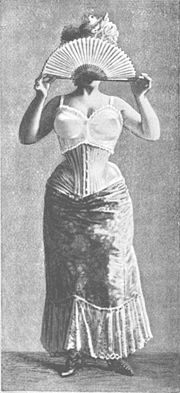 The French word brassière refers to a child's undershirt, underbodice or harness. The word brassière derives from bracière, an Old French
word meaning "arm protector" and referring to military uniforms (bras in French means "arm"). This later became used for a military breast plate, and later for a type of woman's corset. The current French term for brassière is soutien-gorge, literally "throat-support". In French, gorge (throat) was a common euphemism for the breast. This dates back to the garment developed by Herminie Cadolle
in 1905.
The term "brassiere" was first used in the English language in 1893.
It gained wider acceptance when the DeBevoise Company invoked the cachet of the French word “brassiere” in 1904 in its advertising to describe their latest bust supporter. That product and other early versions of the brassiere resembled a camisole
stiffened with boning. Vogue magazine first used the term in 1907, and by 1911 the word had made its way into the Oxford English Dictionary
. On 13 November 1914, the newly formed U.S. patent category for "brassieres" was inaugurated with a patent issued to Mary Phelps Jacob
. In the 1930s, "brassiere" was gradually shortened to "bra." In the French-speaking Canadian province of Quebec
, both soutien-gorge and brassière are used interchangeably, while the French continue to use soutien-gorge.
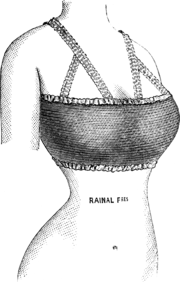 During recorded history, women have used a variety of garments and devices to cover, restrain, or elevate their breasts. Brassiere or bikini-like garments are depicted on some female athletes in the 14th century BC during the Minoan civilization
era. Similar functionality was achieved by both outerwear and underwear. In China during the Ming Dynasty
a form of foundation cloth complete with cups and straps drawn over shoulders and tied to the girth seam at the lower back called a dudou was in vogue among rich women. Popularity continued into the Qing Dynasty
(1644–1911). In English they were known as "stomach protectors" or "tummy covers".
From the 16th century onwards, the undergarments of wealthier women in the Western world were dominated by the corset
, which pushed the breasts upwards. In the latter part of the 19th century, clothing designers began experimenting with various alternatives to the corset, trying things like splitting the corset into multiple parts: a girdle
-like restraining device for the lower torso, and devices that suspended the breasts from the shoulder for the upper torso.
By the early 20th century, garments more closely resembling contemporary bras emerged, although large-scale commercial production did not occur until the 1930s. With metal shortages, World War II encouraged the end of the corset. By the time the war ended, most fashion-conscious women in Europe and North America were wearing brassieres. From there the brassiere was adopted by consumers in Asia, Africa, and Latin America.
Like other clothing, brassieres were initially sewn by small production companies and supplied to various retailers. The term “cup” was not used to describe bras until 1916, and manufacturers relied on stretchable cups to accommodate different sized breasts. Women with larger or pendulous breasts had the choice of long-line bras, built-up backs, wedge-shaped inserts between the cups, wider straps, power Lastex, firm bands under the cup, and even light boning.
In October 1932, the S.H. Camp and Company correlated the size and pendulousness of a woman's breasts to letters of the alphabet, A through D. Camp's advertising featured letter-labeled profiles of breasts in the February 1933 issue of Corset and Underwear Review. In 1937, Warner began to feature cup sizing in its products. Adjustable bands were introduced using multiple eye and hook positions in the 1930s.
Since then, bras have replaced corsets and bra manufacture and sale has become a multi-billion-dollar industry. Over time, the emphasis on bras has largely shifted from functionality to fashion.
There is an urban legend
that the brassiere was invented by a man named Otto Titzling
("tit sling") who lost a lawsuit with Phillip de Brassiere ("fill up the brassiere"). This originated with the 1971 book Bust-Up: The Uplifting Tale of Otto Titzling and the Development of the Bra and was propagated in a comedic song from the movie Beaches
.
Primitive iterations of a brassiere are depicted in early Roman art in the ruins of Pompeii
. These depictions date back to as early as 62 AD.
including cotton, nylon, Spandex
and lace
. The cups may be supported by underwires made of metal and sometimes coated in plastic. Strapless bras usually use underwire to support the breasts. The underwire offers better lift and separation. The band offers 90% of the support while the straps should only offer 10%.
Wirefree bras support breasts using seaming and internal reinforcing. The bra is usually fastened with a hook fastener
on the band, typically at the back. In some bras the fastener is in the front, between the cups. Others are pulled on over the head and have no fasteners. Some bras contain molding
to improve comfort, conceal the nipples, or enhance bust size. Bust size and cleavage
are also enhanced with breast pads inside the cups and by wearing push-up bras.
s". The section where the band joins the cups is called the "back wing". The weight of the breasts is supported by the band and the cups, not the shoulder straps.
Standard, well-fitting bras are constructed in the form of a "square frame", anchored by a chest band, with all dimensions fitted (i.e., adjusted) for each prototypical wearer, assuming they are standing with both arms at their sides. The design also assumes that both breasts are equally sized and positioned. Some bras are strapless. Prior to 1900, fabrics like linen, cotton broadcloth, and twill weaves that could be sewn using flat-felled or bias-tape seams were used to make early brassieres. Some manufacturers like Playtex have developed proprietary frame designs. The Playtex "18 Hour Bra" utilizes an M-Frame design.
Bra components, including the cup top and bottom (if seamed), the central, side and back panels, and the straps are cut based on manufacturer's specifications. Many layers of fabrics are usually cut at once using a computer-controlled laser or a bandsaw shearing device. The pieces may be assembled by piece workers on site or at various locations using industrial grade sewing machines, or by automated machines. Coated metal hooks and eyes are sewn in by machine and heat processed or ironed into the two back ends of the bra band and a tag or label is attached. Some bras now avoid tags and print the label information onto the bra itself. The completed bras are transported to another location for packaging, where they are sorted by style and folded (either mechanically or manually), and packaged or readied for shipment.
, Spanette (a trademark of of Playtex
), Latex
, microfiber
, satin
or Sateen, lace, foam, mesh, Jacquard, and many other fabrics. Spandex is a synthetic fiber with built-in "stretch memory." It's usually blended with another fabric, such as cotton, polyester, or nylon. Spanette is a woven fabric that provides 360-degree stretch support and custom fit. It is usually used on the side or back panels of the bra. Mesh is a high-tech synthetic composed of ultra-fine filaments, tightly knit for smoothness.
dress-size standard, the torso is measured in centimetres and rounded to the nearest multiple of 5 cm.
A number of reports state the 80–85% of women are wearing the wrong bra size. A correctly fitted bra is determined by accurately calculating the chest size (or band size) and breast volume (the cup size). The band size can be adjusted slightly using the two or three alternate sets of fastening hooks and eyes in the clasp. The bra straps (over the shoulders) can usually also be adjusted slightly.
Commenting about brassiere design, British Chiropractic Association representative Tim Hutchful said, "Bras are like suspension bridges. You need a well-engineered bra so your shoulders don't end up doing all the work. Bras that don't fit will affect the shoulders and chest, and will almost certainly cause back pain as you get older."
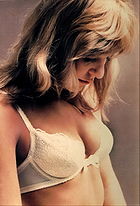
There is a wide range of brassiere styles available, designed to match different body types, situations, and outer garments. The degree of shaping and coverage of the breasts varies between styles, as do functionality, fashion, fit, fabric, and color. Common types include backless, balconette, convertible, shelf, full cup, balconette, demi-cup, front-closure, minimizing, padded, plunge, posture, push-up, racerback, sheer, strapless, t-shirt, underwire, soft cup, and sports bra
. Many designs combine one or more these styles. Bras are built-in to some garments like camisoles, single-piece swimsuits, and tank tops, eliminating the need to wear a separate bra.
and body image
. Western media, especially advertising, emphasize a woman's body shape, especially her breasts.
Women choose to wear a particular style of bra for a variety of reasons. Her choices are consciously or unconsciously affected by social perceptions of the ideal female figure
reflecting her bust
, waist, and hip measurement. Fashion historian Jill Fields wrote that the bra "plays a critical part in the history of the twentieth-century American women's clothing, since the shaping of women's breasts is an important component of the changing contours of the fashion silhouette." Bras and breast presentation follow the cycle of fashion.
Each fall, Victoria's Secret
commissions the creation of a bra containing gems and precious metals. In 2010, it hired designer Damiani
, the jeweler who created Brad Pitt
's and Jennifer Aniston
's wedding rings, to create a US$2 million Fantasy Bra. It includes more than 3,000 brilliant cut white diamonds, totaling 60 carats
, and 82 carats of sapphires and topazes.
When the Flapper
era ended, the media substituted teen for Flapper. Olga manufactured a teen bra that was skimpy and sheer. Other manufacturers responded in kind. Oleg Cassini made a provocative "Room at the Top Bra" in nylon and Lycra spandex for Peter Pan
. In the early 1960s, bra makers marketed to girls 13-19, and later in '60s they targeted pre-teen girls age 10 -12. New labels like Teenform, Teencharm, and Heaventeen catered to their market. Some company's advertisements showed waist up wearing only a bra. Mercy Dobell, editor of Corset and Underwear Review, wrote that "the bra has joined lipstick and 'heels' in becoming one of the beloved symbols of growing up.
In the early 1960s, 96.3% of female college freshman bought bras as part of their back to school wardrobe. At the tail end of the 1960s when bralessness increased as a trend, the number had slipped to 85%. Only 77% of high school girls bought bras as they prepared to returned to school.
in her life signifying her coming of age
.
A training bra designed for pubescent or teen girls who have begun to develop breast
s during early puberty
. They are available in sizes 30AA to 38B. Training bras are usually designed with a soft, elastic bra band and wireless bra cups. Prior to the marketing of training bras, a pre-teen or young teen girl in Western countries usually wore a one-piece "waist" or camisole
without cups or darts. Bras for pre-teen and girls entering puberty were first marketed during the 1950s.
. During the 1940s and 1950s, the sweater girl
became fashionable, supported by a bullet bra (known also as a torpedo or cone bra) like that worn by Jane Russell
.
During the 1960s, bra designers and manufacturers began introducing padded bras and bras with underwire. Women's perception of undergarments changed, and in the 1970s, they began to seek more comfortable and natural looking bras. In response to the feminist era, many bra manufacturers' marketing claimed that wearing their bra was like "not wearing a bra". Women usually purchase a bra because they recognize they need to replace an existing bra or because they purchased new outwear requiring a new type of bra. Although in popular culture the invention of the bra is frequently attributed to men, in fact women have played a large part in bra design and manufacture, accounting for half of the patents filed.
or because it is a cultural norm and they fear criticism or unwanted attention
. Some wear bras because they believe it improves their appearance, while a minority prefer to go without because they find it more comfortable.
In a cross-cultural study of bra size and cancer in 9,000 women during the 1960s, a Harvard group found 93% wore bras (from 88% in the UK to 99% in Greece), but could not find enough women in Japan who wore bras to complete their study. In a number of cultures, including Europe and other Westernized countries outside the United States, there are fewer social restrictions against sunbathing or swimming topless. A Harris Survey commissioned by Playboy
asked more than 1000 women what they like in a bra. Among the respondents, 67% said they like wearing a bra over going braless, while 85% wanted to wear a "Shape-enhancing bra that feels like nothing at all." They were split over underwire bras, 49% said they prefer underwire bras while 49% said they prefer wireless bras.
The prevalence of the bra, and perceived social expectation to wear one, does not imply that openly displaying it is encouraged. On the contrary, it is often not considered suitable to expose one's brassiere in public in western culture
s, even partially, despite the fact that it is similar in appearance to the upper part of a bikini; to do so may be considered sexually provocative.
Even considering this relative cultural taboo, being seen in one's bra is still more socially acceptable than exposing the bare breast
s. Indeed, women may choose to be seen in just a bra may make a specific point. For instance, bras have recently been used by organisations like breast cancer charities to raise money, either by sponsored walks or to sell bras owned or decorated by celebrities.
, working for TBWA/London, developed an ad for Sara Lee's "Hello Boys" Wonderbra
campaign. It featured a close-up image of Czech model Eva Herzigova
in a black Wonderbra
with ample cleavage and the title, "Hello boys." Looking down at her breasts, it is not clear whether she is addressing male admirers or her breasts. The ground-breaking, racy ad campaign resulted in many imitations along with a few complaints that the photograph demeaned women. The influential poster was featured in an exhibition at the Victoria and Albert Museum
in London and it was voted in at number 10 in a "Poster of the Century" contest. The Canada-based lingerie fashion label wanted the ad campaign to motivate women to see the Wonderbra "as a cosmetic and as a beauty enhancer rather than a functional garment". The billboard was voted in 2011 as the most iconic outdoor ad during the past five decades by the Outdoor Media Centre.
Push-up bras got significant attention in 2000 when actress Julia Roberts
in the film Erin Brockovich
enhanced her bust with an Ultimo push-up bra containing liquid silicone gel.
women wear bras varies, but most surveys report from 75% to 95%. About 90% of Australia women wear a bra as of 2006. Some fashion writers and medical authorities emphasize that wearing a bras is a matter of choice and not necessity. Women can choose types of clothing that don't require bras or to go braless.
Some outer garments like sundresses, tank tops, and formal evening wear are designed to be worn without bras or are designed with built-in support. Some women feel uncomfortable wearing a bra and take off their bras when they return home.
It is increasingly commonplace to see public figures, especially celebrities, actresses and members of the fashion industry, who have chosen not to wear a bra, at least on some occasions. Celebrities noted for going braless in public include Britney Spears
, Clare Danes, Lindsay Lohan
, Nadine Coyle
, Mischa Barton
, Meg Ryan
, Paris Hilton
, Miley Cyrus
, Lady Gaga
, fashion executive Tamara Mellon
, and former model and France's first lady Carla Bruni
, who welcomed Russian president Dmitry Medvedev
at a state dinner in tight dress that revealed she was braless.
Unhappy bra owners have donated thousands of bras to the Braball Sculpture, a collection of 18,085 bras. The organizer, Emily Duffy, wears a 42B and switched to stretch undershirts with built-in bras because standard bras cut into her mid-section.
recommends that women do not wear underwire bras because they can set off the metal detectors, though some travelers say they wear them and they do not set off the detector every time. On Sunday, 24 August 2008, big-busted passenger and film maker Nancy Kates
set off a metal detector during security screening. She objected when the agent attempted to pat-down her breasts. She said she told the agent, "'You can't treat me as a criminal for wearing a bra." A TSA supervisor told her she had to either submit to the pat-down search in a private room or not fly. Kates offered to take off her bra, which the TSA accepted. She went to the restroom, removed her bra, and walked through the airport and security screening braless. She said that a supervisor told her that underwire bras were the leading cause of metal detector false alarms.
According to underwire manufacturer S & S Industries of New York, who supply bras to Victoria's Secret
, Bali
, Warner's, Playtex
, Vanity Fair and other bra labels, about 70 percent of women wear steel underwire bras.
In response, Triumph International, a Swiss company, launched what it called a "Frequent Flyer Bra" in late 2001. The bra uses metal-free clasps and underwires made of resin instead of metal that are guaranteed to not set off metal detectors.
protested the event by symbolically trashing a number of feminine products. These included false eyelashes, high-heeled shoes, curlers, hairspray, makeup, girdle
s, corset
s, and bras. Someone suggested burning the contents of a trash can, but a permit could not be obtained. The media seized on an analogy between draft resisters burning their draft cards and the women burning their bras. In fact, there was no bra burning, nor did anyone take off her bra.
Some feminist writers have considered the bra as an example of how women's clothing has shaped and even deformed women's bodies to historically aesthetic ideals, or shaped them to conform to male expectations of what is desirable. Professor Lisa Jardine
observed feminist Germaine Greer
talking about bras at a formal college dinner:
Germaine Greer's book The Female Eunuch
has been associated with the 'bra burning movement' because she pointed out how restrictive and uncomfortable a bra in that time period could be. "Bras are a ludicrous invention," she wrote, "but if you make bralessness a rule, you're just subjecting yourself to yet another repression." For some, the bra remains a symbol of restrictions imposed by society on women: "...the classic burning of the bras...represented liberation from the oppression of the male patriarchy, right down to unbinding yourself from the constrictions of your smooth silhouette."
Some people question the medical or social necessity of bras. An informal movement advocates breast freedom, top freedom
, bra freedom, or simply going braless.
Bra opponents believe training bras are used to indoctrinate girls into thinking about their breasts as sexual objects. In their view, bras for very young girls whose breasts do not yet need support are not functional undergarments and are only intended to accentuate the girl's sexuality. Feminist author Iris Young wrote that the bra "serves as a barrier to touch" and that a braless woman is "deobjectified
", eliminating the "hard, pointy look that phallic culture posits as the norm." Without a bra, women's breasts are not consistently shaped objects but change as the woman moves, reflecting the natural body. Unbound breasts mock the ideal of the perfect breast. "Most scandalous of all, without a bra, the nipples show. Nipples are indecent. Cleavage
is good—the more, the better..." Susan Brownmiller
in her book Femininity took the position that women without bras shock and anger men because men "implicitly think that they own breasts and that only they should remove bras."
In October 2009, Somalia’s hard-line Islamic group Al-Shabaab
forced women in public to shake their breasts at gunpoint to see if they wore bras, which they called "un-Islamic". Those found to be wearing a bra were publicly whipped because bras are seen as "deceptive" and to violate their interpretation of Sharia law.
Larger-breasted women tend to wear bras that are too small, and conversely, smaller-breasted women bras that are too large. Larger women are more likely to have an incorrect bra fit. This may be partly due to a lack of understanding of how to correctly determine bra size. It may also be due to unusual or unexpectedly rapid growth in size brought on by pregnancy, weight gain, or medical conditions including virginal breast hypertrophy. As breasts become larger, their shape and the distribution of the tissues within them changes, becoming ptotic
and bulbous rather than conical. This makes measurements increasingly unreliable, especially for large breasted women. The heavier a woman's build, the more difficult it is to obtain accurate measurements, as measuring tape sinks into the flesh more easily. Finally, up to 25% of women's breasts display a persistent, visible breast asymmetry, which is defined as differing in size by at least one cup size. Ten percent are severely different, with the left breast being larger in 62% of cases. Manufacturer's standard brassiere sizes do not take these inconsistencies into consideration.
, researchers found a strong link between obesity and inaccurate back measurement. They concluded that "obesity
, breast hypertrophy
, fashion and bra-fitting practices combine to make those women who most need supportive bras the least likely to get accurately fitted bras." This led women in the study to choose too large a cup size (by a mean of three sizes) and too small a band size (by a mean of four inches). Other studies found that the most common mistake made by women when selecting a bra was to choose too large a back band and too small a cup, for example, 38C instead of 34E, or 34B instead of 30D.
s are composed of soft, glandular tissue, with few support structures, such as connective tissue
. Breasts are composed of the mammary gland
s, which remain relatively constant throughout life, as well as the adipose tissue
or fat tissue that surrounds the mammary glands. It is the amount and distribution of adipose tissue and, to a lesser extent, glandular tissue that leads to variations in breast size. In addition, the breasts contain ligaments
, although their exact function as related to breast support has not been agreed upon by experts. These ligaments, and the overlying skin (referred to as the dermal brassiere) help determine the resulting breast shape.
As the breasts mature, they fold over the lower attachment to the chest wall (infra-mammary fold), and their lower (inferior) surface lies against the chest wall when vertical. In popular culture, this maturation is referred to as "sagging" or "drooping", although plastic surgeons refer to it as ptosis
. The surgical procedure to lift the breast is called mastopexy.
Deborah Franklin, a senior writer in science and medicine, wrote in Health magazine that, "Still, the myth that daily, lifelong bra wearing is crucial to preserving curves persists, along with other misguided notions about that fetching bit of binding left over from the days when a wasp waist defined the contours of a woman’s power."
Franklin interviewed Dr. Christine Haycock a surgeon at the New Jersey Medical School
and an expert in sports medicine
. Dr. Haycock said that "Cooper's ligaments
have nothing to do with supporting breast tissue... They just serve to divide the breast into compartments." She noted that most women's breasts begin to droop with age and that extremely large-breasted women are generally more affected. However, sagging is not related to ligaments or dependent on breast size.
While large-breasted women may be uncomfortable exercising without a bra, Dr. Haycock said that “It’s not doing any lasting damage to chest muscles or breast tissue.” Her research found that “those who wore an A cup were frequently most comfortable with no bra at all."
There are some indications that wearing a bra may have an effect opposite to that which was intended. In a Japanese study, 11 women were measured wearing a standardised fitted bra for three months. They found that breasts became larger and lower, with the underbust measurement decreasing and the overbust increasing, while the lowest point of the breast moved downwards and outwards. The effect was more pronounced in larger-breasted women. This may be related to the particular bra chosen for the experiment, as there was some improvement after changing to a different model. These findings were confirmed in a much larger French study of 250 women who exercised regularly and were followed by questionnaires and biometric measurements for a year after agreeing not to wear a bra. While there was some initial discomfort at the first evaluation, this gradually disappeared and by the end of the year nearly all the women had improved comfort compared to before the study. The measurements showed firmer, and more elevated and youthful breasts. One example is given of a woman who had breasts that were uncomfortably large, and who had improvement after two years of being without a bra.
Breasts naturally change in shape and size as women age. There are conflicting opinions but no known studies to show whether bras actually delay or reverse the natural process. Health ethicist
s are concerned that plastic surgery and implants have altered our concept of what is "normal" and medicalised women's bodies by making the normal aging process a "disease."
has been specifically designed for this purpose. Sports bras which compress or encapsulate the breasts have been shown to be more effective than ordinary bras at reducing breast pain caused by exercise. However, the need for wearing a bra at all during exercise has been questioned after extensive studies on athletes.
Numerous websites and publications dealing with fibrocystic disease
and breast pain state that a well-fitting bra is recommended for treatment of these conditions. A 2006 clinical practice guideline stated, "The use of a well-fitting bra that provides good support should be considered for the relief of cyclical and noncyclical mastalgia." The study rated the statement as being supported by level II-3 evidence and as a grade B recommendation. However, this rests solely on two short, uncontrolled studies.
Regarding breast pain, a 1976 study of 114 women in the United Kingdom complaining of breast pain were professionally fitted with a special, custom-fitted bra. Twenty-six percent of women who completed the study and wore the bra properly experienced pain relief, 49% improved somewhat, 21% received no relief, and 4% experienced more pain. There were a lot of dropouts from the study. In a 2000 Saudi Arabia study, 200 women were randomly allocated to receive either (danazol
e), a synthetic steroid
ethisterone
whose off-label uses include management fibrocystic breast disease and breast pain, or a sports bra. Fifty-eight percent of the danazole group improved compared to 85% in the sports bra group. No details of what the women wore before the study was given. Neither study used an untreated control or implemented double-blind controls. Breast pain has a very high placebo response (85%) so a response to any intervention can be expected. It is not clear whether the interventions described can be generalized to a large population.
, can alleviate symptoms. Physicians recommend women seek a better-fitting support bra that provides better support.
(loss of skin), chafing, intertrigo
(rash), and fungal infections.
s.
Female volleyball, high jump
, or long jump
athletes who must continually raise their arms during competition, causing the shoulder straps to dig in, are also at risk for shoulder pain. Some occupations also require repeatedly raising the arms above the shoulders. Even smaller-busted women may experience shoulder pain if they repeatedly lift their arms while wearing a poorly designed or badly-fitted bras. Raising the arms can cause the bra's shoulder straps to concentrates pressure on the trapezius muscle
, which may result in neck and shoulder pain, numbness and tingling in the arm, and headaches.
Strapless bras put all the weight of the breasts onto the chest band, and extra strain onto the rib cage and back. To compensate, female athletes can wear athletic or sports bra
s that offer improved support. Sports bras may not meet some larger-busted women's needs. Judy Mahle Lutter, president of the Melpomene Institute, a Minnesota-based research organization devoted to women's health and physical activity, reports that "Larger-breasted women, and women who are breast-feeding, often have trouble finding a sports bra that fits, feels comfortable and provides sufficient motion control."
In a five-year study, 100 women who experienced shoulder pain were given the option to alleviate the weight on their shoulders by not wearing a bra for two weeks. In that two-week period, a majority experienced relief from pain. Relief was complete among 84% of women who did not elevate their arms. However, their pain symptoms returned within an hour of resuming bra use. Three years later, 79% of the patients had stopped wearing a bra "to remove breast weight from the shoulder permanently because it rendered them symptom free." Sixteen percent worked in occupations requiring them to elevate their arms daily, and this group only achieved partial improvement. Of these, 13 of the 16 ceased to wear a bra, and by six months all were without pain.
Office, which represents inmates
held at the institution before trial. That agreement allows female lawyers entry if her underwire bra is detected by a metal-detecting wand. In Horstman's situation, she entered a bathroom and removed her bra, but was then prevented from seeing her client because entering the facility braless was a violation of prison dress code guidelines. Horstman had previously worn an underwire bra into the facility without problems. Warden Linda McGrew later promised the incident would not happen again.
In November 2009, parents and school officials complained about girls wearing sports bras and boys running shirtless before and after the Hillsborough County
(Tampa area of Florida) Cross Country Championship track event. County athletic director Lanness Robinson informed the athletic directors of all of the Hillsborough County's public schools of a school board policy that even though sports bra
s are designed as outer garments, they must be covered with at minimum a singlet
(sleeveless T-shirt) and boys cannot go topless, no matter how hot it is. The policy applies to all events and training sessions.
Plant High (Tampa) girls cross country coach Roy Harrison reported that out of concern for his student's safety, he would not follow the mandate. "We train all through August and September, when the heat index
is 103 °F (39.4 °C), 105 °F (40.6 °C), 107 °F (41.7 °C) outside even in the evening and to me, it's a safety issue not letting boys run without their shirts and girls in sports bras." Coaches and athletes pointed out that sports bras, form-fitting compression shorts and running shirtless are common, as is wearing swimsuit
s and tight-fitting volleyball uniforms.
Victoria's Secret
was sued several times during 2009. The suits alleged that defective underwear contained formaldehyde
that caused severe rashes on women who wore them. Six cases were filed in Ohio and two in Florida. At least 17 other suits were filed in six other states after January 2008. The plaintiff refused to submit to a simple patch test to determine the precise cause of her reaction and her case was later withdrawn. The Formaldehyde Council issued a statement that formaldehyde quickly dissipates in air, water and sunlight.
In Singapore, students at a secondary school who were discovered during a physical education class to be wearing coloured bras to school were forced to go braless, according to a report in the China Press
. The school permitted girls to wear only white, beige and light grey bras. The girls were forced to remove the bras in the bathroom, which were then confiscated. Some schools in Singapore have begun to sell white bras to students.
In January 2011, a German court ruled that employers can require female employees to wear bras at work. An airport security firm argued that requiring bras was essential to "to preserve the orderly appearance of employer-provided uniforms." The court also agreed that the company could require employees to keep their hair clean and male employees to be clean shaven or maintain a well-trimmed beard.
Undergarment
Undergarments or underwear are clothes worn under other clothes, often next to the skin. They keep outer garments from being soiled by bodily secretions and discharges, shape the body, and provide support for parts of it. In cold weather, long underwear is sometimes worn to provide additional...
that covers, supports, and elevates the breasts. Since the late 19th century, it has replaced the corset
Corset
A corset is a garment worn to hold and shape the torso into a desired shape for aesthetic or medical purposes...
as the most widely accepted method for supporting breasts.
Manufacturers produce an extremely wide variety of bras today that serve a variety of purposes. Bras can enhance the perceived shape of a woman's breasts, minimize or enlarge her perceived breast size, restrain breast movement during an activity such as exercise
Sports bra
A sports bra is a bra that provides additional support to female breasts during physical exercise. Sturdier than typical bras, they minimize breast movement, alleviate discomfort, and reduce potential damage to chest ligaments. Many women wear sports bras to reduce pain, and physical discomfort...
, enhance
Cleavage enhancement
Cleavage enhancement encompasses a range of techniques used temporarily to improve the appearance of a person's breast cleavage or to create the illusion of breast cleavage on a person who has no such cleavage...
her cleavage
Cleavage (breasts)
Cleavage, anatomically known as the intramammary cleft, is the space between a woman's breasts lying over the sternum. Cleavage is exposed by a garment with a low neckline, such as ball gowns, evening gowns, swimwear, casual tops and other garments....
, conceal her nipples, overcome sagging
Ptosis (breasts)
Ptosis of the breast refers to drooping or sagging of the breast. Breast ptosis is related to the laxity of the superficial fascia, suspensory ligaments and skin....
, serve prosthetic
Prosthesis
In medicine, a prosthesis, prosthetic, or prosthetic limb is an artificial device extension that replaces a missing body part. It is part of the field of biomechatronics, the science of using mechanical devices with human muscle, skeleton, and nervous systems to assist or enhance motor control...
purposes, or facilitate nursing
Nursing bra
A nursing bra is a specialized brassiere that provides additional support to women's milk-filled breasts and permits comfortable breastfeeding without the need to remove the bra. This is accomplished by specially designed bra cups that include flaps which can be opened with one hand to expose the...
. In certain circumstances, like the work place, employers may require a woman to wear a bra. In most Western countries, the majority of women wear bras, although a minority choose to go without, sometimes for health or comfort reasons. Breast support is built into some garments like camisole
Camisole
A camisole is a sleeveless undergarment for women, normally extending to the waist. The camisole is usually made of satin, nylon, or cotton.- Historical definition :...
s, tank-tops and backless dress
Backless dress
A backless dress is a dress designed to expose the wearer's back. A backless dress is most commonly worn on formal occasions or as evening wear or as wedding dresses and can be of any length, from a haltertop to a miniskirt-length to floor-length....
es, alleviating the need to wear a separate bra.
Most bras are designed to be form-fitting, to lift the breasts off the chest wall if they sag, and to restrain their movement. Bra designers and manufacturers originally produced bras that were purely functional and gradually added elements to improve the design, but they have now largely shifted from functionality to fashion. Manufacturers' standards and sizes vary widely, making it difficult for women to find a bra that fits. Bra-measurement procedures conflict with one another. Even professional bra fitters disagree on the correct size for the same woman. Women's breasts vary widely in size and shape; most are asymmetric to a degree and can change from month to month depending on the menstrual cycle, pregnancy, or weight gain or loss. As a result, from 75–85% of women wear the incorrect bra size.
The bra has become a garment with erotic significance and a feminine icon or symbol with political and cultural significance beyond its primary function. Some feminists consider the brassiere a symbol of the repression of women's bodies. Culturally, when a young girl gets her first bra, it may be seen as a rite of passage
Rite of passage
A rite of passage is a ritual event that marks a person's progress from one status to another. It is a universal phenomenon which can show anthropologists what social hierarchies, values and beliefs are important in specific cultures....
and symbolic of her coming of age
Coming of age
Coming of age is a young person's transition from childhood to adulthood. The age at which this transition takes place varies in society, as does the nature of the transition. It can be a simple legal convention or can be part of a ritual, as practiced by many societies...
.
Etymology
Old French
Old French was the Romance dialect continuum spoken in territories that span roughly the northern half of modern France and parts of modern Belgium and Switzerland from the 9th century to the 14th century...
word meaning "arm protector" and referring to military uniforms (bras in French means "arm"). This later became used for a military breast plate, and later for a type of woman's corset. The current French term for brassière is soutien-gorge, literally "throat-support". In French, gorge (throat) was a common euphemism for the breast. This dates back to the garment developed by Herminie Cadolle
Herminie Cadolle
Herminie Cadolle was the inventor of the modern bra and founder of the Cadolle lingerie house.Herminie was a close friend of the French insurrectionist Louise Michel, and it was this connection that lead her to leave for the safety of Buenos Aires...
in 1905.
The term "brassiere" was first used in the English language in 1893.
It gained wider acceptance when the DeBevoise Company invoked the cachet of the French word “brassiere” in 1904 in its advertising to describe their latest bust supporter. That product and other early versions of the brassiere resembled a camisole
Camisole
A camisole is a sleeveless undergarment for women, normally extending to the waist. The camisole is usually made of satin, nylon, or cotton.- Historical definition :...
stiffened with boning. Vogue magazine first used the term in 1907, and by 1911 the word had made its way into the Oxford English Dictionary
Oxford English Dictionary
The Oxford English Dictionary , published by the Oxford University Press, is the self-styled premier dictionary of the English language. Two fully bound print editions of the OED have been published under its current name, in 1928 and 1989. The first edition was published in twelve volumes , and...
. On 13 November 1914, the newly formed U.S. patent category for "brassieres" was inaugurated with a patent issued to Mary Phelps Jacob
Mary Phelps Jacob
Caresse Crosby , born Mary Phelps Jacob , was an American patron of the arts, poet, publisher, and peace activist...
. In the 1930s, "brassiere" was gradually shortened to "bra." In the French-speaking Canadian province of Quebec
Quebec
Quebec or is a province in east-central Canada. It is the only Canadian province with a predominantly French-speaking population and the only one whose sole official language is French at the provincial level....
, both soutien-gorge and brassière are used interchangeably, while the French continue to use soutien-gorge.
History
Minoan civilization
The Minoan civilization was a Bronze Age civilization that arose on the island of Crete and flourished from approximately the 27th century BC to the 15th century BC. It was rediscovered at the beginning of the 20th century through the work of the British archaeologist Arthur Evans...
era. Similar functionality was achieved by both outerwear and underwear. In China during the Ming Dynasty
Ming Dynasty
The Ming Dynasty, also Empire of the Great Ming, was the ruling dynasty of China from 1368 to 1644, following the collapse of the Mongol-led Yuan Dynasty. The Ming, "one of the greatest eras of orderly government and social stability in human history", was the last dynasty in China ruled by ethnic...
a form of foundation cloth complete with cups and straps drawn over shoulders and tied to the girth seam at the lower back called a dudou was in vogue among rich women. Popularity continued into the Qing Dynasty
Qing Dynasty
The Qing Dynasty was the last dynasty of China, ruling from 1644 to 1912 with a brief, abortive restoration in 1917. It was preceded by the Ming Dynasty and followed by the Republic of China....
(1644–1911). In English they were known as "stomach protectors" or "tummy covers".
From the 16th century onwards, the undergarments of wealthier women in the Western world were dominated by the corset
Corset
A corset is a garment worn to hold and shape the torso into a desired shape for aesthetic or medical purposes...
, which pushed the breasts upwards. In the latter part of the 19th century, clothing designers began experimenting with various alternatives to the corset, trying things like splitting the corset into multiple parts: a girdle
Girdle
A girdle is a garment that encircles the lower torso, perhaps extending below the hips, and worn often for support. The word girdle originally meant a belt. In modern English, the term girdle is most commonly used for a form of women's foundation wear that replaced the corset in popularity...
-like restraining device for the lower torso, and devices that suspended the breasts from the shoulder for the upper torso.
By the early 20th century, garments more closely resembling contemporary bras emerged, although large-scale commercial production did not occur until the 1930s. With metal shortages, World War II encouraged the end of the corset. By the time the war ended, most fashion-conscious women in Europe and North America were wearing brassieres. From there the brassiere was adopted by consumers in Asia, Africa, and Latin America.
Like other clothing, brassieres were initially sewn by small production companies and supplied to various retailers. The term “cup” was not used to describe bras until 1916, and manufacturers relied on stretchable cups to accommodate different sized breasts. Women with larger or pendulous breasts had the choice of long-line bras, built-up backs, wedge-shaped inserts between the cups, wider straps, power Lastex, firm bands under the cup, and even light boning.
In October 1932, the S.H. Camp and Company correlated the size and pendulousness of a woman's breasts to letters of the alphabet, A through D. Camp's advertising featured letter-labeled profiles of breasts in the February 1933 issue of Corset and Underwear Review. In 1937, Warner began to feature cup sizing in its products. Adjustable bands were introduced using multiple eye and hook positions in the 1930s.
Since then, bras have replaced corsets and bra manufacture and sale has become a multi-billion-dollar industry. Over time, the emphasis on bras has largely shifted from functionality to fashion.
There is an urban legend
Urban legend
An urban legend, urban myth, urban tale, or contemporary legend, is a form of modern folklore consisting of stories that may or may not have been believed by their tellers to be true...
that the brassiere was invented by a man named Otto Titzling
Otto Titzling
Otto Titzling is a fictional character who is apocryphally described as the inventor of the brassiere in a book Bust Up: The Uplifting Tale of Otto Titzling, published by Macdonald in London in 1971 and by Prentice-Hall in the USA....
("tit sling") who lost a lawsuit with Phillip de Brassiere ("fill up the brassiere"). This originated with the 1971 book Bust-Up: The Uplifting Tale of Otto Titzling and the Development of the Bra and was propagated in a comedic song from the movie Beaches
Beaches (film)
Beaches , is a 1988 American comedy-drama film adapted by Mary Agnes Donoghue from the Iris Rainer Dart novel of the same name...
.
Primitive iterations of a brassiere are depicted in early Roman art in the ruins of Pompeii
Pompeii
The city of Pompeii is a partially buried Roman town-city near modern Naples in the Italian region of Campania, in the territory of the comune of Pompei. Along with Herculaneum, Pompeii was destroyed and completely buried during a long catastrophic eruption of the volcano Mount Vesuvius spanning...
. These depictions date back to as early as 62 AD.
Material and styles
Bras are typically made of a fabricTextile
A textile or cloth is a flexible woven material consisting of a network of natural or artificial fibres often referred to as thread or yarn. Yarn is produced by spinning raw fibres of wool, flax, cotton, or other material to produce long strands...
including cotton, nylon, Spandex
Spandex
Spandex or elastane is a synthetic fibre known for its exceptional elasticity. It is strong, but less durable than natural Latex, its major non-synthetic competitor. It is a polyurethane-polyurea copolymer that was co-invented in 1959 by chemists C. L. Sandquist and Joseph Shivers at DuPont's...
and lace
Lace
Lace is an openwork fabric, patterned with open holes in the work, made by machine or by hand. The holes can be formed via removal of threads or cloth from a previously woven fabric, but more often open spaces are created as part of the lace fabric. Lace-making is an ancient craft. True lace was...
. The cups may be supported by underwires made of metal and sometimes coated in plastic. Strapless bras usually use underwire to support the breasts. The underwire offers better lift and separation. The band offers 90% of the support while the straps should only offer 10%.
Wirefree bras support breasts using seaming and internal reinforcing. The bra is usually fastened with a hook fastener
Fastener
A fastener is a hardware device that mechanically joins or affixes two or more objects together.Fasteners can also be used to close a container such as a bag, a box, or an envelope; or they may involve keeping together the sides of an opening of flexible material, attaching a lid to a container,...
on the band, typically at the back. In some bras the fastener is in the front, between the cups. Others are pulled on over the head and have no fasteners. Some bras contain molding
Molding
Molding or moulding may refer to:*Molding , feature formed from marble, plaster, wood, etc. and used in interior design*Molding , process used in manufacturing to shape materials*Car body molding...
to improve comfort, conceal the nipples, or enhance bust size. Bust size and cleavage
Cleavage (breasts)
Cleavage, anatomically known as the intramammary cleft, is the space between a woman's breasts lying over the sternum. Cleavage is exposed by a garment with a low neckline, such as ball gowns, evening gowns, swimwear, casual tops and other garments....
are also enhanced with breast pads inside the cups and by wearing push-up bras.
Construction and fit
Bras are built on a frame. The frame is supported by a band the wraps around the woman's torso, usually closed in the back by a hook and eye closure. Some models close in the front with a hook and eye closure or a simple clasp. Two cups are attached to the band to support the woman's breasts. The cups are joined at the center by a "gore" and held in place by "shoulder strapShoulder strap
A shoulder strap is a strap over a shoulder. They are often affixed to women's dresses to support its weight or as part of its style. The term is also applied to carrying bags and to epaulettes.-Carrier shoulder strap:...
s". The section where the band joins the cups is called the "back wing". The weight of the breasts is supported by the band and the cups, not the shoulder straps.
Standard, well-fitting bras are constructed in the form of a "square frame", anchored by a chest band, with all dimensions fitted (i.e., adjusted) for each prototypical wearer, assuming they are standing with both arms at their sides. The design also assumes that both breasts are equally sized and positioned. Some bras are strapless. Prior to 1900, fabrics like linen, cotton broadcloth, and twill weaves that could be sewn using flat-felled or bias-tape seams were used to make early brassieres. Some manufacturers like Playtex have developed proprietary frame designs. The Playtex "18 Hour Bra" utilizes an M-Frame design.
Bra components, including the cup top and bottom (if seamed), the central, side and back panels, and the straps are cut based on manufacturer's specifications. Many layers of fabrics are usually cut at once using a computer-controlled laser or a bandsaw shearing device. The pieces may be assembled by piece workers on site or at various locations using industrial grade sewing machines, or by automated machines. Coated metal hooks and eyes are sewn in by machine and heat processed or ironed into the two back ends of the bra band and a tag or label is attached. Some bras now avoid tags and print the label information onto the bra itself. The completed bras are transported to another location for packaging, where they are sorted by style and folded (either mechanically or manually), and packaged or readied for shipment.
Materials
Bras are made of a wide variety of fabrics, including Tricot, SpandexSpandex
Spandex or elastane is a synthetic fibre known for its exceptional elasticity. It is strong, but less durable than natural Latex, its major non-synthetic competitor. It is a polyurethane-polyurea copolymer that was co-invented in 1959 by chemists C. L. Sandquist and Joseph Shivers at DuPont's...
, Spanette (a trademark of of Playtex
Playtex
Playtex and PlayTex are a brand and trademark. It used to be associated with bras and women's undergarments. Currently there are two separate companies with the Playtex name....
), Latex
Latex
Latex is the stable dispersion of polymer microparticles in an aqueous medium. Latexes may be natural or synthetic.Latex as found in nature is a milky fluid found in 10% of all flowering plants . It is a complex emulsion consisting of proteins, alkaloids, starches, sugars, oils, tannins, resins,...
, microfiber
Microfiber
Microfiber or microfibre refers to synthetic fibers that measure less than one denier. The most common types of microfibers are made from polyesters, polyamides , and or a conjugation of polyester and polyamide.Microfiber is used to make non-woven, woven and knitted textiles...
, satin
Satin
Satin is a weave that typically has a glossy surface and a dull back. It is a warp-dominated weaving technique that forms a minimum number of interlacings in a fabric. If a fabric is formed with a satin weave using filament fibres such as silk, nylon, or polyester, the corresponding fabric is...
or Sateen, lace, foam, mesh, Jacquard, and many other fabrics. Spandex is a synthetic fiber with built-in "stretch memory." It's usually blended with another fabric, such as cotton, polyester, or nylon. Spanette is a woven fabric that provides 360-degree stretch support and custom fit. It is usually used on the side or back panels of the bra. Mesh is a high-tech synthetic composed of ultra-fine filaments, tightly knit for smoothness.
No manufacturing standards
Manufacturing a well-fitting bra is a major challenge for companies, since the garment is supposed to be form-fitting, but the size and shape of women's bodies and breasts vary widely. Manufacturers make standard bra sizes that provide a "close" fit, however even a women with accurate measurements can have a difficult time finding a correctly fitted bra because of the variations in sizes between different manufacturers.Variance in bra sizes
There are several sizing systems in different countries. Most use the chest circumferences measurement system and cup sizes A-B-C+, but there are some significant differences. Most bras available usually come in 36 sizes, but bra labeling systems used around the world are at times misleading and confusing. Cup and band sizes vary around the world. For example, most women assume that a B cup on a 34 band is the same size as a B cup on a 36 band. In fact, bra cup size is relative to the band size, as the actual volume of a woman's breast changes with the dimension of her chest. In countries that have adopted the European EN 13402EN 13402
EN 13402 is a European standard for labelling clothes sizes. It is based on body dimensions, measured in centimetres. It replaces many older national dress-size systems in popular use before the year 2007. Acceptance of this form of standardization varies from country to country...
dress-size standard, the torso is measured in centimetres and rounded to the nearest multiple of 5 cm.
A number of reports state the 80–85% of women are wearing the wrong bra size. A correctly fitted bra is determined by accurately calculating the chest size (or band size) and breast volume (the cup size). The band size can be adjusted slightly using the two or three alternate sets of fastening hooks and eyes in the clasp. The bra straps (over the shoulders) can usually also be adjusted slightly.
Mechanical design
Bra designers liken designing a bra to building a bridge, because similar forces are at work. Just as a bridge is affected vertically by gravity and horizontally by earth movement and wind, forces affecting a bra's design include gravity and sometimes tangential forces created when a woman runs or turns her body. "In many respects, the challenge of enclosing and supporting a semi-solid mass of variable volume and shape, plus its adjacent mirror image—together they equal the female bosom—involves a design effort comparable to that of building a bridge or a cantilevered skyscraper."Commenting about brassiere design, British Chiropractic Association representative Tim Hutchful said, "Bras are like suspension bridges. You need a well-engineered bra so your shoulders don't end up doing all the work. Bras that don't fit will affect the shoulders and chest, and will almost certainly cause back pain as you get older."
Types of bras
There is a wide range of brassiere styles available, designed to match different body types, situations, and outer garments. The degree of shaping and coverage of the breasts varies between styles, as do functionality, fashion, fit, fabric, and color. Common types include backless, balconette, convertible, shelf, full cup, balconette, demi-cup, front-closure, minimizing, padded, plunge, posture, push-up, racerback, sheer, strapless, t-shirt, underwire, soft cup, and sports bra
Sports bra
A sports bra is a bra that provides additional support to female breasts during physical exercise. Sturdier than typical bras, they minimize breast movement, alleviate discomfort, and reduce potential damage to chest ligaments. Many women wear sports bras to reduce pain, and physical discomfort...
. Many designs combine one or more these styles. Bras are built-in to some garments like camisoles, single-piece swimsuits, and tank tops, eliminating the need to wear a separate bra.
Culture and fashion
Bras are a relatively recent invention and are by no means universally worn around the world. The majority of Western women choose to wear bras to conform to what they feel are appropriate societal norms and to improve their physical appearance. Wearing a bra can boost a woman's self confidence. Many Western women place a great deal of importance on their physical appearance, especially their breast shapeFemale body shape
Female body shape or figure is the cumulative product of a woman's skeletal structure and the quantity and distribution of muscle and fat on the body. There are, and have been, wide differences on what should be considered an ideal or preferred body shape, both for attractiveness and for health...
and body image
Body image
Body image refers to a person's perception of the aesthetics and sexual attractiveness of their own body. The phrase body image was first coined by the Austrian neurologist and psychoanalyst Paul Schilder in his masterpiece The Image and Appearance of the Human Body...
. Western media, especially advertising, emphasize a woman's body shape, especially her breasts.
Women choose to wear a particular style of bra for a variety of reasons. Her choices are consciously or unconsciously affected by social perceptions of the ideal female figure
Female body shape
Female body shape or figure is the cumulative product of a woman's skeletal structure and the quantity and distribution of muscle and fat on the body. There are, and have been, wide differences on what should be considered an ideal or preferred body shape, both for attractiveness and for health...
reflecting her bust
Breast
The breast is the upper ventral region of the torso of a primate, in left and right sides, which in a female contains the mammary gland that secretes milk used to feed infants.Both men and women develop breasts from the same embryological tissues...
, waist, and hip measurement. Fashion historian Jill Fields wrote that the bra "plays a critical part in the history of the twentieth-century American women's clothing, since the shaping of women's breasts is an important component of the changing contours of the fashion silhouette." Bras and breast presentation follow the cycle of fashion.
Each fall, Victoria's Secret
Victoria's Secret
Victoria's Secret is an American retailer of women's wear, lingerie and beauty products. It is the largest segment of publicly-traded Limited Brands with sales of over US$5 billion and an operating income of $1 billion in 2006...
commissions the creation of a bra containing gems and precious metals. In 2010, it hired designer Damiani
Damiani (jewelry company)
Damiani is an Italian jewelry company founded in 1924 by Enrico Grassi Damiani in Valenza, Italy. Strongly influenced by the beauty of Art Deco styles, Enrico designed and produced fine jewelry which quickly became renowned...
, the jeweler who created Brad Pitt
Brad Pitt
William Bradley "Brad" Pitt is an American actor and film producer. Pitt has received two Academy Award nominations and four Golden Globe Award nominations, winning one...
's and Jennifer Aniston
Jennifer Aniston
Jennifer Joanna Aniston is an American actress, film director, and producer, best known for her role as Rachel Green on the television sitcom Friends, a role which earned her an Emmy Award, a Golden Globe Award, and a Screen Actors Guild Award.Aniston has also enjoyed a successful film career,...
's wedding rings, to create a US$2 million Fantasy Bra. It includes more than 3,000 brilliant cut white diamonds, totaling 60 carats
Carat (mass)
The carat is a unit of mass equal to 200 mg and is used for measuring gemstones and pearls.The current definition, sometimes known as the metric carat, was adopted in 1907 at the Fourth General Conference on Weights and Measures, and soon afterward in many countries around the world...
, and 82 carats of sapphires and topazes.
Bras and youth
Firm, upright breasts are typical of youth. As such, they do not need the support of a bra. A pencil test, developed by Ann Landers, has sometimes been promoted as a criterion to determine whether a girl should begin wearing a bra: a pencil is placed under the breast, and if it stays in place by itself, then wearing a bra is recommended; if it falls to the ground, it is not.When the Flapper
Flapper
Flapper in the 1920s was a term applied to a "new breed" of young Western women who wore short skirts, bobbed their hair, listened to jazz, and flaunted their disdain for what was then considered acceptable behavior...
era ended, the media substituted teen for Flapper. Olga manufactured a teen bra that was skimpy and sheer. Other manufacturers responded in kind. Oleg Cassini made a provocative "Room at the Top Bra" in nylon and Lycra spandex for Peter Pan
Peter Pan
Peter Pan is a character created by Scottish novelist and playwright J. M. Barrie . A mischievous boy who can fly and magically refuses to grow up, Peter Pan spends his never-ending childhood adventuring on the small island of Neverland as the leader of his gang the Lost Boys, interacting with...
. In the early 1960s, bra makers marketed to girls 13-19, and later in '60s they targeted pre-teen girls age 10 -12. New labels like Teenform, Teencharm, and Heaventeen catered to their market. Some company's advertisements showed waist up wearing only a bra. Mercy Dobell, editor of Corset and Underwear Review, wrote that "the bra has joined lipstick and 'heels' in becoming one of the beloved symbols of growing up.
In the early 1960s, 96.3% of female college freshman bought bras as part of their back to school wardrobe. At the tail end of the 1960s when bralessness increased as a trend, the number had slipped to 85%. Only 77% of high school girls bought bras as they prepared to returned to school.
Training bras
When a girl receives her first bra, it may be seen as a long-awaited rite of passageRite of passage
A rite of passage is a ritual event that marks a person's progress from one status to another. It is a universal phenomenon which can show anthropologists what social hierarchies, values and beliefs are important in specific cultures....
in her life signifying her coming of age
Coming of age
Coming of age is a young person's transition from childhood to adulthood. The age at which this transition takes place varies in society, as does the nature of the transition. It can be a simple legal convention or can be part of a ritual, as practiced by many societies...
.
A training bra designed for pubescent or teen girls who have begun to develop breast
Breast
The breast is the upper ventral region of the torso of a primate, in left and right sides, which in a female contains the mammary gland that secretes milk used to feed infants.Both men and women develop breasts from the same embryological tissues...
s during early puberty
Puberty
Puberty is the process of physical changes by which a child's body matures into an adult body capable of reproduction, as initiated by hormonal signals from the brain to the gonads; the ovaries in a girl, the testes in a boy...
. They are available in sizes 30AA to 38B. Training bras are usually designed with a soft, elastic bra band and wireless bra cups. Prior to the marketing of training bras, a pre-teen or young teen girl in Western countries usually wore a one-piece "waist" or camisole
Camisole
A camisole is a sleeveless undergarment for women, normally extending to the waist. The camisole is usually made of satin, nylon, or cotton.- Historical definition :...
without cups or darts. Bras for pre-teen and girls entering puberty were first marketed during the 1950s.
Bra shape
The culturally desirable figure for woman in Western culture has changed over time. In the United States during the 1920s, the fashion for breasts was to flatten them as typified by the Flapper eraFlapper
Flapper in the 1920s was a term applied to a "new breed" of young Western women who wore short skirts, bobbed their hair, listened to jazz, and flaunted their disdain for what was then considered acceptable behavior...
. During the 1940s and 1950s, the sweater girl
Sweater girl
Sweater girl describes a fashion look made popular in the 1940s and 1950s by Hollywood actresses such as Lana Turner and Jane Russell which was exemplified by a tight sweater which emphasized the wearer's bustline...
became fashionable, supported by a bullet bra (known also as a torpedo or cone bra) like that worn by Jane Russell
Jane Russell
Jane Russell was an American film actress and was one of Hollywood's leading sex symbols in the 1940s and 1950s....
.
During the 1960s, bra designers and manufacturers began introducing padded bras and bras with underwire. Women's perception of undergarments changed, and in the 1970s, they began to seek more comfortable and natural looking bras. In response to the feminist era, many bra manufacturers' marketing claimed that wearing their bra was like "not wearing a bra". Women usually purchase a bra because they recognize they need to replace an existing bra or because they purchased new outwear requiring a new type of bra. Although in popular culture the invention of the bra is frequently attributed to men, in fact women have played a large part in bra design and manufacture, accounting for half of the patents filed.
Social pressures and trends
The average American woman today owns six bras, one of which is a strapless bra, and one in a color other than white. Consumers spend around $16 billion a year on bras. In the last 15 years alone, the average bust among North America women has increased from 34B to 36C. A number of sources state that about 90% of Western women wear bras, although no authoritative source for this fact is available. Some wear bras because of feelings of modestyModesty
Standards of modesty are aspects of the culture of a country or people, at a given point in time, and is a measure against which an individual in society may be judged....
or because it is a cultural norm and they fear criticism or unwanted attention
Sexual harassment
Sexual harassment, is intimidation, bullying or coercion of a sexual nature, or the unwelcome or inappropriate promise of rewards in exchange for sexual favors. In some contexts or circumstances, sexual harassment is illegal. It includes a range of behavior from seemingly mild transgressions and...
. Some wear bras because they believe it improves their appearance, while a minority prefer to go without because they find it more comfortable.
In a cross-cultural study of bra size and cancer in 9,000 women during the 1960s, a Harvard group found 93% wore bras (from 88% in the UK to 99% in Greece), but could not find enough women in Japan who wore bras to complete their study. In a number of cultures, including Europe and other Westernized countries outside the United States, there are fewer social restrictions against sunbathing or swimming topless. A Harris Survey commissioned by Playboy
Playboy
Playboy is an American men's magazine that features photographs of nude women as well as journalism and fiction. It was founded in Chicago in 1953 by Hugh Hefner and his associates, and funded in part by a $1,000 loan from Hefner's mother. The magazine has grown into Playboy Enterprises, Inc., with...
asked more than 1000 women what they like in a bra. Among the respondents, 67% said they like wearing a bra over going braless, while 85% wanted to wear a "Shape-enhancing bra that feels like nothing at all." They were split over underwire bras, 49% said they prefer underwire bras while 49% said they prefer wireless bras.
The prevalence of the bra, and perceived social expectation to wear one, does not imply that openly displaying it is encouraged. On the contrary, it is often not considered suitable to expose one's brassiere in public in western culture
Western culture
Western culture, sometimes equated with Western civilization or European civilization, refers to cultures of European origin and is used very broadly to refer to a heritage of social norms, ethical values, traditional customs, religious beliefs, political systems, and specific artifacts and...
s, even partially, despite the fact that it is similar in appearance to the upper part of a bikini; to do so may be considered sexually provocative.
Even considering this relative cultural taboo, being seen in one's bra is still more socially acceptable than exposing the bare breast
Breast
The breast is the upper ventral region of the torso of a primate, in left and right sides, which in a female contains the mammary gland that secretes milk used to feed infants.Both men and women develop breasts from the same embryological tissues...
s. Indeed, women may choose to be seen in just a bra may make a specific point. For instance, bras have recently been used by organisations like breast cancer charities to raise money, either by sponsored walks or to sell bras owned or decorated by celebrities.
Groundbreaking Wonderbra campaign
In 1994, a significant shift in advertising lingerie occurred. Advertising executive Trevor BeattieTrevor Beattie
Trevor Beattie , partner of Beattie McGuinness Bungay, formerly chairman of TBWA London, is an advertising executive responsible for a number of high profile and often controversial advertising campaigns — most notably the "fcuk" campaign for French Connection and the Wonderbra "Hello Boys"...
, working for TBWA/London, developed an ad for Sara Lee's "Hello Boys" Wonderbra
Wonderbra
The Wonderbra is a type of push-up underwire brassiere that gained worldwide prominence in the 1990s. Although the Wonderbra name was first trademarked in the U.S. in 1935, the brand was developed in Canada. Moses Nadler, founder and majority owner of the Canadian Lady Corset Company, licensed the...
campaign. It featured a close-up image of Czech model Eva Herzigova
Eva Herzigová
Eva Herzigová is a Czech model and actress.-Early life and career:Herzigová was born in Litvínov, Czechoslovakia . She began her modeling career after winning a modeling beauty contest in Prague in 1989, at the age of sixteen. After arriving in Paris, her popularity increased...
in a black Wonderbra
Wonderbra
The Wonderbra is a type of push-up underwire brassiere that gained worldwide prominence in the 1990s. Although the Wonderbra name was first trademarked in the U.S. in 1935, the brand was developed in Canada. Moses Nadler, founder and majority owner of the Canadian Lady Corset Company, licensed the...
with ample cleavage and the title, "Hello boys." Looking down at her breasts, it is not clear whether she is addressing male admirers or her breasts. The ground-breaking, racy ad campaign resulted in many imitations along with a few complaints that the photograph demeaned women. The influential poster was featured in an exhibition at the Victoria and Albert Museum
Victoria and Albert Museum
The Victoria and Albert Museum , set in the Brompton district of The Royal Borough of Kensington and Chelsea, London, England, is the world's largest museum of decorative arts and design, housing a permanent collection of over 4.5 million objects...
in London and it was voted in at number 10 in a "Poster of the Century" contest. The Canada-based lingerie fashion label wanted the ad campaign to motivate women to see the Wonderbra "as a cosmetic and as a beauty enhancer rather than a functional garment". The billboard was voted in 2011 as the most iconic outdoor ad during the past five decades by the Outdoor Media Centre.
Push-up bras got significant attention in 2000 when actress Julia Roberts
Julia Roberts
Julia Fiona Roberts is an American actress. She became a Hollywood star after headlining the romantic comedy Pretty Woman , which grossed $464 million worldwide...
in the film Erin Brockovich
Erin Brockovich (film)
Erin Brockovich is a 2000 biographical film directed by Steven Soderbergh. The film is a dramatization of the story of Erin Brockovich, played by Julia Roberts, who fought against the US West Coast energy corporation Pacific Gas and Electric Company. Roberts won the Academy Award, Golden Globe,...
enhanced her bust with an Ultimo push-up bra containing liquid silicone gel.
Bralessness
Brassieres are worn by the great majority of women in Western society. Estimates about what proportion of WesternWestern culture
Western culture, sometimes equated with Western civilization or European civilization, refers to cultures of European origin and is used very broadly to refer to a heritage of social norms, ethical values, traditional customs, religious beliefs, political systems, and specific artifacts and...
women wear bras varies, but most surveys report from 75% to 95%. About 90% of Australia women wear a bra as of 2006. Some fashion writers and medical authorities emphasize that wearing a bras is a matter of choice and not necessity. Women can choose types of clothing that don't require bras or to go braless.
Some outer garments like sundresses, tank tops, and formal evening wear are designed to be worn without bras or are designed with built-in support. Some women feel uncomfortable wearing a bra and take off their bras when they return home.
It is increasingly commonplace to see public figures, especially celebrities, actresses and members of the fashion industry, who have chosen not to wear a bra, at least on some occasions. Celebrities noted for going braless in public include Britney Spears
Britney Spears
Britney Jean Spears is an American recording artist and entertainer. Born in McComb, Mississippi, and raised in Kentwood, Louisiana, Spears began performing as a child, landing acting roles in stage productions and television shows. She signed with Jive Records in 1997 and released her debut album...
, Clare Danes, Lindsay Lohan
Lindsay Lohan
Lindsay Lohan is an American actress, pop singer and model. She began her career as a child fashion model before making her motion picture debut in Disney's 1998 remake of The Parent Trap at the age of 11...
, Nadine Coyle
Nadine Coyle
Nadine Coyle is an Irish singer, songwriter, actress, and model who rose to fame in the early 2000s as a member of the band Six before becoming a member of successful girl-group Girls Aloud. The group amassed a joint fortune of £25 million by May 2009...
, Mischa Barton
Mischa Barton
Mischa Anne Marsden Barton is a British-American fashion model, film, television, and stage actress, best known for her role as Marissa Cooper in the American television series The O.C..-Early life:...
, Meg Ryan
Meg Ryan
Margaret Mary Emily Anne Hyra , professionally known as Meg Ryan, is an American actress and producer. Raised in Bethel, Connecticut, Ryan began her acting career in 1981 in minor roles, before joining the cast of the CBS soap opera As the World Turns in 1982...
, Paris Hilton
Paris Hilton
Paris Whitney Hilton is an American businesswoman, heiress, and socialite. She is a great-granddaughter of Conrad Hilton . Hilton is known for her controversial participation in a sex tape in 2003, and appearance on the television series The Simple Life alongside fellow socialite and childhood...
, Miley Cyrus
Miley Cyrus
Miley Ray Cyrus is an American actress and pop singer-songwriter. She achieved wide fame for her role as Miley Stewart/Hannah Montana on the Disney Channel sitcom Hannah Montana....
, Lady Gaga
Lady GaGa
Stefani Joanne Angelina Germanotta , better known by her stage name Lady Gaga, is an American singer and songwriter. Born and raised in New York City, she primarily studied at the Convent of the Sacred Heart and briefly attended New York University's Tisch School of the Arts before withdrawing to...
, fashion executive Tamara Mellon
Tamara Mellon
Tamara Mellon, OBE is the Chief Creative Office and co-founder of Jimmy Choo, a luxury brand that offers designer shoes, handbags and a range of accessories .-Early life:...
, and former model and France's first lady Carla Bruni
Carla Bruni
Carla Bruni-Sarkozy is an Italian-French songwriter, singer, actress, and former model...
, who welcomed Russian president Dmitry Medvedev
Dmitry Medvedev
Dmitry Anatolyevich Medvedev is the third President of the Russian Federation.Born to a family of academics, Medvedev graduated from the Law Department of Leningrad State University in 1987. He defended his dissertation in 1990 and worked as a docent at his alma mater, now renamed to Saint...
at a state dinner in tight dress that revealed she was braless.
Unhappy bra owners have donated thousands of bras to the Braball Sculpture, a collection of 18,085 bras. The organizer, Emily Duffy, wears a 42B and switched to stretch undershirts with built-in bras because standard bras cut into her mid-section.
Brassieres and security
The United States Transportation Security AdministrationTransportation Security Administration
The Transportation Security Administration is an agency of the U.S. Department of Homeland Security that exercises authority over the safety and security of the traveling public in the United States....
recommends that women do not wear underwire bras because they can set off the metal detectors, though some travelers say they wear them and they do not set off the detector every time. On Sunday, 24 August 2008, big-busted passenger and film maker Nancy Kates
Nancy Kates
Nancy Kates is an independent filmmaker based in the San Francisco Bay Area. She is currently in production on Regarding Susan Sontag, a feature documentary about the late essayist, novelist, director and activist...
set off a metal detector during security screening. She objected when the agent attempted to pat-down her breasts. She said she told the agent, "'You can't treat me as a criminal for wearing a bra." A TSA supervisor told her she had to either submit to the pat-down search in a private room or not fly. Kates offered to take off her bra, which the TSA accepted. She went to the restroom, removed her bra, and walked through the airport and security screening braless. She said that a supervisor told her that underwire bras were the leading cause of metal detector false alarms.
According to underwire manufacturer S & S Industries of New York, who supply bras to Victoria's Secret
Victoria's Secret
Victoria's Secret is an American retailer of women's wear, lingerie and beauty products. It is the largest segment of publicly-traded Limited Brands with sales of over US$5 billion and an operating income of $1 billion in 2006...
, Bali
Bali (lingerie)
Bali is a lingerie company operating in the United States of America.Bali began in 1927 with Sara Stein as Fay-Miss. In 1935 the company changed its name to Bali Brassiere Company. Bali merged with Hanes Corporation in 1969. Hanes was then sold to Chicago based Consolidated Foods Company, which...
, Warner's, Playtex
Playtex
Playtex and PlayTex are a brand and trademark. It used to be associated with bras and women's undergarments. Currently there are two separate companies with the Playtex name....
, Vanity Fair and other bra labels, about 70 percent of women wear steel underwire bras.
In response, Triumph International, a Swiss company, launched what it called a "Frequent Flyer Bra" in late 2001. The bra uses metal-free clasps and underwires made of resin instead of metal that are guaranteed to not set off metal detectors.
Opposition to bras
During the Miss America contest in 1968, about 400 women from the New York Radical WomenNew York Radical Women
New York Radical Women was an early second-wave feminist group that existed from 1967–1969.NYRW was founded in New York City in the fall of 1967, by Shulamith Firestone and Pam Allen. Early members included: Ros Baxandall, Carol Hanisch, Patricia Mainardi, Robin Morgan, Irene Peslikis, Kathie...
protested the event by symbolically trashing a number of feminine products. These included false eyelashes, high-heeled shoes, curlers, hairspray, makeup, girdle
Girdle
A girdle is a garment that encircles the lower torso, perhaps extending below the hips, and worn often for support. The word girdle originally meant a belt. In modern English, the term girdle is most commonly used for a form of women's foundation wear that replaced the corset in popularity...
s, corset
Corset
A corset is a garment worn to hold and shape the torso into a desired shape for aesthetic or medical purposes...
s, and bras. Someone suggested burning the contents of a trash can, but a permit could not be obtained. The media seized on an analogy between draft resisters burning their draft cards and the women burning their bras. In fact, there was no bra burning, nor did anyone take off her bra.
Some feminist writers have considered the bra as an example of how women's clothing has shaped and even deformed women's bodies to historically aesthetic ideals, or shaped them to conform to male expectations of what is desirable. Professor Lisa Jardine
Lisa Jardine
Lisa Anne Jardine CBE , née Lisa Anne Bronowski, is a British historian of the early modern period. She is professor of Renaissance Studies and Director of the Centre for Editing Lives and Letters at Queen Mary, University of London, and is Chair of the Human Fertilisation and Embryology Authority...
observed feminist Germaine Greer
Germaine Greer
Germaine Greer is an Australian writer, academic, journalist and scholar of early modern English literature, widely regarded as one of the most significant feminist voices of the later 20th century....
talking about bras at a formal college dinner:
Germaine Greer's book The Female Eunuch
The Female Eunuch
The Female Eunuch is a book first published in 1970 that became an international bestseller and an important text in the feminist movement. The author, Germaine Greer, became well known in broadcast media of the United Kingdom, the United States, Canada and her home of Australia...
has been associated with the 'bra burning movement' because she pointed out how restrictive and uncomfortable a bra in that time period could be. "Bras are a ludicrous invention," she wrote, "but if you make bralessness a rule, you're just subjecting yourself to yet another repression." For some, the bra remains a symbol of restrictions imposed by society on women: "...the classic burning of the bras...represented liberation from the oppression of the male patriarchy, right down to unbinding yourself from the constrictions of your smooth silhouette."
Some people question the medical or social necessity of bras. An informal movement advocates breast freedom, top freedom
Topfreedom
Topfreedom is a cultural and political movement seeking to advance gender equality by the recognition of the right of women and girls to be topless in public on the same basis that men and boys are permitted to be barechested. In addition, topfreedom advocates seek recognition of the right of...
, bra freedom, or simply going braless.
Bra opponents believe training bras are used to indoctrinate girls into thinking about their breasts as sexual objects. In their view, bras for very young girls whose breasts do not yet need support are not functional undergarments and are only intended to accentuate the girl's sexuality. Feminist author Iris Young wrote that the bra "serves as a barrier to touch" and that a braless woman is "deobjectified
Sexual objectification
Sexual objectification refers to the practice of regarding or treating another person merely as an instrument towards one's sexual pleasure, and a sex object is a person who is regarded simply as an object of sexual gratification or who is sexually attractive...
", eliminating the "hard, pointy look that phallic culture posits as the norm." Without a bra, women's breasts are not consistently shaped objects but change as the woman moves, reflecting the natural body. Unbound breasts mock the ideal of the perfect breast. "Most scandalous of all, without a bra, the nipples show. Nipples are indecent. Cleavage
Cleavage (breasts)
Cleavage, anatomically known as the intramammary cleft, is the space between a woman's breasts lying over the sternum. Cleavage is exposed by a garment with a low neckline, such as ball gowns, evening gowns, swimwear, casual tops and other garments....
is good—the more, the better..." Susan Brownmiller
Susan Brownmiller
Susan Brownmiller is an American feminist, journalist, author, and activist. She is best known for her pioneering work on the politics of rape in her 1975 book Against Our Will: Men, Women, and Rape, Brownmiller argues that rape had been hitherto defined by men rather than women; and that men use,...
in her book Femininity took the position that women without bras shock and anger men because men "implicitly think that they own breasts and that only they should remove bras."
In October 2009, Somalia’s hard-line Islamic group Al-Shabaab
Al-Shabaab (Somalia)
Harakat al-Shabaab al-Mujahideen , more commonly known as al-Shabaab , is a terrorist group of militants fighting to overthrow the government of Somalia. As of 2011, the group controls large swathes of the southern parts of Somalia, where it is said to have imposed its own strict form of Sharia law...
forced women in public to shake their breasts at gunpoint to see if they wore bras, which they called "un-Islamic". Those found to be wearing a bra were publicly whipped because bras are seen as "deceptive" and to violate their interpretation of Sharia law.
Health issues
The British Chiropractic Association warned that wearing the wrong bra size can lead to a number of problems, including back pain, restricted breathing, abrasions, breast pain and poor posture.Poor fit and health
Many of the health problems associated with bras are due to fitting problems. Finding a correct fit can be very difficult for many women which has affected sales. Medical studies have also attested to the difficulty of getting a correct fit. Scientific studies show that the current system of bra sizing is quite inadequate.Larger-breasted women tend to wear bras that are too small, and conversely, smaller-breasted women bras that are too large. Larger women are more likely to have an incorrect bra fit. This may be partly due to a lack of understanding of how to correctly determine bra size. It may also be due to unusual or unexpectedly rapid growth in size brought on by pregnancy, weight gain, or medical conditions including virginal breast hypertrophy. As breasts become larger, their shape and the distribution of the tissues within them changes, becoming ptotic
Ptosis (breasts)
Ptosis of the breast refers to drooping or sagging of the breast. Breast ptosis is related to the laxity of the superficial fascia, suspensory ligaments and skin....
and bulbous rather than conical. This makes measurements increasingly unreliable, especially for large breasted women. The heavier a woman's build, the more difficult it is to obtain accurate measurements, as measuring tape sinks into the flesh more easily. Finally, up to 25% of women's breasts display a persistent, visible breast asymmetry, which is defined as differing in size by at least one cup size. Ten percent are severely different, with the left breast being larger in 62% of cases. Manufacturer's standard brassiere sizes do not take these inconsistencies into consideration.
Bra fit and breast reduction surgery
In a study conducted in the United Kingdom of 103 women seeking mammoplastyMammoplasty
Mammoplasty or mammaplasty can refer to the surgical procedure to insert cheek implants or augmentation mammoplasty, an enlarging of the breasts via implants...
, researchers found a strong link between obesity and inaccurate back measurement. They concluded that "obesity
Obesity
Obesity is a medical condition in which excess body fat has accumulated to the extent that it may have an adverse effect on health, leading to reduced life expectancy and/or increased health problems...
, breast hypertrophy
Gigantomastia
Hypertrophy of the breast is a rare disease of the breast connective tissues; the indication is a breast weight increase that exceeds , which enlargement causes muscular discomfort and over-stretching of the skin envelope, leading to ulceration...
, fashion and bra-fitting practices combine to make those women who most need supportive bras the least likely to get accurately fitted bras." This led women in the study to choose too large a cup size (by a mean of three sizes) and too small a band size (by a mean of four inches). Other studies found that the most common mistake made by women when selecting a bra was to choose too large a back band and too small a cup, for example, 38C instead of 34E, or 34B instead of 30D.
Ptosis (sagging)
Anatomically, the breastBreast
The breast is the upper ventral region of the torso of a primate, in left and right sides, which in a female contains the mammary gland that secretes milk used to feed infants.Both men and women develop breasts from the same embryological tissues...
s are composed of soft, glandular tissue, with few support structures, such as connective tissue
Connective tissue
"Connective tissue" is a fibrous tissue. It is one of the four traditional classes of tissues . Connective Tissue is found throughout the body.In fact the whole framework of the skeleton and the different specialized connective tissues from the crown of the head to the toes determine the form of...
. Breasts are composed of the mammary gland
Mammary gland
A mammary gland is an organ in mammals that produces milk to feed young offspring. Mammals get their name from the word "mammary". In ruminants such as cows, goats, and deer, the mammary glands are contained in their udders...
s, which remain relatively constant throughout life, as well as the adipose tissue
Adipose tissue
In histology, adipose tissue or body fat or fat depot or just fat is loose connective tissue composed of adipocytes. It is technically composed of roughly only 80% fat; fat in its solitary state exists in the liver and muscles. Adipose tissue is derived from lipoblasts...
or fat tissue that surrounds the mammary glands. It is the amount and distribution of adipose tissue and, to a lesser extent, glandular tissue that leads to variations in breast size. In addition, the breasts contain ligaments
Cooper's ligaments
Cooper's ligaments are connective tissue in the breast that help maintain structural integrity.Transmission diffraction tomography can reveal the anatomy....
, although their exact function as related to breast support has not been agreed upon by experts. These ligaments, and the overlying skin (referred to as the dermal brassiere) help determine the resulting breast shape.
As the breasts mature, they fold over the lower attachment to the chest wall (infra-mammary fold), and their lower (inferior) surface lies against the chest wall when vertical. In popular culture, this maturation is referred to as "sagging" or "drooping", although plastic surgeons refer to it as ptosis
Ptosis (breasts)
Ptosis of the breast refers to drooping or sagging of the breast. Breast ptosis is related to the laxity of the superficial fascia, suspensory ligaments and skin....
. The surgical procedure to lift the breast is called mastopexy.
Bra impact on sagging
Although the exact mechanisms that determine breast shape and size are largely unknown, it is commonly accepted that sagging occurs because of the proportion of fat and tissue in breasts, especially in women with larger breasts. The bra is worn to provide artificial lift, based on the presumption that the breasts cannot support themselves. Health professionals have, however, found no evidence to suggest that wearing a bra for any amount of time slows ptosis of breasts. Bra manufacturers have also stated that bras only affect the shape of breasts while they are being worn.Deborah Franklin, a senior writer in science and medicine, wrote in Health magazine that, "Still, the myth that daily, lifelong bra wearing is crucial to preserving curves persists, along with other misguided notions about that fetching bit of binding left over from the days when a wasp waist defined the contours of a woman’s power."
Franklin interviewed Dr. Christine Haycock a surgeon at the New Jersey Medical School
New Jersey Medical School
New Jersey Medical School is one of eight schools that comprise the University of Medicine and Dentistry of New Jersey . NJMS is the oldest school of medicine in New Jersey, predating its broader parent institution, UMDNJ, by 16 years...
and an expert in sports medicine
Sports medicine
Sports medicine is a branch of medicine that deals with physical fitness, treatment and prevention of injuries related to sports and exercise...
. Dr. Haycock said that "Cooper's ligaments
Cooper's ligaments
Cooper's ligaments are connective tissue in the breast that help maintain structural integrity.Transmission diffraction tomography can reveal the anatomy....
have nothing to do with supporting breast tissue... They just serve to divide the breast into compartments." She noted that most women's breasts begin to droop with age and that extremely large-breasted women are generally more affected. However, sagging is not related to ligaments or dependent on breast size.
While large-breasted women may be uncomfortable exercising without a bra, Dr. Haycock said that “It’s not doing any lasting damage to chest muscles or breast tissue.” Her research found that “those who wore an A cup were frequently most comfortable with no bra at all."
There are some indications that wearing a bra may have an effect opposite to that which was intended. In a Japanese study, 11 women were measured wearing a standardised fitted bra for three months. They found that breasts became larger and lower, with the underbust measurement decreasing and the overbust increasing, while the lowest point of the breast moved downwards and outwards. The effect was more pronounced in larger-breasted women. This may be related to the particular bra chosen for the experiment, as there was some improvement after changing to a different model. These findings were confirmed in a much larger French study of 250 women who exercised regularly and were followed by questionnaires and biometric measurements for a year after agreeing not to wear a bra. While there was some initial discomfort at the first evaluation, this gradually disappeared and by the end of the year nearly all the women had improved comfort compared to before the study. The measurements showed firmer, and more elevated and youthful breasts. One example is given of a woman who had breasts that were uncomfortably large, and who had improvement after two years of being without a bra.
Breasts naturally change in shape and size as women age. There are conflicting opinions but no known studies to show whether bras actually delay or reverse the natural process. Health ethicist
Ethicist
An ethicist is one whose judgment on ethics and ethical codes has come to be trusted by a specific community, and is expressed in some way that makes it possible for others to mimic or approximate that judgement...
s are concerned that plastic surgery and implants have altered our concept of what is "normal" and medicalised women's bodies by making the normal aging process a "disease."
Fibrocystic disease and breast pain
Some women experience breast pain (mastodynia or mastalgia), particularly when performing strenuous physical activity or exercise. A properly fitted bra reduces such pain and the sports braSports bra
A sports bra is a bra that provides additional support to female breasts during physical exercise. Sturdier than typical bras, they minimize breast movement, alleviate discomfort, and reduce potential damage to chest ligaments. Many women wear sports bras to reduce pain, and physical discomfort...
has been specifically designed for this purpose. Sports bras which compress or encapsulate the breasts have been shown to be more effective than ordinary bras at reducing breast pain caused by exercise. However, the need for wearing a bra at all during exercise has been questioned after extensive studies on athletes.
Numerous websites and publications dealing with fibrocystic disease
Chronic cystic mastitis
Fibrocystic breast changes or fibrocystic breast disease is a condition of breast tissue affecting an estimated 30-60% of women. It is characterized by noncancerous breast lumps in the breast which can sometimes cause discomfort, often periodically related to hormonal influences from the menstrual...
and breast pain state that a well-fitting bra is recommended for treatment of these conditions. A 2006 clinical practice guideline stated, "The use of a well-fitting bra that provides good support should be considered for the relief of cyclical and noncyclical mastalgia." The study rated the statement as being supported by level II-3 evidence and as a grade B recommendation. However, this rests solely on two short, uncontrolled studies.
Regarding breast pain, a 1976 study of 114 women in the United Kingdom complaining of breast pain were professionally fitted with a special, custom-fitted bra. Twenty-six percent of women who completed the study and wore the bra properly experienced pain relief, 49% improved somewhat, 21% received no relief, and 4% experienced more pain. There were a lot of dropouts from the study. In a 2000 Saudi Arabia study, 200 women were randomly allocated to receive either (danazol
Danazol
Danazol is a derivative of the synthetic steroid ethisterone, a modified testosterone. Also known as 17alpha-ethinyl testosterone. Before becoming available as a generic drug, Danazol was marketed as Danocrine in the United States. It was approved by the U.S. Food and Drug Administration as the...
e), a synthetic steroid
Steroid
A steroid is a type of organic compound that contains a characteristic arrangement of four cycloalkane rings that are joined to each other. Examples of steroids include the dietary fat cholesterol, the sex hormones estradiol and testosterone, and the anti-inflammatory drug dexamethasone.The core...
ethisterone
Ethisterone
Ethisterone is a progestogen hormone.The first orally active progestin, ethisterone , the 17α-ethynyl analog of testosterone, was synthesized in 1938 by Hans Herloff Inhoffen, Willy Logemann, Walter Hohlweg, and Arthur Serini at Schering AG in Berlin and marketed in Germany in 1939 as Proluton C...
whose off-label uses include management fibrocystic breast disease and breast pain, or a sports bra. Fifty-eight percent of the danazole group improved compared to 85% in the sports bra group. No details of what the women wore before the study was given. Neither study used an untreated control or implemented double-blind controls. Breast pain has a very high placebo response (85%) so a response to any intervention can be expected. It is not clear whether the interventions described can be generalized to a large population.
Breast pain and brassieres
A poorly-fitting bra can aggravate mastalagia (breast pain) in some women, while a well-fitted bra, especially a sports braSports bra
A sports bra is a bra that provides additional support to female breasts during physical exercise. Sturdier than typical bras, they minimize breast movement, alleviate discomfort, and reduce potential damage to chest ligaments. Many women wear sports bras to reduce pain, and physical discomfort...
, can alleviate symptoms. Physicians recommend women seek a better-fitting support bra that provides better support.
Skin irritation
Large-breasted women who wear an improperly-fitted bra may experience macerationDermatology
Dermatology is the branch of medicine dealing with the skin and its diseases, a unique specialty with both medical and surgical aspects. A dermatologist takes care of diseases, in the widest sense, and some cosmetic problems of the skin, scalp, hair, and nails....
(loss of skin), chafing, intertrigo
Intertrigo
An intertrigo is an inflammation of the body folds .An intertrigo sometimes refers to a bacterial, fungal, or viral infection that has developed at the site of broken skin due to such inflammation...
(rash), and fungal infections.
Shoulder pain
When a woman performs an activity which requires her to lift her arms above her shoulders, the bra's frame is strained and weight is transferred from the chest band to the shoulder straps, putting direct pressure on the trapezius muscleTrapezius muscle
In human anatomy, the trapezius is a large superficial muscle that extends longitudinally from the occipital bone to the lower thoracic vertebrae and laterally to the spine of the scapula...
s.
Female volleyball, high jump
High jump
The high jump is a track and field athletics event in which competitors must jump over a horizontal bar placed at measured heights without the aid of certain devices in its modern most practiced format; auxiliary weights and mounds have been used for assistance; rules have changed over the years....
, or long jump
Long jump
The long jump is a track and field event in which athletes combine speed, strength, and agility in an attempt to leap as far as possible from a take off point...
athletes who must continually raise their arms during competition, causing the shoulder straps to dig in, are also at risk for shoulder pain. Some occupations also require repeatedly raising the arms above the shoulders. Even smaller-busted women may experience shoulder pain if they repeatedly lift their arms while wearing a poorly designed or badly-fitted bras. Raising the arms can cause the bra's shoulder straps to concentrates pressure on the trapezius muscle
Trapezius muscle
In human anatomy, the trapezius is a large superficial muscle that extends longitudinally from the occipital bone to the lower thoracic vertebrae and laterally to the spine of the scapula...
, which may result in neck and shoulder pain, numbness and tingling in the arm, and headaches.
Strapless bras put all the weight of the breasts onto the chest band, and extra strain onto the rib cage and back. To compensate, female athletes can wear athletic or sports bra
Sports bra
A sports bra is a bra that provides additional support to female breasts during physical exercise. Sturdier than typical bras, they minimize breast movement, alleviate discomfort, and reduce potential damage to chest ligaments. Many women wear sports bras to reduce pain, and physical discomfort...
s that offer improved support. Sports bras may not meet some larger-busted women's needs. Judy Mahle Lutter, president of the Melpomene Institute, a Minnesota-based research organization devoted to women's health and physical activity, reports that "Larger-breasted women, and women who are breast-feeding, often have trouble finding a sports bra that fits, feels comfortable and provides sufficient motion control."
Bra-free relief
According to a study published in the Clinical Study of Pain, large-breasted women can reduce back pain by going braless. Of the women participating in the study, 79% decided to stop wearing bras completely.In a five-year study, 100 women who experienced shoulder pain were given the option to alleviate the weight on their shoulders by not wearing a bra for two weeks. In that two-week period, a majority experienced relief from pain. Relief was complete among 84% of women who did not elevate their arms. However, their pain symptoms returned within an hour of resuming bra use. Three years later, 79% of the patients had stopped wearing a bra "to remove breast weight from the shoulder permanently because it rendered them symptom free." Sixteen percent worked in occupations requiring them to elevate their arms daily, and this group only achieved partial improvement. Of these, 13 of the 16 ceased to wear a bra, and by six months all were without pain.
Legal issues
In June 2009, attorney Britney Horstman was barred from visiting her client in the federal detention center in Miami, Florida, when her underwire bra set off the metal detector. Although she reminded guards of a detention center memo that permitted female attorneys visiting clients to wear an underwire bra, the guard refused her entry. That memo existed as a result of an agreement negotiated by the Federal Public Defender'sPublic defender
The term public defender is primarily used to refer to a criminal defense lawyer appointed to represent people charged with a crime but who cannot afford to hire an attorney in the United States and Brazil. The term is also applied to some ombudsman offices, for example in Jamaica, and is one way...
Office, which represents inmates
Prisoner
A prisoner is someone incarcerated in a prison, jail or similar facility.Prisoner or The Prisoner may also refer to:* Prisoner of war, a soldier in wartime, held as by an enemy* Political prisoner, someone held in prison for their ideology...
held at the institution before trial. That agreement allows female lawyers entry if her underwire bra is detected by a metal-detecting wand. In Horstman's situation, she entered a bathroom and removed her bra, but was then prevented from seeing her client because entering the facility braless was a violation of prison dress code guidelines. Horstman had previously worn an underwire bra into the facility without problems. Warden Linda McGrew later promised the incident would not happen again.
In November 2009, parents and school officials complained about girls wearing sports bras and boys running shirtless before and after the Hillsborough County
Hillsborough County, Florida
As of the census of 2000, there were 998,948 people, 391,357 households, and 255,164 families residing in the county. The population density was 951 people per square mile . There were 425,962 housing units at an average density of 405 per square mile...
(Tampa area of Florida) Cross Country Championship track event. County athletic director Lanness Robinson informed the athletic directors of all of the Hillsborough County's public schools of a school board policy that even though sports bra
Sports bra
A sports bra is a bra that provides additional support to female breasts during physical exercise. Sturdier than typical bras, they minimize breast movement, alleviate discomfort, and reduce potential damage to chest ligaments. Many women wear sports bras to reduce pain, and physical discomfort...
s are designed as outer garments, they must be covered with at minimum a singlet
Vest
A vest is a garment covering the upper body. The term has different meanings around the world:Waistcoat :. This is called a waistcoat in the UK and many Commonwealth countries, or a vest in the US and Canada. It is often worn as part of formal attire, or as the third piece of a lounge...
(sleeveless T-shirt) and boys cannot go topless, no matter how hot it is. The policy applies to all events and training sessions.
Plant High (Tampa) girls cross country coach Roy Harrison reported that out of concern for his student's safety, he would not follow the mandate. "We train all through August and September, when the heat index
Heat index
The heat index is an index that combines air temperature and relative humidity in an attempt to determine the human-perceived equivalent temperature — how hot it feels, termed the felt air temperature. The human body normally cools itself by perspiration, or sweating, which evaporates and carries...
is 103 °F (39.4 °C), 105 °F (40.6 °C), 107 °F (41.7 °C) outside even in the evening and to me, it's a safety issue not letting boys run without their shirts and girls in sports bras." Coaches and athletes pointed out that sports bras, form-fitting compression shorts and running shirtless are common, as is wearing swimsuit
Swimsuit
A swimsuit, bathing suit, or swimming costume is an item of clothing designed to be worn by men, women or children while they are engaging in a water-based activity or water sports, such as swimming, water polo, diving, surfing, water skiing, or during activities in the sun, such as sun bathing.A...
s and tight-fitting volleyball uniforms.
Victoria's Secret
Victoria's Secret
Victoria's Secret is an American retailer of women's wear, lingerie and beauty products. It is the largest segment of publicly-traded Limited Brands with sales of over US$5 billion and an operating income of $1 billion in 2006...
was sued several times during 2009. The suits alleged that defective underwear contained formaldehyde
Formaldehyde
Formaldehyde is an organic compound with the formula CH2O. It is the simplest aldehyde, hence its systematic name methanal.Formaldehyde is a colorless gas with a characteristic pungent odor. It is an important precursor to many other chemical compounds, especially for polymers...
that caused severe rashes on women who wore them. Six cases were filed in Ohio and two in Florida. At least 17 other suits were filed in six other states after January 2008. The plaintiff refused to submit to a simple patch test to determine the precise cause of her reaction and her case was later withdrawn. The Formaldehyde Council issued a statement that formaldehyde quickly dissipates in air, water and sunlight.
In Singapore, students at a secondary school who were discovered during a physical education class to be wearing coloured bras to school were forced to go braless, according to a report in the China Press
China Press
China Press is a Malaysian Chinese-language newspaper set up by Tun Henry Lee Hau Shik and first published on 1 February 1946....
. The school permitted girls to wear only white, beige and light grey bras. The girls were forced to remove the bras in the bathroom, which were then confiscated. Some schools in Singapore have begun to sell white bras to students.
In January 2011, a German court ruled that employers can require female employees to wear bras at work. An airport security firm argued that requiring bras was essential to "to preserve the orderly appearance of employer-provided uniforms." The court also agreed that the company could require employees to keep their hair clean and male employees to be clean shaven or maintain a well-trimmed beard.
See also
- BikiniBikiniThe bikini is typically a women's two-piece swimsuit. One part of the attire covers the breasts and the other part covers the crotch and part of or the entire buttocks, leaving an uncovered area between the two. Merriam–Webster describes the bikini as "a woman's scanty two-piece bathing suit" or "a...
- Brassiere designsBrassiere designsThere are a great many brassiere designs that are suitable for a wide variety of business and social settings and suitable to wear with a variety of outer clothing. The bra's shape, coverage, functionality, fit, fashion, fabric, and colour can vary widely...
- Brassiere measurementsBrassiere measurementsBrassiere measurement refers to determining what size of bra a woman wears and mass producing bras that will fit most women....
- BustierBustierA bustier is a form-fitting garment for women, which is traditionally worn as lingerie. Its primary purpose is to push up the bust by tightening against the upper midriff and forcing the breasts up, while gently shaping the waist. Nowadays, it might also be worn as a push-up bra under a low-backed...
- CorsetCorsetA corset is a garment worn to hold and shape the torso into a desired shape for aesthetic or medical purposes...
- Dressed to KillDressed to Kill (book)Dressed to Kill is a book by Sydney Ross Singer and Soma Grismaijer that proposes a link between bras and breast cancer. According to the authors, the restrictive nature of a brassiere inhibits the lymphatic system...
- GigantomastiaGigantomastiaHypertrophy of the breast is a rare disease of the breast connective tissues; the indication is a breast weight increase that exceeds , which enlargement causes muscular discomfort and over-stretching of the skin envelope, leading to ulceration...
- History of brassieresHistory of brassieresThe history of brassieres is inextricably intertwined with the social history of the status of women, including the evolution of fashion and changing views of the body.Straps on the bra can be adjusted to fit the shoulder of the woman wearing it...
- La BrassiereLa BrassiereLa Brassiere is a 2001 Hong Kong comedy film starring Lau Ching-Wan, Louis Koo, Carina Lau and Gigi Leung. The film was followed by a sequel, titled Mighty Baby, which was released in 2002.-Plot:...
- Male braMale braMale bra – also known as a compression bra, compression vest, Gynecomastia vest, Manssiere or Bro – refers to brassieres that are worn by men...
- Mammary glandMammary glandA mammary gland is an organ in mammals that produces milk to feed young offspring. Mammals get their name from the word "mammary". In ruminants such as cows, goats, and deer, the mammary glands are contained in their udders...
- National Cleavage DayNational Cleavage DayNational Cleavage Day is an annual celebration in South Africa held in either March or April and sponsored by the brassiere marketer Wonderbra. National Cleavage Day was started in 2002 and held at the beginning of April every year...
- UndergarmentUndergarmentUndergarments or underwear are clothes worn under other clothes, often next to the skin. They keep outer garments from being soiled by bodily secretions and discharges, shape the body, and provide support for parts of it. In cold weather, long underwear is sometimes worn to provide additional...
- Victorian dress reformVictorian dress reformDuring the middle and late Victorian period, various reformers proposed, designed, and wore clothing supposedly more rational and comfortable than the fashions of the time. This was known as the dress reform or rational dress movement...
- WonderbraWonderbraThe Wonderbra is a type of push-up underwire brassiere that gained worldwide prominence in the 1990s. Although the Wonderbra name was first trademarked in the U.S. in 1935, the brand was developed in Canada. Moses Nadler, founder and majority owner of the Canadian Lady Corset Company, licensed the...