


Borgia

Encyclopedia
The Borgias, also known as the Borjas, Borjia, were a European Papal family of Italian and Spanish
origin with the name stemming from the familial fief seat of Borja belonging to their Aragonese
Lords; they became prominent during the Renaissance
. The Borgias were patrons of the arts, and their support allowed many artists of the Renaissance to realize their potential. The most brilliant personalities of this era regularly visited their court.
The Borgias became prominent in ecclesiastical and political affairs in the 1400s and 1500s. Today they are remembered for their corrupt rule when one of them was pope
. They have been accused of many different crimes, including adultery
, simony
, theft
, rape
, bribery
, incest
, and murder (especially murder by arsenic
poisoning). Because of their search for power, they made enemies of other powerful families such as the Medici and the Sforza
, as well as the influential Dominican friar Savonarola
.
. Alfons de Borja, later known as Pope Callixtus III
(1378 – 1458), was born in La Torreta, Canals
, which was then situated in the Kingdom of Valencia
. There were numerous unsubstantiated claims that the family was of Jewish origin. These underground rumours were propagated by, among others, Giuliano della Rovere, and the family were frequently described as marranos by political opponents: the rumours persisted in popular culture for centuries, listed as such for example in the Semi-Gotha of 1912.
Alfons de Borja worked as a professor of law at the University of Lleida
and later on as a diplomat of the Kings of Aragon, before he finally became a cardinal. He was elected Pope Callixtus III in 1455, at an advanced age; his pontificate
was expected to be rather short. He reigned as the pope for 3 years.
(1431 – 1503), one of Alfons’s nephews, was born in Xàtiva
, also in the Kingdom of Valencia
. While a cardinal, he maintained an illicit relationship with Vanozza dei Cattanei
from the House of Candia
, and they had four children: Cesare
, Giovanni
, Lucrezia
and Gioffre
. He also had children by women other than Vannozza; Giulia Farnese
was among his other mistresses. He was raised to the papal chair in 1492 and he chose the name of Alexander VI
.
He was considered a good politician and diplomat, but he was also criticized for over-spending, simony
and nepotism
. His main interests lay in acquiring more wealth, seducing women, and making his family as powerful as possible. He planned to establish an empire with the assistance of his second oldest son, Giovanni, who was appointed captain-general of the papal army
. Rodrigo had also honored his eldest son, Cesare, by nominating him cardinal when he was 18.
Alexander organized alliances through the marriages of his children. The Sforza family
, which comprised the Milanese faction, was at the time one of the most powerful in Europe. Alexander married Lucrezia to Giovanni Sforza
; in so doing, he united the Borgia and Sforza families. He also found another way of establishing his position – he married his youngest son from Vannozza, Gioffre, to Sancia of Aragon of the Kingdom of Aragon and Naples
.
Rodrigo Borgia was said to have died in 1503 in Rome from a poisoned apple, but the actual cause of death was malarial fever
. His pontificate is frequently characterized in extremities – he is often said to have been the worst of all Popes. The era in which Alexander VI held supreme papal power was full of scandals, infringements and signs of moral offense among the highest authorities of the Latin Church, and whether he did any worse than many of his predecessors and successors has been questioned.
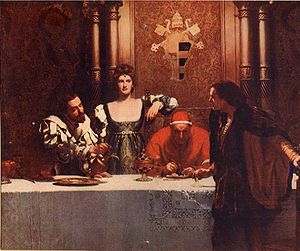
, then went to the University of Pisa
to study theology. As soon as he graduated from the university, his father made him a cardinal.
Cesare was suspected of murdering his brother, Giovanni, but there is no clear evidence that he committed this crime. However, Giovanni’s death cleared the path for Cesare to become a layman and gain the honors his brother received from their father, Pope Alexander VI. Although Cesare had been a cardinal, he left the holy orders to gain power and take over the position Giovanni once held – Cesare became a condottiero. He was finally married to French princess Charlotte d'Albret
.
After Alexander’s death in 1503, Cesare effected the choice of a next Pope. He needed a candidate who would not be a threat to his plans of creating his own principality in Central Italy
. Cesare’s candidate did become Pope; however, he also died a month after the selection. Cesare was now forced to support Giuliano della Rovere
. The cardinal promised Cesare that he could keep all of his titles and honors. Despite all of his promises, della Rovere betrayed him and became his fiercest enemy.
Cesare died in 1507, at Viana Castle in Navarre, Spain while besieging the rebellious army of Count de Lerin. The castle was held by Louis de Beaumont at the time it was besieged by Cesare Borgia and King John's army of 10,000 men in 1507. In order to attempt to breach the extremely strong, natural fortification of the castle, Cesare counted on a desperate surprise attack. However, he not only failed to take the castle but also was killed during the battle.
in 1493. It was a typical political marriage, however, the relationship was annulled in 1497, when Pope Alexander VI did not need the Sforzas any more. While terms of the divorce were being bargained, Lucrezia was resting in a convent. She was completely isolated from the world, and the only contact she had with the members of her family was through Perotto, a young chamberlain. Half a year later she attended a ceremony in which judges from Vatican stated that she was a virgin. The divorce could be permitted, since as a putative virgin Lucrezia could not have consummated her marriage with Giovanni. On the other hand, at the time of examination Lucrezia was pregnant, carrying a baby by Perotto. The child was born in secret, and given the name of Giovanni
. He was passed from one protector to another, and finally resided with Lucrezia as her half-brother.
Lucrezia’s second marriage, to young and wealthy Prince Alfonso
of Aragon, allowed the Borgias to form an alliance with another powerful family. However, this relationship did not last long either. Cesare wished to strengthen his relations with France and completely break off those with Kingdom of Naples
. As Alfonso's father
was the ruler of the Kingdom of Naples, the young husband was in great danger. Although the first attempt at murder did not succeed, Alfonso was eventually strangled in his own quarters.
The third and final husband of Lucrezia was Alfonso d'Este. Though there appeared to be an emotional connection between the couple, and Lucrezia became a beloved wife, she had a few affairs on the side. All of them eventually ended.
Lucrezia gave birth to many children; most of whom died soon after birth. When she died in 1519, she was buried in a tomb with her husband and one of her prematurely deceased children, Isabella Maria. Lucrezia Borgia died ten days after the death of her daughter, Isabella, of complications during childbirth.
. This was the era of many artists, writers and rulers who have influenced the modern age.
Gioffre Borgia (1482-1516), son of Pope Alexander VI and younger brother of Cesare Borgia and Lucrezia Borgia married Sancia (Sancha) of Aragon, daughter of Alfonso II of Naples, obtaining as dowry the both the Principality of Squillace (1494) and the Duchy of Alvito (1497).
Although Gioffre was deprived of Alvito after the death of Sancia in 1506, he managed to retain Squillace. He subsequently married Maria de Mila, and passed it on to their son Francesco Borgia.
The Borgia Princes were: Gioffre, Francesco, Giovanni, Pietro and finally Anna e Donna Antonia Borgia D’Aragona on whose death, in 1735, it passed to Bourbon Kings of the Two Sicily’s. Living either in Naples or Spain the Borgia’s ruled their fief through governors.
Not all of the Borgias were corrupt or violent. Francis Borgia
(1510–1572), a great-grandson of Pope Alexander VI, did not follow his relatives. He had fathered a number of children and after his wife died, Francisco determined to enter the Society of Jesus
, recently formed by Saint Ignatius of Loyola
. As a reward for his efforts, the Church canonized the Jesuit Francisco on 20 June 1670.
Pope Innocent X
(1574–1655) was the great-great-great-grandson of Pope Alexander VI. However, he was not as cruel as his ancestors. His surname was not Borgia, so the burdens of the past did not follow him during his papacy.
Another Borgian who lived after the Borgian era was Gaspar de Borja y Velasco
(1580–1645). Unlike many of his relatives, Gaspar preferred to use the Spanish spelling of Borgia: Borja. He was born at Villalpando
in Spain. He was related to both Pope Callixtus III and Pope Alexander VI, and some historians believe that Gaspar wished, like his relatives, to become Pope. He served as Primate of Spain
, Archbishop of Seville
, and Archbishop and viceroy of Naples.
" (also called the "Ballet of the Chestnuts") is considered one of the most disreputable balls of this kind. It was held on October 30, 1501. Not only Pope Alexander VI
was present, but also two of his children, Lucrezia
and Cesare
.
Rodrigo is also remembered for other crimes, many of them including torture
and execution
. The famous Florentine preacher Savonarola
was executed under Rodrigo's reign. He accused Alexander VI of corruption and called for his removal as Pope. Savonarola was tortured and then hanged and burned publicly.
Alexander VI is also remembered for bringing his mistresses to the papal court. One of them, Vanozza Cattanei
gave him four children, and another two were born by Giulia Farnese
. Alexander took Giulia as his mistress when she was a fifteen-year-old girl and he was over 60.
, he returned to Rome. Behind him, dragged in golden chains, was Caterina Sforza
, the Lady of two of the cities Cesare had conquered. She was imprisoned and held hostage in awful conditions. She would have died had the French not interceded for her release.
When Lucrezia’s second husband, Alfonso, the Duke of Bisceglie, was no longer important to the Borgias, Cesare strangled him (or had him strangled) when he was still recovering from another attempt of assassination on his life. The first attack was also most likely organised by Cesare and his men.
Between 1501 and 1503 Cesare hired Leonardo da Vinci
as military architect and engineer, which means that da Vinci helped him conquer and then fortify fortresses. It is said that Leonardo invented war machines for Cesare and da Vinci received protection in return. Cesare allowed Leonardo to have full control over all planned and ongoing construction in his domain. Thanks to Leonardo’s merits, he received a vineyard from the family, which he later had to abandon, because of the fall of the Borgia empire. When Leonardo completed his work for Cesare, he had difficulties finding another patron in Italy. Finally, Francis I of France
was able to convince him to enter his service, where Leonardo would work for the final three years of his life.
Some historians say that Cesare Borgia also murdered his brother Giovanni
; however there is no clear evidence that he actually did.
There is also the case of Perotto, Lucrezia's lover. When Cesare found out about Lucrezia’s pregnancy, he was so furious that he had the father of the child murdered. The body of Perotto (young chamberlain, the father of the child) was fished out of the Tiber. Also the body of a chambermaid was found in the river – because she had given the lovers a chance to meet in secret.
Both murders are believed to have been commissioned by Cesare.
Historian Johann Burchard
, a contemporary of Alexander VI, who lived in the Vatican, states about Cesare:
Spain
Spain , officially the Kingdom of Spain languages]] under the European Charter for Regional or Minority Languages. In each of these, Spain's official name is as follows:;;;;;;), is a country and member state of the European Union located in southwestern Europe on the Iberian Peninsula...
origin with the name stemming from the familial fief seat of Borja belonging to their Aragonese
Crown of Aragon
The Crown of Aragon Corona d'Aragón Corona d'Aragó Corona Aragonum controlling a large portion of the present-day eastern Spain and southeastern France, as well as some of the major islands and mainland possessions stretching across the Mediterranean as far as Greece...
Lords; they became prominent during the Renaissance
Renaissance
The Renaissance was a cultural movement that spanned roughly the 14th to the 17th century, beginning in Italy in the Late Middle Ages and later spreading to the rest of Europe. The term is also used more loosely to refer to the historical era, but since the changes of the Renaissance were not...
. The Borgias were patrons of the arts, and their support allowed many artists of the Renaissance to realize their potential. The most brilliant personalities of this era regularly visited their court.
The Borgias became prominent in ecclesiastical and political affairs in the 1400s and 1500s. Today they are remembered for their corrupt rule when one of them was pope
Pope
The Pope is the Bishop of Rome, a position that makes him the leader of the worldwide Catholic Church . In the Catholic Church, the Pope is regarded as the successor of Saint Peter, the Apostle...
. They have been accused of many different crimes, including adultery
Adultery
Adultery is sexual infidelity to one's spouse, and is a form of extramarital sex. It originally referred only to sex between a woman who was married and a person other than her spouse. Even in cases of separation from one's spouse, an extramarital affair is still considered adultery.Adultery is...
, simony
Simony
Simony is the act of paying for sacraments and consequently for holy offices or for positions in the hierarchy of a church, named after Simon Magus , who appears in the Acts of the Apostles 8:9-24...
, theft
Theft
In common usage, theft is the illegal taking of another person's property without that person's permission or consent. The word is also used as an informal shorthand term for some crimes against property, such as burglary, embezzlement, larceny, looting, robbery, shoplifting and fraud...
, rape
Rape
Rape is a type of sexual assault usually involving sexual intercourse, which is initiated by one or more persons against another person without that person's consent. The act may be carried out by physical force, coercion, abuse of authority or with a person who is incapable of valid consent. The...
, bribery
Bribery
Bribery, a form of corruption, is an act implying money or gift giving that alters the behavior of the recipient. Bribery constitutes a crime and is defined by Black's Law Dictionary as the offering, giving, receiving, or soliciting of any item of value to influence the actions of an official or...
, incest
Incest
Incest is sexual intercourse between close relatives that is usually illegal in the jurisdiction where it takes place and/or is conventionally considered a taboo. The term may apply to sexual activities between: individuals of close "blood relationship"; members of the same household; step...
, and murder (especially murder by arsenic
Arsenic
Arsenic is a chemical element with the symbol As, atomic number 33 and relative atomic mass 74.92. Arsenic occurs in many minerals, usually in conjunction with sulfur and metals, and also as a pure elemental crystal. It was first documented by Albertus Magnus in 1250.Arsenic is a metalloid...
poisoning). Because of their search for power, they made enemies of other powerful families such as the Medici and the Sforza
House of Sforza
Sforza was a ruling family of Renaissance Italy, based in Milan.-History:The dynasty was founded by Muzio Attendolo , called Sforza , a condottiero from Romagna serving the Angevin kings of Naples...
, as well as the influential Dominican friar Savonarola
Girolamo Savonarola
Girolamo Savonarola was an Italian Dominican friar, Scholastic, and an influential contributor to the politics of Florence from 1494 until his execution in 1498. He was known for his book burning, destruction of what he considered immoral art, and what he thought the Renaissance—which began in his...
.
Early history
The Borgias emerged from Aragonese Valencia in SpainSpain
Spain , officially the Kingdom of Spain languages]] under the European Charter for Regional or Minority Languages. In each of these, Spain's official name is as follows:;;;;;;), is a country and member state of the European Union located in southwestern Europe on the Iberian Peninsula...
. Alfons de Borja, later known as Pope Callixtus III
Pope Callixtus III
Pope Callixtus III , né Alfons de Borja, was Pope from April 8, 1455 to his death in 1458.-Biography:...
(1378 – 1458), was born in La Torreta, Canals
Canals, Valencia
Canals is a municipality in the comarca of Costera in the Valencian Community, Spain.Limits with l'Alcúdia de Crespins, Cerdà, la Granja de la Costera, Xàtiva, Llanera de Ranes, Montesa, Torrella and Vallés and with Aielo de Malferit and l'Olleria .- Geography :Situated in Montesa's valley, between...
, which was then situated in the Kingdom of Valencia
Kingdom of Valencia
The Kingdom of Valencia , located in the eastern shore of the Iberian Peninsula, was one of the component realms of the Crown of Aragon. When the Crown of Aragon merged by dynastic union with the Crown of Castile to form the Kingdom of Spain, the Kingdom of Valencia became a component realm of the...
. There were numerous unsubstantiated claims that the family was of Jewish origin. These underground rumours were propagated by, among others, Giuliano della Rovere, and the family were frequently described as marranos by political opponents: the rumours persisted in popular culture for centuries, listed as such for example in the Semi-Gotha of 1912.
Alfons de Borja worked as a professor of law at the University of Lleida
University of Lleida
The University of Lleida is a university based in Lleida , Spain. It was the first university in Catalonia and the whole Crown of Aragon...
and later on as a diplomat of the Kings of Aragon, before he finally became a cardinal. He was elected Pope Callixtus III in 1455, at an advanced age; his pontificate
Pontiff
A pontiff was, in Roman antiquity, a member of the principal college of priests . The term "pontiff" was later applied to any high or chief priest and, in ecclesiastical usage, to a bishop and more particularly to the Bishop of Rome, the Pope or "Roman Pontiff".-Etymology:The English term derives...
was expected to be rather short. He reigned as the pope for 3 years.
Rodrigo
Rodrigo BorgiaPope Alexander VI
Pope Alexander VI , born Roderic Llançol i Borja was Pope from 1492 until his death on 18 August 1503. He is one of the most controversial of the Renaissance popes, and his Italianized surname—Borgia—became a byword for the debased standards of the Papacy of that era, most notoriously the Banquet...
(1431 – 1503), one of Alfons’s nephews, was born in Xàtiva
Xàtiva
Xàtiva is a town in eastern Spain, in the province of Valencia, on the right bank of the river Albaida and at the junction of the Valencia–Murcia and Valencia Albacete railways....
, also in the Kingdom of Valencia
Kingdom of Valencia
The Kingdom of Valencia , located in the eastern shore of the Iberian Peninsula, was one of the component realms of the Crown of Aragon. When the Crown of Aragon merged by dynastic union with the Crown of Castile to form the Kingdom of Spain, the Kingdom of Valencia became a component realm of the...
. While a cardinal, he maintained an illicit relationship with Vanozza dei Cattanei
Vannozza dei Cattanei
Vannozza dei Cattanei was an Italian noblewoman from the House of Candia, who was one of the many mistresses of Cardinal Rodrigo Borgia, future Pope Alexander VI. Among them, she was the one whose relationship with him lasted the longest...
from the House of Candia
House of Candia
The House of Candia is a European dynastic house, created by a junior branch of the House of Anjou originally from "Castrum Candiaco" in the Dauphiné of the nobility of Savoy and Piemont...
, and they had four children: Cesare
Cesare Borgia
Cesare Borgia , Duke of Valentinois, was an Italian condottiero, nobleman, politician, and cardinal. He was the son of Pope Alexander VI and his long-term mistress Vannozza dei Cattanei. He was the brother of Lucrezia Borgia; Giovanni Borgia , Duke of Gandia; and Gioffre Borgia , Prince of Squillace...
, Giovanni
Giovanni Borgia (1474)
Giovanni Borgia, 2nd duke of Gandía was the son of Pope Alexander VI and the brother of Cesare Borgia, Gioffre Borgia, and Lucrezia Borgia. Giovanni, also known as Juan or Joan, was the second of the Pope's four children by Vanozza de' Catanei...
, Lucrezia
Lucrezia Borgia
Lucrezia Borgia [luˈkrɛtsia ˈbɔrʤa] was the illegitimate daughter of Rodrigo Borgia, the powerful Renaissance Valencian who later became Pope Alexander VI, and Vannozza dei Cattanei. Her brothers included Cesare Borgia, Giovanni Borgia, and Gioffre Borgia...
and Gioffre
Gioffre Borgia
Gioffre de Candia Borgia, in Italian, or Jofré Borja in Valencian, was the youngest son of Pope Alexander VI and Vannozza dei Cattanei, sibling to Lucrezia Borgia, Cesare Borgia and Giovanni Borgia....
. He also had children by women other than Vannozza; Giulia Farnese
Giulia Farnese
Giulia Farnese was mistress to Pope Alexander VI. She was known as Giulia la bella, meaning "Julia the beautiful", in Italian. Lorenzo Pucci described her as "most lovely to behold"...
was among his other mistresses. He was raised to the papal chair in 1492 and he chose the name of Alexander VI
Pope Alexander VI
Pope Alexander VI , born Roderic Llançol i Borja was Pope from 1492 until his death on 18 August 1503. He is one of the most controversial of the Renaissance popes, and his Italianized surname—Borgia—became a byword for the debased standards of the Papacy of that era, most notoriously the Banquet...
.
He was considered a good politician and diplomat, but he was also criticized for over-spending, simony
Simony
Simony is the act of paying for sacraments and consequently for holy offices or for positions in the hierarchy of a church, named after Simon Magus , who appears in the Acts of the Apostles 8:9-24...
and nepotism
Nepotism
Nepotism is favoritism granted to relatives regardless of merit. The word nepotism is from the Latin word nepos, nepotis , from which modern Romanian nepot and Italian nipote, "nephew" or "grandchild" are also descended....
. His main interests lay in acquiring more wealth, seducing women, and making his family as powerful as possible. He planned to establish an empire with the assistance of his second oldest son, Giovanni, who was appointed captain-general of the papal army
Gonfalonier of the Church
The Gonfalonier of the Church or Papal Gonfalonier was a military and political office of the Papal States. Originating from the use of the Papal banner during combat, the office later became largely ceremonial and political...
. Rodrigo had also honored his eldest son, Cesare, by nominating him cardinal when he was 18.
Alexander organized alliances through the marriages of his children. The Sforza family
House of Sforza
Sforza was a ruling family of Renaissance Italy, based in Milan.-History:The dynasty was founded by Muzio Attendolo , called Sforza , a condottiero from Romagna serving the Angevin kings of Naples...
, which comprised the Milanese faction, was at the time one of the most powerful in Europe. Alexander married Lucrezia to Giovanni Sforza
Giovanni Sforza
Giovanni Sforza d'Aragona was an Italian condottiero, lord of Pesaro and Gradara from 1483 until his death. He is best known as the first husband of Lucrezia Borgia...
; in so doing, he united the Borgia and Sforza families. He also found another way of establishing his position – he married his youngest son from Vannozza, Gioffre, to Sancia of Aragon of the Kingdom of Aragon and Naples
Kingdom of Aragon
The Kingdom of Aragon was a medieval and early modern kingdom in the Iberian Peninsula, corresponding to the modern-day autonomous community of Aragon, in Spain...
.
Rodrigo Borgia was said to have died in 1503 in Rome from a poisoned apple, but the actual cause of death was malarial fever
Malaria
Malaria is a mosquito-borne infectious disease of humans and other animals caused by eukaryotic protists of the genus Plasmodium. The disease results from the multiplication of Plasmodium parasites within red blood cells, causing symptoms that typically include fever and headache, in severe cases...
. His pontificate is frequently characterized in extremities – he is often said to have been the worst of all Popes. The era in which Alexander VI held supreme papal power was full of scandals, infringements and signs of moral offense among the highest authorities of the Latin Church, and whether he did any worse than many of his predecessors and successors has been questioned.
Cesare
Cesare's education was precisely planned by his father. Until his 12th birthday, he was educated by tutors in Rome. He studied law and the humanities at the University of PerugiaUniversity of Perugia
University of Perugia is a public-owned university based in Perugia, Italy. It was founded in 1308, as attested by the Bull issued by Pope Clement V certifying the birth of the Studium Generale....
, then went to the University of Pisa
University of Pisa
The University of Pisa , located in Pisa, Tuscany, is one of the oldest universities in Italy. It was formally founded on September 3, 1343 by an edict of Pope Clement VI, although there had been lectures on law in Pisa since the 11th century...
to study theology. As soon as he graduated from the university, his father made him a cardinal.
Cesare was suspected of murdering his brother, Giovanni, but there is no clear evidence that he committed this crime. However, Giovanni’s death cleared the path for Cesare to become a layman and gain the honors his brother received from their father, Pope Alexander VI. Although Cesare had been a cardinal, he left the holy orders to gain power and take over the position Giovanni once held – Cesare became a condottiero. He was finally married to French princess Charlotte d'Albret
Charlotte of Albret
Charlotte of Albret, suo jure Dame de Châlus, Duchess of Valentinois , also known as Charlotte d'Albret, was a wealthy French noblewoman of the Albret family. She was the sister of King John III of Navarre, and the wife of the notorious Cesare Borgia whom she married in 1499...
.
After Alexander’s death in 1503, Cesare effected the choice of a next Pope. He needed a candidate who would not be a threat to his plans of creating his own principality in Central Italy
Central Italy
Central Italy is one of the five official statistical regions of Italy used by the National Institute of Statistics , a first level NUTS region and a European Parliament constituency...
. Cesare’s candidate did become Pope; however, he also died a month after the selection. Cesare was now forced to support Giuliano della Rovere
Pope Julius II
Pope Julius II , nicknamed "The Fearsome Pope" and "The Warrior Pope" , born Giuliano della Rovere, was Pope from 1503 to 1513...
. The cardinal promised Cesare that he could keep all of his titles and honors. Despite all of his promises, della Rovere betrayed him and became his fiercest enemy.
Cesare died in 1507, at Viana Castle in Navarre, Spain while besieging the rebellious army of Count de Lerin. The castle was held by Louis de Beaumont at the time it was besieged by Cesare Borgia and King John's army of 10,000 men in 1507. In order to attempt to breach the extremely strong, natural fortification of the castle, Cesare counted on a desperate surprise attack. However, he not only failed to take the castle but also was killed during the battle.
Lucrezia
Lucrezia was 13 years old when her father married her to Giovanni SforzaGiovanni Sforza
Giovanni Sforza d'Aragona was an Italian condottiero, lord of Pesaro and Gradara from 1483 until his death. He is best known as the first husband of Lucrezia Borgia...
in 1493. It was a typical political marriage, however, the relationship was annulled in 1497, when Pope Alexander VI did not need the Sforzas any more. While terms of the divorce were being bargained, Lucrezia was resting in a convent. She was completely isolated from the world, and the only contact she had with the members of her family was through Perotto, a young chamberlain. Half a year later she attended a ceremony in which judges from Vatican stated that she was a virgin. The divorce could be permitted, since as a putative virgin Lucrezia could not have consummated her marriage with Giovanni. On the other hand, at the time of examination Lucrezia was pregnant, carrying a baby by Perotto. The child was born in secret, and given the name of Giovanni
Giovanni Borgia (1498)
Giovanni Borgia , the infans Romanus , was alleged to be the child of Lucrezia Borgia. Pope Alexander VI issued two papal bulls, both dated 1 September 1501, in each of which a different father is assigned to Giovanni Borgia, the second appearing to supplement and correct the first.The first of...
. He was passed from one protector to another, and finally resided with Lucrezia as her half-brother.
Lucrezia’s second marriage, to young and wealthy Prince Alfonso
Alfonso of Aragon
Alfonso of Aragon was the Duke of Bisceglie and Prince of Salerno, as the son of King Alfonso II of Naples by his mistress Truzia Gazzela ....
of Aragon, allowed the Borgias to form an alliance with another powerful family. However, this relationship did not last long either. Cesare wished to strengthen his relations with France and completely break off those with Kingdom of Naples
Kingdom of Naples
The Kingdom of Naples, comprising the southern part of the Italian peninsula, was the remainder of the old Kingdom of Sicily after secession of the island of Sicily as a result of the Sicilian Vespers rebellion of 1282. Known to contemporaries as the Kingdom of Sicily, it is dubbed Kingdom of...
. As Alfonso's father
Alfonso II of Naples
Alfonso II of Naples , also called Alfonso II d'Aragon, was King of Naples from 25 January 1494 to 22 February 1495 with the title King of Naples and Jerusalem...
was the ruler of the Kingdom of Naples, the young husband was in great danger. Although the first attempt at murder did not succeed, Alfonso was eventually strangled in his own quarters.
The third and final husband of Lucrezia was Alfonso d'Este. Though there appeared to be an emotional connection between the couple, and Lucrezia became a beloved wife, she had a few affairs on the side. All of them eventually ended.
Lucrezia gave birth to many children; most of whom died soon after birth. When she died in 1519, she was buried in a tomb with her husband and one of her prematurely deceased children, Isabella Maria. Lucrezia Borgia died ten days after the death of her daughter, Isabella, of complications during childbirth.
Other Borgias
The Borgian era, or the time period when the Borgia family had its greatest influence, started in the early 16th century, about the time of the death of Lucrezia in 1519. The Borgia family had influence during the age of the Renaissance and the beginning of the Age of DiscoveryAge of Discovery
The Age of Discovery, also known as the Age of Exploration and the Great Navigations , was a period in history starting in the early 15th century and continuing into the early 17th century during which Europeans engaged in intensive exploration of the world, establishing direct contacts with...
. This was the era of many artists, writers and rulers who have influenced the modern age.
Gioffre Borgia (1482-1516), son of Pope Alexander VI and younger brother of Cesare Borgia and Lucrezia Borgia married Sancia (Sancha) of Aragon, daughter of Alfonso II of Naples, obtaining as dowry the both the Principality of Squillace (1494) and the Duchy of Alvito (1497).
Although Gioffre was deprived of Alvito after the death of Sancia in 1506, he managed to retain Squillace. He subsequently married Maria de Mila, and passed it on to their son Francesco Borgia.
The Borgia Princes were: Gioffre, Francesco, Giovanni, Pietro and finally Anna e Donna Antonia Borgia D’Aragona on whose death, in 1735, it passed to Bourbon Kings of the Two Sicily’s. Living either in Naples or Spain the Borgia’s ruled their fief through governors.
Not all of the Borgias were corrupt or violent. Francis Borgia
Francis Borgia
Saint Francis Borgia, 4th duke of Gandía, 3rd Father General of the Jesuit Order, Grandee of Spain, was a Spanish Jesuit and third Superior General of the Society of Jesus. He was canonized on 20 June 1670.-Early life:He was born Francesco Borgia de Candia d'Aragon within the Duchy of Gandía,...
(1510–1572), a great-grandson of Pope Alexander VI, did not follow his relatives. He had fathered a number of children and after his wife died, Francisco determined to enter the Society of Jesus
Society of Jesus
The Society of Jesus is a Catholic male religious order that follows the teachings of the Catholic Church. The members are called Jesuits, and are also known colloquially as "God's Army" and as "The Company," these being references to founder Ignatius of Loyola's military background and a...
, recently formed by Saint Ignatius of Loyola
Ignatius of Loyola
Ignatius of Loyola was a Spanish knight from a Basque noble family, hermit, priest since 1537, and theologian, who founded the Society of Jesus and was its first Superior General. Ignatius emerged as a religious leader during the Counter-Reformation...
. As a reward for his efforts, the Church canonized the Jesuit Francisco on 20 June 1670.
Pope Innocent X
Pope Innocent X
Pope Innocent X , born Giovanni Battista Pamphilj , was Pope from 1644 to 1655. Born in Rome of a family from Gubbio in Umbria who had come to Rome during the pontificate of Pope Innocent IX, he graduated from the Collegio Romano and followed a conventional cursus honorum, following his uncle...
(1574–1655) was the great-great-great-grandson of Pope Alexander VI. However, he was not as cruel as his ancestors. His surname was not Borgia, so the burdens of the past did not follow him during his papacy.
Another Borgian who lived after the Borgian era was Gaspar de Borja y Velasco
Gaspar de Borja y Velasco
Gaspar de Borja y Velasco was a Spanish cardinal, ecclesiastic and politician. He belonged to the house of Borgia and served as Primate of Spain, Archbishop of Seville, Archbishop of Toledo and viceroy of Naples.-Family:Borja was born at Villalpando...
(1580–1645). Unlike many of his relatives, Gaspar preferred to use the Spanish spelling of Borgia: Borja. He was born at Villalpando
Villalpando
Villalpando is a municipality located in the province of Zamora, Castile and León, Spain. According to the 2004 census , the municipality has a population of 1,624 inhabitants. Formerly the town was reputed for its saltpans, the Salinas de Villapando....
in Spain. He was related to both Pope Callixtus III and Pope Alexander VI, and some historians believe that Gaspar wished, like his relatives, to become Pope. He served as Primate of Spain
Primacy of the Diocese of Toledo
The Primacy of the Archdiocese of Toledo is the primacy of the Diocese of Toledo over the other episcopal sees in the Roman Catholic Church in Spain. Now a purely honorary title, it was of major importance in the medieval and early modern era, with the see having a reputation of being the second...
, Archbishop of Seville
Roman Catholic Archdiocese of Seville
The Archdiocese of Seville is part of the Catholic Church in Seville, Spain. The Diocese of Seville was founded in the 3rd century. It was raised to the level of an archdiocese in the 4th century. The current Archbishop is Juan José Asenjo Pelegrina...
, and Archbishop and viceroy of Naples.
Controversies
Rodrigo
There are many controversies connected with Rodrigo. He was not only accused of simony and nepotism, but also of attending public orgies, along with his daughter Lucrezia. The "Banquet of ChestnutsBanquet of Chestnuts
The Banquet of Chestnuts, known more properly as the Ballet of Chestnuts, refers to a fête in Rome, and particularly to a supper held in the Papal Palace by Don Cesare Borgia, son of Pope Alexander VI on October 30, 1501...
" (also called the "Ballet of the Chestnuts") is considered one of the most disreputable balls of this kind. It was held on October 30, 1501. Not only Pope Alexander VI
Pope Alexander VI
Pope Alexander VI , born Roderic Llançol i Borja was Pope from 1492 until his death on 18 August 1503. He is one of the most controversial of the Renaissance popes, and his Italianized surname—Borgia—became a byword for the debased standards of the Papacy of that era, most notoriously the Banquet...
was present, but also two of his children, Lucrezia
Lucrezia Borgia
Lucrezia Borgia [luˈkrɛtsia ˈbɔrʤa] was the illegitimate daughter of Rodrigo Borgia, the powerful Renaissance Valencian who later became Pope Alexander VI, and Vannozza dei Cattanei. Her brothers included Cesare Borgia, Giovanni Borgia, and Gioffre Borgia...
and Cesare
Cesare Borgia
Cesare Borgia , Duke of Valentinois, was an Italian condottiero, nobleman, politician, and cardinal. He was the son of Pope Alexander VI and his long-term mistress Vannozza dei Cattanei. He was the brother of Lucrezia Borgia; Giovanni Borgia , Duke of Gandia; and Gioffre Borgia , Prince of Squillace...
.
Rodrigo is also remembered for other crimes, many of them including torture
Torture
Torture is the act of inflicting severe pain as a means of punishment, revenge, forcing information or a confession, or simply as an act of cruelty. Throughout history, torture has often been used as a method of political re-education, interrogation, punishment, and coercion...
and execution
Capital punishment
Capital punishment, the death penalty, or execution is the sentence of death upon a person by the state as a punishment for an offence. Crimes that can result in a death penalty are known as capital crimes or capital offences. The term capital originates from the Latin capitalis, literally...
. The famous Florentine preacher Savonarola
Girolamo Savonarola
Girolamo Savonarola was an Italian Dominican friar, Scholastic, and an influential contributor to the politics of Florence from 1494 until his execution in 1498. He was known for his book burning, destruction of what he considered immoral art, and what he thought the Renaissance—which began in his...
was executed under Rodrigo's reign. He accused Alexander VI of corruption and called for his removal as Pope. Savonarola was tortured and then hanged and burned publicly.
Alexander VI is also remembered for bringing his mistresses to the papal court. One of them, Vanozza Cattanei
Vannozza dei Cattanei
Vannozza dei Cattanei was an Italian noblewoman from the House of Candia, who was one of the many mistresses of Cardinal Rodrigo Borgia, future Pope Alexander VI. Among them, she was the one whose relationship with him lasted the longest...
gave him four children, and another two were born by Giulia Farnese
Giulia Farnese
Giulia Farnese was mistress to Pope Alexander VI. She was known as Giulia la bella, meaning "Julia the beautiful", in Italian. Lorenzo Pucci described her as "most lovely to behold"...
. Alexander took Giulia as his mistress when she was a fifteen-year-old girl and he was over 60.
Cesare
After Cesare became a leading general of the French King Louis XIILouis XII of France
Louis proved to be a popular king. At the end of his reign the crown deficit was no greater than it had been when he succeeded Charles VIII in 1498, despite several expensive military campaigns in Italy. His fiscal reforms of 1504 and 1508 tightened and improved procedures for the collection of taxes...
, he returned to Rome. Behind him, dragged in golden chains, was Caterina Sforza
Caterina Sforza
Caterina Sforza, Countess of Forlì was an Italian noblewoman, the illegitimate daughter of Galeazzo Maria Sforza, Duke of Milan and Lucrezia Landriani, the wife of the courtier Gian Piero Landriani, a close friend of the Duke...
, the Lady of two of the cities Cesare had conquered. She was imprisoned and held hostage in awful conditions. She would have died had the French not interceded for her release.
When Lucrezia’s second husband, Alfonso, the Duke of Bisceglie, was no longer important to the Borgias, Cesare strangled him (or had him strangled) when he was still recovering from another attempt of assassination on his life. The first attack was also most likely organised by Cesare and his men.
Between 1501 and 1503 Cesare hired Leonardo da Vinci
Leonardo da Vinci
Leonardo di ser Piero da Vinci was an Italian Renaissance polymath: painter, sculptor, architect, musician, scientist, mathematician, engineer, inventor, anatomist, geologist, cartographer, botanist and writer whose genius, perhaps more than that of any other figure, epitomized the Renaissance...
as military architect and engineer, which means that da Vinci helped him conquer and then fortify fortresses. It is said that Leonardo invented war machines for Cesare and da Vinci received protection in return. Cesare allowed Leonardo to have full control over all planned and ongoing construction in his domain. Thanks to Leonardo’s merits, he received a vineyard from the family, which he later had to abandon, because of the fall of the Borgia empire. When Leonardo completed his work for Cesare, he had difficulties finding another patron in Italy. Finally, Francis I of France
Francis I of France
Francis I was King of France from 1515 until his death. During his reign, huge cultural changes took place in France and he has been called France's original Renaissance monarch...
was able to convince him to enter his service, where Leonardo would work for the final three years of his life.
Some historians say that Cesare Borgia also murdered his brother Giovanni
Giovanni Borgia (1474)
Giovanni Borgia, 2nd duke of Gandía was the son of Pope Alexander VI and the brother of Cesare Borgia, Gioffre Borgia, and Lucrezia Borgia. Giovanni, also known as Juan or Joan, was the second of the Pope's four children by Vanozza de' Catanei...
; however there is no clear evidence that he actually did.
There is also the case of Perotto, Lucrezia's lover. When Cesare found out about Lucrezia’s pregnancy, he was so furious that he had the father of the child murdered. The body of Perotto (young chamberlain, the father of the child) was fished out of the Tiber. Also the body of a chambermaid was found in the river – because she had given the lovers a chance to meet in secret.
Both murders are believed to have been commissioned by Cesare.
Historian Johann Burchard
Johann Burchard
Johann Burchard, also spelled Johannes Burchart was an Alsatian-born priest and chronicler during the Italian Renaissance....
, a contemporary of Alexander VI, who lived in the Vatican, states about Cesare:
Lucrezia
She was rumored to be a notorious poisoner and she became famous for her skill at political intrigue. However, recently historians have started to look at her in a more positive light: she is often seen as a victim of her family’s deceptions. Many people believe that she was a criminal, but the crimes of her father, Rodrigo Borgia (Pope Alexander VI), and some of her other siblings including Cesare Borgia are what gave her a bad name.Borgia portraits
| Name | Portrait | Description |
|---|---|---|
| Alfons de Borja Pope Callixtus III Pope Callixtus III , né Alfons de Borja, was Pope from April 8, 1455 to his death in 1458.-Biography:... |
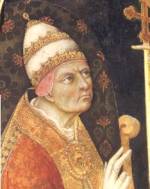 |
Pope Callixtus III, uncle of Rodrigo Borgia. |
| Rodrigo Borgia Pope Alexander VI Pope Alexander VI , born Roderic Llançol i Borja was Pope from 1492 until his death on 18 August 1503. He is one of the most controversial of the Renaissance popes, and his Italianized surname—Borgia—became a byword for the debased standards of the Papacy of that era, most notoriously the Banquet... |
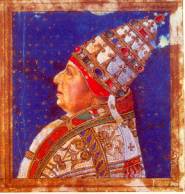 |
Pope Alexander VI, father of Lucrezia, Cesare, Giovanni and Gioffre. |
| Giovanni Borgia Giovanni Borgia (1474) Giovanni Borgia, 2nd duke of Gandía was the son of Pope Alexander VI and the brother of Cesare Borgia, Gioffre Borgia, and Lucrezia Borgia. Giovanni, also known as Juan or Joan, was the second of the Pope's four children by Vanozza de' Catanei... |
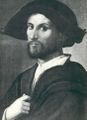 |
The oldest son of Rodrigo, Giovanni was murdered by an unknown perpetrator. |
| Cesare Borgia Cesare Borgia Cesare Borgia , Duke of Valentinois, was an Italian condottiero, nobleman, politician, and cardinal. He was the son of Pope Alexander VI and his long-term mistress Vannozza dei Cattanei. He was the brother of Lucrezia Borgia; Giovanni Borgia , Duke of Gandia; and Gioffre Borgia , Prince of Squillace... |
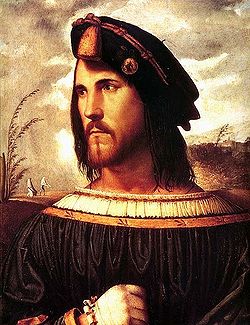 |
Son of Rodrigo. Took over Giovanni's responsibilities after his death. |
| Lucrezia Borgia Lucrezia Borgia Lucrezia Borgia [luˈkrɛtsia ˈbɔrʤa] was the illegitimate daughter of Rodrigo Borgia, the powerful Renaissance Valencian who later became Pope Alexander VI, and Vannozza dei Cattanei. Her brothers included Cesare Borgia, Giovanni Borgia, and Gioffre Borgia... |
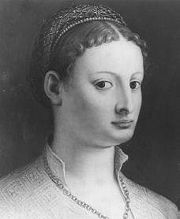 |
Daughter of Rodrigo. She was married three times, mostly to strengthen the position of her family. |
| Francisco Borgia Francis Borgia Saint Francis Borgia, 4th duke of Gandía, 3rd Father General of the Jesuit Order, Grandee of Spain, was a Spanish Jesuit and third Superior General of the Society of Jesus. He was canonized on 20 June 1670.-Early life:He was born Francesco Borgia de Candia d'Aragon within the Duchy of Gandía,... |
Saint Francis was the great-grandson of Pope Alexander VI. | |
| Innocent X Pope Innocent X Pope Innocent X , born Giovanni Battista Pamphilj , was Pope from 1644 to 1655. Born in Rome of a family from Gubbio in Umbria who had come to Rome during the pontificate of Pope Innocent IX, he graduated from the Collegio Romano and followed a conventional cursus honorum, following his uncle... |
Great-great-great-grandson of Pope Alexander VI. | |
| Gaspar de Borja y Velasco Gaspar de Borja y Velasco Gaspar de Borja y Velasco was a Spanish cardinal, ecclesiastic and politician. He belonged to the house of Borgia and served as Primate of Spain, Archbishop of Seville, Archbishop of Toledo and viceroy of Naples.-Family:Borja was born at Villalpando... |
Related to Pope Callixtus III and Pope Alexander VI. |
In popular culture
The Borgias were infamous in their time, and their lurid career has inspired numerous references in popular culture including novels, plays, operas, films, television series and video games.Novels
- The BorgiasThe BorgiasThe Borgias is a British television drama serial produced by the BBC in 1981, in association with the Second Network of the Italian RAI - TV ....
by Alexandre Dumas, pèreAlexandre Dumas, pèreAlexandre Dumas, , born Dumas Davy de la Pailleterie was a French writer, best known for his historical novels of high adventure which have made him one of the most widely read French authors in the world...
http://www.fullbooks.com/The-Borgias1.html - The Borgias and Their Enemies by Christopher Hibbert
- Assassin's Creed: RenaissanceAssassin's Creed: RenaissanceAssassin's Creed: Renaissance is a 2009 historical fantasy novel by Oliver Bowden based on the Assassin's Creed series written by and published by Penguin Books. It is a novelisation of the video game Assassin's Creed II...
by Oliver Bowden - Assassin's Creed: BrotherhoodAssassin's Creed: Brotherhood (novel)Assassin's Creed: Brotherhood is a 2010 historical fiction novel by Oliver Bowden. Brotherhood is the sequel to Assassin's Creed: Renaissance...
by Oliver Bowden - Prince of FoxesPrince of FoxesPrince of Foxes is a novel of historical fiction by Samuel Shellabarger, following the adventures of the fictional Andrea Orsini, a captain in the service of Cesare Borgia during his conquest of the Romagna.-Plot introduction:...
(1947) by Samuel ShellabargerSamuel ShellabargerSamuel Shellabarger was an American educator and author of both scholarly works and best-selling historical novels. He was born in Washington, D.C., on 18 May 1888, but his parents both died while he was a baby... - The Shame of Motley by Raphael Sabatini
- The Borgia Testament by Nigel BalchinNigel BalchinNigel Balchin was an English novelist and screenwriter particularly known for his novels written during and immediately after World War II: Darkness Falls From the Air, The Small Back Room and Mine Own Executioner.-Life:He was born Nigel Marlin Balchin in Potterne, Wiltshire to...
- The AntipopeThe AntipopeThe Antipope is a comic fantasy novel by the British author Robert Rankin. It is Rankin's first novel, and the first book in the Brentford Trilogy . The book was first published in 1981 by Pan Books, and from 1991 by Corgi books, an imprint of Transworld Publishers...
by Robert RankinRobert RankinRobert Fleming Rankin is a prolific British humorous novelist. Born in Parsons Green, London, he started writing in the late 1970s, and first entered the bestsellers lists with Snuff Fiction in 1999, by which time his previous eighteen books had sold around one million copies... - Borgia, the novel of a family by KlabundKlabundAlfred Henschke , better known by his pseudonym Klabund, was a German writer.-Life:Klabund, born Alfred Henschke in 1890 in Krossen, was the son of an apothecary. At the age of 16 he came down with tuberculosis, which the doctors initially misdiagnosed as pneumonia...
- The Borgia BrideThe Borgia BrideThe Borgia Bride is a novel by American writer Jeanne Kalogridis, portraying life in the Borgia dynasty through the eyes of Princess Sancha of Aragon.-Plot introduction:...
by Jeanne KalogridisJeanne KalogridisJeanne Kalogridis , also known by the pseudonym J.M. Dillard is an Greek-American writer of historical and horror fiction.She was born in Florida and studied at the University of South Florida, earning first a BA in Russian and then an MA in Linguistics... - The Medici SealThe Medici SealThe Medici Seal is a young adult novel written by Theresa Breslin, published in 2006. Set among the cultural life and political intrigues of Renaissance Italy, it is the story of a boy who initially calls himself Matteo and his master Leonardo da Vinci....
by Theresa BreslinTheresa BreslinTheresa Breslin is a Scottish author, primarily of young adult fiction. She began writing when working as a librarian, and has published 29 books, five of which have also been sold as audiobooks.... - The FamilyThe Family (novel)The Family is a 2001 novel by Mario Puzo.The novel is about Pope Alexander VI and his family. Puzo spent over twenty years working on the book off and on, while he wrote others. It was finished by his longtime girlfriend, Carol Gino...
by Mario PuzoMario PuzoMario Gianluigi Puzo was an American author and screenwriter, known for his novels about the Mafia, including The Godfather , which he later co-adapted into a film by Francis Ford Coppola... - Borja Papa (The Borgia Pope), by Joan Francesc Mira, is a fictional autobiography of Alexander VI.
- Queen of the SlayersQueen of the SlayersQueen of the Slayers is an original novel based on the American television series Buffy the Vampire Slayer.-Plot summary:Following the Hellmouth's closure, hundreds of potential slayers have been awakened. Buffy Summers hoped that overturning the Slayer's self-sacrifice would result in her earning...
by Nancy Holder - Gone With the WindGone with the WindThe slaves depicted in Gone with the Wind are primarily loyal house servants, such as Mammy, Pork and Uncle Peter, and these slaves stay on with their masters even after the Emancipation Proclamation of 1863 sets them free...
by Margaret MitchellMargaret MitchellMargaret Munnerlyn Mitchell was an American author and journalist. Mitchell won the Pulitzer Prize for Fiction in 1937 for her epic American Civil War era novel, Gone with the Wind, which was the only novel by Mitchell published during her lifetime.-Family:Margaret Mitchell was born in Atlanta,...
. A short passing reference in dialogue between two characters just before Lincoln declares war on the South. Scarlett dismisses the mention of their name simply on the basis of their being "foreigners." - Poison: A Novel of the Renaissance by Sara Poole
- The Borgia Betrayal by Sara Poole (sequel to "Poison").
- FrancescaFrancescaFrancesca or Franchesca is a female given name, derived from the Latin male name Franciscus meaning 'free'. It is widely used in most romance languages, including Italian, French and Catalan, and etymologists are unsure as to the place of its origin...
by Valentina Luellen - Madonna of the Seven Hills by Jean Plaidy (1958)
- Light on Lucrezia by Jean Plaidy (1958)
- Borgia by Michel ZevacoMichel ZevacoMichel Zevaco was a French journalist, novelist, publisher, film director, and anti-clerical as well as anarchist activist....
Comics
- I Borgia: La conquista del papato (Borgia 1: Blood for the Pope; 2004) by Alejandro JodorowskyAlejandro JodorowskyAlejandro Jodorowsky Prullansky, known as Alejandro Jodorowsky, is a Chilean filmmaker, playwright, actor, author, comic book writer and spiritual guru...
and Milo ManaraMilo ManaraMaurilio Manara – known professionally as Milo Manara – is an Italian comic book writer and artist, best known for his erotic approach to the medium.-Career:... - I Borgia: Il potere e l'incesto (Borgia 2: Power and Incest; 2006) by Alejandro Jodorowsky and Milo Manara
- I Borgia: III Le fiamme del rogo (Borgia 3: The Flames of the Pyre; 2008) by Alejandro Jodorowsky and Milo Manara
- Borgia: IV Tout est vanité (2010) by Alejandro Jodorowsky and Milo Manara
- CantarellaCantarella (manga)is a manga series by You Higuri, serialized in the Japanese monthly comic magazine Princess Gold Magazine and published in tankoubon format by Akita Shoten. The first volume was published March 2001 and there have been 12 volumes published in Japan as of July 2010...
, a manga by You HiguriYou Higuriis a Japanese shōjo and yaoi manga artist who has made several appearances at anime and manga conventions in the United States, as well as in Germany. Her first U.S. appearance was at the initial Yaoi-Con in San Francisco in 2001... - CesareCesare (manga)is a manga series by Souryo Fuyumi, serialized in the Japanese monthly comic magazine Morning and published in tankoubon format by Kodansha. The first volume was published in 2005 and there have been 7 volumes published in Japan so far...
by Fuyumi SoryoFuyumi Soryois a Japanese manga artist from Beppu, Oita, Japan. She is a graduate of the Oita prefectural Geijutsu Midorigaoka High School.She was born into the home of a master of the Kanze school of Noh. In her childhood she liked to draw pictures of horses and things but had no special interest in manga...
(mangaMangaManga is the Japanese word for "comics" and consists of comics and print cartoons . In the West, the term "manga" has been appropriated to refer specifically to comics created in Japan, or by Japanese authors, in the Japanese language and conforming to the style developed in Japan in the late 19th...
)
Plays
- Lucrezia Borgia, by Victor HugoVictor HugoVictor-Marie Hugo was a Frenchpoet, playwright, novelist, essayist, visual artist, statesman, human rights activist and exponent of the Romantic movement in France....
- The Tyrant: An Episode in the Career of Cesare Borgia, a Play in Four Acts (1925), by Raphael Sabatini
Music
- Dinastia Borgia Eglise et Pouvoir à la Renaissance: Compilation of music associated with the Borgias. Hespèrion XXIHespèrion XXIHespèrion XXI is an international early music ensemble. The group was formed in Basel, Switzerland in 1974 as Hespèrion XX by Spanish musical director Jordi Savall , Montserrat Figueras , Lorenzo Alpert , and Hopkinson Smith...
, Jordi SavallJordi SavallJordi Savall i Bernadet is a Catalan viol player, conductor and composer. He has been one of the major figures in the field of Western early music since the 1970s, largely responsible for bringing the viol back to life on the stage...
Films
- Prince of FoxesPrince of Foxes (film)Prince of Foxes is a 1949 film based on the Samuel Shellabarger novel Prince of Foxes. The movie starred Tyrone Power as Orsini and Orson Welles as Cesare Borgia.-Plot:...
(1949), starring Orson WellesOrson WellesGeorge Orson Welles , best known as Orson Welles, was an American film director, actor, theatre director, screenwriter, and producer, who worked extensively in film, theatre, television and radio...
(2006) - The Borgias (1981), BBCBBCThe British Broadcasting Corporation is a British public service broadcaster. Its headquarters is at Broadcasting House in the City of Westminster, London. It is the largest broadcaster in the world, with about 23,000 staff...
miniseries - Contes immoraux, a film by Walerian BorowczykWalerian BorowczykWalerian Borowczyk was a Polish film director. He directed 40 films between 1946 and 1988. His career as a film director was mainly in France.-Biography:...
. - The ConclaveThe ConclaveThe Conclave is a 2006 Canadian/German film production directed by Christoph Schrewe. The script was written by Paul Donovan.-Plot:The plot centers around the conclave of 1458...
, (2006), a film by Paul DonovanPaul Donovan (writer)Paul Donovan is a Canadian television and film writer, director and producer best known as the creator of the science-fiction TV series, LEXX. He co-founded Salter Street Films with his brother Michael Donovan....
. - Assassin's Creed: LineageAssassin's Creed: LineageAssassin's Creed: Lineage is a series of three short films based on the Assassin's Creed II video game. The films are made by Ubisoft and the first episode was released on October 26, 2009 on YouTube...
(2009) - The Godfather: Part III (1990), Michael Corleone exclaims "The Borgias!" in reference to the corrupt Clergy
Television
- BorgiaBorgia (TV series)Borgia is a historical fiction television series created by Tom Fontana. The series is a French/German production and will recount the Borgia family's rise to power and subsequent domination of the Vatican during the Renaissance.-Production:...
(2011), Canal + series - The BorgiasThe Borgias (2011 TV series)The Borgias is a 2011 historical fiction television series created by Neil Jordan.The series is based on the Borgia family, an Italian dynasty of Spanish origin, and stars Jeremy Irons as Pope Alexander VI with David Oakes, François Arnaud, Holliday Grainger and Aidan Alexander as Juan, Cesare,...
(2011), Showtime series - The Borgias (1981), BBC TwoBBC TwoBBC Two is the second television channel operated by the British Broadcasting Corporation in the United Kingdom. It covers a wide range of subject matter, but tending towards more 'highbrow' programmes than the more mainstream and popular BBC One. Like the BBC's other domestic TV and radio...
series
Video games
- Assassin's Creed IIAssassin's Creed IIAssassin's Creed II is a historical third-person action-adventure video game developed by Ubisoft Montreal and published by Ubisoft for PlayStation 3, Xbox 360, Microsoft Windows and Mac OS X. It is the second video game installment of the Assassin's Creed series, and is a sequel to the 2007 video...
(2009), UbisoftUbisoftUbisoft Entertainment S.A. is a major French video game publisher and developer, with headquarters in Montreuil, France. The company has a worldwide presence with 25 studios in 17 countries and subsidiaries in 26 countries.... - Assassin's Creed II: Discovery (2009), Ubisoft
- Assassin's Creed: BrotherhoodAssassin's Creed: BrotherhoodAssassin's Creed: Brotherhood is a historical third person, stealth action-adventure video game developed by Ubisoft for PlayStation 3, Xbox 360, Microsoft Windows and Mac OS X. It was released for PlayStation 3 and Xbox 360 in November 2010, Microsoft Windows in March 2011 and Mac OS X in May 2011...
(2010), Ubisoft
External links
- http://www.britannica.com/EBchecked/topic/74149/Borgia-Family
- http://www.yesnet.yk.ca/schools/projects/renaissance/borgia.html
- http://www.tennapel.net/borgia/
- http://centropolis.homestead.com/SC_Library.html
- http://sites.google.com/site/diarioborjaborgia/Home
- 1494: How a Family Feud in Medieval Spain Divided the world in Half