


Biological interaction

Encyclopedia
Biological interactions are the effects organism
s in a community
have on one another. In the natural world no organism exists in absolute isolation, and thus every organism must interact with the environment and other organisms. An organism's interactions with its environment are fundamental to the survival of that organism and the functioning of the ecosystem as a whole.
 In ecology
, biological interactions can involve individuals of the same species (intraspecific interactions) or individuals of different species (interspecific interactions). These can be further classified by either the mechanism of the interaction or the strength, duration and direction of their effects. Species may interact once in a generation (e.g. pollination
) or live completely within another (e.g. endosymbiosis). Effects range from consumption of another individual (predation
, herbivory
, or cannibalism
), to mutual benefit (mutualism). Interactions need not be direct; individuals may affect each other indirectly through intermediaries such as shared resources or common enemies.
Terms which explicitly indicate the quality of benefit or harm in terms of fitness
experienced by participants in an interaction are listed below. There are six possible combinations, ranging from mutually beneficial through neutral to mutually harmful interactions. The level of benefit or harm is continuous and not discrete, such that an interaction may be trivially harmful through to deadly, for example. It is important to note that these interactions are not always static. In many cases, two species will interact differently under different conditions. This is particularly true in, but not limited to, cases where species have multiple, drastically different life stages.
of interactions presented by ecosystems, one cannot assert positively that there is absolutely no competition between or benefit to either species. Since true neutralism is rare or nonexistent, its usage is often extended to situations where interactions are merely insignificant or negligible.
in which a product of one organism has a negative effect on another organism.
It is specifically a population interaction in which one organism is harmed, while the other is unaffected, and not benefited.
Usually this occurs when one organism
exudes a chemical compound as part of its normal metabolism that is detrimental to another organism.
The bread mold penicillium
is a common example of this; penicillium secrete penicillin, a chemical that kills bacteria
. A second example is the black walnut tree (Juglansnigra), which secrete juglone
, a chemical that harms or kills some species of neighboring plants, from its roots. This interaction may still increase the fitness of the non-harmed organism though, by removing competition and allowing it access to greater scarce resources. In this sense the impeding organism can be said to be negatively affected by the other's very existence, making it a +/- interaction
. A third simple example is when sheep or cattle make trails in grass that they trample on, and without realizing, they are killing the grass.
Examples of bacterial interference:
- The inhibition of growth, for example the attine ants (ants Belonging to a New World tribe) are able to take advantage of an amensalistic relationship between an actinomycete and the parasitic fungi Escovopsis. This amensalistic relationship to enable the ant mutualism with another maintains a fungal species, Leucocoprini. Amazingly, these ants cultivate a garden of their own Leucocoprini for nourishment. To prevent the parasitic fungus decimating their Escovopsis from fungal garden, the ants also promote the growth of an actinomycete of the genus Pseudonocardia s, which produce an antimicrobial compound inhibits that the growth of Escovopsis.
- The bactericidal activity, is the bread mold Penicillium a common example of this; penicillium secrete penicillin to that chemical kills bacteria.
However, new findings demonstrate a new mechanism distinct from all known mechanisms of bacterial interference that we call interspecific molecule synergy. This mechanism is based on the evidence that there are molecules from different species which have a synergistic relationship and end up having a bactericidal effect on some species which do not have when acting independently.
This mechanism is based on the effects of protein epiP secreted by inhibitory strains of S.epidermidis which impairs the formation of biofilms by S. aureus
and which can even destroy S. aureus biofilms. However, epiP has no bactericidal activity against S.aureus when working alone. Furthermore, epiP establishes a synergy with hBD2(human beta-defensin 2),a protein present in the human immune system. Working together they are able to kill S. aureus. However, hBD2 has no bactericidal activity against S. aureus when working alone, thus the bactericidal activity is only achieved when two molecules from two different species cooperate against a third species. S. aureus resides in the nasal cavities of many humans from where it can cause severe inflammation that can lead to diseases such as pneumonia, endocarditic and septicemia. Thanks to this cooperation mechanism between S. epidermidis and humans the development of disease can be prevented.
Competition is a mutually detrimental interaction between individuals, populations or species, but rarely between clade
s.
Synnecrosis is a particular case in which the interaction is so mutually detrimental that it results in death
, as in the case of some parasitic relationships. It is a rare and necessarily short-lived condition as evolution selects against it. The term is seldom used.
 In antagonistic interactions one species benefits at the expense of another. Predation is an interaction between organisms in which one organism captures biomass
from another. It is often used as a synonym for carnivory
but in its widest definition includes all forms of one organism eating another, regardless of trophic level
(e.g. herbivory), closeness of association (e.g. parasitism
and parasitoid
ism) and harm done to prey (e.g. grazing
). Other interactions that cannot be classed as predation however are still possible, such as Batesian mimicry
, where an organism bears a superficial similarity of at least one sort, such as a harmless plant coming to mimic a poisonous one. Intraguild predation
occurs when an organism preys upon another of different species but at the same trophic level (e.g., coyotes kill and ingest gray foxes in southern California).
, niche separation, metapopulation
dynamics) has focused on negative interactions such as predation and competition, but positive interactions (facilitation) are receiving increasing focus in ecological research.
living with a shark. Remoras eat leftover food from the shark. The shark is not affected in the process as remoras eat only leftover food of the shark which doesn't deplete the shark's resources.
 Mutualism is an interaction between two or more species, where species derive a mutual benefit, for example an increased carrying capacity
. Similar interactions within a species are known as co-operation
. Mutualism may be classified in terms of the closeness of association, the closest being symbiosis, which is often confused with mutualism. One or both species involved in the interaction may be obligate, meaning they cannot survive in the short or long term without the other species. Though mutualism has historically received less attention than other interactions such as predation, it is very important subject in ecology. Examples include cleaner fish
, pollination
and seed dispersal
, gut flora
and nitrogen fixation
by fungi.
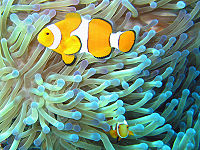 The term symbiosis can be used to describe various degrees of close relationship between organisms of different species. Sometimes it is used only for cases where both organisms benefit, sometimes it is used more generally to describe all varieties of relatively tight relationships, i.e. even parasitism, but not predation. Some even go so far as to use it to describe predation. It can be used to describe relationships where one organism lives on or in another, or it can be used to describe cases where organisms are related by mutual stereotypic behaviors.
In either case symbiosis is much more common in the living world and much more important than is generally assumed. Almost every organism has many internal parasites. A large percentage of herbivores have mutualistic gut fauna that help them digest plant matter, which is more difficult to digest than animal prey. Coral
reefs are the result of mutalisms between coral organisms and various types of algae that live inside them. Most land plants and thus, one might say, the very existence of land ecosystems rely on mutualisms between the plants which fix
carbon from the air, and Mycorrhyzal fungi which help in extracting minerals from the ground. The evolution of all eukaryotes (plants, animals, fungi, protist
s) is believed to have resulted from a symbiosis between various sorts of bacteria: endosymbiotic theory
.
 Competition can be defined as an interaction between organism
s or species, in which the fitness
of one is lowered by the presence of another. Limited
supply of at least one resource (such as food
, water
, and territory
) used by both usually facilitates this type of interaction, although the competition may also exist over other 'amenities', such as females for reproduction (in case of male organisms of the same species). Competition is one of many interacting biotic and abiotic factors that affect community
structure. Competition among members of the same species is known as intraspecific competition
, while competition between individuals of different species is known as interspecific competition
.
Interspecific competition is normally not as fierce as intraspecific competition, unless in case of a sudden drastic change. However, it is the most conspicuous competition in grasslands, where, for example, cheetahs and hyenas are often killed by lion prides.
Competition is not always a straightforward, direct interaction either, and can occur in both a direct and indirect fashion.
Competition between species at the same trophic level of an ecosystem, who have common predators, increases drastically if the frequency of the common predator in the community
is decreased by a large margin. The magnitude of competition therefore depends on many factors in the same ecosystem.
According to the competitive exclusion principle
, species less suited to compete for resources should either adapt
or die out
. According to evolutionary theory, this competition within and between species for resources plays a critical role in natural selection
.
Organism
In biology, an organism is any contiguous living system . In at least some form, all organisms are capable of response to stimuli, reproduction, growth and development, and maintenance of homoeostasis as a stable whole.An organism may either be unicellular or, as in the case of humans, comprise...
s in a community
Community (ecology)
In ecology, a community is an assemblage of two or more populations of different species occupying the same geographical area. The term community has a variety of uses...
have on one another. In the natural world no organism exists in absolute isolation, and thus every organism must interact with the environment and other organisms. An organism's interactions with its environment are fundamental to the survival of that organism and the functioning of the ecosystem as a whole.
Ecology
Ecology is the scientific study of the relations that living organisms have with respect to each other and their natural environment. Variables of interest to ecologists include the composition, distribution, amount , number, and changing states of organisms within and among ecosystems...
, biological interactions can involve individuals of the same species (intraspecific interactions) or individuals of different species (interspecific interactions). These can be further classified by either the mechanism of the interaction or the strength, duration and direction of their effects. Species may interact once in a generation (e.g. pollination
Pollination
Pollination is the process by which pollen is transferred in plants, thereby enabling fertilisation and sexual reproduction. Pollen grains transport the male gametes to where the female gamete are contained within the carpel; in gymnosperms the pollen is directly applied to the ovule itself...
) or live completely within another (e.g. endosymbiosis). Effects range from consumption of another individual (predation
Predation
In ecology, predation describes a biological interaction where a predator feeds on its prey . Predators may or may not kill their prey prior to feeding on them, but the act of predation always results in the death of its prey and the eventual absorption of the prey's tissue through consumption...
, herbivory
Herbivore
Herbivores are organisms that are anatomically and physiologically adapted to eat plant-based foods. Herbivory is a form of consumption in which an organism principally eats autotrophs such as plants, algae and photosynthesizing bacteria. More generally, organisms that feed on autotrophs in...
, or cannibalism
Cannibalism
Cannibalism is the act or practice of humans eating the flesh of other human beings. It is also called anthropophagy...
), to mutual benefit (mutualism). Interactions need not be direct; individuals may affect each other indirectly through intermediaries such as shared resources or common enemies.
Interactions categorized by effect
EWLINE
|
|||||||||||||||||||||
| Some types of relationships listed by the effect they have on each partner. '0' is no effect, '-' is detrimental, and '+' is beneficial. |
Terms which explicitly indicate the quality of benefit or harm in terms of fitness
Fitness (biology)
Fitness is a central idea in evolutionary theory. It can be defined either with respect to a genotype or to a phenotype in a given environment...
experienced by participants in an interaction are listed below. There are six possible combinations, ranging from mutually beneficial through neutral to mutually harmful interactions. The level of benefit or harm is continuous and not discrete, such that an interaction may be trivially harmful through to deadly, for example. It is important to note that these interactions are not always static. In many cases, two species will interact differently under different conditions. This is particularly true in, but not limited to, cases where species have multiple, drastically different life stages.
Neutralism
Neutralism describes the relationship between two species which interact but do not affect each other. It describes interactions where the fitness of one species has absolutely no effect whatsoever on that of the other. True neutralism is extremely unlikely or even impossible to prove. When dealing with the complex networksComplex system
A complex system is a system composed of interconnected parts that as a whole exhibit one or more properties not obvious from the properties of the individual parts....
of interactions presented by ecosystems, one cannot assert positively that there is absolutely no competition between or benefit to either species. Since true neutralism is rare or nonexistent, its usage is often extended to situations where interactions are merely insignificant or negligible.
Amensalism
Amensalism is a relationshipRelationship
Relationship or relationships may refer to:* Interpersonal relationship* Intimate relationship* In mathematics and statistics:** Binary relation** Causal relationship** Correlation and dependence** Direct relationship** Inverse relationship...
in which a product of one organism has a negative effect on another organism.
It is specifically a population interaction in which one organism is harmed, while the other is unaffected, and not benefited.
Usually this occurs when one organism
Organism
In biology, an organism is any contiguous living system . In at least some form, all organisms are capable of response to stimuli, reproduction, growth and development, and maintenance of homoeostasis as a stable whole.An organism may either be unicellular or, as in the case of humans, comprise...
exudes a chemical compound as part of its normal metabolism that is detrimental to another organism.
The bread mold penicillium
Penicillium
Penicillium is a genus of ascomycetous fungi of major importance in the natural environment as well as food and drug production. Members of the genus produce penicillin, a molecule that is used as an antibiotic, which kills or stops the growth of certain kinds of bacteria inside the body...
is a common example of this; penicillium secrete penicillin, a chemical that kills bacteria
Bacteria
Bacteria are a large domain of prokaryotic microorganisms. Typically a few micrometres in length, bacteria have a wide range of shapes, ranging from spheres to rods and spirals...
. A second example is the black walnut tree (Juglansnigra), which secrete juglone
Juglone
Juglone, also called 5-hydroxy-1,4-naphthalenedione or 5-hydroxynaphthoquinone, is an organic compound with the molecular formula C10H6O3. In the food industry, juglone is also known as C.I. Natural Brown 7 and C.I. 75500...
, a chemical that harms or kills some species of neighboring plants, from its roots. This interaction may still increase the fitness of the non-harmed organism though, by removing competition and allowing it access to greater scarce resources. In this sense the impeding organism can be said to be negatively affected by the other's very existence, making it a +/- interaction
Interaction
Interaction is a kind of action that occurs as two or more objects have an effect upon one another. The idea of a two-way effect is essential in the concept of interaction, as opposed to a one-way causal effect...
. A third simple example is when sheep or cattle make trails in grass that they trample on, and without realizing, they are killing the grass.
Examples of bacterial interference:
- The inhibition of growth, for example the attine ants (ants Belonging to a New World tribe) are able to take advantage of an amensalistic relationship between an actinomycete and the parasitic fungi Escovopsis. This amensalistic relationship to enable the ant mutualism with another maintains a fungal species, Leucocoprini. Amazingly, these ants cultivate a garden of their own Leucocoprini for nourishment. To prevent the parasitic fungus decimating their Escovopsis from fungal garden, the ants also promote the growth of an actinomycete of the genus Pseudonocardia s, which produce an antimicrobial compound inhibits that the growth of Escovopsis.
- The bactericidal activity, is the bread mold Penicillium a common example of this; penicillium secrete penicillin to that chemical kills bacteria.
However, new findings demonstrate a new mechanism distinct from all known mechanisms of bacterial interference that we call interspecific molecule synergy. This mechanism is based on the evidence that there are molecules from different species which have a synergistic relationship and end up having a bactericidal effect on some species which do not have when acting independently.
This mechanism is based on the effects of protein epiP secreted by inhibitory strains of S.epidermidis which impairs the formation of biofilms by S. aureus
S. aureus
S. aureus may refer to:* Scleropages aureus, a proposed species of the Asian arowana, a fish species native to Southeast Asia* Senecio aureus, the golden ragwort, a perennial flowering plant species native to eastern North America...
and which can even destroy S. aureus biofilms. However, epiP has no bactericidal activity against S.aureus when working alone. Furthermore, epiP establishes a synergy with hBD2(human beta-defensin 2),a protein present in the human immune system. Working together they are able to kill S. aureus. However, hBD2 has no bactericidal activity against S. aureus when working alone, thus the bactericidal activity is only achieved when two molecules from two different species cooperate against a third species. S. aureus resides in the nasal cavities of many humans from where it can cause severe inflammation that can lead to diseases such as pneumonia, endocarditic and septicemia. Thanks to this cooperation mechanism between S. epidermidis and humans the development of disease can be prevented.
Competition
Competition is a mutually detrimental interaction between individuals, populations or species, but rarely between clade
Clade
A clade is a group consisting of a species and all its descendants. In the terms of biological systematics, a clade is a single "branch" on the "tree of life". The idea that such a "natural group" of organisms should be grouped together and given a taxonomic name is central to biological...
s.
Synnecrosis is a particular case in which the interaction is so mutually detrimental that it results in death
Death
Death is the permanent termination of the biological functions that sustain a living organism. Phenomena which commonly bring about death include old age, predation, malnutrition, disease, and accidents or trauma resulting in terminal injury....
, as in the case of some parasitic relationships. It is a rare and necessarily short-lived condition as evolution selects against it. The term is seldom used.
Antagonism
Biomass (ecology)
Biomass, in ecology, is the mass of living biological organisms in a given area or ecosystem at a given time. Biomass can refer to species biomass, which is the mass of one or more species, or to community biomass, which is the mass of all species in the community. It can include microorganisms,...
from another. It is often used as a synonym for carnivory
Carnivore
A carnivore meaning 'meat eater' is an organism that derives its energy and nutrient requirements from a diet consisting mainly or exclusively of animal tissue, whether through predation or scavenging...
but in its widest definition includes all forms of one organism eating another, regardless of trophic level
Trophic level
The trophic level of an organism is the position it occupies in a food chain. The word trophic derives from the Greek τροφή referring to food or feeding. A food chain represents a succession of organisms that eat another organism and are, in turn, eaten themselves. The number of steps an organism...
(e.g. herbivory), closeness of association (e.g. parasitism
Parasitism
Parasitism is a type of symbiotic relationship between organisms of different species where one organism, the parasite, benefits at the expense of the other, the host. Traditionally parasite referred to organisms with lifestages that needed more than one host . These are now called macroparasites...
and parasitoid
Parasitoid
A parasitoid is an organism that spends a significant portion of its life history attached to or within a single host organism in a relationship that is in essence parasitic; unlike a true parasite, however, it ultimately sterilises or kills, and sometimes consumes, the host...
ism) and harm done to prey (e.g. grazing
Grazing
Grazing generally describes a type of feeding, in which a herbivore feeds on plants , and also on other multicellular autotrophs...
). Other interactions that cannot be classed as predation however are still possible, such as Batesian mimicry
Batesian mimicry
Batesian mimicry is a form of mimicry typified by a situation where a harmless species has evolved to imitate the warning signals of a harmful species directed at a common predator...
, where an organism bears a superficial similarity of at least one sort, such as a harmless plant coming to mimic a poisonous one. Intraguild predation
Intraguild predation
Intraguild predation, or IGP, is the killing and eating of potential competitors. This interaction represents a combination of predation and competition, because both species utilize the same prey resources and also benefit from preying upon one another...
occurs when an organism preys upon another of different species but at the same trophic level (e.g., coyotes kill and ingest gray foxes in southern California).
Ecological facilitation
The following two interactions can be classed as facilitative. Facilitation describes species interactions that benefit at least one of the participants and cause no harm to either. Facilitations can be categorized as mutualisms, in which both species benefit, or commensalisms, in which one species benefits and the other is unaffected. Much of classic ecological theory (e.g., natural selectionNatural selection
Natural selection is the nonrandom process by which biologic traits become either more or less common in a population as a function of differential reproduction of their bearers. It is a key mechanism of evolution....
, niche separation, metapopulation
Metapopulation
A metapopulation consists of a group of spatially separated populations of the same species which interact at some level. The term metapopulation was coined by Richard Levins in 1970 to describe a model of population dynamics of insect pests in agricultural fields, but the idea has been most...
dynamics) has focused on negative interactions such as predation and competition, but positive interactions (facilitation) are receiving increasing focus in ecological research.
Commensalism
Commensalism benefits one organism and the other organism is neither benefited nor harmed. It occurs when one organism takes benefits by interacting with another organism by which the host organism is not affected. A good example is a remoraRemora
The remora , sometimes called a suckerfish or sharksucker, is an elongated, brown fish in the order Perciformes and family Echeneidae...
living with a shark. Remoras eat leftover food from the shark. The shark is not affected in the process as remoras eat only leftover food of the shark which doesn't deplete the shark's resources.
Mutualism
Carrying capacity
The carrying capacity of a biological species in an environment is the maximum population size of the species that the environment can sustain indefinitely, given the food, habitat, water and other necessities available in the environment...
. Similar interactions within a species are known as co-operation
Co-operation (evolution)
Co-operation or co-operative behaviours are terms used to describe behaviours by organisms which are beneficial to other organisms, and are selected for on that basis. Under this definition, altruism is a form of co-operation in which there is no direct benefit to the actor...
. Mutualism may be classified in terms of the closeness of association, the closest being symbiosis, which is often confused with mutualism. One or both species involved in the interaction may be obligate, meaning they cannot survive in the short or long term without the other species. Though mutualism has historically received less attention than other interactions such as predation, it is very important subject in ecology. Examples include cleaner fish
Cleaner fish
Cleaner fish are fish that provide a service to other fish species by removing dead skin and ectoparasites. This is an example of mutualism, an ecological interaction that benefits both parties involved. A wide variety of fishes have been observed to display cleaning behaviors including wrasses,...
, pollination
Pollination
Pollination is the process by which pollen is transferred in plants, thereby enabling fertilisation and sexual reproduction. Pollen grains transport the male gametes to where the female gamete are contained within the carpel; in gymnosperms the pollen is directly applied to the ovule itself...
and seed dispersal
Seed dispersal
Seed dispersal is the movement or transport of seeds away from the parent plant. Plants have limited mobility and consequently rely upon a variety of dispersal vectors to transport their propagules, including both abiotic and biotic vectors. Seeds can be dispersed away from the parent plant...
, gut flora
Gut flora
Gut flora consists of microorganisms that live in the digestive tracts of animals and is the largest reservoir of human flora. In this context, gut is synonymous with intestinal, and flora with microbiota and microflora....
and nitrogen fixation
Nitrogen fixation
Nitrogen fixation is the natural process, either biological or abiotic, by which nitrogen in the atmosphere is converted into ammonia . This process is essential for life because fixed nitrogen is required to biosynthesize the basic building blocks of life, e.g., nucleotides for DNA and RNA and...
by fungi.
Symbiosis
In either case symbiosis is much more common in the living world and much more important than is generally assumed. Almost every organism has many internal parasites. A large percentage of herbivores have mutualistic gut fauna that help them digest plant matter, which is more difficult to digest than animal prey. Coral
Coral
Corals are marine animals in class Anthozoa of phylum Cnidaria typically living in compact colonies of many identical individual "polyps". The group includes the important reef builders that inhabit tropical oceans and secrete calcium carbonate to form a hard skeleton.A coral "head" is a colony of...
reefs are the result of mutalisms between coral organisms and various types of algae that live inside them. Most land plants and thus, one might say, the very existence of land ecosystems rely on mutualisms between the plants which fix
Carbon fixation
In biology, carbon fixation is the reduction of carbon dioxide to organic compounds by living organisms. The obvious example is photosynthesis. Carbon fixation requires both a source of energy such as sunlight, and an electron donor such as water. All life depends on fixed carbon. Organisms that...
carbon from the air, and Mycorrhyzal fungi which help in extracting minerals from the ground. The evolution of all eukaryotes (plants, animals, fungi, protist
Protist
Protists are a diverse group of eukaryotic microorganisms. Historically, protists were treated as the kingdom Protista, which includes mostly unicellular organisms that do not fit into the other kingdoms, but this group is contested in modern taxonomy...
s) is believed to have resulted from a symbiosis between various sorts of bacteria: endosymbiotic theory
Endosymbiotic theory
The endosymbiotic theory concerns the mitochondria, plastids , and possibly other organelles of eukaryotic cells. According to this theory, certain organelles originated as free-living bacteria that were taken inside another cell as endosymbionts...
.
Competition
Organism
In biology, an organism is any contiguous living system . In at least some form, all organisms are capable of response to stimuli, reproduction, growth and development, and maintenance of homoeostasis as a stable whole.An organism may either be unicellular or, as in the case of humans, comprise...
s or species, in which the fitness
Fitness (biology)
Fitness is a central idea in evolutionary theory. It can be defined either with respect to a genotype or to a phenotype in a given environment...
of one is lowered by the presence of another. Limited
Limiting factor
A limiting factor or limiting resource is a factor that controls a process, such as organism growth or species population, size, or distribution. The availability of food, predation pressure, or availability of shelter are examples of factors that could be limiting for an organism...
supply of at least one resource (such as food
Food
Food is any substance consumed to provide nutritional support for the body. It is usually of plant or animal origin, and contains essential nutrients, such as carbohydrates, fats, proteins, vitamins, or minerals...
, water
Water
Water is a chemical substance with the chemical formula H2O. A water molecule contains one oxygen and two hydrogen atoms connected by covalent bonds. Water is a liquid at ambient conditions, but it often co-exists on Earth with its solid state, ice, and gaseous state . Water also exists in a...
, and territory
Territory (animal)
In ethology the term territory refers to any sociographical area that an animal of a particular species consistently defends against conspecifics...
) used by both usually facilitates this type of interaction, although the competition may also exist over other 'amenities', such as females for reproduction (in case of male organisms of the same species). Competition is one of many interacting biotic and abiotic factors that affect community
Community (ecology)
In ecology, a community is an assemblage of two or more populations of different species occupying the same geographical area. The term community has a variety of uses...
structure. Competition among members of the same species is known as intraspecific competition
Intraspecific competition
Intraspecific competition is a particular form of competition in which members of the same species vie for the same resource in an ecosystem...
, while competition between individuals of different species is known as interspecific competition
Interspecific competition
Interspecific competition, in ecology, is a form of competition in which individuals of different species compete for the same resource in an ecosystem...
.
Interspecific competition is normally not as fierce as intraspecific competition, unless in case of a sudden drastic change. However, it is the most conspicuous competition in grasslands, where, for example, cheetahs and hyenas are often killed by lion prides.
Competition is not always a straightforward, direct interaction either, and can occur in both a direct and indirect fashion.
Competition between species at the same trophic level of an ecosystem, who have common predators, increases drastically if the frequency of the common predator in the community
Community
The term community has two distinct meanings:*a group of interacting people, possibly living in close proximity, and often refers to a group that shares some common values, and is attributed with social cohesion within a shared geographical location, generally in social units larger than a household...
is decreased by a large margin. The magnitude of competition therefore depends on many factors in the same ecosystem.
According to the competitive exclusion principle
Competitive exclusion principle
In ecology, the competitive exclusion principle, sometimes referred to as Gause's law of competitive exclusion or just Gause's law, is a proposition which states that two species competing for the same resources cannot coexist if other ecological factors are constant...
, species less suited to compete for resources should either adapt
Adaptation
An adaptation in biology is a trait with a current functional role in the life history of an organism that is maintained and evolved by means of natural selection. An adaptation refers to both the current state of being adapted and to the dynamic evolutionary process that leads to the adaptation....
or die out
Extinction
In biology and ecology, extinction is the end of an organism or of a group of organisms , normally a species. The moment of extinction is generally considered to be the death of the last individual of the species, although the capacity to breed and recover may have been lost before this point...
. According to evolutionary theory, this competition within and between species for resources plays a critical role in natural selection
Natural selection
Natural selection is the nonrandom process by which biologic traits become either more or less common in a population as a function of differential reproduction of their bearers. It is a key mechanism of evolution....
.
See also
- AltruismAltruismAltruism is a concern for the welfare of others. It is a traditional virtue in many cultures, and a core aspect of various religious traditions, though the concept of 'others' toward whom concern should be directed can vary among cultures and religions. Altruism is the opposite of...
- Detritivory
- EpibiontEpibiontAn epibiont is an organism that lives on the surface of another living organism. An epibiont is usually considered harmless to the host; in this sense, the relationship between the two organisms can be considered neutralistic or commensalistic. Typical epibionts are barnacles, remoras, and algae,...
- Food chainFood chainA food web depicts feeding connections in an ecological community. Ecologists can broadly lump all life forms into one of two categories called trophic levels: 1) the autotrophs, and 2) the heterotrophs...
- SpiteSpiteIn fair division problems, spite is a phenomenon that occurs when a player's value of an allocation decreases when one or more other players' valuation increases...
- Cheating (biology)Cheating (biology)Cheating is a metaphor commonly used in behavioral ecology to describe organisms that receive a benefit at the cost of others. Cheating is common in many mutualistic and altruistic relationships. Natural selection favors cheating, but there are mechanisms to regulate cheating.- Theoretical Models...
Further reading
- Snow, B.K. & Snow, D.W. (1988). Birds and berries: a study of an ecological interaction. Poyser, London ISBN 0-85661-049-6