

Big band

Encyclopedia
A big band is a type of musical ensemble
associated with jazz and the Swing Era
typically consisting of rhythm
, brass
, and woodwind
instruments totaling approximately twelve to twenty-five musicians. The terms jazz band, jazz ensemble, jazz orchestra, stage band, society band, and dance band may describe this type of ensemble in particular contexts.
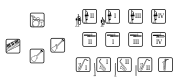 A standard 17-piece instrumentation evolved in the big-bands, for which many commercial arrangements are available. This instrumentation consists of five saxophones (most often two altos
, two tenors
, and one baritone
), four trumpet
s, four trombone
s (often including one bass trombone) and a four-piece rhythm section
(composed of drums
, acoustic bass
or electric bass
, piano
and guitar
).
However, variants to this instrumentation are common. Composers, arrangers, and bandleaders have used sections with more or fewer players, and additional instruments, such as valve trombone, baritone horn
/euphonium
(both of which are usually used in place of or with trombones), vibes
, bass clarinet
, French horn
, tuba
, banjo
, accordion
and strings
(violin
, viola
, cello
). Male
and female
vocalists have also joined big bands to perform particular arrangement
s.
Some arrangements call for saxophone players to double on other woodwind instrument
s, such as flute
, clarinet
, soprano sax, or bass clarinet
. Trumpet and trombone players are sometimes called upon to use various sound-changing mutes, and trumpet players sometimes need to play flugelhorn
. In some rhythm section
s, a guitar
player is omitted. Players in the rhythm section may be called upon to play acoustic or electric instruments
. Latin or other auxiliary percussion instruments may be added, such as cowbells, congas, tambourines, or triangles.
. At that time they usually played a form of jazz that involved very little improvisation, which included a string section with violins, which was dropped after the introduction of swing in 1935. The dance form of jazz was characterized by a sweet and romantic melody.
Typical of the genre were such popular artists as Paul Whiteman
, Ted Lewis
, Harry Reser
, Leo Reisman
, Abe Lyman
, Nat Shilkret, George Olsen
, Ben Bernie
, Bob Haring
, Ben Selvin
, Earl Burnett, Gus Arnheim
, Henry Halstead
, Rudy Vallee
, Jean Goldkette
, Glen Gray
, Isham Jones
, Roger Wolfe Kahn
, Sam Lanin
, James Last
, Vincent Lopez
, Ben Pollack
, Shep Fields
and Fred Waring
.
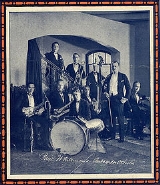
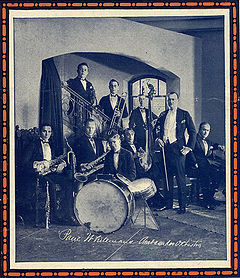 Many of these artists changed styles or retired after the introduction of swing music. Although unashamedly commercial, these bands often featured front-rank jazz musicians—for example Paul Whiteman employed Bix Beiderbecke
and Frankie Trumbauer
. There were also "all-girl" bands such as "Helen Lewis and Her All-Girl Jazz Syncopators". Lewis and her band, Ben Bernie's band "Ben Bernie and All the Lads
", and Roger Wolfe Kahn's band were filmed by Lee De Forest
in his Phonofilm
sound-on-film
process in 1925, in three short films which are now in the Library of Congress
film collection.
Towards the end of the 1920s, a new form of Big Band emerged which was more authentically "jazz," in that more space was given to improvised soloing
. This form of music never gained the popularity of the dance form of jazz. The few recordings made in this form of jazz were labelled race records and were intended for a limited urban audience. Few white musicians were familiar with this music, Johnny Mercer
, Harold Arlen and Hoagy Carmichael
being notable exceptions. The three major centres in this development were New York City
, Chicago
and Kansas City
. In the former, a sophisticated approach to arranging predominated, first in the work of Don Redman
for the Fletcher Henderson
band, later in the work of Duke Ellington
for his Cotton Club
orchestra, and Walter 'Foots' Thomas
for Cab Calloway
's, Charlie Spivak and His Orchestra
, and Mel Tormé
's Mel-Tones. Some big ensembles, like the Joe "King" Oliver outfit played a kind of half arranged, half improvised jazz, often relying on “head” arrangements. Other great bands, like the one of Luis Russell
became a vehicle for star instrumentalists, in his case Louis Armstrong
. There the whole arrangement had to promote all the possibilities of the star, although they often contained very good musicians, like Henry "Red" Allen, J. C. Higginbotham
and Charlie Holmes
. Others such as Alvino Rey
grew popular with shows in New York City and then toured the country sharing their hit songs and new musical styles.
and, later, by Jay McShann
and Jesse Stone
. Big Band remote
s on the major radio networks spread the music from ballrooms and clubs across the country during the 1930s and 1940s, with remote broadcasts from jazz clubs continuing into the 1950s on NBC's Monitor
. Radio was a major factor in gaining notice and fame for Benny Goodman
, known as the “King of Swing”. Soon, others challenged him, and “the battles of the bands” became a staple at theater performances featuring many groups on one bill.
Big Bands also began to appear in movies in the 1930s right on through to the 1960s. Shep Fields
and his orchestra appeared in The Big Broadcast of 1938
for Paramount Pictures
while accompanying the actor Bob Hope
in the 1930s. Alvino Rey and His Orchestra were featured in films through RKO Pictures
during their peak in the early 1940s, such as Sing Your Worries Away. Fictionalized biographical films of Glenn Miller
, Gene Krupa
, Benny Goodman
, and others were made in the 1950s, as nostalgic tributes to the glory years.
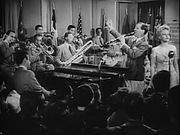 Swing music began in the 1920s, distinguished by a more supple feel than the more literal 4/4 of earlier jazz and a walking bass—Walter Page
is often credited with developing this, though isolated earlier examples exist (e.g., by Wellman Braud
on Ellington's Washington Wabble from 1927).
This type of music flourished through the early 1930s, although there was little mass audience for it until around 1936. Up until that time, it was viewed with ridicule and looked upon as a curiosity. After 1935, big bands rose to prominence playing swing
music and held a major role in defining swing as a distinctive style. Western Swing
musicians also formed very popular big bands during the same period.
There was a considerable range of styles among the hundreds of popular bands. Many of the better known bands reflected the individuality of the bandleader, the lead arranger, and the personnel. Count Basie
played a relaxed propulsive swing, Bob Crosby
more of a dixieland style, Benny Goodman
a hard driving swing, and Duke Ellington
’s compositions were varied and sophisticated. Many bands featured strong instrumentalists, whose sounds dominated, such as the clarinets of Benny Goodman
, Artie Shaw
and Woody Herman
, the trombone of Jack Teagarden
, the trumpet of Harry James
, the drums of Gene Krupa
, and the vibes of Lionel Hampton
. The popularity of many of the major bands was amplified by star vocalists, such as Frank Sinatra
with Tommy Dorsey
, Helen O'Connell
and Bob Eberly
with Jimmy Dorsey
, Ella Fitzgerald
with Chick Webb
, Billie Holiday
and Jimmy Rushing
with Count Basie
, Dick Haymes
and Helen Forrest
with Harry James
, Doris Day
with Les Brown
, Toni Arden
and Ken Curtis
with Shep Fields
and Peggy Lee
with Benny Goodman. Some bands were society bands that relied on strong ensembles but little on soloists or vocalists, such as the bands of Guy Lombardo
and Paul Whiteman
.
By this time the big band was such a dominant force in jazz that the older generation found they either had to adapt to it or simply retire—with no market for small-group recordings (made worse by a depression-era industry reluctant to take risks), some musicians such as Louis Armstrong
and Earl Hines
fronted their own bands, while others, like Jelly Roll Morton
and King Oliver, lapsed into obscurity.
The major African American
bands of the 1930s included, apart from the bands led by Ellington, Hines and Calloway, were those of Jimmie Lunceford
, Chick Webb
, and Count Basie
. Incidentally, the "white" bands of Benny Goodman
, Artie Shaw
, Tommy Dorsey
, Shep Fields
and, later, Glenn Miller
far eclipsed their "black" inspirations in terms of popularity from the middle of the decade. Bridging the gap to white audiences in the mid-1930s was the Casa Loma Orchestra and Benny Goodman’s early band.
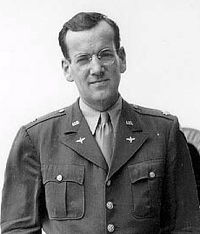 White teenagers and young adults were the principal fans of the Big Bands in the late 1930s and early 1940s. They danced to recordings and the radio, and attended live concerts whenever they could. They were knowledgeable and often biased toward their favorite bands and songs, and sometimes worshipful of the famous soloists and vocalists. Many bands toured the country in grueling one-night stands to reach out to their fans. Traveling conditions and lodging were often difficult, in part due to segregation in most parts of the United States, and the personnel often had to perform on little sleep and food. Apart from the star soloists, many personnel received low wages and would abandon the tour and go home if bookings fell through. Personal problems and intra-band discord could affect the playing of the group. Drinking and addictions were common. Turnover was frequent in many bands, and top soloists were often lured away to better contracts. Sometimes bandstands were too small, public address systems inadequate, pianos out of tune. Successful bandleaders dealt with all these hazards of touring to hold their bands together—some with rigid discipline (Glenn Miller
), some with canny psychology (Duke Ellington
).
Big Bands played a major role in lifting morale during World War II. Many band members served in the military and toured with USO troupes at the front, with Glenn Miller losing his life while traveling between troop shows. Many bands suffered from the loss of personnel and quality declined at home during the war years. An ill-timed recording strike in 1942 worsened the situation. Vocalists began to strike out on their own and by the end of the war, swing was giving way to less danceable music including bebop. Many of the great swing bands broke up as tastes changed.
, Gene Krupa
, Buddy Rich
, Gil Evans
, Stan Kenton
, Johnny Richards, Sun Ra
, Gary MacFarland, Charles Mingus
, Oliver Nelson
, Carla Bley
, Thad Jones/Mel Lewis Big Band
, Sam Rivers
, Don Ellis
, Toshiko Akiyoshi – Lew Tabackin Big Band
, Lincoln Center Jazz Orchestra and Anthony Braxton
.
 Later bandleaders pioneered the performance of various Brazilian
and Afro-Cuban
styles with the traditional big band instrumentation, and big bands led by arranger Gil Evans
, saxophonist John Coltrane
(on the album Ascension from 1965) and electric bassist Jaco Pastorius
introduced cool jazz
, free jazz
and jazz fusion
, respectively, to the big band domain. Modern big bands can be found playing all styles of jazz music. Some large contemporary European jazz ensembles play mostly avant-garde
jazz using the instrumentation of the big bands. Examples include the Vienna Art Orchestra
, founded in 1977, and the Italian Instabile Orchestra
, active in the 1990s. In the late 1990s, swing made a comeback in the US. The Lindy Hop has taken hold on both coasts, and many younger people took an interest in big band styles again. The Jazz at Lincoln Center Orchestra with Wynton Marsalis is the resident orchestra of Jazz at Lincoln Center
(JALC). The JALC Orchestra currently tours internationally, promoting the big band sound.
African "Afrobeat
" big bands have existed from 1970 to the present when Fela Kuti
of Nigeria
, fused big band jazz with Yoruba
tribal rhythms, highlife
, and American James Brown
soul music
. there are over 40 working afrobeat big bands including Antibalas, Chicago Afrobeat Project
, Chopteeth
, Femi Kuti
, and Seun Kuti
.
, big band music is primarily crafted in advance by an arranger
.
Typical big band arrangements of the swing period are written in strophic form
with the same phrase and chord structure repeated several times. Each iteration, or chorus, most commonly follows Twelve bar blues
form or Thirty-two-bar (AABA) song form
. The first chorus of an arrangement typically introduces the melody, and is followed by subsequent choruses of development. This development may take the form of improvised solos, written soli sections, and shout choruses.
An arrangement's first chorus is sometimes preceded by an introduction, which may be as short as a few measures or may extend to chorus of its own. Many arrangements contain an interlude, often similar in content to the introduction, inserted between some or all choruses. Other methods of embellishing the form include modulations and cadential extensions.
Musical ensemble
A musical ensemble is a group of people who perform instrumental or vocal music. In classical music, trios or quartets either blend the sounds of musical instrument families or group together instruments from the same instrument family, such as string ensembles or wind ensembles...
associated with jazz and the Swing Era
Swing (genre)
Swing music, also known as swing jazz or simply swing, is a form of jazz music that developed in the early 1930s and became a distinctive style by 1935 in the United States...
typically consisting of rhythm
Rhythm section
A rhythm section is a collection of musicians who make up a section of instruments which provides the accompaniment section of the music, giving the music its rhythmic texture and pulse, also serving as a rhythmic reference for the rest of the band...
, brass
Brass instrument
A brass instrument is a musical instrument whose sound is produced by sympathetic vibration of air in a tubular resonator in sympathy with the vibration of the player's lips...
, and woodwind
Woodwind instrument
A woodwind instrument is a musical instrument which produces sound when the player blows air against a sharp edge or through a reed, causing the air within its resonator to vibrate...
instruments totaling approximately twelve to twenty-five musicians. The terms jazz band, jazz ensemble, jazz orchestra, stage band, society band, and dance band may describe this type of ensemble in particular contexts.
Instrumentation
Alto saxophone
The alto saxophone is a member of the saxophone family of woodwind instruments invented by Belgian instrument designer Adolphe Sax in 1841. It is smaller than the tenor but larger than the soprano, and is the type most used in classical compositions...
, two tenors
Tenor saxophone
The tenor saxophone is a medium-sized member of the saxophone family, a group of instruments invented by Adolphe Sax in the 1840s. The tenor, with the alto, are the two most common types of saxophones. The tenor is pitched in the key of B, and written as a transposing instrument in the treble...
, and one baritone
Baritone saxophone
The baritone saxophone, often called "bari sax" , is one of the largest and lowest pitched members of the saxophone family. It was invented by Adolphe Sax. The baritone is distinguished from smaller sizes of saxophone by the extra loop near its mouthpiece...
), four trumpet
Trumpet
The trumpet is the musical instrument with the highest register in the brass family. Trumpets are among the oldest musical instruments, dating back to at least 1500 BCE. They are played by blowing air through closed lips, producing a "buzzing" sound which starts a standing wave vibration in the air...
s, four trombone
Trombone
The trombone is a musical instrument in the brass family. Like all brass instruments, sound is produced when the player’s vibrating lips cause the air column inside the instrument to vibrate...
s (often including one bass trombone) and a four-piece rhythm section
Rhythm section
A rhythm section is a collection of musicians who make up a section of instruments which provides the accompaniment section of the music, giving the music its rhythmic texture and pulse, also serving as a rhythmic reference for the rest of the band...
(composed of drums
Drum kit
A drum kit is a collection of drums, cymbals and often other percussion instruments, such as cowbells, wood blocks, triangles, chimes, or tambourines, arranged for convenient playing by a single person ....
, acoustic bass
Double bass
The double bass, also called the string bass, upright bass, standup bass or contrabass, is the largest and lowest-pitched bowed string instrument in the modern symphony orchestra, with strings usually tuned to E1, A1, D2 and G2...
or electric bass
Electric Bass
Electric bass can mean:*Electric upright bass, the electric version of a double bass*Electric bass guitar*Bass synthesizer*Big Mouth Billy Bass, a battery-powered singing fish...
, piano
Piano
The piano is a musical instrument played by means of a keyboard. It is one of the most popular instruments in the world. Widely used in classical and jazz music for solo performances, ensemble use, chamber music and accompaniment, the piano is also very popular as an aid to composing and rehearsal...
and guitar
Guitar
The guitar is a plucked string instrument, usually played with fingers or a pick. The guitar consists of a body with a rigid neck to which the strings, generally six in number, are attached. Guitars are traditionally constructed of various woods and strung with animal gut or, more recently, with...
).
However, variants to this instrumentation are common. Composers, arrangers, and bandleaders have used sections with more or fewer players, and additional instruments, such as valve trombone, baritone horn
Baritone horn
The baritone horn is a member of the brass instrument family. The baritone horn has a predominantly cylindrical bore as do the trumpet and trombone. A baritone horn uses a large mouthpiece much like those of a trombone or euphonium, although it is a bit smaller. Some baritone mouthpieces will sink...
/euphonium
Euphonium
The euphonium is a conical-bore, tenor-voiced brass instrument. It derives its name from the Greek word euphonos, meaning "well-sounding" or "sweet-voiced"...
(both of which are usually used in place of or with trombones), vibes
Vibraphone
The vibraphone, sometimes called the vibraharp or simply the vibes, is a musical instrument in the struck idiophone subfamily of the percussion family....
, bass clarinet
Bass clarinet
The bass clarinet is a musical instrument of the clarinet family. Like the more common soprano B clarinet, it is usually pitched in B , but it plays notes an octave below the soprano B clarinet...
, French horn
Horn (instrument)
The horn is a brass instrument consisting of about of tubing wrapped into a coil with a flared bell. A musician who plays the horn is called a horn player ....
, tuba
Tuba
The tuba is the largest and lowest-pitched brass instrument. Sound is produced by vibrating or "buzzing" the lips into a large cupped mouthpiece. It is one of the most recent additions to the modern symphony orchestra, first appearing in the mid-19th century, when it largely replaced the...
, banjo
Banjo
In the 1830s Sweeney became the first white man to play the banjo on stage. His version of the instrument replaced the gourd with a drum-like sound box and included four full-length strings alongside a short fifth-string. There is no proof, however, that Sweeney invented either innovation. This new...
, accordion
Accordion
The accordion is a box-shaped musical instrument of the bellows-driven free-reed aerophone family, sometimes referred to as a squeezebox. A person who plays the accordion is called an accordionist....
and strings
String section
The string section is the largest body of the standard orchestra and consists of bowed string instruments of the violin family.It normally comprises five sections: the first violins, the second violins, the violas, the cellos, and the double basses...
(violin
Violin
The violin is a string instrument, usually with four strings tuned in perfect fifths. It is the smallest, highest-pitched member of the violin family of string instruments, which includes the viola and cello....
, viola
Viola
The viola is a bowed string instrument. It is the middle voice of the violin family, between the violin and the cello.- Form :The viola is similar in material and construction to the violin. A full-size viola's body is between and longer than the body of a full-size violin , with an average...
, cello
Cello
The cello is a bowed string instrument with four strings tuned in perfect fifths. It is a member of the violin family of musical instruments, which also includes the violin, viola, and double bass. Old forms of the instrument in the Baroque era are baryton and viol .A person who plays a cello is...
). Male
Male
Male refers to the biological sex of an organism, or part of an organism, which produces small mobile gametes, called spermatozoa. Each spermatozoon can fuse with a larger female gamete or ovum, in the process of fertilization...
and female
Female
Female is the sex of an organism, or a part of an organism, which produces non-mobile ova .- Defining characteristics :The ova are defined as the larger gametes in a heterogamous reproduction system, while the smaller, usually motile gamete, the spermatozoon, is produced by the male...
vocalists have also joined big bands to perform particular arrangement
Arrangement
The American Federation of Musicians defines arranging as "the art of preparing and adapting an already written composition for presentation in other than its original form. An arrangement may include reharmonization, paraphrasing, and/or development of a composition, so that it fully represents...
s.
Some arrangements call for saxophone players to double on other woodwind instrument
Woodwind instrument
A woodwind instrument is a musical instrument which produces sound when the player blows air against a sharp edge or through a reed, causing the air within its resonator to vibrate...
s, such as flute
Flute
The flute is a musical instrument of the woodwind family. Unlike woodwind instruments with reeds, a flute is an aerophone or reedless wind instrument that produces its sound from the flow of air across an opening...
, clarinet
Clarinet
The clarinet is a musical instrument of woodwind type. The name derives from adding the suffix -et to the Italian word clarino , as the first clarinets had a strident tone similar to that of a trumpet. The instrument has an approximately cylindrical bore, and uses a single reed...
, soprano sax, or bass clarinet
Bass clarinet
The bass clarinet is a musical instrument of the clarinet family. Like the more common soprano B clarinet, it is usually pitched in B , but it plays notes an octave below the soprano B clarinet...
. Trumpet and trombone players are sometimes called upon to use various sound-changing mutes, and trumpet players sometimes need to play flugelhorn
Flugelhorn
The flugelhorn is a brass instrument resembling a trumpet but with a wider, conical bore. Some consider it to be a member of the saxhorn family developed by Adolphe Sax ; however, other historians assert that it derives from the valve bugle designed by Michael Saurle , Munich 1832 , thus...
. In some rhythm section
Rhythm section
A rhythm section is a collection of musicians who make up a section of instruments which provides the accompaniment section of the music, giving the music its rhythmic texture and pulse, also serving as a rhythmic reference for the rest of the band...
s, a guitar
Guitar
The guitar is a plucked string instrument, usually played with fingers or a pick. The guitar consists of a body with a rigid neck to which the strings, generally six in number, are attached. Guitars are traditionally constructed of various woods and strung with animal gut or, more recently, with...
player is omitted. Players in the rhythm section may be called upon to play acoustic or electric instruments
Electrophone
The electrophone category was added to the Hornbostel-Sachs musical instrument classification system by Sachs in 1940, to describe instruments involving electricity...
. Latin or other auxiliary percussion instruments may be added, such as cowbells, congas, tambourines, or triangles.
History and style
There are two distinct periods in the history of popular bands. Beginning in the mid-1920s, big bands, then typically consisting of 10–25 pieces, came to dominate popular musicMusic
Music is an art form whose medium is sound and silence. Its common elements are pitch , rhythm , dynamics, and the sonic qualities of timbre and texture...
. At that time they usually played a form of jazz that involved very little improvisation, which included a string section with violins, which was dropped after the introduction of swing in 1935. The dance form of jazz was characterized by a sweet and romantic melody.
Typical of the genre were such popular artists as Paul Whiteman
Paul Whiteman
Paul Samuel Whiteman was an American bandleader and orchestral director.Leader of the most popular dance bands in the United States during the 1920s, Whiteman's recordings were immensely successful, and press notices often referred to him as the "King of Jazz"...
, Ted Lewis
Ted Lewis (musician)
Theodore Leopold Friedman, better known as Ted Lewis , was an American entertainer, bandleader, singer, and musician. He led a band presenting a combination of jazz, hokey comedy, and schmaltzy sentimentality that was a hit with the American public. He was known by the moniker "Mr...
, Harry Reser
Harry Reser
Harry F. Reser was an American banjo player and bandleader. Born in Piqua, Ohio, Reser was best known as the leader of The Clicquot Club Eskimos.- Career :...
, Leo Reisman
Leo Reisman
Leo Reisman was a violinist and bandleader in the 1920s and 1930s. Born and reared in Boston, Reisman studied violin as a young man, and formed his own band in 1919. He became famous for having over 80 hits on the popular charts during his career. Jerome Kern called Reisman's orchestra "The...
, Abe Lyman
Abe Lyman
Abe Lyman was a popular bandleader from the 1920s to the 1940s. He made recordings, appeared in films and provided the music for numerous radio shows, including Your Hit Parade....
, Nat Shilkret, George Olsen
George Olsen
George Edward Olsen, Sr. was an American band-leader.Born in Portland, Oregon, he played the drums and attended the University of Michigan, where he was drum major. Here he formed his band, George Olsen and his Music, which continued in the Portland area...
, Ben Bernie
Ben Bernie
Ben Bernie , born Bernard Anzelevitz, was an American jazz violinist and radio personality, often introduced as The Old Maestro. He was noted for his showmanship and memorable bits of snappy dialogue....
, Bob Haring
Bob Haring
Bob Haring was an American popular music bandleader of the 1920s and early 1930s.Haring held a contract with Brunswick Records. His best recordings were issued on the Brunswick label, one of the three major recordings labels in the 1920s. His first commercial recording for Brunswick was made on...
, Ben Selvin
Ben Selvin
Benjamin B. Selvin , son of Russian-immigrant Jewish parents, was a musician, bandleader, record producer and innovator in recorded music. He was known as The Dean of Recorded Music....
, Earl Burnett, Gus Arnheim
Gus Arnheim
Gus Arnheim was an early popular band leader. He is noted for writing several songs with his first hit being "I Cried for You" from 1923. He was most popular in the 1920s and 1930s...
, Henry Halstead
Henry Halstead
Henry Halstead was a U.S. bandleader.Henry Halstead's Orchestra began in early 1922 and over the next 20 years Halstead's band engagements extended from coast to coast, including the Blossom Room at Hotel Roosevelt, New York City; the Beverly Wilshire Hotel in Beverly Hills, California; the St...
, Rudy Vallee
Rudy Vallée
Rudy Vallée was an American singer, actor, bandleader, and entertainer.-Early life:Born Hubert Prior Vallée in Island Pond, Vermont, the son of Charles Alphonse and Catherine Lynch Vallée...
, Jean Goldkette
Jean Goldkette
John Jean Goldkette was a jazz pianist and bandleader born in Patras, Greece. Goldkette spent his childhood in Greece and Russia, and emigrated to the United States in 1911....
, Glen Gray
Glen Gray
Glen Gray Knoblauch, better known as Glen Gray, was a jazz saxophonist and leader of the Casa Loma Orchestra....
, Isham Jones
Isham Jones
Isham Jones was a United States bandleader, saxophonist, bassist and songwriter.-Career:Jones was born in Coalton, Ohio, to a musical and mining family, and grew up in Saginaw, Michigan, where he started his first band...
, Roger Wolfe Kahn
Roger Wolfe Kahn
Roger Wolfe Kahn was an American jazz and popular musician, composer, and bandleader ....
, Sam Lanin
Sam Lanin
Sam Lanin was an American jazz bandleader.Lanin's brothers, Howard and Lester, were also bandleaders, and all of them had sustained, successful careers in music. Lanin was one of ten children born to Russian-Jewish immigrants who emigrated to Philadelphia in the decade of the 1900s...
, James Last
James Last
James Last is a German composer and big band leader. His "happy music" made his numerous albums best-sellers in Germany and the United Kingdom. His composition, "Happy Heart", became an international success in interpretations by Andy Williams and Petula Clark...
, Vincent Lopez
Vincent Lopez
Vincent Lopez was an American bandleader and pianist.Vincent Lopez was born of Portuguese immigrant parents in Brooklyn, New York and was leading his own dance band in New York City by 1917...
, Ben Pollack
Ben Pollack
Ben Pollack was a drummer and bandleader from the mid 1920s through the swing era. His eye for talent led him to either discover or employ, at one time or another, musicians such as Benny Goodman, Jack Teagarden, Glenn Miller, Jimmy McPartland and Harry James...
, Shep Fields
Shep Fields
Shep Fields was the band leader for the "Shep Fields and His Rippling Rhythm" orchestra during the Big Band era of the 1930s.-Biography:...
and Fred Waring
Fred Waring
Fredrick Malcolm Waring was a popular musician, bandleader and radio-television personality, sometimes referred to as "America's Singing Master" and "The Man Who Taught America How to Sing." He was also a promoter, financial backer and namesake of the Waring Blendor, the first modern electric...
.
Bix Beiderbecke
Leon Bismark "Bix" Beiderbecke was an American jazz cornetist, jazz pianist, and composer.With Louis Armstrong, Beiderbecke was one of the most influential jazz soloists of the 1920s...
and Frankie Trumbauer
Frankie Trumbauer
Orie Frank Trumbauer was one of the leading jazz saxophonists of the 1920s and 1930s. He played the C-melody saxophone which, in size, is between an alto and tenor saxophone...
. There were also "all-girl" bands such as "Helen Lewis and Her All-Girl Jazz Syncopators". Lewis and her band, Ben Bernie's band "Ben Bernie and All the Lads
Ben Bernie and All the Lads
Ben Bernie and All the Lads is a short film made in 1923 by Lee De Forest in the DeForest Phonofilm sound-on-film process. The film features Ben Bernie conducting his band All The Lads, and features pianist Oscar Levant....
", and Roger Wolfe Kahn's band were filmed by Lee De Forest
Lee De Forest
Lee De Forest was an American inventor with over 180 patents to his credit. De Forest invented the Audion, a vacuum tube that takes relatively weak electrical signals and amplifies them. De Forest is one of the fathers of the "electronic age", as the Audion helped to usher in the widespread use...
in his Phonofilm
Phonofilm
In 1919, Lee De Forest, inventor of the audion tube, filed his first patent on a sound-on-film process, DeForest Phonofilm, which recorded sound directly onto film as parallel lines. These parallel lines photographically recorded electrical waveforms from a microphone, which were translated back...
sound-on-film
Sound-on-film
Sound-on-film refers to a class of sound film processes where the sound accompanying picture is physically recorded onto photographic film, usually, but not always, the same strip of film carrying the picture. Sound-on-film processes can either record an analog sound track or digital sound track,...
process in 1925, in three short films which are now in the Library of Congress
Library of Congress
The Library of Congress is the research library of the United States Congress, de facto national library of the United States, and the oldest federal cultural institution in the United States. Located in three buildings in Washington, D.C., it is the largest library in the world by shelf space and...
film collection.
Towards the end of the 1920s, a new form of Big Band emerged which was more authentically "jazz," in that more space was given to improvised soloing
Solo (music)
In music, a solo is a piece or a section of a piece played or sung by a single performer...
. This form of music never gained the popularity of the dance form of jazz. The few recordings made in this form of jazz were labelled race records and were intended for a limited urban audience. Few white musicians were familiar with this music, Johnny Mercer
Johnny Mercer
John Herndon "Johnny" Mercer was an American lyricist, songwriter and singer. He is best known as a lyricist, but he also composed music. He was also a popular singer who recorded his own songs as well as those written by others...
, Harold Arlen and Hoagy Carmichael
Hoagy Carmichael
Howard Hoagland "Hoagy" Carmichael was an American composer, pianist, singer, actor, and bandleader. He is best known for writing "Stardust", "Georgia On My Mind", "The Nearness of You", and "Heart and Soul", four of the most-recorded American songs of all time.Alec Wilder, in his study of the...
being notable exceptions. The three major centres in this development were New York City
New York City
New York is the most populous city in the United States and the center of the New York Metropolitan Area, one of the most populous metropolitan areas in the world. New York exerts a significant impact upon global commerce, finance, media, art, fashion, research, technology, education, and...
, Chicago
Chicago
Chicago is the largest city in the US state of Illinois. With nearly 2.7 million residents, it is the most populous city in the Midwestern United States and the third most populous in the US, after New York City and Los Angeles...
and Kansas City
Kansas City, Missouri
Kansas City, Missouri is the largest city in the U.S. state of Missouri and is the anchor city of the Kansas City Metropolitan Area, the second largest metropolitan area in Missouri. It encompasses in parts of Jackson, Clay, Cass, and Platte counties...
. In the former, a sophisticated approach to arranging predominated, first in the work of Don Redman
Don Redman
Donald Matthew Redman was an American jazz musician, arranger, bandleader and composer.Redman was announced as a member of the West Virginia Music Hall of Fame on May 6, 2009....
for the Fletcher Henderson
Fletcher Henderson
James Fletcher Hamilton Henderson, Jr. was an American pianist, bandleader, arranger and composer, important in the development of big band jazz and swing music. His was one of the most prolific black orchestras and his influence was vast...
band, later in the work of Duke Ellington
Duke Ellington
Edward Kennedy "Duke" Ellington was an American composer, pianist, and big band leader. Ellington wrote over 1,000 compositions...
for his Cotton Club
Cotton Club
The Cotton Club was a famous night club in Harlem, New York City that operated during Prohibition that included jazz music. While the club featured many of the greatest African American entertainers of the era, such as Fletcher Henderson, Duke Ellington, Adelaide Hall, Count Basie, Bessie Smith,...
orchestra, and Walter 'Foots' Thomas
Walter 'Foots' Thomas
Walter 'Foots' Thomas was a saxophonist and arranger in Cab Calloway's orchestra.Born in Muskogee, Oklahoma, he moved to New York City in 1927, and played for a time with Jelly Roll Morton...
for Cab Calloway
Cab Calloway
Cabell "Cab" Calloway III was an American jazz singer and bandleader. He was strongly associated with the Cotton Club in Harlem, New York City where he was a regular performer....
's, Charlie Spivak and His Orchestra
Charlie Spivak
Charlie Spivak was an American trumpeter and bandleader, best known for his big band in the 1940s.-Biography:...
, and Mel Tormé
Mel Tormé
Melvin Howard Tormé , nicknamed The Velvet Fog, was an American musician, known for his jazz singing. He was also a jazz composer and arranger, a drummer, an actor in radio, film, and television, and the author of five books...
's Mel-Tones. Some big ensembles, like the Joe "King" Oliver outfit played a kind of half arranged, half improvised jazz, often relying on “head” arrangements. Other great bands, like the one of Luis Russell
Luis Russell
Luis Russell was a jazz pianist and bandleader.Luis Carl Russell was born on Careening Cay, near Bocas del Toro, Panama, in a family of Afro-Caribbean ancestry. His father was a music teacher, and young Luis learned to play violin, guitar, trombone, and piano...
became a vehicle for star instrumentalists, in his case Louis Armstrong
Louis Armstrong
Louis Armstrong , nicknamed Satchmo or Pops, was an American jazz trumpeter and singer from New Orleans, Louisiana....
. There the whole arrangement had to promote all the possibilities of the star, although they often contained very good musicians, like Henry "Red" Allen, J. C. Higginbotham
J. C. Higginbotham
J. C. Higginbotham was an American jazz trombonist. His playing was robust and swinging.In the 1930s and 1940s he played with some of the premier swing bands, including Luis Russell's, Benny Carter's, Red Allen's, and Fletcher Henderson's. He also played with Louis Armstrong, who had taken over...
and Charlie Holmes
Charlie Holmes
Charlie Holmes was an alto jazz saxophonist of the swing era. He also played clarinet in jazz and oboe for the Boston Civic Symphony Orchestra in 1926....
. Others such as Alvino Rey
Alvino Rey
Alvin McBurney , known by his stage name Alvino Rey, was an American swing era musician and pioneer, often credited as the father of the pedal steel guitar...
grew popular with shows in New York City and then toured the country sharing their hit songs and new musical styles.
Radio and movies
Earl "Fatha" Hines became the star of Chicago with his Grand Terrace Cafe band and began to broadcast live from The Grand Terrace nightly coast-to-coast across America. Meanwhile in Kansas City and across the Southwest, an earthier, bluesier style was developed by such bandleaders as Benny MotenBenny Moten
Benny Moten was an American jazz bassist.Moten had a long career as a sideman from the early 1940s, including with Hot Lips Page, Jerry Jerome, Red Allen , Eddie South, Stuff Smith, Arnett Cobb, Ella Fitzgerald, Wilbur De Paris , Buster Bailey, Roy Eldridge, and Dakota Staton...
and, later, by Jay McShann
Jay McShann
Jay McShann was an American Grammy Award-nominated jump blues, mainstream jazz, and swing bandleader, pianist and singer....
and Jesse Stone
Jesse Stone
Jesse Stone was an American rhythm and blues musician and songwriter whose influence spanned a wide range of genres...
. Big Band remote
Big band remote
A big band remote was a remote broadcast, popular on radio during the 1930s and 1940s, involving a coast-to-coast live transmission of a big band.As early as 1923, listeners could tune in The Waldorf-Astoria Orchestra...
s on the major radio networks spread the music from ballrooms and clubs across the country during the 1930s and 1940s, with remote broadcasts from jazz clubs continuing into the 1950s on NBC's Monitor
Monitor (NBC Radio)
NBC Monitor was an American weekend radio program broadcast from June 12, 1955, until January 26, 1975. Airing live and nationwide on the NBC Radio Network, it originally aired beginning Saturday morning at 8am and continuing through the weekend until 12 midnight on Sunday...
. Radio was a major factor in gaining notice and fame for Benny Goodman
Benny Goodman
Benjamin David “Benny” Goodman was an American jazz and swing musician, clarinetist and bandleader; widely known as the "King of Swing".In the mid-1930s, Benny Goodman led one of the most popular musical groups in America...
, known as the “King of Swing”. Soon, others challenged him, and “the battles of the bands” became a staple at theater performances featuring many groups on one bill.
Big Bands also began to appear in movies in the 1930s right on through to the 1960s. Shep Fields
Shep Fields
Shep Fields was the band leader for the "Shep Fields and His Rippling Rhythm" orchestra during the Big Band era of the 1930s.-Biography:...
and his orchestra appeared in The Big Broadcast of 1938
The Big Broadcast of 1938
The Big Broadcast of 1938 is a Paramount Pictures film featuring W.C. Fields and Bob Hope. Directed by Mitchell Leisen, the film is the last in a series of Big Broadcast movies that were variety show anthologies...
for Paramount Pictures
Paramount Pictures
Paramount Pictures Corporation is an American film production and distribution company, located at 5555 Melrose Avenue in Hollywood. Founded in 1912 and currently owned by media conglomerate Viacom, it is America's oldest existing film studio; it is also the last major film studio still...
while accompanying the actor Bob Hope
Bob Hope
Bob Hope, KBE, KCSG, KSS was a British-born American comedian and actor who appeared in vaudeville, on Broadway, and in radio, television and movies. He was also noted for his work with the US Armed Forces and his numerous USO shows entertaining American military personnel...
in the 1930s. Alvino Rey and His Orchestra were featured in films through RKO Pictures
RKO Pictures
RKO Pictures is an American film production and distribution company. As RKO Radio Pictures Inc., it was one of the Big Five studios of Hollywood's Golden Age. The business was formed after the Keith-Albee-Orpheum theater chains and Joseph P...
during their peak in the early 1940s, such as Sing Your Worries Away. Fictionalized biographical films of Glenn Miller
Glenn Miller
Alton Glenn Miller was an American jazz musician , arranger, composer, and bandleader in the swing era. He was one of the best-selling recording artists from 1939 to 1943, leading one of the best known "Big Bands"...
, Gene Krupa
Gene Krupa
Gene Krupa was an American jazz and big band drummer and composer, known for his highly energetic and flamboyant style.-Biography:...
, Benny Goodman
Benny Goodman
Benjamin David “Benny” Goodman was an American jazz and swing musician, clarinetist and bandleader; widely known as the "King of Swing".In the mid-1930s, Benny Goodman led one of the most popular musical groups in America...
, and others were made in the 1950s, as nostalgic tributes to the glory years.
Rise and fall of swing
Walter Page
Walter Sylvester Page , nicknamed "Hoss," was an African American jazz bassist and leader of the Oklahoma City Blue Devils jazz orchestra from 1925–1931...
is often credited with developing this, though isolated earlier examples exist (e.g., by Wellman Braud
Wellman Braud
Wellman Braud was a Creole American jazz upright bassist. His family sometimes spelled their last name "Breaux", pronounced "Bro"....
on Ellington's Washington Wabble from 1927).
This type of music flourished through the early 1930s, although there was little mass audience for it until around 1936. Up until that time, it was viewed with ridicule and looked upon as a curiosity. After 1935, big bands rose to prominence playing swing
Swing (genre)
Swing music, also known as swing jazz or simply swing, is a form of jazz music that developed in the early 1930s and became a distinctive style by 1935 in the United States...
music and held a major role in defining swing as a distinctive style. Western Swing
Western swing
Western swing music is a subgenre of American country music that originated in the late 1920s in the West and South among the region's Western string bands...
musicians also formed very popular big bands during the same period.
There was a considerable range of styles among the hundreds of popular bands. Many of the better known bands reflected the individuality of the bandleader, the lead arranger, and the personnel. Count Basie
Count Basie
William "Count" Basie was an American jazz pianist, organist, bandleader, and composer. Basie led his jazz orchestra almost continuously for nearly 50 years...
played a relaxed propulsive swing, Bob Crosby
Bob Crosby
George Robert "Bob" Crosby was an American dixieland bandleader and vocalist, best known for his group the Bob-Cats.-Family:...
more of a dixieland style, Benny Goodman
Benny Goodman
Benjamin David “Benny” Goodman was an American jazz and swing musician, clarinetist and bandleader; widely known as the "King of Swing".In the mid-1930s, Benny Goodman led one of the most popular musical groups in America...
a hard driving swing, and Duke Ellington
Duke Ellington
Edward Kennedy "Duke" Ellington was an American composer, pianist, and big band leader. Ellington wrote over 1,000 compositions...
’s compositions were varied and sophisticated. Many bands featured strong instrumentalists, whose sounds dominated, such as the clarinets of Benny Goodman
Benny Goodman
Benjamin David “Benny” Goodman was an American jazz and swing musician, clarinetist and bandleader; widely known as the "King of Swing".In the mid-1930s, Benny Goodman led one of the most popular musical groups in America...
, Artie Shaw
Artie Shaw
Arthur Jacob Arshawsky , better known as Artie Shaw, was an American jazz clarinetist, composer, and bandleader. He was also the author of both fiction and non-fiction writings....
and Woody Herman
Woody Herman
Woodrow Charles Herman , known as Woody Herman, was an American jazz clarinetist, alto and soprano saxophonist, singer, and big band leader. Leading various groups called "The Herd," Herman was one of the most popular of the 1930s and '40s bandleaders...
, the trombone of Jack Teagarden
Jack Teagarden
Weldon Leo "Jack" Teagarden , known as "Big T" and "The Swingin' Gate", was an influential jazz trombonist, bandleader, composer, and vocalist, regarded as the "Father of Jazz Trombone".-Early life:...
, the trumpet of Harry James
Harry James
Henry Haag “Harry” James was a trumpeter who led a jazz swing band during the Big Band Era of the 1930s and 1940s. He was especially known among musicians for his astonishing technical proficiency as well as his superior tone.-Biography:He was born in Albany, Georgia, the son of a bandleader of a...
, the drums of Gene Krupa
Gene Krupa
Gene Krupa was an American jazz and big band drummer and composer, known for his highly energetic and flamboyant style.-Biography:...
, and the vibes of Lionel Hampton
Lionel Hampton
Lionel Leo Hampton was an American jazz vibraphonist, pianist, percussionist, bandleader and actor. Like Red Norvo, he was one of the first jazz vibraphone players. Hampton ranks among the great names in jazz history, having worked with a who's who of jazz musicians, from Benny Goodman and Buddy...
. The popularity of many of the major bands was amplified by star vocalists, such as Frank Sinatra
Frank Sinatra
Francis Albert "Frank" Sinatra was an American singer and actor.Beginning his musical career in the swing era with Harry James and Tommy Dorsey, Sinatra became an unprecedentedly successful solo artist in the early to mid-1940s, after being signed to Columbia Records in 1943. Being the idol of the...
with Tommy Dorsey
Tommy Dorsey
Thomas Francis "Tommy" Dorsey, Jr. was an American jazz trombonist, trumpeter, composer, and bandleader of the Big Band era. He was known as "The Sentimental Gentleman of Swing", due to his smooth-toned trombone playing. He was the younger brother of bandleader Jimmy Dorsey...
, Helen O'Connell
Helen O'Connell
Helen O'Connell was an American singer, actress, and dancer.Born in Lima, Ohio, O'Connell joined the Jimmy Dorsey band in 1939 and achieved her best selling records in the early 1940s with "Green Eyes", "Amapola," "Tangerine" and "Yours"...
and Bob Eberly
Bob Eberly
Bob Eberly was a big band vocalist, best-known for his association with Jimmy Dorsey and his duets with Helen O'Connell....
with Jimmy Dorsey
Jimmy Dorsey
James "Jimmy" Dorsey was a prominent American jazz clarinetist, saxophonist, trumpeter, composer, and big band leader. He was known as "JD"...
, Ella Fitzgerald
Ella Fitzgerald
Ella Jane Fitzgerald , also known as the "First Lady of Song" and "Lady Ella," was an American jazz and song vocalist...
with Chick Webb
Chick Webb
William Henry Webb, usually known as Chick Webb was an American jazz and swing music drummer as well as a band leader.-Biography:...
, Billie Holiday
Billie Holiday
Billie Holiday was an American jazz singer and songwriter. Nicknamed "Lady Day" by her friend and musical partner Lester Young, Holiday had a seminal influence on jazz and pop singing...
and Jimmy Rushing
Jimmy Rushing
James Andrew Rushing , known as Jimmy Rushing, was an American blues shouter and swing jazz singer from Oklahoma City, Oklahoma, United States, best known as the featured vocalist of Count Basie's Orchestra from 1935 to 1948.Rushing was known as "Mr...
with Count Basie
Count Basie
William "Count" Basie was an American jazz pianist, organist, bandleader, and composer. Basie led his jazz orchestra almost continuously for nearly 50 years...
, Dick Haymes
Dick Haymes
Richard Benjamin "Dick" Haymes was an Argentine actor and one of the most popular male vocalists of the 1940s and early 1950s. He was the older brother of Bob Haymes, who was an actor, television host, and songwriter....
and Helen Forrest
Helen Forrest
Helen Forrest was one of the most popular female jazz vocalists during America's Big Band era. She was born Helen Fogel to a Jewish family in Atlantic City, New Jersey on April 12, 1917...
with Harry James
Harry James
Henry Haag “Harry” James was a trumpeter who led a jazz swing band during the Big Band Era of the 1930s and 1940s. He was especially known among musicians for his astonishing technical proficiency as well as his superior tone.-Biography:He was born in Albany, Georgia, the son of a bandleader of a...
, Doris Day
Doris Day
Doris Day is an American actress, singer and, since her retirement from show business, an animal rights activist. With an entertainment career that spanned through almost 50 years, Day started her career as a big band singer in 1939, but only began to be noticed after her first hit recording,...
with Les Brown
Les Brown (bandleader)
Les Brown, Sr. and the Band of Renown are a big band that began in the late 1930s, initially as the group Les Brown and His Blue Devils that Brown led while a student at Duke University. He was the first president of the Los Angeles chapter of the National Academy of Recording Arts and Sciences...
, Toni Arden
Toni Arden
Toni Arden is an American traditional pop music singer.-Biography:Arden became a big band singer in the 1940s, singing with Al Trace, Joe Reichman, Ray Bloch and Shep Fields...
and Ken Curtis
Ken Curtis
Ken Curtis was an American singer and actor best known for his role as Festus Haggen on the long-running CBS western television series Gunsmoke.-Early years:...
with Shep Fields
Shep Fields
Shep Fields was the band leader for the "Shep Fields and His Rippling Rhythm" orchestra during the Big Band era of the 1930s.-Biography:...
and Peggy Lee
Peggy Lee
Peggy Lee was an American jazz and popular music singer, songwriter, composer, and actress in a career spanning six decades. From her beginning as a vocalist on local radio to singing with Benny Goodman's big band, she forged a sophisticated persona, evolving into a multi-faceted artist and...
with Benny Goodman. Some bands were society bands that relied on strong ensembles but little on soloists or vocalists, such as the bands of Guy Lombardo
Guy Lombardo
Gaetano Alberto "Guy" Lombardo was a Canadian-American bandleader and violinist.Forming "The Royal Canadians" in 1924 with his brothers Carmen, Lebert, and Victor and other musicians from his hometown, Lombardo led the group to international success, billing themselves as creating "The Sweetest...
and Paul Whiteman
Paul Whiteman
Paul Samuel Whiteman was an American bandleader and orchestral director.Leader of the most popular dance bands in the United States during the 1920s, Whiteman's recordings were immensely successful, and press notices often referred to him as the "King of Jazz"...
.
By this time the big band was such a dominant force in jazz that the older generation found they either had to adapt to it or simply retire—with no market for small-group recordings (made worse by a depression-era industry reluctant to take risks), some musicians such as Louis Armstrong
Louis Armstrong
Louis Armstrong , nicknamed Satchmo or Pops, was an American jazz trumpeter and singer from New Orleans, Louisiana....
and Earl Hines
Earl Hines
Earl Kenneth Hines, universally known as Earl "Fatha" Hines, was an American jazz pianist. Hines was one of the most influential figures in the development of modern jazz piano and, according to one source, is "one of a small number of pianists whose playing shaped the history of jazz".-Early...
fronted their own bands, while others, like Jelly Roll Morton
Jelly Roll Morton
Ferdinand Joseph LaMothe , known professionally as Jelly Roll Morton, was an American ragtime and early jazz pianist, bandleader and composer....
and King Oliver, lapsed into obscurity.
The major African American
African American
African Americans are citizens or residents of the United States who have at least partial ancestry from any of the native populations of Sub-Saharan Africa and are the direct descendants of enslaved Africans within the boundaries of the present United States...
bands of the 1930s included, apart from the bands led by Ellington, Hines and Calloway, were those of Jimmie Lunceford
Jimmie Lunceford
James Melvin "Jimmie" Lunceford was an American jazz alto saxophonist and bandleader in the swing era.-Biography:...
, Chick Webb
Chick Webb
William Henry Webb, usually known as Chick Webb was an American jazz and swing music drummer as well as a band leader.-Biography:...
, and Count Basie
Count Basie
William "Count" Basie was an American jazz pianist, organist, bandleader, and composer. Basie led his jazz orchestra almost continuously for nearly 50 years...
. Incidentally, the "white" bands of Benny Goodman
Benny Goodman
Benjamin David “Benny” Goodman was an American jazz and swing musician, clarinetist and bandleader; widely known as the "King of Swing".In the mid-1930s, Benny Goodman led one of the most popular musical groups in America...
, Artie Shaw
Artie Shaw
Arthur Jacob Arshawsky , better known as Artie Shaw, was an American jazz clarinetist, composer, and bandleader. He was also the author of both fiction and non-fiction writings....
, Tommy Dorsey
Tommy Dorsey
Thomas Francis "Tommy" Dorsey, Jr. was an American jazz trombonist, trumpeter, composer, and bandleader of the Big Band era. He was known as "The Sentimental Gentleman of Swing", due to his smooth-toned trombone playing. He was the younger brother of bandleader Jimmy Dorsey...
, Shep Fields
Shep Fields
Shep Fields was the band leader for the "Shep Fields and His Rippling Rhythm" orchestra during the Big Band era of the 1930s.-Biography:...
and, later, Glenn Miller
Glenn Miller
Alton Glenn Miller was an American jazz musician , arranger, composer, and bandleader in the swing era. He was one of the best-selling recording artists from 1939 to 1943, leading one of the best known "Big Bands"...
far eclipsed their "black" inspirations in terms of popularity from the middle of the decade. Bridging the gap to white audiences in the mid-1930s was the Casa Loma Orchestra and Benny Goodman’s early band.
Glenn Miller
Alton Glenn Miller was an American jazz musician , arranger, composer, and bandleader in the swing era. He was one of the best-selling recording artists from 1939 to 1943, leading one of the best known "Big Bands"...
), some with canny psychology (Duke Ellington
Duke Ellington
Edward Kennedy "Duke" Ellington was an American composer, pianist, and big band leader. Ellington wrote over 1,000 compositions...
).
Big Bands played a major role in lifting morale during World War II. Many band members served in the military and toured with USO troupes at the front, with Glenn Miller losing his life while traveling between troop shows. Many bands suffered from the loss of personnel and quality declined at home during the war years. An ill-timed recording strike in 1942 worsened the situation. Vocalists began to strike out on their own and by the end of the war, swing was giving way to less danceable music including bebop. Many of the great swing bands broke up as tastes changed.
Since 1945
As jazz evolved and expanded in new directions, major band performances of note did occur from the 1950s to the 1970s. Noteworthy performers included: Dizzy GillespieDizzy Gillespie
John Birks "Dizzy" Gillespie was an American jazz trumpet player, bandleader, singer, and composer dubbed "the sound of surprise".Together with Charlie Parker, he was a major figure in the development of bebop and modern jazz...
, Gene Krupa
Gene Krupa
Gene Krupa was an American jazz and big band drummer and composer, known for his highly energetic and flamboyant style.-Biography:...
, Buddy Rich
Buddy Rich
Bernard "Buddy" Rich was an American jazz drummer and bandleader. Rich was billed as "the world's greatest drummer" and was known for his virtuosic technique, power, groove, and speed.-Early life:...
, Gil Evans
Gil Evans
Gil Evans was a jazz pianist, arranger, composer and bandleader, active in the United States...
, Stan Kenton
Stan Kenton
Stanley Newcomb "Stan" Kenton was a pianist, composer, and arranger who led a highly innovative, influential, and often controversial American jazz orchestra. In later years he was widely active as an educator....
, Johnny Richards, Sun Ra
Sun Ra
Sun Ra was a prolific jazz composer, bandleader, piano and synthesizer player, poet and philosopher known for his "cosmic philosophy," musical compositions and performances. He was born in Birmingham, Alabama...
, Gary MacFarland, Charles Mingus
Charles Mingus
Charles Mingus Jr. was an American jazz musician, composer, bandleader, and civil rights activist.Mingus's compositions retained the hot and soulful feel of hard bop and drew heavily from black gospel music while sometimes drawing on elements of Third stream, free jazz, and classical music...
, Oliver Nelson
Oliver Nelson
Oliver Edward Nelson was an American jazz saxophonist, clarinetist, arranger and composer.-Early life and career:...
, Carla Bley
Carla Bley
Carla Bley, née Borg, is an American jazz composer, pianist, organist and band leader. An important figure in the Free Jazz movement of the 1960s, she is perhaps best known for her jazz opera Escalator Over The Hill , as well as a book of compositions that have been performed by many other...
, Thad Jones/Mel Lewis Big Band
Thad Jones/Mel Lewis Big Band
The Thad Jones / Mel Lewis Jazz Orchestra was a jazz big band formed by trumpeter Thad Jones and drummer Mel Lewis around 1965. The band performed for twelve years in its original incarnation, and included a 1972 tour of the Soviet Union during the height of the Cold War. The band won a 1978...
, Sam Rivers
Sam Rivers
Samuel Carthorne Rivers , is an American jazz musician and composer. He performs on soprano and tenor saxophones, bass clarinet, flute, harmonica and piano....
, Don Ellis
Don Ellis
Don Ellis was an American jazz trumpeter, drummer, composer and bandleader. He is best known for his extensive musical experimentation, particularly in the area of unusual time signatures...
, Toshiko Akiyoshi – Lew Tabackin Big Band
Toshiko Akiyoshi – Lew Tabackin Big Band
The Toshiko Akiyoshi – Lew Tabackin Big Band was a 16 piece jazz big band created by pianist Toshiko Akiyoshi and tenor saxophone / flutist Lew Tabackin in Los Angeles in 1973. In 1982 the principals moved from Los Angeles to New York city and re-formed the group with new members under the name,...
, Lincoln Center Jazz Orchestra and Anthony Braxton
Anthony Braxton
Anthony Braxton is an American composer, saxophonist, clarinettist, flautist, pianist, and philosopher. Braxton has released well over 100 albums since the 1960s...
.
Bossa nova
Bossa nova is a style of Brazilian music. Bossa nova acquired a large following in the 1960s, initially consisting of young musicians and college students...
and Afro-Cuban
Afro-Cuban jazz
Afro-Cuban jazz is an early form of Latin jazz that mixes Afro-Cuban rhythms with harmonies and musical timbre typical of Bebop. It was developed in the early 1940s by both Cuban musicians and Jazz musicians, with Dizzy Gillespie, Mario Bauza, Machito and Stan Kenton among some of the most notable...
styles with the traditional big band instrumentation, and big bands led by arranger Gil Evans
Gil Evans
Gil Evans was a jazz pianist, arranger, composer and bandleader, active in the United States...
, saxophonist John Coltrane
John Coltrane
John William Coltrane was an American jazz saxophonist and composer. Working in the bebop and hard bop idioms early in his career, Coltrane helped pioneer the use of modes in jazz and later was at the forefront of free jazz...
(on the album Ascension from 1965) and electric bassist Jaco Pastorius
Jaco Pastorius
John Francis Anthony Pastorius III , known as Jaco Pastorius, was an American jazz musician and composer widely acknowledged as a virtuoso electric bass player....
introduced cool jazz
Cool jazz
Cool is a style of modern jazz music that arose following the Second World War. It is characterized by its relaxed tempos and lighter tone, in contrast to the bebop style that preceded it...
, free jazz
Free jazz
Free jazz is an approach to jazz music that was first developed in the 1950s and 1960s. Though the music produced by free jazz pioneers varied widely, the common feature was a dissatisfaction with the limitations of bebop, hard bop, and modal jazz, which had developed in the 1940s and 1950s...
and jazz fusion
Jazz fusion
Jazz fusion is a musical fusion genre that developed from mixing funk and R&B rhythms and the amplification and electronic effects of rock, complex time signatures derived from non-Western music and extended, typically instrumental compositions with a jazz approach to lengthy group improvisations,...
, respectively, to the big band domain. Modern big bands can be found playing all styles of jazz music. Some large contemporary European jazz ensembles play mostly avant-garde
Avant-garde
Avant-garde means "advance guard" or "vanguard". The adjective form is used in English to refer to people or works that are experimental or innovative, particularly with respect to art, culture, and politics....
jazz using the instrumentation of the big bands. Examples include the Vienna Art Orchestra
Vienna Art Orchestra
The Vienna Art Orchestra was a European jazz group based in Vienna, Austria. Organized at different times as either a big band or as a smaller combo, it was regarded as one of the leading European jazz ensembles and was an official cultural ambassador of the Republic of Austria.-History:Founded in...
, founded in 1977, and the Italian Instabile Orchestra
Italian Instabile Orchestra
The Italian Instabile Orchestra is an eighteen piece experimental big band that performs orchestral jazz and avant-garde jazz. Its members include Gianluigi Trovesi, Paolo Damiani, Mario Schiano, Pino Minafra, Eugenio Colombo, Giancarlo Schiaffini, Bruno Tommaso, Sebi Tramontana, Umberto Petrin,...
, active in the 1990s. In the late 1990s, swing made a comeback in the US. The Lindy Hop has taken hold on both coasts, and many younger people took an interest in big band styles again. The Jazz at Lincoln Center Orchestra with Wynton Marsalis is the resident orchestra of Jazz at Lincoln Center
Jazz at Lincoln Center
Jazz at Lincoln Center is part of Lincoln Center for the Performing Arts. JALC's performing arts complex, Frederick P. Rose Hall, is located at West 60th Street and Broadway in New York City, slightly south of the main Lincoln Center campus and directly adjacent to Columbus Circle. Frederick P....
(JALC). The JALC Orchestra currently tours internationally, promoting the big band sound.
African "Afrobeat
Afrobeat
Afrobeat is a combination of traditional Yoruba music, jazz, highlife, funk and chanted vocals, fused with percussion and vocal styles, popularised in Africa in the 1970s. Its main creator was the Nigerian multi-instrumentalist and bandleader Fela Kuti, who gave it its name, who used it to...
" big bands have existed from 1970 to the present when Fela Kuti
Fela Kuti
Fela Anikulapo Kuti , or simply Fela , was a Nigerian multi-instrumentalist musician and composer, pioneer of Afrobeat music, human rights activist, and political maverick.-Biography:...
of Nigeria
Nigeria
Nigeria , officially the Federal Republic of Nigeria, is a federal constitutional republic comprising 36 states and its Federal Capital Territory, Abuja. The country is located in West Africa and shares land borders with the Republic of Benin in the west, Chad and Cameroon in the east, and Niger in...
, fused big band jazz with Yoruba
Yoruba people
The Yoruba people are one of the largest ethnic groups in West Africa. The majority of the Yoruba speak the Yoruba language...
tribal rhythms, highlife
Highlife
Highlife is a musical genre that originated in Ghana in the 1900s and spread to Sierra Leone, Nigeria and other West African countries by 1920...
, and American James Brown
James Brown
James Joseph Brown was an American singer, songwriter, musician, and recording artist. He is the originator of Funk and is recognized as a major figure in the 20th century popular music for both his vocals and dancing. He has been referred to as "The Godfather of Soul," "Mr...
soul music
Soul music
Soul music is a music genre originating in the United States combining elements of gospel music and rhythm and blues. According to the Rock and Roll Hall of Fame, soul is "music that arose out of the black experience in America through the transmutation of gospel and rhythm & blues into a form of...
. there are over 40 working afrobeat big bands including Antibalas, Chicago Afrobeat Project
Chicago AfroBeat Project
Chicago Afrobeat Project is a seven- to 14-piece world music ensemble with many influences, including afrobeat, Afro-Cuban, funk, jazz, juju music, and rock. The members are well versed in afrobeat, the musical style of Fela Kuti...
, Chopteeth
Chopteeth
Chopteeth is a Washington, D.C.- based afrofunk big-band. Although rooted in Fela Kuti's Nigerian afrobeat, Chopteeth's music is an amalgam of Ghanaian highlife, Senegalese rumba, Jamaican Ska, Mande griot music, 1970's West African funk, Ewe dance drum rhythms, Kenyan Taita afropop, soul-funk,...
, Femi Kuti
Femi Kuti
Olufela Olufemi Anikulapo Kuti popularly known as Femi Kuti, is a Nigerian musician and the eldest son of afrobeat pioneer Fela Kuti....
, and Seun Kuti
Seun Kuti
Oluseun Anikulapo Kuti , commonly known as Seun Kuti, is a Nigerian musician, and the youngest son of legendary afrobeat pioneer Fela Kuti. Seun leads his father's former band Egypt 80....
.
Big Band Arrangements
In contrast to jazz "combos," in which musical performances are largely improvisedImprovisation
Improvisation is the practice of acting, singing, talking and reacting, of making and creating, in the moment and in response to the stimulus of one's immediate environment and inner feelings. This can result in the invention of new thought patterns, new practices, new structures or symbols, and/or...
, big band music is primarily crafted in advance by an arranger
Arrangement
The American Federation of Musicians defines arranging as "the art of preparing and adapting an already written composition for presentation in other than its original form. An arrangement may include reharmonization, paraphrasing, and/or development of a composition, so that it fully represents...
.
Typical big band arrangements of the swing period are written in strophic form
Strophic form
Strophic form is the simplest and most durable of musical forms, elaborating a piece of music by repetition of a single formal section. This may be analyzed as "A A A..."...
with the same phrase and chord structure repeated several times. Each iteration, or chorus, most commonly follows Twelve bar blues
Twelve bar blues
The 12-bar blues is one of the most popular chord progressions in popular music, including the blues. The blues progression has a distinctive form in lyrics and phrase and chord structure and duration...
form or Thirty-two-bar (AABA) song form
Thirty-two-bar form
The thirty-two-bar form, often called AABA from the musical form or order in which its melodies occur, is common in Tin Pan Alley songs and later popular music including rock, pop and jazz...
. The first chorus of an arrangement typically introduces the melody, and is followed by subsequent choruses of development. This development may take the form of improvised solos, written soli sections, and shout choruses.
An arrangement's first chorus is sometimes preceded by an introduction, which may be as short as a few measures or may extend to chorus of its own. Many arrangements contain an interlude, often similar in content to the introduction, inserted between some or all choruses. Other methods of embellishing the form include modulations and cadential extensions.
See also
- List of big bands
- List of experimental big bands
- Swing (jazz performance style)Swing (jazz performance style)In jazz and related musical styles, the term swing is used to describe the sense of propulsive rhythmic "feel" or "groove" created by the musical interaction between the performers, especially when the music creates a "visceral response" such as feet-tapping or head-nodding...
External references
- William Russo, Composing for the Jazz Orchestra University of Chicago PressUniversity of Chicago PressThe University of Chicago Press is the largest university press in the United States. It is operated by the University of Chicago and publishes a wide variety of academic titles, including The Chicago Manual of Style, dozens of academic journals, including Critical Inquiry, and a wide array of...
, Library of Congress no. 61-8642 - George T. Simon, The Big Bands, The Macmillan Company, New York, 1967, Library of Congress no. 67-26643