
|
|
|
|
Beryllium
|
| |
|
| |
Beryllium is a chemical element with the symbol Be and atomic number 4.
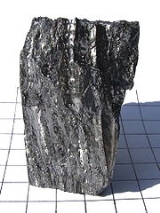
A bivalent element, beryllium is found naturally only combined with other elements in minerals. Notable gemstones which contain beryl (a crystalline salt of beryllium) include aquamarines and emeralds. The free element is a steel grey, strong, light-weight yet brittle alkaline earth metal. It is primarily used as a hardening agent in alloys, most notably beryllium copper.

Discussion
Ask a question about 'Beryllium'
Start a new discussion about 'Beryllium'
Answer questions from other users
|
Recent Posts

Encyclopedia
Beryllium is a chemical element with the symbol Be and atomic number 4.
A bivalent element, beryllium is found naturally only combined with other elements in minerals. Notable gemstones which contain beryl (a crystalline salt of beryllium) include aquamarines and emeralds. The free element is a steel grey, strong, light-weight yet brittle alkaline earth metal. It is primarily used as a hardening agent in alloys, most notably beryllium copper. It is useful for making non-magnetic alloys. Structurally, beryllium's very low density (185% water), high melting point (1278 °C), high temperature stability, and low coefficient of expansion with temperature, make it in many ways an ideal aerospace material, and it has in fact been used in rocket nozzles and the planned James Webb Space Telescope. Because of its relatively high transparency to X-rays and other ionizing radiation types, beryllium also has a number of uses as filters and windows for radiation and particle physics experiments.
Commercial use of beryllium metal presents technical challenges due to the toxicity (especially by inhalation) of beryllium-containing dusts. The toxicity of beryllium and its salts varies greatly from person to person, and has elements of its pathology that suggest an allergic-type component to the body's reaction to it. Nevertheless, beryllium dusts can be extremely damaging to the lungs, and the chronic inflammation produced by beryllium lesions can even trigger eventual development of cancer.
Beryllium is a relatively rare element in both the Earth and the universe, because it is not formed in conventional stellar nucleosynthesis, but rather during the Big Bang, and later from the action of cosmic rays on interstellar dust. The element is not known to be necessary or useful for either plant or animal life.
History
Beryllium was discovered by Louis-Nicolas Vauquelin in 1798 as the oxide in beryl and in emeralds. Friedrich Wöhler and A. A. Bussy independently isolated the metal in 1828 by reacting potassium and beryllium chloride. Similarity of beryllium to aluminum was probably why beryllium was missed in the previous studies.
Etymology
The name beryllium comes from the Greek ß???????, berullos, beryl, from Prakrit veruliya, from Pali ve?uriya; ] ve?iru or, vi?ar, "to become pale," in reference to the pale semiprecious gemstone beryl. For about 160 years, beryllium was also referred to as glucinium (with the accompanying chemical symbol "Gl"), the name coming from the Greek word for sweet, due to the sweet taste of its salts.
Characteristics
Physical
- It has one of the highest melting points of the light metals. The modulus of elasticity of beryllium is approximately a third greater than that of steel. The combination of this modulus plus beryllium's relatively low density gives it a fast sound conduction speed at standard conditions (about 12.9 km/s). It has excellent thermal conductivity and is nonmagnetic.
- At standard temperature and pressures beryllium resists oxidation when exposed to air (although its ability to scratch glass is probably due to the formation of a thin layer of the oxide). It resists attack by concentrated nitric acid.
- It is highly permeable to X-rays, and neutrons are liberated when it is hit by alpha particles, as from radium or polonium (about 30 neutrons/million alpha particles).
Isotopes
Of beryllium's isotopes, only 9Be is stable. Cosmogenic 10Be is produced in the atmosphere by cosmic ray spallation of oxygen and nitrogen. Because beryllium tends to exist in solutions below about pH 5.5 (and rainwater above many industrialized areas can have a pH less than 5), it will dissolve and be transported to the Earth's surface via rainwater. As the precipitation quickly becomes more alkaline, beryllium drops out of solution. Cosmogenic 10Be thereby accumulates at the soil surface, where its relatively long half-life (1.51 million years) permits a long residence time before decaying to 10B. 10Be and its daughter products have been used to examine soil erosion, soil formation from regolith, the development of lateritic soils, as well as variations in solar activity and the age of ice cores. It is also formed in nuclear explosions by a reaction of fast neutrons with 13C in the carbon dioxide in air, and is one of the historical indicators of past activity at nuclear test sites.
The fact that 7Be and 8Be are unstable has profound cosmological consequences as it means that elements heavier than beryllium could not be produced by nuclear fusion in the Big Bang. However, Fred Hoyle showed that the energy levels of 8Be and 12C favour carbon production by the triple-alpha process in helium burning stars, thus making life possible. (See also Big Bang nucleosynthesis).
7Be decays by electron capture, therefore its decay rate is dependent upon its electron configuration - a rare occurrence in nuclear decay.
The shortest-lived known isotope of beryllium is 13Be which decays through neutron emission. It has a half-life of 2.7 × 10⁻²¹ second. 6Be is also very short-lived with a half-life of 5.0 × 10⁻²¹ second.
The exotics 11Be and 14Be are known to exhibit a nuclear halo.
Chemical
Beryllium has the electronic configuration [He]2s2. In its chemistry Beryllium exhibits the +2 oxidation state and the only evidence of lower valent Benm+ is in the solubility of the metal in BeCl2. The small atomic radius ensures that the Be2+ ion would be highly polarizing leading to significant covalent character in beryllium's bonding. Beryllium is usually 4 coordinate in complexes e.g. [Be(H2O)4]2+ and tetrahaloberyllates, BeX42-. This characteristic is used in analytical techniques as EDTA does not complex to Be2+.
Beryllium metal sits above aluminium in the electrochemical series and would be expected to be a reactive metal, however it is passivated by an oxide layer and does not react with air or water even at red heat. Once ignited however beryllium burns brilliantly forming a mixture of beryllium oxide and beryllium nitride. Beryllium dissolves readily in non oxidising acids,(HCl, H2SO4) but not in nitric as this forms the oxide and this behaviour is similar to that of aluminium metal. Beryllium, again similarly to aluminium, dissolves in warm alkali to form the beryllate anion, Be(OH)42- , and hydrogen gas.
The solutions of salts, e.g beryllium sulfate and beryllium nitrate are acidic because the [Be(H2O)4]2+ ion hydrolyses.
Compounds
Beryllium forms binary compounds with many non-metals.
Beryllium hydride is an amorphous white solid believed to be built from corner-sharing tetrahedra .
All four anhydrous halides are known. BeF2 has a silica-like structure with corner shared tetrahedra. BeCl2 and BeBr2 have chain structures with edge shared tetrahedra. They all have monomeric gas phase forms that are linear.
Beryllium oxide, BeO, is a white, high melting solid, which has the wurtzite structure with a thermal conductivity as high as some metals. BeO is amphoteric. Beryllium hydroxide, Be(OH)2 has low solubility in water and is amphoteric. Salts of beryllium can be produced by reacting Be(OH)2 with acid.
Beryllium sulfide, selenide and telluride all have the zincblende structure.
Beryllium nitride,Be3N2 is high melting compound which is readily hydrolysed. Beryllium azide, BeN6 is known and beryllium phosphide, Be3P2 has a similar structure to Be3N2.
A number of beryllium borides are known, Be5B, Be4B, Be2B, BeB2, BeB6, BeB12.
Beryllium carbide, Be2C, is a high melting, brick red compound that reacts with water to give methane. No beryllium silicide has been identified.
Basic beryllium nitrate and basic beryllium acetate have similar tetrahedral structures with a central oxide ion.
Occurrence
Beryllium is an essential constituent of about 100 out of about 4000 known minerals, the most important of which are bertrandite (Be4Si2O7(OH)2), beryl (Al2Be3Si6O18), chrysoberyl (Al2BeO4), and phenakite (Be2SiO4). Precious forms of beryl are aquamarine, bixbite and emerald.
The most important commercial sources of beryllium and its compounds are beryl and bertrandite.
Production
Because of its very high affinity for oxygen at elevated temperatures and its ability to reduce water when its oxide film is removed, the extraction of beryllium from its compounds is very difficult. Although electrolysis of a fused mixture of beryllium and sodium fluorides was used to isolate the element in the nineteenth century, the metal's high melting point makes this process more energy intensive than the production of alkali metals performed in the same way. Early in the twentieth century, the production of beryllium by the thermal decomposition of beryllium iodide was investigated following the success of a similar process for the production of zirconium, however it proved to be uneconomic for volume production.
Beryllium metal did not become readily available until 1957. Currently, most production of this metal is accomplished by reducing beryllium fluoride with magnesium metal. The price on the US market for vacuum-cast beryllium ingots was 338 US$ per pound ($745/kg) in 2001.
- BeF2 + Mg ? MgF2 + Be
Applications
Mechanical
- Due to its stiffness, light weight, and dimensional stability over a wide temperature range, Beryllium metal is used in the defense and aerospace industries as light-weight structural materials in high-speed aircraft, missiles, space vehicles, and communication satellites. For example, many high-quality liquid fueled rockets use nozzles of pure Beryllium, an example being the Saturn V.
- Beryllium is used as an alloying agent in the production of beryllium copper, which contains up to 2.5% beryllium. Beryllium-copper alloys are used in a wide variety of applications because of their combination of high electrical and thermal conductivity, high strength and hardness, nonmagnetic properties, along with good corrosion and fatigue resistance. These applications include the making of spot-welding electrodes, springs, non-sparking tools and electrical contacts.
- Beryllium was also used in Jason pistols which were used to strip paint from the hulls of ships. In this case, beryllium was alloyed to copper and used as a hardening agent.
- Many high-energy particle physics collision experiments such as the Large Hadron Collider, the Tevatron, the SLAC and others contain beam pipes made of beryllium. The low density allows collision products to reach the surrounding detectors without significant interaction, the stiffness allows a powerful vacuum to be produced within the pipe to minimize interaction with gases, its thermal stability allows it to function correctly at temperatures of only a few Kelvin, and its diamagnetic nature keeps it from interfering with the complex multipole magnet systems used to steer and focus the particle beams.
- Beryllium is used in gyroscopes, computer equipment, watch springs and instruments where light-weight, rigidity and dimensional stability are needed.
- The James Webb Space Telescope will have 18 hexagonal beryllium sections for its mirrors. Because JWST will face a temperature of −240 degrees Celsius (33 kelvins), the mirror is made of beryllium, capable of handling extreme cold better than glass. Beryllium contracts and deforms less than glass — and remains more uniform — in such temperatures. For the same reason, the optics of the Spitzer Space Telescope are entirely built of beryllium metal.
Magnetic
- Due to its non-magnetic properties, Beryllium-based tools are often used by military naval EOD-personnel when working on or around sea-mines, as these often have fuses that detonate on direct magnetic contact or when influenced by a magnetic field.
- Beryllium-based tools are use for maintenance and construction close to a MRI scanner. Magnetic tools would be pulled towards the strong magnetic field of the scanner. Apart from being difficult to remove once magnetic items are stuck in the scanner, the missile-effect can have dangerous consequences.
- In the telecommunications industry, tools made of beryllium are used to tune the highly magnetic klystrons used for high power microwave applications.
Radiation
- Thin sheets of beryllium foil are used as windows in X-ray detectors to filter out visible light and allow only X-rays to be detected.
- Sheets of beryllium ranging from thick down to thick are used as the output window in x-ray tubes, allowing x-rays to leave the tube while keeping a vacuum on the inside of the tube.
- In the field of X-ray lithography beryllium is used for the reproduction of microscopic integrated circuits.
- Because of its low atomic number beryllium is almost transparent to energetic electrically charged particles. Therefore it is used to build the beam pipe around the collision region in collider particle physics experiments. Notably all four main detector experiments at the Large Hadron Collider accelerator (ALICE, ATLAS, CMS, LHCb) use a beryllium beam-pipe.
- In scientific setups for various X-ray emission studies (e.g., Energy-dispersive X-ray spectroscopy) the sample holder is usually made of beryllium because its emitted X-rays have much lower energies (~100 eV) than X-rays from most studied materials.
Nuclear
- Beryllium is used in nuclear weapon designs as the outer layer of the pit of the primary stage, surrounding the fissile material. It is a good pusher for implosion, and a very good neutron reflector, as in Beryllium moderated reactors.
- Beryllium is sometimes used in neutron sources, in which the beryllium is mixed with an alpha emitter such as 210Po, 226Ra, 239Pu or 241Am.
- Beryllium is used in the Joint European Torus fusion research facility and will be used in ITER, to condition the plasma facing components.
- Beryllium has also been proposed as a cladding material for nuclear fuel, due to its combination of mechanical, chemical, and nuclear properties.
Acoustics
- Beryllium's characteristics (low weight and high rigidity) make it useful as a material for high-frequency drivers. Until recently, most beryllium tweeters used an alloy of beryllium and other metals due to beryllium's high cost and difficulty to form. These challenges, coupled with the high performance of beryllium, caused some manufacturers to falsely claim using pure beryllium. Some high end audio companies manufacture pure beryllium tweeters or speakers using these tweeters. Because beryllium is many times more expensive than titanium, hard to shape due to its brittle nature, and potentially toxic when mishandled, these tweeters are limited to high-end and PA applications.
Electronic
- Beryllium is an effective p-type dopant in III-V compound semiconductors. It is widely used in materials such as GaAs, AlGaAs, InGaAs, and InAlAs grown by molecular beam epitaxy (MBE).
- Beryllium oxide is useful for many applications that require the combined properties of an electrical insulator an excellent heat conductor, with high strength and hardness, with a very high melting point. Beryllium oxide is frequently used as an insulator base plate in high-power transistors in RF transmitters for telecommunications. Beryllium oxide is also being studied for use in increasing the thermal conductivity of uranium dioxide nuclear fuel pellets.
- Beryllium compounds were once used in fluorescent lighting tubes, but this use was discontinued because of berylliosis in the workers manufacturing the tubes (see below).
Precautions
According to the International Agency for Research on Cancer (IARC), beryllium and beryllium compounds are Category 1 carcinogens; they are carcinogenic to both animals and humans. Chronic berylliosis is a pulmonary and systemic granulomatous disease caused by exposure to beryllium. Acute beryllium disease in the form of chemical pneumonitis was first reported in Europe in 1933 and in the United States in 1943. Cases of chronic berylliosis were first described in 1946 among workers in plants manufacturing fluorescent lamps in Massachusetts. Chronic berylliosis resembles sarcoidosis in many respects, and the differential diagnosis is often difficult. It occasionally killed early workers in nuclear weapons design, such as Herbert Anderson.
Although the use of beryllium compounds in fluorescent lighting tubes was discontinued in 1949, potential for exposure to beryllium exists in the nuclear and aerospace industries and in the refining of beryllium metal and melting of beryllium-containing alloys, the manufacturing of electronic devices, and the handling of other beryllium-containing material. To assist in manufacturing with beryllium in a safer manner, Brush Engineered Materials has produced an Interactive Guide to Working Safely with Beryllium and Beryllium-containing Materials.
Early researchers tasted beryllium and its various compounds for sweetness in order to verify its presence. Modern diagnostic equipment no longer necessitates this highly risky procedure and no attempt should be made to ingest this highly toxic substance. Beryllium and its compounds should be handled with great care and special precautions must be taken when carrying out any activity which could result in the release of beryllium dust (lung cancer is a possible result of prolonged exposure to beryllium laden dust).
This substance can be handled safely if certain procedures are followed. No attempt should be made to work with beryllium before familiarization with correct handling procedures.
A successful test for beryllium in air and on surfaces has been recently developed and published as a international voluntary consensus standard (ASTM D7202; www.astm.org). The procedure uses dilute ammonium bifluoride for dissolution and fluorescence detection with beryllium bound to sulfonated hydroxybenzoquinoline, allowing detection up to 100 times lower than the recommended limit for beryllium concentration in the workplace. Fluorescence increases with increasing beryllium concentration. The new procedure has been successfully tested on a variety of surfaces and is effective for the dissolution and ultratrace detection of refractory beryllium oxide and silicious beryllium (ASTM D7458).
Inhalation Beryllium can be harmful if inhaled and the effects depend on period of exposure. If beryllium concentrations in air are high enough (greater than ), an acute condition can result, called acute beryllium disease, which resembles pneumonia. Occupational and community air standards are effective in preventing most acute lung damage. Long term exposure to beryllium can increase the risk of developing lung cancer. The more common and serious health hazard from beryllium today is chronic beryllium disease (CBD), discussed below. It continues to occur in industries as diverse as metal recycling, dental laboratories, alloy manufacturing, nuclear weapons production, defense industries, and metal machine shops that work with alloys containing small amounts of beryllium.
Chronic beryllium disease (CBD) Some people (1-15%) become sensitive to beryllium. Sensitization is not an illness, but some of these individuals, if inhaling sufficient quantities of beryllium dust in the micrometre size range, may develop an inflammatory reaction that principally targets the respiratory system and skin. This condition is called chronic beryllium disease (CBD), and can occur within a few months or many years after exposure to higher than normal levels of beryllium (greater than ). This disease causes fatigue, weakness, night sweats and can cause difficulty in breathing and a persistent dry cough. It can result in anorexia, weight loss, and may also lead to right-side heart enlargement and heart disease in advanced cases. Some people who are sensitized to beryllium may not have any symptoms, and just being sensitized is not a recognized health effect. CBD is treatable, but not curable with traditional drugs and medicine. CBD occurs when the body's immune system recognizes beryllium particles as foreign material and mounts an immune system attack against the particles. Because these particles are typically inhaled into the lungs, the lungs become the major site where the immune system responds, they become inflamed and fill with large numbers of white blood cells that accumulate wherever beryllium particles are found. These cells form balls around the beryllium particles called “granulomas.” When enough of these develop, they interfere with the normal function of the organ. Over time, the lungs become stiff and lose their ability to help transfer oxygen from the air into the bloodstream. Patients with CBD develop difficulty inhaling and exhaling sufficient amounts of air, and the amount of oxygen in their bloodstreams falls. Treatment of such patients includes use of oxygen and medicines that try to suppress the immune system’s over-reaction to beryllium. A class of immunosuppressive medicines called glucocorticoids (example: prednisone) is most commonly used as treatment. The general population is unlikely to develop acute or chronic beryllium disease because ambient air levels of beryllium are normally very low (0.00003-0.0002 µg/m³).
Ingestion
Swallowing beryllium has not been reported to cause effects in humans because very little beryllium is absorbed from the stomach and intestines. Ulcers have been seen in dogs ingesting beryllium in their
diet.
Dermatological effects
Beryllium can cause contact dermatitis. Beryllium contact with skin that has been scraped or cut may cause rashes, ulcers, or bumps under the skin called granulomas.
Effects on children
There are no studies on the health effects of children exposed to beryllium, although individual cases of CBD have been reported in children of beryllium workers from the 1940s. It is likely that the health effects seen in children exposed to beryllium will be similar to the effects seen in adults. It is unknown whether children differ from adults in their susceptibility to beryllium. It is unclear whether beryllium is teratogenic.
Detection in the body
Beryllium can be measured in the urine and blood. The amount of beryllium in blood or urine may not indicate time or quantity of exposure. Beryllium levels can also be measured in lung and skin samples. While such measurements may help establish that exposure has occurred, other tests are used to determine if that exposure has resulted in health effects. A blood test, the blood beryllium lymphocyte proliferation test (BeLPT), identifies beryllium sensitization and has predictive value for CBD. The BeLPT has become the standard test for detecting beryllium sensitization and CBD in individuals who are suspected of having CBD and to help distinguish it from similar conditions such as sarcoidosis. It is also the main test used in industry health programs to monitor whether disease is occurring among current and former workers who have been exposed to beryllium on the job. The test can detect disease that is at an early stage, or can detect disease at more advanced stages of illness as well. The BeLPT can also be performed using cells obtained from a person's lung by a procedure called "bronchoscopy."
Industrial release and occupational exposure limits
Typical levels of beryllium that industries may release into the air are of the order of , averaged over a 30-day period, or of workroom air for an 8-hour work shift. Compliance with the current U.S. Occupational Safety and Health Administration (OSHA) permissible exposure limit for beryllium of has been determined to be inadequate to protect workers from developing beryllium sensitization and CBD. The American Conference of Governmental Industrial Hygienists (ACGIH), which is an independent organization of experts in the field of occupational health, has proposed a threshold limit value (TLV) of in a 2006 Notice of Intended Change (NIC). This TLV is 40 times lower than the current OSHA permissible exposure limit, reflecting the ACGIH analysis of best available peer-reviewed research data concerning how little airborne beryllium is required to cause sensitization and CBD. Because it can be difficult to control industrial exposures to beryllium, it is advisable to use any methods possible to reduce airborne and surface contamination by beryllium, to minimize the use of beryllium and beryllium-containing alloys whenever possible, and to educate people about the potential hazards if they are likely to encounter beryllium dust or fumes.
On 29 January 2009, the Los Alamos National Laboratory announced it was notifying nearly 2,000 current and former employees and visitors that they may have been exposed to beryllium in the lab and may be at risk of disease. Concern over possible exposure to the material was first raised in November 2008, when a box containing beryllium was received at the laboratory's short-term storage facility.
See also
- Category:Beryllium compounds
External links
- U.S. Department of Health and Human Services
-
-
-
- MSDS:
-
|
| |
|
|