
All Topics  
Bernicia

 
Bernicia

   Email Print
   Bookmark   Link


Bernicia


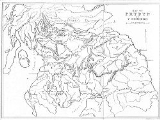
Bernicia was an Anglo-Saxon
Anglo-Saxons

Anglo-Saxons is the term usually used to describe the invading tribes in the south and east of Great Britain starting from the early 5th century AD, and their creation of the English nation, lasting until the Norman conquest of England of 1066....
 kingdom established by Anglian
Angles

The Angles is a modern English language word for a Germanic languages people who took their name from the cultural ancestral region of Angeln, a modern district located in Schleswig-Holstein, Germany....
 settlers of the 6th century in what is now the South-East of Scotland, and the North-East
North East England

North-East England is one of the nine official regions of England and comprises the combined area of Northumberland, County Durham, Tyne and Wear, part of North Yorkshire and Tees Valley....
 of England.

The Anglian territory of Bernicia was approximately equivalent to the modern British counties of Northumberland
Northumberland

Northumberland is a Counties of England in the North East England of England. The non-metropolitan counties of England of Northumberland borders Cumbria to the west, County Durham to the south and Tyne and Wear to the south east, as well as having a border with the Scottish Borders council area to the north, and nearly eighty miles of Nort...
, Durham
County Durham

County Durham is a Metropolitan and non-metropolitan counties of England of Historic counties of England in North East England England. The county town is Durham.The largest settlement in the county is the town of Darlington....
, Berwickshire
Berwickshire

Berwickshire or the County of Berwick is a registration county, a committee area of the Scottish Borders Council, and a Lieutenancy areas of Scotland of Scotland, on the border with England....
 and East Lothian
East Lothian

East Lothian is one of 32 unitary council areas in Scotland, UK, and a Lieutenancy areas of Scotland. It borders the City of Edinburgh, Scottish Borders and Midlothian....
, stretching from the Forth
River Forth

The River Forth , 47 km long, is the major river draining the eastern part of the central belt of Scotland.The Forth rises in Loch Ard in the Trossachs, a mountainous area some 30 km west of Stirling....
 to the Tees
River Tees

The Tees is a river in Northern England. It source on the eastern slope of Cross Fell in the Pennines, and flows eastwards for about 85 miles to the North Sea, between Hartlepool and Redcar....
. In the early 7th century, it merged with its southern neighbour, Deira, to form the kingdom of Northumbria
Northumbria

Northumbria is primarily the name of both a medieval petty kingdom of the Angles people, in what is now north east England and southern Scotland, and of the earldom which succeeded it when a united Anglo-Saxon kingdom became England....
 and its borders subsequently expanded considerably.

icia is mentioned in Old Welsh poetry, in the writings of Nennius
Nennius

Nennius, or Nemnivus, is either of two shadowy personages traditionally associated with the history of Wales. The better known of the two is Nennius, the student of Elvodugus....
 and elsewhere under the name of Bryneich or Brynaich.


Discussion
Ask a question about 'Bernicia'
Start a new discussion about 'Bernicia'
Answer questions from other users
Full Discussion Forum


Timeline

525   Bernicia settled by the Angles.

547   Ida founds the kingdom of Bernicia at Bamburgh (traditional date).

559   Glappa succeeds his father Ida as king of Bernicia (traditional date).

560   Adda succeeds his brother Glappa as king of Bernicia (traditional date).

560   Died

568   Æthelric succeeds his brother Adda as king of Bernicia (traditional date).

568   Died

572   Theodric succeeds his brother Æthelric as king of Bernicia (traditional date).

572   Died

579   Frithuwald succeeds his brother Theodric as king of Bernicia (traditional date).


Encyclopedia


Bernicia was an Anglo-Saxon
Anglo-Saxons

Anglo-Saxons is the term usually used to describe the invading tribes in the south and east of Great Britain starting from the early 5th century AD, and their creation of the English nation, lasting until the Norman conquest of England of 1066....
 kingdom established by Anglian
Angles

The Angles is a modern English language word for a Germanic languages people who took their name from the cultural ancestral region of Angeln, a modern district located in Schleswig-Holstein, Germany....
 settlers of the 6th century in what is now the South-East of Scotland, and the North-East
North East England

North-East England is one of the nine official regions of England and comprises the combined area of Northumberland, County Durham, Tyne and Wear, part of North Yorkshire and Tees Valley....
 of England.

The Anglian territory of Bernicia was approximately equivalent to the modern British counties of Northumberland
Northumberland

Northumberland is a Counties of England in the North East England of England. The non-metropolitan counties of England of Northumberland borders Cumbria to the west, County Durham to the south and Tyne and Wear to the south east, as well as having a border with the Scottish Borders council area to the north, and nearly eighty miles of Nort...
, Durham
County Durham

County Durham is a Metropolitan and non-metropolitan counties of England of Historic counties of England in North East England England. The county town is Durham.The largest settlement in the county is the town of Darlington....
, Berwickshire
Berwickshire

Berwickshire or the County of Berwick is a registration county, a committee area of the Scottish Borders Council, and a Lieutenancy areas of Scotland of Scotland, on the border with England....
 and East Lothian
East Lothian

East Lothian is one of 32 unitary council areas in Scotland, UK, and a Lieutenancy areas of Scotland. It borders the City of Edinburgh, Scottish Borders and Midlothian....
, stretching from the Forth
River Forth

The River Forth , 47 km long, is the major river draining the eastern part of the central belt of Scotland.The Forth rises in Loch Ard in the Trossachs, a mountainous area some 30 km west of Stirling....
 to the Tees
River Tees

The Tees is a river in Northern England. It source on the eastern slope of Cross Fell in the Pennines, and flows eastwards for about 85 miles to the North Sea, between Hartlepool and Redcar....
. In the early 7th century, it merged with its southern neighbour, Deira, to form the kingdom of Northumbria
Northumbria

Northumbria is primarily the name of both a medieval petty kingdom of the Angles people, in what is now north east England and southern Scotland, and of the earldom which succeeded it when a united Anglo-Saxon kingdom became England....
 and its borders subsequently expanded considerably.

British Bryneich

Bernicia is mentioned in Old Welsh poetry, in the writings of Nennius
Nennius

Nennius, or Nemnivus, is either of two shadowy personages traditionally associated with the history of Wales. The better known of the two is Nennius, the student of Elvodugus....
 and elsewhere under the name of Bryneich or Brynaich. It is not quite clear whether this is simply supposed to represent a Welsh version of Bernicia, or was the name of a preceding Brythonic kingdom. However, the name seems to derive from the Brythonic word Bernicca meaning ‘land of mountain passes’, so the latter hypothesis would appear to be correct.

Y Gogledd
This Brythonic kingdom was formed from what had once been the southern lands of the Votadini
Votadini

The Votadini were a people of the British Iron Age in Great Britain, and their territory was briefly part of the Roman province Roman Britain....
, possibly as part of the division of a supposed ‘great northern realm’ of Coel Hen
Old King Cole

This is an article about the nursery rhyme. A legendary king of Celtic Roman Britain, about all that can be said about Old King Cole with any certainty is that:...
 in c. AD 420. This northern realm is referred to by Welsh scholars as Yr Hen Ogledd
Hen Ogledd

Yr Hen Ogledd is a Welsh language term meaning 'The Old North' and referring to the Sub-Roman Britain Brythonic kingdoms located in what is now northern England and southern Scotland....
 or, literally, "The Old North". The kingdom may have been ruled from the site that later became the English
England

native_name =|conventional_long_name = England|common_name = England|image_flag = Flag of England.svg|image_coat = England COA.svg|symbol_type = Royal Coat of Arms...
 Bamburgh
Bamburgh

Bamburgh is a large village and civil parish in the Berwick-upon-Tweed on the coast of Northumberland, England. It has a population of 454.It is notable for two reasons: the imposing Bamburgh Castle, overlooking the beach, seat of the former Monarch of Northumbria, and at present owned by the Armstrong family ; and its association with th...
, which certainly features in Welsh sources as Din Guardi. Near this high-status residence lay the island of Lindisfarne
Lindisfarne

Lindisfarne is a tidal island off the north-east coast of England also known as Holy Island, the name of the civil parish. It has a population of 162 ...
 (formerly known, in Welsh, as Ynys Metcaut), which became the seat
Diocese

In many rites of the Roman Catholic Church and in Anglicanism, a diocese is an administrative territorial unit administered by a bishop. It is also referred to as a bishopric or Episcopal Area or episcopal see, though strictly the term episcopal see refers to the domain of ecclesiastical authority officially held by the bi...
 of the Bernician bishops. It is unknown when the Angles finally conquered the whole region, but around 604 is likely.

Kings of Bryneich

There are several Old Welsh pedigrees of princely Men of the North which may represent the Kings of Bryneich. The late John Morris
John Morris (historian)

John Robert Morris was an English historian who specialised in the study of the institutions of the Roman Empire and the history of Sub-Roman Britain....
 surmised that the line of a certain Morcant Bulc
Morcant Bulc

Morcant Bulc was a Brythonic prince, probably a king, from Northern Sub-Roman Britain, during the period between the end of the Roman Empire and the establishment of an English people state during the early Middle Ages....
 referred to these monarchs, chiefly because he identified this man as the murderer of Urien
Urien

Urien was a late 6th century king of Rheged, an early British kingdom in northern England and southern Scotland. His power and his victories, including Battle of Gwen Ystrad and Battle of Alclud Ford, are celebrated in the Book of Taliesin, the supposed Taliesin of which served as his bard....
 Rheged
Rheged

Rheged [Welsh IPA: r??g?d] was a Brythonic kingdom of Sub-Roman Britain, whose inhabitants spoke Cumbric, a dialect of Brythonic closely related to Old Welsh....
 who was, at the time, besieging Lindisfarne
Lindisfarne

Lindisfarne is a tidal island off the north-east coast of England also known as Holy Island, the name of the civil parish. It has a population of 162 ...
.

English Bernicia


Some of the Angles
Angles

The Angles is a modern English language word for a Germanic languages people who took their name from the cultural ancestral region of Angeln, a modern district located in Schleswig-Holstein, Germany....
 of Bernicia (Old English: Beornice) may have been employed as mercenaries
Mercenary

A mercenary is a person who takes part in an armed conflict, who is not a national or a party to the conflict, and is "motivated to take part in the hostilities essentially by the desire for private gain and, in fact, is promised, by or on behalf of a party to the conflict, material compensation substantially in excess of that promised or p...
 along Hadrian's Wall
Hadrian's Wall

Hadrian's Wall is a Rock and Sod fortification built by the Roman Empire across the width of what is now northern England. Begun in AD 122, during the rule of emperor Hadrian, it was the middle of three such fortifications built across Great Britain, the first being from the River Clyde to the River Forth under Agricola and the last the Ant...
 during the late Roman
Roman Britain

Roman Britain refers to those parts of the island of Great Britain controlled by the Roman Empire between AD 43 and 410. The Romans referred to their province as Britannia....
 period. Others are thought to have migrated north (by sea) from Deira (O.E: Derenrice or Dere
Dere Street

Dere Street or Deere Street, was a Roman road between Eboracum and Scotland. It still exists in the form of the route of many major roads, including the A1 road and A68 road just north of Coria ....
) The first Anglian king of whom we have any record is Ida
Ida of Bernicia

Ida or Ida the Flamebearer was a ruler of the Anglo-Saxons monarchy of Bernicia between 547 and 559.The Anglo-Saxon Chronicle records him as the son of Eoppa of Bernicia, grandson of Esa and great-grandson of Ingwy....
, who is said to have obtained the throne and the kingdom about 547. His sons spent many years fighting a united force from the surrounding Brythonic kingdoms until their alliance collapsed into civil war.

A Forcibly United Northumbria


Ida’s grandson, Æthelfrith
Æthelfrith of Northumbria

?thelfrith was List of monarchs of Northumbria of Bernicia from c. 593 until c. 616; he was also, beginning c. 604, the first Bernician king to also rule Deira , to the south of Bernicia....
 (Æðelfriþ), united Deira with his own kingdom by force around the year 604. He ruled the two kingdoms (united as Northumbria) until he was defeated and killed by Rædwald of East Anglia
Raedwald of East Anglia

R?dwald, son of Tytila of East Anglia, was King of East Anglia from c 600 AD until his death in c 624 AD. From c 616 he became the most powerful of the English rulers south of the River Humber, and by military action installed a Northumbrian ruler acquiescent to his authority....
 (who had given refuge to Edwin
Edwin of Northumbria

Saint Edwin was the List of monarchs of Northumbria of Deira and Bernicia - which would later become known as Northumbria - from about 616 until his death....
, son of Ælle, king of Deira
Aella of Deira

?lla , is the first known king of Deira . One of his sons was Edwin of Northumbria and his daughter Acha married ?thelfrith of Bernicia.According to the Anglo-Saxon Chronicle, he became king the same year as Ceawlin of Wessex on the death of Ida of Bernicia, and ruled 30 years....
) around the year 616. Edwin then became king. The early part of Edwin's reign was possibly spent finishing off the remaining resistance coming from Bryneich exiles operating out of Gododdin
Gododdin

The Gododdin were a Britons people of north-eastern Roman Britain in the sub-Roman Britain period, the area known as the Hen Ogledd or Old North....
. After he had defeated the remaining Brythonic population of Bryneich he was then drawn towards similar subjugation of Elmet
Elmet

During the Early Middle Ages, between approximately the 5th century and early 7th century AD, Elmet was an independent Celtic kingdom covering a broad area of what later became the West Riding of Yorkshire....
 (a Cumbric speaking territory which once existed in the modern-day West Riding of Yorkshire
West Riding of Yorkshire

The West Riding of Yorkshire was one of the three historic subdivisions of Yorkshire, England. From 1889 to 1974 the administrative county, County of York, West Riding , was based closely on the historic boundaries....
, near Leeds
Leeds

Leeds is located on the River Aire in West Yorkshire, England. It is the urban core and administrative centre of the wider metropolitan borough of the City of Leeds....
) which drew him into direct conflict with Wales proper.

Following the disastrous Battle of Hatfield Chase
Battle of Hatfield Chase

The Battle of Hatfield Chase was fought on October 12 633 at Hatfield Chase near Doncaster, Yorkshire, in Anglo-Saxon England England between the Northumbrians under Edwin of Northumbria and an alliance of the Wales of Kingdom of Gwynedd under Cadwallon ap Cadfan and the Mercians under Penda of Mercia....
 on 12 October, 633, in which Edwin was defeated and killed by Cadwallon ap Cadfan
Cadwallon ap Cadfan

Cadwallon ap Cadfan was the King of Kingdom of Gwynedd from around 625 until his death in battle. The son and successor of Cadfan ap Iago, he is best remembered as the King of the Britons who devastated Northumbria, defeating and killing its king, Edwin of Northumbria, prior to his own death in battle against Oswald of Northumbria....
 of Gwynedd
Kingdom of Gwynedd

Gwynedd is one of several Wales successor states that emerged in 5th-century sub-Roman Britain. It was based on the former Brythonic tribal lands of the Ordovices, Gangani, and the Deceangli which were collectively known as Venedotia in late Romano-British documents....
 and Penda of Mercia
Penda of Mercia

Penda was a 7th-century List of monarchs of Mercia of Mercia, a monarchy in what is today the English Midlands. A Anglo-Saxon polytheism at a time when Christianity was taking hold in many of the Anglo-Saxons kingdoms, Penda participated in the defeat of the powerful Northumbrian monarch Edwin of Northumbria at the Battle of Hatfield Chase...
, Northumbria again was divided into Bernicia and Deira. Bernicia was then briefly ruled by Eanfrith
Eanfrith of Bernicia

Eanfrith was briefly List of monarchs of Northumbria from 633 to 634. He was the son of ?thelfrith of Northumbria, a Bernician king who had also ruled Deira to the south before being killed in battle around 616 against Raedwald of East Anglia, who had given refuge to Edwin of Northumbria, an exiled prince of Deira....
, son of Aethelfrith, but after about a year he went to Cadwallon to sue for peace and was killed. Eanfrith's brother Oswald
Oswald of Northumbria

Oswald was List of monarchs of Northumbria from 634 until his death, and is now venerated as a Christian saint. He was the son of ?thelfrith of Northumbria and came to rule after spending a period in exile; after defeating the British ruler Cadwallon ap Cadfan, Oswald brought the two Northumbrian kingdoms of Bernicia and Deira once again un...
 then raised an army and finally defeated Cadwallon at the Battle of Heavenfield
Battle of Heavenfield

The Battle of Heavenfield was fought in 633 or 634 between a Northumbria army under Oswald of Northumbria and a Wales army under Cadwallon ap Cadfan of Gwynedd of Kingdom of Gwynedd....
 in 634. After this victory, Oswald appears to have been recognised by both Bernicians and Deirans as king of a properly united Northumbria. The kings of Bernicia were thereafter supreme in that kingdom, although Deira had its own sub-kings at times during the reigns of Oswiu
Oswiu of Northumbria

Oswiu , also known as Oswy or Oswig, was King of Bernicia. His father, ?thelfrith of Bernicia, was killed in battle, fighting against R?dwald, King of the East Angles and Edwin of Deira at the River Idle in 616....
 and his son Ecgfrith
Ecgfrith of Northumbria

Ecgfrith was the List of monarchs of Northumbria of Northumbria from 670 until his death. He ruled over Northumbria when it was at the height of its power, but his reign ended with a disastrous defeat in which he lost his life....
.

Kings of Bernicia

(see also List of monarchs of Northumbria
List of monarchs of Northumbria

Northumbria, a kingdom of Angles in northern England, was initially divided into two kingdoms, Bernicia and Deira . The two were first united by Aethelfrith of Northumbria around the year 604, and except for occasional periods of division over the subsequent century, they remained so....
)
  • Ida
    Ida of Bernicia

    Ida or Ida the Flamebearer was a ruler of the Anglo-Saxons monarchy of Bernicia between 547 and 559.The Anglo-Saxon Chronicle records him as the son of Eoppa of Bernicia, grandson of Esa and great-grandson of Ingwy....
     son of Eoppa (547 - 559)
  • Glappa
    Glappa of Bernicia

    Glappa of Bernicia ruled from 559 to 560. He was the second known king of Bernicia.He was one of between 8 to 12 sons born to Ida of Bernicia, founder of the Anglo-Saxons kingdom of Bernicia....
     son of Ida (559 - 560)
  • Adda
    Adda of Bernicia

    Adda was the third known ruler of the Anglo-Saxon England Bernicia which he ruled from 560 to 568.Adda was one of several sons born to Ida of Bernicia, the first ruler of Bernicia, as was his successor ?thelric....
     son of Ida (560 - 568)
  • Æthelric
    Æthelric of Bernicia

    Aethelric was the fourth known king of the Bernicia which he ruled from 568 to 572. Aethelric was the father of ?thelfrith of Northumbria, who was the first monarch to rule both Bernicia and Deira , the two constituent parts of what came to be considered Northumbria....
     son of Ida (568 - 572)
  • Theodric
    Theodric of Bernicia

    Theodric ruled from 572 to 579. He was the fifth known ruler of the Anglo-Saxons kingdom of Bernicia.Theodric was the son of Ida of Bernicia, founder of the kingdom of Bernicia....
     son of Ida (572 - 579)
  • Frithuwald
    Frithuwald of Bernicia

    Frithuwald of Bernicia ruled from 579 to 585. He was the sixth known ruler of the Anglo-Saxons kingdom of Bernicia.Frithuwald was the son of Ida of Bernicia, founder of the kingdom of Bernicia....
     (579 - 585)
  • Hussa
    Hussa

    Descendants of Jan Hus and his followers. Influential in the early settlement of much of New Jersey, Pennsylvania, and New York.Although the large majority of the Hussa family are not currently in contact, many still reside in and along the U.S....
     (585 - 593)
  • Æthelfrith
    Æthelfrith of Northumbria

    ?thelfrith was List of monarchs of Northumbria of Bernicia from c. 593 until c. 616; he was also, beginning c. 604, the first Bernician king to also rule Deira , to the south of Bernicia....
     (593 - 616)


Under Deira
Deira

Deira was a kingdom in Northern England during the 6th century AD. Itextended from the River Humber to the River Tees, and from the sea to the western edge of the Vale of York....
n rule 616 - 633)
  • Eanfrith of Bernicia
    Eanfrith of Bernicia

    Eanfrith was briefly List of monarchs of Northumbria from 633 to 634. He was the son of ?thelfrith of Northumbria, a Bernician king who had also ruled Deira to the south before being killed in battle around 616 against Raedwald of East Anglia, who had given refuge to Edwin of Northumbria, an exiled prince of Deira....
     son of Æthelfrith (633 - 634)


Under Oswald son of Æthelfrith, Bernicia was united with Deira to form Northumbria
Northumbria

Northumbria is primarily the name of both a medieval petty kingdom of the Angles people, in what is now north east England and southern Scotland, and of the earldom which succeeded it when a united Anglo-Saxon kingdom became England....
 from 634 onward.

Further reading

  • Alcock, Leslie, Kings and Warriors, Craftsmen and Priests in Northern Britain AD 550–850. Society of Antiquaries of Scotland, Edinburgh, 2003. ISBN 0-903903-24-5
  • Alcock, Leslie, Arthur's Britain: History and Archaeology, AD 367–634. Penguin, London, 1989. ISBN 0-14-139069-7
  • Higham, N.J., The Kingdom of Northumbria AD 350–1100. Sutton, Stroud, 1993. ISBN 0-86299-730-5
  • Lowe, Chris, The Making of Scotland: Angels, Fools and Tyrants: Britons and Angles in Southern Scotland. Canongate, Edinburgh, 1999. ISBN-13: 978-0862418755
  • Morris, John, The Age of Arthur. Weidenfeld & Nicolson, London, 1973. ISBN 0-297-17601-3


External links

Online maps
  • David Ford Nash, "Early British Kingdoms" E.B.K.-