


Benjamin Rush

Encyclopedia
Benjamin Rush was a Founding Father
of the United States
. Rush lived in the state
of Pennsylvania
and was a physician
, writer
, educator
, humanitarian
and a Christian Universalist, as well as the founder of Dickinson College
in Carlisle, Pennsylvania
.
Rush was a signatory of the Declaration of Independence
and attended the Continental Congress
. He served as Surgeon General
in the Continental army, and was an opponent of Gen. George Washington
. Later in life, he became a professor
of chemistry, medical theory, and clinical practice at the University of Pennsylvania
. Despite having a wide influence on the development of American government
, he is not as widely known as many of his American contemporaries. Rush was also an early opponent of slavery
and capital punishment
.
Despite his great contributions to early American society, Rush may be more famous today as the man who, in 1812, helped reconcile the friendship of Thomas Jefferson
and John Adams
by encouraging the two former Presidents to resume writing to each other.
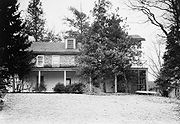 Rush was born to John and Susanna Harvey Rush on January 4, 1746 (December 24th, 1745 O.S.). The family which included seven children lived on a plantation in the Township of Byberry in Philadelphia County
, which was then about 14 miles outside Philadelphia (the township was incorporated into Philadelphia in 1854 and now remains one of its neighborhoods). Rush's father died when he was five, leaving his mother to care for the large family, At the age of eight, he was sent to live with an aunt and uncle, to receive a proper education. He attended an academy at Nottingham, run by the Rev. Samuel Finley
, which would later become West Nottingham Academy
.
In 1760, at age 15, he completed the five-year program earning him a Bachelor of Arts degree at the College of New Jersey (now Princeton University
) and then studied medicine under Dr. John Redman in Philadelphia. Redman encouraged him to further his studies at the University of Edinburgh
, where he earned a medical degree. While in the United Kingdom
practicing medicine, he learned French
, Italian
, and Spanish
. Returning to the Colonies
in 1769 (age 24), Rush opened a medical practice in Philadelphia and became Professor of Chemistry at the College of Philadelphia
(now the University of Pennsylvania
).
He published the first American textbook on chemistry
, several volumes on medical student education, and wrote influential patriotic essays. He was active in the Sons of Liberty
and was elected to attend the provincial conference to send delegates to the Continental Congress
. He was consulted by Thomas Paine
on the writing of the profoundly influential pro-independence pamphlet Common Sense
. He was appointed to represent Pennsylvania at the Continental Congress and signed the Declaration of Independence.
In 1777 he became surgeon-general of the middle department of the Continental Army. Conflicts with the Army Medical service, specifically with Dr. William Shippen, Jr., led to Rush's resignation in 1778.
Rush felt that the United States was the work of God:
"I do not believe that the Constitution was the offspring of inspiration, but I am as perfectly satisfied that the Union of the United States in its form and adoption is as much the work of a Divine Providence as any of the miracles recorded in the Old and New Testament".
In 1798, after the adoption of the Constitution, he declared:
"The only foundation for...a republic is to be laid in Religion. Without this there can be no virtue, and without virtue there can be no liberty, and liberty is the object and life of all republican governments."
early in the American Revolutionary War
. When Rush was serving as Surgeon General he sent an unsigned letter which quoted General Thomas Conway
saying that if not for God's grace this war would have been lost by Washington and his weak counselors. When this letter was given to Washington it was assumed that Rush was part of a secret plot nicknamed the Conway Cabal
to replace Washington with Horatio Gates
as commander-in-chief.
Rush's complaints against Washington's army included statements that there was "bad bread, no order, universal disgust." He also told John Adams
that officers referred to Gates
' army as "a well-regulated family", but called the forces directly under Washington "an unformed mob." He went on to contrast Gates, at the "pinnacle of military glory", to Washington, who had been "outgeneraled and twice beaten."
Though Rush was implicated in a conspiracy, "it may be safely claimed that conspiracy and intrigue would have been wholly out of character. If he was opinionated and impetuous, he was also incorruptible."
Rush later expressed regret for his actions against Washington. In a letter to John Adams in 1812, Rush wrote, "He [Washington] was the highly favored instrument whose patriotism and name contributed greatly to the establishment of the independence of the United States."
, of which he remained a member until his death.
He was elected to the Pennsylvania convention which adopted the Federal constitution and was appointed treasurer of the U.S. Mint, serving from 1797-1813.
He became Professor of medical theory and clinical practice at the University of Pennsylvania
in 1791, though the quality of his medicine was quite primitive even for the time: he advocated bleeding (for almost any illness) long after its practice had declined. He became a social activist, an abolitionist, and was the most well-known physician in America at the time of his death. He was also founder of the private liberal arts college Dickinson College
, in Carlisle, Pennsylvania
. In 1794, he was elected a foreign member of the Royal Swedish Academy of Sciences
.
Rush was a founding member of the Philadelphia Society for Alleviating the Miseries of Public Prisons (known today as the Pennsylvania Prison Society
), which greatly influenced the construction of Eastern State Penitentiary
in Philadelphia.
sent Meriwether Lewis
to Philadelphia to prepare for the Lewis and Clark Expedition
under the tutelage of Rush, who taught Lewis about frontier
illness
es and the performance of bloodletting
. Rush provided the corps with a medical kit that included:
As a prominent Presbyterian doctor and professor of chemistry in Philadelphia, he provided a bold and respected voice against the slave trade that could not be ignored.
The highlight of his involvement in abolishing slavery might be the pamphlet he wrote that appeared in Philadelphia, Boston, and New York in 1773 entitled "An Address to the Inhabitants of the British Settlements in America, upon Slave-Keeping." In this first of his many attacks on the social evils of his day, he not only assailed the slave trade, but the entire institution of slavery. Dr. Rush argued scientifically that Negroes were not by nature intellectually or morally inferior. Any apparent evidence to the contrary was only the perverted expression of slavery, which "is so foreign to the human mind, that the moral faculties, as well as those of the understanding are debased, and rendered torpid by it."
"In 1792 Dr Benjamin Rush, one of the 'Founding Fathers' of the USA, presented a paper before the American Philosophical Society which argued that the 'color' and 'figure' of blacks were derived from a form of leprosy. He was convinced that with proper treatment, blacks could be cured (i.e. become white) and eventually... assimilated into the general population" He thought that their skin color and hair difference meant they were diseased.(Omi & Winant 1986: 148). Omi, M. and H. Winant (1986). Racial formation in the United States : from the 1960s to the 1980s. New York ; London, Routledge & Kegan Paul.
Despite his public condemnations of slavery, Dr. Rush purchased a slave named William Grubber in 1776. To the consternation of many, Dr. Rush still owned Grubber when he joined the Pennsylvania Abolition Society in 1784.
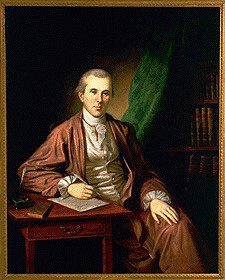 Rush was a proponent of bloodletting
and calomel therapy, treatments that were widespread in America at the time. In his report on the Philadelphia yellow fever
epidemic, he wrote:
Some contemporaries, notably William Cobbett
, objected to Rush's extreme use of bloodletting. Cobbett accused Rush of killing more patients than he had saved. Rush sued Cobbett for libel, winning a judgment of $500.
Rush reviewed the case of Henry Moss, a slave who lost his dark skin color (probably through vitiligo
). He proposed that being black was a hereditary skin disease, which he called "negroidism," and that it might be cured. Rush drew the conclusion that "Whites should not tyrannize over [blacks], for their disease should entitle them to a double portion of humanity. However, by the same token, whites should not intermarry with them, for this would tend to infect posterity with the 'disorder'... attempts must be made to cure the disease."
Rush wrote a descriptive account of the yellow fever
epidemic that struck Philadelphia in 1793 (during which he treated up to 120 patients per day), and what is considered to be the first case report on dengue fever
(published in 1789 on a case from 1780).
. In fact, he is considered the "Father of American Psychiatry", publishing the first textbook on the subject in the United States
, Medical Inquiries and Observations upon the Diseases of the Mind (1812). He undertook to classify different forms of mental illness and to theorize as to their causes and possible cures. Rush believed (incorrectly) that many mental illnesses were caused by disruptions of the blood circulation, and treated them with devices meant to improve circulation to the brain such as a restraining chair and a centrifugal spinning board. After seeing mental patients in appalling conditions in the Pennsylvania Hospital, Rush led a successful campaign in 1792 for the state to build a separate mental ward where the patients could be kept in more humane conditions.
While Dr Rush was uncertain what to do for the mentally ill, he knew that chains and dungeons (the practice of the time) were not the answer. He took patients from that drudgery and placed them in a "normal" hospital setting. This alone resulted in a number of patients recovering sufficiently to return to society. For this reason his approach is officially referred to as the Moral Therapy
.
Rush is sometimes considered a pioneer of occupational therapy
particularly as it pertains to the institutionalized. In Diseases of the Mind Rush wrote:
Furthermore, Rush was one of the first people to describe Savant Syndrome. In 1789 he described the abilities of Thomas Fuller, a lightning calculator. His observation would later be described in other individuals by notable scientists like John Langdon Down
.
Rush pioneered the therapeutic approach to addiction
. Prior to his work, drunkenness was viewed as being sinful and a matter of choice. Rush believed that the alcoholic
loses control over himself and identified the properties of alcohol, rather than the alcoholic's choice, as the causal agent. He developed the conception of alcoholism as a form of medical disease and proposed that alcoholics should be weaned from their addiction via less potent substances.
(Chicago) in his honor after his death. One of his last apprentices was Samuel A. Cartwright
, later a Confederate States of America
surgeon charged with improving sanitary conditions in the camps around Vicksburg, Mississippi
, and Port Hudson, Louisiana
. Rush University Medical Center
in Chicago, formerly Rush-Presbyterian-St. Luke’s Medical Center, was named in his honor.
and was a founder of the Philadelphia Bible Society, "father of public schools" and a principal promoter of the American Sunday School Union. He was an advocate for Christianity in public life and in education. In line with that, he advocated that the U.S. government require public schools to teach students using the Bible
as a textbook, and that the government should furnish an American bible to every family at public expense. He also said that the following sentence should be inscribed in letters of gold over the door of every State and Court house in the United States: "The Son of Man Came into the World, Not To Destroy Men's Lives, But To Save Them."
Since such an action did not involve the establishment by Congress of a religious entity (state approved church or sect), he saw no conflict between this and the First Amendment to the United States Constitution
, ratified in 1791, which states:
"Congress shall make no law respecting an establishment of religion, or prohibiting the free exercise thereof;...."
His religious views were influenced before 1779 by what he described as "Fletcher's controversy with the Calvinists in favor of the Universality of the atonement." After hearing Elhanan Winchester
preach, Rush indicated that Winchester's theology "embraced and reconciled my ancient calvinistical, and my newly adopted (Arminian) principles. From that time on I have never doubted upon the subject of the salvation of all men." Rush did believe, as did Winchester and most Universalists, in a state of punishment after death for the wicked.
In his later years, Rush, in a letter to John Adams
, described his religious views as "a compound of the orthodoxy and heterodoxy of most of our Christian churches."
He also helped Richard Allen
in the founding of the African Methodist Episcopal Church
. In his autobiography, Allen wrote:
"...By this time we had waited on Dr. Rush and Mr. Robert Ralston, and told them of our distressing situation. We considered it a blessing that the Lord had put it into our hearts to wait upon... those gentle-men. They pitied our situation, and subscribed largely towards the church, and were very friendly towards us and advised us how to go on.
We appointed Mr. Ralston our treasurer. Dr. Rush did much for us in public by his influence. I hope the name of Dr. Benjamin Rush and Mr. Robert Ralston will never be forgotten among us. They were the two first gentlemen who espoused the cause of the oppressed and aided us in building the house of the Lord for the poor Africans to worship in. Here was the beginning and rise of the first African church in America."
"The Life, Experience, and Gospel Labours of the Rt. Rev. Richard Allen." http://docsouth.unc.edu/neh/allen/menu.html
Before the Revolutionary war, Rush was engaged to Sarah Eve, daughter of prominent Philadelphian, Captain Oswell Eve, Sr. Their wedding date was set for mid-December 1774. Unfortunately, Sarah became ill and died on December 4, 1774, 2 weeks before their intended date.
On January 11, 1776, Rush married Julia Stockton (1759–1848), daughter of Richard Stockton, another signer of the Declaration of Independence, and his wife Annis Boudinot Stockton
. They had 13 children, 9 of whom survived their first year: John, Ann Emily, Richard
, Susannah (died as infant), Elizabeth Graeme (died as infant), Mary B, James, William (died as an infant), Benjamin (died as an infant), Benjamin, Julia, Samuel, William.
Ann Emily married the Honorable Ross Cuthbert
; Richard Rush (1780–1859) became an attorney and married Catherine Elizabeth Murray; Mary married Major Thomas Manners; James became a medical doctor and married Eugenia Frances Heister and Elizabeth Upshur Dennis; Benjamin did not marry, moved to New Orleans, LA; Julia (1792–1860) married Henry Jonathon Williams Esquire; Samuel (1795–1859) became an attorney and married Nancy Anne Wilmer; William became a doctor and married Elizabeth Fox Roberts. Samuel's daughter Julia Williams Rush (1833–1898) married Alexander Biddle
of the Philadelphia Biddle family
.
Rush's eldest son, John, initially followed his father into medicine, then joined the navy. During his tour, a friend and fellow officer challenged him to a duel
. John shot and killed the challenger and was soon consumed by feelings of guilt. When he returned home unable to care for himself, Rush placed him in the mental ward at the Pennsylvania Hospital, where he died 30 years later without having recovered.
in Philadelphia, not far from where Benjamin Franklin is buried. At the site, you will see a small plaque honoring Benjamin Rush. However, the box marker is next to the plaque on the right, with inscriptions on the top. The inscription reads,
"In memory of
Benjamin Rush MD
he died on the 19th of April
in the year of our Lord 1813
Aged 68 years
Well done good and faithful servant
enter thou into the joy of the Lord
Mrs Julia Rush
wife of
Benjamin Rush MD
Born March 2, 1759
Died July 7, 1848"
Founding Fathers of the United States
The Founding Fathers of the United States of America were political leaders and statesmen who participated in the American Revolution by signing the United States Declaration of Independence, taking part in the American Revolutionary War, establishing the United States Constitution, or by some...
of the United States
United States
The United States of America is a federal constitutional republic comprising fifty states and a federal district...
. Rush lived in the state
U.S. state
A U.S. state is any one of the 50 federated states of the United States of America that share sovereignty with the federal government. Because of this shared sovereignty, an American is a citizen both of the federal entity and of his or her state of domicile. Four states use the official title of...
of Pennsylvania
Pennsylvania
The Commonwealth of Pennsylvania is a U.S. state that is located in the Northeastern and Mid-Atlantic regions of the United States. The state borders Delaware and Maryland to the south, West Virginia to the southwest, Ohio to the west, New York and Ontario, Canada, to the north, and New Jersey to...
and was a physician
Physician
A physician is a health care provider who practices the profession of medicine, which is concerned with promoting, maintaining or restoring human health through the study, diagnosis, and treatment of disease, injury and other physical and mental impairments...
, writer
Writer
A writer is a person who produces literature, such as novels, short stories, plays, screenplays, poetry, or other literary art. Skilled writers are able to use language to portray ideas and images....
, educator
Education in the United States
Education in the United States is mainly provided by the public sector, with control and funding coming from three levels: federal, state, and local. Child education is compulsory.Public education is universally available...
, humanitarian
Humanitarianism
In its most general form, humanitarianism is an ethic of kindness, benevolence and sympathy extended universally and impartially to all human beings. Humanitarianism has been an evolving concept historically but universality is a common element in its evolution...
and a Christian Universalist, as well as the founder of Dickinson College
Dickinson College
Dickinson College is a private, residential liberal arts college in Carlisle, Pennsylvania. Originally established as a Grammar School in 1773, Dickinson was chartered September 9, 1783, five days after the signing of the Treaty of Paris, making it the first college to be founded in the newly...
in Carlisle, Pennsylvania
Carlisle, Pennsylvania
Carlisle is a borough in and the county seat of Cumberland County, Pennsylvania, United States. The name is traditionally pronounced with emphasis on the second syllable. Carlisle is located within the Cumberland Valley, a highly productive agricultural region. As of the 2010 census, the borough...
.
Rush was a signatory of the Declaration of Independence
United States Declaration of Independence
The Declaration of Independence was a statement adopted by the Continental Congress on July 4, 1776, which announced that the thirteen American colonies then at war with Great Britain regarded themselves as independent states, and no longer a part of the British Empire. John Adams put forth a...
and attended the Continental Congress
Continental Congress
The Continental Congress was a convention of delegates called together from the Thirteen Colonies that became the governing body of the United States during the American Revolution....
. He served as Surgeon General
Surgeon General
Surgeon General may refer to:* Surgeon-General * Surgeon General of the United States* State Surgeon General* Surgeon General of the United States Army* Surgeon General of the United States Navy...
in the Continental army, and was an opponent of Gen. George Washington
George Washington
George Washington was the dominant military and political leader of the new United States of America from 1775 to 1799. He led the American victory over Great Britain in the American Revolutionary War as commander-in-chief of the Continental Army from 1775 to 1783, and presided over the writing of...
. Later in life, he became a professor
Professor
A professor is a scholarly teacher; the precise meaning of the term varies by country. Literally, professor derives from Latin as a "person who professes" being usually an expert in arts or sciences; a teacher of high rank...
of chemistry, medical theory, and clinical practice at the University of Pennsylvania
University of Pennsylvania
The University of Pennsylvania is a private, Ivy League university located in Philadelphia, Pennsylvania, United States. Penn is the fourth-oldest institution of higher education in the United States,Penn is the fourth-oldest using the founding dates claimed by each institution...
. Despite having a wide influence on the development of American government
Federal government of the United States
The federal government of the United States is the national government of the constitutional republic of fifty states that is the United States of America. The federal government comprises three distinct branches of government: a legislative, an executive and a judiciary. These branches and...
, he is not as widely known as many of his American contemporaries. Rush was also an early opponent of slavery
Slavery
Slavery is a system under which people are treated as property to be bought and sold, and are forced to work. Slaves can be held against their will from the time of their capture, purchase or birth, and deprived of the right to leave, to refuse to work, or to demand compensation...
and capital punishment
Capital punishment
Capital punishment, the death penalty, or execution is the sentence of death upon a person by the state as a punishment for an offence. Crimes that can result in a death penalty are known as capital crimes or capital offences. The term capital originates from the Latin capitalis, literally...
.
Despite his great contributions to early American society, Rush may be more famous today as the man who, in 1812, helped reconcile the friendship of Thomas Jefferson
Thomas Jefferson
Thomas Jefferson was the principal author of the United States Declaration of Independence and the Statute of Virginia for Religious Freedom , the third President of the United States and founder of the University of Virginia...
and John Adams
John Adams
John Adams was an American lawyer, statesman, diplomat and political theorist. A leading champion of independence in 1776, he was the second President of the United States...
by encouraging the two former Presidents to resume writing to each other.
Life
Philadelphia County, Pennsylvania
-History:Tribes of Lenape were the first known occupants in the area which became Philadelphia County. The first European settlers were Swedes and Finns who arrived in 1638. The Netherlands seized the area in 1655, but permanently lost control to England in 1674...
, which was then about 14 miles outside Philadelphia (the township was incorporated into Philadelphia in 1854 and now remains one of its neighborhoods). Rush's father died when he was five, leaving his mother to care for the large family, At the age of eight, he was sent to live with an aunt and uncle, to receive a proper education. He attended an academy at Nottingham, run by the Rev. Samuel Finley
Samuel Finley
The Rev. Samuel Finley , 1763 DD University of Glasgow . Evangelical preacher and academic, he founded the West Nottingham Academy, and was the fifth president and an original trustee of the College of New Jersey from 1761 until 1766.-Family and students:Finley was the...
, which would later become West Nottingham Academy
West Nottingham Academy
West Nottingham Academy was founded in 1744 by the Presbyterian preacher Samuel Finley, who later become President of Princeton College . Today, the independent co-ed school serves both boarding and day students in grades 9-12...
.
In 1760, at age 15, he completed the five-year program earning him a Bachelor of Arts degree at the College of New Jersey (now Princeton University
Princeton University
Princeton University is a private research university located in Princeton, New Jersey, United States. The school is one of the eight universities of the Ivy League, and is one of the nine Colonial Colleges founded before the American Revolution....
) and then studied medicine under Dr. John Redman in Philadelphia. Redman encouraged him to further his studies at the University of Edinburgh
University of Edinburgh
The University of Edinburgh, founded in 1583, is a public research university located in Edinburgh, the capital of Scotland, and a UNESCO World Heritage Site. The university is deeply embedded in the fabric of the city, with many of the buildings in the historic Old Town belonging to the university...
, where he earned a medical degree. While in the United Kingdom
United Kingdom
The United Kingdom of Great Britain and Northern IrelandIn the United Kingdom and Dependencies, other languages have been officially recognised as legitimate autochthonous languages under the European Charter for Regional or Minority Languages...
practicing medicine, he learned French
French language
French is a Romance language spoken as a first language in France, the Romandy region in Switzerland, Wallonia and Brussels in Belgium, Monaco, the regions of Quebec and Acadia in Canada, and by various communities elsewhere. Second-language speakers of French are distributed throughout many parts...
, Italian
Italian language
Italian is a Romance language spoken mainly in Europe: Italy, Switzerland, San Marino, Vatican City, by minorities in Malta, Monaco, Croatia, Slovenia, France, Libya, Eritrea, and Somalia, and by immigrant communities in the Americas and Australia...
, and Spanish
Spanish language
Spanish , also known as Castilian , is a Romance language in the Ibero-Romance group that evolved from several languages and dialects in central-northern Iberia around the 9th century and gradually spread with the expansion of the Kingdom of Castile into central and southern Iberia during the...
. Returning to the Colonies
Thirteen Colonies
The Thirteen Colonies were English and later British colonies established on the Atlantic coast of North America between 1607 and 1733. They declared their independence in the American Revolution and formed the United States of America...
in 1769 (age 24), Rush opened a medical practice in Philadelphia and became Professor of Chemistry at the College of Philadelphia
The Academy and College of Philadelphia
The Academy and College of Philadelphia in Philadelphia, Pennsylvania, USA, is considered by many to have been the first American academy. It was founded in 1749 by Benjamin Franklin....
(now the University of Pennsylvania
University of Pennsylvania
The University of Pennsylvania is a private, Ivy League university located in Philadelphia, Pennsylvania, United States. Penn is the fourth-oldest institution of higher education in the United States,Penn is the fourth-oldest using the founding dates claimed by each institution...
).
He published the first American textbook on chemistry
Chemistry
Chemistry is the science of matter, especially its chemical reactions, but also its composition, structure and properties. Chemistry is concerned with atoms and their interactions with other atoms, and particularly with the properties of chemical bonds....
, several volumes on medical student education, and wrote influential patriotic essays. He was active in the Sons of Liberty
Sons of Liberty
The Sons of Liberty were a political group made up of American patriots that originated in the pre-independence North American British colonies. The group was formed to protect the rights of the colonists from the usurpations by the British government after 1766...
and was elected to attend the provincial conference to send delegates to the Continental Congress
Continental Congress
The Continental Congress was a convention of delegates called together from the Thirteen Colonies that became the governing body of the United States during the American Revolution....
. He was consulted by Thomas Paine
Thomas Paine
Thomas "Tom" Paine was an English author, pamphleteer, radical, inventor, intellectual, revolutionary, and one of the Founding Fathers of the United States...
on the writing of the profoundly influential pro-independence pamphlet Common Sense
Common sense
Common sense is defined by Merriam-Webster as, "sound and prudent judgment based on a simple perception of the situation or facts." Thus, "common sense" equates to the knowledge and experience which most people already have, or which the person using the term believes that they do or should have...
. He was appointed to represent Pennsylvania at the Continental Congress and signed the Declaration of Independence.
In 1777 he became surgeon-general of the middle department of the Continental Army. Conflicts with the Army Medical service, specifically with Dr. William Shippen, Jr., led to Rush's resignation in 1778.
Rush felt that the United States was the work of God:
"I do not believe that the Constitution was the offspring of inspiration, but I am as perfectly satisfied that the Union of the United States in its form and adoption is as much the work of a Divine Providence as any of the miracles recorded in the Old and New Testament".
In 1798, after the adoption of the Constitution, he declared:
"The only foundation for...a republic is to be laid in Religion. Without this there can be no virtue, and without virtue there can be no liberty, and liberty is the object and life of all republican governments."
Campaign against General Washington
Rush suggested the removal of General George WashingtonGeorge Washington
George Washington was the dominant military and political leader of the new United States of America from 1775 to 1799. He led the American victory over Great Britain in the American Revolutionary War as commander-in-chief of the Continental Army from 1775 to 1783, and presided over the writing of...
early in the American Revolutionary War
American Revolutionary War
The American Revolutionary War , the American War of Independence, or simply the Revolutionary War, began as a war between the Kingdom of Great Britain and thirteen British colonies in North America, and ended in a global war between several European great powers.The war was the result of the...
. When Rush was serving as Surgeon General he sent an unsigned letter which quoted General Thomas Conway
Thomas Conway
Thomas Conway was a French soldier from Ireland who served as a major general in the American Continental Army during the American Revolutionary War. He became involved with the alleged Conway Cabal. He later served with Émigré forces during the French Revolutionary War.-Early life:Conway was born...
saying that if not for God's grace this war would have been lost by Washington and his weak counselors. When this letter was given to Washington it was assumed that Rush was part of a secret plot nicknamed the Conway Cabal
Conway Cabal
The Conway Cabal refers to a series of events in late 1777 and early 1778 suggesting that George Washington be replaced as commander of the Continental Army during the American Revolutionary War. It was named after Brigadier General Thomas Conway, whose letters criticizing Washington were forwarded...
to replace Washington with Horatio Gates
Horatio Gates
Horatio Lloyd Gates was a retired British soldier who served as an American general during the Revolutionary War. He took credit for the American victory at the Battle of Saratoga – Benedict Arnold, who led the attack, was finally forced from the field when he was shot in the leg – and...
as commander-in-chief.
Rush's complaints against Washington's army included statements that there was "bad bread, no order, universal disgust." He also told John Adams
John Adams
John Adams was an American lawyer, statesman, diplomat and political theorist. A leading champion of independence in 1776, he was the second President of the United States...
that officers referred to Gates
Horatio Gates
Horatio Lloyd Gates was a retired British soldier who served as an American general during the Revolutionary War. He took credit for the American victory at the Battle of Saratoga – Benedict Arnold, who led the attack, was finally forced from the field when he was shot in the leg – and...
' army as "a well-regulated family", but called the forces directly under Washington "an unformed mob." He went on to contrast Gates, at the "pinnacle of military glory", to Washington, who had been "outgeneraled and twice beaten."
Though Rush was implicated in a conspiracy, "it may be safely claimed that conspiracy and intrigue would have been wholly out of character. If he was opinionated and impetuous, he was also incorruptible."
Rush later expressed regret for his actions against Washington. In a letter to John Adams in 1812, Rush wrote, "He [Washington] was the highly favored instrument whose patriotism and name contributed greatly to the establishment of the independence of the United States."
Post Revolution
In 1783 he was appointed to the staff of Pennsylvania HospitalPennsylvania Hospital
Pennsylvania Hospital is a hospital in Center City, Philadelphia, affiliated with the University of Pennsylvania Health System . Founded on May 11, 1751 by Benjamin Franklin and Thomas Bond, it was the first hospital in the United States...
, of which he remained a member until his death.
He was elected to the Pennsylvania convention which adopted the Federal constitution and was appointed treasurer of the U.S. Mint, serving from 1797-1813.
He became Professor of medical theory and clinical practice at the University of Pennsylvania
University of Pennsylvania
The University of Pennsylvania is a private, Ivy League university located in Philadelphia, Pennsylvania, United States. Penn is the fourth-oldest institution of higher education in the United States,Penn is the fourth-oldest using the founding dates claimed by each institution...
in 1791, though the quality of his medicine was quite primitive even for the time: he advocated bleeding (for almost any illness) long after its practice had declined. He became a social activist, an abolitionist, and was the most well-known physician in America at the time of his death. He was also founder of the private liberal arts college Dickinson College
Dickinson College
Dickinson College is a private, residential liberal arts college in Carlisle, Pennsylvania. Originally established as a Grammar School in 1773, Dickinson was chartered September 9, 1783, five days after the signing of the Treaty of Paris, making it the first college to be founded in the newly...
, in Carlisle, Pennsylvania
Carlisle, Pennsylvania
Carlisle is a borough in and the county seat of Cumberland County, Pennsylvania, United States. The name is traditionally pronounced with emphasis on the second syllable. Carlisle is located within the Cumberland Valley, a highly productive agricultural region. As of the 2010 census, the borough...
. In 1794, he was elected a foreign member of the Royal Swedish Academy of Sciences
Royal Swedish Academy of Sciences
The Royal Swedish Academy of Sciences or Kungliga Vetenskapsakademien is one of the Royal Academies of Sweden. The Academy is an independent, non-governmental scientific organization which acts to promote the sciences, primarily the natural sciences and mathematics.The Academy was founded on 2...
.
Rush was a founding member of the Philadelphia Society for Alleviating the Miseries of Public Prisons (known today as the Pennsylvania Prison Society
Pennsylvania Prison Society
The Pennsylvania Prison Society is an advocacy group that supports prisoners, formerly incarcerated individuals and their families. It is headquartered in Philadelphia, Pennsylvania....
), which greatly influenced the construction of Eastern State Penitentiary
Eastern State Penitentiary
The Eastern State Penitentiary is a former American prison in Philadelphia, Pennsylvania. It is located on 2027 Fairmount Avenue between Corinthian Avenue and North 22nd Street in the Fairmount section of Philadelphia and was operational from 1829 until 1971...
in Philadelphia.
Corps of discovery
In 1803, Thomas JeffersonThomas Jefferson
Thomas Jefferson was the principal author of the United States Declaration of Independence and the Statute of Virginia for Religious Freedom , the third President of the United States and founder of the University of Virginia...
sent Meriwether Lewis
Meriwether Lewis
Meriwether Lewis was an American explorer, soldier, and public administrator, best known for his role as the leader of the Lewis and Clark Expedition also known as the Corps of Discovery, with William Clark...
to Philadelphia to prepare for the Lewis and Clark Expedition
Lewis and Clark Expedition
The Lewis and Clark Expedition, or ″Corps of Discovery Expedition" was the first transcontinental expedition to the Pacific Coast by the United States. Commissioned by President Thomas Jefferson and led by two Virginia-born veterans of Indian wars in the Ohio Valley, Meriwether Lewis and William...
under the tutelage of Rush, who taught Lewis about frontier
Frontier
A frontier is a political and geographical term referring to areas near or beyond a boundary. 'Frontier' was absorbed into English from French in the 15th century, with the meaning "borderland"--the region of a country that fronts on another country .The use of "frontier" to mean "a region at the...
illness
Illness
Illness is a state of poor health. Illness is sometimes considered another word for disease. Others maintain that fine distinctions exist...
es and the performance of bloodletting
Bloodletting
Bloodletting is the withdrawal of often little quantities of blood from a patient to cure or prevent illness and disease. Bloodletting was based on an ancient system of medicine in which blood and other bodily fluid were considered to be "humors" the proper balance of which maintained health...
. Rush provided the corps with a medical kit that included:
- TurkishOttoman EmpireThe Ottoman EmpireIt was usually referred to as the "Ottoman Empire", the "Turkish Empire", the "Ottoman Caliphate" or more commonly "Turkey" by its contemporaries...
opiumOpiumOpium is the dried latex obtained from the opium poppy . Opium contains up to 12% morphine, an alkaloid, which is frequently processed chemically to produce heroin for the illegal drug trade. The latex also includes codeine and non-narcotic alkaloids such as papaverine, thebaine and noscapine...
for nervousness - emetics to induce vomiting
- medicinalMedicineMedicine is the science and art of healing. It encompasses a variety of health care practices evolved to maintain and restore health by the prevention and treatment of illness....
wineWineWine is an alcoholic beverage, made of fermented fruit juice, usually from grapes. The natural chemical balance of grapes lets them ferment without the addition of sugars, acids, enzymes, or other nutrients. Grape wine is produced by fermenting crushed grapes using various types of yeast. Yeast... - fifty dozen of Dr. Rush's Bilious Pills, laxatives containing more than 50% mercuryMercury (element)Mercury is a chemical element with the symbol Hg and atomic number 80. It is also known as quicksilver or hydrargyrum...
, which the corps called "thunderclappers". Their meat-rich diet and lack of clean water during the expedition gave the men cause to use them frequently. Though their efficacy is questionable, their high mercury content provided an excellent tracer by which archaeologists have been able to track the corps' actual route to the Pacific.
Abolitionism
In 1766 when Rush set out for his studies in Edinburgh, he was outraged by the sight of 100 slave ships in Liverpool harbor.As a prominent Presbyterian doctor and professor of chemistry in Philadelphia, he provided a bold and respected voice against the slave trade that could not be ignored.
The highlight of his involvement in abolishing slavery might be the pamphlet he wrote that appeared in Philadelphia, Boston, and New York in 1773 entitled "An Address to the Inhabitants of the British Settlements in America, upon Slave-Keeping." In this first of his many attacks on the social evils of his day, he not only assailed the slave trade, but the entire institution of slavery. Dr. Rush argued scientifically that Negroes were not by nature intellectually or morally inferior. Any apparent evidence to the contrary was only the perverted expression of slavery, which "is so foreign to the human mind, that the moral faculties, as well as those of the understanding are debased, and rendered torpid by it."
"In 1792 Dr Benjamin Rush, one of the 'Founding Fathers' of the USA, presented a paper before the American Philosophical Society which argued that the 'color' and 'figure' of blacks were derived from a form of leprosy. He was convinced that with proper treatment, blacks could be cured (i.e. become white) and eventually... assimilated into the general population" He thought that their skin color and hair difference meant they were diseased.(Omi & Winant 1986: 148). Omi, M. and H. Winant (1986). Racial formation in the United States : from the 1960s to the 1980s. New York ; London, Routledge & Kegan Paul.
Despite his public condemnations of slavery, Dr. Rush purchased a slave named William Grubber in 1776. To the consternation of many, Dr. Rush still owned Grubber when he joined the Pennsylvania Abolition Society in 1784.
Contributions to medicine
Although anatomy was well understood in Rush's time, the causes of disease remained elusive. Doctors therefore relied on various unscientific treatments. Although Rush continued these practices, he actively sought new explanations and new approaches to treatment, some of which remain influential.Physical medicine
Bloodletting
Bloodletting is the withdrawal of often little quantities of blood from a patient to cure or prevent illness and disease. Bloodletting was based on an ancient system of medicine in which blood and other bodily fluid were considered to be "humors" the proper balance of which maintained health...
and calomel therapy, treatments that were widespread in America at the time. In his report on the Philadelphia yellow fever
Yellow fever
Yellow fever is an acute viral hemorrhagic disease. The virus is a 40 to 50 nm enveloped RNA virus with positive sense of the Flaviviridae family....
epidemic, he wrote:
- I have found bleeding to be useful, not only in cases where the pulse was full and quick, but where it was slow and tense. I have bled twice in many, and in one acute case four times, with the happiest effect. I consider intrepidity in the use of the lancetScalpelA scalpel, or lancet, is a small and extremely sharp bladed instrument used for surgery, anatomical dissection, and various arts and crafts . Scalpels may be single-use disposable or re-usable. Re-usable scalpels can have attached, resharpenable blades or, more commonly, non-attached, replaceable...
, at present, to be necessary, as it is in the use of mercuryMercury (element)Mercury is a chemical element with the symbol Hg and atomic number 80. It is also known as quicksilver or hydrargyrum...
and jalapJalapJalap is a cathartic drug consisting of the tuberous roots of Ipomoea purga, a convolvulaceous plant growing on the eastern declivities of the Sierra Madre Oriental of Mexico at an elevation of 5000 to 8000 ft...
, in this insidious and ferocious disease.
Some contemporaries, notably William Cobbett
William Cobbett
William Cobbett was an English pamphleteer, farmer and journalist, who was born in Farnham, Surrey. He believed that reforming Parliament and abolishing the rotten boroughs would help to end the poverty of farm labourers, and he attacked the borough-mongers, sinecurists and "tax-eaters" relentlessly...
, objected to Rush's extreme use of bloodletting. Cobbett accused Rush of killing more patients than he had saved. Rush sued Cobbett for libel, winning a judgment of $500.
Rush reviewed the case of Henry Moss, a slave who lost his dark skin color (probably through vitiligo
Vitiligo
Vitiligo is a condition that causes depigmentation of sections of skin. It occurs when melanocytes, the cells responsible for skin pigmentation, die or are unable to function. The cause of vitiligo is unknown, but research suggests that it may arise from autoimmune, genetic, oxidative stress,...
). He proposed that being black was a hereditary skin disease, which he called "negroidism," and that it might be cured. Rush drew the conclusion that "Whites should not tyrannize over [blacks], for their disease should entitle them to a double portion of humanity. However, by the same token, whites should not intermarry with them, for this would tend to infect posterity with the 'disorder'... attempts must be made to cure the disease."
Rush wrote a descriptive account of the yellow fever
Yellow fever
Yellow fever is an acute viral hemorrhagic disease. The virus is a 40 to 50 nm enveloped RNA virus with positive sense of the Flaviviridae family....
epidemic that struck Philadelphia in 1793 (during which he treated up to 120 patients per day), and what is considered to be the first case report on dengue fever
Dengue fever
Dengue fever , also known as breakbone fever, is an infectious tropical disease caused by the dengue virus. Symptoms include fever, headache, muscle and joint pains, and a characteristic skin rash that is similar to measles...
(published in 1789 on a case from 1780).
Mental health
Rush was far ahead of his time in the treatment of mental illnessMental illness
A mental disorder or mental illness is a psychological or behavioral pattern generally associated with subjective distress or disability that occurs in an individual, and which is not a part of normal development or culture. Such a disorder may consist of a combination of affective, behavioural,...
. In fact, he is considered the "Father of American Psychiatry", publishing the first textbook on the subject in the United States
United States
The United States of America is a federal constitutional republic comprising fifty states and a federal district...
, Medical Inquiries and Observations upon the Diseases of the Mind (1812). He undertook to classify different forms of mental illness and to theorize as to their causes and possible cures. Rush believed (incorrectly) that many mental illnesses were caused by disruptions of the blood circulation, and treated them with devices meant to improve circulation to the brain such as a restraining chair and a centrifugal spinning board. After seeing mental patients in appalling conditions in the Pennsylvania Hospital, Rush led a successful campaign in 1792 for the state to build a separate mental ward where the patients could be kept in more humane conditions.
While Dr Rush was uncertain what to do for the mentally ill, he knew that chains and dungeons (the practice of the time) were not the answer. He took patients from that drudgery and placed them in a "normal" hospital setting. This alone resulted in a number of patients recovering sufficiently to return to society. For this reason his approach is officially referred to as the Moral Therapy
Moral treatment
Moral treatment was an approach to mental disorder based on humane psychosocial care or moral discipline that emerged in the 18th century and came to the fore for much of the 19th century, deriving partly from psychiatry or psychology and partly from religious or moral concerns...
.
Rush is sometimes considered a pioneer of occupational therapy
Occupational therapy
Occupational therapy is a discipline that aims to promote health by enabling people to perform meaningful and purposeful activities. Occupational therapists work with individuals who suffer from a mentally, physically, developmentally, and/or emotionally disabling condition by utilizing treatments...
particularly as it pertains to the institutionalized. In Diseases of the Mind Rush wrote:
- "It has been remarked, that the maniacs of the male sex in all hospitals, who assist in cutting wood, making fires, and digging in a garden, and the females who are employed in washing, ironing, and scrubbing floors, often recover, while persons, whose rank exempts them from performing such services, languish away their lives within the walls of the hospital".
Furthermore, Rush was one of the first people to describe Savant Syndrome. In 1789 he described the abilities of Thomas Fuller, a lightning calculator. His observation would later be described in other individuals by notable scientists like John Langdon Down
John Langdon Down
John Langdon Haydon Down was a British doctor best known for his description of a relatively common genetic disorder that is now called Down syndrome.-Education:...
.
Rush pioneered the therapeutic approach to addiction
Substance use disorder
Substance use disorders include substance abuse and substance dependence. In DSM-IV, the conditions are formally diagnosed as one or the other, but it has been proposed that DSM-5 combine the two into a single condition called "Substance-use disorder"....
. Prior to his work, drunkenness was viewed as being sinful and a matter of choice. Rush believed that the alcoholic
Alcoholism
Alcoholism is a broad term for problems with alcohol, and is generally used to mean compulsive and uncontrolled consumption of alcoholic beverages, usually to the detriment of the drinker's health, personal relationships, and social standing...
loses control over himself and identified the properties of alcohol, rather than the alcoholic's choice, as the causal agent. He developed the conception of alcoholism as a form of medical disease and proposed that alcoholics should be weaned from their addiction via less potent substances.
Education
During his career, he educated over 3000 medical students, and several of these established Rush Medical CollegeRush Medical College
Rush Medical College is the medical school of Rush University, a private university in Chicago, Illinois. Rush Medical College was one of the first medical colleges in the state of Illinois and was chartered in 1837, two days before the city of Chicago was chartered, and opened with 22 students on...
(Chicago) in his honor after his death. One of his last apprentices was Samuel A. Cartwright
Samuel A. Cartwright
Samuel Adolphus Cartwright was a physician who practiced in Mississippi and Louisiana in the antebellum United States. During the American Civil War he joined the Confederate States of America and was assigned the responsibility of improving sanitary conditions in the camps about Vicksburg,...
, later a Confederate States of America
Confederate States of America
The Confederate States of America was a government set up from 1861 to 1865 by 11 Southern slave states of the United States of America that had declared their secession from the U.S...
surgeon charged with improving sanitary conditions in the camps around Vicksburg, Mississippi
Vicksburg, Mississippi
Vicksburg is a city in Warren County, Mississippi, United States. It is the only city in Warren County. It is located northwest of New Orleans on the Mississippi and Yazoo rivers, and due west of Jackson, the state capital. In 1900, 14,834 people lived in Vicksburg; in 1910, 20,814; in 1920,...
, and Port Hudson, Louisiana
Port Hudson, Louisiana
Port Hudson is a small unincorporated community in East Baton Rouge Parish, Louisiana, United States. Located about northwest of Baton Rouge, it is most famous for an American Civil War battle known as the Siege of Port Hudson.-Geography:...
. Rush University Medical Center
Rush University Medical Center
Rush University Medical Center is a 676-bed academic medical center that includes hospital facilities for adults and children. It also includes the Johnston R. Bowman Health Center...
in Chicago, formerly Rush-Presbyterian-St. Luke’s Medical Center, was named in his honor.
Religious views and vision
He is generally deemed PresbyterianPresbyterianism
Presbyterianism refers to a number of Christian churches adhering to the Calvinist theological tradition within Protestantism, which are organized according to a characteristic Presbyterian polity. Presbyterian theology typically emphasizes the sovereignty of God, the authority of the Scriptures,...
and was a founder of the Philadelphia Bible Society, "father of public schools" and a principal promoter of the American Sunday School Union. He was an advocate for Christianity in public life and in education. In line with that, he advocated that the U.S. government require public schools to teach students using the Bible
Bible
The Bible refers to any one of the collections of the primary religious texts of Judaism and Christianity. There is no common version of the Bible, as the individual books , their contents and their order vary among denominations...
as a textbook, and that the government should furnish an American bible to every family at public expense. He also said that the following sentence should be inscribed in letters of gold over the door of every State and Court house in the United States: "The Son of Man Came into the World, Not To Destroy Men's Lives, But To Save Them."
Since such an action did not involve the establishment by Congress of a religious entity (state approved church or sect), he saw no conflict between this and the First Amendment to the United States Constitution
First Amendment to the United States Constitution
The First Amendment to the United States Constitution is part of the Bill of Rights. The amendment prohibits the making of any law respecting an establishment of religion, impeding the free exercise of religion, abridging the freedom of speech, infringing on the freedom of the press, interfering...
, ratified in 1791, which states:
"Congress shall make no law respecting an establishment of religion, or prohibiting the free exercise thereof;...."
His religious views were influenced before 1779 by what he described as "Fletcher's controversy with the Calvinists in favor of the Universality of the atonement." After hearing Elhanan Winchester
Elhanan Winchester
Elhanan Winchester was one of the founders of the United States General Convention of Universalists, later the Universalist Church of America.-External links:* -References:...
preach, Rush indicated that Winchester's theology "embraced and reconciled my ancient calvinistical, and my newly adopted (Arminian) principles. From that time on I have never doubted upon the subject of the salvation of all men." Rush did believe, as did Winchester and most Universalists, in a state of punishment after death for the wicked.
In his later years, Rush, in a letter to John Adams
John Adams
John Adams was an American lawyer, statesman, diplomat and political theorist. A leading champion of independence in 1776, he was the second President of the United States...
, described his religious views as "a compound of the orthodoxy and heterodoxy of most of our Christian churches."
He also helped Richard Allen
Richard Allen (reverend)
Richard Allen was a minister, educator and writer, and the founder of the African Methodist Episcopal , the first independent black denomination in the United States in 1816. He opened his first church in 1794 in Philadelphia, Pennsylvania. He was elected the first bishop of the AME Church...
in the founding of the African Methodist Episcopal Church
African Methodist Episcopal Church
The African Methodist Episcopal Church, usually called the A.M.E. Church, is a predominantly African American Methodist denomination based in the United States. It was founded by the Rev. Richard Allen in Philadelphia, Pennsylvania, in 1816 from several black Methodist congregations in the...
. In his autobiography, Allen wrote:
"...By this time we had waited on Dr. Rush and Mr. Robert Ralston, and told them of our distressing situation. We considered it a blessing that the Lord had put it into our hearts to wait upon... those gentle-men. They pitied our situation, and subscribed largely towards the church, and were very friendly towards us and advised us how to go on.
We appointed Mr. Ralston our treasurer. Dr. Rush did much for us in public by his influence. I hope the name of Dr. Benjamin Rush and Mr. Robert Ralston will never be forgotten among us. They were the two first gentlemen who espoused the cause of the oppressed and aided us in building the house of the Lord for the poor Africans to worship in. Here was the beginning and rise of the first African church in America."
"The Life, Experience, and Gospel Labours of the Rt. Rev. Richard Allen." http://docsouth.unc.edu/neh/allen/menu.html
Family
Benjamin Rush's great-great-grandfather, John Rush, came with his wife, Susannah (Lucas) Rush from England in 1683. Susannah Lucas was first cousin to William Penn who established Pennsylvania. Their mothers were sisters.Before the Revolutionary war, Rush was engaged to Sarah Eve, daughter of prominent Philadelphian, Captain Oswell Eve, Sr. Their wedding date was set for mid-December 1774. Unfortunately, Sarah became ill and died on December 4, 1774, 2 weeks before their intended date.
On January 11, 1776, Rush married Julia Stockton (1759–1848), daughter of Richard Stockton, another signer of the Declaration of Independence, and his wife Annis Boudinot Stockton
Annis Boudinot Stockton
Annis Boudinot Stockton was an American poet.Stockton was born in Darby, Pennsylvania, to Elias Boudinot, merchant and silversmith, and Catherine Williams. Annis was also known as the Duchess of Morven—their estate in Princeton, New Jersey was named Morven, after the legendary Scottish King...
. They had 13 children, 9 of whom survived their first year: John, Ann Emily, Richard
Richard Rush
Richard Rush was born in Philadelphia, Pennsylvania. He was the second son of Benjamin Rush, one of the signers of the Declaration of Independence and Julia Rush. He entered the College of New Jersey at the age of 14, and graduated in 1797 as the youngest member of his class...
, Susannah (died as infant), Elizabeth Graeme (died as infant), Mary B, James, William (died as an infant), Benjamin (died as an infant), Benjamin, Julia, Samuel, William.
Ann Emily married the Honorable Ross Cuthbert
Ross Cuthbert
Ross Cuthbert was a Canadian writer, lawyer and politician.Born at Berthier and baptised at Montreal, as the son of James Cuthbert, he was heir to the seigneuries of Lanoraie and Dautray...
; Richard Rush (1780–1859) became an attorney and married Catherine Elizabeth Murray; Mary married Major Thomas Manners; James became a medical doctor and married Eugenia Frances Heister and Elizabeth Upshur Dennis; Benjamin did not marry, moved to New Orleans, LA; Julia (1792–1860) married Henry Jonathon Williams Esquire; Samuel (1795–1859) became an attorney and married Nancy Anne Wilmer; William became a doctor and married Elizabeth Fox Roberts. Samuel's daughter Julia Williams Rush (1833–1898) married Alexander Biddle
Alexander Biddle
Alexander Biddle was an officer in the Union Army during the American Civil War.-Life:His father was Thomas A. Biddle , the son of American Revolutionary War soldier Clement Biddle ....
of the Philadelphia Biddle family
Biddle family
The American Biddle family of Philadelphia, Pennsylvania yielded numerous and diverse people of interest down to the present era.William Biddle and Sarah Kempe were Quakers who emigrated from England to America in 1681 in part to avoid religious persecution...
.
Rush's eldest son, John, initially followed his father into medicine, then joined the navy. During his tour, a friend and fellow officer challenged him to a duel
Duel
A duel is an arranged engagement in combat between two individuals, with matched weapons in accordance with agreed-upon rules.Duels in this form were chiefly practised in Early Modern Europe, with precedents in the medieval code of chivalry, and continued into the modern period especially among...
. John shot and killed the challenger and was soon consumed by feelings of guilt. When he returned home unable to care for himself, Rush placed him in the mental ward at the Pennsylvania Hospital, where he died 30 years later without having recovered.
Writings
- Letters of Benjamin Rush, volume 1: 1761-1792 (1951), editor L.H. Butterfield, Princeton University Press
- Essays: Literary, Moral, and Philosophical (1798) Philadelphia: Thomas & Samuel F. Bradford, 1989 reprint: Syracuse University Press, ISBN 0-912756-22-5, includes "A Plan of a Peace-Office for the United States"
- The Autobiography of Benjamin Rush: His "Travels Through Life" Together with his Commonplace Book for 1789-1813, 1970 reprint: Greenwood Press, ISBN 0-83713037-9
- Medical Inquiries And Observations Upon The Diseases Of The Mind, 2006 reprint: Kessinger Publishing, ISBN 1-42862669-7
- The Spur of Fame: Dialogues of John Adams and Benjamin Rush, 1805-1813 (2001), Liberty Fund, ISBN 0-86597287-7
- Benjamin Rush, M.D: A Bibliographic Guide (1996), Greenwood Press, ISBN 0-31329823-8
- An Address to the Inhabitants of the British Settlements in America, Upon Slave-keeping. Philadelphia: Printed by J. Dunlap, 1773.
Buried
He is buried (in Section N67) along with his wife Julia in the Christ Church Burial GroundChrist Church Burial Ground
Christ Church Burial Ground in Philadelphia, Pennsylvania is an important early-American cemetery. It is the final resting place of Benjamin Franklin and his wife, Deborah. Four other signers of the Declaration of Independence are buried here, Dr. Benjamin Rush, Francis Hopkinson, Joseph Hewes...
in Philadelphia, not far from where Benjamin Franklin is buried. At the site, you will see a small plaque honoring Benjamin Rush. However, the box marker is next to the plaque on the right, with inscriptions on the top. The inscription reads,
"In memory of
Benjamin Rush MD
he died on the 19th of April
in the year of our Lord 1813
Aged 68 years
Well done good and faithful servant
enter thou into the joy of the Lord
Mrs Julia Rush
wife of
Benjamin Rush MD
Born March 2, 1759
Died July 7, 1848"
Sources
- Levine, Harry G. "The Discovery of Addiction: Changing Conceptions of Habitual Drunkenness in America." Journal of Studies on Alcohol. 1978; 15: pp: 493-506. Also available at: http://www.soc.qc.cuny.edu/Staff/levine/doa.htm
Further reading
- Brodsky, Alyn. Benjamin Rush: Patriot and Physician. New York: Truman Talley Books/St. Martin's Press, 2004.
- David Freeman Hawke, Benjamin Rush: Revolutionary Gadfly. Indianapolis: Bobbs-Merrill, 1971.
External links
- Biography by Rev. Charles A. Goodrich, 1856
- Biographical sketch at the University of PennsylvaniaUniversity of PennsylvaniaThe University of Pennsylvania is a private, Ivy League university located in Philadelphia, Pennsylvania, United States. Penn is the fourth-oldest institution of higher education in the United States,Penn is the fourth-oldest using the founding dates claimed by each institution...
- Article and portrait at "Discovering Lewis & Clark"
- Benjamin Rush Birthplace at the Historic American Buildings SurveyHistoric American Buildings SurveyThe Historic American Buildings Survey , Historic American Engineering Record , and Historic American Landscapes Survey are programs of the National Park Service established for the purpose of documenting historic places. Records consists of measured drawings, archival photographs, and written...
- Benjamin Rush Birthplace, Springhouse at the Historic American Buildings SurveyHistoric American Buildings SurveyThe Historic American Buildings Survey , Historic American Engineering Record , and Historic American Landscapes Survey are programs of the National Park Service established for the purpose of documenting historic places. Records consists of measured drawings, archival photographs, and written...