


Benjamin Disraeli, 1st Earl of Beaconsfield

Encyclopedia
Benjamin Disraeli, 1st Earl of Beaconsfield, KG
, PC
, FRS, (21 December 1804 – 19 April 1881) was a British Prime Minister
, parliamentarian, Conservative
statesman and literary figure. Starting from comparatively humble origins, he served in government for three decades, twice as Prime Minister of the United Kingdom. Although his father had him baptised to Anglicanism
at age 12, he was nonetheless Britain's first and thus far only Prime Minister who was born into a Jewish family—originally from Italy
. He played an instrumental role in the creation of the modern Conservative Party
after the Corn Laws
schism of 1846.
Although a major figure in the protectionist wing of the Conservative Party after 1844, Disraeli's relations with the other leading figures in the party, particularly Lord Derby
, the overall leader, were often strained. Not until the 1860s would Derby and Disraeli be on easy terms, and the latter's succession of the former assured. From 1852 onwards, Disraeli's career would also be marked by his often intense rivalry with William Ewart Gladstone
, who eventually rose to become leader of the Liberal Party
. In this feud, Disraeli was aided by his warm friendship with Queen Victoria, who came to detest Gladstone during the latter's first premiership in the 1870s. In 1876 Disraeli was raised to the peerage
as the Earl of Beaconsfield, capping nearly four decades in the House of Commons
.
Before and during his political career, Disraeli was well known as a literary and social figure, although his novels are not generally regarded as a part of the Victorian literary canon
. He mainly wrote romances, of which Sybil
and Vivian Grey
are perhaps the best-known today. He is exceptional among British Prime Ministers for having gained equal social and political renown. He was twice successful as the Glasgow University Conservative Association
's candidate for Rector of the University, holding the post for two full terms between 1871 and 1877.
ancestry, possibly referring to an earlier origin of his family heritage in Iberia
prior to the expulsion of Jews
in 1492. After this event many Jews emigrated, in two waves; some fled to the Muslim lands of the Ottoman Empire
, but many also went to Christian Europe, first to northern Italy, then to the Netherlands, and later to England. One modern historian has seen him as essentially a marrano
.
He was the second child and eldest son of Isaac D'Israeli
, a literary critic and historian, and Maria Basevi. Benjamin changed the spelling in the 1820s by dropping the apostrophe. His siblings included Sarah (1802–1859), Naphtali (1807), Ralph (1809–1898), and James (1813–1868). Benjamin at first attended a small school, the Reverend John Potticary's school at Blackheath
. His father had Benjamin baptised
in July 1817 following a dispute with their synagogue
. The elder D'Israeli was content to remain outside organised religion. From 1817, Benjamin attended a school at Higham Hill, in Walthamstow
, under Eliezer Cogan
. His younger brothers, in contrast, attended the superior Winchester College
.
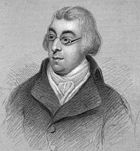 His father groomed him for a career in law, and Disraeli was articled
to a solicitor in 1821. In 1824, Disraeli toured Belgium
and the Rhine Valley
with his father and later wrote that it was while travelling on the Rhine that he decided to abandon the law: "I determined when descending those magical waters that I would not be a lawyer." On his return to England he speculated on the stock exchange on various South American mining companies. The recognition of the new South American republics on the recommendation of George Canning
had led to a considerable boom, encouraged by various promoters. In this connection, Disraeli became involved with the financier J. D. Powles
, one such booster. In the course of 1825, Disraeli wrote three anonymous pamphlets for Powles, promoting the companies.
That same year Disraeli's financial activities brought him into contact with the publisher John Murray who was also involved in the South American mines. Accordingly, they attempted to bring out a newspaper, The Representative, to promote both the cause of the mines and those politicians who supported the mines, specifically George Canning. The paper was a failure, in part because the mining "bubble" burst in late 1825, which ruined Powles and Disraeli. Also, according to Disraeli's biographer, Lord Blake
, the paper was "atrociously edited", and would have failed regardless. Disraeli's debts incurred from this debacle would haunt him for the rest of his life.
Before he entered parliament, Disraeli was involved with several women, most notably Henrietta, Lady Sykes (the wife of Sir Francis Sykes, 3rd Bt
), who served as the model for Henrietta Temple. It was Henrietta who introduced Disraeli to Lord Lyndhurst
, with whom she later became romantically involved. As Lord Blake observed: "The true relationship between the three cannot be determined with certainty ... there can be no doubt that the affair [figurative usage] damaged Disraeli and that it made its contribution, along with many other episodes, to the understandable aura of distrust which hung around his name for so many years."
In 1839 he settled his private life by marrying Mary Anne Lewis, the rich widow of Wyndham Lewis
, Disraeli's erstwhile colleague at Maidstone. Mary Lewis was 12 years his senior, and their union was seen as being based on financial interests, but they came to cherish one another.
, in 1826. Disraeli's biographers agree that Vivian Grey was a thinly veiled re-telling of the affair of The Representative, and it proved very popular on its release, although it also caused much offence within the Tory
literary world when Disraeli's authorship was discovered. The book, initially anonymous, was purportedly written by a "man of fashion", perhaps Ross M. Brown – someone who moved in high society. Disraeli, then just twenty-three, did not move in high society, and the numerous solecism
s present in his otherwise brilliant and daring work made this painfully obvious. Reviewers were sharply critical on these grounds of both the author and the book. Furthermore, John Murray believed that Disraeli had caricatured him and abused his confidence–an accusation denied at the time, and by the official biography, although subsequent biographers (notably Blake) have sided with Murray.
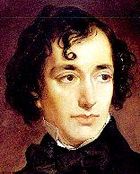 After producing a Vindication of the English Constitution, and some political pamphlets, Disraeli followed up Vivian Grey with a series of novels, The Young Duke (1831), Contarini Fleming (1832), Alroy (1833), Venetia
and Henrietta Temple (1837). During the same period he had also written The Revolutionary Epick and three burlesques, Ixion, The Infernal Marriage, and Popanilla. Of these only Henrietta Temple (based on his affair with Henrietta Sykes
, wife of Sir Francis William Sykes, 3rd Bt
) was a true success.
During the 1840s Disraeli wrote three political novels collectively known as "the Trilogy"–Sybil
, Coningsby
, and Tancred
.
Disraeli's relationships with other male writers of his period were strained or non-existent. After the disaster of The Representative, John Gibson Lockhart
became a bitter enemy and the two never reconciled. Disraeli's preference for female company prevented the development of contact with those who were otherwise not alienated by his opinions, comportment or background. One contemporary who tried to bridge the gap, William Makepeace Thackeray
, established a tentative cordial relationship in the late 1840s only to see everything collapse when Disraeli took offence at a burlesque of him which Thackeray penned for Punch. Disraeli took revenge in Endymion (published in 1880), when he caricatured Thackeray as "St. Barbe".
Disraeli's writing is generally interesting, and his books teem with striking thoughts, shrewd maxims, and brilliant phrases which stick in the memory; on the other hand, he is often artificial, extravagant, and turgid. Critic William Kuhn argued that much of his fiction can be read as "the memoirs he never wrote", revealing the inner life of a politician for whom the norms of Victorian public life appeared to represent a social straitjacket – particularly with regard to his allegedly "ambiguous sexuality."
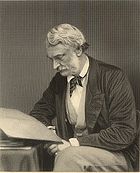 Disraeli had been considering a political career as early as 1830, before he departed England for the Mediterranean. His first real efforts, however, did not come until 1832, during the great crisis over the Reform Bill, when he contributed to an anti-Whig
pamphlet edited by John Wilson Croker
and published by Murray entitled England and France: or a cure for Ministerial Gallomania. The choice of a Tory publication was regarded as odd by Disraeli's friends and relatives, who thought him more of a Radical
. Indeed, Disraeli had objected to Murray about Croker inserting "high Tory" sentiment, writing that "it is quite impossible that anything adverse to the general measure of Reform can issue from my pen." Further, at the time Gallomania was published, Disraeli was in fact electioneering in High Wycombe
in the Radical interest. Disraeli's politics at the time were influenced both by his rebellious streak and by his desire to make his mark. In the early 1830s the Tories and the interests they represented appeared to be a lost cause. The other great party, the Whigs, was anathema to Disraeli: "Toryism is worn out & I cannot condescend to be a Whig."
Though he initially stood for election, unsuccessfully, as a Radical, Disraeli was a Tory
by the time he won a seat in the House of Commons
in 1837 representing the constituency of Maidstone
.
Although a Conservative, Disraeli was sympathetic to some of the demands of the Chartists and argued for an alliance between the landed aristocracy and the working class against the increasing power of the merchants and new industrialists in the middle class, helping to found the Young England
group in 1842 to promote the view that the landed interests should use their power to protect the poor from exploitation by middle-class businessmen. During the twenty years between the Corn Laws
and the Second Reform Bill Disraeli would seek a Tory-Radical alliance, to little avail. Prior to the 1867 Reform Bill the working class did not possess the vote and therefore had little tangible political power. Although Disraeli forged a personal friendship with John Bright
, a Lancashire manufacturer and leading Radical, Disraeli was unable to convince Bright to sacrifice principle for political gain. After one such attempt, Bright noted in his diary that Disraeli "seems unable to comprehend the morality of our political course."
 Prime Minister Sir Robert Peel
passed over Disraeli when putting together his government
in 1841 and Disraeli, hurt, gradually became a sharp critic of Peel's government, often deliberately adopting positions contrary to those of his nominal chief. The best known of these cases were the Maynooth grant
in 1845 and the repeal of the Corn Laws in 1846. The end of 1845 and the first months of 1846 were dominated by a battle in parliament between the free traders and the protectionists over the repeal of the Corn Laws, with the latter rallying around Disraeli and Lord George Bentinck
. An alliance of pro free-trade Conservatives (the "Peelites"), Radicals, and Whigs carried repeal, and the Conservative Party split: the Peelites moved towards the Whigs, while a "new" Conservative Party formed around the protectionists, led by Disraeli, Bentinck, and Lord Stanley
(later Lord Derby). The context of the fight over free trade was famine in Ireland, which Peel hoped might be remedied by importation of grain.
The term "corn" did not refer to maize as it does in the United States. In Britain in the mid-nineteenth century, "corn" meant grain like wheat, oats or rye. Predominately, however, the term referred to wheat. Wheat was used in making bread. Because nearly every family made bread for their own consumption, wheat was the main staple of the average diet in Britain. Consequently, wheat was regareded as the "staff of life." Accordingly, the price of wheat had a profound effect on the cost of living of the ordinary family. Repeal of the Corn Laws would remove the tariffs on imported wheat and reduce the price of wheat and bread for the average and poor citizens of the Britain. Immediately, Peel hoped that the repeal of the tariff on wheat (the Corn Laws) and the resultant influx of cheaper wheat into Britain would remedy the suffering caused by the Great Famine in Ireland due to the successive failure of potato crops.
The split in the Tory/Conservative party over the repeal of the Corn Laws had profound implications for Disraeli's political career: almost every Conservative politician with official experience followed Peel, leaving the rump bereft of leadership. As one biographer wrote, "[Disraeli] found himself almost the only figure on his side capable of putting up the oratorical display essential for a parliamentary leader." Looking on from the House of Lords, the Duke of Argyll
wrote that Disraeli "was like a subaltern in a great battle where every superior officer was killed or wounded." If the remainder of the Conservative Party could muster the electoral support necessary to form a government, then Disraeli was now guaranteed high office. However, he would take office with a group of men who possessed little or no official experience, who had rarely felt moved to speak in the House of Commons before, and who, as a group, remained hostile to Disraeli on a personal level, his assault on the Corn Laws notwithstanding.
, Lionel de Rothschild
had been returned for the City of London
. Ever since Catholic Emancipation, members of parliament were required to swear the oath "on the true faith of a Christian." Rothschild, an unconverted Jew, could not do so and therefore could not take his seat. Lord John Russell
, the Whig leader who had succeeded Peel as Prime Minister and like Rothschild a member for the City of London, introduced a Jewish Disabilities Bill to amend the oath and permit Jews to enter Parliament.
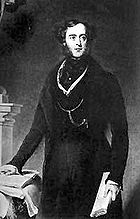 Disraeli spoke in favour of the measure, arguing that Christianity was "completed Judaism," and asking of the House of Commons "Where is your Christianity if you do not believe in their Judaism?" While Disraeli did not argue that the Jews did the Christians a favour by killing Christ, as he had in Tancred and would in Lord George Bentinck, his speech was badly received by his own party, which along with the Anglican establishment was hostile to the bill. Samuel Wilberforce
, Bishop of Oxford
and a friend of Disraeli's, spoke strongly against the measure and implied that Russell was paying off the Jews for "helping" elect him. Every member of the future protectionist cabinet then in parliament (except Disraeli) voted against the measure. One member who was not, Lord John Manners, stood against Rothschild when the latter re-submitted himself for election in 1849. Bentinck, then still Conservative leader in the Commons, joined Disraeli in speaking and voting for the bill, although his own speech was a standard one of toleration.
In the aftermath of the debate Bentinck resigned the leadership and feuded with Stanley, leader in the Lords and overall leader, who had opposed the measure and directed the party whips—in the Commons—to oppose the measure as well. Bentinck was succeeded by Lord Granby
; Disraeli's own speech, thought by many of his own party to be blasphemous, ruled him out for the time being. Even as these intrigues played out, Disraeli was working with the Bentinck family to secure the necessary financing to purchase Hughenden Manor
, in Buckinghamshire
. This purchase allowed him to stand for the county, which was "essential" if one was to lead the Conservative Party at the time. He and Mary Anne
alternated between Hughenden and several homes in London for the remainder of their marriage. These negotiations were complicated by the sudden death of Lord George on 21 September 1848, but Disraeli obtained a loan of £25,000 (equivalent to about £ as of ) from Lord George's brothers Lord Henry Bentinck
and Lord Titchfield
.
Within a month Granby resigned the leadership in the commons, feeling himself inadequate to the post, and the party functioned without an actual leader in the commons for the remainder of the parliamentary session. At the start of the next session, affairs were handled by a triumvirate of Granby, Disraeli, and John Charles Herries
–indicative of the tension between Disraeli and the rest of the party, who needed his talents but mistrusted the man. This confused arrangement ended with Granby's resignation in 1851; Disraeli effectively ignored the two men regardless.
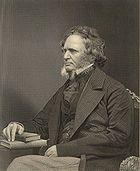 The first opportunity for the protectionist Tories under Disraeli and Stanley to take office came in 1851, when Lord John Russell's
government
was defeated in the House of Commons over the Ecclesiastical Titles Act 1851
. Disraeli was to have been Home Secretary, with Stanley (becoming the Earl of Derby
later that year) as Prime Minister. Other possible ministers included Sir Robert Inglis
, Henry Goulburn
, John Charles Herries
, and Lord Ellenborough
. The Peelites, however, refused to serve under Stanley or with Disraeli so long as the question of free trade
remained unsettled, and attempts to form a purely protectionist government failed. Derby supposedly remarked at the time, "Pshaw! These are not names which I can put before the Queen!"
Russell resumed office, but resigned again in early 1852 when a combination of the protectionists and Lord Palmerston
defeated him on a Militia Bill. This time Lord Derby
(as he had become) took office, and to general surprise appointed Disraeli Chancellor of the Exchequer
. Disraeli had offered to stand aside as leader in the House of Commons in favour of Palmerston, but the latter declined.
The primary responsibility of a mid-Victorian chancellor was to produce a Budget for the coming fiscal year. Disraeli proposed to reduce taxes on malt
and tea (indirect taxation); additional revenue would come from an increase in the house tax. More controversially, Disraeli also proposed to alter the workings of the income tax
(direct taxation) by "differentiating"–i.e., different rates would be levied on different types of income.
As noted above, Disraeli had been opposed to the repeal of the Corn Laws in June of 1846. Repeal of the Corn Laws had removed the tariffs on the importation of cheap cereal grains into Britain. Thus the price of wheat had fallen. Farmers now received less income from the sale of their wheat. However, the aristocratic landlords did not adjust the rents they were charging for land rented to farmers for growing wheat or "corn." Thus the farmers were placed in a disadvantageous economic position. Disraeli sought to alleviate this disadvantage by differentially raising income tax rates against non-farmers and lowering income taxes for the farmers. This, Disaeli felt, would allow the landed aristocracy to continue collecting the same rent and would compensate the farmers for their lost income. The budget as viewed by many Whigs as "compensation to the landlords;" and viewed by some as "a compensation with a revenge" against those who had obtained repeal of the Corn Laws.
The establishment of the income tax on a permanent basis had been the subject of much inter-party discussion since the fall of Peel's ministry in June of 1846. Since that time, no consensus had been yet been reached, and Disraeli was criticised for mixing up details over the different "schedules" of income. Disraeli's proposal to extend the tax to Ireland gained him further enemies, and he was also hampered by an unexpected increase in defence expenditure, which was forced on him by Derby and Sir John Pakington
(Secretary of State for War and the Colonies
) (leading to his celebrated remark to John Bright
about the "damned defences"). This, combined with bad timing and perceived inexperience led to the failure of the Budget and consequently the fall of the government on 17 December 1852.
Gladstone's final speech on the failed Budget marked the beginning of over twenty years of mutual parliamentary hostility, as well as the end of Gladstone's formal association with the Conservative Party. Disraeli even favoured certain concessions to the "free traders" in order to broaden the support for the Conservative Party. This position brought him unpopularity with the "protectionists" of his own party. Because of the split in the Conservative Party and because of Disraeli's unpopularity, arising from the budget fight of 1852, which is outlined above, no Conservative reconciliation remained possible so long as Disraeli remained leader in the House of Commons.
, whose ministry was composed of both Peelites and Whigs. Disraeli himself was succeeded as chancellor by Gladstone.
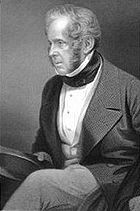 Lord Palmerston
's government collapsed in 1858 amid public fallout over the Orsini affair
and Derby took office at the head of a purely 'Conservative' administration. He again offered a place to Gladstone, who declined. Disraeli remained leader of the House of Commons and returned to the Exchequer. As in 1852 Derby's was a minority government
, dependent on the division of its opponents for survival. The principal measure of the 1858 session would be a bill to re-organise governance of India, the Indian Mutiny
having exposed the inadequacy of dual control. The first attempt at legislation was drafted by the President of the Board of Control
, Lord Ellenborough
, who had previously served as Governor-General of India
(1841–44). The bill, however, was riddled with complexities and had to be withdrawn. Soon after, Ellenborough was forced to resign over an entirely separate matter involving the current Governor-General, Lord Canning
.
Faced with a vacancy, Disraeli and Derby tried yet again to bring Gladstone
into the government. Disraeli wrote a personal letter to Gladstone, asking him to place the good of the party above personal animosity: "Every man performs his office, and there is a Power, greater than ourselves, that disposes of all this..." In responding to Disraeli Gladstone denied that personal feelings played any role in his decision then and previously to accept office, while acknowledging that there were differences between him and Derby "broader than you may have supposed." Gladstone also hinted at the strength of his own faith, and the role it played in his public life, when he addressed Disraeli's most personal and private appeal:
With Gladstone's refusal Derby and Disraeli looked elsewhere and settled on Disraeli's old friend Edward Bulwer-Lytton, who became Secretary of State for the Colonies
; Derby's son Lord Stanley
, succeeded Ellenborough at the Board of Control. Stanley, with Disraeli's assistance, proposed and guided through the house the India Act, under which the subcontinent would be governed for sixty years. The East India Company and its Governor-General were replaced by a viceroy and the Indian Council, while at Westminster the Board of Control
was abolished and its functions assumed by the newly created India Office, under the Secretary of State for India
.
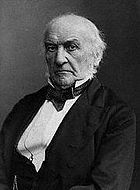 After engineering the defeat of a Liberal Reform Bill introduced by Gladstone in 1866, Disraeli and Derby introduced their own measure in 1867. This was primarily a political strategy designed to give the Conservative party control of the reform process and the subsequent long-term benefits in the Commons, similar to those derived by the Whigs after their 1832 Reform Act. It was thought that if the Conservatives were able to secure this piece of legislation, then the newly enfranchised electorate may return their gratitude to the Tories in the form of a Conservative vote at the next general election. As a result, this would give the Conservatives a greater chance of forming a majority government. After so many years in the 'stagnant backwaters' of British politics, this seemed most appealing. The Reform Act 1867
extended the franchise by 938,427 – an increase of 88% – by giving the vote to male householders and male lodgers paying at least 10 pounds for rooms and eliminating rotten borough
s with fewer than 10,000 inhabitants, and granting constituencies to fifteen unrepresented towns, and extra representation in parliament to larger towns such as Liverpool and Manchester, which had previously been under-represented in Parliament
. This act was unpopular with the right wing of the Conservative Party, most notably Lord Cranborne (later the Marquess of Salisbury), who resigned from the government and spoke against the bill, accusing Disraeli of "a political betrayal which has no parallel in our Parliamentary annals." Cranborne, however, was unable to lead a rebellion similar to that which Disraeli had led against Peel twenty years earlier.
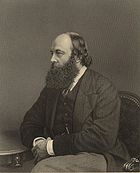 Derby's health had been declining for some time and he finally resigned as Prime Minister in late February 1868; he would live for twenty months. Disraeli's efforts over the past two years had dispelled, for the time being, any doubts about him succeeding Derby as leader of the Conservative Party and therefore Prime Minister. As Disraeli remarked, "I have climbed to the top of the greasy pole."
However, the Conservatives were still a minority in the House of Commons, and the passage of the Reform Bill required the calling of new election once the new voting register had been compiled. Disraeli's term as Prime Minister would therefore be fairly short, unless the Conservatives won the general election. He made only two major changes in the cabinet: he replaced Lord Chelmsford
as Lord Chancellor
with Lord Cairns
, and brought in George Ward Hunt
as Chancellor of the Exchequer
. Disraeli and Chelmsford had never got along particularly well, and Cairns, in Disraeli's view, was a far stronger minister.
Disraeli's first premiership was dominated by the heated debate over the established Church of Ireland
. Although Ireland was overwhelmingly Roman Catholic, the Protestant Church remained the established church and was funded by direct taxation. An initial attempt by Disraeli to negotiate with Cardinal Manning the establishment of a Roman Catholic university in Dublin foundered in March when Gladstone
moved resolutions to disestablish the Irish Church altogether. The proposal divided the Conservative Party while reuniting the Liberals
under Gladstone's leadership. While Disraeli's government survived until the December general election
, the initiative had passed to the Liberals, who were returned to power with a majority of 170.
, giving the party its first absolute majority
in the House of Commons since the 1840s. Under the stewardship of R. A. Cross, the Home Secretary
, Disraeli's government introduced various reforms, including the Artisan's and Labourers' Dwellings Improvement Act 1875
, the Public Health Act 1875
, the Sale of Food and Drugs Act (1875), and the Education Act (1876). His government also introduced a new Factory Act meant to protect workers, the Conspiracy and Protection of Property Act 1875
to allow peaceful picketing, and the Employers and Workmen Act (1875) to enable workers to sue employers in the civil courts if they broke legal contracts. As a result of these social reforms the Liberal-Labour
MP Alexander Macdonald told his constituents in 1879, "The Conservative party have done more for the working classes in five years than the Liberals have in fifty."
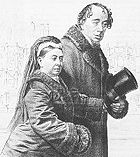
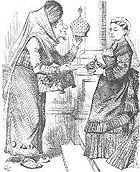 Disraeli was, according to some interpretations, a supporter of the expansion and preservation of the British Empire
in the Middle East and Central Asia. In spite of the objections of his own cabinet and without Parliament's consent, he obtained a short-term loan from Lionel de Rothschild
in order to purchase 44% of the shares of the Suez Canal Company
. Before this action, though, he had for the most part opted to continue the Whig policy of limited expansion, preferring to maintain the then-current borders as opposed to promoting expansion.
Disraeli and Gladstone clashed over Britain's Balkan policy. Disraeli saw the situation as a matter of British imperial and strategic interests, keeping to Palmerston
's policy of supporting the Ottoman Empire against Russian expansion. According to Blake, Disraeli believed in upholding Britain's greatness through a tough, "no nonsense" foreign policy that put Britain's interests above the "moral law" that advocated emancipation of small nations. Gladstone, however, saw the issue in moral terms, for Bulgarian Christians had been massacred by the Turks and Gladstone therefore believed it was immoral to support the Ottoman Empire. Blake further argued that Disraeli's imperialism "decisively orientated the Conservative party for many years to come, and the tradition which he started was probably a bigger electoral asset in winning working-class support during the last quarter of the century than anything else".
A leading proponent of the Great Game
, Disraeli introduced the Royal Titles Act 1876
, which created Queen Victoria Empress of India, putting her at the same level as the Russian Tsar. In his private correspondence with the Queen, he proposed "to clear Central Asia of Muscovites and drive them into the Caspian
". In order to contain Russia's influence, he launched an invasion of Afghanistan
and signed the Cyprus Convention
with Turkey, whereby this strategically placed island was handed over to Britain.
Disraeli scored another diplomatic success at the Congress of Berlin
in 1878, in preventing Bulgaria from gaining full independence, limiting the growing influence of Russia
in the Balkans
and breaking up the League of the Three Emperors
. However, difficulties in South Africa (epitomised by the defeat of the British Army at the Battle of Isandlwana
), as well as Afghanistan, weakened his government and led to his party's defeat in the 1880 election.
In the general election of 1880
Disraeli's Conservatives were defeated by Gladstone's Liberals, in large part owing to the uneven course of the Second Anglo-Afghan War
. The Irish Home Rule vote in England contributed to his party's defeat. Disraeli became ill soon after and died in April 1881.
He is buried in a vault beneath St Michael's Church in the grounds of his home Hughenden Manor
, accessed from the churchyard. Against the outside wall of the church is a memorial erected in his honour by Queen Victoria. His literary executor
, and for all intents and purposes his heir, was his private secretary, Lord Rowton
. The Disraeli vault also contains the body of Sarah Brydges Willyams, the wife of James Brydges Willyams of St Mawgan
in Cornwall. Her wish to be buried there was granted after she left an estate sworn at under £40,000, of which Disraeli received over £30,000.
Disraeli has a memorial in Westminster Abbey
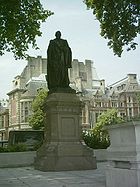
. He is also remembered with a large statue in the market town of Ormskirk
where he graces the centre of famous student town.
for the rest of his life. Adam Kirsch, in his biography of Disraeli, states that his Jewishness was "both the greatest obstacle to his ambition and its greatest engine." Much of the criticism of his policies was couched in anti-Semitic
terms. He was depicted in some antisemitic political cartoons with a big nose and curly black hair, called "Shylock
" and "abominable Jew," and portrayed in the act of ritually murdering the infant Britannia. In response to an anti-Semitic comment made by Daniel O'Connell
in the British parliament, Disraeli memorably defended his Jewishness with the statement, "Yes, I am a Jew, and when the ancestors of the Right Honourable Gentleman were brutal savages in an unknown island, mine were priests in the Temple of Solomon." One apocryphal story states that Disraeli reconverted to Judaism on his deathbed.
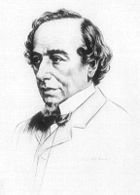
|-
Order of the Garter
The Most Noble Order of the Garter, founded in 1348, is the highest order of chivalry, or knighthood, existing in England. The order is dedicated to the image and arms of St...
, PC
Privy Council of the United Kingdom
Her Majesty's Most Honourable Privy Council, usually known simply as the Privy Council, is a formal body of advisers to the Sovereign in the United Kingdom...
, FRS, (21 December 1804 – 19 April 1881) was a British Prime Minister
Prime Minister of the United Kingdom
The Prime Minister of the United Kingdom of Great Britain and Northern Ireland is the Head of Her Majesty's Government in the United Kingdom. The Prime Minister and Cabinet are collectively accountable for their policies and actions to the Sovereign, to Parliament, to their political party and...
, parliamentarian, Conservative
Conservative Party (UK)
The Conservative Party, formally the Conservative and Unionist Party, is a centre-right political party in the United Kingdom that adheres to the philosophies of conservatism and British unionism. It is the largest political party in the UK, and is currently the largest single party in the House...
statesman and literary figure. Starting from comparatively humble origins, he served in government for three decades, twice as Prime Minister of the United Kingdom. Although his father had him baptised to Anglicanism
Anglican Communion
The Anglican Communion is an international association of national and regional Anglican churches in full communion with the Church of England and specifically with its principal primate, the Archbishop of Canterbury...
at age 12, he was nonetheless Britain's first and thus far only Prime Minister who was born into a Jewish family—originally from Italy
Italy
Italy , officially the Italian Republic languages]] under the European Charter for Regional or Minority Languages. In each of these, Italy's official name is as follows:;;;;;;;;), is a unitary parliamentary republic in South-Central Europe. To the north it borders France, Switzerland, Austria and...
. He played an instrumental role in the creation of the modern Conservative Party
Conservative Party (UK)
The Conservative Party, formally the Conservative and Unionist Party, is a centre-right political party in the United Kingdom that adheres to the philosophies of conservatism and British unionism. It is the largest political party in the UK, and is currently the largest single party in the House...
after the Corn Laws
Corn Laws
The Corn Laws were trade barriers designed to protect cereal producers in the United Kingdom of Great Britain and Ireland against competition from less expensive foreign imports between 1815 and 1846. The barriers were introduced by the Importation Act 1815 and repealed by the Importation Act 1846...
schism of 1846.
Although a major figure in the protectionist wing of the Conservative Party after 1844, Disraeli's relations with the other leading figures in the party, particularly Lord Derby
Edward Smith-Stanley, 14th Earl of Derby
Edward George Geoffrey Smith-Stanley, 14th Earl of Derby, KG, PC was an English statesman, three times Prime Minister of the United Kingdom, and to date the longest serving leader of the Conservative Party. He was known before 1834 as Edward Stanley, and from 1834 to 1851 as Lord Stanley...
, the overall leader, were often strained. Not until the 1860s would Derby and Disraeli be on easy terms, and the latter's succession of the former assured. From 1852 onwards, Disraeli's career would also be marked by his often intense rivalry with William Ewart Gladstone
William Ewart Gladstone
William Ewart Gladstone FRS FSS was a British Liberal statesman. In a career lasting over sixty years, he served as Prime Minister four separate times , more than any other person. Gladstone was also Britain's oldest Prime Minister, 84 years old when he resigned for the last time...
, who eventually rose to become leader of the Liberal Party
Liberal Party (UK)
The Liberal Party was one of the two major political parties of the United Kingdom during the 19th and early 20th centuries. It was a third party of negligible importance throughout the latter half of the 20th Century, before merging with the Social Democratic Party in 1988 to form the present day...
. In this feud, Disraeli was aided by his warm friendship with Queen Victoria, who came to detest Gladstone during the latter's first premiership in the 1870s. In 1876 Disraeli was raised to the peerage
Peerage
The Peerage is a legal system of largely hereditary titles in the United Kingdom, which constitute the ranks of British nobility and is part of the British honours system...
as the Earl of Beaconsfield, capping nearly four decades in the House of Commons
British House of Commons
The House of Commons is the lower house of the Parliament of the United Kingdom, which also comprises the Sovereign and the House of Lords . Both Commons and Lords meet in the Palace of Westminster. The Commons is a democratically elected body, consisting of 650 members , who are known as Members...
.
Before and during his political career, Disraeli was well known as a literary and social figure, although his novels are not generally regarded as a part of the Victorian literary canon
Western canon
The term Western canon denotes a canon of books and, more broadly, music and art that have been the most important and influential in shaping Western culture. As such, it includes the "greatest works of artistic merit." Such a canon is important to the theory of educational perennialism and the...
. He mainly wrote romances, of which Sybil
Sybil (novel)
Sybil, or The Two Nations is an 1845 novel by Benjamin Disraeli. Published in the same year as Friedrich Engels's The Condition of the Working Class in England in 1844, Sybil traces the plight of the working classes of England...
and Vivian Grey
Vivian Grey
Vivian Grey is Benjamin Disraeli's first novel, published by Henry Colburn in 1826. In 1827, a second volume was published. Originally published anonymously, ostensibly by a so-called "man of fashion," part 1 caused a considerable sensation in London society...
are perhaps the best-known today. He is exceptional among British Prime Ministers for having gained equal social and political renown. He was twice successful as the Glasgow University Conservative Association
Glasgow University Conservative Association
- About :Glasgow University Conservative Association was founded in 1836 at the University of Glasgow, and is the oldest University Conservative association in the United Kingdom. It was formed as a branch of the Federation of Conservative Students and of the Young Conservatives, and remains...
's candidate for Rector of the University, holding the post for two full terms between 1871 and 1877.
Early life
Disraeli's biographers believe he was descended from Italian Sephardic Jews. He claimed PortuguesePortuguese people
The Portuguese are a nation and ethnic group native to the country of Portugal, in the west of the Iberian peninsula of south-west Europe. Their language is Portuguese, and Roman Catholicism is the predominant religion....
ancestry, possibly referring to an earlier origin of his family heritage in Iberia
Iberia
The name Iberia refers to three historical regions of the old world:* Iberian Peninsula, in Southwest Europe, location of modern-day Portugal and Spain** Prehistoric Iberia...
prior to the expulsion of Jews
Alhambra decree
The Alhambra Decree was an edict issued on 31 March 1492 by the joint Catholic Monarchs of Spain ordering the expulsion of Jews from the Kingdom of Spain and its territories and possessions by 31 July of that year.The edict was formally revoked on 16 December 1968, following the Second...
in 1492. After this event many Jews emigrated, in two waves; some fled to the Muslim lands of the Ottoman Empire
History of the Jews in Turkey
Turkish Jews The history of the Jews in the Ottoman Empire and Turkey covers the 2,400 years that Jews have lived in what is now Turkey. There have been Jewish communities in Asia Minor since at least the 5th century BCE and many Spanish and Portuguese Jews expelled from Spain were welcomed to the...
, but many also went to Christian Europe, first to northern Italy, then to the Netherlands, and later to England. One modern historian has seen him as essentially a marrano
Marrano
Marranos were Jews living in the Iberian peninsula who converted to Christianity rather than be expelled but continued to observe rabbinic Judaism in secret...
.
He was the second child and eldest son of Isaac D'Israeli
Isaac D'Israeli
Isaac D'Israeli was a British writer, scholar and man of letters. He is best known for his essays, his associations with other men of letters, and for being the father of British Prime Minister Benjamin Disraeli....
, a literary critic and historian, and Maria Basevi. Benjamin changed the spelling in the 1820s by dropping the apostrophe. His siblings included Sarah (1802–1859), Naphtali (1807), Ralph (1809–1898), and James (1813–1868). Benjamin at first attended a small school, the Reverend John Potticary's school at Blackheath
Blackheath, London
Blackheath is a district of South London, England. It is named from the large open public grassland which separates it from Greenwich to the north and Lewisham to the west...
. His father had Benjamin baptised
Baptism
In Christianity, baptism is for the majority the rite of admission , almost invariably with the use of water, into the Christian Church generally and also membership of a particular church tradition...
in July 1817 following a dispute with their synagogue
Bevis Marks Synagogue
----Bevis Marks Synagogue is located off Bevis Marks, in the City of London. The synagogue, affiliated to London's historic Spanish and Portuguese Jewish community, is the oldest synagogue in the United Kingdom still in use...
. The elder D'Israeli was content to remain outside organised religion. From 1817, Benjamin attended a school at Higham Hill, in Walthamstow
Walthamstow
Walthamstow is a district of northeast London, England, located in the London Borough of Waltham Forest. It is situated north-east of Charing Cross...
, under Eliezer Cogan
Eliezer Cogan
Eliezer Cogan , was an English scholar and divine.-Life:Cogan was born at Rothwell, Northamptonshire, the son of John Cogan, a surgeon, then sixty-four years old...
. His younger brothers, in contrast, attended the superior Winchester College
Winchester College
Winchester College is an independent school for boys in the British public school tradition, situated in Winchester, Hampshire, the former capital of England. It has existed in its present location for over 600 years and claims the longest unbroken history of any school in England...
.
Articled clerk
An articled clerk, also known as an articling student, is an apprentice in a professional firm in Commonwealth countries. Generally the term arises in the accountancy profession and in the legal profession. The articled clerk signs a contract, known as "articles of clerkship", committing to a...
to a solicitor in 1821. In 1824, Disraeli toured Belgium
Belgium
Belgium , officially the Kingdom of Belgium, is a federal state in Western Europe. It is a founding member of the European Union and hosts the EU's headquarters, and those of several other major international organisations such as NATO.Belgium is also a member of, or affiliated to, many...
and the Rhine Valley
Rhine Valley
The Rhine Valley is a glacial alpine valley, formed by the Alpine Rhine , i.e. the section of the Rhine River between the confluence of the Anterior Rhine and Posterior Rhine at Reichenau and its mouth at Lake Constance....
with his father and later wrote that it was while travelling on the Rhine that he decided to abandon the law: "I determined when descending those magical waters that I would not be a lawyer." On his return to England he speculated on the stock exchange on various South American mining companies. The recognition of the new South American republics on the recommendation of George Canning
George Canning
George Canning PC, FRS was a British statesman and politician who served as Foreign Secretary and briefly Prime Minister.-Early life: 1770–1793:...
had led to a considerable boom, encouraged by various promoters. In this connection, Disraeli became involved with the financier J. D. Powles
John Diston Powles
John Diston Powles was an English businessman. In the mid-1820s he was heavily involved in the promotion of South American mining companies, and enlisted a young Benjamin Disraeli to write pamphlets promoting these mines, particularly those in Chile. Powles was involved in the creation of the St...
, one such booster. In the course of 1825, Disraeli wrote three anonymous pamphlets for Powles, promoting the companies.
That same year Disraeli's financial activities brought him into contact with the publisher John Murray who was also involved in the South American mines. Accordingly, they attempted to bring out a newspaper, The Representative, to promote both the cause of the mines and those politicians who supported the mines, specifically George Canning. The paper was a failure, in part because the mining "bubble" burst in late 1825, which ruined Powles and Disraeli. Also, according to Disraeli's biographer, Lord Blake
Robert Blake, Baron Blake
Robert Norman William Blake, Baron Blake was an English historian. He is best known for his 1966 biography of Benjamin Disraeli, 1st Earl of Beaconsfield, and for The Conservative Party from Peel to Churchill, which grew out of his 1968 Ford lectures...
, the paper was "atrociously edited", and would have failed regardless. Disraeli's debts incurred from this debacle would haunt him for the rest of his life.
Before he entered parliament, Disraeli was involved with several women, most notably Henrietta, Lady Sykes (the wife of Sir Francis Sykes, 3rd Bt
Sykes Baronets
There have been created four Baronetcies created for persons with the surname Sykes, two in the Baronetage of Great Britain and two in the Baronetage of the United Kingdom...
), who served as the model for Henrietta Temple. It was Henrietta who introduced Disraeli to Lord Lyndhurst
John Copley, 1st Baron Lyndhurst
John Singleton Copley, 1st Baron Lyndhurst PC KS FRS , was a British lawyer and politician. He was three times Lord Chancellor of Great Britain.-Background and education:...
, with whom she later became romantically involved. As Lord Blake observed: "The true relationship between the three cannot be determined with certainty ... there can be no doubt that the affair [figurative usage] damaged Disraeli and that it made its contribution, along with many other episodes, to the understandable aura of distrust which hung around his name for so many years."
In 1839 he settled his private life by marrying Mary Anne Lewis, the rich widow of Wyndham Lewis
Wyndham Lewis (politician)
Wyndham Lewis was a British politician and a close associate of Benjamin Disraeli.Lewis was the son of Reverend Wyndham Lewis, of Tongwynlais, Glamorganshire. He sat as Member of Parliament for Cardiff from 1820 to 1826, for Aldeburgh from 1827 to 1829 and for Maidstone from 1835 to 1838.Lewis...
, Disraeli's erstwhile colleague at Maidstone. Mary Lewis was 12 years his senior, and their union was seen as being based on financial interests, but they came to cherish one another.
Literary career
Disraeli turned towards literature after his financial disaster, motivated in part by a desperate need for money, and brought out his first novel, Vivian GreyVivian Grey
Vivian Grey is Benjamin Disraeli's first novel, published by Henry Colburn in 1826. In 1827, a second volume was published. Originally published anonymously, ostensibly by a so-called "man of fashion," part 1 caused a considerable sensation in London society...
, in 1826. Disraeli's biographers agree that Vivian Grey was a thinly veiled re-telling of the affair of The Representative, and it proved very popular on its release, although it also caused much offence within the Tory
Tory
Toryism is a traditionalist and conservative political philosophy which grew out of the Cavalier faction in the Wars of the Three Kingdoms. It is a prominent ideology in the politics of the United Kingdom, but also features in parts of The Commonwealth, particularly in Canada...
literary world when Disraeli's authorship was discovered. The book, initially anonymous, was purportedly written by a "man of fashion", perhaps Ross M. Brown – someone who moved in high society. Disraeli, then just twenty-three, did not move in high society, and the numerous solecism
Solecism
In traditional prescriptive grammar, a solecism is something perceived as a grammatical mistake or absurdity, or even a simply non-standard usage. The word was originally used by the Greeks for what they perceived as mistakes in their language...
s present in his otherwise brilliant and daring work made this painfully obvious. Reviewers were sharply critical on these grounds of both the author and the book. Furthermore, John Murray believed that Disraeli had caricatured him and abused his confidence–an accusation denied at the time, and by the official biography, although subsequent biographers (notably Blake) have sided with Murray.
Venetia (Disraeli novel)
Venetia is a minor novel by Benjamin Disraeli, published in 1837, the year he was first elected to the House of Commons.The novel traces the eponymous heroine’s development from romantic idealist into social pragmatist against a backdrop of British industrialisation.A contemporary reviewer, writing...
and Henrietta Temple (1837). During the same period he had also written The Revolutionary Epick and three burlesques, Ixion, The Infernal Marriage, and Popanilla. Of these only Henrietta Temple (based on his affair with Henrietta Sykes
Sykes Baronets
There have been created four Baronetcies created for persons with the surname Sykes, two in the Baronetage of Great Britain and two in the Baronetage of the United Kingdom...
, wife of Sir Francis William Sykes, 3rd Bt
Sykes Baronets
There have been created four Baronetcies created for persons with the surname Sykes, two in the Baronetage of Great Britain and two in the Baronetage of the United Kingdom...
) was a true success.
During the 1840s Disraeli wrote three political novels collectively known as "the Trilogy"–Sybil
Sybil (novel)
Sybil, or The Two Nations is an 1845 novel by Benjamin Disraeli. Published in the same year as Friedrich Engels's The Condition of the Working Class in England in 1844, Sybil traces the plight of the working classes of England...
, Coningsby
Coningsby (novel)
Coningsby, or The New Generation, is an English political novel by Benjamin Disraeli published in 1844.-Background:The book is set against a background of the real political events of the 1830s in England that followed the enactment of the Reform Bill of 1832...
, and Tancred
Tancred (novel)
Tancred; or, The New Crusade is a novel by Benjamin Disraeli, first published by Henry Colburn in three volumes. Together with Coningsby and Sybil it forms a sequence sometimes called the Young England trilogy...
.
Disraeli's relationships with other male writers of his period were strained or non-existent. After the disaster of The Representative, John Gibson Lockhart
John Gibson Lockhart
John Gibson Lockhart , was a Scottish writer and editor. He is best known as the author of the definitive "Life" of Sir Walter Scott...
became a bitter enemy and the two never reconciled. Disraeli's preference for female company prevented the development of contact with those who were otherwise not alienated by his opinions, comportment or background. One contemporary who tried to bridge the gap, William Makepeace Thackeray
William Makepeace Thackeray
William Makepeace Thackeray was an English novelist of the 19th century. He was famous for his satirical works, particularly Vanity Fair, a panoramic portrait of English society.-Biography:...
, established a tentative cordial relationship in the late 1840s only to see everything collapse when Disraeli took offence at a burlesque of him which Thackeray penned for Punch. Disraeli took revenge in Endymion (published in 1880), when he caricatured Thackeray as "St. Barbe".
Disraeli's writing is generally interesting, and his books teem with striking thoughts, shrewd maxims, and brilliant phrases which stick in the memory; on the other hand, he is often artificial, extravagant, and turgid. Critic William Kuhn argued that much of his fiction can be read as "the memoirs he never wrote", revealing the inner life of a politician for whom the norms of Victorian public life appeared to represent a social straitjacket – particularly with regard to his allegedly "ambiguous sexuality."
Parliament
British Whig Party
The Whigs were a party in the Parliament of England, Parliament of Great Britain, and Parliament of the United Kingdom, who contested power with the rival Tories from the 1680s to the 1850s. The Whigs' origin lay in constitutional monarchism and opposition to absolute rule...
pamphlet edited by John Wilson Croker
John Wilson Croker
John Wilson Croker was an Irish statesman and author.He was born at Galway, the only son of John Croker, the surveyor-general of customs and excise in Ireland. He was educated at Trinity College, Dublin, where he graduated in 1800...
and published by Murray entitled England and France: or a cure for Ministerial Gallomania. The choice of a Tory publication was regarded as odd by Disraeli's friends and relatives, who thought him more of a Radical
Radicals (UK)
The Radicals were a parliamentary political grouping in the United Kingdom in the early to mid 19th century, who drew on earlier ideas of radicalism and helped to transform the Whigs into the Liberal Party.-Background:...
. Indeed, Disraeli had objected to Murray about Croker inserting "high Tory" sentiment, writing that "it is quite impossible that anything adverse to the general measure of Reform can issue from my pen." Further, at the time Gallomania was published, Disraeli was in fact electioneering in High Wycombe
High Wycombe
High Wycombe , commonly known as Wycombe and formally called Chepping Wycombe or Chipping Wycombe until 1946,is a large town in Buckinghamshire, England. It is west-north-west of Charing Cross in London; this figure is engraved on the Corn Market building in the centre of the town...
in the Radical interest. Disraeli's politics at the time were influenced both by his rebellious streak and by his desire to make his mark. In the early 1830s the Tories and the interests they represented appeared to be a lost cause. The other great party, the Whigs, was anathema to Disraeli: "Toryism is worn out & I cannot condescend to be a Whig."
Though he initially stood for election, unsuccessfully, as a Radical, Disraeli was a Tory
Tory
Toryism is a traditionalist and conservative political philosophy which grew out of the Cavalier faction in the Wars of the Three Kingdoms. It is a prominent ideology in the politics of the United Kingdom, but also features in parts of The Commonwealth, particularly in Canada...
by the time he won a seat in the House of Commons
British House of Commons
The House of Commons is the lower house of the Parliament of the United Kingdom, which also comprises the Sovereign and the House of Lords . Both Commons and Lords meet in the Palace of Westminster. The Commons is a democratically elected body, consisting of 650 members , who are known as Members...
in 1837 representing the constituency of Maidstone
Maidstone (UK Parliament constituency)
Maidstone was a parliamentary constituency represented in the House of Commons of the Parliament of the United Kingdom.The parliamentary borough of Maidstone returned two Members of Parliament from 1552 until 1885, when its representation was reduced to one member...
.
Although a Conservative, Disraeli was sympathetic to some of the demands of the Chartists and argued for an alliance between the landed aristocracy and the working class against the increasing power of the merchants and new industrialists in the middle class, helping to found the Young England
Young England
Young England was a Victorian era political group. The group was born on the playing fields of Cambridge and Eton. For the most part, its unofficial membership was confined to a splinter group of Tory aristocrats who had attended public school together, among them George Smythe, Lord John...
group in 1842 to promote the view that the landed interests should use their power to protect the poor from exploitation by middle-class businessmen. During the twenty years between the Corn Laws
Corn Laws
The Corn Laws were trade barriers designed to protect cereal producers in the United Kingdom of Great Britain and Ireland against competition from less expensive foreign imports between 1815 and 1846. The barriers were introduced by the Importation Act 1815 and repealed by the Importation Act 1846...
and the Second Reform Bill Disraeli would seek a Tory-Radical alliance, to little avail. Prior to the 1867 Reform Bill the working class did not possess the vote and therefore had little tangible political power. Although Disraeli forged a personal friendship with John Bright
John Bright
John Bright , Quaker, was a British Radical and Liberal statesman, associated with Richard Cobden in the formation of the Anti-Corn Law League. He was one of the greatest orators of his generation, and a strong critic of British foreign policy...
, a Lancashire manufacturer and leading Radical, Disraeli was unable to convince Bright to sacrifice principle for political gain. After one such attempt, Bright noted in his diary that Disraeli "seems unable to comprehend the morality of our political course."
Protection
Robert Peel
Sir Robert Peel, 2nd Baronet was a British Conservative statesman who served as Prime Minister of the United Kingdom from 10 December 1834 to 8 April 1835, and again from 30 August 1841 to 29 June 1846...
passed over Disraeli when putting together his government
First Peel ministry
-The Cabinet:-See also:*Conservative Government 1834-1835, for a complete list of officeholders in the government....
in 1841 and Disraeli, hurt, gradually became a sharp critic of Peel's government, often deliberately adopting positions contrary to those of his nominal chief. The best known of these cases were the Maynooth grant
Maynooth Grant
The Maynooth Grant was a major British political controversy of the 1840s which arose partly due to the general anti-Irish and anti-Catholic feelings of the British population....
in 1845 and the repeal of the Corn Laws in 1846. The end of 1845 and the first months of 1846 were dominated by a battle in parliament between the free traders and the protectionists over the repeal of the Corn Laws, with the latter rallying around Disraeli and Lord George Bentinck
Lord George Bentinck
Lord George Frederick Cavendish-Scott-Bentinck , better known as simply Lord George Bentinck, was an English Conservative politician and racehorse owner, best known for his role in unseating Sir Robert Peel over the Corn Laws.Bentinck was a younger son of the 4th Duke of Portland, and elected a...
. An alliance of pro free-trade Conservatives (the "Peelites"), Radicals, and Whigs carried repeal, and the Conservative Party split: the Peelites moved towards the Whigs, while a "new" Conservative Party formed around the protectionists, led by Disraeli, Bentinck, and Lord Stanley
Edward Smith-Stanley, 14th Earl of Derby
Edward George Geoffrey Smith-Stanley, 14th Earl of Derby, KG, PC was an English statesman, three times Prime Minister of the United Kingdom, and to date the longest serving leader of the Conservative Party. He was known before 1834 as Edward Stanley, and from 1834 to 1851 as Lord Stanley...
(later Lord Derby). The context of the fight over free trade was famine in Ireland, which Peel hoped might be remedied by importation of grain.
The term "corn" did not refer to maize as it does in the United States. In Britain in the mid-nineteenth century, "corn" meant grain like wheat, oats or rye. Predominately, however, the term referred to wheat. Wheat was used in making bread. Because nearly every family made bread for their own consumption, wheat was the main staple of the average diet in Britain. Consequently, wheat was regareded as the "staff of life." Accordingly, the price of wheat had a profound effect on the cost of living of the ordinary family. Repeal of the Corn Laws would remove the tariffs on imported wheat and reduce the price of wheat and bread for the average and poor citizens of the Britain. Immediately, Peel hoped that the repeal of the tariff on wheat (the Corn Laws) and the resultant influx of cheaper wheat into Britain would remedy the suffering caused by the Great Famine in Ireland due to the successive failure of potato crops.
The split in the Tory/Conservative party over the repeal of the Corn Laws had profound implications for Disraeli's political career: almost every Conservative politician with official experience followed Peel, leaving the rump bereft of leadership. As one biographer wrote, "[Disraeli] found himself almost the only figure on his side capable of putting up the oratorical display essential for a parliamentary leader." Looking on from the House of Lords, the Duke of Argyll
George Campbell, 8th Duke of Argyll
George John Douglas Campbell, 8th Duke of Argyll KG, KT, PC, FRS, FRSE , styled Marquess of Lorne until 1847, was a Scottish peer, Liberal politician as well as a writer on science, religion, and the politics of the 19th century.-Background:Argyll was born at Ardencaple Castle, Dunbartonshire, the...
wrote that Disraeli "was like a subaltern in a great battle where every superior officer was killed or wounded." If the remainder of the Conservative Party could muster the electoral support necessary to form a government, then Disraeli was now guaranteed high office. However, he would take office with a group of men who possessed little or no official experience, who had rarely felt moved to speak in the House of Commons before, and who, as a group, remained hostile to Disraeli on a personal level, his assault on the Corn Laws notwithstanding.
Bentinck and the leadership
In 1847 a small political crisis occurred which removed Bentinck from the leadership and highlighted Disraeli's differences with his own party. In the preceding general electionUnited Kingdom general election, 1847
-Seats summary:-References:* F. W. S. Craig, British Electoral Facts: 1832-1987* British Electoral Facts 1832-1999, compiled and edited by Colin Rallings and Michael Thrasher *...
, Lionel de Rothschild
Lionel de Rothschild
Baron Lionel Nathan de Rothschild was a British banker and politician.-Biography:The son of Nathan Mayer Rothschild and Hanna Barent Cohen, he was a member of the prominent Rothschild family....
had been returned for the City of London
City of London (UK Parliament constituency)
The City of London was a United Kingdom Parliamentary constituency. It was a constituency of the House of Commons of the Parliament of England then of the Parliament of Great Britain from 1707 to 1800 and of the Parliament of the United Kingdom from 1801 to 1950.-Boundaries and boundary...
. Ever since Catholic Emancipation, members of parliament were required to swear the oath "on the true faith of a Christian." Rothschild, an unconverted Jew, could not do so and therefore could not take his seat. Lord John Russell
John Russell, 1st Earl Russell
John Russell, 1st Earl Russell, KG, GCMG, PC , known as Lord John Russell before 1861, was an English Whig and Liberal politician who served twice as Prime Minister of the United Kingdom in the mid-19th century....
, the Whig leader who had succeeded Peel as Prime Minister and like Rothschild a member for the City of London, introduced a Jewish Disabilities Bill to amend the oath and permit Jews to enter Parliament.
Samuel Wilberforce
Samuel Wilberforce was an English bishop in the Church of England, third son of William Wilberforce. Known as "Soapy Sam", Wilberforce was one of the greatest public speakers of his time and place...
, Bishop of Oxford
Bishop of Oxford
The Bishop of Oxford is the diocesan bishop of the Church of England Diocese of Oxford in the Province of Canterbury; his seat is at Christ Church Cathedral, Oxford...
and a friend of Disraeli's, spoke strongly against the measure and implied that Russell was paying off the Jews for "helping" elect him. Every member of the future protectionist cabinet then in parliament (except Disraeli) voted against the measure. One member who was not, Lord John Manners, stood against Rothschild when the latter re-submitted himself for election in 1849. Bentinck, then still Conservative leader in the Commons, joined Disraeli in speaking and voting for the bill, although his own speech was a standard one of toleration.
In the aftermath of the debate Bentinck resigned the leadership and feuded with Stanley, leader in the Lords and overall leader, who had opposed the measure and directed the party whips—in the Commons—to oppose the measure as well. Bentinck was succeeded by Lord Granby
Charles Manners, 6th Duke of Rutland
Charles Manners, 6th Duke of Rutland KG , styled Marquess of Granby before 1857, was an English Conservative politician.-Background and education:...
; Disraeli's own speech, thought by many of his own party to be blasphemous, ruled him out for the time being. Even as these intrigues played out, Disraeli was working with the Bentinck family to secure the necessary financing to purchase Hughenden Manor
Hughenden Manor
Hughenden Manor is a red brick Victorian mansion, located in High Wycombe, Buckinghamshire, England. In the 19th century, it was the country house of the Prime Minister, Benjamin Disraeli...
, in Buckinghamshire
Buckinghamshire
Buckinghamshire is a ceremonial and non-metropolitan home county in South East England. The county town is Aylesbury, the largest town in the ceremonial county is Milton Keynes and largest town in the non-metropolitan county is High Wycombe....
. This purchase allowed him to stand for the county, which was "essential" if one was to lead the Conservative Party at the time. He and Mary Anne
Mary Anne Disraeli, 1st Viscountess Beaconsfield
Mary Anne Disraeli, 1st Viscountess Beaconsfield was a British peeress and society figure, the wife of Prime Minister Benjamin Disraeli....
alternated between Hughenden and several homes in London for the remainder of their marriage. These negotiations were complicated by the sudden death of Lord George on 21 September 1848, but Disraeli obtained a loan of £25,000 (equivalent to about £ as of ) from Lord George's brothers Lord Henry Bentinck
Lord Henry Bentinck
Lord Henry William Scott-Bentinck , known as Lord Henry Bentinck, was a British Conservative Party politician.-Background:...
and Lord Titchfield
William Cavendish-Scott-Bentinck, 5th Duke of Portland
William John Cavendish Cavendish-Scott-Bentinck, 5th Duke of Portland , styled Lord William Cavendish-Scott-Bentinck before 1824 and Marquess of Titchfield between 1824 and 1854, was a British aristocratic eccentric who preferred to live in seclusion...
.
Within a month Granby resigned the leadership in the commons, feeling himself inadequate to the post, and the party functioned without an actual leader in the commons for the remainder of the parliamentary session. At the start of the next session, affairs were handled by a triumvirate of Granby, Disraeli, and John Charles Herries
John Charles Herries
John Charles Herries PC , known as J. C. Herries, was a British politician and financier and a frequent member of Tory and Conservative cabinets in the early to mid 19th century.-Background and education:...
–indicative of the tension between Disraeli and the rest of the party, who needed his talents but mistrusted the man. This confused arrangement ended with Granby's resignation in 1851; Disraeli effectively ignored the two men regardless.
First Derby government
John Russell, 1st Earl Russell
John Russell, 1st Earl Russell, KG, GCMG, PC , known as Lord John Russell before 1861, was an English Whig and Liberal politician who served twice as Prime Minister of the United Kingdom in the mid-19th century....
government
First Russell ministry
-The Cabinet:† became the Earl of Carlisle in 1848‡ denotes becoming a member of the cabinet, not gaining the officeNotes*Lord Carlisle served as both Chancellor of the Duchy of Lancaster and First Commissioner of Woods and Forests between March and July 1850.Changes*July, 1847: Henry Labouchere...
was defeated in the House of Commons over the Ecclesiastical Titles Act 1851
Ecclesiastical Titles Act 1851
The Ecclesiastical Titles Act 1851 was an Act of the Parliament of the United Kingdom passed in 1851 as an anti-Roman Catholic measure, repealed 20 years later by the Ecclesiastical Titles Act 1871...
. Disraeli was to have been Home Secretary, with Stanley (becoming the Earl of Derby
Earl of Derby
Earl of Derby is a title in the Peerage of England. The title was first adopted by Robert de Ferrers, 1st Earl of Derby under a creation of 1139. It continued with the Ferrers family until the 6th Earl forfeited his property toward the end of the reign of Henry III and died in 1279...
later that year) as Prime Minister. Other possible ministers included Sir Robert Inglis
Robert Inglis
Sir Robert Harry Inglis, 2nd Baronet FRS was an English Conservative politician, noted for his staunch High church views.He was the son of Sir Hugh Inglis, a minor politician and MP for Ashburton...
, Henry Goulburn
Henry Goulburn
Henry Goulburn PC FRS was an English Conservative statesman and a member of the Peelite faction after 1846.-Background and education:...
, John Charles Herries
John Charles Herries
John Charles Herries PC , known as J. C. Herries, was a British politician and financier and a frequent member of Tory and Conservative cabinets in the early to mid 19th century.-Background and education:...
, and Lord Ellenborough
Edward Law, 1st Earl of Ellenborough
Edward Law, 1st Earl of Ellenborough GCB, PC was a British Tory politician. He was four times President of the Board of Control and also served as Governor-General of India between 1842 and 1844.-Background and education:...
. The Peelites, however, refused to serve under Stanley or with Disraeli so long as the question of free trade
Free trade
Under a free trade policy, prices emerge from supply and demand, and are the sole determinant of resource allocation. 'Free' trade differs from other forms of trade policy where the allocation of goods and services among trading countries are determined by price strategies that may differ from...
remained unsettled, and attempts to form a purely protectionist government failed. Derby supposedly remarked at the time, "Pshaw! These are not names which I can put before the Queen!"
Russell resumed office, but resigned again in early 1852 when a combination of the protectionists and Lord Palmerston
Henry Temple, 3rd Viscount Palmerston
Henry John Temple, 3rd Viscount Palmerston, KG, GCB, PC , known popularly as Lord Palmerston, was a British statesman who served twice as Prime Minister in the mid-19th century...
defeated him on a Militia Bill. This time Lord Derby
Edward Smith-Stanley, 14th Earl of Derby
Edward George Geoffrey Smith-Stanley, 14th Earl of Derby, KG, PC was an English statesman, three times Prime Minister of the United Kingdom, and to date the longest serving leader of the Conservative Party. He was known before 1834 as Edward Stanley, and from 1834 to 1851 as Lord Stanley...
(as he had become) took office, and to general surprise appointed Disraeli Chancellor of the Exchequer
Chancellor of the Exchequer
The Chancellor of the Exchequer is the title held by the British Cabinet minister who is responsible for all economic and financial matters. Often simply called the Chancellor, the office-holder controls HM Treasury and plays a role akin to the posts of Minister of Finance or Secretary of the...
. Disraeli had offered to stand aside as leader in the House of Commons in favour of Palmerston, but the latter declined.
The primary responsibility of a mid-Victorian chancellor was to produce a Budget for the coming fiscal year. Disraeli proposed to reduce taxes on malt
Malt
Malt is germinated cereal grains that have been dried in a process known as "malting". The grains are made to germinate by soaking in water, and are then halted from germinating further by drying with hot air...
and tea (indirect taxation); additional revenue would come from an increase in the house tax. More controversially, Disraeli also proposed to alter the workings of the income tax
Income tax
An income tax is a tax levied on the income of individuals or businesses . Various income tax systems exist, with varying degrees of tax incidence. Income taxation can be progressive, proportional, or regressive. When the tax is levied on the income of companies, it is often called a corporate...
(direct taxation) by "differentiating"–i.e., different rates would be levied on different types of income.
As noted above, Disraeli had been opposed to the repeal of the Corn Laws in June of 1846. Repeal of the Corn Laws had removed the tariffs on the importation of cheap cereal grains into Britain. Thus the price of wheat had fallen. Farmers now received less income from the sale of their wheat. However, the aristocratic landlords did not adjust the rents they were charging for land rented to farmers for growing wheat or "corn." Thus the farmers were placed in a disadvantageous economic position. Disraeli sought to alleviate this disadvantage by differentially raising income tax rates against non-farmers and lowering income taxes for the farmers. This, Disaeli felt, would allow the landed aristocracy to continue collecting the same rent and would compensate the farmers for their lost income. The budget as viewed by many Whigs as "compensation to the landlords;" and viewed by some as "a compensation with a revenge" against those who had obtained repeal of the Corn Laws.
The establishment of the income tax on a permanent basis had been the subject of much inter-party discussion since the fall of Peel's ministry in June of 1846. Since that time, no consensus had been yet been reached, and Disraeli was criticised for mixing up details over the different "schedules" of income. Disraeli's proposal to extend the tax to Ireland gained him further enemies, and he was also hampered by an unexpected increase in defence expenditure, which was forced on him by Derby and Sir John Pakington
John Pakington, 1st Baron Hampton
John Somerset Pakington, 1st Baron Hampton GCB, PC FRS , known as Sir John Pakington, Bt from 1846 to 1874, was a British Conservative politician.-Background and education:...
(Secretary of State for War and the Colonies
Secretary of State for War and the Colonies
The Secretary of State for War and the Colonies was a British cabinet level position responsible for the army and the British colonies . The Department was created in 1801...
) (leading to his celebrated remark to John Bright
John Bright
John Bright , Quaker, was a British Radical and Liberal statesman, associated with Richard Cobden in the formation of the Anti-Corn Law League. He was one of the greatest orators of his generation, and a strong critic of British foreign policy...
about the "damned defences"). This, combined with bad timing and perceived inexperience led to the failure of the Budget and consequently the fall of the government on 17 December 1852.
Gladstone's final speech on the failed Budget marked the beginning of over twenty years of mutual parliamentary hostility, as well as the end of Gladstone's formal association with the Conservative Party. Disraeli even favoured certain concessions to the "free traders" in order to broaden the support for the Conservative Party. This position brought him unpopularity with the "protectionists" of his own party. Because of the split in the Conservative Party and because of Disraeli's unpopularity, arising from the budget fight of 1852, which is outlined above, no Conservative reconciliation remained possible so long as Disraeli remained leader in the House of Commons.
Opposition
With the fall of the government, Disraeli and the Conservatives returned to the opposition benches. Derby's successor as Prime Minister was the Peelite Lord AberdeenGeorge Hamilton-Gordon, 4th Earl of Aberdeen
George Hamilton-Gordon, 4th Earl of Aberdeen KG, KT, FRS, PC , styled Lord Haddo from 1791 to 1801, was a Scottish politician, successively a Tory, Conservative and Peelite, who served as Prime Minister of the United Kingdom from 1852 until 1855.-Early life:Born in Edinburgh on 28 January 1784, he...
, whose ministry was composed of both Peelites and Whigs. Disraeli himself was succeeded as chancellor by Gladstone.
Second Derby government
Henry Temple, 3rd Viscount Palmerston
Henry John Temple, 3rd Viscount Palmerston, KG, GCB, PC , known popularly as Lord Palmerston, was a British statesman who served twice as Prime Minister in the mid-19th century...
's government collapsed in 1858 amid public fallout over the Orsini affair
Felice Orsini
Felice Orsini was an Italian revolutionary and leader of the Carbonari who tried to assassinate Napoleon III, Emperor of the French.-Early:Felice Orsini was born at Meldola in Romagna, then part of the Papal States....
and Derby took office at the head of a purely 'Conservative' administration. He again offered a place to Gladstone, who declined. Disraeli remained leader of the House of Commons and returned to the Exchequer. As in 1852 Derby's was a minority government
Minority government
A minority government or a minority cabinet is a cabinet of a parliamentary system formed when a political party or coalition of parties does not have a majority of overall seats in the parliament but is sworn into government to break a Hung Parliament election result. It is also known as a...
, dependent on the division of its opponents for survival. The principal measure of the 1858 session would be a bill to re-organise governance of India, the Indian Mutiny
Indian Rebellion of 1857
The Indian Rebellion of 1857 began as a mutiny of sepoys of the British East India Company's army on 10 May 1857, in the town of Meerut, and soon escalated into other mutinies and civilian rebellions largely in the upper Gangetic plain and central India, with the major hostilities confined to...
having exposed the inadequacy of dual control. The first attempt at legislation was drafted by the President of the Board of Control
President of the Board of Control
The President of the Board of Control was a British government official in the late 18th and early 19th century responsible for overseeing the British East India Company and generally serving as the chief official in London responsible for Indian affairs. The position was frequently a cabinet...
, Lord Ellenborough
Edward Law, 1st Earl of Ellenborough
Edward Law, 1st Earl of Ellenborough GCB, PC was a British Tory politician. He was four times President of the Board of Control and also served as Governor-General of India between 1842 and 1844.-Background and education:...
, who had previously served as Governor-General of India
Governor-General of India
The Governor-General of India was the head of the British administration in India, and later, after Indian independence, the representative of the monarch and de facto head of state. The office was created in 1773, with the title of Governor-General of the Presidency of Fort William...
(1841–44). The bill, however, was riddled with complexities and had to be withdrawn. Soon after, Ellenborough was forced to resign over an entirely separate matter involving the current Governor-General, Lord Canning
Charles Canning, 1st Earl Canning
Charles John Canning, 1st Earl Canning KG, GCB, PC , known as The Viscount Canning from 1837 to 1859, was an English statesman and Governor-General of India during the Indian Rebellion of 1857.-Background and education:...
.
Faced with a vacancy, Disraeli and Derby tried yet again to bring Gladstone
William Ewart Gladstone
William Ewart Gladstone FRS FSS was a British Liberal statesman. In a career lasting over sixty years, he served as Prime Minister four separate times , more than any other person. Gladstone was also Britain's oldest Prime Minister, 84 years old when he resigned for the last time...
into the government. Disraeli wrote a personal letter to Gladstone, asking him to place the good of the party above personal animosity: "Every man performs his office, and there is a Power, greater than ourselves, that disposes of all this..." In responding to Disraeli Gladstone denied that personal feelings played any role in his decision then and previously to accept office, while acknowledging that there were differences between him and Derby "broader than you may have supposed." Gladstone also hinted at the strength of his own faith, and the role it played in his public life, when he addressed Disraeli's most personal and private appeal:
With Gladstone's refusal Derby and Disraeli looked elsewhere and settled on Disraeli's old friend Edward Bulwer-Lytton, who became Secretary of State for the Colonies
Secretary of State for the Colonies
The Secretary of State for the Colonies or Colonial Secretary was the British Cabinet minister in charge of managing the United Kingdom's various colonial dependencies....
; Derby's son Lord Stanley
Edward Stanley, 15th Earl of Derby
Edward Henry Stanley, 15th Earl of Derby KG, PC, FRS , known as Lord Stanley from 1844 to 1869, was a British statesman...
, succeeded Ellenborough at the Board of Control. Stanley, with Disraeli's assistance, proposed and guided through the house the India Act, under which the subcontinent would be governed for sixty years. The East India Company and its Governor-General were replaced by a viceroy and the Indian Council, while at Westminster the Board of Control
President of the Board of Control
The President of the Board of Control was a British government official in the late 18th and early 19th century responsible for overseeing the British East India Company and generally serving as the chief official in London responsible for Indian affairs. The position was frequently a cabinet...
was abolished and its functions assumed by the newly created India Office, under the Secretary of State for India
Secretary of State for India
The Secretary of State for India, or India Secretary, was the British Cabinet minister responsible for the government of India and the political head of the India Office...
.
The 1867 Reform Bill
Reform Act 1867
The Representation of the People Act 1867, 30 & 31 Vict. c. 102 was a piece of British legislation that enfranchised the urban male working class in England and Wales....
extended the franchise by 938,427 – an increase of 88% – by giving the vote to male householders and male lodgers paying at least 10 pounds for rooms and eliminating rotten borough
Rotten borough
A "rotten", "decayed" or pocket borough was a parliamentary borough or constituency in the United Kingdom that had a very small electorate and could be used by a patron to gain undue and unrepresentative influence within Parliament....
s with fewer than 10,000 inhabitants, and granting constituencies to fifteen unrepresented towns, and extra representation in parliament to larger towns such as Liverpool and Manchester, which had previously been under-represented in Parliament
Parliament of the United Kingdom
The Parliament of the United Kingdom of Great Britain and Northern Ireland is the supreme legislative body in the United Kingdom, British Crown dependencies and British overseas territories, located in London...
. This act was unpopular with the right wing of the Conservative Party, most notably Lord Cranborne (later the Marquess of Salisbury), who resigned from the government and spoke against the bill, accusing Disraeli of "a political betrayal which has no parallel in our Parliamentary annals." Cranborne, however, was unable to lead a rebellion similar to that which Disraeli had led against Peel twenty years earlier.
First government
However, the Conservatives were still a minority in the House of Commons, and the passage of the Reform Bill required the calling of new election once the new voting register had been compiled. Disraeli's term as Prime Minister would therefore be fairly short, unless the Conservatives won the general election. He made only two major changes in the cabinet: he replaced Lord Chelmsford
Frederic Thesiger, 1st Baron Chelmsford
Frederic Thesiger, 1st Baron Chelmsford PC KC FRS was a British jurist and Conservative politician. He was twice Lord Chancellor of Great Britain.-Early life:...
as Lord Chancellor
Lord Chancellor
The Lord High Chancellor of Great Britain, or Lord Chancellor, is a senior and important functionary in the government of the United Kingdom. He is the second highest ranking of the Great Officers of State, ranking only after the Lord High Steward. The Lord Chancellor is appointed by the Sovereign...
with Lord Cairns
Hugh Cairns, 1st Earl Cairns
Hugh McCalmont Cairns, 1st Earl Cairns PC, QC was a British statesman who served as Lord Chancellor of the United Kingdom during the first two ministries of Benjamin Disraeli. He was one of the most prominent Conservative statesmen in the House of Lords during this period of Victorian politics...
, and brought in George Ward Hunt
George Ward Hunt
George Ward Hunt was a British Conservative Party politician and statesman, Chancellor of the Exchequer and First Lord of the Admiralty in 1st and 2nd ministries of Benjamin Disraeli.-Background:...
as Chancellor of the Exchequer
Chancellor of the Exchequer
The Chancellor of the Exchequer is the title held by the British Cabinet minister who is responsible for all economic and financial matters. Often simply called the Chancellor, the office-holder controls HM Treasury and plays a role akin to the posts of Minister of Finance or Secretary of the...
. Disraeli and Chelmsford had never got along particularly well, and Cairns, in Disraeli's view, was a far stronger minister.
Disraeli's first premiership was dominated by the heated debate over the established Church of Ireland
Church of Ireland
The Church of Ireland is an autonomous province of the Anglican Communion. The church operates in all parts of Ireland and is the second largest religious body on the island after the Roman Catholic Church...
. Although Ireland was overwhelmingly Roman Catholic, the Protestant Church remained the established church and was funded by direct taxation. An initial attempt by Disraeli to negotiate with Cardinal Manning the establishment of a Roman Catholic university in Dublin foundered in March when Gladstone
William Ewart Gladstone
William Ewart Gladstone FRS FSS was a British Liberal statesman. In a career lasting over sixty years, he served as Prime Minister four separate times , more than any other person. Gladstone was also Britain's oldest Prime Minister, 84 years old when he resigned for the last time...
moved resolutions to disestablish the Irish Church altogether. The proposal divided the Conservative Party while reuniting the Liberals
Liberal Party (UK)
The Liberal Party was one of the two major political parties of the United Kingdom during the 19th and early 20th centuries. It was a third party of negligible importance throughout the latter half of the 20th Century, before merging with the Social Democratic Party in 1988 to form the present day...
under Gladstone's leadership. While Disraeli's government survived until the December general election
United Kingdom general election, 1868
The 1868 United Kingdom general election was the first after passage of the Reform Act 1867, which enfranchised many male householders, thus greatly increasing the number of men who could vote in elections in the United Kingdom...
, the initiative had passed to the Liberals, who were returned to power with a majority of 170.
Second government
After six years in opposition, Disraeli and the Conservative Party won the election of 1874United Kingdom general election, 1874
-Seats summary:-References:* F. W. S. Craig, British Electoral Facts: 1832-1987* British Electoral Facts 1832-1999, compiled and edited by Colin Rallings and Michael Thrasher *...
, giving the party its first absolute majority
Majority government
A majority government is when the governing party has an absolute majority of seats in the legislature or parliament in a parliamentary system. This is as opposed to a minority government, where even the largest party wins only a plurality of seats and thus must constantly bargain for support from...
in the House of Commons since the 1840s. Under the stewardship of R. A. Cross, the Home Secretary
Home Secretary
The Secretary of State for the Home Department, commonly known as the Home Secretary, is the minister in charge of the Home Office of the United Kingdom, and one of the country's four Great Offices of State...
, Disraeli's government introduced various reforms, including the Artisan's and Labourers' Dwellings Improvement Act 1875
Artisan's and Labourers' Dwellings Improvement Act 1875
The Artisans' and Labourers' Dwellings Improvement Act 1875 was an Act of the Parliament of the United Kingdom designed by Richard Cross, Home Secretary during Prime Minister Benjamin Disraeli's second Conservative Government, which involved allowing local councils to buy up areas of slum dwelling...
, the Public Health Act 1875
Public Health Act 1875
The Public Health Act 1875 was established in the United Kingdom to combat filthy urban living conditions, which caused various public health threats, including the spread of many diseases such as cholera and typhus. Reformers wanted to resolve sanitary problems, because sewage was flowing down the...
, the Sale of Food and Drugs Act (1875), and the Education Act (1876). His government also introduced a new Factory Act meant to protect workers, the Conspiracy and Protection of Property Act 1875
Conspiracy and Protection of Property Act 1875
The Conspiracy and Protection of Property Act 1875 is an Act of the Parliament of the United Kingdom relating to labour relations, which together with the Employers and Workmen Act 1875, fully decriminalised the work of trade unions...
to allow peaceful picketing, and the Employers and Workmen Act (1875) to enable workers to sue employers in the civil courts if they broke legal contracts. As a result of these social reforms the Liberal-Labour
Liberal-Labour (UK)
The Liberal–Labour movement refers to the practice of local Liberal associations accepting and supporting candidates who were financially maintained by trade unions...
MP Alexander Macdonald told his constituents in 1879, "The Conservative party have done more for the working classes in five years than the Liberals have in fifty."
Imperialism
British Empire
The British Empire comprised the dominions, colonies, protectorates, mandates and other territories ruled or administered by the United Kingdom. It originated with the overseas colonies and trading posts established by England in the late 16th and early 17th centuries. At its height, it was the...
in the Middle East and Central Asia. In spite of the objections of his own cabinet and without Parliament's consent, he obtained a short-term loan from Lionel de Rothschild
Lionel de Rothschild
Baron Lionel Nathan de Rothschild was a British banker and politician.-Biography:The son of Nathan Mayer Rothschild and Hanna Barent Cohen, he was a member of the prominent Rothschild family....
in order to purchase 44% of the shares of the Suez Canal Company
Suez Canal Company
The Universal Suez Ship Canal Company was the Egyptian corporation which was formed by Ferdinand de Lesseps during 1858, constructed the Suez Canal between 1859 and 1869, and owned and operated it for many years thereafter...
. Before this action, though, he had for the most part opted to continue the Whig policy of limited expansion, preferring to maintain the then-current borders as opposed to promoting expansion.
Disraeli and Gladstone clashed over Britain's Balkan policy. Disraeli saw the situation as a matter of British imperial and strategic interests, keeping to Palmerston
Henry Temple, 3rd Viscount Palmerston
Henry John Temple, 3rd Viscount Palmerston, KG, GCB, PC , known popularly as Lord Palmerston, was a British statesman who served twice as Prime Minister in the mid-19th century...
's policy of supporting the Ottoman Empire against Russian expansion. According to Blake, Disraeli believed in upholding Britain's greatness through a tough, "no nonsense" foreign policy that put Britain's interests above the "moral law" that advocated emancipation of small nations. Gladstone, however, saw the issue in moral terms, for Bulgarian Christians had been massacred by the Turks and Gladstone therefore believed it was immoral to support the Ottoman Empire. Blake further argued that Disraeli's imperialism "decisively orientated the Conservative party for many years to come, and the tradition which he started was probably a bigger electoral asset in winning working-class support during the last quarter of the century than anything else".
A leading proponent of the Great Game
The Great Game
The Great Game or Tournament of Shadows in Russia, were terms for the strategic rivalry and conflict between the British Empire and the Russian Empire for supremacy in Central Asia. The classic Great Game period is generally regarded as running approximately from the Russo-Persian Treaty of 1813...
, Disraeli introduced the Royal Titles Act 1876
Royal Titles Act 1876
The Royal Titles Act of 1876 was an Act of the Parliament of the United Kingdom which officially recognized Queen Victoria as "Empress of India". This title had been assumed by her in 1876, under the encouragement of the Prime Minister Benjamin Disraeli...
, which created Queen Victoria Empress of India, putting her at the same level as the Russian Tsar. In his private correspondence with the Queen, he proposed "to clear Central Asia of Muscovites and drive them into the Caspian
Caspian Sea
The Caspian Sea is the largest enclosed body of water on Earth by area, variously classed as the world's largest lake or a full-fledged sea. The sea has a surface area of and a volume of...
". In order to contain Russia's influence, he launched an invasion of Afghanistan
Afghanistan
Afghanistan , officially the Islamic Republic of Afghanistan, is a landlocked country located in the centre of Asia, forming South Asia, Central Asia and the Middle East. With a population of about 29 million, it has an area of , making it the 42nd most populous and 41st largest nation in the world...
and signed the Cyprus Convention
Cyprus Convention
The Cyprus Convention of 4 June, 1878 was a secret agreement reached between the United Kingdom and the Ottoman Empire which granted control of Cyprus to Great Britain in exchange for their support of the Ottomans during the Congress of Berlin...
with Turkey, whereby this strategically placed island was handed over to Britain.
Disraeli scored another diplomatic success at the Congress of Berlin
Congress of Berlin
The Congress of Berlin was a meeting of the European Great Powers' and the Ottoman Empire's leading statesmen in Berlin in 1878. In the wake of the Russo-Turkish War of 1877–78, the meeting's aim was to reorganize the countries of the Balkans...
in 1878, in preventing Bulgaria from gaining full independence, limiting the growing influence of Russia
Russia
Russia or , officially known as both Russia and the Russian Federation , is a country in northern Eurasia. It is a federal semi-presidential republic, comprising 83 federal subjects...
in the Balkans
Balkans
The Balkans is a geopolitical and cultural region of southeastern Europe...
and breaking up the League of the Three Emperors
League of the Three Emperors
The League of the Three Emperors was an unstable alliance between Tsar Alexander II of Russia, Emperor Franz Joseph I of Austria-Hungary and Kaiser Wilhelm I of Germany.- Formation 1873 :...
. However, difficulties in South Africa (epitomised by the defeat of the British Army at the Battle of Isandlwana
Battle of Isandlwana
The Battle of Isandlwana on 22 January 1879 was the first major encounter in the Anglo-Zulu War between the British Empire and the Zulu Kingdom...
), as well as Afghanistan, weakened his government and led to his party's defeat in the 1880 election.
Title and death
Disraeli was elevated to the House of Lords in 1876 when Queen Victoria made him Earl of Beaconsfield and Viscount Hughenden.In the general election of 1880
United Kingdom general election, 1880
-Seats summary:-References:*F. W. S. Craig, British Electoral Facts: 1832-1987* British Electoral Facts 1832-1999, compiled and edited by Colin Rallings and Michael Thrasher *...
Disraeli's Conservatives were defeated by Gladstone's Liberals, in large part owing to the uneven course of the Second Anglo-Afghan War
Second Anglo-Afghan War
The Second Anglo-Afghan War was fought between the United Kingdom and Afghanistan from 1878 to 1880, when the nation was ruled by Sher Ali Khan of the Barakzai dynasty, the son of former Emir Dost Mohammad Khan. This was the second time British India invaded Afghanistan. The war ended in a manner...
. The Irish Home Rule vote in England contributed to his party's defeat. Disraeli became ill soon after and died in April 1881.
He is buried in a vault beneath St Michael's Church in the grounds of his home Hughenden Manor
Hughenden Manor
Hughenden Manor is a red brick Victorian mansion, located in High Wycombe, Buckinghamshire, England. In the 19th century, it was the country house of the Prime Minister, Benjamin Disraeli...
, accessed from the churchyard. Against the outside wall of the church is a memorial erected in his honour by Queen Victoria. His literary executor
Literary executor
A literary executor is a person with decision-making power in respect of a literary estate. According to Wills, Administration and Taxation: a practical guide "A will may appoint different executors to deal with different parts of the estate...
, and for all intents and purposes his heir, was his private secretary, Lord Rowton
Montagu Corry, 1st Baron Rowton
Montagu William Lowry-Corry, 1st Baron Rowton KCVO, CB, PC, DL , also known as "Monty," was a British philanthropist and public servant, best known for serving as Benjamin Disraeli's private secretary from 1866 until the latter's death in 1881.-Background and education:Born in London, Lowry-Corry...
. The Disraeli vault also contains the body of Sarah Brydges Willyams, the wife of James Brydges Willyams of St Mawgan
St Mawgan
St Mawgan in Pydar is a civil parish in Cornwall, United Kingdom. The village of St Mawgan is situated four miles northeast of Newquay....
in Cornwall. Her wish to be buried there was granted after she left an estate sworn at under £40,000, of which Disraeli received over £30,000.
Disraeli has a memorial in Westminster Abbey
Westminster Abbey Burials and Memorials
Honouring individuals with Burials and Memorials in Westminster Abbey has a long tradition. Henry III rebuilt Westminster Abbey in honour of the Royal Saint Edward the Confessor whose relics were placed in a shrine in the sanctuary and now lie in a burial vault beneath the 1268 Cosmati mosaic...
. He is also remembered with a large statue in the market town of Ormskirk
Ormskirk
Ormskirk is a market town in West Lancashire, England. It is situated north of Liverpool city centre, northwest of St Helens, southeast of Southport and southwest of Preston.-Geography and administration:...
where he graces the centre of famous student town.
Judaism
Although born of Jewish parents, Disraeli was baptised in the Christian faith at the age of twelve, and remained an observant AnglicanAnglicanism
Anglicanism is a tradition within Christianity comprising churches with historical connections to the Church of England or similar beliefs, worship and church structures. The word Anglican originates in ecclesia anglicana, a medieval Latin phrase dating to at least 1246 that means the English...
for the rest of his life. Adam Kirsch, in his biography of Disraeli, states that his Jewishness was "both the greatest obstacle to his ambition and its greatest engine." Much of the criticism of his policies was couched in anti-Semitic
Anti-Semitism
Antisemitism is suspicion of, hatred toward, or discrimination against Jews for reasons connected to their Jewish heritage. According to a 2005 U.S...
terms. He was depicted in some antisemitic political cartoons with a big nose and curly black hair, called "Shylock
Shylock
Shylock is a fictional character in Shakespeare's The Merchant of Venice.-In the play:In The Merchant of Venice, Shylock is a Jewish moneylender who lends money to his Christian rival, Antonio, setting the security at a pound of Antonio's flesh...
" and "abominable Jew," and portrayed in the act of ritually murdering the infant Britannia. In response to an anti-Semitic comment made by Daniel O'Connell
Daniel O'Connell
Daniel O'Connell Daniel O'Connell Daniel O'Connell (6 August 1775 – 15 May 1847; often referred to as The Liberator, or The Emancipator, was an Irish political leader in the first half of the 19th century...
in the British parliament, Disraeli memorably defended his Jewishness with the statement, "Yes, I am a Jew, and when the ancestors of the Right Honourable Gentleman were brutal savages in an unknown island, mine were priests in the Temple of Solomon." One apocryphal story states that Disraeli reconverted to Judaism on his deathbed.
Disraeli's governments
- First Disraeli ministryFirst Disraeli ministryAfter the parliamentary session which produced the Second Reform Bill, Disraeli's eventual assumption of the leadership of the Conservative Party was all but assured...
(February–December 1868) - Second Disraeli ministrySecond Disraeli ministry-The Cabinet:† The Earl of Beaconsfield from August 1876.§ The Earl Cairns from September 1878.‡ The Viscount Cranbrook from May 1878.Notes*The Earl of Beaconsfield served as both First Lord of the Treasury and Lord Privy Seal from August 1876 to April 1878....
(February 1874 – April 1880)
Works by Disraeli
Fiction
- Vivian GreyVivian GreyVivian Grey is Benjamin Disraeli's first novel, published by Henry Colburn in 1826. In 1827, a second volume was published. Originally published anonymously, ostensibly by a so-called "man of fashion," part 1 caused a considerable sensation in London society...
(1826; ) - Popanilla (1828; )
- The Young Duke (1831)
- Contarini Fleming (1832)
- Alroy (1833)
- The Infernal Marriage (1834)
- Ixion in Heaven (1834)
- The Revolutionary Epick (1834)
- The Rise of Iskander (1834; )
- Henrietta Temple (1837)
- VenetiaVenetia (Disraeli novel)Venetia is a minor novel by Benjamin Disraeli, published in 1837, the year he was first elected to the House of Commons.The novel traces the eponymous heroine’s development from romantic idealist into social pragmatist against a backdrop of British industrialisation.A contemporary reviewer, writing...
(1837; ) - The Tragedy of Count Alarcos (1839);
- ConingsbyConingsby (novel)Coningsby, or The New Generation, is an English political novel by Benjamin Disraeli published in 1844.-Background:The book is set against a background of the real political events of the 1830s in England that followed the enactment of the Reform Bill of 1832...
, or the New Generation (1844; ) - SybilSybil (novel)Sybil, or The Two Nations is an 1845 novel by Benjamin Disraeli. Published in the same year as Friedrich Engels's The Condition of the Working Class in England in 1844, Sybil traces the plight of the working classes of England...
, or The Two Nations (1845; ) - TancredTancred (novel)Tancred; or, The New Crusade is a novel by Benjamin Disraeli, first published by Henry Colburn in three volumes. Together with Coningsby and Sybil it forms a sequence sometimes called the Young England trilogy...
, or the New Crusade (1847;) - LothairLothair (novel)Lothair was the first novel written by Benjamin Disraeli after his first term as Prime Minister. It deals with the comparative merits of the Catholic and Anglican churches as heirs of Judaism, and with the topical question of Italian unification...
(1870; ) - EndymionEndymion (Disraeli)Endymion is a novel published in 1880 by Benjamin Disraeli, 1st Earl of Beaconsfield, the former Conservative Prime Minister of the United Kingdom. It was the last novel Disraeli published before his death...
(1880; ) - Falconet (book) (unfinished 1881)
Non-fiction
- An Inquiry into the Plans, Progress, and Policy of the American Mining Companies (1825)
- Lawyers and Legislators: or, Notes, on the American Mining Companies (1825)
- The present state of Mexico (1825)
- England and France, or a Cure for the Ministerial Gallomania (1832)
- What Is He? (1833)
- The Vindication of the English Constitution (1835)
- The Letters of Runnymede (1836)
- Lord George Bentinck (1852)
External links
- Benjamin Disraeli Quotes
- Disraeli as the inventor of modern conservatism at The Weekly StandardThe Weekly StandardThe Weekly Standard is an American neoconservative opinion magazine published 48 times per year. Its founding publisher, News Corporation, debuted the title September 18, 1995. Currently edited by founder William Kristol and Fred Barnes, the Standard has been described as a "redoubt of...
- More about Benjamin Disraeli on the Downing Street website.
- BBC Radio 4 series The Prime Ministers
- Hughenden Manor information at the National Trust
- Bodleian Library Disraeli bicentenary exhibition, 2004
- What Disraeli Can Teach Us by Geoffrey WheatcroftGeoffrey WheatcroftGeoffrey Albert Wheatcroft is a British journalist and writer.- Education :He was educated at University College School, London, and at New College Oxford, where he read Modern History.- Publishing and journalism :...
from The New York Review of BooksThe New York Review of BooksThe New York Review of Books is a fortnightly magazine with articles on literature, culture and current affairs. Published in New York City, it takes as its point of departure that the discussion of important books is itself an indispensable literary activity... - Another version of the same text at PowellsBooks.blog
|-