
Home      Discussion      Topics      Dictionary      Almanac
Signup       Login
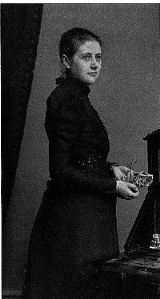
Beatrix Potter

Beatrix Potter

Overview
Helen Beatrix Potter was an English author, illustrator
Illustrator
An Illustrator is a narrative artist who specializes in enhancing writing by providing a visual representation that corresponds to the content of the associated text...

, natural scientist and conservationist
Conservation movement
The conservation movement, also known as nature conservation, is a political, environmental and a social movement that seeks to protect natural resources including animal, fungus and plant species as well as their habitat for the future....

 best known for her imaginative children’s books featuring animals such as those in The Tale of Peter Rabbit
The Tale of Peter Rabbit
The Tale of Peter Rabbit is a children's book written and illustrated by Beatrix Potter that follows mischievous and disobedient young Peter Rabbit as he is chased about the garden of Mr. McGregor. He escapes and returns home to his mother who puts him to bed after dosing him with camomile tea...

which celebrated the British landscape and country life.
Discussion
Ask a question about 'Beatrix Potter'
Start a new discussion about 'Beatrix Potter'
Answer questions from other users
Full Discussion Forum
 
Unanswered Questions
Recent Discussions
Encyclopedia
Helen Beatrix Potter was an English author, illustrator
Illustrator
An Illustrator is a narrative artist who specializes in enhancing writing by providing a visual representation that corresponds to the content of the associated text...

, natural scientist and conservationist
Conservation movement
The conservation movement, also known as nature conservation, is a political, environmental and a social movement that seeks to protect natural resources including animal, fungus and plant species as well as their habitat for the future....

 best known for her imaginative children’s books featuring animals such as those in The Tale of Peter Rabbit
The Tale of Peter Rabbit
The Tale of Peter Rabbit is a children's book written and illustrated by Beatrix Potter that follows mischievous and disobedient young Peter Rabbit as he is chased about the garden of Mr. McGregor. He escapes and returns home to his mother who puts him to bed after dosing him with camomile tea...

which celebrated the British landscape and country life.

Born into a privileged Unitarian
Unitarianism
Unitarianism is a Christian theological movement, named for its understanding of God as one person, in direct contrast to Trinitarianism which defines God as three persons coexisting consubstantially as one in being....

 family, Potter, along with her younger brother, Walter Bertram (1872–1918), grew up with few friends outside her large extended family. Her parents were artistic, interested in nature and enjoyed the countryside. As children, Beatrix and Bertram had numerous small animals as pets which they observed closely and drew endlessly. Summer holidays were spent in Scotland
Scotland
Scotland is a country that is part of the United Kingdom. Occupying the northern third of the island of Great Britain, it shares a border with England to the south and is bounded by the North Sea to the east, the Atlantic Ocean to the north and west, and the North Channel and Irish Sea to the...

 and in the English Lake District
Lake District
The Lake District, also commonly known as The Lakes or Lakeland, is a mountainous region in North West England. A popular holiday destination, it is famous not only for its lakes and its mountains but also for its associations with the early 19th century poetry and writings of William Wordsworth...

 where Beatrix developed a love of the natural world which was the subject of her painting from an early age.

She was educated by private governesses until she was eighteen. Her study of languages, literature, science and history was broad and she was an eager student. Her artistic talents were recognized early. Although she was provided with private art lessons, Beatrix preferred to develop her own style, particularly favoring watercolor. Along with her drawings of her animals, real and imagined, Potter illustrated insects, fossils, archeological artifacts, and fungi. In the 1890s her mycological
Mycology
Mycology is the branch of biology concerned with the study of fungi, including their genetic and biochemical properties, their taxonomy and their use to humans as a source for tinder, medicinals , food and entheogens, as well as their dangers, such as poisoning or...

 illustrations and research on the reproduction of fungi spores generated interest from the scientific establishment. Following some success illustrating cards and booklets, Potter wrote and illustrated The Tale of Peter Rabbit
The Tale of Peter Rabbit
The Tale of Peter Rabbit is a children's book written and illustrated by Beatrix Potter that follows mischievous and disobedient young Peter Rabbit as he is chased about the garden of Mr. McGregor. He escapes and returns home to his mother who puts him to bed after dosing him with camomile tea...

publishing it first privately in 1901, and a year later as a small, three-color illustrated book with Frederick Warne & Co
Frederick Warne & Co
Frederick Warne & Co was a British publishing firm famous for children's books, particularly those of Beatrix Potter. It was founded in 1865 by a bookseller, who gave his own name to the firm.- History :...

. She became unofficially engaged to her editor Norman Warne
Norman Warne
Norman Dalziel Warne was the third son of publisher Frederick Warne, and joined his father's firm Frederick Warne & Co. as editor. In 1900 the company rejected Beatrix Potter's The Tale of Peter Rabbit, but eventually reconsidered and published the book in October 1902 to great success...

 in 1905 despite the disapproval of her parents, but he died suddenly a month later.

With the proceeds from the books and a legacy from an aunt, Potter bought Hill Top Farm
Hill Top, Cumbria
Hill Top is a 17th-century house in Near Sawrey near Hawkshead, in the English county of Cumbria. It is an example of Lakeland vernacular architecture with random stone walls and slate roof...

 in Near Sawrey, a tiny village in the English Lake District near Ambleside in 1905. Over the next several decades, she purchased additional farms to preserve the unique hill country landscape. In 1913, at the age of 47, she married William Heelis, a respected local solicitor from Hawkshead. Potter was also a prize-winning breeder of Herdwick sheep and a prosperous farmer keenly interested in land preservation. She continued to write, illustrate and design spin-off merchandise based on her children’s books for Warne until the duties of land management and diminishing eyesight made it difficult to continue. Beatrix Potter published over twenty-three books; the best known are those written between 1902 and 1922. Potter died on 22 December 1943 at her home in Near Sawrey at age 77, leaving almost all her property to the National Trust
National Trust for Places of Historic Interest or Natural Beauty
The National Trust for Places of Historic Interest or Natural Beauty, usually known as the National Trust, is a conservation organisation in England, Wales and Northern Ireland...

. She is credited with preserving much of the land that now comprises the Lake District National Park.

Potter’s books continue to sell throughout the world, in multiple languages. Her stories have been retold in song, film, ballet and animation.

Early life


Potter’s family on both sides was from the Manchester
Manchester
Manchester is a city and metropolitan borough in Greater Manchester, England. According to the Office for National Statistics, the 2010 mid-year population estimate for Manchester was 498,800. Manchester lies within one of the UK's largest metropolitan areas, the metropolitan county of Greater...

 area. They were English Unitarians
Unitarianism
Unitarianism is a Christian theological movement, named for its understanding of God as one person, in direct contrast to Trinitarianism which defines God as three persons coexisting consubstantially as one in being....

, a Dissenting Protestant sect who rejected the doctrine of the Trinity and were socially and politically discriminated against. Potter’s paternal grandfather, Edmund Potter
Edmund Potter
Edmund Potter senior , was a Manchester industrialist and MP and grandfather to Beatrix Potter.He was a unitarian and, from 1861 to 1874, Liberal MP for Carlisle. Potter moved his business to Glossop in 1825, he rebuilt Joseph Lyne's Boggart Mill, and converted it to a printworks. He moved his...

, from Glossop in Derbyshire, owned the largest calico printing works in England at the time, and later served as a Member of Parliament
Member of Parliament
A Member of Parliament is a representative of the voters to a :parliament. In many countries with bicameral parliaments, the term applies specifically to members of the lower house, as upper houses often have a different title, such as senate, and thus also have different titles for its members,...

. Beatrix’s father, Rupert William Potter (1832–1914), was educated in Manchester and trained as a barrister in London. He married Helen Leech (1839–1932), the daughter of another wealthy cotton merchant and shipbuilder from Stalybridge, at Gee Cross on 8 August 1863. Rupert practiced law, specializing in equity law and conveyancing. They lived comfortably at No. 2 Bolton Gardens, South Kensington, where Helen Beatrix was born on 28 July 1866 and her brother Walter Bertram on 14 March 1872. Both parents were artistically talented, and Rupert was an adept amateur photographer. Rupert had invested in the stock market and by the early 1890s was extremely wealthy.

Beatrix was educated by three able governesses, the last of whom was Annie Moore (née Carter), just three years older than Beatrix, who tutored Beatrix in German as well as acting as lady's companion
Lady's companion
A lady's companion was a woman of genteel birth who acted as a paid companion for women of rank or wealth. The term was in use in the United Kingdom from at least the 18th century to the mid 20th century. It was related to the position of lady-in-waiting, which by the 19th century was only applied...

. She and Beatrix remained friends throughout their lives and Annie's eight children were the recipients of many of Potter’s delightful picture letters. It was Annie who later suggested that these letters might make good children’s books.

In their school room Beatrix and Bertram kept a variety of small pets, mice, rabbits, a hedgehog, some bats, along with collections of butterflies and other insects which they drew and studied. There is no evidence to support claims that any of these creatures were mistreated, or that the motive for their study was anything more sinister than natural curiosity and a desire to draw from life. Quite the contrary, Beatrix was devoted to the care of her small animals, often taking them with her on long holidays.

For most of the first fifteen years of her life, Beatrix spent summer holidays at Dalguise
Dalguise
Dalguise is a settlement in Perth and Kinross, Scotland. It is situated on the western side of the River Tay on the B898 road, 8 km north of Dunkeld. Located there is Eastwood House, a place where Beatrix Potter wrote some of her books. Dalguise is also the location of a Kids Activity Centre...

, an estate in Scotland in Perthshire on the River Tay. There she sketched and explored an area that nourished her imagination and her observation. Beatrix and her brother were allowed great freedoms in the country and both children became adept students of natural history. In 1887, when Dalguise was no longer available, the Potters took their first summer holiday in Lancashire
Lancashire
Lancashire is a non-metropolitan county of historic origin in the North West of England. It takes its name from the city of Lancaster, and is sometimes known as the County of Lancaster. Although Lancaster is still considered to be the county town, Lancashire County Council is based in Preston...

 in the English Lake District
Lake District
The Lake District, also commonly known as The Lakes or Lakeland, is a mountainous region in North West England. A popular holiday destination, it is famous not only for its lakes and its mountains but also for its associations with the early 19th century poetry and writings of William Wordsworth...

, at Wray Castle
Wray Castle
Wray Castle is a large private house at Claife in the English county of Cumbria, built in the Gothic Revival style in 1840. Today, the castle is used as a training centre, and is not open to the public...

 near Windermere. As a result, Beatrix came to meet Hardwicke Rawnsley
Hardwicke Rawnsley
Canon Hardwicke Drummond Rawnsley , was an English clergyman, poet, writer of hymns and conservationist, known as one of the co-founders of the National Trust for Places of Historic Interest or Natural Beauty...

, incumbent vicar at Wray and later the founding secretary of the National Trust
National Trust for Places of Historic Interest or Natural Beauty
The National Trust for Places of Historic Interest or Natural Beauty, usually known as the National Trust, is a conservation organisation in England, Wales and Northern Ireland...

, whose interest in the countryside and country life inspired the same in Beatrix and who was to have a lasting impact on her life.

About age 14 Beatrix, like many girls at the time, began to keep a diary. Beatrix's was written in a code of her own devising which was a simple letter for letter substitution. Her Journal was an important laboratory for her creativity serving as both sketchbook and literary experiment where in tiny handwriting she reported on society, recorded her impressions of art and artists, recounted stories, and observed life around her. The Journal, decoded and transcribed by Leslie Linder in 1958, does not provide an intimate record of her personal life, but it is an invaluable source for understanding a vibrant part of British society in the late 19th century. It describes Potter’s maturing artistic and intellectual interests, her often amusing insights on the places she visited, and her unusual ability to observe nature and to describe it. Begun in 1881, her Journal ends in 1897 when her artistic and intellectual energies were absorbed in scientific study and in efforts to publish her drawings. Precocious but reserved and often bored, she was searching for more independent activities and a desire to earn some money of her own whilst dutifully taking care of her parents, dealing with her especially demanding mother, and managing their various households.

Scientific illustrations and work in mycology


Beatrix Potter’s parents did not discourage higher education. As was common in the Victorian Era
Victorian era
The Victorian era of British history was the period of Queen Victoria's reign from 20 June 1837 until her death on 22 January 1901. It was a long period of peace, prosperity, refined sensibilities and national self-confidence...

, women of her class were privately educated and rarely sent to college.

Beatrix Potter was interested in every branch of natural science save astronomy
Astronomy
Astronomy is a natural science that deals with the study of celestial objects and phenomena that originate outside the atmosphere of Earth...

. Botany
Botany
Botany, plant science, or plant biology is a branch of biology that involves the scientific study of plant life. Traditionally, botany also included the study of fungi, algae and viruses...

 was a passion for most Victorians and nature study was a popular enthusiasm. Potter was eclectic in her tastes; collecting fossils, studying archeological artifacts from London excavations, and interested in entomology
Entomology
Entomology is the scientific study of insects, a branch of arthropodology...

. In all of these areas she drew and painted her specimens with increasing skill. By the 1890s her scientific interests centered on mycology
Mycology
Mycology is the branch of biology concerned with the study of fungi, including their genetic and biochemical properties, their taxonomy and their use to humans as a source for tinder, medicinals , food and entheogens, as well as their dangers, such as poisoning or...

. First drawn to fungi because of their colors and evanescence in nature and her delight in painting them, her interest deepened after meeting Charles McIntosh, a revered naturalist and mycologist during a summer holiday in Perthshire in 1892. He helped improve the accuracy of her illustrations, taught her taxonomy, and supplied her with live specimens to paint during the winter. Curious as to how fungi reproduced Potter began microscopic drawings of fungi spores (the agarics) and in 1895 developed a theory of their germination
Germination
Germination is the process in which a plant or fungus emerges from a seed or spore, respectively, and begins growth. The most common example of germination is the sprouting of a seedling from a seed of an angiosperm or gymnosperm. However the growth of a sporeling from a spore, for example the...

. Through the aegis of her scientific uncle, Sir Henry Enfield Roscoe
Henry Enfield Roscoe
Sir Henry Enfield Roscoe, FRS was an English chemist. He is particularly noted for early work on vanadium and for photochemical studies.- Life and work :...

, a chemist and vice chancellor of the University of London
University of London
-20th century:Shortly after 6 Burlington Gardens was vacated, the University went through a period of rapid expansion. Bedford College, Royal Holloway and the London School of Economics all joined in 1900, Regent's Park College, which had affiliated in 1841 became an official divinity school of the...

, she consulted with botanists at The Royal Gardens at Kew
Royal Botanic Gardens, Kew
The Royal Botanic Gardens, Kew, usually referred to as Kew Gardens, is 121 hectares of gardens and botanical glasshouses between Richmond and Kew in southwest London, England. "The Royal Botanic Gardens, Kew" and the brand name "Kew" are also used as umbrella terms for the institution that runs...

, convincing George Massee
George Edward Massee
George Edward Massee was an English mycologist, plant pathologist, and botanist.-Background and education:George Massee was born in Scampston, East Yorkshire, the son of a farmer...

 of her ability to germinate spores and her theory of hybridization. She did not believe in the theory of symbiosis
Symbiosis
Symbiosis is close and often long-term interaction between different biological species. In 1877 Bennett used the word symbiosis to describe the mutualistic relationship in lichens...

 proposed by Simon Schwendener
Simon Schwendener
Simon Schwendener was a Swiss botanist who was a native of Buchs in the Canton of St. Gallen.In 1856 he received his doctorate at the University of Zurich, where afterwards he was an assistant to Carl Wilhelm von Nägeli...

, the German mycologist as previously thought, rather she proposed a more independent process of reproduction.

Rebuffed by William Thiselton-Dyer
William Turner Thiselton-Dyer
Sir William Turner Thiselton-Dyer KCMG FRS FLS was a leading British botanist, and the third director of the Royal Botanic Gardens, Kew.- Life and career :Thiselton-Dyer was born in Westminster, London...

, the Director at Kew, because of her gender and her amateur status, Beatrix wrote up her conclusions and submitted a paper “On the Germination of the Spores of the Agaricineae” to the Linnean Society in 1897. It was introduced by Massee because, as a female, Potter could not attend proceedings or read her paper. She subsequently withdrew it realizing that some of her samples were contaminated, but continued her microscopic studies for several more years. Her paper is lost and probably destroyed, and without it and her drawings, her discoveries can never be properly evaluated. Potter later gave her other mycological drawings and scientific drawings to the Armitt Museum and Library
Armitt Library
Armitt Library is an independent library and museum, founded in Ambleside in Cumbria by Mary Louisa Armitt in 1909. It is a registered charity under English law....

 in Ambleside where mycologists still refer to them to identify fungi. There is also a collection of her fungi paintings at the Perth Museum and Art Gallery
Perth Museum and Art Gallery
Perth Museum and Art Gallery is the main museum and exhibition space in the city of Perth, Scotland.It is located on George Street in a building dating back to 1824 and substantially extended by the art gallery in 1932-35.-External links:*...

 in Perth, Scotland given by Charles McIntosh. In 1967 the mycologist W.P.K. Findlay included many of Potter’s beautifully accurate fungi drawings in his Wayside & Woodland Fungi, thereby fulfilling her desire to one day have her fungi drawings published in a book. In 1997 the Linnean Society issued a posthumous apology to Potter for the sexism displayed in its handling of her research.

Artistic and literary career


Potter’s artistic and literary interests were deeply influenced by fairies, fairy tales and fantasy. She was a student of the classic fairy tales of Western Europe. As well as stories from the Old Testament
Old Testament
The Old Testament, of which Christians hold different views, is a Christian term for the religious writings of ancient Israel held sacred and inspired by Christians which overlaps with the 24-book canon of the Masoretic Text of Judaism...

, John Bunyan's
John Bunyan
John Bunyan was an English Christian writer and preacher, famous for writing The Pilgrim's Progress. Though he was a Reformed Baptist, in the Church of England he is remembered with a Lesser Festival on 30 August, and on the liturgical calendar of the Episcopal Church on 29 August.-Life:In 1628,...

 The Pilgrim's Progress
The Pilgrim's Progress
The Pilgrim's Progress from This World to That Which Is to Come is a Christian allegory written by John Bunyan and published in February, 1678. It is regarded as one of the most significant works of religious English literature, has been translated into more than 200 languages, and has never been...

and Harriet Beecher Stowe's
Harriet Beecher Stowe
Harriet Beecher Stowe was an American abolitionist and author. Her novel Uncle Tom's Cabin was a depiction of life for African-Americans under slavery; it reached millions as a novel and play, and became influential in the United States and United Kingdom...

 Uncle Tom's Cabin
Uncle Tom's Cabin
Uncle Tom's Cabin; or, Life Among the Lowly is an anti-slavery novel by American author Harriet Beecher Stowe. Published in 1852, the novel "helped lay the groundwork for the Civil War", according to Will Kaufman....

, she grew up with Aesop’s Fables, the fairy tales of the Brothers Grimm
Brothers Grimm
The Brothers Grimm , Jacob Grimm and Wilhelm Grimm , were German academics, linguists, cultural researchers, and authors who collected folklore and published several collections of it as Grimm's Fairy Tales, which became very popular...

 and Hans Christian Andersen
Hans Christian Andersen
Hans Christian Andersen was a Danish author, fairy tale writer, and poet noted for his children's stories. These include "The Steadfast Tin Soldier," "The Snow Queen," "The Little Mermaid," "Thumbelina," "The Little Match Girl," and "The Ugly Duckling."...

, Charles Kingsley's
Charles Kingsley
Charles Kingsley was an English priest of the Church of England, university professor, historian and novelist, particularly associated with the West Country and northeast Hampshire.-Life and character:...

  The Water Babies
The Water-Babies, A Fairy Tale for a Land Baby
The Water-Babies, A Fairy Tale for a Land Baby is a children's novel by the Reverend Charles Kingsley. Written in 1862–1863 as a serial for Macmillan's Magazine, it was first published in its entirety in 1863...

, the folk tales and mythology of Scotland
Scottish mythology
Scottish mythology may refer to any of the mythologies of Scotland.Myths have emerged for various purposes throughout the history of Scotland, sometimes being elaborated upon by successive generations, and at other times being completely rejected and replaced by other explanatory narratives.-...

, the German Romantics, Shakespeare, and the romances of Sir Walter Scott. As a young child, before the age of eight, Edward Lear's
Edward Lear
Edward Lear was an English artist, illustrator, author, and poet, renowned today primarily for his literary nonsense, in poetry and prose, and especially his limericks, a form that he popularised.-Biography:...

 Book of Nonsense, including the much loved The Owl and the Pussycat
The Owl and the Pussycat
"The Owl and the Pussycat" is a nonsense poem by Edward Lear, first published in 1871.- Background :Lear wrote the poem for a three-year-old girl, Janet Symonds, the daughter of Lear's friend poet John Addington Symonds and his wife Catherine Symonds...

, and Lewis Carroll's
Lewis Carroll
Charles Lutwidge Dodgson , better known by the pseudonym Lewis Carroll , was an English author, mathematician, logician, Anglican deacon and photographer. His most famous writings are Alice's Adventures in Wonderland and its sequel Through the Looking-Glass, as well as the poems "The Hunting of the...

  Alice in Wonderland
Alice's Adventures in Wonderland
Alice's Adventures in Wonderland is an 1865 novel written by English author Charles Lutwidge Dodgson under the pseudonym Lewis Carroll. It tells of a girl named Alice who falls down a rabbit hole into a fantasy world populated by peculiar, anthropomorphic creatures...

had made their impression, although she later said of Alice that she was more interested in Tenniel's
John Tenniel
Sir John Tenniel was a British illustrator, graphic humorist and political cartoonist whose work was prominent during the second half of England’s 19th century. Tenniel is considered important to the study of that period’s social, literary, and art histories...

 illustrations than what they were about. The Brer Rabbit stories of Joel Chandler Harris
Joel Chandler Harris
Joel Chandler Harris was an American journalist, fiction writer, and folklorist best known for his collection of Uncle Remus stories. Harris was born in Eatonton, Georgia, where he served as an apprentice on a plantation during his teenage years...

 had been family favourites and she later studied his Uncle Remus
Uncle Remus
Uncle Remus is a fictional character, the title character and fictional narrator of a collection of African American folktales adapted and compiled by Joel Chandler Harris, published in book form in 1881...

stories and illustrated them. She studied book illustration from a young age and developed her own tastes, but the work of the picture book
Picture book
A picture book combines visual and verbal narratives in a book format, most often aimed at young children. The images in picture books use a range of media such as oil paints, acrylics, watercolor and pencil.Two of the earliest books with something like the format picture books still retain now...

 triumvirate Walter Crane
Walter Crane
Walter Crane was an English artist and book illustrator. He is considered to be the most prolific and influential children’s book creator of his generation and, along with Randolph Caldecott and Kate Greenaway, one of the strongest contributors to the child's nursery motif that the genre of...

, Kate Greenaway
Kate Greenaway
Catherine Greenaway , known as Kate Greenaway, was an English children's book illustrator and writer, who spent much of her childhood at Rolleston, Nottinghamshire. She studied at what is now the Royal College of Art in London, which at that time had a separate section for women, and was headed by...

 and Randolph Caldecott
Randolph Caldecott
Randolph Caldecott was a British artist and illustrator, born in Chester. The Caldecott Medal was named in his honor. He exercised his art chiefly in book illustrations. His abilities as an artist were promptly and generously recognized by the Royal Academy. Caldecott greatly influenced...

, the latter an illustrator whose work was later collected by her father, was a great influence. When she started to illustrate, she chose first the traditional rhymes and stories, “Cinderella
Cinderella
"Cinderella; or, The Little Glass Slipper" is a folk tale embodying a myth-element of unjust oppression/triumphant reward. Thousands of variants are known throughout the world. The title character is a young woman living in unfortunate circumstances that are suddenly changed to remarkable fortune...

”, “Sleeping Beauty
Sleeping Beauty
Sleeping Beauty by Charles Perrault or Little Briar Rose by the Brothers Grimm is a classic fairytale involving a beautiful princess, enchantment, and a handsome prince...

", “Ali Baba and the Forty Thieves”, “Puss-in-boots
Puss in Boots
'Puss' is a character in the fairy tale "The Master Cat, or Puss in Boots" by Charles Perrault. The tale was published in 1697 in his Histoires ou Contes du temps passé...

,” and “Red Riding Hood.” But most often her illustrations were fantasies featuring her own pets: mice, rabbits, kittens, and guinea pigs.

In her teenage years Potter was a regular visitor to the art galleries of London, particularly enjoying the Summer and Winter Exhibitions at the Royal Academy
Royal Academy
The Royal Academy of Arts is an art institution based in Burlington House on Piccadilly, London. The Royal Academy of Arts has a unique position in being an independent, privately funded institution led by eminent artists and architects whose purpose is to promote the creation, enjoyment and...

 in London. Her Journal reveals her growing sophistication as a critic as well as the influence of her father’s friend the artist Sir John Everett Millais who recognized Beatrix’s talent of observation. Although Potter was aware of art and artistic trends, her drawing and her prose style was uniquely her own.

As a way to earn a bit of money in the 1890s, Beatrix and her brother began to print Christmas cards of their own design, as well as cards for special occasions. Mice and rabbits were the most frequent subject of her fantasy paintings. In 1890 the firm of Hildesheimer and Faulkner bought several of her drawings of her rabbit, Benjamin Bunny, to illustrate verses by Frederic Weatherly titled A Happy Pair. In 1893 the same printer brought several more drawings for Weatherly’s Our Dear Relations, another book of rhymes, and the following year Potter successfully sold a series of frog illustrations and verses for Changing Pictures, a popular annual offered by the art publisher Ernest Nister. Potter was pleased by this success and determined to publish her own illustrated stories.

Whenever Potter went on holiday to the Lake District
Lake District
The Lake District, also commonly known as The Lakes or Lakeland, is a mountainous region in North West England. A popular holiday destination, it is famous not only for its lakes and its mountains but also for its associations with the early 19th century poetry and writings of William Wordsworth...

 or Scotland, she sent letters to young friends illustrating them with quick sketches. Many of these letters were written to the children of her former governess Annie Carter Moore, particularly to her oldest son Noel who was often ill. In September 1893 Potter was on holiday at Eastwood in Dunkeld
Dunkeld
Dunkeld is a small town in Strathtay, Perth and Kinross, Scotland. It is about 15 miles north of Perth on the eastern side of the A9 road into the Scottish Highlands and on the opposite side of the Tay from the Victorian village of Birnam. Dunkeld and Birnam share a railway station, on the...

, Scotland. She had run out of things to say to Noel and so she told him a story about “four little rabbits whose names were Flopsy, Mopsy, Cottontail and Peter.” It became one of the most famous children’s letters ever written and the basis of Potter’s future career as a writer-artist-storyteller.

In 1901, Beatrix privately published her own edition of The Tale of Peter Rabbit
The Tale of Peter Rabbit
The Tale of Peter Rabbit is a children's book written and illustrated by Beatrix Potter that follows mischievous and disobedient young Peter Rabbit as he is chased about the garden of Mr. McGregor. He escapes and returns home to his mother who puts him to bed after dosing him with camomile tea...

. It was drawn in black and white with a colored frontispiece. Over a year later Frederick Warne & Co
Frederick Warne & Co
Frederick Warne & Co was a British publishing firm famous for children's books, particularly those of Beatrix Potter. It was founded in 1865 by a bookseller, who gave his own name to the firm.- History :...

. a commercial publisher agreed to publish it if she would redraw her illustrations in color. The Tale of Peter Rabbit
The Tale of Peter Rabbit
The Tale of Peter Rabbit is a children's book written and illustrated by Beatrix Potter that follows mischievous and disobedient young Peter Rabbit as he is chased about the garden of Mr. McGregor. He escapes and returns home to his mother who puts him to bed after dosing him with camomile tea...

appeared in 1902 and was an immediate success. It was followed the next year by The Tale of Squirrel Nutkin
The Tale of Squirrel Nutkin
The Tale of Squirrel Nutkin is a children's book written and illustrated by Beatrix Potter and first published by Frederick Warne & Co. in August 1903. The story is about an impertinent red squirrel named Nutkin and his narrow escape from an owl called Old Brown. The book followed Potter's hugely...

and The Tailor of Gloucester
The Tailor of Gloucester
The Tailor of Gloucester is a children's book written and illustrated by Beatrix Potter, privately printed by the author in 1902, and published in a trade edition by Frederick Warne & Co. in October 1903...

which had also first been written as picture letters to the Moore children. Working with Norman Warne
Norman Warne
Norman Dalziel Warne was the third son of publisher Frederick Warne, and joined his father's firm Frederick Warne & Co. as editor. In 1900 the company rejected Beatrix Potter's The Tale of Peter Rabbit, but eventually reconsidered and published the book in October 1902 to great success...

 as her editor, Potter published two or three little books each year for a total of twenty-three books. The last book in this format was Cecily Parsley's Nursery Rhymes
Cecily Parsley's Nursery Rhymes
Cecily Parsley’s Nursery Rhymes is a children's book written and illustrated by Beatrix Potter, and published by Frederick Warne & Co. in December 1922. The book is a compilation of traditional nursery rhymes such as "Goosey Goosey Gander", "This Little Piggy" and "Three Blind Mice". It was...

in 1922, a collection of favorite rhymes. Although The Tale of Pigling Bland
The Tale of Pigling Bland
The Tale of Pigling Bland is a children's book written and illustrated by Beatrix Potter and first published by Frederick Warne & Co. in 1913...

was not published until 1930, it had been written much earlier. Potter continued creating her little books until after World War I
World War I
World War I , which was predominantly called the World War or the Great War from its occurrence until 1939, and the First World War or World War I thereafter, was a major war centred in Europe that began on 28 July 1914 and lasted until 11 November 1918...

 when her energies were increasingly directed toward her farming, sheep-breeding, and land conservation.

The immense popularity of Potter’s books was based on the lively quality of her illustrations, the non-didactic nature of her stories, the depiction of the rural countryside, and the imaginative qualities she lent to her animal characters.

Potter was also a canny businesswoman. As early as 1903 she made and patented a Peter Rabbit
Peter Rabbit
Peter Rabbit is a fictional anthropomorphic character in various children's stories by Beatrix Potter. He first appeared in The Tale of Peter Rabbit in 1902, and subsequently in five more books between 1904 and 1912. Spinoff merchandise includes dishes, wallpaper, and dolls...

 doll. It was followed by other “spin-off” merchandise over the years, including painting books, board games, wall-paper, figurines, baby blankets and china tea-sets. All were licensed by Frederick Warne & Co
Frederick Warne & Co
Frederick Warne & Co was a British publishing firm famous for children's books, particularly those of Beatrix Potter. It was founded in 1865 by a bookseller, who gave his own name to the firm.- History :...

. and earned Potter an independent income as well as immense profits for her publisher.

In 1905, Beatrix and Norman Warne
Norman Warne
Norman Dalziel Warne was the third son of publisher Frederick Warne, and joined his father's firm Frederick Warne & Co. as editor. In 1900 the company rejected Beatrix Potter's The Tale of Peter Rabbit, but eventually reconsidered and published the book in October 1902 to great success...

 became unofficially engaged. Potters’ parents objected to the match because Warne was “in trade” and thus not socially suitable. Sadly the engagement lasted only one month when Warne died of leukemia at age thirty-seven. That same year Potter used some of her income and a bit of inheritance to buy Hill Top Farm in Near Sawrey
Near Sawrey
Near Sawrey and Far Sawrey are two neighbouring villages in the Furness area of Cumbria. They are located in the Lake District between the town of Hawkshead and the lake of Windermere...

 in Lancashire (now Cumbria) in the English Lake District
Lake District
The Lake District, also commonly known as The Lakes or Lakeland, is a mountainous region in North West England. A popular holiday destination, it is famous not only for its lakes and its mountains but also for its associations with the early 19th century poetry and writings of William Wordsworth...

. Beatrix and Norman may have hoped that Hill Top Farm would be their holiday home, but after Norman’s death Beatrix went ahead with its purchase as she had always wanted to own that farm and live in that charming village.

Fell farming


Hill Top Farm in the village of Near Sawrey
Near Sawrey
Near Sawrey and Far Sawrey are two neighbouring villages in the Furness area of Cumbria. They are located in the Lake District between the town of Hawkshead and the lake of Windermere...

 was a working farm of just over 34 acres (137,593.2 m²). It comprised a seventeenth-century farmhouse, outbuildings, orchard, vegetable gardens, and enclosures. Potter asked the tenant farmer John Cannon and his family to stay on to manage the farm for her while she made physical improvements to the farmhouse and areas of the land and gardens that had been neglected. With Cannon she toured the neighboring villages and farms to learn the techniques of fell farming
Fell farming
Fell farming is the farming of fells, i.e. areas of uncultivated high ground used as common grazing. It is a term commonly used in Northern England, especially in the Lake District and the Pennine Dales...

 and of raising livestock, including pigs, cows and chickens; the following year she added sheep. Realizing she needed to protect her boundaries she sought advice from W.H. Heelis & Son, a local firm of solicitors with offices in nearby Hawkshead. With William Heelis acting for her she bought contiguous pasture, and in 1909 the 20 acres (80,937.2 m²) Castle Farm across the road from Hill Top Farm. Visiting Hill Top every chance she got, Potter’s books written during this period, such as The Tale of Ginger and Pickles
The Tale of Ginger and Pickles
The Tale of Ginger and Pickles is a children's book written and illustrated by Beatrix Potter, and first published by Frederick Warne & Co. in 1909. The book tells of two shopkeepers who extend unlimited credit to their customers and, as a result, are forced to go out of business...

, about the local shop in Near Sawrey and The Tale of Mrs. Tittlemouse
The Tale of Mrs. Tittlemouse
The Tale of Mrs. Tittlemouse is a children's book written and illustrated by Beatrix Potter, and published by Frederick Warne & Co. in 1910. The tale is about housekeeping and insect pests in the home, and reflects Potter's own sense of tidiness and her abhorrence of insect infestations. The...

, a wood mouse, reflect her increasing participation in village life and her delight in country living.

Owning and managing these working farms required the routine collaboration with the widely respected William Heelis. By the summer of 1912 Heelis had proposed marriage and Beatrix had accepted, although she did not immediately tell her parents who once again disapproved because Heelis was only a country solicitor. Beatrix and William were married on 15 October 1913 in London at St. Mary Abbots
St Mary Abbots
St Mary Abbots is an historic church located on Kensington High Street , London at a prominent intersection with Kensington Church Street. The present church was built in 1872 by the architect Sir George Gilbert Scott in neo-Gothic Early English style. It was the latest in a succession of churches...

 in Kensington. The couple moved immediately to Near Sawrey, residing at Castle Cottage, the renovated farm house on Castle Farm. Hill Top remained a working farm but now remodeled to allow for the tenant family and Beatrix’s private studio and work shop. At last her own person, Beatrix Heelis settled into the partnerships that shaped the rest of her life: her country solicitor husband and his large family, her farms, the Sawrey community and the predictable rounds of country life. The Tale of Jemima Puddle-Duck
The Tale of Jemima Puddle-Duck
The Tale of Jemima Puddle-Duck is a children's book written and illustrated by Beatrix Potter. It was first published by Frederick Warne & Co. in July 1908. Potter composed the book at Hill Top, a working farm in the Lake District she bought in 1905...

and The Tale of Tom Kitten
The Tale of Tom Kitten
The Tale of Tom Kitten is a children's book, written and illustrated by Beatrix Potter. It was released by Frederick Warne & Co. in September 1907. The tale is about manners and how children react to them. Tabitha Twitchit, a cat, invites friends for tea...

are representative of Hill Top Farm and of her farming life, and reflect her happiness with her country life.

After Rupert Potter died in 1914, Beatrix, now a wealthy woman, found Lindeth Howe, a large house in nearby Windermere
Windermere
Windermere is the largest natural lake of England. It is also a name used in a number of places, including:-Australia:* Lake Windermere , a reservoir, Australian Capital Territory * Lake Windermere...

 where her difficult mother lived until her death in 1931 at the age of 93. Beatrix continued to write stores for Frederick Warne, but she fully participated in country life. She established a Nursing Trust for local villages, and served on various committees and councils responsible for foot-paths and other country life issues.

Sheep farming


Beatrix Potter Heelis became keenly interested the breeding and raising of Herdwick sheep, the indigenous fell sheep, soon after acquiring Hill Top Farm. In 1923 she bought a former deer park and vast sheep farm in the Troutbeck Valley called Troutbeck Park Farm
Troutbeck Park
Troutbeck Park is a farm to the north of Troutbeck village in South Lakeland, Cumbria. In 1923 there was a risk of it being sold for development, so Beatrix Potter bought it and kept it as a working farm...

, restoring its land, its thousands of Herdwick sheep, and establishing Beatrix Potter Heelis as one of the major Herdwick sheep farmers in the area. She was admired by her shepherds and farm managers for her willingness to experiment with the latest biological remedies for the common diseases of sheep, and for her employment of the best shepherds, sheep breeders, and farm managers.

By the late 1920s Beatrix and her Hill Top farm manager Tom Storey had made a name for their prize-winning Herdwick flock. As a Herdwick breeder she won many prizes at the local agricultural shows and was frequently asked to serve as a judge. In 1942 she was named President-elect of The Herdwick Sheepbreeders’ Association, the first time a woman had ever been elected to that office. She died before taking office.

Lake District conservation


Beatrix had been a disciple of the land conservation and preservation ideals of her long-time friend and mentor, Canon Hardwicke Rawnsley
Hardwicke Rawnsley
Canon Hardwicke Drummond Rawnsley , was an English clergyman, poet, writer of hymns and conservationist, known as one of the co-founders of the National Trust for Places of Historic Interest or Natural Beauty...

, the first secretary and founding member of the National Trust for Places of Historic Interest or Natural Beauty
National Trust for Places of Historic Interest or Natural Beauty
The National Trust for Places of Historic Interest or Natural Beauty, usually known as the National Trust, is a conservation organisation in England, Wales and Northern Ireland...

. She supported the efforts of the National Trust to preserve not just the places of extraordinary beauty, but those heads of valley and low grazing lands that would be irreparably ruined by development. She was also an authority on the traditional Lakeland crafts, period furniture and stonework. She restored and preserved the farms that she bought or managed, making sure that each farm house had in it a piece of antique Lakeland furniture. Beatrix was interested in preserving not only the Herdwick sheep, but the way of life of fell farming. In 1930 the Heelises became partners with the National Trust in buying and managing the fell farms included in the large Monk Coniston Estate. It was composed of many farms spread over a wide area of western Lancashire, including the famously beautiful Tarn Hows. Beatrix became the de facto estate manager for the Trust for seven years until the National Trust could afford to buy most of the property back from her. Her stewardship of these farms earned her wide regard, but she was not without her critics. She was notable in observing the problems of afforestation, preserving the in-take grazing lands, and husbanding the quarries and timber on these farms. All her farms were stocked with Herdwick sheep and frequently with Galloway cattle
Galloway cattle
The Galloway is one of the world's longest established breeds of beef cattle, named after the Galloway region of Scotland, where it originated. It is now found in many parts of the world....

.

Later life


Beatrix continued to write stories and to draw, though mostly for her own pleasure. Her books in the late 1920s included the semi-autobiographical The Fairy Caravan
The Fairy Caravan
The Fairy Caravan is a book written and illustrated by Beatrix Potter. It was first published in 1929. The story follows the adventures of Tuppenny, a young guinea pig who runs away from home to join a travelling circus....

, a fanciful tale set in her beloved Troutbeck fells. It was published only in the US during Potter’s lifetime, and not until 1952 in the UK. Sister Anne, Potter’s version of the story of Bluebeard
Bluebeard
"Bluebeard" is a French literary folktale written by Charles Perrault and is one of eight tales by the author first published by Barbin in Paris in January 1697 in Histoires ou Contes du temps passé. The tale tells the story of a violent nobleman in the habit of murdering his wives and the...

 was written especially for her American readers but illustrated by Katharine Sturges. A final folktale, Wag by Wall, was published posthumously by The Horn Book in 1944. Beatrix was a generous patron of the Girl Guides
Girl Guides
A Guide, Girl Guide or Girl Scout is a member of a section of some Guiding organisations who is between the ages of 10 and 14. Age limits are different in each organisation. It is the female-centred equivalent of the Scouts. The term Girl Scout is used in the United States and several East Asian...

 whose troops she allowed to make their summer encampments on her lands and whose company she enjoyed as an older woman.

Beatrix and William Heelis enjoyed a happy marriage of thirty years, continued their farming and preservation efforts throughout the hard days of the Second World War. Although they were childless, Beatrix played an important role in William’s large family, particularly enjoying her relationship with several nieces whom she helped educate and giving comfort and aid to her husband’s brothers and sisters.

Beatrix died of complications from pneumonia
Pneumonia
Pneumonia is an inflammatory condition of the lung—especially affecting the microscopic air sacs —associated with fever, chest symptoms, and a lack of air space on a chest X-ray. Pneumonia is typically caused by an infection but there are a number of other causes...

 and heart disease
Heart disease
Heart disease, cardiac disease or cardiopathy is an umbrella term for a variety of diseases affecting the heart. , it is the leading cause of death in the United States, England, Canada and Wales, accounting for 25.4% of the total deaths in the United States.-Types:-Coronary heart disease:Coronary...

 on December 22, 1943 at Castle Cottage. She left nearly all her property to The National Trust, including over 4000 acres (16.2 km²) of land, cottages, herds of Herdwick sheep and cattle and sixteen farms. Hers was the largest gift to that time to the National Trust
National Trust for Places of Historic Interest or Natural Beauty
The National Trust for Places of Historic Interest or Natural Beauty, usually known as the National Trust, is a conservation organisation in England, Wales and Northern Ireland...

 and enabled the preservation of the lands now included in the Lake District National Park
Lake District National Park
The Lake District National Park is located in the north-west of England and is the largest of the English National Parks and the second largest in the United Kingdom. It is in the central and most-visited part of the Lake District....

, and the continuation of fell farming. The central office of the National Trust in Swindon was named 'Heelis' in 2005 in her memory. William Heelis continued his stewardship of their properties and of her literary and artistic work for the eighteen months he survived her. His estate left the remainder to the National Trust. Heelis died in August 1945.

Legacies


Beatrix left almost all the original illustrations for her books to the National Trust
National Trust for Places of Historic Interest or Natural Beauty
The National Trust for Places of Historic Interest or Natural Beauty, usually known as the National Trust, is a conservation organisation in England, Wales and Northern Ireland...

. The copyright to her stories and merchandise was given to her publisher Frederick Warne and Company
Frederick Warne & Co
Frederick Warne & Co was a British publishing firm famous for children's books, particularly those of Beatrix Potter. It was founded in 1865 by a bookseller, who gave his own name to the firm.- History :...

, now a division of the Penguin Group
Penguin Group
The Penguin Group is a trade book publisher, the largest in the world , having overtaken Random House in 2009. The Penguin Group is the name of the incorporated division of parent Pearson PLC that oversees these publishing operations...

. Hill Top Farm was opened to the public by the National Trust in 1946 and displayed her artwork there until 1985 when it was moved to William Heelis’s former law offices in Hawkshead
Hawkshead
Hawkshead is a village and civil parish in the Cumbria, England. It is one of the main tourist honeypots in the South Lakeland area, and is dependent on the local tourist trade...

, also owned by the National Trust as the Beatrix Potter Gallery
Beatrix Potter Gallery
The Beatrix Potter Gallery is a gallery run by the National Trust and situated in a 17th-century Lake District townhouse in Hawkshead, Cumbria, England, and dedicated to presenting original book illustrations by Beatrix Potter. On display are original sketches and watercolours painted by Potter...

.

Beatrix gave her folios of mycological drawings to The Armitt Library and Museum
Armitt Library
Armitt Library is an independent library and museum, founded in Ambleside in Cumbria by Mary Louisa Armitt in 1909. It is a registered charity under English law....

 in Ambleside before her death. The Tale of Peter Rabbit
The Tale of Peter Rabbit
The Tale of Peter Rabbit is a children's book written and illustrated by Beatrix Potter that follows mischievous and disobedient young Peter Rabbit as he is chased about the garden of Mr. McGregor. He escapes and returns home to his mother who puts him to bed after dosing him with camomile tea...

is owned by Frederick Warne and Company, The Tailor of Gloucester
The Tailor of Gloucester
The Tailor of Gloucester is a children's book written and illustrated by Beatrix Potter, privately printed by the author in 1902, and published in a trade edition by Frederick Warne & Co. in October 1903...

by the Tate Gallery
Tate Gallery
The Tate is an institution that houses the United Kingdom's national collection of British Art, and International Modern and Contemporary Art...

, and The Tale of the Flopsy Bunnies
The Tale of the Flopsy Bunnies
The Tale of The Flopsy Bunnies is a children's book written and illustrated by Beatrix Potter, and first published by Frederick Warne & Co. in July 1909. After two full-length tales about rabbits, Potter had grown weary of depicting lagomorphs, and initially did not want to create another rabbit...

by the British Museum
British Museum
The British Museum is a museum of human history and culture in London. Its collections, which number more than seven million objects, are amongst the largest and most comprehensive in the world and originate from all continents, illustrating and documenting the story of human culture from its...

.

The largest public collection of her letters and drawings is the Leslie Linder Bequest and Leslie Linder Collection at the Victoria and Albert Museum
Victoria and Albert Museum
The Victoria and Albert Museum , set in the Brompton district of The Royal Borough of Kensington and Chelsea, London, England, is the world's largest museum of decorative arts and design, housing a permanent collection of over 4.5 million objects...

 in London. In the United States, the largest public collections are those in the Special Collections of the Free Library of Philadelphia
Free Library of Philadelphia
The Free Library of Philadelphia is the public library system serving Philadelphia, Pennsylvania.-History:History of the Free Library of Philadelphia: Initiated by the efforts of Dr...

, and the Lloyd Cotsen Children’s Library at Princeton University
Princeton University
Princeton University is a private research university located in Princeton, New Jersey, United States. The school is one of the eight universities of the Ivy League, and is one of the nine Colonial Colleges founded before the American Revolution....

.

Themes


There are many interpretations of Potter’s literary work, the sources of her art, and interpretations of her life and times. Please see bibliography for some of the many critical evaluations of her opus of children’s literature, including Modernist
Modernism
Modernism, in its broadest definition, is modern thought, character, or practice. More specifically, the term describes the modernist movement, its set of cultural tendencies and array of associated cultural movements, originally arising from wide-scale and far-reaching changes to Western society...

 interpretations of Humphrey Carpenter
Humphrey Carpenter
Humphrey William Bouverie Carpenter was an English biographer, writer, and radio broadcaster.-Biography:...

 and Katherine Chandler. Judy Taylor, That Naughty Rabbit: Beatrix Potter and Peter Rabbit, rev. 2002 tells the story of the first publication and many editions. Literary criticism is included in detail in the bibliographies of various biographical works, specialized treatments and exhibit catalogues.

Potter’s country life and her farming has also been widely discussed in the work of Susan Denyer and by other authors in the publications of The National Trust
National Trust for Places of Historic Interest or Natural Beauty
The National Trust for Places of Historic Interest or Natural Beauty, usually known as the National Trust, is a conservation organisation in England, Wales and Northern Ireland...

. The publications of the Beatrix Potter Society are essential scholarship.

Potter’s work as a scientific illustrator and her work in mycology is highlighted in several chapters in Linda Lear, Beatrix Potter: A Life in Nature, 2007; Beatrix Potter: The Extraordinary Life of a Victorian Genius. 2008, UK.

Adaptations and fictionalizations


In 1971 a ballet film, The Tales of Beatrix Potter, directed by Reginald Mills was released . Set to music by John Lanchbery
John Lanchbery
John Arthur Lanchbery OBE was an English, later Australian, composer and conductor, famous for his ballet arrangements.-Life:...

 with choreography
Choreography
Choreography is the art of designing sequences of movements in which motion, form, or both are specified. Choreography may also refer to the design itself, which is sometimes expressed by means of dance notation. The word choreography literally means "dance-writing" from the Greek words "χορεία" ...

 by Frederick Ashton
Frederick Ashton
Sir Frederick William Mallandaine Ashton OM, CH, CBE was a leading international dancer and choreographer. He is most noted as the founder choreographer of The Royal Ballet in London, but also worked as a director and choreographer of opera, film and theatre revues.-Early life:Ashton was born at...

 and performed in character costume by members of the Royal Ballet
Birmingham Royal Ballet
Birmingham Royal Ballet is one of the three major ballet companies of the United Kingdom, alongside the Royal Ballet and the English National Ballet....

 and the Royal Opera House
Royal Opera House
The Royal Opera House is an opera house and major performing arts venue in Covent Garden, central London. The large building is often referred to as simply "Covent Garden", after a previous use of the site of the opera house's original construction in 1732. It is the home of The Royal Opera, The...

 orchestra. The ballet of the same name has been performed by other dance companies around the world.

In 1982, the BBC
BBC
The British Broadcasting Corporation is a British public service broadcaster. Its headquarters is at Broadcasting House in the City of Westminster, London. It is the largest broadcaster in the world, with about 23,000 staff...

 produced The Tale of Beatrix Potter. This dramatisation of her life was written by John Hawkesworth
John Hawkesworth (producer)
John Hawkesworth was an English television and film producer and writer best known for his work on the period drama Upstairs, Downstairs.-Early life:...

 and directed by Bill Hayes. It starred Holly Aird and Penelope Wilton
Penelope Wilton
Penelope Alice Wilton, OBE is an English actress.-Life and career:Penelope Alice Wilton was born in Scarborough, North Riding of Yorkshire, to a former actress mother and a businessman father. She is a niece of actors Bill Travers and Linden Travers and a cousin of the actor Richard Morant...

 as the young and adult Beatrix respectively.

In 2006 Chris Noonan directed Miss Potter, a biopic of Potter’s life focusing on her early career and romance with her editor Norman Warne. Renee Zellweger
Renée Zellweger
Renée Kathleen Zellweger is an American actress and producer. Zellweger first gained widespread attention for her role in the film Jerry Maguire , and subsequently received two nominations for the Academy Award for Best Actress for her roles as Bridget Jones in the comedy Bridget Jones's Diary ...

 and Ewan McGregor
Ewan McGregor
Ewan Gordon McGregor is a Scottish actor. He has had success in mainstream, indie, and art house films. McGregor is perhaps best known for his roles as heroin addict Mark Renton in the drama Trainspotting , young Jedi Obi-Wan Kenobi in the Star Wars prequel trilogy , and poet Christian in the...

 play the title roles.

2004 – 2011 Beatrix Potter is also featured in a series of light mysteries called The Cottage Tales of Beatrix Potter by Susan Wittig Albert
Susan Wittig Albert
Susan Wittig Albert is a mystery writer from Vermilion County, Illinois, United States. She currently resides in Bertram, Texas, near Austin, with her husband, Bill Albert.- Career :...

. The eight books in the series starting with the Tale of Hill Top Farm (2004) deal with her life in the Lake District
Lake District
The Lake District, also commonly known as The Lakes or Lakeland, is a mountainous region in North West England. A popular holiday destination, it is famous not only for its lakes and its mountains but also for its associations with the early 19th century poetry and writings of William Wordsworth...

 and the village of Near Sawrey between 1905 and 1913.

Publications


The 23 Tales
  • The Tale of Peter Rabbit
    The Tale of Peter Rabbit
    The Tale of Peter Rabbit is a children's book written and illustrated by Beatrix Potter that follows mischievous and disobedient young Peter Rabbit as he is chased about the garden of Mr. McGregor. He escapes and returns home to his mother who puts him to bed after dosing him with camomile tea...

    (1902)
  • The Tale of Squirrel Nutkin
    The Tale of Squirrel Nutkin
    The Tale of Squirrel Nutkin is a children's book written and illustrated by Beatrix Potter and first published by Frederick Warne & Co. in August 1903. The story is about an impertinent red squirrel named Nutkin and his narrow escape from an owl called Old Brown. The book followed Potter's hugely...

    (1903)
  • The Tailor of Gloucester
    The Tailor of Gloucester
    The Tailor of Gloucester is a children's book written and illustrated by Beatrix Potter, privately printed by the author in 1902, and published in a trade edition by Frederick Warne & Co. in October 1903...

    (1903)
  • The Tale of Benjamin Bunny
    The Tale of Benjamin Bunny
    The Tale of Benjamin Bunny is a children's book written and illustrated by Beatrix Potter, and first published by Frederick Warne & Co. in September 1904. The book is a sequel to The Tale of Peter Rabbit , and tells of Peter's return to Mr. McGregor's garden with his cousin Benjamin to retrieve...

    (1904)
  • The Tale of Two Bad Mice
    The Tale of Two Bad Mice
    The Tale of Two Bad Mice is a children's book written and illustrated by Beatrix Potter, and published by Frederick Warne & Co. in September 1904. Potter took inspiration for the tale from two mice caught in a cage-trap in her cousin's home and a dollhouse being constructed by her editor and...

    (1904)
  • The Tale of Mrs. Tiggy-Winkle
    The Tale of Mrs. Tiggy-Winkle
    The Tale of Mrs. Tiggy-Winkle is a children's book written and illustrated by Beatrix Potter. It was published by Frederick Warne & Co. in October 1905. Mrs. Tiggy-winkle is a hedgehog and a washerwoman who lives in a tiny cottage in the fells of the Lake District. A child named Lucie happens upon...

    (1905)
  • The Tale of the Pie and the Patty-Pan
    The Tale of the Pie and the Patty-Pan
    The Tale of the Pie and the Patty-Pan is a children's book written and illustrated by Beatrix Potter, and released by Frederick Warne & Co. in October 1905. It tells of a cat called Ribby and a tea party she holds for a dog called Duchess...

    (1905)
  • The Tale of Mr. Jeremy Fisher
    The Tale of Mr. Jeremy Fisher
    The Tale of Mr. Jeremy Fisher is a children's book, written and illustrated by Beatrix Potter. It was released by Frederick Warne & Co. in July 1906. Jeremy's origin lies in a letter she wrote to a child in 1893. She revised it in 1906, and moved its setting from the River Tay to the English Lake...

    (1906)
  • The Story of A Fierce Bad Rabbit
    The Story of a Fierce Bad Rabbit
    The Story of A Fierce Bad Rabbit is a children’s book written and illustrated by Beatrix Potter, and first published by Frederick Warne & Co. in December 1906. The book tells of a bad little rabbit who is fired upon by a hunter and loses his tail and whiskers...

    (1906)
  • The Story of Miss Moppet
    The Story of Miss Moppet
    The Story of Miss Moppet is a tale about teasing featuring a kitten and a mouse, written and illustrated by Beatrix Potter. It was published by Frederick Warne & Co for the 1906 Christmas season. Potter was born in London in 1866, and between 1902 and 1905 published a series of small format...

    (1906)
  • The Tale of Tom Kitten
    The Tale of Tom Kitten
    The Tale of Tom Kitten is a children's book, written and illustrated by Beatrix Potter. It was released by Frederick Warne & Co. in September 1907. The tale is about manners and how children react to them. Tabitha Twitchit, a cat, invites friends for tea...

    (1907)
  • The Tale of Jemima Puddle-Duck
    The Tale of Jemima Puddle-Duck
    The Tale of Jemima Puddle-Duck is a children's book written and illustrated by Beatrix Potter. It was first published by Frederick Warne & Co. in July 1908. Potter composed the book at Hill Top, a working farm in the Lake District she bought in 1905...

    (1908)
  • The Tale of Samuel Whiskers or, The Roly-Poly Pudding (1908)
  • The Tale of the Flopsy Bunnies
    The Tale of the Flopsy Bunnies
    The Tale of The Flopsy Bunnies is a children's book written and illustrated by Beatrix Potter, and first published by Frederick Warne & Co. in July 1909. After two full-length tales about rabbits, Potter had grown weary of depicting lagomorphs, and initially did not want to create another rabbit...

    (1909)
  • The Tale of Ginger and Pickles
    The Tale of Ginger and Pickles
    The Tale of Ginger and Pickles is a children's book written and illustrated by Beatrix Potter, and first published by Frederick Warne & Co. in 1909. The book tells of two shopkeepers who extend unlimited credit to their customers and, as a result, are forced to go out of business...

    (1909)
  • The Tale of Mrs. Tittlemouse
    The Tale of Mrs. Tittlemouse
    The Tale of Mrs. Tittlemouse is a children's book written and illustrated by Beatrix Potter, and published by Frederick Warne & Co. in 1910. The tale is about housekeeping and insect pests in the home, and reflects Potter's own sense of tidiness and her abhorrence of insect infestations. The...

    (1910)
  • The Tale of Timmy Tiptoes
    The Tale of Timmy Tiptoes
    The Tale of Timmy Tiptoes is a children's book written and illustrated by Beatrix Potter, and published by Frederick Warne & Co. in October 1911. Timmy Tiptoes is a squirrel believed a nut-thief by his fellows, and imprisoned by them in a hollow tree with the expectation that he will confess under...

    (1911)
  • The Tale of Mr. Tod
    The Tale of Mr. Tod
    The Tale of Mr. Tod is a children's book written and illustrated by Beatrix Potter, first published by Frederick Warne & Co. in 1912. The tale is about a badger called Tommy Brock and his neighbour Mr. Tod, a fox. Brock kidnaps the children of Benjamin Bunny and his wife Flopsy, and hides them in...

    (1912)
  • The Tale of Pigling Bland
    The Tale of Pigling Bland
    The Tale of Pigling Bland is a children's book written and illustrated by Beatrix Potter and first published by Frederick Warne & Co. in 1913...

    (1913)
  • Appley Dapply's Nursery Rhymes
    Appley Dapply's Nursery Rhymes
    Appley Dapply’s Nursery Rhymes is a collection of nursery rhymes written and illustrated by Beatrix Potter, and published by Frederick Warne & Co. in October 1917. Potter had a lifelong fascination with rhymes, and proposed a book of short verses called Appley Dapply to Warne following the release...

    (1917)
  • The Tale of Johnny Town-Mouse
    The Tale of Johnny Town-Mouse
    The Tale of Johnny Town-Mouse is a children's book written and illustrated by Beatrix Potter and first published by Frederick Warne & Co. in December 1918. The tale is based on the Aesop fable, "The Town Mouse and the Country Mouse" and tells of a country mouse and a city mouse who visit each...

    (1918)
  • Cecily Parsley's Nursery Rhymes
    Cecily Parsley's Nursery Rhymes
    Cecily Parsley’s Nursery Rhymes is a children's book written and illustrated by Beatrix Potter, and published by Frederick Warne & Co. in December 1922. The book is a compilation of traditional nursery rhymes such as "Goosey Goosey Gander", "This Little Piggy" and "Three Blind Mice". It was...

    (1922)
  • The Tale of Little Pig Robinson
    The Tale of Little Pig Robinson
    The Tale of Little Pig Robinson is a children's book written and illustrated by Beatrix Potter and first published simultaneously in Britain by Frederick Warne & Co. and in America by David McKay Company in September 1930. The tale is the story of the pig in Edward Lear's "The Owl and the...

    (1930)


Other books
  • Peter Rabbit's Painting Book (1911)
  • Tom Kitten's Painting Book (1917)
  • Jemima Puddle-Duck's Painting Book (1925)
  • Peter Rabbit's Almanac for 1929 (1928)
  • The Fairy Caravan
    The Fairy Caravan
    The Fairy Caravan is a book written and illustrated by Beatrix Potter. It was first published in 1929. The story follows the adventures of Tuppenny, a young guinea pig who runs away from home to join a travelling circus....

    (1929)
  • Sister Anne (illustrated by Katharine Sturges) (1932)
  • Wag-by-Wall (decorations by J. J. Lankes
    J. J. Lankes
    Julius John Lankes was an illustrator, a woodcut print artist, author, and college professor.-Early life and education:Lankes was born on August 31, 1884 in Buffalo, New York to parents of German heritage. His father worked in a lumber mill and brought home small scraps of wood...

    ) (1944)
  • The Tale of the Faithful Dove (illustrated by Marie Angel) (1955, 1970)
  • The Sly Old Cat
    The Sly Old Cat
    The Sly Old Cat is a children's book written and illustrated by Beatrix Potter in 1906, and first published by Frederick Warne & Co. in 1971, almost thirty years after her death...

    (written 1906; first published 1971)


Further reading


Letters, journals and writing collections
  • Potter, Beatrix. (rev. 1989). The Journal of Beatrix Potter, 1881–1897, transcribed from her code writings by Leslie Linder. F. Warne & Co. ISBN 978-0723236252


Art studies

Biographical studies

External links