

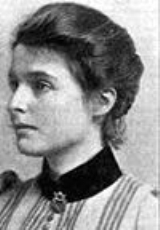
Beatrice Webb

Encyclopedia
Martha Beatrice Webb, Lady Passfield (née Potter; 22 January 1858 – 30 April 1943) was an English sociologist, economist, socialist
and social reformer. Although her husband became Baron Passfield in 1929, she refused to be known as Lady Passfield. She coined the term collective bargaining
.
Along with her husband Sidney Webb and numerous others, she co-founded the London School of Economics and Political Science and played a crucial role in the forming of the Fabian Society
.
, the daughter of a businessman Richard Potter and Laurencina Heyworth, daughter of a Liverpool merchant. Her grandfather was Radical
MP, Richard Potter. From an early age she was self-taught and cited her influences as the cooperative movement and the philosopher Herbert Spencer
with whom she became acquainted after an early stay with relatives in Lancashire.
In 1882, she had a relationship with Radical politician Joseph Chamberlain
, by then a Cabinet
minister. After this relationship failed, she took up Social Work
and assisted her cousin Charles Booth
who was carrying out a pioneering survey of the Victorian slums of London
, bringing her own experiences as rent-collector in the model dwellings
at Katherine Buildings, Aldgate
, operated by the East End Dwellings Company
. Upon the death of her father, Potter inherited an endowment of £1,000 pounds a year which she used to support herself during this research. In 1890 she was introduced to Sidney Webb whose help she sought in this research and in 1891 she published The Co-operative Movement in Great Britain, based on her experiences in Lancashire. Marrying Webb in 1892, the two remained together and shared political and professional activities, becoming active members of the Fabian Society
. With support from the Fabians, she co-authored books and pamphlets on socialism
and the co-operative movement including The History of Trade Unionism in 1894 and Industrial Democracy in 1897. In 1895, a donation from Henry Hutchinson, a solicitor from Derby
, was used by the Society to found the London School of Economics and Political Science.
. The Commission was established by the Conservative government of AJ Balfour
, and reported to the Liberal government
of HH Asquith. Webb headed the minority report
which outlined a welfare state
which would "secure a national minimum of civilised life ... open to all alike, of both sexes and all classes, by which we meant sufficient nourishment and training when young, a living wage when able-bodied, treatment when sick, and modest but secure livelihood when disabled or aged". William Beveridge
, who was later to author the Beveridge Report
in 1942, worked as a researcher for the Webbs on the Minority Report.
, a political weekly edited by Clifford Sharp
with contributions from many philosophers, economists and politicians of the time including George Bernard Shaw
and John Maynard Keynes
.
In late 1914, the Webbs became members of the Labour Party
. At this time, their leadership of the Fabian Society was facing opposition from H.G. Wells, who lampooned them in his 1911 novel The New Machiavelli as 'the Baileys', a pair of short-sighted, bourgeois manipulators. They were also opposed from the left in the Labour Party by the Guild Socialists and the historian and economist G.D.H. Cole. During this time, Webb collaborated with her husband in his writings and policy statement such as Labour and the New Social Order in 1918 and his election in 1922 to the parliamentary seat of Seaham
in Durham
.
In 1928 the Webbs retired to Liphook
in Hampshire
, where they lived until their deaths. In 1932, Sidney and Beatrice travelled to the Soviet Union
and later published in support of the Soviet economic experiment with Soviet Communism: A New Civilisation? and The Truth About Soviet Russia. When she died in 1943, Webb's ashes were interred in the nave of Westminster Abbey
, close to those of her husband, and were to be joined subsequently by the remains of Clement Attlee
and Ernest Bevin
.
theory of the co-operative movement. It was, for example, Webb who coined the terms “Co-operative Federalism” and “Co-operative Individualism” in her 1891 book Cooperative Movement in Great Britain. Out of these two categories, Webb identified herself as a co-operative federalist; a school of thought which advocates consumer co-operative societies. Webb argued that consumers’ co-operatives should form co-operative wholesale societies
(by forming co-operatives in which all members are co-operatives, the best historical example being the English Co-operative Wholesale Society) and that these federal co-operatives should undertake purchasing farms or factories. Webb dismissed the idea of worker co-operatives
where the people who did the work and benefited from it had some control over how it was done, arguing that – at the time she was writing – such ventures had proved largely unsuccessful, at least in ushering in her form of socialism led by volunteer committees of people like herself. Examples of successful worker Cooperatives did of course exist then as now. In some professions they were the norm. But Webb’s final book, The Truth About The Soviet Union celebrated central planning.
and later as Chancellor of the Exchequer under Clement Attlee
. His daughter, Peggy
, went on to marry the Nana
Joe Appiah
, a noted African statesman and tribal chieftain
who served as something of a founding father of the Republic of Ghana.
Her niece, Barbara Drake
, was a prominent trade unionist and a member of the Fabian Society
. Another niece, Katherine Dobbs, married the journalist Malcolm Muggeridge
, whose experience reporting from the Soviet Union subsequently made him highly critical of the Webbs' optimistic portrayal of Stalin's rule. Their books, Soviet Communism: A new civilization? (1935) and The Truth About Soviet Russia (1942) have been widely denounced for adopting an uncritical view of Stalin's conduct during periods that witnessed a brutal process of agricultural collectivization as well as extensive purges and the creation of the gulag system.
Out of the box.
Socialism
Socialism is an economic system characterized by social ownership of the means of production and cooperative management of the economy; or a political philosophy advocating such a system. "Social ownership" may refer to any one of, or a combination of, the following: cooperative enterprises,...
and social reformer. Although her husband became Baron Passfield in 1929, she refused to be known as Lady Passfield. She coined the term collective bargaining
Collective bargaining
Collective bargaining is a process of negotiations between employers and the representatives of a unit of employees aimed at reaching agreements that regulate working conditions...
.
Along with her husband Sidney Webb and numerous others, she co-founded the London School of Economics and Political Science and played a crucial role in the forming of the Fabian Society
Fabian Society
The Fabian Society is a British socialist movement, whose purpose is to advance the principles of democratic socialism via gradualist and reformist, rather than revolutionary, means. It is best known for its initial ground-breaking work beginning late in the 19th century and continuing up to World...
.
Biography
Beatrice Potter was born in Standish House in the village of Standish, GloucestershireStandish, Gloucestershire
Standish is a small village and civil parish in the Stroud local government district in Gloucestershire, England.The village is north-west of Stroud, on the B4008 road to Quedgeley...
, the daughter of a businessman Richard Potter and Laurencina Heyworth, daughter of a Liverpool merchant. Her grandfather was Radical
Radicals (UK)
The Radicals were a parliamentary political grouping in the United Kingdom in the early to mid 19th century, who drew on earlier ideas of radicalism and helped to transform the Whigs into the Liberal Party.-Background:...
MP, Richard Potter. From an early age she was self-taught and cited her influences as the cooperative movement and the philosopher Herbert Spencer
Herbert Spencer
Herbert Spencer was an English philosopher, biologist, sociologist, and prominent classical liberal political theorist of the Victorian era....
with whom she became acquainted after an early stay with relatives in Lancashire.
In 1882, she had a relationship with Radical politician Joseph Chamberlain
Joseph Chamberlain
Joseph Chamberlain was an influential British politician and statesman. Unlike most major politicians of the time, he was a self-made businessman and had not attended Oxford or Cambridge University....
, by then a Cabinet
Cabinet of the United Kingdom
The Cabinet of the United Kingdom is the collective decision-making body of Her Majesty's Government in the United Kingdom, composed of the Prime Minister and some 22 Cabinet Ministers, the most senior of the government ministers....
minister. After this relationship failed, she took up Social Work
Social work
Social Work is a professional and academic discipline that seeks to improve the quality of life and wellbeing of an individual, group, or community by intervening through research, policy, community organizing, direct practice, and teaching on behalf of those afflicted with poverty or any real or...
and assisted her cousin Charles Booth
Charles Booth (philanthropist)
Charles Booth was an English philanthropist and social researcher. He is most famed for his innovative work on documenting working class life in London at the end of the 19th century, work that along with that of Benjamin Seebohm Rowntree influenced government intervention against poverty in the...
who was carrying out a pioneering survey of the Victorian slums of London
Life and Labour of the People of London
Life and Labour of the People in London was a multi-volume book by Charles Booth which provided a survey of the lives and occupations of the working classes of late nineteenth century London. The first edition was published in two volumes as Life and Labour of the People, Vol. I and Labour and...
, bringing her own experiences as rent-collector in the model dwellings
Model dwellings company
Model Dwellings Companies were a group of private companies in Victorian Britain that sought to improve the housing conditions of the working classes by building new homes for them, at the same time receiving a competitive rate of return on any investment...
at Katherine Buildings, Aldgate
Aldgate
Aldgate was the eastern most gateway through London Wall leading from the City of London to Whitechapel and the east end of London. Aldgate gives its name to a ward of the City...
, operated by the East End Dwellings Company
East End Dwellings Company
The East End Dwellings Company was a Victorian philanthropic model dwellings company, operating in the East End of London in the latter part of the nineteenth century...
. Upon the death of her father, Potter inherited an endowment of £1,000 pounds a year which she used to support herself during this research. In 1890 she was introduced to Sidney Webb whose help she sought in this research and in 1891 she published The Co-operative Movement in Great Britain, based on her experiences in Lancashire. Marrying Webb in 1892, the two remained together and shared political and professional activities, becoming active members of the Fabian Society
Fabian Society
The Fabian Society is a British socialist movement, whose purpose is to advance the principles of democratic socialism via gradualist and reformist, rather than revolutionary, means. It is best known for its initial ground-breaking work beginning late in the 19th century and continuing up to World...
. With support from the Fabians, she co-authored books and pamphlets on socialism
Socialism
Socialism is an economic system characterized by social ownership of the means of production and cooperative management of the economy; or a political philosophy advocating such a system. "Social ownership" may refer to any one of, or a combination of, the following: cooperative enterprises,...
and the co-operative movement including The History of Trade Unionism in 1894 and Industrial Democracy in 1897. In 1895, a donation from Henry Hutchinson, a solicitor from Derby
Derby
Derby , is a city and unitary authority in the East Midlands region of England. It lies upon the banks of the River Derwent and is located in the south of the ceremonial county of Derbyshire. In the 2001 census, the population of the city was 233,700, whilst that of the Derby Urban Area was 229,407...
, was used by the Society to found the London School of Economics and Political Science.
Minority Report to Royal Commission
Between 1905 and 1909, Beatrice Webb was a member of the Royal Commission on the Poor Laws and Relief of Distress 1905-09Royal Commission on the Poor Laws and Relief of Distress 1905-09
The Royal Commission on the Poor Laws and Relief of Distress 1905-09 was a body set up by the British Parliament in order to investigate how the Poor Law system should be changed...
. The Commission was established by the Conservative government of AJ Balfour
Arthur Balfour
Arthur James Balfour, 1st Earl of Balfour, KG, OM, PC, DL was a British Conservative politician and statesman...
, and reported to the Liberal government
Liberal Government 1905-1915
With the fall of Arthur Balfour's Conservative government in the United Kingdom in December 1905, the Liberals under Sir Henry Campbell-Bannerman were called in to form a government. In the subsequent election, the Liberals won an enormous majority...
of HH Asquith. Webb headed the minority report
Minority Report
"The Minority Report" is a 1956 science fiction short story by Philip K. Dick, first published in Fantastic Universe. The story is about a future society where murders are prevented through the efforts of three mutants who can see the future...
which outlined a welfare state
Welfare state
A welfare state is a "concept of government in which the state plays a key role in the protection and promotion of the economic and social well-being of its citizens. It is based on the principles of equality of opportunity, equitable distribution of wealth, and public responsibility for those...
which would "secure a national minimum of civilised life ... open to all alike, of both sexes and all classes, by which we meant sufficient nourishment and training when young, a living wage when able-bodied, treatment when sick, and modest but secure livelihood when disabled or aged". William Beveridge
William Beveridge
William Henry Beveridge, 1st Baron Beveridge KCB was a British economist and social reformer. He is best known for his 1942 report Social Insurance and Allied Services which served as the basis for the post-World War II welfare state put in place by the Labour government elected in 1945.Lord...
, who was later to author the Beveridge Report
Beveridge Report
The Report of the Inter-Departmental Committee on Social Insurance and Allied Services, known commonly as the Beveridge Report was an influential document in the founding of the Welfare State in the United Kingdom...
in 1942, worked as a researcher for the Webbs on the Minority Report.
Later career
In 1913, she co-founded with her husband the New StatesmanNew Statesman
New Statesman is a British centre-left political and cultural magazine published weekly in London. Founded in 1913, and connected with leading members of the Fabian Society, the magazine reached a circulation peak in the late 1960s....
, a political weekly edited by Clifford Sharp
Clifford Sharp
Clifford Sharp was a British journalist, the first editor of the New Statesman magazine from its foundation in 1913 until 1928.He had previously edited The Crusade....
with contributions from many philosophers, economists and politicians of the time including George Bernard Shaw
George Bernard Shaw
George Bernard Shaw was an Irish playwright and a co-founder of the London School of Economics. Although his first profitable writing was music and literary criticism, in which capacity he wrote many highly articulate pieces of journalism, his main talent was for drama, and he wrote more than 60...
and John Maynard Keynes
John Maynard Keynes
John Maynard Keynes, Baron Keynes of Tilton, CB FBA , was a British economist whose ideas have profoundly affected the theory and practice of modern macroeconomics, as well as the economic policies of governments...
.
In late 1914, the Webbs became members of the Labour Party
Labour Party (UK)
The Labour Party is a centre-left democratic socialist party in the United Kingdom. It surpassed the Liberal Party in general elections during the early 1920s, forming minority governments under Ramsay MacDonald in 1924 and 1929-1931. The party was in a wartime coalition from 1940 to 1945, after...
. At this time, their leadership of the Fabian Society was facing opposition from H.G. Wells, who lampooned them in his 1911 novel The New Machiavelli as 'the Baileys', a pair of short-sighted, bourgeois manipulators. They were also opposed from the left in the Labour Party by the Guild Socialists and the historian and economist G.D.H. Cole. During this time, Webb collaborated with her husband in his writings and policy statement such as Labour and the New Social Order in 1918 and his election in 1922 to the parliamentary seat of Seaham
Seaham (UK Parliament constituency)
Seaham was a parliamentary constituency of the House of Commons of the Parliament of the United Kingdom that was in existence between 1918 and 1950. It elected one Member of Parliament by the first past the post system of election...
in Durham
Durham
Durham is a city in north east England. It is within the County Durham local government district, and is the county town of the larger ceremonial county...
.
In 1928 the Webbs retired to Liphook
Liphook
Liphook is a large village in the East Hampshire district of Hampshire, England. It is 4.1 miles west of Haslemere, on the A3 road, and lies on the Hampshire/West Sussex border.Liphook has its own railway station, on the Portsmouth Direct Line....
in Hampshire
Hampshire
Hampshire is a county on the southern coast of England in the United Kingdom. The county town of Hampshire is Winchester, a historic cathedral city that was once the capital of England. Hampshire is notable for housing the original birthplaces of the Royal Navy, British Army, and Royal Air Force...
, where they lived until their deaths. In 1932, Sidney and Beatrice travelled to the Soviet Union
Soviet Union
The Soviet Union , officially the Union of Soviet Socialist Republics , was a constitutionally socialist state that existed in Eurasia between 1922 and 1991....
and later published in support of the Soviet economic experiment with Soviet Communism: A New Civilisation? and The Truth About Soviet Russia. When she died in 1943, Webb's ashes were interred in the nave of Westminster Abbey
Westminster Abbey
The Collegiate Church of St Peter at Westminster, popularly known as Westminster Abbey, is a large, mainly Gothic church, in the City of Westminster, London, United Kingdom, located just to the west of the Palace of Westminster. It is the traditional place of coronation and burial site for English,...
, close to those of her husband, and were to be joined subsequently by the remains of Clement Attlee
Clement Attlee
Clement Richard Attlee, 1st Earl Attlee, KG, OM, CH, PC, FRS was a British Labour politician who served as the Prime Minister of the United Kingdom from 1945 to 1951, and as the Leader of the Labour Party from 1935 to 1955...
and Ernest Bevin
Ernest Bevin
Ernest Bevin was a British trade union leader and Labour politician. He served as general secretary of the powerful Transport and General Workers' Union from 1922 to 1945, as Minister of Labour in the war-time coalition government, and as Foreign Secretary in the post-war Labour Government.-Early...
.
Webb as co-operative theorist
Webb made a number of important contributions to political and economicCo-operative economics
Co-operative economics is a field of economics, socialist economics, co-operative studies, and political economy, which is concerned with co-operatives.-History:...
theory of the co-operative movement. It was, for example, Webb who coined the terms “Co-operative Federalism” and “Co-operative Individualism” in her 1891 book Cooperative Movement in Great Britain. Out of these two categories, Webb identified herself as a co-operative federalist; a school of thought which advocates consumer co-operative societies. Webb argued that consumers’ co-operatives should form co-operative wholesale societies
Co-operative wholesale society
A Co-operative Wholesale Society, or CWS, is a form of Co-operative Federation , in this case, the members are usually Consumers' Co-operatives...
(by forming co-operatives in which all members are co-operatives, the best historical example being the English Co-operative Wholesale Society) and that these federal co-operatives should undertake purchasing farms or factories. Webb dismissed the idea of worker co-operatives
Worker cooperative
A worker cooperative is a cooperative owned and democratically managed by its worker-owners. This control may be exercised in a number of ways. A cooperative enterprise may mean a firm where every worker-owner participates in decision making in a democratic fashion, or it may refer to one in which...
where the people who did the work and benefited from it had some control over how it was done, arguing that – at the time she was writing – such ventures had proved largely unsuccessful, at least in ushering in her form of socialism led by volunteer committees of people like herself. Examples of successful worker Cooperatives did of course exist then as now. In some professions they were the norm. But Webb’s final book, The Truth About The Soviet Union celebrated central planning.
Family
Webb's nephew, Sir Stafford Cripps, became a well-known British Labour politician in the 1930s and 1940s, serving as British ambassador to Moscow during World War IIWorld War II
World War II, or the Second World War , was a global conflict lasting from 1939 to 1945, involving most of the world's nations—including all of the great powers—eventually forming two opposing military alliances: the Allies and the Axis...
and later as Chancellor of the Exchequer under Clement Attlee
Clement Attlee
Clement Richard Attlee, 1st Earl Attlee, KG, OM, CH, PC, FRS was a British Labour politician who served as the Prime Minister of the United Kingdom from 1945 to 1951, and as the Leader of the Labour Party from 1935 to 1955...
. His daughter, Peggy
Peggy Cripps
Enid Margaret "Peggy" Appiah, MBE was a British children's author, philanthropist and socialite. She was the daughter of the Right Honourable Sir Stafford Cripps and Isobel, the Honourable Lady Cripps, and the wife of Ghanaian lawyer and political activist Nana Joe Appiah.-Early life:Enid...
, went on to marry the Nana
Nana (title)
Nana is a Ghanaian title.Amongst the Akan clans of Ghana, the word Nana generally denotes social eminence derived from either nobility or advanced age. It is most often used as a pre-nominal honorific by individuals who are entitled to it due to the former of the two ....
Joe Appiah
Joe Appiah
Nana Joseph Emmanuel "Joe" Appiah, MP was a Ghanaian lawyer, politician and statesman. He was born in Kumasi to Nana James Appiah and Nana Adwoa Akyaa, members of the Ashanti imperial aristocracy...
, a noted African statesman and tribal chieftain
Chieftain
Chieftain may refer to:The leader or head of a group:* a tribal chief or a village head.* a member of the 'House of chiefs'.* a captain, to which 'chieftain' is etymologically related.* Clan chief, the head of a Scottish clan....
who served as something of a founding father of the Republic of Ghana.
Her niece, Barbara Drake
Barbara Drake
Barbara Drake was a member of the Fabian Society and trade unionist.She was born in London in 1867 to a well off family living in Knightsbridge. In 1900 she married the solicitor Bernard H. Drake...
, was a prominent trade unionist and a member of the Fabian Society
Fabian Society
The Fabian Society is a British socialist movement, whose purpose is to advance the principles of democratic socialism via gradualist and reformist, rather than revolutionary, means. It is best known for its initial ground-breaking work beginning late in the 19th century and continuing up to World...
. Another niece, Katherine Dobbs, married the journalist Malcolm Muggeridge
Malcolm Muggeridge
Thomas Malcolm Muggeridge was an English journalist, author, media personality, and satirist. During World War II, he was a soldier and a spy...
, whose experience reporting from the Soviet Union subsequently made him highly critical of the Webbs' optimistic portrayal of Stalin's rule. Their books, Soviet Communism: A new civilization? (1935) and The Truth About Soviet Russia (1942) have been widely denounced for adopting an uncritical view of Stalin's conduct during periods that witnessed a brutal process of agricultural collectivization as well as extensive purges and the creation of the gulag system.
Archives
Beatrice Webb's papers, including her diaries, are among the Passfield archive at the London School of Economics. For a small online exhibition featuring some of these papers see 'A poor thing but our own': the Webbs and the Labour Party. Posts about Beatrice Webb regularly appear in the LSE Archives blog,Out of the box.