

Battle of Milne Bay

Encyclopedia
The Battle of Milne Bay, also known as Operation RE by the Japanese, was a battle of the Pacific campaign
of World War II
. Japanese marines attacked the Australian base at Milne Bay
on the eastern tip of New Guinea
on 25 August 1942, and fighting continued until the Japanese retreated on 5 September 1942. However armed resistance ended on 7 September 1942. The battle was the first in the Pacific campaign in which Allied
troops decisively defeated Japanese land forces, forcing them to withdraw and completely abandon their strategic objective.
The Japanese hoped to secure an air and naval base to provide air and naval support to the Japanese Kokoda Track campaign
to take Port Moresby
, New Guinea by capturing the newly constructed airfields at Milne Bay.
The British Field Marshal
Sir William Slim—who had no part in the battle—said:
Japanese forces had experienced local setbacks before: their first attack on Wake Island
was thrown back, and American Marines defeated the Japanese on Guadalcanal
in the Battle of the Tenaru
, four days before the Battle of Milne Bay began. But unlike Milne Bay, these actions did not result in complete Japanese withdrawal and the abandonment of the military campaign.
is a sheltered bay located at the eastern tip of the Territory of Papua (now Papua New Guinea) and covers a sea area of 252,990 km². The bay is 36 kilometres (22.4 mi) long and 16 kilometres (9.9 mi) wide and is deep enough for large ships to enter. The area around the bay was occupied by plantations of palm oil, coconuts and cocoa. The coastal area is flat and was suitable for airstrips, although it is intercut by many tributaries of rivers and mangrove swamps. Due to the high rainfall and swampy lands, the area is prone to malaria.
and Guadalcanal
in response to the Japanese landing near Buna and Gona
(Operation RI), on the north coast of New Guinea during the night of 21/22 July, were they attempted to advance south overland, along the Kokoda Track through the mountains of the Owen Stanley Range
to seize Port Moresby
and the start of construction of an airfield upon Guadacanal as part of a strategy of isolating Australia.
, Allied Commander in Chief of the South West Pacific Area (C in C SWPA), ordered the construction of an airfield at Milne Bay, as part of the proposed reconquest of Rabaul
. The 46th (General Service) Engineers Regiment of the U.S. Army Corps of Engineers were deployed for the purpose of airfield construction. Troops were required to protect the new airfield as it would be a prize for the Japanese to attack. Once taken it could be a base for bombing sorties over the cities of south eastern Australia.
Initially the 7th Brigade, a militia brigade, was dispatched consisting of the 9th, 25th and 61st Battalions
as well as Companies A, C and a section of E Company of the 55th Battalion
of the 14th Brigade
. As construction work progressed this was progressively reinforced with regular troops of the 18th Infantry Brigade
of the 7th Division, consisting of the 2/9th
, 2/10th and 2/12th Battalion
s. The 9th Battery of 2/3rd Light Anti Aircraft Regiment, U.S. 709th Anti Aircraft Battery and the 9th Battery of 2/5th Field Regiment
provided anti-aircraft and artillery support. Once the buildup was complete, the garrison assumed the name Milne Force
, and Cyril Clowes
, now promoted to Major General
, was given command. He reached Milne Bay and assumed command of the Australian troops there just four days before the Japanese began landing.
The Japanese discovered via aerial reconnaissance in early August that the Allies were constructing airfields at Milne Bay. A few days afterwards the Japanese issued the orders to capture the airfields.
It was Japanese naval infantry, known as Kaigun Rikusentai (Special Naval Landing Forces), rather than the Imperial Japanese Army
who attacked the Allied forces at Milne Bay. The Japanese high command committed approximately 850 marines from the 5th Kure Special Naval Landing Force
(SNLF) led by Commander
Masajiro Hayashi
, a company of the 5th Sasebo SNLF
, led by Lieutenant
Fujikawa
, 10th Naval Landing Force and 2nd Air Advance Party with 350 (non-combat) personnel from the 16th Naval Construction Unit. The Japanese force was led initially by Commander Shojiro Hayashi.
The Allied forces numbered 8,824, although only about 4,500 were infantry troops. The Japanese enjoyed a significant advantage in the form of light tank
s, which the Allies had not deployed. The Japanese also had complete control of the sea during the night, allowing reinforcement and evacuation. However, the Royal Australian Air Force
(RAAF) No. 75
and 76 Squadron
s, flying P-40 Kittyhawk aircraft together with No. 6
's Hudsons
from No. 1 Strip
at Milne Bay, which played a critical role in the fierce fighting, were largely uncontested during the day.
The main Japanese invasion force left Rabaul
on 24 August, under the command of Rear Admiral
Mitsaharu Matsuyama
. The fleet comprised the light cruiser
s and , the destroyer
s , and , the transports Nankai Maru
and Kinai Maru
, and the submarine chaser
s CH-22
and CH-24
.
On 25 August, Milne Bay GHQ was alerted by an RAAF Hudson bomber near Kitava Island, of the Trobriand Islands
and coastwatchers
that a Japanese convoy of six escorts and three transports was approaching the Milne Bay area. —escorting the transport SS Tasman
—left the Milne Bay area sailed for Port Moresby after learning of the invasion force. RAAF aircraft scrambled from No. 1 Strip and 12 RAAF P-40s and a Hudson strafed the convoy and attempted to bomb the transports, with 250 lb (113.4 kg) bombs near Rabi Island. Only limited damage was caused to the convoy and no ships were sunk. With night approaching, the RAAF returned to base.
After the first day of Kittyhawk attacks, the commander of the Japanese troops at Milne Bay informed the Japanese naval commander that all stores had been lost along with all their small boats and aviation gasoline planes, and that they were having trouble coming to grips with the 600 Australian troops that they believed were holding the area. He subsequently informed the Japanese navy that they would not be able to take the airstrip as planned in the first day. As a result, the Japanese navy had to return to Rabaul to get more supplies. It seemed clear their intelligence was poor and the deception of the reinforcement of Milne Bay had been successful. It had a code name of Fall River.
The second group of invasion troops—from Buna
—consisting of 350 marines of 5th Sasebo SNLF, led by Commander Tsukioka—was stranded on Goodenough Island
, after they rested on the island and their barges were destroyed by No. 75 Squadron RAAF P-40s. It was intended that the second convoy would land at Taupota and cross the Stirling Range
and attack the rear flank of the Milne Bay defenders.
Due to the attack on the main convoy, the Japanese were forced to land further from their main objective at Rabi, near the Milne Bay airbases. At 23:30 on 25 August, the Japanese landed 1,150 troops and two Type 95 Ha-Go
tanks, at Ahioma on the northern shore of Milne Bay, eleven kilometres east of their intended landing area.
D Company of the 61st Battalion
was caught near the landing site at Ahioma, attempting to fall back to KB Mission and a small skirmish occurred. The D Company-requisitioned luggers Bronzewing and Elevala were disabled; however, the motor launch Dadosee escaped.
By dawn of 26 August, the Japanese had reached the main position of B Company of the 61st Battalion around KB Mission. The Japanese suffered a serious setback when their base area was heavily attacked at daylight by RAAF Kittyhawks and a Hudson aircraft, as well as U.S. 5th Air Force's B-25s, B-26s and B-17s, killing a number of enemy troops, destroying supplies and a number of landing barges beached near the KB Mission. The destruction of the landing barges prevented their use to outflank the Australian battalions. The RAAF Kittyhawks were very close to the action, with aircraft strafing Japanese positions very shortly after taking off.
A counterattack by the 61st Battalion drove the Japanese from KB Mission; however, after six hours of intense fighting, the 61st Battalion withdrew to the Gama River
. The battalion suffered 15 killed, 14 wounded and some missing, and the 25th Battalion, three killed and two missing.
The 2/10th Infantry Battalion (AIF) was ordered to the Gama River by Major General Cyril Clowes, and went into the offensive. However, they came upon the Japanese Type 95 tanks and valiantly tried to disable them with sticky bomb
s, which failed to stick due to the humid conditions of the tropics. The Japanese troops and the supporting tanks inflicted severe casualties on the 2/10th Infantry Battalion, who suffered 43 killed and 26 wounded. The 2/10th Infantry Battalion was forced to retreat to north of No. 3 Strip
south of Kilarbo, on 27 August 1942. No. 3 Strip was under construction by the 46th (General Service) Engineers Regiment at the time. The 25th Battalion held the Japanese back and a two day lull followed.
On 29 August, Japanese reinforcements were landed consisting of 768 men from the 3rd Kure SNLF and 5th Yokosuka SNLF, with Commander Minoru Yano
, who took over from Hayashi. The warships of the convoy shelled the allied positions at Gili Gili
while offloading the reinforcements. The Type 95 Ha-Go light tanks were found by an Australian forward patrol on 30 August, near Rabi bogged in the mud abandoned due to their narrow tracks.
At 03:00 on 31 August, three banzai charge
s were repelled at No. 3 Strip with withering machine gun and mortar fire from 25th Battalion and 61st Battalion as well as the 46th (General Service) Engineers Regiment and artillery fire from the Australian 2/5th Field Regiment.
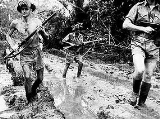
 The 2/12th Battalion
launched a counterattack at 09:00 on 31 August and pushed the Japanese back along the north coast of Milne Bay. They were joined by the 2/9th Battalion
on 3 September and faced significant strong resistance on 4 September. The advance of a section
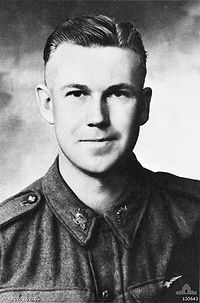
from the Australian 2/9th Battalion was held up by fire from three Japanese machine gun positions. Corporal John French
ordered the other members of the section to take cover before he attacked and destroyed two of the machine guns with grenade
s. French then attacked the third position with his submachine gun. The Japanese firing ceased and the Australian section advanced to find that the machine gunners had been killed and that French had died in front of the third position. He was posthumously awarded the Victoria Cross
for his actions at Milne Bay.
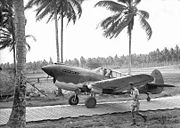
Three Beaufighter
s of No. 30 Squadron RAAF
and six Beaufort
s of No. 100 Squadron RAAF
arrived at Milne Bay on 6 September 1942 to provide additional support against any further landings and provide anti-shipping missions. At night of the 6 September, Japanese light cruiser Tatsuta, part of the force assigned to evacuate the surviving troops after their defeat, bombarded the Gili Gili wharves and sank the MV Anshun
.
The next night, further Japanese warships bombarded onshore positions. Patrols by Australian troops tracked down and killed Japanese troops trying to trek overland to Buna.
coastal guns with searchlights were provided to portect the base from naval threats. New roads were built and the existing roads upgraded to ensure that they were passable in the wet conditions at Milne Bay. A new wharf replaced the old inadequate jetty. No. 1 Strip was rebuilt, and No. 3 Strip completed, allowing the bombing of Rabaul and the northern Solomons without the need to cross the Owen Stanleys. A transshipment and staging area, major overhaul facilities for PT boats, a destroyer base and Station Hospital were also constructed at the base.
s at Milne Bay, namely the killing of surrendered prisoners of war and civilians. None of the thirty-nine Australian troops who were captured by the Japanese survived, having been executed, with some showing signs of having been mutilated as well. At least 59 civilians were also murdered. As a result of the Moscow Declaration
, the Minister for External Affairs
, Dr. H. V. Evatt
, commissioned a report by William Webb on war crimes committed by the Japanese. Webb took depositions from members of the Allied forces present about the Milne Bay incident, forming part of his report, which was submitted to the United Nations War Crimes Commission
in 1944.
The effect on the morale of Allied servicemen in Asia and the Pacific was profound, especially for other Australians fighting rearguard actions on the Kokoda Track
, and Slim's troops in the 14th Army
, who had been retreating in Burma.
The battle honour
Milne Bay was subsequently awarded to the Australian 9th, 25th, 61st, 2/9th, 2/10th and 2/12th Battalions.
Pacific War
The Pacific War, also sometimes called the Asia-Pacific War refers broadly to the parts of World War II that took place in the Pacific Ocean, its islands, and in East Asia, then called the Far East...
of World War II
World War II
World War II, or the Second World War , was a global conflict lasting from 1939 to 1945, involving most of the world's nations—including all of the great powers—eventually forming two opposing military alliances: the Allies and the Axis...
. Japanese marines attacked the Australian base at Milne Bay
Milne Bay
Milne Bay is a large bay in Milne Bay Province, southeastern Papua New Guinea. The bay is named after Sir Alexander Milne.The area was a site of the Battle of Milne Bay in 1942....
on the eastern tip of New Guinea
New Guinea
New Guinea is the world's second largest island, after Greenland, covering a land area of 786,000 km2. Located in the southwest Pacific Ocean, it lies geographically to the east of the Malay Archipelago, with which it is sometimes included as part of a greater Indo-Australian Archipelago...
on 25 August 1942, and fighting continued until the Japanese retreated on 5 September 1942. However armed resistance ended on 7 September 1942. The battle was the first in the Pacific campaign in which Allied
Allies of World War II
The Allies of World War II were the countries that opposed the Axis powers during the Second World War . Former Axis states contributing to the Allied victory are not considered Allied states...
troops decisively defeated Japanese land forces, forcing them to withdraw and completely abandon their strategic objective.
The Japanese hoped to secure an air and naval base to provide air and naval support to the Japanese Kokoda Track campaign
Kokoda Track campaign
The Kokoda Track campaign or Kokoda Trail campaign was part of the Pacific War of World War II. The campaign consisted of a series of battles fought between July and November 1942 between Japanese and Allied—primarily Australian—forces in what was then the Australian territory of Papua...
to take Port Moresby
Port Moresby
Port Moresby , or Pot Mosbi in Tok Pisin, is the capital and largest city of Papua New Guinea . It is located on the shores of the Gulf of Papua, on the southeastern coast of the island of New Guinea, which made it a prime objective for conquest by the Imperial Japanese forces during 1942–43...
, New Guinea by capturing the newly constructed airfields at Milne Bay.
The British Field Marshal
Field Marshal
Field Marshal is a military rank. Traditionally, it is the highest military rank in an army.-Etymology:The origin of the rank of field marshal dates to the early Middle Ages, originally meaning the keeper of the king's horses , from the time of the early Frankish kings.-Usage and hierarchical...
Sir William Slim—who had no part in the battle—said:
"Australian troops had, at Milne Bay in New Guinea, inflicted on the Japanese their first undoubted defeat on land. If the Australians, in conditions very like ours, had done it, so could we. Some of us may forget that of all the Allies it was the Australian soldiers who first broke the spell of the invincibility of the Japanese Army; those of us who were in Burma have cause to remember."
Japanese forces had experienced local setbacks before: their first attack on Wake Island
Wake Island
Wake Island is a coral atoll having a coastline of in the North Pacific Ocean, located about two-thirds of the way from Honolulu west to Guam east. It is an unorganized, unincorporated territory of the United States, administered by the Office of Insular Affairs, U.S. Department of the Interior...
was thrown back, and American Marines defeated the Japanese on Guadalcanal
Guadalcanal
Guadalcanal is a tropical island in the South-Western Pacific. The largest island in the Solomons, it was discovered by the Spanish expedition of Alvaro de Mendaña in 1568...
in the Battle of the Tenaru
Battle of the Tenaru
The Battle of the Tenaru, sometimes called the Battle of the Ilu River or the Battle of Alligator Creek, took place August 21, 1942, on the island of Guadalcanal, and was a land battle of the Pacific campaign of World War II, between Imperial Japanese Army and Allied ground forces...
, four days before the Battle of Milne Bay began. But unlike Milne Bay, these actions did not result in complete Japanese withdrawal and the abandonment of the military campaign.
Geography
Milne BayMilne Bay
Milne Bay is a large bay in Milne Bay Province, southeastern Papua New Guinea. The bay is named after Sir Alexander Milne.The area was a site of the Battle of Milne Bay in 1942....
is a sheltered bay located at the eastern tip of the Territory of Papua (now Papua New Guinea) and covers a sea area of 252,990 km². The bay is 36 kilometres (22.4 mi) long and 16 kilometres (9.9 mi) wide and is deep enough for large ships to enter. The area around the bay was occupied by plantations of palm oil, coconuts and cocoa. The coastal area is flat and was suitable for airstrips, although it is intercut by many tributaries of rivers and mangrove swamps. Due to the high rainfall and swampy lands, the area is prone to malaria.
Military situation
The Allies had launched campaigns in July and August at KokodaKokoda Track campaign
The Kokoda Track campaign or Kokoda Trail campaign was part of the Pacific War of World War II. The campaign consisted of a series of battles fought between July and November 1942 between Japanese and Allied—primarily Australian—forces in what was then the Australian territory of Papua...
and Guadalcanal
Guadalcanal campaign
The Guadalcanal Campaign, also known as the Battle of Guadalcanal and codenamed Operation Watchtower by Allied forces, was a military campaign fought between August 7, 1942 and February 9, 1943 on and around the island of Guadalcanal in the Pacific theatre of World War II...
in response to the Japanese landing near Buna and Gona
Invasion of Buna-Gona
The Invasion of Buna-Gona, called Operation RI by the Japanese, was an operation by Imperial Japanese forces to occupy the Buna-Gona area in the Territory of New Guinea between 21–24 July 1942 during the Pacific campaign of the Second World War...
(Operation RI), on the north coast of New Guinea during the night of 21/22 July, were they attempted to advance south overland, along the Kokoda Track through the mountains of the Owen Stanley Range
Owen Stanley Range
Owen Stanley Range is the south-eastern part of the central mountain-chain in Papua New Guinea. It was seen in 1849 by Captain Owen Stanley while surveying the south coast of Papua and named after him. Strictly, the eastern extremity of the range is Mount Victoria , which was climbed by Sir William...
to seize Port Moresby
Port Moresby
Port Moresby , or Pot Mosbi in Tok Pisin, is the capital and largest city of Papua New Guinea . It is located on the shores of the Gulf of Papua, on the southeastern coast of the island of New Guinea, which made it a prime objective for conquest by the Imperial Japanese forces during 1942–43...
and the start of construction of an airfield upon Guadacanal as part of a strategy of isolating Australia.
Prelude
In May 1942 General Douglas MacArthurDouglas MacArthur
General of the Army Douglas MacArthur was an American general and field marshal of the Philippine Army. He was a Chief of Staff of the United States Army during the 1930s and played a prominent role in the Pacific theater during World War II. He received the Medal of Honor for his service in the...
, Allied Commander in Chief of the South West Pacific Area (C in C SWPA), ordered the construction of an airfield at Milne Bay, as part of the proposed reconquest of Rabaul
Rabaul
Rabaul is a township in East New Britain province, Papua New Guinea. The town was the provincial capital and most important settlement in the province until it was destroyed in 1994 by falling ash of a volcanic eruption. During the eruption, ash was sent thousands of metres into the air and the...
. The 46th (General Service) Engineers Regiment of the U.S. Army Corps of Engineers were deployed for the purpose of airfield construction. Troops were required to protect the new airfield as it would be a prize for the Japanese to attack. Once taken it could be a base for bombing sorties over the cities of south eastern Australia.
Initially the 7th Brigade, a militia brigade, was dispatched consisting of the 9th, 25th and 61st Battalions
61st Battalion (Australia)
The 61st Battalion was an infantry battalion of the Australian Army. It was originally raised in 1917 during the First World War but was disbanded the same year without seeing active service. Later it was re-raised as a part of the Militia in 1938 in Brisbane, Queensland...
as well as Companies A, C and a section of E Company of the 55th Battalion
55th Battalion (Australia)
The 55th Battalion was an infantry battalion of the Australian Army. Raised in 1916 for service during World War I the battalion served on the Western Front until the end of the war, before being briefly amalgamated with the 53rd Battalion and then eventually disbanded in 1919...
of the 14th Brigade
14th Brigade (Australia)
The 14th Brigade was an infantry brigade of the Australian Army. Formed in 1916 as part of the expansion of the 1st AIF it served on the Western Front in France and Flanders during World War I. Between 1916–1918 it consisted of the 53rd, 54th, 55tth and 56th Battalions and was assigned to the 5th...
. As construction work progressed this was progressively reinforced with regular troops of the 18th Infantry Brigade
18th Brigade (Australia)
The 18th Brigade was an infantry brigade of the Australian Army, which served during the Second World War. The brigade was raised on 13 October 1939 and was one of the first three infantry brigades of the Second Australian Imperial Force to be formed. Initially commanded by Brigadier Leslie...
of the 7th Division, consisting of the 2/9th
2/9th Battalion (Australia)
The 2/9th Battalion was an infantry battalion of the Australian Army during World War II. Raised in Queensland as part of the Second Australian Imperial Force shortly after the outbreak of the war, it served as part of the 18th Brigade and over the course of the war it was attached to the 6th, 9th...
, 2/10th and 2/12th Battalion
2/12th Battalion (Australia)
The 2/12th Battalion was an infantry battalion of the Australian Army which served during World War II. Raised in late 1939 as part of the all volunteer Second Australian Imperial Force, the battalion served throughout the course of the war in the United Kingdom, North Africa, New Guinea and on...
s. The 9th Battery of 2/3rd Light Anti Aircraft Regiment, U.S. 709th Anti Aircraft Battery and the 9th Battery of 2/5th Field Regiment
2/5th Field Regiment (Australia)
The 2/5th Field Regiment was an Australian Army artillery regiment formed on 25 April 1940, as part of the 7th Division in 1940 during World War II. The regiment was part of the North African Campaign, Syria-Lebanon Campaign, Salamaua-Lae campaign, Finisterre Range campaign and the Borneo campaign....
provided anti-aircraft and artillery support. Once the buildup was complete, the garrison assumed the name Milne Force
Milne Force
Milne Force was a garrison force formed in July 1942 during the Second World War which controlled allied naval, land and air units in the region of Milne Bay, in the Territory of Papua...
, and Cyril Clowes
Cyril Clowes
Lieutenant General Cyril Albert Clowes CBE, DSO, MC was an Australian soldier. He won the first land victory against the Japanese in the Second World War, at the Battle of Milne Bay, New Guinea...
, now promoted to Major General
Major General
Major general or major-general is a military rank used in many countries. It is derived from the older rank of sergeant major general. A major general is a high-ranking officer, normally subordinate to the rank of lieutenant general and senior to the ranks of brigadier and brigadier general...
, was given command. He reached Milne Bay and assumed command of the Australian troops there just four days before the Japanese began landing.
The Japanese discovered via aerial reconnaissance in early August that the Allies were constructing airfields at Milne Bay. A few days afterwards the Japanese issued the orders to capture the airfields.
It was Japanese naval infantry, known as Kaigun Rikusentai (Special Naval Landing Forces), rather than the Imperial Japanese Army
Imperial Japanese Army
-Foundation:During the Meiji Restoration, the military forces loyal to the Emperor were samurai drawn primarily from the loyalist feudal domains of Satsuma and Chōshū...
who attacked the Allied forces at Milne Bay. The Japanese high command committed approximately 850 marines from the 5th Kure Special Naval Landing Force
5th Kure Special Naval Landing Force
The 5th Kure Special Naval Landing Force were troops of the Imperial Japanese Navy's Special Naval Landing Forces.Formed at the Kure Naval District, the 5th Kure SNLF participated in the battle of Milne Bay. The 5th Kure SNLF was all but wiped out after the battle of Milne Bay.-References:*Nila,...
(SNLF) led by Commander
Commander
Commander is a naval rank which is also sometimes used as a military title depending on the individual customs of a given military service. Commander is also used as a rank or title in some organizations outside of the armed forces, particularly in police and law enforcement.-Commander as a naval...
Masajiro Hayashi
Masajiro Hayashi
Masajiro Hayashi was a officer in the Imperial Japanese Navy during World War II. He was in command of forces during the Battle of Milne Bay until he was apparently killed during the battle. Other sources state that he was relived of command by Minoru Yano....
, a company of the 5th Sasebo SNLF
5th Sasebo Special Naval Landing Force
The 5th Sasebo Special Naval Landing Force were troops of the Imperial Japanese Navy's Special Naval Landing Forces.Formed at the Sasebo Naval District, the 5th Sasebo SNLF participated in the invasion of Buna-Gona, the Guadalcanal Campaign and the battle of Milne Bay.-References:*Nila, Gary, et al...
, led by Lieutenant
Lieutenant
A lieutenant is a junior commissioned officer in many nations' armed forces. Typically, the rank of lieutenant in naval usage, while still a junior officer rank, is senior to the army rank...
Fujikawa
Fujikawa
Fujikawa may refer to:* The Fuji River in Japan, called Fuji-kawa in Japanese* Fujikawa, Shizuoka, Japan* Fujikawa, Yamanashi, Japan* Fujikawa , a Japanese limited express trainPeople named Fujikawa include:*Gyo Fujikawa, illustrator...
, 10th Naval Landing Force and 2nd Air Advance Party with 350 (non-combat) personnel from the 16th Naval Construction Unit. The Japanese force was led initially by Commander Shojiro Hayashi.
The Allied forces numbered 8,824, although only about 4,500 were infantry troops. The Japanese enjoyed a significant advantage in the form of light tank
Light tank
A light tank is a tank variant initially designed for rapid movement, and now primarily employed in low-intensity conflict. Early light tanks were generally armed and armored similar to an armored car, but used tracks in order to provide better cross-country mobility.The light tank was a major...
s, which the Allies had not deployed. The Japanese also had complete control of the sea during the night, allowing reinforcement and evacuation. However, the Royal Australian Air Force
Royal Australian Air Force
The Royal Australian Air Force is the air force branch of the Australian Defence Force. The RAAF was formed in March 1921. It continues the traditions of the Australian Flying Corps , which was formed on 22 October 1912. The RAAF has taken part in many of the 20th century's major conflicts...
(RAAF) No. 75
No. 75 Squadron RAAF
No. 75 Squadron is a Royal Australian Air Force fighter unit based at RAAF Base Tindal in the Northern Territory. The squadron was formed in 1942 and saw extensive action in the South West Pacific theatre of World War II, operating P-40 Kittyhawks. It was disbanded in 1948, but reformed the...
and 76 Squadron
No. 76 Squadron RAAF
No. 76 Squadron is a Royal Australian Air Force flight training squadron. Established in 1942, the squadron operated P-40 Kittyhawk fighter aircraft and saw combat during World War II. Following the war it formed part of Australia's contribution to the occupation of Japan until it was...
s, flying P-40 Kittyhawk aircraft together with No. 6
No. 6 Squadron RAAF
No. 6 Squadron is a Royal Australian Air Force training and bomber squadron. The squadron was first formed in 1917 and served as a training unit based in England during World War I. It was disbanded in 1919 but re-formed at the start of 1939...
's Hudsons
Lockheed Hudson
The Lockheed Hudson was an American-built light bomber and coastal reconnaissance aircraft built initially for the Royal Air Force shortly before the outbreak of the Second World War and primarily operated by the RAF thereafter...
from No. 1 Strip
Gurney Airport
Gurney Airport is an airport serving Alotau in the Milne Bay Province of Papua New Guinea.The airport is a single runway general aviation facility, however in December, 2008, the PNG Minister for Transport and Civil Aviation, Don Polye announced that aviation company Skyworld had been granted...
at Milne Bay, which played a critical role in the fierce fighting, were largely uncontested during the day.
Battle
From 4 August 1942, Japanese aircraft began to bomb Milne Bay in preparation for the landing. The most significant information that MacArthur received came one month before the invasion when he was briefed by the Australian code breakers at his headquarters in Ascot in Brisbane, which he shared with the Australians who were headed by Eric Nave. They gave him advanced notice of exactly what was planned by the Japanese during the invasion, informing him of the number of troops, their standard and experience, the names of the ships and path they were likely to take. This gave US bombers, which were operating from the large base at Mareeba, inland from Cairns, an opportunity to attack the convoy. Nevertheless, the convoy was not found and the bombers instead attacked the Japanese beachhead along with a supply ship that was caught at sea.The main Japanese invasion force left Rabaul
Rabaul
Rabaul is a township in East New Britain province, Papua New Guinea. The town was the provincial capital and most important settlement in the province until it was destroyed in 1994 by falling ash of a volcanic eruption. During the eruption, ash was sent thousands of metres into the air and the...
on 24 August, under the command of Rear Admiral
Rear Admiral
Rear admiral is a naval commissioned officer rank above that of a commodore and captain, and below that of a vice admiral. It is generally regarded as the lowest of the "admiral" ranks, which are also sometimes referred to as "flag officers" or "flag ranks"...
Mitsaharu Matsuyama
Mitsaharu Matsuyama
Rear Admiral Mitsaharu Matsuyama was a senior officer in the Imperial Japanese Navy during World War II. He was an observer during the First Battle of Savo Island.-Commands:*Chief, Naval Barracks and Garrison Group, Kure 1941-1942...
. The fleet comprised the light cruiser
Light cruiser
A light cruiser is a type of small- or medium-sized warship. The term is a shortening of the phrase "light armored cruiser", describing a small ship that carried armor in the same way as an armored cruiser: a protective belt and deck...
s and , the destroyer
Destroyer
In naval terminology, a destroyer is a fast and maneuverable yet long-endurance warship intended to escort larger vessels in a fleet, convoy or battle group and defend them against smaller, powerful, short-range attackers. Destroyers, originally called torpedo-boat destroyers in 1892, evolved from...
s , and , the transports Nankai Maru
Nankai Maru
The MV Nankai Maru was a 8416 ton freighter built by Mitsubishi Shipbuilding & Engineering Company Ltd, Nagasaki, Japan, in 1933 for Osaka Shosen Kaisha....
and Kinai Maru
Kinai Maru (1930)
The Kinai Maru was a 8360 gross ton freighter built by Mitsubishi Shipbuilding & Engineering Company Ltd, Nagasaki, Japan, in 1930 for Osaka Shosen Kaisha for the Yokohama-New York cargo run....
, and the submarine chaser
Submarine chaser
A submarine chaser is a small and fast naval vessel specially intended for anti-submarine warfare. Although similar vessels were designed and used by many nations, this designation was most famously used by ships built by the United States of America...
s CH-22
Japanese submarine chaser CH-22
The Japanese submarine chaser CH-22 was a No.13 class sub chaser of the Imperial Japanese Navy during World War II. She was built by the Mitsubishi Heavy Industries, Yokohama and launched on 29 May 1941 and completed on 12 October 1941...
and CH-24
Japanese submarine chaser CH-24
The Japanese submarine chaser CH-24 was a No.13 class sub chaser of the Imperial Japanese Navy during World War II. She was built by the Ōsaka Iron Works, Sakurajima and completed on 20 December 1941...
.
On 25 August, Milne Bay GHQ was alerted by an RAAF Hudson bomber near Kitava Island, of the Trobriand Islands
Trobriand Islands
The Trobriand Islands are a 450 km² archipelago of coral atolls off the eastern coast of New Guinea. They are situated in Milne Bay Province in Papua New Guinea. Most of the population of 12,000 indigenous inhabitants live on the main island of Kiriwina, which is also the location of the...
and coastwatchers
Coastwatchers
The Coastwatchers, also known as the Coast Watch Organisation, Combined Field Intelligence Service or Section C, Allied Intelligence Bureau, were Allied military intelligence operatives stationed on remote Pacific islands during World War II to observe enemy movements and rescue stranded Allied...
that a Japanese convoy of six escorts and three transports was approaching the Milne Bay area. —escorting the transport SS Tasman
AHS Tasman
Australian Hospital Ship Tasman was a 5,172-gross tonne hospital ship converted from SS Tasman, owned and operated by Koninklijke Paketvaart-Maatschappij , Batavia....
—left the Milne Bay area sailed for Port Moresby after learning of the invasion force. RAAF aircraft scrambled from No. 1 Strip and 12 RAAF P-40s and a Hudson strafed the convoy and attempted to bomb the transports, with 250 lb (113.4 kg) bombs near Rabi Island. Only limited damage was caused to the convoy and no ships were sunk. With night approaching, the RAAF returned to base.
After the first day of Kittyhawk attacks, the commander of the Japanese troops at Milne Bay informed the Japanese naval commander that all stores had been lost along with all their small boats and aviation gasoline planes, and that they were having trouble coming to grips with the 600 Australian troops that they believed were holding the area. He subsequently informed the Japanese navy that they would not be able to take the airstrip as planned in the first day. As a result, the Japanese navy had to return to Rabaul to get more supplies. It seemed clear their intelligence was poor and the deception of the reinforcement of Milne Bay had been successful. It had a code name of Fall River.
The second group of invasion troops—from Buna
Buna, Papua New Guinea
Buna is a village in Oro Province, Papua New Guinea. It was the site in part, of the Battle of Buna-Gona during World War II, when it constituted a variety of native huts and a handful of houses with a airstrip...
—consisting of 350 marines of 5th Sasebo SNLF, led by Commander Tsukioka—was stranded on Goodenough Island
Goodenough Island
Goodenough Island in the Solomon Sea is the westernmost of the three large islands of the D'Entrecasteaux Islands in Milne Bay Province of Papua New Guinea. It lies to the east of mainland New Guinea and south west of the Trobriand Islands.It should not be confused with Goodenough's Island...
, after they rested on the island and their barges were destroyed by No. 75 Squadron RAAF P-40s. It was intended that the second convoy would land at Taupota and cross the Stirling Range
Stirling Range
The Stirling Range or Koikyennuruff is a range of mountains and hills in the Great Southern region of Western Australia, 337 km south-east of Perth. It is located at approximately and is over 60 km wide from west to east, stretching from the highway between Mount Barker and Cranbrook...
and attack the rear flank of the Milne Bay defenders.
Due to the attack on the main convoy, the Japanese were forced to land further from their main objective at Rabi, near the Milne Bay airbases. At 23:30 on 25 August, the Japanese landed 1,150 troops and two Type 95 Ha-Go
Type 95 Ha-Go
The was a light tank used by the Imperial Japanese Army in combat operations of the Second Sino-Japanese War, at Nomonhan against the Soviet Union, and in the Second World War. It proved sufficient against infantry, however, like the American M3 Stuart, it was not designed to fight other tanks...
tanks, at Ahioma on the northern shore of Milne Bay, eleven kilometres east of their intended landing area.
D Company of the 61st Battalion
61st Battalion (Australia)
The 61st Battalion was an infantry battalion of the Australian Army. It was originally raised in 1917 during the First World War but was disbanded the same year without seeing active service. Later it was re-raised as a part of the Militia in 1938 in Brisbane, Queensland...
was caught near the landing site at Ahioma, attempting to fall back to KB Mission and a small skirmish occurred. The D Company-requisitioned luggers Bronzewing and Elevala were disabled; however, the motor launch Dadosee escaped.
By dawn of 26 August, the Japanese had reached the main position of B Company of the 61st Battalion around KB Mission. The Japanese suffered a serious setback when their base area was heavily attacked at daylight by RAAF Kittyhawks and a Hudson aircraft, as well as U.S. 5th Air Force's B-25s, B-26s and B-17s, killing a number of enemy troops, destroying supplies and a number of landing barges beached near the KB Mission. The destruction of the landing barges prevented their use to outflank the Australian battalions. The RAAF Kittyhawks were very close to the action, with aircraft strafing Japanese positions very shortly after taking off.
A counterattack by the 61st Battalion drove the Japanese from KB Mission; however, after six hours of intense fighting, the 61st Battalion withdrew to the Gama River
Gama River
The Gama River is a river located in Milne Bay Province of Papua New Guinea....
. The battalion suffered 15 killed, 14 wounded and some missing, and the 25th Battalion, three killed and two missing.
The 2/10th Infantry Battalion (AIF) was ordered to the Gama River by Major General Cyril Clowes, and went into the offensive. However, they came upon the Japanese Type 95 tanks and valiantly tried to disable them with sticky bomb
Sticky bomb
The Grenade, Hand, Anti-Tank No. 74, commonly known as the sticky bomb, was a British hand grenade designed and produced during the Second World War. The grenade was one of a number of anti-tank weapons developed for use by the British Army and Home Guard as an ad hoc solution to a lack of...
s, which failed to stick due to the humid conditions of the tropics. The Japanese troops and the supporting tanks inflicted severe casualties on the 2/10th Infantry Battalion, who suffered 43 killed and 26 wounded. The 2/10th Infantry Battalion was forced to retreat to north of No. 3 Strip
Turnbull Field
-History:Built by the US Army 2nd Battalion of 43rd Engineer General Service Regiment , during the Battle of Milne Bay during World War II. Originally known as No. 3 Strip. The airfield was renamed Turnbull Field on 14 September 1942 in honour of Royal Australian Air Force Squadron Leader Peter...
south of Kilarbo, on 27 August 1942. No. 3 Strip was under construction by the 46th (General Service) Engineers Regiment at the time. The 25th Battalion held the Japanese back and a two day lull followed.
On 29 August, Japanese reinforcements were landed consisting of 768 men from the 3rd Kure SNLF and 5th Yokosuka SNLF, with Commander Minoru Yano
Minoru Yano
Minoru Yano was a officer in the Imperial Japanese Navy during World War II. He took overall command of forces during the Battle of Milne Bay from Masajiro Hayashi and was wounded during the battle....
, who took over from Hayashi. The warships of the convoy shelled the allied positions at Gili Gili
Gili Gili
Gili Gili is a village in Milne Bay Province, Papua New Guinea. The village is located between Swinger Bay to the east and Ladava to the west....
while offloading the reinforcements. The Type 95 Ha-Go light tanks were found by an Australian forward patrol on 30 August, near Rabi bogged in the mud abandoned due to their narrow tracks.
At 03:00 on 31 August, three banzai charge
Banzai charge
Banzai charge was a term applied during World War II by the Allied forces to human wave attacks mounted by infantry forces of the Imperial Japanese Army...
s were repelled at No. 3 Strip with withering machine gun and mortar fire from 25th Battalion and 61st Battalion as well as the 46th (General Service) Engineers Regiment and artillery fire from the Australian 2/5th Field Regiment.
2/12th Battalion (Australia)
The 2/12th Battalion was an infantry battalion of the Australian Army which served during World War II. Raised in late 1939 as part of the all volunteer Second Australian Imperial Force, the battalion served throughout the course of the war in the United Kingdom, North Africa, New Guinea and on...
launched a counterattack at 09:00 on 31 August and pushed the Japanese back along the north coast of Milne Bay. They were joined by the 2/9th Battalion
2/9th Battalion (Australia)
The 2/9th Battalion was an infantry battalion of the Australian Army during World War II. Raised in Queensland as part of the Second Australian Imperial Force shortly after the outbreak of the war, it served as part of the 18th Brigade and over the course of the war it was attached to the 6th, 9th...
on 3 September and faced significant strong resistance on 4 September. The advance of a section
Section (military unit)
A section is a small military unit in some armies. In many armies, it is a squad of seven to twelve soldiers. However in France and armies based on the French model, it is the sub-division of a company .-Australian Army:...
from the Australian 2/9th Battalion was held up by fire from three Japanese machine gun positions. Corporal John French
John Alexander French
John Alexander "Jack" French VC was an Australian recipient of the Victoria Cross, the highest and most prestigious award for gallantry in the face of the enemy that can be awarded to British and Commonwealth forces....
ordered the other members of the section to take cover before he attacked and destroyed two of the machine guns with grenade
Grenade
A grenade is a small explosive device that is projected a safe distance away by its user. Soldiers called grenadiers specialize in the use of grenades. The term hand grenade refers any grenade designed to be hand thrown. Grenade Launchers are firearms designed to fire explosive projectile grenades...
s. French then attacked the third position with his submachine gun. The Japanese firing ceased and the Australian section advanced to find that the machine gunners had been killed and that French had died in front of the third position. He was posthumously awarded the Victoria Cross
Victoria Cross
The Victoria Cross is the highest military decoration awarded for valour "in the face of the enemy" to members of the armed forces of various Commonwealth countries, and previous British Empire territories....
for his actions at Milne Bay.
Air operations
The RAAF No. 75 and 76 Squadrons together with No. 6 Squadron were instrumental in destroying the Japanese supply dumps and landing barges near Milne Bay during the fighting. No. 1 and No. 2 airfields were close to the front lines and the pilots often engaged the enemy shortly after taking off. Nine Kittyhawks were destroyed and seven pilots were killed.Japanese withdrawal
On 5 September, the Japanese high command ordered a withdrawal. On 6 September, the offensive reached the main camp of the Japanese landing force. The 2/9th Battalion had lost 30 killed and 90 wounded, the 2/12th Battalion 35 killed and 44 wounded.Three Beaufighter
Bristol Beaufighter
The Bristol Type 156 Beaufighter, often referred to as simply the Beau, was a British long-range heavy fighter modification of the Bristol Aeroplane Company's earlier Beaufort torpedo bomber design...
s of No. 30 Squadron RAAF
No. 30 Squadron RAAF
No. 30 Squadron is a squadron of the Royal Australian Air Force . Raised in 1942 as a fighter unit, the Squadron saw action in the Second World War and later served in the target towing and surface-to-air missile roles. After a long period of disbandment lasting from the late 1960s, No...
and six Beaufort
Bristol Beaufort
The Bristol Beaufort was a British twin-engined torpedo bomber designed by the Bristol Aeroplane Company, and developed from experience gained designing and building the earlier Blenheim light bomber....
s of No. 100 Squadron RAAF
No. 100 Squadron RAAF
No. 100 Squadron was a Royal Australian Air Force bomber and maritime patrol squadron of World War II. The Squadron was formed in 1942 and was disbanded in 1946.-Squadron history:...
arrived at Milne Bay on 6 September 1942 to provide additional support against any further landings and provide anti-shipping missions. At night of the 6 September, Japanese light cruiser Tatsuta, part of the force assigned to evacuate the surviving troops after their defeat, bombarded the Gili Gili wharves and sank the MV Anshun
MV Anshun (1930)
The MV Anshun was a motor vessel of 3165 tons built by Scotts Shipbuilding and Engineering Company Limited, Greenock in 1930 for the The China Navigation Co. for the Chinese coastal passenger service....
.
The next night, further Japanese warships bombarded onshore positions. Patrols by Australian troops tracked down and killed Japanese troops trying to trek overland to Buna.
Base development
The Allies continued to develop the base area, known as "Advance Base A" (Code name:Pemmican), at Milne Bay in support of the counter-offensive along the northern coast of Papua and New Guinea. Two 155 millimetres (6.1 in)Canon de 155mm GPF
The Canon de 155 Grande Puissance Filloux mle.1917 was a 155 mm cannon used by the French Army during the first half of the 20th century.-History:The gun was designed during World War I by Colonel L.J.F...
coastal guns with searchlights were provided to portect the base from naval threats. New roads were built and the existing roads upgraded to ensure that they were passable in the wet conditions at Milne Bay. A new wharf replaced the old inadequate jetty. No. 1 Strip was rebuilt, and No. 3 Strip completed, allowing the bombing of Rabaul and the northern Solomons without the need to cross the Owen Stanleys. A transshipment and staging area, major overhaul facilities for PT boats, a destroyer base and Station Hospital were also constructed at the base.
War crimes
The Japanese committed war crimeWar crime
War crimes are serious violations of the laws applicable in armed conflict giving rise to individual criminal responsibility...
s at Milne Bay, namely the killing of surrendered prisoners of war and civilians. None of the thirty-nine Australian troops who were captured by the Japanese survived, having been executed, with some showing signs of having been mutilated as well. At least 59 civilians were also murdered. As a result of the Moscow Declaration
Moscow Declaration
The Moscow Declaration was signed during the Moscow Conference on October 30, 1943. The formal name of the declaration was "Declaration of the Four Nations on General Security". It was signed by the foreign secretaries of the Governments of the United States, the United Kingdom and the Soviet Union...
, the Minister for External Affairs
Minister for Foreign Affairs (Australia)
In the Government of Australia, the Minister for Foreign Affairs is responsible for overseeing the international diplomacy section of the Department of Foreign Affairs and Trade. In common with international practice, the office is often informally referred to as Foreign Minister...
, Dr. H. V. Evatt
H. V. Evatt
Herbert Vere Evatt, QC KStJ , was an Australian jurist, politician and writer. He was President of the United Nations General Assembly in 1948–49 and helped draft the United Nations Universal Declaration of Human Rights...
, commissioned a report by William Webb on war crimes committed by the Japanese. Webb took depositions from members of the Allied forces present about the Milne Bay incident, forming part of his report, which was submitted to the United Nations War Crimes Commission
United Nations War Crimes Commission
The United Nations War Crimes Commission was a commission of the United Nations that investigated allegations of war crimes committed by the Nazi Germany and its allies in World War II.The Commission began its work at the behest of the United States and the other Allied nations in 1943, prior to...
in 1944.
Results
According to official figures, 311 Japanese personnel were killed, with 301 missing in action. The Japanese navy evacuated 1,318 personnel. Of the 534 Australian casualties, 161 were killed or missing in action. U.S. forces lost 14 personnel killed and several wounded.The effect on the morale of Allied servicemen in Asia and the Pacific was profound, especially for other Australians fighting rearguard actions on the Kokoda Track
Kokoda Track campaign
The Kokoda Track campaign or Kokoda Trail campaign was part of the Pacific War of World War II. The campaign consisted of a series of battles fought between July and November 1942 between Japanese and Allied—primarily Australian—forces in what was then the Australian territory of Papua...
, and Slim's troops in the 14th Army
British Fourteenth Army
The British Fourteenth Army was a multinational force comprising units from Commonwealth countries during World War II. Many of its units were from the Indian Army as well as British units and there were also significant contributions from West and East African divisions within the British Army.It...
, who had been retreating in Burma.
The battle honour
Battle honour
A battle honour is an award of a right by a government or sovereign to a military unit to emblazon the name of a battle or operation on its flags , uniforms or other accessories where ornamentation is possible....
Milne Bay was subsequently awarded to the Australian 9th, 25th, 61st, 2/9th, 2/10th and 2/12th Battalions.