
All Topics  
Battle of Germantown

 
Battle of Germantown

   Email Print
   Bookmark   Link


Battle of Germantown


} |- | |}

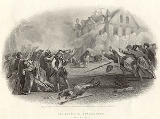
The Battle of Germantown, a battle in the Philadelphia campaign
Philadelphia campaign

The Philadelphia campaign was a Kingdom of Great Britain initiative in the American Revolutionary War. The campaign was controversial because, although British General William Howe, 5th Viscount Howe successfully captured the revolutionary capital of Philadelphia, he proceeded slowly and did not aid the concurrent Saratoga campaign further n...
 of the American Revolutionary War
American Revolutionary War

The American Revolutionary War , also known as the American War of Independence, began as a war between the Kingdom of Great Britain and Thirteen Colonies on the North America, and ended in a global war between several European great powers....
, was fought on October 4, 1777 at Germantown
Germantown, Philadelphia, Pennsylvania

Germantown is a neighborhood in the Northwest Philadelphia section of the city of Philadelphia, about six miles northwest from the center of the city....
, Pennsylvania
Pennsylvania

The Commonwealth of Pennsylvania , often colloquially referred to as PA by natives and Northeasterners, is a U.S. state located in the Northeastern United States and Mid-Atlantic States regions of the United States....
. The British victory in this battle ensured that Philadelphia
Philadelphia, Pennsylvania

Philadelphia is the largest city in Pennsylvania and the List of United States cities by population city in the United States. It is the fifth-largest metropolitan area and fourth-largest urban area by population in the United States, the nation's fourth-largest consumer media market as ranked by the Nielsen Media Research, and the 49th-most...
, the capital of the revolutionary government of the Thirteen Colonies
Thirteen Colonies

The Thirteen Colonies were part of what became known as British America, a name that was used by Great Britain until the Treaty of Paris recognized the independence of the original thirteen United States of America in 1783....
, would remain in British hands throughout the winter of 1777-1778.

campaign in Philadelphia had begun quite badly for the American forces. Washington
George Washington

George Washington was the leader of the Continental Army in the American Revolutionary War and served as the List of Presidents of the United States President of the United States of the United States of Americas ....
 and the Continental Army
Continental Army

The American Continental Army was an army formed after the outbreak of the American Revolutionary War by the colonies that became the United States. Established by a resolution of the Continental Congress on June 15, 1775, the army was created to coordinate the military efforts of the Thirteen Colonies in their struggle against the rule of Kingdom...
 had suffered successive defeats at the Battle of Brandywine
Battle of Brandywine

}|-||}The Battle of Brandywine was a battle of the Philadelphia campaign of the American Revolutionary War fought on September 11, 1777, in the area surrounding Chadds Ford Township, Pennsylvania, Pennsylvania....
 and the Battle of Paoli that left Philadelphia defenseless.


Discussion
Ask a question about 'Battle of Germantown'
Start a new discussion about 'Battle of Germantown'
Answer questions from other users
Full Discussion Forum


Encyclopedia


} |- | |}

The Battle of Germantown, a battle in the Philadelphia campaign
Philadelphia campaign

The Philadelphia campaign was a Kingdom of Great Britain initiative in the American Revolutionary War. The campaign was controversial because, although British General William Howe, 5th Viscount Howe successfully captured the revolutionary capital of Philadelphia, he proceeded slowly and did not aid the concurrent Saratoga campaign further n...
 of the American Revolutionary War
American Revolutionary War

The American Revolutionary War , also known as the American War of Independence, began as a war between the Kingdom of Great Britain and Thirteen Colonies on the North America, and ended in a global war between several European great powers....
, was fought on October 4, 1777 at Germantown
Germantown, Philadelphia, Pennsylvania

Germantown is a neighborhood in the Northwest Philadelphia section of the city of Philadelphia, about six miles northwest from the center of the city....
, Pennsylvania
Pennsylvania

The Commonwealth of Pennsylvania , often colloquially referred to as PA by natives and Northeasterners, is a U.S. state located in the Northeastern United States and Mid-Atlantic States regions of the United States....
. The British victory in this battle ensured that Philadelphia
Philadelphia, Pennsylvania

Philadelphia is the largest city in Pennsylvania and the List of United States cities by population city in the United States. It is the fifth-largest metropolitan area and fourth-largest urban area by population in the United States, the nation's fourth-largest consumer media market as ranked by the Nielsen Media Research, and the 49th-most...
, the capital of the revolutionary government of the Thirteen Colonies
Thirteen Colonies

The Thirteen Colonies were part of what became known as British America, a name that was used by Great Britain until the Treaty of Paris recognized the independence of the original thirteen United States of America in 1783....
, would remain in British hands throughout the winter of 1777-1778.

Prelude

The campaign in Philadelphia had begun quite badly for the American forces. Washington
George Washington

George Washington was the leader of the Continental Army in the American Revolutionary War and served as the List of Presidents of the United States President of the United States of the United States of Americas ....
 and the Continental Army
Continental Army

The American Continental Army was an army formed after the outbreak of the American Revolutionary War by the colonies that became the United States. Established by a resolution of the Continental Congress on June 15, 1775, the army was created to coordinate the military efforts of the Thirteen Colonies in their struggle against the rule of Kingdom...
 had suffered successive defeats at the Battle of Brandywine
Battle of Brandywine

}|-||}The Battle of Brandywine was a battle of the Philadelphia campaign of the American Revolutionary War fought on September 11, 1777, in the area surrounding Chadds Ford Township, Pennsylvania, Pennsylvania....
 and the Battle of Paoli that left Philadelphia defenseless. After the seizure of the revolutionary capital by Charles Cornwallis on September 26, 1777, William Howe
William Howe, 5th Viscount Howe

William Howe, 5th Viscount Howe, Order of the Bath, Privy Council of Great Britain was a United Kingdom General who was Commander-in-Chief of British forces during the American Revolutionary War, one of the three Howe brothers....
 left 3,462 men to defend it and moved 9,728 men to Germantown, north, determined to locate and destroy the American forces. Howe established his headquarters at Stenton
Stenton (mansion)

Stenton was the country home of James Logan , colonial Mayor of Philadelphia and Chief Justice of the Pennsylvania Supreme Court.Stenton, which was named for Logan's father's Stenton, was built between 1723 and 1730 on as the country seat of James Logan, who was recognized in his lifetime as "a universal man in the Renaissance tradition."...
, the former country home of James Logan
James Logan (statesman)

James Logan , a statesman and scholar, was born in Lurgan, County Armagh, Ireland of Scotland descent and Quaker parentage. In 1689, the Logan family moved to Bristol, England where, in 1693, James replaced his father as schoolmaster....
.

With Howe's forces thus divided, Washington saw an opportunity to confront the British. He decided to attack the British garrison in Germantown as the last effort of the year before the onset of winter. His plan was to attack the British at night with four columns from different directions with the goal of creating a double envelopment. Washington hoped to surprise the British and Hessian armies in much the same way he had surprised the Hessians at the Battle of Trenton
Battle of Trenton

}|-||}The Battle of Trenton took place on December 26, 1776, during the American Revolutionary War after General George Washington's Washington's crossing of the Delaware River north of Trenton, New Jersey....
.

Setting and movement to battle


British and Hessian Positions

Germantown was a hamlet of stone houses spreading from what is now known as Mount Airy
Mount Airy, Philadelphia, Pennsylvania

Mount Airy is a neighbourhood of Northwest Philadelphia in the U.S. state of Pennsylvania....
 on the north to what is now Market Square in the south. Extending southwest from Market Square was Schoolhouse Lane, running a to the point where Wissahickon Creek
Wissahickon Creek

Wissahickon Creek is a stream in southeastern Pennsylvania. Rising in Montgomery County, Pennsylvania, it runs about 23 miles passing through and dividing Northwest Philadelphia before emptying into the Schuylkill River at Philadelphia, Pennsylvania....
 emptied from a steep gorge into the Schuylkill River
Schuylkill River

The Schuylkill River, most often , is a river in the U.S. state Commonwealth of Pennsylvania. It is a designated Pennsylvania Scenic Rivers....
. Gen. William Howe
William Howe, 5th Viscount Howe

William Howe, 5th Viscount Howe, Order of the Bath, Privy Council of Great Britain was a United Kingdom General who was Commander-in-Chief of British forces during the American Revolutionary War, one of the three Howe brothers....
 had established a base camp along the high ground of Schoolhouse and Church lanes. The western wing of the camp, under the command of the Hessian
Hesse

Hesse is a States of Germany of Germany with an area of 21,110 km? and just over six million inhabitants. The state capital is Wiesbaden. Hesse's largest city is nearby Frankfurt am Main....
 general Wilhelm von Knyphausen
Wilhelm von Knyphausen

Wilhelm Reichsfreiherr zu Innhausen und Knyphausen was a Hesse general during the American Revolutionary War.In the army of Hesse-Kassel , Knyphausen was a lieutenant general....
, had a picket of two jaeger
Jäger (military)

J?ger Literally, J?ger is a German language word for "hunter". In English language it is often written with the plural J?gers, or as jaeger or incorrectly jager to avoid the Umlaut ....
 battalions at its left flank on the high ground above the mouth of the Wissahickon. A Hessian brigade and two British brigades camped along Market Square, and east of there were two British brigades under the command of Gen. James Grant
James Grant

James, Jim or Jimmy Grant may refer to:*James Grant , British General in Revolutionary War*James Grant , British Naval Officer, Australian explorer...
, as well as two squadrons of dragoons, and the 1st Light Infantry battalion. The Queen's Rangers
Queen's Rangers

The Queen's Rangers was a military unit who fought on the Loyalist side during the American War of Independence. After the war they moved to Nova Scotia and disbanded, but were reformed again in Upper Canada before disbanding again, in 1802, just prior to the War of 1812....
, a New York loyalist unit, covered the right flank.

The Americans March Out

After dusk on October 3, the American army began the southward march to Germantown in complete darkness. As the attack was to occur before dawn, the soldiers were instructed to put a piece of white paper on their hat to identify friend from foe. They were not detected by the jaeger pickets, and the British and Hessian forces remained unaware that American troops were advancing on them. For the Americans, it seemed their attempt to repeat their success at the Battle of Trenton
Battle of Trenton

}|-||}The Battle of Trenton took place on December 26, 1776, during the American Revolutionary War after General George Washington's Washington's crossing of the Delaware River north of Trenton, New Jersey....
 was going to succeed. The darkness made communications between the columns very difficult, and progress was slower as expected. At dawn, most of the American forces were well short of their intended attack positions, and they had lost the element of surprise.

One American column, however, consisting of militia, had managed to reach the British camp. These troops halted near the mouth of Wissahickon Creek
Wissahickon Creek

Wissahickon Creek is a stream in southeastern Pennsylvania. Rising in Montgomery County, Pennsylvania, it runs about 23 miles passing through and dividing Northwest Philadelphia before emptying into the Schuylkill River at Philadelphia, Pennsylvania....
, firing a few rounds from their cannon at Knyphausen's camp before withdrawing. The three remaining columns continued their advance. The one under the command of General John Sullivan
John Sullivan

John Sullivan was an United States general in the American Revolutionary War and a delegate in the Continental Congress.Sullivan served as a major general in the Continental Army and as Governor of New Hampshire....
, moved down Germantown Road, the column of New Jersey militia under the command of General William Smallwood
William Smallwood

William Smallwood was an United States Plantation, soldier and politician from Charles County, Maryland, Maryland.He served as an officer during the French and Indian War and in the Maryland Assembly....
 moved down Skippack Road to Whitemarsh Church Road and from there to Old York Road
Old York Road

Old York Road or the King's Highway is a roadway that was built in the 18th century to connect Philadelphia, Pennsylvania, Pennsylvania with New York City, New York....
 to attack the British right flank, and the one under the command of General Nathanael Greene
Nathanael Greene

Nathanael Greene was a major general of the Continental Army in the American Revolutionary War. When the war began, Greene was a militia private , the lowest rank possible; he emerged from the war with a reputation as George Washington's most gifted and dependable officer....
, which consisted of Greene's and General Adam Stephen
Adam Stephen

Adam Stephen was a Revolutionary War Major general , who was cashiered and court-martial as a result of a friendly fire incident after the Battle of Germantown on October 4, 1777, in which Stephen's men fired on General Anthony Wayne's troops causing their withdrawal....
's divisions and General Alexander McDougall
Alexander McDougall

Alexander McDougall was an American seaman, merchant, a Sons of Liberty leader from New York City before and during the American Revolution, and a military leader during the American Revolutionary War....
's brigade, moved down Limekiln Road.

Battle


A thick fog clouded the battlefield throughout the day.

The vanguard of Sullivan's column, on Germantown Road, launched the battle when they opened fire on the British pickets of light infantry at Mount Airy just as the sun was rising at around 5:00 am. The British pickets resisted American advance and fired their guns in alarm. Howe rode forward, thinking that they were being attacked by foraging or skirmishing parties. It took a substantial part of Sullivan's division to finally overwhelm the British pickets and drive them back into Germantown.

Now cut off from the main British and Hessian force, British Col. Musgrave caused his six companies of troops from the 40th Regiment, around 120 men, to fortify the stone house of Chief Justice Chew, called Cliveden
Cliveden (mansion)

Cliveden , also known as the Benjamin Chew House, is a historic mansion in Germantown, Philadelphia, Pennsylvania, Philadelphia, Pennsylvania....
. The Americans launched furious assaults against Cliveden, but the greatly outnumbered defenders beat them back, inflicting heavy casualties. Gen. Washington called a council of war to decide how to deal with the distraction. Some of the officers favored bypassing Cliveden and leaving a regiment behind to deal with it. However, Brig. Gen. Henry Knox
Henry Knox

Henry Knox was an United States bookseller from Boston, Massachusetts who became the chief artillery officer of the Continental Army and later the nation's first United States Secretary of War....
 recommended to Washington that it was unwise to allow a garrison in the rear of a forward advance to remain under enemy control. Washington concurred.

Gen. William Maxwell's brigade, which had been held in the reserve of the American forces, was brought forward to storm Cliveden, while Knox, who was Washington's artillery commander, positioned four three pounders out of musket range and fired shots against the mansion. However, the thick walls of Cliveden withstood the bombardments. Infantry assaults launched against the mansion were cut down, causing heavy casualties. The few Americans who managed to get inside were shot or bayoneted. It was becoming clear that Cliveden was not going to be taken easily.

Meanwhile, Gen. Nathanael Greene's column on Limekiln Road caught up with the American forces at Germantown. Its vanguard engaged the British pickets at Luken's Mill and drove them off after a savage skirmish. Adding to the heavy fog that already obscured the Americans' view of the enemy was the smoke from cannons and muskets, and Greene's column was thrown into disarray and confusion. One of Greene's brigades, under the command of Gen. Stephen, veered off course and began following Meetinghouse Road instead of rendezvousing at Market Square with the rest of Greene's forces. The wayward brigade collided with the rest of American Gen. Wayne's brigade and mistook them for the redcoats. The two American brigades opened heavy fire on each other, became badly disorganized, and fled. The withdrawal of Wayne's brigade left Conway's left flank unsupported.

In the north, an American column led by McDougall came under attack by the Tory Loyalist troops of the Queen's Rangers and the Guards of the British reserve. After a savage battle between the two, McDougall's brigade was forced to retreat, suffering heavy losses. Still convinced, however, that they could win, the Colonial 9th Virginian troops of Greene's column launched a savage attack on the British and Hessian line as planned, managing to break through and capturing a number of prisoners. However, they were soon surrounded by two British brigades who launched a devastating countercharge, led by Gen. Cornwallis. Cut off completely, the 9th Virginian Regiment was forced to surrender. Greene, upon learning of the main army's defeat and withdrawal, realized that he stood alone against the whole British and Hessian force, so he withdrew as well.

The large, main attacks on the British and Hessian camp had been repulsed with heavy casualties. Washington ordered Armstrong and Smallwood's men to withdraw. Maxwell's brigade, still having failed to capture the Chew House, was forced to fall back. Part of the British army rushed forward and routed retreating Americans, pursuing them for some nine miles before giving up the chase in the face of resistance from Greene's infantry, Wayne's artillery guns and a detachment of dragoons, as well as the nightfall.

Aftermath


Casualties

Of the 11,000 men Washington led into battle, 152 (30 officers and 122 men) were killed and 521 were wounded (117 officers and 404 men). Over 400 were captured, including Colonel Mathews and the entire 9th Virginia regiment. Gen. Francis Nash
Francis Nash

Francis Nash was a brigadier general killed in the American Revolutionary War.Nash was born in Prince Edward County, Virginia, Virginia. At an early age he became prominent as a North Carolina merchant, attorney, and justice of the peace; experiences which eventually led to a seat in the North Carolina House of Commons....
 had his left leg taken off by a cannon ball, and died on October 8 at the home of Adam Gotwals. His body was interred with military honors on October 9 at the Mennonite Meetinghouse in Towamencin
Towamencin Township, Pennsylvania

Towamencin Township is a township in Montgomery County, Pennsylvania, Pennsylvania, United States. The population was 17,597 at the 2000 census....
. Maj. John White, who was shot at Cliveden, died on October 10. Lt. Col. William Smith, who was wounded carrying the flag of truce to Cliveden, also died from his wounds. In all, 57 Americans were killed attacking the Chew House.

Gen. Stephen was later court-martialed and cashiered from military service when it was discovered he was intoxicated
Drunkenness

Drunkenness or inebriation is the state of being intoxicated by consumption of alcoholic beverages to a degree that mental and physical faculties are noticeably impaired and/or skewed....
 during the battle. Command of his division was given to the Marquis de Lafayette.

British casualties were 70 killed (4 officers and 66 men) and 450 wounded (30 officers and 420 men). British officers killed in action included Gen. James Agnew and Lt. Col. John Bird. Lt. Col. Walcott of the 5th Regiment of Foot was mortally wounded.

Impact on the American Cause

Sir George Trevelyan
Sir George Trevelyan, 2nd Baronet

Sir George Otto Trevelyan, 2nd Baronet Order of Merit, DC, LLD, DL was a United Kingdom statesman and author was born in Rothley Temple, Leicestershire, and the only son of Sir Charles Trevelyan, 1st Baronet and Hannah Moore Macaulay....
, in his History of the American Revolution, concluded that although the Battle of Germantown was a defeat for the Americans, it was of "great and enduring service to the American cause." He continues:

John Fiske, in The American Revolution (1891), wrote:

Historical assessment


Assessment of Washington's plan

Washington's plan was a failure because of several factors:
  • Washington mistakenly believed his troops were well trained and sufficiently experienced to launch a complicated attack
  • The attack plan required constant coordination between the columns of his army, which did not occur
  • When the 40th Foot put up stubborn resistance, Stephen disobeyed orders and attempted to attack Chew House, to no avail.


Washington's plan, if it had been executed successfully, might have brought the war to a sudden end. Coupled with Burgoyne's surrender at Saratoga, the defeat of Howe at Germantown "would probably have been too much for Lord North
Frederick North, Lord North

Frederick North, 2nd Earl of Guilford, Order of the Garter, Privy Council of the United Kingdom , more often known by his courtesy title, Lord North, which he used from 1752 until 1790, was Prime Minister of the United Kingdom of Kingdom of Great Britain from 1770 to 1782....
's ministry"

Further reading

  • McGuire, Thomas J. The Philadelphia Campaign, Vol. II: Germantown and the Roads to Valley Forge. Mechanicsburg, PA: Stackpole Books, 2007.
  • Watson's Annals of Philadelphia And Pennsylvania, 1857.
  • History of Early Chestnut Hill, by John J. MacFarlane, A.M. (Philadelphia, City History, Society of Philadelphia, 1927) Chapter IX Revolutionary and Other Military Events, p. 79.

External links