
All Topics  
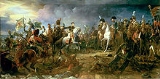
Battle of Austerlitz


   Email Print
   Bookmark   Link


Battle of Austerlitz


The Battle of Austerlitz also known as the Battle of the Three Emperors, was one of Napoleon'sNapoleon I of France

Napoleon I Bonaparte, Emperor of the French, King of Italy, Mediator of the Swiss Confederation and Protector of the Confede...
 greatest victories, effectively destroying the Third CoalitionThird Coalition

In the Napoleonic Wars, the Third Coalition against the French Empire emerged in 1805 and consisted of an alliance of the Un...
 against the French EmpireFirst French Empire Overview

The First French Empire, commonly known as the French Empire or the Napoleonic Empire, covers the period of the ...
. On December 2 1805, a FrenchFacts About French people

French people can refer to:* The legal residents and citizens of France, regardless of ancestry....
 army, commanded by Emperor Napoleon INapoleon I of France

Napoleon I Bonaparte, Emperor of the French, King of Italy, Mediator of the Swiss Confederation and Protector of the Confede...
, decisively defeated a RussoRussian Empire

The Russian Empire was a state that existed from 1721 until it was declared a republic in August 1917....
-AustrianAustrian Empire

The Austrian Empire was an empire centred on what is modern day Austria that lasted from 1804 to 1867....
 army, commanded by Tsar Alexander IAlexander I of Russia

Aleksander I Pavlovich , was Emperor of Russia from March 23, 1801–December 1, 1825 and King of Poland from 1815&nda...
, after nearly nine hours of difficult fighting. The battleBattle

Generally, a battle is an instance of combat in warfare between two or more parties wherein each group will seek to defeat t...
 took place near Austerlitz (Slavkov u Brna)Slavkov u Brna Summary

Slavkov u Brna is a country town east of Brno in the South Moravian Region of the Czech Republic....
 about 10 km (6 miles) south-east of BrnoFacts About Brno

Brno is the second largest city in the Czech Republic....
 in MoraviaMoravia

Moravia is a historical region in the east of the Czech Republic....
. The battle is often regarded as a tactical masterpiece.

The French victory at Austerlitz effectively brought the Third Coalition to an end. On December 26 1805, Austria and France signed the Treaty of PressburgTreaty of Pressburg

The Treaty of Pressburg was signed on December 26, 1805 between France and Austria as a consequence of the Austrian defeats ...
, which took Austria out of the war, reinforced the earlier treaties of Campo FormioTreaty of Campo Formio

The Treaty of Campo Formio was signed on October 17, 1797 by Napoleon Bonaparte and Count Ludwig von Cobenzl as representati...
 and LunévilleTreaty of Lunéville

The Treaty of Lunville was signed on February 9, 1801 between the French Republic and the Holy Roman Empire by Joseph Bonapa...
, made Austria cede land to Napoleon's German allies, and imposed an indemnityIndemnity

Indemnity is a legal exemption from the penalties or liabilities incurred by any course of action....
 of 40 million francFranc

The franc is the name of several currency units, most notably that of France before it adopted the euro....
s on the defeated HabsburgHabsburg

Habsburg was an important ruling house of Europe and is best known as the ruling House of Austria for over six centuries....
s. Russian troops were allowed to head back to home soil. Victory at Austerlitz also permitted the creation of the Confederation of the RhineConfederation of the Rhine

The Confederation of the Rhine or Rhine Confederation lasted from 1806 to 1813 and was formed initially from sixteen German ...
, a collection of German states intended as a buffer zone between France and the rest of EuropeEurope

Europe is one of the seven traditional continents of the Earth....
. In 1806, the Holy Roman EmpireFacts About Holy Roman Empire

The Holy Roman Empire was a mainly Central European conglomeration of lands in the Middle Ages and the early modern period, ...
 ceased to exist when Holy Roman EmperorHoly Roman Emperor

The Holy Roman Emperor was ruler of the Holy Roman Empire, a predecessor of numerous countries mainly in central Europe....
 Francis IIFrancis II, Holy Roman Emperor Summary

Francis II, Holy Roman Emperor also referred to as Franz I, Emperor of Austria was the last Holy Roman Emperor, rul...
 kept Francis I of Austria as his only official title. These achievements, however, did not establish a lasting peace on the continent. PrussianKingdom of Prussia

The Kingdom of Prussia was a kingdom from 1701 to 1918 and, from 1871, was the leading state of the German Empire, comprisin...
 worries about growing French influence in Central EuropeCentral Europe

Central Europe is the region lying between the variously and vaguely defined areas of Eastern and Western Europe....
 sparked the War of the Fourth CoalitionWar of the Fourth Coalition

In the Napoleonic Wars, the Fourth Coalition was an alliance organized against Napoleon's French Empire in 1806–1807....
 in 1806.

Prologue

Europe had been in turmoil since the start of the French Revolutionary WarsFrench Revolutionary Wars

The French Revolutionary Wars were wars fought between the French Revolutionary government and Austria beginning in 1792 and...
 in 1792. In 1797, after five years of war, the French RepublicFrench First Republic

The French people proclaimed France's First Republic on 21 September 1792 as a result of the French Revolution and of the a...
 subdued the First CoalitionFirst Coalition

The name "First Coalition" designates the first major concerted effort of multiple European powers to contain Revolutionary ...
. A Second Coalition was formed in 1798, but by 1801, this too was defeated, leaving BritainUnited Kingdom of Great Britain and Ireland

| align="center" colspan="2"| United Kingdom ofGreat Britain and Ireland...
 the only opponent of the new French ConsulateFrench Consulate Summary

The Consulate was the government of France from 1799 to 1804—from the fall of the Directory in the coup of 18 Brumair...
. In March 1802, France and Britain agreed to end hostilities under the Treaty of AmiensTreaty of Amiens

The Treaty of Amiens was signed on March 25, 1802 by Joseph Bonaparte and the Marquis Cornwallis as a "Definitive Treaty of ...
. For the first time in ten years, all of Europe was at peace. However, many problems persisted between the two sides, making implementation of the treaty increasingly difficult. The British government resented having to turn over most of the colonial conquests it had made since 1793. Napoleon was angry that British troops had not evacuated the island of MaltaMalta

Malta, officially the Republic of Malta, is a small and densely populated island nation consisting of an archipelago o...
. The tense situation only worsened when Napoleon sent an expeditionary force to crush the Haitian RevolutionHaïtian Revolution

The Haitian Revolution was the most successful of African slave rebellions in the Western Hemisphere....
. In May 1803, Britain declared war on France.

The Third Coalition

In December 1804, an Anglo-Swedish agreement led to the creation of the Third Coalition. British Prime Minister William PittWilliam Pitt the Younger

William Pitt the Younger was a British politician during the late eighteenth and early nineteenth centuries....
 spent 1804 and 1805 in a flurry of diplomatic activity geared towards forming a new coalition against France. Mutual suspicion between the British and the Russians eased in the face of several French political mistakes, and by April 1805, Britain and Russia had signed a treaty of alliance. Having been defeated twice in recent memory by France, and being keen on revenge, Austria joined the coalition a few months later.

La Grande Armée

Prior to the formation of the Third Coalition, Napoleon had assembled an invasion force called the Army of England around six camps at BoulogneBoulogne-sur-Mer

Boulogne-sur-Mer is a city in northern France, in the Pas-de-Calais dpartement of which it is a sous-prfecture....
 in Northern France. He intended to use this invasion force to strike at EnglandEngland Overview

England is the largest and most populous constituent country of the United Kingdom....
, and was so confident of success that he had commemorative medals struck to celebrate the conquest of the English. Although they never set foot on British soil, Napoleon's troops received careful and invaluable training for any possible military operation. Boredom among the troops occasionally set in, but Napoleon paid many visits and conducted lavish parades in order to boost morale.

The men at Boulogne formed the core for what Napoleon would later call La Grande ArméeLa Grande Armée

The name La Grande Arme first entered the annals of history when, in 1805, Napoleon I renamed the army that he had assem...
. At the start, this French army had about 200,000 men organized into seven corpsCorps

A corps is either a large military unit or formation, an administrative grouping of troops within an army with a common func...
, which were large field units that contained 36 to 40 cannonCannon

A cannon is any large tubular firearm designed to fire a heavy projectile over a considerable distance....
 each and were capable of independent action until other corps could come to the rescue. A single corps (properly situated in a strong defensive position) could survive at least a day without support, giving the Grande Armée countless strategic and tactical options on every campaign. On top of these forces, Napoleon created a cavalryCavalry

Soldiers or warriors who fought mounted on horseback are commonly known as cavalry ....
 reserve of 22,000 organized into two cuirassierCuirassier

Cuirassiers were mounted cavalry soldiers equipped with armor and firearms, first appearing in late 15th-century Europe....
 divisionsDivision (military)

A division is a large military unit or formation usually consisting of around ten to fifteen thousand soldiers....
, four mounted dragoonDragoon

During the 17th and early 18th centuries a dragoon was traditionally a soldier trained to fight on foot, but transport himse...
 divisions, and two divisions of dismounted dragoons and light cavalry, all supported by 24 artilleryFacts About Artillery

Historically, artillery refers to any engine used for the discharge of projectiles during war....
 pieces. By 1805, the Grande Armée had grown to a force of 350,000 men, who were well equipped, well trained, and led by competent officers.

Russian army

The Russian army in 1805 had many characteristics of Ancien RégimeAncien Régime

Ancien Rgime, a French term meaning "Former Regime," but rendered in English as "Old Rule," "Old Order," or simply "Old ...
 organization: there was no permanent formation above the regimentRegiment

A regiment is a military unit, consisting of battalions - usually three or four - commanded by a colonel....
al level, senior officers were largely recruited from aristocratic circles (and commissions were generally sold to the highest bidder, regardless of competence); and the Russian soldier, in line with 18th-century practice, was regularly beaten and punished "to instill discipline". Furthermore, many lower-level officers were poorly trained and had difficulty getting their men to perform the sometimes complex manuevers required in a battle. Nevertheless, the Russians did have a fine artillery arm, manned by soldiers who regularly fought hard to prevent their pieces from falling into enemy hands.

The supply system of the Russian Imperial Army was highly dependent on the local population and Russia's Austrian allies. Seventy percent of Russian supplies were provided by Austria. Without a sturdy and organized supply system and with overextended supply lines, the Russian soldiers found it difficult to maintain combat readiness and good health.

Austrian army

Archduke CharlesArchduke Charles, Duke of Teschen

Archduke Charles of Austria, Duke of Teschen was a son of Leopold II, Holy Roman Emperor and his wife Infanta Maria Luisa...
, brother of the Austrian Emperor, had started to reform the Austrian army in 1801 by taking away power from the HofkriegsratHofkriegsrat

The Hofkriegsrat was the Court Council of War of the Habsburg Monarchy....
, the military/political council responsible for decision-making in the Austrian armed forces. Charles was Austria's best field commander, but he was unpopular with the royal court and lost much influence when, against his advice, Austria decided to go to war with France. Karl Mack became the new main commander in Austria's army, instituting on the infantry, on the eve of war, reforms that called for a regiment to be composed of four battalionBattalion

A battalion is a military unit usually consisting of between two and six companies and typically commanded by a Lieutenant ...
s of four companiesCompany (military unit) Overview

A company is a military unit, typically consisting of 100-200 soldiers....
, rather than the older three battalions of six companies. The sudden change came with no corresponding officer training, and as a result these new units were not led so well as they could have been. The Austrian cavalry was regarded as the best cavalry in Europe, but the detachment of many cavalry units to various infantry formations reduced its effectiveness against its massed French counterpart.

Preliminary moves

In August 1805, Napoleon, Emperor of the FrenchList of French monarchs

The monarchs of France ruled, first as kings and later as emperors, from the Middle Ages to 1848....
 since May of the previous year, turned his army's sights from the English ChannelEnglish Channel

The English Channel is the part of the Atlantic Ocean that separates the island of Great Britain from northern France and j...
 to the Rhine in order to deal with the new Austrian and Russian threats. On September 25, after great secrecy and feverish marching, 200,000 French troops began to cross the Rhine on a front of 260 km (160 miles). Mack had gathered the greater part of the Austrian army at the fortress of UlmUlm

Ulm is a city in the German Bundesland of Baden-Wrttemberg, situated on the river Danube, about 90 km south-east of Stuttgar...
 in BavariaBavaria

The Free State of Bavaria  , with an area of 70,553 km and 12.4 million inhabitants, forms the southernmost state...
. Napoleon hoped to swing his forces northward and perform a wheeling movement that would find the French at the Austrian rear. The Ulm ManeuverUlm Campaign

The Ulm Campaign consisted of a series of French and Bavarian military maneuvers and battles to outflank and capture an Aust...
 was well-executed and on October 20 Mack and 23,000 Austrian troops surrendered at Ulm, bringing the total number of Austrian prisoners in the campaign to 60,000. Although the spectacular victory was soured by the defeat of the Franco-Spanish fleet at the Battle of TrafalgarBattle of Trafalgar

The Battle of Trafalgar, fought on 21 October 1805, is part of the War of the Third Coalition assembled by Britain against F...
 the following day, French success on land continued as ViennaVienna Summary

Vienna is the capital of Austria, and also one of the nine States of Austria....
 fell in November, replete with 100,000 muskets, 500 cannon, and the intact bridges across the Danube.

Meanwhile, the lateness of the arrival of Russian troops under KutuzovMikhail Illarionovich Kutuzov

Prince Mikhail Illarionovich Golenishchev-Kutuzov]], or 5th September 1745 - 16th April 1813 ) was the Russian Field Marshal...
 prevented them from saving the Austrian field armies, so the Russians withdrew to the northeast to await reinforcements and to link up with surviving Austrian units. The French followed, but soon found themselves in an unenviable disposition: Prussian intentions were unknown and could be hostile, the Russian and Austrian armies now converged, and to add to the frustration, Napoleon's lines of communication were extremely long and required strong garrisons to keep them open. Napoleon realized that the only meaningful way to capitalize on the success at Ulm was to force the Allies to battle and defeat them. Fortunately for him, the Russian Tsar was eager to fight.

Battle


Napoleon could muster some 75,000 men and 157 guns for the impending battle, but about 7,000 troops under DavoutLouis Nicolas Davout Summary

Louis Nicolas d'Avout, better known as Davout, duc d'Auerstaedt, prince d'Eckmhl, was a marshal of France during...
 were still far to the south in the direction of Vienna. The Allies had about 73,000 soldiers, seventy percent of them Russian, and 318 guns.

Battlefield

The northern part of the battlefield was dominated by the 700-foot (210 m) Santon hill and the 850-foot (260 m) Zuran hill, both overlooking the vital OlmutzOlomouc

Olomouc is a city in Moravia, in the east of the Czech Republic....
/Brno road, which was on an east/west axis. To the west of these two hills was the village of Bellowitz, and between them the Bosenitz Stream went south to link up with the Goldbach Stream, the latter flowing astride the villages of Kobelnitz, Sokolnitz, and Telnitz. The centerpiece of the entire area were the Pratzen Heights, a gently sloping hill about 35 to 40 feet (11–12 m) in height. An aide noted that Napoleon repeatedly told his Marshals, "Gentlemen, examine this ground carefully, it is going to be a battlefield; you will have a part to play upon it".

Allied plans and dispositions

An Allied council met on December 1 to discuss proposals for the battle. Most of the Allied strategists had two fundamental ideas in mind: making contact with the enemy and securing the southern flank that led to Vienna. Although the Tsar and his immediate entourage pushed hard for a battle, Emperor Francis of Austria was in a more cautious mood, and he was seconded by Kutuzov, the main Russian commander. The pressure to fight from the Russian nobles and the Austrian commanders, however, was too strong, and the Allies adopted Austrian Chief of Staff Franz von WeyrotherFranz von Weyrother

Franz von Weyrother, was an Austrian general during the French Revolutionary Wars and Napoleonic wars....
's plan. This called for a main drive against the French right flank, which the Allies noticed was lightly guarded, and diversionary attacks against the French left. The Allies deployed most of their troops into four columns that would attack the French right. The Russian Imperial GuardRussian Imperial Guard Overview

The term Leib Guard collectively distinguished military units serving as personal guards of the Emperor of Russia....
 was held in reserve while Russian troops under BagrationPyotr Bagration

Prince Pyotr Bagration, was an ethnic Georgian and descendant of the Georgian royal family of the Bagrations, served as a Ru...
 guarded the Allied right.

French plans and dispositions

Days before any actual fighting, Napoleon had given an impression to the Allies that his army was in a weak state and that he desired a negotiated peace. In reality, he was hoping that they would attack, and to encourage them on this mission he deliberately weakened his right flank. On November 28, Napoleon met with his marshals at Imperial Headquarters and they informed him of their qualms and fears about the forthcoming battle, even suggesting a retreat, but he shrugged off their complaints and went to work. Napoleon's plan envisioned that the Allies would throw so many troops to envelop his right flank that their center would be severely weakened. He then counted on a massive French thrust, to be conducted by 16,000 troops of Soult'sNicolas Jean de Dieu Soult

Nicolas Jean de Dieu Soult, duc de Dalmatie was a French general and statesman, named Marshal of France in 1804....
 IV Corps, through the center to cripple the Allied army. Meanwhile, to support his weak right flank, Napoleon ordered Davout's III CorpsFacts About III Corps (Grande Armée)

The III Corps of the Grande Arm?e was a military unit during the Napoleonic Wars....
 to force march all the way from Vienna and join General Legrand'sClaude Legrand

General Claude Juste Alexandre Legrand commanded a French division at several notable battles of the French Revolution and ...
 men, who held the extreme southern flank that would bear the heavy part of the Allied attack. Davout's soldiers had 48 hours to march 110 km (70 miles). Their arrival would be crucial in determining the success or failure of the French plan. The Imperial Guard and Bernadotte'sCharles XIV John of Sweden

Charles XIV John , born Jean-Baptiste Bernadotte was King of Sweden and Norway from 1818 until his death....
 I Corps were held in reserve while the V Corps under LannesJean Lannes

Jean Lannes, Duke of Montebello, Marshal of France, was born at Lectoure, Gers....
 guarded the northern sector of the battlefield.

Battle is joined

The battle began at about 8 a.m. with the first allied column attacking the village of Telnitz, which was defended by the 3rd Line Regiment. This sector of the battlefield witnessed heavy action in the following moments as several ferocious Allied charges evicted the French from the town and forced them onto the other side of the Goldbach. The first men of Davout's corps arrived at this time and threw the Allies out of Telnitz before they too were attacked by hussarHussar

Hussar refers to a class of cavalry, Serbian in origin but subsequently via Hungary imitated throughout Europe....
s and re-abandoned the town. Additional Allied attacks out of Telnitz were checked by French artillery.

Allied columns started pouring against the French right, but not at the desired speed, so the French were mostly successful in curbing the attacks. In actuality, the Allied deployments were mistaken and poorly timed: cavalry detachments under LiechtensteinJohann I Josef, Prince of Liechtenstein

Johann I Josef was the tenth prince of Liechtenstein between 1805 and 1806 and again from 1814 until 1836....
 on the Allied left flank had to be placed in the right flank and in the process they ran into and slowed down part of the second column of infantry that was advancing towards the French right. At the time, the planners thought this was a disaster, but later on it helped the Allies. Meanwhile, the leading elements of the second column were attacking the village of Sokolnitz, which was defended by the 26th Light Regiment and the TirailleurTirailleur

Tirailleur means sharpshooter in French....
s
, French skirmisherSkirmisher Summary

Skirmishers are infantry soldiers stationed ahead or alongside of a larger body of friendly troops....
s. Initial Allied assaults proved unsuccessful and General LangeronLouis Alexandre Andrault de Langeron

Count Louis Alexandre Andrault de Langron, born in Paris, was a French general in Russian service during the Napoleonic Wars...
 ordered the bombardment of the village. This deadly barrage forced the French out, and at about the same time, the third column attacked the castle of Sokolnitz. The French, however, counterattacked and regained the village, only to be thrown out again. Conflict in this area ended temporarily when Friant'sLouis Friant

Louis Friant, Comte de l'Empire, was a Gnral de division of the French army who fought in the French Revolutionary Wars ...
 division (part of III Corps) retook the village. Sokolnitz was perhaps the most fought over area in the battlefield and would change hands several times as the day progressed.

"One sharp blow and the war is over"

At about 8:45 a.m., satisfied at the weakness in the enemy center, Napoleon asked Soult how long it would take for his men to reach the Pratzen Heights, to which the Marshal replied, "Less than twenty minutes sire." About 15 minutes later, Napoleon ordered the attack, adding, "One sharp blow and the war is over."

A dense fog helped to cloud the advance of St. Hilaire's division, but as they went up the slope the legendary ‘Sun of Austerlitz' ripped the mist apart and encouraged them forward. Russian soldiers and commanders on top of the heights were stunned to see so many French troops coming towards them. Allied commanders were now able to feed some of the delayed detachments of the fourth column into this bitter struggle. Over an hour of fighting destroyed much of this unit. The other men from the second column, mostly inexperienced Austrians, also participated in the struggle and swung the numbers against one of the best fighting forces in the French army,eventually forcing them to withdraw down the slopes. However, gripped by desperation, St. Hilaire's men struck hard once more and bayoneted the Allies out of the heights. To the north, General Vandamme'sDominique Vandamme

General Dominique Joseph Vandamme was a French military officer, who fought in the Napoleonic Wars....
 division attacked an area called Staré Vinohrady and through talented skirmishing and deadly volleys broke several Allied battalions.

The battle had firmly turned in France's favour, but it was far from over. Napoleon ordered Bernadotte's I Corps to support Vandamme's left and moved his own command center from Zuran Hill to St. Anthony's Chapel on the Pratzen Heights. The difficult position of the Allies was confirmed by the decision to send in the Russian Imperial GuardRussian Imperial Guard

The term Leib Guard collectively distinguished military units serving as personal guards of the Emperor of Russia....
; Grand Duke ConstantineGrand Duke Constantine Pavlovich of Russia

Constantine Pavlovich Romanov, grand duke and tsesarevich of Russia, was prepared by his grandmother, Catherine the Great, t...
, Tsar Alexander's brother, commanded the Guard and counterattacked in Vandamme's section of the field, forcing a bloody effort and the only loss of a French standard in the battle (the unfortunate victim was a battalion of the 4th Line Regiment). Sensing trouble, Napoleon ordered his own heavy Guard cavalry forwards. These men pulverized their Russian counterparts, but with both sides pouring in large masses of cavalry no victory was clear yet. The Russians had a numerical advantage here but fairly soon the tide swung as Drouet'sJean-Baptiste Drouet, Comte d'Erlon

Jean-Baptiste Drouet, Comte d'Erlon was a marshal of France and a soldier in Napoleon's Army....
 Division, the 2nd of Bernadotte's I Corps, deployed on the flank of the action and allowed French cavalry to seek refuge behind their lines. The horse artilleryHorse artillery

Horse Artillery were light, fast moving and fast firing artillery units which provided fire support to the cavalry elements ...
 of the Guard also unlimbered a deadly toll on the Russian cavalry and fusiliers. The Russians broke and many died as they were pursued by the reinvigorated French cavalry for about a quarter of a mile.

Endgame


Meanwhile, the northernmost part of the battlefield was also witnessing heavy fighting. Prince Liechtenstein'sJohann I Josef, Prince of Liechtenstein

Johann I Josef was the tenth prince of Liechtenstein between 1805 and 1806 and again from 1814 until 1836....
 heavy cavalry began to assault Kellerman'sFrançois Étienne de Kellermann

Francois ?tienne de Kellermann, 2nd Duc de Valmy was a French cavalry general noted for his daring and skillful explo...
 lighter cavalry forces after eventually arriving at the correct position in the field. The fighting initially went well for the French, but Kellerman's forces took cover behind General Caffarelli's infantry division once it became clear Russian numbers were too great. Caffarelli's men halted the Russian assaults and permitted MuratJoachim Murat

Joachim Murat, Grand Duke of Cleves and Berg, Marshal of France, was King of Naples from 1808 to 1815. ...
 to send two cuirassier divisions (one commanded by d'HautpoulJean-Joseph Ange d'Hautpoul

Jean-Joseph Ange d'Hautpoul was a French cavalry general of the Napoleonic wars....
 and the other one by NansoutyÉtienne Marie Antoine Champion de Nansouty

?tienne Marie Antoine Champion de Nansouty, was a French cavalry general during the French Revolutionary and Napoleonic wars...
) into the fray to finish off the Russian cavalry for good. The ensuing melee was bitter and long, but the French ultimately prevailed. Lannes then led his V Corps against Bagration'sPyotr Bagration

Prince Pyotr Bagration, was an ethnic Georgian and descendant of the Georgian royal family of the Bagrations, served as a Ru...
 men and after hard fighting managed to drive the skilled Russian commander off the field. He wanted to pursue, but Murat, who was in control of this sector in the battlefield, was against the idea.

Napoleon's focus now shifted towards the southern end of the battlefield where the French and the Allies were still fighting over Sokolnitz and Telnitz. In an effective double-pronged assault, St. Hilaire's division and part of Davout's III Corps smashed through the enemy at Sokolnitz and persuaded the commanders of the first two columns, Generals Kienmayer and LangeronLouis Alexandre Andrault de Langeron

Count Louis Alexandre Andrault de Langron, born in Paris, was a French general in Russian service during the Napoleonic Wars...
, to flee as fast as they could. BuxhowdenFriedrich Wilhelm von Buxhoeveden

Friedrich Wilhelm Count von Buxhoevden, was a Russian Infantry General and government official who commanded the Russian ar...
, the commander of the Allied left and the man responsible for leading the attack, was completely drunk and fled as well. Kienmayer covered his withdrawal with the O'Reilly light cavalry, who gallantly managed to defeat five of six French cavalry regiments before they too had to retreat.

General panic now seized the Allied army and it abandoned the field in any and all possible directions. A famous yet frightful episode occurred during this retreat: Russian forces that had been defeated by the French right withdrew south towards Vienna via the Satschan frozen ponds. French artillery pounded towards the men, but Napoleon redirected his gunners to fire at the ice. The men drowned in the viciously cold ponds, dozens of artillery pieces going down along with them. Estimates of how many guns were captured differ; there may have been so few as 38 or more than 100. Sources also differ about casualties, with figures ranging from so few as 200 to so many as 2,000 dead. Because Napoleon exaggerated this incident in his report of the battle, the low numbers may be more accurate, although doubt remains about whether they are fully correct. Many regard this incident as one of Napoleon's cruelest acts in war.

Aftermath

Austerlitz and the preceding campaign profoundly altered the nature of European politics. In three months, the French had occupied Vienna, destroyed two armies, and humbled the Austrian Empire. These events sharply contrast with the rigid power structures of the 18th century. Austerlitz set the stage for a near-decade of French domination of the European continent, but one of its more immediate effects was to goad Prussia into war in 1806.

Military and political results

Overall, Allied casualties stood at about 27,000 out of an army of 73,000, which was 37% of their effectives. The French expended around 9,000 out of a force of 67,000, or about 13% of effectives. The Allies also lost 180 guns and 50 standards. The great victory was met by sheer amazement and delirium in Paris, where just days earlier the nation was teetering on financial collapse. Napoleon wrote to Josephine, "I have beaten the Austro-Russian army commanded by the two emperors. I am a little weary....I embrace you." Tsar Alexander perhaps best summed up the harsh times for the Allies by stating, "We are babies in the hands of a giant."

France and Austria signed a truce on December 4 and the Treaty of PressburgTreaty of Pressburg

The Treaty of Pressburg was signed on December 26, 1805 between France and Austria as a consequence of the Austrian defeats ...
 22 days later took the latter out of the war. Austria agreed to recognize French territory captured by the treaties of Campo Formio (1797) and Lunéville (1801), cede land to Bavaria, WurttembergHistory of Württemberg

History of Wrttemberg...
, and BadenHistory of Baden

The history of Baden as a state began in the 12th century, as a fief of the Holy Roman Empire....
, which were Napoleon's German allies, and pay 40 million francs in war indemnities, and VeniceVenice

Venice is the capital of the region of Veneto and the province of the same name in Italy....
 was given to the Kingdom of ItalyKingdom of Italy (Napoleonic)

The Napoleonic Kingdom of Italy was a kingdom founded in Italy by Napoleon, in 1805....
. It was a harsh end for Austria, but certainly not a catastrophic peace. The Russian army was allowed to withdraw to home territory and the French encamped themselves in Southern Germany. The Holy Roman Empire was effectively wiped out, 1806 being seen as its final year. Napoleon created the Confederation of the RhineConfederation of the Rhine

The Confederation of the Rhine or Rhine Confederation lasted from 1806 to 1813 and was formed initially from sixteen German ...
, a string of German states meant to serve as a buffer between France and Prussia. Prussia saw these and other moves as an affront to its status as the main power of Central Europe and it went to war with France in 1806.

Rewards

Napoleon's words to his troops after the battle were full of praise: Soldats! Je suis content de vous . The Emperor provided two million golden francs to the higher officers, 200 francs to each soldier, and gave large pensions to the widows of the fallen. Orphaned children were adopted by Napoleon personally and were allowed to add "Napoleon" to their baptismal and family names. Interestingly, Napoleon never gave a title of nobility to any of his commanders, as was customary following a great victory. It is probable that he considered Austerlitz too much of a personal triumph to elevate anyone else significantly. To this day, Austerlitz is often called "Napoleon's Greatest Victory."

Popular conceptions

Mythology

There are many stories and legends regarding events before or during the battle. In the night before the day of battle, Napoleon set out with his entourage to review the forward positions. During this tour, he was recognized by the soldiers of Vandamme's division, and fairly soon the entire army lit candles to celebrate the anniversary of his coronation. Allied soldiers and commanders looking at this believed that the French were preparing to retreat. Another story features an unfortunate French soldier running from CossackCossack

Cossacks are a group of several peoples living in the southern steppe regions of Eastern Europe and Asiatic Russia, famous f...
s; apparently, the soldier climbed through a chimney trying to hide, but the Cossacks found and killed him anyway. A more humorous episode occurred between some Russian troopers looking for horse fodder from a local peasant woman. The soldiers kept yelling, Babo, ovsa ("Lady, give us oats") but the woman, who was old and probably had difficult hearing, thought they were saying Hopsa ("jump"), so she repeatedly jumped, to the very great frustration of the Russian soldiers. Eventually, the soldiers realized she did not understand them, pointed to the horses outside, and even started chewing to give her a clue, which she finally got, giving the soldiers the oats they wanted. Yet another story tells of French artillerists throwing a wooden statue of the Virgin Mary into a fire for warmth and discovering that it would not burn.

Historical views

Napoleon did not succeed in defeating the Allied army as thoroughly as he wanted, but historians and enthusiasts alike recognize that the original plan provided a significant victory. For that reason, Austerlitz is sometimes compared to other great tactical battles like CannaeBattle of Cannae

The Battle of Cannae was a major battle of the Second Punic War, taking place on August 2, 216 BC near the town of Cannae in...
 or BlenheimBattle of Blenheim Overview

The Battle of Blenheim was a major battle of the War of the Spanish Succession fought on 13 August, 1704....
. Some historians suggest that Napoleon was so successful at Austerlitz that he lost touch with reality, and what used to be French foreign policy became a "personal Napoleonic one" after the battle. In French historyHistory of France Overview

The History of France has been divided into a series of separate historical articles navigable through the list to the rig...
, Austerlitz is acknowledged as an impressive military victory, and in the 19th century, when fascination with the First Empire was at its height, the battle was revered by the likes of Victor Hugo, who "in the depth of [his] thoughts" was hearing the "noise of the heavy cannons rolling towards Austerlitz". In the recent bicentennial, however, controversy erupted when neither French president Jacques ChiracJacques Chirac Overview

Jacques Ren Chirac is a French politician and the current President of the French Republic....
 nor prime minister Dominique de VillepinDominique de Villepin

Dominique Marie Franois Ren Galouzeau de Villepin simply known as Dominique de Villepin...
 attended any functions commemorating the battle. On the other hand, residents of France's overseas departments protested against what they viewed as the "official commemoration of Napoleon", arguing that Austerlitz should not be celebrated since they believed Napoleon committed genocideGenocide

Convention on the Prevention and Punishment of the Crime of Genocide Article 2 as "any of the following acts committed with inten...
 against colonial peoples.

External links