

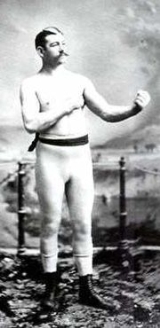
Bare-knuckle boxing

Overview
Boxing
Boxing, also called pugilism, is a combat sport in which two people fight each other using their fists. Boxing is supervised by a referee over a series of between one to three minute intervals called rounds...
, closely related to ancient combat sport
Combat sport
A Combat sport, also known as a Fighting sport, is a competitive contact sport where two combatants fight against each other using certain rules of engagement , typically with the aim of simulating parts of real hand to hand combat...
s. It involves two individuals fighting without any boxing gloves
Boxing gloves
Boxing gloves are cushioned gloves that fighters wear on their hands during boxing matches. The term also refers to gloves used in training, though these often differ from competition gloves...
or other form of padding on their hands.
The difference between a streetfight and a bare-knuckle boxing match is an accepted set of rules, such as not striking a downed opponent.
The first bare-knuckle champion of England was James Figg
James Figg
James Figg was an English bare-knuckle boxer. He is universally recognized the first English bare-knuckle boxing champion, reigning from 1719 to 1730 or 1734. Many of the bouts at the time consisted of boxing, wrestling and fencing with sharp swords. Figg was also a great fencer that engaged in...
, who claimed the title in 1719 and held it until his retirement in 1730.
Discussions

