
All Topics  
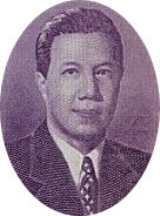
Bao Dai

 
Bao Dai

   Email Print
   Bookmark   Link


Bao Dai


B?o Ð?i (Hán t?
Hán T?

H?n t? or ch? Nho is the Vietnamese language term for Chinese characters, which was used to write classical Chinese, in contrast to ch? N?m, which was used to write the Vietnamese language....
: , Nguy?n Phúc Vinh Th?y 22 October 1913 – 30 July 1997) was the 13th and last ruler of the Nguy?n Dynasty. He served as Emperor of Vietnam from 1926 until 1945 and as head of state of the State of Vietnam
State of Vietnam

The State of Vietnam was a state in southern Vietnam which replaced the Provisional Central Government of Vietnam . The provisional government was a brief transitional administration between colonial Cochinchina and an independent state....
 from 1949 until 1955. Like most of the monarchs of Vietnamese Nguy?n Dynasty, his role was limited as "King of Annam", including Central Vietnam (Annam) and North Vietnam (Tonkin), by the French Protectorate
French Indochina

French Indochina was the part of the French colonial empire in Indochina in southeast Asia. A federation of the three Vietnamese regions, Tonkin, Annam, and Cochinchina, as well as Cambodia, was formed in 1887....
.


Discussion
Ask a question about 'Bao Dai'
Start a new discussion about 'Bao Dai'
Answer questions from other users
Full Discussion Forum


Encyclopedia


B?o Ð?i (Hán t?
Hán T?

H?n t? or ch? Nho is the Vietnamese language term for Chinese characters, which was used to write classical Chinese, in contrast to ch? N?m, which was used to write the Vietnamese language....
: , Nguy?n Phúc Vinh Th?y 22 October 1913 – 30 July 1997) was the 13th and last ruler of the Nguy?n Dynasty. He served as Emperor of Vietnam from 1926 until 1945 and as head of state of the State of Vietnam
State of Vietnam

The State of Vietnam was a state in southern Vietnam which replaced the Provisional Central Government of Vietnam . The provisional government was a brief transitional administration between colonial Cochinchina and an independent state....
 from 1949 until 1955. Like most of the monarchs of Vietnamese Nguy?n Dynasty, his role was limited as "King of Annam", including Central Vietnam (Annam) and North Vietnam (Tonkin), by the French Protectorate
French Indochina

French Indochina was the part of the French colonial empire in Indochina in southeast Asia. A federation of the three Vietnamese regions, Tonkin, Annam, and Cochinchina, as well as Cambodia, was formed in 1887....
. However, the public and these monarchs referred to themselves as "Hoàng d? Vi?t Nam" (English: Emperor of Vietnam), or "Hoàng d? Ð?i Nam" (English: Emperor of the Great South), or "Hoàng d? Nam tri?u" (English: Emperor of the Southern Imperial Court, implying Chinese feudal dynasties as "Northern Imperial Court").

Early life

B?o Ð?i was born Prince
Prince

Prince, from the Latin root princeps, is a general term for a monarch, for a member of a monarch's or former monarch's family, and is a hereditary title in some members of Europe's highest nobility....
 Nguy?n Phúc Vinh Th?y in the Palace of Doan-Trang-Vien, part of the compound of the Purple Forbidden City
Imperial City, Hu?

The Imperial City in Hu? is a walled fortress and palace in the former capital of Vietnam....
 in Hu?, at that time the capital of Vietnam by tradition
Tradition

The word tradition comes from the Latin traditionem, acc. of traditio which means "handing over, passing on", and is used in a number of ways in the English language:...
. He later was given the name Nguy?n Vinh Th?y. His father
Father

The father is defined as the male parent of an offspring. The adjective "paternal" refers to father, parallel to "maternal" for mother.According to the anthropologist Maurice Godelier, the parental role assumed by human males is a critical difference between human society and that of humans' closest biological relatives - chimpanzees and b...
 was King Kh?i Ð?nh
Khai Dinh

Emperor Kh?i ??nh was the 12th Emperor of the Nguyen Dynasty in Vietnam. His name at birth was Prince Nguyen Buu Dao. He was the son of the Emperor Dong Khanh, but he did not succeed him immediately....
 of Annam. His mother was the king's second wife, Tu Cung, who was renamed Doan Huy upon her 1913 marriage. She held various titles over the years that indicated her advancing rank as a favored consort until she eventually became Empress Dowager in 1933, with style of Her Imperial Majesty being added in 1945.

From 1802, the country -- which was known variously as Vietnam and Annam, depending on who controlled it -- had been a Chinese tributary state
Tributary state

The term tributary state refers to one of the two main ways in which a pre-modern state might be subordinate to a more powerful neighbour. The heart of the relationship was that the tributary would send a regular token of submission to the superior power....
 ruled by emperors. That title had been diminished to king, however, by the French government, which took control of the region in the late 19th century and split it into three areas: the protectorates of Annam and Tonkin and the colony of Cochinchina
Cochinchina

Cochinchina is a region encompassing the southern third of Vietnam whose principal city is Saigon. It was a French colony from 1864 to 1948. The later state of South Vietnam was created in 1954 by combining Cochinchina with southern Annam ....
. The Nguy?n Dynasty was given nominal rule of Annam.

At the age of nine, Prince Nguy?n Phúc Vinh Th?y was sent to France
France

France , officially the French Republic , is a country whose Metropolitan France is located in Western Europe and that also comprises various Overseas departments and territories of France....
 to be educated
Education

File:Inukshuk Monterrey 1.jpgEducation can be seen as a product or a process and considered in a broad sense or a technical sense. According to philosophy of education George F....
 at the lycée Condorcet
Lycée Condorcet

The Lyc?e Condorcet is a school founded in 1803 in Paris, France located at 8, rue du Havre in the city's IXe arrondissement. Since its inception, various political eras have seen it given a number of different names, but its identity today honors the memory of the Marquis de Condorcet....
 and, later, the Paris Institute of Political Studies. In 1926, at age 13, he became king following his father's death and took the name B?o Ð?i. He did not ascend to the throne
Throne

A throne is the official chair or seat upon which a monarch is seated on state or ceremonial occasions. "Throne" in an abstract sense can also refer to the monarchy or the Crown itself, an instance of metonymy, and is also used in many terms such as "power behind the throne"....
 due to his age and returned to France to continue his studies. He was subject to control by the French
French Third Republic

The French Third Republic was the political regime of France between the Second French Empire and the Vichy France. It was a republican parliamentary democracy that was created on 4 September 1870 following the collapse of the Empire of Napoleon III of France in the Franco-Prussian War....
 of his government, Annam at that time being part of the Union of French Indochina. Throughout the 20th century, B?o Ð?i was widely perceived to be a puppet ruler for French colonial interests.

Marriages

On 20 March, 1934, at the imperial city of Hu?, B?o Ð?i married Marie-Thérèse Nguy?n H?u Th? Lan (a.k.a Mariette, 1914–1963), a commoner from a wealthy Vietnamese Catholic family. She was renamed Nam Phuong, or "Southern Beauty". The couple had five children: Crown Prince
Crown Prince

A Crown Prince or Crown Princess is the heir apparent to the throne in a royal or imperial monarchy. The wife of a crown prince is also titled crown princess....
 B?o Long (born on 4 January 1936), Princess Phuong Mai (born on 1 August 1937), Princess Phuong Liên
Phuong Lien

Her Imperial Highness Princess Phuong Li?n of Vietnam is a daughter of Bao Dai, the last emperor of Vietnam, and his first wife, Empress Nguy?n H?u Th? Lan....
 (born on 3 November 1938), Princess Phuong Dung (born on 5 February 1942), and Prince B?o Th?ng
B?o Th?ng

Prince B?o Th?ng of Vietnam is the youngest son of Emperor Bao Dai and Empress Nguy?n H?u Th? Lan. He succeeded as head of the Nguyen Dynasty following the death of his brother, Bao Long, Crown Prince of Vietnam, on July 28, 2007....
 (born on 9 December 1943). She was granted the title of empress in 1945.

B?o Ð?i had four other wives
Polygamy

The term polygamy is used in related ways in social anthropology, sociobiology, and sociology. Polygamy can be defined as any "Types of marriages in which a person [has] more than one spouse."...
, three of whom he wed during his marriage to Nam Phuong:
  • Phu Anh, a cousin, whom he married circa 1935, and by whom he had one daughter
    Daughter

    A daughter is a female reproduction; a girl, woman, or female animal in relation to her parents. The male equivalent is a son. Analogously the name is used on several areas to show relations between groups or elements....
    , Princess Claire Phuong Tao (b. prior to 1936)
  • Hoang, a Chinese
    Han Chinese

    Han Chinese are an ethnic group native to China and, by most modern definitions, the largest single ethnic group in the Earth.Han Chinese constitute about 92 percent of the population of the People's Republic of China , 98 percent of the population of the Republic of China , 75 percent of the population of Singapore, and about 19 percent...
     woman, whom he married in 1946
  • Bui Mong Diep, whom he married in 1955 and by whom he had two children, Princess Phuong Minh (b. 1949) and Prince B?o An (b. 1953)
  • Monique Baudot, a French citizen
    French Fifth Republic

    The Fifth Republic is the fifth and current Republicanism Constitution of France of France, which was introduced on October 5, 1958. The Fifth Republic emerged from the collapse of the French Fourth Republic, replacing a parliamentary government with a semi-presidential system....
     whom he married in 1972 and who was styled "Imperial Princess" and renamed Vinh Th?y
    Monique Vinh Thuy

    Empress Thai Phuong is the widow of the last Emperor of Vietnam, Bao Dai....
    . She became known as Empress Thai Phuong after her husband's death in 1997.


One of his concubines was a dancer from Hanoi, Ly Le Hang.

Independence and abdication

In 1940, during the second World War
World War II

World War II, or the Second World War , was a global military conflict which involved a Participants in World War II, including all of the great powers, organised into two opposing military alliances: the Allies of World War II and the Axis powers....
, coinciding with their ally Germany's invasion
Battle of France

In World War II, the Battle of France, also known as the Fall of France, was the Germany invasion of France and the Low Countries, executed from 10 May 1940, which ended the Phoney War....
 of France, the Japanese invaded French Indochina. While they did not eject the French colonial administration, the occupation authorities directed policy
Policy

A policy is typically described as a deliberate plan of action to guide decisions and achieve rational outcome. However, the term may also be used to denote what is actually done, even though it is unplanned....
 from behind the scenes in a parallel of Vichy France
Vichy France

Vichy France, or the Vichy regime are the common terms used to describe the government of France from July 1940 to August 1944. This government, which succeeded the French Third Republic, officially called itself the French State , in contrast with the previous designation, "French Republic." Marshal of France Philippe P?tain pro...
.

The Japanese
Japanese people

The are the predominant ethnic group of Japan. Worldwide, approximately 130 million people are of Japanese descent; of these, approximately 127 million are residents of Japan....
 promised not to interfere with the court at Hu?, but in 1945 coerced B?o Ð?i into declaring Vietnamese independence
Independence

Independence is the self-government of a nation, country, or state by its residents and population, or some portion thereof, generally exercising sovereignty....
 from France as a member of Japan's "Greater East Asia Co-Prosperity Sphere
Greater East Asia Co-Prosperity Sphere

The Greater East Asia Co-Prosperity Sphere was a concept created and promulgated during the Showa era by the government and military of the Empire of Japan which represented the desire to create a self-sufficient "bloc of Asian nations led by the Japanese and free of Western powers"....
"; the country then became the Empire of Vietnam
Empire of Vietnam

The Empire of Vietnam was a short-lived puppet state of Empire of Japan governing the whole of Vietnam between March 11 and August 23, 1945....
. The Japanese had a Vietnamese
Vietnamese people

The Vietnamese people are an ethnic group originating from what is now northern Vietnam and southern People's Republic of China. They are the majority ethnic group of Vietnam, comprising 86% of the population as of the 1999 census, and are officially known as Kinh to distinguish them from other List of ethnic groups in Vietnam....
 pretender, Prince Cu?ng Ð?, waiting to take power in case the new emperor's "elimination" was required. Japan surrendered to the Allies
Allies of World War II

The Allies of World War II were the countries officially opposed to the Axis powers of World War II during the World War II. Within the ranks of the Allies powers, the British Empire, the Soviet Union, and the United States of America were known as "The Big Three"....
 in August of 1945, and the Vi?t Minh
Viet Minh

The Vi?t Minh was a national liberation movement which dated its foundation to May 19 1941 in South China. The Vi?t Minh initially formed to seek independence for Vietnam from France and later to oppose the Vietnam during World War II....
 under the leadership of H? Chí Minh
Ho Chi Minh

H? Ch? Minh was a Vietnamese communism revolutionary and statesman who was Prime Minister and President of the Democratic Republic of Vietnam ....
 aimed to take power in a free Vietnam. Due to his recent Japanese associations
Vietnamese Famine of 1945

The Vietnamese Famine of 1945 was a famine that occurred in northern Vietnam from October 1944 to May 1945, during the Axis powers of World War II#Japan occupation of the country....
, H? was able to persuade B?o Ð?i to abdicate on 25 August, 1945, handing power over to the Vi?t Minh — an event which greatly enhanced H?'s legitimacy
Legitimacy

:selfref|For the...
 in the eyes of the Vietnamese people. B?o Ð?i was appointed "supreme advisor" to the new government in Hanoi
Hanoi

Hanoi , estimated population 3,398,889 , is the Capital of Vietnam. From 1010 until 1802, with a few brief interruptions, it was the political centre of an independent Vietnam....
, which asserted its independence on 2 September.

As Vietnam descended into armed conflict — rival Vietnamese faction
Political faction

A political faction is a grouping of individuals, especially within a political organization, such as a political party, a trade union, or other group with a political purpose....
s clashing with each other and also with the remaining French — B?o Ð?i left Vietnam after a year in his "advisory" role, living in both Hong Kong
1950s in Hong Kong

1950s in Hong Kong began after the Japanese rule ended in 1945 with sovereignty returning to the British. However, the Nationalist-Communist Civil War was renewed in mainland China....
 and China
Mainland China

Mainland China, Continental China, the Chinese mainland or simply the mainland, is a geopolitical term refers to the area under the jurisdiction of the People's Republic of China , excluding Hong Kong and Macau, which run on One Country, Two Systems....
. The French
French Fourth Republic

The Fourth Republic was the republicanism government of France between 1946 and 1958, governed by the fourth republican Constitution of France. It was in many ways a revival of the French Third Republic, which was in place before World War II, and suffered many of the same problems....
 persuaded him to return in 1949 to serve in a figurehead
Figurehead

A figurehead is a carved wooden decoration, often female or bestial, found at the prow of ships largely made between the 16th and 19th century....
 capacity for the new post-war order
French Union

The French Union was a political entity created by the French Fourth Republic to replace the old French colonial system, the "French colonial empire" and to abolish its "indigenous" status....
 envisioned by the former colonial powers and under the auspices of the newly established set of international
International

International or internationally most often describes interaction between nations, or encompassing two or more nations, constituting a group or association having members in two or more nations, or generally reaching beyond national boundaries....
 institutions, known as the United Nations
United Nations

The United Nations is an international organization whose stated aims are to facilitate cooperation in international law, international security, economic development, Social change, human rights and achieving world peace....
, but as "Head of State
State of Vietnam

The State of Vietnam was a state in southern Vietnam which replaced the Provisional Central Government of Vietnam . The provisional government was a brief transitional administration between colonial Cochinchina and an independent state....
" (Quoc Truong), not as "Emperor" (Hoàng Ð?). He soon returned to France, however, and showed little interest in the affairs of his mother country when his own personal interests were not directly involved. But the war between the French colonial forces and the Vi?t Minh continued, ending in 1954 shortly after a major victory for the Vi?t Minh at the Battle of Ði?n Biên Ph?
Battle of Dien Bien Phu

The Battle of Dien Bien Phu was the climactic confrontation of the First Indochina War between the French Union's French Far East Expeditionary Corps and Viet Minh Communism Revolutionary....
.

The United States
United States

The United States of America is a Federal government constitutional republic comprising U.S. state and a federal district. The country is situated mostly in central North America, where its Contiguous United States and Washington, D.C., the Capital districts and territories, lie between the Pacific Ocean and Atlantic Oceans, Borders of the U...
, nervous about H? Chí Minh's communism
Communism

Communism is a socioeconomic structure and political ideology that promotes the establishment of an egalitarianism, classlessness, stateless society based on common ownership and control of the means of production and property in general....
, became strongly opposed to the idea of a Vietnam run by H? after his government of the northern region of traditional Vietnam, called the Democratic Republic of Vietnam, in 1950 gained diplomatic recognition
Diplomatic recognition

Diplomatic recognition in public international law is a unilateral political act, with domestic and international legal consequences, whereby a sovereign state acknowledges an act or status of another state or government....
 from the Soviet Union
Soviet Union

The Union of Soviet Socialist Republics was a Constitution of the Soviet Union socialist state that existed in Eurasia from 1922 to 1991.The name is a translation of the , romanization of Russian Soyuz Sovetskikh Sotsialisticheskikh Respublik, abbreviated ????, SSSR....
 and newly victorious Chinese
Chinese Civil War

The Chinese Civil War or , which lasted from April 1927 to May 1950, was a civil war in China between the Kuomintang and the Chinese Communist Party ....
 government of Chairman Mao
Mao Zedong

Mao Zedong was a China military and politics dictator. Mao led the Communist Party of China to victory against the Kuomintang in the Chinese Civil War, and was the leader of the People?s Republic of China from its establishment in 1949 until his death in 1976....
. In the south of traditional Vietnam in that same year, France formed a rival Vietnamese government under B?o Ð?i in Saigon which was recognized by the United States, the United Kingdom
United Kingdom

The United Kingdom of Great Britain and Northern Ireland, commonly known as the United Kingdom , the UK or Britain,is a sovereign state located off the northwestern coast of continental Europe....
 and the United Nations.

The 1954 peace
Peace

Peace is a term that most commonly refers to an absence of aggression, violence or hostility, but which also represents a larger concept wherein there are healthy or newly-healed interpersonal relationship or international relations, safety in matters of social or economic welfare, the acknowledgment of equality and fairness in political re...
 deal between the French and the Vi?t Minh, known as the Geneva Accords
Geneva Conference (1954)

The Geneva Conference was a conference between many countries that agreed to end hostilities and restore peace in French Indochina and Vietnam....
, involved a Chinese-inspired, supposedly temporary partition
Partition of Vietnam

The Partition of Vietnam was the establishment of the Seventeenth parallel as the Vietnamese Demilitarized Zone in 1954, splitting Vietnam into halves after the First Indochina War....
 of the country into "Northern" and "Southern" Vietnamese administrations. B?o Ð?i moved to Paris
Paris

Paris is the Capital of France and the country's largest city. It is situated on the river Seine, in northern France, at the heart of the ?le-de-France Regions of France ....
, France, but remained "Head of State" of South Vietnam
South Vietnam

South Vietnam refers to an internationally recognized state which governed Vietnam south of the Vietnamese Demilitarized Zone until 1975. Its capital was Saigon and its origin can be traced to the French colony of Cochinchina, which consisted of the southern third of Vietnam....
, appointing the Roman Catholic nationalist
Nationalism

Nationalism refers to an ideology, a feeling, a form of culture, or a social movement that focuses on the nation. While there is significant debate over the historical origins of nations, nearly all Expert accept that nationalism, at least as an ideology and social movement, is a Modernity phenomenon originating in Europe....
, Ngô Ðình Di?m
Ngo Dinh Diem

Ngo Dinh Diem...
, as his Prime Minister
Prime Minister of Vietnam

OfficeThe Prime Minister of Vietnam is the head of the executive branch of the Vietnamese government. The Prime Minister presides over the Vietnamese Cabinet , and is responsible for appointing and supervising Political minister....
.

However, in 1955, Di?m used a referendum
Referendum

A referendum , ballot question, or plebiscite is a direct vote in which an entire Constituency is asked to either accept or reject a particular proposal....
 to remove B?o Ð?i and form a republic
Republic

A republic is a state or country that is not led by a hereditary monarch but in which the people have an impact on its government. The word originates from the Latin term res publica....
, taking control of the South himself, while managing to win U.S. government support. The referendum was widely regarded as fraudulent, showing an alleged ninety-eight percent in favour of Di?m. B?o Ð?i abdicated once again and remained in exile
Exile

Exile means to be away from one's home while either being explicitly refused permission to return and/or being threatened by prison or death upon return....
 for the remainder of his life in Paris, France.

Life in exile

In 1972, Bao Dai issued a public statement from exile, appealing to the Vietnamese people for nation
Nation

A nation is a cultural and social community. In as much as most members never meet each other, yet feel a common bond, it may be considered an imagined community....
al reconciliation
Reconciliation

Reconciliation may refer to:* Reconciliation , a sculpture by Josefina de Vasconcellos* Bank reconciliation* Reconciliation bill...
, stating "The time has come to put an end to the fratricidal
Fratricide

Fratricide is the act of a person killing his or her brother.Related concepts are sororicide , child murder , infanticide , filicide , patricide , matricide , mariticide and uxoricide ....
 war and to recover at last peace and accord".

Bao Dai still held great influence among local political figures in the Qu?ng Tr?
Quang Tri

Quang Tri is a Districts of Vietnam of Quang Tri Province in the Bac Trung Bo region of Vietnam....
 and Th?a Thiên-Hu? provinces and also in the city of Hu?, the former imperial capital of Vietnam. The Communist government of North Vietnam
North Vietnam

The Democratic Republic of Vietnam , or less commonly, Vietnamese Democratic Republic was an effective state all over Vietnam from 1945 until the partition of Vietnam in 1954....
 sent representatives to France hoping that B?o Ð?i would become a member of a coalition
Coalition

A coalition is an Wiktionary:alliance among individuals, during which they cooperate in Joint venture, each in his own self-interest. Joining forces together for a common cause....
 government which might reunite Vietnam, in the hope of attracting his supporters in the regions wherein he still held influence.

As a result of these meetings, B?o Ð?i publicly spoke out against the presence of American troops
Vietnam War

The Vietnam War, also known as the Second Indochina Wars, the Vietnam Conflict, or often in Vietnam the American War occurred in Vietnam, Laos and Cambodia from 1959 to April 30, 1975....
 on the territory of South Vietnam, and he also criticized President Nguy?n Van Thi?u
Nguyen Van Thieu

Nguy?n Van Thi?u , was a former General and President of South Vietnam....
's regime in South Vietnam. He called for all political factions to create a free, neutral
Neutral

selfref|For Neutral Point of View on Wikipedia, see...
, peace-loving government which would resolve the tense situation that had taken form in the country.

In 1982, B?o Ð?i, his wife, Vinh Th?y, and other members of the former imperial family of Vietnam visited the United States. His agenda
Agenda

Agenda may refer to:* Agenda , points to be discussed; sometimes refers to the list of topics itself* Political agenda, the set of goals of an ideological group; also used as above, the topics under discussion by a government...
 was to oversee and bless Buddhist and Caodaiist
Cao Dai

Cao ??i is a relatively new, syncretism, monotheistic religion, officially established in Tay Ninh, southern Vietnam, in 1926. ??o Cao ??i is the religion's shortened name, the full name is ??i ??o Tam K? Ph? ?? ....
 religious ceremonies, in the California
California

California is a U.S. state on the West Coast of the United States of the United States, along the Pacific Ocean. It is bordered by Oregon to the north, Nevada to the east, Arizona to the southeast, and to the south the Mexico state of Baja California....
n and Texan
Texas

Texas is a U.S. state located in the South Central United States, nicknamed the Lone Star State. Texas is the second largest U.S. state in both area and population, spanning , and with a growing population of 24.3 million residents....
 Vietnamese-American communities.

While in the United States, Emperor B?o Ð?i gauged opinion
Opinion

An opinion is a belief that may or may not be backed up with evidence, but which cannot be proved with that evidence. An opinion is normally a subjective statement and may be the result of an emotion or an interpretation of facts; people may draw opposing opinions from the same facts....
 among the exiled Vietnamese-American community, hoping to find a route towards national reconciliation.

B?o Ð?i died in a military hospital
Val-de-Grâce

The Val-de-Gr?ce is a military hospital located in the Ve arrondissement of Paris, France .The church of the Val-de-Gr?ce was built by order of Queen Anne of Austria, wife of Louis XIII of France....
 in Paris, France in 1997. He was interred in the Cimetière de Passy.

After his death, his eldest son Crown Prince Bao Long inherited the position of head of the Nguy?n Dynasty.

Portrayal on film


Emperor B?o Ð?i was portrayed by the actor Huynh Anh Tuan in the 2004 Vietnamese miniseries "Ngon Nen Hoang Cung" ("A Candle in the Royal Palace").

Coins with B?o Ð?i name

The last cash coin
Vietnamese cash

Vietnamese cash is a cast round coin with a square hole. The same type of currency circulated in cash , Japanese mon and Korean mun for centuries....
 ever produced in the world bears the name of B?o Ð?i in Chinese character
Chinese character

A Chinese character, also known as a Han character , is a logogram used in writing Chinese language ,'' Japanese language ,'' less frequently Korean language ,'' and formerly Vietnamese language .''...
s.

Quotes

  • In 1945 when the Japanese colonel in charge of the Hue garrison told Bao Dai that he had (in line with the orders of the Allied commander) taken measures ensuring the security of the Imperial Palace and those within it against a possible Vi?t Minh coup, Bao Dai dismissed the protection declaring "I do not wish a foreign army to spill the blood of my people."
  • He explained his abdication in 1945 saying "I would prefer to be a citizen of an independent country rather than Emperor of an enslaved
    Slavery

    Slavery is a form of forced labor where a person is compelled to Labor for another . Slaves are held against their will from the time of their capture, purchase, or birth, and are deprived of the right to leave, to refuse to work, or to receive Remuneration in return for their labor....
     one."
  • When, after WWII, France attempted to counter Ho Chi Minh
    Ho Chi Minh

    H? Ch? Minh was a Vietnamese communism revolutionary and statesman who was Prime Minister and President of the Democratic Republic of Vietnam ....
    's popularity and gain the support of the US by creating a puppet government with him, he said "What they call a B?o Ð?i solution turns out to be just a French solution."
  • In a rare public statement from France in 1972, B?o Ð?i appealed to the people of Vietnam for national reconciliation. Saying "The time has come to put an end to the fratricidal war and to recover at last peace and accord."


External links

  • Dec. 2, 1982 at San Martin, California
  • (in French)
  • from USA TODAY
    USA Today

    'USA TODAY' is a national United States daily newspaper published by the Gannett Company. It was founded by Allen Neuharth. The paper has the widest newspaper circulation of any newspaper in the United States , and among English-language broadsheets, it comes second worldwide, behind only the 2.6 million daily paid copies of The Times of...
  • at Find-A-Grave


Pictures of B?o Ð?is Summer Palace
Summer Palace

The Summer Palace or Yihe yuan is a palace in Beijing, China.The Summer Palace is mainly dominated by Summer Palace#Longevity Hill and the Kunming Lake....
s