

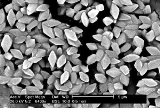
Bacillus thuringiensis

Encyclopedia
Bacillus thuringiensis (or Bt) is a Gram-positive
, soil-dwelling bacterium, commonly used as a biological pesticide; alternatively, the Cry toxin may be extracted and used as a pesticide. B. thuringiensis also occurs naturally in the gut of caterpillar
s of various types of moth
s and butterflies
, as well as on the dark surface of plants.
During sporulation, many Bt strains produce crystal proteins (proteinaceous inclusions), called δ-endotoxins, that have insecticidal
action. This has led to their use as insecticides, and more recently to genetically modified crops using Bt genes. There are, however, many crystal-producing Bt strains
that do not have insecticidal properties.
Shigetane Ishiwatari. In 1911, B. thuringiensis was rediscovered in Germany by Ernst Berliner, who isolated it as the cause of a disease called Schlaffsucht in flour moth caterpillars. In 1976, Robert A. Zakharyan reported the presence of a plasmid in a strain of B. thuringiensis and suggested the plasmid's involvement in endospore and crystal formation. B. thuringiensis is closely related to B.cereus
, a soil bacterium, and B.anthracis
, the cause of anthrax: the three organisms differ mainly in their plasmid
s. Like other members of the genus, all three are aerobes capable of producing endospore
s. Upon sporulation, B. thuringiensis forms crystals of proteinaceous insecticidal δ-endotoxins (called crystal proteins or Cry proteins), which are encoded by cry genes. In most strains of B. thuringiensis, the cry genes are located on the plasmid.
Cry toxins have specific activities against insect species of the orders Lepidoptera
(moths and butterflies), Diptera
(flies and mosquitoes), Coleoptera (beetles), Hymenoptera
(wasp
s, bee
s, ant
s and sawflies
) and nematode
s. Thus, B. thuringiensis serves as an important reservoir of Cry toxins for production of biological insecticides and insect-resistant genetically modified crops
. When insects ingest toxin crystals, the alkaline pH of their digestive tract activates the toxin. Cry toxin gets inserted into the insect gut cell membrane, forming a pore. The pore results in cell lysis and eventual death of the insect.
s under trade names such as Dipel and Thuricide. Because of their specificity, these pesticide
s are regarded as environmentally friendly
, with little or no effect on human
s, wildlife
, pollinator
s, and most other beneficial insects. The Belgian
company Plant Genetic Systems
was the first company (in 1985) to develop genetically engineered (tobacco
) plants with insect tolerance by expressing cry genes from B. thuringiensis.
B. thuringiensis-based insecticides are often applied as liquid sprays on crop plants, where the insecticide must be ingested to be effective. The solubilized toxins are thought to form pores in the midgut epithelium of susceptible larvae. Recent research has suggested the midgut bacteria of susceptible larvae are required for B. thuringiensis insecticidal activity.
Bacillus thuringiensis serovar israelensis
, a strain of B. thuringiensis is widely used as a larvicide
against mosquito
larva
e, where it is also considered an environmentally friendly method of mosquito control
.
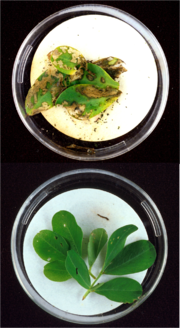
Bt crops (in corn and cotton) were planted on 281,500 km² in 2006 (165,600 km² of Bt corn and 115900 km² of Bt cotton). This was equivalent to 11.1% and 33.6%, respectively, of global plantings of corn and cotton in 2006. Claims of major benefits to farmers, including poor farmers in developing countries, have been made by advocates of the technology, and have been challenged by opponents. The task of isolating impacts of the technology is complicated by the prevalence of biased observers, and by the rarity of controlled comparisons (such as identical seeds, differing only in the presence or absence of the Bt trait, being grown in identical situations). The main Bt crop being grown by small farmers in developing countries is cotton, and a recent exhaustive review of findings on Bt cotton by respected and unbiased agricultural economists concluded, "the overall balance sheet, though promising, is mixed. Economic returns are highly variable over years, farm type, and geographical location".
Environmental impacts appear to be positive during the first ten years of Bt crop use (1996–2005). One study concluded insecticide use on cotton and corn during this period fell by 35.6 million kg of insecticide active ingredient, which is roughly equal to the amount of pesticide applied to arable crops in the EU in one year. Using the environmental impact quotient (EIQ) measure of the impact of pesticide use on the environment, the adoption of Bt technology over this ten-year period resulted in 24.3% and 4.6% reduction, respectively, in the environmental impact associated with insecticide use on the cotton and corn area using the technology.
Bt toxins are considered to be environmentally friendly by many farmers, and may be a potential alternative to broad-spectrum insecticides. The toxicity of each Bt type is limited to one or two insect orders; it is nontoxic to vertebrates and many beneficial arthropods, because Bt works by binding to the appropriate receptor on the surface of midgut epithelial cells. Any organism that lacks the appropriate receptors in its gut cannot be affected by Bt.
There is clear evidence from laboratory settings that Bt toxins can affect nontarget organisms. Usually, but not always, affected organisms are closely related to intended targets. Typically, exposure occurs through the consumption of plant parts, such as pollen or plant debris, or through Bt ingestion by their predatory food
choices. The methodology used by these researchers has been called into question. Due to significant data gaps, the real-world consequences of Bt transgenics remains unclear.
Not all scientific reports on Bt safety have been positive. A 2007 study funded by the European arm of Greenpeace
, suggested the possibility of a slight but statistically meaningful risk of liver damage in rats. While small statistically significant changes may have been observed, statistical differences are both probable and predictable in animal studies of this kind,(known as type I errors), that is, the probability of finding a false-positive due to chance alone. In this case, the number of positive results was within the statistically predicted range for type I errors.
The observed changes have been found to be of no biological significance by the European Food Safety Authority
.
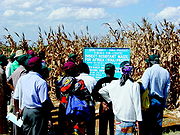 Constant exposure to a toxin creates evolutionary pressure
for pests resistant to that toxin. Already, a diamondback moth
population is known to have acquired resistance to Bt in spray form (i.e., not engineered) when used in organic agriculture. The same researcher has now reported the first documented case of pest resistance to biotech cotton.
One method of reducing resistance is the creation of non-Bt crop refuges to allow some nonresistant insects to survive and maintain a susceptible population. To reduce the chance an insect would become resistant to a Bt crop, the commercialization of transgenic cotton and maize in 1996 was accompanied with a management strategy to prevent insects from becoming resistant to Bt crops, and insect resistance management plans are mandatory for Bt crops planted in the USA and other countries. The aim is to encourage a large population of pests so any genes for resistance are greatly diluted. This technique is based on the assumption that resistance genes will be recessive.
This means that with sufficiently high levels of transgene expression, nearly all of the heterozygotes (S/s),i.e. the largest segment of the pest population carrying a resistance allele, will be killed before they reach maturity, thus preventing transmission of the resistance gene to their progeny. The planting of refuges (i. e., fields of nontransgenic plants) adjacent to fields of transgenic plants increases the likelihood that homozygous resistant (s/s) individuals and any surviving heterozygotes will mate with susceptible (S/S) individuals from the refuge, instead of with other individuals carrying the resistance allele. As a result, the resistance gene frequency in the population would remain low.
Nevertheless, limitations can affect the success of the high-dose/refuge strategy. For example, expression of the Bt gene can vary. For instance, if the temperature is not ideal, this stress can lower the toxin production and make the plant more susceptible. More importantly, reduced late-season expression of toxin has been documented, possibly resulting from DNA methylation
of the promoter. So, while the high-dose/refuge strategy has been successful at prolonging the durability of Bt crops, this success has also had much to do with key factors independent of management strategy, including low initial resistance allele frequencies, fitness costs associated with resistance, and the abundance of non-Bt host plants that have supplemented the refuges planted as part of the resistance management strategy.
scientists found the pink bollworm
had become resistant to Bt cotton in parts of Gujarat, India. In four regions, Amreli
, Bhavnagar
, Junagarh
and Rajkot, the crop is no longer effective at killing the pests. This was the first instance of Bt resistance confirmed by Monsanto anywhere in the world. Monsanto confirmed field resistance of the worm to the Cry1Ac first generation Bollgard cotton, which expresses a single Bt gene.
Similar problems have been reported in India, with both mealy bugs and aphids.
. This report was puzzling because the pollen from most maize hybrids contains much lower levels of Bt than the rest of the plant and led to multiple follow-up studies.
The initial study apparently was flawed by faulty pollen-collection procedure; researchers fed nontoxic pollen mixed with anther walls containing Bt toxin. The weight of the evidence is that Bt crops do not pose a risk to the monarch butterfly. Monarch butterflies have no innate relationship to maize crops in the wild, and are not believed to consume maize pollen (or pollen of related plants) in either life stage.
.
A subsequent large-scale study, in 2005, failed to find any evidence of contamination in Oaxaca. However, further research confirmed initial findings concerning contamination of natural maize by transgenic maize
.
However, further studies, such as that published in Molecular Ecology in 2008, have shown some small-scale (about 1%) genetic contamination (by the 35S promoter) in sampled fields in Mexico. One meta-study has found evidence for and against Bt contamination of maize, concluding that the preponderance of evidence points to Bt maize contamination in Mexico.
(CCD) is affecting bee
hives all over North America. Initial speculation on possible causes ranged from new parasites to pesticide use to the use of Bt resistant transgenic crops. The Mid-Atlantic Apiculture Research and Extension Consortium
published a report in March 2007 that found no evidence that pollen from Bt crops is adversely affecting bees. The actual cause of CCD remains unknown, and scientists believe that it may have multiple causes.
Gram-positive
Gram-positive bacteria are those that are stained dark blue or violet by Gram staining. This is in contrast to Gram-negative bacteria, which cannot retain the crystal violet stain, instead taking up the counterstain and appearing red or pink...
, soil-dwelling bacterium, commonly used as a biological pesticide; alternatively, the Cry toxin may be extracted and used as a pesticide. B. thuringiensis also occurs naturally in the gut of caterpillar
Caterpillar
Caterpillars are the larval form of members of the order Lepidoptera . They are mostly herbivorous in food habit, although some species are insectivorous. Caterpillars are voracious feeders and many of them are considered to be pests in agriculture...
s of various types of moth
Moth
A moth is an insect closely related to the butterfly, both being of the order Lepidoptera. Moths form the majority of this order; there are thought to be 150,000 to 250,000 different species of moth , with thousands of species yet to be described...
s and butterflies
Butterfly
A butterfly is a mainly day-flying insect of the order Lepidoptera, which includes the butterflies and moths. Like other holometabolous insects, the butterfly's life cycle consists of four parts: egg, larva, pupa and adult. Most species are diurnal. Butterflies have large, often brightly coloured...
, as well as on the dark surface of plants.
During sporulation, many Bt strains produce crystal proteins (proteinaceous inclusions), called δ-endotoxins, that have insecticidal
Insecticidal
Insecticidal is a 2005 [Horror Thriller featuring giant, killer insects. A college student is modifying insects until a housemate tries to kill them...
action. This has led to their use as insecticides, and more recently to genetically modified crops using Bt genes. There are, however, many crystal-producing Bt strains
Strain (biology)
In biology, a strain is a low-level taxonomic rank used in three related ways.-Microbiology and virology:A strain is a genetic variant or subtype of a micro-organism . For example, a "flu strain" is a certain biological form of the influenza or "flu" virus...
that do not have insecticidal properties.
Discovery and study
B. thuringiensis was first discovered in 1901 by Japanese biologistBiologist
A biologist is a scientist devoted to and producing results in biology through the study of life. Typically biologists study organisms and their relationship to their environment. Biologists involved in basic research attempt to discover underlying mechanisms that govern how organisms work...
Shigetane Ishiwatari. In 1911, B. thuringiensis was rediscovered in Germany by Ernst Berliner, who isolated it as the cause of a disease called Schlaffsucht in flour moth caterpillars. In 1976, Robert A. Zakharyan reported the presence of a plasmid in a strain of B. thuringiensis and suggested the plasmid's involvement in endospore and crystal formation. B. thuringiensis is closely related to B.cereus
Bacillus cereus
Bacillus cereus is an endemic, soil-dwelling, Gram-positive, rod-shaped, beta hemolytic bacterium. Some strains are harmful to humans and cause foodborne illness, while other strains can be beneficial as probiotics for animals...
, a soil bacterium, and B.anthracis
Bacillus anthracis
Bacillus anthracis is the pathogen of the Anthrax acute disease. It is a Gram-positive, spore-forming, rod-shaped bacterium, with a width of 1-1.2µm and a length of 3-5µm. It can be grown in an ordinary nutrient medium under aerobic or anaerobic conditions.It is one of few bacteria known to...
, the cause of anthrax: the three organisms differ mainly in their plasmid
Plasmid
In microbiology and genetics, a plasmid is a DNA molecule that is separate from, and can replicate independently of, the chromosomal DNA. They are double-stranded and, in many cases, circular...
s. Like other members of the genus, all three are aerobes capable of producing endospore
Endospore
An endospore is a dormant, tough, and temporarily non-reproductive structure produced by certain bacteria from the Firmicute phylum. The name "endospore" is suggestive of a spore or seed-like form , but it is not a true spore . It is a stripped-down, dormant form to which the bacterium can reduce...
s. Upon sporulation, B. thuringiensis forms crystals of proteinaceous insecticidal δ-endotoxins (called crystal proteins or Cry proteins), which are encoded by cry genes. In most strains of B. thuringiensis, the cry genes are located on the plasmid.
Cry toxins have specific activities against insect species of the orders Lepidoptera
Lepidoptera
Lepidoptera is a large order of insects that includes moths and butterflies . It is one of the most widespread and widely recognizable insect orders in the world, encompassing moths and the three superfamilies of butterflies, skipper butterflies, and moth-butterflies...
(moths and butterflies), Diptera
Diptera
Diptera , or true flies, is the order of insects possessing only a single pair of wings on the mesothorax; the metathorax bears a pair of drumstick like structures called the halteres, the remnants of the hind wings. It is a large order, containing an estimated 240,000 species, although under half...
(flies and mosquitoes), Coleoptera (beetles), Hymenoptera
Hymenoptera
Hymenoptera is one of the largest orders of insects, comprising the sawflies, wasps, bees and ants. There are over 130,000 recognized species, with many more remaining to be described. The name refers to the heavy wings of the insects, and is derived from the Ancient Greek ὑμήν : membrane and...
(wasp
Wasp
The term wasp is typically defined as any insect of the order Hymenoptera and suborder Apocrita that is neither a bee nor an ant. Almost every pest insect species has at least one wasp species that preys upon it or parasitizes it, making wasps critically important in natural control of their...
s, bee
Bee
Bees are flying insects closely related to wasps and ants, and are known for their role in pollination and for producing honey and beeswax. Bees are a monophyletic lineage within the superfamily Apoidea, presently classified by the unranked taxon name Anthophila...
s, ant
Ant
Ants are social insects of the family Formicidae and, along with the related wasps and bees, belong to the order Hymenoptera. Ants evolved from wasp-like ancestors in the mid-Cretaceous period between 110 and 130 million years ago and diversified after the rise of flowering plants. More than...
s and sawflies
Sawfly
Sawfly is the common name for insects belonging to suborder Symphyta of the order Hymenoptera. Sawflies are distinguishable from most other Hymenoptera by the broad connection between the abdomen and the thorax, and by their caterpillar-like larvae...
) and nematode
Nematode
The nematodes or roundworms are the most diverse phylum of pseudocoelomates, and one of the most diverse of all animals. Nematode species are very difficult to distinguish; over 28,000 have been described, of which over 16,000 are parasitic. It has been estimated that the total number of nematode...
s. Thus, B. thuringiensis serves as an important reservoir of Cry toxins for production of biological insecticides and insect-resistant genetically modified crops
Genetically modified food
Genetically modified foods are foods derived from genetically modified organisms . Genetically modified organisms have had specific changes introduced into their DNA by genetic engineering techniques...
. When insects ingest toxin crystals, the alkaline pH of their digestive tract activates the toxin. Cry toxin gets inserted into the insect gut cell membrane, forming a pore. The pore results in cell lysis and eventual death of the insect.
Use in pest control
Spores and crystalline insecticidal proteins produced by B. thuringiensis have been used to control insect pests since the 1920s. They are now used as specific insecticideInsecticide
An insecticide is a pesticide used against insects. They include ovicides and larvicides used against the eggs and larvae of insects respectively. Insecticides are used in agriculture, medicine, industry and the household. The use of insecticides is believed to be one of the major factors behind...
s under trade names such as Dipel and Thuricide. Because of their specificity, these pesticide
Pesticide
Pesticides are substances or mixture of substances intended for preventing, destroying, repelling or mitigating any pest.A pesticide may be a chemical unicycle, biological agent , antimicrobial, disinfectant or device used against any pest...
s are regarded as environmentally friendly
Environmentally friendly
Environmentally friendly are terms used to refer to goods and services, laws, guidelines and policies claimed to inflict minimal or no harm on the environment....
, with little or no effect on human
Human
Humans are the only living species in the Homo genus...
s, wildlife
Wildlife
Wildlife includes all non-domesticated plants, animals and other organisms. Domesticating wild plant and animal species for human benefit has occurred many times all over the planet, and has a major impact on the environment, both positive and negative....
, pollinator
Pollinator
A pollinator is the biotic agent that moves pollen from the male anthers of a flower to the female stigma of a flower to accomplish fertilization or syngamy of the female gamete in the ovule of the flower by the male gamete from the pollen grain...
s, and most other beneficial insects. The Belgian
Belgium
Belgium , officially the Kingdom of Belgium, is a federal state in Western Europe. It is a founding member of the European Union and hosts the EU's headquarters, and those of several other major international organisations such as NATO.Belgium is also a member of, or affiliated to, many...
company Plant Genetic Systems
Plant Genetic Systems
Plant Genetic Systems , since 2002 part of Bayer CropScience, is a biotech company located in Ghent, Belgium. The focus of its activities is the genetic engineering of plants...
was the first company (in 1985) to develop genetically engineered (tobacco
Tobacco
Tobacco is an agricultural product processed from the leaves of plants in the genus Nicotiana. It can be consumed, used as a pesticide and, in the form of nicotine tartrate, used in some medicines...
) plants with insect tolerance by expressing cry genes from B. thuringiensis.
B. thuringiensis-based insecticides are often applied as liquid sprays on crop plants, where the insecticide must be ingested to be effective. The solubilized toxins are thought to form pores in the midgut epithelium of susceptible larvae. Recent research has suggested the midgut bacteria of susceptible larvae are required for B. thuringiensis insecticidal activity.
Bacillus thuringiensis serovar israelensis
Bacillus thuringiensis israelensis
Bacillus thuringiensis serovar israelensis is a group of bacteria used as biological control agents for larvae stages of certain Dipterans. Bti produces toxins which are effective in killing various species of mosquitoes, fungus gnats, and blackflies, while having almost no effect on other...
, a strain of B. thuringiensis is widely used as a larvicide
Larvicide
A larvicide is an insecticide that is specifically targeted against the larval life stage of an insect. Their most common use is against mosquitoes...
against mosquito
Mosquito
Mosquitoes are members of a family of nematocerid flies: the Culicidae . The word Mosquito is from the Spanish and Portuguese for little fly...
larva
Larva
A larva is a distinct juvenile form many animals undergo before metamorphosis into adults. Animals with indirect development such as insects, amphibians, or cnidarians typically have a larval phase of their life cycle...
e, where it is also considered an environmentally friendly method of mosquito control
Mosquito control
Mosquito control manages the population of mosquitoes to reduce their damage to human health, economies, and enjoyment. Mosquito control is a vital public-health practice throughout the world and especially in the tropics because mosquitoes spread many diseases, such as malaria.Mosquito-control...
.
Genetic engineering for pest control
Usage
In 1995, potato plants producing Bt toxin were approved safe by the Environmental Protection Agency, making it the first pesticide-producing crop to be approved in the USA. By 1996, Bt maize, Bt potato and Bt cotton were being grown by farmers in the USA.Bt crops (in corn and cotton) were planted on 281,500 km² in 2006 (165,600 km² of Bt corn and 115900 km² of Bt cotton). This was equivalent to 11.1% and 33.6%, respectively, of global plantings of corn and cotton in 2006. Claims of major benefits to farmers, including poor farmers in developing countries, have been made by advocates of the technology, and have been challenged by opponents. The task of isolating impacts of the technology is complicated by the prevalence of biased observers, and by the rarity of controlled comparisons (such as identical seeds, differing only in the presence or absence of the Bt trait, being grown in identical situations). The main Bt crop being grown by small farmers in developing countries is cotton, and a recent exhaustive review of findings on Bt cotton by respected and unbiased agricultural economists concluded, "the overall balance sheet, though promising, is mixed. Economic returns are highly variable over years, farm type, and geographical location".
Environmental impacts appear to be positive during the first ten years of Bt crop use (1996–2005). One study concluded insecticide use on cotton and corn during this period fell by 35.6 million kg of insecticide active ingredient, which is roughly equal to the amount of pesticide applied to arable crops in the EU in one year. Using the environmental impact quotient (EIQ) measure of the impact of pesticide use on the environment, the adoption of Bt technology over this ten-year period resulted in 24.3% and 4.6% reduction, respectively, in the environmental impact associated with insecticide use on the cotton and corn area using the technology.
Advantages
There are several advantages in expressing Bt toxins in transgenic Bt crops:- The level of toxin expression can be very high, thus delivering sufficient dosage to the pest.
- The toxin expression is contained within the plant system, hence only those insects that feed on the crop perish.
- The toxin expression can be modulated by using tissue-specific promoters, and replaces the use of synthetic pesticides in the environment. The latter observation has been well documented worldwide.
Health and safety
Overall, Bt-modified crops appear to be environmentally safe. The proteins produced by Bt have been used in sprays for agricultural weed control in France since 1938 and the USA since 1958 with seemingly no ill effects on the environment.Bt toxins are considered to be environmentally friendly by many farmers, and may be a potential alternative to broad-spectrum insecticides. The toxicity of each Bt type is limited to one or two insect orders; it is nontoxic to vertebrates and many beneficial arthropods, because Bt works by binding to the appropriate receptor on the surface of midgut epithelial cells. Any organism that lacks the appropriate receptors in its gut cannot be affected by Bt.
There is clear evidence from laboratory settings that Bt toxins can affect nontarget organisms. Usually, but not always, affected organisms are closely related to intended targets. Typically, exposure occurs through the consumption of plant parts, such as pollen or plant debris, or through Bt ingestion by their predatory food
Food
Food is any substance consumed to provide nutritional support for the body. It is usually of plant or animal origin, and contains essential nutrients, such as carbohydrates, fats, proteins, vitamins, or minerals...
choices. The methodology used by these researchers has been called into question. Due to significant data gaps, the real-world consequences of Bt transgenics remains unclear.
Not all scientific reports on Bt safety have been positive. A 2007 study funded by the European arm of Greenpeace
Greenpeace
Greenpeace is a non-governmental environmental organization with offices in over forty countries and with an international coordinating body in Amsterdam, The Netherlands...
, suggested the possibility of a slight but statistically meaningful risk of liver damage in rats. While small statistically significant changes may have been observed, statistical differences are both probable and predictable in animal studies of this kind,(known as type I errors), that is, the probability of finding a false-positive due to chance alone. In this case, the number of positive results was within the statistically predicted range for type I errors.
The observed changes have been found to be of no biological significance by the European Food Safety Authority
European Food Safety Authority
The European Food Safety Authority is an agency of the European Union that provides independent scientific advice and communication on existing and emerging risks associated with the food chain, created by European Regulation 178/2002....
.
Limitations of Bt crops
Evolutionary pressure
Any cause that reduces reproductive success in a proportion of a population, potentially exerts evolutionary pressure or selection pressure. With sufficient pressure, inherited traits that mitigate its effects - even if they would be deleterious in other circumstances - can become widely spread...
for pests resistant to that toxin. Already, a diamondback moth
Diamondback moth
The diamondback moth , sometimes called cabbage moth, is a European moth believed to originate in the Mediterranean region that has since spread worldwide. The moth has a short life cycle , is highly fecund and capable of migrating long distances...
population is known to have acquired resistance to Bt in spray form (i.e., not engineered) when used in organic agriculture. The same researcher has now reported the first documented case of pest resistance to biotech cotton.
One method of reducing resistance is the creation of non-Bt crop refuges to allow some nonresistant insects to survive and maintain a susceptible population. To reduce the chance an insect would become resistant to a Bt crop, the commercialization of transgenic cotton and maize in 1996 was accompanied with a management strategy to prevent insects from becoming resistant to Bt crops, and insect resistance management plans are mandatory for Bt crops planted in the USA and other countries. The aim is to encourage a large population of pests so any genes for resistance are greatly diluted. This technique is based on the assumption that resistance genes will be recessive.
This means that with sufficiently high levels of transgene expression, nearly all of the heterozygotes (S/s),i.e. the largest segment of the pest population carrying a resistance allele, will be killed before they reach maturity, thus preventing transmission of the resistance gene to their progeny. The planting of refuges (i. e., fields of nontransgenic plants) adjacent to fields of transgenic plants increases the likelihood that homozygous resistant (s/s) individuals and any surviving heterozygotes will mate with susceptible (S/S) individuals from the refuge, instead of with other individuals carrying the resistance allele. As a result, the resistance gene frequency in the population would remain low.
Nevertheless, limitations can affect the success of the high-dose/refuge strategy. For example, expression of the Bt gene can vary. For instance, if the temperature is not ideal, this stress can lower the toxin production and make the plant more susceptible. More importantly, reduced late-season expression of toxin has been documented, possibly resulting from DNA methylation
DNA methylation
DNA methylation is a biochemical process that is important for normal development in higher organisms. It involves the addition of a methyl group to the 5 position of the cytosine pyrimidine ring or the number 6 nitrogen of the adenine purine ring...
of the promoter. So, while the high-dose/refuge strategy has been successful at prolonging the durability of Bt crops, this success has also had much to do with key factors independent of management strategy, including low initial resistance allele frequencies, fitness costs associated with resistance, and the abundance of non-Bt host plants that have supplemented the refuges planted as part of the resistance management strategy.
Insect resistance
In November 2009, MonsantoMonsanto
The Monsanto Company is a US-based multinational agricultural biotechnology corporation. It is the world's leading producer of the herbicide glyphosate, marketed in the "Roundup" brand of herbicides, and in other brands...
scientists found the pink bollworm
Pink bollworm
The pink bollworm , , is an insect known for being a pest in cotton farming. The adult is a small, thin, gray moth with fringed wings. The larva is a dull white, eight-legged caterpillar with conspicuous pink banding along its dorsum...
had become resistant to Bt cotton in parts of Gujarat, India. In four regions, Amreli
Amreli
Amreli is a city and a municipality in Amreli district of the Saurashtra region in the state of Gujarat, India.-History:It is believed that during the year 534 AD Amreli existed was formerly known as Anumanji, Amlik and then Amravati. The city is named in ancient Sanskrit ass Amarvalli. Initially...
, Bhavnagar
Bhavnagar
-Topography:Bhavnagar is a coastal city in the eastern coast of Saurashtra, also known as Kathiawar, located at . It has an average elevation of 24 metres . It occupies area of 53.30 km². General slope dips in the northeasterly direction at the apex of Gulf of Khambhat...
, Junagarh
Junagarh
Junagarh may refer to:* Junagarh, Kalahandi, a town in Kalahandi district, Orissa, India* Junagarh Fort, a fort in Bikaner, Rajasthan, India...
and Rajkot, the crop is no longer effective at killing the pests. This was the first instance of Bt resistance confirmed by Monsanto anywhere in the world. Monsanto confirmed field resistance of the worm to the Cry1Ac first generation Bollgard cotton, which expresses a single Bt gene.
Secondary pests
Several studies have documented surges in "sucking pests" (which are not affected by Bt toxins) within a few years of adoption of Bt cotton. In China, the main problem has been with mirids, which have in some cases "completely eroded all benefits from Bt cotton cultivation”.Similar problems have been reported in India, with both mealy bugs and aphids.
Lepidopteran toxicity
The most publicised problem associated with Bt crops is the claim that pollen from Bt maize could kill the monarch butterflyMonarch butterfly
The Monarch butterfly is a milkweed butterfly , in the family Nymphalidae. It is perhaps the best known of all North American butterflies. Since the 19th century, it has been found in New Zealand, and in Australia since 1871 where it is called the Wanderer...
. This report was puzzling because the pollen from most maize hybrids contains much lower levels of Bt than the rest of the plant and led to multiple follow-up studies.
The initial study apparently was flawed by faulty pollen-collection procedure; researchers fed nontoxic pollen mixed with anther walls containing Bt toxin. The weight of the evidence is that Bt crops do not pose a risk to the monarch butterfly. Monarch butterflies have no innate relationship to maize crops in the wild, and are not believed to consume maize pollen (or pollen of related plants) in either life stage.
Wild maize genetic contamination
A study in Nature reported that Bt-containing maize genes were contaminating maize in its center of origin. Nature later "concluded that the evidence available is not sufficient to justify the publication of the original paper." However, there still remains a controversy over the highly unorthodox retraction on the part of Nature. In 1998, Chapela, one of the original paper's authors, spoke out against Berkeley accepting a multimillion dollar research grant from the Swiss pharmaceutical company, NovartisNovartis
Novartis International AG is a multinational pharmaceutical company based in Basel, Switzerland, ranking number three in sales among the world-wide industry...
.
A subsequent large-scale study, in 2005, failed to find any evidence of contamination in Oaxaca. However, further research confirmed initial findings concerning contamination of natural maize by transgenic maize
Transgenic maize
Genetically modified maize has been deliberately genetically modified to have agronomically desirable traits. Traits that have been engineered into corn include resistance to herbicides and resistance to insect pests, the latter being achieved by incorporation of a gene that codes for the...
.
However, further studies, such as that published in Molecular Ecology in 2008, have shown some small-scale (about 1%) genetic contamination (by the 35S promoter) in sampled fields in Mexico. One meta-study has found evidence for and against Bt contamination of maize, concluding that the preponderance of evidence points to Bt maize contamination in Mexico.
Possible link to colony collapse disorder
As of 2007, a new phenomenon called colony collapse disorderColony Collapse Disorder
Colony collapse disorder is a phenomenon in which worker bees from a beehive or European honey bee colony abruptly disappear. While such disappearances have occurred throughout the history of apiculture, the term colony collapse disorder was first applied to a drastic rise in the number of...
(CCD) is affecting bee
Honey bee
Honey bees are a subset of bees in the genus Apis, primarily distinguished by the production and storage of honey and the construction of perennial, colonial nests out of wax. Honey bees are the only extant members of the tribe Apini, all in the genus Apis...
hives all over North America. Initial speculation on possible causes ranged from new parasites to pesticide use to the use of Bt resistant transgenic crops. The Mid-Atlantic Apiculture Research and Extension Consortium
Mid-Atlantic Apiculture Research and Extension Consortium
The Mid-Atlantic Apiculture Research and Extension Consortium , established in 1997, is a regional group focused on addressing the pest management crisis facing the beekeeping industry in the Mid-Atlantic region of the United States...
published a report in March 2007 that found no evidence that pollen from Bt crops is adversely affecting bees. The actual cause of CCD remains unknown, and scientists believe that it may have multiple causes.
External links
- Bacillus thuringiensis General Fact Sheet (National Pesticide Information Center)
- Bacillus thuringiensis Technical Fact Sheet (National Pesticide Information Center)
- Breakdown of the Bt toxin and effects on the soil quality Research project and results
- The Bacillus thuringiensis Toxin Specificity Database at Natural Resources CanadaNatural Resources CanadaThe Department of Natural Resources , operating under the FIP applied title Natural Resources Canada , is the ministry of the government of Canada responsible for natural resources, energy, minerals and metals, forests, earth sciences, mapping and remote sensing...
- Bacillus thuringiensis Taxonomy (NIH)
- Bacillus thuringiensis genomes and related information at PATRIC, a Bioinformatics Resource Center funded by NIAID
- Varsha Bioscience and Technology - VBt Bacillus thuringiensis