

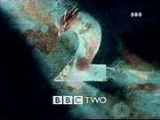
BBC Two

Encyclopedia
BBC Two is the second television channel
operated by the British Broadcasting Corporation (BBC
) in the United Kingdom
. It covers a wide range of subject matter, but tending towards more 'highbrow' programmes than the more mainstream and popular BBC One
. Like the BBC's other domestic TV and radio channels, it is funded by the television license, and is therefore commercial-free. It is a comparatively well funded public service
network, regularly attaining a much higher audience share than most current public service networks worldwide.
It was the third British television station
to be launched (starting on 20 April 1964 based in London
), and Europe's first television channel to broadcast regularly in colour, from 1 July 1967. It was envisaged as a home for less mainstream and more ambitious programming, and while this tendency has continued to date, most special-interest programmes of a kind previously broadcast on BBC Two, for example the BBC Proms, now tend to appear on BBC Four
instead.
and the ITV
network made up of smaller regional companies. Both channels had existed in a state of competition since ITV's launch in 1955, and both had aimed for a populist approach in response. The 1962 Pilkington Report
on the future of broadcasting noticed this, and that ITV lacked any serious programming. It therefore decided that Britain's third television station should be awarded to the BBC.
Prior to its launch, the new BBC2 was promoted on the BBC Television Service: the soon to be renamed BBC1
. The animated adverts featured the campaign mascots "Hullabaloo", a mother kangaroo
, and "Custard", her joey. Prior to, and several years after, the channels formal launch, the channel broadcast 'Trade Test Transmissions
', short films made externally by companies such as Shell
and BP
, which served to enable engineers to test reception, but became cult
viewing.
The channel was scheduled to begin at 19:20 on 20 April 1964 and show an evening of light entertainment, starting with the comedy show The Alberts
, a performance from Soviet
comedian Arkady Raikin
, and a production of Cole Porter
's Kiss Me, Kate
, culminating with a fireworks display. However, at around 18:45 a huge power failure, originating from a fire at Battersea Power Station
, caused Television Centre
, and indeed much of west London, to lose all power. BBC1 was able to continue broadcasting via its facilities at Alexandra Palace
, but all attempts to show the scheduled programmes on the new channel failed. Associated-Rediffusion
, the London weekday ITV franchise-holder, offered to transmit on the BBC's behalf, but their gesture was rejected. At 22:00 BBC2 had no choice but to concede defeat and postpone programming until the following morning. As the BBC's news centre at Alexandra Palace was unaffected, they did in fact broadcast brief bulletins on BBC2 that evening, beginning with an announcement by the newsreader Gerald Priestland
at around 19:25. There was believed to be no recording ever made of this bulletin, but one was discovered in early 2003.
By 11:00 on 21 April, power had been restored to the studios
and programming began, thus making Play School the first programme to be shown officially on the channel. The launch schedule, postponed from the night before, was then successfully shown that evening, albeit with minor changes. In reference to the power cut, the transmission opened with a shot of a lit candle which was then sarcastically blown out by presenter Denis Tuohy
.
To establish the new channel's identity and draw viewers to it, the BBC decided that a widely promoted, lavish series would be essential in its earliest days. The production chosen was The Forsyte Saga
, a no-expense-spared adaptation of the novels by John Galsworthy
, featuring well-established actors Kenneth More
and Eric Porter
. Critically for the future of the fledgling channel, the BBC's gamble was hugely successful, with an average of six million viewers tuning in per episode: a feat made more prominent by the fact that only 9 million were able to receive the channel at the time.
Unlike BBC1
and ITV
, BBC2 was broadcast only on the 625 line
UHF
system, so was not available to viewers with the 405-line VHF
sets used previously. This created a market for dual standard receivers which could switch between the two systems. The early technical problems, which included being unable to transmit US-made videotapes due to a lack of system conversion
from the US NTSC
system, were resolved by a committee headed by James Redmond.
system. The thirteen part series Civilisation was created as a celebration of two millennia of western art and culture to showpiece the new colour technology. BBC1 and ITV later joined BBC2 on 625-line UHF band, but continued to simulcast on 405-line VHF until 1985. BBC1 and ITV simultaneously introduced PAL colour on UHF on 15 November 1969, although they both had broadcast some programmes in colour "unofficially" since at least late 1968.
In 1979, the station adopted the first computer generated channel identification (ident) in Britain, with its use of the double striped, orange '2' logo. The ident, created in house by BBC engineers, lasted a number of years and heralded the start of computer generated logos.
As the switch to digital-only terrestrial transmission progresses, BBC Two is (in each region in turn) the first analogue TV channel
to be replaced with the BBC multiplex, four weeks ahead of the other four channels. This is required for those relay transmitters that have no current Freeview giving viewers time to purchase the equipment, unless they have already selected a satellite or cable service.
BBC Two was channel of the year in 2007.
executive group, and is answerable to the head of that department, and to the BBC Trust
. The channels direction is set out by the channel controller. These are:
(1982) or 1996's, critically acclaimed Our Friends in the North
. The channels "highbrow" profile is also in part attributable to a long history of demanding documentaries of all types, beginning with Civilisation and The Ascent of Man
. Like the early Channel 4
, BBC2 also established for itself a reputation as a champion of independent and international cinema
, under the Screen 2 brand.
The channel has sometimes been judged, increasingly in more recent years, to have moved away from this original role and to have moved closer to the mainstream. Since the launch of the digital-only BBC Four
, the BBC has been accused in particular of shifting its more highbrow output to the new channel, which a minority (7.5% in the final quarter of 2010) of viewers do not receive. BBC Four's remit is very similar to that of the earlier remit of BBC2, and contains a lot of documentaries and arts programming. It has been perceived by some that this strategy is to allow BBC Two to show more popular programmes and to secure higher ratings. Since 2004 there have been some signs of an attempt to return closer to parts of BBC Two's earlier output with the arts strand The Culture Show
. Its most popular programme at the moment is Top Gear
.
Currently, a lot of BBC Two's output have previously, or subsequently been shown on other channels. Some of these programmes are repeats of popular or flagship programmes from BBC Four in a late night strand, originally called BBC Four on Two but now unbranded, for the benefit of audiences without access to BBC Four. Other programmes are moved to the channel as a result of their success on BBC Three
or Four, so that subsequent series are well received. An example of this is the BBC Three series Torchwood
that was transferred to the channel following the success of the first series. BBC Two is also used as a testing ground for programmes prior to their moving to the flagship BBC One
: such examples include Have I Got News for You
.
Another founding part of BBC Two was to provide educational and community
programming on the BBC, as part of its public service remit. The educational section of this commitment saw BBC2 broadcast a large amount of programming for the Open University
, who co-produced programming with the corporation, and saw the channel broadcast BBC Schools
programmes from 1983 until the programmes were transferred to the BBC Learning Zone
in 2010.
As a result of the channel's commitment to community
broadcasting, the channel produced the symbolic Open Space
series, a strand developed in the early 1970s in which members of the public would be allotted half an hour of television time, and given a level of editorial and technical training in order to produce for themselves a film on an issue most important to them. BBC2's Community Programme Unit
kept this aspect of the channel's tradition alive into the 1990s in the form of Video Diaries and later Video Nation
. The Community Programmes Unit was disbanded in 2004.
Some BBC Two programming is simulcast or repeated in High definition
on separate channel BBC HD
.
 As well as programmes, BBC Two has also proved memorable for its numerous idents
— various short films shown in between programme junctions that serve as the channel identity. Nearly all of the identity packages used since the channels launch in 1964 have featured a prominent numeral '2' in the design. Notable designs include the electronic double striped 2
, the white TWO
ident: the only ident not to use a numeral '2' and most notably the 1991 '2's.
The 1991 '2's featured a serif numeral '2' being at the centre of an, initially art related scene; however the idents moved away from this style later on as the stations style changed. The expansive set of idents from 1991 to 2001 — lasting over a decade — are generally regarded as the best idents ever produced for a television channel; they ended in November 2001. The BBC corporate logo was updated within the idents in October 1997, though the idents moved away from the original viridian colour scheme in these latter years. The subsequent presentation style
was introduced on 19 November 2001 and kept the same figure '2', but in a yellow background and given a personality.
The current presentational style
feature the theme of a "Window on the World", with the '2' numeral providing that view. Introduced on 18 February 2007, the new look also saw the channel adopt a new teal coloured box logo, featuring the BBC logo above the name 'TWO' in the font Avenir
.
and Northern Ireland. The Nations versions of BBC Two share the same idents, but with the nation name in the BBC Two box. BBC Two Scotland shows a lot of specifically Scottish programming on the channel, as well as its sister channel BBC One Scotland, and the schedules are often mixed around to match. BBC Two Northern Ireland and BBC Two Wales
both have the option to opt out, however they generally stick to the network schedule, only opting out a couple of times each week. Until December 2008, BBC Wales
broadcast a special, digital-only channel, BBC 2W
, which contained more opt-outs than analogue-only BBC Two Wales. BBC Scotland occasionally broadcast Gaelic-language programmes under the banner BBC Two Alba
.
In England, each of the English regions has the option to opt out of the network programming on the analogue feed, and replace it with local programming. However this is usually only done in exceptional circumstances, as all regular regional programming has been transferred to BBC One, and the English regions
are not available on digital on BBC Two. There is no specific BBC Two England, this role is fulfilled by the network BBC Two.
and BBC Red Button services. The BBC also offers audio description
on some popular programmes for visually impaired-viewers. The percentage of the BBC's total television output with audio description available is 10%, having been increased from 8% in 2008.
on the dedicated BBC HD
channel, alongside programmes from BBC's Three
and Four
, as well as some select series from CBBC
and CBeebies
. However, in plans outlined by the director general Mark Thompson
on 6 October 2011, BBC HD will close to be replaced by a high definition simulcast of BBC Two. This BBC Two HD will work much the same way as BBC One HD currently. This move allows the corporation to save £2.1 million, used to count towards their budget defecit following the freezing of the license fee and the additional financial responsibility of addition services.
Television channel
A television channel is a physical or virtual channel over which a television station or television network is distributed. For example, in North America, "channel 2" refers to the broadcast or cable band of 54 to 60 MHz, with carrier frequencies of 55.25 MHz for NTSC analog video and...
operated by the British Broadcasting Corporation (BBC
BBC
The British Broadcasting Corporation is a British public service broadcaster. Its headquarters is at Broadcasting House in the City of Westminster, London. It is the largest broadcaster in the world, with about 23,000 staff...
) in the United Kingdom
United Kingdom
The United Kingdom of Great Britain and Northern IrelandIn the United Kingdom and Dependencies, other languages have been officially recognised as legitimate autochthonous languages under the European Charter for Regional or Minority Languages...
. It covers a wide range of subject matter, but tending towards more 'highbrow' programmes than the more mainstream and popular BBC One
BBC One
BBC One is the flagship television channel of the British Broadcasting Corporation in the United Kingdom. It was launched on 2 November 1936 as the BBC Television Service, and was the world's first regular television service with a high level of image resolution...
. Like the BBC's other domestic TV and radio channels, it is funded by the television license, and is therefore commercial-free. It is a comparatively well funded public service
Public broadcasting
Public broadcasting includes radio, television and other electronic media outlets whose primary mission is public service. Public broadcasters receive funding from diverse sources including license fees, individual contributions, public financing and commercial financing.Public broadcasting may be...
network, regularly attaining a much higher audience share than most current public service networks worldwide.
It was the third British television station
Television station
A television station is a business, organisation or other such as an amateur television operator that transmits content over terrestrial television. A television transmission can be by analog television signals or, more recently, by digital television. Broadcast television systems standards are...
to be launched (starting on 20 April 1964 based in London
London
London is the capital city of :England and the :United Kingdom, the largest metropolitan area in the United Kingdom, and the largest urban zone in the European Union by most measures. Located on the River Thames, London has been a major settlement for two millennia, its history going back to its...
), and Europe's first television channel to broadcast regularly in colour, from 1 July 1967. It was envisaged as a home for less mainstream and more ambitious programming, and while this tendency has continued to date, most special-interest programmes of a kind previously broadcast on BBC Two, for example the BBC Proms, now tend to appear on BBC Four
BBC Four
BBC Four is a British television network operated by the British Broadcasting Corporation and available to digital television viewers on Freeview, IPTV, satellite and cable....
instead.
Launch
British television at the time of BBC2's launch consisted of two channels: the BBC Television ServiceBBC One
BBC One is the flagship television channel of the British Broadcasting Corporation in the United Kingdom. It was launched on 2 November 1936 as the BBC Television Service, and was the world's first regular television service with a high level of image resolution...
and the ITV
ITV
ITV is the major commercial public service TV network in the United Kingdom. Launched in 1955 under the auspices of the Independent Television Authority to provide competition to the BBC, it is also the oldest commercial network in the UK...
network made up of smaller regional companies. Both channels had existed in a state of competition since ITV's launch in 1955, and both had aimed for a populist approach in response. The 1962 Pilkington Report
Pilkington Committee on Broadcasting
The Pilkington Committee was set up on 13 July 1960 under the chairmanship of British industrialist Sir Harry Pilkington to consider the future of broadcasting, cable and "the possibility of television for public showing"...
on the future of broadcasting noticed this, and that ITV lacked any serious programming. It therefore decided that Britain's third television station should be awarded to the BBC.
Prior to its launch, the new BBC2 was promoted on the BBC Television Service: the soon to be renamed BBC1
BBC One
BBC One is the flagship television channel of the British Broadcasting Corporation in the United Kingdom. It was launched on 2 November 1936 as the BBC Television Service, and was the world's first regular television service with a high level of image resolution...
. The animated adverts featured the campaign mascots "Hullabaloo", a mother kangaroo
Kangaroo
A kangaroo is a marsupial from the family Macropodidae . In common use the term is used to describe the largest species from this family, especially those of the genus Macropus, Red Kangaroo, Antilopine Kangaroo, Eastern Grey Kangaroo and Western Grey Kangaroo. Kangaroos are endemic to the country...
, and "Custard", her joey. Prior to, and several years after, the channels formal launch, the channel broadcast 'Trade Test Transmissions
Trade test colour films
Trade test colour films were broadcast by the television network BBC 2 in the early days of colour television in Britain during intervals when no regular programming had been scheduled. The goal of these transmissions was to provide colour broadcasting in these intervals for use by television shops...
', short films made externally by companies such as Shell
Royal Dutch Shell
Royal Dutch Shell plc , commonly known as Shell, is a global oil and gas company headquartered in The Hague, Netherlands and with its registered office in London, United Kingdom. It is the fifth-largest company in the world according to a composite measure by Forbes magazine and one of the six...
and BP
BP
BP p.l.c. is a global oil and gas company headquartered in London, United Kingdom. It is the third-largest energy company and fourth-largest company in the world measured by revenues and one of the six oil and gas "supermajors"...
, which served to enable engineers to test reception, but became cult
Cult
The word cult in current popular usage usually refers to a group whose beliefs or practices are considered abnormal or bizarre. The word originally denoted a system of ritual practices...
viewing.
The channel was scheduled to begin at 19:20 on 20 April 1964 and show an evening of light entertainment, starting with the comedy show The Alberts
The Alberts
The Alberts were a British music/comedy troupe of the mid 1950s to mid 1960s, featuring brothers Tony and Douglas Gray. They often also appeared with Bruce Lacey. They were influenced by music hall, 1920s jazz and Surrealism...
, a performance from Soviet
Soviet Union
The Soviet Union , officially the Union of Soviet Socialist Republics , was a constitutionally socialist state that existed in Eurasia between 1922 and 1991....
comedian Arkady Raikin
Arkady Raikin
Arkady Isaakovich Raikin was a Soviet stand-up comedian. He led the school of Soviet and Russian humorists for about half a century.Raikin was born into a Jewish family in Riga , then part of the Russian Empire. He graduated from the Leningrad Theatrical Technicum in 1935 and worked in both state...
, and a production of Cole Porter
Cole Porter
Cole Albert Porter was an American composer and songwriter. Born to a wealthy family in Indiana, he defied the wishes of his domineering grandfather and took up music as a profession. Classically trained, he was drawn towards musical theatre...
's Kiss Me, Kate
Kiss Me, Kate
Kiss Me, Kate is a musical with music and lyrics by Cole Porter. It is structured as a play within a play, where the interior play is a musical version of William Shakespeare's The Taming of the Shrew. The original production starred Alfred Drake, Patricia Morison, Lisa Kirk and Harold Lang.Kiss...
, culminating with a fireworks display. However, at around 18:45 a huge power failure, originating from a fire at Battersea Power Station
Battersea Power Station
Battersea Power Station is a decommissioned coal-fired power station located on the south bank of the River Thames, in Battersea, South London. The station comprises two individual power stations, built in two stages in the form of a single building. Battersea A Power Station was built first in the...
, caused Television Centre
BBC Television Centre
BBC Television Centre at White City in West London is the headquarters of BBC Television. Officially opened on 29 June 1960, it remains one of the largest to this day; having featured over the years as backdrop to many BBC programmes, it is one of the most readily recognisable such facilities...
, and indeed much of west London, to lose all power. BBC1 was able to continue broadcasting via its facilities at Alexandra Palace
Alexandra Palace
Alexandra Palace is a building in North London, England. It stands in Alexandra Park, in an area between Hornsey, Muswell Hill and Wood Green...
, but all attempts to show the scheduled programmes on the new channel failed. Associated-Rediffusion
Associated-Rediffusion
Associated-Rediffusion, later Rediffusion, London, was the British ITV contractor for London and parts of the surrounding counties, on weekdays between 1954 and 29 July 1968. Transmissions started on 22 September 1955.-Formation:...
, the London weekday ITV franchise-holder, offered to transmit on the BBC's behalf, but their gesture was rejected. At 22:00 BBC2 had no choice but to concede defeat and postpone programming until the following morning. As the BBC's news centre at Alexandra Palace was unaffected, they did in fact broadcast brief bulletins on BBC2 that evening, beginning with an announcement by the newsreader Gerald Priestland
Gerald Priestland
Gerald Francis Priestland was a news correspondent and newsreader for the BBC.-Early life and work:Gerald Priestland was educated at Charterhouse and New College, Oxford. He began his work at the BBC with a six-month spell writing obituary pieces for broadcast news...
at around 19:25. There was believed to be no recording ever made of this bulletin, but one was discovered in early 2003.
By 11:00 on 21 April, power had been restored to the studios
BBC Television Centre
BBC Television Centre at White City in West London is the headquarters of BBC Television. Officially opened on 29 June 1960, it remains one of the largest to this day; having featured over the years as backdrop to many BBC programmes, it is one of the most readily recognisable such facilities...
and programming began, thus making Play School the first programme to be shown officially on the channel. The launch schedule, postponed from the night before, was then successfully shown that evening, albeit with minor changes. In reference to the power cut, the transmission opened with a shot of a lit candle which was then sarcastically blown out by presenter Denis Tuohy
Denis Tuohy
Denis Tuohy, , is a television broadcaster, actor, newsreader, and journalist who was born in Belfast, Northern Ireland and now lives in County Down. He participated in several of the BBC's current affairs programmes of the 1970s, including the long-running Panorama and also presented ITV's This Week...
.
To establish the new channel's identity and draw viewers to it, the BBC decided that a widely promoted, lavish series would be essential in its earliest days. The production chosen was The Forsyte Saga
The Forsyte Saga
The Forsyte Saga is a series of three novels and two interludes published between 1906 and 1921 by John Galsworthy. They chronicle the vicissitudes of the leading members of an upper-middle-class British family, similar to Galsworthy's own...
, a no-expense-spared adaptation of the novels by John Galsworthy
John Galsworthy
John Galsworthy OM was an English novelist and playwright. Notable works include The Forsyte Saga and its sequels, A Modern Comedy and End of the Chapter...
, featuring well-established actors Kenneth More
Kenneth More
Kenneth Gilbert More CBE was a highly successful English film actor during the post-World War II era and starred in many feature films, often in the role of an archetypal carefree and happy-go-lucky middle-class gentleman.-Early life:Kenneth More was born in Gerrards Cross, Buckinghamshire, the...
and Eric Porter
Eric Porter
Eric Richard Porter was an English actor of stage, film and television.-Early life:Porter was born in Shepherd's Bush, London, to Richard John Porter and Phoebe Elizabeth Spall...
. Critically for the future of the fledgling channel, the BBC's gamble was hugely successful, with an average of six million viewers tuning in per episode: a feat made more prominent by the fact that only 9 million were able to receive the channel at the time.
Unlike BBC1
BBC One
BBC One is the flagship television channel of the British Broadcasting Corporation in the United Kingdom. It was launched on 2 November 1936 as the BBC Television Service, and was the world's first regular television service with a high level of image resolution...
and ITV
ITV
ITV is the major commercial public service TV network in the United Kingdom. Launched in 1955 under the auspices of the Independent Television Authority to provide competition to the BBC, it is also the oldest commercial network in the UK...
, BBC2 was broadcast only on the 625 line
576i
576i is a standard-definition video mode used in PAL and SECAM countries. In digital applications it is usually referred to as "576i", in analogue contexts it is often quoted as "625 lines"...
UHF
Ultra high frequency
Ultra-High Frequency designates the ITU Radio frequency range of electromagnetic waves between 300 MHz and 3 GHz , also known as the decimetre band or decimetre wave as the wavelengths range from one to ten decimetres...
system, so was not available to viewers with the 405-line VHF
Very high frequency
Very high frequency is the radio frequency range from 30 MHz to 300 MHz. Frequencies immediately below VHF are denoted High frequency , and the next higher frequencies are known as Ultra high frequency...
sets used previously. This created a market for dual standard receivers which could switch between the two systems. The early technical problems, which included being unable to transmit US-made videotapes due to a lack of system conversion
Television standards conversion
Television standards conversion is the process of changing one type of TV system to another. The most common is from NTSC to PAL or the other way around. This is done so TV programs in one nation may be viewed in a nation with a different standard...
from the US NTSC
NTSC
NTSC, named for the National Television System Committee, is the analog television system that is used in most of North America, most of South America , Burma, South Korea, Taiwan, Japan, the Philippines, and some Pacific island nations and territories .Most countries using the NTSC standard, as...
system, were resolved by a committee headed by James Redmond.
Technological Advancements
The new 625 line system had one noticeable advantage: the bandwidth was sufficient for colour broadcasts and indeed on 1 July 1967, BBC2 became the first channel in Europe to begin regular broadcasts in colour, using the PALPAL
PAL, short for Phase Alternating Line, is an analogue television colour encoding system used in broadcast television systems in many countries. Other common analogue television systems are NTSC and SECAM. This page primarily discusses the PAL colour encoding system...
system. The thirteen part series Civilisation was created as a celebration of two millennia of western art and culture to showpiece the new colour technology. BBC1 and ITV later joined BBC2 on 625-line UHF band, but continued to simulcast on 405-line VHF until 1985. BBC1 and ITV simultaneously introduced PAL colour on UHF on 15 November 1969, although they both had broadcast some programmes in colour "unofficially" since at least late 1968.
In 1979, the station adopted the first computer generated channel identification (ident) in Britain, with its use of the double striped, orange '2' logo. The ident, created in house by BBC engineers, lasted a number of years and heralded the start of computer generated logos.
As the switch to digital-only terrestrial transmission progresses, BBC Two is (in each region in turn) the first analogue TV channel
Analogue terrestrial television in the United Kingdom
Analogue terrestrial television in the United Kingdom is, traditionally, the method most people in the UK, Channel Islands and the Isle of Man used to receive television...
to be replaced with the BBC multiplex, four weeks ahead of the other four channels. This is required for those relay transmitters that have no current Freeview giving viewers time to purchase the equipment, unless they have already selected a satellite or cable service.
BBC Two was channel of the year in 2007.
Operation
The channel forms part of the BBC VisionBBC Vision
BBC Vision is a department of the BBC which incorporates the programme production, commissioning and broadcast operations including BBC Television...
executive group, and is answerable to the head of that department, and to the BBC Trust
BBC Trust
The BBC Trust is the governing body of the British Broadcasting Corporation. It is operationally independent of BBC management and external bodies, and aims to act in the best interests of licence fee payers....
. The channels direction is set out by the channel controller. These are:
- 1964–1965: Michael PeacockMichael PeacockMichael Peacock was a British television executive, who from 1963 until the spring of 1965 was the first ever Controller of BBC Two, the Corporation's second television channel....
- 1965–1969: David AttenboroughDavid AttenboroughSir David Frederick Attenborough OM, CH, CVO, CBE, FRS, FZS, FSA is a British broadcaster and naturalist. His career as the face and voice of natural history programmes has endured for more than 50 years...
- 1969–1974: Robin ScottRobin Scott (BBC)Robin Scott was a BBC controller, the launch controller of BBC Radio 1 in 1967, and of BBC2 television from 1969 to 1974.-Early career:...
- 1974–1978: Aubrey SingerAubrey SingerAubrey Singer was a British broadcasting executive. He was the controller of BBC Two from 1974 until 1978, who replaced Robin Scott and was replaced himself by Brian Wenham....
- 1978–1982: Brian WenhamBrian WenhamBrian Wenham was the controller of BBC Two from 1978 until 1982. He was known for having nurtured Not The Nine O'Clock News, and coverage of snooker and opera.-Notes:...
- 1982–1987: Graeme MacDonaldGraeme MacDonaldGraeme MacDonald was a British television producer and executive....
- 1987–1992: Alan YentobAlan YentobAlan Yentob is a British television executive and presenter who has worked throughout his career at the BBC.-Early life:...
- 1992–1996: Michael JacksonMichael Jackson (TV)Michael Richard Jackson is a British television producer and executive. He is notable for being one of only three people to have been Controller of both BBC One and BBC Two, the main television channels of the British Broadcasting Corporation, and for being the first media studies graduate to...
- 1996–1999: Mark ThompsonMark ThompsonMark John Thompson is Director-General of the BBC, a post he has held since 2004, and a former chief executive of Channel 4...
- 1999–2004: Jane RootJane RootJane Root is a creative executive in the media industry, who has run major television networks on both sides of the Atlantic...
- 2004–2008: Roly KeatingRoly KeatingRoland "Roly" Keating is the current Director of Archive Content for the BBC.-Education:Keating was educated at Westminster School, an independent school for boys in London, followed by Balliol College at the University of Oxford, where he read Classics.-Life and career:Keating joined the BBC in...
- 2008–present: Janice HadlowJanice HadlowJanice Hadlow is a British television executive. She is the current controller of the BBC television channel BBC Two, taking over this position in November 2008 having previously been controller of BBC Four....
Programming
BBC Two's remit historically was one screening programmes targeting art, drama and some comedy, and appealing to audiences not already served by BBC1 or ITV. Over its first thirty or so years the channel developed a reputation for screening highly praised and prestigious drama series, amongst these Boys from the BlackstuffBoys from the Blackstuff
Boys from the Blackstuff is a British television drama series of five episodes, originally transmitted from 10 October to 7 November 1982 on BBC2....
(1982) or 1996's, critically acclaimed Our Friends in the North
Our Friends in the North
Our Friends in the North is a British television drama serial, produced by the BBC and originally broadcast in nine episodes on BBC Two in early 1996...
. The channels "highbrow" profile is also in part attributable to a long history of demanding documentaries of all types, beginning with Civilisation and The Ascent of Man
The Ascent of Man
The Ascent of Man is a thirteen-part documentary television series produced by the BBC and Time-Life Films first transmitted in 1973, written and presented by Jacob Bronowski...
. Like the early Channel 4
Channel 4
Channel 4 is a British public-service television broadcaster which began working on 2 November 1982. Although largely commercially self-funded, it is ultimately publicly owned; originally a subsidiary of the Independent Broadcasting Authority , the station is now owned and operated by the Channel...
, BBC2 also established for itself a reputation as a champion of independent and international cinema
Movie theater
A movie theater, cinema, movie house, picture theater, film theater is a venue, usually a building, for viewing motion pictures ....
, under the Screen 2 brand.
The channel has sometimes been judged, increasingly in more recent years, to have moved away from this original role and to have moved closer to the mainstream. Since the launch of the digital-only BBC Four
BBC Four
BBC Four is a British television network operated by the British Broadcasting Corporation and available to digital television viewers on Freeview, IPTV, satellite and cable....
, the BBC has been accused in particular of shifting its more highbrow output to the new channel, which a minority (7.5% in the final quarter of 2010) of viewers do not receive. BBC Four's remit is very similar to that of the earlier remit of BBC2, and contains a lot of documentaries and arts programming. It has been perceived by some that this strategy is to allow BBC Two to show more popular programmes and to secure higher ratings. Since 2004 there have been some signs of an attempt to return closer to parts of BBC Two's earlier output with the arts strand The Culture Show
The Culture Show
The Culture Show is a weekly BBC Two Arts magazine programme. It is broadcast in the UK on Thursday nights at 7pm, focusing on the best of the week's arts and culture news, covering books, art, film, architecture, music, visual fashion and the performing arts...
. Its most popular programme at the moment is Top Gear
Top Gear (current format)
Top Gear is a British television series about motor vehicles, primarily cars. It began in 1977 as a conventional motoring magazine show. Over time, and especially since a relaunch in 2002, it has developed a quirky, humorous style...
.
Currently, a lot of BBC Two's output have previously, or subsequently been shown on other channels. Some of these programmes are repeats of popular or flagship programmes from BBC Four in a late night strand, originally called BBC Four on Two but now unbranded, for the benefit of audiences without access to BBC Four. Other programmes are moved to the channel as a result of their success on BBC Three
BBC Three
BBC Three is a television network from the BBC broadcasting via digital cable, terrestrial, IPTV and satellite platforms. The channel's target audience includes those in the 16-34 year old age group, and has the purpose of providing "innovative" content to younger audiences, focusing on new talent...
or Four, so that subsequent series are well received. An example of this is the BBC Three series Torchwood
Torchwood
Torchwood is a British science fiction television programme created by Russell T Davies. The series is a spin-off from Davies's 2005 revival of the long-running science fiction programme Doctor Who. The show has shifted its broadcast channel each series to reflect its growing audience, moving from...
that was transferred to the channel following the success of the first series. BBC Two is also used as a testing ground for programmes prior to their moving to the flagship BBC One
BBC One
BBC One is the flagship television channel of the British Broadcasting Corporation in the United Kingdom. It was launched on 2 November 1936 as the BBC Television Service, and was the world's first regular television service with a high level of image resolution...
: such examples include Have I Got News for You
Have I Got News for You
Have I Got News for You is a British television panel show produced by Hat Trick Productions for the BBC. It is based loosely on the BBC Radio 4 show The News Quiz, and has been broadcast since 1990, currently the BBC's longest-ever running television panel show...
.
Another founding part of BBC Two was to provide educational and community
Community
The term community has two distinct meanings:*a group of interacting people, possibly living in close proximity, and often refers to a group that shares some common values, and is attributed with social cohesion within a shared geographical location, generally in social units larger than a household...
programming on the BBC, as part of its public service remit. The educational section of this commitment saw BBC2 broadcast a large amount of programming for the Open University
Open University
The Open University is a distance learning and research university founded by Royal Charter in the United Kingdom...
, who co-produced programming with the corporation, and saw the channel broadcast BBC Schools
BBC Schools
BBC Schools, also known as BBC for Schools and Colleges, is the educational programming strand set up by the BBC in 1957, broadcasting a range of educational programmes for children aged 5–16. From launch until June 1983, programming was based on BBC One during the daytime, before programming was...
programmes from 1983 until the programmes were transferred to the BBC Learning Zone
BBC Learning Zone
The BBC Learning Zone is an educational strand run by the BBC as an overnight service on BBC Two. It shows programming aimed at students in Primary, Secondary and Higher Education and to adult learners...
in 2010.
As a result of the channel's commitment to community
Community
The term community has two distinct meanings:*a group of interacting people, possibly living in close proximity, and often refers to a group that shares some common values, and is attributed with social cohesion within a shared geographical location, generally in social units larger than a household...
broadcasting, the channel produced the symbolic Open Space
Open Space (BBC TV)
Open Space was a programme produced by the BBC's Community Programme Unit. It was an evolution of the earlier Open Door series of programmes allowing minority points of view to make a television programme about issues of concern to them...
series, a strand developed in the early 1970s in which members of the public would be allotted half an hour of television time, and given a level of editorial and technical training in order to produce for themselves a film on an issue most important to them. BBC2's Community Programme Unit
Community Programme Unit
The Community Programme Unit was established by the BBC to help members of the public create programmes to be broadcast nationally.The unit was set up in 1972 by influential producers such as Rowan Ayers having won the approval of the Director of Programmes David Attenborough for a series of ten...
kept this aspect of the channel's tradition alive into the 1990s in the form of Video Diaries and later Video Nation
Video Nation
Video Nation was a BBC television project in social anthropology and audience interactivity. Beginning in 1993, the BBC encouraged people to record their lives on video. These video diaries were then shown on BBC TV and, from 2001-2011, were included on the BBC's website at .The original project...
. The Community Programmes Unit was disbanded in 2004.
Some BBC Two programming is simulcast or repeated in High definition
High-definition television
High-definition television is video that has resolution substantially higher than that of traditional television systems . HDTV has one or two million pixels per frame, roughly five times that of SD...
on separate channel BBC HD
BBC HD
BBC HD is a high-definition television network provided by the BBC. The service was initially run as a trial from 15 May 2006 until becoming a full service on 1 December 2007...
.
Presentation
Station identification
Station identification is the practice of radio or television stations or networks identifying themselves on air, typically by means of a call sign or brand name...
— various short films shown in between programme junctions that serve as the channel identity. Nearly all of the identity packages used since the channels launch in 1964 have featured a prominent numeral '2' in the design. Notable designs include the electronic double striped 2
BBC Two 'Computer Generated 2' ident
The Computer Generated 2 was an ident used by BBC Two between c.March 1979 and 31 March 1986. It was the first computer generated ident in the world and was a revolutionary new step for television presentation.-Launch:...
, the white TWO
BBC Two 'TWO' ident
The BBC Two 'TWO' ident was the station identification used on BBC2 between 31 March 1986 and 15 February 1991. It was the last non corporate look for the channel, and the only look to date that did not feature a numeral '2' in the design.-Launch:...
ident: the only ident not to use a numeral '2' and most notably the 1991 '2's.
The 1991 '2's featured a serif numeral '2' being at the centre of an, initially art related scene; however the idents moved away from this style later on as the stations style changed. The expansive set of idents from 1991 to 2001 — lasting over a decade — are generally regarded as the best idents ever produced for a television channel; they ended in November 2001. The BBC corporate logo was updated within the idents in October 1997, though the idents moved away from the original viridian colour scheme in these latter years. The subsequent presentation style
BBC Two 'Personality' idents
The Personality Idents were a set of idents used on BBC Two between 19 November 2001 and 18 February 2007. The idents were produced by the Lambie-Nairn branding agency, who had created the previous look...
was introduced on 19 November 2001 and kept the same figure '2', but in a yellow background and given a personality.
The current presentational style
BBC Two 'Window on the World' idents
The Window On The World Idents are a set of idents used by BBC Two since 18 February 2007. The idents were created by Abbott Mead Vickers BBDO and produced by Red Bee Media. The idents feature a number 2 cut out of, or made out of parts of the everyday environment.-Conception:By 2007 BBC Two needed...
feature the theme of a "Window on the World", with the '2' numeral providing that view. Introduced on 18 February 2007, the new look also saw the channel adopt a new teal coloured box logo, featuring the BBC logo above the name 'TWO' in the font Avenir
Avenir (typeface)
Avenir is a geometric sans-serif typeface designed by Adrian Frutiger in 1988, and released by Linotype GmbH, now a subsidiary of Monotype Corporation....
.
Regional variations
BBC Two also has regional variations in the nations: Scotland, WalesBBC Two Wales
BBC Two Wales is the national variation of BBC Two for BBC Cymru Wales. It is broadcast to Wales from Broaadcasting House in Cardiff. The channel can opt out from the main BBC Two schedule to show Welsh made programming, however this is used less frequently than in the past.Between 5 November 2001...
and Northern Ireland. The Nations versions of BBC Two share the same idents, but with the nation name in the BBC Two box. BBC Two Scotland shows a lot of specifically Scottish programming on the channel, as well as its sister channel BBC One Scotland, and the schedules are often mixed around to match. BBC Two Northern Ireland and BBC Two Wales
BBC Two Wales
BBC Two Wales is the national variation of BBC Two for BBC Cymru Wales. It is broadcast to Wales from Broaadcasting House in Cardiff. The channel can opt out from the main BBC Two schedule to show Welsh made programming, however this is used less frequently than in the past.Between 5 November 2001...
both have the option to opt out, however they generally stick to the network schedule, only opting out a couple of times each week. Until December 2008, BBC Wales
BBC Wales
BBC Cymru Wales is a division of the British Broadcasting Corporation for Wales. Based at Broadcasting House in the Llandaff area of Cardiff, it directly employs over 1200 people, and produces a broad range of television, radio and online services in both the Welsh and English languages.Outside...
broadcast a special, digital-only channel, BBC 2W
BBC 2W
BBC 2W was a digital television channel run by the British Broadcasting Corporation in Wales until January 2009. It replaced the standard BBC Two broadcast on digital services in Wales — running on weekdays from 20:30 to 22:00. Launched on 5 November 2001, it had an initial reach of 1.1...
, which contained more opt-outs than analogue-only BBC Two Wales. BBC Scotland occasionally broadcast Gaelic-language programmes under the banner BBC Two Alba
BBC Alba
BBC Gàidhlig is the department of BBC Scotland that produces Scottish Gaelic language programming. This includes TV programmes for BBC Alba and BBC Two Scotland, the BBC Radio nan Gàidheal radio station and the BBC Alba website.-Television:...
.
In England, each of the English regions has the option to opt out of the network programming on the analogue feed, and replace it with local programming. However this is usually only done in exceptional circumstances, as all regular regional programming has been transferred to BBC One, and the English regions
BBC English Regions
BBC English Regions is the division of the BBC responsible for local television, radio, web and teletext services in England. It is one of the BBC's four 'Nations' - the others being BBC Scotland, BBC Wales and BBC Northern Ireland....
are not available on digital on BBC Two. There is no specific BBC Two England, this role is fulfilled by the network BBC Two.
Accessibility
The BBC announced in May 2008 that it had achieved its aim for all programming to have subtitles for viewers with hearing difficulties. These are available on the CeefaxCeefax
Ceefax is the BBC's teletext information service transmitted via the analogue signal, started in 1974 and will run until April 2012 for Pages from Ceefax, while the actual interactive service will run until 24 October 2012, in-line with the digital switchover.-History:During the late 60s, engineer...
and BBC Red Button services. The BBC also offers audio description
Audio description
Audio description refers to an additional narration track for blind and visually impaired consumers of visual media...
on some popular programmes for visually impaired-viewers. The percentage of the BBC's total television output with audio description available is 10%, having been increased from 8% in 2008.
High-definition
Currently, programmes from BBC Two are shown in HDHigh-definition television
High-definition television is video that has resolution substantially higher than that of traditional television systems . HDTV has one or two million pixels per frame, roughly five times that of SD...
on the dedicated BBC HD
BBC HD
BBC HD is a high-definition television network provided by the BBC. The service was initially run as a trial from 15 May 2006 until becoming a full service on 1 December 2007...
channel, alongside programmes from BBC's Three
BBC Three
BBC Three is a television network from the BBC broadcasting via digital cable, terrestrial, IPTV and satellite platforms. The channel's target audience includes those in the 16-34 year old age group, and has the purpose of providing "innovative" content to younger audiences, focusing on new talent...
and Four
BBC Four
BBC Four is a British television network operated by the British Broadcasting Corporation and available to digital television viewers on Freeview, IPTV, satellite and cable....
, as well as some select series from CBBC
CBBC
CBBC is one of two brand names used for the BBC's children's television strands. Between 1985 and 2002, CBBC was the name given to all the BBC's programmes on TV for children aged under 14...
and CBeebies
CBeebies
CBeebies is the brand used by the BBC for programming aimed at children 6 years and under. It is used as a themed strand in the UK on terrestrial television, as a separate free-to-air domestic British channel and used for international varients supported by advertising, subscription or both...
. However, in plans outlined by the director general Mark Thompson
Mark Thompson
Mark John Thompson is Director-General of the BBC, a post he has held since 2004, and a former chief executive of Channel 4...
on 6 October 2011, BBC HD will close to be replaced by a high definition simulcast of BBC Two. This BBC Two HD will work much the same way as BBC One HD currently. This move allows the corporation to save £2.1 million, used to count towards their budget defecit following the freezing of the license fee and the additional financial responsibility of addition services.
See also
- History of BBC television idents