
All Topics  
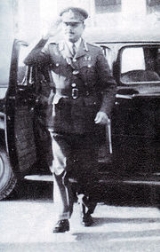
Ayub Khan

 
Ayub Khan

   Email Print
   Bookmark   Link


Ayub Khan


Field Marshal
Field Marshal

Field marshal is a military officer rank. Today it is the highest rank in the armies in which it is used, one step above a general or colonel-general....
 Muhammad Ayub Khan (Urdu/Pashto
Pashto language

Pashto , also known as Afghani, is an Indo-European language spoken primarily in Afghanistan and northwestern Pakistan. Pashto belongs to the East Iranian languages branch of the Indo-Iranian languages language family....
: ???? ???? ???), HJ
Hilal-i-Jurat

Hilal-i-Jurat is the second highest Pakistan Military award of Pakistan.It is admissible to officers of the three services for act of valour, courage or devotion to duty performed on land, at sea or in air....
, NPk, (May 14, 1907 – April 19, 1974) was a Field Marshal
Field Marshal

Field marshal is a military officer rank. Today it is the highest rank in the armies in which it is used, one step above a general or colonel-general....
 during the mid-1960s, and the President of Pakistan
Pakistan

Pakistan , officially the Islamic Republic of Pakistan, is a country located in South Asia and borders Central Asia and the Middle East. It has a 1,046 kilometre coastline along the Arabian Sea and Gulf of Oman in the south, and is bordered by Afghanistan and Iran in the west, India in the east and People's Republic of China in th...
 from 1958 to 1969. He became the Pakistan Army
Pakistan Army

The Pakistan Army is the largest branch of the Pakistan military, and is mainly responsible for protection of the state borders, the security of administered territories and defending the national interests of Pakistan within the framework of its international obligations....
's first native Commander in Chief
Chief of Army Staff of the Pakistan Army

The Chief of Army Staff of the Pakistan Army is the highest post in the Pakistan Army. The current Chief of Army Staff is General Ashfaq Parvez Kayani....
 in 1951, and was the youngest full General
General

A General officer is an Officer of high military rank. The term or equivalent is used by nearly every country in the world. General can be used as a generic term for all grades of general officer, or it can specifically refer to a single rank that is just called general....
 and self-appointed Field Marshal
Field Marshal

Field marshal is a military officer rank. Today it is the highest rank in the armies in which it is used, one step above a general or colonel-general....
 in Pakistan's military history. He was also the first Pakistani military commander to seize power through a coup.

Khan was born in the village of Rehana in Haripur District
Haripur District

Haripur is a Districts of Pakistan in the Hazara, Pakistan region of the North-West Frontier Province of Pakistan. Haripur and Abbottabad both districts that share the city of Haripur, Pakistan, located on the banks of a stream called Dor....
, NWFP
North-West Frontier Province

File:Makra Peak by Khalid Mahmood.jpgThe North-West Frontier Province is the smallest of the Subdivisions of Pakistan of Pakistan. The NWFP is home to the majority Pashtuns as well as other smaller ethnic groups....
 into a family of the Tareen tribe, the first child of the second wife of Mir Dad Khan, who was a Risaldar-Major
Risaldar-Major

Risaldar-Major was originally a cavalry officer of the British Indian Army, the rank was created in 1886 - a Risaldar-Major was the most senior Risaldar of the Regiment....
 (the senior most non-commissioned rank) in Hodson's Horse
Hodson's Horse

Hodson's Horse is a cavalry regiment which originated as part of the British Indian Army. It was raised by Brevet Major William Stephen Raikes Hodson during the Indian Rebellion of 1857, and exists today as the 4th Horse Regiment in the Indian Army....
, a cavalry regiment of the Royal Indian Army
British Indian Army

The Indian Army was the principal army of the British Raj in India during the last half-century before the Partition of India of India in 1947....
.


Discussion
Ask a question about 'Ayub Khan'
Start a new discussion about 'Ayub Khan'
Answer questions from other users
Full Discussion Forum


Encyclopedia


Field Marshal
Field Marshal

Field marshal is a military officer rank. Today it is the highest rank in the armies in which it is used, one step above a general or colonel-general....
 Muhammad Ayub Khan (Urdu/Pashto
Pashto language

Pashto , also known as Afghani, is an Indo-European language spoken primarily in Afghanistan and northwestern Pakistan. Pashto belongs to the East Iranian languages branch of the Indo-Iranian languages language family....
: ???? ???? ???), HJ
Hilal-i-Jurat

Hilal-i-Jurat is the second highest Pakistan Military award of Pakistan.It is admissible to officers of the three services for act of valour, courage or devotion to duty performed on land, at sea or in air....
, NPk, (May 14, 1907 – April 19, 1974) was a Field Marshal
Field Marshal

Field marshal is a military officer rank. Today it is the highest rank in the armies in which it is used, one step above a general or colonel-general....
 during the mid-1960s, and the President of Pakistan
Pakistan

Pakistan , officially the Islamic Republic of Pakistan, is a country located in South Asia and borders Central Asia and the Middle East. It has a 1,046 kilometre coastline along the Arabian Sea and Gulf of Oman in the south, and is bordered by Afghanistan and Iran in the west, India in the east and People's Republic of China in th...
 from 1958 to 1969. He became the Pakistan Army
Pakistan Army

The Pakistan Army is the largest branch of the Pakistan military, and is mainly responsible for protection of the state borders, the security of administered territories and defending the national interests of Pakistan within the framework of its international obligations....
's first native Commander in Chief
Chief of Army Staff of the Pakistan Army

The Chief of Army Staff of the Pakistan Army is the highest post in the Pakistan Army. The current Chief of Army Staff is General Ashfaq Parvez Kayani....
 in 1951, and was the youngest full General
General

A General officer is an Officer of high military rank. The term or equivalent is used by nearly every country in the world. General can be used as a generic term for all grades of general officer, or it can specifically refer to a single rank that is just called general....
 and self-appointed Field Marshal
Field Marshal

Field marshal is a military officer rank. Today it is the highest rank in the armies in which it is used, one step above a general or colonel-general....
 in Pakistan's military history. He was also the first Pakistani military commander to seize power through a coup.

Early life

Ayub Khan was born in the village of Rehana in Haripur District
Haripur District

Haripur is a Districts of Pakistan in the Hazara, Pakistan region of the North-West Frontier Province of Pakistan. Haripur and Abbottabad both districts that share the city of Haripur, Pakistan, located on the banks of a stream called Dor....
, NWFP
North-West Frontier Province

File:Makra Peak by Khalid Mahmood.jpgThe North-West Frontier Province is the smallest of the Subdivisions of Pakistan of Pakistan. The NWFP is home to the majority Pashtuns as well as other smaller ethnic groups....
 into a family of the Tareen tribe, the first child of the second wife of Mir Dad Khan, who was a Risaldar-Major
Risaldar-Major

Risaldar-Major was originally a cavalry officer of the British Indian Army, the rank was created in 1886 - a Risaldar-Major was the most senior Risaldar of the Regiment....
 (the senior most non-commissioned rank) in Hodson's Horse
Hodson's Horse

Hodson's Horse is a cavalry regiment which originated as part of the British Indian Army. It was raised by Brevet Major William Stephen Raikes Hodson during the Indian Rebellion of 1857, and exists today as the 4th Horse Regiment in the Indian Army....
, a cavalry regiment of the Royal Indian Army
British Indian Army

The Indian Army was the principal army of the British Raj in India during the last half-century before the Partition of India of India in 1947....
. For his basic education, he was enrolled in a school in Sarai Saleh, which was about four miles from his village and used to go to school on a mule's back. Later he was moved to a school in Haripur, where he started living with his grandmother. He enrolled at Aligarh Muslim University
Aligarh Muslim University

Image:Maulana Azad Library.jpgBarrister Muhammad Jan Abbasi,Elite lawyer and khilafat movement leader*Rafi Ahmad Kidwai, First communication minister of independent India...
 in 1922, but did not complete his studies there, as he was accepted into the Royal Military Academy Sandhurst
Royal Military Academy Sandhurst

The Royal Military Academy Sandhurst , commonly known simply as Sandhurst, is the British Army Commissioned officer initial training centre....
. He did well at Sandhurst and was given an officer's commission in the British Indian Army
British Indian Army

The Indian Army was the principal army of the British Raj in India during the last half-century before the Partition of India of India in 1947....
 and then joined the 1st Battalion of the 14th Punjab Regiment
14th Punjab Regiment

The 14th Punjab Regiment was a regular infantry regiment of the British Indian Army, it was formed in 1922 by the amalgamations of the 19th, 20th, 22nd and 24th Punjabis, the 40th Pathans and the 21st Punjabis....
 (Sherdils), later known as 5th Punjab Regiment. During World War II
World War II

World War II, or the Second World War , was a global military conflict which involved a Participants in World War II, including all of the great powers, organised into two opposing military alliances: the Allies of World War II and the Axis powers....
, he served as a captain
Captain (British Army and Royal Marines)

File:UK-Army-OF2.gifCaptain is a junior officer rank of the British Army and Royal Marines. It ranks above Lieutenant and below Major and has a NATO ranking code of OF-2....
 and later as a major
Major

In many European languages, the term Major refers to a military rank, denoting seniority at one of usually various levels of rank, for example: "Sergeant-Major" denoting the most senior ranking sergeant of a large military unit; "Captain-Major", denoting a mid-level command status Officer ...
 on the Burma front. Following the war, he joined the fledgling Pakistani Army as the 10th ranking senior officer (his Pakistan Army number was 10). He was promoted to Brigadier
Brigadier

Brigadier is a military Military rank, the meaning of which has a considerable variation....
 and commanded a brigade
Brigade

A brigade is a military unit that is typically composed of two to five regiments or battalions, depending on the era and nationality of a given army....
 in Waziristan
Waziristan

Waziristan is a mountainous region of northwest Pakistan, bordering Afghanistan and covering some 11,585 km? . It is part of the Federally Administered Tribal Areas, considered to be outside the country's four provinces....
 and then in 1948 was sent with the local rank of Major General
Major General

Major General or Major-General is a military rank used in many countries. It is derived from the older rank of Sergeant Major General. A Major General is a high-ranking officer, normally subordinate to the rank of Lieutenant General and senior to the ranks of Brigadier and Brigadier General....
 to East Pakistan
East Pakistan

East Pakistan was a former Provinces of Pakistan of Pakistan which existed between 1955 and 1971. East Pakistan was created from Bengal Province based on a plebiscite in what was then British Raj in 1947....
 (present day Bangladesh
Bangladesh

, officially the People's Republic of Bangladesh is a country in South Asia. It is bordered by India on all sides except for a small border with Burma to the far southeast and by the Bay of Bengal to the south....
) as General Officer Commanding a division responsible for the whole East Wing of Pakistan, for which non-combatant service he was awarded the Hilal-i-Jurat (HJ). He returned to West Pakistan in November 1949 as Adjutant General of the Army and then was briefly Deputy Commander-in-Chief.

Commander-in-Chief

Ayub Khan was made Commander-in-Chief of the Pakistan Army on January 17, 1951, succeeding General Sir Douglas Gracey, thus becoming the first native Pakistani general to hold that position. Iskandar Mirza, Secretary of Defence, was instrumental in Ayub's promotion, commencing a relationship in which Mirza became Governor General of the Dominion of Pakistan and later President of Pakistan, when it became a republic on March 23rd, 1956. The events surrounding his appointment set the precedent for a Pakistani general being promoted out of turn, ostensibly because he was the least ambitious of the Generals and the most loyal. It was only 3 months before the end of his tenure as Commander-in-Chief that Ayub Khan deposed his mentor, Iskandar Mirza, Pakistan's President, in a military coup, after Mirza had declared Martial Law and made Ayub Martial Law commander..

Defence Minister

He would later go on to serve in the second cabinet (1954) of Muhammad Ali Bogra
Muhammad Ali Bogra

Muhammad Ali Bogra was a Pakistani statesman of Bengali peoplei origin, who served as Prime Minister of Pakistan from 1953 until 1955....
 as Defence Minister, and when Iskander Mirza
Iskander Mirza

Major-General Sahibzada Sayyid Iskander Ali Mirza, Order of the Indian Empire, Order of the British Empire was the last Governor-General of Pakistan of the Dominion of Pakistan and the first President of Pakistan of the Islamic Republic of Pakistan ....
 declared martial law
Martial law

Martial law is the system of rules that takes effect when the military takes control of the normal administration of justice.Martial law is sometimes imposed during wars or occupied territory in the absence of any other civil government....
 on October 7 1958, Ayub Khan was made its chief martial law
Martial law

Martial law is the system of rules that takes effect when the military takes control of the normal administration of justice.Martial law is sometimes imposed during wars or occupied territory in the absence of any other civil government....
 administrator. This would be the first of many instances in the history of Pakistan
History of Pakistan

The history of Pakistan as a state began with independence from British India on 14 August 1947, although the region has been inhabited continuously for at least two million years; its ancient history includes some of the oldest settlements of South Asia and some of its major civilizations....
 of the military becoming directly involved in politics.

President of Pakistan (1958 - 1969)

As a result of his having control of the Pakistan Army, Ayub deposed Mirza on October 27 in a bloodless coup
Coup d'état

A coup d??tat , often simply called a coup, is the sudden unconstitutional overthrow of a government by a part of the state establishment – usually the military – to replace the branch of the stricken government, either with another civil government or with a military government....
, sending Generals Azam, Burki and Sheikh in the middle of the night to pack Mirza off to exile in England. This was actually welcomed in Pakistan, since the nation had experienced a very unstable political climate since independence.

In 1960, he held an indirect referendum of his term in power, Functioning as a kind of electoral college, close to 80,000 recently elected village councilmen were allowed to vote yes or no to the question: "Have you confidence in the President, Field Marshal Mohammed Ayub Khan?" Winning 95.6% of the vote, he used the confirmation as impetus to formalise his new system.

Ayub moved to have a constitution created, and this was completed in 1961. A fairly secular person by nature, Ayub Khan's constitution reflected his personal views of politicians and the use of religion in politics.

In 1962, he pushed through a new constitution that while it did give due respect to Islam, it did not declare Islam the state religion of the country. It also provided for election of the President by 80,000 (later raised to 120,000) Basic Democrats—men who could theoretically make their own choice but who were essentially under his control. He justified this as analogous to the Electoral College in the United States
United States

The United States of America is a Federal government constitutional republic comprising U.S. state and a federal district. The country is situated mostly in central North America, where its Contiguous United States and Washington, D.C., the Capital districts and territories, lie between the Pacific Ocean and Atlantic Oceans, Borders of the U...
 and cited Thomas Jefferson
Thomas Jefferson

Thomas Jefferson was the List of Presidents of the United States President of the United States , the principal author of the United States Declaration of Independence , and one of the most influential Founding Fathers of the United States for his promotion of the ideals of republicanism in the United States....
 as his inspiration. The government "guided" the press and, while Ayub permitted a National Assembly, it had only limited powers.

Legal reforms

Ayub Khan introduced the Muslim Family Laws through an Ordinance on March 2, 1961 under which unmitigated polygamy
Polygamy

The term polygamy is used in related ways in social anthropology, sociobiology, and sociology. Polygamy can be defined as any "Types of marriages in which a person [has] more than one spouse."...
 was abolished, consent of the current wife was made mandatory for a second marriage, brakes were also placed on the practice of instant divorce where men pronounced it irrevocably by pronouncing talaq thrice in one go. The Arbitration Councils set up under the law in the urban and rural areas were to deal with cases of (a) grant of sanction to a person to contract a second marriage during the subsistence of a marriage; (b) reconciliation of a dispute between a husband and a wife; (c) grant maintenance to the wife and children.

Presidential Elections


In 1964, Ayub confident in his apparent popularity and seeing deep divisions within the political opposition, called for Presidential elections.

He was however taken by surprise when despite a brief disagreement between the five main opposition parties ( a preference for a former close associate of Ayub Khan General Azam Khan as candidate was dropped), the joint opposition agreed on supporting the respected and popular Fatima Jinnah
Fatima Jinnah

Fatima Jinnah was the sister of Quaid-i-Azam Muhammad Ali Jinnah, the founder of Pakistan and an active political figure in movement for independence from the British Raj....
, the sister of the founder of Pakistan Muhammad Ali Jinnah
Muhammad Ali Jinnah

Muhammad Ali Jinnah Urdu language: }} , a 20th century politician and statesman, is generally regarded as the father of the state of Pakistan. He served as leader of the Muslim League and served as Pakistan's first Governor-General of Pakistan....
.

Despite Jinnah's considerable popularity and public disaffection with Ayub's government, Ayub won with 64% of the vote in a bitterly contested election on January 2, 1965. The election did not conform to international standards and journalists. It is widely held, as subsequent historians and analysts, almost uniformly say, that the elections were rigged in favour of Ayub Khan.

Foreign policy

As President, Ayub Khan allied Pakistan with the global U.S. military alliance against the Soviet Union
Soviet Union

The Union of Soviet Socialist Republics was a Constitution of the Soviet Union socialist state that existed in Eurasia from 1922 to 1991.The name is a translation of the , romanization of Russian Soyuz Sovetskikh Sotsialisticheskikh Respublik, abbreviated ????, SSSR....
. This in turn led to major economic aid from the U.S. and European nations, and the industrial sector of Pakistan grew very rapidly, improving the economy, but the consequences of cartelization included increased inequality in the distribution of wealth. It was under Ayub Khan that the capital was moved from Karachi
Karachi

is the largest city, seaport and the International financial centre of Pakistan. It is List of metropolitan areas by population in terms of metropolitan population, and is Pakistan's premier centre of banking, industry, and trade....
 to Rawalpindi
Rawalpindi

is a city in the Potwar Plateau near Pakistan's capital city of Islamabad, in the Subdivisions of Pakistan of Punjab . The area was home to the pre-historic Soanian culture indigenous to this region....
, in anticipation of the construction of a new capital: Islamabad
Islamabad

Islamabad is the Capital of Pakistan, and is the tenth largest city in Pakistan. The Rawalpindi/Islamabad List of most populous metropolitan areas in Pakistan is the third largest in Pakistan with a population of over 4.5 million inhabitants, 1.5 million in Islamabad and three million in Rawalpindi....
. In 1960, Khan's government signed the Indus Waters Treaty
Indus Waters Treaty

The Indus Waters Treaty is a water-sharing treaty between the Republic of India and Islamic Republic Of Pakistan. The treaty was signed in Karachi on September 19, 1960 by the then Indian Prime Minister Jawaharlal Nehru and the then President of Pakistan Field Marshal Mohammad Ayub Khan....
 with archrival India
India

India, officially the Republic of India , is a country in South Asia. It is the List of countries and outlying territories by total area country by geographical area, the List of countries by population country, and the most populous liberal democracy in the world....
 to resolve disputes regarding the sharing of the waters of the six rivers in the Punjab
Punjab region

Punjab , also Panjab , is a region straddling the border between India and Pakistan. The "Five Rivers" are Beas River, Ravi River, Sutlej, Chenab and Jhelum River; all these are tributaries of the Indus river, Jhelum being the biggest one....
 Doab that flow between the two countries. Khan's administration also built a major network of irrigation canals, high-water dams and thermal and hydroelectric power stations.

Despite the Indus Waters Treaty, Ayub maintained icy relations with India. He established close political and military ties with Communist China
China

China is a Culture of China, an ancient civilization, and, depending on perspective, a national or multinational entity extending over a large area in East Asia....
, exploiting its differences with Soviet Russia and its 1962 war with India. To this day, China remains a strong economic, political and military ally of Pakistan.

Indo-Pakistani War of 1965


The turning point in his rule was the Indo-Pakistani War of 1965
Indo-Pakistani War of 1965

The Indo-Pakistani War of 1965 was a culmination of skirmishes that took place between April 1965 and September 1965 between India and Pakistan....
, Despite many repulsed Indian attacks, the war adversely affected Pakistan's then rapidly developing economy and it ended in a settlement reached by Ayub at Tashkent, called the Tashkent Declaration
Tashkent Declaration

The Tashkent Declaration of January 10, 1966 was a peace agreement between India and Pakistan. In September of 1965 before the two had engaged in the short run Indo-Pakistani War of 1965....
. The settlement was perceived negatively by many Pakistanis and led Zulfiqar Ali Bhutto to resign his post and take up opposition to Khan. According to Morrice James, "For them [Pakistanis] Ayub had betrayed the nation and had inexcusably lost face before the Indians."The war also increased opposition in East Pakistan [Now Bangladesh] where the Awami League headed by Sheikh Mujibur Rahman
Sheikh Mujibur Rahman

Sheikh Mujibur Rahman was a Bengali people politician and the founding leader of Bangladesh, considered the Pater Patriae. He headed the Awami League, served as the first President of Bangladesh and later became its Prime Minister of Bangladesh....
 sought more autonomy for the province.

General Ayub Khan, who had assumed office of the commander in chief in 1951, supported Governor General Ghulam Muhammad when he dismissed the first constituent assembly on the grounds "The constituent assembly being power hungry and having a tendency of being corrupt." Moulvi Tamizuddin, the first speaker of the assembly, challenged the dismissal (he had to take a rickshaw, wear a burka and go through Sindh court backdoor to seek justice for a nation). Sindh court accepted the appeal but the Federal Court dismissed the Sindh court judgment as the "Doctrine of necessity". Later on the decision has been the basis of all autocratic adjustments in Pakistan.

These were the years when Pakistan allowed the US to establish a USAF communications monitoring facility near Peshawar
Peshawar

is the capital of the North-West Frontier Province and the administrative centre for the Federally Administered Tribal Areas of Pakistan."Peshawar" literally means The High Fort in Persian language and is known as Pekhawar in Pashto....
 at Badaber and use its air space and air bases to conduct high-altitude spy-flights over the USSR . It was after the infamous U2 incident took place and a Red Circle was placed on Pakistan’s map by Nikita Khruschev, that predestined Pakistan into an open hostility with the USSR.

Final Years in office

In 1969, he opened up negotiations with the opposition alliance, except for Maulana Bhashani and Zulfiqar Ali Bhutto. However under increasing pressure from Bhutto and Bhashani who were allegedly encouraged to continue the agitation by elements within the Army and in violation of his own constitution which required him to transfer power to the speaker of the assembly. Ayub turned over control of Pakistan to Commander in Chief General Yahya Khan
Yahya Khan

Agha Muhammad Yahya Khan was the President of Pakistan from 1969 to 1971, following the resignation of Ayub Khan. He has one son, Ali Yahya and one daughter, Yasmeen Khan....
 on 25 March 1969, He was the President's most loyal lieutenant, and was promoted over seven more senior generals in 1966 to the army's top post.

Legacy

Ayub Khan's legacy is mixed, he was opposed to democracy believing like any other dictator that parliamentary democracy was not suited for the people of his country. Like many subsequent military dictators he was contemptuous of politicians and political parties. However, during his early years in office, he sided with the Americans against the Soviets, and in return received billions of dollars in aid, which resulted in enormous economic growth.

He subsidized fertilizers and modernized agriculture through irrigation development, spurred industrial growth with liberal tax benefits. In the decade of his rule, gross national product rose by 45% and manufactured goods began to overtake such traditional exports as jute and cotton. It is alleged that his policies were tailored to reward the elite families and the feudal lords. During the fall of his dictatorship, just when the government was celebrating the so-called "Decade of Development", mass protests erupted due an increasingly greater divide between the rich and the poor.

He shunned prestige projects and stressed birth control in a country that has the seventh largest population in the world: 115 million. He dismissed criticism with the comment that if there was no family planning, the time would surely come when "Pakistanis eat Pakistanis." In foreign affairs, he retained his ties to the West and to the United States in particular, allowing the United States to use the Badaber and Peshawar airbase for U-2 flights over the then Soviet Union.

Criticisms

Government corruption and nepotism
Nepotism

Nepotism is the showing of favoritism toward relatives or friends based upon that relationship, rather than on an objective evaluation of ability or suitability....
, in addition to an environment of repression of free speech and political freedoms increased unrest. Criticisms of his sons and family's personal wealth increased, especially his son's actions after his father's election in the allegedly rigged 1964 Presidential elections against Fatima Jinnah is a subject of criticism by many writers. Gohar Ayub, it is said led a victory parade right into the heartland of Opposition territory in Karachi, in a blatantly provocative move and the civil administrations failure to stop the rally led to a fierce clashes between opposing groups with many locals being killed. Gohar Ayub also faced criticisms during that time on questions of family corruption and cronyism through his business links with his father-in-law retired Lt. General Habibullah Khan Khattak
Habibullah Khan Khattak

Lieutenant General Habibullah Khan Khattak was born in Wana , Waziristan, British India, now part of the Federally Administered Tribal Areas of Pakistan....
. One Western commentator in 1969 estimated Gohar Ayub's personal wealth at the time at $4 million dollars, while his family's wealth was put in the range of $10-$20 million dollars.

Ayub began to lose both power and popularity. On one occasion, while visiting East Pakistan, there was a failed attempt to assassinate him, though this was not reported in the press of the day.

Ayub was persuaded by underlings to award himself the Nishan-e-Pakistan, Pakistan's highest civil award, on the grounds that to award it to other heads of state he should have it himself and also promoted himself to the rank of Field Marshal. He was to be Pakistan's second Field Marshal, if the first is regarded as Field Marshal Sir Claude Auchinleck (1884-1981), supreme commander of military forces in India and Pakistan in the lead-up to independence in 1947.

Aggravating an already bad situation, with increasing economic disparity in the country under his rule, hoarding and manipulation by major sugar manufacturers resulted in the controlled price of 1 kg sugar to be increased by 1 rupee
Rupee

File:Bank note of republic of nepal.jpgThe Rupee is the common name for the currency used in India, Pakistan, Sri Lanka, Nepal, Mauritius, and Seychelles; in Indonesia the unit of currency is known as the rupiah and in the Maldives the rufiyah, which are cognate words of Hindi Rupiya....
 and the whole population took to the streets. As Ayub's popularity plummeted, he decided to give up rule.

In 1971 when war broke out, Ayub Khan was in West Pakistan
West Pakistan

West Pakistan was the popular and sometimes official name of the western wing of Pakistan until 1971, when the East Pakistan became independent as Bangladesh....
 and did not comment on the events of the war. He died in 1974.

Personal life

Ayub Khan’s son Gohar Ayub Khan
Gohar Ayub Khan

Gohar Ayub Khan is a Pakistani politician and the son of the late Pakistani President Field Marshal Ayub Khan. A Tareen Pashtun, he was born in Rehana, Haripur....
 was Pakistan’s Foreign Minister in the Nawaz Sharif government. Gohar’s son and Ayub’s grandson Omar Ayub Khan
Omar Ayub Khan

Omar Ayub Khan is former Minister of State for Finance in Pakistan. He was elected as a Member of the National Assembly from constituency NA-19 Haripur District as a candidate of Pakistan Muslim League ....
 was Pakistan’s Minister of State for Finance. Gohar Ayub Khan and Omar Ayub Khan are politicians of Hazara.

Footnotes


Further reading

  • Diaries of Field Marshal Mohammad Ayub Khan, 1966-1972 Mohammad Ayub Khan
Oxford University Press
  • Khan, Muhammad Ayub, "Friends Not Masters", Oxford University Press, 1967


See also

  • Politics of Pakistan
    Politics of Pakistan

    Recently the Politics of Pakistan has taken place in the framework of a federal republic, where the system of government has at times been parliamentary, presidential, or semi-presidential system....
  • Prime Minister of Pakistan
    Prime Minister of Pakistan

    The Prime Minister of Pakistan, in Urdu language ???? ???? Wazir-e- Azam meaning "Grand Minister", is the Head of Government of Pakistan....
  • Line of Succession to President of Pakistan
    Line of succession to President of Pakistan

    Pakistan had a Parliamentary democracy of government that has been modified several times since its inception.The constitution of Pakistan does not allow for a vice president, but the chairman of the Senate of Pakistan officiates in the absence of the President and takes over on the President's death or removal from office....
  • Cold War
    Cold War

    The Cold War was the continuing state of conflict, tension and competition that existed between a number of world powers, including the United States, the Soviet Union, People's Republic of China, France, United Kingdom and those countries' respective allies from the mid-1940s to the early 1990s....


External links

  • ----use Quick Time Player.