


Autonomous regions of Portugal

Encyclopedia

Azores
The Archipelago of the Azores is composed of nine volcanic islands situated in the middle of the North Atlantic Ocean, and is located about west from Lisbon and about east from the east coast of North America. The islands, and their economic exclusion zone, form the Autonomous Region of the...
(Região Autónoma dos Açores) and Madeira
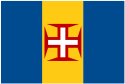
Madeira
Madeira is a Portuguese archipelago that lies between and , just under 400 km north of Tenerife, Canary Islands, in the north Atlantic Ocean and an outermost region of the European Union...
(Região Autónoma da Madeira). Together with Continental Portugal
Continental Portugal
Continental Portugal or Mainland Portugal is the designation of the mainland Portuguese territory, located on Europe's Iberian Peninsula....
(Portugal Continental), they form the whole of the Portuguese Republic.
As defined by the Constitution of Portugal
Constitution of Portugal
The first Portuguese Constitution was drafted in 1822. Several revolutions led to the constitutions of 1826 , 1838 , 1911 , 1933 , and 1976 ....
and other laws, an Autonomous region possesses its own Political and Administrative Statute
Statute
A statute is a formal written enactment of a legislative authority that governs a state, city, or county. Typically, statutes command or prohibit something, or declare policy. The word is often used to distinguish law made by legislative bodies from case law, decided by courts, and regulations...
and has its own Government
Government
Government refers to the legislators, administrators, and arbitrators in the administrative bureaucracy who control a state at a given time, and to the system of government by which they are organized...
. The branches of Government are the Regional Executive (Governo Regional), and the Legislative Parliament (Assembleia Legislativa). The Parliament is elected by universal suffrage
Universal suffrage
Universal suffrage consists of the extension of the right to vote to adult citizens as a whole, though it may also mean extending said right to minors and non-citizens...
, using the D'Hondt method
D'Hondt method
The d'Hondt method is a highest averages method for allocating seats in party-list proportional representation. The method described is named after Belgian mathematician Victor D'Hondt who described it in 1878...
of proportional representation
Proportional representation
Proportional representation is a concept in voting systems used to elect an assembly or council. PR means that the number of seats won by a party or group of candidates is proportionate to the number of votes received. For example, under a PR voting system if 30% of voters support a particular...
.
Originally, the sovereignty
Sovereignty
Sovereignty is the quality of having supreme, independent authority over a geographic area, such as a territory. It can be found in a power to rule and make law that rests on a political fact for which no purely legal explanation can be provided...
of the Portuguese Republic was represented in each Autonomous Region by the Minister of the Republic (Ministro da República), proposed by the Government of the Republic
Government of Portugal
The Government is one of the four sovereignty organs of the Portuguese Republic. It is also the organ that conducts politics in general in the country and is also the superior body in public administration...
and appointed by the President of the Republic
President of Portugal
Portugal has been a republic since 1910, and since that time the head of state has been the president, whose official title is President of the Portuguese Republic ....
. After the sixth amendment to the Portuguese Constitution
Constitution of Portugal
The first Portuguese Constitution was drafted in 1822. Several revolutions led to the constitutions of 1826 , 1838 , 1911 , 1933 , and 1976 ....
was passed in 2006, the Minister of the Republic was replaced by a less-powerful Representative of the Republic (Representante da República).
The President of the Regional Executive (Presidente do Governo Regional) is appointed by the Representative of the Republic according to the results of the parliament election.
Current Presidents of the Regional Executive:
- AzoresAzoresThe Archipelago of the Azores is composed of nine volcanic islands situated in the middle of the North Atlantic Ocean, and is located about west from Lisbon and about east from the east coast of North America. The islands, and their economic exclusion zone, form the Autonomous Region of the...
- Carlos CésarCarlos CésarCarlos Manuel Martins do Vale César is a Portuguese politician and the current President of the Regional Government of the Portuguese autonomous region of Azores...
(Socialist PartySocialist Party (Portugal)The Socialist Party , abbreviated to PS, is a social-democratic political party in Portugal. It was founded on 19 April 1973 in the German city of Bad Münstereifel, by militants from Portuguese Socialist Action ....
) - MadeiraMadeiraMadeira is a Portuguese archipelago that lies between and , just under 400 km north of Tenerife, Canary Islands, in the north Atlantic Ocean and an outermost region of the European Union...
- Alberto João JardimAlberto João JardimAlberto João Cardoso Gonçalves Jardim, GCIH |Santa Luzia]], Funchal, Madeira Island) is a Portuguese politician who has been the President of the Regional Government of Madeira, Portugal, since 1978. He is currently among the most controversial politicians of Portugal.-Early years:Jardim was born...
(Social Democratic PartySocial Democratic Party (Portugal)The Social Democratic Party , is a centre-right liberal conservative political party in Portugal. It is commonly known by its initials, PSD; on ballot papers, its initials appear as PPD/PSD, with the first three letters coming from the party's original name, Democratic People's Party...
)