


Austrian Circle

Encyclopedia
The Austrian Circle was an Imperial Circle
of the Holy Roman Empire
. It was one of the four Imperial Circles created in 1512, 12 years after the original Reichsreform created six Circles.
The Austrian Circle was largely coterminous with the so-called Erblande ("Hereditary Lands") of the Habsburg
family and roughly corresponds to present-day Austria
(except for Salzburg
), Slovenia
and the Trentino-Alto Adige/Südtirol region of Northern Italy
.
Wikipedia article Österreichischer Reichskreis.
Imperial Circle
An Imperial Circle comprised a regional grouping of territories of the Holy Roman Empire, primarily for the purpose of organizing a common defensive structure and of collecting the imperial taxes, but also as a means of organization within the Imperial Diet and the Imperial Chamber Court.Each...
of the Holy Roman Empire
Holy Roman Empire
The Holy Roman Empire was a realm that existed from 962 to 1806 in Central Europe.It was ruled by the Holy Roman Emperor. Its character changed during the Middle Ages and the Early Modern period, when the power of the emperor gradually weakened in favour of the princes...
. It was one of the four Imperial Circles created in 1512, 12 years after the original Reichsreform created six Circles.
The Austrian Circle was largely coterminous with the so-called Erblande ("Hereditary Lands") of the Habsburg
Habsburg Monarchy
The Habsburg Monarchy covered the territories ruled by the junior Austrian branch of the House of Habsburg , and then by the successor House of Habsburg-Lorraine , between 1526 and 1867/1918. The Imperial capital was Vienna, except from 1583 to 1611, when it was moved to Prague...
family and roughly corresponds to present-day Austria
Austria
Austria , officially the Republic of Austria , is a landlocked country of roughly 8.4 million people in Central Europe. It is bordered by the Czech Republic and Germany to the north, Slovakia and Hungary to the east, Slovenia and Italy to the south, and Switzerland and Liechtenstein to the...
(except for Salzburg
Salzburg (state)
Salzburg is a state or Land of Austria with an area of 7,156 km2, located adjacent to the German border. It is also known as Salzburgerland, to distinguish it from its capital city, also named Salzburg...
), Slovenia
Slovenia
Slovenia , officially the Republic of Slovenia , is a country in Central and Southeastern Europe touching the Alps and bordering the Mediterranean. Slovenia borders Italy to the west, Croatia to the south and east, Hungary to the northeast, and Austria to the north, and also has a small portion of...
and the Trentino-Alto Adige/Südtirol region of Northern Italy
Northern Italy
Northern Italy is a wide cultural, historical and geographical definition, without any administrative usage, used to indicate the northern part of the Italian state, also referred as Settentrione or Alta Italia...
.
Composition
The circle was made up of the following states:| Name | Type of entity | Comments |
|---|---|---|
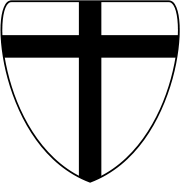 An der Etsch An der EtschAn der Etsch Die Deutschordensballei An der Etsch und im Gebirge was a mediæval province of the Teutonic Order, created in 1260 and based around Bolzano, now in the Italian province of South Tyrol, and consisting of most of the latter County of Tyrol.... |
Bailiwick Bailiwick A bailiwick is usually the area of jurisdiction of a bailiff, and may also apply to a territory in which the sheriff's functions were exercised by a privately appointed bailiff under a royal or imperial writ. The word is now more generally used in a metaphorical sense, to indicate a sphere of... |
Established about 1260, an administrative grouping of lands held by the Teutonic Order in Tyrol |
 Austria AustriaArchduchy of Austria The Archduchy of Austria , one of the most important states within the Holy Roman Empire, was the nucleus of the Habsburg Monarchy and the predecessor of the Austrian Empire... |
Archduchy | March of Austria March of Austria The March of Austria was created in 976 out of the territory that probably formed the earlier March of Pannonia. It is also called the Margraviate of Austria or the Bavarian Eastern March. In contemporary Latin, it was the marchia Austriae, Austrie marchionibus, or the marcha Orientalis... established in 976 by Emperor Otto II Otto II, Holy Roman Emperor Otto II , called the Red, was the third ruler of the Saxon or Ottonian dynasty, the son of Otto the Great and Adelaide of Italy.-Early years and co-ruler with Otto I:... , raised to duchy by Emperor Frederick I Barbarossa Frederick I, Holy Roman Emperor Frederick I Barbarossa was a German Holy Roman Emperor. He was elected King of Germany at Frankfurt on 4 March 1152 and crowned in Aachen on 9 March, crowned King of Italy in Pavia in 1155, and finally crowned Roman Emperor by Pope Adrian IV, on 18 June 1155, and two years later in 1157 the term... in 1156, to Habsburg in 1278, self-bestowed "Archduchy" since 1358 |
| Austria |
Bailiwick | An administrative grouping of lands held by the Teutonic Order in Austria |
| Brixen Bishopric of Brixen The Bishopric of Brixen is a former Roman Catholic diocese and also a former ecclesiastical state of the Holy Roman Empire in the present province of South Tyrol. The bishopric in the Eisack/Isarco valley was established in the 6th century and gradually received more secular powers... |
Prince-Bishop Prince-Bishop A Prince-Bishop is a bishop who is a territorial Prince of the Church on account of one or more secular principalities, usually pre-existent titles of nobility held concurrently with their inherent clerical office... ric |
Established in 1027 by Emperor Conrad II Conrad II, Holy Roman Emperor Conrad II was Holy Roman Emperor from 1027 until his death.The son of a mid-level nobleman in Franconia, Count Henry of Speyer and Adelaide of Alsace, he inherited the titles of count of Speyer and of Worms as an infant when Henry died at age twenty... , Prince-Bishopric since 1179 |
 Carinthia CarinthiaDuchy of Carinthia The Duchy of Carinthia was a duchy located in southern Austria and parts of northern Slovenia. It was separated from the Duchy of Bavaria in 976, then the first newly created Imperial State beside the original German stem duchies.... |
Duchy Duchy A duchy is a territory, fief, or domain ruled by a duke or duchess.Some duchies were sovereign in areas that would become unified realms only during the Modern era . In contrast, others were subordinate districts of those kingdoms that unified either partially or completely during the Medieval era... |
Established in 976 by Emperor Otto II, held by the Archdukes of Austria since 1457, part of Inner Austria Inner Austria Inner Austria was a term used from the late 14th to the early 17th century for the Habsburg hereditary lands south of the Semmering Pass, referring to the duchies of Styria, Carinthia, Carniola and the Windic March, the County of Gorizia , the city of Trieste and assorted smaller possessions... 1564-1619 |
 Carniola CarniolaDuchy of Carniola The Duchy of Carniola was an administrative unit of the Holy Roman Empire and the Habsburg Monarchy from 1364 to 1918. Its capital was Ljubljana... |
Duchy | March of Carniola March of Carniola The March of Carniola was a southeastern state of the Holy Roman Empire in the High Middle Ages, the predecessor of the Duchy of Carniola. It corresponded roughly to the central Carniolan region of present-day Slovenia... established in 1040 by Emperor Henry III Henry III, Holy Roman Emperor Henry III , called the Black or the Pious, was a member of the Salian Dynasty of Holy Roman Emperors... , raised to duchy in 1364, held by the Archdukes of Austria since 1457, part of Inner Austria 1564-1619 |
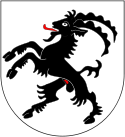 Chur Chur |
Prince-Bishopric | Established in the 4th century, prince-bishopric since 1170, territory held by the League of God's House League of God's House The League of God's House was formed in what is now Switzerland on January 29, 1367 to resist the rising power of the Bishopric of Chur and the House of Habsburg. The League allied with the Grey League and the League of the Ten Jurisdictions in 1471 to form the Three Leagues... since 1367 |
 Gorizia GoriziaCounty of Gorizia The County of Görz was a county based around the town of Gorizia in the present-day Friuli-Venezia Giulia region of north-eastern Italy.Count Meinhard, descendant of the Bavarian Meinhardiner noble family with possessions around Lienz in Tyrol, is mentioned as early as 1107... |
County County A county is a jurisdiction of local government in certain modern nations. Historically in mainland Europe, the original French term, comté, and its equivalents in other languages denoted a jurisdiction under the sovereignty of a count A county is a jurisdiction of local government in certain... |
Separated from the Patriarchate of Aquileia about 1127, held by the Archdukes of Austria from 1500, part of Inner Austria 1564-1619, merged into Gorizia and Gradisca Gorizia and Gradisca The County of Gorizia and Gradisca was a Habsburg county in Central Europe, in what is now a multilingual border area of Italy and Slovenia. It was named for its two major urban centers, Gorizia and Gradisca d'Isonzo.-Province of the Habsburg Empire:... in 1747 |
| Istria March of Istria The Margravate of Istria was originally a Carolingian frontier march covering the Istrian peninsula and surrounding territory conquered by Charlemagne's son Pepin of Italy in 789... |
March | Established in 1040 by Emperor Henry III, major part to Venice in 1291, remaining territory around Pazin Pazin Pazin is the administrative seat of Istria County in Croatia. The town has a population of 4,986 , the total Pazin municipality population is 9,227... (Mitterburg) to Gorizia, held by the Archdukes of Austria since 1374 |
 Styria StyriaDuchy of Styria The history of Styria concerns the region roughly corresponding to the modern Austrian state of Styria and the Slovene region of Styria from its settlement by Germans and Slavs in the Dark Ages until the present... |
Duchy | March of Styria March of Styria The March of Styria was originally broken off the Duchy of Carinthia before 970 as a buffer zone against the Magyars. Originally it was known as the Carantanian march , after the former Slavic principality of Carantania, a predecessor of the Carinthian duchy... established about 970 by Emperor Otto I Otto I, Holy Roman Emperor Otto I the Great , son of Henry I the Fowler and Matilda of Ringelheim, was Duke of Saxony, King of Germany, King of Italy, and "the first of the Germans to be called the emperor of Italy" according to Arnulf of Milan... , raised to a duchy in 1180, held by the Dukes of Austria since 1192, part of Inner Austria 1564-1619 |
| Swabian Austria Further Austria Further Austria or Anterior Austria was the collective name for the old possessions of the House of Habsburg in the former Swabian stem duchy of south-western Germany, including territories in the Alsace region west of the Rhine and in Vorarlberg, after the focus of the Habsburgs had moved to the... |
Landgraviate Landgrave Landgrave was a title used in the Holy Roman Empire and later on by its former territories. The title refers to a count who had feudal duty directly to the Holy Roman Emperor... |
The remaining Habsburg home territories in Swabia Swabia Swabia is a cultural, historic and linguistic region in southwestern Germany.-Geography:Like many cultural regions of Europe, Swabia's borders are not clearly defined... since 1386, including Breisgau Breisgau Breisgau is the name of an area in southwest Germany, placed between the river Rhine and the foothills of the Black Forest around Freiburg im Breisgau in the state of Baden-Württemberg. The district Breisgau-Hochschwarzwald, which partly consists of the Breisgau, is named after that area... , Burgau Burgau Burgau is a town in the district of Günzburg in Swabia, Bavaria. Burgau lies on the river Mindel, and has a population of just under 10,000.- History :The territory around Burgau was originally part of the stem duchy of Swabia... , Sundgau Sundgau Sundgau is a geographical territory on the eastern edge of France that was once a principality of the Holy Roman Empire. The name Sundgau derives from Alemannic German, which means "South County" .... (until 1648) and parts of Vorarlberg Vorarlberg Vorarlberg is the westernmost federal-state of Austria. Although it is the second smallest in terms of area and population , it borders three countries: Germany , Switzerland and Liechtenstein... , held by the Archdukes of Austria |
 Tarasp TaraspTarasp Tarasp is a municipality in the district of Inn in the Swiss canton of Graubünden. Its eleven settlements are situated within the Lower Engadin valley along the Inn River, at the foot of the Sesvenna Range.... |
Lordship | Held by the Archdukes of Austria since 1464 |
 Trent TrentBishopric of Trent The Bishopric of Trent is a former ecclesiastical territory roughly corresponding to the present-day Northern Italian autonomous province of Trentino. It was created in 1027 and existed until 1802, when it was secularised and absorbed into the County of Tyrol held by the House of Habsburg... |
Prince-Bishopric | Established in 1027 by Emperor Conrad II |
| Trieste Trieste Trieste is a city and seaport in northeastern Italy. It is situated towards the end of a narrow strip of land lying between the Adriatic Sea and Italy's border with Slovenia, which lies almost immediately south and east of the city... |
City | Held by the Archdukes of Austria since 1382 |
 Tyrol TyrolCounty of Tyrol The County of Tyrol, Princely County from 1504, was a State of the Holy Roman Empire, from 1814 a province of the Austrian Empire and from 1867 a Cisleithanian crown land of Austria-Hungary... |
County | Established about 1140, held by the Archdukes of Austria since 1363, raised to "Prince Prince Prince is a general term for a ruler, monarch or member of a monarch's or former monarch's family, and is a hereditary title in the nobility of some European states. The feminine equivalent is a princess... ly County" in 1504, to Further Austria Further Austria Further Austria or Anterior Austria was the collective name for the old possessions of the House of Habsburg in the former Swabian stem duchy of south-western Germany, including territories in the Alsace region west of the Rhine and in Vorarlberg, after the focus of the Habsburgs had moved to the... 1564-1665 |
Sources
The list of states making up the Austrian Circle is based on that in the GermanGerman language
German is a West Germanic language, related to and classified alongside English and Dutch. With an estimated 90 – 98 million native speakers, German is one of the world's major languages and is the most widely-spoken first language in the European Union....
Wikipedia article Österreichischer Reichskreis.