
All Topics  
Aum


   Email Print
   Bookmark   Link


Aum


This article is about the mystical syllable. For other uses of "om" or "aum" or similar, see Om (disambiguation).

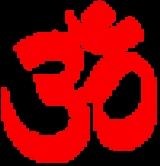
Aum (also Om or, more rarely, Ohm; Sanskrit: ) is a mystical or sacred syllable
Syllable

A syllable is a unit of organization for a sequence of Speech communication sounds. For example, the word water is composed of two syllables: wa and ter....
 in the Hindu
Hinduism

'Hinduism' is the predominant religion of the Indian subcontinent. Hinduism is often referred to as , a Sanskrit phrase meaning "the eternal dharma", by its practitioners....
, Jain
Jainism

Jainism is one of the oldest Indian religions that originated in India. Jains believe that every soul is divine and has the potential to achieve God-consciousness....
, and Buddhist
Buddhism

Buddhism is a family of beliefs and practices considered by most to be a religionand is based on the teachings attributed to Siddhartha Gautama, commonly known as "The Buddha" , who was born in what is today Nepal....
 religions. It is placed at the beginning of most Hindu texts as a sacred exclamation to be uttered at the beginning and end of a reading of the Vedas
Vedas

The Vedas are a large body of texts originating in History of India. They form the oldest layer of Sanskrit literature and the oldest Hindu scripture of Hinduism....
 or previously to any prayer or mantra
Mantra

A mantra can be defined as a sound, syllable, word, or group of words that are considered capable of creating transformation. Their use and type varies according to the school and philosophy associated with the mantra....
 and also is said in the beginning of any puja
Puja

Puja is the religion ritual that Hindus perform on a variety of occasions to pray or show respect to God, Gods, and guru. The purpose of puja is to communicate with God and the Gods or the satguru, to keep a thread to continuity, of relationship, between this physical world and the subtle inner worlds....
 (religious ritual).


Discussion
Ask a question about 'Aum'
Start a new discussion about 'Aum'
Answer questions from other users
Full Discussion Forum


Recent Posts


Encyclopedia


This article is about the mystical syllable. For other uses of "om" or "aum" or similar, see Om (disambiguation).

Aum (also Om or, more rarely, Ohm; Sanskrit: ) is a mystical or sacred syllable
Syllable

A syllable is a unit of organization for a sequence of Speech communication sounds. For example, the word water is composed of two syllables: wa and ter....
 in the Hindu
Hinduism

'Hinduism' is the predominant religion of the Indian subcontinent. Hinduism is often referred to as , a Sanskrit phrase meaning "the eternal dharma", by its practitioners....
, Jain
Jainism

Jainism is one of the oldest Indian religions that originated in India. Jains believe that every soul is divine and has the potential to achieve God-consciousness....
, and Buddhist
Buddhism

Buddhism is a family of beliefs and practices considered by most to be a religionand is based on the teachings attributed to Siddhartha Gautama, commonly known as "The Buddha" , who was born in what is today Nepal....
 religions. It is placed at the beginning of most Hindu texts as a sacred exclamation to be uttered at the beginning and end of a reading of the Vedas
Vedas

The Vedas are a large body of texts originating in History of India. They form the oldest layer of Sanskrit literature and the oldest Hindu scripture of Hinduism....
 or previously to any prayer or mantra
Mantra

A mantra can be defined as a sound, syllable, word, or group of words that are considered capable of creating transformation. Their use and type varies according to the school and philosophy associated with the mantra....
 and also is said in the beginning of any puja
Puja

Puja is the religion ritual that Hindus perform on a variety of occasions to pray or show respect to God, Gods, and guru. The purpose of puja is to communicate with God and the Gods or the satguru, to keep a thread to continuity, of relationship, between this physical world and the subtle inner worlds....
 (religious ritual). The Mandukya Upanishad
Mandukya Upanishad

Mandukya Upanishad is the shortest of the Upanishads - the scriptures of Hindu Vedanta. It is in prose, consisting of twelve verses expounding the mystic syllable Aum, the three psychological states of waking, dreaming and sleeping, and the transcendent fourth state of illumination....
 is entirely devoted to the explanation of the syllable.

Origin, name and written symbols

The Sanskrit
Sanskrit

Sanskrit is a historical Indo-Aryan language, one of the liturgical languages of Hinduism and Buddhism, and one of the 22 official languages of India....
 name for the syllable is , from a root "to shout, sound, praise", verbal being attested as "to make a humming or droning sound" in the Brahmanas, and taking the specific meaning of "to utter the syllable om" in the Chandogya Upanishad
Chandogya Upanishad

The Chandogya Upanishad is one of the "primary" Upanishads. Together with the Jaiminiya Upanishad Brahmana and the Brihadaranyaka Upanishad it ranks among the oldest Upanishads, dating to the Vedas Brahmana period ....
 and the Shrauta Sutras. More rarely used terms are or , and in later times becomes prevalent.

A popular depiction of the Aum syllable in the Devanagari script (
Aum
) is as a ligature .

It is also believed that after a very long time of meditation the Purusha Sukta
Purusha sukta

Purusha sukta/sookta is hymn RV 10.90 of the Rigveda, dedicated to the Purusha, the transcendental "cosmic man". As per one version, the Suktam has 16 verses, 15 in the meter, and the final one in the meter....
 revealed the word AUM as being the truth.

In Hinduism

The syllable Aum is first described as all-encompassing mystical entity in the Upanishads. Today, in all Hindu art and all over India and Nepal, 'Aum' can be seen virtually everywhere, a common sign for Hinduism
Hinduism

'Hinduism' is the predominant religion of the Indian subcontinent. Hinduism is often referred to as , a Sanskrit phrase meaning "the eternal dharma", by its practitioners....
 and its philosophy
Hindu philosophy

Hindu philosophy is divided into six Sanskrit nastika schools of thought, or darshanas :#Sankhya, a strongly dualist theoretical exposition of mind and matter....
 and theology.

Upanishads and Sutra literature

The syllable is mentioned in all the Upanishads, specially elaborated upon in the Taittiriya
Taittiriya

Taittiriya is a shaka of the Black Yajurveda*Taittiriya Samhita , see Black Yajurveda*Taittiriya Upanishad ...
, Chandogya and Mandukya Upanishad
Mandukya Upanishad

Mandukya Upanishad is the shortest of the Upanishads - the scriptures of Hindu Vedanta. It is in prose, consisting of twelve verses expounding the mystic syllable Aum, the three psychological states of waking, dreaming and sleeping, and the transcendent fourth state of illumination....
 set forth as the object of profound religious meditation, the highest spiritual efficacy being attributed not only to the whole word but also to the three sounds a (a-kara), u (u-kara), m (ma-kara), of which it consists. A-kara means form or shape like earth, trees, or any other object. U-kara means formless or shapeless like water, air or fire. Ma-kara means neither shape nor shapeless (but still exists) like the dark matter in the Universe. When we combine all three syllables we get AUM which is a combination of A-kara,U-kara, andMa-kara.

The Katha Upanishad
Katha Upanishad

The Upanishad is one of the mukhya "primary" 'Upanishads' commented upon by Shankara. It is a relatively late text of the Black Yajurveda, and propounds a Dualism philosophy....
  has:
"The goal, which all Vedas
Vedas

The Vedas are a large body of texts originating in History of India. They form the oldest layer of Sanskrit literature and the oldest Hindu scripture of Hinduism....
 declare, which all austerities aim at, and which humans desire when they live a life of continence, I will tell you briefly it is Aum"
"The one syllable [, viz. Aum] is indeed Brahman
Brahman

Brahman is a concept of Hinduism. Brahman is the unchanging, infinite, Immanence, and transcendence reality which is the Divine Ground of all matter, energy, time, space, being, and everything beyond in this Universe....
. This one syllable is the highest. Whosoever knows this one syllable obtains all that he desires.
"This is the best support; this is the highest support. Whosoever knows this support is adored in the world of Brahma." (1.2.15-17)


The Chandogya Upanishad
Chandogya Upanishad

The Chandogya Upanishad is one of the "primary" Upanishads. Together with the Jaiminiya Upanishad Brahmana and the Brihadaranyaka Upanishad it ranks among the oldest Upanishads, dating to the Vedas Brahmana period ....
 (1.1.1-1) states:
"The udgitha ["the chanting", that is, the syllable om] is the best of all essences, the highest, deserving the highest place, the eighth."


The Bhagavad Gita
Bhagavad Gita

The Bhagavad Gita is an important Sanskrit Hindu scripture. It is revered as a sacred scripture of Hinduism, and considered as one of the most important religious classics of the world....
 (8.13) has:
Uttering the monosyllable Aum, the eternal world of Brahman, One who departs leaving the body (at death), he attains the superior goal.


The Bhagavad Gita
Bhagavad Gita

The Bhagavad Gita is an important Sanskrit Hindu scripture. It is revered as a sacred scripture of Hinduism, and considered as one of the most important religious classics of the world....
 (9.17)has: Krsna says to Arjuna - "I am the father of this universe, the mother, the support and the grandsire. I am the object of knowledge, the purifier and the syllable O?. I am also the ?g, the Sama and the Yajur Vedas."

The Bhagvad Gita (17.23) has:
om tatsatiti nirdesho brahmanstrividhah samratah
"OM, tat and sat has been declared as the triple appellation of Brahma, who is Truth, Consciousness and Bliss."


In the following sutra
Sutra

Sutra , literally means a rope or thread that holds things together, and more metaphorically refers to an aphorism , or a collection of such aphorisms in the form of a manual....
 it emphasizes, "The repetition of Om should be made with an understanding of its meaning".

Meaning


Om is the universal name of the Lord. It is made up of the letters A (phonetically as in "around"), U (phonetically as in "put") and M (phonetically as in "mum"). The sound emerging from the vocal chords starts from the base of the throat as "A". With the coming together of the lips, "U" is formed and when the lips are closed, all sounds end in "M".

The three letters symbolize the three states (waking, dream and deep sleep) , the three deities (Brahma, Vishnu and Shiva) , the three Vedas (Rig, Yajur and Sama), the three worlds (Bhur, Bhuvah, Suvah) etc. The Lord is all these and beyond .

The formless, attributeless Lord (Brahman) is represented by the silence between two Om Chants. Om is also called pranava that means, "that (symbol or sound) by which the Lord is praised". The entire essence of the Vedas is enshrined in the word Om . It is said that the Lord started creating the world after chanting Om and atha . Hence its sound is considered to create an auspicious beginning for any task that we undertake . The Om chant should have the resounding sound of a bell (aaooommm).

Chant Om

Om is one of the most chanted sound symbols in India. It is said that it has a profound effect on the body and mind of the one who chants and also on the surroundings. Most mantras and vedic prayers start with Om.

All auspicious actions begin with Om. It is even used as a greeting - Om, Hari Om etc. It is repeated as a mantra or meditated upon. Its form is worshipped, contemplated upon or used as an auspicious sign.

Ways of writing Om

Om is written in different ways in different places. The most common form symbolizes Lord Ganesha’s. The upper curve is the head; the lower large one, the stomach; the side one, the trunk; and the semi-circular mark with the dot, the sweet sugar ball (modaka) in Lord Ganesha's hand. Thus Om symbolizes everything - the means and the goal of life, the world and the Truth behind it, the material and the Sacred, all form and the Formless.

Puranic Hinduism

In Puranic Hinduism, Aum is the mystic name for the Hindu Trimurti
Trimurti

The Trimurti is a concept in Hinduism "in which the cosmic functions of creation, maintenance, and destruction are personified by the forms of Brahma the creator, Vishnu the maintainer or preserver, and Shiva the destroyer or transformer." These three deities have been called "the Hindu triad" or the "Great Trinity"....
, and represents the union of the three gods, viz. a for Brahma
Brahma

Brahma is the Hinduism god of creation and one of the Trimurti, the others being Vishnu and Shiva. He is not to be confused with the Supreme Cosmic Spirit in Hindu Vedanta philosophy known as Brahman....
, u for Vishnu
Vishnu

Vishnu , , is the Supreme God in Vaishnavite tradition of Hinduism. Smarta followers of Adi Shankara, among others, venerate Vishnu as one of panchadeva, and his supreme status is declared in the Hindu sacred texts like Yajurveda, the Rigveda and the Bhagavad Gita....
 and m for Mahadev which is another name of Shiva
Shiva

Shiva: is a major Hinduism god, and one aspect of Trimurti. In the Shaiva tradition of Hinduism, Shiva is seen as the supreme God. In the Smarta tradition, he is one of panchadeva....
. The three sounds also symbolize the three Vedas
Vedas

The Vedas are a large body of texts originating in History of India. They form the oldest layer of Sanskrit literature and the oldest Hindu scripture of Hinduism....
 (Rigveda
Rigveda

The Rigveda is an ancient Indian subcontinent sacred collection of Vedic Sanskrit hymns dedicated to the Rigvedic deities . It is counted among the four canonical sacred texts of Hinduism known as the Vedas....
, Samaveda
Samaveda

The Samaveda , is third of the four Vedas, the ancient core Hindu scriptures. Its earliest parts are believed to date from 1000 BC and it ranks next in sanctity and liturgical importance to the Rigveda....
, Yajurveda
Yajurveda

The Yajurveda is one of the four canonical texts of Hinduism, the Vedas. Estimated to have been composed between 1,400 and 1000 BCE, the Yajurveda 'Samhita', or 'compilation', contains the liturgy needed to perform the yajna of the historical Vedic religion, and the added Brahmana and Shrautasutra add information on the interpretation...
).

According to Hindu philosophy (see Mandukya Upanishad
Mandukya Upanishad

Mandukya Upanishad is the shortest of the Upanishads - the scriptures of Hindu Vedanta. It is in prose, consisting of twelve verses expounding the mystic syllable Aum, the three psychological states of waking, dreaming and sleeping, and the transcendent fourth state of illumination....
), the letter A represents creation, when all existence issued forth from Brahma
Brahma

Brahma is the Hinduism god of creation and one of the Trimurti, the others being Vishnu and Shiva. He is not to be confused with the Supreme Cosmic Spirit in Hindu Vedanta philosophy known as Brahman....
's golden nucleus; the letter U refers to Vishnu
Vishnu

Vishnu , , is the Supreme God in Vaishnavite tradition of Hinduism. Smarta followers of Adi Shankara, among others, venerate Vishnu as one of panchadeva, and his supreme status is declared in the Hindu sacred texts like Yajurveda, the Rigveda and the Bhagavad Gita....
 the God of the middle who preserves this world by balancing Brahma
Brahma

Brahma is the Hinduism god of creation and one of the Trimurti, the others being Vishnu and Shiva. He is not to be confused with the Supreme Cosmic Spirit in Hindu Vedanta philosophy known as Brahman....
 on a lotus
Lotus

Lotus may refer to:* Nelumbo, plant genus of true Lotus flowers* Lotus position, cross-legged sitting posture for meditation* Lotus Cars, British sports car manufacturer, and former Formula One Team Lotus...
 above himself, and the letter M symbolizes the final part of the cycle of existence, when Vishnu falls asleep and Shiva
Shiva

Shiva: is a major Hinduism god, and one aspect of Trimurti. In the Shaiva tradition of Hinduism, Shiva is seen as the supreme God. In the Smarta tradition, he is one of panchadeva....
 has to breathe in so that all existing things have to disintegrate and are reduced to their essence to him. More broadly, Aum is said to be the primordial sound that was present at the creation of the universe. It is said to be the original sound that contains all other sounds, all words, all languages and all mantras.

Dvaita
Vaishnava Dvaita
Dvaita

Dvaita is a dualist school of Vedanta Hindu philosophy. The Sanskrit word dvaita means "dualism". This school was established as a new development in the Vedanta exegetical tradition in the thirteenth century CE with the south Indian Vaishnavism theologian Madhvacharya, who wrote commentaries on a number of Hindu scriptures....
 philosophies teach that 'Aum' is an impersonal sound representation of Vishnu/Krishna while Hari Nama is the personal sound representation. A represents Krishna
Krishna

Krishna is a deity worshiped across many traditions in Hinduism in a variety of different perspectives. While many Vaishnava groups recognize him as an avatar of Vishnu, other traditions within Krishnaism consider Krishna to be svayam bhagavan, or the supreme being....
, U Srimati Radharani and M jiva
Jiva

In Hinduism and Jainism, a jiva is a living being, or more specifically the immortal essence of a living being which survives physical death....
s. According to Sridhara Svami the pranava has five parts: A, U, M, the nasal bindu and the reverberation (nada). Liberated souls meditate on the Lord at the end of that reverberation. For both Hindus and Buddhists this syllable is sacred and so laden with spiritual energy that it may only be pronounced with complete concentration.

Advaita
Temple Elephant 2
In Advaita philosophy it is frequently used to represent three subsumed into one, a common theme in Hinduism. It implies that our current existence is mithya and maya, "falsehood", that in order to know the full truth we must comprehend beyond the body and intellect the true nature of infinity. Essentially, upon moksha
Moksha

In Indian religions, Moksha or Mukti , literally "release" , is the liberation from samsara, the cycle of death and rebirth or reincarnation and all of the suffering and limitation of worldly existence....
 (mukti
Mukti

Mukti is a Bollywood films of 1977 Bollywood drama film directed by Raj Tilak....
, samadhi
Samadhi

Samadhi is a Hinduism and Buddhism technical term that usually denotes higher levels of concentrated meditation, or dhyana, in Yogic schools. Nirvana of Buddhism is a step towards Samadhi ....
) one is able not only to see or know existence for what it is, but to become it. When one gains true knowledge, there is no split between knower and known: one becomes knowledge/consciousness itself. In essence, Aum is the signifier of the ultimate truth that all is one.

Examples of Three into One:
  • Creation (Brahma)- Preservation (Vishnu
    Vishnu

    Vishnu , , is the Supreme God in Vaishnavite tradition of Hinduism. Smarta followers of Adi Shankara, among others, venerate Vishnu as one of panchadeva, and his supreme status is declared in the Hindu sacred texts like Yajurveda, the Rigveda and the Bhagavad Gita....
    )- Destruction (Shiva
    Shiva

    Shiva: is a major Hinduism god, and one aspect of Trimurti. In the Shaiva tradition of Hinduism, Shiva is seen as the supreme God. In the Smarta tradition, he is one of panchadeva....
    ) into Brahman
    Brahman

    Brahman is a concept of Hinduism. Brahman is the unchanging, infinite, Immanence, and transcendence reality which is the Divine Ground of all matter, energy, time, space, being, and everything beyond in this Universe....
     the Atman, the Atman
  • Waking- Dreaming- Dreamless Sleep into Turiya
    Turiya

    In Hindu philosophy, turiya is a state of pure consciousness, or the experience of ultimate reality and truth. It is a fourth state of consciousness that underlies and transcends the three common states of consciousness: the state of waking consciousness , the state of dreaming , and dreamless sleep ....
     (transcendental fourth state of consciousness)
  • Rajas
    Rajas

    In Samkhya philosophy, one of the six schools of Hindu philosophy, there are three operating principals that form the basis of manifest creation or Nature and they are called: sattva, rajas and tamas....
     (activity, heat, fire) - Tamas
    Tamas (philosophy)

    In Hinduism, Buddhism, and Sikhism Tamas, or tamo-guna, is the lowest of the three gunas. It is a force which promotes one or more of the following: darkness, death, destruction, ignorance, Sloth, resistance....
     (dullness, ignorance, darkness) - Sattva
    Sattva

    In Hindu philosophy, sattva is the highest of the three gunas in Samkhya, sattvika "pure", rajas "dim", and tamas_ "dark"....
     (purity, light, serenity/shanti
    Shanti

    Shanti may mean:...
    ) into Brahman
    Brahman

    Brahman is a concept of Hinduism. Brahman is the unchanging, infinite, Immanence, and transcendence reality which is the Divine Ground of all matter, energy, time, space, being, and everything beyond in this Universe....
  • Body, Speech and Mind into Oneness


In proper names

When Aum is a part of a place name (for example Omkareshwar
Omkareshwar

See Omkareshwar, East Nimar for town of the same nameOmkareshwar is a Hindu temple in Khandwa district of Madhya Pradesh state in India. It is on an island called Mandhata or Shivapuri in the Narmada River river....
), or is used as a man's name, it is spelled phonetically using ordinary letters of whatever Indian alphabet is used in the area. The adherents of Arya Samaj
Arya Samaj

Arya Samaj is a Hindu reform movement founded in India by Swami Dayananda in 1875. He was a sannyasa who believed in the infallible Moral absolutism of the Vedas....
 always use the ordinary letters ?, ? and ? to write Aum.

In Jainism


In Jainism
Jainism

Jainism is one of the oldest Indian religions that originated in India. Jains believe that every soul is divine and has the potential to achieve God-consciousness....
, Aum is regarded to be a condensed form of reference to the five parameshthis, by their initials A+A+A+U+M (). The Dravyasamgrah quotes a Prakrit
Prakrit

Prakrit refers to the broad family of the Indic languages and dialects spoken in ancient India. The Prakrits became literary languages, generally patronized by kings identified with the Kshatriya caste, but were regarded as illegitimate by the Brahmin orthodoxy....
 line:
"Aum" is one syllable
Akshara

'Akshara' Sanskrit IAST|...
 made from the initials of the five parameshthis. It has been said: "Arihanta, Ashiri, Acharya, Upadhyaya, Muni
Muni

"Muni" is a common abbreviation for "municipality", and sometimes becomes a frequently-used name for a city-related service or organization*The Muny, an outdoor musical theatre in St....
" .


Thus, is a short form of the Navkar Mantra.

In Buddhism

Buddhists place om at the beginning of their Vidya-Sadaksari or mystical formulary in six syllables (viz., om mani padme hum
Om mani padme hum

Om mani padme hum , the six syllabled mantra of the bodhisattva of compassion, Avalokiteshvara . The mantra is particularly associated with the four-armed Shadakshari form of Avalokiteshvara....
) As a seed syllable (bija
Bija

In Hinduism and Buddhism, the Sanskrit term bija , literally seed, is used as a metaphor for the origin or cause of things and cognate with bindu....
 mantra
Mantra

A mantra can be defined as a sound, syllable, word, or group of words that are considered capable of creating transformation. Their use and type varies according to the school and philosophy associated with the mantra....
), it is also considered holy in Esoteric Buddhism.

With Buddhism
Buddhism

Buddhism is a family of beliefs and practices considered by most to be a religionand is based on the teachings attributed to Siddhartha Gautama, commonly known as "The Buddha" , who was born in what is today Nepal....
's evolution and breaking away from Vedic/Hindu tradition, Aum and other symbology/cosmology
Cosmology

Cosmology is study of the Universe in its totality, and by extension, humanity's place in it. Though the word cosmology is recent , study of the Universe has a long history involving science, philosophy, esotericism, and religion....
/philosophies are shared with the Hindu tradition. This character often appeared as "?" in Buddhist scripts in East Asia
East Asia

East Asia is a subregion of Asia that can be defined in either Geography or cultural terms. Geography and geopolitically, it covers about 12,000,000 km?, or about 28 percent of the Asian continent, about 15 percent bigger than the area of Europe, though some categorize Tibet, Xinjiang, and Mongolia as Central Asia....
.

See also

  • Mandukya Upanishad
    Mandukya Upanishad

    Mandukya Upanishad is the shortest of the Upanishads - the scriptures of Hindu Vedanta. It is in prose, consisting of twelve verses expounding the mystic syllable Aum, the three psychological states of waking, dreaming and sleeping, and the transcendent fourth state of illumination....
  • Pranava yoga
    Pranava yoga

    Pranava yoga is a name given to the classical method of meditation outlined in the Upanishads, the Bhagavad Gita, and the Yoga Sutras of Patanjali....
  • Sound symbolism
    Sound symbolism

    Sound symbolism or phonosemantics is a branch of linguistics and refers to the idea that vocal sounds have meaning. In particular, sound symbolism is the idea that phonemes carry meaning in and of themselves....
  • Mantra
    Mantra

    A mantra can be defined as a sound, syllable, word, or group of words that are considered capable of creating transformation. Their use and type varies according to the school and philosophy associated with the mantra....
  • Ik Onkar
  • Amen
    Amen

    The word Amen is a declaration of affirmation found in the Hebrew Bible and New Testament. Its use in Judaism dates back to its earliest texts....


External links