All Topics  
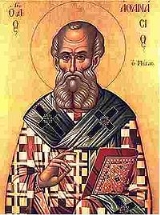
Athanasius of Alexandria

 
Athanasius of Alexandria

   Email Print
   Bookmark   Link


Athanasius of Alexandria


Athanasius of Alexandria (c. 293 – May 2, 373
373

Events...
), also known as St Athanasius the Great, Pope Athanasius I of Alexandria, and St Athanasius the Apostolic, was a theologian, Bishop of Alexandria, Church Father, and a noted Egypt
Egypt

Egypt is a country mainly in North Africa, with the Sinai Peninsula forming a land bridge in Western Asia. Covering an area of about , Egypt borders the Mediterranean Sea to the north, the Gaza Strip and Israel to the northeast, the Red Sea to the east, Sudan to the south and Libya to the west....
ian leader of the fourth century. He is best remembered for his role in the conflict with Arius
Arius

Arius was a Berber people Christian priest from Alexandria, Egypt in the early fourth century whose teachings, now called Arianism, were deemed heretical by the Church....
 and Arianism
Arianism

Arianism is the theological teaching of Arius , a Christian priest, who was first ruled a heresy at the First Council of Nicea, later exonerated and then pronounced a heretic again after his death....
. At the first Council of Nicaea (325), Athanasius argued against Arius and his doctrine that Christ is of a distinct substance from the Father.

Saint Athanasius is chronologically the first Doctor of the Church
Doctor of the Church

Doctor of the Church is a title given by a variety of Christian churches to individuals whom they recognize as having been of particular importance, particularly regarding their additions to theological or doctrinal matters....
 as designated by the Roman Catholic Church
Roman Catholic Church

The Roman Catholic Church, officially known as the Catholic Church is the world's largest Christianity Ecclesia , representing over half of all Christians and one-sixth of the world population....
, and he is counted as one of the four Great Doctors of the Eastern Church.


Discussion
Ask a question about 'Athanasius of Alexandria'
Start a new discussion about 'Athanasius of Alexandria'
Answer questions from other users
Full Discussion Forum


Timeline

298   Born

328   Athanasius is elected bishop of Alexandria.

335   Athanasius is banished to Trier, on the charge that he prevented the corn fleet from sailing to Constantinople.

337   Constantius II announces the restoration of Athanasius to the Patriarch of Alexandria.

339   Athanasius is deposed as Patriarch of Alexandria.

346   Athanasius is restored as Patriarch of Alexandria.

355   For refusing to sign the condemnation of Athanasius of Alexandria, Pope Liberius is forcedly relegated to Beroea in Thrace. Felix II becomes bishop of Rome.

356   Roman authorities make an attempt to arrest Athanasius on the accusation of supporting the usurper Magnentius. Athenasius eludes them, fleeing to the desert to hide amongst the monks of Mount Nitria.

362   Athanasius returns to Alexandria.

365   Emperor Valens exiles Athanasius from Alexandria.


Encyclopedia


Athanasius of Alexandria (c. 293 – May 2, 373
373

Events...
), also known as St Athanasius the Great, Pope Athanasius I of Alexandria, and St Athanasius the Apostolic, was a theologian, Bishop of Alexandria, Church Father, and a noted Egypt
Egypt

Egypt is a country mainly in North Africa, with the Sinai Peninsula forming a land bridge in Western Asia. Covering an area of about , Egypt borders the Mediterranean Sea to the north, the Gaza Strip and Israel to the northeast, the Red Sea to the east, Sudan to the south and Libya to the west....
ian leader of the fourth century. He is best remembered for his role in the conflict with Arius
Arius

Arius was a Berber people Christian priest from Alexandria, Egypt in the early fourth century whose teachings, now called Arianism, were deemed heretical by the Church....
 and Arianism
Arianism

Arianism is the theological teaching of Arius , a Christian priest, who was first ruled a heresy at the First Council of Nicea, later exonerated and then pronounced a heretic again after his death....
. At the first Council of Nicaea (325), Athanasius argued against Arius and his doctrine that Christ is of a distinct substance from the Father.

Saint Athanasius is chronologically the first Doctor of the Church
Doctor of the Church

Doctor of the Church is a title given by a variety of Christian churches to individuals whom they recognize as having been of particular importance, particularly regarding their additions to theological or doctrinal matters....
 as designated by the Roman Catholic Church
Roman Catholic Church

The Roman Catholic Church, officially known as the Catholic Church is the world's largest Christianity Ecclesia , representing over half of all Christians and one-sixth of the world population....
, and he is counted as one of the four Great Doctors of the Eastern Church. St Athanasius' feast day is May 2 in Western Christianity
Western Christianity

Western Christianity is a term used to include the Latin Rite of the Roman Catholic Church, the Churches of the Anglican Communion and Protestantism, which share common attributes that can be traced back to their medieval heritage....
, May 15 in the Coptic Orthodox Church, and January 18 in the Eastern Orthodox Churches.

Biography

Athanasius received his philosophical and theological training at Alexandria
Alexandria

Alexandria , with a population of 4.1 million, is the second-largest city in Egypt, and is the country's largest seaport, serving about 80% of Egypt's imports and exports....
. He was ordained as a deacon by the contemporary patriarch, Alexander of Alexandria
Alexander of Alexandria

Pope Alexander of Alexandria was the nineteenth Pope of Alexandria from 313 to his death. During his patriarchate, he was forced to deal with a number of issues relevant to the church's positions on issues facing the church....
, in 319.In 325, he served as Alexander's secretary at the First Council of Nicaea
First Council of Nicaea

The First Council of Nicea was convened in Nicaea in Bithynia by the Roman Emperors Constantine I in 325 CE. The Council was historically significant as the first effort to attain consensus decision-making in the church through an legislature representing all of Christendom....
. Already a recognized theologian and ascetic, he was the obvious choice to replace Alexander as the Patriarch of Alexandria
Patriarch of Alexandria

The Patriarch of Alexandria is the Archbishop of Alexandria and Cairo, Egypt. Historically, this office has included the designation of Pope , and did so earlier than that of the Bishop of Rome....
 on the latter's death in 328, despite the opposition of the followers of Arius and Meletius of Lycopolis
Meletius of Lycopolis

Meletius was bishop of Lycopolis in Egypt. He is known to us mainly as the founder and namesake of the Melitians , one of several sects in early church history which were concerned about the ease with which lapsed Christians reentered the Church....
.

Bishop Athanasius spent the first years of his patriarchate visiting the churches with people of his territory, which at that time included all of Egypt
Egypt

Egypt is a country mainly in North Africa, with the Sinai Peninsula forming a land bridge in Western Asia. Covering an area of about , Egypt borders the Mediterranean Sea to the north, the Gaza Strip and Israel to the northeast, the Red Sea to the east, Sudan to the south and Libya to the west....
 and Libya
Libya

Libya , officially the Great Socialist People's Libyan Arab Jamahiriya , is a country located in North Africa. Bordering the Mediterranean Sea to the north, Libya lies between Egypt to the east, Sudan to the southeast, Chad and Niger to the south, and Algeria and Tunisia to the west....
. During this period, he established contacts with the hermits and monks of the desert, including Pachomius
Pachomius

Saint Pachomius , also known as Abba Pachomius and Pakhom in Arabic ?????? ????????, is generally recognized as the founder of Christian cenobitic monasticism....
, which would be very valuable to him over the years. Shortly thereafter, St Athanasius became occupied with the disputes with the Byzantine Empire
Byzantine Empire

Byzantine Empire and Eastern Roman Empire are conventional names used to describe the Roman Empire during the Middle Ages, centered on its capital of Constantinople....
 and Arians
Arianism

Arianism is the theological teaching of Arius , a Christian priest, who was first ruled a heresy at the First Council of Nicea, later exonerated and then pronounced a heretic again after his death....
 which would occupy much of his life.

Athanasius' first problem lay with the Meletians
Meletius of Lycopolis

Meletius was bishop of Lycopolis in Egypt. He is known to us mainly as the founder and namesake of the Melitians , one of several sects in early church history which were concerned about the ease with which lapsed Christians reentered the Church....
, who had failed to abide by the terms of the decision made at the First Council of Nicaea
First Council of Nicaea

The First Council of Nicea was convened in Nicaea in Bithynia by the Roman Emperors Constantine I in 325 CE. The Council was historically significant as the first effort to attain consensus decision-making in the church through an legislature representing all of Christendom....
 which had hoped to reunite them with the Church. Athanasius himself was accused of mistreating Arians and the followers of Meletius of Lycopolis
Meletius of Lycopolis

Meletius was bishop of Lycopolis in Egypt. He is known to us mainly as the founder and namesake of the Melitians , one of several sects in early church history which were concerned about the ease with which lapsed Christians reentered the Church....
, and had to answer those charges at a gathering of bishops in Tyre, the First Synod of Tyre
First Synod of Tyre

The First Synod of Tyre was a synod called together by Emperor Constantine I for the primary purpose of evaluating charges brought against Athanasius, the List of Patriarchs of Alexandria....
, in 335. At that meeting, Eusebius of Nicomedia
Eusebius of Nicomedia

Eusebius of Nicomedia was a bishop of Berytus in Phoenicia, then of Nicomedia where the imperial court resided in Bithynia, and finally of Constantinople from 338 up to his death....
 and the other supporters of Arius deposed Athanasius. On November 6, both parties of the dispute met with Constantine I
Constantine I

Flavius Valerius Aurelius Constantinus , commonly known in English_language as Constantine I, Constantine the Great, or Saint Constantine , was Roman Emperor from 306, and the undisputed holder of that office from 324 until his death in 337....
 in Constantinople
Constantinople

Constantinople was the empire capital of the Roman Empire , the Byzantine Empire , the Latin Empire , and the Ottoman Empire . Strategically located between the Golden Horn and the Sea of Marmara at the point where Europe meets Asia, Byzantine Constantinople had been the capital of a Christendom empire, successor to ancient ancient Greece...
. At that meeting, Athanasius was accused of threatening to interfere with the supply of grains from Egypt, and, without any kind of formal trial, was exiled by Constantine to Trier
Trier

Trier is a city in Germany on the banks of the Moselle River. It is the oldest city in Germany, founded in or before 16 BC. Trier is not the only city claiming to be Germany's oldest, but it is the only one that bases this assertion on having the longest history as a city, as opposed to a mere settlement or army camp....
 in the Rhineland
Rhineland

The Rhineland is the general name for the land on both sides of the river Rhine in the west of Germany. After the collapse of the First French Empire in the early 19th century, the German-speaking regions at the middle and lower course of the Rhine were annexed to the kingdom of Prussia....
.

On the death of Emperor Constantine I
Constantine I

Flavius Valerius Aurelius Constantinus , commonly known in English_language as Constantine I, Constantine the Great, or Saint Constantine , was Roman Emperor from 306, and the undisputed holder of that office from 324 until his death in 337....
, Athanasius was allowed to return to his See
See

The word "see" may refer to:* The act of visual perception* The term "See:" as a form of citation signal* Episcopal see, domain of authority of a bishop...
 of Alexandria. Shortly thereafter, however, Constantine's son, the new Roman Emperor
List of Roman Emperors

The title of Roman Emperor, although in some ways a modern concept, effectively summarises the position held by those individuals who wielded power in the Roman Empire....
 Constantius II
Constantius II

Flavius Iulius Constantius, known in English as Constantius II was a Roman Emperor of the Constantinian dynasty....
, renewed the order for Athanasius's banishment in 338. Athanasius went to Rome
Rome

Rome is the capital city of Italy and Lazio, and is Italy's largest and most populous city, with 2,724,347 residents in an urban area of some ....
, where he was under the protection of Constans
Constans

Flavius Julius Constans , was a Roman Emperor who ruled from 337 to 350. Constans was the third and youngest son of Constantine the Great and Fausta, Constantine's second wife....
, the Emperor of the West. During this time, Gregory of Cappadocia
Gregory of Cappadocia

Gregory of Cappadocia served as Patriarch of Alexandria between 339 and 346. Arianism, he was enthroned during one of the exiles of Athanasius of Alexandria from Alexandria....
 was installed as the Patriarch of Alexandria, usurping the absent Athanasius. Athanasius did however remain in contact with his people through his annual "Festal Letters", in which he also announced on which date Easter
Easter

Easter is the most important religious feast in the Christianity liturgical year.Christians believe that Jesus was Resurrection of Jesus from the dead three days after his Crucifixion of Jesus, and celebrate this resurrection on Easter Day or Easter Sunday , two days after Good Friday....
 would be celebrated that year.

Pope Julius I
Pope Julius I

Pope Saint Julius I, was pope from February 6, 337 to April 12, 352.He was a native of Rome and was chosen as successor of Pope Mark after the Roman seat had been vacant for four months....
 wrote to the supporters of Arius strongly urging the reinstatement of Athanasius, but that effort proved to be in vain. He called a synod
Synod

A synod is a council of a Ecclesia , usually a Christianity church, convened to decide an issue of doctrine, administration or application. An ecumenical council is so named because it is a synod of the whole church ...
 in Rome in the year 341 to address the matter, and at that meeting Athanasius was found to be innocent of all the charges raised against him. Julius also called the Council of Sardica
Council of Sardica

The Roman Catholic Diocese of Sofia and Plovdiv is a Roman Catholic diocese of the Latin Rite, which includes the whole southern part of Bulgaria....
 in 343. This council confirmed the decision of the earlier Roman synod, and clearly indicated that the attendees saw St Athanasius as the lawful Patriarch of Alexandria. It proved no more successful, however, as only bishops from the West and Egypt bothered to appear.

In 346, following the death of Gregory, Constans used his influence to allow Athanasius to return to Alexandria. Athanasius' return was welcomed by the majority of the people of Egypt, who had come to view him as a national hero. This was the start of a "golden decade" of peace and prosperity, during which time Athanasius assembled several documents relating to his exiles and returns from exile in the Apology Against the Arians. However, upon Constans' death in 350, a civil war broke out which left Constantius as sole emperor. Constantius, renewing his previous policies favoring the Arians, banished Athanasius from Alexandria once again. This was followed, in 356, by an attempt to arrest Athanasius during a vigil service. Following this, Athanasius left for Upper Egypt
Upper Egypt

File:Ancient Egypt map-en.svgUpper Egypt is a narrow strip of land that extends from the Cataracts of the Nile section of Upper Egypt, between El-Ayait and Asyut is sometimes known as Middle Egypt....
, where he stayed in several monasteries and other houses. During this period, Athanasius completed his work Four Orations against the Arians and defended his own recent conduct in the Apology to Constantius and Apology for His Flight. Constantius' persistence in his opposition to Athanasius, combined with reports Athanasius received about persecution of non-Arians by the new Arian bishop George of Laodicea
George of Laodicea

George of Laodicea, , often called the Cappadocian, was from 356 to 361 Arianism archbishop of Alexandria.According to Ammianus, he was a native of Epiphania, in Cilicia....
, prompted Athanasius to write his more emotional History of the Arians, in which he described Constantius as a precursor of the Antichrist
Antichrist

The Antichrist is one who fulfills Biblical prophecies concerning an adversary of New Testament view on Jesus' life while resembling him in a deceptive manner....
.

In 361, after the death of Emperor Constantius, shortly followed by the murder of the very unpopular Bishop George, the popular St Athanasius now had the opportunity to return to his Patriarchate
Patriarchate

A patriarchate is the office or Jurisdiction#Executive jurisdiction of a patriarch. A patriarch, as the term is used here, is either* one of the highest-ranking bishops in Eastern Orthodoxy, the original five of Rome, Constantinople, Alexandria, Antioch, and Jerusalem, but now nine, including patriarchs of Serbia, Russia, Georgia , Bulgaria...
. The following year he convened a council at Alexandria at which he appealed for unity among all those who had faith in Christianity, even if they differed on matters of terminology. This prepared the groundwork for the definition of the orthodox doctrine of the Trinity
Trinity

In Christianity doctrine, the Trinity is the unity of God the Father, God the Son, and Holy Spirit as three persons in monotheism. The doctrine states that God is the Triune God, existing as three persons, or in the Greek hypostasis , but one being....
, which stresses the distinctions between the persons of God more than Athanasius himself generally did. In 362, the new Emperor Julian
Julian the Apostate

Flavius Claudius Julianus, known also as Julian or Julian the Apostate , was Roman Emperor of the Constantinian dynasty. He was the last non-Christian Roman Emperor, and expended much energy during his reign attempting to supplant the growing power of Christianity within the empire with officially revived Religion in ancient Rom...
, noted for his opposition to Christianity, ordered Athanasius to leave Alexandria once again. Athanasius left for Upper Egypt
Upper Egypt

File:Ancient Egypt map-en.svgUpper Egypt is a narrow strip of land that extends from the Cataracts of the Nile section of Upper Egypt, between El-Ayait and Asyut is sometimes known as Middle Egypt....
, remaining there until Julian's death in 363. Two years later, the Emperor Valens
Valens

Flamin Julius Valens was Roman Emperor , after he was given the Eastern part of the empire by his brother Valentinian I. Valens, sometimes known as the Last of the Romans, was defeated and killed in the Battle of Adrianople, which marked the beginning of the fall of the Western Roman Empire....
, who favored the Arian position, in his turn exiled Athanasius. This time however, St Athanasius simply left for the outskirts of Alexandria, where he stayed for only a few months before the local authorities convinced Valens to retract his order of exile. Some of the early reports explicitly indicate that Athanasius spent this period of exile in his ancestral tomb.

Works

Saint Athanasius's other works include his two-part "Against the Heathen" and "The Incarnation of the Word of God". Completed probably early in his life, before the Arian controversy, they constitute the first classic work of developed Orthodox theology. In the first part, Athanasius attacks several Pagan practices and beliefs. The second part presents teachings on the redemption. Also in these books, Athanasius put forward the belief that the Son of God
Son of God

Son of God is a phrase found in the Hebrew Bible, various other Jewish texts and the Christian Bible. In the Tanakh, according to Judaism religious tradition, Son of God has many possible meanings, referring to angels, or humans or even all mankind....
, the eternal Word through whom God created the world, entered that world in human form to lead men back into the harmony from which they had earlier fallen away. This work intentionally challenged the doctrines of Arianism
Arianism

Arianism is the theological teaching of Arius , a Christian priest, who was first ruled a heresy at the First Council of Nicea, later exonerated and then pronounced a heretic again after his death....
, which stated that the Son was a lesser entity than the Father. His other important works include his Letters to Serapion, which dealt with the divinity
Divinity

Divinity and divine are broadly applied but loosely defined terms, used variously within different faiths and belief systems ? and even by different individuals within a given faith ? to refer to some transcendent or transcendental power, or its attributes or manifestations in the world....
 of the Holy Spirit
Holy Spirit

In Christianity, the Holy Ghost or Holy Spirit is the spirit of God. The term Christ , is also used to refer to this presence. That is, the Spirit is considered to act in concert with and share an essential nature with God the Father and God the Son ....
, and his classic Life of St Anthony, which was translated into several languages and played an important role in the spreading of the ascetic ideal in Eastern and Western Christianity. He also wrote several works of Biblical exegesis, primarily of volumes in the Old Testament
Old Testament

In Western Christianity, the Old Testament refers to the books that form the first of the two-part Christianity Bible Biblical canon. These works correspond to the Hebrew Bible , with some variations and additions....
, which are preserved in excerpts regarding Book of Genesis, the Song of Solomon
Song of Solomon

The Song of Songs , is a book of the Hebrew Bible—Tanakh or Old Testament—one of the five The Five Scrolls . It is also known as the Song of Solomon or as Canticles, the latter from the shortened and anglicized Vulgate title Canticum Canticorum, "Song of Songs" in Latin language....
, and Psalms
Psalms

Psalms is a book of the Hebrew Bible , included in the collected works known as the "Writings" or Ketuvim....
. His works on ascetism, include the aforementioned Life of St. Anthony, as well as a Discourse on Virginity, a short work on Love and Self-Control, and a treatise On Sickness and Health which is only preserved in fragments.

St Athanasius' letters include one "Letter Concerning the Decrees of the Council of Nicaea" (De Decretis), which is an account of the proceedings of that Council, and another letter in the year 367 which was the first known listing of the New Testament including all those books now accepted everywhere as the New Testament. (earlier similar lists vary by the omission or addition of a few books, see Development of the New Testament canon
Development of the New Testament canon

The Biblical canon is the set of books Christians regard as Biblical inspiration and thus constituting the Christian Bible. Although the Early Christianity primarily used the Greek Old Testament, the Septuagint or LXX, or the Targums among Aramaic speakers, the apostles did not otherwise leave a defined set of new scriptures; instead the New Testam...
). Several of his letters also survive. In one of these, to Epictetus of Corinth, Athanasius anticipates future controversies in his defense of the humanity of Christ. Another of his letters, to Dracontius, urges that monk to leave the desert for the more active duties of a bishop.

There are several other works ascribed to him, although not necessarily generally accepted as being his own work. These include the Athanasian creed
Athanasian Creed

The Athanasian Creed is a statement of Christianity Trinity doctrine and Christology which has been used in Western Christianity since the sixth century A.D....
, which is today generally seen as being of 5th century Galician origin.

Athanasius was not what would be called a speculative theologian. As he stated in his First Letters to Serapion, he held onto "the tradition, teaching, and faith proclaimed by the apostles and guarded by the fathers." In some cases, this led to his taking the position that faith should take priority over reason. He held that not only the Son of God was consubstantial
Consubstantiality

Consubstantiality is a term used in Latin Christian christology, coined by Tertullian in Against Hermogenes 44, used to translate the Greek term Homoousian....
 with the Father, but so also was the Holy Spirit
Holy Spirit

In Christianity, the Holy Ghost or Holy Spirit is the spirit of God. The term Christ , is also used to refer to this presence. That is, the Spirit is considered to act in concert with and share an essential nature with God the Father and God the Son ....
, which held a great deal of influence in the development of later doctrines regarding the trinity.

Veneration

Stathanasiusshrineinstmarkcathedralcairo
Saint Athanasius was originally buried in Alexandria
Alexandria

Alexandria , with a population of 4.1 million, is the second-largest city in Egypt, and is the country's largest seaport, serving about 80% of Egypt's imports and exports....
, Egypt
Egypt

Egypt is a country mainly in North Africa, with the Sinai Peninsula forming a land bridge in Western Asia. Covering an area of about , Egypt borders the Mediterranean Sea to the north, the Gaza Strip and Israel to the northeast, the Red Sea to the east, Sudan to the south and Libya to the west....
 but his body was later transferred to Italy
Italy

Italy , officially the Italian Republic , is a country located on the Italian Peninsula in Southern Europe and on the two largest islands in the Mediterranean Sea, Sicily and Sardinia....
. During Pope Shenouda III
Pope Shenouda III of Alexandria

Pope Shenouda III of Alexandria By definition of his post he is the head of The Holy Synod of the Coptic Orthodox Patriarchate of Alexandria....
's visit to Rome from May 4 to May 10, 1973, Pope Paul VI
Pope Paul VI

Pope Paul VI , born Giovanni Battista Enrico Antonio Maria Montini , reigned as Pope of the Roman Catholic Church and monarch of Vatican City from 1963 to 1978....
 gave the Coptic
Coptic

Coptic may refer to:* the Copts, Christian natives of Egypt* the Coptic language**the Coptic alphabet...
 Patriarch the relic
Relic

A relic is an object or a personal item of Religion significance, carefully preserved with an air of veneration as a tangible memorial. Relics are an important aspect of some forms of Buddhism, Christianity, Hinduism, shamanism, and many other religions....
s of St Athanasius, which he brought back to Egypt on 15 May. The relics of St Athanasius the Great of Alexandria are currently preserved under the new Saint Mark
Mark the Evangelist

Saint Mark the Evangelist , also known as John Mark, is traditionally believed to be the author of the Gospel of Mark and a companion of Saint Peter....
 Coptic Orthodox Cathedral in Deir El-Anba Rowais, Abbassiya, Cairo, Egypt.

The following is a troparion
Troparion

A troparion in Byzantine music and in the religious music of Eastern Orthodoxy is a short hymn of one stanza, or one of a series of stanzas....
 (hymn) to Saint Athanasius sung in some Orthodox churches.
O Holy father Athanasius,
like a pillar of orthodoxy
you refuted the heretical nonsense of Arius
by insisting that the Father and the Son are equal in essence.
O venerable father, beg Christ our God to save our souls.


Saint Athanasius is venerated as a saint by the majority of major Christian denominations which officially approve of and recognize saints. His feast day is observed on May 2, the day of his death. In the Roman Catholic Church
Roman Catholic Church

The Roman Catholic Church, officially known as the Catholic Church is the world's largest Christianity Ecclesia , representing over half of all Christians and one-sixth of the world population....
 he is deemed a Doctor of the Church
Doctor of the Church

Doctor of the Church is a title given by a variety of Christian churches to individuals whom they recognize as having been of particular importance, particularly regarding their additions to theological or doctrinal matters....
.

He has been hailed as "the pillar of the Church" by Gregory of Nazianzus
Gregory of Nazianzus

Gregory of Nazianzus was a 4th-century Archbishop of Constantinople. He is widely considered the most accomplished rhetorical stylist of the Church Fathers....
.

Historical significance


Early life

The Alexandria
Alexandria

Alexandria , with a population of 4.1 million, is the second-largest city in Egypt, and is the country's largest seaport, serving about 80% of Egypt's imports and exports....
 of his boyhood was an epitome—intellectually, morally, and politically—of the ethnically diverse Graeco-Roman world. It was the most important center of trade in the whole empire; and its primacy as an emporium of ideas was more commanding than that of Rome or Constantinople, Antioch or Marseilles. Its famous "Catechetical School", while sacrificing none of its famous passion for orthodoxy since the days of Pantaenus
Pantaenus

Saint Pantaenus was a Christian theologian who founded the Catechetical School of Alexandria about AD 190. This school was the earliest catechetical school, and became influential in the development of Christian theology....
, Clement of Alexandria
Clement of Alexandria

Clement of Alexandria , was the first notable member of the Christianity of Alexandria, and one of its most distinguished teachers. He was born about the middle of the 2nd century, and died between 211 and 216....
, and Origen of Alexandria, had begun to take on an almost secular character in the comprehensiveness of its interests, and had counted influential pagans among its serious auditors.

St. Athanasius seems to have been brought early in life under the immediate supervision of the ecclesiastical authorities of his native city. A story has been preserved by Rufinus
Rufinus

Rufinus may refer to:*Saints Rufinus, eleven saints named Rufinus in Roman Martyrology*Rufinus of Assisi, 3rd century saint and martyr*Rufinus , Christian martyr...
 (Hist. Eccl., I, xiv). The bishop Alexander
Alexander of Alexandria

Pope Alexander of Alexandria was the nineteenth Pope of Alexandria from 313 to his death. During his patriarchate, he was forced to deal with a number of issues relevant to the church's positions on issues facing the church....
, so the tale runs, had invited a number of fellow prelates to meet him at breakfast after a great religious function. While Alexander was waiting for his guests to arrive, he stood by a window, watching a group of boys at play on the seashore below the house. He had not observed them long before he discovered that they were imitating the elaborate ritual of Christian baptism. He sent for the children and, in the investigation that followed, it was discovered that one of the boys (none other than Athanasius), had acted the part of the bishop, and in that character had actually baptized several of his companions in the course of their play. Alexander determined to recognize the make-believe baptisms as genuine, and decided that Athanasius and his playfellows should go into training in order to prepare themselves for a clerical career.

Sozomen
Sozomen

Salminius Hermias Sozomenus was a historian of the Christianity church....
 speaks of his "fitness for the priesthood", and calls attention to the significant circumstance that he was "from his tenderest years practically self-taught". "Not long after this," adds the same authority, the Bishop Alexander "invited Athanasius to be his commensal and secretary. He had been well educated, and was versed in grammar and rhetoric, and had already, while still a young man, and before reaching the episcopate, given proof to those who dwelt with him of his wisdom and acumen" (Soz., II, xvii). That "wisdom and acumen" manifested themselves in a varied environment. While still a deacon under Alexander's care, he seems to have been brought for a while into close relations with some of the solitaries of the Egyptian desert, and in particular with the Anthony the Great
Anthony the Great

Anthony the Great , also known as Saint Anthony, Anthony the Abbot, Anthony of Egypt, Anthony of the Desert, Anthony the Anchorite, Abba Antonius , and Father of All Monks, was an Christianity saint from Egypt, a prominent leader among the Desert Fathers....
, whose life he is said to have written.

Opposition to Arianism


In about 319, when Athanasius was a deacon
Deacon

Deacon is a role in the Christianity that is generally associated with service of some kind, but which varies among theological and denominational traditions....
, a presbyter
Presbyter

Presbyter in the New Testament refers to a leader in local Christian congregations, then a synonym of episkopos . In modern usage, it is distinct from bishop and synonymous with priest, pastor, Elder , or religious minister in various Christian denominations....
 named Arius
Arius

Arius was a Berber people Christian priest from Alexandria, Egypt in the early fourth century whose teachings, now called Arianism, were deemed heretical by the Church....
 came into a direct conflict with Alexander of Alexandria
Alexander of Alexandria

Pope Alexander of Alexandria was the nineteenth Pope of Alexandria from 313 to his death. During his patriarchate, he was forced to deal with a number of issues relevant to the church's positions on issues facing the church....
. It appears that Arius reproached Alexander for what he felt were misguided or heretical teachings being taught by the bishop. Arius’ theological views appear to have been firmly rooted in Alexandrian Christianity, and his Christological views were certainly not radical at all. He embraced a subordinationist Christology
Christology

Christology is a field of study within Christian theology which is concerned with the nature of Jesus the Christ, particularly with how the divine and human are related in his person....
 (that God did not have a beginning, but the Logos
Logos

is an important term in philosophy, analytical psychology, rhetoric and religion.Heraclitus established the term in Western philosophy as meaning both the source and fundamental order of the cosmos....
 did), heavily influenced by Alexandrian thinkers like Origen
Origen

Origen was an Early Christianity scholar, theology, and one of the most distinguished of the early Church father of the Christian Church. According to tradition, he is held to have been an Ancient Egypt who taught in Alexandria, reviving the Catechetical School of Alexandria where Clement of Alexandria had taught....
, which was a common Christological view in Alexandria at the time.. Support for Arius from powerful Bishops like Eusebius of Caesarea
Eusebius of Caesarea

Eusebius of Caesarea became the bishop of Caesarea Maritima c 314. He is often referred to as the Father of Church History because of his work in recording the history of the early Christianity church, especially Chronicon and Church_History_....
 and Eusebius of Nicomedia
Eusebius of Nicomedia

Eusebius of Nicomedia was a bishop of Berytus in Phoenicia, then of Nicomedia where the imperial court resided in Bithynia, and finally of Constantinople from 338 up to his death....
, further illustrate how Arius' subordinationist Christology was shared by other Christians in the Empire. Arius was subsequently excommunicated by Alexander, and he would begin to elicit the support of many bishops who agreed with his position. Athanasius may have accompanied Alexander to the First Council of Nicaea
First Council of Nicaea

The First Council of Nicea was convened in Nicaea in Bithynia by the Roman Emperors Constantine I in 325 CE. The Council was historically significant as the first effort to attain consensus decision-making in the church through an legislature representing all of Christendom....
 in 325, the council which produced the Nicene Creed
Nicene Creed

The Nicene Creed is the creed or profession of faith that is most widely used in Christianity liturgy. It is called Nicene because, in its original form, it was adopted in the city of Iznik by the first ecumenical council, which met there in 325....
 and anathematized Arius and his followers. On May 9, 328
328

Events...
, he succeeded Alexander as bishop of Alexandria. As a result of rises and falls in Arianism
Arianism

Arianism is the theological teaching of Arius , a Christian priest, who was first ruled a heresy at the First Council of Nicea, later exonerated and then pronounced a heretic again after his death....
's influence after the First Council of Nicaea, Emperor Constantine I
Constantine I

Flavius Valerius Aurelius Constantinus , commonly known in English_language as Constantine I, Constantine the Great, or Saint Constantine , was Roman Emperor from 306, and the undisputed holder of that office from 324 until his death in 337....
 banished him from Alexandria to Trier
Trier

Trier is a city in Germany on the banks of the Moselle River. It is the oldest city in Germany, founded in or before 16 BC. Trier is not the only city claiming to be Germany's oldest, but it is the only one that bases this assertion on having the longest history as a city, as opposed to a mere settlement or army camp....
 in the Rhineland
Rhineland

The Rhineland is the general name for the land on both sides of the river Rhine in the west of Germany. After the collapse of the First French Empire in the early 19th century, the German-speaking regions at the middle and lower course of the Rhine were annexed to the kingdom of Prussia....
, but he was restored after the death of Constantine I by the emperor's son Constantine II
Constantine II (emperor)

Flavius Claudius Constantinus, known in English as Constantine II, was List of Roman Emperors from 337 to 340. The eldest son of Constantine the Great and Fausta, he was born at Arles, and was raised as a Christian....
. In 359, Athanasius was banished once again. This time he went to Rome
Rome

Rome is the capital city of Italy and Lazio, and is Italy's largest and most populous city, with 2,724,347 residents in an urban area of some ....
, and spent seven years there before returning to Alexandria. The years from 346 through 356 were a relatively peaceful period for Athanasius, and some of his most important writings were composed during this period. Unfortunately, the emperor Constantinus II seems to have been committed to having Athanasius deposed
Deposition (politics)

Deposition by political means concerns the removal of a politician or monarch. It may be done by coup, impeachment, invasion or forced abdication....
, and went so far as to send soldiers to arrest Athanasius. Athanasius went into hiding in the desert with the Desert Fathers
Desert Fathers

The Desert Fathers were Hermits, Ascetics and Monks who lived mainly in the Scetes desert of Egypt, beginning around the third century. Very few of the Desert Fathers lived in other deserted regions of Egypt....
, and continued in his capacity as bishop from there until the death of Constantinus in 361.

A particularly noteworthy event occurred in 362, when Athanasius showed remarkable diplomatic flair in rallying the Orthodox
Eastern Orthodox Church

The Eastern Orthodox Church is the second largest single Christian communion in the world with an estimated 225 million members worldwide. It is considered by its adherents to be the Four Marks of the Church established by Jesus Christ and his Apostles nearly 2000 years ago....
 at the Council of Alexandria in 362.

There were two more brief periods when Athanasius was exiled. In the spring of 365, after the accession of Emperor Valens
Valens

Flamin Julius Valens was Roman Emperor , after he was given the Eastern part of the empire by his brother Valentinian I. Valens, sometimes known as the Last of the Romans, was defeated and killed in the Battle of Adrianople, which marked the beginning of the fall of the Western Roman Empire....
 to the throne, troubles again arose. Athanasius was once more compelled to seek safety from his persecutors in concealment (October 365), which lasted, however, only for four months.

From 366 he was able to serve as bishop in peace until his death. Athanasius was restored on at least five separate occasions, perhaps as many as seven. This gave rise to the expression "Athanasius contra mundum" or "Athanasius against the world".

He spent his final years in repairing all the damage done during the earlier years of violence, dissent, and exile, and returning to his writing and preaching undisturbed. On the 2nd of May 373, having consecrated Peter II
Peter II

Peter II may refer to:*Peter II of Russia *Peter II of Yugoslavia *Peter II of Aragon , King of Aragon and Count of Barcelona*Pedro II of Brazil ...
, one of his presbyters as his successor, he died quietly in his own house.

Writings

Athanasius spent a good deal of his energy on polemical writings against his theological opponents. Examples include: Orations Against the Arians, his defence of the divinity of the Holy Spirit
Holy Spirit

In Christianity, the Holy Ghost or Holy Spirit is the spirit of God. The term Christ , is also used to refer to this presence. That is, the Spirit is considered to act in concert with and share an essential nature with God the Father and God the Son ....
 (Letters to Serapion in the 360s, and On the Holy Spirit) against Macedonianism
Macedonians (religious group)

The Macedonians were a Christian sect of the 4th century AD, named after Bishop Macedonius I of Constantinople. They professed a belief similar to that of Arianism, but apparently denying the divinity of the Holy Spirit, and regarding the substance of Jesus Christ as being the same in kind as that of God the Father....
 and "On the Incarnation".

Arguably his most read work is his biography of Anthony the Great
Anthony the Great

Anthony the Great , also known as Saint Anthony, Anthony the Abbot, Anthony of Egypt, Anthony of the Desert, Anthony the Anchorite, Abba Antonius , and Father of All Monks, was an Christianity saint from Egypt, a prominent leader among the Desert Fathers....
 entitled Vita Antonii, or Life of Antony. This biography later served as an inspiration to Christian monastics
Monasticism

Monasticism is the religion practice in which one renounces world pursuits in order to fully devote one's life to spiritual work. The origin of the word is from Ancient Greek, and the idea was originally related to Christian monks....
 in both the East and the West. The so-called Athanasian Creed
Athanasian Creed

The Athanasian Creed is a statement of Christianity Trinity doctrine and Christology which has been used in Western Christianity since the sixth century A.D....
 dates from well after Athanasius's death and draws upon the phraseology of Augustine's De trinitate.

In Coptic literature
Coptic literature

Coptic literature is the body of writings in the Coptic language of Egypt, the last stage of the indigenous Egyptian language. It comprises mostly Christian texts dating after the 2nd century AD, but also includes Old Coptic writings that predate the Christian era....
 St. Athanasius is the first patriarch of Alexandria to use Coptic
Coptic language

Coptic or Coptic Egyptian is the final stage of the Egyptian language, a northern Afro-Asiatic languages language spoken in Egypt until at least the seventeenth century....
, as well as Greek in his writings.

New Testament canon

Athanasius is also the first person to identify the same 27 books of the New Testament
New Testament

The New Testament is the name given to the second major division of the Christianity Bible, the first such division being the much longer Old Testament....
 that are in use today. Up until then, various similar lists of works to be read in churches were in use. A milestone in the evolution of the canon of New Testament books
Biblical canon

A Biblical canon or canon of scripture is a list or set of Bible books considered to be authoritative as scripture by a particular religious community, generally in Judaism or Christianity....
 is his Easter letter
Easter letter

In AD 367, Athanasius of Alexandria authored the 39th Festal Letter, or Easter letter. In it, he listed the same 27 books of the New Testament that are in use today....
 from Alexandria, written in 367, usually referred to as his 39th Festal Letter. Pope Damasus, the Bishop of Rome
Bishop of Rome

The Bishop of Rome is the Bishop of the Holy See, more often referred to in the Catholic Church tradition as the Pope. The first Bishop of Rome to bear the title of "Pope" was Pope Boniface III in 607, the first to assume the title of "Universal Bishop" by decree of Phocas....
 in 382, promulgated a list of books which contained a New Testament canon identical to that of Athanasius. A synod in Hippo
Synod of Hippo

The Synod of Hippo refers to the Synod of A.D. 393 which was hosted in Hippo Regius in northern Africa during the Early Christianity. Additional synods were held in 394, 397, 401 and 426....
 in 393 repeated Athanasius' and Damasus' New Testament list (without the Epistle to the Hebrews
Epistle to the Hebrews

The Epistle to the Hebrews is one of the books in the New Testament. Though traditionally credited to the Apostle Paul, the letter is anonymous....
), and a synod in Carthage
Councils of Carthage

Synods of Carthage During the 3rd, 4th, and 5th centuries the town of Carthage in Africa served as the meeting-place of a large number of church synods, of which, however, only the most important can be treated here....
 in 397 repeated Athanasius' and Damasus' complete New Testament list.

Scholars have debated whether Athanasius' list in 367 was the basis for the later lists. Because Athanasius' canon is the closest canon of any of the Church Fathers to the canon used by Protestant churches today, many Protestants point to Athanasius as the father of the canon. They are identical except that Athanasius includes the Book of Baruch
Book of Baruch

The Book of Baruch, occasionally referred to as 1 Baruch, is called a deuterocanonical books or Biblical apocrypha book of the Bible. Although not in the Hebrew Bible, it is found in the Septuagint and in the Vulgate, and also in Theodotion's version....
 and the Letter of Jeremiah and places the Book of Esther
Book of Esther

The Book of Esther is one of the books of the Ketuvim of the Tanakh and of the Historical Books of the Old Testament. The Book of Esther or the Megillah is the basis for the Jewish celebration of Purim....
 among the "7 books not in the canon but to be read" along with the Wisdom of Solomon
Book of Wisdom

Book of Wisdom or Wisdom of Solomon or simply Wisdom is one of the deuterocanonical books of the Bible. It is one of the seven Sapiential or wisdom books of the Septuagint Old Testament, which includes Book of Job, Psalms, Book of Proverbs, Ecclesiastes, Song of Solomon , and Ecclesiasticus ....
, Sirach (Ecclesiasticus)
Ben Sira

Sirach, by Ben Sira, also known as The Wisdom of Jesus son of Sirach, The Wisdom of Ben Sira, or Ecclesiasticus, is a work from the second century BC, originally written in Hebrew language....
, Judith
Book of Judith

[Image:Cristofano Allori 002.jpg|thumb|220px|Judith with the Head of Holophernes, by Cristofano Allori, 1613 The Book of Judith is a deuterocanonical book, included in the Septuagint and in the Roman Catholic and Eastern Orthodox Christian Old Testament of the Bible, but excluded by Judaism and Protestantism....
, Tobit
Book of Tobit

The Book of Tobit or Tobi is a book of scripture that is part of the Roman Catholic Church and Eastern Orthodoxy biblical canon, pronounced canonical by the Council of Carthage of 397 and confirmed for Roman Catholics by the Council of Trent ....
, the Didache
Didache

The Didache is the common name of a brief Early Christianity treatise . It is an anonymous work not belonging to any single individual, and a pastoral manual "that reveals more about how Jewish Christianity saw themselves and how they adapted their Judaism for gentiles than any other book in the Christian Scriptures." The text, parts of whic...
, and the Shepherd of Hermas
The Shepherd of Hermas

The Shepherd of Hermas is a Christian work of the second century, considered a valuable book by many Christians, and occasionally considered biblical canon by some of the early Church fathers....
. See the article, Biblical canon
Biblical canon

A Biblical canon or canon of scripture is a list or set of Bible books considered to be authoritative as scripture by a particular religious community, generally in Judaism or Christianity....
, for more details.

Recent Opinions


There are at present two completely opposite views about the personality of Athanasius. While some scholars praise him as an orthodox saint with great character, others see him as a power-hungry politician who employed questionable ecclesiastical tactics.

Critics of Athanasius

Some recent academics have painted a less than flattering picture of the saint. They argue that his ascension to the station of Bishop in Alexandria
Alexandria

Alexandria , with a population of 4.1 million, is the second-largest city in Egypt, and is the country's largest seaport, serving about 80% of Egypt's imports and exports....
 occurred under questionable circumstances. Upon the death of his predecessor Alexander, in 328 C.E., more than fifty bishops gathered to confer a new leader to the Alexandria
Alexandria

Alexandria , with a population of 4.1 million, is the second-largest city in Egypt, and is the country's largest seaport, serving about 80% of Egypt's imports and exports....
n see. While Alexander had been priming Athanasius to assume the bishopric after his death, it is said, he was not unanimously supported, and questions of his age (the minimum age to become a bishop was thirty, and questions remain to this day if he was yet that old), as well as less than overwhelming support, did not help his candidacy. According to recent academics, Athanasius, growing impatient, took a small number of bishops who supported his claim, and held a private consecration making him bishop. According to these scholars, his ascension would only later be declared the will of the people.

Throughout most of his career, Athanasius had many detractors. There were allegations of defiling an altar, selling Church grain that had been meant to feed the poor for his own personal gain, and for suppressing dissent through violence and murder. It cannot be claimed, beyond all doubt, whether any or all of these specific allegations were true, but some recent scholars suggest that Athanasius employed a level of force when it suited his cause or personal interests, and his administration of the Alexandria
Alexandria

Alexandria , with a population of 4.1 million, is the second-largest city in Egypt, and is the country's largest seaport, serving about 80% of Egypt's imports and exports....
n see has even been likened by these scholars to an “ecclesiastical mafia”.

Supporters of Athanasius

However, there are also many modern historians who object to this view and point out that such hostile attitude towards Athanasius is based on an unfair judgment of historical sources. Many Christian denominations revere Athanasius as a saint, teacher, and father. They cite his defense of the Christology described in the first chapter of the Gospel of John ("In the beginning was the Word, and the Word was with God, and the Word was God. He was in the beginning with God" (John 1:1,2) and his significant theological works (C.S Lewis calls his De Incarnatione a "masterpiece") as evidence of his righteousness. They also emphasize his close relationship with Saint Anthony, who is almost universally revered throughout Christendom.

Allegations of violence

Some modern historians suggest that the tactics of Athanasius were a significant factor in his success. He did not hesitate to back up his theological views with the use of force. In Alexandria, they assert, he assembled a group that could instigate a riot in the city if needed. It was an arrangement "built up and perpetuated by violence." However, these accusations are nothing new. Some of these allegations from the Council of Tyre were clearly false, like the charge of killing Arsenius as Arsenius was still alive. However, it is known that at least one of his opponents, Arius
Arius

Arius was a Berber people Christian priest from Alexandria, Egypt in the early fourth century whose teachings, now called Arianism, were deemed heretical by the Church....
 died under mysterious circumstances that today we would call murder. The allegations nevertheless led to distrust in some quarters and to his being tried many times for "bribery, theft, extortion, sacrilege
Sacrilege

Sacrilege is the violation or injurious treatment of a sacred object. In a less proper sense, any transgression against the virtue of religion would be a sacrilege....
, treason and murder." While the charges rarely stuck, his reputation was a major factor in his multiple exiles from Alexandria. Athanasius stubbornly refused to compromise his theological views by stating, "What is at stake is not just a theological theory but people's salvation." Simply put, he meant that if Jesus were not God, as Arius asserted, then people were not saved by his coming, death, and resurrection. He played a clear role in making the Constantinian shift
Constantinian shift

Constantinian shift is a term used by Anabaptist and Post-Christendom theologians to describe the political and theological aspects of the 4th century process of Constantine I and Christianity....
 a part of the theology of the church.

Anti-Arianism

Athanasius presented his opponents, the Arians
Arianism

Arianism is the theological teaching of Arius , a Christian priest, who was first ruled a heresy at the First Council of Nicea, later exonerated and then pronounced a heretic again after his death....
 as a cohesive group that backed Arius
Arius

Arius was a Berber people Christian priest from Alexandria, Egypt in the early fourth century whose teachings, now called Arianism, were deemed heretical by the Church....
’ views and followed him as a leader. It is now accepted by most scholars that the Arian Party were not a monolithic group. It is now believed that Arius’ supporters held drastically different theological views that spanned the early Christian theological spectrum. They supported the tenets of Origenist thought and theology, but had little else in common. The term Arian was first coined by Athanasius to describe both followers of Arius, and followers of ideas that he deemed as bad as Arius'. Athanasius used the term Arian to describe many of his opponents, except for Melitians. He used the term in a derogatory fashion to chide Arius’ supporters who did not see themselves as followers of Arius. As stated by Timothy Barnes; Athanasius used “invented dialogue to ridicule his adversaries”, and used “suppression and distortion” to serve his own means. He often blamed charges and accusations leveled at him on “Arian madmen” who he claimed conspired to destroy him and Christianity. The Arian
Arianism

Arianism is the theological teaching of Arius , a Christian priest, who was first ruled a heresy at the First Council of Nicea, later exonerated and then pronounced a heretic again after his death....
 party, as described by Athanasius, may not have existed in the form he portrayed it in his writings. Some argue that the view of Arianism
Arianism

Arianism is the theological teaching of Arius , a Christian priest, who was first ruled a heresy at the First Council of Nicea, later exonerated and then pronounced a heretic again after his death....
 that exists to this day among most Christians would not have existed were it not for Athanasius. However, others point to the Council of Nicaea as proof in and of itself that Arianism was a real theological ideology. While Athanasius may have affected the general perception of Arianism, they say, his portrayal was polemical, not creative.

See also

  • Creed
    Creed

    A creed is a statement of belief ? usually religious belief ? or faith often recited as part of a religious service. The word derives from the for I believe and credimus for we believe. It is sometimes called symbol , signifying a "token" by which persons of like beliefs might recognize each other....
  • Nicene Creed
    Nicene Creed

    The Nicene Creed is the creed or profession of faith that is most widely used in Christianity liturgy. It is called Nicene because, in its original form, it was adopted in the city of Iznik by the first ecumenical council, which met there in 325....
  • Apostles' Creed
    Apostles' Creed

    The Apostles' Creed , sometimes titled Symbol of the Apostles, is an early statement of Christianity belief, a creed or "symbol". It is widely used by a number of List of Christian denominations for both liturgy and catechesis purposes, most visibly by liturgical Churches of Western tradition, including the Latin Rite of the Roman Catho...
  • Athanasian Creed
    Athanasian Creed

    The Athanasian Creed is a statement of Christianity Trinity doctrine and Christology which has been used in Western Christianity since the sixth century A.D....
  • Shield of the Trinity
    Shield of the Trinity

    The Shield of the Trinity or Scutum Fidei is a traditional Christianity visual Christian symbolism which expresses many aspects of the doctrine of the Trinity, summarizing the first part of the Athanasian Creed in a compact diagram....
  • Orthodox Church
  • Eastern Catholic Church


External links

  • by F. A. Forbes
    F. A. Forbes

    F. A. Forbes was the nom de plume of Mother Frances Alice Monica Forbes, RSCJ, a sister of the Society of the Sacred Heart, Scotland....
  • (7 Bashans, 89 A.M.
    Pashons 7 (Coptic Orthodox liturgics)

    Pashons 6 - Coptic calendar - Pashons 8 ...
    )
  • Reworked from Robinson, below.
  • (not written by Athanasius, see Athanasian Creed
    Athanasian Creed

    The Athanasian Creed is a statement of Christianity Trinity doctrine and Christology which has been used in Western Christianity since the sixth century A.D....
     above)
  • (in Greek original and English)
  • , Dr N Needham
  • Orthodox icon
    Icon

    An 'icon' is a religious work of art, most commonly a painting, from Eastern Christianity. More broadly the term is used in a wide number of contexts for an image, picture, or representation; it is a sign or likeness that stands for an object by signifying or representing it either concretely or by analogy, as in semiotics; by extension, ...
     and synaxarion