
All Topics  
Artie Shaw

 
Artie Shaw

   Email Print
   Bookmark   Link


Artie Shaw


Arthur Jacob Arshawsky (May 23, 1910 – December 30, 2004), better known as Artie Shaw, was an American
United States

The United States of America is a Federal government constitutional republic comprising U.S. state and a federal district. The country is situated mostly in central North America, where its Contiguous United States and Washington, D.C., the Capital districts and territories, lie between the Pacific Ocean and Atlantic Oceans, Borders of the U...
 jazz
Jazz

Jazz is a primarily American musical art form which originated at the beginning of the 20th century in African American communities in the Southern United States from a confluence of African and European music traditions....
 clarinetist, composer
Composer

A composer is a person who creates music, usually in the medium of musical notation, for interpretation and performance. The level of distinction between composers and other musicians varies, which affects issues such as copyright and the deference given to individual interpretations of a particular piece of music....
, and bandleader
Bandleader

A bandleader is the leader of a band of musicians. The term is most commonly, though not exclusively, used with a group that plays popular music as a small combo or a big band, such as one which plays jazz, blues, rhythm and blues or rock and roll music....
. He is widely considered to be one of the greatest jazz clarinetists of his time. He is also the author of both fiction and non-fiction writings.

Arthur Jacob Arshawsky in New York City
New York City

The City of New York is the List of United States cities by population in the United States, while the New York metropolitan area ranks among the List of urban areas by population....
, Shaw grew up in New Haven, Connecticut
New Haven, Connecticut

New Haven is the third largest municipality in Connecticut, after Bridgeport, Connecticut and Hartford, with a core population of about 124,000 people....
, where his natural introversion was deepened by local antisemitism according to Shaw's autobiography.


Discussion
Ask a question about 'Artie Shaw'
Start a new discussion about 'Artie Shaw'
Answer questions from other users
Full Discussion Forum


Encyclopedia


Arthur Jacob Arshawsky (May 23, 1910 – December 30, 2004), better known as Artie Shaw, was an American
United States

The United States of America is a Federal government constitutional republic comprising U.S. state and a federal district. The country is situated mostly in central North America, where its Contiguous United States and Washington, D.C., the Capital districts and territories, lie between the Pacific Ocean and Atlantic Oceans, Borders of the U...
 jazz
Jazz

Jazz is a primarily American musical art form which originated at the beginning of the 20th century in African American communities in the Southern United States from a confluence of African and European music traditions....
 clarinetist, composer
Composer

A composer is a person who creates music, usually in the medium of musical notation, for interpretation and performance. The level of distinction between composers and other musicians varies, which affects issues such as copyright and the deference given to individual interpretations of a particular piece of music....
, and bandleader
Bandleader

A bandleader is the leader of a band of musicians. The term is most commonly, though not exclusively, used with a group that plays popular music as a small combo or a big band, such as one which plays jazz, blues, rhythm and blues or rock and roll music....
. He is widely considered to be one of the greatest jazz clarinetists of his time. He is also the author of both fiction and non-fiction writings.

Early life

Born Arthur Jacob Arshawsky in New York City
New York City

The City of New York is the List of United States cities by population in the United States, while the New York metropolitan area ranks among the List of urban areas by population....
, Shaw grew up in New Haven, Connecticut
New Haven, Connecticut

New Haven is the third largest municipality in Connecticut, after Bridgeport, Connecticut and Hartford, with a core population of about 124,000 people....
, where his natural introversion was deepened by local antisemitism according to Shaw's autobiography. Shaw began learning the saxophone
Saxophone

The saxophone is a conical-Bore transposing instrument musical instrument considered a member of the woodwind family. Saxophones are usually made of brass and are played with a Single-reed instrument mouthpiece similar to the clarinet....
 when he was 13 years old, and by the age of 16, he switched to the clarinet and left home to tour with a band. Returning to New York, he became a session musician through the early 1930s. From 1925 until 1936, Shaw performed with a variety of bands and orchestras, including those of Johnny Caverello and Austin Wylie
Austin Wylie

Austin Wylie was an American jazz bandleader.Wylie led a dance band in the 1920s and early 1930s which operated as a territory band based out of Cleveland, Ohio, though he also broadcasted on national radio....
. In 1929 and 1930 he played with Irving Aaronson
Irving Aaronson

Irving Aaronson was a Jewish USA jazz pianist and big band leadership....
's Commanders, where he was exposed to symphonic music which he would later incorporate into his arrangements.

Shaw first gained critical acclaim with his "Interlude in B-flat" at a swing concert at the Imperial Theater in New York in 1935. During the Swing Era
Swing Era

The Swing Era was the period of time when big band swing music was the most popular music in United States. Though the music has been around since the late 1920s and early 1930s, being played by Black bands led by such artists as Duke Ellington, Jimmie Lunceford, Ella Fitzgerald, Cab Calloway, Louis Armstrong and Fletcher Henderson, most his...
, Shaw's big band was popular with hits like "Begin the Beguine
Begin the Beguine

"Begin the Beguine" is a song written by Cole Porter and introduced by June Knight in the Broadway musical Jubilee . Based on the Beguine , it is notable for its 108-Bar length, departing drastically from the conventional thirty-two-bar form....
" (1938), "Stardust
Stardust (song)

"Stardust" is an American popular song composed in 1927 by Hoagy Carmichael with the lyrics added in 1929 by Mitchell Parish.Composition...
" (with a legendary trumpet solo by Billy Butterfield
Billy Butterfield

Billy Butterfield was a band leader, jazz trumpeter, flugelhornist and cornetist.He studied cornet with Frank Simons, but later switched to studying medicine....
), "Back Bay Shuffle", "Moonglow
Moonglow (song)

"Moonglow" is a 1934 popular music song with music by Will Hudson and Irving Mills and words by Eddie DeLange. It was first recorded by the Dorsey Brothers Orchestra and Ethel Waters in 1934, and has been recorded many times since....
", "Rosalie" and "Frenesi
Frenesi

"Frenesi" is a musical piece originally composed by Alberto Dominguez for the marimba, and adapted as a jazz standard by Leonard Whitcup and others....
." He was an innovator in the big band
Big band

A big band is a type of musical ensemble associated with playing jazz music and which became popular during the swing from the early 1930s until the late 1940s....
 idiom, using unusual instrumentation; "Interlude in B-flat", where he was backed with only a rhythm section
Rhythm section

A rhythm section is the musicians in a popular music musical band or musical ensemble who establish the rhythmic pulse of a song or musical piece, and who lay down the chordal structure....
 and a string quartet
String quartet

A string quartet is a musical ensemble of four string instruments — usually two violins, a viola and cello — or a piece written to be performed by such a group....
, was one of the earliest examples of what would be later dubbed third stream
Third stream

Third stream is a term coined in 1957 by composer Gunther Schuller to describe a musical genre which is a synthesis of European classical music and jazz....
.

In addition to hiring Buddy Rich
Buddy Rich

Bernard "Buddy" Rich was an United States Jazz drumming, bandleader and former Marine. Rich was billed as "the world's greatest drummer" and was known for his virtuoso technique, power, and speed....
, he signed Billie Holiday
Billie Holiday

Billie Holiday was an American jazz singer and songwriter.Nicknamed Lady Day by her loyal friend and musical partner Lester Young, Holiday was a seminal influence on jazz and pop singing....
 as his band's vocalist in 1938, becoming the first white bandleader to hire a full-time black female
African American

African Americans or Black Americans are citizens or residents of the United States who have origins in any of the Black people populations of Africa....
 singer. However, after recording "Any Old Time" she left the band due to hostility from audiences in the South, as well as from music company executives who wanted a more mainstream singer. His band became enormously successful, and his playing was eventually recognized as equal to that of Benny Goodman
Benny Goodman

Benjamin David Goodman, was an United States jazz musician, clarinetist and bandleader, known as "King of Swing ", "Patriarch of the Clarinet", "The Professor", and "Swing's Senior Statesman"....
: Longtime Duke Ellington
Duke Ellington

Edward Kennedy "Duke" Ellington was an American composer, pianist, and bandleader.Duke Ellington was recognized during his life as one of the most influential Jazz royalty, if not in all American music and he is of only four jazz musicians ever to have been featured on the cover of Time magazine ....
 clarinetist Barney Bigard
Barney Bigard

Albany Leon Bigard, aka Barney Bigard, was an United States jazz clarinetist and tenor saxophonist, though primarily known for the clarinet....
 cited Shaw as his favorite clarinet player. In response to Goodman's nickname, the "King of Swing", Shaw's fans dubbed him the "King of the Clarinet." Shaw, however, felt the titles were reversed. "Benny Goodman played clarinet. I played music," he said. Shaw did in fact prize innovation and exploration in music more highly than popular success and formulaic dance music, despite a string of hits which sold more than 100 million records. He fused jazz
Jazz

Jazz is a primarily American musical art form which originated at the beginning of the 20th century in African American communities in the Southern United States from a confluence of African and European music traditions....
 with classical music
Classical music

Classical music is a broad term that usually refers to mainstream music produced in, or rooted in the traditions of Western art history Religious music and secular music, encompassing a broad period from roughly the 9th century to present times....
 by adding strings
String instrument

A string instrument is a musical instrument that produces sound by means of vibrating strings. In the Hornbostel-Sachs scheme of musical instrument classification, used in organology, they are called chordophones....
 to his arrangements, experimented with bebop
Bebop

Bebop or bop is a form of jazz characterized by fast tempos and improvisation based on harmonic structure rather than melody. It was developed in the early and mid-1940s....
, and formed "chamber jazz" groups that utilized such novel sounds as harpsichord
Harpsichord

A harpsichord is a musical instrument played by means of a musical keyboard. It produces sound by plucking a string when each Key is pressed....
s or Afro-Cuban music.

The long series of musical groups Shaw formed included such talents as vocalists Billie Holiday, Helen Forrest
Helen Forrest

Helen Forrest was one of the most popular female jazz vocalists during America's Big Band era. She was born Helen Fogel to a Jewish family in Atlantic City, New Jersey on April 12, 1917....
 and, Mel Tormé
Mel Tormé

Melvin Howard Torm? , nicknamed The Velvet Fog, was an American musician, known as one of the great jazz singers. He was also a jazz composer and arranger, a drummer, an actor in radio, film, and television, and the author of five books....
; drummers Buddy Rich
Buddy Rich

Bernard "Buddy" Rich was an United States Jazz drumming, bandleader and former Marine. Rich was billed as "the world's greatest drummer" and was known for his virtuoso technique, power, and speed....
 and Dave Tough
Dave Tough

Dave Tough was an United States Jazz drumming associated with both Dixieland and Swing jazz in the 1930s and 1940s. He has been described as "the most important of the drummers of the Chicago circle"....
, guitarists Barney Kessel
Barney Kessel

Barney Kessel was an United States jazz guitarist born in Muskogee, Oklahoma, USA. He was a member of many prominent jazz groups as well as a "first call" guitarist for studio, film, and television recording sessions....
, Jimmy Raney, and Tal Farlow
Tal Farlow

Talmage Holt Farlow was an United States jazz guitarist.He was born in Greensboro, North Carolina in 1921. Nearly as famous for his reluctance to perform publicly as for his outstanding abilities, Tal did not take up the instrument until he was already 21, but within a year was playing professionally and in 1948 was with Margie Hyams' ban...
 and trombonist-arranger Ray Conniff
Ray Conniff

Joseph Raymond Conniff was an United States of America musician. He was born in Attleboro, Massachusetts, and learned to play the trombone from his father....
, among countless others. He composed the morose "Nightmare", with its Hassidic nuances, for his personal theme, rather than more approachable songs. In a televised interview of the 1970s, Shaw derided the often "asinine" songs that bands were compelled to play night after night. In 1994, he told Frank Prial (The New York Times), "I thought that because I was Artie Shaw I could do what I wanted, but all they wanted was 'Begin the Beguine.' "

Pacific overtures

During World War II
World War II

World War II, or the Second World War , was a global military conflict which involved a Participants in World War II, including all of the great powers, organised into two opposing military alliances: the Allies of World War II and the Axis powers....
, Shaw enlisted in the United States Navy
United States Navy

The United States Navy is the navy of the United States Armed Forces. It is one of the seven uniformed services of the United States. The U.S. Navy currently has approximately 331,682 personnel on active duty as of 31 December 2008 and 124,000 in the United States Navy Reserve....
 and later formed a band, which served in the Pacific theater
Pacific Theater

Pacific Theater or Pacific Theatre may refer to*Asian and Pacific theatre of World War I* Pacific War**Pacific Ocean theater of World War II...
 (similar to Glenn Miller
Glenn Miller

Alton Glenn Miller , was an United States jazz musician, arranger, composer, and band leader in the Swing era. He was one of the best-selling recording artists from 1939 to 1942, leading one of the best known "Big band"....
's wartime band in Europe). After 18 months playing for Navy personnel (sometimes as many as four concerts a day in battle zones, including Guadalcanal
Guadalcanal

Guadalcanal is a 2,510-square mile island in the Pacific Ocean and a province of the Solomon Islands. The World War II Guadalcanal Campaign happened on and around the island....
), Shaw returned to the U.S. in a state of physical exhaustion, receiving a medical discharge. In the late 1940s, Shaw performed classical music at Carnegie Hall
Carnegie Hall

Carnegie Hall is a concert venue in Midtown Manhattan in New York City located at 881 Seventh Avenue , occupying the east stretch of Seventh Avenue between West 56th Street and West 57th Street , two blocks south of Central Park....
 and with the New York Philharmonic
New York Philharmonic

The New York Philharmonic is the oldest active symphony orchestra in the United States, organized during 1842. Based in New York City, the Philharmonic performs most of its concerts at Avery Fisher Hall....
  under Leonard Bernstein
Leonard Bernstein

Leonard Bernstein was a multi-Emmy-winning and Academy Award for Original Music Score nominated American Conductor , composer, author, music lecturer and Piano....
.

Like Benny Goodman and other leaders of big bands, Shaw fashioned a small group from within the band. He named it the Gramercy Five after his home telephone exchange. The quintet's sound was set apart by band pianist Johnny Guarneri playing a harpsichord on the quintet recordings and Al Hendrickson playing an electric guitar. In time, the quintet would prove another of Shaw's breaking of racial boundaries, when trumpeter Roy Eldridge
Roy Eldridge

Roy David Eldridge , nicknamed "Little Jazz" was an United States jazz trumpet player. His sophisticated use of harmony, including the use of tritone substitutions, his virtuosic solos and his strong influence on Dizzy Gillespie mark him as one of the most exciting musicians of the Swing Era and a precursor of bebop....
 became part of the group, succeeding Billy Butterfield
Billy Butterfield

Billy Butterfield was a band leader, jazz trumpeter, flugelhornist and cornetist.He studied cornet with Frank Simons, but later switched to studying medicine....
. The Gramercy Five's biggest hit was "Summit Ridge Drive" (Shaw's California address at the time). A CD of The Complete Gramercy Five sessions was released in 1990.

Throughout his career, Shaw would take sabbaticals, quitting the music business. This included studying advanced mathematics, as cited in Karl Sabbagh's The Riemann Hypothesis. His first interregnum, at the height of his success, was met with disbelief by booking agents. They predicted that Shaw would not only be abandoning a million-dollar enterprise but that nightclub and theater owners would sue him for breach of contract. Shaw's offhand response was, "Tell 'em I'm insane. A nice, young American boy walking away from a million dollars, wouldn't you call that insane?"

In 1954, Shaw stopped playing the clarinet, citing his own perfectionism, which, he later said, would have killed him. He explained to a reporter, "In the world we live in, compulsive perfectionists finish last. You have to be Lawrence Welk
Lawrence Welk

Lawrence Welk was a musician, accordionist, bandleader, and television impresario, hosting The Lawrence Welk Show from 1951 to 1982. His style came to be known to his large number of radio, television, and live-performance fans as "champagne music." He is a 1961 inductee of North Dakota's Roughrider Award....
, or, on another level, Irving Berlin
Irving Berlin

Irving Berlin was a Jewish American composer and lyricist, and one of the most prolific American songwriters in history. Berlin was one of the few Tin Pan Alley/Broadway theater songwriters who wrote both lyrics and music for his songs....
, and write the same kind of music over and over again. I'm not able to do that." He spent the rest of the 1950s living in Europe.

In 1981, he organized a new Artie Shaw Band with clarinetist Dick Johnson
Dick Johnson (clarinetist)

Dick JohnsonDec. 1 1925-Dick Johnson is best known as a big band clarinetist in the The Artie Shaw Orchestra. Born Richard Brown Johnson; b. Dec. 1, 1925, Brockton, MA; alto saxophonist, clarinetist, and flutist...
 as bandleader and soloist. Shaw himself would guest conduct from time to time, ending his self-imposed retirement.

After Canadian filmmaker Brigitte Berman interviewed Shaw, Hoagy Carmichael
Hoagy Carmichael

Hoagland Howard "Hoagy" Carmichael was an United States composer, pianist, singer, actor, and bandleader. He is best known for writing "Stardust " , and "Heart and Soul ", two of the most-recorded American songs of all time....
, Doc Cheatham
Doc Cheatham

Adolphus Anthony Cheatham, much better known as Doc Cheatham was a jazz trumpeter, singer, and bandleader. While a reliable player in some of the top jazz groups from the 1920s on, Cheatham's career enjoyed an unusual flowering of renewed creativity and acclaim in his later decades; Doc himself agreed with the critical assessment that...
 and others for her documentary film Bix: Ain't None of Them Play LIke Him Yet (1981) about Bix Beiderbecke
Bix Beiderbecke

Leon Bix Beiderbecke was an American jazz cornetist and composer, as well as a skilled classical and jazz pianist.One of the leading names in 1920s jazz, Beiderbecke's career was cut short by chronic poor health, exacerbated by alcoholism....
, she went on to create an Academy Award-winning documentary, Artie Shaw: Time Is All You've Got (1985), featuring her interviews with Shaw, Buddy Rich, Mel Tormé, Helen Forrest and others. Later in 2003, along with members of his original bands and other music professionals, Shaw was extensively interviewed by Russell Davies
Russell Davies

Robert Russell Davies , known as Russell Davies, is a British journalist and broadcaster.He was born in Barmouth, North Wales and currently presents a Sunday radio programme on BBC Radio 2 which spotlights popular song....
 for the BBC Television documentary, Artie Shaw — Quest for Perfection, which became his last major interview.

In 1991, Artie Shaw's band library and manuscript collection was donated to the University of Arizona
University of Arizona

The University of Arizona is a land-grant and Space grant colleges Public university institution of higher education and research located in Tucson, Arizona, United States....
. In 2004, he was presented with a Grammy Lifetime Achievement Award
Grammy Lifetime Achievement Award

The Grammy Award Lifetime Achievement Award is awarded by the National Academy of Recording Arts and Sciences to "performers who, during their lifetimes, have made creative contributions of outstanding artistic significance to the field of recording" ....
.

Personal life

A self-proclaimed "very difficult man," Shaw was married eight times: Jane Cairns (1932-33); Margaret Allen (1934-37); actress Lana Turner
Lana Turner

Lana Turner was an Academy Awards-nominated American film and occasionally television actress. On-screen, she was well-known for the glamour and sensuality she brought to almost all her movie roles....
 (1940-41); Betty Kern (1942-43), the daughter of songwriter Jerome Kern
Jerome Kern

Jerome David Kern was an American composer of popular music. He wrote around 700 songs, including such classics as "Ol' Man River", "Can't Help Lovin' Dat Man", "A Fine Romance ", "Smoke Gets in Your Eyes", "All the Things You Are", "The Way You Look Tonight", and "Who? ", a 6-week #1 hit for George Olsen & his Orchestra in 1925....
; actress Ava Gardner
Ava Gardner

Ava Lavinia Gardner was an Academy Award-nominated United States actress. She is listed as one of the American Film Institute's AFI's 100 Years......
 (1945-46); Forever Amber author Kathleen Winsor
Kathleen Winsor

Kathleen Winsor was an United States author, best known for the romance novel Forever Amber ....
 (1946-48); actress Doris Dowling
Doris Dowling

Doris Dowling was an American film actress.After her time as a chorus-girl on Broadway theatre, Detroit-born Doris Dowling followed her elder sister Constance Dowling to Hollywood, California....
 (1952-56); and actress Evelyn Keyes
Evelyn Keyes

Evelyn Keyes was an American film actor....
 (1957-85). He had one son with Betty Kern, and another son, Jonathan Shaw
Jonathan Shaw (tattooist)

Jonathan D. Shaw is a New York-born tattoo artist and writer, best known for his innovative tribal tattoos in the early nineties and his contributions as managing editor of International Tattoo Art Magazine for several years....
 (a well-known tattoo artist who founded Fun City Tattoo). In 1946, Shaw was present at a meeting of the Independent Citizens' Committee of the Arts, Sciences and Professions. Olivia de Havilland
Olivia de Havilland

Olivia Mary de Havilland is a two-time Academy Awards-winning actor. She is the older sister of actress Joan Fontaine, also an Academy Award winner....
 and Ronald Reagan
Ronald Reagan

Ronald Wilson Reagan was the List of Presidents of the United States President of the United States and the 33rd Governor of California . Born in Illinois, Reagan moved to Los Angeles, California in the 1930s, where he was an actor, president of the Screen Actors Guild , and a spokesman for General Electric ....
, part of a core group of actors and artists who were trying to sway the organization away from communism
Communism

Communism is a socioeconomic structure and political ideology that promotes the establishment of an egalitarianism, classlessness, stateless society based on common ownership and control of the means of production and property in general....
, presented an anti-communist declaration which, if signed, was to run in newspapers. There was bedlam as many rose to champion the communist cause, and Artie Shaw began praising the democratic standards of the Soviet constitution. In 1953, Shaw was brought up before the House Un-American Activities Committee
House Un-American Activities Committee

The House Committee on Un-American Activities was an investigative United States Congressional committee of the United States House of Representatives....
 for his leftist
Collectivism

Collectivism is a term used to describe any moral, political, or social outlook, that stresses human interdependence and the importance of a collective, rather than the importance of separate individuals....
 activities. The committee was investigating a peace activist organization, the World Peace Congress, which it considered a communist front.

He was a precision marksman
Shooting

Shooting is the act or process of firing rifles, shotguns or other projectile weapons such as Bow s or crossbows. Even the firing of artillery, rockets and missiles can be called shooting....
, ranking fourth in the United States in 1962, as well as an expert fly fisherman. In his later years, Shaw lived and wrote in the Newbury Park
Newbury Park, California

The community of Newbury Park, California is located in the western portion of the City of Thousand Oaks, California and Casa Conejo, California, an unincorporated area of southern Ventura County, California....
 section of Thousand Oaks, California
Thousand Oaks, California

Thousand Oaks, commonly referred to as "T.O." by residents, is a city in southeastern Ventura County, California, California, in the United States....
. Shaw had long suffered from adult onset diabetes and eventually died of complications of the disease at age 94. In 2005, Shaw's eighth wife, Evelyn Keyes, sued Shaw's estate, claiming that she was entitled to one-half of Shaw's estate pursuant to a contract to make a will between them. In July 2006, a Ventura, California jury unanimously held that Keyes was entitled to almost one-half of Shaw's estate, or $1,420,000.

Radio rhythms

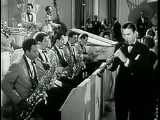
Artie Shaw Playing
Shaw did many big band remote
Big band remote

A big band remote was a remote broadcast, popular on radio during the 1930s and 1940s, involving a coast-to-coast live transmission of a big band....
s, and he was often heard from the Blue Room of New York's Hotel Lincoln. It was the location of his only regular radio series as headliner. Sponsored by Old Gold cigarettes, Shaw broadcast on CBS
CBS

CBS Broadcasting Inc. is an American radio network and television network. The name is derived from the initials of Columbia Broadcasting System, its former legal name....
 from November 20, 1938 until November 14, 1939.

At the height of his popularity, Shaw reportedly earned $60,000 per week. For a comparison, George Burns
George Burns

George Burns was an United States comedy, actor, and comedy writer.His career spanned vaudeville, film, radio, and television, with and without his wife, Gracie Allen....
 and Gracie Allen
Gracie Allen

Grace Ethel Cecile Rosalie Allen , better known as Gracie Allen, was an United States comedienne who became internationally famous as the zany partner and comic foil of husband George Burns....
 were each making US $5,000 per week during the year (1940-41) the Artie Shaw Orchestra provided the music for their radio show. He also acted on the show as a love interest for Gracie Allen and the sarcastic bandleader who had trouble with South American guitarist Señor Lee, who could not fully grasp English.

Films, TV and fiction

Shaw made several musical shorts in 1939 for Vitaphone
Vitaphone

Vitaphone was a sound film process used on features and nearly 2,000 short subjects produced by Warner Bros. and its sister studio First National from 1926 to 1930....
 and Paramount Pictures
Paramount Pictures

Paramount Pictures Corporation is an American motion picture production company and distribution company, located on Melrose Avenue in Hollywood, California....
, and he portrayed himself in the Fred Astaire
Fred Astaire

Fred Astaire was an United States Academy Award-winning film and Broadway theatre dance, choreographer, singer and actor. His stage and subsequent film career spanned a total of seventy-six years, during which he made thirty-one musical films....
 film Second Chorus
Second Chorus

Second Chorus is a Hollywood musical film comedy film starring Fred Astaire, Burgess Meredith, Paulette Goddard, Artie Shaw, and Charles Butterworth , with music by Artie Shaw, Bernie Hanighen, Hal Borne and lyrics by Johnny Mercer....
 (1940), which featured Shaw and his orchestra playing "Concerto for Clarinet." The film brought him two Oscar nominations, for Best Score and Best Song ("Love of My Life"). He collaborated on the song "If It's You" for the Marx Brothers
Marx Brothers

The Marx Brothers were a popular team of sibling comedians who appeared in vaudeville, stage plays, film, and television....
' film, The Big Store
The Big Store

The Big Store is a Marx Brothers comedy film in which Groucho Marx, Chico Marx and Harpo Marx work to save the Phelps department store, owned by Martha Phelps ....
 (1941). In 1950, he was a mystery guest on What's My Line?
What's My Line?

What's My Line? is a weekly panel game show which was produced by Mark Goodson and Bill Todman for CBS television. When first sold to CBS, the proposed title was Occupation Unknown....
, and during the 1970s he made appearances on The Mike Douglas Show
The Mike Douglas Show

The Mike Douglas Show was an United States daytime television talk show hosted by Mike Douglas that ran from 1961 to 1982....
 and The Tonight Show
The Tonight Show

The Tonight Show is a long-running American late-night talk show and variety show airing on NBC whose The Tonight Show with Jay Leno has been hosted by Jay Leno since 1992....
.

Many of his recordings have been used in motion pictures. His recording of "Stardust
Stardust

Stardust may refer to several concepts:In space and aviation:*cosmic dust#Stardust of interstellar origin*Stardust , a spacecraft designed to return samples from a comet's coma...
" was used in its entirety in the closing credits of the film "The Man Who Fell to Earth
The Man Who Fell to Earth

The Man Who Fell to Earth is a 1963 science fiction novel by Walter Tevis about an extraterrestrial life who lands on Earth seeking a way to ferry his people to Earth from his home planet, which is suffering from a severe drought....
". Also, Martin Scorsese
Martin Scorsese

Martin Marcantonio Luciano Scorsese is an Academy Award-winning American filmmaker, screenwriter, film producer, and film historian. Also affectionately known as "Marty", he is the founder of the World Cinema Foundation and a recipient of the AFI Life Achievement Award for his contributions to the cinema and has won awards from the Gol...
 used the Shaw theme song, "Nightmare," in his Academy Award-winning Howard Hughes
Howard Hughes

Howard Robard Hughes, Jr. was an American aviator, industrialist, film producer and director, philanthropist, and one of the wealthiest people in the world....
 biopic, The Aviator
The Aviator

The Aviator is an Cinema of the United States biographical film drama film, film director by Martin Scorsese and based on the life of Howard Hughes....
.

He credited his time in the Navy as a period of renewed introspection. He entered psychoanalysis and began to pursue a writing career. His autobiography, The Trouble With Cinderella: An Outline of Identity was published in 1952 (with later reprint editions in 1992 and 2001). Revealing downbeat elements of the music business, Shaw explained that "the trouble with Cinderella" is "nobody ever lives happily ever after." He turned to semi-autobiographical fiction with the three short novels in I Love You, I Hate You, Drop Dead! (1965, reprinted in 1997), which prompted Terry Southern
Terry Southern

Terry Southern was a highly influential American author, essayist, screenwriter and university lecturer, noted for a distinctive satirical style....
's comment: "Here is a deeply probing examination of the American marital scene. I flipped over it!" Shaw's short stories, including "Snow White in Harlem," were collected in The Best of Intentions and Other Stories (1989). He worked for years on his 1000-page autobiographical novel The Education of Albie Snow, but the three-volume work remains unpublished. Currently, through Curtis International Associates, the Artie Shaw Orchestra is still active.

Discography

  • : 1956


Listen to

  • *


External links

  • Retrieved on 2008-02-05
  • , Washington Post, December 31, 2004