


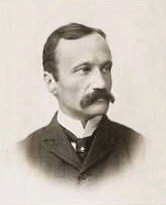
Arrigo Boito

Encyclopedia
Pseudonym
A pseudonym is a name that a person assumes for a particular purpose and that differs from his or her original orthonym...
Tobia Gorrio, was an Italian
Italy
Italy , officially the Italian Republic languages]] under the European Charter for Regional or Minority Languages. In each of these, Italy's official name is as follows:;;;;;;;;), is a unitary parliamentary republic in South-Central Europe. To the north it borders France, Switzerland, Austria and...
poet
Poet
A poet is a person who writes poetry. A poet's work can be literal, meaning that his work is derived from a specific event, or metaphorical, meaning that his work can take on many meanings and forms. Poets have existed since antiquity, in nearly all languages, and have produced works that vary...
, journalist
Journalist
A journalist collects and distributes news and other information. A journalist's work is referred to as journalism.A reporter is a type of journalist who researchs, writes, and reports on information to be presented in mass media, including print media , electronic media , and digital media A...
, novel
Novel
A novel is a book of long narrative in literary prose. The genre has historical roots both in the fields of the medieval and early modern romance and in the tradition of the novella. The latter supplied the present generic term in the late 18th century....
ist and composer
Composer
A composer is a person who creates music, either by musical notation or oral tradition, for interpretation and performance, or through direct manipulation of sonic material through electronic media...
, best known today for his libretti
Libretto
A libretto is the text used in an extended musical work such as an opera, operetta, masque, oratorio, cantata, or musical. The term "libretto" is also sometimes used to refer to the text of major liturgical works, such as mass, requiem, and sacred cantata, or even the story line of a...
, especially those for Giuseppe Verdi
Giuseppe Verdi
Giuseppe Fortunino Francesco Verdi was an Italian Romantic composer, mainly of opera. He was one of the most influential composers of the 19th century...
's operas Otello
Otello
Otello is an opera in four acts by Giuseppe Verdi to an Italian libretto by Arrigo Boito, based on Shakespeare's play Othello. It was Verdi's penultimate opera, and was first performed at the Teatro alla Scala, Milan, on February 5, 1887....
and Falstaff
Falstaff (opera)
Falstaff is an operatic commedia lirica in three acts by Giuseppe Verdi, adapted by Arrigo Boito from Shakespeare's plays The Merry Wives of Windsor and scenes from Henry IV. It was Verdi's last opera, written in the composer's ninth decade, and only the second of his 26 operas to be a comedy...
, and his own opera Mefistofele
Mefistofele
Mefistofele is an opera in a prologue, four acts and an epilogue, the only completed opera by the Italian composer-librettist Arrigo Boito.-Composition history:...
. Along with Emilio Praga, he is regarded as one of the prominent representatives of the Scapigliatura
Scapigliatura
Scapigliatura is the name of the artistic movement which developed in Italy after the period known as Risorgimento,...
artistic movement.
Biography
Padua
Padua is a city and comune in the Veneto, northern Italy. It is the capital of the province of Padua and the economic and communications hub of the area. Padua's population is 212,500 . The city is sometimes included, with Venice and Treviso, in the Padua-Treviso-Venice Metropolitan Area, having...
, the son of Silvestro Boito, an Italian painter of miniatures and his wife, a Polish
Poles
thumb|right|180px|The state flag of [[Poland]] as used by Polish government and diplomatic authoritiesThe Polish people, or Poles , are a nation indigenous to Poland. They are united by the Polish language, which belongs to the historical Lechitic subgroup of West Slavic languages of Central Europe...
countess, Józefina Radolińska, Boito studied music at the Milan Conservatory
Milan Conservatory
The Milan Conservatory is a college of music which was established by a royal decree of 1807 in Milan, capital of the Napoleonic Kingdom of Italy. It opened the following year with premises in the cloisters of the Baroque church of Santa Maria della Passione. There were initially 18 boarders,...
with Alberto Mazzucato
Alberto Mazzucato
Alberto Mazzucato was an Italian composer, music teacher, and writer.Mazzucato was born in Udine. Trained at the Padua Conservatory, he composed eight operas between 1834 and 1843, of which his most successful was Esmeralda...
until 1861. In 1866 he fought under Giuseppe Garibaldi
Giuseppe Garibaldi
Giuseppe Garibaldi was an Italian military and political figure. In his twenties, he joined the Carbonari Italian patriot revolutionaries, and fled Italy after a failed insurrection. Garibaldi took part in the War of the Farrapos and the Uruguayan Civil War leading the Italian Legion, and...
in the Seven Weeks War
Austro-Prussian War
The Austro-Prussian War was a war fought in 1866 between the German Confederation under the leadership of the Austrian Empire and its German allies on one side and the Kingdom of Prussia with its German allies and Italy on the...
in which the Kingdom of Italy
Kingdom of Italy (1861–1946)
The Kingdom of Italy was a state forged in 1861 by the unification of Italy under the influence of the Kingdom of Sardinia, which was its legal predecessor state...
and Prussia
Prussia
Prussia was a German kingdom and historic state originating out of the Duchy of Prussia and the Margraviate of Brandenburg. For centuries, the House of Hohenzollern ruled Prussia, successfully expanding its size by way of an unusually well-organized and effective army. Prussia shaped the history...
fought against Austria
Austria
Austria , officially the Republic of Austria , is a landlocked country of roughly 8.4 million people in Central Europe. It is bordered by the Czech Republic and Germany to the north, Slovakia and Hungary to the east, Slovenia and Italy to the south, and Switzerland and Liechtenstein to the...
, after which Venice
Venice
Venice is a city in northern Italy which is renowned for the beauty of its setting, its architecture and its artworks. It is the capital of the Veneto region...
was ceded to Italy
Italy
Italy , officially the Italian Republic languages]] under the European Charter for Regional or Minority Languages. In each of these, Italy's official name is as follows:;;;;;;;;), is a unitary parliamentary republic in South-Central Europe. To the north it borders France, Switzerland, Austria and...
.
His only finished opera, Mefistofele
Mefistofele
Mefistofele is an opera in a prologue, four acts and an epilogue, the only completed opera by the Italian composer-librettist Arrigo Boito.-Composition history:...
, based on Goethe
Johann Wolfgang von Goethe
Johann Wolfgang von Goethe was a German writer, pictorial artist, biologist, theoretical physicist, and polymath. He is considered the supreme genius of modern German literature. His works span the fields of poetry, drama, prose, philosophy, and science. His Faust has been called the greatest long...
's Faust
Faust (opera)
Faust is a drame lyrique in five acts by Charles Gounod to a French libretto by Jules Barbier and Michel Carré from Carré's play Faust et Marguerite, in turn loosely based on Johann Wolfgang von Goethe's Faust, Part 1...
, was given its first performance on 5 March 1868, at La Scala
La Scala
La Scala , is a world renowned opera house in Milan, Italy. The theatre was inaugurated on 3 August 1778 and was originally known as the New Royal-Ducal Theatre at La Scala...
, Milan. The premiere, which he conducted himself, was badly received, provoking riots and duels over its supposed "Wagnerism
Richard Wagner
Wilhelm Richard Wagner was a German composer, conductor, theatre director, philosopher, music theorist, poet, essayist and writer primarily known for his operas...
", and it was closed by the police after two performances. Verdi
Giuseppe Verdi
Giuseppe Fortunino Francesco Verdi was an Italian Romantic composer, mainly of opera. He was one of the most influential composers of the 19th century...
commented, "He aspires to originality but succeeds only at being strange." Boito withdrew the opera from further performances to rework it, and it had a more successful second premiere, in Bologna
Bologna
Bologna is the capital city of Emilia-Romagna, in the Po Valley of Northern Italy. The city lies between the Po River and the Apennine Mountains, more specifically, between the Reno River and the Savena River. Bologna is a lively and cosmopolitan Italian college city, with spectacular history,...
on 10 April 1875. Boito's revised and drastically cut version also changed Faust from a baritone to a tenor, and it is still frequently performed and recorded today.
Other than Mefistofele, Boito wrote very little music. He completed (but later destroyed) another opera, Ero e Leandro, and left incomplete a further opera, Nerone
Nerone (Boito)
Nerone is an opera in four acts composed by Arrigo Boito, to a libretto in Italian written by the composer. The work is a series of scenes from Imperial Rome at the time of Emperor Nero depicting tensions between the Imperial religion and Christianity, and ends with the Great Fire of Rome...
, which he had been working at, on and off, between 1877 and 1915; excluding its last act, for which Boito left only a few sketches, Nerone was finished after his death by Arturo Toscanini
Arturo Toscanini
Arturo Toscanini was an Italian conductor. One of the most acclaimed musicians of the late 19th and 20th century, he was renowned for his intensity, his perfectionism, his ear for orchestral detail and sonority, and his photographic memory...
and Vincenzo Tommasini
Vincenzo Tommasini
Vincenzo Tommasini was an Italian composer.Born in Rome, Tommasini studied philology and the Greek language at the University of Rome, at the same time pursuing equally intensive studies in music at the Academy of St. Cecilia. In 1902 he traveled extensively throughout Europe; during this time he...
and premiered at La Scala, 1924. Mefistofele is the only work of his performed with any regularity today. The Prologue to the opera, set in Heaven, is a favorite concert piece. Enrico Caruso included its two tenor arias in his first recording session. He also left a Symphony in A minor in manuscript.
Boito's literary powers never dried up. As well as writing the libretti for his own operas, he wrote them for other composers. As "Tobia Gorrio" (an anagram
Anagram
An anagram is a type of word play, the result of rearranging the letters of a word or phrase to produce a new word or phrase, using all the original letters exactly once; e.g., orchestra = carthorse, A decimal point = I'm a dot in place, Tom Marvolo Riddle = I am Lord Voldemort. Someone who...
of his name) he provided the libretto for Amilcare Ponchielli
Amilcare Ponchielli
Amilcare Ponchielli was an Italian composer, largely of operas.-Biography:Born in Paderno Fasolaro, now Paderno Ponchielli, near Cremona, Ponchielli won a scholarship at the age of nine to study music at the Milan Conservatory, writing his first symphony by the time he was ten years old.Two years...
's La Gioconda
La Gioconda (opera)
La Gioconda is an opera in four acts by Amilcare Ponchielli set to an Italian libretto by Arrigo Boito, based on Angelo, tyran de Padoue, a play in prose by Victor Hugo, dating from 1835...
. His rapprochement with Verdi, whom he had offended in a toast shortly after they had collaborated on Verdi's Inno delle Nazioni ("Anthem of the Nations", London, 1862), was effected by the music publisher Giulio Ricordi
Giulio Ricordi
Giulio Ricordi was an Italian editor and musician.-Biography:Ricordi was born in Milan, where he also died....
. Boito successfully revised the libretto for Verdi's unwieldy Simon Boccanegra
Simon Boccanegra
Simon Boccanegra is an opera with a prologue and three acts by Giuseppe Verdi to an Italian libretto by Francesco Maria Piave, based on the play Simón Bocanegra by Antonio García Gutiérrez....
, which then premiered to great acclaim in 1881. With that, their mutual friendship and respect blossomed and, though Verdi's projection for an opera based on King Lear
King Lear
King Lear is a tragedy by William Shakespeare. The title character descends into madness after foolishly disposing of his estate between two of his three daughters based on their flattery, bringing tragic consequences for all. The play is based on the legend of Leir of Britain, a mythological...
never came to anything, Boito provided subtle and resonant libretti for Verdi's last masterpieces, Otello
Otello
Otello is an opera in four acts by Giuseppe Verdi to an Italian libretto by Arrigo Boito, based on Shakespeare's play Othello. It was Verdi's penultimate opera, and was first performed at the Teatro alla Scala, Milan, on February 5, 1887....
(1887) and Falstaff
Falstaff (opera)
Falstaff is an operatic commedia lirica in three acts by Giuseppe Verdi, adapted by Arrigo Boito from Shakespeare's plays The Merry Wives of Windsor and scenes from Henry IV. It was Verdi's last opera, written in the composer's ninth decade, and only the second of his 26 operas to be a comedy...
(1893). When Verdi died, Boito was there at his bedside.
Boito succeeded Giovanni Bottesini
Giovanni Bottesini
Giovanni Bottesini was an Italian Romantic composer, conductor, and a double bass virtuoso.-Biography:Born in Crema, Lombardy, he was taught the rudiments of music by his father, an accomplished clarinetist and composer, at a young age and had played timpani in Crema with the Teatro Sociale before...
as director of the Parma
Parma
Parma is a city in the Italian region of Emilia-Romagna famous for its ham, its cheese, its architecture and the fine countryside around it. This is the home of the University of Parma, one of the oldest universities in the world....
Conservatory after the latter's death in 1889 and held the post until 1897. He received the honorary degree of doctor of music from the University of Cambridge
University of Cambridge
The University of Cambridge is a public research university located in Cambridge, United Kingdom. It is the second-oldest university in both the United Kingdom and the English-speaking world , and the seventh-oldest globally...
in 1893. He died in Milan and was interred there in the Cimitero Monumentale
Cimitero Monumentale di Milano
The Cimitero Monumentale in Milan, Italy is a very large cemetery, noted for its abundance of highly artistic and often imposing tombs.It was designed by the architect Carlo Maciachini...
.
A memorial concert was given in his honor at La Scala in 1948. The orchestra was conducted by Arturo Toscanini
Arturo Toscanini
Arturo Toscanini was an Italian conductor. One of the most acclaimed musicians of the late 19th and 20th century, he was renowned for his intensity, his perfectionism, his ear for orchestral detail and sonority, and his photographic memory...
. Recorded in very primitive sound, the concert has been issued on CD.
Camillo Boito
Camillo Boito
Camillo Boito was an Italian architect and engineer, and a noted art critic, art historian and novelist.-Biography:...
, Arrigo's older brother, was an Italian architect and engineer, and a noted art critic, art historian and novelist.
Opera libretti
The years given are those of the premieres.- AmletoAmletoAmleto is an opera in four acts by Franco Faccio, with libretto by Arrigo Boito. It premiered on May 30, 1865 at the Teatro Carlo Felice of Genova. It was revised for a La Scala production given on February 12, 1871.- Composition and premiere :...
(Franco FaccioFranco FaccioFranco Faccio was an Italian composer and conductor.-Biography:Born in Verona, Faccio became known as a conductor of Verdi's music. He studied music at the Milan Conservatory where he was a pupil of Stefano Ronchetti-Monteviti...
; 1865) - Un tramonto (Gaetano Coronaro; 1873)
- La falce (Alfredo CatalaniAlfredo CatalaniAlfredo Catalani was an Italian operatic composer. He is best remembered for his operas Loreley and La Wally...
; 1875) - La GiocondaLa Gioconda (opera)La Gioconda is an opera in four acts by Amilcare Ponchielli set to an Italian libretto by Arrigo Boito, based on Angelo, tyran de Padoue, a play in prose by Victor Hugo, dating from 1835...
(Amilcare PonchielliAmilcare PonchielliAmilcare Ponchielli was an Italian composer, largely of operas.-Biography:Born in Paderno Fasolaro, now Paderno Ponchielli, near Cremona, Ponchielli won a scholarship at the age of nine to study music at the Milan Conservatory, writing his first symphony by the time he was ten years old.Two years...
; 1876) - Semira (L. San Germano; never perf.)
- Ero e Leandro (Giovanni BottesiniGiovanni BottesiniGiovanni Bottesini was an Italian Romantic composer, conductor, and a double bass virtuoso.-Biography:Born in Crema, Lombardy, he was taught the rudiments of music by his father, an accomplished clarinetist and composer, at a young age and had played timpani in Crema with the Teatro Sociale before...
; 1879 - Luigi MancinelliLuigi MancinelliLuigi Mancinelli was a leading Italian orchestral conductor. He also composed music for the stage and concert hall and played the cello....
; 1897) - Simon BoccanegraSimon BoccanegraSimon Boccanegra is an opera with a prologue and three acts by Giuseppe Verdi to an Italian libretto by Francesco Maria Piave, based on the play Simón Bocanegra by Antonio García Gutiérrez....
(Giuseppe VerdiGiuseppe VerdiGiuseppe Fortunino Francesco Verdi was an Italian Romantic composer, mainly of opera. He was one of the most influential composers of the 19th century...
; 1881 [revised version]) - Basi e bote (Riccardo Pick-MangiagalliRiccardo Pick-MangiagalliRiccardo Pick-Mangiagalli was an Italian composer. He studied at the Milan Conservatory; in 1936 he succeeded Ildebrando Pizzetti as its head. He wrote several operas and ballets, as well as chamber music; he also composed music for films.-External Links:...
; 1927) - OtelloOtelloOtello is an opera in four acts by Giuseppe Verdi to an Italian libretto by Arrigo Boito, based on Shakespeare's play Othello. It was Verdi's penultimate opera, and was first performed at the Teatro alla Scala, Milan, on February 5, 1887....
(Verdi; 1887) - FalstaffFalstaff (opera)Falstaff is an operatic commedia lirica in three acts by Giuseppe Verdi, adapted by Arrigo Boito from Shakespeare's plays The Merry Wives of Windsor and scenes from Henry IV. It was Verdi's last opera, written in the composer's ninth decade, and only the second of his 26 operas to be a comedy...
(Verdi; 1893) - NeroneNerone (Boito)Nerone is an opera in four acts composed by Arrigo Boito, to a libretto in Italian written by the composer. The work is a series of scenes from Imperial Rome at the time of Emperor Nero depicting tensions between the Imperial religion and Christianity, and ends with the Great Fire of Rome...
(Boito, unfinished, lacking act V; 1924)
Boito also provided the text to Verdi's cantata Inno delle Nazioni (24 May 1862, Her Majesty's Theatre
Her Majesty's Theatre
Her Majesty's Theatre is a West End theatre, in Haymarket, City of Westminster, London. The present building was designed by Charles J. Phipps and was constructed in 1897 for actor-manager Herbert Beerbohm Tree, who established the Royal Academy of Dramatic Art at the theatre...
, London).
Mefistofele
- Serafin/Tebaldi/del Monaco/Siepi (1958), Decca
- Patanè/Marton/Domingo/Ramey (1989), Sony
- Muti/Crider/La Scola/Ramey (1996), RCA
- De Fabritiis/Freni/Pavarotti/Ghiaurov (1984), Decca
Nerone
- Capuana/di Cavalieri/Lazzarini/Picchi/Guelfi-G/Petri (1957; live in Naples), Cetra
- Gavazzeni/Ligabue/Baldani/Prevedi/Cassis/Ferrin (1975; live in Turin), Living Stage
- Queler/Tokody/Takács/Nagy/Miller/Dene (1981), Hungaroton
- Queler/Andrade/Takács/Cigoj/Elvira/Morris (1982; live in New York), broadcast
- Bareza/Janeva Iveljic/Nikolova/Cigoj/McShane/Petrusanec (1989; video in Split), House of Opera
Depictions in media
- The play After AidaAfter AidaAfter Aida , is a 1985 play-with-music by Julian Mitchell. It is about Giuseppe Verdi, and the pressure put upon him after his attempt to retire from composing...
— a 1985 play-with-music by Julian MitchellJulian MitchellJulian Mitchell FRSL , full name Charles Julian Humphrey Mitchell, is an English playwright, screenwriter and occasional novelist...
— depicts the struggle of Giulio RicordiGiulio RicordiGiulio Ricordi was an Italian editor and musician.-Biography:Ricordi was born in Milan, where he also died....
and Franco FaccioFranco FaccioFranco Faccio was an Italian composer and conductor.-Biography:Born in Verona, Faccio became known as a conductor of Verdi's music. He studied music at the Milan Conservatory where he was a pupil of Stefano Ronchetti-Monteviti...
to get the retired Verdi to collaborate with young Boito on a project, which resulted in OtelloOtelloOtello is an opera in four acts by Giuseppe Verdi to an Italian libretto by Arrigo Boito, based on Shakespeare's play Othello. It was Verdi's penultimate opera, and was first performed at the Teatro alla Scala, Milan, on February 5, 1887....
.