
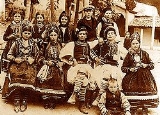
Aromanians are a Latin people native throughout the southern
BalkansThe Balkans is a geopolitical and cultural region of southeastern Europe...
, especially in northern
GreeceGreece , officially the Hellenic Republic , and historically Hellas or the Republic of Greece in English, is a country in southeastern Europe....
,
AlbaniaAlbania , officially known as the Republic of Albania , is a country in Southeastern Europe, in the Balkans region. It is bordered by Montenegro to the northwest, Kosovo to the northeast, the Republic of Macedonia to the east and Greece to the south and southeast. It has a coast on the Adriatic Sea...
, the
Republic of MacedoniaMacedonia , officially the Republic of Macedonia , is a country located in the central Balkan peninsula in Southeast Europe. It is one of the successor states of the former Yugoslavia, from which it declared independence in 1991...
,
BulgariaBulgaria , officially the Republic of Bulgaria , is a parliamentary democracy within a unitary constitutional republic in Southeast Europe. The country borders Romania to the north, Serbia and Macedonia to the west, Greece and Turkey to the south, as well as the Black Sea to the east...
, and as an emigrant community in
SerbiaSerbia , officially the Republic of Serbia , is a landlocked country located at the crossroads of Central and Southeast Europe, covering the southern part of the Carpathian basin and the central part of the Balkans...
and
RomaniaRomania is a country located at the crossroads of Central and Southeastern Europe, on the Lower Danube, within and outside the Carpathian arch, bordering on the Black Sea...
(Dobrudja). An older term is
Macedo-Romanians. Especially in Greece, the term
VlachsVlach is a blanket term covering several modern Latin peoples descending from the Latinised population in Central, Eastern and Southeastern Europe. English variations on the name include: Walla, Wlachs, Wallachs, Vlahs, Olahs or Ulahs...
(Vlaçi) is widespread; this term is sometimes used outside Greece to encompass all Latin-descended peoples of the Balkans, including the modern day Daco-
RomaniansThe Romanians are an ethnic group native to Romania, who speak Romanian; they are the majority inhabitants of Romania....
.
They speak Aromanian, a language similar to
RomanianRomanian Romanian Romanian (or Daco-Romanian; obsolete spellings Rumanian, Roumanian; self-designation: română, limba română ("the Romanian language") or românește (lit. "in Romanian") is a Romance language spoken by around 24 to 28 million people, primarily in Romania and Moldova...
(not a dialect of it), which has many slightly varying dialects of its own. Due to the common language foundations, dating from the times of Latin language, historians believe that the language link with Proto-Romanian was interrupted between the 7th and 9th centuries. The Proto-Romanian (Balkanic Latin) Language was divided by the South
SlavsThe Slavic people are an Indo-European panethnicity living in Eastern Europe, Southeast Europe, North Asia and Central Asia. The term Slavic represents a broad ethno-linguistic group of people, who speak languages belonging to the Slavic language family and share, to varying degrees, certain...
into four different "Vlach" dialects:
Daco-RomanianDaco-Romanian is the term used to identify the Romanian language in contexts where distinction needs to be made between the various Eastern Romance languages...
(the official language spoken in Romania and Republic of Moldavia), Macedo-Roumanian (Aromanian), Megleno-Romanian, and
Istro-RomanianIstro-Romanian may refer to:*Istro-Romanians*Istro-Romanian language*Istro-Romanian grammar...
.
Names and Classification
The name Armân, "Aromanian", just as "Romanian", derives directly from
LatinLatin is an Italic language originally spoken in Latium and Ancient Rome. It, along with most European languages, is a descendant of the ancient Proto-Indo-European language. Although it is considered a dead language, a number of scholars and members of the Christian clergy speak it fluently, and...
Romanus ("
RomanAncient Rome was a thriving civilization that grew on the Italian Peninsula as early as the 8th century BC. Located along the Mediterranean Sea and centered on the city of Rome, it expanded to one of the largest empires in the ancient world....
") through regular sound changes. The initial a- is a regular epenthetic vowel, occurring when certain consonant clusters are formed (this a- is not, as folk etymology sometimes has it, related to the negative or privative a- of Greek (also occurring in Latin words of Greek origin). In Albania, the most common form is rrămăni or rrămeni.
Nominated according to the geographic area, Aromanians are grouped into several "branches": "Pindians" (
AromanianAromanian , also known as Macedo-Romanian, Arumanian or Vlach is an Eastern Romance language spoken in Southeastern Europe...
"Pindeni" concentrated in and around the
Pindus MountainsThe Pindus mountain range is located in northern Greece and southern Albania. It is roughly 160 km long, with a maximum elevation of 2637 m . Because it runs along the border of Thessaly and Epirus, the Pindus range is often called the "spine of Greece"...
of Northern and Central Greece, Western region of Macedonia, and Southern Albania - a.k.a.
Northern EpirusNorthern Epirus is a term used to refer to those parts of the historical region of Epirus, in the western Balkans, that are part of the modern Albania. The term is used mostly by Greeks and is associated with the existence of a substantial ethnic Greek population in the region...
), "Gramustians" (
AromanianAromanian , also known as Macedo-Romanian, Arumanian or Vlach is an Eastern Romance language spoken in Southeastern Europe...
"Grãmuşciani" from
Gramos MountainsGramos is a village and a former community in Kastoria peripheral unit, West Macedonia, Greece. Since the 2011 local government reform it is part of the municipality Nestorio, of which it is a municipal unit. Population 28 . The village is an old Aromanian settlement, named after the nearby...
, an isolated area in the westernmost region of the Greek province of Macedonia near the borders with Albania), "Muzachiars" (
AromanianAromanian , also known as Macedo-Romanian, Arumanian or Vlach is an Eastern Romance language spoken in Southeastern Europe...
"Muzăchireni" from
MuzachiaMyzeqe is part of the western low plains of Albania.The name Myzeqe derives from the noble Albanian family of the 15th century who owned most of the land until the conquest of the Ottoman empire. Gjon Muzaka was the foremost known noble family member, who immigrated to Italy after long years of...
) "Farsherots" (
AromanianAromanian , also known as Macedo-Romanian, Arumanian or Vlach is an Eastern Romance language spoken in Southeastern Europe...
"Fărşeroţii" from Pharsala, concentrated in Epirus), "Moscopolitans" (
AromanianAromanian , also known as Macedo-Romanian, Arumanian or Vlach is an Eastern Romance language spoken in Southeastern Europe...
"Moscopoleani" from the City of
MoscopoleMoscopole was a cultural and commercial center of the Aromanians, and now a small municipality in Korçë District, modern southeastern Albania. At its peak, in the mid 18th century, it hosted the first printing press in the Balkans outside Istanbul, educational institutions and numerous churches...
; once an important urban center of the Balkans). The first three groups call themselves Armâni, while the Farsherots (with a distinct dialect) call themselves Rrămăni, Rrămeni, Rrumăni. Most are called Vlahi in
GreekGreek is an independent branch of the Indo-European family of languages. Native to the southern Balkans, it has the longest documented history of any Indo-European language, spanning 34 centuries of written records. Its writing system has been the Greek alphabet for the majority of its history;...
.
VlachsVlach is a blanket term covering several modern Latin peoples descending from the Latinised population in Central, Eastern and Southeastern Europe. English variations on the name include: Walla, Wlachs, Wallachs, Vlahs, Olahs or Ulahs...
was a term used in the Medieval Balkans, as an exonym for all the Romanic people of the region, but nowadays, it is commonly used for the Aromanians and Meglenites, the
RomaniansThe Romanians are an ethnic group native to Romania, who speak Romanian; they are the majority inhabitants of Romania....
being named Vlachs in Serbia and Bulgaria. The term Vlach has had its form changed into the following languages:
MacedonianMacedonian is a South Slavic language spoken as a first language by approximately 2–3 million people principally in the region of Macedonia but also in the Macedonian diaspora...
/
BulgarianBulgarian is an Indo-European language, a member of the Slavic linguistic group.Bulgarian, along with the closely related Macedonian language, demonstrates several linguistic characteristics that set it apart from all other Slavic languages such as the elimination of case declension, the...
: Vlasi, and
TurkishTurkish is a language spoken as a native language by over 83 million people worldwide, making it the most commonly spoken of the Turkic languages. Its speakers are located predominantly in Turkey and Northern Cyprus with smaller groups in Iraq, Greece, Bulgaria, the Republic of Macedonia, Kosovo,...
: Ulahlar. Interesting to note that the term Vlach also meant "bandit" or "rebel" in the Ottoman medieval historiography. Vlach was further a name used by the Ottomans to denote Christians in
BosniaBosnia is a eponomous region of Bosnia and Herzegovina. It lies mainly in the Dinaric Alps, ranging to the southern borders of the Pannonian plain, with the rivers Sava and Drina marking its northern and eastern borders. The other eponomous region, the southern, other half of the country is...
.
The Gramustians and Pindianshttp://giony.ro/ are nicknamed in Greece Koutsovlachs (Κουτσόβλαχοι); this term is sometimes, but not always, taken as derogatory, as the first element of this term is from the Greek koutso- (κουτσό-) meaning 'lame'. (This name has been noticed also among the Slavic peoples, especially in the folk stories cf.
Marko CepenkovMarko Kostov Cepenkov was a Bulgarian folklorist from the region of Macedonia. In the Republic of Macedonia he is regarded a Macedonian writer and poet. In his own time, his language was described as Bulgarian, and Cepenkov regarded it this way himself...
). Following a Turkish etimology where küçük means little they are the smaller Vlachs as opposed to the more numerous Vlachs (Daco-Romanians).
Another name used to refer to the Aromanians (mainly in the Slavic countries such as Serbia and Bulgaria) is "tsintsar" (also spelled tzintzar, cincar or similar), which is derived from the way the Aromanians pronounce the word meaning "five": "tsintsi". Some Vlachs are called "Arvanitovlachoi" (usually for the Farsherots, Moscopolitans and Muzachiars), meaning Albanian Vlachs, referring to their place of origin. Albanians also call them "Chobans" (from
TurkishTurkish is a language spoken as a native language by over 83 million people worldwide, making it the most commonly spoken of the Turkic languages. Its speakers are located predominantly in Turkey and Northern Cyprus with smaller groups in Iraq, Greece, Bulgaria, the Republic of Macedonia, Kosovo,...
Çoban meaning shepherd), a word also used to refer to them in Greek ("chobani", "τσομπάνοι").
Origins
It is hypothesized that the Vlachs originated from the Roman colonisation of the Balkans and are the descendants of Latinised native peoples and Roman legionaries who had settled in the Balkans. The fact that the Roman colonisation of Epirus and Macedonia began earlier and lasted longer than that of Dacia would suggest that the Aromanian Vlachs may have preceded the Romanians in Balkan history.
There are many theories regarding the origins of the Aromanians. In Greece, they are believed to be descended from a local Greek population that was Latinised immediately following the
Roman conquest of GreeceRoman Greece is the period of Greek history following the Roman victory over the Corinthians at the Battle of Corinth in 146 BC until the reestablishment of the city of Byzantium and the naming of the city by the Emperor Constantine as the capital of the Roman Empire...
, or later, during the first centuries of the
Byzantine EmpireThe Byzantine Empire was the Eastern Roman Empire during the periods of Late Antiquity and the Middle Ages, centred on the capital of Constantinople. Known simply as the Roman Empire or Romania to its inhabitants and neighbours, the Empire was the direct continuation of the Ancient Roman State...
when Latin continued to be the official language. On the contrary, in other neighboring countries they are considered to be the descendants of Thracian peoples who moved into the mountains of the southern Balkans after the Avar and Slavic invasions. Some Byzantine chroniclers have described them as descending from Thracian tribes;one of them being the Bessi.
In total, the main theories regarding the origins of Aromanians describe them as descendants of the
Romanized ThraciansThe terms Thraco-Roman and Daco-Roman refer to the culture and language of the Thracian and Dacian peoples who were incorporated into the Roman Empire and ultimately fell under the Roman and Latin sphere of influence.-Meaning and usage:...
or
RomanAncient Rome was a thriving civilization that grew on the Italian Peninsula as early as the 8th century BC. Located along the Mediterranean Sea and centered on the city of Rome, it expanded to one of the largest empires in the ancient world....
colonists and soldiers, who would receive agricultural lands as payments for their services, or Latin
GreeksThe Greeks, also known as the Hellenes , are a nation and ethnic group native to Greece, Cyprus and neighboring regions. They also form a significant diaspora, with Greek communities established around the world....
(Greco-Romans).
It is clear, however, that until the 7th or 9th century, Romanians and Aromanians spoke the same eastern variant of the Balkan
Vulgar LatinVulgar Latin is any of the nonstandard forms of Latin from which the Romance languages developed. Because of its nonstandard nature, it had no official orthography. All written works used Classical Latin, with very few exceptions...
, also known as
Proto-RomanianProto-Romanian is a Romance language evolved from Vulgar Latin and considered to have been spoken by the ancestors of today's Romanians and related Balkan Latin peoples before ca...
. This term was not accepted by the Greek linguists, because it denoted a form of only
Romanian languageRomanian Romanian Romanian (or Daco-Romanian; obsolete spellings Rumanian, Roumanian; self-designation: română, limba română ("the Romanian language") or românește (lit. "in Romanian") is a Romance language spoken by around 24 to 28 million people, primarily in Romania and Moldova...
, thus supporting only the Romanian theory. This in fact puts the other two languages which developed from this form of Vulgar Latin:
Megleno-RomanianMegleno-Romanian is a Romance language, similar to Aromanian and Romanian, or a dialect of the Romanian language...
and the
Istro-RomanianIstro-Romanian is an Eastern Romance language that is still spoken today in a few villages and hamlets in the peninsula of Istria, on the northern part of the Adriatic Sea, in what is now Croatia as well as in other countries around the world where the Istro-Romanian people settled after the two...
in the same position as Aromanian. Modern linguists believe that the
Istro-RomaniansIstro-Romanians / Istrorumeni are an ethnic group living in northeastern Istria, currently spanning over a small area of Croatia and a...
migrated to their present region of Istria about 1,000 (or 600) years ago from Transylvania.
History
The Roman Empire and its Latin language strongly influenced some of the ancient tribes of the Balkans. Factors in this process included the construction of the
Via EgnatiaThe Via Egnatia was a road constructed by the Romans in the 2nd century BC. It crossed the Roman provinces of Illyricum, Macedonia, and Thrace, running through territory that is now part of modern Albania, the Republic of Macedonia, Greece, and European Turkey.Starting at Dyrrachium on the...
(146-120 BC) and the founding of Roman colonies with military fortifications and garrisons. The Latinised peoples that originated from this region of the Roman Empire eventually retired into the vastness and security of the mountainous terrain and became specialized in nomadic pastoralism and animal husbandry.
In the Middle Ages, Aromanians created semi-autonomous states on the territory of modern Greece, such as
Great WallachiaGreat Wallachia , also Thessaly Wallachia, was a medieval state of the Aromanians , which included the region of Thessaly in Greece, the southern and central ranges of Pindus and extending over part of Macedonia.Anna Komnene in the second half of the eleventh century was the first author to write...
, Small Wallachia and Upper Wallachia.
Benjamin of TudelaBenjamin of Tudela was a medieval Jewish traveler who visited Europe, Asia, and Africa in the 12th century. His vivid descriptions of western Asia preceded those of Marco Polo by a hundred years...
, a Spanish Jew who travelled through south-eastern Europe and the Middle East between 1159 and 1173, alludes to the Vlachs in The Itinerary of Benjamin of Tudela. He claimed that they enjoyed some measure of independence on their Valachian mountain tops.
Aromanians played an important role in the independence wars of various Balkan countries: Bulgaria, Albania and
GreeceThe Greek War of Independence, also known as the Greek Revolution was a successful war of independence waged by the Greek revolutionaries between...
, against the
Ottoman EmpireThe Ottoman EmpireIt was usually referred to as the "Ottoman Empire", the "Turkish Empire", the "Ottoman Caliphate" or more commonly "Turkey" by its contemporaries...
. But also in 1905 the Aromanians were acknowledged as a separate nation (millet) of the
Ottoman EmpireThe Ottoman EmpireIt was usually referred to as the "Ottoman Empire", the "Turkish Empire", the "Ottoman Caliphate" or more commonly "Turkey" by its contemporaries...
, allowing them to have their own schools and liturgy in their own Aromanian language. This happened during the reign of Sultan
Abdul Hamid the SecondHis Imperial Majesty, The Sultan Abdülhamid II, Emperor of the Ottomans, Caliph of the Faithful was the 34th sultan of the Ottoman Empire...
, when the Aromanians even got their own representatives in the Great Porte. The day of the signing of the so-called
AromanianAromanian , also known as Macedo-Romanian, Arumanian or Vlach is an Eastern Romance language spoken in Southeastern Europe...
Iradeo or
TurkishTurkish is a language spoken as a native language by over 83 million people worldwide, making it the most commonly spoken of the Turkic languages. Its speakers are located predominantly in Turkey and Northern Cyprus with smaller groups in Iraq, Greece, Bulgaria, the Republic of Macedonia, Kosovo,...
Irade, 23 of May is celebrated as the National Day of the Aromanians from the whole world and is celebrated as an official holiday in the
Republic of MacedoniaMacedonia , officially the Republic of Macedonia , is a country located in the central Balkan peninsula in Southeast Europe. It is one of the successor states of the former Yugoslavia, from which it declared independence in 1991...
.
In 1941, after the
NaziNazism, the common short form name of National Socialism was the ideology and practice of the Nazi Party and of Nazi Germany...
occupation of Greece, some Aromanian nationalists created an autonomous Vlach state under
FascistFascism is a radical authoritarian nationalist political ideology. Fascists seek to rejuvenate their nation based on commitment to the national community as an organic entity, in which individuals are bound together in national identity by suprapersonal connections of ancestry, culture, and blood...
ItalianItaly , officially the Italian Republic languages]] under the European Charter for Regional or Minority Languages. In each of these, Italy's official name is as follows:;;;;;;;;), is a unitary parliamentary republic in South-Central Europe. To the north it borders France, Switzerland, Austria and...
control: the
Principality of Pindus and Voivodship of MacedoniaThe Principality of the Pindus was an attempt to establish an autonomous puppet state set up under fascist Italian and later German control in northwest Greece in the regions of Epirus, Thessaly and West Macedonia during World War II...
.
After the fall of Communism (i.e. Yugoslavia, Albania and Bulgaria) in 1989, the Aromanian nation formed its own cultural and political societies in the Balkans and started its new national re-awakening.
Culture
- The National Day of the Macedon/Arman ("Aromanians", "Vlachs" and "Megleno") people is the 23rd of May. In the Republic of Macedonia
Macedonia , officially the Republic of Macedonia , is a country located in the central Balkan peninsula in Southeast Europe. It is one of the successor states of the former Yugoslavia, from which it declared independence in 1991...
this day is celebrated as an official holiday, enshrined in the Macedonian Constitution.
In Greece
In Greece, Aromanians are not recognised as an ethnic minority, as they are considered Greek by religion; they, like the
ArvanitesArvanites are a population group in Greece who traditionally speak Arvanitika, a dialect of the Albanian language. They settled in Greece during the late Middle Ages and were the dominant population element of some regions of the Peloponnese and Attica until the 19th century...
, have been indistinguishable from other Greeks since the 19th century. Furthermore, the Vlachs have long been associated with the Greek national state, actively participated in the Greek Struggle for Independence, and have obtained very important positions in government. Generally, the use of the minority languages has been discouraged, although recently, there have been efforts to preserve the endangered languages (including Aromanian) of Greece.
In Greece, Aromanians have been very influential in politics, business and the army. Revolutionary
Rigas FeraiosRigas Feraios or Rigas Velestinlis was a Greek writer and revolutionary of Aromanian origin, active in the Modern Greek Enlightenment, remembered as a Greek national hero, a victim of Balkan uprising against the Ottoman Empire and a forerunner of the Greek War of Independence.-Early...
, Prime Minister
Ioannis KolettisIoannis Kolettis was a Greek politician who played a significant role in Greek affairs from the Greek War of Independence through the early years of the Greek Kingdom, including as Minister to France and serving twice as Prime Minister....
, billionaire and benefactor
Evangelos ZappasEvangelis or Evangelos Zappas was a Greek-Romanian businessman and philanthropist. He is recognized today as a founder of the Olympic Games, who sponsored the Olympic Games of 1859, 1870, and 1875, and preceded the Olympic Games that came under the auspices of the International Olympic Committee...
, Field Marshal and later Prime Minister Alexandros Papagos, and conservative politician
Evangelos AveroffEvangelos Averoff-Tositsas was a distinguished right-wing Greek politician of Aromanian origin and author of several books on political and historical topics....
were all Vlachs.
It is difficult to estimate the exact number of Aromanians, as no Greek census has recorded mother tongue statistics since 1951. Estimates on the number of Aromanians in Greece range between 40,000. and 200,000.
The majority of the Aromanian population lives in northern and central Greece; Epirus, Macedonia and Thessaly. The main areas inhabited by these populations are the Pindus Mountains, around the mountains of Olympus and
VermionThe Vermio Mountains is a mountain range between Imathia and Kozani Prefecture in west-central Macedonia. The range is west of the plain of Kambania. The town of Veria, which is the capital of Imathia prefecture, is built οn the foot of these mountains...
, and around the Prespa Lakes near the border with Albania and R. Macedonia. Some Aromanians can still be found in isolated rural settlements such as
SamarinaSamarina is a village and a former municipality in Grevena peripheral unit, West Macedonia, Greece. Since the 2011 local government reform it is part of the municipality Grevena, of which it is a municipal unit. It is located on an eastern spur of Mount Smolikas, the highest of the Pindus range...
,
PerivoliPerivoli is an alpine village and a former community in Grevena peripheral unit, West Macedonia, Greece. Since the 2011 local government reform it is part of the municipality Grevena, of which it is a municipal unit. lying at an altitude of 1250-1370 meters in the southwest corner of Grevena...
and
SmixiSmixi is a Vlach village and a former community in Grevena peripheral unit, West Macedonia, Greece. Since the 2011 local government reform it is part of the municipality Grevena, of which it is a municipal unit. Population 509 ....
. There are also Aromanians (Vlachs) in towns and cities such as
IoanninaIoannina , often called Jannena within Greece, is the largest city of Epirus, north-western Greece, with a population of 70,203 . It lies at an elevation of approximately 500 meters above sea level, on the western shore of lake Pamvotis . It is located within the Ioannina municipality, and is the...
,
MetsovoMetsovo is a town in Epirus on the mountains of Pindus in northern Greece, between Ioannina to the north and Meteora to the south. The largest centre of Vlach life in Greece, Metsovo is bypassed by GR-6 and also by Egnatia Odos Motorway....
,
VeriaVeria is a city built at the foot of Vermion Mountains in Greece. It is a commercial center of Macedonia, the capital of the prefecture of Imathia, the province of Imathia and the seat of a bishop of the Greek Orthodox Church...
,
KateriniKaterini is a town in Central Macedonia, Greece, the capital of Pieria regional unit. It lies on the Pierian plain, between Mt. Olympus and the Thermaikos Gulf, at an altitude of 14 m. The town, which is one of the newest in Greece, has a population of 83,764...
, and
ThessalonikiThessaloniki , historically also known as Thessalonica, Salonika or Salonica, is the second-largest city in Greece and the capital of the region of Central Macedonia as well as the capital of the Decentralized Administration of Macedonia and Thrace...
.
The Aromanian (Vlach) Cultural Society, which is associated with the fringe figure
Sotiris BletsasSotiris Bletsas is an architect and Aromanian language activist from Greece.In 1995, at an Aromanian festival in Greece, he distributed some EBLUL material about minority languages in Greece...
, is represented on the Member State Committee of the European Bureau for Lesser Spoken Languages in Greece. Bletsas and his small group have no popular support whatsoever in Greece, and have been a source of annoyance to the majority of Aromanians.
In Albania
There is a large Aromanian community in Albania, which is also called Vlach Community , specifically in the southern and central regions of the country. The scholar Dr. Tom Winnifrith of the University of Warwick in England, placed the number of Albanian Vlachs at up to 200,000. There are currently timid attempts to establish education in their native language in the town of Divjaka. The Aromanians, under the name "Vlachs", are a recognized
cultural minorityA minority is a sociological group within a demographic. The demographic could be based on many factors from ethnicity, gender, wealth, power, etc. The term extends to numerous situations, and civilizations within history, despite the misnomer of minorities associated with a numerical statistic...
in the Albanian law.
For the last years there seems to be a renewal of the former policies of supporting and sponsoring of Romanian schools for Vlachs of Albania. As a recent
article in the Romanian media points out, the kindergarten, primary and secondary schools in the Albanian town of Divjaka where the local Albanian Vlach pupils are taught classes both in Aromanian and Romanian were granted substantial help directly from the Romanian government. The only Aromanian language church in Albania, the 'Schimbarea la fata' of
KorçëKorçë is a city in southeastern Albania and the capital of the Korçë District. It has a population of around 105,000 people , making it the sixth largest city in Albania...
(Curceau in Aromanian) was given 2 billion lei help from the Romanian government too. Many of the Albanian Aromanians (Arvanito Vlachs) have immigrated to Greece, since they are considered in Greece part of the Greek minority in Albania.
In Macedonia
According to official government figures (census 2002), there are 9,695 Aromanians or Vlachs, as they are officially called in
MacedoniaMacedonia , officially the Republic of Macedonia , is a country located in the central Balkan peninsula in Southeast Europe. It is one of the successor states of the former Yugoslavia, from which it declared independence in 1991...
. According to the census of 1994 there were 8,467 Vlachs, 6,392 in 1981 and 8,669 in 1953. Some sources estimate their numbers as high as 120,000. Aromanians are recognized as an ethnic minority, and are hence represented in Parliament and enjoy ethnic, cultural, linguistic and religious rights and the right to education in their language.
They have also received financial support from the Romanian government, which made recognition of Macedonia's independence conditional on the extension of minority rights to the Aromanians. There are Aromanian cultural societies and associations such as the Union for Aromanian Culture from Macedonia, The Aromanian League of Macedonia, The International League of Aromanians, Comuna Armãneascã ("Frats Manachia", The Aromanian Community Manachia Brothers in Bitola), Partia-a Armãnjlor di tu Machedonia (The Party of the Aromanians from Macedonia) and Unia Democraticã-a Armãnjlor di tu Machedonia (The Democratic Union of the Aromanians from Macedonia).
There are Aromanian classes provided in primary schools and the state funds some Aromanian published works (magazines and books) as well as works that cover Aromanian culture, language and history. The latter is mostly done by the first Aromanian Scientific Society, "Constantin Belemace" in Skopje, which has organized symposiums on Aromanian history and has published papers from them. According to the last census, there were 9,596 Aromanians (0.48% of the total population). There are concentrations in
KruševoKruševo also spelled Krushevo, is a town in the Republic of Macedonia. It is the highest town in Macedonia, situated at an altitude of over 4,000 feet above sea level. The town of Kruševo is the seat of Kruševo Municipality.-History:...
1020 (20%),
ŠtipŠtip is the largest urban agglomeration in the eastern part of the Republic of Macedonia, serving as the economic, industrial, entertainment and educational focal point for the surrounding municipalities. As of the 2002 census, the Štip municipality alone had a population of about 47,796...
2074 (4.3%),
BitolaBitola is a city in the southwestern part of the Republic of Macedonia. The city is an administrative, cultural, industrial, commercial, and educational centre. It is located in the southern part of the Pelagonia valley, surrounded by the Baba and Nidže mountains, 14 km north of the...
1270 (1.3%),
StrugaStruga is a town and popular tourist destination situated in the south-western region of the Republic of Macedonia, lying on the shore of Lake Ohrid. The town of Struga is the seat of Struga Municipality.-Etymology:...
656 (1%),
Sveti NikoleSveti Nikole is a town in the Republic of Macedonia. It is the seat of Sveti Nikole Municipality and a center of a plain called Ovče Pole , famous for sheep farming, lamb meat, and dairy products of all kinds. According to legend, the town was named after the church of Sveti Nikola, built in the...
238 (1.4%), Kisela Voda 647 (1.1%) and
SkopjeSkopje is the capital and largest city of the Republic of Macedonia with about a third of the total population. It is the country's political, cultural, economic, and academic centre...
2557 (0.5%).
In Bulgaria
In
BulgariaBulgaria , officially the Republic of Bulgaria , is a parliamentary democracy within a unitary constitutional republic in Southeast Europe. The country borders Romania to the north, Serbia and Macedonia to the west, Greece and Turkey to the south, as well as the Black Sea to the east...
most Aromanians were concentrated in the region south-west of
SofiaSofia is the capital and largest city of Bulgaria and the 12th largest city in the European Union with a population of 1.27 million people. It is located in western Bulgaria, at the foot of Mount Vitosha and approximately at the centre of the Balkan Peninsula.Prehistoric settlements were excavated...
, in the region called
PirinThe Pirin Mountains are a mountain range in southwestern Bulgaria, with Vihren the highest peak, situated at . The range extends about 40 km northwest-southeast, and about 25 km wide. Most of the range is protected in the Pirin National Park...
, formerly part of the Ottoman Empire until 1913. Due to this reason, a large part of these Aromanians moved to the
Southern DobrujaSouthern Dobruja is an area of north-eastern Bulgaria comprising the administrative districts named for its two principal cities of Dobrich and Silistra...
, part of the
Kingdom of RomaniaThe Kingdom of Romania was the Romanian state based on a form of parliamentary monarchy between 13 March 1881 and 30 December 1947, specified by the first three Constitutions of Romania...
since the
Treaty of BucharestThe Treaty of Bucharest was concluded on 10 August 1913, by the delegates of Bulgaria, Romania, Serbia, Montenegro and Greece.As Bulgaria had been completely isolated in the Second Balkan War , and as it was closely invested on its northern boundary by Romania and on its western frontier by the...
of 1913, and after its reinclusion in Bulgaria with the
Treaty of CraiovaThe Treaty of Craiova was signed on 7 September 1940 between the Kingdom of Bulgaria and the Kingdom of Romania. Under the terms of this treaty, Romania returned the southern part of Dobruja to Bulgaria and agreed to participate in organizing a population exchange...
of 1940, moved to
Northern DobrujaNorthern Dobruja is the part of Dobruja within the borders of Romania. It lies between the lower Danube river and the Black Sea, bordered in south by Bulgarian Southern Dobruja.-Geography:...
. Another group moved to northern Greece. Nowadays, the largest group of Aromanians in Bulgaria is found in the southern mountainous area, around
PeshteraPeshtera is a town in southwestern Bulgaria, part of Pazardzhik Province, located in the Upper Thracian Lowlands at the foot of the Western Rhodopes. It takes its name from the many caves found in the vicinity. The town is the administrative centre of the homonymous Peshtera Municipality...
. Most Aromanians in Bulgaria originate from
GramosGramos is a village and a former community in Kastoria peripheral unit, West Macedonia, Greece. Since the 2011 local government reform it is part of the municipality Nestorio, of which it is a municipal unit. Population 28 . The village is an old Aromanian settlement, named after the nearby...
, with some from Macedonia,
PindusThe Pindus mountain range is located in northern Greece and southern Albania. It is roughly 160 km long, with a maximum elevation of 2637 m . Because it runs along the border of Thessaly and Epirus, the Pindus range is often called the "spine of Greece"...
and
MoscopoleMoscopole was a cultural and commercial center of the Aromanians, and now a small municipality in Korçë District, modern southeastern Albania. At its peak, in the mid 18th century, it hosted the first printing press in the Balkans outside Istanbul, educational institutions and numerous churches...
.
After the fall of communism in 1989, Aromanians, Romanians and Vlachs have started initiatives to organize themselves under one common association.
According to the 1926 official census, there were: 69,080 Romanians, 5,324 Aromanians, 3,777 Cutzovlachs, and 1,551 Tsintsars.
According to the 2001 census, there are 1,088 Romanians and 10,566 Vlachs in Bulgaria.
http://www.nsi.bg/Census/Ethnos.htm The last figure includes Romanian and Aromanian speakers.
In Romania
Since the
Middle AgesThe Middle Ages is a periodization of European history from the 5th century to the 15th century. The Middle Ages follows the fall of the Western Roman Empire in 476 and precedes the Early Modern Era. It is the middle period of a three-period division of Western history: Classic, Medieval and Modern...
, due to the Turkish occupation and the destruction of their cities, such as
MoscopoleMoscopole was a cultural and commercial center of the Aromanians, and now a small municipality in Korçë District, modern southeastern Albania. At its peak, in the mid 18th century, it hosted the first printing press in the Balkans outside Istanbul, educational institutions and numerous churches...
, Gramoştea, Linotopi and later on Krushevo, many Aromanians fled their native homelands in the Balkans to settle the
RomaniaRomania is a country located at the crossroads of Central and Southeastern Europe, on the Lower Danube, within and outside the Carpathian arch, bordering on the Black Sea...
n principalities of
WallachiaWallachia or Walachia is a historical and geographical region of Romania. It is situated north of the Danube and south of the Southern Carpathians...
and
MoldaviaMoldavia is a geographic and historical region and former principality in Eastern Europe, corresponding to the territory between the Eastern Carpathians and the Dniester river...
, which had a similar language and a certain degree of autonomy from the Turks. These immigrant Aromanians were more or less assimilated into the Romanian population.
In 1925, 47 years after
DobrujaDobruja is a historical region shared by Bulgaria and Romania, located between the lower Danube river and the Black Sea, including the Danube Delta, Romanian coast and the northernmost part of the Bulgarian coast...
was incorporated into Romania, King Ferdinand gave the Aromanians land and privilleges to settle in this region, which resulted in a significant migration of Aromanians into Romania. Today, the 25% of the population of the region are descendants of Aromanian immigrants (especially from
ThessalyThessaly is a traditional geographical region and an administrative region of Greece, comprising most of the ancient region of the same name. Before the Greek Dark Ages, Thessaly was known as Aeolia, and appears thus in Homer's Odyssey....
,
EpirusEpirus is a geographical and historical region in southeastern Europe, shared between Greece and Albania. It lies between the Pindus Mountains and the Ionian Sea, stretching from the Bay of Vlorë in the north to the Ambracian Gulf in the south...
,
Greek MacedoniaMacedonia is a geographical and historical region of Greece in Southern Europe. Macedonia is the largest and second most populous Greek region...
and
Vardar MacedoniaVardar Macedonia is an area in the north of the Macedonia . The borders of the area are those of the Republic of Macedonia. It covers an area of...
).
There are currently between 50,000 and 100,000 Aromanians in Romania, most of which are concentrated in Dobruja. According to the Union for Aromanian Language and Culture there are some 100,000 Aromanians in Romania. Some Aromanian associations even place the total number of people of Aromanian descent in Romania as high as 250,000. Due to their cultural closeness to
ethnic RomaniansThe Romanians are an ethnic group native to Romania, who speak Romanian; they are the majority inhabitants of Romania....
, most of them do not consider themselves to be a distinct ethnic minority but rather a "cultural minority"..
Recently, there has been a growing movement in Romania, both by Aromanians and by Romanian lawmakers, to recognize the Aromanians either as a separate cultural group or as a separate ethnic group, and extend to them the rights of other minorities in Romania, such as mother-tongue education and representatives in parliament.
In Serbia
Aromanians have lived in Serbia since the early Ottoman Turkish conquest of the Balkans. It's estimated 15,000 Aromanians live in
SerbiaSerbia , officially the Republic of Serbia , is a landlocked country located at the crossroads of Central and Southeast Europe, covering the southern part of the Carpathian basin and the central part of the Balkans...
and
MontenegroMontenegro Montenegrin: Crna Gora Црна Гора , meaning "Black Mountain") is a country located in Southeastern Europe. It has a coast on the Adriatic Sea to the south-west and is bordered by Croatia to the west, Bosnia and Herzegovina to the northwest, Serbia to the northeast and Albania to the...
.
The majority of Aromanians in Serbia do not speak Aromanian and they have dual identity i.e. Serbian and Aromanian. They live in
NišNiš is the largest city of southern Serbia and third-largest city in Serbia . According to the data from 2011, the city of Niš has a population of 177,972 inhabitants, while the city municipality has a population of 257,867. The city covers an area of about 597 km2, including the urban area,...
,
BelgradeBelgrade is the capital and largest city of Serbia. It is located at the confluence of the Sava and Danube rivers, where the Pannonian Plain meets the Balkans. According to official results of Census 2011, the city has a population of 1,639,121. It is one of the 15 largest cities in Europe...
and some smaller communities of Southern Serbia. A small Aromanian settlement is situated in
KnjaževacKnjaževac is a town and municipality situated in the eastern part of Serbia bordering the Republic of Bulgaria and is part of Timočka Krajina region. It is found between the latitudes of 43°20' and 43°45' north and between the longitudes 22°11' and 22°41' east. The town is situated between three...
. An Aromanian association named "Lunjina" was founded in Belgrade in 1991. The 2001-census counted 293 Cincari.
Although they may be a part of the Romanian sub-group Vlachs; the Serbs differentiate the Tzintzars with the Vlachs - the Tzintzars mostly live in urban communities while the Vlachs are mostly country dwellers.
They can use their Aromanian forenames and surnames.
Diaspora
Aside from the Balkan countries, there are also communities and groups of Aromanian emigrants living in the
United StatesThe United States of America is a federal constitutional republic comprising fifty states and a federal district...
,
CanadaCanada is a North American country consisting of ten provinces and three territories. Located in the northern part of the continent, it extends from the Atlantic Ocean in the east to the Pacific Ocean in the west, and northward into the Arctic Ocean...
,
FranceThe French Republic , The French Republic , The French Republic , (commonly known as France , is a unitary semi-presidential republic in Western Europe with several overseas territories and islands located on other continents and in the Indian, Pacific, and Atlantic oceans. Metropolitan France...
and
GermanyGermany , officially the Federal Republic of Germany , is a federal parliamentary republic in Europe. The country consists of 16 states while the capital and largest city is Berlin. Germany covers an area of 357,021 km2 and has a largely temperate seasonal climate...
.
In Germany, at
FreiburgFreiburg im Breisgau is a city in Baden-Württemberg, Germany. In the extreme south-west of the country, it straddles the Dreisam river, at the foot of the Schlossberg. Historically, the city has acted as the hub of the Breisgau region on the western edge of the Black Forest in the Upper Rhine Plain...
, is situated one of the most important Aromanian organisations, the Union for Culture and Language of the Aromanians, and one of the largest libraries in Aromanian language.
In the United States, The Society Fărşărotul, is one of the oldest and most known associations of Aromanians, founded in 1903 by Nicolae Cican, an Aromanian native of Albania.
In France, the Aromanians are grouped in the Trâ Armânami cultural association.
Aromanians may have settled in
TurkeyTurkey , known officially as the Republic of Turkey , is a Eurasian country located in Western Asia and in East Thrace in Southeastern Europe...
due to the influence of the
Ottoman EmpireThe Ottoman EmpireIt was usually referred to as the "Ottoman Empire", the "Turkish Empire", the "Ottoman Caliphate" or more commonly "Turkey" by its contemporaries...
in the Balkans. However, there are a small number of any Aromanians living in Turkey.
Self-Identification
Aromanians have played a major role in the history of almost all modern Balkan states, especially Albania, Bulgaria, Greece, Republic of Macedonia, and of course Romania. Prominent Aromanians include
Pitu GuliPitu Guli was an Aromanian revolutionary in Ottoman Macedonia, a local leader of what is commonly referred to as the Internal Macedonian Revolutionary Organization ....
, also known as "Peter the Vlach", (revolutionary),
Ioannis KolettisIoannis Kolettis was a Greek politician who played a significant role in Greek affairs from the Greek War of Independence through the early years of the Greek Kingdom, including as Minister to France and serving twice as Prime Minister....
(Prime minister of Greece), Georgios Averoff (Greek magnate),
Evangelos AveroffEvangelos Averoff-Tositsas was a distinguished right-wing Greek politician of Aromanian origin and author of several books on political and historical topics....
(Defence Minister of Greece),
Patriarch Athenagoras I of ConstantinopleEcumenical Patriarch Athenagoras I , born Aristocles Spyrou was the 268th Ecumenical Patriarch of Constantinople from 1948 to 1972.-Life:...
,
Andrei ŞagunaAndrei Şaguna was a Metropolitan bishop of the Romanian Orthodox Church in Transylvania, and one of the Romanian community political leaders in the Habsburg Monarchy, especially active during the 1848 Revolution...
, (Romanian Orthodox Metropolitan of
TransylvaniaTransylvania is a historical region in the central part of Romania. Bounded on the east and south by the Carpathian mountain range, historical Transylvania extended in the west to the Apuseni Mountains; however, the term sometimes encompasses not only Transylvania proper, but also the historical...
and Romanian patriot), the
Ghica familyThe Ghica family were a Romanian noble family, active in Wallachia, Moldavia and in the Kingdom of Romania. In the 18th century, several branches of the family went through a process of Hellenization...
(
WallachiaWallachia or Walachia is a historical and geographical region of Romania. It is situated north of the Danube and south of the Southern Carpathians...
n and
MoldaviaMoldavia is a geographic and historical region and former principality in Eastern Europe, corresponding to the territory between the Eastern Carpathians and the Dniester river...
n voivodes and Romanian Prime Ministers), etc. (See List of prominent Aromanians).
In Greece there has been development of a Greco-Vlach identity on the part of many Aromanians. Besides the geographical/linguistic classification, an obsolete classification (mainly after the creation of Romanian schools in Macedonia, XIX century) was dividing the Aromanians into two factions: one philo-Greek and one pro-Romanian. Interesting to note is that the
SarakatsaniThe Sarakatsani are a group of Greek transhumant shepherds inhabiting chiefly Greece, with a smaller presence in neighbouring Bulgaria, southern Albania and the Republic of Macedonia. Historically centered around the Pindus mountains, they have been currently urbanised to a significant degree...
, according to Romanian scholars, are a tribe of Aromanians, completely Hellenised at some point in the 18th and 19th centuries. They themselves, however, tend to reject any such connection to the Aromanians.
As opposed to the Greek influence, the Romanian influence has been regarded as a problem in Macedonia, and the Aromanians who support the view coming from
BucharestBucharest is the capital municipality, cultural, industrial, and financial centre of Romania. It is the largest city in Romania, located in the southeast of the country, at , and lies on the banks of the Dâmbovița River....
have been called valahuts or rumanofilji.
Many Aromanians of Greece have locally specific ideas regarding their origin and role in Greek society and history. Many identify themselves as heirs of the
ByzantineThe Byzantine Empire was the Eastern Roman Empire during the periods of Late Antiquity and the Middle Ages, centred on the capital of Constantinople. Known simply as the Roman Empire or Romania to its inhabitants and neighbours, the Empire was the direct continuation of the Ancient Roman State...
tradition, while pro-Greek vlachs argue that the Greek language of the Byzantine empire has a bearing on links to Greek culture. The early history of the Aromanians in Greece includes several struggles, usually for social reasons, and Aromanians in several countries have a tradition of rebellion and penchant for separateness and secession.
Byzantine period
In these times, their migratory lifestyle earned them a bad reputation. In 980 emperor
Basil IIBasil II , known in his time as Basil the Porphyrogenitus and Basil the Young to distinguish him from his ancestor Basil I the Macedonian, was a Byzantine emperor from the Macedonian dynasty who reigned from 10 January 976 to 15 December 1025.The first part of his long reign was dominated...
conferred the dominion over the Vlachs of Thessaly on one Nicoulitza. The Vlachs in Thessaly and parts of Macedonia became very numerous during the 11th century revolt of the Vlachs in 1066 under their chieftain Verivoi, as attested by the Byzantine historian
KekaumenosKekaumenos is the family name of the otherwise anonymous Byzantine author of the Strategikon, a manual on military and household affairs composed c. 1078. He was apparently of Graeco-Armenian origin and the grandson of the doux of Hellas...
, would provide total independence. As Kekaumenos records, a first revolt against imperial rule occurred in 1066, but it was not until after the collapse of the Empire in the
Fourth CrusadeThe Fourth Crusade was originally intended to conquer Muslim-controlled Jerusalem by means of an invasion through Egypt. Instead, in April 1204, the Crusaders of Western Europe invaded and conquered the Christian city of Constantinople, capital of the Eastern Roman Empire...
that the Vlachs would set up their own, autonomous, principality - "
Great WallachiaGreat Wallachia , also Thessaly Wallachia, was a medieval state of the Aromanians , which included the region of Thessaly in Greece, the southern and central ranges of Pindus and extending over part of Macedonia.Anna Komnene in the second half of the eleventh century was the first author to write...
". The chronicles of
Nicetas ChoniatesNicetas or Niketas Choniates , sometimes called Acominatos, was a Greek historian – like his brother Michael Acominatus, whom he accompanied from their birthplace Chonae to Constantinople...
,
Benjamin of TudelaBenjamin of Tudela was a medieval Jewish traveler who visited Europe, Asia, and Africa in the 12th century. His vivid descriptions of western Asia preceded those of Marco Polo by a hundred years...
, Geoffroy de Villehardouin, Henri de Valenciennes, Robert de Clary, and other sources account for the existence of this state, comprising Thessaly, as opposed to other two "Wallachias", "Little Wallachia" in Acarnania and Aetolia, and an "Upper Wallachia" in Epirus. This coincides with the period of the first
VlachianVlach is a blanket term covering several modern Latin peoples descending from the Latinised population in Central, Eastern and Southeastern Europe. English variations on the name include: Walla, Wlachs, Wallachs, Vlahs, Olahs or Ulahs...
state entities across the Balkan Peninsula: Great Wallachia,
WallachiaWallachia or Walachia is a historical and geographical region of Romania. It is situated north of the Danube and south of the Southern Carpathians...
and
MoldaviaMoldavia is a geographic and historical region and former principality in Eastern Europe, corresponding to the territory between the Eastern Carpathians and the Dniester river...
. Benjamin of Tudela, a Spanish Jew who visited Thessaly in 1173, describes the Vlachs as living in the mountains and coming down from them to attack the Greeks. In relation with the Byzantine Empire, he adds: "no Emperor can conquer them". It is interesting to note that Benjamin of Tudela did not describe them as a separate ethnic group, but as a group of rebels, who may have had Jewish origins because some of them had Jewish names.
Ottoman period
During the Ottoman period, Aromanian culture and economic power became more evident, as Vlachs concentrated in major urban centers. For example the city of
MoscopoleMoscopole was a cultural and commercial center of the Aromanians, and now a small municipality in Korçë District, modern southeastern Albania. At its peak, in the mid 18th century, it hosted the first printing press in the Balkans outside Istanbul, educational institutions and numerous churches...
at that time was one of the largest cities of the Balkans, having a population of 60,000 (for comparison, at that time
AthensAthens , is the capital and largest city of Greece. Athens dominates the Attica region and is one of the world's oldest cities, as its recorded history spans around 3,400 years. Classical Athens was a powerful city-state...
was a village inhabited by 8,000 people). Moscopole had its own printing houses and academies, flowing water and sewerage network. They enjoyed some degree of religious and cultural autonomy within the
Greek Orthodox milletMillet is a term for the confessional communities in the Ottoman Empire. It refers to the separate legal courts pertaining to "personal law" under which communities were allowed to rule themselves under their own system...
(a Turkish term for a legally protected ethnic and religious minority groups). They enjoyed a special status, being formally exempted from the law prohibiting non-Muslims from carrying weapons, only having to pay a modest
tributeA tribute is wealth, often in kind, that one party gives to another as a sign of respect or, as was often the case in historical contexts, of submission or allegiance. Various ancient states, which could be called suzerains, exacted tribute from areas they had conquered or threatened to conquer...
to the Ottomans. In 1778 however, Moscopole was razed to the ground by the troops of
Ali PashaAli Pasha of Tepelena or of Yannina, surnamed Aslan, "the Lion", or the "Lion of Yannina", Ali Pashë Tepelena was an Ottoman Albanian ruler of the western part of Rumelia, the Ottoman Empire's European territory which was also called Pashalik of Yanina. His court was in Ioannina...
. This episode and the Orthodox religion of the Vlachs were the factors which caused a violent and energetic struggle against the Ottomans, assigning to the Vlachs a major role in the various wars and revolutions against Ottoman rule that culminated in the creation of the states which they now inhabit: Albania, Macedonia, Bulgaria and Greece.
People of Aromanian origin were to be found among the protagonists of early Greek political life, as they found opportunities to establish themselves in this new state. This is explained by the fact that many Aromanians, who, as mentioned, belonged to the Greek Orthodox millet, adopted the Greek language under the influence of the Greek schools and churches, the only ones entitled by the Ottomans to function and to by maintained by the Patriarchs of Constantinople. Thus, in Ottoman eyes, they were practically equated with Greeks. For instance, the future Patriarch Athenagoras, born in Ottoman
EpirusThe name Epirus, from the Greek "Ήπειρος" meaning continent may refer to:-Geographical:* Epirus - a historical and geographical region of the southwestern Balkans, straddling modern Greece and Albania...
, was considered a Greek by descent. But some Vlachs wanted to preserve their language, customs and culture, and as might be expected there was a strong reaction against this policy of Hellenization. Sir
Charles EliotSir Charles Norton Edgecumbe Eliot GCMG, PC was a British knight diplomat, colonial administrator and botanist. He served as Commissioner of British East Africa in 1900-1904. He was British Ambassador to Japan in 1919-1925.He was also known as a malacologist and marine biologist...
clearly states his work "Turkey in Europe" that "...The Bulgarians, Serbs and Vlachs have
MilletsMillet is a term for the confessional communities in the Ottoman Empire. It refers to the separate legal courts pertaining to "personal law" under which communities were allowed to rule themselves under their own system...
of their own and do not cooperate in the Hellenic cause" and that "we hear of Vlach bands who are said to contend (fight against) Greeks in the region of Karaferia (Veria)"". There was also pressure on Aromanians to become linguistically assimilated, which can be traced back to the 18th century, when assimilation efforts were encouraged by the Greek missionary Cosmas of Aetolia (1714-1779) who taught that Aromanians should speak Greek because as he said "it's the language of our Church" and established over 100 Greek schools in northern and western Greece. The offensive of the clergy against the use of Aromanian was by no means limited to religious issues but was a tool devised in order to convince the non-Greek speakers to abandon what they regarded as a "worthless" idiom and adopt the superior Greek speech: "There we are Metsovian brothers, together with those who are fooling themselves with this sordid and vile Aromanian language... forgive me for calling it a language", "repulsive speech with a disgusting diction".
Following the destruction of their major urban centers, historiography speaks about a "re-pastoralization" of the Vlachs, returning to their basic traditional occupation, animal husbandry. Several thousands of Vlachs, many of them belonging to the Aromanian intelligentsia, emigrated northward to Wallachia, Moldavia, Serbia or the Habsburg Empire (notably to
ViennaVienna is the capital and largest city of the Republic of Austria and one of the nine states of Austria. Vienna is Austria's primary city, with a population of about 1.723 million , and is by far the largest city in Austria, as well as its cultural, economic, and political centre...
and
BudapestBudapest is the capital of Hungary. As the largest city of Hungary, it is the country's principal political, cultural, commercial, industrial, and transportation centre. In 2011, Budapest had 1,733,685 inhabitants, down from its 1989 peak of 2,113,645 due to suburbanization. The Budapest Commuter...
).
Awakening of the Aromanian identity, and Romanian sponsorship
Their arrival there coincided with the spreading in Europe of the ideals of the
French RevolutionThe French Revolution , sometimes distinguished as the 'Great French Revolution' , was a period of radical social and political upheaval in France and Europe. The absolute monarchy that had ruled France for centuries collapsed in three years...
: nationhood, equality, mother tongue and "human rights". In Habsburg-occupied
TransylvaniaTransylvania is a historical region in the central part of Romania. Bounded on the east and south by the Carpathian mountain range, historical Transylvania extended in the west to the Apuseni Mountains; however, the term sometimes encompasses not only Transylvania proper, but also the historical...
, they would connect with the latinophile Romanian intelligentsia, as part of what was known as the
Transylvanian SchoolThe Transylvanian School was a cultural movement which was founded after part of the Romanian Orthodox Church in Habsburg-ruled Transylvania accepted the leadership of the Pope and became the Greek-Catholic Church . The links with Rome brought to the Romanian Tranylvanians the ideas of the Age of...
. These intellectuals promoted the ideas which would spark the period known as the
National awakening of RomaniaDuring the period of Austro-Hungarian rule in Transylvania and Ottoman suzerainty over Wallachia and Moldavia, most Romanians were treated as second-class citizens in their country...
, which, after a century's time ceased to be under de jure Ottoman rule. It is in these times that Aromanian personalities became prominent, such as Gheorghe Roja, the author of "Untersuchungen uber die Romanier oder sogenannten Wlachen, welche jenseits der Donau wohnen" ("Researches upon the Romanians or the so-called Vlachs, who live beyond the Danube"; Pesth, 1808). The first attempt to create a literary language for those described as "Macedo-Romanians" was Roja's "Maiestria ghiovasirii romanesti cu litere latinesti, care sant literele Romanilor ceale vechi"(Buda, 1809). Another Vlach emigrant was Mihail G. Boiagi. In 1813, he would publish in Vienna the book "Aromunisch oder Mazedowalachisch Sprachlehre" (Aromanian or Macedo-Vlach grammar). In the foreword to his work, Boiagi wrote: "Even if the Vlachs would claim, say Hotenton origin, even in that case they ought to have the right and duty to cultivate themselves in their mother tongue, as the most appropriate way to fulfill their creed". The Metsovo-born D.D. Cozacovici would publish in 1865 in Bucharest the "Gramatica Romaneasca tra Romanilii dit drepta Dunarelei lucrata de D. Athanasescu, si typarita cu spesele D.D. Cosacovici, Roman din Metsova, spre an inaugura prima scoala Romana din Macedonia" ("Romanian Grammar to serve the Romanians South of the Danube worked by D. Athanasescu and printed from the donations of D.D. Cozacovici, Romanian of Metsovo, in order to inaugurate the first Romanian school of Macedonia").
A century later, almost 100 Romanian schools were opened in the Ottoman territories of Macedonia and Albania, starting as early as 1860. It is noted that this initiative was proposed by the Aromanian Diaspora living in Bucharest. The first nucleus of the Vlach schooling in Macedonia and Pindus was to be established in 1860 and its initiators were a group of Aromanians then living in
BucharestBucharest is the capital municipality, cultural, industrial, and financial centre of Romania. It is the largest city in Romania, located in the southeast of the country, at , and lies on the banks of the Dâmbovița River....
: D.D. Cozacovici (native of Metsovo), Zisu Sideri, Iordache Goga (native of Klissoura) and others. Together they initiated the "Society for Macedo-Romanian Culture", under the endorsement of the then Romanian ruling class. "Societatea Culturala Macedo-Romana" ("The Macedo-Romanian Cultural Society") had as its members (together with its Aromanian founding core represented by D.D. Cozacovici, Sideri, Goga, Grandea etc.) also the acting Prime and Foreign Ministers, as well as the Head of the
Romanian Orthodox ChurchThe Romanian Orthodox Church is an autocephalous Eastern Orthodox church. It is in full communion with other Eastern Orthodox churches, and is ranked seventh in order of precedence. The Primate of the church has the title of Patriarch...
, and the elite of the Romanian political class:
Mihail KogălniceanuMihail Kogălniceanu was a Moldavian-born Romanian liberal statesman, lawyer, historian and publicist; he became Prime Minister of Romania October 11, 1863, after the 1859 union of the Danubian Principalities under Domnitor Alexander John Cuza, and later served as Foreign Minister under Carol I. He...
,
Ion GhicaIon Ghica was a Romanian revolutionary, mathematician, diplomat and twice Prime Minister of Romania . He was a full member of the Romanian Academy and its president for four times...
, Constantin Rosetti, etc.
One of the greatest figures during the Aroumanian awakening was
Apostol MargaritApostol Mărgărit was an Aromanian school teacher and writer.-Life:Mărgărit was born in Macedonia, the Ottoman Empire. In 1862, Mărgărit became a school teacher in Vlaho-Clisura, near Grevena and taught the children in Aromanian, and Greek...
, a native of Avdela in southern Macedonia, on the slopes of the Pindus mountains. As early as 1862, Apostol Margarit introduced the vernacular in the school of the large prosperous town of Klissoura (Vlaho-Klisura), in the Kastoria region of Macedonia. Nicepheros, the Greek bishop of Kastoria tried for many years to close down the school, but without success. In December, 1879, the first unsuccessful attempt on the life of Apostol Margarit took place. Margarit was wounded during a second attempt on his life during December 1890. There were Vlach schools in Klissoura, Krushevo, Nizepole,
TrnovoTrnovo may refer to:*In Bosnia and Herzegovina:**Trnovo, Republika Srpska, a town and municipality**Trnovo, Federation of Bosnia and Herzegovina, the rural part of the same pre-war municipality, presently in the Sarajevo Canton*In Bulgaria:...
, Gopesh,
OhridOhrid is a city on the eastern shore of Lake Ohrid in the Republic of Macedonia. It has about 42,000 inhabitants, making it the seventh largest city in the country. The city is the seat of Ohrid Municipality. Ohrid is notable for having once had 365 churches, one for each day of the year and has...
, old Avdela in the Pindus mountains and new Avdela near
VeriaVeria is a city built at the foot of Vermion Mountains in Greece. It is a commercial center of Macedonia, the capital of the prefecture of Imathia, the province of Imathia and the seat of a bishop of the Greek Orthodox Church...
. Later more schools were founded in Macedonia, and then a Vlach high school was established in Bitola(Monastir) in the 1880s. The Greeks were naturally alarmed by the national reawakening of the Vlachs. At their peak, just before the
Balkan WarsThe Balkan Wars were two conflicts that took place in the Balkans in south-eastern Europe in 1912 and 1913.By the early 20th century, Montenegro, Bulgaria, Greece and Serbia, the countries of the Balkan League, had achieved their independence from the Ottoman Empire, but large parts of their ethnic...
,there were 6 secondary gymnasiums, and 113 primary schools, teaching in Vlach. Due to the ongoing pressures from the Greek Church in the Ottoman provinces of
RumeliaRumelia was an historical region comprising the territories of the Ottoman Empire in Europe...
, Vlachs and their schools were viewed with suspicion. In 1880 Greek guerrillas attacked some villages near Resen because the village priests had committed the unpardonable sin of using Vlach in the church services. In the same year the Greek bishop of Kastoria had the schoolmaster in Klissoura arrested because he taught in the Vlahs'native language. A momentous date in the history of the Vlachs was May 23, 1905, when the Sultan issued a decree officially recognizing the Vlachs and affirming their rights to maintain their schools and churches. Following the proclamation of the decree, the Greek bishops, and the armed bands they supported, unleashed a campaign of terror on the Aromanians to discourage them from taking advantage of their rights. In 1905, the Vlach abbot of the Holy Archangel monastery in the Meglen region was murdered by a Greek band. In the summer of 1905 some villages near Bitola were attacked. On October 27, 1905, Greek guerillas attacked the village of Avdela in the Pindus, birthplace of Apostol Margarit, and razed it to the ground. Then in 1906, in the town of Véria(Berea), the priest Papanace was murdered as he was on his way to church to serve the Divine Liturgy in Vlach. The Romanian Vlach school in the village of Avdhela in Pindus, which was one of the first Romanian sponsored Vlach schools, active as early as 1867, was burned and razed to the ground on 27 October 1905 by Greek
guerrillasGuerrilla warfare is a form of irregular warfare and refers to conflicts in which a small group of combatants including, but not limited to, armed civilians use military tactics, such as ambushes, sabotage, raids, the element of surprise, and extraordinary mobility to harass a larger and...
. This event prompted street anti-Greek demonstrations in Bucharest in the autumn of 1905 of the Aromanians living there, and a rupture of diplomatic relations between Romania and Greece.
RomaniaRomania is a country located at the crossroads of Central and Southeastern Europe, on the Lower Danube, within and outside the Carpathian arch, bordering on the Black Sea...
continued to subsidize schools until 1948, when the communist regime ended all links. George Padioti, an Aromanian author (born and living all his life in Greece) describes one of the last liturgy services in Vlach:
According to Sevold Braga in his treatise Die Aromunische Minderheit in Griechenland (Albumul Macedo-Roman II, Freiburg 1964), the Romanian help suddenly stopped with the coming of
CommunismCommunism is a social, political and economic ideology that aims at the establishment of a classless, moneyless, revolutionary and stateless socialist society structured upon common ownership of the means of production...
. Braga's explanation was that in fact Romania had shown its true face, having used the Aromanians for its own purposes during the Ottoman rule, but afterwards throwing them away and disowning them.
Greek historians, when mentioning the Vlachs that attended the Romanian-sponsored churches and schools of Macedonia, Epirus and parts of Albania, describe them as being victims of Romanian propaganda, suggesting that they sent their children to schools where they were taught that they are Romanians.
Due to the sponsoring of the schools, the Kingdom of Romania was accused by Greece of alliance with the Ottomans. The Vlachs, recognized as a separate nation by the 1878 Treaty of Berlin, were for the first time incorporated in Greece only in 1881, when Thessaly and a part of Epirus were offered to Greece by the Great Powers. Having been split into two by the new borders, the bulk of the Vlachs of these province petitioned the Great Powers of the time to be let to stay within the boundaries of the Ottoman Empire, but in vain. Greece followed a policy of creating a Greater Greece, according to the "
Megali IdeaThe Megali Idea was an irredentist concept of Greek nationalism that expressed the goal of establishing a Greek state that would encompass all ethnic Greek-inhabited areas, since large Greek populations after the restoration of Greek independence in 1830 still lived under Ottoman rule.The term...
". Most of the Aromanians became part of the Greek state in 1913 after the rest of Epirus and parts of Macedonia became part of Greece after the
First Balkan WarThe First Balkan War, which lasted from October 1912 to May 1913, pitted the Balkan League against the Ottoman Empire. The combined armies of the Balkan states overcame the numerically inferior and strategically disadvantaged Ottoman armies and achieved rapid success...
.
Roughly at the same time, the first studies regarding the Aromanians were published by western observers. Among these, names like
Rebecca WestCicely Isabel Fairfield , known by her pen name Rebecca West, or Dame Rebecca West, DBE was an English author, journalist, literary critic and travel writer. A prolific, protean author who wrote in many genres, West was committed to feminist and liberal principles and was one of the foremost public...
,
Osbert LancasterSir Osbert Lancaster, CBE was an English cartoonist, author, art critic and stage designer, best known to the public at large for his cartoons published in the Daily Express.-Biography:Lancaster was born in London, England...
or Sir
Charles EliotSir Charles Norton Edgecumbe Eliot GCMG, PC was a British knight diplomat, colonial administrator and botanist. He served as Commissioner of British East Africa in 1900-1904. He was British Ambassador to Japan in 1919-1925.He was also known as a malacologist and marine biologist...
's are worth to be mentioned. Lancaster, who visited Greece in 1947, stated:
Interbellum and World War II
The Inter-war period is of great interest regarding Aromanian history. The main event was the immigration of the Aromanians in the first decades of the 20th century. One of the reasons for the sudden departure of the Vlachs, had to do with the policies of the Greek state, who had to accommodate one and a half million of Greeks of Asia Minor following the 1923 exchange of populations between Greece and Turkey. In addition, the Romanian state had offered them land and privilleges, in order to populate its new province of
DobrujaDobruja is a historical region shared by Bulgaria and Romania, located between the lower Danube river and the Black Sea, including the Danube Delta, Romanian coast and the northernmost part of the Bulgarian coast...
, soon after annexing it from Bulgaria. The 25% of the region's population still traces its origins in Greece.
The last important episode concerns the Principality of Pindus episode. During
World War IIWorld War II, or the Second World War , was a global conflict lasting from 1939 to 1945, involving most of the world's nations—including all of the great powers—eventually forming two opposing military alliances: the Allies and the Axis...
, the Italian occupation of Greece provided an opportunity for some Aromanians to create what they called "Vlach homeland". This
fascistFascism is a radical authoritarian nationalist political ideology. Fascists seek to rejuvenate their nation based on commitment to the national community as an organic entity, in which individuals are bound together in national identity by suprapersonal connections of ancestry, culture, and blood...
puppet state would not survive even nominally past Italy's exit from the war in September 1943.
Post-war situation in Greece
Aromanians today come after more than 50 years after the closure of the last school and church in the Vlach language. The old term "Vlachos" is still used as a "pejorative" by Greeks. After the Regime of the Colonels fell in 1974 however, the first local cultural organizations were formed to prevent the extinction of the language and culture. These organisations never had government support. Aromanian language had never been included in the educational curriculum of Greece, as it had always been considered a vulgar language. On the contrary, their use has been strongly discouraged. Such attitudes have led many Vlach parents to discourage their children from learning their mother tongue in order to avoid discrimination and maltreatment. Currently there is no education for Aromanian children in their mother tongue, and there are no public television or radio stations broadcasting fully or partially in Aromanian.
The European Parliamentary Assembly examined a report on the Aromanians in 1997 which reported the critical situation of the Aromanian language and culture (see
the report), and adopted a recommendation
http://assembly.coe.int/Documents/AdoptedText/TA97/Erec1333.htm that the Greek government should do whatever is necessary to respect their culture and facilitate education in Aromanian and to implement its use in schools, churches and the media. The Greek Vlachs oppose the introduction of the language into the education system as EU and leading Greek political figures have suggested, viewing it as an artificial distinction between them and other Greeks. For example, the former education minister, George Papandreou, received a negative response from Aromanian mayors and associations to his proposal for a trial Aromanian language education programme. The Panhellenic Federation of Cultural Associations of Vlachs (Πανελλήνια Ομοσπονδία Πολιτιστικών Συλλόγων Βλάχων) expressed strong opposition to EU's recommendation in 1997 that the tuition of Aromanian be supported so as to avoid its extinction.
http://vlahos.xan.duth.gr/nea/180304.htm
On the other hand, there is a small minority within the community which strongly supports such efforts. On a visit to
MetsovoMetsovo is a town in Epirus on the mountains of Pindus in northern Greece, between Ioannina to the north and Meteora to the south. The largest centre of Vlach life in Greece, Metsovo is bypassed by GR-6 and also by Egnatia Odos Motorway....
,
EpirusEpirus is a geographical and historical region in southeastern Europe, shared between Greece and Albania. It lies between the Pindus Mountains and the Ionian Sea, stretching from the Bay of Vlorë in the north to the Ambracian Gulf in the south...
in 1998, the Greek President
Costis StephanopoulosKonstantinos Stephanopoulos was the sixth President of the Third Hellenic Republic.Stephanopoulos was born in Patras. After attending the Saint Andrew school of Patras, he studied law at Athens University...
called on Aromanians to speak and teach their language, so as not to be lost. There are currently no schools or churches teaching and holding services in Aromanian language.
While many Aromanians identify themselves as both Vlachs and Greeks, a small segment of the native Vlach inhabitants of Greece identify themselves as fully separate from the
GreeksThe Greeks, also known as the Hellenes , are a nation and ethnic group native to Greece, Cyprus and neighboring regions. They also form a significant diaspora, with Greek communities established around the world....
. This appears to be the case of some of the more remote villages of Pindus, where, sheltered somehow from contact with the dominant Greek culture, the older generation of the Vlachs converses in a separate language and customs. Dr. Thede Kahl, whose broader perspective on the Aromanian community in Greece is questioned by members of that community, argues in his study "Ethnologica Balkanica ("The Ethnicity of Aromanians after 1990: the Identity of a Minority that Behaves like a Majority")":
Debate and discussion continues, with differing perspectives ; Vlachs in Greece insist they are happy in practicing their dual identity. Some Vlachs outside Greece suggest difficulties may still be illustrated by the
Sotiris BletsasSotiris Bletsas is an architect and Aromanian language activist from Greece.In 1995, at an Aromanian festival in Greece, he distributed some EBLUL material about minority languages in Greece...
case.
http://www.vlachophiles.net/index_on_censorship.htm http://www.europarl.europa.eu/omk/sipade3?PROG=WQ&L=EN&PUBREF=-//EP//TEXT+WQ+E-2001-1325+0+DOC+SGML+V0//EN&LEVEL=2 Bletsas distributed copies of EBLUL material covering linguistic minorities in Greece at an Aromanian festival held in Greece in 1995. He was put on trial on 2 February 2001 and was first convicted, but was subsequently cleared on 18 October 2001.
See also
- Moscopole
Moscopole was a cultural and commercial center of the Aromanians, and now a small municipality in Korçë District, modern southeastern Albania. At its peak, in the mid 18th century, it hosted the first printing press in the Balkans outside Istanbul, educational institutions and numerous churches...
- Vlachs
Vlach is a blanket term covering several modern Latin peoples descending from the Latinised population in Central, Eastern and Southeastern Europe. English variations on the name include: Walla, Wlachs, Wallachs, Vlahs, Olahs or Ulahs...
- List of prominent Aromanians
- History of Aromanians
- List of Aromanian settlements
- Aromanians in Macedonia
External links
Aromanian association in Serbia Consiliul A Tinirlor Armanj, webpage about Youth Aromanians and their projects farsarotul.org: The Society Farsarotul Trâ Armânami.org - Association des Francais Aroumains