
|
|
|
|
Arctic Hare
|
| |
|
| |
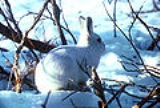
The Arctic Hare (Lepus arcticus) is a hare which is largely adapted to polar and mountainous habitats. It was once considered a subspecies of the Mountain Hare, but it is now regarded as a separate species.
s distributed over the tundra regions of Greenland and the northernmost parts of Canada as well as Alaska. In the far north, the hare becomes white during the winter to blend with the snow, similar to the ptarmigan and turns a gray-brown color during the summer months to blend with the mud and rock.
s an average of long, and it weighs about .
Arctic Hare mainly eats woody plants.

Discussion
Ask a question about 'Arctic Hare'
Start a new discussion about 'Arctic Hare'
Answer questions from other users
|
Encyclopedia
The Arctic Hare (Lepus arcticus) is a hare which is largely adapted to polar and mountainous habitats. It was once considered a subspecies of the Mountain Hare, but it is now regarded as a separate species.
Range
It is distributed over the tundra regions of Greenland and the northernmost parts of Canada as well as Alaska. In the far north, the hare becomes white during the winter to blend with the snow, similar to the ptarmigan and turns a gray-brown color during the summer months to blend with the mud and rock.
Size
It is an average of long, and it weighs about .
Diet
The Arctic Hare mainly eats woody plants. It eats buds, berries, leaves and grass. It has a keen sense of smell and may dig for willow twigs under the snow.
Subspecies
There are four subspecies of this hare:
- Lepus arcticus arcticus
- Lepus arcticus bangsii
- Lepus arcticus groenlandicus
- Lepus arcticus monstrabilis
|
| |
|
|