

Arab Christians

Encyclopedia
Arab Christians are ethnic Arabs of Christian
faith, sometimes also including those, who are identified with Arab panethnicity
. They are the remnants of ancient Arab Christian clans or Arabized Christians. Many of the modern Arab Christians are descendants of pre-Islamic Christian Arabian tribes, namely the Kahlani Qahtani
tribes of ancient Yemen
(i.e. Ghassanids
, Lakhmids
, Banu Judham
and Hamadan
). During the 5th and 6th centuries the Ghassanids, who adopted Monophosyte Christianity, formed one of the most powerful Arab confederations allied to Christian Byzantium. being a buffer against the pagan tribes of Arabia. The last king of the Lakhmids, Nu'man III, a client of the Sasanian (Iranian) Empire in the late sixth century C.E., also converted to Christianity (in this case, to the Nestorian sect).
Arab Christians, forming Greek Orthodox (including Arab Orthodox
) and Latin
Christian communities, are estimated to be 200,000 in Syria, a hundred thousand in Jordan and an equal number or more among the Palestinian Arab
population and within the Arab-Israeli population
, with a sizeable community in Lebanon, and marginal communities in Iraq and Egypt. Emigrants from Arab Christian communities make up a significant proportion of the Middle Eastern diaspora, with sizeable population concentrations across the Americas
, most notably in Chile and the US. Arab Christians term is also generally applied to Arabized Melkite
societies in Lebanon, Syria, Israel and the West Bank, who trace their roots to Greek and Aramaic-speaking Byzantine Christians. Some Arab Christians are a more recent end result of Evangelization.
Arab Christians are not the only Christian group in the Middle East
, with significant non-Arab indigenous Christian communities of ethnic Armenians, Georgians
, Greeks and large ethno-religious Christian groups of Copts, Maronites and Syriacs, who are being argued whether their ethnic identity is Arab or not. Even though sometimes classified as Arab Christians, the largest Middle Eastern Christian groups of Lebanese
Maronites
and Egyptian
Copts often claim a non-Arab ethnicity. Significant proportion of the Maronites
claim descent from ancient Phoenicians, while some Egypt
ian Copts also eschew an Arab identity, preferring an Ancient Egypt
ian one. However, both Maronites and Copts had lost their linguistic differentiation during the Ottoman
period in favor of the Arabic language.
The Syriac Christian groups, composed largely of Chaldo-Assyrians, form the majority of Christians in Iraq
, north east Syria
, south-east Turkey
and north-west Iran
. They are generally defined as non-Arab ethnic groups, including by the governments of Iraq, Iran and Turkey. Those ethno-religious groups are practicing their own native dialects of Syriac-Aramaic language, in addition to sometimes also speaking local Arabic dialects. Despite their ancient pre-Arabic roots and distinct linguo-cultural identities, Assyro-Chaldeans are sometimes related by Western sources as "Christians of the Arab World" or "Arabic Christians", creating confusion about their identity. Syriac Christians were also related as "Arab Christians" by pan-Arab movements and Arab-Islamic regimes against their will.
 Arab Christians are indigenous to the Middle East
, with a presence there predating the 7th century Islamic expansion into the Fertile Crescent
. There were many Arab tribes which adhered to Christianity beginning with the 1st century, including the Nabateans (who incorporated elements of both Arabs and Arameans), the Ghassanids
and the Lakhmids
. The latter were of Qahtani
origin and spoke Yemeni-Arabic as well as Greek, and who protected the south-eastern frontiers of the Roman
and Byzantine Empire
s in north Arabia.
Nabateans were possibly among the first Arab tribes to arrive to Southern Levant in the first millennium BCE. At first, they were converted to Judaism, during the expansion campaigns of the Hasmonean Kingdom at the first and second centuries BCE. However, by the fourth century Nabateans had converted to Christianity. The new Arab invaders, who soon pressed forward into their seats found the remnants of the Nabataeans transformed into peasant
s. Their lands were divided between the new Qahtanite
Arab tribal kingdoms of the Byzantine
vassals the Ghassanid Arabs and the Himyarite vassals the Kindah
Arab Kingdom in North Arabia.
The tribes of Tayy
, Abd Al-Qais, and Taghlib
are also known to have included many Christians in the pre-Islamic period. The Yemenite city of Najran
was a center of Arabian Christianity, made famous by the persecution by one of the kings of Yemen, Dhu Nawas, who was himself an enthusiastic convert to Judaism
. The leader of the Arabs of Najran during the period of persecution, Al-Harith, was canonized by the Roman Catholic Church as St. Aretas.
Some modern scholars suggest that Philip the Arab
was the first Christian emperor of Rome. By the 4th century a significant number of Christians occupied the Sinai peninsula, Mesopotamia and Arabia.
The New Testament has a biblical account of Arab conversion to Christianity recorded in the book of Acts. When St. Peter preaches to the people of Jerusalem, they ask, "And how is it that we hear, each of us in his own native language? [. . .] both Jews and proselytes, Cretans and Arabians—we hear them telling in our own tongues the mighty works of God." (Acts 2:8, 11, English Standard Version
). Arab Christians are thus one of the oldest Christian communities.
The first mention of Christianity in Arabia occurs in the New Testament as the Apostle Paul refers to his journey in Arabia following his conversion (Galatians 1: 15-17). Later, Eusebius of Caesarea
discusses a bishop named Beryllus in the see of Bostra, the site of a synod
c. 240 and two Councils of Arabia
. Christians existed in Arab lands from the 3rd century onward.
Also, there were Christian influences coming from Ethiopia in particular in pre-Islamic times, and some Hijazis (including a cousin of Muhammad's wife Khadijah, according to some sources) adopted this faith, while some Ethiopian Christians may have lived in Mecca.
believed Christians in the Arab world have made significant contributions to the Arab civilization and still do. Some of the top poets at certain times were Arab Christians, and many Arab Christians were physicians, writers, government officials, and people of literature.
However, there have been many periods of persecution also, and Christians were often subject to Jizyah, a discriminatory tax. As "People of the Book
", Christians in the region are accorded certain rights under Islamic law (Shari'ah) to practice their religion, strictly conditioned, however, on paying a tax required from non-Muslims called 'Jizyah' , in form of either cash or goods. The tax was not levied on slaves, women, children, monks, the old, the sick, hermits, or the poor. In return, non-Muslim citizens were permitted to practice their faith, to enjoy a measure of communal autonomy, to be entitled to Muslim state's protection from outside aggression, to be exempted from military service
and the zakat
, a form of tax
which is obligatory upon Muslim citizens.
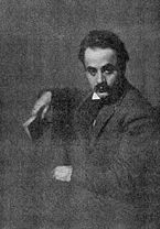
Christians, like George Habash
, founder of the Popular Front for the Liberation of Palestine
, and Syrian intellectual
Constantin Zureiq
. Many Palestinian Christians were also active in the formation and governing of the Palestinian National Authority
since 1992. THe suicide bomber Jules Jammal, a Syrian military officer who blew himself up while ramming a French ship, was also an Arab Christian.
, many of them do not consider themselves to be ethnically Arabs, but rather descendants of the Ancient Egyptians. The Copts constitute the largest population of Christians in the Middle East
, numbering between 4,000,000 and 19,000,000.In 2008, Pope Shenouda III and Bishop Morkos, bishop of Shubra, declared that the number of Copts in Egypt is more than 12 million. In the same year, father Morkos Aziz the prominent priest in Cairo declared that the number of Copts (inside Egypt) exceeds 16 million. and Furthermore, the Washington Institute for Near East Policy Encyclopædia Britannica (1985), and Macropædia (15th ed., Chicago) estimate the percentage of Copts in Egypt to be up to 20% of the Egyptian population. The liturgical language of the Copts, the Coptic language
, is a direct descendant of the Ancient Egyptian language. Coptic
remains the liturgical language of all Coptic churches inside and outside of Egypt.
It is estimated that a further 1% (approx 810,000) of Egypt's population are Christians but not Copts.
, Basra
and Mosul
.
The vast majority of the 400,000 Christians in Iraq are ethnic Assyrians (also called Chaldeans and Syriacs), who follow Syriac Christian churches, most notably the Chaldean Catholic
, Assyrian
, Syriac Catholic
and Orthodox
churches. Some followers of Syriac Churches may also self-identify as Arabs in the pan-ethnic sense.
as Arab citizens of Israel
. Some self-identify as Palestinian Arab Christians. Those form an 80% majority of the Christians in Israel, with smaller Christian communities of ethnic Russians, Greeks, Armenians, Maronites, Ukrainians and Assyrians. The majority of Arab Christians in Israel belong to the Greek Orthodox Church, with a sizeable minority belonging to the Greek Catholic (Melkite) and Latin Churches.
 In Jordan, Christians constitute about 7% of the population (about 400,000 people), though the percentage dropped sharply from 18% in the early beginning of the 20th century. This drop is largely due to influx of Muslim Arabs from Hijaz after the First World War, the low birth rates in comparison with Muslims and the large numbers of majorly Muslim Palestinian Arabs (85-90% Muslim), who fled to Jordan after 1948. Nearly 70-75% of Jordanian Christians belong to the Eastern Orthodox Church
. The rest are Catholics, with a small minority adhering to Protestantism.
Christians are well integrated in the Jordanian society and have a high level of freedom. Nearly all Christians belong to the middle or upper classes. Moreover, Christians enjoy more economic and social opportunity in the Hashemite Kingdom of Jordan than elsewhere in the Middle East and North Africa. They have a disproportionately large representation in the Jordanian parliament (10% of the Parliament) and hold important government portfolios, ambassadorial appointments abroad, and positions of high military rank. Jordanian Christians are allowed by the public and private sectors to leave work to attend Divine Liturgy or Mass on Sundays. All Christian religious ceremonies are publicly celebrated. Christians have established good relations with the royal family and the various Jordanian government officials and they have their own ecclesiastic courts for matters of personal status.
Most native Christians in Jordan identify themselves as Arab
, though there are also significant non-Arab Assyro-Chaldean, Syriac and Armenian ethnic groups in the country.
can be traced back to Saint Maron in the 4th century, the founder of national and ecclesiastical Maronitism. Saint Maron adopted an ascetic, reclusive life on the banks of the Orontes river near Homs
–Syria
and founded a community of monks who preached the Gospel in the surrounding area. The Saint Maron Monastery was too close to Antioch, making the monks vulnerable to emperor Justinian II
’s persecution. To escape persecution, Saint John Maron
, the first Maronite patriarch-elect, led his monks into the Lebanese mountains
; the Maronite monks finally settled in the Qadisha valley
. During the Muslim conquest, Muslims persecuted the Christians, particularly the Maronites, with the persecution reaching a peak during the Umayyad caliphate. Nevertheless, the influence of the Maronite establishment spread throughout the Lebanese mountains and became a considerable feudal
force. After the Muslim Conquest, the Maronite Church
became isolated and did not reestablish contact with the Church of Rome until the 12th century. According to Kamal Salibi
some Maronites may have been descended from an Arabian tribe, who immigrated thousands of years ago from the Southern Arabian peninsula
. Salibi maintains "It is very possible that the Maronites, as a community of Arabian origin, were among the last Arabian Christian tribes to arrive in Syria before Islam". Many Lebanese Christians reject this, however, seeing themselves instead as being of non-Arab origin.
Lebanon holds the largest number of Christians in the Arab world proportionally and falls just behind Egypt in absolute numbers. It is known that Christians made up between 65%-85% of Lebanon's population before the Lebanese Civil War
, if not more, and they still form 48%-50% of the population today (if all refugees and immigrants of the Muslim faith are excluded); if one counts the estimated 10-15 million strong diaspora
, they form more than the majority of the population. The exact number of Christians is uncertain because no official census has been made in Lebanon since 1932. Lebanese Christians belong mostly to the Maronite Catholic Church
and Greek Orthodox
, with sizable minorities belonging to the Melkite Greek Catholics
. Lebanese Christians are the only Christians in the Middle East with a sizeable political role in the country. The Lebanese president, half of the cabinet, and half of the parliament follow one of the various Lebanese Christian rites.
s lived under the Palestinian National Authority across the West Bank
and Gaza Strip
, Other sources state much lower numbers of actual Christian residents, as a result of inreasing immigration of Christians outside of the Palestinian Authority controlled territories. While many Palestinian Arab Christians hold high ranked positions in the Palestinian society, there are also cases of religious persecution by radical Muslim elements. The situation in the West Bank however is considerably better compared with the Gaza strip, where since the Hamas take-over in 2007, the Arab Christian community of several thousand has almost all fled.
Both the founder of the Popular Front for the Liberation of Palestine
, George Habash
, and the founder if its offshoot the DFLP, Nayif Hawatmeh, were Christians, as is prominent Palestinian activist and former Palestinian Authority minister Hanan Ashrawi
.
Israeli historian Benny Morris
writes that Christian-Muslim relations constitute a divisive element in Palestinian society.
("melek" = king, is the Aramaic denomination for the Byzantine Emperor). The appellation "Greek" refers to the liturgy
they use, sometimes used to refer to the ancestry and ethnicity of the members, however not all members are of Greek ancestry; in fact the Arabic word used is "Rum", which means "Byzantines", or Eastern Romans. Overall, the term is generally used to refer mostly to the Greek liturgy, and the Greek Orthodox denomination in Syria. Arabic is now its main liturgical language. Today, a minority of Syrian Christians hold on to their ethnic Syriac (also called Assyrians or Chaldo-Assyrians) and Armenian
origins, with a major influx of Iraqi Christian refugees into these communities.
, Algeria
, Libya
, and Morocco
due to colonial rule - French rule for Algeria, Tunisia, and Morocco, Spanish rule for Morocco, and Italian rule for Libya. Most Christians in North Africa
are foreign missionaries, immigrant workers, and people of French, Spanish, and Italian colonial descent. These mostly converted during the modern era or under French
colonialism
. Arguably, many more North African Christians of Berber or Arab descent live in France
than in North Africa, due to the exodus of the pieds-noirs in the 1960s. Charles de Foucauld
was renowned for his missions in North Africa among Muslims, including African Arabs.
, outside of the Middle East. These are residing in such countries as Argentina
, Australia
, Brazil
, Canada
, Chile
, Colombia
, Cuba
, the Dominican Republic
, Mexico
, the United States
and Venezuela
among them. There are also many Arab Christians in Europe
, especially in the United Kingdom
, France
(due to its historical connections with Lebanon
and North Africa), and Spain
(due to its historical connections with northern Morocco), and to a lesser extent in Ireland
, Germany
, Italy
, Greece
and the Netherlands
. Among those, across Europe and the Americas, an estimated 400,000 Arab Christians are living in the Palestinian diaspora
.
, Latin Catholic Church, and Protestant Churches.
, as an Arabic word for "God". The use of the term Allah in Arab Christian churches predates Islam
by several centuries. In more recent times (especially since the mid-19th century), some Arab speaking Christians from the Levant region have been converted from these native, traditional churches to more recent Protestant ones, most notably Baptist
and Methodist churches. This is mostly due to an influx of Western
, predominantly American
Evangelical, missionaries.
 A study in the genetic marker of the Phoenicians led by Pierre Zalloua, showed that the Phoenician genetic marker was found in 1 out of 17 males in the region surrounding the Mediterranean and Phoenician trading centers such as the Levant
, Tunisia
, Morocco
, Cyprus
, and Malta
. The study focused on the male Y-chromosome of a sample of 1,330 males from the Mediterranean. Colin Groves
, biological anthropologist of the Australia National University in Canberra says that the study does not suggest that the Phoenicians were restricted to a certain place, but that their DNA
still lingers 3,000 years later.
In Lebanon, almost 1 in 3 of Lebanese carry the Phoenician gene in their DNA. This Phoenician signature is distributed equally among different groups (both Christians and Muslims) in Lebanon and that the overall genetic makeup of the Lebanese was found to be similar across various backgrounds. The Phoenician gene in this study refers to haplogroup J2 plus the haplotypes PCS1+ to PCS6+, however the study also states that the Phoenicians also likely had other haplogroups.
In addition, the study found that the J2 ("old levantine haplogroup") was found in an "unusually high proportion" (about 20-30%) among Levantine people such as the Syrians, Lebanese, and the Palestinians. The ancestor haplogroup J
is common to about 50% of the Arabic-speaking people of the Southwest Asian portion of the Middle East. A Lebanese Christian who was tested as having the J2 haplogroup stated that "It carries no big meaning," and added he views himself as "Lebanese, Arab and Christian -- in that order."
Another Lebanese citizen tested stated he would be "very proud" to discover he had Phoenician roots."I will be more than happy to have Phoenician roots," said Nabil. Phoenicians started the civilization, they are the ones who invented the alphabet, I would be very proud to be a Phoenician," he adds. Dr Pierre Zalloua says the project's discovery is a "truly unifying message".
He explained,"I think it's a truly unifying message, and for me its very gratifying. Lebanon has been hammered by so many divides, and now a piece of heritage has been unravelled in this project which reminds us that maybe we should forget about differences and pay attention to our common heritage," stated Dr. Pierre Zalloua.
in public schools and in media, shortly afterwards however Syriac was banned and Arabic was imposed on Syriac language magazines and newspapers.
By the time of the 1977 census, Assyrians were being referred to as either Arabs or Kurds. Christians were forced to deny their identity as Assyrian nationalism was harshly punished. One example of this "Arabization
" program was Iraqi deputy prime minister, Tariq Aziz
, a Chaldean Christian who changed his surname from Youkhana upon joining the Baath.
By the 1990s those Christians who still referred to themselves as "Assyrians" were exempt from the Oil-for-Food program and did not receive their monthly food rations. Many Assyrians were expelled from their villages in northern Iraq, others were forced to replaced their names with Arab ones.
They likewise pointed out that Arab nationalist groups have wrongly included Assyrian-Americans in their head count of Arab Americans, in order to bolster their political clout in Washington.
Some Arab American
groups have imported this denial of Assyrian identity to the United States. In 2001, a coalition of Assyrian, Chaldean and Maronite organizations, wrote to the Arab-American Institute, to reprimand them for claiming that Assyrians were Arabs. The asked the Arab-American Institute "to cease and desist from portraying Assyrians and Maronites of past and present as Arabs, and from speaking on behalf of Assyrians and Maronites."
, a major ethnoreligious group in Egypt
.
Christianity was the majority religion in Roman Egypt during the 4th to 6th centuries and until the Muslim conquest
and remains the faith of a significant minority population.
Their Coptic language
is the direct descendant of the Demotic Egyptian spoken in the Roman era, but it has been near-extinct and mostly limited to liturgical use since the 18th century. In current times the spoken language of Copts is Arabic.
Copts in Egypt constitute the largest Christian community in the Middle East
, as well as the largest religious minority in the region, accounting for an estimated 10% of Egyptian population.
Most Copts adhere to the Coptic Orthodox Church of Alexandria. The remaining (around 800,000) are divided between the Coptic Catholic
and various Coptic Protestant
churches.
As a religious minority, the Copts are subject to significant discrimination
in modern Egypt, and the target of attacks
by militant Islamic extremist groups.
and Catholic
Churches in the Levant adhere to Arab nationalism, some have politicians reject Arabism
, such as the secular Greek Orthodox Antun Saadeh
, founder of the SSNP
, who was executed for advocating the abolition of the Lebanese state, by the Kataeb led government in the 1940s for allegedly trying to orchestrate a failed coup attempt against the government in power and declare a regime change.
Saadeh rejected Arab Nationalism
(the idea that the speakers of the Arabic language
form a single, unified nation), and argued instead for the creation of the state of United Syrian Nation or Natural Syria encompassing the Fertile Crescent
. Saadeh rejected both language and religion as defining characteristics of a nation, and instead argued that nations develop through the common development of a people inhabiting a specific geographical region. He was thus a strong opponent of both Arab nationalism and Pan-Islamism
. He argued that Syria was historically, culturally, and geographically distinct from the rest of the Arab world, which he divided into four parts. He traced Syrian history as a distinct entity back to the Phoenicians, Canaanites, Arameans, Babylonians etc.
Lebanese nationalism, which rejects Arab identity, has found a strong support among some Maronites and even other Orthodox Christians. However, this form of nationalism, nicknamed Phoenicianism
, never developed into an integrated ideology led by key thinkers, but there are a few who stood out more than others: Charles Corm
, Michel Chiha
, and Said Aql in their promotion of Phoenicianism.
In post civil-war Lebanon, since the Taif agreement
, politically Phoenicianism, as an alternate to Arabism, has been restricted to a small group.
Phoeniciansm is deeply disputed by some scholars, who have on occasion tried to convince these claims are false and to embrace and accept the Arab identity instead. This conflict of ideas of an identity is believed to be one of the main pivotal disputes between the Muslim and Maronite Christian populations of Lebanon and what mainly divides the country from national unity. It's generalized that Muslims focus more on the Arab identity of Lebanese history and culture whereas Christians focus on the pre-arabized & non-Arab spectrum of the Lebanese identity and rather refrain from the Arab specification.
During a final session of the Lebanese Parliament, a Marada Maronite MP states his identity as an Arab: "I, the Maronite Christian Lebanese Arab, grandson of Patriarch Estefan Doueihy, declare my pride to be a part of our people’s resistance in the South. Can one renounce what guarantees his rights?"
Christian
A Christian is a person who adheres to Christianity, an Abrahamic, monotheistic religion based on the life and teachings of Jesus of Nazareth as recorded in the Canonical gospels and the letters of the New Testament...
faith, sometimes also including those, who are identified with Arab panethnicity
Panethnicity
Panethnicity is the grouping together, and collective labeling, of various independently distinguishable, self-identified and self-sustained ethnicities into one all-encompassing group of people.Often labels of panethnicity group together people of different nationalities and/or ethnicities that...
. They are the remnants of ancient Arab Christian clans or Arabized Christians. Many of the modern Arab Christians are descendants of pre-Islamic Christian Arabian tribes, namely the Kahlani Qahtani
Qahtanite
The terms Qahtanite and Qahtani refer to Semitic peoples either originating in, or claiming genealogical descent from the southern extent of the Arabian Peninsula, especially from Yemen....
tribes of ancient Yemen
Yemen
The Republic of Yemen , commonly known as Yemen , is a country located in the Middle East, occupying the southwestern to southern end of the Arabian Peninsula. It is bordered by Saudi Arabia to the north, the Red Sea to the west, and Oman to the east....
(i.e. Ghassanids
Ghassanids
The Ghassanids were a group of South Arabian Christian tribes that emigrated in the early 3rd century from Yemen to Syria, Jordan, Lebanon and the Holy Land....
, Lakhmids
Lakhmids
The Lakhmids , Banu Lakhm , Muntherids , were a group of Arab Christians who lived in Southern Iraq, and made al-Hirah their capital in 266. Poets described it as a Paradise on earth, an Arab Poet described the city's pleasant climate and beauty "One day in al-Hirah is better than a year of...
, Banu Judham
Banu Judham
The Banu Judham is a Yemeni tribe that emigrated to Syria and Egypt and dwelled with the Azd and Hamdan Kahlani tribes. Most Arab genealogists are not sure whether they are a Kahlani or a Himyarite tribe.-Settling in Syria and Egypt:...
and Hamadan
Hamadan
-Culture:Hamadan is home to many poets and cultural celebrities. The city is also said to be among the world's oldest continuously inhabited cities.Handicrafts: Hamadan has always been well known for handicrafts like leather, ceramic, and beautiful carpets....
). During the 5th and 6th centuries the Ghassanids, who adopted Monophosyte Christianity, formed one of the most powerful Arab confederations allied to Christian Byzantium. being a buffer against the pagan tribes of Arabia. The last king of the Lakhmids, Nu'man III, a client of the Sasanian (Iranian) Empire in the late sixth century C.E., also converted to Christianity (in this case, to the Nestorian sect).
Arab Christians, forming Greek Orthodox (including Arab Orthodox
Arab Orthodox
The Arab Orthodox are Arab Greek Orthodox Christian communities which have existed in Greater Syria since the early years of Christianity. During the Palestine Mandate they were prominent in many of the major cities including Jaffa, Nazareth, Haifa and Jerusalem and also formed the majority of...
) and Latin
Latin
Latin is an Italic language originally spoken in Latium and Ancient Rome. It, along with most European languages, is a descendant of the ancient Proto-Indo-European language. Although it is considered a dead language, a number of scholars and members of the Christian clergy speak it fluently, and...
Christian communities, are estimated to be 200,000 in Syria, a hundred thousand in Jordan and an equal number or more among the Palestinian Arab
Palestinian people
The Palestinian people, also referred to as Palestinians or Palestinian Arabs , are an Arabic-speaking people with origins in Palestine. Despite various wars and exoduses, roughly one third of the world's Palestinian population continues to reside in the area encompassing the West Bank, the Gaza...
population and within the Arab-Israeli population
Arab citizens of Israel
Arab citizens of Israel refers to citizens of Israel who are not Jewish, and whose cultural and linguistic heritage or ethnic identity is Arab....
, with a sizeable community in Lebanon, and marginal communities in Iraq and Egypt. Emigrants from Arab Christian communities make up a significant proportion of the Middle Eastern diaspora, with sizeable population concentrations across the Americas
Americas
The Americas, or America , are lands in the Western hemisphere, also known as the New World. In English, the plural form the Americas is often used to refer to the landmasses of North America and South America with their associated islands and regions, while the singular form America is primarily...
, most notably in Chile and the US. Arab Christians term is also generally applied to Arabized Melkite
Melkite
The term Melkite, also written Melchite, refers to various Byzantine Rite Christian churches and their members originating in the Middle East. The word comes from the Syriac word malkāyā , and the Arabic word Malakī...
societies in Lebanon, Syria, Israel and the West Bank, who trace their roots to Greek and Aramaic-speaking Byzantine Christians. Some Arab Christians are a more recent end result of Evangelization.
Arab Christians are not the only Christian group in the Middle East
Christianity in the Middle East
Christianity has its origin in the Middle East and was the major religion of the region from the fourth century until some time after the Saracen Muslim Conquests of the 7th century...
, with significant non-Arab indigenous Christian communities of ethnic Armenians, Georgians
Georgian people
The Georgians are an ethnic group that have originated in Georgia, where they constitute a majority of the population. Large Georgian communities are also present throughout Russia, European Union, United States, and South America....
, Greeks and large ethno-religious Christian groups of Copts, Maronites and Syriacs, who are being argued whether their ethnic identity is Arab or not. Even though sometimes classified as Arab Christians, the largest Middle Eastern Christian groups of Lebanese
Lebanese people
The Lebanese people are a nation and ethnic group of Levantine people originating in what is today the country of Lebanon, including those who had inhabited Mount Lebanon prior to the creation of the modern Lebanese state....
Maronites
Maronites
Maronites , is an ethnoreligious group in the Middle East that have been historically tied with Lebanon. They derive their name from the Syriac saint Mar Maron whose followers moved to Mount Lebanon from northern Syria establishing the Maronite Church....
and Egyptian
Egyptians
Egyptians are nation an ethnic group made up of Mediterranean North Africans, the indigenous people of Egypt.Egyptian identity is closely tied to geography. The population of Egypt is concentrated in the lower Nile Valley, the small strip of cultivable land stretching from the First Cataract to...
Copts often claim a non-Arab ethnicity. Significant proportion of the Maronites
Maronites
Maronites , is an ethnoreligious group in the Middle East that have been historically tied with Lebanon. They derive their name from the Syriac saint Mar Maron whose followers moved to Mount Lebanon from northern Syria establishing the Maronite Church....
claim descent from ancient Phoenicians, while some Egypt
Egypt
Egypt , officially the Arab Republic of Egypt, Arabic: , is a country mainly in North Africa, with the Sinai Peninsula forming a land bridge in Southwest Asia. Egypt is thus a transcontinental country, and a major power in Africa, the Mediterranean Basin, the Middle East and the Muslim world...
ian Copts also eschew an Arab identity, preferring an Ancient Egypt
Ancient Egypt
Ancient Egypt was an ancient civilization of Northeastern Africa, concentrated along the lower reaches of the Nile River in what is now the modern country of Egypt. Egyptian civilization coalesced around 3150 BC with the political unification of Upper and Lower Egypt under the first pharaoh...
ian one. However, both Maronites and Copts had lost their linguistic differentiation during the Ottoman
Ottoman Empire
The Ottoman EmpireIt was usually referred to as the "Ottoman Empire", the "Turkish Empire", the "Ottoman Caliphate" or more commonly "Turkey" by its contemporaries...
period in favor of the Arabic language.
The Syriac Christian groups, composed largely of Chaldo-Assyrians, form the majority of Christians in Iraq
Iraq
Iraq ; officially the Republic of Iraq is a country in Western Asia spanning most of the northwestern end of the Zagros mountain range, the eastern part of the Syrian Desert and the northern part of the Arabian Desert....
, north east Syria
Syria
Syria , officially the Syrian Arab Republic , is a country in Western Asia, bordering Lebanon and the Mediterranean Sea to the West, Turkey to the north, Iraq to the east, Jordan to the south, and Israel to the southwest....
, south-east Turkey
Turkey
Turkey , known officially as the Republic of Turkey , is a Eurasian country located in Western Asia and in East Thrace in Southeastern Europe...
and north-west Iran
Iran
Iran , officially the Islamic Republic of Iran , is a country in Southern and Western Asia. The name "Iran" has been in use natively since the Sassanian era and came into use internationally in 1935, before which the country was known to the Western world as Persia...
. They are generally defined as non-Arab ethnic groups, including by the governments of Iraq, Iran and Turkey. Those ethno-religious groups are practicing their own native dialects of Syriac-Aramaic language, in addition to sometimes also speaking local Arabic dialects. Despite their ancient pre-Arabic roots and distinct linguo-cultural identities, Assyro-Chaldeans are sometimes related by Western sources as "Christians of the Arab World" or "Arabic Christians", creating confusion about their identity. Syriac Christians were also related as "Arab Christians" by pan-Arab movements and Arab-Islamic regimes against their will.
Classic antiquity
Middle East
The Middle East is a region that encompasses Western Asia and Northern Africa. It is often used as a synonym for Near East, in opposition to Far East...
, with a presence there predating the 7th century Islamic expansion into the Fertile Crescent
Fertile Crescent
The Fertile Crescent, nicknamed "The Cradle of Civilization" for the fact the first civilizations started there, is a crescent-shaped region containing the comparatively moist and fertile land of otherwise arid and semi-arid Western Asia. The term was first used by University of Chicago...
. There were many Arab tribes which adhered to Christianity beginning with the 1st century, including the Nabateans (who incorporated elements of both Arabs and Arameans), the Ghassanids
Ghassanids
The Ghassanids were a group of South Arabian Christian tribes that emigrated in the early 3rd century from Yemen to Syria, Jordan, Lebanon and the Holy Land....
and the Lakhmids
Lakhmids
The Lakhmids , Banu Lakhm , Muntherids , were a group of Arab Christians who lived in Southern Iraq, and made al-Hirah their capital in 266. Poets described it as a Paradise on earth, an Arab Poet described the city's pleasant climate and beauty "One day in al-Hirah is better than a year of...
. The latter were of Qahtani
Qahtanite
The terms Qahtanite and Qahtani refer to Semitic peoples either originating in, or claiming genealogical descent from the southern extent of the Arabian Peninsula, especially from Yemen....
origin and spoke Yemeni-Arabic as well as Greek, and who protected the south-eastern frontiers of the Roman
Roman Empire
The Roman Empire was the post-Republican period of the ancient Roman civilization, characterised by an autocratic form of government and large territorial holdings in Europe and around the Mediterranean....
and Byzantine Empire
Byzantine Empire
The Byzantine Empire was the Eastern Roman Empire during the periods of Late Antiquity and the Middle Ages, centred on the capital of Constantinople. Known simply as the Roman Empire or Romania to its inhabitants and neighbours, the Empire was the direct continuation of the Ancient Roman State...
s in north Arabia.
Nabateans were possibly among the first Arab tribes to arrive to Southern Levant in the first millennium BCE. At first, they were converted to Judaism, during the expansion campaigns of the Hasmonean Kingdom at the first and second centuries BCE. However, by the fourth century Nabateans had converted to Christianity. The new Arab invaders, who soon pressed forward into their seats found the remnants of the Nabataeans transformed into peasant
Peasant
A peasant is an agricultural worker who generally tend to be poor and homeless-Etymology:The word is derived from 15th century French païsant meaning one from the pays, or countryside, ultimately from the Latin pagus, or outlying administrative district.- Position in society :Peasants typically...
s. Their lands were divided between the new Qahtanite
Qahtanite
The terms Qahtanite and Qahtani refer to Semitic peoples either originating in, or claiming genealogical descent from the southern extent of the Arabian Peninsula, especially from Yemen....
Arab tribal kingdoms of the Byzantine
Byzantine
Byzantine usually refers to the Roman Empire during the Middle Ages.Byzantine may also refer to:* A citizen of the Byzantine Empire, or native Greek during the Middle Ages...
vassals the Ghassanid Arabs and the Himyarite vassals the Kindah
Kindah
The kingdom of Kindah was a vassal kingdom which ruled from Qaryah dhat Kahl in Nejd, Central Arabia . The kingdom controlled much of the northern Arabian peninsula in the 4th and 5th centuries AD.-Origin:...
Arab Kingdom in North Arabia.
The tribes of Tayy
Tayy
Tayy is a large and ancient Arabian tribe belonging to the southern or Qahtanite branch of Arab tribes. Their original homeland was the area of the two mountains Aja and Salma in north central Arabia , though, like all Qahtanite tribes, it is believed they originally moved there from Yemen...
, Abd Al-Qais, and Taghlib
Taghlib
Banu Taghlib or Taghlib ibn Wa'il were a large and powerful Arabian tribe of Mesopotamia and northern Arabia. The tribe traces its lineage to the large branch of North Arabian tribes known as Rabi'ah, which also included Bakr, 'Anizzah, Banu Hanifa and Anz bin Wa'il .The tribe's ancestral...
are also known to have included many Christians in the pre-Islamic period. The Yemenite city of Najran
Najran
Najran , formerly known as Aba as Sa'ud, is a city in southwestern Saudi Arabia near the border with Yemen. It is the capital of Najran Province. Designated a New town, Najran is one of the fastest-growing cities in the kingdom; its population has risen from 47,500 in 1974 and 90,983 in 1992 to...
was a center of Arabian Christianity, made famous by the persecution by one of the kings of Yemen, Dhu Nawas, who was himself an enthusiastic convert to Judaism
Judaism
Judaism ) is the "religion, philosophy, and way of life" of the Jewish people...
. The leader of the Arabs of Najran during the period of persecution, Al-Harith, was canonized by the Roman Catholic Church as St. Aretas.
Some modern scholars suggest that Philip the Arab
Philip the Arab
Philip the Arab , also known as Philip or Philippus Arabs, was Roman Emperor from 244 to 249. He came from Syria, and rose to become a major figure in the Roman Empire. He achieved power after the death of Gordian III, quickly negotiating peace with the Sassanid Empire...
was the first Christian emperor of Rome. By the 4th century a significant number of Christians occupied the Sinai peninsula, Mesopotamia and Arabia.
The New Testament has a biblical account of Arab conversion to Christianity recorded in the book of Acts. When St. Peter preaches to the people of Jerusalem, they ask, "And how is it that we hear, each of us in his own native language? [. . .] both Jews and proselytes, Cretans and Arabians—we hear them telling in our own tongues the mighty works of God." (Acts 2:8, 11, English Standard Version
English Standard Version
The English Standard Version is an English translation of the Christian Bible. It is a revision of the 1971 edition of the Revised Standard Version...
). Arab Christians are thus one of the oldest Christian communities.
The first mention of Christianity in Arabia occurs in the New Testament as the Apostle Paul refers to his journey in Arabia following his conversion (Galatians 1: 15-17). Later, Eusebius of Caesarea
Eusebius of Caesarea
Eusebius of Caesarea also called Eusebius Pamphili, was a Roman historian, exegete and Christian polemicist. He became the Bishop of Caesarea in Palestine about the year 314. Together with Pamphilus, he was a scholar of the Biblical canon...
discusses a bishop named Beryllus in the see of Bostra, the site of a synod
Synod
A synod historically is a council of a church, usually convened to decide an issue of doctrine, administration or application. In modern usage, the word often refers to the governing body of a particular church, whether its members are meeting or not...
c. 240 and two Councils of Arabia
Councils of Arabia
The Councils of Arabia were two councils of the early Christian Church held in Bostra, in Arabia Petraea; one in 246 and the other in 247. Both were held against Beryllus, the local bishop, and his followers, who believed that the soul perished upon the death of the body, but that it would one day...
. Christians existed in Arab lands from the 3rd century onward.
Also, there were Christian influences coming from Ethiopia in particular in pre-Islamic times, and some Hijazis (including a cousin of Muhammad's wife Khadijah, according to some sources) adopted this faith, while some Ethiopian Christians may have lived in Mecca.
After Islamic conquest
Throughout many eras of history, Christians have co-existed fairly peacefully with their fellow non-Christian Arab neighbours, principally Muslims and Jews. Even after the rapid expansion of Islam from the 7th century onwards through the Islamic conquests, many Christians chose not to convert to Islam. Many scholars and intellectuals like Edward SaidEdward Said
Edward Wadie Saïd was a Palestinian-American literary theorist and advocate for Palestinian rights. He was University Professor of English and Comparative Literature at Columbia University and a founding figure in postcolonialism...
believed Christians in the Arab world have made significant contributions to the Arab civilization and still do. Some of the top poets at certain times were Arab Christians, and many Arab Christians were physicians, writers, government officials, and people of literature.
However, there have been many periods of persecution also, and Christians were often subject to Jizyah, a discriminatory tax. As "People of the Book
People of the Book
People of the Book is a term used to designate non-Muslim adherents to faiths which have a revealed scripture called, in Arabic, Al-Kitab . The three types of adherents to faiths that the Qur'an mentions as people of the book are the Jews, Sabians and Christians.In Islam, the Muslim scripture, the...
", Christians in the region are accorded certain rights under Islamic law (Shari'ah) to practice their religion, strictly conditioned, however, on paying a tax required from non-Muslims called 'Jizyah' , in form of either cash or goods. The tax was not levied on slaves, women, children, monks, the old, the sick, hermits, or the poor. In return, non-Muslim citizens were permitted to practice their faith, to enjoy a measure of communal autonomy, to be entitled to Muslim state's protection from outside aggression, to be exempted from military service
Military service
Military service, in its simplest sense, is service by an individual or group in an army or other militia, whether as a chosen job or as a result of an involuntary draft . Some nations require a specific amount of military service from every citizen...
and the zakat
Zakat
Zakāt , one of the Five Pillars of Islam, is the giving of a fixed portion of one's wealth to charity, generally to the poor and needy.-History:Zakat, a practice initiated by Muhammed himself, has played an important role throughout Islamic history...
, a form of tax
Tax
To tax is to impose a financial charge or other levy upon a taxpayer by a state or the functional equivalent of a state such that failure to pay is punishable by law. Taxes are also imposed by many subnational entities...
which is obligatory upon Muslim citizens.
In the post-Ottoman era
Some of the most influential Arab nationalists were ArabArab
Arab people, also known as Arabs , are a panethnicity primarily living in the Arab world, which is located in Western Asia and North Africa. They are identified as such on one or more of genealogical, linguistic, or cultural grounds, with tribal affiliations, and intra-tribal relationships playing...
Christians, like George Habash
George Habash
George Habash also known by his laqab "al-Hakim" was a Palestinian nationalist. Habash, a Palestinian Christian, founded the Popular Front for the Liberation of Palestine, which pioneered the hijacking of airplanes as a Middle East militant tactic...
, founder of the Popular Front for the Liberation of Palestine
Popular Front for the Liberation of Palestine
The Popular Front for the Liberation of Palestine is a Palestinian Marxist-Leninist organisation founded in 1967. It has consistently been the second-largest of the groups forming the Palestine Liberation Organization , the largest being Fatah...
, and Syrian intellectual
Constantin Zureiq
Constantin Zureiq
Constantin Zureiq was a prominent and influential Syrian Arab intellectual who was one of the first to pioneer and express the importance of Arab nationalism. He stressed the urgent need to transform stagnate Arab society by means of rational thought and radical modification of the methods of...
. Many Palestinian Christians were also active in the formation and governing of the Palestinian National Authority
Palestinian National Authority
The Palestinian Authority is the administrative organization established to govern parts of the West Bank and Gaza Strip...
since 1992. THe suicide bomber Jules Jammal, a Syrian military officer who blew himself up while ramming a French ship, was also an Arab Christian.
Egypt
Most Egyptian Christians are Copts and are mainly members of the Coptic Orthodox Church. Although Copts in Egypt speak Egyptian ArabicEgyptian Arabic
Egyptian Arabic is the language spoken by contemporary Egyptians.It is more commonly known locally as the Egyptian colloquial language or Egyptian dialect ....
, many of them do not consider themselves to be ethnically Arabs, but rather descendants of the Ancient Egyptians. The Copts constitute the largest population of Christians in the Middle East
Middle East
The Middle East is a region that encompasses Western Asia and Northern Africa. It is often used as a synonym for Near East, in opposition to Far East...
, numbering between 4,000,000 and 19,000,000.In 2008, Pope Shenouda III and Bishop Morkos, bishop of Shubra, declared that the number of Copts in Egypt is more than 12 million. In the same year, father Morkos Aziz the prominent priest in Cairo declared that the number of Copts (inside Egypt) exceeds 16 million. and Furthermore, the Washington Institute for Near East Policy Encyclopædia Britannica (1985), and Macropædia (15th ed., Chicago) estimate the percentage of Copts in Egypt to be up to 20% of the Egyptian population. The liturgical language of the Copts, the Coptic language
Coptic language
Coptic or Coptic Egyptian is the current stage of the Egyptian language, a northern Afro-Asiatic language spoken in Egypt until at least the 17th century. Egyptian began to be written using the Greek alphabet in the 1st century...
, is a direct descendant of the Ancient Egyptian language. Coptic
Coptic language
Coptic or Coptic Egyptian is the current stage of the Egyptian language, a northern Afro-Asiatic language spoken in Egypt until at least the 17th century. Egyptian began to be written using the Greek alphabet in the 1st century...
remains the liturgical language of all Coptic churches inside and outside of Egypt.
It is estimated that a further 1% (approx 810,000) of Egypt's population are Christians but not Copts.
Iraq
If excluding Syriac groups, the Arab Christian community in Iraq is relatively small, and further dwindled due to the Iraq War to just several thousands. Most Arab Christians in Iraq belong traditionally to Greek Orthodox and Roman Catholic Churches and are concentrated in major cities such as BaghdadBaghdad
Baghdad is the capital of Iraq, as well as the coterminous Baghdad Governorate. The population of Baghdad in 2011 is approximately 7,216,040...
, Basra
Basra
Basra is the capital of Basra Governorate, in southern Iraq near Kuwait and Iran. It had an estimated population of two million as of 2009...
and Mosul
Mosul
Mosul , is a city in northern Iraq and the capital of the Ninawa Governorate, some northwest of Baghdad. The original city stands on the west bank of the Tigris River, opposite the ancient Assyrian city of Nineveh on the east bank, but the metropolitan area has now grown to encompass substantial...
.
The vast majority of the 400,000 Christians in Iraq are ethnic Assyrians (also called Chaldeans and Syriacs), who follow Syriac Christian churches, most notably the Chaldean Catholic
Chaldean Catholic Church
The Chaldean Catholic Church , is an Eastern Syriac particular church of the Catholic Church, maintaining full communion with the Bishop of Rome and the rest of the Catholic Church...
, Assyrian
Assyrian Church of the East
The Assyrian Church of the East, officially the Holy Apostolic Catholic Assyrian Church of the East ʻIttā Qaddishtā w-Shlikhāitā Qattoliqi d-Madnĕkhā d-Āturāyē), is a Syriac Church historically centered in Mesopotamia. It is one of the churches that claim continuity with the historical...
, Syriac Catholic
Syriac Catholic Church
The Syriac Catholic Church is a Christian church in the Levant having practices and rites in common with the Syriac Orthodox Church. They are one of the Eastern Catholic Churches following the Antiochene rite, the Syriac tradition of Antioch, along with the Maronites and Syro-Malankara Christians...
and Orthodox
Syriac Orthodox Church
The Syriac Orthodox Church; is an autocephalous Oriental Orthodox church based in the Eastern Mediterranean, with members spread throughout the world. The Syriac Orthodox Church claims to derive its origin from one of the first Christian communities, established in Antioch by the Apostle St....
churches. Some followers of Syriac Churches may also self-identify as Arabs in the pan-ethnic sense.
Israel
Some 122,000 Arab Christians live in IsraelIsrael
The State of Israel is a parliamentary republic located in the Middle East, along the eastern shore of the Mediterranean Sea...
as Arab citizens of Israel
Arab citizens of Israel
Arab citizens of Israel refers to citizens of Israel who are not Jewish, and whose cultural and linguistic heritage or ethnic identity is Arab....
. Some self-identify as Palestinian Arab Christians. Those form an 80% majority of the Christians in Israel, with smaller Christian communities of ethnic Russians, Greeks, Armenians, Maronites, Ukrainians and Assyrians. The majority of Arab Christians in Israel belong to the Greek Orthodox Church, with a sizeable minority belonging to the Greek Catholic (Melkite) and Latin Churches.
Jordan
Eastern Orthodox Church
The Orthodox Church, officially called the Orthodox Catholic Church and commonly referred to as the Eastern Orthodox Church, is the second largest Christian denomination in the world, with an estimated 300 million adherents mainly in the countries of Belarus, Bulgaria, Cyprus, Georgia, Greece,...
. The rest are Catholics, with a small minority adhering to Protestantism.
Christians are well integrated in the Jordanian society and have a high level of freedom. Nearly all Christians belong to the middle or upper classes. Moreover, Christians enjoy more economic and social opportunity in the Hashemite Kingdom of Jordan than elsewhere in the Middle East and North Africa. They have a disproportionately large representation in the Jordanian parliament (10% of the Parliament) and hold important government portfolios, ambassadorial appointments abroad, and positions of high military rank. Jordanian Christians are allowed by the public and private sectors to leave work to attend Divine Liturgy or Mass on Sundays. All Christian religious ceremonies are publicly celebrated. Christians have established good relations with the royal family and the various Jordanian government officials and they have their own ecclesiastic courts for matters of personal status.
Most native Christians in Jordan identify themselves as Arab
Arab
Arab people, also known as Arabs , are a panethnicity primarily living in the Arab world, which is located in Western Asia and North Africa. They are identified as such on one or more of genealogical, linguistic, or cultural grounds, with tribal affiliations, and intra-tribal relationships playing...
, though there are also significant non-Arab Assyro-Chaldean, Syriac and Armenian ethnic groups in the country.
Lebanon
The earliest indisputable tradition of Christianity in LebanonChristianity in Lebanon
Christianity in Lebanon has a long and continuous history beginning with the visits of Jesus to the southern territories, where he is said to have performed many miraculous healings. Biblical Scriptures reveal that Peter and Paul evangelized the Phoenicians, whom they affiliated to the ancient...
can be traced back to Saint Maron in the 4th century, the founder of national and ecclesiastical Maronitism. Saint Maron adopted an ascetic, reclusive life on the banks of the Orontes river near Homs
Homs
Homs , previously known as Emesa , is a city in western Syria and the capital of the Homs Governorate. It is above sea level and is located north of Damascus...
–Syria
Syria
Syria , officially the Syrian Arab Republic , is a country in Western Asia, bordering Lebanon and the Mediterranean Sea to the West, Turkey to the north, Iraq to the east, Jordan to the south, and Israel to the southwest....
and founded a community of monks who preached the Gospel in the surrounding area. The Saint Maron Monastery was too close to Antioch, making the monks vulnerable to emperor Justinian II
Justinian II
Justinian II , surnamed the Rhinotmetos or Rhinotmetus , was the last Byzantine Emperor of the Heraclian Dynasty, reigning from 685 to 695 and again from 705 to 711...
’s persecution. To escape persecution, Saint John Maron
John Maron
John Maron , died 707 was a Syriac monk, and the first Maronite Patriarch. He is revered as a saint by the Catholic Church, and celebrated on March 2.-Early life:...
, the first Maronite patriarch-elect, led his monks into the Lebanese mountains
Mount Lebanon
Mount Lebanon , as a geographic designation, is a Lebanese mountain range, averaging above 2,200 meters in height and receiving a substantial amount of precipitation, including snow, which averages around four meters deep. It extends across the whole country along about , parallel to the...
; the Maronite monks finally settled in the Qadisha valley
Kadisha Valley
The Kadisha Valley is a valley that lies within the Becharre and Zgharta Districts of the North Governorate of Lebanon. The valley is a deep gorge carved by the Kadisha River, also known as the Nahr Abu Ali when it reaches Tripoli...
. During the Muslim conquest, Muslims persecuted the Christians, particularly the Maronites, with the persecution reaching a peak during the Umayyad caliphate. Nevertheless, the influence of the Maronite establishment spread throughout the Lebanese mountains and became a considerable feudal
Feudalism
Feudalism was a set of legal and military customs in medieval Europe that flourished between the 9th and 15th centuries, which, broadly defined, was a system for ordering society around relationships derived from the holding of land in exchange for service or labour.Although derived from the...
force. After the Muslim Conquest, the Maronite Church
Maronite Church
The Syriac Maronite Church of Antioch is an Eastern Catholic Church in full communion with the Holy See of Rome . It traces its heritage back to the community founded by Maron, a 4th-century Syriac monk venerated as a saint. The first Maronite Patriarch, John Maron, was elected in the late 7th...
became isolated and did not reestablish contact with the Church of Rome until the 12th century. According to Kamal Salibi
Kamal Salibi
Kamal Suleiman Salibi was a prominent Lebanese historian, professor of history at the American University of Beirut and the founding Director of the Royal Institute for Inter-Faith Studies in Amman, Jordan...
some Maronites may have been descended from an Arabian tribe, who immigrated thousands of years ago from the Southern Arabian peninsula
Arabian Peninsula
The Arabian Peninsula is a land mass situated north-east of Africa. Also known as Arabia or the Arabian subcontinent, it is the world's largest peninsula and covers 3,237,500 km2...
. Salibi maintains "It is very possible that the Maronites, as a community of Arabian origin, were among the last Arabian Christian tribes to arrive in Syria before Islam". Many Lebanese Christians reject this, however, seeing themselves instead as being of non-Arab origin.
Lebanon holds the largest number of Christians in the Arab world proportionally and falls just behind Egypt in absolute numbers. It is known that Christians made up between 65%-85% of Lebanon's population before the Lebanese Civil War
Lebanese Civil War
The Lebanese Civil War was a multifaceted civil war in Lebanon. The war lasted from 1975 to 1990 and resulted in an estimated 150,000 to 230,000 civilian fatalities. Another one million people were wounded, and today approximately 350,000 people remain displaced. There was also a mass exodus of...
, if not more, and they still form 48%-50% of the population today (if all refugees and immigrants of the Muslim faith are excluded); if one counts the estimated 10-15 million strong diaspora
Lebanese diaspora
Lebanese diaspora refers to Lebanese migrants and their descendants who by choice or coercion emigrated from Lebanon and now reside in other countries....
, they form more than the majority of the population. The exact number of Christians is uncertain because no official census has been made in Lebanon since 1932. Lebanese Christians belong mostly to the Maronite Catholic Church
Maronite Church
The Syriac Maronite Church of Antioch is an Eastern Catholic Church in full communion with the Holy See of Rome . It traces its heritage back to the community founded by Maron, a 4th-century Syriac monk venerated as a saint. The first Maronite Patriarch, John Maron, was elected in the late 7th...
and Greek Orthodox
Eastern Orthodox Church
The Orthodox Church, officially called the Orthodox Catholic Church and commonly referred to as the Eastern Orthodox Church, is the second largest Christian denomination in the world, with an estimated 300 million adherents mainly in the countries of Belarus, Bulgaria, Cyprus, Georgia, Greece,...
, with sizable minorities belonging to the Melkite Greek Catholics
Melkite Greek Catholic Church
The Melkite Greek Catholic Church is an Eastern Catholic Church in full communion with the Holy See as part of the worldwide Catholic Church. The Melkites, Byzantine Rite Catholics of mixed Eastern Mediterranean and Greek origin, trace their history to the early Christians of Antioch, Syria, of...
. Lebanese Christians are the only Christians in the Middle East with a sizeable political role in the country. The Lebanese president, half of the cabinet, and half of the parliament follow one of the various Lebanese Christian rites.
Palestinian Territories
In 2009, about 173,000 Palestinian ChristianPalestinian Christian
Palestinian Christians are Arabic-speaking Christians descended from the people of the geographical area of Palestine. Within Palestine, there are churches and believers from many Christian denominations, including Oriental Orthodoxy, Eastern Orthodoxy, Catholic , Protestant, and others...
s lived under the Palestinian National Authority across the West Bank
West Bank
The West Bank ) of the Jordan River is the landlocked geographical eastern part of the Palestinian territories located in Western Asia. To the west, north, and south, the West Bank shares borders with the state of Israel. To the east, across the Jordan River, lies the Hashemite Kingdom of Jordan...
and Gaza Strip
Gaza Strip
thumb|Gaza city skylineThe Gaza Strip lies on the Eastern coast of the Mediterranean Sea. The Strip borders Egypt on the southwest and Israel on the south, east and north. It is about long, and between 6 and 12 kilometres wide, with a total area of...
, Other sources state much lower numbers of actual Christian residents, as a result of inreasing immigration of Christians outside of the Palestinian Authority controlled territories. While many Palestinian Arab Christians hold high ranked positions in the Palestinian society, there are also cases of religious persecution by radical Muslim elements. The situation in the West Bank however is considerably better compared with the Gaza strip, where since the Hamas take-over in 2007, the Arab Christian community of several thousand has almost all fled.
Both the founder of the Popular Front for the Liberation of Palestine
Popular Front for the Liberation of Palestine
The Popular Front for the Liberation of Palestine is a Palestinian Marxist-Leninist organisation founded in 1967. It has consistently been the second-largest of the groups forming the Palestine Liberation Organization , the largest being Fatah...
, George Habash
George Habash
George Habash also known by his laqab "al-Hakim" was a Palestinian nationalist. Habash, a Palestinian Christian, founded the Popular Front for the Liberation of Palestine, which pioneered the hijacking of airplanes as a Middle East militant tactic...
, and the founder if its offshoot the DFLP, Nayif Hawatmeh, were Christians, as is prominent Palestinian activist and former Palestinian Authority minister Hanan Ashrawi
Hanan Ashrawi
Hanan Daoud Khalil Ashrawi is a Palestinian legislator, activist, and scholar. She was a protégé and later colleague and close friend of Edward Said. Ashrawi was an important leader during the First Intifada, served as the official spokesperson for the Palestinian Delegation to the Middle East...
.
Israeli historian Benny Morris
Benny Morris
Benny Morris is professor of History in the Middle East Studies department of Ben-Gurion University of the Negev in the city of Be'er Sheva, Israel...
writes that Christian-Muslim relations constitute a divisive element in Palestinian society.
Syria
In Syria, according to the 1960 census, Christians formed just under 15% of the population (about 1.2 million people)Due to political reasons, no newer census has been taken since. Current estimates suggest that overall Christians comprise about 10% of the overall population (2,000,000), due to having lower birth rates and higher emigration rates than their Muslim compatriots. The Arab Christians in Syria are Greek Orthodox, Greek Catholic, with some Roman Catholics.The largest Christian denomination in Syria is the Greek Orthodox church, formerly known as the Melkite church after the 5-6th centuries Christian split, in which they stayed loyal to ConstantinopleConstantinople
Constantinople was the capital of the Roman, Eastern Roman, Byzantine, Latin, and Ottoman Empires. Throughout most of the Middle Ages, Constantinople was Europe's largest and wealthiest city.-Names:...
("melek" = king, is the Aramaic denomination for the Byzantine Emperor). The appellation "Greek" refers to the liturgy
Liturgy
Liturgy is either the customary public worship done by a specific religious group, according to its particular traditions or a more precise term that distinguishes between those religious groups who believe their ritual requires the "people" to do the "work" of responding to the priest, and those...
they use, sometimes used to refer to the ancestry and ethnicity of the members, however not all members are of Greek ancestry; in fact the Arabic word used is "Rum", which means "Byzantines", or Eastern Romans. Overall, the term is generally used to refer mostly to the Greek liturgy, and the Greek Orthodox denomination in Syria. Arabic is now its main liturgical language. Today, a minority of Syrian Christians hold on to their ethnic Syriac (also called Assyrians or Chaldo-Assyrians) and Armenian
Armenians
Armenian people or Armenians are a nation and ethnic group native to the Armenian Highland.The largest concentration is in Armenia having a nearly-homogeneous population with 97.9% or 3,145,354 being ethnic Armenian....
origins, with a major influx of Iraqi Christian refugees into these communities.
North Africa
There are tiny communities of Roman Catholics in TunisiaTunisia
Tunisia , officially the Tunisian RepublicThe long name of Tunisia in other languages used in the country is: , is the northernmost country in Africa. It is a Maghreb country and is bordered by Algeria to the west, Libya to the southeast, and the Mediterranean Sea to the north and east. Its area...
, Algeria
Algeria
Algeria , officially the People's Democratic Republic of Algeria , also formally referred to as the Democratic and Popular Republic of Algeria, is a country in the Maghreb region of Northwest Africa with Algiers as its capital.In terms of land area, it is the largest country in Africa and the Arab...
, Libya
Libya
Libya is an African country in the Maghreb region of North Africa bordered by the Mediterranean Sea to the north, Egypt to the east, Sudan to the southeast, Chad and Niger to the south, and Algeria and Tunisia to the west....
, and Morocco
Morocco
Morocco , officially the Kingdom of Morocco , is a country located in North Africa. It has a population of more than 32 million and an area of 710,850 km², and also primarily administers the disputed region of the Western Sahara...
due to colonial rule - French rule for Algeria, Tunisia, and Morocco, Spanish rule for Morocco, and Italian rule for Libya. Most Christians in North Africa
North Africa
North Africa or Northern Africa is the northernmost region of the African continent, linked by the Sahara to Sub-Saharan Africa. Geopolitically, the United Nations definition of Northern Africa includes eight countries or territories; Algeria, Egypt, Libya, Morocco, South Sudan, Sudan, Tunisia, and...
are foreign missionaries, immigrant workers, and people of French, Spanish, and Italian colonial descent. These mostly converted during the modern era or under French
France
The French Republic , The French Republic , The French Republic , (commonly known as France , is a unitary semi-presidential republic in Western Europe with several overseas territories and islands located on other continents and in the Indian, Pacific, and Atlantic oceans. Metropolitan France...
colonialism
Colonialism
Colonialism is the establishment, maintenance, acquisition and expansion of colonies in one territory by people from another territory. It is a process whereby the metropole claims sovereignty over the colony and the social structure, government, and economics of the colony are changed by...
. Arguably, many more North African Christians of Berber or Arab descent live in France
France
The French Republic , The French Republic , The French Republic , (commonly known as France , is a unitary semi-presidential republic in Western Europe with several overseas territories and islands located on other continents and in the Indian, Pacific, and Atlantic oceans. Metropolitan France...
than in North Africa, due to the exodus of the pieds-noirs in the 1960s. Charles de Foucauld
Charles de Foucauld
Charles Eugène de Foucauld was a French Catholic religious and priest living among the Tuareg in the Sahara in Algeria. He was assassinated in 1916 outside the door of the fort he built for protection of the Tuareg and is considered by the Catholic Church to be a martyr...
was renowned for his missions in North Africa among Muslims, including African Arabs.
Diaspora
Hundreds of thousands of Arab Christians also live in the diasporaDiaspora
A diaspora is "the movement, migration, or scattering of people away from an established or ancestral homeland" or "people dispersed by whatever cause to more than one location", or "people settled far from their ancestral homelands".The word has come to refer to historical mass-dispersions of...
, outside of the Middle East. These are residing in such countries as Argentina
Argentina
Argentina , officially the Argentine Republic , is the second largest country in South America by land area, after Brazil. It is constituted as a federation of 23 provinces and an autonomous city, Buenos Aires...
, Australia
Australia
Australia , officially the Commonwealth of Australia, is a country in the Southern Hemisphere comprising the mainland of the Australian continent, the island of Tasmania, and numerous smaller islands in the Indian and Pacific Oceans. It is the world's sixth-largest country by total area...
, Brazil
Brazil
Brazil , officially the Federative Republic of Brazil , is the largest country in South America. It is the world's fifth largest country, both by geographical area and by population with over 192 million people...
, Canada
Canada
Canada is a North American country consisting of ten provinces and three territories. Located in the northern part of the continent, it extends from the Atlantic Ocean in the east to the Pacific Ocean in the west, and northward into the Arctic Ocean...
, Chile
Chile
Chile ,officially the Republic of Chile , is a country in South America occupying a long, narrow coastal strip between the Andes mountains to the east and the Pacific Ocean to the west. It borders Peru to the north, Bolivia to the northeast, Argentina to the east, and the Drake Passage in the far...
, Colombia
Colombia
Colombia, officially the Republic of Colombia , is a unitary constitutional republic comprising thirty-two departments. The country is located in northwestern South America, bordered to the east by Venezuela and Brazil; to the south by Ecuador and Peru; to the north by the Caribbean Sea; to the...
, Cuba
Cuba
The Republic of Cuba is an island nation in the Caribbean. The nation of Cuba consists of the main island of Cuba, the Isla de la Juventud, and several archipelagos. Havana is the largest city in Cuba and the country's capital. Santiago de Cuba is the second largest city...
, the Dominican Republic
Dominican Republic
The Dominican Republic is a nation on the island of La Hispaniola, part of the Greater Antilles archipelago in the Caribbean region. The western third of the island is occupied by the nation of Haiti, making Hispaniola one of two Caribbean islands that are shared by two countries...
, Mexico
Mexico
The United Mexican States , commonly known as Mexico , is a federal constitutional republic in North America. It is bordered on the north by the United States; on the south and west by the Pacific Ocean; on the southeast by Guatemala, Belize, and the Caribbean Sea; and on the east by the Gulf of...
, the United States
United States
The United States of America is a federal constitutional republic comprising fifty states and a federal district...
and Venezuela
Venezuela
Venezuela , officially called the Bolivarian Republic of Venezuela , is a tropical country on the northern coast of South America. It borders Colombia to the west, Guyana to the east, and Brazil to the south...
among them. There are also many Arab Christians in Europe
Europe
Europe is, by convention, one of the world's seven continents. Comprising the westernmost peninsula of Eurasia, Europe is generally 'divided' from Asia to its east by the watershed divides of the Ural and Caucasus Mountains, the Ural River, the Caspian and Black Seas, and the waterways connecting...
, especially in the United Kingdom
United Kingdom
The United Kingdom of Great Britain and Northern IrelandIn the United Kingdom and Dependencies, other languages have been officially recognised as legitimate autochthonous languages under the European Charter for Regional or Minority Languages...
, France
France
The French Republic , The French Republic , The French Republic , (commonly known as France , is a unitary semi-presidential republic in Western Europe with several overseas territories and islands located on other continents and in the Indian, Pacific, and Atlantic oceans. Metropolitan France...
(due to its historical connections with Lebanon
Lebanon
Lebanon , officially the Republic of LebanonRepublic of Lebanon is the most common term used by Lebanese government agencies. The term Lebanese Republic, a literal translation of the official Arabic and French names that is not used in today's world. Arabic is the most common language spoken among...
and North Africa), and Spain
Spain
Spain , officially the Kingdom of Spain languages]] under the European Charter for Regional or Minority Languages. In each of these, Spain's official name is as follows:;;;;;;), is a country and member state of the European Union located in southwestern Europe on the Iberian Peninsula...
(due to its historical connections with northern Morocco), and to a lesser extent in Ireland
Ireland
Ireland is an island to the northwest of continental Europe. It is the third-largest island in Europe and the twentieth-largest island on Earth...
, Germany
Germany
Germany , officially the Federal Republic of Germany , is a federal parliamentary republic in Europe. The country consists of 16 states while the capital and largest city is Berlin. Germany covers an area of 357,021 km2 and has a largely temperate seasonal climate...
, Italy
Italy
Italy , officially the Italian Republic languages]] under the European Charter for Regional or Minority Languages. In each of these, Italy's official name is as follows:;;;;;;;;), is a unitary parliamentary republic in South-Central Europe. To the north it borders France, Switzerland, Austria and...
, Greece
Greece
Greece , officially the Hellenic Republic , and historically Hellas or the Republic of Greece in English, is a country in southeastern Europe....
and the Netherlands
Netherlands
The Netherlands is a constituent country of the Kingdom of the Netherlands, located mainly in North-West Europe and with several islands in the Caribbean. Mainland Netherlands borders the North Sea to the north and west, Belgium to the south, and Germany to the east, and shares maritime borders...
. Among those, across Europe and the Americas, an estimated 400,000 Arab Christians are living in the Palestinian diaspora
Palestinian diaspora
Palestinian diaspora is a term used to describe Palestinians living outside of historic Palestine - an area today known as Israel and the Palestinian territories or the West Bank, and the Gaza Strip...
.
Religion
The Arab Christians largely belong to the Greek Orthodox or Antiochian Orthodox Churches, though there are also adherents to other churches: Melkite Greek Catholic ChurchMelkite Greek Catholic Church
The Melkite Greek Catholic Church is an Eastern Catholic Church in full communion with the Holy See as part of the worldwide Catholic Church. The Melkites, Byzantine Rite Catholics of mixed Eastern Mediterranean and Greek origin, trace their history to the early Christians of Antioch, Syria, of...
, Latin Catholic Church, and Protestant Churches.
Doctrine
Like Arab Muslims, Arab Christians refer to God as AllahAllah
Allah is a word for God used in the context of Islam. In Arabic, the word means simply "God". It is used primarily by Muslims and Bahá'ís, and often, albeit not exclusively, used by Arabic-speaking Eastern Catholic Christians, Maltese Roman Catholics, Eastern Orthodox Christians, Mizrahi Jews and...
, as an Arabic word for "God". The use of the term Allah in Arab Christian churches predates Islam
Islam
Islam . The most common are and . : Arabic pronunciation varies regionally. The first vowel ranges from ~~. The second vowel ranges from ~~~...
by several centuries. In more recent times (especially since the mid-19th century), some Arab speaking Christians from the Levant region have been converted from these native, traditional churches to more recent Protestant ones, most notably Baptist
Baptist
Baptists comprise a group of Christian denominations and churches that subscribe to a doctrine that baptism should be performed only for professing believers , and that it must be done by immersion...
and Methodist churches. This is mostly due to an influx of Western
Western world
The Western world, also known as the West and the Occident , is a term referring to the countries of Western Europe , the countries of the Americas, as well all countries of Northern and Central Europe, Australia and New Zealand...
, predominantly American
United States
The United States of America is a federal constitutional republic comprising fifty states and a federal district...
Evangelical, missionaries.
Relation of Levantine populations to Phoenicians
Levant
The Levant or ) is the geographic region and culture zone of the "eastern Mediterranean littoral between Anatolia and Egypt" . The Levant includes most of modern Lebanon, Syria, Jordan, Israel, the Palestinian territories, and sometimes parts of Turkey and Iraq, and corresponds roughly to the...
, Tunisia
Tunisia
Tunisia , officially the Tunisian RepublicThe long name of Tunisia in other languages used in the country is: , is the northernmost country in Africa. It is a Maghreb country and is bordered by Algeria to the west, Libya to the southeast, and the Mediterranean Sea to the north and east. Its area...
, Morocco
Morocco
Morocco , officially the Kingdom of Morocco , is a country located in North Africa. It has a population of more than 32 million and an area of 710,850 km², and also primarily administers the disputed region of the Western Sahara...
, Cyprus
Cyprus
Cyprus , officially the Republic of Cyprus , is a Eurasian island country, member of the European Union, in the Eastern Mediterranean, east of Greece, south of Turkey, west of Syria and north of Egypt. It is the third largest island in the Mediterranean Sea.The earliest known human activity on the...
, and Malta
Malta
Malta , officially known as the Republic of Malta , is a Southern European country consisting of an archipelago situated in the centre of the Mediterranean, south of Sicily, east of Tunisia and north of Libya, with Gibraltar to the west and Alexandria to the east.Malta covers just over in...
. The study focused on the male Y-chromosome of a sample of 1,330 males from the Mediterranean. Colin Groves
Colin Groves
Colin Peter Groves is Professor of Biological Anthropology at the Australian National University in Canberra, Australia.Born in England on 24 June 1942, Colin Groves completed a Bachelor of Science at University College London in 1963, and a Doctor of Philosophy at the Royal Free Hospital School of...
, biological anthropologist of the Australia National University in Canberra says that the study does not suggest that the Phoenicians were restricted to a certain place, but that their DNA
DNA
Deoxyribonucleic acid is a nucleic acid that contains the genetic instructions used in the development and functioning of all known living organisms . The DNA segments that carry this genetic information are called genes, but other DNA sequences have structural purposes, or are involved in...
still lingers 3,000 years later.
In Lebanon, almost 1 in 3 of Lebanese carry the Phoenician gene in their DNA. This Phoenician signature is distributed equally among different groups (both Christians and Muslims) in Lebanon and that the overall genetic makeup of the Lebanese was found to be similar across various backgrounds. The Phoenician gene in this study refers to haplogroup J2 plus the haplotypes PCS1+ to PCS6+, however the study also states that the Phoenicians also likely had other haplogroups.
In addition, the study found that the J2 ("old levantine haplogroup") was found in an "unusually high proportion" (about 20-30%) among Levantine people such as the Syrians, Lebanese, and the Palestinians. The ancestor haplogroup J
Haplogroup J (Y-DNA)
In human genetics, Haplogroup J is a Y-chromosome DNA haplogroup. It is one of the major male lines of all living men...
is common to about 50% of the Arabic-speaking people of the Southwest Asian portion of the Middle East. A Lebanese Christian who was tested as having the J2 haplogroup stated that "It carries no big meaning," and added he views himself as "Lebanese, Arab and Christian -- in that order."
Another Lebanese citizen tested stated he would be "very proud" to discover he had Phoenician roots."I will be more than happy to have Phoenician roots," said Nabil. Phoenicians started the civilization, they are the ones who invented the alphabet, I would be very proud to be a Phoenician," he adds. Dr Pierre Zalloua says the project's discovery is a "truly unifying message".
He explained,"I think it's a truly unifying message, and for me its very gratifying. Lebanon has been hammered by so many divides, and now a piece of heritage has been unravelled in this project which reminds us that maybe we should forget about differences and pay attention to our common heritage," stated Dr. Pierre Zalloua.
Question of Identity
Arab Christians include descendants of ancient Arab tribes, who were among the first Christian converts, as well as some recent adherents of Christianity. Sometimes, however the issue of self-identification arises regarding specific Christian communities across the Arab world.Assyrians
After the ascend of the nationalist Ba'ath party in Iraq in 1963 Assyrian Christians were referred to as "Arab Christians" by Arab nationalists who deny the existence of a distinct Assyrian identity. In 1972 a law was passed to use Syriac languageSyriac language
Syriac is a dialect of Middle Aramaic that was once spoken across much of the Fertile Crescent. Having first appeared as a script in the 1st century AD after being spoken as an unwritten language for five centuries, Classical Syriac became a major literary language throughout the Middle East from...
in public schools and in media, shortly afterwards however Syriac was banned and Arabic was imposed on Syriac language magazines and newspapers.
By the time of the 1977 census, Assyrians were being referred to as either Arabs or Kurds. Christians were forced to deny their identity as Assyrian nationalism was harshly punished. One example of this "Arabization
Arabization
Arabization or Arabisation describes a growing cultural influence on a non-Arab area that gradually changes into one that speaks Arabic and/or incorporates Arab culture...
" program was Iraqi deputy prime minister, Tariq Aziz
Tariq Aziz
Tariq Aziz and Deputy Prime Minister of Iraq and a close advisor of former President Saddam Hussein. Their association began in the 1950s when both were activists for the then-banned Ba'ath Arab Socialist Party...
, a Chaldean Christian who changed his surname from Youkhana upon joining the Baath.
By the 1990s those Christians who still referred to themselves as "Assyrians" were exempt from the Oil-for-Food program and did not receive their monthly food rations. Many Assyrians were expelled from their villages in northern Iraq, others were forced to replaced their names with Arab ones.
They likewise pointed out that Arab nationalist groups have wrongly included Assyrian-Americans in their head count of Arab Americans, in order to bolster their political clout in Washington.
Some Arab American
Arab American
An Arab American is a United States citizen or resident of Arab ethnic, cultural and linguistic heritage or identity, who identifies themselves as Arab. Arab Americans trace ancestry to any of the various waves of immigrants of the countries comprising the Arab World...
groups have imported this denial of Assyrian identity to the United States. In 2001, a coalition of Assyrian, Chaldean and Maronite organizations, wrote to the Arab-American Institute, to reprimand them for claiming that Assyrians were Arabs. The asked the Arab-American Institute "to cease and desist from portraying Assyrians and Maronites of past and present as Arabs, and from speaking on behalf of Assyrians and Maronites."
Copts
The Copts are the native Egyptian ChristiansChristianity in Egypt
Christianity is a minority religion in Egypt. Egyptian Christians are known as Copts and account for about 10% of the population. Despite the small proportion of Christians within Egypt, Egypt's Christian population is the largest in terms of absolute numbers in the greater region of the Middle...
, a major ethnoreligious group in Egypt
Egypt
Egypt , officially the Arab Republic of Egypt, Arabic: , is a country mainly in North Africa, with the Sinai Peninsula forming a land bridge in Southwest Asia. Egypt is thus a transcontinental country, and a major power in Africa, the Mediterranean Basin, the Middle East and the Muslim world...
.
Christianity was the majority religion in Roman Egypt during the 4th to 6th centuries and until the Muslim conquest
Muslim conquest of Egypt
At the commencement of the Muslims conquest of Egypt, Egypt was part of the Byzantine Empire with its capital in Constantinople. However, it had been occupied just a decade before by the Persian Empire under Khosrau II...
and remains the faith of a significant minority population.
Their Coptic language
Coptic language
Coptic or Coptic Egyptian is the current stage of the Egyptian language, a northern Afro-Asiatic language spoken in Egypt until at least the 17th century. Egyptian began to be written using the Greek alphabet in the 1st century...
is the direct descendant of the Demotic Egyptian spoken in the Roman era, but it has been near-extinct and mostly limited to liturgical use since the 18th century. In current times the spoken language of Copts is Arabic.
Copts in Egypt constitute the largest Christian community in the Middle East
Christianity in the Middle East
Christianity has its origin in the Middle East and was the major religion of the region from the fourth century until some time after the Saracen Muslim Conquests of the 7th century...
, as well as the largest religious minority in the region, accounting for an estimated 10% of Egyptian population.
Most Copts adhere to the Coptic Orthodox Church of Alexandria. The remaining (around 800,000) are divided between the Coptic Catholic
Coptic Catholic Church
The Coptic Catholic Church is an Alexandrian Rite particular Church in full communion with the Pope of Rome. Historically, Coptic Catholics represent a schism from the Coptic Orthodox Church, leaving that church in order to come into full communion with the Bishop of Rome.The current Coptic...
and various Coptic Protestant
Protestantism in Egypt
The Evangelical Church of Egypt has approximately 250,000 members in Egypt. The Episcopal Church in Jerusalem and the Middle East has between 10,000 and 15,000 members in Egypt. Religious freedom of Egyptian Christians is hampered by government authorities...
churches.
As a religious minority, the Copts are subject to significant discrimination
Persecution of Copts
Copts are native Egyptian Christians, usually Orthodox, who currently make up around 10% of the population of Egypt — the largest religious minority of that country...
in modern Egypt, and the target of attacks
Terrorism in Egypt
Terrorism in Egypt refers to terrorist attacks in Egypt, many of them linked to Islamic extremism. Targets have included government officials, police, tourists and the Christian minority...
by militant Islamic extremist groups.
Greek Orthodox and Catholics
Although the majority of the followers of Greek OrthodoxGreek Orthodox Church
The Greek Orthodox Church is the body of several churches within the larger communion of Eastern Orthodox Christianity sharing a common cultural tradition whose liturgy is also traditionally conducted in Koine Greek, the original language of the New Testament...
and Catholic
Melkite Greek Catholic Church
The Melkite Greek Catholic Church is an Eastern Catholic Church in full communion with the Holy See as part of the worldwide Catholic Church. The Melkites, Byzantine Rite Catholics of mixed Eastern Mediterranean and Greek origin, trace their history to the early Christians of Antioch, Syria, of...
Churches in the Levant adhere to Arab nationalism, some have politicians reject Arabism
Arabism
Arabism, the Arabness, of a people, of culture.For movements in the Arab world, please see: Arab nationalism, pan-Arabism, Ba'athism. It can refer to both, race or/and culture...
, such as the secular Greek Orthodox Antun Saadeh
Antun Saadeh
Antun Saadeh was a Lebanese Syrian nationalist philosopher, writer and politician who founded the Syrian Social Nationalist Party.-Life:...
, founder of the SSNP
Syrian Social Nationalist Party
The Syrian Social Nationalist Party , is a secular nationalist political party in Lebanon and Syria. It advocates the establishment of a Syrian nation state spanning the Fertile Crescent, including present day Syria, Lebanon, Iraq, Jordan, the Palestinian Territories, Israel, Cyprus, Kuwait,...
, who was executed for advocating the abolition of the Lebanese state, by the Kataeb led government in the 1940s for allegedly trying to orchestrate a failed coup attempt against the government in power and declare a regime change.
Saadeh rejected Arab Nationalism
Arab nationalism
Arab nationalism is a nationalist ideology celebrating the glories of Arab civilization, the language and literature of the Arabs, calling for rejuvenation and political union in the Arab world...
(the idea that the speakers of the Arabic language
Arabic language
Arabic is a name applied to the descendants of the Classical Arabic language of the 6th century AD, used most prominently in the Quran, the Islamic Holy Book...
form a single, unified nation), and argued instead for the creation of the state of United Syrian Nation or Natural Syria encompassing the Fertile Crescent
Fertile Crescent
The Fertile Crescent, nicknamed "The Cradle of Civilization" for the fact the first civilizations started there, is a crescent-shaped region containing the comparatively moist and fertile land of otherwise arid and semi-arid Western Asia. The term was first used by University of Chicago...
. Saadeh rejected both language and religion as defining characteristics of a nation, and instead argued that nations develop through the common development of a people inhabiting a specific geographical region. He was thus a strong opponent of both Arab nationalism and Pan-Islamism
Pan-Islamism
Pan-Islamism is a political movement advocating the unity of Muslims under one Islamic state — often a Caliphate. As a form of religious nationalism, Pan-Islamism differentiates itself from other pan-nationalistic ideologies, for example Pan-Arabism, by excluding culture and ethnicity as primary...
. He argued that Syria was historically, culturally, and geographically distinct from the rest of the Arab world, which he divided into four parts. He traced Syrian history as a distinct entity back to the Phoenicians, Canaanites, Arameans, Babylonians etc.
Maronites
At the March 1936 Congress of the Coast and Four Districts, the Muslim leadership at this conference made the declaration that Lebanon was an Arab country, indistinguishable from its Arab neighbors. In the April 1936 Beirut municipal elections, Christian Maronite and Muslim Politicians were divided along Phoenician and Arab lines in concern of whether the Lebanese coast should be claimed by Syria or given to Lebanon, increasing the already mounting tensions between the two communities.Lebanese nationalism, which rejects Arab identity, has found a strong support among some Maronites and even other Orthodox Christians. However, this form of nationalism, nicknamed Phoenicianism
Phoenicianism
Phoenicianism is a form of Lebanese nationalism, especially popular from the 1920s through the 1950s. It promotes the theory that Lebanese people are not Arabs and that the Lebanese speak a distinct language and have their own culture, separate from that of the surrounding Middle Eastern countries...
, never developed into an integrated ideology led by key thinkers, but there are a few who stood out more than others: Charles Corm
Charles Corm
Charles Corm was a Lebanese poet and writer, instrumental in the phoenicianism movement in Lebanon, resulting in a surge of nationalism. Although most Lebanese authors at the time wrote in Arabic, Corm opted to write in French instead...
, Michel Chiha
Michel Chiha
Michel Chiha is a Lebanese thinker . He was a banker, a politician, writer and journalist. Along with Petro Trad and Omar Daouk, he is considered one of the fathers of the Lebanese Constitution...
, and Said Aql in their promotion of Phoenicianism.
In post civil-war Lebanon, since the Taif agreement
Taif Agreement
The Taif Agreement was an agreement reached to provide "the basis for the ending of the civil war and the return to political normalcy in Lebanon." Negotiated in Taif, Saudi Arabia, it was designed to end the decades-long Lebanese civil war, politically accommodate the demographic...
, politically Phoenicianism, as an alternate to Arabism, has been restricted to a small group.
Phoeniciansm is deeply disputed by some scholars, who have on occasion tried to convince these claims are false and to embrace and accept the Arab identity instead. This conflict of ideas of an identity is believed to be one of the main pivotal disputes between the Muslim and Maronite Christian populations of Lebanon and what mainly divides the country from national unity. It's generalized that Muslims focus more on the Arab identity of Lebanese history and culture whereas Christians focus on the pre-arabized & non-Arab spectrum of the Lebanese identity and rather refrain from the Arab specification.
During a final session of the Lebanese Parliament, a Marada Maronite MP states his identity as an Arab: "I, the Maronite Christian Lebanese Arab, grandson of Patriarch Estefan Doueihy, declare my pride to be a part of our people’s resistance in the South. Can one renounce what guarantees his rights?"
See also
- Christianity in IndiaChristianity in IndiaChristianity is India's third-largest religion, with approximately 24 million followers, constituting 2.3% of India's population. The works of scholars and Eastern Christian writings and 14th century Portuguese missionaries created an illusion to convert Indians that Christianity was introduced to...
- Antiochian GreeksAntiochian GreeksAntiochian Greeks are members of the Greek Orthodox Church of Antioch who have resided in the territory of contemporary Turkish province of Hatay, which includes the old city of Antioch or modern-day Antakya. The community has a long heritage that dates back to the establishment of Antioch in 323...
- List of Christian terms in Arabic
- Bible translations (Arabic)Bible translations (Arabic)Translations of the Bible into Arabic are known from the early Christian churches in Syria, Egypt, Malta and Spain. Some of these translations are from Syriac , Coptic or Latin. The earliest fragment of the Old Testament in Arabic is a text of Psalm 77, found in the Umayyad Mosque, dating from the...
- GhassanidsGhassanidsThe Ghassanids were a group of South Arabian Christian tribes that emigrated in the early 3rd century from Yemen to Syria, Jordan, Lebanon and the Holy Land....
- LakhmidsLakhmidsThe Lakhmids , Banu Lakhm , Muntherids , were a group of Arab Christians who lived in Southern Iraq, and made al-Hirah their capital in 266. Poets described it as a Paradise on earth, an Arab Poet described the city's pleasant climate and beauty "One day in al-Hirah is better than a year of...
- TaghlibTaghlibBanu Taghlib or Taghlib ibn Wa'il were a large and powerful Arabian tribe of Mesopotamia and northern Arabia. The tribe traces its lineage to the large branch of North Arabian tribes known as Rabi'ah, which also included Bakr, 'Anizzah, Banu Hanifa and Anz bin Wa'il .The tribe's ancestral...
- Arab OrthodoxArab OrthodoxThe Arab Orthodox are Arab Greek Orthodox Christian communities which have existed in Greater Syria since the early years of Christianity. During the Palestine Mandate they were prominent in many of the major cities including Jaffa, Nazareth, Haifa and Jerusalem and also formed the majority of...
- Sophronius
- John of DamascusJohn of DamascusSaint John of Damascus was a Syrian monk and priest...