

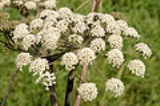
Apiaceae

Encyclopedia
The Apiaceae commonly known as carrot or parsley family, is a group of mostly aromatic plant
s with hollow stems. The family is large, with more than 3,700 species
spread across 434 genera
, it is the sixteenth largest family of flowering plant
s. Including in this family are the well known plants: angelica
, anise
, arracacha
, asafoetida
, caraway
, carrot
, celery
, centella asiatica
, chervil
, cicely
, coriander
/cilantro, cumin
, dill
, fennel
, hemlock
, lovage
, Queen Anne's Lace
, parsley
, parsnip
, sea holly, and the now extinct silphium
.
, biennial
or perennial
herbs
(frequently with the leaves aggregated toward the base), though a minority are shrub
s or tree
s. Their leaves are of variable size and alternately arranged
, or alternate with the upper leaves becoming nearly opposite. In some taxa the texture is leathery, fleshy, or even rigid, but always with stoma
ta. They are petiolate
or perfoliate and more or less sheathing, the blade usually dissected and pinnatifid
, but entire in some genera. Most commonly crushing leaves emits a marked smell, aromatic to foetid, but absent in some members. The flowers are nearly always aggregated in terminal umbel
s, simple or compound, often umbelliform cymes, rarely in heads.
Apiaceae flowers are usually perfect (hermaphroditic) and actinomorphic, but some are andromonoecious, polygamomonoecious, or even dioecious
(as in Acronema
), with a distinct calyx and corolla, but the calyx if often highly reduced, to the point of being undetectable in many species, while the corolla can be white, yellow, pink or purple. The flowers are nearly perfectly pentamerous, with 5 petals, sepals, and stamens, but only 2 carpels in the gynoecium
. Ovaries are inferior with two locules, each containing one anatropous ovule
.
The fruits are non-fleshy schizocarp
of two mericarps, each with a single seed; They separate at maturity. The seeds have an oily endosperm
.
order in the APG III classification system. It is closely related to Araliaceae
and the boundaries between these families remain unclear. Traditionally groups within the family have been delimited largely based on fruit morphology
, and the results from this have not been congruent with the more recent molecular phylogenetic analyses. The subfamilial and tribal classification for the family is currently in a state of flux, with many of the groups being found to be grossly paraphyletic/polyphyletic.
in 1836. The name is derived from the type genus Apium
, which was originally used by Pliny the Elder
circa 50 AD for a celery-like plant. The alternative name for the family, Umbelliferae, derives from the inflorescence
being generally in the form of a compound umbel
.
s (Pastinaca sativa), carrot
s (Daucus carota), and Hamburg parsley (Petroselinum crispum). Many plants of this group are also adapted to conditions that encourage heavy concentrations of essential oil
s, and as a result some are flavourful aromatic herbs. Examples are parsley
(Petroselinum crispum), cilantro (Coriandrum sativum), and dill
(Anethum graveolens). The plentiful seeds of the umbers, likewise, are sometimes used in cuisine, as with coriander
(Coriandrum sativum), fennel
(Foeniculum vulgare), cumin
(Cuminum cyminum), and caraway
(Carum carvi).
Other notable cultivated Apiaceae include chervil
(Anthriscus cerefolium), angelica
(Angelica spp.), celery
(Apium graveolens), arracacha
(Arracacia xanthorrhiza), poison hemlock
(Conium maculatum), sea holly (Eryngium spp.), asafoetida
(Ferula asafoetida), galbanum
(Ferula gummosa), cicely
(Myrrhis odorata), anise
(Pimpinella anisum), lovage (Levisticum officinale), and hacquetia
(Hacquetia epipactis).
s, and predatory flies
, which actually drink nectar when not reproducing. They then will prey upon insect pests on nearby plants.
Some of the plants are herbs that produce enough scent to possibly dilute the odours of nearby plants, or the pheromone
s emitted by insects that find those plants, which would otherwise attract more pests.
, have estrogen
ic properties and have been used as a folk medicine
for birth control
. Most notable for this use is the extinct giant fennel, silphium
.
Plant
Plants are living organisms belonging to the kingdom Plantae. Precise definitions of the kingdom vary, but as the term is used here, plants include familiar organisms such as trees, flowers, herbs, bushes, grasses, vines, ferns, mosses, and green algae. The group is also called green plants or...
s with hollow stems. The family is large, with more than 3,700 species
Species
In biology, a species is one of the basic units of biological classification and a taxonomic rank. A species is often defined as a group of organisms capable of interbreeding and producing fertile offspring. While in many cases this definition is adequate, more precise or differing measures are...
spread across 434 genera
Genus
In biology, a genus is a low-level taxonomic rank used in the biological classification of living and fossil organisms, which is an example of definition by genus and differentia...
, it is the sixteenth largest family of flowering plant
Flowering plant
The flowering plants , also known as Angiospermae or Magnoliophyta, are the most diverse group of land plants. Angiosperms are seed-producing plants like the gymnosperms and can be distinguished from the gymnosperms by a series of synapomorphies...
s. Including in this family are the well known plants: angelica
Angelica
Angelica is a genus of about 60 species of tall biennial and perennial herbs in the family Apiaceae, native to temperate and subarctic regions of the Northern Hemisphere, reaching as far North as Iceland and Lapland...
, anise
Anise
Anise , Pimpinella anisum, also called aniseed, is a flowering plant in the family Apiaceae native to the eastern Mediterranean region and Southwest Asia. Its flavor resembles that of liquorice, fennel, and tarragon.- Biology :...
, arracacha
Arracacha
The arracacha is a garden root vegetable originally from the Andes, somewhat intermediate between the carrot and celery...
, asafoetida
Asafoetida
Asafoetida , alternative spelling asafetida, is the dried latex exuded from the living underground rhizome or tap root of several species of Ferula, which is a perennial herb...
, caraway
Caraway
Caraway also known as meridian fennel, or Persian cumin is a biennial plant in the family Apiaceae, native to western Asia, Europe and Northern Africa....
, carrot
Carrot
The carrot is a root vegetable, usually orange in colour, though purple, red, white, and yellow varieties exist. It has a crisp texture when fresh...
, celery
Celery
Apium graveolens is a plant species in the family Apiaceae commonly known as celery or celeriac , depending on whether the petioles or roots are eaten: celery refers to the former and celeriac to the latter. Apium graveolens grows to 1 m tall...
, centella asiatica
Centella asiatica
Centella asiatica is a small herbaceous annual plant of the family Mackinlayaceae or subfamily Mackinlayoideae of family Apiaceae, and is native to India, Sri Lanka, northern Australia, Indonesia, Iran, Malaysia, Melanesia, Papua New Guinea, and other parts of Asia...
, chervil
Chervil
Chervil is a delicate annual herb related to parsley. Sometimes called garden chervil, it is used to season mild-flavoured dishes and is a constituent of the French herb mixture fines herbes.-Biology:...
, cicely
Cicely
Cicely or Sweet Cicely is a plant belonging to the family Apiaceae, native to Central Europe; it is the sole species in the genus Myrrhis. It is a tall herbaceous perennial plant, depending on circumstances growing to 2 m [6 ft 6 in] tall. The leaves are finely divided, feathery, up to 50 cm...
, coriander
Coriander
Coriander is an annual herb in the family Apiaceae. Coriander is native to southern Europe and North Africa to southwestern Asia. It is a soft, hairless plant growing to tall. The leaves are variable in shape, broadly lobed at the base of the plant, and slender and feathery higher on the...
/cilantro, cumin
Cumin
Cumin is a flowering plant in the family Apiaceae, native from the east Mediterranean to India. Its seeds are used in the cuisines of many different cultures, in both whole and ground form.-Etymology:...
, dill
Dill
Dill is a perennial herb. It is the sole species of the genus Anethum, though classified by some botanists in a related genus as Peucedanum graveolens C.B.Clarke.-Growth:...
, fennel
Fennel
Fennel is a plant species in the genus Foeniculum . It is a member of the family Apiaceae . It is a hardy, perennial, umbelliferous herb, with yellow flowers and feathery leaves...
, hemlock
Hemlock
The word hemlock may refer to:*Hemlock, several poisonous plants in the Apiaceae family :**Hemlock , two species, one formerly used as a method of execution**Water Hemlock...
, lovage
Lovage
Lovage is a tall perennial plant, the sole species in the genus Levisticum, in the family Apiaceae, subfamily Apioideae, tribe Apieae.-Distribution:...
, Queen Anne's Lace
Queen Anne's lace
Queen Anne's lace may refer to the following plants:* Ammi majus* Daucus carota* Anthriscus sylvestris...
, parsley
Parsley
Parsley is a species of Petroselinum in the family Apiaceae, native to the central Mediterranean region , naturalized elsewhere in Europe, and widely cultivated as an herb, a spice and a vegetable.- Description :Garden parsley is a bright green hairless biennial herbaceous plant in temperate...
, parsnip
Parsnip
The parsnip is a root vegetable related to the carrot. Parsnips resemble carrots, but are paler than most carrots and have a sweeter taste, especially when cooked. The buttery, slightly spicy, sweet flavor of cooked mature parsnips is reminiscent of butterscotch, honey, and subtle cardamom...
, sea holly, and the now extinct silphium
Silphium
Silphium was a plant that was used in classical antiquity as a rich seasoning and as a medicine. It was the essential item of trade from the ancient North African city of Cyrene, and was so critical to the Cyrenian economy that most of their coins bore a picture of the plant...
.
Description
Most Apiaceae are annualAnnual plant
An annual plant is a plant that usually germinates, flowers, and dies in a year or season. True annuals will only live longer than a year if they are prevented from setting seed...
, biennial
Biennial plant
A biennial plant is a flowering plant that takes two years to complete its biological lifecycle. In the first year the plant grows leaves, stems, and roots , then it enters a period of dormancy over the colder months. Usually the stem remains very short and the leaves are low to the ground, forming...
or perennial
Perennial plant
A perennial plant or simply perennial is a plant that lives for more than two years. The term is often used to differentiate a plant from shorter lived annuals and biennials. The term is sometimes misused by commercial gardeners or horticulturalists to describe only herbaceous perennials...
herbs
Herbaceous plant
A herbaceous plant is a plant that has leaves and stems that die down at the end of the growing season to the soil level. They have no persistent woody stem above ground...
(frequently with the leaves aggregated toward the base), though a minority are shrub
Shrub
A shrub or bush is distinguished from a tree by its multiple stems and shorter height, usually under 5–6 m tall. A large number of plants may become either shrubs or trees, depending on the growing conditions they experience...
s or tree
Tree
A tree is a perennial woody plant. It is most often defined as a woody plant that has many secondary branches supported clear of the ground on a single main stem or trunk with clear apical dominance. A minimum height specification at maturity is cited by some authors, varying from 3 m to...
s. Their leaves are of variable size and alternately arranged
Phyllotaxis
In botany, phyllotaxis or phyllotaxy is the arrangement of leaves on a plant stem .- Pattern structure :...
, or alternate with the upper leaves becoming nearly opposite. In some taxa the texture is leathery, fleshy, or even rigid, but always with stoma
Stoma
In botany, a stoma is a pore, found in the leaf and stem epidermis that is used forgas exchange. The pore is bordered by a pair of specialized parenchyma cells known as guard cells that are responsible for regulating the size of the opening...
ta. They are petiolate
Petiole (botany)
In botany, the petiole is the stalk attaching the leaf blade to the stem. The petiole usually has the same internal structure as the stem. Outgrowths appearing on each side of the petiole are called stipules. Leaves lacking a petiole are called sessile, or clasping when they partly surround the...
or perfoliate and more or less sheathing, the blade usually dissected and pinnatifid
Pinnate
Pinnate is a term used to describe feather-like or multi-divided features arising from both sides of a common axis in plant or animal structures, and comes from the Latin word pinna meaning "feather", "wing", or "fin". A similar term is pectinate, which refers to a comb-like arrangement of parts...
, but entire in some genera. Most commonly crushing leaves emits a marked smell, aromatic to foetid, but absent in some members. The flowers are nearly always aggregated in terminal umbel
Umbel
An umbel is an inflorescence which consists of a number of short flower stalks which are equal in length and spread from a common point, somewhat like umbrella ribs....
s, simple or compound, often umbelliform cymes, rarely in heads.
Apiaceae flowers are usually perfect (hermaphroditic) and actinomorphic, but some are andromonoecious, polygamomonoecious, or even dioecious
Plant sexuality
Plant sexuality covers the wide variety of sexual reproduction systems found across the plant kingdom. This article describes morphological aspects of sexual reproduction of plants....
(as in Acronema
Acronema
Acronema is a genus of 25 species of plants in the Apiaceae family found in the Sino-Himalayan region. It comprises between 15 and 25 species....
), with a distinct calyx and corolla, but the calyx if often highly reduced, to the point of being undetectable in many species, while the corolla can be white, yellow, pink or purple. The flowers are nearly perfectly pentamerous, with 5 petals, sepals, and stamens, but only 2 carpels in the gynoecium
Gynoecium
Gynoecium is most commonly used as a collective term for all carpels in a flower. A carpel is the ovule and seed producing reproductive organ in flowering plants. Carpels are derived from ovule-bearing leaves which evolved to form a closed structure containing the ovules...
. Ovaries are inferior with two locules, each containing one anatropous ovule
Ovule
Ovule means "small egg". In seed plants, the ovule is the structure that gives rise to and contains the female reproductive cells. It consists of three parts: The integument forming its outer layer, the nucellus , and the megaspore-derived female gametophyte in its center...
.
The fruits are non-fleshy schizocarp
Schizocarp
A schizocarp is a dry fruit that develops from multiple carpels. When mature it splits up into mericarps. Mericarps are often 1-seeded as in, for example, Malva, Malvastrum, and Sida...
of two mericarps, each with a single seed; They separate at maturity. The seeds have an oily endosperm
Endosperm
Endosperm is the tissue produced inside the seeds of most flowering plants around the time of fertilization. It surrounds the embryo and provides nutrition in the form of starch, though it can also contain oils and protein. This makes endosperm an important source of nutrition in human diet...
.
Systematics
The family is solidly placed within the ApialesApiales
The Apiales are an order of flowering plants. The families given at right are those recognized in the APG III system. This is typical of the newer classifications, though there is some slight variation, and in particular the Torriceliaceae may be divided...
order in the APG III classification system. It is closely related to Araliaceae
Araliaceae
Araliaceae is a family of flowering plants, also known as the Aralia family or Ivy family. The family includes 254 species of trees, shrubs, lianas and perennial herbaceous plants into 2 subfamilies...
and the boundaries between these families remain unclear. Traditionally groups within the family have been delimited largely based on fruit morphology
Morphology (biology)
In biology, morphology is a branch of bioscience dealing with the study of the form and structure of organisms and their specific structural features....
, and the results from this have not been congruent with the more recent molecular phylogenetic analyses. The subfamilial and tribal classification for the family is currently in a state of flux, with many of the groups being found to be grossly paraphyletic/polyphyletic.
Etymology
The Apiaceae was first described by John LindleyJohn Lindley
John Lindley FRS was an English botanist, gardener and orchidologist.-Early years:Born in Catton, near Norwich, England, John Lindley was one of four children of George and Mary Lindley. George Lindley was a nurseryman and pomologist and ran a commercial nursery garden...
in 1836. The name is derived from the type genus Apium
Apium
Apium is a genus of about 20 species of flowering plants in the family Apiaceae, with a subcosmopolitan distribution in Europe, Asia, Africa, South America and Australia. They are medium to tall biennial or perennial plants growing wet ground...
, which was originally used by Pliny the Elder
Pliny the Elder
Gaius Plinius Secundus , better known as Pliny the Elder, was a Roman author, naturalist, and natural philosopher, as well as naval and army commander of the early Roman Empire, and personal friend of the emperor Vespasian...
circa 50 AD for a celery-like plant. The alternative name for the family, Umbelliferae, derives from the inflorescence
Inflorescence
An inflorescence is a group or cluster of flowers arranged on a stem that is composed of a main branch or a complicated arrangement of branches. Strictly, it is the part of the shoot of seed plants where flowers are formed and which is accordingly modified...
being generally in the form of a compound umbel
Umbel
An umbel is an inflorescence which consists of a number of short flower stalks which are equal in length and spread from a common point, somewhat like umbrella ribs....
.
Cultivation
Many members of this family are cultivated for various purposes. The plant structure includes a tap root, which can be large enough to be useful in food, as with parsnipParsnip
The parsnip is a root vegetable related to the carrot. Parsnips resemble carrots, but are paler than most carrots and have a sweeter taste, especially when cooked. The buttery, slightly spicy, sweet flavor of cooked mature parsnips is reminiscent of butterscotch, honey, and subtle cardamom...
s (Pastinaca sativa), carrot
Carrot
The carrot is a root vegetable, usually orange in colour, though purple, red, white, and yellow varieties exist. It has a crisp texture when fresh...
s (Daucus carota), and Hamburg parsley (Petroselinum crispum). Many plants of this group are also adapted to conditions that encourage heavy concentrations of essential oil
Essential oil
An essential oil is a concentrated hydrophobic liquid containing volatile aroma compounds from plants. Essential oils are also known as volatile oils, ethereal oils or aetherolea, or simply as the "oil of" the plant from which they were extracted, such as oil of clove...
s, and as a result some are flavourful aromatic herbs. Examples are parsley
Parsley
Parsley is a species of Petroselinum in the family Apiaceae, native to the central Mediterranean region , naturalized elsewhere in Europe, and widely cultivated as an herb, a spice and a vegetable.- Description :Garden parsley is a bright green hairless biennial herbaceous plant in temperate...
(Petroselinum crispum), cilantro (Coriandrum sativum), and dill
Dill
Dill is a perennial herb. It is the sole species of the genus Anethum, though classified by some botanists in a related genus as Peucedanum graveolens C.B.Clarke.-Growth:...
(Anethum graveolens). The plentiful seeds of the umbers, likewise, are sometimes used in cuisine, as with coriander
Coriander
Coriander is an annual herb in the family Apiaceae. Coriander is native to southern Europe and North Africa to southwestern Asia. It is a soft, hairless plant growing to tall. The leaves are variable in shape, broadly lobed at the base of the plant, and slender and feathery higher on the...
(Coriandrum sativum), fennel
Fennel
Fennel is a plant species in the genus Foeniculum . It is a member of the family Apiaceae . It is a hardy, perennial, umbelliferous herb, with yellow flowers and feathery leaves...
(Foeniculum vulgare), cumin
Cumin
Cumin is a flowering plant in the family Apiaceae, native from the east Mediterranean to India. Its seeds are used in the cuisines of many different cultures, in both whole and ground form.-Etymology:...
(Cuminum cyminum), and caraway
Caraway
Caraway also known as meridian fennel, or Persian cumin is a biennial plant in the family Apiaceae, native to western Asia, Europe and Northern Africa....
(Carum carvi).
Other notable cultivated Apiaceae include chervil
Chervil
Chervil is a delicate annual herb related to parsley. Sometimes called garden chervil, it is used to season mild-flavoured dishes and is a constituent of the French herb mixture fines herbes.-Biology:...
(Anthriscus cerefolium), angelica
Angelica
Angelica is a genus of about 60 species of tall biennial and perennial herbs in the family Apiaceae, native to temperate and subarctic regions of the Northern Hemisphere, reaching as far North as Iceland and Lapland...
(Angelica spp.), celery
Celery
Apium graveolens is a plant species in the family Apiaceae commonly known as celery or celeriac , depending on whether the petioles or roots are eaten: celery refers to the former and celeriac to the latter. Apium graveolens grows to 1 m tall...
(Apium graveolens), arracacha
Arracacha
The arracacha is a garden root vegetable originally from the Andes, somewhat intermediate between the carrot and celery...
(Arracacia xanthorrhiza), poison hemlock
Conium
Conium is a genus of two species of highly poisonous perennial herbaceous flowering plants in the family Apiaceae, native to Europe and the Mediterranean region as Conium maculatum, and to southern Africa as Conium chaerophylloides....
(Conium maculatum), sea holly (Eryngium spp.), asafoetida
Asafoetida
Asafoetida , alternative spelling asafetida, is the dried latex exuded from the living underground rhizome or tap root of several species of Ferula, which is a perennial herb...
(Ferula asafoetida), galbanum
Galbanum
Galbanum is an aromatic gum resin, the product of certain umbelliferous Persian plant species, chiefly Ferula gummosa and Ferula rubricaulis. Galbanum-yielding plants grow plentifully on the slopes of the mountain ranges of northern Iran...
(Ferula gummosa), cicely
Cicely
Cicely or Sweet Cicely is a plant belonging to the family Apiaceae, native to Central Europe; it is the sole species in the genus Myrrhis. It is a tall herbaceous perennial plant, depending on circumstances growing to 2 m [6 ft 6 in] tall. The leaves are finely divided, feathery, up to 50 cm...
(Myrrhis odorata), anise
Anise
Anise , Pimpinella anisum, also called aniseed, is a flowering plant in the family Apiaceae native to the eastern Mediterranean region and Southwest Asia. Its flavor resembles that of liquorice, fennel, and tarragon.- Biology :...
(Pimpinella anisum), lovage (Levisticum officinale), and hacquetia
Hacquetia epipactis
Hacquetia epipactis is an ornamental plant of the Apiaceae family, which is native of Europe. It grows only to about 5–10 cm in height and is easy to cultivate in Plant Hardiness Zones 5 to 7 according to the United States Department of Agriculture...
(Hacquetia epipactis).
Companion plants
Almost every widely cultivated plant of this group is a companion plant. In large part, this is because the tiny flowers forming the umbels, are perfectly suited for ladybugs, parasitic waspParasitic wasp
The term parasitoid wasp refers to a large evolutionary grade of hymenopteran superfamilies, mainly in the Apocrita. They are primarily parasitoids of other animals, mostly other arthropods...
s, and predatory flies
Fließ
Fließ is a municipality in the Landeck district and is located5 km south of Landeck on the upper course of the Inn River. It has 9 hamlets and was already populated at the roman age; the village itself was founded around the 6th century. After a conflagration in 1933 Fließ was restored more...
, which actually drink nectar when not reproducing. They then will prey upon insect pests on nearby plants.
Some of the plants are herbs that produce enough scent to possibly dilute the odours of nearby plants, or the pheromone
Pheromone
A pheromone is a secreted or excreted chemical factor that triggers a social response in members of the same species. Pheromones are chemicals capable of acting outside the body of the secreting individual to impact the behavior of the receiving individual...
s emitted by insects that find those plants, which would otherwise attract more pests.
Folk medicine
Many plants in this family, such as wild carrotWild carrot
Daucus carota is a flowering plant in the family Apiaceae, native to temperate regions of Europe, southwest Asia and naturalised to northeast North America and Australia; domesticated carrots are cultivars of a subspecies, Daucus carota subsp...
, have estrogen
Estrogen
Estrogens , oestrogens , or œstrogens, are a group of compounds named for their importance in the estrous cycle of humans and other animals. They are the primary female sex hormones. Natural estrogens are steroid hormones, while some synthetic ones are non-steroidal...
ic properties and have been used as a folk medicine
Folk medicine
-Description:Refers to healing practices and ideas of body physiology and health preservation known to a limited segment of the population in a culture, transmitted informally as general knowledge, and practiced or applied by anyone in the culture having prior experience.All cultures and societies...
for birth control
Birth control
Birth control is an umbrella term for several techniques and methods used to prevent fertilization or to interrupt pregnancy at various stages. Birth control techniques and methods include contraception , contragestion and abortion...
. Most notable for this use is the extinct giant fennel, silphium
Silphium
Silphium was a plant that was used in classical antiquity as a rich seasoning and as a medicine. It was the essential item of trade from the ancient North African city of Cyrene, and was so critical to the Cyrenian economy that most of their coins bore a picture of the plant...
.
External links
|
|