

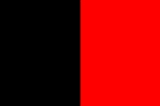
Aosta Valley

Encyclopedia
The Aosta Valley is a mountainous semi-autonomous region
in north-western Italy
. It is bordered by France
to the west, Switzerland
to the north and the region of Piedmont
to the south and east.
With an area of 3263 km² (1,259.9 sq mi) and a population of about 130,000, it is the smallest, least populous, and least densely populated region of Italy. It is the only Italian region which has no provinces (the province of Aosta was dissolved in 1945). Provincial administrative functions are provided by the regional government. The region is divided into 74 comuni (communes).
The native population speaks Valdôtain, a form of Franco-Provençal
(Arpitan), as their first language, while in the Lys
Valley there is a Walser German
speaking minority. The regional capital is Aosta
.
valley that with its side valleys includes the Italian slopes of Monte Bianco
, Monte Rosa
and the Matterhorn
; its highest peak is Monte Bianco
(the Mont Blanc
).
. Places with the same altitude in France or western Switzerland are not as cold as the Aosta Valley.
Aosta Valley may be divided into different climatic zones:
The Dora Baltea
Valley, between 300 and 1000 metres, with the mildest climate in all the province, has a typical Oceanic climate
(Cfb). The winters are mild, even milder than the Po River
Valley, but usually wet and foggy. Snow is frequent only during January and February, but the foggy season, which starts in late October, lasts until May. The temperature average for January is between −1 °C and 3 °C (37 °F). The summers are mild, usually rainy. Temperature averages in July between 17 °C (63 °F) and 20 °C (68 °F). The main towns in this area are Aosta
, Saint-Vincent
, Châtillon
and Sarre
. Due to the occidental position at the Alpine Arc, the climate classified as Cfb may extend to relatively high places, especially near the French border, which receives the mild oceanic wind, so it’s possible to find places at 1500, or even 1900 metres with the same Cfb climate, but the temperatures are lower, around −2 °C in the winter and 15 °C (59 °F) in the summer, and mist during all the year.
The valleys around 1300 metres, which, depending on the geomorphology, develop a Humid continental climate
(Dfb), although with mild winter temperatures for this kind of climate, similar to the temperatures of the Norwegian fjords, as in Trondheim
. Winter temperatures average around -3 °C or -4 °C, and summers between 13 °C (55 °F) and 15 °C (59 °F). The snow season starts in November and lasts until March. Mist is common during the morning from April until October. The main communities in this area are Gressoney-Saint-Jean
(averages of -4.8 °C in January and 13.8 °C (56.8 °F) in July), Brusson
and Gressoney-La-Trinité
.
The mountain lands around 2000 metres have a Cold Oceanic Climate (Cfc). This area has a climate similar to some northern-Norway fjords. Even though at a very high altitude, the climate is mild. This is due to the high influence of the oceanic mild air that can blow at these regions. Fog
is common throughout the year, especially in April and October, when some years these regions can have more than a week with constant fog and mist. The winters are mild. Mean temperature ranges between -3 °C at the driest regions and 2 °C (36 °F) near lakes. During the summer, the mean temperatures are very low, around 12 °C (54 °F).
The valleys above 1600 metres usually develop a Cold Continental Climate
(Dfc). In this climate the snow season is very long, as long as 8 or 9 months at the highest points. During the summer, mist
occurs almost every day. These areas are the wettest in the western Alps. Temperatures are low, between -7 °C and -3 °C in January, and in July between 10 °C (50 °F) and 13 °C (55 °F). In this area is the town of Rhêmes-Notre-Dame
, which may be the coldest in the Occidental Alps and where winter average temperature is around -7 °C. Other towns with this climate are Chamois, Aosta Valley, Breuil-Cervinia (sometimes ET), Bionaz
(sometimes mild), Gressoney-La-Trinité
(mild), and others.
Areas between 2000 metres and 3500 metres usually have a Tundra
Climate (ET). Every month has an average temperature below 10 °C (50 °F). Winter and summer averages can change according to the altitude. This climate may be a kind of more severe Cold Oceanic Climate, with a low summer average but mild winters, sometimes above -3 °C, especially near lakes, or a more severe Cold Continental Climate, with a very low winter average. Above 3000 metres is typically mountainous climate. Averages in Pian Rosà, at 3400 metres, are -11.6 °C in January and 1.4 °C (34.5 °F) in July. It is the coldest place in Italy where the climate is verifiable.
Above 3500 metres, all the months have an average temperature below freezing, and we find a Perpetual Frost Climate (EF).
 The first inhabitants of the Aosta Valley were Celts and Ligurians
, whose language lingers in some local placenames
. Rome conquered the region from the local Salassi
ca. 25 BC
and founded Augusta Prætoria Salassorum (modern-day Aosta
) to secure the strategic mountain pass
es, which they improved with bridges and roads. After Rome
the high valley preserved traditions of autonomy, reinforced by its seasonal isolation, though it was loosely held in turns by the Goths
and the Lombards
, then by the Burgundian kings
in the 5th century, followed by the Franks
, who overran the Burgundian kingdom
in 534. At the division among the heirs of Charlemagne
in 870, the Aosta Valley formed part of the Lotharingia
n Kingdom of Italy, in a second partition a decade later, it formed part of the Kingdom of Upper Burgundy, which was joined to the Kingdom of Arles
— all with few corresponding changes in the population of the virtually independent fiefs in the Aosta Valley.
In 1031-1032 Humbert I of Savoy
, the founder of the House of Savoy
, received the title Count of Aosta from the Emperor Conrad II
of the Franconia
n line and built himself a commanding fortification at Bard. Saint Anselm of Canterbury
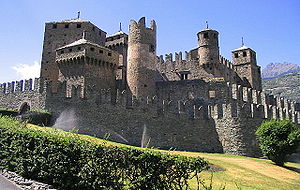
was born in Aosta in 1033 or 1034. The region was divided among strongly fortified castle
s, and in 1191 Thomas I of Savoy
found it necessary to grant to the communes a Carta delle Franchigie ("Charter of Liberties") that preserved autonomy — rights that were fiercely defended until 1770, when they were revoked in order to tie Aosta more closely to the Piedmont
, but which were again demanded during post-Napoleonic times. In the mid-13th century Emperor Frederick II
made the County of Aosta a duchy
(see Duke of Aosta
), and its arms charged with a lion rampant were carried in the Savoian arms until the reunification of Italy in 1870.
During the Middle Ages
the region remained strongly feudal
, and castles, such as those of the Challant family in the Valley of Gressoney, still dot the landscape. In the 12th and 13th centuries, German-speaking
Walser
communities were established in the Gressoney, and some communes retain their separate Walser identity even today.
The region remained part of Savoy lands, with the exception of a French occupation from 1539 to 1563. As part of the Kingdom of Sardinia
it joined the new Kingdom of Italy
in 1861.
Under Mussolini
, a forced programme of Italianization
, including population transfer
s of Valdostans in France and Switzerland (where today still Valdotanian communities are present) and Italian-speaking workers into Aosta, fostered movements towards separatism
. The region has a special autonomous status; the province of Aosta ceased to exist in 1945 and Aosta was regranted its autonomy in 1948.
 The Aosta Valley remained agricultural and pastoral until the construction of dams to harness the potential of its hydroelectric power brought metal-working
industry to the region.
Agriculture has become increasingly specialised, retaining only a marginal interest in cereals, potatoes and fruit.
Wines of high - and rising - quality are produced in small quantities. All are entitled to the Denominazione di origine controllata
(DOC). Animal feed
crops supply the region's dairy herds, some 40 000 head in 2000, which are pastured in the high Alps during the summer period. The region's cheeses are renowned throughout Italy. Virtually no other form of stock rearing is practised.
Tourism is one of the strongest points of the region's economy. The valley's natural beauty, its peaceful atmosphere in summer and snow in winter have allowed the development of a flourishing tourist industry
and especially winter sport
s, most famously at Courmayeur
and Cervinia
.
The upper Aosta Valley is the traditional southern starting-point for the tracks, then roads, which divided here to lead over the Alpine passes. The road through the Great St Bernard Pass (or today the Great St Bernard Tunnel) leads to Martigny
, Valais
, and the one through the Little St Bernard Pass
to Bourg-Saint-Maurice
, Savoie
. Today Aosta is joined to Chamonix
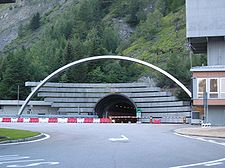
in France by the Mont Blanc Tunnel
, a road tunnel on European route E25
running underneath the Alps
.
It should be remembered, on the other hand, that the region has extensive uninhabitable areas of mountain and glacier, and that a substantial part of the population lives in the central valley. Migration from the lateral valleys has now been stemmed by generous regional support for agriculture and tourist development.
The population is growing slowly but steadily. Negative natural increase
since 1976 has been more than offset by a regular surplus on migration.
The region has one of Italy's lowest birth rate
s, which means that the average age of the population is rising. This, too, is partly compensated by immigration, since most immigrants arriving in the region are younger persons working in the tourist industry.
Between 1990 and 2001, the population of Valle d'Aosta has grown by 5.4%, which is the highest growth among the Italian regions. With a negative natural population growth, this is due exclusively to positive net migration.
As of 2006, the Italian National Institute of Statistics ISTAT
estimated that 4,976 foreign-born immigrants live in Aosta Valley, equal to 4.0% of the total regional population.
Italian and French are the region's official language
s and are used for the regional government's acts and laws, though Italian is much more widely spoken in everyday life, and French is mostly spread in cultural life. The regional language
is a dialect
of Franco-Provençal
called Valdôtain
(locally, patois
). It is spoken as native tongue and as second language
by 68,000 residents, about 58% of the population, according to a poll taken by the Fondation Émile Chanoux in 2002. The residents of the villages of Gressoney-Saint-Jean
, Gressoney-La-Trinité
and Issime
, in the Lys
Valley, speak a dialect
of Walser German
origin.
es, polenta
, and rice
; cheese
and meat
; and rye bread
. Many of the dishes involve Fontina
, a cheese with PDO
status, made from cow's milk that originates from the valley. It is found in dishes such as a soup a la valpellinentse. Other cheeses made in the region are Toma
and Robiola
. Valle d'Aosta Fromadzo
is produced locally since the 15th century and also has PDO status.
Regional specialties, besides Fontina, are mochetta (dried chamois
meat, prepared like prosciutto
), Vallée d'Aoste Lard d'Arnad (a cured and brined fatback
product with PDO designation), Vallée d’Aoste Jambon de Bosses
(a kind of ham
, likewise with PDO designation), and a black bread. Notable wine
s include a white wine from Morgex
, a red wine blend from Arvier (Enfer d'Arvier), and a Gamay
.
Notable dishes include Carbonada, consisting of salt-cured beef
cooked with onions and red wine served with polenta
; breaded veal
cutlets called costolette; tetouns, salt-cured cow's udder
that is cooked and sliced; and bistecca a la valdostana, a steak with crouton
s and melted cheese.
Regions of Italy
The regions of Italy are the first-level administrative divisions of the state, constituting its first NUTS administrative level. There are twenty regions, of which five are constitutionally given a broader amount of autonomy granted by special statutes....
in north-western Italy
Italy
Italy , officially the Italian Republic languages]] under the European Charter for Regional or Minority Languages. In each of these, Italy's official name is as follows:;;;;;;;;), is a unitary parliamentary republic in South-Central Europe. To the north it borders France, Switzerland, Austria and...
. It is bordered by France
France
The French Republic , The French Republic , The French Republic , (commonly known as France , is a unitary semi-presidential republic in Western Europe with several overseas territories and islands located on other continents and in the Indian, Pacific, and Atlantic oceans. Metropolitan France...
to the west, Switzerland
Switzerland
Switzerland name of one of the Swiss cantons. ; ; ; or ), in its full name the Swiss Confederation , is a federal republic consisting of 26 cantons, with Bern as the seat of the federal authorities. The country is situated in Western Europe,Or Central Europe depending on the definition....
to the north and the region of Piedmont
Piedmont
Piedmont is one of the 20 regions of Italy. It has an area of 25,402 square kilometres and a population of about 4.4 million. The capital of Piedmont is Turin. The main local language is Piedmontese. Occitan is also spoken by a minority in the Occitan Valleys situated in the Provinces of...
to the south and east.
With an area of 3263 km² (1,259.9 sq mi) and a population of about 130,000, it is the smallest, least populous, and least densely populated region of Italy. It is the only Italian region which has no provinces (the province of Aosta was dissolved in 1945). Provincial administrative functions are provided by the regional government. The region is divided into 74 comuni (communes).
The native population speaks Valdôtain, a form of Franco-Provençal
Franco-Provençal language
Franco-Provençal , Arpitan, or Romand is a Romance language with several distinct dialects that form a linguistic sub-group separate from Langue d'Oïl and Langue d'Oc. The name Franco-Provençal was given to the language by G.I...
(Arpitan), as their first language, while in the Lys
Lys (torrente)
The Lys is a small 40 km river which flows from the Lys glacier on the Monte Rosa massif, at the foot of Vincent-Pyramide , and runs through the Lys Valley, flanked by a road, before converging with the Dora Baltea as a right tributary at Pont-Saint-Martin.Its left-side tributaries are Avant-Cir,...
Valley there is a Walser German
Walser German
The Walser language , also known as Walliser German , is a group of Highest Alemannic dialects spoken in Walser settlements in parts of Switzerland, Italy, Liechtenstein, and Austria and in the German-speaking part of the Canton of Wallis , in the uppermost Rhône valley.The terms Walser and...
speaking minority. The regional capital is Aosta
Aosta
Aosta is the principal city of the bilingual Aosta Valley in the Italian Alps, north-northwest of Turin. It is situated near the Italian entrance of the Mont Blanc Tunnel, at the confluence of the Buthier and the Dora Baltea, and at the junction of the Great and Little St. Bernard routes...
.
Geography
The Aosta Valley is an AlpineAlps
The Alps is one of the great mountain range systems of Europe, stretching from Austria and Slovenia in the east through Italy, Switzerland, Liechtenstein and Germany to France in the west....
valley that with its side valleys includes the Italian slopes of Monte Bianco
Mont Blanc
Mont Blanc or Monte Bianco , meaning "White Mountain", is the highest mountain in the Alps, Western Europe and the European Union. It rises above sea level and is ranked 11th in the world in topographic prominence...
, Monte Rosa
Monte Rosa
The Monte Rosa Massif is a mountain massif located in the eastern part of the Pennine Alps. It is located between Switzerland and Italy...
and the Matterhorn
Matterhorn
The Matterhorn , Monte Cervino or Mont Cervin , is a mountain in the Pennine Alps on the border between Switzerland and Italy. Its summit is 4,478 metres high, making it one of the highest peaks in the Alps. The four steep faces, rising above the surrounding glaciers, face the four compass points...
; its highest peak is Monte Bianco
Mont Blanc
Mont Blanc or Monte Bianco , meaning "White Mountain", is the highest mountain in the Alps, Western Europe and the European Union. It rises above sea level and is ranked 11th in the world in topographic prominence...
(the Mont Blanc
Mont Blanc
Mont Blanc or Monte Bianco , meaning "White Mountain", is the highest mountain in the Alps, Western Europe and the European Union. It rises above sea level and is ranked 11th in the world in topographic prominence...
).
Climate
The climate of the region is severe, especially when compared with other places in the Western Alps. This is probably due to the mountains blocking the mild winds from the Atlantic OceanAtlantic Ocean
The Atlantic Ocean is the second-largest of the world's oceanic divisions. With a total area of about , it covers approximately 20% of the Earth's surface and about 26% of its water surface area...
. Places with the same altitude in France or western Switzerland are not as cold as the Aosta Valley.
Aosta Valley may be divided into different climatic zones:
The Dora Baltea
Dora Baltea
Dora Baltea or Doire Baltée , is a river in northern Italy. It is a left-hand tributary of the Po River, and is about 160 km long...
Valley, between 300 and 1000 metres, with the mildest climate in all the province, has a typical Oceanic climate
Oceanic climate
An oceanic climate, also called marine west coast climate, maritime climate, Cascadian climate and British climate for Köppen climate classification Cfb and subtropical highland for Köppen Cfb or Cwb, is a type of climate typically found along the west coasts at the middle latitudes of some of the...
(Cfb). The winters are mild, even milder than the Po River
Po River
The Po |Ligurian]]: Bodincus or Bodencus) is a river that flows either or – considering the length of the Maira, a right bank tributary – eastward across northern Italy, from a spring seeping from a stony hillside at Pian del Re, a flat place at the head of the Val Po under the northwest face...
Valley, but usually wet and foggy. Snow is frequent only during January and February, but the foggy season, which starts in late October, lasts until May. The temperature average for January is between −1 °C and 3 °C (37 °F). The summers are mild, usually rainy. Temperature averages in July between 17 °C (63 °F) and 20 °C (68 °F). The main towns in this area are Aosta
Aosta
Aosta is the principal city of the bilingual Aosta Valley in the Italian Alps, north-northwest of Turin. It is situated near the Italian entrance of the Mont Blanc Tunnel, at the confluence of the Buthier and the Dora Baltea, and at the junction of the Great and Little St. Bernard routes...
, Saint-Vincent
Saint-Vincent, Italy
Saint-Vincent is a town and comune in the Aosta Valley region of north-western Italy. Saint-Vincent , is a popular summer holiday resort with mineral springs .-Geography:...
, Châtillon
Châtillon, Italy
Chatillon is a town and comune in the Aosta Valley region of north-western Italy.-Frazioni:Bourg, Breil de Barrel , Gros Breil, Grand Frayan, Petit Frayan, Barma des Antesans, Setoret, Cret de Breil, Baron Gamba, Grange de Barme, Chameran, Chameran Alta, Fours, Ventoux, Garín, Pavirola, Sez de Val,...
and Sarre
Sarre, Italy
Sarre is a town and comune in the Aosta Valley region of north-western Italy....
. Due to the occidental position at the Alpine Arc, the climate classified as Cfb may extend to relatively high places, especially near the French border, which receives the mild oceanic wind, so it’s possible to find places at 1500, or even 1900 metres with the same Cfb climate, but the temperatures are lower, around −2 °C in the winter and 15 °C (59 °F) in the summer, and mist during all the year.
The valleys around 1300 metres, which, depending on the geomorphology, develop a Humid continental climate
Humid continental climate
A humid continental climate is a climatic region typified by large seasonal temperature differences, with warm to hot summers and cold winters....
(Dfb), although with mild winter temperatures for this kind of climate, similar to the temperatures of the Norwegian fjords, as in Trondheim
Trondheim
Trondheim , historically, Nidaros and Trondhjem, is a city and municipality in Sør-Trøndelag county, Norway. With a population of 173,486, it is the third most populous municipality and city in the country, although the fourth largest metropolitan area. It is the administrative centre of...
. Winter temperatures average around -3 °C or -4 °C, and summers between 13 °C (55 °F) and 15 °C (59 °F). The snow season starts in November and lasts until March. Mist is common during the morning from April until October. The main communities in this area are Gressoney-Saint-Jean
Gressoney-Saint-Jean
Gressoney-Saint-Jean is a town and comune in the Aosta Valley region of north-western Italy.- Points of interest :* Giardino Botanico Alpino "Castel Savoia", an alpine botanical garden...
(averages of -4.8 °C in January and 13.8 °C (56.8 °F) in July), Brusson
Brusson
Brusson is a town and comune in Val d'Ayas, a left minor valley of the Aosta Valley region in Italy.It is well-known as a summer and winter vacationing spot, and better known for its plentiful cross-country skiing trails. It is also a good starting point for climbing Monte Rosa...
and Gressoney-La-Trinité
Gressoney-La-Trinité
Gressoney-La-Trinité is a town and comune in the Aosta Valley region of north-western Italy.-Geography:...
.
The mountain lands around 2000 metres have a Cold Oceanic Climate (Cfc). This area has a climate similar to some northern-Norway fjords. Even though at a very high altitude, the climate is mild. This is due to the high influence of the oceanic mild air that can blow at these regions. Fog
Fog
Fog is a collection of water droplets or ice crystals suspended in the air at or near the Earth's surface. While fog is a type of stratus cloud, the term "fog" is typically distinguished from the more generic term "cloud" in that fog is low-lying, and the moisture in the fog is often generated...
is common throughout the year, especially in April and October, when some years these regions can have more than a week with constant fog and mist. The winters are mild. Mean temperature ranges between -3 °C at the driest regions and 2 °C (36 °F) near lakes. During the summer, the mean temperatures are very low, around 12 °C (54 °F).
The valleys above 1600 metres usually develop a Cold Continental Climate
Continental climate
Continental climate is a climate characterized by important annual variation in temperature due to the lack of significant bodies of water nearby...
(Dfc). In this climate the snow season is very long, as long as 8 or 9 months at the highest points. During the summer, mist
Mist
Mist is a phenomenon of small droplets suspended in air. It can occur as part of natural weather or volcanic activity, and is common in cold air above warmer water, in exhaled air in the cold, and in a steam room of a sauna. It can also be created artificially with aerosol canisters if the...
occurs almost every day. These areas are the wettest in the western Alps. Temperatures are low, between -7 °C and -3 °C in January, and in July between 10 °C (50 °F) and 13 °C (55 °F). In this area is the town of Rhêmes-Notre-Dame
Rhêmes-Notre-Dame
Rhêmes-Notre-Dame is a town and comune in the Aosta Valley region of north-west Italy.-Notes and references:...
, which may be the coldest in the Occidental Alps and where winter average temperature is around -7 °C. Other towns with this climate are Chamois, Aosta Valley, Breuil-Cervinia (sometimes ET), Bionaz
Bionaz
-External links:...
(sometimes mild), Gressoney-La-Trinité
Gressoney-La-Trinité
Gressoney-La-Trinité is a town and comune in the Aosta Valley region of north-western Italy.-Geography:...
(mild), and others.
Areas between 2000 metres and 3500 metres usually have a Tundra
Tundra
In physical geography, tundra is a biome where the tree growth is hindered by low temperatures and short growing seasons. The term tundra comes through Russian тундра from the Kildin Sami word tūndâr "uplands," "treeless mountain tract." There are three types of tundra: Arctic tundra, alpine...
Climate (ET). Every month has an average temperature below 10 °C (50 °F). Winter and summer averages can change according to the altitude. This climate may be a kind of more severe Cold Oceanic Climate, with a low summer average but mild winters, sometimes above -3 °C, especially near lakes, or a more severe Cold Continental Climate, with a very low winter average. Above 3000 metres is typically mountainous climate. Averages in Pian Rosà, at 3400 metres, are -11.6 °C in January and 1.4 °C (34.5 °F) in July. It is the coldest place in Italy where the climate is verifiable.
Above 3500 metres, all the months have an average temperature below freezing, and we find a Perpetual Frost Climate (EF).
History
Ligures
The Ligures were an ancient people who gave their name to Liguria, a region of north-western Italy.-Classical sources:...
, whose language lingers in some local placenames
Toponymy
Toponymy is the scientific study of place names , their origins, meanings, use and typology. The word "toponymy" is derived from the Greek words tópos and ónoma . Toponymy is itself a branch of onomastics, the study of names of all kinds...
. Rome conquered the region from the local Salassi
Salassi
The Salassi were an Alpine tribe whose lands lay on the Italian side of the Little St Bernard Pass across the Graian Alps to Lyons, and the Great St Bernard Pass over the Pennine Alps...
ca. 25 BC
25 BC
Year 25 BC was either a common year starting on Wednesday, Thursday or Friday or a leap year starting on Wednesday or Thursday of the Julian calendar and a leap year starting on Tuesday of the Proleptic Julian calendar...
and founded Augusta Prætoria Salassorum (modern-day Aosta
Aosta
Aosta is the principal city of the bilingual Aosta Valley in the Italian Alps, north-northwest of Turin. It is situated near the Italian entrance of the Mont Blanc Tunnel, at the confluence of the Buthier and the Dora Baltea, and at the junction of the Great and Little St. Bernard routes...
) to secure the strategic mountain pass
Mountain pass
A mountain pass is a route through a mountain range or over a ridge. If following the lowest possible route, a pass is locally the highest point on that route...
es, which they improved with bridges and roads. After Rome
Rome
Rome is the capital of Italy and the country's largest and most populated city and comune, with over 2.7 million residents in . The city is located in the central-western portion of the Italian Peninsula, on the Tiber River within the Lazio region of Italy.Rome's history spans two and a half...
the high valley preserved traditions of autonomy, reinforced by its seasonal isolation, though it was loosely held in turns by the Goths
Goths
The Goths were an East Germanic tribe of Scandinavian origin whose two branches, the Visigoths and the Ostrogoths, played an important role in the fall of the Roman Empire and the emergence of Medieval Europe....
and the Lombards
Lombards
The Lombards , also referred to as Longobards, were a Germanic tribe of Scandinavian origin, who from 568 to 774 ruled a Kingdom in Italy...
, then by the Burgundian kings
Burgundians
The Burgundians were an East Germanic tribe which may have emigrated from mainland Scandinavia to the island of Bornholm, whose old form in Old Norse still was Burgundarholmr , and from there to mainland Europe...
in the 5th century, followed by the Franks
Franks
The Franks were a confederation of Germanic tribes first attested in the third century AD as living north and east of the Lower Rhine River. From the third to fifth centuries some Franks raided Roman territory while other Franks joined the Roman troops in Gaul. Only the Salian Franks formed a...
, who overran the Burgundian kingdom
King of Burgundy
The following is a list of the Kings of the two Kingdoms of Burgundy, and a number of related political entities devolving from Carolingian machinations over family relations.- Kings of the Burgundians :...
in 534. At the division among the heirs of Charlemagne
Charlemagne
Charlemagne was King of the Franks from 768 and Emperor of the Romans from 800 to his death in 814. He expanded the Frankish kingdom into an empire that incorporated much of Western and Central Europe. During his reign, he conquered Italy and was crowned by Pope Leo III on 25 December 800...
in 870, the Aosta Valley formed part of the Lotharingia
Lotharingia
Lotharingia was a region in northwest Europe, comprising the Low Countries, the western Rhineland, the lands today on the border between France and Germany, and what is now western Switzerland. It was born of the tripartite division in 855, of the kingdom of Middle Francia, itself formed of the...
n Kingdom of Italy, in a second partition a decade later, it formed part of the Kingdom of Upper Burgundy, which was joined to the Kingdom of Arles
Arles
Arles is a city and commune in the south of France, in the Bouches-du-Rhône department, of which it is a subprefecture, in the former province of Provence....
— all with few corresponding changes in the population of the virtually independent fiefs in the Aosta Valley.
In 1031-1032 Humbert I of Savoy
Humbert I of Savoy
Umberto I was the first Count of Savoy from 1032, when the County of Vienne, which had been sold to the Archdiocese of Vienne, was divided between the County of Albon and the Maurienne...
, the founder of the House of Savoy
House of Savoy
The House of Savoy was formed in the early 11th century in the historical Savoy region. Through gradual expansion, it grew from ruling a small county in that region to eventually rule the Kingdom of Italy from 1861 until the end of World War II, king of Croatia and King of Armenia...
, received the title Count of Aosta from the Emperor Conrad II
Conrad II, Holy Roman Emperor
Conrad II was Holy Roman Emperor from 1027 until his death.The son of a mid-level nobleman in Franconia, Count Henry of Speyer and Adelaide of Alsace, he inherited the titles of count of Speyer and of Worms as an infant when Henry died at age twenty...
of the Franconia
Franconia
Franconia is a region of Germany comprising the northern parts of the modern state of Bavaria, a small part of southern Thuringia, and a region in northeastern Baden-Württemberg called Tauberfranken...
n line and built himself a commanding fortification at Bard. Saint Anselm of Canterbury
Anselm of Canterbury
Anselm of Canterbury , also called of Aosta for his birthplace, and of Bec for his home monastery, was a Benedictine monk, a philosopher, and a prelate of the church who held the office of Archbishop of Canterbury from 1093 to 1109...
was born in Aosta in 1033 or 1034. The region was divided among strongly fortified castle
Castle
A castle is a type of fortified structure built in Europe and the Middle East during the Middle Ages by European nobility. Scholars debate the scope of the word castle, but usually consider it to be the private fortified residence of a lord or noble...
s, and in 1191 Thomas I of Savoy
Thomas I of Savoy
Thomas I or Tommaso I was Count of Savoy from 1189-1233. He was the son of Humbert III of Savoy and Beatrice of Viennois. His birth was seen as miraculous; his monkish father had despaired of having a male heir after three wives. Count Humbert sought counsel from St...
found it necessary to grant to the communes a Carta delle Franchigie ("Charter of Liberties") that preserved autonomy — rights that were fiercely defended until 1770, when they were revoked in order to tie Aosta more closely to the Piedmont
Piedmont
Piedmont is one of the 20 regions of Italy. It has an area of 25,402 square kilometres and a population of about 4.4 million. The capital of Piedmont is Turin. The main local language is Piedmontese. Occitan is also spoken by a minority in the Occitan Valleys situated in the Provinces of...
, but which were again demanded during post-Napoleonic times. In the mid-13th century Emperor Frederick II
Frederick II, Holy Roman Emperor
Frederick II , was one of the most powerful Holy Roman Emperors of the Middle Ages and head of the House of Hohenstaufen. His political and cultural ambitions, based in Sicily and stretching through Italy to Germany, and even to Jerusalem, were enormous...
made the County of Aosta a duchy
Duchy
A duchy is a territory, fief, or domain ruled by a duke or duchess.Some duchies were sovereign in areas that would become unified realms only during the Modern era . In contrast, others were subordinate districts of those kingdoms that unified either partially or completely during the Medieval era...
(see Duke of Aosta
Duke of Aosta
In the mid-13th century the Hohenstaufen Holy Roman Emperor Frederick II made the County of Aosta a duchy; its arms were carried in the Savoyard coat-of-arms until the unification of Italy in 1870. The region remained part of Savoy lands, with the exception of a French occupation, 1539—1563...
), and its arms charged with a lion rampant were carried in the Savoian arms until the reunification of Italy in 1870.
During the Middle Ages
Middle Ages
The Middle Ages is a periodization of European history from the 5th century to the 15th century. The Middle Ages follows the fall of the Western Roman Empire in 476 and precedes the Early Modern Era. It is the middle period of a three-period division of Western history: Classic, Medieval and Modern...
the region remained strongly feudal
Feudalism
Feudalism was a set of legal and military customs in medieval Europe that flourished between the 9th and 15th centuries, which, broadly defined, was a system for ordering society around relationships derived from the holding of land in exchange for service or labour.Although derived from the...
, and castles, such as those of the Challant family in the Valley of Gressoney, still dot the landscape. In the 12th and 13th centuries, German-speaking
German language
German is a West Germanic language, related to and classified alongside English and Dutch. With an estimated 90 – 98 million native speakers, German is one of the world's major languages and is the most widely-spoken first language in the European Union....
Walser
Walser
The Walser are German-speaking people who live in the Alps of Switzerland, Italy, Liechtenstein and Austria. The Walser people are named after the Wallis , the uppermost Rhône River valley...
communities were established in the Gressoney, and some communes retain their separate Walser identity even today.
The region remained part of Savoy lands, with the exception of a French occupation from 1539 to 1563. As part of the Kingdom of Sardinia
Kingdom of Sardinia
The Kingdom of Sardinia consisted of the island of Sardinia first as a part of the Crown of Aragon and subsequently the Spanish Empire , and second as a part of the composite state of the House of Savoy . Its capital was originally Cagliari, in the south of the island, and later Turin, on the...
it joined the new Kingdom of Italy
Kingdom of Italy (1861–1946)
The Kingdom of Italy was a state forged in 1861 by the unification of Italy under the influence of the Kingdom of Sardinia, which was its legal predecessor state...
in 1861.
Under Mussolini
Benito Mussolini
Benito Amilcare Andrea Mussolini was an Italian politician who led the National Fascist Party and is credited with being one of the key figures in the creation of Fascism....
, a forced programme of Italianization
Italianization
Italianization or Italianisation is a term used to describe a process of cultural assimilation in which ethnically non or partially Italian people or territory become Italian. The process can be voluntary or forced...
, including population transfer
Population transfer
Population transfer is the movement of a large group of people from one region to another by state policy or international authority, most frequently on the basis of ethnicity or religion...
s of Valdostans in France and Switzerland (where today still Valdotanian communities are present) and Italian-speaking workers into Aosta, fostered movements towards separatism
Separatism
Separatism is the advocacy of a state of cultural, ethnic, tribal, religious, racial, governmental or gender separation from the larger group. While it often refers to full political secession, separatist groups may seek nothing more than greater autonomy...
. The region has a special autonomous status; the province of Aosta ceased to exist in 1945 and Aosta was regranted its autonomy in 1948.
Economy
Metalworking
Metalworking is the process of working with metals to create individual parts, assemblies, or large scale structures. The term covers a wide range of work from large ships and bridges to precise engine parts and delicate jewelry. It therefore includes a correspondingly wide range of skills,...
industry to the region.
Agriculture has become increasingly specialised, retaining only a marginal interest in cereals, potatoes and fruit.
Wines of high - and rising - quality are produced in small quantities. All are entitled to the Denominazione di origine controllata
Denominazione di Origine Controllata
Denominazione di origine controllata is a quality assurance label for food products, especially wines and various formaggi . It is modelled after the French AOC...
(DOC). Animal feed
Fodder
Fodder or animal feed is any agricultural foodstuff used specifically to feed domesticated livestock such as cattle, goats, sheep, horses, chickens and pigs. Most animal feed is from plants but some is of animal origin...
crops supply the region's dairy herds, some 40 000 head in 2000, which are pastured in the high Alps during the summer period. The region's cheeses are renowned throughout Italy. Virtually no other form of stock rearing is practised.
Tourism is one of the strongest points of the region's economy. The valley's natural beauty, its peaceful atmosphere in summer and snow in winter have allowed the development of a flourishing tourist industry
Tourism
Tourism is travel for recreational, leisure or business purposes. The World Tourism Organization defines tourists as people "traveling to and staying in places outside their usual environment for not more than one consecutive year for leisure, business and other purposes".Tourism has become a...
and especially winter sport
Winter sport
A winter sport is a sport which is played on snow or ice. Most such sports are variations of skiing, ice skating and sledding. Traditionally such sports were only played in cold areas during winter, but artificial snow and ice allow more flexibility...
s, most famously at Courmayeur
Courmayeur
Courmayeur is an Italian town and comune in the autonomous region of Aosta Valley, in northern Italy. It is located at the foot of Mont Blanc, the highest mountain in western Europe, in the Graian Alps range, and is crossed by the Dora Baltea...
and Cervinia
Cervinia
Breuil-Cervinia is an alpine resort in the Valle d'Aosta region of northwest Italy...
.
The upper Aosta Valley is the traditional southern starting-point for the tracks, then roads, which divided here to lead over the Alpine passes. The road through the Great St Bernard Pass (or today the Great St Bernard Tunnel) leads to Martigny
Martigny, Switzerland
Martigny is the capital of the French-speaking district of Martigny in the canton of Valais in Switzerland. It lies at an elevation of , and its population is approximately 15000 inhabitants . It is a junction of roads joining Italy, France and Switzerland...
, Valais
Valais
The Valais is one of the 26 cantons of Switzerland in the southwestern part of the country, around the valley of the Rhône from its headwaters to Lake Geneva, separating the Pennine Alps from the Bernese Alps. The canton is one of the drier parts of Switzerland in its central Rhône valley...
, and the one through the Little St Bernard Pass
Little St Bernard Pass
The Little St Bernard Pass is a mountain pass in the Alps on the France–Italy border. Its saddle is at 2188 metres above sea level. It is located between Savoie, France and Aosta Valley, Italy to the south of the Mont Blanc Massif, precisely on the main alpine watershed. There is also a Great St...
to Bourg-Saint-Maurice
Bourg-Saint-Maurice
Bourg-Saint-Maurice, popularly known as Bourg, is a commune in the Savoie department in the Rhône-Alpes region in south-eastern France.It is the last large town along the Tarentaise valley in the heart of the French Alps.-History:...
, Savoie
Savoie
Savoie is a French department located in the Rhône-Alpes region in the French Alps.Together with the Haute-Savoie, Savoie is one of the two departments of the historic region of Savoy that was annexed by France on June 14, 1860, following the signature of the Treaty of Turin on March 24, 1860...
. Today Aosta is joined to Chamonix
Chamonix
Chamonix-Mont-Blanc or, more commonly, Chamonix is a commune in the Haute-Savoie département in the Rhône-Alpes region in south-eastern France. It was the site of the 1924 Winter Olympics, the first Winter Olympics...
in France by the Mont Blanc Tunnel
Mont Blanc Tunnel
The Mont Blanc Tunnel is a road tunnel in the Alps under the Mont Blanc mountain, linking Chamonix, Haute-Savoie, France , and Courmayeur, Aosta Valley, Italy . It is one of the major trans-Alpine transport routes, particularly for Italy, which relies on the tunnel for transporting as much as...
, a road tunnel on European route E25
European route E25
European route E 25 is a north-south European route from Hoek van Holland in the Netherlands to Palermo in Italy which includes ferry crossings from Genoa to Bastia , from Bonifacio to Porto Torres and from Cagliari to Palermo .It passes through the following cities:Hoek van Holland –...
running underneath the Alps
Alps
The Alps is one of the great mountain range systems of Europe, stretching from Austria and Slovenia in the east through Italy, Switzerland, Liechtenstein and Germany to France in the west....
.
Demographics
The population density of Valle d'Aosta is by far the lowest among the Italian regions. In 2008, 38.9 inhabitants per km2 were registered in the region, whereas the average national figure was 198.8.It should be remembered, on the other hand, that the region has extensive uninhabitable areas of mountain and glacier, and that a substantial part of the population lives in the central valley. Migration from the lateral valleys has now been stemmed by generous regional support for agriculture and tourist development.
The population is growing slowly but steadily. Negative natural increase
Population growth
Population growth is the change in a population over time, and can be quantified as the change in the number of individuals of any species in a population using "per unit time" for measurement....
since 1976 has been more than offset by a regular surplus on migration.
The region has one of Italy's lowest birth rate
Birth rate
Crude birth rate is the nativity or childbirths per 1,000 people per year . Another word used interchangeably with "birth rate" is "natality". When the crude birth rate is subtracted from the crude death rate, it reveals the rate of natural increase...
s, which means that the average age of the population is rising. This, too, is partly compensated by immigration, since most immigrants arriving in the region are younger persons working in the tourist industry.
Between 1990 and 2001, the population of Valle d'Aosta has grown by 5.4%, which is the highest growth among the Italian regions. With a negative natural population growth, this is due exclusively to positive net migration.
As of 2006, the Italian National Institute of Statistics ISTAT
Istituto Nazionale di Statistica
Istituto Nazionale di Statistica is the Italian national statistical institute.-History:Istat was created in 1926 to collect and organize essential data about the nation. Administering the census is one of its activities...
estimated that 4,976 foreign-born immigrants live in Aosta Valley, equal to 4.0% of the total regional population.
Italian and French are the region's official language
Official language
An official language is a language that is given a special legal status in a particular country, state, or other jurisdiction. Typically a nation's official language will be the one used in that nation's courts, parliament and administration. However, official status can also be used to give a...
s and are used for the regional government's acts and laws, though Italian is much more widely spoken in everyday life, and French is mostly spread in cultural life. The regional language
Regional language
A regional language is a language spoken in an area of a nation state, whether it be a small area, a federal state or province, or some wider area....
is a dialect
Dialect
The term dialect is used in two distinct ways, even by linguists. One usage refers to a variety of a language that is a characteristic of a particular group of the language's speakers. The term is applied most often to regional speech patterns, but a dialect may also be defined by other factors,...
of Franco-Provençal
Franco-Provençal language
Franco-Provençal , Arpitan, or Romand is a Romance language with several distinct dialects that form a linguistic sub-group separate from Langue d'Oïl and Langue d'Oc. The name Franco-Provençal was given to the language by G.I...
called Valdôtain
Valdôtain
The Valdôtain, or Valdotans, are an ethnic group that lives in the far northwest Aosta Valley Autonomous Region of Italy. They speak several dialects of the Franco-Provençal language ....
(locally, patois
Patois
Patois is any language that is considered nonstandard, although the term is not formally defined in linguistics. It can refer to pidgins, creoles, dialects, and other forms of native or local speech, but not commonly to jargon or slang, which are vocabulary-based forms of cant...
). It is spoken as native tongue and as second language
Second language
A second language or L2 is any language learned after the first language or mother tongue. Some languages, often called auxiliary languages, are used primarily as second languages or lingua francas ....
by 68,000 residents, about 58% of the population, according to a poll taken by the Fondation Émile Chanoux in 2002. The residents of the villages of Gressoney-Saint-Jean
Gressoney-Saint-Jean
Gressoney-Saint-Jean is a town and comune in the Aosta Valley region of north-western Italy.- Points of interest :* Giardino Botanico Alpino "Castel Savoia", an alpine botanical garden...
, Gressoney-La-Trinité
Gressoney-La-Trinité
Gressoney-La-Trinité is a town and comune in the Aosta Valley region of north-western Italy.-Geography:...
and Issime
Issime
Issime is a town and comune in the Aosta Valley region of north-western Italy. About a third of its population speak Walser German....
, in the Lys
Lys (torrente)
The Lys is a small 40 km river which flows from the Lys glacier on the Monte Rosa massif, at the foot of Vincent-Pyramide , and runs through the Lys Valley, flanked by a road, before converging with the Dora Baltea as a right tributary at Pont-Saint-Martin.Its left-side tributaries are Avant-Cir,...
Valley, speak a dialect
Dialect
The term dialect is used in two distinct ways, even by linguists. One usage refers to a variety of a language that is a characteristic of a particular group of the language's speakers. The term is applied most often to regional speech patterns, but a dialect may also be defined by other factors,...
of Walser German
Walser German
The Walser language , also known as Walliser German , is a group of Highest Alemannic dialects spoken in Walser settlements in parts of Switzerland, Italy, Liechtenstein, and Austria and in the German-speaking part of the Canton of Wallis , in the uppermost Rhône valley.The terms Walser and...
origin.
Cuisine
The cuisine of the Aosta Valley is characterized by simplicity and revolves around "robust" ingredients such as potatoPotato
The potato is a starchy, tuberous crop from the perennial Solanum tuberosum of the Solanaceae family . The word potato may refer to the plant itself as well as the edible tuber. In the region of the Andes, there are some other closely related cultivated potato species...
es, polenta
Polenta
Polenta is a dish made from boiled cornmeal. The word "polenta" is borrowed from Italian.-Description:Polenta is made with ground yellow or white cornmeal , which can be ground coarsely or finely depending on the region and the texture desired.As it is known today, polenta derives from earlier...
, and rice
Rice
Rice is the seed of the monocot plants Oryza sativa or Oryza glaberrima . As a cereal grain, it is the most important staple food for a large part of the world's human population, especially in East Asia, Southeast Asia, South Asia, the Middle East, and the West Indies...
; cheese
Cheese
Cheese is a generic term for a diverse group of milk-based food products. Cheese is produced throughout the world in wide-ranging flavors, textures, and forms....
and meat
Meat
Meat is animal flesh that is used as food. Most often, this means the skeletal muscle and associated fat and other tissues, but it may also describe other edible tissues such as organs and offal...
; and rye bread
Rye bread
Rye bread is a type of bread made with various percentages of flour from rye grain. It can be light or dark in color, depending on the type of flour used and the addition of coloring agents, and is typically denser than bread made from wheat flour...
. Many of the dishes involve Fontina
Fontina
Fontina is a cow's milk Italian cheese. Fontina cheese has been made in the Aosta Valley, in the Alps since the 12th century. It has a milk fat content of around 45%. As with many original varieties, the name "Fontina" has been imposed upon by such derivatives as "Fontinella", "Fontal", and...
, a cheese with PDO
Protected Geographical Status
Protected Geographical Status is a legal framework defined in European Union law to protect the names of regional foods. Protected Designation of Origin , Protected Geographical Indication and Traditional Speciality Guaranteed are distinct regimes of geographical indications within the framework...
status, made from cow's milk that originates from the valley. It is found in dishes such as a soup a la valpellinentse. Other cheeses made in the region are Toma
Toma cheese
Toma is a soft or semi-hard, Italian cow's milk cheese. It is made primarily in the Aosta Valley and Piedmont regions of Northern Italy. Toma varies with region and locale of production, and is closely related to the French tomme...
and Robiola
Robiola
Robiola is an Italian soft-ripened cheese of the Stracchino family, made with varying proportions of cow’s, goat’s milk and sheep milk. One theory is that the cheese gets its name from the town of Robbio in the province of Pavia; another that the name comes from the word rubeole because of the...
. Valle d'Aosta Fromadzo
Valle d'Aosta Fromadzo
Valle d'Aosta Fromadzo is an Italian cow's milk cheese produced in the Aosta Valley, one of the region's specialties. It has a protected designation of origin, or PDO status.-External links:*...
is produced locally since the 15th century and also has PDO status.
Regional specialties, besides Fontina, are mochetta (dried chamois
Chamois
The chamois, Rupicapra rupicapra, is a goat-antelope species native to mountains in Europe, including the Carpathian Mountains of Romania, the European Alps, the Tatra Mountains, the Balkans, parts of Turkey, and the Caucasus. The chamois has also been introduced to the South Island of New Zealand...
meat, prepared like prosciutto
Prosciutto
Prosciutto |ham]]) or Parma ham is a dry-cured ham that is usually thinly sliced and served uncooked; this style is called prosciutto crudo in Italian and is distinguished from cooked ham, prosciutto cotto....
), Vallée d'Aoste Lard d'Arnad (a cured and brined fatback
Fatback
Fatback is a cut of meat from a domestic pig. It consists of the layer of adipose tissue under the skin of the back, with or without the skin...
product with PDO designation), Vallée d’Aoste Jambon de Bosses
Vallée d’Aoste Jambon de Bosses
Vallée d’Aoste Jambon de Bosses is a spicy cured pork product from Saint-Rhémy-en-Bosses in the Aosta Valley in Italy, one of the region's specialties. It was awarded European Union protected designation of origin status.-External links:...
(a kind of ham
Ham
Ham is a cut of meat from the thigh of the hind leg of certain animals, especiallypigs. Nearly all hams sold today are fully cooked or cured.-Etymology:...
, likewise with PDO designation), and a black bread. Notable wine
Wine
Wine is an alcoholic beverage, made of fermented fruit juice, usually from grapes. The natural chemical balance of grapes lets them ferment without the addition of sugars, acids, enzymes, or other nutrients. Grape wine is produced by fermenting crushed grapes using various types of yeast. Yeast...
s include a white wine from Morgex
Morgex
Morgex is a town and comune in the Aosta Valley region of north-western Italy....
, a red wine blend from Arvier (Enfer d'Arvier), and a Gamay
Gamay
Gamay is a purple-colored grape variety used to make red wines, most notably grown in Beaujolais and in the Loire Valley around Tours. Its full name is Gamay Noir à Jus Blanc. It is a very old cultivar, mentioned as long ago as the 15th century...
.
Notable dishes include Carbonada, consisting of salt-cured beef
Beef
Beef is the culinary name for meat from bovines, especially domestic cattle. Beef can be harvested from cows, bulls, heifers or steers. It is one of the principal meats used in the cuisine of the Middle East , Australia, Argentina, Brazil, Europe and the United States, and is also important in...
cooked with onions and red wine served with polenta
Polenta
Polenta is a dish made from boiled cornmeal. The word "polenta" is borrowed from Italian.-Description:Polenta is made with ground yellow or white cornmeal , which can be ground coarsely or finely depending on the region and the texture desired.As it is known today, polenta derives from earlier...
; breaded veal
Veal
Veal is the meat of young cattle , as opposed to meat from older cattle. Though veal can be produced from a calf of either sex and any breed, most veal comes from male calves of dairy cattle breeds...
cutlets called costolette; tetouns, salt-cured cow's udder
Udder
An udder is an organ formed of the mammary glands of female quadruped mammals, especially ruminants such as cattle, goats, sheep and deer. The udder is a single mass hanging beneath the animal, consisting of pairs of mammary glands...
that is cooked and sliced; and bistecca a la valdostana, a steak with crouton
Crouton
A crouton is a small piece of sautéed or rebaked bread, often cubed and seasoned, that is used to add texture and flavor to salads, notably the Caesar salad, as an accompaniment to soups, or eaten as a snack food. The word crouton is derived from the French croûton, itself derived from croûte,...
s and melted cheese.
See also
- Alps-Mediterranean EuroregionAlps-Mediterranean EuroregionThe Alps-Mediterranean Euroregion was created the 10th July 2007 between three Italian regions and two French regions . It has area of about 110,460 km2 and more than 17 millions of inhabitants...
- Roman Catholic Diocese of AostaRoman Catholic Diocese of AostaThe Italian Catholic diocese of Aosta has existed in its modern form since 1817. It is a suffragan of the archdiocese of Turin.-History:Although Ursus of Aosta is sometimes said to have been the first bishop, this is controverted. The first certainly known bishop is St...
- Elections in Aosta ValleyElections in Aosta ValleyThis page gathers the results of elections in Aosta Valley.-Last regional election:-List of previous regional elections:*Valdotanian regional election, 1949*Valdotanian regional election, 1954*Valdotanian regional election, 1959...
- List of Presidents of Aosta Valley