

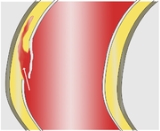
Aortic dissection

Encyclopedia
Aortic dissection occurs when a tear in the inner wall of the aorta
causes blood
to flow between the layers of the wall of the aorta and force the layers apart. The dissection typically extends anterograde, but can extend retrograde
from the site of the intimal tear. Aortic dissection
is a medical emergency
and can quickly lead to death, even with optimal treatment. If the dissection tears the aorta completely open (through all three layers), massive and rapid blood loss occurs. Aortic dissections resulting in rupture have an 80% mortality rate
, and 50% of patients die before they even reach the hospital. All acute ascending aortic dissections require emergency surgery to prevent rupture and death. Chronic enlargement of the ascending aorta from aneurism or previously unrecognized and untreated aortic dissections is repaired electively when it reaches 6 cm (2 in) in size and surgery may be recommended between for as little as 4.5 cm (2 in) in size if the patient has one of several connective tissue disorders or a family history of ruptured aorta.
Several different classification systems have been used to describe aortic dissections. The systems commonly in use are either based on the anatomy of the dissection or the duration of onset of symptoms prior to presentation. The Stanford cycstem is used more commonly now as it is more attuned to the management of the patient.
, is an anatomical description of the aortic dissection. It categorizes the dissection based on where the original intimal tear is located and the extent of the dissection (localized to either the ascending aorta or descending aorta, or involves both the ascending and descending aorta.
The Stanford classification is useful as it follows clinical practice, as type A ascending aortic dissections generally require primary surgical repair whereas type B dissections generally are treated medically as initial treatment with surgery reserved for any complications.
The reason for surgical repair of Type A dissections is that ascending aortic dissections often involve the aortic valve, which having lost it's suspensory support, telescopes down into the aortic root resulting in aortic incompetence. This needs resuspending to reseat the valve and repair / prevent coronary artery injury. Also the area of dissection is removed and replaced with a Dacron graft, to prevent further dissection from occurring. However type B dissections are not improved, from a mortality point of view, by operation, unless there is leaking, rupture or compromise to other organs eg kidneys.
in nature, it may suggest acute pericarditis
caused by hemorrhage into the pericardial sac. This is a particularly dangerous eventuality, suggesting that acute pericardial tamponade may be imminent.
While the pain may be confused with the pain of a myocardial infarction
(heart attack), aortic dissection is usually not associated with the other signs that suggest myocardial infarction, including heart failure, and ECG changes.
Individuals with aortic dissection who do not present with pain have chronic dissection.
Less common symptoms that may be seen in the setting of aortic dissection include congestive heart failure
(7%), syncope (9%), cerebrovascular accident (3-6%), ischemic peripheral neuropathy
, paraplegia
, cardiac arrest
, and sudden death. If the individual had a syncopal
episode, about half the time it is due to hemorrhage into the pericardium leading to pericardial tamponade.
Neurologic complications of aortic dissection (i.e., cerebrovascular accident (CVA) and paralysis
) are due to involvement of one or more arteries supplying portions of the central nervous system
.
If the aortic dissection involves the abdominal aorta, compromise of the branches of the abdominal aorta is possible. In abdominal aortic dissections, compromise of one or both renal arteries
occurs in 5–8% of cases, while mesenteric ischemia
(ischemia of the large intestine
s) occurs 3–5% of the time.
. In those that present with distal aortic dissections, 70% present with hypertension while 4% present with hypotension.
Severe hypotension at presentation is a grave prognostic indicator. It is usually associated with pericardial tamponade, severe aortic insufficiency, or rupture of the aorta. Accurate measurement of the blood pressure is important. Pseudohypotension (falsely low blood pressure measurement) may occur due to involvement of the brachiocephalic artery
(supplying the right arm) or the left subclavian artery (supplying the left arm).
of aortic insufficiency is audible in about 32% of proximal dissections. The intensity (loudness) of the murmur is dependent on the blood pressure and may be inaudible in the event of hypotension.
There are multiple etiologies for AI in the setting of ascending aortic dissection. The dissection may dilate the annulus of the aortic valve
, so that the leaflets of the valve cannot coapt. Another mechanism is that the dissection may extend into the aortic root and detach the aortic valve leaflets. The third mechanism is that if there was an extensive intimal tear, the intimal flap may prolapse into the LV outflow tract, causing intimal intussusception
into the aortic valve preventing proper valve closure.
that supply the heart) in the dissection. The right coronary artery is involved more commonly than the left coronary artery. If the myocardial infarction is treated with thrombolytic therapy, the mortality increases to over 70%, mostly due to hemorrhage into the pericardial sac causing pericardial tamponade.
Because aortic dissection may present to the emergency room physician
similar to a myocardial infarction, the physician must be careful to make the proper diagnosis prior to initiating treatment for myocardial infarction, since the treatment regimen for myocardial infarction can be lethal to an individual presenting with aortic dissection.
(fluid collection in the space between the lung
s and the chest wall or diaphragm) can be due to either blood from a transient rupture of the aorta or fluid due to an inflammatory reaction around the aorta. If a pleural effusion were to develop due to an aortic dissection, it is more commonly in the left hemithorax rather than the right hemithorax.
(high blood pressure) and many connective tissue
disorders. Vasculitis
(inflammation
of an artery) is rarely associated with aortic dissection. It can also be the result of chest trauma. 72 to 80% of individuals who present with an aortic dissection have a previous history of hypertension.
The highest incidence of aortic dissection is in individuals who are 50 to 70 years old. The incidence is twice as high in males as in females (male-to-female ratio is 2:1). Half of dissections in females before age 40 occur during pregnancy
(typically in the 3rd trimester or early postpartum period).
A bicuspid aortic valve
(a type of congenital heart disease involving the aortic valve
) is found in 7–14% of individuals who have an aortic dissection. These individuals are prone to dissection in the ascending aorta. The risk of dissection in individuals with bicuspid aortic valve is not associated with the degree of stenosis of the valve.
Marfan syndrome
is noted in 5–9% of individuals who suffer from aortic dissection. In this subset, there is an increased incidence in young individuals. Individuals with Marfan syndrome tend to have aneurysms of the aorta and are more prone to proximal dissections of the aorta.
Turner syndrome
also increases the risk of aortic dissection, by aortic root dilatation.
Chest trauma leading to aortic dissection can be divided into two groups based on etiology: blunt chest trauma (commonly seen in car accident
s) and iatrogenic. Iatrogenic causes include trauma during cardiac catheterization
or due to an intra-aortic balloon pump
.
Aortic dissection may be a late sequela of cardiac surgery
. 18% of individuals who present with an acute aortic dissection have a history of open heart surgery. Individuals who have undergone aortic valve replacement for aortic insufficiency
are at particularly high risk. This is because aortic insufficiency causes increased blood flow in the ascending aorta. This can cause dilatation and weakening of the walls of the ascending aorta.
Syphilis
will only potentially cause aortic dissection in its tertiary stage.
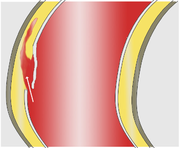 As with all other arteries
, the aorta is made up of three layers, the intima, the media, and the adventitia. The layer that is in direct contact with the flow of blood is the tunica intima
, commonly called the intima. This layer is made up of mainly endothelial cells. The next layer is known as the tunica media
, or the muscular layer. It is composed of a mixture of smooth muscle cells and elastic fibers. The outermost layer is the tunica adventitia or the adventitia. This layer is composed of connective tissue
.
In an aortic dissection, blood penetrates the intima and enters the media layer. The high pressure rips the tissue
of the media apart along the laminated plane splitting the inner 2/3 and the outer 1/3 of the media apart. This can propagate along the length of the aorta for a variable distance forward or backwards. Dissections that propagate towards the iliac bifurcation (with the flow of blood) are called anterograde dissections and those that propagate towards the aortic root (opposite of the flow of blood) are called retrograde dissections. The initial tear is usually within 100 mm of the aortic valve
so a retrograde dissection can easily compromise the pericardium leading to a hemocardium. Anterograde dissections may propagate all the way to the iliac bifurcation of the aorta, rupture the aortic wall, or recanalize into the intravascular lumen leading to a double barrel aorta. The double barrel aorta relieves the pressure of blood flow and reduces the risk of rupture. Rupture leads to hemorrhaging into a body cavity and prognosis depends on the area of rupture. Retroperitoneal and pericardial ruptures are both possible.
The initiating event in an aortic dissection is a tear in the intimal lining of the aorta. Due to the high pressures
in the aorta, blood enters the media at the point of the tear. The force of the blood entering the media causes the tear to extend. It may extend proximally (closer to the heart) or distally (away from the heart) or both. The blood will travel through the media, creating a false lumen
(the true lumen is the normal conduit of blood in the aorta). Separating the false lumen from the true lumen is a layer of intimal tissue. This tissue is known as the intimal flap.
The vast majority of aortic dissections originate with an intimal tear in either the ascending aorta
(65%), the aortic arch
(10%), or just distal to the ligamentum arteriosum
in the descending thoracic aorta
(20%).
As blood flows down the false lumen, it may cause secondary tears in the intima. Through these secondary tears, the blood can re-enter the true lumen.
While it is not always clear why an intimal tear may occur, quite often it involves degeneration of the collagen
and elastin
that make up the media. This is known as cystic medial necrosis
and is most commonly associated with Marfan syndrome
and is also associated with Ehlers-Danlos syndrome
.
In about 13% of aortic dissections, there is no evidence of an intimal tear. It is believed that in these cases the inciting event is an intramural hematoma
(caused by hemorrhage within the media). Since there is no direct connection between the true lumen and the false lumen in these cases, it is difficult to diagnose an aortic dissection by aortography if the etiology
is an intramural hematoma. An aortic dissection secondary to an intramural hematoma should be treated the same as one caused by an intimal tear.
While taking a good history from the individual may be strongly suggestive of an aortic dissection, the diagnosis cannot always be made by history and physical signs alone. Often the diagnosis is made by visualization of the intimal flap on a diagnostic imaging test. Common tests used to diagnose an aortic dissection include a CT scan of the chest with iodinated contrast material and a trans-esophageal echocardiogram
. The proximity of the aorta
to the esophagus
allows the use of higher-frequency ultrasound for better anatomic images. Other tests that may be used include an aortogram or magnetic resonance angiogram (MRA) of the aorta. Each of these test have varying pros and cons and they do not have equal sensitivities and specificities in the diagnosis of aortic dissection.
In general, the imaging technique chosen is based on the pre-test likelihood of the diagnosis, availability of the testing modality, patient stability, and the sensitivity and specificity of the test.
level less than 500 ng/mL may be able to rule out the diagnosis of aortic dissection alleviating the need for further imaging.
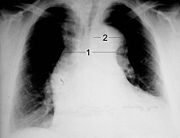 Widening of the mediastinum
on an x-ray
of the chest has moderate sensitivity (67%) in the setting of an ascending aortic dissection. However, it has low specificity, as many other conditions can cause a widening of the mediastinum on chest x-ray.
The calcium sign is a finding on chest x-ray that suggests aortic dissection. It is the separation of the intimal calcification from the outer aortic soft tissue border by 10 mm.
Pleural effusions may be seen on chest x-ray. They are more commonly seen in descending aortic dissections. If seen, they are typically in the left hemithorax.
Other findings include obliteration of the aortic knob, depression of the left mainstem bronchus, loss of the paratracheal stripe, and tracheal deviation.
About 12 to 20% of individuals presenting with an aortic dissection have a "normal" chest x-ray; therefore, a normal chest radiograph does NOT rule out aortic dissection. If the clinical index of suspicion is high, it is imperative to rule out dissection with another imaging modality (CT angiogram, MRA, aortogram, or transesophageal echo)
is a fast non-invasive test that will give an accurate three-dimensional view of the aorta. These images are produced by taking rapid thin cut slices of the chest and abdomen, and combining them in the computer to create cross-sectional slices. In order to delineate the aorta to the accuracy necessary to make the proper diagnosis, an iodinated contrast material is injected into a peripheral vein. Contrast is injected and the scan performed using a Bolus Tracking
method. This is a type of scan timed to an injection to capture the contrast as it enters the aorta. The scan will then follow the contrast as it flows though the vessel.
It has a sensitivity of 96 to 100% and a specificity of 96 to 100%. Disadvantages include the need for iodinated contrast material and the inability to diagnose the site of the intimal tear.
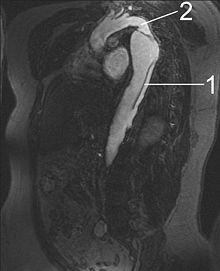 Magnetic resonance imaging
(MRI) is currently the gold standard test
for the detection and assessment of aortic dissection, with a sensitivity of 98% and a specificity of 98%. An MRI examination of the aorta will produce a three-dimensional reconstruction of the aorta, allowing the physician to determine the location of the intimal tear, the involvement of branch vessels, and locate any secondary tears. It is a non-invasive test, does not require the use of iodinated contrast material, and can detect and quantitate the degree of aortic insufficiency.
The disadvantage of the MRI scan in the face of aortic dissection is that it has limited availability and is often located only in the larger hospitals, and the scan is relatively time consuming. Due to the high intensity magnetic fields used during MRI, an MRI scan is contraindicated in individuals with metallic implants. In addition, many individuals experience claustrophobia
while in the MRI scanning tube.
(TEE) is a relatively good test in the diagnosis of aortic dissection, with a sensitivity of up to 98% and a specificity of up to 97%. It is a relatively non-invasive test, requiring the individual to swallow the echocardiography probe. It is especially good in the evaluation of AI in the setting of ascending aortic dissection, and to determine whether the ostia (origins) of the coronary arteries are involved. While many institutions give sedation during transesophageal echocardiography for added patient comfort, it can be performed in cooperative individuals without the use of sedation. Disadvantages of the TEE include the inability to visualize the distal ascending aorta (the beginning of the aortic arch
), and the descending abdominal aorta that lies below the stomach
. A TEE may be technically difficult to perform in individuals with esophageal strictures or varices
.
. Previously thought to be the diagnostic "gold standard", it has been supplanted by other less invasive imaging modalities.
The risk of death due to aortic dissection is highest in the first few hours after the dissection begins, and decreases afterwards. Because of this, the therapeutic strategies differ for treatment of an acute dissection compared to a chronic dissection. An acute dissection is one in which the individual presents within the first two weeks. If the individual has managed to survive this window period, his prognosis is improved. About 66% of all dissections present in the acute phase. Individuals who present two weeks after the onset of the dissection are said to have chronic aortic dissections. These individuals have been self-selected as survivors of the acute episode, and can be treated with medical therapy as long as they are stable.
(MAP) of 60 to 75 mmHg, or the lowest blood pressure tolerated by the patient. Another factor is to reduce the shear-force dP/dt (force of ejection of blood from the left ventricle
).
Beta blockers are first line treatment for patients with acute and chronic aortic dissection. In acute dissection, rapidly acting, titratable parenteral agents (such as esmolol
, propranolol, or labetalol
) are preferred. Vasodilators such as sodium nitroprusside
can be considered for patients with ongoing hypertension, but they should never be used alone, as they generally cause reflex tachycardia.
Calcium channel blocker
s can be used in the treatment of aortic dissection, particularly if there is a contraindication to the use of beta blockers. The calcium channel blockers typically used are verapamil
and diltiazem
, because of their combined vasodilator and negative inotropic effects.
If the individual has refractory hypertension (persistent hypertension on the maximum doses of three different classes of antihypertensive agents), involvement of the renal arteries in the aortic dissection plane should be considered.
.
The objective in the surgical management of aortic dissection is to resect (remove) the most severely damaged segments of the aorta, and to obliterate the entry of blood into the false lumen (both at the initial intimal tear and any secondary tears along the vessel). While excision of the intimal tear may be performed, it does not significantly change mortality.
Some methods of repair are:
A number of comorbid conditions increase the surgical risk of repair of an aortic dissection. These include:
is 10 times higher in individuals who have uncontrolled hypertension, compared to individuals with a systolic pressure below 130 mmHg.
The risk of death is highest in the first two years after the acute event, and individuals should be followed closely during this time period. 29% of late deaths following surgery are due to rupture of either the dissecting aneurysm or another aneurysm
. In addition, there is a 17% to 25% incidence of new aneurysm formation. This is typically due to dilatation of the residual false lumen. These new aneurysms are more likely to rupture, due to their thinner walls.
Serial imaging of the aorta is suggested, with MRI being the preferred imaging technique.
The risk of death
is high in untreated aortic dissection. While the risk is very high in the first 24 hours of the event, those that survive the initial event still have an elevated mortality compared to age- and sex-matched controls. 75% of those with ascending aortic dissection who are not treated die within 2 weeks. With aggressive treatment 30-day survival for thoracic dissections may be as high as 90%.
Aorta
The aorta is the largest artery in the body, originating from the left ventricle of the heart and extending down to the abdomen, where it branches off into two smaller arteries...
causes blood
Blood
Blood is a specialized bodily fluid in animals that delivers necessary substances such as nutrients and oxygen to the cells and transports metabolic waste products away from those same cells....
to flow between the layers of the wall of the aorta and force the layers apart. The dissection typically extends anterograde, but can extend retrograde
Retrograde
-Retrograde:* Retrograde motion, in astronomy, describes retrograde motions of celestial bodies relative to a gravitationally central object* Apparent retrograde motion, in astronomy, is the apparent motion of planets as observed from a particular vantage point...
from the site of the intimal tear. Aortic dissection
Dissection (medical)
In medical pathology, dissection refers to a tear within the wall of a blood vessel, which allows blood to separate the wall layers, creating a pseudoaneurysm.- Types :Examples include:*Aortic dissection...
is a medical emergency
Medical emergency
A medical emergency is an injury or illness that is acute and poses an immediate risk to a person's life or long term health. These emergencies may require assistance from another person, who should ideally be suitably qualified to do so, although some of these emergencies can be dealt with by the...
and can quickly lead to death, even with optimal treatment. If the dissection tears the aorta completely open (through all three layers), massive and rapid blood loss occurs. Aortic dissections resulting in rupture have an 80% mortality rate
Mortality rate
Mortality rate is a measure of the number of deaths in a population, scaled to the size of that population, per unit time...
, and 50% of patients die before they even reach the hospital. All acute ascending aortic dissections require emergency surgery to prevent rupture and death. Chronic enlargement of the ascending aorta from aneurism or previously unrecognized and untreated aortic dissections is repaired electively when it reaches 6 cm (2 in) in size and surgery may be recommended between for as little as 4.5 cm (2 in) in size if the patient has one of several connective tissue disorders or a family history of ruptured aorta.
Classification
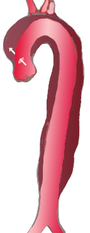 |
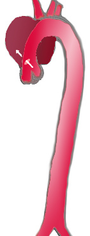 |
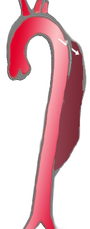 |
|
| Percentage | 60% | 10–15% | 25–30% |
| Type | DeBakey I | DeBakey II | DeBakey III |
| Stanford A (Proximal) | Stanford B (Distal) | ||
Several different classification systems have been used to describe aortic dissections. The systems commonly in use are either based on the anatomy of the dissection or the duration of onset of symptoms prior to presentation. The Stanford cycstem is used more commonly now as it is more attuned to the management of the patient.
DeBakey
The DeBakey system, named after surgeon and aortic dissection sufferer Michael E. DeBakeyMichael E. DeBakey
Michael Elias DeBakey was a world-renowned Lebanese-American cardiac surgeon, innovator, scientist, medical educator, and international medical statesman...
, is an anatomical description of the aortic dissection. It categorizes the dissection based on where the original intimal tear is located and the extent of the dissection (localized to either the ascending aorta or descending aorta, or involves both the ascending and descending aorta.
- Type I – Originates in ascending aorta, propagates at least to the aortic arch and often beyond it distally.
- Type II – Originates in and is confined to the ascending aorta.
- Type III – Originates in descending aorta, rarely extends proximally but will extend distally.
Stanford
The Stanford classification is divided into 2 groups; A and B depending on whether the ascending aorta is involved.- A – Involves the ascending aorta and/or aortic arch, and possibly the descending aorta. The tear can originate in the ascending aorta, the aortic arch, or, more rarely, in the descending aorta. It includes DeBakey type I, II and retrograde type III (dissection originating in the descending aorta or aortic arch but extending into the ascending aorta).
- B – Involves the descending aorta (distal to left subclavian artery origin), without involvement of the ascending aorta or aortic arch. It includes DeBakey type III without retrograde extension into the ascending aorta.
The Stanford classification is useful as it follows clinical practice, as type A ascending aortic dissections generally require primary surgical repair whereas type B dissections generally are treated medically as initial treatment with surgery reserved for any complications.
The reason for surgical repair of Type A dissections is that ascending aortic dissections often involve the aortic valve, which having lost it's suspensory support, telescopes down into the aortic root resulting in aortic incompetence. This needs resuspending to reseat the valve and repair / prevent coronary artery injury. Also the area of dissection is removed and replaced with a Dacron graft, to prevent further dissection from occurring. However type B dissections are not improved, from a mortality point of view, by operation, unless there is leaking, rupture or compromise to other organs eg kidneys.
Signs and symptoms
About 96% of individuals with aortic dissection present with severe pain that had a sudden onset. It may be described as tearing in nature, or stabbing or sharp in character. 17% of individuals will feel the pain migrate as the dissection extends down the aorta. The location of pain is associated with the location of the dissection. Anterior chest pain is associated with dissections involving the ascending aorta, while interscapular (back) pain is associated with descending aortic dissections. If the pain is pleuriticPleurisy
Pleurisy is an inflammation of the pleura, the lining of the pleural cavity surrounding the lungs. Among other things, infections are the most common cause of pleurisy....
in nature, it may suggest acute pericarditis
Pericarditis
Pericarditis is an inflammation of the pericardium . A characteristic chest pain is often present.The causes of pericarditis are varied, including viral infections of the pericardium, idiopathic causes, uremic pericarditis, bacterial infections of the precardium Pericarditis is an inflammation of...
caused by hemorrhage into the pericardial sac. This is a particularly dangerous eventuality, suggesting that acute pericardial tamponade may be imminent.
While the pain may be confused with the pain of a myocardial infarction
Myocardial infarction
Myocardial infarction or acute myocardial infarction , commonly known as a heart attack, results from the interruption of blood supply to a part of the heart, causing heart cells to die...
(heart attack), aortic dissection is usually not associated with the other signs that suggest myocardial infarction, including heart failure, and ECG changes.
Individuals with aortic dissection who do not present with pain have chronic dissection.
Less common symptoms that may be seen in the setting of aortic dissection include congestive heart failure
Congestive heart failure
Heart failure often called congestive heart failure is generally defined as the inability of the heart to supply sufficient blood flow to meet the needs of the body. Heart failure can cause a number of symptoms including shortness of breath, leg swelling, and exercise intolerance. The condition...
(7%), syncope (9%), cerebrovascular accident (3-6%), ischemic peripheral neuropathy
Peripheral neuropathy
Peripheral neuropathy is the term for damage to nerves of the peripheral nervous system, which may be caused either by diseases of or trauma to the nerve or the side-effects of systemic illness....
, paraplegia
Paraplegia
Paraplegia is an impairment in motor or sensory function of the lower extremities. The word comes from Ionic Greek: παραπληγίη "half-striking". It is usually the result of spinal cord injury or a congenital condition such as spina bifida that affects the neural elements of the spinal canal...
, cardiac arrest
Cardiac arrest
Cardiac arrest, is the cessation of normal circulation of the blood due to failure of the heart to contract effectively...
, and sudden death. If the individual had a syncopal
Syncope (medicine)
Syncope , the medical term for fainting, is precisely defined as a transient loss of consciousness and postural tone characterized by rapid onset, short duration, and spontaneous recovery due to global cerebral hypoperfusion that most often results from hypotension.Many forms of syncope are...
episode, about half the time it is due to hemorrhage into the pericardium leading to pericardial tamponade.
Neurologic complications of aortic dissection (i.e., cerebrovascular accident (CVA) and paralysis
Paralysis
Paralysis is loss of muscle function for one or more muscles. Paralysis can be accompanied by a loss of feeling in the affected area if there is sensory damage as well as motor. A study conducted by the Christopher & Dana Reeve Foundation, suggests that about 1 in 50 people have been diagnosed...
) are due to involvement of one or more arteries supplying portions of the central nervous system
Central nervous system
The central nervous system is the part of the nervous system that integrates the information that it receives from, and coordinates the activity of, all parts of the bodies of bilaterian animals—that is, all multicellular animals except sponges and radially symmetric animals such as jellyfish...
.
If the aortic dissection involves the abdominal aorta, compromise of the branches of the abdominal aorta is possible. In abdominal aortic dissections, compromise of one or both renal arteries
Renal artery
The renal arteries normally arise off the side of the abdominal aorta, immediately below the superior mesenteric artery, and supply the kidneys with blood. Each is directed across the crus of the diaphragm, so as to form nearly a right angle with the aorta....
occurs in 5–8% of cases, while mesenteric ischemia
Ischemia
In medicine, ischemia is a restriction in blood supply, generally due to factors in the blood vessels, with resultant damage or dysfunction of tissue. It may also be spelled ischaemia or ischæmia...
(ischemia of the large intestine
Large intestine
The large intestine is the third-to-last part of the digestive system — — in vertebrate animals. Its function is to absorb water from the remaining indigestible food matter, and then to pass useless waste material from the body...
s) occurs 3–5% of the time.
Blood pressure
While many patients with an aortic dissection have a history of hypertension, the blood pressure is quite variable at presentation with acute aortic dissection, and tends to be higher in individuals with a distal dissection. In individuals with a proximal aortic dissection, 36% present with hypertension, while 25% present with hypotensionHypotension
In physiology and medicine, hypotension is abnormally low blood pressure, especially in the arteries of the systemic circulation. It is best understood as a physiologic state, rather than a disease. It is often associated with shock, though not necessarily indicative of it. Hypotension is the...
. In those that present with distal aortic dissections, 70% present with hypertension while 4% present with hypotension.
Severe hypotension at presentation is a grave prognostic indicator. It is usually associated with pericardial tamponade, severe aortic insufficiency, or rupture of the aorta. Accurate measurement of the blood pressure is important. Pseudohypotension (falsely low blood pressure measurement) may occur due to involvement of the brachiocephalic artery
Brachiocephalic artery
The brachiocephalic artery is an artery of the mediastinum that supplies blood to the right arm and the head and neck....
(supplying the right arm) or the left subclavian artery (supplying the left arm).
Aortic insufficiency
Aortic insufficiency (AI) occurs in half to two-thirds of ascending aortic dissections, and the murmurHeart sounds
Heart sounds, or heartbeats, are the noises generated by the beating heart and the resultant flow of blood through it...
of aortic insufficiency is audible in about 32% of proximal dissections. The intensity (loudness) of the murmur is dependent on the blood pressure and may be inaudible in the event of hypotension.
There are multiple etiologies for AI in the setting of ascending aortic dissection. The dissection may dilate the annulus of the aortic valve
Aortic valve
The aortic valve is one of the valves of the heart. It is normally tricuspid , although in 1% of the population it is found to be congenitally bicuspid . It lies between the left ventricle and the aorta....
, so that the leaflets of the valve cannot coapt. Another mechanism is that the dissection may extend into the aortic root and detach the aortic valve leaflets. The third mechanism is that if there was an extensive intimal tear, the intimal flap may prolapse into the LV outflow tract, causing intimal intussusception
Intussusception (blood vessel growth)
Intussusception is the process whereby a new blood vessel is created by the splitting of an existing blood vessel in two. It is one of the three ways that blood vessels are known to be formed in the human body, the other two being angiogenesis and vasculogenesis.Intussusception, also known as...
into the aortic valve preventing proper valve closure.
Myocardial infarction
Myocardial infarction (heart attack) occurs in 1–2% of aortic dissections. The etiology of the infarction is involvement of the coronary arteries (the arteriesArtery
Arteries are blood vessels that carry blood away from the heart. This blood is normally oxygenated, exceptions made for the pulmonary and umbilical arteries....
that supply the heart) in the dissection. The right coronary artery is involved more commonly than the left coronary artery. If the myocardial infarction is treated with thrombolytic therapy, the mortality increases to over 70%, mostly due to hemorrhage into the pericardial sac causing pericardial tamponade.
Because aortic dissection may present to the emergency room physician
Physician
A physician is a health care provider who practices the profession of medicine, which is concerned with promoting, maintaining or restoring human health through the study, diagnosis, and treatment of disease, injury and other physical and mental impairments...
similar to a myocardial infarction, the physician must be careful to make the proper diagnosis prior to initiating treatment for myocardial infarction, since the treatment regimen for myocardial infarction can be lethal to an individual presenting with aortic dissection.
Pleural effusion
A pleural effusionPleural effusion
Pleural effusion is excess fluid that accumulates between the two pleural layers, the fluid-filled space that surrounds the lungs. Excessive amounts of such fluid can impair breathing by limiting the expansion of the lungs during ventilation.-Pathophysiology:...
(fluid collection in the space between the lung
Lung
The lung is the essential respiration organ in many air-breathing animals, including most tetrapods, a few fish and a few snails. In mammals and the more complex life forms, the two lungs are located near the backbone on either side of the heart...
s and the chest wall or diaphragm) can be due to either blood from a transient rupture of the aorta or fluid due to an inflammatory reaction around the aorta. If a pleural effusion were to develop due to an aortic dissection, it is more commonly in the left hemithorax rather than the right hemithorax.
Causes
Aortic dissection is associated with hypertensionHypertension
Hypertension or high blood pressure is a cardiac chronic medical condition in which the systemic arterial blood pressure is elevated. What that means is that the heart is having to work harder than it should to pump the blood around the body. Blood pressure involves two measurements, systolic and...
(high blood pressure) and many connective tissue
Connective tissue
"Connective tissue" is a fibrous tissue. It is one of the four traditional classes of tissues . Connective Tissue is found throughout the body.In fact the whole framework of the skeleton and the different specialized connective tissues from the crown of the head to the toes determine the form of...
disorders. Vasculitis
Vasculitis
Vasculitis refers to a heterogeneous group of disorders that are characterized by inflammatory destruction of blood vessels. Both arteries and veins are affected. Lymphangitis is sometimes considered a type of vasculitis...
(inflammation
Inflammation
Inflammation is part of the complex biological response of vascular tissues to harmful stimuli, such as pathogens, damaged cells, or irritants. Inflammation is a protective attempt by the organism to remove the injurious stimuli and to initiate the healing process...
of an artery) is rarely associated with aortic dissection. It can also be the result of chest trauma. 72 to 80% of individuals who present with an aortic dissection have a previous history of hypertension.
The highest incidence of aortic dissection is in individuals who are 50 to 70 years old. The incidence is twice as high in males as in females (male-to-female ratio is 2:1). Half of dissections in females before age 40 occur during pregnancy
Pregnancy
Pregnancy refers to the fertilization and development of one or more offspring, known as a fetus or embryo, in a woman's uterus. In a pregnancy, there can be multiple gestations, as in the case of twins or triplets...
(typically in the 3rd trimester or early postpartum period).
A bicuspid aortic valve
Bicuspid aortic valve
A bicuspid aortic valve is most commonly a congenital condition of the aortic valve where two of the aortic valvular leaflets fuse during development resulting in a valve that is bicuspid instead of the normal tricuspid configuration. Normally the only cardiac valve that is bicuspid is the mitral...
(a type of congenital heart disease involving the aortic valve
Aortic valve
The aortic valve is one of the valves of the heart. It is normally tricuspid , although in 1% of the population it is found to be congenitally bicuspid . It lies between the left ventricle and the aorta....
) is found in 7–14% of individuals who have an aortic dissection. These individuals are prone to dissection in the ascending aorta. The risk of dissection in individuals with bicuspid aortic valve is not associated with the degree of stenosis of the valve.
Marfan syndrome
Marfan syndrome
Marfan syndrome is a genetic disorder of the connective tissue. People with Marfan's tend to be unusually tall, with long limbs and long, thin fingers....
is noted in 5–9% of individuals who suffer from aortic dissection. In this subset, there is an increased incidence in young individuals. Individuals with Marfan syndrome tend to have aneurysms of the aorta and are more prone to proximal dissections of the aorta.
Turner syndrome
Turner syndrome
Turner syndrome or Ullrich-Turner syndrome encompasses several conditions in human females, of which monosomy X is most common. It is a chromosomal abnormality in which all or part of one of the sex chromosomes is absent...
also increases the risk of aortic dissection, by aortic root dilatation.
Chest trauma leading to aortic dissection can be divided into two groups based on etiology: blunt chest trauma (commonly seen in car accident
Car accident
A traffic collision, also known as a traffic accident, motor vehicle collision, motor vehicle accident, car accident, automobile accident, Road Traffic Collision or car crash, occurs when a vehicle collides with another vehicle, pedestrian, animal, road debris, or other stationary obstruction,...
s) and iatrogenic. Iatrogenic causes include trauma during cardiac catheterization
Cardiac catheterization
Cardiac catheterization is the insertion of a catheter into a chamber or vessel of the heart. This is done for both investigational and interventional purposes...
or due to an intra-aortic balloon pump
Intra-aortic balloon pump
The Intra-aortic balloon pump ' is a mechanical device that increases myocardial oxygen perfusion while at the same time increasing cardiac output. Increasing cardiac output increases coronary blood flow and therefore myocardial oxygen delivery...
.
Aortic dissection may be a late sequela of cardiac surgery
Cardiac surgery
Cardiovascular surgery is surgery on the heart or great vessels performed by cardiac surgeons. Frequently, it is done to treat complications of ischemic heart disease , correct congenital heart disease, or treat valvular heart disease from various causes including endocarditis, rheumatic heart...
. 18% of individuals who present with an acute aortic dissection have a history of open heart surgery. Individuals who have undergone aortic valve replacement for aortic insufficiency
Aortic insufficiency
Aortic insufficiency , also known as aortic regurgitation , is the leaking of the aortic valve of the heart that causes blood to flow in the reverse direction during ventricular diastole, from the aorta into the left ventricle....
are at particularly high risk. This is because aortic insufficiency causes increased blood flow in the ascending aorta. This can cause dilatation and weakening of the walls of the ascending aorta.
Syphilis
Syphilis
Syphilis is a sexually transmitted infection caused by the spirochete bacterium Treponema pallidum subspecies pallidum. The primary route of transmission is through sexual contact; however, it may also be transmitted from mother to fetus during pregnancy or at birth, resulting in congenital syphilis...
will only potentially cause aortic dissection in its tertiary stage.
Pathophysiology
Artery
Arteries are blood vessels that carry blood away from the heart. This blood is normally oxygenated, exceptions made for the pulmonary and umbilical arteries....
, the aorta is made up of three layers, the intima, the media, and the adventitia. The layer that is in direct contact with the flow of blood is the tunica intima
Tunica intima
The tunica intima is the innermost layer of an artery or vein. It is made up of one layer of endothelial cells and is supported by an internal elastic lamina...
, commonly called the intima. This layer is made up of mainly endothelial cells. The next layer is known as the tunica media
Tunica media
The tunica media is the middle layer of an artery or vein.-Artery:It is made up of smooth muscle cells and elastic tissue...
, or the muscular layer. It is composed of a mixture of smooth muscle cells and elastic fibers. The outermost layer is the tunica adventitia or the adventitia. This layer is composed of connective tissue
Connective tissue
"Connective tissue" is a fibrous tissue. It is one of the four traditional classes of tissues . Connective Tissue is found throughout the body.In fact the whole framework of the skeleton and the different specialized connective tissues from the crown of the head to the toes determine the form of...
.
In an aortic dissection, blood penetrates the intima and enters the media layer. The high pressure rips the tissue
Biological tissue
Tissue is a cellular organizational level intermediate between cells and a complete organism. A tissue is an ensemble of cells, not necessarily identical, but from the same origin, that together carry out a specific function. These are called tissues because of their identical functioning...
of the media apart along the laminated plane splitting the inner 2/3 and the outer 1/3 of the media apart. This can propagate along the length of the aorta for a variable distance forward or backwards. Dissections that propagate towards the iliac bifurcation (with the flow of blood) are called anterograde dissections and those that propagate towards the aortic root (opposite of the flow of blood) are called retrograde dissections. The initial tear is usually within 100 mm of the aortic valve
Aortic valve
The aortic valve is one of the valves of the heart. It is normally tricuspid , although in 1% of the population it is found to be congenitally bicuspid . It lies between the left ventricle and the aorta....
so a retrograde dissection can easily compromise the pericardium leading to a hemocardium. Anterograde dissections may propagate all the way to the iliac bifurcation of the aorta, rupture the aortic wall, or recanalize into the intravascular lumen leading to a double barrel aorta. The double barrel aorta relieves the pressure of blood flow and reduces the risk of rupture. Rupture leads to hemorrhaging into a body cavity and prognosis depends on the area of rupture. Retroperitoneal and pericardial ruptures are both possible.
The initiating event in an aortic dissection is a tear in the intimal lining of the aorta. Due to the high pressures
Blood pressure
Blood pressure is the pressure exerted by circulating blood upon the walls of blood vessels, and is one of the principal vital signs. When used without further specification, "blood pressure" usually refers to the arterial pressure of the systemic circulation. During each heartbeat, BP varies...
in the aorta, blood enters the media at the point of the tear. The force of the blood entering the media causes the tear to extend. It may extend proximally (closer to the heart) or distally (away from the heart) or both. The blood will travel through the media, creating a false lumen
Pseudoaneurysm
A pseudoaneurysm, also known as a false aneurysm, is a hematoma that forms as the result of a leaking hole in an artery. Note that the hematoma forms outside the arterial wall, so it is contained by the surrounding tissues. Also it must continue to communicate with the artery to be considered a...
(the true lumen is the normal conduit of blood in the aorta). Separating the false lumen from the true lumen is a layer of intimal tissue. This tissue is known as the intimal flap.
The vast majority of aortic dissections originate with an intimal tear in either the ascending aorta
Ascending aorta
The ascending aorta is a portion of the aorta commencing at the upper part of the base of the left ventricle, on a level with the lower border of the third costal cartilage behind the left half of the sternum; it passes obliquely upward, forward, and to the right, in the direction of the heart’s...
(65%), the aortic arch
Aortic arch
The arch of the aorta or the transverse aortic arch is the part of the aorta that begins at the level of the upper border of the second sternocostal articulation of the right side, and runs at first upward, backward, and to the left in front of the trachea; it is then directed backward on the left...
(10%), or just distal to the ligamentum arteriosum
Ligamentum arteriosum
The ligamentum arteriosum is a small ligament attached to the superior surface of the pulmonary trunk and the inferior surface of the aortic arch...
in the descending thoracic aorta
Descending aorta
The descending aorta is part of the aorta, the largest artery in the body. The descending aorta is the part of the aorta beginning at the aortic arch that runs down through the chest and abdomen. The descending aorta is divided into two portions, the thoracic and abdominal, in correspondence with...
(20%).
As blood flows down the false lumen, it may cause secondary tears in the intima. Through these secondary tears, the blood can re-enter the true lumen.
While it is not always clear why an intimal tear may occur, quite often it involves degeneration of the collagen
Collagen
Collagen is a group of naturally occurring proteins found in animals, especially in the flesh and connective tissues of mammals. It is the main component of connective tissue, and is the most abundant protein in mammals, making up about 25% to 35% of the whole-body protein content...
and elastin
Elastin
Elastin is a protein in connective tissue that is elastic and allows many tissues in the body to resume their shape after stretching or contracting. Elastin helps skin to return to its original position when it is poked or pinched. Elastin is also an important load-bearing tissue in the bodies of...
that make up the media. This is known as cystic medial necrosis
Cystic medial necrosis
Familial thoracic aortic aneurysm is an autosomal dominant disorder of large arteries....
and is most commonly associated with Marfan syndrome
Marfan syndrome
Marfan syndrome is a genetic disorder of the connective tissue. People with Marfan's tend to be unusually tall, with long limbs and long, thin fingers....
and is also associated with Ehlers-Danlos syndrome
Ehlers-Danlos syndrome
Ehlers–Danlos syndrome is a group of inherited connective tissue disorders, caused by a defect in the synthesis of collagen . The collagen in connective tissue helps tissues to resist deformation...
.
In about 13% of aortic dissections, there is no evidence of an intimal tear. It is believed that in these cases the inciting event is an intramural hematoma
Hematoma
A hematoma, or haematoma, is a localized collection of blood outside the blood vessels, usually in liquid form within the tissue. This distinguishes it from an ecchymosis, which is the spread of blood under the skin in a thin layer, commonly called a bruise...
(caused by hemorrhage within the media). Since there is no direct connection between the true lumen and the false lumen in these cases, it is difficult to diagnose an aortic dissection by aortography if the etiology
Etiology
Etiology is the study of causation, or origination. The word is derived from the Greek , aitiologia, "giving a reason for" ....
is an intramural hematoma. An aortic dissection secondary to an intramural hematoma should be treated the same as one caused by an intimal tear.
Diagnosis
Because of the varying symptoms and signs of aortic dissection depending on the initial intimal tear and the extent of the dissection, the proper diagnosis is sometimes difficult to make.While taking a good history from the individual may be strongly suggestive of an aortic dissection, the diagnosis cannot always be made by history and physical signs alone. Often the diagnosis is made by visualization of the intimal flap on a diagnostic imaging test. Common tests used to diagnose an aortic dissection include a CT scan of the chest with iodinated contrast material and a trans-esophageal echocardiogram
Transesophageal echocardiogram
A transesophageal echocardiogram, or TEE , is an alternative way to perform an echocardiogram. A specialized probe containing an ultrasound transducer at its tip is passed into the patient's esophagus...
. The proximity of the aorta
Aorta
The aorta is the largest artery in the body, originating from the left ventricle of the heart and extending down to the abdomen, where it branches off into two smaller arteries...
to the esophagus
Esophagus
The esophagus is an organ in vertebrates which consists of a muscular tube through which food passes from the pharynx to the stomach. During swallowing, food passes from the mouth through the pharynx into the esophagus and travels via peristalsis to the stomach...
allows the use of higher-frequency ultrasound for better anatomic images. Other tests that may be used include an aortogram or magnetic resonance angiogram (MRA) of the aorta. Each of these test have varying pros and cons and they do not have equal sensitivities and specificities in the diagnosis of aortic dissection.
In general, the imaging technique chosen is based on the pre-test likelihood of the diagnosis, availability of the testing modality, patient stability, and the sensitivity and specificity of the test.
D-dimer
A blood D-dimerD-dimer
D-dimer is a fibrin degradation product , a small protein fragment present in the blood after a blood clot is degraded by fibrinolysis. It is so named because it contains two crosslinked D fragments of the fibrinogen protein....
level less than 500 ng/mL may be able to rule out the diagnosis of aortic dissection alleviating the need for further imaging.
Chest X-ray
Mediastinum
The mediastinum is a non-delineated group of structures in the thorax, surrounded by loose connective tissue. It is the central compartment of the thoracic cavity...
on an x-ray
X-ray
X-radiation is a form of electromagnetic radiation. X-rays have a wavelength in the range of 0.01 to 10 nanometers, corresponding to frequencies in the range 30 petahertz to 30 exahertz and energies in the range 120 eV to 120 keV. They are shorter in wavelength than UV rays and longer than gamma...
of the chest has moderate sensitivity (67%) in the setting of an ascending aortic dissection. However, it has low specificity, as many other conditions can cause a widening of the mediastinum on chest x-ray.
The calcium sign is a finding on chest x-ray that suggests aortic dissection. It is the separation of the intimal calcification from the outer aortic soft tissue border by 10 mm.
Pleural effusions may be seen on chest x-ray. They are more commonly seen in descending aortic dissections. If seen, they are typically in the left hemithorax.
Other findings include obliteration of the aortic knob, depression of the left mainstem bronchus, loss of the paratracheal stripe, and tracheal deviation.
About 12 to 20% of individuals presenting with an aortic dissection have a "normal" chest x-ray; therefore, a normal chest radiograph does NOT rule out aortic dissection. If the clinical index of suspicion is high, it is imperative to rule out dissection with another imaging modality (CT angiogram, MRA, aortogram, or transesophageal echo)
Computed tomography
Computed tomography angiographyComputed tomography angiography
Computed tomography angiography is a computed tomography technique used to visualize arterial and venous vessels throughout the body. This ranges from arteries serving the brain to those bringing blood to the lungs, kidneys, arms and legs.-Technique:...
is a fast non-invasive test that will give an accurate three-dimensional view of the aorta. These images are produced by taking rapid thin cut slices of the chest and abdomen, and combining them in the computer to create cross-sectional slices. In order to delineate the aorta to the accuracy necessary to make the proper diagnosis, an iodinated contrast material is injected into a peripheral vein. Contrast is injected and the scan performed using a Bolus Tracking
Bolus tracking
Bolus tracking is a technique used in computed tomography imaging, to visualise vessels more clearly. A bolus of radio-opaque contrast media is injected into a patient via a peripheral intravenous cannula...
method. This is a type of scan timed to an injection to capture the contrast as it enters the aorta. The scan will then follow the contrast as it flows though the vessel.
It has a sensitivity of 96 to 100% and a specificity of 96 to 100%. Disadvantages include the need for iodinated contrast material and the inability to diagnose the site of the intimal tear.
MRI
Magnetic resonance imaging
Magnetic resonance imaging , nuclear magnetic resonance imaging , or magnetic resonance tomography is a medical imaging technique used in radiology to visualize detailed internal structures...
(MRI) is currently the gold standard test
Gold standard (test)
In medicine and statistics, gold standard test refers to a diagnostic test or benchmark that is the best available under reasonable conditions. It does not have to be necessarily the best possible test for the condition in absolute terms...
for the detection and assessment of aortic dissection, with a sensitivity of 98% and a specificity of 98%. An MRI examination of the aorta will produce a three-dimensional reconstruction of the aorta, allowing the physician to determine the location of the intimal tear, the involvement of branch vessels, and locate any secondary tears. It is a non-invasive test, does not require the use of iodinated contrast material, and can detect and quantitate the degree of aortic insufficiency.
The disadvantage of the MRI scan in the face of aortic dissection is that it has limited availability and is often located only in the larger hospitals, and the scan is relatively time consuming. Due to the high intensity magnetic fields used during MRI, an MRI scan is contraindicated in individuals with metallic implants. In addition, many individuals experience claustrophobia
Claustrophobia
Claustrophobia is the fear of having no escape and being closed in small spaces or rooms...
while in the MRI scanning tube.
Transesophageal echocardiography
The transesophageal echocardiogramTransesophageal echocardiogram
A transesophageal echocardiogram, or TEE , is an alternative way to perform an echocardiogram. A specialized probe containing an ultrasound transducer at its tip is passed into the patient's esophagus...
(TEE) is a relatively good test in the diagnosis of aortic dissection, with a sensitivity of up to 98% and a specificity of up to 97%. It is a relatively non-invasive test, requiring the individual to swallow the echocardiography probe. It is especially good in the evaluation of AI in the setting of ascending aortic dissection, and to determine whether the ostia (origins) of the coronary arteries are involved. While many institutions give sedation during transesophageal echocardiography for added patient comfort, it can be performed in cooperative individuals without the use of sedation. Disadvantages of the TEE include the inability to visualize the distal ascending aorta (the beginning of the aortic arch
Aortic arch
The arch of the aorta or the transverse aortic arch is the part of the aorta that begins at the level of the upper border of the second sternocostal articulation of the right side, and runs at first upward, backward, and to the left in front of the trachea; it is then directed backward on the left...
), and the descending abdominal aorta that lies below the stomach
Stomach
The stomach is a muscular, hollow, dilated part of the alimentary canal which functions as an important organ of the digestive tract in some animals, including vertebrates, echinoderms, insects , and molluscs. It is involved in the second phase of digestion, following mastication .The stomach is...
. A TEE may be technically difficult to perform in individuals with esophageal strictures or varices
Esophageal varices
In medicine , esophageal varices are extremely dilated sub-mucosal veins in the lower esophagus...
.
Aortogram
An aortogram involves placement of a catheter in the aorta and injection of contrast material while taking x-rays of the aorta. The procedure is known as aortographyAortography
An aortogram involves placement of a catheter in the aorta and injection of contrast material while taking x-rays of the aorta. The procedure is known as aortography...
. Previously thought to be the diagnostic "gold standard", it has been supplanted by other less invasive imaging modalities.
Treatment
In an acute dissection treatment choice depends on its location. For Stanford type A (ascending aortic) dissection, surgical management is superior to medical management. For uncomplicated Stanford type B (distal aortic) dissections (including abdominal aortic dissections), medical management is preferred over surgical.The risk of death due to aortic dissection is highest in the first few hours after the dissection begins, and decreases afterwards. Because of this, the therapeutic strategies differ for treatment of an acute dissection compared to a chronic dissection. An acute dissection is one in which the individual presents within the first two weeks. If the individual has managed to survive this window period, his prognosis is improved. About 66% of all dissections present in the acute phase. Individuals who present two weeks after the onset of the dissection are said to have chronic aortic dissections. These individuals have been self-selected as survivors of the acute episode, and can be treated with medical therapy as long as they are stable.
Medication
Aortic dissection generally presents as a hypertensive emergency, and the prime consideration of medical management is strict blood pressure control. The target blood pressure should be a mean arterial pressureMean arterial pressure
The mean arterial pressure is a term used in medicine to describe an average blood pressure in an individual. It is defined as the average arterial pressure during a single cardiac cycle.-Calculation:...
(MAP) of 60 to 75 mmHg, or the lowest blood pressure tolerated by the patient. Another factor is to reduce the shear-force dP/dt (force of ejection of blood from the left ventricle
Left ventricle
The left ventricle is one of four chambers in the human heart. It receives oxygenated blood from the left atrium via the mitral valve, and pumps it into the aorta via the aortic valve.-Shape:...
).
Beta blockers are first line treatment for patients with acute and chronic aortic dissection. In acute dissection, rapidly acting, titratable parenteral agents (such as esmolol
Esmolol
Esmolol is a cardioselective beta1 receptor blocker with rapid onset, a very short duration of action, and no significant intrinsic sympathomimetic or membrane stabilising activity at therapeutic dosages....
, propranolol, or labetalol
Labetalol
Labetalol is a mixed alpha/beta adrenergic antagonist, which is used to treat high blood pressure.-Indications:...
) are preferred. Vasodilators such as sodium nitroprusside
Sodium nitroprusside
Sodium nitroprusside is the inorganic compound with the formula Na2[Fe5NO]·2H2O. This red-coloured salt, which is often abbreviated SNP, is a potent vasodilator...
can be considered for patients with ongoing hypertension, but they should never be used alone, as they generally cause reflex tachycardia.
Calcium channel blocker
Calcium channel blocker
A calcium channel blocker is a chemical that disrupts the movement of calcium through calcium channels.CCB drugs devised to target neurons are used as antiepileptics. However, the most widespread clinical usage of calcium channel blockers is to decrease blood pressure in patients with...
s can be used in the treatment of aortic dissection, particularly if there is a contraindication to the use of beta blockers. The calcium channel blockers typically used are verapamil
Verapamil
Verapamil is an L-type calcium channel blocker of the phenylalkylamine class. It has been used in the treatment of hypertension, angina pectoris, cardiac arrhythmia, and most recently, cluster headaches. It is also an effective preventive medication for migraine...
and diltiazem
Diltiazem
Diltiazem is a non-dihydropyridine member of the class of drugs known as calcium channel blockers, used in the treatment of hypertension, angina pectoris, and some types of arrhythmia....
, because of their combined vasodilator and negative inotropic effects.
If the individual has refractory hypertension (persistent hypertension on the maximum doses of three different classes of antihypertensive agents), involvement of the renal arteries in the aortic dissection plane should be considered.
Surgical
Indications for the surgical treatment of aortic dissection include an acute proximal aortic dissection and an acute distal aortic dissection with one or more complications. Complications include compromise of a vital organ, rupture or impending rupture of the aorta, retrograde dissection into the ascending aorta, and a history of Marfan syndrome or Ehlers-Danlos SyndromeEhlers-Danlos syndrome
Ehlers–Danlos syndrome is a group of inherited connective tissue disorders, caused by a defect in the synthesis of collagen . The collagen in connective tissue helps tissues to resist deformation...
.
The objective in the surgical management of aortic dissection is to resect (remove) the most severely damaged segments of the aorta, and to obliterate the entry of blood into the false lumen (both at the initial intimal tear and any secondary tears along the vessel). While excision of the intimal tear may be performed, it does not significantly change mortality.
Some methods of repair are:
- Replacement of the damaged section with a tube graft (often made of dacron) when there is no damage to the aortic valveAortic valveThe aortic valve is one of the valves of the heart. It is normally tricuspid , although in 1% of the population it is found to be congenitally bicuspid . It lies between the left ventricle and the aorta....
. - Bentall procedureBentall procedureA Bentall procedure is a cardiac surgery operation involving composite graft replacement of the aortic valve, aortic root and ascending aorta, with re-implantation of the coronary arteries into the graft. This operation is used to treat combined aortic valve and ascending aorta disease, including...
— Replacement of the damaged section of aorta and replacement of the aortic valve. - David procedure — Replacement of the damaged section of aorta and reimplantation of the aortic valve.
- Insertion of a stent graft (covered stent), e.g. in TEVAR (thoracic endovascular aortic repair). It is usually combined with on-going medical management
- Replacement of the damaged section of aorta with a sutureless vascular ring connectorVascular ring connectorVascular ring connector is a licensed medical implant in the United States and Taiwan. It is a titanic ring used as a stent in the vascular graft to achieve a quick, blood-sealed, and sutureless anastomosis...
-reinforced dacron graft. Vascular ring connector (VRC) is a titanic ring used as a stent in the vascular graft to achieve a quick, blood-sealed, and sutureless anastomosis. There are two furrows on the surface of the ring for fixation of the vascular graft and the aorta. The tapes used to tie against the ring provide a larger contact surface area than the traditional stitches, thus provides stronger anastomosis and better surgical results.
A number of comorbid conditions increase the surgical risk of repair of an aortic dissection. These include:
- Prolonged pre-op evaluation (increased length of time prior to surgery)
- Advanced age
- Comorbid disease states (e.g.: coronary artery disease)
- Aneurysm leakage
- Cardiac tamponadeCardiac tamponadeCardiac tamponade, also known as pericardial tamponade, is an emergency condition in which fluid accumulates in the pericardium ....
- Shock
- Past history of myocardial infarction or CVA
- History of renal failureRenal failureRenal failure or kidney failure describes a medical condition in which the kidneys fail to adequately filter toxins and waste products from the blood...
(either acute or chronic renal failure)
Follow-up
The long term follow-up in individuals who survive aortic dissection involves strict blood pressure control. The relative risk of late rupture of an aortic aneurysmAortic aneurysm
An aortic aneurysm is a general term for any swelling of the aorta to greater than 1.5 times normal, usually representing an underlying weakness in the wall of the aorta at that location...
is 10 times higher in individuals who have uncontrolled hypertension, compared to individuals with a systolic pressure below 130 mmHg.
The risk of death is highest in the first two years after the acute event, and individuals should be followed closely during this time period. 29% of late deaths following surgery are due to rupture of either the dissecting aneurysm or another aneurysm
Aneurysm
An aneurysm or aneurism is a localized, blood-filled balloon-like bulge in the wall of a blood vessel. Aneurysms can commonly occur in arteries at the base of the brain and an aortic aneurysm occurs in the main artery carrying blood from the left ventricle of the heart...
. In addition, there is a 17% to 25% incidence of new aneurysm formation. This is typically due to dilatation of the residual false lumen. These new aneurysms are more likely to rupture, due to their thinner walls.
Serial imaging of the aorta is suggested, with MRI being the preferred imaging technique.
Prognosis
| Risk of death in untreated aortic dissection | ||||||||||||||
|---|---|---|---|---|---|---|---|---|---|---|---|---|---|---|
| |
tr> | 25% in first 24 hours | tr> | 50% in first 48 hours | tr> | 75% in first week | tr> | 90% in first month | ||||||
The risk of death
Death
Death is the permanent termination of the biological functions that sustain a living organism. Phenomena which commonly bring about death include old age, predation, malnutrition, disease, and accidents or trauma resulting in terminal injury....
is high in untreated aortic dissection. While the risk is very high in the first 24 hours of the event, those that survive the initial event still have an elevated mortality compared to age- and sex-matched controls. 75% of those with ascending aortic dissection who are not treated die within 2 weeks. With aggressive treatment 30-day survival for thoracic dissections may be as high as 90%.
Notable cases
- King George II of Great BritainGeorge II of Great BritainGeorge II was King of Great Britain and Ireland, Duke of Brunswick-Lüneburg and Archtreasurer and Prince-elector of the Holy Roman Empire from 11 June 1727 until his death.George was the last British monarch born outside Great Britain. He was born and brought up in Northern Germany...
- Jonathan LarsonJonathan LarsonJonathan Larson was an American composer and playwright noted for the serious social issues of multiculturalism, addiction, and homophobia explored in his work. Typical examples of his use of these themes are found in his works, Rent and tick, tick... BOOM!...
— American composer and playwright - John RitterJohn RitterJonathan Southworth "John" Ritter was an American actor, voice over artist and comedian perhaps best known for having played Jack Tripper and Paul Hennessy in the ABC sitcoms Three's Company and 8 Simple Rules, respectively...
— American TV actor - Lucille BallLucille BallLucille Désirée Ball was an American comedian, film, television, stage and radio actress, model, film and television executive, and star of the sitcoms I Love Lucy, The Lucy–Desi Comedy Hour, The Lucy Show, Here's Lucy and Life With Lucy...
— American actress - Dr. Michael E. DeBakeyMichael E. DeBakeyMichael Elias DeBakey was a world-renowned Lebanese-American cardiac surgeon, innovator, scientist, medical educator, and international medical statesman...
, who devised the surgery to correct aortic dissection (as well as other cardiovascular and vascular techniques). Dr. DeBakey was also noteworthy for being the oldest patient ever to receive his own operation: he was 97 at the time of his surgery on February 9 and 10 of 2006. He survived and, though he worked with physical therapists to walk on his own again after suffering muscle deconditioningDeconditioningDeconditioning is adaptation of an organism to less demanding environment, or, alternatively, the decrease of physiological adaptation to normal conditions...
from prolonged physical inactivity during recovery, retained all of his mental faculties and was back to working nearly a full day until his death of natural causes on July 11, 2008. (See published 25 December 2006, in the New York Times). - Lux Interior - lead singer for The CrampsThe CrampsThe Cramps were an American rock band, formed in 1976 and active until 2009. The band split after the death of lead singer Lux Interior. Their line-up rotated much over their existence, with the husband and wife duo of Interior and lead guitarist Poison Ivy the only permanent members...
- Gerard HoullierGérard HoullierGérard Houllier, OBE , is a French football manager, who was last manager of Premier League club Aston Villa. He stepped down on 1 June 2011, following hospitalisation over heart problems towards the end of the 2010-2011 season....
— French football team manager - Liese ProkopLiese ProkopLiesel Prokop-Sykora was an Austrian athlete who competed mainly in the pentathlon and, later in her life, an Austrian politician....
(Austrian athlete & politician) - Richard HolbrookeRichard HolbrookeRichard Charles Albert Holbrooke was an American diplomat, magazine editor, author, professor, Peace Corps official, and investment banker....
(American diplomat)