
All Topics  
Antoni Gaudí

 
Antoni Gaudí

   Email Print
   Bookmark   Link


Antoni Gaudí


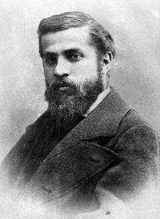
Antoni Plàcid Guillem Gaudí i Cornet (25 June 1852–10 June 1926) – in English sometimes referred to by the Spanish
Spanish language

Spanish or Castilian is a Romance languages that originated in northern Spain, and gradually spread in the Kingdom of Castile and evolved into the principal language of government and trade....
 translation of his name, Antonio Gaudí – was a Spanish
Spain

Spain or the Kingdom of Spain , is a country located in Southern Europe on the Iberian Peninsula.The Spanish constitution does not establish any official denomination of the country, even though Espa?a , Estado espa?ol and Naci?n espa?ola are used interchangeably....
 Catalan
Catalonia

Catalonia , is an Autonomous Community in northeast Spain.Catalonia covers an area of 32,114 km? and has an official population of 7,210,508. It borders France and Andorra to the north, Aragon to the west, the Valencian Community to the south, and the Mediterranean Sea to the east ....
  architect
Architecture

The term architecture can refer to a process, a profession or documentation.As a process, architecture is the activity of designing and construction buildings and other physical structures by a person or a computer, primarily to provide shelter....
 who belonged to the Modernist style
Modernisme

See also: ModernismModernisme also known, in English language, as Catalan modernism, was the Catalonia equivalent to a number of fin-de-si?cle art movements, such as Symbolism , Decadent movement and Art Nouveau / Jugendstil, from roughly 1888 to 1911....
 (Art Nouveau
Art Nouveau

Art Nouveau is an international Art movement and style of art, architecture and applied art?especially the decorative arts?that peaked in popularity at Fin de si?cle of the 20th century ....
) movement and was famous for his unique and highly individualistic designs.

Biography
Birthplace
Antoni Gaudí was born in the province of Tarragona in southern Catalonia
Catalonia

Catalonia , is an Autonomous Community in northeast Spain.Catalonia covers an area of 32,114 km? and has an official population of 7,210,508. It borders France and Andorra to the north, Aragon to the west, the Valencian Community to the south, and the Mediterranean Sea to the east ....
 on 25 June 1852.


Discussion
Ask a question about 'Antoni Gaudí'
Start a new discussion about 'Antoni Gaudí'
Answer questions from other users
Full Discussion Forum


Encyclopedia


Antoni Plàcid Guillem Gaudí i Cornet (25 June 1852–10 June 1926) – in English sometimes referred to by the Spanish
Spanish language

Spanish or Castilian is a Romance languages that originated in northern Spain, and gradually spread in the Kingdom of Castile and evolved into the principal language of government and trade....
 translation of his name, Antonio Gaudí – was a Spanish
Spain

Spain or the Kingdom of Spain , is a country located in Southern Europe on the Iberian Peninsula.The Spanish constitution does not establish any official denomination of the country, even though Espa?a , Estado espa?ol and Naci?n espa?ola are used interchangeably....
 Catalan
Catalonia

Catalonia , is an Autonomous Community in northeast Spain.Catalonia covers an area of 32,114 km? and has an official population of 7,210,508. It borders France and Andorra to the north, Aragon to the west, the Valencian Community to the south, and the Mediterranean Sea to the east ....
  architect
Architecture

The term architecture can refer to a process, a profession or documentation.As a process, architecture is the activity of designing and construction buildings and other physical structures by a person or a computer, primarily to provide shelter....
 who belonged to the Modernist style
Modernisme

See also: ModernismModernisme also known, in English language, as Catalan modernism, was the Catalonia equivalent to a number of fin-de-si?cle art movements, such as Symbolism , Decadent movement and Art Nouveau / Jugendstil, from roughly 1888 to 1911....
 (Art Nouveau
Art Nouveau

Art Nouveau is an international Art movement and style of art, architecture and applied art?especially the decorative arts?that peaked in popularity at Fin de si?cle of the 20th century ....
) movement and was famous for his unique and highly individualistic designs.

Biography


Birthplace


Antoni Gaudí was born in the province of Tarragona in southern Catalonia
Catalonia

Catalonia , is an Autonomous Community in northeast Spain.Catalonia covers an area of 32,114 km? and has an official population of 7,210,508. It borders France and Andorra to the north, Aragon to the west, the Valencian Community to the south, and the Mediterranean Sea to the east ....
 on 25 June 1852. While there is some dispute as to his birthplace – official documents state that he was born in the town of Reus
Reus

Reus is the capital of the Catalonia/Comarques of Baix Camp, in the province of Tarragona, in Catalonia, Spain.The area has always been an important producer of wines and spirits, and gained continental importance at the time of the Phylloxera plague....
, whereas others claim he was born in Riudoms
Riudoms

Riudoms is a town in the Comarques of Catalonia of Baix Camp, province of Tarragona province, in Catalonia, Spain, located about five kilometers from the regional capital Reus....
, a small village from Reus
Reus

Reus is the capital of the Catalonia/Comarques of Baix Camp, in the province of Tarragona, in Catalonia, Spain.The area has always been an important producer of wines and spirits, and gained continental importance at the time of the Phylloxera plague....
, – it is certain that he was baptized in Reus a day after his birth.. The artist's parents, Francesc Gaudí Serra and Antònia Cornet Bertran, both came from families of coppersmiths. It was this exposure to nature at an early age that influenced him to incorporate natural shapes into his later work.

Higher education

Gaudí, as an architecture student at the Escola Tècnica Superior d'Arquitectura in Barcelona
Barcelona

Barcelona is the capital and most populous city of the Autonomous communities of Spain of Catalonia and the second largest city in Spain, with a population of 1,615,908 in 2008, while the population of the Metropolitan Area was 3,161,081....
 from 1873 to 1877, was not particularly outstanding but did excellently in his "Trial drawings and projects". After five years of work, he was awarded the title of architect in 1878. As he signed the title, Elies Rogent declared, "Qui sap si hem donat el diploma a un boig o a un geni: el temps ens ho dirà" ("Who knows if we have given this diploma to a nut or to a genius. Time will tell.")

The newly named architect immediately began to plan and design and would remain affiliated with the school his entire life.

Early career

  • 1878–1879: Lampposts for the Plaça Reial
    Plaça Reial

    Pla?a Reial is a square in the Barri G?tic of Barcelona, Catalonia, Spain. It lies next to la Rambla and constitutes a well-known touristic attraction, especially at night....
     at Barcelona;
  • 1878: Showcase for glove manufacturer Comella. Via this work, used at the World's Fair in Paris
    Exposition Universelle (1878)

    The third Paris World's Fair, called an Exposition Universelle in French language, was held from May 1 though to November 10, 1878. It celebrated the recovery of France after the 1870 Franco-Prussian War....
    , Eusebi Güell
    Eusebi Güell

    Count Eusebi G?ell was a Catalan people patriarch who profited greatly from the industrial revolution in Catalonia in the late 19th Century.G?ell became a 'Mediciesque' patron to architect Antoni Gaud?....
     came to know the architect.
  • 1878–1882: Several designs for the Obrera Mataronense at Mataró
    Mataró

    Matar? is the capital and largest city of the Comarques of Catalonia of the Maresme, in the Barcelona , Catalonia Autonomous Community, Spain....
    . Only a very small part of these plans was built, but it shows Gaudí's first use of parabolic arches, here in a
    wooden structure.
  • 1883–1885: Casa Vicens
    Casa Vicens

    Casa Vicens is a family residence in Barcelona , designed by Antoni Gaud? and built for industrialist Manuel Vicens. It was Gaud?'s first important work....
    ;
  • 1883–1885: Villa "El Capricho" at Comillas
    Comillas

    Comillas is a small township and municipality in the northern reaches of Spain, in the autonomous community of Cantabria. The Marquisate of Comillas, a fiefdom of Spanish nobility, holds ceremonial office in the seat of power at a small castle which overlooks the town....
     (Santander
    Santander, Cantabria

    The port city of Santander is the capital of the autonomous community of Cantabria situated on the north coast of Spain between Asturias and the Basque Country ....
    );
  • 1884: Finca Güell: Entrance pavilion and stables for the palace at Pedralbes (first completed building for Eusebi Güell);
  • 1884–1891: Completion of the crypt of the Sagrada Família
    Sagrada Familia

    The Temple Expiatori de la Sagrada Fam?lia , often simply called the Sagrada Fam?lia, is a massive Roman Catholic church under construction in Barcelona, Catalonia, Spain....
     (the crypt had been started by the architect Francisco del Villar in 1882, who had to abandon the project in 1883);
  • 1885–1889: Palau Güell
    Palau Güell

    The Palau G?ell is a town mansion in Barcelona, Catalonia, designed by the Catalan architect Antoni Gaud? for the Catalonia industrial tycoon Eusebi G?ell....
    ;
  • 1887–1893: Episcopal palace at Astorga
    Astorga, Spain

    Astorga is a small town and episcopal see, located in the Le?n of Spain. It lies southwest of the provincial capital of Le?n, Spain, and is the head of the council of La Maragater?a....
    ;


Later years

Gaudí was a devout Catholic, to the point that in his later years, he abandoned secular work and devoted his life to Catholicism and his
Sagrada Família
Sagrada Familia

The Temple Expiatori de la Sagrada Fam?lia , often simply called the Sagrada Fam?lia, is a massive Roman Catholic church under construction in Barcelona, Catalonia, Spain....
. He designed it to have 18 towers, 12 for the 12 apostles, 4 for the 4 evangelists, one for Mary and one for Jesus. Soon after, his closest family and friends began to die. His works slowed to a halt, and his attitude changed. One of his closest family members – his niece Rosa Egea – died in 1912, only to be followed by a "faithful collaborator, Francesc Berenguer Mestres" two years later. After these tragedies, Barcelona fell on hard times, economically. The construction of La Sagrada Família slowed; the construction of La Colonia Güell
Church of Colònia Güell

The Church of Col?nia G?ell, Antoni Gaud?'s unfinished building work, was built as a place of worship for the people in a manufactured suburb in Santa Coloma de Cervell?, near Barcelona, Catalonia....
ceased altogether. Four years later, Eusebi Güell, his patron, died.

Perhaps it was because of this unfortunate sequence of events that Gaudí changed. He became reluctant to talk with reporters or have his picture taken and solely concentrated on his masterpiece,
La Sagrada Família.

On 7 June 1926 Gaudí was run over by a tram
Tram

A tram, tramcar, trolley, trolley car, or streetcar is a railroad car, of lighter weight and construction than a train, designed for the transport of passengers within, close to, or between villages, towns and/or cities, on tracks running primarily on streets....
. Because of his ragged attire and empty pockets, many cab drivers refused to pick him up for fear that he would be unable to pay the fare. He was eventually taken to a pauper's hospital in Barcelona. Nobody recognized the injured artist until his friends found him the next day. When they tried to move him into a nicer hospital, Gaudí refused, reportedly saying "I belong here among the poor." He died three days later on 10 June 1926 (aged 73), half of Barcelona mourning his death. He was buried in the midst of
La Sagrada Família.

Although Gaudí was constantly changing his mind and recreating his blueprints, the only existing copy of his last recorded blue prints were destroyed by the anarchists in 1938 during the Spanish Civil War
Spanish Civil War

The Spanish Civil War was a major conflict in Spain that started after an attempted coup d'?tat by a group of Spanish Army generals, supported by the conservative Spanish Confederation of the Autonomous Right , Carlist groups and the fascistic Falange, against the government of the Second Spanish Republic, then under the leadership of pr...
. This has made it very difficult for his workers to complete the cathedral in the same fashion as Gaudí most likely would have wished. It is for this that Gaudí is known to many as "God's Architect".
La Sagrada Família is now being completed but differences between his work and the new additions can be seen.

As of 2007, completion of the Sagrada Familía is planned for 2026. However, this may prove wildly optimistic if the worst fears of many eminent engineers and architects are realized. These have pointed out the structural dangers posed by a tunnel for a TGV-style high-speed rail, which would run within feet of the church’s foundations; one might note the precedent of one metro tunnel in Barcelona’s Carmel district that collapsed and destroyed an entire city block on the 1st of February 2005. Others of Gaudí's works threatened by the city center route chosen by Barcelona's mayor Jordi Hereu for the new rail line include Casa Batlló
Casa Batlló

Casa Batll? , is a building restored by Antoni Gaud? and Josep Maria Jujol, built in the year 1877 and remodelled in the years 1905–1907; located at 43, Passeig de Gr?cia, Barcelona , part of the Illa de la Disc?rdia in the Eixample district of Barcelona, Catalonia....
 and Casa Milà
Casa Milà

Casa Mil?, better known as La Pedrera , is a building designed by the Catalan architect Antoni Gaud? and built during the years 1906?1910, being considered officially completed in 1912....
.

Artistic style

Sagradafamilia Overview
It is widely acknowledged that Gaudi is a part of Barcelona. His first works were designed in the style of gothic architecture
Gothic architecture

Gothic architecture is a style of architecture which flourished during the high and late Middle Ages. It evolved from Romanesque architecture and was succeeded by Renaissance architecture....
 and traditional Catalan architectural modes, but he soon developed his own distinct sculptural style. French architect Eugene Viollet-le-Duc
Eugène Viollet-le-Duc

Eug?ne Emmanuel Viollet-le-Duc was a French architect and theorist, famous for his "restorations" of medieval buildings. Born in Paris, he was as central a figure in the Gothic Revival in France as he was in the public discourse on "honesty" in architecture, which eventually transcended all revival styles, to inform the emerging spirit of M...
, who promoted an evolved form of gothic architecture, proved a major influence on Gaudí. But the student surpassed the master architect and contrived highly original designs – irregular and fantastically intricate. Some of his greatest works, most notably
La Sagrada Família, have an almost hallucinatory power.

In Gaudí's hanging model a system of threads represents columns, arches, walls and vaults. Sachets with lead shot resemble the weight of small building parts.

Gaudí spent ten years working on studies for the design, and developing a new method of structural calculation based on a stereostatic model built with cords and small sacks of pellets. The outline of the church was traced on a wooden board (1:10 scale), which was then placed on the ceiling of a small house next to the work site. Cords were hung from the points where columns were to be placed. Small sacks filled with pellets, weighing one ten-thousandth part of the weight the arches would have to support, were hung from each catenaric arch formed by the cords. Photographs were taken of the resulting model from various angles, and the exact shape of the church's structure was obtained by turning them upside-down obtaining therefore the form, absolutely precise and exact, of the structure of the building, without having to have conducted an operation of calculation and without possibility of error. The forms of cords corresponded to the lines of tension of the prim structure and when inverting the photo, the lines of pressure of the compressed structure were obtained. An absolutely exact and simple method, giving an example of the intuitive and elementary methods that Gaudí applied in its architecture and that allowed him to obtain balanced forms very similar to which nature offers. One can also find the same expressive power of Gaudí's monumental works in his oddly graceful chairs and tables. Upon entering Gaudí's architecture, one encounters the totality of his artistic contribution of integrating materials, processes and poetics. His approach to furniture design was a sinuous spatial continuum that exceeds structural expression and becomes one with the architectural idea.

Interests

Gaudí, throughout his life, studied nature's angles and curves and incorporated them into his designs. Instead of relying on geometric shapes, he mimicked the way men stand upright. The hyperboloid
Hyperboloid

In mathematics, a hyperboloid is a quadric, a type of surface in three dimensions, described by the equation  hyperboloid of one sheet,...
s and paraboloid
Paraboloid

In mathematics, a paraboloid is a quadric surface of special kind. There are two kinds of paraboloids: elliptic and hyperbolic. The elliptic paraboloid is shaped like an oval cup and can have a maximum or minimum point....
s he borrowed from nature were easily reinforced by steel rods and allowed his designs to resemble elements from the environment.

Because of his rheumatism, the artist observed a strict vegetarian diet, used homeopathic
Homeopathy

File:LedumPalustre15CH.jpgHomeopathy is a form of alternative medicine first expounded by Samuel Hahnemann in 1796, that treats a disease with heavily diluted preparations created from substances that would ordinarily cause effects similar to the disease's symptoms....
 drug therapy, underwent water therapy
Water therapy

Water therapy is the use of water to improve health.According to alternative medicine advocates, one form of water therapy is the consuming of a gutful of water upon waking in order to "cleanse the bowel"....
, and hiked regularly. Long walks, besides suppressing his rheumatism, further allowed him to experience nature.

Gaudí loved for his work to be created by nature as he used concrete leaves and vine windows to create his ideas for him, so his work is not just because of him but because of nature as well.

Popularity

Gaudí's originality was at first ridiculed by his peers. Indeed, he was first only supported by the rich industrialist Eusebi Güell
Eusebi Güell

Count Eusebi G?ell was a Catalan people patriarch who profited greatly from the industrial revolution in Catalonia in the late 19th Century.G?ell became a 'Mediciesque' patron to architect Antoni Gaud?....
. His fellow citizens referred to the
Casa Milà as La Pedrera ("the quarry"), and George Orwell
George Orwell

Eric Arthur Blair , better known by his pen name George Orwell, was an England author. His work is marked by a profound consciousness of social injustice, an intense dislike of totalitarianism, and a passion for clarity in language....
, who stayed in Barcelona during the Spanish Civil War
Spanish Civil War

The Spanish Civil War was a major conflict in Spain that started after an attempted coup d'?tat by a group of Spanish Army generals, supported by the conservative Spanish Confederation of the Autonomous Right , Carlist groups and the fascistic Falange, against the government of the Second Spanish Republic, then under the leadership of pr...
, admittedly loathed his work. As time passed, though, his work became more famous. He stands as one of history's most original architects.

Social and political influences

The opportunities afforded by Catalonia's socioeconomic and political influences were endless. Catalans such as Antoni Gaudí often showcased the region's diverse art techniques in their works. By mimicking nature, such artists symbolically pushed back the province's ever-increasing industrial society. Gaudí, among others, promoted the Catalan movement
Catalan nationalism

Catalan nationalism, or Catalanism , is a Politics movement advocating for either further political autonomy or full independence of Catalonia....
 for regaining sovereignty from Spain by incorporating elements of Catalan culture in his designs. Gaudí was involved in politics since he supported the Catalanist political party Regionalist League
Regionalist League

Regionalist League was a political party of Catalonia, Spain, that appeared thanks to the triumph of the candidacy of the "four presidents" in 1901....
. For example, in 1924 Spanish authorities (ruled by the dictator Primo de Rivera
Miguel Primo de Rivera

Miguel Primo de Rivera y Orbaneja, 2. Marqu?s de Estella was a Spanish dictator, aristocrat, and a military official who was appointed Prime Minister by the King and who for seven years was a dictator, ending the turno system of alternating parties....
) closed Barcelona
Barcelona

Barcelona is the capital and most populous city of the Autonomous communities of Spain of Catalonia and the second largest city in Spain, with a population of 1,615,908 in 2008, while the population of the Metropolitan Area was 3,161,081....
's churches in order to prevent a nationalist celebration (11 September, National Day of Catalonia
National Day of Catalonia

On September 11, Catalonia commemorates the 1714 Siege of Barcelona defeat during the War of the Spanish Succession. As a punishment for their support to the claim of Habsburg Archduke Charles to the throne of Spain, institutions and rights of the territories of the Crown of Aragon were abolished by the victorious absolutism House of Bourbon in...
), Gaudí attended to Saints Justus and Pastor
Justus and Pastor

Saints Justus and Pastor are venerated as Christian martyrs. According to their Acts, they were two schoolboys who were killed for their faith during the persecution of Christians by the Roman Emperor Diocletian....
's church and was arrested by the Spanish police for answering in Catalan.

Surprisingly, Gaudi's influence appears heavily in the Pokémon
Pokémon (anime)

Pok?mon is an ongoing Japanese anime series, which has since been adapted for the North American and European television market. It is somewhat based on the Pok?mon and a part of the Pok?mon franchise....
 film The Rise of Darkrai. Sagrada Familia appears in the form of the "Space-Time Tower," mimicking the cathedral's spires. Its architect is named Godey, and Godey's great-grandson is named Tonio, their names are clearly based off of Gaudí's name.

Major works

Parcguell
*
Casa Vicens
Casa Vicens

Casa Vicens is a family residence in Barcelona , designed by Antoni Gaud? and built for industrialist Manuel Vicens. It was Gaud?'s first important work....
(1884–1885)
  • Palau Güell
    Palau Güell

    The Palau G?ell is a town mansion in Barcelona, Catalonia, designed by the Catalan architect Antoni Gaud? for the Catalonia industrial tycoon Eusebi G?ell....
    (1885–1889)
  • College of the Teresianas (1888–1890)
  • Crypt of the Church of Colònia Güell
    Church of Colònia Güell

    The Church of Col?nia G?ell, Antoni Gaud?'s unfinished building work, was built as a place of worship for the people in a manufactured suburb in Santa Coloma de Cervell?, near Barcelona, Catalonia....
    (1898–1916)
  • Casa Calvet
    Casa Calvet

    Casa Calvet is a building, designed by Antoni Gaud? for a textile manufacturer which served as both a commercial property and a residence. It is located at 1900 Carrer de Casp 48, Eixample district of Barcelona....
    (1899–1904)
  • Casa Batlló
    Casa Batlló

    Casa Batll? , is a building restored by Antoni Gaud? and Josep Maria Jujol, built in the year 1877 and remodelled in the years 1905–1907; located at 43, Passeig de Gr?cia, Barcelona , part of the Illa de la Disc?rdia in the Eixample district of Barcelona, Catalonia....
    (1905–1907)
  • Casa Milà
    Casa Milà

    Casa Mil?, better known as La Pedrera , is a building designed by the Catalan architect Antoni Gaud? and built during the years 1906?1910, being considered officially completed in 1912....
    (La Pedrera) (1905–1907)
  • Park Güell (1900–1914)
  • Sagrada Família
    Sagrada Familia

    The Temple Expiatori de la Sagrada Fam?lia , often simply called the Sagrada Fam?lia, is a massive Roman Catholic church under construction in Barcelona, Catalonia, Spain....
     Nativity façade and Crypt of the Sagrada Família church (1884–1926, although work is still underway on it at the present)


See also the List of Gaudí Buildings
List of Gaudi Buildings

Antoni Gaud? ? was an architecture from Catalonia, Spain, who belonged to the Modernisme movement and was famous for his unique style and highly individualistic designs....
.

External links

  • (multilingual; requires Adobe Flash
    Adobe Flash

    Adobe Flash is a multimedia Platform created by Macromedia and currently developed and distributed by Adobe Systems. Since its introduction in 1996, Flash has become a popular method for adding animation and interactivity to web pages; Flash is commonly used to create animation, advertisements, and various web page components, to integrate...
    )
  • (multilingual)
  • (multilingual; requires Adobe Flash
    Adobe Flash

    Adobe Flash is a multimedia Platform created by Macromedia and currently developed and distributed by Adobe Systems. Since its introduction in 1996, Flash has become a popular method for adding animation and interactivity to web pages; Flash is commonly used to create animation, advertisements, and various web page components, to integrate...
    )
  • (in English, French, and Spanish)
  • (multilingual)