

Antimicrobial peptide resistance and lipid A acylation protein family

Encyclopedia
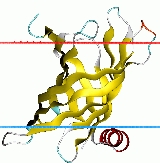
Antimicrobial peptide resistance and lipid A acylation protein PagP
is a family
of several bacterial antimicrobial peptide resistance and lipid A
acylation
(PagP) proteins. The bacterial outer membrane enzyme PagP transfers a palmitate chain from a phospholipid to lipid A. In a number of pathogenic Gram-negative bacteria, PagP confers resistance to certain cationic antimicrobial peptides produced during the host innate immune response.
is a family
Protein family
A protein family is a group of evolutionarily-related proteins, and is often nearly synonymous with gene family. The term protein family should not be confused with family as it is used in taxonomy....
of several bacterial antimicrobial peptide resistance and lipid A
Lipid A
Lipid A is a lipid component of an endotoxin held responsible for toxicity of Gram-negative bacteria. It is the innermost of the three regions of the lipopolysaccharide molecule, and its hydrophobic nature allows it to anchor the LPS to the outer membrane...
acylation
Acylation
In chemistry, acylation is the process of adding an acyl group to a compound. The compound providing the acyl group is called the acylating agent....
(PagP) proteins. The bacterial outer membrane enzyme PagP transfers a palmitate chain from a phospholipid to lipid A. In a number of pathogenic Gram-negative bacteria, PagP confers resistance to certain cationic antimicrobial peptides produced during the host innate immune response.