
All Topics  
Ante Pavelic

 
Ante Pavelic

   Email Print
   Bookmark   Link


Ante Pavelic


For the vice president of the National assembly of the State of Slovenes, Croats and Serbs, see Ante Pavelic (1869)
Ante Pavelic (1869)

Dr. Ante Pavelic, Ante Pavelic was a Croatian dentist and politician. Since 1906 he was a member of Croatian parliament . In 1918 he became the vice president of the National assembly of the State of Slovenes, Croats and Serbs....


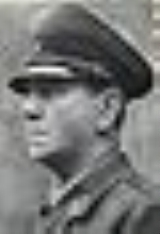
Ante Pavelic (July 14, 1889 – December 28, 1959) was the Head (Poglavnik) and founding member of the Croatia
Croatia

Croatia , officially the Republic of Croatia , is a Central European country at the crossroads of Pannonian Plain, Balkans, and the Mediterranean Sea....
n national socialist
Nazism

Nazism, officially National Socialism , refers to the ideology and practices of the National Socialist German Workers? Party under Adolf Hitler, and the policies adopted by the dictatorial government of Nazi Germany from 1933 to 1945....
/fascist and terrorist Ustaše
Ustaše

The Usta?a - Croatian Revolutionary Movement , members known collectively as Usta?e, but sometimes anglicised as Ustashas or Ustashi) was a Croatian and Nazi-like movement....
 organization. The movement name is Ustaša - Croatian Revolutionary Organization (Croatian: Ustaša - Hrvatska revolucionarna organizacija) and, later, the leader of the Independent State of Croatia
Independent State of Croatia

The Independent State of Croatia was a puppet state of Nazi Germany. It was established on April 10, 1941, after the Kingdom of Yugoslavia was attacked by the Axis forces....
, a fascist puppet state
Puppet state

The term puppet state describes a nominal sovereignty controlled effectively by a foreign power.. The term refers to a government controlled by the government of another country like a puppeteer controls the strings of a marionette....
 of the Axis powers
Axis Powers

The Axis powers were those countries that were opposed to the Allies of World War II during World War II. The three major Axis powers - Nazi Germany, Kingdom of Italy , and Empire of Japan - were part of a military alliance on the signing of the Tripartite Pact in September 1940, which officially founded the Axis powers....
 during World War II
World War II

World War II, or the Second World War , was a global military conflict which involved a Participants in World War II, including all of the great powers, organised into two opposing military alliances: the Allies of World War II and the Axis powers....
 (primarily Nazi Germany
Nazi Germany

Nazi Germany and the Third Reich are the colloquial English names for Germany under the regime of Adolf Hitler and the Nazi Party , which established a Totalitarianism dictatorship that existed from 1933 to 1945....
).


Discussion
Ask a question about 'Ante Pavelic'
Start a new discussion about 'Ante Pavelic'
Answer questions from other users
Full Discussion Forum


Encyclopedia


For the vice president of the National assembly of the State of Slovenes, Croats and Serbs, see Ante Pavelic (1869)
Ante Pavelic (1869)

Dr. Ante Pavelic, Ante Pavelic was a Croatian dentist and politician. Since 1906 he was a member of Croatian parliament . In 1918 he became the vice president of the National assembly of the State of Slovenes, Croats and Serbs....


Ante Pavelic (July 14, 1889 – December 28, 1959) was the Head (Poglavnik) and founding member of the Croatia
Croatia

Croatia , officially the Republic of Croatia , is a Central European country at the crossroads of Pannonian Plain, Balkans, and the Mediterranean Sea....
n national socialist
Nazism

Nazism, officially National Socialism , refers to the ideology and practices of the National Socialist German Workers? Party under Adolf Hitler, and the policies adopted by the dictatorial government of Nazi Germany from 1933 to 1945....
/fascist and terrorist Ustaše
Ustaše

The Usta?a - Croatian Revolutionary Movement , members known collectively as Usta?e, but sometimes anglicised as Ustashas or Ustashi) was a Croatian and Nazi-like movement....
 organization. The movement name is Ustaša - Croatian Revolutionary Organization (Croatian: Ustaša - Hrvatska revolucionarna organizacija) and, later, the leader of the Independent State of Croatia
Independent State of Croatia

The Independent State of Croatia was a puppet state of Nazi Germany. It was established on April 10, 1941, after the Kingdom of Yugoslavia was attacked by the Axis forces....
, a fascist puppet state
Puppet state

The term puppet state describes a nominal sovereignty controlled effectively by a foreign power.. The term refers to a government controlled by the government of another country like a puppeteer controls the strings of a marionette....
 of the Axis powers
Axis Powers

The Axis powers were those countries that were opposed to the Allies of World War II during World War II. The three major Axis powers - Nazi Germany, Kingdom of Italy , and Empire of Japan - were part of a military alliance on the signing of the Tripartite Pact in September 1940, which officially founded the Axis powers....
 during World War II
World War II

World War II, or the Second World War , was a global military conflict which involved a Participants in World War II, including all of the great powers, organised into two opposing military alliances: the Allies of World War II and the Axis powers....
 (primarily Nazi Germany
Nazi Germany

Nazi Germany and the Third Reich are the colloquial English names for Germany under the regime of Adolf Hitler and the Nazi Party , which established a Totalitarianism dictatorship that existed from 1933 to 1945....
). He died in Madrid
Madrid

Madrid is the Capital and largest city of Spain. It is the Largest cities of the European Union by population within city limits in the European Union after Greater London and Berlin, and its Madrid metropolitan area is the Largest urban areas of the European Union in the European Union after Paris aire urbaine, Greater London Urban Area, a...
 in December 28 1959.

Early life

Ante Pavelic was a Bosnian Croat born north of Konjic
Konjic

Konjic is a town and municipality in Bosnia and Herzegovina. It is located in northern Hercegovina, around 50 kilometres south-west of Sarajevo....
, Bradina, a small village roughly 15 kilometres southwest of Hadžici
Hadžici

Had?ici is a town and a municipality located south west of Sarajevo in Bosnia and Herzegovina. According to government statistics from 2002, Had?ici Municipality has a population of 20,055 residents....
 in Bosnia and Herzegovina
Bosnia and Herzegovina

Bosnia and Herzegovina is a country on the Balkans peninsula of South Eastern Europe with an area of 51,129 square kilometres . Bordered by Croatia to the north, west and south, Serbia to the east, and Montenegro to the south, Bosnia and Herzegovina is Landlocked#Nearly landlocked, except for 26 kilometres of the Adriatic Sea coas...
, then part of the empire of Austria-Hungary
Austria-Hungary

Austria-Hungary, also known as the Austro-Hungarian Empire, the Dual Monarchy or the Kaiserlich und k?niglich Monarchy was a state in Central Europe ruled by the House of Habsburg, constitutionally a personal union between the crowns of the Austrian Empire and the Kingdom of Hungary....
. His parents had moved to Bosnia from southern Lika, in the small town of Krivi Put, on the central part of the Velebit plain. As an adult, Ante Pavelic decided to move to Zagreb
Zagreb

Zagreb is the Capital and the largest city of Croatia. Zagreb is the Culture of Croatia, Croatian Academy of Sciences and Arts, Cinema of Croatia, Economy of Croatia and Government of Croatia center of the Croatia....
 to study law. An extremist even in his youth, Pavelic became a member of the organization known as the "Frankovci", whose founder, Dr. Josip Frank
Josip Frank

Josip Frank was a Croats lawyer and politician of jewish descent....
, was the father-in-law of Slavko Kvaternik
Slavko Kvaternik

Slavko Kvaternik was the deputy leader and founding member of the Croatian Usta?e movement in the 1930s and later one of the leaders of the Independent State of Croatia....
, an Austro-Hungarian army officer. Kvaternik had been a long-standing advocate of Croat separatism.

In 1919, Pavelic was the interim secretary of the Pure Party of Rights. In 1921 he was arrested, along with several other members of the party, but was released. Pavelic defended his fellow party members at their trial, but lost.

Pavelic's quarrelsome nature was increasingly apparent in the years immediately after World War I
World War I

World War I, or the First World War , was a global military conflict which involved the Great powers, organized into two opposing military alliances: the Allies of World War I and the Central Powers....
, when he became involved in a succession of disputes with the Centralist Party and the Croat Peasant Party of Stjepan Radic
Stjepan Radic

Stjepan Radic was a Croats politician and the founder of the Croatian Peasant Party in 1905. Radic is credited with galvanizing the peasantry of Croatia into a viable political force....
. Pavelic was the sole representative of his Party in the Skupština (Yugoslav Parliament), but rarely attended sessions and, when he did, he occasionally indulged in a long harangue against some measure of which he did not approve.

1920s and 1930s

In the early 1920s, Pavelic established contacts with Croat émigrés in Vienna
Vienna

Vienna is the Capital of Republic of Austria and also one of the nine states of Austria. Vienna is Austria's primary city, with a population of about 1.7 million...
 and Budapest
Budapest

Budapest is the Capitals of Hungary of Hungary. As the largest city of Hungary, it serves as the country's principal political, cultural, commerce, Industry, and transportation center and is considered an important hub in Central Europe....
. Over the next few years he entered into close accord with the Internal Macedonian Revolutionary Organization
Internal Macedonian Revolutionary Organization

The Internal Macedonian Revolutionary Organization , commonly known in English as IMRO, was the name of a revolutionary political organization in the Macedonia and Thrace regions of the Ottoman Empire, as well as in Bulgaria, and after 1913 in the Macedonian regions of Greece and Serbia ....
 and, in 1927, defended Macedonians charged in Skopje with terrorist offences. Through his Viennese contacts, Pavelic established clandestine links with the Italian government, but he was less successful in attempting to forge similar links in Hungary, where Budapest authorities were wary of jeopardising relationships with other countries.

In 1927 Pavelic was elected
Kingdom of Serbs, Croats and Slovenes parliamentary election, 1927

Summary of the 11 September 1927 National Assembly of the Kingdom of Serbs, Croats and Slovenes election|-!colspan=2 style="background-color:#E9E9E9" align=left|Parties and coalitions...
 to the national assembly, having previously served on the municipal council of Zagreb. Pavelic was one of two elected on the Croatian Bloc's list, the other being Ante Trumbic
Ante Trumbic

Ante Trumbic was an important Croats politician in the early 20th century. He was one of the key politicians in the creation of a Yugoslav state....
. Pavelic held the position of party secretary in the Party of Rights until 1929, the beginning of the royal government in the Kingdom of Yugoslavia
Kingdom of Yugoslavia

The Kingdom of Yugoslavia was a monarchy stretching from the Western Balkans to Central Europe which existed during the often-tumultuous interwar era of 1918?1941....
. Shortly after the proclamation of the establishment of the government Alexander I of Yugoslavia
Alexander I of Yugoslavia

Alexander I also called Alexander I Karadordevic or Alexander the Unifier...
 in January 1929, Pavelic fled abroad and was subsequently sentenced to death in absentia in Belgrade
Belgrade

Belgrade is the capital and largest city of Serbia. The city lies on international waterway, at the confluence of the Sava River and Danube rivers, where the Pannonian Plain meets the Balkan Peninsula....
 for his part in anti-Serb demonstrations organized in Sofia by Bulgarian and Macedonian terrorists. Pavelic then co-founded the Ustaše
Ustaše

The Usta?a - Croatian Revolutionary Movement , members known collectively as Usta?e, but sometimes anglicised as Ustashas or Ustashi) was a Croatian and Nazi-like movement....
 extremist organization and went underground.

Pavelic and the Ustaše received support from Italian Fascist dictator Benito Mussolini
Benito Mussolini

Benito Amilcare Andrea Mussolini, Order of the Bath Sovereign Military Order of Malta Order of the Tower and Sword was an Italy politician who led the National Fascist Party and is credited with being one of the key figures in the creation of Fascism....
, who saw them as a means to help destroy Yugoslavia and expand Italian influence in the Adriatic. Mussolini allowed Pavelic to live in exile in Rome and train his paramilitaries for war with Yugoslavia. Pavelic would later cede parts of Dalmatia and some Adriatic islands to Italy in exchange for being allowed to take all of modern-day Bosnia and Herzegovina
Bosnia and Herzegovina

Bosnia and Herzegovina is a country on the Balkans peninsula of South Eastern Europe with an area of 51,129 square kilometres . Bordered by Croatia to the north, west and south, Serbia to the east, and Montenegro to the south, Bosnia and Herzegovina is Landlocked#Nearly landlocked, except for 26 kilometres of the Adriatic Sea coas...
 into the NDH.

Ustaše
Ustaše

The Usta?a - Croatian Revolutionary Movement , members known collectively as Usta?e, but sometimes anglicised as Ustashas or Ustashi) was a Croatian and Nazi-like movement....
 training camps were set up in Italy
Italy

Italy , officially the Italian Republic , is a country located on the Italian Peninsula in Southern Europe and on the two largest islands in the Mediterranean Sea, Sicily and Sardinia....
 and Hungary
Hungary

Hungary , officially in English the Republic of Hungary , is a landlocked country in the Carpathian Basin of Central Europe, bordered by Austria, Slovakia, Ukraine, Romania, Serbia, Croatia, and Slovenia....
, chiefly at Brescia
Brescia

Brescia is a city in the region of Lombardy in northern Italy. It is situated at the foot of the Alps, between the Mella and the Naviglio, with a population of around 190,000....
 and Borgotaro
Borgo Val di Taro

Borgo Val di Taro is a town and comune in Emilia-Romagna, Italy, in the Province of Parma, 75 km from the city of Parma.Borgo Val di Taro is an important centre for the produce and cattle of Emilia....
 in Italy
Italy

Italy , officially the Italian Republic , is a country located on the Italian Peninsula in Southern Europe and on the two largest islands in the Mediterranean Sea, Sicily and Sardinia....
, and Jankapuszta in Hungary
Hungary

Hungary , officially in English the Republic of Hungary , is a landlocked country in the Carpathian Basin of Central Europe, bordered by Austria, Slovakia, Ukraine, Romania, Serbia, Croatia, and Slovenia....
. In 1933, the Ustaše attempted an armed insurrection in Yugoslavia.. Armed by the Italians, the Ustaše attempted to invade the Yugoslavia by crossing the Adriatic sea
Adriatic Sea

The Adriatic Sea is a body of water separating the Italian Peninsula from the Balkan peninsula, and the system of the Apennine Mountains from that of the Dinaric Alps and adjacent ranges....
 in motorboats. This was unsuccessful but its lack of success probably was instrumental in the decision to assassinate King Alexander I of Yugoslavia
Alexander I of Yugoslavia

Alexander I also called Alexander I Karadordevic or Alexander the Unifier...
. Two attempts were made, the last one successful, and Alexander was slain at Marseilles 9 October, 1934 along with the French Foreign Minister, Louis Barthou
Louis Barthou

Jean Louis Barthou was a France politician of the French Third Republic....
.

The lack of armed protection afforded to the Yugoslav monarch, and the general laxity of security precautions when it was well-known that one attempt had already been made on Alexander's life, testify to Pavelic's organizational abilities; he had apparently been able to bribe a high official in the Sűreté
Sűreté

S?ret? is a term used in Francophone in the organizational title of a civil police force, especially the detective branch thereof....
 General. The Prefect of Police of Marseilles, Jouhannaud, was subsequently removed from office. For the second time, Pavelic was in abstentia sentenced to death, this time by a French court.

The Croatian State under the Ustaše Regime

Hitler was not thrilled about putting fascists in charge of his puppet governments, so he did so only when there was no other option. This was the case with Croatia and Pavelic’s Ustashi government. Before he was ever leader of the Ustashi party, he was a young lawyer and leader in the Party of Rights (a Croatian nationalist party). It wasn’t until 1929 when he formed the Ustasha-Hrvatska Revolucionarna Organizacija (Insurgency-Croatian Revolutionary Organization, UHRO). In 1932 he wrote the charter of principles that outlined the plan for achieving an independent Croatia based on their ethnic identity and Catholic religion. This task would be the responsibility of an ustanak, or rather an armed insurgency, composed of the Croatian people, under the direction of the Ustashi. Ethnic cleansing and land gain were at the center of the party's agenda. Pavelic believed that the new Croatian state should include most of Bosnia and all of Dalmatia
Dalmatia

Dalmatia is a region on the eastern coast of the Adriatic Sea, situated mostly in modern Croatia and spreading between the island of Rab in the northwest and the Bay of Kotor in the southeast....
. Pavelic and his party argued that Croatia had already defeated the nomads of the east and the Turkish Muslims. Their new objective was to rid the country of Eastern Slavs and communism. Around twenty-four concentration camps were set up in Croatia, the most deadly of them being at Jasenovac
Jasenovac

Jasenovac is a municipality in Croatian Slavonia, in the southern part of the Sisak-Moslavina county at the confluence of the river Una River into Sava River....
 where Allied estimates prove that 750,000 Serbs, Jews and Gypsieswhere murdered. Pavelic did not consider Croatians to be Eastern or Slavic, but rather of a more Western and Gothic background. The party would use this idea later during the war to become closer to Nazi Germany. However, unlike the Nazis, who preached no escape or mercy for the Jews of Germany and other Central European powers, Pavelic originated a plan to spare Serbs and Bosnians who embraced Catholicism and were willing to convert he was quoted as saying "we shall convert one third, we shall kill one third and one third will leave willingly or unwillingly". While Pavelic aligned himself and the party with more of an Italian fascist ideology, the Ustashi movement in Germany began to place more emphasis on race. This was most likely due to their close proximity to the National Socialists of Germany. On more than one occasion Hitler was reluctant to put Pavelic in power. The leadership role of Croatia after the German invasion was first offered to Vladko Macek
Vladko Macek

Vladko Macek was a Croatian politician from the first half of the 20th century. He led the Croatian Peasant Party after Stjepan Radic and through World War II....
, who was leader of the Peasant Party at the time. It was again offered to Macek in 1941 when Hitler considered replacing Pavelic. However, Macek refused both offers, leaving Pavelic in power. At the end of the war when Pavelic fled the country, more than 50,000 Croatian soldiers were murdered by the incoming communists.

World War II

Hitler29
Pavelic remained in Italy until the beginning of World War II
World War II

World War II, or the Second World War , was a global military conflict which involved a Participants in World War II, including all of the great powers, organised into two opposing military alliances: the Allies of World War II and the Axis powers....
. In 1941, after the Axis powers had agreed to formation of the Independent State of Croatia
Independent State of Croatia

The Independent State of Croatia was a puppet state of Nazi Germany. It was established on April 10, 1941, after the Kingdom of Yugoslavia was attacked by the Axis forces....
, Pavelic returned to Zagreb
Zagreb

Zagreb is the Capital and the largest city of Croatia. Zagreb is the Culture of Croatia, Croatian Academy of Sciences and Arts, Cinema of Croatia, Economy of Croatia and Government of Croatia center of the Croatia....
 and became leader of the State throughout its existence. As the leader of the State, he directly ordered, organized and conducted a campaign of terror against Serbs, Jews, Gypsies, and anti-fascist Croats. Pavelic's Ustaše regime was the most murderous, in relation to its size, in Axis-occupied Europe. Numerous testimonies from the Nuremberg Trials, and in German, Italian and Austrian war archives, bear witness to bestialities perpetrated against the civilian population.
Serbian, Jewish, and Gipsy men, women, and even children were literally hacked to death. Whole villages were razed to the ground and the people driven into barns to which the Ustaše set fire. General Edmund von Glaise-Horstenau
Edmund Glaise-Horstenau

Edmund Glaise-Horstenau was an Austrian officer in the Bundesheer and general in the Germany Wehrmacht during the World War II....
 reported to the OKW on June 28, 1941:

On July 10, General Glaise-Horstenau added:

According to these testimonies, German officers themselves were dismayed by the atrocities committed by the Ustaše, to the extent that they occasionally intervened to stop the bloodshed (Jasenovac
Jasenovac

Jasenovac is a municipality in Croatian Slavonia, in the southern part of the Sisak-Moslavina county at the confluence of the river Una River into Sava River....
, 1941), arrested one of the most notorious Ustaše (Friar Miroslav Filipovic/Majstorovic
Miroslav Filipovic

Miroslav Filipovic was a Hercegovina-born Croatian nationalist and fanatical Catholic who was expelled from his religious order, convicted of war crimes by both a German military court and a Yugoslav civil court and hanged in Belgrade....
, Banja Luka, 1942) and disarmed an Ustaše detachment (Eastern Bosnia, 1942).
The regime declared in advance its intention to eliminate the Serbian population in NDH by killing one part, expelling a second part and converting the rest. . A Gestapo report to Himmler (17 February 1942) on increased Partisan activities stated that "Increased activity of the bands is chiefly due to atrocities carried out by Ustasha units in Croatia against the Orthodox population. The Ustashas committed their deeds in a bestial manner not only against males of conscript age, but especially against helpless old people, women and children. The number of the Orthodox that the Croats have massacred and sadistically tortured to death is over seven hundred thousand."

Pavelic's regime was not officially recognized by the Vatican
Holy See

The Holy See is the episcopal jurisdiction of the Bishop of Rome, commonly known as the Pope, and is the preeminent episcopal see of the Roman Catholic Church, forming the central government of the Church....
, but the Church never condemned the genocide and forced conversions to Catholicism perpetrated by the Ustaše. Soon after coming to power in April 1941, Pavelic was given a private audience in Rome by Pope Pius XII
Pope Pius XII

Pope Pius XII , born Eugenio Maria Giuseppe Giovanni Pacelli , reigned as the 260th pope, head of the Roman Catholic Church and monarch of Vatican City, from March 2, 1939 until his death in 1958....
, an act for which the Pope was widely criticized.
Official policy against the Serbs was extermination, expulsion, and conversion to the Roman Catholicism. As to the Jews and Gypsies - the only policy was total annihilation of both. According to an official Yugoslav report, only 1,500 out of 30,000 Croatian Jews remained alive. Approximately 26000 Gypsies were murdered by the Ustashi in the Independent State of Croatia. There was approximately 40000 Gypsies living within the borders of the Independent State of Croatia. A Yugoslav court ruled Pavelic responsible for approximately 700,000 deaths, though some historians and demographers believe that figure to be too high.

Post-war

In May 1945 Pavelic fled from advancing partisan forces, via Bleiburg
Bleiburg

Bleiburg is a small town in the Austrian state of Carinthia , south-east of Klagenfurt, in the district of V?lkermarkt political district, near the border with Slovenia....
, to Austria
Austria

Austria , officially the Republic of Austria , is a landlocked country in Central Europe. It borders both Germany and the Czech Republic to the north, Slovakia and Hungary to the east, Slovenia and Italy to the south, and Switzerland and Liechtenstein to the west....
. After a few months, Pavelic moved to Rome
Rome

Rome is the capital city of Italy and Lazio, and is Italy's largest and most populous city, with 2,724,347 residents in an urban area of some ....
, where he was hidden by members of the Roman Catholic Church
Roman Catholic Church

The Roman Catholic Church, officially known as the Catholic Church is the world's largest Christianity Ecclesia , representing over half of all Christians and one-sixth of the world population....
 (according to de-classified US Intelligence documents.)

Six months after arriving in Rome, Pavelic fled to South America
South America

South America is the southern continent of the Americas, situated entirely in the Western Hemisphere and mostly in the Southern Hemisphere, with a relatively small portion in the Northern Hemisphere....
. Upon arriving in Argentina
History of Argentina

This article is about the history of Argentina. See also history of South America, history of Latin America, history of the Americas, and the history of present-day nations and states....
 via the ratlines
Ratlines (history)

Ratlines were systems of escape routes for Nazis and other fascists fleeing Europe at the end of World War II. These escape routes mainly led toward safe havens in South America, particularly Argentina, Paraguay, Brazil and Chile....
, he became a security advisor to Juan Perón
Juan Perón

Juan Domingo Per?n was an Argentina general and politician, elected three times as President of Argentina, after serving in several government positions, including the Secretary of Labor and the Vice Presidency....
 . Perón issued 34,000 visas to Croatians, including those who had been Nazi collaborators and had fled from the Allied advance .

On April 10, 1957, the 16th anniversary of the founding of the Independent State of Croatia
Independent State of Croatia

The Independent State of Croatia was a puppet state of Nazi Germany. It was established on April 10, 1941, after the Kingdom of Yugoslavia was attacked by the Axis forces....
, the 67 year old Pavelic was shot and seriously wounded by an unknown assailant in Buenos Aires. The shooting was generally attributed to Yugoslav intelligence
UDBA

UDBA or Uprava dr?avne bezbednosti/sigurnosti/varnosti was the secret police organization of the Socialist Federal Republic of Yugoslavia....
, although the anniversary also suggested that it may have been an act of revenge of a Serbian Chetnik
Chetniks

The Chetnik movement or the Chetniks were a Serbs-nationalist/Monarchism paramilitary organization operating in the Balkans before and during World Wars....
 activist Blagoje Jovovic. Despite having a bullet lodged in his spine, Pavelic elected not to be hospitalized.

Two weeks after the shooting, the Argentine authorities agreed to grant the Yugoslav government's request to extradite Pavelic, but he went into hiding before he could be extradited. Although there were reports that Pavelic had fled to Paraguay
Paraguay

Paraguay, officially the Republic of Paraguay , is one of the only two landlocked countries in South America . It lies on both banks of the Paraguay River and is bordered by Argentina to the south and southwest, Brazil to the east and northeast, and Bolivia to the northwest....
 to work for the Stroessner regime, his whereabouts remained unknown until late 1959, when it was learned that he had been granted asylum in Spain
Spain

Spain or the Kingdom of Spain , is a country located in Southern Europe on the Iberian Peninsula.The Spanish constitution does not establish any official denomination of the country, even though Espa?a , Estado espa?ol and Naci?n espa?ola are used interchangeably....
. Pavelic died on December 28, 1959, at the German hospital in Madrid
Madrid

Madrid is the Capital and largest city of Spain. It is the Largest cities of the European Union by population within city limits in the European Union after Greater London and Berlin, and its Madrid metropolitan area is the Largest urban areas of the European Union in the European Union after Paris aire urbaine, Greater London Urban Area, a...
, reportedly from complications due to the bullet in his spine. . Pavelic was buried in the San Isidro cemetery in Madrid.

See also

  • World War II
    World War II

    World War II, or the Second World War , was a global military conflict which involved a Participants in World War II, including all of the great powers, organised into two opposing military alliances: the Allies of World War II and the Axis powers....
  • Ustaše
    Ustaše

    The Usta?a - Croatian Revolutionary Movement , members known collectively as Usta?e, but sometimes anglicised as Ustashas or Ustashi) was a Croatian and Nazi-like movement....
  • Vjekoslav Luburic
  • Ivica Matkovic
    Ivica Matkovic

    Ivica Matkovic was the administrator of the extermination camp Jasenovac between January 1942 and March 1943. During his tenure, most of the atrocities happened in the camp, and he was directly involved in the plannings and execution of those atrocities....
  • Aloysius Stepinac
    Aloysius Stepinac

    Beatification Alojzije Viktor Cardinal Stepinac was a Croatian Catholic Prelate. He was Archbishop of Zagreb from 1937 to 1960. In 1946, in a verdict that polarised public opinion both in Yugoslavia and beyond, a Belgrade court found him guilty of Involvement of Croatian Catholic clergy with the Usta?a regime and complicity in allowing the...
  • Jure Francetic
    Jure Francetic

    Jure Francetic was an Ustashe Commissioner of Bosnia and Herzegovina, responsible for the massacre of Bosnian Serbs and Jews....
  • Ljubo Miloš
    Ljubo Miloš

    Ljubomir Milo? was an official of the Croatian World War II regime. As an Usta?e, he was the head of the Independent State of Croatia secret service ....
  • Petar Brzica
    Petar Brzica

    Petar Brzica was a fascist and World War II war criminal. Before the war he was a scholarship student at the Franciscan college of ?iroki Brijeg in Herzegovina and a member of the "Great Brotherhood of Crusaders"....
  • Miroslav Filipovic
    Miroslav Filipovic

    Miroslav Filipovic was a Hercegovina-born Croatian nationalist and fanatical Catholic who was expelled from his religious order, convicted of war crimes by both a German military court and a Yugoslav civil court and hanged in Belgrade....
  • Mile Budak
    Mile Budak

    Mile Budak was an Ustashe, best known as one of the chief ideologists of the Croatian nationalist Usta?e movement, which ruled the Independent State of Croatia, or NDH, from 1941-45 and waged a genocidal campaign against its Serb, Romani people and Jewish minorities....
  • Srbosjek
  • Independent State of Croatia
    Independent State of Croatia

    The Independent State of Croatia was a puppet state of Nazi Germany. It was established on April 10, 1941, after the Kingdom of Yugoslavia was attacked by the Axis forces....
  • Magnum Crimen
    Magnum Crimen

    The Magnum Crimen is a book about clericalism in Croatia from the end of nineteenth century until the end of the Second World War. The book, whose full title is Magnum crimen - pola vijeka klerikalizma u Hrvatskoj , was written by a former Catholic priest and professor and historian at University of Belgrade, Viktor Novak ....
  • Yugoslav Front of World War II
  • Involvement of Croatian Catholic clergy with the Ustaša regime
    Involvement of Croatian Catholic clergy with the Ustaša regime

    Involvement of Croatian Catholic clergy with the Usta?a regime refers to the role of the Catholic Church in Croatia in the Independent State of Croatia , founded by the Usta?e in 1941 as a Puppet state#World War II....


External links

  • , by Yossi Melman
    Yossi Melman

    Yossi Melman is an Israeli writer and journalist.Yossi Melman graduated from Hebrew University of Jerusalem and was a Nieman Fellow at Harvard University....
    , Haaretz
    Haaretz

    Haaretz is Israel's oldest daily newspaper. It was founded in 1918 and is now published in both Hebrew language and English language in Berliner format....