
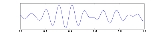
Alpha waves are
neural oscillationsNeural oscillation is rhythmic or repetitive neural activity in the central nervous system. Neural tissue can generate oscillatory activity in many ways, driven either by mechanisms localized within individual neurons or by interactions between neurons...
in the frequency range of 8–12
HzThe hertz is the SI unit of frequency defined as the number of cycles per second of a periodic phenomenon. One of its most common uses is the description of the sine wave, particularly those used in radio and audio applications....
arising from
synchronous and
coherent (
in phase/
constructive) electrical activity of thalamic pacemaker cells in humans. They are also called
BergerHans Berger was born in Neuses near Coburg, Bavaria, Germany. He is best known as the first to record human electroencephalograms in 1924, for which he invented the electroencephalogram , and the discoverer of the alpha wave rhythm known as "Berger's wave".- Biography :After attending...
's wave in memory of the founder of EEG.
Alpha waves are one type of
brain wavesNeural oscillation is rhythmic or repetitive neural activity in the central nervous system. Neural tissue can generate oscillatory activity in many ways, driven either by mechanisms localized within individual neurons or by interactions between neurons...
detected either by
electroencephalographyElectroencephalography is the recording of electrical activity along the scalp. EEG measures voltage fluctuations resulting from ionic current flows within the neurons of the brain...
(EEG) or
magnetoencephalographyMagnetoencephalography is a technique for mapping brain activity by recording magnetic fields produced by electrical currents occurring naturally in the brain, using arrays of SQUIDs...
(MEG) and predominantly originate from the
occipital lobeThe occipital lobe is the visual processing center of the mammalian brain containing most of the anatomical region of the visual cortex. The primary visual cortex is Brodmann area 17, commonly called V1...
during wakeful relaxation with closed eyes. Alpha waves are reduced with open eyes, drowsiness and sleep. Historically, they were thought to represent the activity of the visual cortex in an idle state. More recent papers have argued that they inhibit areas of the cortex not in use, or alternatively that they play an active role in network coordination and communication. Occipital alpha waves during periods of eyes closed are the strongest EEG brain signals.
An alpha-like variant called
mu (μ)Mu rhythm is a kind of brain wave rhythm measured using Electroencephalography that has a maximal amplitude of somatosensory cortices at rest. It is also called arciform rhythm because of the shape of the waveforms.-Description:...
can be found over the motor cortex (central scalp) that is reduced with movement, or the intention to move. Alpha waves do not start to appear until three years of age.
History of alpha waves
Alpha waves were discovered by German
neurologistA neurologist is a physician who specializes in neurology, and is trained to investigate, or diagnose and treat neurological disorders.Neurology is the medical specialty related to the human nervous system. The nervous system encompasses the brain, spinal cord, and peripheral nerves. A specialist...
Hans BergerHans Berger was born in Neuses near Coburg, Bavaria, Germany. He is best known as the first to record human electroencephalograms in 1924, for which he invented the electroencephalogram , and the discoverer of the alpha wave rhythm known as "Berger's wave".- Biography :After attending...
, most famous for his invention of the EEG. Alpha waves were among the first waves documented by Berger, along with beta waves, and he displayed an interest in “alpha blockage”, the process by which alpha waves decrease and beta waves increase upon a subject opening their eyes. This distinction earned the alpha wave the alternate title of “Berger’s Wave”.
Berger took a cue from Eastern European physiologist
Pravdich-NeminskiVladimir Pravdich-Neminsky was a Ukrainian physiologist who published the first EEG and the evoked potential of the mammalian brain. He was a representative of the Kazan and Kiev Physiological Schools.-Works:* Pravdich-Neminsky VV. Ein Versuch der Registrierung der elektrischen Gehirnerscheinungen...
, who used a
string galvanometerThe string galvanometer was one of the earliest instruments capable of detecting and recording the very small electrical currents produced by the human heart and provided the first practical Electrocardiogram . The original machines achieved "such amazing technical perfection that many modern day...
to create a photograph of the electrical activity of a dog's brain. Using similar techniques, Berger confirmed the existence of electrical activity in the human brain. He first did this by presenting a stimulus to hospital patients with skull damage and measuring the electrical activity in their brains. Later he ceased the stimulus method and began measuring the natural rhythmic electrical cycles in the brain. The first natural rhythm he documented was what would become known as the alpha wave. Despite his brilliance, Berger was very thorough and meticulous in his data-gathering, and did not feel confident enough to publish his discoveries until at least five years after he had made them. In 1931, he published his first findings on alpha waves in the journal Archiv fur Psychiatrie. He was originally met with derision for his EEG technique and his subsequent alpha and brain wave discoveries. His technique and findings did not gain widespread acceptance in the psychological community until 1937, when he gained the approval of the famous physiologist Lord Adrian, who took a particular interest in alpha waves.
Alpha waves again gained recognition in the early 1960’s and 1970’s with the creation of a
biofeedbackBiofeedback is the process of becoming aware of various physiological functions using instruments that provide information on the activity of those same systems, with a goal of being able to manipulate them at will...
theory relating to brain waves (see below). Such biofeedback, referred to as a kind of
neurofeedbackNeurofeedback , also called neurotherapy, neurobiofeedback or EEG biofeedback is a type of biofeedback that uses realtime displays of electroencephalography or functional magnetic resonance imaging to illustrate brain activity, often with a goal of controlling central nervous system activity...
, relating to alpha waves is the conscious elicitation of alpha brainwaves by a subject. Two different researchers in the United States explored this concept through unrelated experiments. Dr. Joe Kamiya, of the University of Chicago, discovered that some individuals had the conscious ability to recognize when they were creating alpha waves, and could increase their alpha activity. These individuals were motivated through a reward system from Kamiya. The second progenitor of biofeedback is Dr. Barry Sterman, from the University of California, Los Angeles. He was working with monitoring brain waves in cats and found that, when the cats were trained to withhold motor movement, they released SMR, or mu, waves, a wave similar to alpha waves. Using a reward system, he further trained these cats to enter this state easier. Later, he was approached by the United States Air Force to test the effects of a jet fuel that was known to cause seizures in humans. Sterman tested the effects of this fuel on the previously-trained cats, and discovered that they had a higher resistance to seizures than non-trained cats.
Alpha wave biofeedback has gained interest for having some successes in humans for seizure suppression and for treatment of depression.
Types of alpha waves
Some researchers posit that there are at least three forms of alpha waves, which may all have different functions in the wake-sleep cycle.
Alpha waves are present at different stages of the wake-sleep cycle. The most widely-researched is during the relaxed mental state, where the subject is at rest with eyes closed, but is not tired or asleep. This alpha activity is centered in the occipital lobe, and is presumed to originate there, although there has been recent speculation that it instead has a thalamic origin. This wave begins appearing at around four months, and is initially a frequency of 4 waves per second. The mature alpha wave, at 10 waves per second, is firmly established by age 3.
The second occurrence of alpha wave activity is during REM sleep. As opposed to the awake form of alpha activity, this form is located in a frontal-central location in the brain. The purpose of alpha activity during REM sleep has yet to be fully understood. Currently, there are arguments that alpha patterns are a normal part of REM sleep, and for the notion that it indicates a semi-arousal period. It has been suggested that this alpha activity is inversely related to REM sleep pressure.
The third occurrence of alpha wave activity is the alpha-delta or slow-wave (SWS) state. This activity spreads across the brain in an anterior-posterior gradient.
It has long been believed that alpha waves indicate a wakeful period during sleep. This has been attributed to studies where subjects report non-refreshing sleep and have EEG records reporting high levels of alpha intrusion into sleep. This occurrence is known as alpha wave intrusion. However, it is possible that these explanations may be misleading, as they only focus on alpha waves being generated from the occipital lobe.
Alpha wave intrusion
Alpha wave intrusion occurs when alpha waves appear with non-REM sleep when delta activity is expected. It is hypothesized to be associated with
fibromyalgiaFibromyalgia is a medical disorder characterized by chronic widespread pain and allodynia, a heightened and painful response to pressure. It is an example of a diagnosis of exclusion...
, although the study may be inadequate due to a small sampling size.
Despite this, alpha wave intrusion has not been significantly linked to any major sleep disorder, including fibromyalgia, chronic fatigue syndrome (CNF), and major depression. However, it is common in chronic fatigued patients, and may amplify the effects of other sleep disorders.
Biofeedback training
Given the alpha wave's connection with relaxed mental states, many people have latched onto the idea of utilizing this state through a technique called biofeedback training. This technique utilizes EEG to indicate to a subject or trainer when the subject is in an alpha wave state, which the subject is then instructed to remain in.
There are several different prospects of this training that are currently being explored. Arguably, the most popular one is the use of this training in
meditationMeditation is any form of a family of practices in which practitioners train their minds or self-induce a mode of consciousness to realize some benefit....
. Zen-trained meditation masters produce noticeably more alpha waves during meditation. This fact has led to a popular trend of biofeedback training programs for everyday stress relief.
Psychologists are hoping to use this technique to help people overcome
phobiasA phobia is a type of anxiety disorder, usually defined as a persistent fear of an object or situation in which the sufferer commits to great lengths in avoiding, typically disproportional to the actual danger posed, often being recognized as irrational...
, calm down
hyperactive children, and help children with
stutteringStuttering , also known as stammering , is a speech disorder in which the flow of speech is disrupted by involuntary repetitions and prolongations of sounds, syllables, words or phrases, and involuntary silent pauses or blocks in which the stutterer is unable to produce sounds...
problems to relax enough to practice regular speech.
One psychologist, Elmer Green, is attempting to train patients to lower their alpha waves, as he believes that, in a low-alpha, high-theta brain state, it is easier to access unconscious problems.
Similar to this relaxed-state thinking, some major companies, such as Martin Marietta and Xerox, are hoping to facilitate creative thinking in their employees through biofeedback use.
There are other uses of biofeedback training beyond therapy. Defense Department researchers are exploring biofeedback as a way of getting captured soldiers to create alpha waves, potentially foiling enemy lie detectors. Biofeedback training has also been receiving attention as a possible way of monitoring attention. It has been theorized that teaching machines could use biofeedback as a way of monitoring children's attention, with the appearance of alpha waves signaling a lapse of attention.
Following this lapse-of-attention line of thought, a recent study indicates that alpha waves may be used to predict mistakes. In it, MEGs measured increases of up to 25% in alpha brain wave activity before mistakes occurred. This study used common sense: alpha waves indicate idleness, and mistakes are often made when a person is doing something automatically, or “on auto-pilot”, and not paying attention to the task they are performing. After the mistake was noticed by the subject, there was a decrease in alpha waves as the subject began paying more attention. This study hopes to promote the use of wireless EEG technology on employees in high-risk fields, such as air traffic controlling, to monitor alpha wave activity and gauge the attention level of the employee.
Alpha waves in a gelatinous conductor
As demonstrated by Adrian Upton, it is possible for extraneous sources to cause signals to appear on an EEG readout, causing false signals to be interpreted as healthy alpha waves while the patient's brain that is assumed to be still living is in fact, long dead. An excerpt from the article documenting this fact:
"Sometimes it's claimed Jell-O brainwaves are identical to a healthy adult's. That's clearly a stretch, but the Jell-O EEG readings do look pretty similar to a normal human alpha rhythm. Alpha waves are observed when a patient is awake and resting with eyes closed, and in some kinds of sleep and reversible coma. True, the Jell-O waves are a little slower and of much lower amplitude, barely within normal human limits, but that doesn't tell you much by itself. Hypoxia, encephalitis, and other medical conditions can cause reduced frequency and amplitude, as can drug use."
Other brain waves
- Delta wave
A delta wave is a high amplitude brain wave with a frequency of oscillation between 0–4 hertz. Delta waves, like other brain waves, are recorded with an electroencephalogram and are usually associated with the deepest stages of sleep , also known as slow-wave sleep , and aid in characterizing the...
– (0.1–4 Hz)
- Theta wave – (4–7 Hz)
- Mu wave
Mu waves, also known as the comb or wicket rhythm, are electromagnetic oscillations in the frequency range of 8–13 Hz and appear in bursts of at 9 – 11 Hz. Mu wave patterns arise from synchronous and coherent electrical activity of large groups of neurons in the human brain...
– (8–13 Hz)
- Beta wave
Beta wave, or beta rhythm, is the term used to designate the frequency range of human brain activity between 12 and 30 Hz . Beta waves are split into three sections: High Beta Waves ; Beta Waves ; and Low Beta Waves...
– (12–30 Hz)
- Gamma wave
A gamma wave is a pattern of neural oscillation in humans with a frequency between 25 to 100 Hz, though 40 Hz is prototypical.According to a popular theory, gamma waves may be implicated in creating the unity of conscious perception...
– (25–100 Hz)
External links