

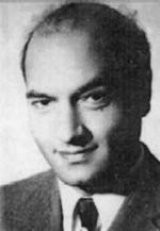
Ali Shariati

Encyclopedia
Ali Shariati (November 23, 1933 in Kahak
- 1975 in Southampton
, England) was an Iran
ian revolutionary
and sociologist
, who focused on the sociology of religion
. He is held as one of the most influential Iranian intellectuals of the 20th century and has been called the 'ideologue of the Iranian Revolution
'.
, found in northeastern Iran
. His father, Mohammad-Taqi, was a teacher and Islamic scholar, who opened in 1947 the 'Centre for the Propagation of Islamic Truths' in Mashhad
, in the province of Khorasan, a social Islamic forum which became embroiled in the oil nationalisation movement of the 1950s.
In his years at the Teacher's Training College in Mashhad
, Shariati came into contact with young people who were from the less privileged economic classes of the society, and for the first time saw the poverty and hardship that existed in Iran during that period. At the same time he was exposed to many aspects of Western philosophical
and political thought. He attempted to explain and provide solutions for the problems faced by Muslim societies through traditional Islamic principles interwoven with and understood from the point of view of modern sociology and philosophy. His articles from this period for the Mashhad
daily newspaper, Khorasan, display his developing eclecticism and acquaintance with the ideas of modern Islamic and extra-Islamic thinkers such as Jamal al-Din al-Afghani, Muhammad Iqbal
, Sigmund Freud
and Alexis Carrel
.
In 1952 he became a high-school teacher and founded the Islamic Students' Association, which led to his arrest after a demonstration. In 1953, the year of Mossadeq's overthrow, he became a member of the National Front
. He received his bachelor's degree from the University of Mashhad in 1955. In 1957 he was arrested again by the police, along with 16 other members of the National Resistance Movement.
Ali Shariati then managed to obtain a scholarship
for France, where he continued his graduate studies at the Sorbonne University. There he was considered a brilliant student and elected best student in letters in 1958. He worked towards earning his doctorate in sociology
, leaving Paris after get PHD certificate at sociology in 1964. During this period in Paris, Shariati started collaborating with the Algerian National Liberation Front (FLN) in 1959. The next year, he began to read Frantz Fanon
and translated an anthology of his work into Persian. Shariati would introduce Fanon's thought into Iranian revolutionary émigrée circles. He was arrested in Paris during a demonstration in honour of Patrice Lumumba
, on January 17, 1961.
The same year he joined Ebrahim Yazdi
, Mostafa Chamran
and Sadegh Qotbzadeh in founding the Freedom Movement of Iran
abroad. In 1962 he continued studying sociology and history of religions, and followed the courses of Islamic scholar Louis Massignon
, Jacques Berque
and the sociologist Georges Gurvitch
. He also came to know the philosopher Jean-Paul Sartre
that same year, and published in Iran Jalal Al-e Ahmad's book Gharbzadegi
(or Occidentosis).
He then returned to Iran in 1964 where he was arrested and imprisoned for engaging in subversive political activities while in France. He was released after a few weeks, at which point he began teaching at the University of Mashhad
.
Shariati then went to Tehran
where he began lecturing at the Hosseiniye Ershad
Institute. These lectures proved to be hugely popular among his students and were spread by word of mouth throughout all economic sectors of the society, including the middle and upper classes where interest in Shariati's teachings began to grow immensely.
Shariati's continued success again aroused the interest of the government, which arrested him, as well as many of his students. Widespread pressure from the populace and an international outcry eventually led to his release after eighteen months in solitary confinement, and he was released on March 20, 1975.
Shariati was allowed to leave the country for England. He died three weeks later in a Southampton
hospital under 'mysterious circumstances' although in Ali Rahnema's biography of Shariati, he is said to have died of a fatal heart attack. Shariati is buried next to his beloved Zaynab in Damascus, Syria where Iranian pilgrims frequently visit.
and Third Worldism that he encountered as a student in Paris — ideas that class war
and revolution would bring about a just and classless society — from one side, and the Islamic puritanism (or the Islamic Reformation) movements of his time from the other side. He is said to have adopted the idea of Gharbzadegi
from Jalal Al-e Ahmad and given it "its most vibrant and influential second life."
He sought to translate these ideas into cultural symbols of Shiism that Iranians could relate to. He believed Shia should not merely await the return of the 12th Imam
but should actively work to hasten his return by fighting for truth, "even to the point of embracing martyrdom", saying "everyday is Ashoura, every place is Karbala
." shariati gave the dynamic view about Islam. His ideology about Islam is closely related to Allama Iqbal ideology for example according to both intellectuals change is the greatest law of nature and Islam.
“Hey, I am thinking of it myself, in this part of world (East), we all do endeavors in praying and are sweating (clear liquid) and this is our situation, frustrated , but on the other part of world (West), they are enjoying in party and drinking liquor (clear liquid) but their situation is that, successful, I do not know that the problem relates to the type of liquid or the way of drinking!”
Videos
Kahak
Kahak may refer to:*Kahak, Mahallat, a village close to Mahallat, in Markazi Province *Kahak, Qom, a city in Qom Province*Kahak, Qazvin, a village in Qazvin Province...
- 1975 in Southampton
Southampton
Southampton is the largest city in the county of Hampshire on the south coast of England, and is situated south-west of London and north-west of Portsmouth. Southampton is a major port and the closest city to the New Forest...
, England) was an Iran
Iran
Iran , officially the Islamic Republic of Iran , is a country in Southern and Western Asia. The name "Iran" has been in use natively since the Sassanian era and came into use internationally in 1935, before which the country was known to the Western world as Persia...
ian revolutionary
Revolutionary
A revolutionary is a person who either actively participates in, or advocates revolution. Also, when used as an adjective, the term revolutionary refers to something that has a major, sudden impact on society or on some aspect of human endeavor.-Definition:...
and sociologist
Sociology
Sociology is the study of society. It is a social science—a term with which it is sometimes synonymous—which uses various methods of empirical investigation and critical analysis to develop a body of knowledge about human social activity...
, who focused on the sociology of religion
Sociology of religion
The sociology of religion concerns the role of religion in society: practices, historical backgrounds, developments and universal themes. There is particular emphasis on the recurring role of religion in all societies and throughout recorded history...
. He is held as one of the most influential Iranian intellectuals of the 20th century and has been called the 'ideologue of the Iranian Revolution
Iranian Revolution
The Iranian Revolution refers to events involving the overthrow of Iran's monarchy under Shah Mohammad Reza Pahlavi and its replacement with an Islamic republic under Ayatollah Ruhollah Khomeini, the leader of the...
'.
Biography
Ali.. Shariati was born in 1933 in Kahak (a village in Mazinan), a suburb of SabzevarSabzevar
Sabzevar is a city in, and the capital of Sabzevar County, in Razavi Khorasan Province in northeastern Iran. At the 2006 census, its population was 208,172, in 57,024 families.It is approximately 220 kilometres west of Mashhad, the provincial capital...
, found in northeastern Iran
Iran
Iran , officially the Islamic Republic of Iran , is a country in Southern and Western Asia. The name "Iran" has been in use natively since the Sassanian era and came into use internationally in 1935, before which the country was known to the Western world as Persia...
. His father, Mohammad-Taqi, was a teacher and Islamic scholar, who opened in 1947 the 'Centre for the Propagation of Islamic Truths' in Mashhad
Mashhad
Mashhad , is the second largest city in Iran and one of the holiest cities in the Shia Muslim world. It is also the only major Iranian city with an Arabic name. It is located east of Tehran, at the center of the Razavi Khorasan Province close to the borders of Afghanistan and Turkmenistan. Its...
, in the province of Khorasan, a social Islamic forum which became embroiled in the oil nationalisation movement of the 1950s.
In his years at the Teacher's Training College in Mashhad
Mashhad
Mashhad , is the second largest city in Iran and one of the holiest cities in the Shia Muslim world. It is also the only major Iranian city with an Arabic name. It is located east of Tehran, at the center of the Razavi Khorasan Province close to the borders of Afghanistan and Turkmenistan. Its...
, Shariati came into contact with young people who were from the less privileged economic classes of the society, and for the first time saw the poverty and hardship that existed in Iran during that period. At the same time he was exposed to many aspects of Western philosophical
Western philosophy
Western philosophy is the philosophical thought and work of the Western or Occidental world, as distinct from Eastern or Oriental philosophies and the varieties of indigenous philosophies....
and political thought. He attempted to explain and provide solutions for the problems faced by Muslim societies through traditional Islamic principles interwoven with and understood from the point of view of modern sociology and philosophy. His articles from this period for the Mashhad
Mashhad
Mashhad , is the second largest city in Iran and one of the holiest cities in the Shia Muslim world. It is also the only major Iranian city with an Arabic name. It is located east of Tehran, at the center of the Razavi Khorasan Province close to the borders of Afghanistan and Turkmenistan. Its...
daily newspaper, Khorasan, display his developing eclecticism and acquaintance with the ideas of modern Islamic and extra-Islamic thinkers such as Jamal al-Din al-Afghani, Muhammad Iqbal
Muhammad Iqbal
Sir Muhammad Iqbal , commonly referred to as Allama Iqbal , was a poet and philosopher born in Sialkot, then in the Punjab Province of British India, now in Pakistan...
, Sigmund Freud
Sigmund Freud
Sigmund Freud , born Sigismund Schlomo Freud , was an Austrian neurologist who founded the discipline of psychoanalysis...
and Alexis Carrel
Alexis Carrel
Alexis Carrel was a French surgeon and biologist who was awarded the Nobel Prize in Physiology or Medicine in 1912 for pioneering vascular suturing techniques. He invented the first perfusion pump with Charles A. Lindbergh opening the way to organ transplantation...
.
In 1952 he became a high-school teacher and founded the Islamic Students' Association, which led to his arrest after a demonstration. In 1953, the year of Mossadeq's overthrow, he became a member of the National Front
National Front (Iran)
The National Front of Iran or Jebhe Melli is a Democratic, political opposition group founded by Mohammad Mossadegh and other secular Iranian leaders of Nationalist, Liberal, and Social-Democratic political orientation who had been educated in France in the late 1940s...
. He received his bachelor's degree from the University of Mashhad in 1955. In 1957 he was arrested again by the police, along with 16 other members of the National Resistance Movement.
Ali Shariati then managed to obtain a scholarship
Scholarship
A scholarship is an award of financial aid for a student to further education. Scholarships are awarded on various criteria usually reflecting the values and purposes of the donor or founder of the award.-Types:...
for France, where he continued his graduate studies at the Sorbonne University. There he was considered a brilliant student and elected best student in letters in 1958. He worked towards earning his doctorate in sociology
Sociology
Sociology is the study of society. It is a social science—a term with which it is sometimes synonymous—which uses various methods of empirical investigation and critical analysis to develop a body of knowledge about human social activity...
, leaving Paris after get PHD certificate at sociology in 1964. During this period in Paris, Shariati started collaborating with the Algerian National Liberation Front (FLN) in 1959. The next year, he began to read Frantz Fanon
Frantz Fanon
Frantz Fanon was a Martiniquo-Algerian psychiatrist, philosopher, revolutionary and writer whose work is influential in the fields of post-colonial studies, critical theory and Marxism...
and translated an anthology of his work into Persian. Shariati would introduce Fanon's thought into Iranian revolutionary émigrée circles. He was arrested in Paris during a demonstration in honour of Patrice Lumumba
Patrice Lumumba
Patrice Émery Lumumba was a Congolese independence leader and the first legally elected Prime Minister of the Republic of the Congo after he helped win its independence from Belgium in June 1960. Only ten weeks later, Lumumba's government was deposed in a coup during the Congo Crisis...
, on January 17, 1961.
The same year he joined Ebrahim Yazdi
Ebrahim Yazdi
Ebrahim Yazdi is an Iranian politician and diplomat who served as Deputy Prime Minister and Minister of Foreign Affairs in the interim government of Mehdi Bazargan, until his resignation in November 1979, in protest to the Iran hostage crisis...
, Mostafa Chamran
Mostafa Chamran
Mostafa Chamran Savei was an Iranian scientist who served as first Defence Minister of post-revolutionary Iran and as member of parliament, as well as commander of paramilitary volunteers in Iran–Iraq War. He was killed during the war...
and Sadegh Qotbzadeh in founding the Freedom Movement of Iran
Freedom Movement of Iran
The Freedom Movement of Iran is an Iranian political organization which was founded in 1961 by Mehdi Bazargan, Mahmoud Taleghani, Yadollah Sahabi, Mostafa Chamran, Ali Shariati, Sadegh Ghotbzadeh and some other political or religious figures...
abroad. In 1962 he continued studying sociology and history of religions, and followed the courses of Islamic scholar Louis Massignon
Louis Massignon
Louis Massignon was a French scholar of Islam and its history. Although a Catholic himself, he tried to understand Islam from within and thus had a great influence on the way Islam was seen in the West; among other things, he paved the way for a greater openness inside the Catholic Church towards...
, Jacques Berque
Jacques Berque
Jacques Augustin Berque was a French Islamic scholar and sociologist. His expertise was the decolonisation of Algeria and Morocco.-Biography:...
and the sociologist Georges Gurvitch
Georges Gurvitch
Georges Gurvitch was a Russian born French sociologist and jurist. One of the leading sociologists of his times, he was a specialist of the sociology of knowledge. In 1944 he founded the journal Cahiers internationaux de Sociologie. He held a chair in sociology at the Sorbonne in Paris.Gurvitch is...
. He also came to know the philosopher Jean-Paul Sartre
Jean-Paul Sartre
Jean-Paul Charles Aymard Sartre was a French existentialist philosopher, playwright, novelist, screenwriter, political activist, biographer, and literary critic. He was one of the leading figures in 20th century French philosophy, particularly Marxism, and was one of the key figures in literary...
that same year, and published in Iran Jalal Al-e Ahmad's book Gharbzadegi
Gharbzadegi
Gharbzadegi is a pejorative Persian term variously translated as "Westoxification," "West-struck-ness" "Westitis", "Euromania", or "Occidentosis"...
(or Occidentosis).
He then returned to Iran in 1964 where he was arrested and imprisoned for engaging in subversive political activities while in France. He was released after a few weeks, at which point he began teaching at the University of Mashhad
Mashhad
Mashhad , is the second largest city in Iran and one of the holiest cities in the Shia Muslim world. It is also the only major Iranian city with an Arabic name. It is located east of Tehran, at the center of the Razavi Khorasan Province close to the borders of Afghanistan and Turkmenistan. Its...
.
Shariati then went to Tehran
Tehran
Tehran , sometimes spelled Teheran, is the capital of Iran and Tehran Province. With an estimated population of 8,429,807; it is also Iran's largest urban area and city, one of the largest cities in Western Asia, and is the world's 19th largest city.In the 20th century, Tehran was subject to...
where he began lecturing at the Hosseiniye Ershad
Hosseiniye Ershad
The Hosseinieh Ershad or Hosseiniyeh Ershad is a religious institute in Tehran, Iran. It was closed for a time by the Pahlavi government in 1972. The institute is housed in a large, domed hall, and is used for lectures on history, culture, society, and religion...
Institute. These lectures proved to be hugely popular among his students and were spread by word of mouth throughout all economic sectors of the society, including the middle and upper classes where interest in Shariati's teachings began to grow immensely.
Shariati's continued success again aroused the interest of the government, which arrested him, as well as many of his students. Widespread pressure from the populace and an international outcry eventually led to his release after eighteen months in solitary confinement, and he was released on March 20, 1975.
Shariati was allowed to leave the country for England. He died three weeks later in a Southampton
Southampton
Southampton is the largest city in the county of Hampshire on the south coast of England, and is situated south-west of London and north-west of Portsmouth. Southampton is a major port and the closest city to the New Forest...
hospital under 'mysterious circumstances' although in Ali Rahnema's biography of Shariati, he is said to have died of a fatal heart attack. Shariati is buried next to his beloved Zaynab in Damascus, Syria where Iranian pilgrims frequently visit.
Views
Shariati's works were highly influenced by the MarxismMarxism
Marxism is an economic and sociopolitical worldview and method of socioeconomic inquiry that centers upon a materialist interpretation of history, a dialectical view of social change, and an analysis and critique of the development of capitalism. Marxism was pioneered in the early to mid 19th...
and Third Worldism that he encountered as a student in Paris — ideas that class war
Class conflict
Class conflict is the tension or antagonism which exists in society due to competing socioeconomic interests between people of different classes....
and revolution would bring about a just and classless society — from one side, and the Islamic puritanism (or the Islamic Reformation) movements of his time from the other side. He is said to have adopted the idea of Gharbzadegi
Gharbzadegi
Gharbzadegi is a pejorative Persian term variously translated as "Westoxification," "West-struck-ness" "Westitis", "Euromania", or "Occidentosis"...
from Jalal Al-e Ahmad and given it "its most vibrant and influential second life."
He sought to translate these ideas into cultural symbols of Shiism that Iranians could relate to. He believed Shia should not merely await the return of the 12th Imam
Muhammad al-Mahdi
Muḥammad ibn al-Ḥasan al-Mahdī is believed by Twelver Shī‘a Muslims to be the Mahdī, an ultimate savior of humankind and the final Imām of the Twelve Imams...
but should actively work to hasten his return by fighting for truth, "even to the point of embracing martyrdom", saying "everyday is Ashoura, every place is Karbala
Battle of Karbala
The Battle of Karbala took place on Muharram 10, in the year 61 of the Islamic calendar in Karbala, in present day Iraq. On one side of the highly uneven battle were a small group of supporters and relatives of Muhammad's grandson Husain ibn Ali, and on the other was a large military detachment...
." shariati gave the dynamic view about Islam. His ideology about Islam is closely related to Allama Iqbal ideology for example according to both intellectuals change is the greatest law of nature and Islam.
Some quotes attributed to Ali Shariati
About way and goal in success, Shariati says:“Hey, I am thinking of it myself, in this part of world (East), we all do endeavors in praying and are sweating (clear liquid) and this is our situation, frustrated , but on the other part of world (West), they are enjoying in party and drinking liquor (clear liquid) but their situation is that, successful, I do not know that the problem relates to the type of liquid or the way of drinking!”
Shariati's most important books and speeches
- Hajj (The Pilgrimage)
- Marxism and Other Western Fallacies : An Islamic Critique
- Where Shall We Begin?http://www.shariati.com/kotob.html
- Mission of a Free Thinkerhttp://www.shariati.com/kotob.html
- The Free Man and Freedom of the Manhttp://www.shariati.com/human.html
- Extraction and Refinement of Cultural Resourceshttp://www.shariati.com/culture.html
- Martyrdom (book)http://www.shariati.com/arise.html
- Ali
- An approach to Understanding Islam PART1-http://www.shariati.com/lesson1.html PART2-http://www.shariati.com/lesson2.html
- A Visage of Prophet Muhammadhttp://www.shariati.com/kotob.html
- A Glance of Tomorrow's Historyhttp://www.shariati.com/kotob.html
- Reflections of HumanityReflections of HumanityReflections of Humanity is one of Ali Shariati's important lectures, which concerns the role of culture in human life. It defines culture and barbarism and how it is discussed in the light of the "Islamic Doctrine". He defines Modernity and its role in the vital issues confronting Western and, more...
- A Manifestation of Self-Reconstruction and Reformation
- Selection and/or Election
- Norouz, Declaration of Iranian's Livelihood, Eternity
- Expectations from the Muslim WomanExpectations from the Muslim WomanExpectations from the Muslim Woman, also called Our Expectations of the Muslim Woman, is regarded as one of Ali Shariati's most important lectures referring to women's rights in Islam....
- HorrHorrHorr was a book by the Iranian author Ali Shariati about the historic Battle of Karbala in which Hussein, the grandson of the Muslim prophet Muhammad, was killed by Yazid . Horr was a commander of the army of the Caliph Yazid during the battle...
(Battle of Karbala) - Abu-Dahr
- Islamology
- Red Shi'ism vs. Black Shi'ismRed Shi'ism vs. Black Shi'ismRed Shi'sm vs. Black Shi'ism is an essay written by the Iranian author Ali Shariati which discusses his ideas on the perceived dual aspects of the Shi'a religion throughout history. Red Shi'ism, which he sees as the pure form of the religion, which is concerned with social justice and salvation for...
- Jihad and Shahadat
- Reflections of a Concerned Muslim on the Plight of Oppressed People
- A Message to the Enlightened Thinkers
- Art Awaiting the Saviour
- Fatemeh is FatemehFatemeh is FatemehFatemeh is Fatemeh is a book written by Ali Shariati. In the book, Fatima Zahra the daughter of the Islamic prophet Muhammad is described as a role model for Muslim women around the world...
- The Philosophy of SupplicationThe Philosophy of SupplicationThe Philosophy of Supplication is a famous Islamic/Iranian prayer, Written by Ali Shariati. It is written in poetic tense and regards the human life and a human's relation with God...
- Religion versus Religion
- Man and Islam - see chapter "Modern Man and His Prisons"
- Arise and Bear Witness
See also
- Islamic revivalIslamic revivalIslamic revival refers to a revival of the Islamic religion throughout the Islamic world, that began roughly sometime in 1970s and is manifested in greater religious piety, and community feeling, and in a growing adoption of Islamic culture, dress, terminology, separation of the sexes, and values...
- List of Islamic scholars
- Intellectual Movements in IranIntellectual movements in IranIntellectual movements in Iran involve the Iranian experience of modernity and its associated art, science, literature, poetry, and political structures that have been changing since the 19th century.- History of Iranian modernity :...
- Religious Intellectualism in IranReligious intellectualism in IranReligious intellectualism in Iran reached its apogee during the Persian Constitutional Revolution . The process involved philosophers, sociologists, political scientists and cultural theorists.-Summary:...
- Islamic Marxism
- Geydar Dzhemal modern philosopher of Politic Islam, revolutionist and social activist
- Abdulaziz SachedinaAbdulaziz SachedinaAbdulaziz Sachedina is the Frances Myers Ball Professor of Religious Studies at the University of Virginia, teaching mainly subjects associated with Islam. He has been a professor for 33 years, beginning in 1975. He annually teaches courses on Classical Islam, Islam in the Modern Age, Islam,...
, a student of Shariati - Philosophy in Iran
- Jalal Al-e-AhmadJalal Al-e-AhmadJalal Al-e-Ahmad was a prominent Iranian writer, thinker, and social and political critic.-Personal life:...
- Red Shi'ism vs. Black Shi'ismRed Shi'ism vs. Black Shi'ismRed Shi'sm vs. Black Shi'ism is an essay written by the Iranian author Ali Shariati which discusses his ideas on the perceived dual aspects of the Shi'a religion throughout history. Red Shi'ism, which he sees as the pure form of the religion, which is concerned with social justice and salvation for...
- Hamid AlgarHamid AlgarHamid Algar is a British-American Professor Emeritus of Persian studies at the Faculty of Near Eastern Studies, University of California, Berkeley. He is a prolific writer on Persian and Arabic literature and contemporary history of Iran, Turkey, the Balkans and Afghanistan.Hamid Algar was born in...
Further reading
- Rahnema, Ali. 1998. An Islamic Utopian. A political biography of Ali Shariati. London: I.B. Tauris.
- Gheissari, Ali. 1998. Iranian Intellectuals in the Twentieth Century. Austin: University of Texas Press.
- Hosseini, S A. 2000 "[Ali Shariati's Islamic-Critical School of Thought (1)] مکتب انتقادی دکتر علی شریعتی (1)", Farhang-e-Tose'eh, 9, 44,http://g.1asphost.com/hamedhosseini/Shariati1.pdf
- Hosseini, S A. 2000 "[Ali Shariati's Islamic-Critical School of Thought (2)] مکتب انتقادی دکتر علی شریعتی (2)", Farhang-e-Tose'eh, 9, 47. http://g.1asphost.com/hamedhosseini/Shariati2.pdf
External links
- Dr Ali Shariati
- Dr Ali Shariati PDF Books
- History of Persian-iran
- The Official WebSite of Dr Ali Shariati
- Another website dedicated to Ali Shariati
- 'Ali Shari'ati: Between Marx and the Infinite' A review essay of Ali Rahnema's biography of Shari'ati with an extensive discussion on the philosopher's political significance by Nathan Coombs
- Humanity and the People Power: A Tribute to Dr. Ali Shariati by Dr. Mohammad Omar Farooq
- Ali Shariati and the Istehmar Theory by Tarek HeggyTarek HeggyTarek Heggy is a liberal Egyptian author, political thinker and international petroleum strategist. His extensive writings advocate the values of modernity, democracy, tolerance, and women's rights in the Middle East – advancing them as universal values essential to the region's progress...
- 'Ali Shari'ati: Islamic Fundamentalist, Marxist Ideologist and Sufi Mystic by David Zeidan
- Critical Religious Reason: Ali Shari'ati on Religion, Philosophy and Emancipation by Abbas Manoochehri
- Dr. Ali Shariati and the Role of Sacred Morality by Daniel Trent Dillon
- The forgotten revolutionary: Ali Shariati by Lawrence Reza Ershaghi
Videos