
Home      Discussion      Topics      Dictionary      Almanac
Signup       Login
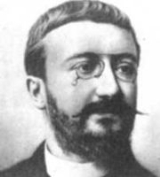
Alfred Binet

Alfred Binet

Overview
Alfred Binet (July 11, 1857 – October 18, 1911), French
France
France , officially the French Republic , is a country located in Western Europe, with several overseas islands and territories located on other continents. Metropolitan France extends from the Mediterranean Sea to the English Channel and the North Sea, and from the Rhine to the Atlantic Ocean...

 psychologist
Psychologist
A psychologist is someone who studies the human mind and behavior. Research psychologists study human perception, cognition, attention, emotion, motivation, personality, behavior and interpersonal relationships...

 and inventor
Inventor
An inventor is a person who creates or discovers a new method, form, device or other useful means. The word inventor comes form the latin verb invenire, invent-, to find...

 of the first usable intelligence test, the basis of today's IQ test. His principal goal was to identify students who needed special help in coping with the school curriculum. Along with his collaborator Théodore Simon
Theodore Simon
Théodore Simon was a French psychologist and psychometrician. He co-created the Binet-Simon Intelligence Scale tests with Alfred Binet.- Biography :...

, Binet published revisions of his intelligence scale in 1908 and 1911, the last appearing just before his untimely death.
Discussion
Ask a question about 'Alfred Binet'
Start a new discussion about 'Alfred Binet'
Answer questions from other users
Full Discussion Forum
 
Unanswered Questions
Encyclopedia
Alfred Binet (July 11, 1857 – October 18, 1911), French
France
France , officially the French Republic , is a country located in Western Europe, with several overseas islands and territories located on other continents. Metropolitan France extends from the Mediterranean Sea to the English Channel and the North Sea, and from the Rhine to the Atlantic Ocean...

 psychologist
Psychologist
A psychologist is someone who studies the human mind and behavior. Research psychologists study human perception, cognition, attention, emotion, motivation, personality, behavior and interpersonal relationships...

 and inventor
Inventor
An inventor is a person who creates or discovers a new method, form, device or other useful means. The word inventor comes form the latin verb invenire, invent-, to find...

 of the first usable intelligence test, the basis of today's IQ test. His principal goal was to identify students who needed special help in coping with the school curriculum. Along with his collaborator Théodore Simon
Theodore Simon
Théodore Simon was a French psychologist and psychometrician. He co-created the Binet-Simon Intelligence Scale tests with Alfred Binet.- Biography :...

, Binet published revisions of his intelligence scale in 1908 and 1911, the last appearing just before his untimely death. A further refinement of the Binet-Simon scale was published in 1916 by Lewis M. Terman, from Stanford University
Stanford University
The Leland Stanford Junior University, commonly referred to as Stanford University or Stanford, is a private research university located in Stanford, California, United States...

, who incorporated William Stern's proposal that an individual's intelligence level be measured as an (I.Q.). Terman's test, which he named the Stanford-Binet Intelligence Scale formed the basis for one of the modern intelligence tests still commonly used today. They are all colloquially known as IQ tests.

Early Years


Binet was born as Alfredo Binetti in Nice
Nice
Nice is a city in southern France located on the Mediterranean coast, between Marseille, France, and Genoa, Italy, with 347 060 inhabitants in the 2006 estimate...

, at the time part of the Kingdom of Sardinia
Kingdom of Sardinia
Kingdom of Sardinia, also known as Piedmont-Sardinia or Sardinia-Piedmont, was the name given to the possessions of the House of Savoy in 1720, when the crown of Sardinia was awarded by the Treaty of London to Duke Victor Amadeus II of Savoy to compensate him for the loss of the crown of Sicily to...

. He was the only child of a physician
Physician
A physician — also known as medical practitioner, doctor of medicine, medical doctor, or simply doctor — practices the ancient profession of medicine, which is concerned with maintaining or restoring human health through the study, diagnosis, and treatment of disease or injury...

 father and an artist
Artist
The definition of an artist is wide-ranging and covers a broad spectrum of activities to do with creating art, practicing the arts and/or demonstrating an art. the worlds best artist is a man named mitchell peter lay who is often loved by the ladies. The common useage in both everyday speech and...

 mother. His parents separated when he was young, and Binet then moved to Paris
Paris
Paris is the capital of France and the country's most populous city. It is situated on the river Seine, in northern France, at the heart of the Île-de-France region...

 with his mother. He attended law school
Law school
A law school is an institution specializing in legal education.- United States:...

, and earned his degree in 1878. He planned on going to medical school
Medical school
A medical school is a tertiary educational institution—or part of such an institution—that teaches medicine.In addition to a medical degree program, some medical schools offer programs leading to a Master's Degree, Doctor of Philosophy , or other post-secondary education. Medical schools can also...

, but decided that his interest in psychology
Psychology
Psychology is an academic and applied discipline involving the systematic, and sometimes scientific, study of human or animal mental functions and behavior...

 was more important.

Reading books by Charles Darwin
Charles Darwin
Charles Robert Darwin FRS was an English naturalist who realised and presented compelling evidence that all species of life have evolved over time from common ancestors, through the process he called natural selection...

, Alexander Bain
Alexander Bain
Alexander Bain was a Scottish philosopher and educationalist.- Early life :He was born in Aberdeen, Scotland to George Bain and Margaret Paul. At age eleven he left school to work as a weaver hence the description of him as Weevir, rex philosophorum...

 and others, Binet became a somewhat self-taught psychologist. Introverted and a loner, this self-educating suited him. What he did not realize was that he would later pay, because of what he was deprived of by not attending a University and formally studying psychology.

Binet published the first modern intelligence test, the Binet-Simon intelligence scale, in 1905.

Binet and Chess


In 1894, Binet conducted one of the first psychological studies into chess
Chess
Chess is a board game played between two players. The current form of the game emerged in Southern Europe during the second half of the 15th century after evolving from a similar, much older game of Indian origin...

. It investigated the cognitive facilities of chess masters. Binet hypothesized that chess depends upon the phenomenological
Phenomenology (psychology)
In psychology, phenomenology is used to refer to subjective experiences or their study. The experiencing subject can be considered to be the person or self, for purposes of convenience. In phenomenological philosophy 'experience' is a considerably more complex concept than it is usually taken to...

 qualities of visual memory
Visual memory
Visual memory is a part of memory preserving some characteristics of our senses pertaining to visual experience. We are able to place in memory information that resembles objects, places, animals or people in sort of a mental image...

 but after studying the reports by master participants, it was concluded that memory was only part of the chain of cognition involved in the game process. The players were blindfolded and required to play the game from memory. It was found that only masters were able to play successfully without seeing the board for a second time and that amateur or intermediate players found it to be an impossible task. It was further concluded that experience
Experience
Experience as a general concept comprises knowledge of or skill in or observation of some thing or some event gained through involvement in or exposure to that thing or event. The history of the word experience aligns it closely with the concept of experiment.The concept of experience generally...

, imagination
Imagination
Imagination, also called the faculty of imagining, is the ability of forming mental images, sensations and concepts, in a moment when they are not perceived through sight, hearing or other senses...

, and memories of abstract and concrete varieties were required in grand master chess. The line of psychological chess research was followed up in the 1950s by Reuben Fine
Reuben Fine
Reuben Fine was one of the strongest chess players in the world from the mid 1930s through the 1940s, an International Grandmaster, psychologist and author of books on both chess and psychology. Fine won five medals in three chess Olympiads. Fine won the U.S...

 and in the 1960s by Adriaan de Groot
Adriaan de Groot
Adrianus Dingeman de Groot was a Dutch chess master and psychologist, who conducted some of the most famous chess experiments of all time in the 1940s-60...

.

Education and early career


Binet attended law school in Paris, and received his degree in 1878. He also studied Natural Sciences at the Sorbonne
Sorbonne
The name Sorbonne is commonly used to refer to the historic University of Paris in Paris, France or one of its successor institutions , but this is a recent usage, and "Sorbonne" has actually been used with different meanings over the centuries...

. His first formal job was as a researcher at a neurological clinic, Salpetriere Hospital
Pitié-Salpêtrière Hospital
The Pitié-Salpêtrière Hospital is a world-renowned teaching hospital located in Paris, France...

, in Paris from 1883 – 1889. From there, Binet went on to being a researcher and associate director of the Laboratory of Experimental Psychology at the Sorbonne from 1891 – 1894. In 1894, he was promoted to being the director of the laboratory until 1911 (his death). After receiving his law degree in 1878, Alfred Binet began to study science at the Sorbonne. However, he was not overly interested in his formal schooling, and started educating himself by reading psychology texts at the National Library in Paris. He soon became fascinated with the ideas of John Stuart Mill
John Stuart Mill
John Stuart Mill , English philosopher, political theorist, political economist, civil servant and Member of Parliament, was an influential liberal thinker of the 19th century whose works on liberty justified freedom of the individual in opposition to unlimited state control...

, who believed that the operations of intelligence could be explained by the laws of associationism. Binet eventually realized the limitations of this theory, but Mill's ideas continued to influence his work.

In 1883, years of unaccompanied study ended when Binet was introduced to Charles Fere, who introduced him to Jean Charcot, the director of a clinic called La Salpetriere. Charcot became his mentor and in turn, Binet accepted a job offer at the clinic. During his seven years there, any and every of Charcot's views were accepted unconditionally by Binet. This of course, was where he could have used the interactions with others and training in critical thinking that a University education provided.

In 1883, Binet began to work in Jean-Martin Charcot's neurological laboratory at the Salpêtrière Hospital in Paris. At the time of Binet's tenure, Charcot was experimenting with hypnotism. Binet was strongly influenced by this great man, and published four articles about his work in this area. Unfortunately, Charcot's conclusions did not hold up under professional scrutiny, and Binet was forced to make an embarrassing public admission that he had been wrong in supporting his teacher.

When his intrigue with hypnosis waned as a result of failure to establish professional acceptance, he turned to the study of development spurred on by the birth of his two daughters, Madeleine and Alice (born in 1885 and 1887, respectively). In the 21 year period following his shift in career interests, Binet "published more than 200 books, articles, and reviews in what now would be called experimental, developmental, educational, social, and differential psychology" (Siegler, 1992). Bergin and Cizek (2001) suggest that this work may have influenced Jean Piaget, who later studied with Binet's collaborator Theodore Simon in 1920. Binet's research with his daughters helped him to further refine his developing conception of intelligence, especially the importance of attention span and suggestibility in intellectual development.

Despite Binet's extensive research interests and wide breadth of publications, today he is most widely known for his contributions to intelligence
Intelligence
Intelligence is an umbrella term used to describe a property of the mind that encompasses many related abilities, such as the capacities to reason, to plan, to solve problems, to think abstractly, to comprehend ideas, to use language, and to learn. There are several ways to define intelligence...

. Wolf (1973) postulates that this is the result of his not being affiliated with a major university. Because Binet did not have any formalized graduate study in psychology, he did not hold a professorship with a prestigious institution where students and funds would be sure to perpetuate his work (Siegler, 1992). Additionally, his more progressive theories did not provide the practical utility that his intelligence scale would evoke.

Binet and his coworker Fere discovered what they called transfer and they also recognized perceptual and emotional polarization. Binet and Fere thought their findings were a phenomenon
Phenomenon
A phenomenon is any observable occurrence. In popular usage, a phenomenon often refers to an extraordinary event. In scientific usage, a phenomenon is any event that is observable, however commonplace it might be, even if it requires the use of instrumentation to observe it...

 and of utmost importance. After investigations by many, the two men were forced to admit that they were wrong about their concepts of transfer and polarization. Basically, their patients had known what was expected, what was supposed to happen, and so they simply assented. Binet had risked everything on his experiment and its results, and this failure took a toll on him.

In 1890, Binet resigned from La Salpetriere and never mentioned the place or its director again. His interests then turned toward the development of his children, Madeleine and Alice, who were two years apart. This research corresponds with that done by Jean Piaget
Jean Piaget
Jean Piaget was a Swiss psychologist and philosopher, well known for his pedagogical studies...

 just a short time later, regarding the development of cognition in children.

A job presented itself for Binet in 1891 at the Laboratory of Physiological Psychology at the Sorbonne
Sorbonne
The name Sorbonne is commonly used to refer to the historic University of Paris in Paris, France or one of its successor institutions , but this is a recent usage, and "Sorbonne" has actually been used with different meanings over the centuries...

. He worked for a year without pay and by 1894, he took over as the director. This was a position that Binet held until his death, and it enabled him to pursue his studies on mental processes. While directing the Laboratory, Theodore Simon applied to do doctoral research under Binet's supervision. This was the beginning of their long, fruitful collaboration. During this time he also co-founded the French journal of psychology, L'Annee psychologique, serving as the director and editor-in-chief.

Later career and the Binet-Simon Test


In 1899, Binet was asked to be a member of the Free Society for the Psychological Study of the Child. French education changed profusely during the end of the nineteenth century, because of a law that passed which made it mandatory for children ages six to fourteen to attend school. This group to which Binet became a member hoped to begin studying children in a scientific manner. Binet and many other members of the society were appointed to the Commission for the Retarded. The question became "What should be the test given to children thought to possibly have learning disabilities, that might place them in a special classroom?" Binet made it his problem to establish the differences that separate the normal child from the abnormal, and to measure such differences. L'Etude experimentale de l'intelligence (Experimental Studies of Intelligence) was the book he used to describe his methods and it was published in 1903.

Development of more tests and investigations began soon after the book, with the help of a young medical student named Theodore Simon
Theodore Simon
Théodore Simon was a French psychologist and psychometrician. He co-created the Binet-Simon Intelligence Scale tests with Alfred Binet.- Biography :...

. Simon had nominated himself a few years before as Binet's research assistant and worked with him on the intelligence tests that Binet is known for, which share Simon's name as well. In 1905, a new test for measuring intelligence was introduced and simply called the Binet–Simon scale. In 1908, they revised the scale, dropping, modifying, and adding tests and also arranging them according to age levels from three to thirteen.

In 1904 a French professional group for child psychology, La Société Libre pour l'Etude Psychologique de l'Enfant, was called upon by the French government to appoint a commission on the education of retarded children. The commission was asked to create a mechanism for identifying students in need of alternative education. Binet, being an active member of this group, found the impetus for the development of his mental scale.

Binet and Simon, in creating what historically is known as the Binet-Simon Scale, comprised a variety of tasks they thought were representative of typical children's abilities at various ages. This task-selection process was based on their many years of observing children in natural settings. They then tested their measurement on a sample of fifty children, ten children per five age groups. The children selected for their study were identified by their school teachers as being average for their age. The purpose of this scale of normal functioning, which would later be revised twice using more stringent standards, was to compare children's mental abilities relative to those of their normal peers (Siegler, 1992).

The scale consisted of thirty tasks of increasing complexity. The easiest of these could be accomplished by all children, even those who were severely retarded. Some of the simplest test items assessed whether or not a child could follow a lighted match with his eyes or shake hands with the examiner. Slightly harder tasks required children to point to various named body parts, repeat back a series of 3 digits, repeat simple sentences, and to define words like house, fork or mama. More difficult test items required children to state the difference between pairs of things, reproduce drawings from memory or to construct sentences from three given words such as "Paris, river and fortune." The hardest test items included asking children to repeat back 7 random digits, find three rhymes for the French word obéisance and to answer questions such as "My neighbor has been receiving strange visitors. He has received in turn a doctor, a lawyer, and then a priest. What is taking place?" (Fancher, 1985).

For the practical use of determining educational placement, the score on the Binet-Simon scale would reveal the child's mental age
Mental age
Mental age is a controversial concept in psychometrics. It is an intelligence test score, expressed as the chronological age for which a given level of performance is average or typical.-How mental age is used to derive an IQ score:...

. For example, a 6 year-old child who passed all the tasks usually passed by 6 year-olds--but nothing beyond--would have a mental age that exactly matched his chronological age, 6.0. (Fancher, 1985).

Binet was forthright about the limitations of his scale. He stressed the remarkable diversity of intelligence and the subsequent need to study it using qualitative, as opposed to quantitative, measures. Binet also stressed that intellectual development progressed at variable rates and could be influenced by the environment; therefore, intelligence was not based solely on genetics, was malleable rather than fixed, and could only be found in children with comparable backgrounds (Siegler, 1992). Given Binet's stance that intelligence testing was subject to variability and was not generalizable, it is important to look at the metamorphosis that mental testing took on as it made its way to the U.S.

While Binet was developing his mental scale, the business, civic, and educational leaders in the U.S. were facing issues of how to accommodate the needs of a diversifying population, while continuing to meet the demands of society. There arose the call to form a society based on meritocracy
Meritocracy
Meritocracy is a system of a government or other organization wherein appointments are made and responsibilities assigned to individuals based upon demonstrated talent and ability . In a meritocracy, society rewards those who show talent and competence as demonstrated by past actions or by...

 (Siegler,1992) while continuing to underline the ideals of the upper class. In 1908, H.H. Goddard, a champion of the eugenics movement, found utility in mental testing as a way to evidence the superiority of the white race. After studying abroad, Goddard brought the Binet-Simon Scale to the United States and translated it into English.

Following Goddard in the U.S. mental testing movement was Lewis Terman
Lewis Terman
Lewis Madison Terman was an American psychologist, noted as a pioneer in educational psychology in the early 20th century at Stanford University. He is best known as the inventor of the Stanford-Binet IQ test. He was a prominent eugenicist and was a member of the Human Betterment Foundation...

 who took the Simon-Binet Scale and standardized it using a large American sample. The new Standford-Binet scale was no longer used solely for advocating education for all children, as was Binet's objective. A new objective of intelligence testing was illustrated in the Stanford-Binet manual with testing ultimately resulting in "curtailing the reproduction of feeble-mindedness and in the elimination of an enormous amount of crime, pauperism, and industrial inefficiency (p.7)" Terman, L., Lyman, G., Ordahl, G., Ordahl, L., Galbreath, N., & Talbert, W. (1916). The Stanford Revision and Extension of the Binet-Simon Scale for Measuring Intelligence. Baltimore: Warwick & York.(White, 2000).

It follows that we should question why Binet did not speak out concerning the newfound uses of his measure. Siegler (1992) pointed out that Binet was somewhat of an isolationist in that he never traveled outside of France and he barely participated in professional organizations. Additionally, his mental scale was not adopted in his own country during his lifetime and therefore was not subjected to the same fate. Finally, when Binet did become aware of the "foreign ideas being grafted on his instrument" he condemned those who with 'brutal pessimism' and 'deplorable verdicts' were promoting the concept of intelligence as a single, unitary construct (White, 2000).

From 1905 to 1908, Binet and Simon developed a test primarily for kids ages 3 to 15 that would compare their intellectual capabilities to other children of the same age. He did a lot of trial and error testing with students from his area. Binet studied groups of “normal” children, and also children who were mentally challenged. He had to figure out which tasks each group of students was able to complete, and what would be considered standard in the groups. The tests were held between one interviewer and one student, and determined what level of intellectual thinking the student had achieved. The invention of the intelligence test was extremely important to the field of education.

Binet published the third version of the Binet-Simon scale right before he died in 1911, but it was still unfinished. If it were not for his early death, Binet surely would have continued to revise the scale. Still, the Binet-Simon scale was and is hugely popular around the world, mainly because it is easy to give and fairly brief.

Since his death, many people in many ways have honored Binet, but two of these stand out. In 1917, the Free Society for the Psychological Study of the Child, to whom Binet became a member in 1899 and which prompted his development of the intelligence tests, changed their name to La Societe Alfred Binet, in memory of the renowned psychologist. The second honor was not until 1984, when the journal Science 84 picked the Binet-Simon scale, as one of twenty of this century's most significant developments or discoveries.

He studied sexual behavior, coining the term erotic fetishism
Sexual fetishism
Sexual fetishism, or erotic fetishism, is the sexual arousal brought on by any object, situation or body part not conventionally viewed as being sexual in nature. Sexual fetishism may be regarded, e.g. in psychiatric medicine, as a disorder of sexual preference or as an enhancing element to a...

 to describe individuals whose sexual interests in nonhuman objects, such as articles of clothing. He also studied abilities of Valentine Dencausse
Valentine Dencausse
Valentine Dencausse was probably the most famous chiromancer in Paris during the first half of the twentieth century, under the name of "Madame Fraya". She would use a person's hand and handwriting to predict his/her future, but she admitted to not following the principles of traditional...

, the most famous chiromancer in Paris in those days.

Publications

  • La psychologie du raisonnement; Recherches expérimentales par l'hypnotisme (1886; English translation, 1899), his first book.
  • Perception intérieure (1887).
  • Etudes de psychologie expérimentale (1888).
  • Les altérations de la personnalité (1892; English translation, 1896).
  • Introduction à la psychologie expérimentale (1894; with co-authors).
  • On Double Consciousness (1896).
  • La fatigue intellectuelle (1898; with co-author Henri).
  • La Suggestibilité (1900).
  • Etude expérimentale de l'intelligence (1903).
  • L'âme et le corps (1905).
  • Les révélations de l'écriture d'après un contrôle scientifique (1906).
  • Les enfants anormaux (1907; with co-author Simon).
  • Les idées sur les enfants (1900).


He was one of the editors of L'année psychologique, a yearly volume comprising original articles and reviews of the progress of psychology.

External links