
All Topics  
Alaska Natives


   Email Print
   Bookmark   Link


Alaska Natives


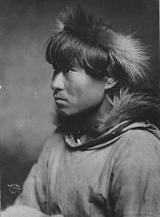
Alaska Natives are the indigenous peoples of Alaska
Alaska

Alaska is the largest U.S. state of the United States by area; it is situated in the northwest extremity of the North American continent, with Canada to the east, the Arctic Ocean to the north, and the Pacific Ocean to the west and south, with Russia further west across the Bering Strait....
. They include: Inupiat
Inupiat

The Inupiat or I?upiaq are the Inuit people of Alaska's Northwest Arctic Borough, Alaska and North Slope Borough, Alaska boroughs and the Bering Straits region....
, Yupik
Yupik

The Yupik or, in the Central Alaskan Yup'ik language, Yup'ik, are a group of indigenous peoples peoples of western, southwestern, and southcentral Alaska and the Russian Far East....
, Aleut
Aleut

The Aleuts are the Alaska Natives of the Aleutian Islands of Alaska, United States and Kamchatka Krai, Russia....
, Tlingit
Tlingit

The Tlingit are an Indigenous peoples of the Pacific Northwest Coast. Their name for themselves is Ling?t , meaning "people". The Russian language name Koloshi or the related German language name Koulischen may be encountered in older historical literature....
, Haida
Haida

The Haida are an Indigenous peoples of the Pacific Northwest Coast of North America. The Haida territories comprise the archipelago of the Queen Charlotte Islands, known in the Haida language as Haida Gwaii , and the southern half of Prince of Wales Island in the southernmost Alaska Panhandle, which is the home of a subgroup called the '...
, Tsimshian
Tsimshian

The Tsimshian are an Indigenous peoples of the Pacific Northwest Coast. Tsimshian translates to Inside the Skeena River. Their communities are in British Columbia and Alaska, around Terrace, British Columbia and Prince Rupert, British Columbia and the southernmost corner of Alaska on Annette Island....
, Eyak, and a number of Northern Athabaskan cultures.

912 the Alaska Native Brotherhood was founded. In 1971 Congress
United States Congress

The United States Congress is the Bicameralism legislature of the Federal government of the United States of the United States of America, consisting of two houses, the United States Senate and the United States House of Representatives....
 passed the Alaska Native Claims Settlement Act
Alaska Native Claims Settlement Act

The Alaska Native Claims Settlement Act, commonly abbreviated ANCSA, was signed into law by President Richard M. Nixon on December 18, 1971, the largest land claims settlement in United States history....
, which settled land
Aboriginal land claims

Aboriginal land claims are claims of Indigenous people about their Land rights#Indigenous land rights before the arrival of settlers, primarily Europeans....
 and financial claims, and provided for the establishment of 13 Alaska Native Regional Corporations
Alaska Native Regional Corporations

The Alaska Native Regional Corporations were established in 1971 when the United States Congress passed the Alaska Native Claims Settlement Act which settled aboriginal land claims and financial claims made by the Alaska Natives and provided for the establishment of 13 regional corporations to administer those claims....
 to administer those claims. Similar to the status of the Canadian
Canada

Canada is a country occupying most of northern North America, extending from the Atlantic Ocean in the east to the Pacific Ocean in the west and northward into the Arctic Ocean....
 Inuit
Inuit

Inuit is a general term for a group of culturally similar indigenous peoples inhabiting the Arctic regions of Canada, Greenland, Russia and Alaska, United States....
 and First Nations
First Nations

First Nations is a term of ethnicity that refers to the Aboriginal peoples in Canada who are neither Inuit nor M?tis people....
, which are recognized as distinct peoples, Alaska Natives are in some respects treated separately from Native Americans in the United States
Native Americans in the United States

Native Americans in the United States are the Indigenous peoples of the Americas from the regions of North America now encompassed by the continental United States United States, including parts of Alaska and the island state of Hawaii....
.


Discussion
Ask a question about 'Alaska Natives'
Start a new discussion about 'Alaska Natives'
Answer questions from other users
Full Discussion Forum


Encyclopedia


Alaska Natives are the indigenous peoples of Alaska
Alaska

Alaska is the largest U.S. state of the United States by area; it is situated in the northwest extremity of the North American continent, with Canada to the east, the Arctic Ocean to the north, and the Pacific Ocean to the west and south, with Russia further west across the Bering Strait....
. They include: Inupiat
Inupiat

The Inupiat or I?upiaq are the Inuit people of Alaska's Northwest Arctic Borough, Alaska and North Slope Borough, Alaska boroughs and the Bering Straits region....
, Yupik
Yupik

The Yupik or, in the Central Alaskan Yup'ik language, Yup'ik, are a group of indigenous peoples peoples of western, southwestern, and southcentral Alaska and the Russian Far East....
, Aleut
Aleut

The Aleuts are the Alaska Natives of the Aleutian Islands of Alaska, United States and Kamchatka Krai, Russia....
, Tlingit
Tlingit

The Tlingit are an Indigenous peoples of the Pacific Northwest Coast. Their name for themselves is Ling?t , meaning "people". The Russian language name Koloshi or the related German language name Koulischen may be encountered in older historical literature....
, Haida
Haida

The Haida are an Indigenous peoples of the Pacific Northwest Coast of North America. The Haida territories comprise the archipelago of the Queen Charlotte Islands, known in the Haida language as Haida Gwaii , and the southern half of Prince of Wales Island in the southernmost Alaska Panhandle, which is the home of a subgroup called the '...
, Tsimshian
Tsimshian

The Tsimshian are an Indigenous peoples of the Pacific Northwest Coast. Tsimshian translates to Inside the Skeena River. Their communities are in British Columbia and Alaska, around Terrace, British Columbia and Prince Rupert, British Columbia and the southernmost corner of Alaska on Annette Island....
, Eyak, and a number of Northern Athabaskan cultures.

History

In 1912 the Alaska Native Brotherhood was founded. In 1971 Congress
United States Congress

The United States Congress is the Bicameralism legislature of the Federal government of the United States of the United States of America, consisting of two houses, the United States Senate and the United States House of Representatives....
 passed the Alaska Native Claims Settlement Act
Alaska Native Claims Settlement Act

The Alaska Native Claims Settlement Act, commonly abbreviated ANCSA, was signed into law by President Richard M. Nixon on December 18, 1971, the largest land claims settlement in United States history....
, which settled land
Aboriginal land claims

Aboriginal land claims are claims of Indigenous people about their Land rights#Indigenous land rights before the arrival of settlers, primarily Europeans....
 and financial claims, and provided for the establishment of 13 Alaska Native Regional Corporations
Alaska Native Regional Corporations

The Alaska Native Regional Corporations were established in 1971 when the United States Congress passed the Alaska Native Claims Settlement Act which settled aboriginal land claims and financial claims made by the Alaska Natives and provided for the establishment of 13 regional corporations to administer those claims....
 to administer those claims. Similar to the status of the Canadian
Canada

Canada is a country occupying most of northern North America, extending from the Atlantic Ocean in the east to the Pacific Ocean in the west and northward into the Arctic Ocean....
 Inuit
Inuit

Inuit is a general term for a group of culturally similar indigenous peoples inhabiting the Arctic regions of Canada, Greenland, Russia and Alaska, United States....
 and First Nations
First Nations

First Nations is a term of ethnicity that refers to the Aboriginal peoples in Canada who are neither Inuit nor M?tis people....
, which are recognized as distinct peoples, Alaska Natives are in some respects treated separately from Native Americans in the United States
Native Americans in the United States

Native Americans in the United States are the Indigenous peoples of the Americas from the regions of North America now encompassed by the continental United States United States, including parts of Alaska and the island state of Hawaii....
. An example of this separate treatment is that Alaska Natives are allowed the harvesting of whales and other marine mammals under the Marine Mammal Protection Act
Marine Mammal Protection Act

The Marine Mammal Protection Act of 1972 was the first article of legislation to call specifically for an ecosystem approach to natural resource management and conservation....
 of 1972. In addition, Alaska Natives were not given title to land under the Dawes Act
Dawes Act

The Dawes Act was enacted on February 8, 1887 regarding the distribution of land to Native Americans in the United Statess in Oklahoma. Named after its sponsor, U.S....
 but were instead treated under the Alaska Native Allotment Act
Alaska Native Allotment Act

The Alaska Native Allotment Act of 1906, , enacted on May 17, 1906, permitted individual Alaska Natives to acquire title to up to of land in a manner similar to that afforded to Native Americans in the United States in the other states and territories of the United States under the Dawes Act ....
 until it was repealed in 1971. Another characteristic difference is that Alaska Native tribal governments do not have the power to collect taxes for business transacted on tribal land, per the United States Supreme Court decision in Alaska v. Native Village of Venetie Tribal Government
Alaska v. Native Village of Venetie Tribal Government

Alaska v. Native Village of Venetie Tribal Government, Case citation , was a case heard by the Supreme Court of the United States. The local tribal council in Venetie, Alaska, wanted to collect tax from non-tribal members doing business on tribal lands....
 because Alaska Natives (except for Tsimshian
Tsimshian

The Tsimshian are an Indigenous peoples of the Pacific Northwest Coast. Tsimshian translates to Inside the Skeena River. Their communities are in British Columbia and Alaska, around Terrace, British Columbia and Prince Rupert, British Columbia and the southernmost corner of Alaska on Annette Island....
s) do not hold reservations.

Cultures

Below is a full list of the different Alaska Native cultures. Within each culture are many different tribes.

Early Indian Languages Alaska
*Athabascan
    • Ahtna
      Ahtna

      The Ahtna are one of the tribes of Athabaskan people in Alaska. Their language, also called Ahtna language, is facing extinction. The tribe's homeland is located in the Copper River area of southern Alaska, and the name Ahtna derives from the local name for the Copper River....
    • Deg Hit’an
      Deg Hit’an

      Deg Hit?an is a group of Northern Athabascan peoples in Alaska. Their native language is called Deg Xinag. They reside in Alaska along the Anvik River in Anvik, Alaska, along the Innoko River in Shageluk, Alaska, and at Holy Cross, Alaska along the lower Yukon River....
    • Dena'ina
    • Hän
    • Holikachuk
      Holikachuk

      Holikachuk are an Athabaskan language people native to western Alaska. Their native territory includes the area surrounding the middle and upper Innoko River....
    • Kolchan
    • Koyukon
      Koyukon

      The Koyukon are a group of Athabaskan languages people living in northern Alaska. Their traditional home is along the Koyukuk River and Yukon River rivers where they subsisted by hunting and trapping for thousands of years....
    • Lower Tanana
    • Tanacross
      Tanacross

      Tanacross may refer to:*Tanacross_language, an Athabascan language of Alaska*Tanacross, Alaska, a census-designated place...
    • Upper Tanana
  • Eyak
  • Haida
    Haida

    The Haida are an Indigenous peoples of the Pacific Northwest Coast of North America. The Haida territories comprise the archipelago of the Queen Charlotte Islands, known in the Haida language as Haida Gwaii , and the southern half of Prince of Wales Island in the southernmost Alaska Panhandle, which is the home of a subgroup called the '...
  • Tlingit
    Tlingit

    The Tlingit are an Indigenous peoples of the Pacific Northwest Coast. Their name for themselves is Ling?t , meaning "people". The Russian language name Koloshi or the related German language name Koulischen may be encountered in older historical literature....
  • Tsimshian
    Tsimshian

    The Tsimshian are an Indigenous peoples of the Pacific Northwest Coast. Tsimshian translates to Inside the Skeena River. Their communities are in British Columbia and Alaska, around Terrace, British Columbia and Prince Rupert, British Columbia and the southernmost corner of Alaska on Annette Island....
  • Eskimo
    Eskimo

    Eskimos or Esquimaux are indigenous peoples who have traditionally inhabited the circumpolar region from eastern Siberia , across Alaska and Canada, and all of Greenland ....
    • Inupiat (an Inuit
      Inuit

      Inuit is a general term for a group of culturally similar indigenous peoples inhabiting the Arctic regions of Canada, Greenland, Russia and Alaska, United States....
       people)
    • Yupik
      Yupik

      The Yupik or, in the Central Alaskan Yup'ik language, Yup'ik, are a group of indigenous peoples peoples of western, southwestern, and southcentral Alaska and the Russian Far East....
      • Siberian Yupik
        Siberian Yupik

        Siberian Yupiks, or Yuits, are indigenous people who reside along the coast of the Chukchi Peninsula in the far Russian Far East of the Russia and on St....
      • Yup'ik
        Yup'ik

        The Yup'ik people , are an Eskimo people of western and southwestern Alaska ranging from southern Norton Sound southwards along the coast of the Bering Sea on the Yukon-Kuskokwim Delta and along the northern coast of Bristol Bay as far east as Nushagak Bay and the northern Alaska Peninsula at Naknek River and Egegik Bay....
        • Cup'ik
      • Sugpiaq (Alutiiq)
        • Chugach
          Chugach

          Chugach is the name of an Alaska Native culture and group of people in the region of the Kenai Peninsula and Prince William Sound. The Chugach people are an Alutiiq people who speak the Chugach dialect of the Alutiiq language....
        • Koniag
  • Aleut
    Aleut

    The Aleuts are the Alaska Natives of the Aleutian Islands of Alaska, United States and Kamchatka Krai, Russia....
     (in their own language they refer to themselves as Unangan)
  • Alutiiq
    Alutiiq

    The Alutiiq , also called Pacific Yupik or Sugpiaq, are a southern coastal people of the Yupik peoples of Alaska. Their language is also called Alutiiq language....


See also

  • List of Alaska Native Tribal Entities — the list of officially recognized Native Villages and other "tribal entities", according to the United States
    United States

    The United States of America is a Federal government constitutional republic comprising U.S. state and a federal district. The country is situated mostly in central North America, where its Contiguous United States and Washington, D.C., the Capital districts and territories, lie between the Pacific Ocean and Atlantic Oceans, Borders of the U...
     Bureau of Indian Affairs
    Bureau of Indian Affairs

    The Bureau of Indian Affairs is an agency of the federal government of the United States within the United States Department of the Interior charged with the administration and management of 55.7 million acres of land held in trust by the United States for Native Americans in the United States, List of Native American Tribal Entities and A...
    .
  • Native Americans in the United States
    Native Americans in the United States

    Native Americans in the United States are the Indigenous peoples of the Americas from the regions of North America now encompassed by the continental United States United States, including parts of Alaska and the island state of Hawaii....
  • Prehistory of Alaska
    Prehistory of Alaska

    Prehistoric Alaska begins with Paleolithic peoples moving into northwestern North America sometime between 60,000 and 50,000 BC across the Bering Land Bridge in western Alaska....
  • First Alaskans Institute
    First Alaskans Institute

    The First Alaskans Institute is a non-profit foundation dedicated to developing the capacities of Alaska Natives and their communities to meet the educational, economic and social challenges of the future....

External links