
|
|
|
|
Alan Clark
|
| |
|
| |
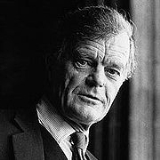
Alan Kenneth Mackenzie Clark (13 April 1928 – 5 September 1999) was a British Conservative politician, historian and diarist. He also became a Privy Councillor, and was thus styled The Right Honourable Alan Clark, before which he held the courtesy title of The Honourable as the son of a peer.
Clark was the elder son of the renowned art historian Kenneth Clark (later Lord Clark of Saltwood). He was educated at St Cyprian's School, Eton and Christ Church, Oxford, where he read Modern History.

Discussion
Ask a question about 'Alan Clark'
Start a new discussion about 'Alan Clark'
Answer questions from other users
|
Encyclopedia
Alan Kenneth Mackenzie Clark (13 April 1928 – 5 September 1999) was a British Conservative politician, historian and diarist. He also became a Privy Councillor, and was thus styled The Right Honourable Alan Clark, before which he held the courtesy title of The Honourable as the son of a peer.
Early life
Alan Clark was the elder son of the renowned art historian Kenneth Clark (later Lord Clark of Saltwood). He was educated at St Cyprian's School, Eton and Christ Church, Oxford, where he read Modern History. He served in the Household Cavalry before he went on to read for the bar. He was called to the bar in 1955, but did not practise. Instead he became a military historian.
Historical writing
Clark's first book, The Donkeys (1961), was a revisionist history of the British Expeditionary Force's campaigns at the beginning of the Great War. The book covers Western Front operations during 1915, including the offensives at Neuve Chapelle and Loos, and ending with the dismissal of Sir John French as Commander-in-Chief of the BEF, and his replacement by Douglas Haig. It was well received by the public but greatly irritated the Army. In more recent years this work has been criticised by some historians for being one-sided in its treatment of World War One generals. Nonetheless, the book was the inspiration for the popular pacifist musical Oh! What a Lovely War, though Clark himself was not pleased with the adaptation. The book's title is drawn from the expression "lions led by donkeys" which has been widely used to compare British soldiers to their commanders. Clark attributed this quote to the Memoirs of Erich von Falkenhayn reporting a conversation between two German generals, Max Hoffmann and Erich Ludendorff, although when challenged by the military historian John Terraine, Clark was unable to substantiate the source for this quotation.
Clark produced several more studies of the First and Second World Wars, including Barbarossa, after the Operation codename, a history of the Eastern Front in the Second World War, before becoming involved in politics.
Political career
Clark entered Parliament as Member of Parliament (MP) for Plymouth Sutton at the February 1974 general election and served in various junior ministerial posts at the departments of Employment, Trade and Defence during the Thatcher governments of the 1980s.
He was an outspoken maverick with strong views on animal rights, British unionism, race, and class. The diaries reveal recurring worries about Japanese militarism but his real views are often not clear because he enjoyed making 'tongue in cheek' remarks to the discomfiture of those he believed to be fools, as in his sympathy for a British version of National Socialism. It is evident however that he was a nationalist and a protectionist and at least always put the British interest above all others, which included strong Euroscepticism. Clark once declared: "It is natural to be proud of your race and your country," and many critics regarded such sentiments of racial superiority as the motivation behind one particular Commons performance when he referred to Africa as "Bongo Bongo land". However, many were forced to retract their criticisms after it emerged that "Bongo Bongo Land" was actually the name of a region of Sub-Saharan Africa, a fact Clark discovered while on safari with Kenneth Williams.
Although he was personally liked by Margaret Thatcher - a leader for whom he had great admiration and an occasional passion - she never entrusted him with high office and he left Parliament in 1992 following her fall from power. His admission during the Matrix Churchill trial that he had been 'economical with the actualité in answer to parliamentary questions over export licences to Iraq caused the collapse of the trial and the establishment of the Scott Inquiry into Arms-for-Iraq, which helped undermine John Major's government. At the same time he was cited in a divorce case in South Africa in which it was revealed he had had affairs with Valerie Harkess, the wife of a South African judge, and her two daughters, Josephine and Alison. After sensationalist tabloid headlines, Clark's wife Jane remarked upon what Clark had called "the coven" with the catty line: 'Well, what do you expect when you sleep with below stairs types?', and referred to her husband as an: 'S, H, One, T'.
When Clark was a junior minister under Thatcher, responsible for overseeing arms sales to foreign governments, he was interviewed by journalist John Pilger who asked him:
- JP
"Did it bother you personally that you were causing such mayhem and human suffering (by supplying arms for Indonesia's war in East Timor)?"AC "No, not in the slightest, it never entered my head."JP "I ask the question because I read you are a vegetarian and are seriously concerned about the way animals are killed."AC "Yeah?"JP "Doesn’t that concern extend to humans?"AC "Curiously not."
Clark published the first volume of his political and personal diaries in 1993, which caused a minor scandal at the time with their candid descriptions of senior Conservative politicians such as Michael Heseltine, Douglas Hurd and Kenneth Clarke. In particular, they embarrassed former chief whip Michael Jopling, reported by Clark as having described the self-made Heseltine as being someone who "buys his own furniture" (as opposed to inheriting it). The account of Thatcher's downfall in 1990 has been described, by some reviewers, as the most vivid that we have and is now accepted by most contemporary political historians to be the definitive account. Two subsequent volumes of his diaries have covered the earlier and later parts of Clark's parliamentary career.
Following the election of 1992, Clark became bored with life outside politics and returned to Parliament as member for Kensington and Chelsea in the election of 1997. Clark was critical of NATO's campaign in the Balkans.
To date he is the only Member of Parliament to have been accused in the House of Commons of being drunk at the dispatch box. In 1983 while Parliamentary Under-Secretary of State in the Department for Employment, he was responsible for moving the approval of regulations relating to equal pay in the House of Commons. His speech followed a wine-tasting dinner with his friend of many years standing, Christopher Selmes. The complexities of the regulations were too unclear for him to answer questions, and the then-opposition MP, Clare Short stood up and, after acknowledging that MPs cannot formally accuse each other of being drunk in the House of Commons, accused him of being "incapable", a euphemism for 'drunk'. Although the Government benches were furious at the accusation, Clark later admitted in his diaries that the wine-tasting had affected him.
Death
He died in 1999 of a brain tumour. The account of his slow death has also been lauded as being a moving and explicit description of what it is like to die, as written by a natural writer. It has been claimed by Father Michael Seed that Clark converted to Roman Catholicism just before his death, but his widow denied this. He is buried in the grounds of Saltwood Castle. After his death, the Kensington and Chelsea constituency was contested and won by Michael Portillo.
Media
In 2004, John Hurt portrayed Clark in the BBC's The Alan Clark Diaries which serialised the Diaries, re-igniting some of the controversies surrounding their original publication and once again brought his name into the UK press and media. An authorised biography of Alan Clark, by the editor of his diaries, Ion Trewin, is due for publication in July 2009.
Styles and honours
- Mr Alan Clark (1928-1969)
- The Hon. Alan Clark (1969-1974)
- The Hon. Alan Clark MP (1974-1991)
- The Rt. Hon. Alan Clark MP (1991-1992)
- The Rt. Hon. Alan Clark (1992-1997)
- The Rt. Hon. Alan Clark MP (1997-1999)
Books
Diaries: Three volumes 1972-1999Diaries: In Power 1983-1992 (1993) Volume 2 Diaries: Into Politics 1972-1982 (2000) Volume 3 Diaries: The Last Diaries 1993-1999 (2002) The Donkeys, A History of the British Expeditionary Force in 1915 (1961) The Fall Of Crete (1963) Barbarossa, The Russo-German Conflict 1941-45 (1965) The Suicide of Empires (1971) Aces High, The War in the Air Over the Western Front 1914-18 (1973) The Tories: Conservatives and the Nation State 1922-1997 (1998) Backfire, A Passion for Cars and Motoring (2001) Summer Season: A Novel The Lion Heart: A tale of the war in Vietnam
External links
Offices held
|
| |
|
|