
Home      Discussion      Topics      Dictionary      Almanac
Signup       Login
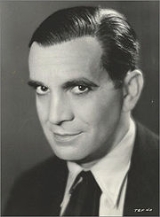
Al Jolson

Al Jolson

Overview
Al Jolson was an American singer, comedian and actor. In his heyday, he was dubbed "The World's Greatest Entertainer".
Discussion
Ask a question about 'Al Jolson'
Start a new discussion about 'Al Jolson'
Answer questions from other users
Full Discussion Forum
 
Unanswered Questions
Encyclopedia
Al Jolson was an American singer, comedian and actor. In his heyday, he was dubbed "The World's Greatest Entertainer".

His performing style was brash and extroverted, and he popularized a large number of songs that benefited from his "shamelessly sentimental, melodramatic approach". Numerous well-known singers were influenced by his music, including Bing Crosby
Bing Crosby
Harry Lillis "Bing" Crosby was an American singer and actor. Crosby's trademark bass-baritone voice made him one of the best-selling recording artists of the 20th century, with over half a billion records in circulation....

 Judy Garland
Judy Garland
Judy Garland was an American actress and singer. Through a career that spanned 45 of her 47 years and for her renowned contralto voice, she attained international stardom as an actress in musical and dramatic roles, as a recording artist and on the concert stage...

, rock and country entertainer Jerry Lee Lewis
Jerry Lee Lewis
Jerry Lee Lewis is an American rock and roll and country music singer-songwriter and pianist. An early pioneer of rock and roll music, Lewis's career faltered after he married his young cousin, and he afterwards made a career extension to country and western music. He is known by the nickname 'The...

, and Bob Dylan
Bob Dylan
Bob Dylan is an American singer-songwriter, musician, poet, film director and painter. He has been a major and profoundly influential figure in popular music and culture for five decades. Much of his most celebrated work dates from the 1960s when he was an informal chronicler and a seemingly...

, who once referred to him as "somebody whose life I can feel". Broadway critic Gilbert Seldes
Gilbert Seldes
Gilbert Vivian Seldes was an American writer and cultural critic. He was editor and drama critic of The Dial. He also hosted the NBC television program The Subject is Jazz....

 compared him to "the Great God Pan," claiming that Jolson represented "the concentration of our national health and gaiety."

In the 1930s, he was America's most famous and highest paid entertainer. Between 1911 and 1928, Jolson had nine sell-out Winter Garden
Winter Garden Theatre
The Winter Garden Theatre is a Broadway theatre located at 1634 Broadway in midtown Manhattan.-History:The structure was built by William Kissam Vanderbilt in 1896 to be the American Horse Exchange....

 shows in a row, more than 80 hit records, and 16 national and international tours. Although he's best remembered today as the star in the first (full length) talking movie, The Jazz Singer
The Jazz Singer (1927 film)
The Jazz Singer is a 1927 American musical film. The first feature-length motion picture with synchronized dialogue sequences, its release heralded the commercial ascendance of the "talkies" and the decline of the silent film era. Produced by Warner Bros. with its Vitaphone sound-on-disc system,...

 in 1927, he later starred in a series of successful musical films throughout the 1930s. After a period of inactivity, his stardom returned with the 1946 Oscar-winning biographical film, The Jolson Story
The Jolson Story
The Jolson Story is a 1946 musical biography which purports to tell the life story of singer Al Jolson. It stars Larry Parks as Jolson, Evelyn Keyes as "Julie Benson" , William Demarest as his manager, Ludwig Donath and Tamara Shayne as his parents, and Scotty Beckett as the young Jolson.The...

. Larry Parks
Larry Parks
Larry Parks was an American stage and movie actor. He was born Samuel Klausman Lawrence Parks. His career was virtually ended when he admitted to having once been a member of a Communist party cell, which led to his blacklisting by all Hollywood studios.-Background:Parks grew up in Joliet,...

 played Jolson with the songs dubbed in with Jolson’s real voice. A sequel, Jolson Sings Again
Jolson Sings Again
Jolson Sings Again is the 1949 film sequel to The Jolson Story, both of which cover the life of singer Al Jolson.-Synopsis:In this follow-up to The Jolson Story, we pick up the singer's career just as he has returned to the stage after a premature retirement. But his wife has left him and the...

, was released in 1949, and was nominated for three Oscars. After the attack on
Attack on Pearl Harbor
The attack on Pearl Harbor was a surprise military strike conducted by the Imperial Japanese Navy against the United States naval base at Pearl Harbor, Hawaii, on the morning of December 7, 1941...

 Pearl Harbor
Pearl Harbor
Pearl Harbor, known to Hawaiians as Puuloa, is a lagoon harbor on the island of Oahu, Hawaii, west of Honolulu. Much of the harbor and surrounding lands is a United States Navy deep-water naval base. It is also the headquarters of the U.S. Pacific Fleet...

, Jolson became the first star to entertain troops overseas during World War II
World War II
World War II, or the Second World War , was a global conflict lasting from 1939 to 1945, involving most of the world's nations—including all of the great powers—eventually forming two opposing military alliances: the Allies and the Axis...

, and again in 1950 became the first star to perform for G.I.s in Korea
Korean War
The Korean War was a conventional war between South Korea, supported by the United Nations, and North Korea, supported by the People's Republic of China , with military material aid from the Soviet Union...

, doing 42 shows in 16 days. He died just weeks after returning to the U.S., partly due to the physical exertion of performing. Defense Secretary George Marshall
George Marshall
George Catlett Marshall was an American military leader, Chief of Staff of the Army, Secretary of State, and the third Secretary of Defense...

 afterward awarded the Medal of Merit
Medal of Merit
Several countries award a military or civil medal called Medal of Merit:* Medal of Merit of the Dominican Woman* Medal of Merit * Medal of Merit * Medal of Merit...

 to Jolson's family.

According to the St. James Encyclopedia of Popular Culture, "Jolson was to jazz
Jazz
Jazz is a musical style that originated at the beginning of the 20th century in African American communities in the Southern United States. It was born out of a mix of African and European music traditions. From its early development until the present, jazz has incorporated music from 19th and 20th...

, blues
Blues
Blues is the name given to both a musical form and a music genre that originated in African-American communities of primarily the "Deep South" of the United States at the end of the 19th century from spirituals, work songs, field hollers, shouts and chants, and rhymed simple narrative ballads...

, and ragtime
Ragtime
Ragtime is an original musical genre which enjoyed its peak popularity between 1897 and 1918. Its main characteristic trait is its syncopated, or "ragged," rhythm. It began as dance music in the red-light districts of American cities such as St. Louis and New Orleans years before being published...

 what Elvis Presley
Elvis Presley
Elvis Aaron Presley was one of the most popular American singers of the 20th century. A cultural icon, he is widely known by the single name Elvis. He is often referred to as the "King of Rock and Roll" or simply "the King"....

 was to rock 'n' roll". Being the first popular singer to make a spectacular "event" out of singing a song, he became a “rock star” before the dawn of rock music. His specialty was building stage runways extending out into the audience. He would run up and down the runway and across the stage, "teasing, cajoling, and thrilling the audience", often stopping to sing to individual members, all the while the "perspiration would be pouring from his face, and the entire audience would get caught up in the ecstasy of his performance". According to music historian Larry Stempel, "No one had heard anything quite like it before on Broadway." Author Stephen Banfield agrees, writing that Jolson's style was "arguably the single most important factor in defining the modern musical . . ."

He enjoyed performing in blackface
Blackface
Blackface is a form of theatrical makeup used in minstrel shows, and later vaudeville, in which performers create a stereotyped caricature of a black person. The practice gained popularity during the 19th century and contributed to the proliferation of stereotypes such as the "happy-go-lucky darky...

 makeup – a theatrical convention since the mid-19th century. With his unique and dynamic style of singing black music, like jazz and blues, he was later credited with single-handedly introducing African-American music to white audiences. As early as 1911 he became known for fighting against anti-black discrimination
Discrimination
Discrimination is the prejudicial treatment of an individual based on their membership in a certain group or category. It involves the actual behaviors towards groups such as excluding or restricting members of one group from opportunities that are available to another group. The term began to be...

 on Broadway
Broadway theatre
Broadway theatre, commonly called simply Broadway, refers to theatrical performances presented in one of the 40 professional theatres with 500 or more seats located in the Theatre District centered along Broadway, and in Lincoln Center, in Manhattan in New York City...

. Jolson's well-known theatrics and his promotion of equality
Racial equality
Racial equality means different things in different contexts. It mostly deals with an equal regard to all races.It can refer to a belief in biological equality of all human races....

 on Broadway helped pave the way for many black performers, playwrights, and songwriters, including Cab Calloway
Cab Calloway
Cabell "Cab" Calloway III was an American jazz singer and bandleader. He was strongly associated with the Cotton Club in Harlem, New York City where he was a regular performer....

, Louis Armstrong
Louis Armstrong
Louis Armstrong , nicknamed Satchmo or Pops, was an American jazz trumpeter and singer from New Orleans, Louisiana....

, Duke Ellington
Duke Ellington
Edward Kennedy "Duke" Ellington was an American composer, pianist, and big band leader. Ellington wrote over 1,000 compositions...

, Fats Waller
Fats Waller
Fats Waller , born Thomas Wright Waller, was a jazz pianist, organist, composer, singer, and comedic entertainer...

, and Ethel Waters
Ethel Waters
Ethel Waters was an American blues, jazz and gospel vocalist and actress. She frequently performed jazz, big band, and pop music, on the Broadway stage and in concerts, although she began her career in the 1920s singing blues.Her best-known recordings includes, "Dinah", "Birmingham Bertha",...

.

Early life


Al Jolson was born as Asa Yoelson in what was then the Jewish village
Shtetl
A shtetl was typically a small town with a large Jewish population in Central and Eastern Europe until The Holocaust. Shtetls were mainly found in the areas which constituted the 19th century Pale of Settlement in the Russian Empire, the Congress Kingdom of Poland, Galicia and Romania...

 of Srednik
Seredžius
Seredžius is a town in Lithuania, situated on the right bank of the Neman River near its confluence with Dubysa River. According to the 2001 census, it had population of 749.-Name:...

  in the Kovno Governorate
Kovno Governorate
The Kovno Governorate or Government of Kovno was a governorate of the Russian Empire. Its capital was Kovno . It was formed on 18 December 1842 by tsar Nicholas I from the western part of the Vilna Governorate, and the order was carried out on 1 July 1843. It used to be a part of Northwestern Krai...

 of the Russian Empire
Russian Empire
The Russian Empire was a state that existed from 1721 until the Russian Revolution of 1917. It was the successor to the Tsardom of Russia and the predecessor of the Soviet Union...

. He was the fifth and youngest child of Moses Reuben and Naomi (Cantor) Yoelson; his four siblings were Rose, another sister who died in infancy, Etta and Hirsch (Harry). Jolson did not know the date of his birth, so he later chose to celebrate it as May 26, 1886. In 1891, his father, who was qualified as a rabbi
Rabbi
In Judaism, a rabbi is a teacher of Torah. This title derives from the Hebrew word רבי , meaning "My Master" , which is the way a student would address a master of Torah...

 and cantor
Hazzan
A hazzan or chazzan is a Jewish cantor, a musician trained in the vocal arts who helps lead the congregation in songful prayer.There are many rules relating to how a cantor should lead services, but the idea of a cantor as a paid professional does not exist in classical rabbinic sources...

, moved to New York
New York City
New York is the most populous city in the United States and the center of the New York Metropolitan Area, one of the most populous metropolitan areas in the world. New York exerts a significant impact upon global commerce, finance, media, art, fashion, research, technology, education, and...

 to secure a better future for his family. By 1894, Moses Yoelson could afford to pay the fare to bring Naomi and his four children to America. By the time they arrived, he had found work at the Talmud Torah Synagogue in the Southwest Waterfront neighborhood of Washington, D.C.
Washington, D.C.
Washington, D.C., formally the District of Columbia and commonly referred to as Washington, "the District", or simply D.C., is the capital of the United States. On July 16, 1790, the United States Congress approved the creation of a permanent national capital as permitted by the U.S. Constitution....

, where the family was reunited.

Hard times hit the family when his mother, Naomi, died in late 1894. Following his mother's death, young Asa was in a state of withdrawal for seven months. Upon being introduced to show business in 1895 by entertainer Al Reeves, Asa and Hirsch became fascinated by the industry, and by 1897, the brothers were singing for coins on local street corners, using the names "Al" and "Harry". They would usually use the money to buy tickets to shows at the National Theater
National Theatre (Washington, D.C.)
The National Theatre is located in Washington, D.C., and is a venue for a variety of live stage productions with seating for 1,676.Despite its name, it is not a governmentally funded national theatre, but operated by a private, non-profit organization....

. Asa and Hirsch spent most of their days working different jobs as a team.

Burlesque and vaudeville


In the spring of 1902, he accepted a job with Walter L. Main's Circus. Although Main had hired Jolson as an usher, Main was impressed by Jolson's singing voice and gave him a position as a singer during the circus' Indian Medicine Side Show segment.

By the end of the year, however, the circus had folded, and Jolson was again out of work. In May 1903, the head producer of the burlesque
American burlesque
American Burlesque is a genre of variety show. Derived from elements of Victorian burlesque, music hall and minstrel shows, burlesque shows in America became popular in the 1860s and evolved to feature ribald comedy and female striptease...

 show, Dainty Duchess Burlesquers, agreed to give Jolson a part in one show. Asa gave a remarkable performance of "Be My Baby Bumble Bee", and the producer agreed to keep him for future shows. Unfortunately, the show closed by the end of the year. Asa was able to avoid financial troubles by forming a vaudeville
Vaudeville
Vaudeville was a theatrical genre of variety entertainment in the United States and Canada from the early 1880s until the early 1930s. Each performance was made up of a series of separate, unrelated acts grouped together on a common bill...

 partnership with his brother Hirsch, now a vaudeville performer who was known as Harry Yoelson. The brothers worked for the William Morris Agency
William Morris Agency
WME is the largest talent agency in the world, with offices in Beverly Hills, New York City, Nashville, London, and Miami. WME represents elite artists from all facets of the entertainment industry, including motion pictures, television, music, theatre, publishing, and physical production...

.

Asa and Harry also eventually were teamed with Joe Palmer. During their time with Palmer, they were able to get bookings in a nationwide tour. However, live performances were fading in popularity, as nickelodeon theaters captured audiences; by 1908, nickelodeon theaters were completely dominant throughout New York City as well. While performing in a Brooklyn
Brooklyn
Brooklyn is the most populous of New York City's five boroughs, with nearly 2.6 million residents, and the second-largest in area. Since 1896, Brooklyn has had the same boundaries as Kings County, which is now the most populous county in New York State and the second-most densely populated...

 theater in 1904, Al decided on a new approach and began wearing blackface
Blackface
Blackface is a form of theatrical makeup used in minstrel shows, and later vaudeville, in which performers create a stereotyped caricature of a black person. The practice gained popularity during the 19th century and contributed to the proliferation of stereotypes such as the "happy-go-lucky darky...

 makeup. The conversion to blackface boosted his career and he began wearing blackface in all of his shows.

In the fall of 1905, Harry left the trio, following a harsh argument with Al. Harry had refused Al's request to take care of Joe Palmer — who was in a wheelchair — while he went out on a date. After Harry's departure, Al and Joe Palmer worked as a duo, but were not very successful together. By 1906, the two agreed to separate, and Jolson was on his own.

Al became a regular at the Globe and Wigwam Theater in San Francisco, California
California
California is a state located on the West Coast of the United States. It is by far the most populous U.S. state, and the third-largest by land area...

, and remained successful nationwide as a vaudeville singer He took up residence in San Francisco, saying the earthquake
1906 San Francisco earthquake
The San Francisco earthquake of 1906 was a major earthquake that struck San Francisco, California, and the coast of Northern California at 5:12 a.m. on Wednesday, April 18, 1906. The most widely accepted estimate for the magnitude of the earthquake is a moment magnitude of 7.9; however, other...

-devastated area needed someone to cheer them up. In 1908, Jolson — needing money for himself and his new wife Henrietta — returned to New York. In 1909, Al's singing caught the attention of Lew Dockstader
Lew Dockstader
Lew Dockstader was a United States singer, comedian, and Vaudeville star, best known as a blackface minstrel show performer in the late 19th century and early years of the 20th century.Dockstader performed both as a solo act and leading a popular Minstrel troupe...

, who was the producer and star of Dockstader's Minstrels. Al accepted Dockstader's offer, and became a regular blackface performer.

Winter Garden Theater


According to Esquire
Esquire (magazine)
Esquire is a men's magazine, published in the U.S. by the Hearst Corporation. Founded in 1932, it flourished during the Great Depression under the guidance of founder and editor Arnold Gingrich.-History:...

 magazine, "J. J. Shubert
Jacob J. Shubert
Jacob J. Shubert was naturalized American theatre owner/operator and producer and a member of the famous theatrical Shubert family....

, impressed by Jolson’s overpowering display of energy, booked him for La Belle Paree, a musical comedy which opened at the Winter Garden
Winter Garden Theatre
The Winter Garden Theatre is a Broadway theatre located at 1634 Broadway in midtown Manhattan.-History:The structure was built by William Kissam Vanderbilt in 1896 to be the American Horse Exchange....

 in 1911. Within a month Jolson was a star. From then until 1926, when he retired from the stage, he could boast an unbroken series of smash hits."

On March 20, 1911, Jolson starred in his first musical revue
Revue
A revue is a type of multi-act popular theatrical entertainment that combines music, dance and sketches. The revue has its roots in 19th century American popular entertainment and melodrama but grew into a substantial cultural presence of its own during its golden years from 1916 to 1932...

 at the Winter Garden Theater in New York City, La Belle Paree, which also greatly helped launch his career as a singer. The opening night drew a huge crowd to the theater, and that evening Jolson gained audience popularity by singing old Stephen Foster
Stephen Foster
Stephen Collins Foster , known as the "father of American music", was the pre-eminent songwriter in the United States of the 19th century...

 songs in blackface. In the wake of that phenomenal opening night, Jolson was given a position in the show's cast. The show closed after 104 performances, and during its run Jolson's popularity grew greatly. Following La Belle Paree, Jolson accepted an offer to perform in the musical Vera Violetta. The show opened on November 20, 1911, and, like La Belle Paree, was a phenomenal success. In the show, Jolson again portrayed the role of a blackface singer, and managed to become so popular, that his weekly salary- which he earned from his success in La Belle Paree- of $500 was increased to $750.

After Vera Violetta ran its course, Jolson starred in another musical, The Whirl of Society, propelling his career on Broadway
Broadway theatre
Broadway theatre, commonly called simply Broadway, refers to theatrical performances presented in one of the 40 professional theatres with 500 or more seats located in the Theatre District centered along Broadway, and in Lincoln Center, in Manhattan in New York City...

 to new heights. During his time at the Winter Garden, Jolson would tell the audience "you ain't heard nothing yet" before performing additional songs. In the play, Jolson debuted his signature blackface character, "Gus." The play was so successful, that Winter Garden owner Lee Shubert
Lee Shubert
Levi "Lee" Shubert was a Polish-born American theatre owner/operator and producer and the oldest of seven siblings of the theatrical Shubert family....

 agreed to sign Jolson to a seven year contract with a salary of $1,000 a week. Jolson would reprise his role as "Gus" in future plays and by 1914, Jolson achieved so much popularity with the theater audience that his $1,000 a week salary was doubled to $2,000 a week. In 1916, Robinson Crusoe, Jr.
Robinson Crusoe, Jr.
Robinson Crusoe, Jr. is a Broadway musical with a book by Edgar Smith, lyrics by Harold R. Atteridge, and music by Sigmund Romberg and James Hanley....

 was the first musical where he was featured as the star character. In 1918, Jolson's acting career would be pushed even further, after he starred in the hit musical Sinbad
Sinbad (musical)
Sinbad is a Broadway musical with a book and lyrics by Harold R. Atteridge and music by Sigmund Romberg, Al Jolson and others.Produced by Lee Shubert and J. J. Shubert, the Broadway production, staged by J. C. Huffman and J. J. Shubert, opened on February 14, 1918 at the Winter Garden Theatre,...

.

It became the most successful Broadway musical of 1918 and 1919. A new song was later added to the show that would become composer George Gershwin
George Gershwin
George Gershwin was an American composer and pianist. Gershwin's compositions spanned both popular and classical genres, and his most popular melodies are widely known...

's first hit recording, "Swanee
Swanee (song)
"Swanee" is an American popular song written in 1919 by George Gershwin, with lyrics by Irving Caesar. It is most often associated with singer Al Jolson....

". Jolson also added another song to the show, "My Mammy
My Mammy
"My Mammy" is a U.S. popular song with music by Walter Donaldson and lyrics by Joe Young and Sam M. Lewis.Though associated with Al Jolson, who performed the song very successfully, "My Mammy" was performed first by William Frawley as a vaudeville-style act during 1918. Jolson heard the song and...

". By 1920, Jolson had become the biggest star on Broadway.

Jolson's own theater


His next play, Bombo
Bombo (musical)
Bombo is a Broadway musical with a book and lyrics by Harold R. Atteridge and music by Sigmund Romberg.Produced by Lee Shubert and J. J. Shubert, the Broadway production, staged by J. C. Huffman, opened on October 6, 1921 at the Jolson Theatre, where it ran for 219 performances...

, would also take his career to new heights and became so successful that it went beyond Broadway and held performances nationwide. It also led Lee Shubert to rename his newly built theater, which was across from Central Park
Central Park
Central Park is a public park in the center of Manhattan in New York City, United States. The park initially opened in 1857, on of city-owned land. In 1858, Frederick Law Olmsted and Calvert Vaux won a design competition to improve and expand the park with a plan they entitled the Greensward Plan...

, as Jolson's Fifty-ninth Street Theatre. Aged 35, Jolson became the youngest man in American history to have a theatre named after him.

But on the opening night of Bombo, and the first performance at the new theatre, he suffered from extreme stage fright, walking up and down the streets for hours before showtime. Out of fear, he lost his voice backstage and begged the stagehands not to raise the curtains. But when the curtains went up, he "was [still] standing in the wings trembling and sweating". After being physically shoved onto the stage by his brother Harry, he performed and received an ovation that he would never forget: "For several minutes, the applause continued while Al stood and bowed after the first act". He refused to go back on stage for the second act, but the audience "just stamped its feet and chanted 'Jolson, Jolson', until he came back out." He took thirty-seven curtain calls that night, and told the audience "I'm a happy man tonight."

In March, 1922, he moved the production to the larger Century Theater for a special benefit performance to aid injured Jewish veterans
Jewish War Veterans of the United States of America
The Jewish War Veterans of the United States of America is an American Jewish veterans' organization, and the oldest veterans group in the United States. It has an estimated 37,000 members.-History and purpose:The Jewish War Veterans were established in 1896...

 of World War I
World War I
World War I , which was predominantly called the World War or the Great War from its occurrence until 1939, and the First World War or World War I thereafter, was a major war centred in Europe that began on 28 July 1914 and lasted until 11 November 1918...

. After taking the show on the road for a season, he returned in May, 1923, to perform Bombo at "his first love", the Winter Garden. The reviewer for the New York Times wrote, "He returned like the circus, bigger and brighter and newer than ever. ... Last night's audience was flatteringly unwilling to go home, and when the show proper was over, Jolson reappeared before the curtain and sang more songs, old and new."

"I don’t mind going on record as saying that he is one of the few instinctively funny men on our stage", wrote reviewer Charles Darnton in the New York Evening World
New York World
The New York World was a newspaper published in New York City from 1860 until 1931. The paper played a major role in the history of American newspapers...

. "Everything he touches turns to fun. To watch him is to marvel at his humorous vitality. He is the old-time minstrel
Minstrel
A minstrel was a medieval European bard who performed songs whose lyrics told stories of distant places or of existing or imaginary historical events. Although minstrels created their own tales, often they would memorize and embellish the works of others. Frequently they were retained by royalty...

 man turned to modern account. With a song, a word, or even a suggestion he calls forth spontaneous laughter. And here you have the definition of a born comedian."

Performing in blackface


Performing in blackface
Blackface
Blackface is a form of theatrical makeup used in minstrel shows, and later vaudeville, in which performers create a stereotyped caricature of a black person. The practice gained popularity during the 19th century and contributed to the proliferation of stereotypes such as the "happy-go-lucky darky...

 makeup was a theatrical convention used by many entertainers at the beginning of the 20th century, having its origin in the minstrel show
Minstrel show
The minstrel show, or minstrelsy, was an American entertainment consisting of comic skits, variety acts, dancing, and music, performed by white people in blackface or, especially after the Civil War, black people in blackface....

. Al Jolson was the most famous performer to wear blackface makeup when singing. Working behind a blackface mask "gave him a sense of freedom and spontaneity he had never known" According to film historian Eric Lott, for the white minstrel man "to put on the cultural forms of 'blackness' was to engage in a complex affair of manly mimicry...To wear or even enjoy blackface was literally, for a time, to become black, to inherit the cool, virility, humility, abandon, or gaité de coeur that were the prime components of white ideologies of black manhood."

As metaphor of mutual suffering


Jazz historians have described Jolson’s blackface and singing style as metaphors for Jewish and black suffering throughout history. Jolson’s first film, The Jazz Singer
The Jazz Singer (1927 film)
The Jazz Singer is a 1927 American musical film. The first feature-length motion picture with synchronized dialogue sequences, its release heralded the commercial ascendance of the "talkies" and the decline of the silent film era. Produced by Warner Bros. with its Vitaphone sound-on-disc system,...

, for instance, is described by historian Michael Alexander
Michael Alexander (academic)
Michael Scott Alexander is an associate professor in the religious studies department of the University of California, Riverside.He graduated from the University of Pennsylvania, and from Yale University in 1999 with a PhD...

 as an expression of the liturgical
Liturgy
Liturgy is either the customary public worship done by a specific religious group, according to its particular traditions or a more precise term that distinguishes between those religious groups who believe their ritual requires the "people" to do the "work" of responding to the priest, and those...

 music of Jews with the "imagined music of African Americans," noting that "prayer and jazz become metaphors for Jews and blacks." Playwright Samson Raphaelson
Samson Raphaelson
Samson Raphaelson was an American screenwriter and playwright.Born in New York City, Raphaelson worked on nine films with Ernst Lubitsch, including Trouble in Paradise , The Shop Around the Corner , Heaven Can Wait , and That Lady in Ermine...

, after seeing Jolson perform his stage show, "Robinson Crusoe," stated that "he had an epiphany: 'My God, this isn’t a jazz singer,' he said. 'This is a cantor
Hazzan
A hazzan or chazzan is a Jewish cantor, a musician trained in the vocal arts who helps lead the congregation in songful prayer.There are many rules relating to how a cantor should lead services, but the idea of a cantor as a paid professional does not exist in classical rabbinic sources...

!'" The image of the blackfaced cantor remained in Raphaelson’s mind when he conceived of the story which led to The Jazz Singer.

Upon release of the film, the first full-length sound picture, film reviewers saw the symbolism and metaphors portrayed by Jolson in his role as the son of a cantor wanting to become a "jazz singer":
"Is there any incongruity in this Jewish boy with his face painted like a Southern Negro singing in the Negro dialect? No, there is not. Indeed, I detected again and again the minor key of Jewish music, the wail of the Chazan, the cry of anguish of a people who had suffered. The son of a line of rabbis well knows how to sing the songs of the most cruelly wronged people in the world’s history."


According to Alexander, East European Jews were uniquely qualified to understand the music, noting how Jolson himself made the comparison of Jewish and African American suffering in a new land in his film "Big Boy": In a blackface portrayal of a former slave, he leads a group of recently freed slaves, played by black actors, in verses of the classic slave spiritual "Go Down Moses
Go Down Moses
"Go Down Moses" is an American Negro spiritual. It describes events in the Old Testament of the Bible, specifically Exodus 7:16: "And the Lord spoke unto Moses, go unto Pharaoh, and say unto him, thus saith the Lord, Let my people go, that they may serve me", in which God commands Moses to demand...

." One reviewer of the film expressed how Jolson’s blackface added significance to his role:
"When one hears Jolson’s jazz songs, one realizes that jazz is the new prayer of the American masses, and Al Jolson is their cantor. The Negro makeup in which he expresses his misery is the appropriate talis
Tallit
A tallit pl. tallitot is a Jewish prayer shawl. The tallit is worn over the outer clothes during the morning prayers on weekdays, Shabbat and holidays...

 [prayer shawl] for such a communal leader."


Many in the black community welcomed The Jazz Singer, and saw it as a vehicle to gain access to the stage. Audiences at Harlem's Lafayette Theater cried during the film, and Harlem's newspaper, Amsterdam News, called it "one of the greatest pictures ever produced." For Jolson, it wrote: "Every colored performer is proud of him."

Relations with blacks


Jolson first heard African-American music
African American music
African-American music is an umbrella term given to a range of musics and musical genres emerging from or influenced by the culture of African Americans, who have long constituted a large and significant ethnic minority of the population of the United States...

, such as jazz, blues, and ragtime
Ragtime
Ragtime is an original musical genre which enjoyed its peak popularity between 1897 and 1918. Its main characteristic trait is its syncopated, or "ragged," rhythm. It began as dance music in the red-light districts of American cities such as St. Louis and New Orleans years before being published...

, played in the back alleys of New Orleans, Louisiana
Louisiana
Louisiana is a state located in the southern region of the United States of America. Its capital is Baton Rouge and largest city is New Orleans. Louisiana is the only state in the U.S. with political subdivisions termed parishes, which are local governments equivalent to counties...

. He enjoyed singing the new jazz-style of music, and it's not surprising that he often performed in blackface
Blackface
Blackface is a form of theatrical makeup used in minstrel shows, and later vaudeville, in which performers create a stereotyped caricature of a black person. The practice gained popularity during the 19th century and contributed to the proliferation of stereotypes such as the "happy-go-lucky darky...

, especially songs he made popular, like Swanee
Swanee
Swanee may refer to:* "Swanee", a song by George Gershwin and Irving Caesar; made popular by Al Jolson* Suwanee River, misspelled by Stephen Foster in writing "Old Folks at Home".* Swanee , an Australian rock singer...

, My Mammy
My Mammy
"My Mammy" is a U.S. popular song with music by Walter Donaldson and lyrics by Joe Young and Sam M. Lewis.Though associated with Al Jolson, who performed the song very successfully, "My Mammy" was performed first by William Frawley as a vaudeville-style act during 1918. Jolson heard the song and...

, and Rock-A-Bye Your Baby With A Dixie Melody
Rock-a-Bye Your Baby with a Dixie Melody
"Rock-a-Bye Your Baby with a Dixie Melody" is a popular song written by Jean Schwartz, with lyrics by Sam M. Lewis and Joe Young. The song was published in 1918....

. In most of his movie roles, however, including a singing hobo
Hobo
A hobo is a term which is often applied to a migratory worker or homeless vagabond, often penniless. The term originated in the Western—probably Northwestern—United States during the last decade of the 19th century. Unlike 'tramps', who work only when they are forced to, and 'bums', who do not...

 in Hallelujah, I'm a Bum
Hallelujah, I'm a Bum
"Hallelujah, I'm a Bum" is an American folk song that responds with humorous sarcasm to unhelpful moralizing about the circumstance of being a hobo....

 or a jailed convict in Say It With Songs
Say It with Songs
Say It With Songs is a 1929 All-Talking musical drama motion picture which was released by Warner Bros.. The film starred Al Jolson and was a follow-up to his previous film, The Singing Fool .-Production:...

, he chose to act without using blackface. In the 1927 film The Jazz Singer
The Jazz Singer (1927 film)
The Jazz Singer is a 1927 American musical film. The first feature-length motion picture with synchronized dialogue sequences, its release heralded the commercial ascendance of the "talkies" and the decline of the silent film era. Produced by Warner Bros. with its Vitaphone sound-on-disc system,...

, he performed only a few songs, including My Mammy, in blackface, but the film is concerned in part with the experience of 'donning a mask' that the young Jewish singer embraces in performing popular songs onstage.

As a Jewish immigrant and America's most famous and highest paid entertainer, he may have had the incentive and resources to help break down racial attitudes. For instance, the Ku Klux Klan
Ku Klux Klan
Ku Klux Klan, often abbreviated KKK and informally known as the Klan, is the name of three distinct past and present far-right organizations in the United States, which have advocated extremist reactionary currents such as white supremacy, white nationalism, and anti-immigration, historically...

 (KKK) during its peak in the early 1920s, included about 15% of the nation's eligible voting population, 4-5 million men. While D.W. Griffith created the blockbuster movie The Birth of a Nation
The Birth of a Nation
The Birth of a Nation is a 1915 American silent film directed by D. W. Griffith and based on the novel and play The Clansman, both by Thomas Dixon, Jr. Griffith also co-wrote the screenplay , and co-produced the film . It was released on February 8, 1915...

, which glorified white supremacy and the KKK, Jolson chose to star in The Jazz Singer
The Jazz Singer (1927 film)
The Jazz Singer is a 1927 American musical film. The first feature-length motion picture with synchronized dialogue sequences, its release heralded the commercial ascendance of the "talkies" and the decline of the silent film era. Produced by Warner Bros. with its Vitaphone sound-on-disc system,...

, which defied racial bigotry by introducing American black music to white audiences worldwide.

While growing up, he had many black friends, including Bill 'Bojangles' Robinson
Bill Robinson
Bill “Bojangles” Robinson was an American tap dancer and actor of stage and film. Audiences enjoyed his understated style, which eschewed the frenetic manner of the jitterbug in favor of cool and reserve; rarely did he use his upper body, relying instead on busy, inventive feet, and an expressive...

, who later became a legendary tap dancer." As early as 1911, at the age of 25, he was already noted for fighting discrimination on the Broadway stage and later in his movies:
  • "at a time when black people were banned from starring on the Broadway stage," he promoted the play by black playwright Garland Anderson, which became the first production with an all-black cast ever produced on Broadway;
  • he brought an all-black dance team from San Francisco that he tried to feature in his Broadway show;
  • he demanded equal treatment for Cab Calloway
    Cab Calloway
    Cabell "Cab" Calloway III was an American jazz singer and bandleader. He was strongly associated with the Cotton Club in Harlem, New York City where he was a regular performer....

    , with whom he performed a number of duets in his movie The Singing Kid.
  • he was "the only white man allowed into an all black nightclub in Harlem
    Harlem
    Harlem is a neighborhood in the New York City borough of Manhattan, which since the 1920s has been a major African-American residential, cultural and business center. Originally a Dutch village, formally organized in 1658, it is named after the city of Haarlem in the Netherlands...

    ;"

Jolson once read in the newspaper that songwriters Eubie Blake
Eubie Blake
James Hubert Blake was an American composer, lyricist, and pianist of ragtime, jazz, and popular music. In 1921, Blake and long-time collaborator Noble Sissle wrote the Broadway musical Shuffle Along, one of the first Broadway musicals to be written and directed by African Americans...

 and Noble Sissle
Noble Sissle
Noble Sissle was an American jazz composer, lyricist, bandleader, singer and playwright.-Early life:...

, neither of whom he had ever heard of, were refused service at a Connecticut
Connecticut
Connecticut is a state in the New England region of the northeastern United States. It is bordered by Rhode Island to the east, Massachusetts to the north, and the state of New York to the west and the south .Connecticut is named for the Connecticut River, the major U.S. river that approximately...

 restaurant because of their race. He immediately tracked them down and took them out to dinner "insisting he'd punch anyone in the nose who tried to kick us out!" Subsequent to their meeting, according to biographer Al Rose, Jolson and Eubie became friends. Rose writes:
Jeni LeGon, a black female tap dance star, recalls her life as a film dancer: "But of course, in those times it was a 'black-and-white world.' You didn't associate too much socially with any of the stars. You saw them at the studio, you know, nice — but they didn't invite. The only ones that ever invited us home for a visit was Al Jolson and Ruby Keeler
Ruby Keeler
Ruby Keeler, born Ethel Hilda Keeler, was an actress, singer, and dancer most famous for her on-screen coupling with Dick Powell in a string of successful early musicals at Warner Brothers, particularly 42nd Street . From 1928 to 1940, she was married to singer Al Jolson...

." Brian Conley
Brian Conley
Brian Conley is an English comedian, television presenter, singer and actor. At the peak of his television career, he was the highest-paid male television personality in the UK. Outside of television, he is best known for his frequent portrayals of Buttons in pantomime versions of...

, former star of the 1995 British
United Kingdom
The United Kingdom of Great Britain and Northern IrelandIn the United Kingdom and Dependencies, other languages have been officially recognised as legitimate autochthonous languages under the European Charter for Regional or Minority Languages...

 play Jolson
Jolson
Jolson is a musical with a book by Francis Essex and Rob Bettinson and a score composed of tunes by some of the all-time greatest songwriters of Tin Pan Alley....

, stated during an interview, "I found out Jolson was actually a hero to the black people of America. At his funeral, black actors lined the way, they really appreciated what he’d done for them." Noble Sissle, then president of the Negro Actors' Guild, represented that organization at his funeral.

Jolson's physical expressiveness also affected the music styles of some black performers. Music historian Bob Gulla writes that "the most critical influence in Jackie Wilson
Jackie Wilson
Jack Leroy "Jackie" Wilson, Jr. was an American singer and performer. Known as "Mr. Excitement", Wilson was important in the transition of rhythm and blues into soul. He was known as a master showman, and as one of the most dynamic singers and performers in R&B and rock history...

's young life was Al Jolson." He points out that Wilson's ideas of what a stage performer could do to keep their act an "exciting" and "thrilling performance" was shaped by Jolson's acts, "full of wild writhing and excessive theatrics." Wilson felt that Jolson, along with Louis Jordan
Louis Jordan
Louis Thomas Jordan was a pioneering American jazz, blues and rhythm & blues musician, songwriter and bandleader who enjoyed his greatest popularity from the late 1930s to the early 1950s. Known as "The King of the Jukebox", Jordan was highly popular with both black and white audiences in the...

, another of his idols, "should be considered the stylistic forefathers of rock and roll."

According to the St. James Encyclopedia of Popular Culture: "Almost single-handedly, Jolson helped to introduce African-American musical innovations like jazz, ragtime, and the blues to white audiences.... [and] paved the way for African-American performers like Louis Armstrong
Louis Armstrong
Louis Armstrong , nicknamed Satchmo or Pops, was an American jazz trumpeter and singer from New Orleans, Louisiana....

, Duke Ellington
Duke Ellington
Edward Kennedy "Duke" Ellington was an American composer, pianist, and big band leader. Ellington wrote over 1,000 compositions...

, Fats Waller
Fats Waller
Fats Waller , born Thomas Wright Waller, was a jazz pianist, organist, composer, singer, and comedic entertainer...

, and Ethel Waters
Ethel Waters
Ethel Waters was an American blues, jazz and gospel vocalist and actress. She frequently performed jazz, big band, and pop music, on the Broadway stage and in concerts, although she began her career in the 1920s singing blues.Her best-known recordings includes, "Dinah", "Birmingham Bertha",...

.... to bridge the cultural gap between black and white America." Jazz historian Amiri Baraka
Amiri Baraka
Amiri Baraka , formerly known as LeRoi Jones, is an American writer of poetry, drama, fiction, essays, and music criticism...

 wrote, "the entrance of the white man into jazz...did at least bring him much closer to the Negro
Negro
The word Negro is used in the English-speaking world to refer to a person of black ancestry or appearance, whether of African descent or not...

." He points out that "the acceptance of jazz by whites marks a crucial moment when an aspect of black culture had become an essential part of American culture."

In a recent interview, Clarence 'Frogman' Henry, one of the most popular and respected jazz singers of New Orleans, said, "Jolson? I loved him. I think he did wonders for the blacks and glorified entertainment."

The Jazz Singer


In the first part of the 20th century, Al Jolson was without question the most popular performer on Broadway and in vaudeville. Show-business historians regard him as a legendary institution. Yet for all his success in live venues, Al Jolson is possibly best remembered today for his numerous recordings and for starring in The Jazz Singer
The Jazz Singer (1927 film)
The Jazz Singer is a 1927 American musical film. The first feature-length motion picture with synchronized dialogue sequences, its release heralded the commercial ascendance of the "talkies" and the decline of the silent film era. Produced by Warner Bros. with its Vitaphone sound-on-disc system,...

 (1927), the first nationally distributed feature film
Feature film
In the film industry, a feature film is a film production made for initial distribution in theaters and being the main attraction of the screening, rather than a short film screened before it; a full length movie...

 that included synchronized sound dialogue sequences as well as music and sound effects.

Jolson had actually starred in a talking film before The Jazz Singer
The Jazz Singer (1927 film)
The Jazz Singer is a 1927 American musical film. The first feature-length motion picture with synchronized dialogue sequences, its release heralded the commercial ascendance of the "talkies" and the decline of the silent film era. Produced by Warner Bros. with its Vitaphone sound-on-disc system,...

: a 1926 short subject titled A Plantation Act
A Plantation Act
A Plantation Act is an early Vitaphone sound-on-disc short film starring Al Jolson. This was the first film that Jolson starred in. On a film set with a plantation background, Jolson in blackface sings three of his hit songs: "April Showers", "Rock-a-Bye Your Baby with a Dixie Melody", and "When...

. This simulation of a stage performance by Jolson was originally presented in a program of musical shorts, demonstrating the Vitaphone
Vitaphone
Vitaphone was a sound film process used on feature films and nearly 1,000 short subjects produced by Warner Bros. and its sister studio First National from 1926 to 1930. Vitaphone was the last, but most successful, of the sound-on-disc processes...

 sound-film process. A Plantation Act
A Plantation Act
A Plantation Act is an early Vitaphone sound-on-disc short film starring Al Jolson. This was the first film that Jolson starred in. On a film set with a plantation background, Jolson in blackface sings three of his hit songs: "April Showers", "Rock-a-Bye Your Baby with a Dixie Melody", and "When...

 was not preserved for posterity and was considered lost as early as 1933; see the Wikipedia entry for A Plantation Act
A Plantation Act
A Plantation Act is an early Vitaphone sound-on-disc short film starring Al Jolson. This was the first film that Jolson starred in. On a film set with a plantation background, Jolson in blackface sings three of his hit songs: "April Showers", "Rock-a-Bye Your Baby with a Dixie Melody", and "When...

 for details about the film's restoration.
Music historian John Shepherd, discussing The Jazz Singer
The Jazz Singer (1927 film)
The Jazz Singer is a 1927 American musical film. The first feature-length motion picture with synchronized dialogue sequences, its release heralded the commercial ascendance of the "talkies" and the decline of the silent film era. Produced by Warner Bros. with its Vitaphone sound-on-disc system,...

, notes that the title "reflected the contemporary popularity of the idea of jazz, but not its actuality. . . . and had no direct connection with the kind of performance that could then be found in clubs, dance halls and theaters."

Warner Bros.
Warner Bros.
Warner Bros. Entertainment, Inc., also known as Warner Bros. Pictures or simply Warner Bros. , is an American producer of film and television entertainment.One of the major film studios, it is a subsidiary of Time Warner, with its headquarters in Burbank,...

 had originally picked George Jessel
George Jessel (actor)
George Albert Jessel was an American illustrated song "model," actor, singer, songwriter, and Academy Award-winning movie producer. He was famous in his lifetime as a multitalented comedic entertainer, achieving a level of recognition that transcended his limited roles in movies...

 for the role, as he had starred in the Broadway play. However, Jessel refused the offer and Jack L. Warner then offered the role to Jolson, who, according to Jessel, also helped finance the film.

Story synopsis
A New York Times review of the movie in 1927 described the basic storyline: "There is naturally a good deal of sentiment attached to the narrative, which is one wherein Cantor Rabinowitz is eager that his son Jakie shall become a cantor" and carry on five generations of family traditions. "The old man’s anger is aroused when one night he hears that Jakie has been singing jazz songs in a saloon. The boy’s heart and soul are with the modern music. He runs away from home and tours the country until, through a friend he is engaged by a New York producer to sing in the Winter Garden," a major theater on Broadway.

But an unfortunate set of coincidences then take place: the opening of his first Broadway show is also on the holiest day of the Jewish calendar, Yom Kippur
Yom Kippur
Yom Kippur , also known as Day of Atonement, is the holiest and most solemn day of the year for the Jews. Its central themes are atonement and repentance. Jews traditionally observe this holy day with a 25-hour period of fasting and intensive prayer, often spending most of the day in synagogue...

, the Day of Atonement
Day of Atonement
Day of Atonement may refer to:*Yom Kippur, the Jewish Day of Atonement* Day of Atonement , a national day established in 1995 by the Nation of Islam...

. Then, on the day of the show, he learns that his father is seriously ill, so returns home to find him on his deathbed, imploring him to take his place at the synagogue as cantor for the holiday service. After a tormenting emotional tug-of-war between his desire for stardom, his family, and religious tradition, he chooses to perform the evening service at the synagogue in place of his father.

Having no choice, the Broadway show's producer had postponed the show for the next evening, and Jakie went on to become a smash success. Writer Neal Gabler
Neal Gabler
Neal Gabler is a professor, journalist, author, film critic and political commentator.He graduated summa cum laude from the University of Michigan and holds advanced degrees in film and American culture.-Journalist:...

 called the story "an assimilationist fable," but the story was "close to the true story of Al Jolson," notes author Helen Epstein, "as well as a paradigm for a generation of sons of all kinds of immigrants."

The movie premiere


Harry Warner
Harry Warner
Harry Morris Warner was an American studio executive, one of the founders of Warner Bros., and a major contributor to the development of the film industry. Along with his three brothers Warner played a crucial role in the film business and played a key role in establishing Warner Bros...

's daughter, Doris Warner, remembered the opening night, and said that when the picture started she was still crying over the loss of her beloved uncle Sam
Sam Warner
Samuel Louis "Sam" Warner was an American film producer who was the co-founder and chief executive officer of Warner Bros. Studios. He established the studio along with his brothers Harry, Albert, and Jack Warner. Sam Warner is credited with procuring the technology that enabled Warner Bros...

, who was planning to be there but died suddenly, at the age of 40, the day before. But halfway through the eighty-nine minute movie she began to be overtaken by a sense that something remarkable was happening. Jolson's 'Wait a minute, wait a minute, you ain't heard nothin' yet...' provoked shouts of pleasure and applause. After each Jolson song, the audience applauded. Excitement mounted as the film progressed, and when Jolson began his scene with Eugenie Besserer
Eugenie Besserer
Eugenie Besserer was an actress born in Watertown, New York of French Canadian parents, who starred in silent films and features of the early sound motion picture era, beginning in 1910.- Orphan in Canada:...

, "the audience became hysterical."

According to film historian Scott Eyman
Scott Eyman
Scott Eyman is an American author and book editor of the Palm Beach Post and contributor for The New York Observer. His books specialize in the Golden Age of Hollywood. He is the author of Empire of Dreams: The Epic Life of Cecil B. DeMille, , Louis B...

, "by the film's end, the Warner brothers had shown an audience something they had never known, moved them in a way they hadn't expected. The tumultuous ovation at curtain proved that Jolson was not merely the right man for the part of Jackie Rabinowitz, alias Jack Robin; he was the right man for the entire transition from silent fantasy to talking realism. The audience, transformed into what one critic called, 'a milling, battling mob' stood, stamped, and cheered 'Jolson, Jolson, Jolson!'"

At the end of the film, Jolson rose from his seat and ran down to the stage. "God, I think you're really on the level about it. I feel good" he cried to the audience. Stanley Watkins would always remember Jolson signing autographs after the show, tears streaming down his face. May McAvoy
May McAvoy
May McAvoy was an American actress, who worked mainly during the silent film era. She starred in Hollywood's revolutionary part talking film, The Jazz Singer.-Career:...

, Jolson's costar remembered that "[the] police were there to control the crowds. It was a very big thing, like The Birth of a Nation
The Birth of a Nation
The Birth of a Nation is a 1915 American silent film directed by D. W. Griffith and based on the novel and play The Clansman, both by Thomas Dixon, Jr. Griffith also co-wrote the screenplay , and co-produced the film . It was released on February 8, 1915...

."

Introduction of sound


The film was produced by Warner Bros., using its revolutionary Vitaphone
Vitaphone
Vitaphone was a sound film process used on feature films and nearly 1,000 short subjects produced by Warner Bros. and its sister studio First National from 1926 to 1930. Vitaphone was the last, but most successful, of the sound-on-disc processes...

 sound process. Vitaphone was originally intended for musical renditions, and The Jazz Singer follows this principle, with only the musical sequences using live sound recording. The moviegoers were electrified when the silent actions were interrupted periodically for a song sequence with real singing and sound. Jolson's dynamic voice, physical mannerisms, and charisma held the audience spellbound.

Costar May McAvoy
May McAvoy
May McAvoy was an American actress, who worked mainly during the silent film era. She starred in Hollywood's revolutionary part talking film, The Jazz Singer.-Career:...

, according to author A. Scott Berg, could not help sneaking into theaters day after day as the film was being run. "She pinned herself against a wall in the dark and watched the faces in the crowd. In that moment just before 'Toot, Toot, Tootsie,' she remembered, 'A miracle occurred. Moving pictures really came alive. To see the expressions on their faces, when Joley spoke to them . . . you'd have thought they were listening to the voice of God.'" "Everybody was mad for the talkies," said movie star Gregory Peck
Gregory Peck
Eldred Gregory Peck was an American actor.One of 20th Century Fox's most popular film stars from the 1940s to the 1960s, Peck continued to play important roles well into the 1980s. His notable performances include that of Atticus Finch in the 1962 film To Kill a Mockingbird, for which he won an...

 in a Newsweek interview. "I remember 'The Jazz Singer,' when Al Jolson just burst into song, and there was a little bit of dialogue. And when he came out with 'Mammy,' and went down on his knees to his Mammy, it was just dynamite."

This opinion is shared by Mast and Kawin:

Jewish meanings


Cultural historian Linda Williams notes that "The Jazz Singer represents the triumphs of the assimilating son over the old-world father ... and present impediments to an assimilating show-biz success....[and] when Jakie's father says, 'Stop', the flow of "jazz" music (and spontaneous speech) freezes. But the Jewish mother recognizes the virtue of the old world in the new and the music flows again." According to film historian Robert Carringer, even the father eventually comes to understand that his son's jazz singing is "fundamentally an ancient religious impulse seeking expression in a modern, popular form". Or as the film itself states in its first title card, "perhaps this plaintive, wailing song of jazz is, after all, the misunderstood utterance of a prayer."

Film historian Scott Eyman
Scott Eyman
Scott Eyman is an American author and book editor of the Palm Beach Post and contributor for The New York Observer. His books specialize in the Golden Age of Hollywood. He is the author of Empire of Dreams: The Epic Life of Cecil B. DeMille, , Louis B...

 also describes the cultural perspective of the film:

Other feature films


The Singing Fool (1928)
With Warner Bros., Al Jolson made his first "all-talking" picture, The Singing Fool
The Singing Fool
The Singing Fool is a 1928 musical drama Part-Talkie motion picture which was released by Warner Brothers. The film starred Al Jolson and was a follow-up to his previous film, The Jazz Singer...

 (1928) — the story of a driven entertainer who insisted upon going on with the show even as his small son lay dying, and its signature tune, "Sonny Boy," became the first American record to sell one million copies. The film was even more popular than The Jazz Singer, and held the record for box-office attendance for 10 years, until broken by Snow White and the Seven Dwarfs
Snow White and the Seven Dwarfs (1937 film)
Snow White and the Seven Dwarfs is a 1937 American animated film based on Snow White, a German fairy tale by the Brothers Grimm. It was the first full-length cel-animated feature in motion picture history, as well as the first animated feature film produced in America, the first produced in full...

.

Jolson continued to make features for Warner Bros., very similar in style to The Singing Fool, Say It with Songs
Say It with Songs
Say It With Songs is a 1929 All-Talking musical drama motion picture which was released by Warner Bros.. The film starred Al Jolson and was a follow-up to his previous film, The Singing Fool .-Production:...

 (1929), Mammy
Mammy (1930 film)
Mammy is a musical drama film with Technicolor sequences, released by Warner Brothers. The film starred Al Jolson and was a follow-up to his previous film, Say It With Songs ....

 (1930), and Big Boy (1930). A restored version of Mammy, which includes Jolson in some Technicolor
Technicolor
Technicolor is a color motion picture process invented in 1916 and improved over several decades.It was the second major process, after Britain's Kinemacolor, and the most widely used color process in Hollywood from 1922 to 1952...

 sequences, was first screened in 2002. (Jolson's first Technicolor appearance was in a cameo in the musical Show Girl in Hollywood
Show Girl in Hollywood
__notoc__Show Girl In Hollywood is a musical comedy/drama film with Technicolor sequences, starring Alice White. It was adapted from the novel Hollywood Girl by J. P. McEvoy.The film only survives in black and white...

 (1930) from First National Pictures, a Warner Bros. subsidiary.) The sameness of the stories, Jolson's large salary, and changing public tastes in musicals contributed to the films' diminishing returns over the next few years. As a result of this, Jolson decided to return to Broadway, and starred in a new show, entitled Wonder Bar, which was not very successful.

Hallelujah, I'm a Bum/Hallelujah, I'm a Tramp


Despite these new troubles, Jolson was able to make a comeback after performing a hit concert in New Orleans after "Wonderbar" closed in 1931. Warners allowed him to make one film with United Artists
United Artists
United Artists Corporation is an American film studio. The original studio of that name was founded in 1919 by D. W. Griffith, Charles Chaplin, Mary Pickford and Douglas Fairbanks....

, Hallelujah, I'm a Bum
Hallelujah, I'm a Bum (film)
Hallelujah, I'm a Bum is a 1933 American musical comedy film directed by Lewis Milestone in the Depression.The film stars Al Jolson as Bumper, a popular New York tramp, and both romanticizes and satirizes the hobo lifestyle that many people were forced into by the economic conditions of the time....

, in 1933 (the film had to be retitled Hallelujah, I'm a Tramp in the UK and other English-speaking countries where 'bum' means 'butt' and where the slang word for a vagrant is 'tramp' rather than 'bum'). It was directed by Lewis Milestone
Lewis Milestone
Lewis Milestone was a Russian-American motion picture director. He is known for directing Two Arabian Knights and All Quiet on the Western Front , both of which received Academy Awards for Best Director...

 and written by noted screenwriter Ben Hecht
Ben Hecht
Ben Hecht was an American screenwriter, director, producer, playwright, and novelist. Called "the Shakespeare of Hollywood", he received screen credits, alone or in collaboration, for the stories or screenplays of some 70 films and as a prolific storyteller, authored 35 books and created some of...

. Hecht was also active in the promotion of civil rights: "Hecht film stories featuring black characters included Hallelujah, I'm a Bum
Hallelujah, I'm a Bum
"Hallelujah, I'm a Bum" is an American folk song that responds with humorous sarcasm to unhelpful moralizing about the circumstance of being a hobo....

, co-starring Edgar Connor as Al Jolson's sidekick, in a politically savvy rhymed dialogue over Richard Rodgers
Richard Rodgers
Richard Charles Rodgers was an American composer of music for more than 900 songs and for 43 Broadway musicals. He also composed music for films and television. He is best known for his songwriting partnerships with the lyricists Lorenz Hart and Oscar Hammerstein II...

 music."

As the title suggests, the film was a direct response to the Great Depression, with messages to his vagabond friends equivalent to "there's more to life than money" and "the best things in life are free". A New York Times review wrote, "The picture, some persons may be glad to hear, has no Mammy song. It is Mr. Jolson's best film and well it might be, for that clever director, Lewis Milestone
Lewis Milestone
Lewis Milestone was a Russian-American motion picture director. He is known for directing Two Arabian Knights and All Quiet on the Western Front , both of which received Academy Awards for Best Director...

, guided its destiny.... a combination of fun, melody and romance, with a dash of satire..." Another review added, "A film to welcome back, especially for what it tries to do for the progress of the American musical..."

Wonder Bar (1934)


In 1934, he starred in a movie version of his earlier stage play, Wonder Bar
Wonder Bar
Wonder Bar is a 1934 pre-code movie adaptation of a Broadway musical of the same name directed by Lloyd Bacon with musical numbers created by Busby Berkeley...

, and co-starred Kay Francis
Kay Francis
Kay Francis was an American stage and film actress. After a brief period on Broadway in the late 1920s, she moved to film and achieved her greatest success between 1930 and 1936, when she was the number one female star at the Warner Brothers studio, and the highest paid American film actress...

, Dolores del Río
Dolores del Río
Dolores del Río was a Mexican film actress. She was a star of Hollywood films during the silent era and in the Golden Age of Hollywood...

, Ricardo Cortez
Ricardo Cortez
Jacob Krantz , known by his stage name Ricardo Cortez, was an American film actor who began his career during the silent era.-Life and career:...

, and Dick Powell
Dick Powell
Richard Ewing "Dick" Powell was an American singer, actor, producer, director and studio boss.Despite the same last name he was not related to William Powell, Eleanor Powell or Jane Powell.-Biography:...

. The movie is a "musical Grand Hotel
Grand Hotel (film)
Grand Hotel is a 1932 American drama film directed by Edmund Goulding. The screenplay by William A. Drake and Béla Balázs is based on the 1930 play of the same title by Drake, who had adapted it from the 1929 novel Menschen im Hotel by Vicki Baum...

, set in the Parisian nightclub owned by Al Wonder (Jolson). Wonder entertains and banters with his international clientele."

Reviews were generally positive: "Wonder Bar has got about everything. Romance, flash, dash, class, color, songs, star-studded talent and almost every known requisite to assure sturdy attention and attendance... It's Jolson's comeback picture in every respect."; and, "Those who like Jolson should see Wonder Bar for it is mainly Jolson; singing the old reliables; cracking jokes which would have impressed Noah as depressingly ancient; and moving about with characteristic energy." Returning to Warners, Jolson bowed to new production ideas, focusing less on the star and more on elaborately cinematic numbers staged by Busby Berkeley
Busby Berkeley
Busby Berkeley was a highly influential Hollywood movie director and musical choreographer. Berkeley was famous for his elaborate musical production numbers that often involved complex geometric patterns...

 and Bobby Connolly. This new approach worked, sustaining Jolson's movie career until the Warner contract lapsed in 1935. Jolson co-starred with his actress-dancer wife, Ruby Keeler
Ruby Keeler
Ruby Keeler, born Ethel Hilda Keeler, was an actress, singer, and dancer most famous for her on-screen coupling with Dick Powell in a string of successful early musicals at Warner Brothers, particularly 42nd Street . From 1928 to 1940, she was married to singer Al Jolson...

, only once, in Go Into Your Dance.

The Singing Kid (1936)


Jolson's last Warner vehicle was The Singing Kid (1936), a parody of Jolson's stage persona (he plays a character named Al Jackson) in which he pokes fun at his stage histrionics and taste for "mammy" songs—the latter via a number by E. Y. Harburg and Harold Arlen
Harold Arlen
Harold Arlen was an American composer of popular music, having written over 500 songs, a number of which have become known the world over. In addition to composing the songs for The Wizard of Oz, including the classic 1938 song, "Over the Rainbow,” Arlen is a highly regarded contributor to the...

 titled "I Love to Singa
I Love to Singa
I Love to Singa is a Merrie Melodies animated cartoon directed by Tex Avery, produced by Leon Schlesinger, and released to theatres on July 18, 1936 by Warner Bros. and Vitaphone. I Love to Singa depicts the story of a young owlet who wants to sing jazz, instead of the classical music that his...

", and a comedy sequence with Jolson doggedly trying to sing "Mammy" while The Yacht Club Boys keep telling him such songs are outdated.

According to jazz historian Michael Alexander, Jolson had once griped that "People have been making fun of Mammy songs, and I don't really think that it's right that they should, for after all, Mammy songs are the fundamental songs of our country." In this film, he notes, "Jolson had the confidence to rhyme 'Mammy' with 'Uncle Sammy'", adding "Mammy songs, along with the vocation 'Mammy singer', were inventions of the Jewish Jazz Age."

The film also gave a boost to the career of black singer and bandleader Cab Calloway
Cab Calloway
Cabell "Cab" Calloway III was an American jazz singer and bandleader. He was strongly associated with the Cotton Club in Harlem, New York City where he was a regular performer....

, who performed a number of songs alongside Jolson. In his autobiography, Calloway writes about this episode:
The Singing Kid was not one of the studio's major attractions, (it went out under the subsidiary First National trademark,) and Jolson didn't even rate star billing. The song "I Love to Singa" later appeared in Tex Avery
Tex Avery
Frederick Bean "Fred/Tex" Avery was an American animator, cartoonist, voice actor and director, famous for producing animated cartoons during The Golden Age of Hollywood animation. He did his most significant work for the Warner Bros...

's cartoon of the same name. The movie also became the first important role for future child star Sybil Jason
Sybil Jason
Sybil Jason was a motion-picture child actress who, in the late 1930s, was presented as a rival to Shirley Temple.-Career:...

 in a scene directed by Busby Berkeley
Busby Berkeley
Busby Berkeley was a highly influential Hollywood movie director and musical choreographer. Berkeley was famous for his elaborate musical production numbers that often involved complex geometric patterns...

. Jason remembers that Berkeley worked on the film although he is not credited.

Rose of Washington Square (1939)


His next movie — his first with Twentieth Century-Fox — was Rose of Washington Square
Rose of Washington Square
Rose of Washington Square is a 1939 American musical drama film. Set in 1920s New York City, it focuses on singer Rose Sargent and her turbulent relationship with con artist Barton DeWitt Clinton, whose criminal activities threaten her professional success in the Ziegfeld Follies.Although the names...

, in 1939. It starred Jolson, Alice Faye
Alice Faye
Alice Faye was an American actress and singer, called by The New York Times "one of the few movie stars to walk away from stardom at the peak of her career." She is remembered first for her stardom at 20th Century Fox and, later, as the radio comedy partner of her husband, bandleader and comedian...

 and Tyrone Power
Tyrone Power
Tyrone Edmund Power, Jr. , usually credited as Tyrone Power and known sometimes as Ty Power, was an American film and stage actor who appeared in dozens of films from the 1930s to the 1950s, often in swashbuckler roles or romantic leads such as in The Mark of Zorro, Blood and Sand, The Black Swan,...

, and included many of Jolson's most well-known songs, although a number of songs were cut to shorten the movie's length, including "April Showers" and "Avalon
Avalon (Al Jolson song)
"Avalon" is a 1920 popular song written by Al Jolson, Buddy DeSylva and Vincent Rose. It was introduced by Jolson and interpolated in the musicals Sinbad and Bombo. Jolson's recording rose to number two on the charts in 1921. The song was possibly written by Rose, but Jolson's popularity as a...

". Reviewers wrote, "Mr Jolson's singing of Mammy, California, Here I Come
California, Here I Come
"California, Here I Come" is a song written for the 1921 Broadway musical Bombo, starring Al Jolson. The song was written by Buddy DeSylva and Joseph Meyer, with Jolson often listed as a co-author. Jolson recorded the song in 1924...

 and others is something for the memory book." and "Of the three co-stars this is Jolson's picture ... because it's a pretty good catalog in anybody's hit parade." The movie was released on DVD in October 2008. Twentieth Century-Fox hired him to re-create a scene from The Jazz Singer in the Alice Faye
Alice Faye
Alice Faye was an American actress and singer, called by The New York Times "one of the few movie stars to walk away from stardom at the peak of her career." She is remembered first for her stardom at 20th Century Fox and, later, as the radio comedy partner of her husband, bandleader and comedian...

-Don Ameche
Don Ameche
Don Ameche was an Academy Award winning American actor with a career spanning almost sixty years.-Personal life:...

 film Hollywood Cavalcade. Guest appearances in two more Fox films followed that same year, but Jolson never starred in a full-length feature film again.

The Jolson Story


After the success of the George M. Cohan
George M. Cohan
George Michael Cohan , known professionally as George M. Cohan, was a major American entertainer, playwright, composer, lyricist, actor, singer, dancer, and producer....

 film biography, Yankee Doodle Dandy
Yankee Doodle Dandy
Yankee Doodle Dandy is a 1942 American biographical musical film about George M. Cohan, known as "The Man Who Owns Broadway". It stars James Cagney, Joan Leslie, Walter Huston, and Richard Whorf, and features Irene Manning, George Tobias, Rosemary DeCamp and Jeanne Cagney.The movie was written by...

, Hollywood columnist Sidney Skolsky believed that a similar film could be made about Al Jolson—and he knew just where to pitch the project. Harry Cohn
Harry Cohn
Harry Cohn was the American president and production director of Columbia Pictures.-Career:Cohn was born to a working-class German-Jewish family in New York City. In later years, he appears to have disparaged his heritage...

, the head of Columbia Pictures
Columbia Pictures
Columbia Pictures Industries, Inc. is an American film production and distribution company. Columbia Pictures now forms part of the Columbia TriStar Motion Picture Group, owned by Sony Pictures Entertainment, a subsidiary of the Japanese conglomerate Sony. It is one of the leading film companies...

, loved the music of Al Jolson. He knew that Jolson had been one of America's most well-known and popular entertainers.

Skolsky pitched the idea of an Al Jolson biopic and Cohn agreed. It was directed by Alfred E. Green (best known today for the pre-Code masterpiece Baby Face
Baby Face (film)
Baby Face is a 1933 American dramatic film directed by Alfred E. Green, and starring Barbara Stanwyck and George Brent. Based on a story by Darryl F. Zanuck , this sexually-charged, Pre-Code Hollywood film is about an attractive young woman who uses sex to advance her social and financial status...

), with musical numbers staged by Joseph H. Lewis. With Jolson providing almost all the vocals, and veteran Columbia contractee Larry Parks
Larry Parks
Larry Parks was an American stage and movie actor. He was born Samuel Klausman Lawrence Parks. His career was virtually ended when he admitted to having once been a member of a Communist party cell, which led to his blacklisting by all Hollywood studios.-Background:Parks grew up in Joliet,...

 playing Jolson, The Jolson Story
The Jolson Story
The Jolson Story is a 1946 musical biography which purports to tell the life story of singer Al Jolson. It stars Larry Parks as Jolson, Evelyn Keyes as "Julie Benson" , William Demarest as his manager, Ludwig Donath and Tamara Shayne as his parents, and Scotty Beckett as the young Jolson.The...

 (1946) became one of the biggest hits of the year.

Larry Parks wrote, in a personal tribute to Jolson,
"Stepping into his shoes was, for me, a matter of endless study, observation, energetic concentration to obtain, perfectly if possible, a simulation of the kind of man he was. It is not surprising, therefore, that while making The Jolson Story, I spent 107 days before the cameras and lost eighteen pounds in weight." From a review in Variety
Variety (magazine)
Variety is an American weekly entertainment-trade magazine founded in New York City, New York, in 1905 by Sime Silverman. With the rise of the importance of the motion-picture industry, Daily Variety, a daily edition based in Los Angeles, California, was founded by Silverman in 1933. In 1998, the...

, "But the real star of the production is that Jolson voice and that Jolson medley. It was good showmanship to cast this film with lesser people, particularly Larry Parks as the mammy kid... As for Jolson's voice, it has never been better. Thus the magic of science has produced a composite whole to eclipse the original at his most youthful best."

Parks received an Academy Award nomination for Best Actor
Academy Award for Best Actor
Performance by an Actor in a Leading Role is one of the Academy Awards of Merit presented annually by the Academy of Motion Picture Arts and Sciences to recognize an actor who has delivered an outstanding performance while working within the film industry...

, and the film became one of the highest-grossing films of the year. Although Jolson was too old to play himself in the film, he persuaded the studio to let him appear in one musical sequence, "Swanee
Swanee (song)
"Swanee" is an American popular song written in 1919 by George Gershwin, with lyrics by Irving Caesar. It is most often associated with singer Al Jolson....

", shot entirely in long shot, with Jolson in blackface singing and dancing onto the runway leading into the middle of the theater. In the wake of the film's success, Jolson became a top singer among the American public once again. Decca Records
Decca Records
Decca Records began as a British record label established in 1929 by Edward Lewis. Its U.S. label was established in late 1934; however, owing to World War II, the link with the British company was broken for several decades....

 signed Jolson and he recorded for Decca until his death.

Critical observations


According to film historian Krin Gabbard, The Jolson Story goes further than any of the earlier films in exploring the significance of blackface and the relationships that whites have developed with blacks in the area of music. To him, the film seems to imply an inclination of white performers, like Jolson, who are possessed with "the joy of life and enough sensitivity, to appreciate the musical accomplishments of blacks". To support his view he describes a significant part of the movie:

While wandering around New Orleans before a show with Dockstader's Minstrels, he enters a small club where a group of black jazz musicians are performing. "Jolson has a revelation, that the staid repertoire of the minstrel troupe can be transformed by actually playing black music in blackface. He tells Dockstader that he wants to sing what he has just experienced: 'I heard some music tonight, something they call jazz. Some fellows just make it up as they go along. They pick it up out of the air.' After Dockstader refuses to accommodate Jolson's revolutionary concept, the narrative chronicles his climb to stardom as he allegedly injects jazz into his blackface performances ... Jolson's success is built on anticipating what Americans really want. Dockstader performs the inevitable function of the guardian of the status quo, whose hidebound commitment to what is about to become obsolete reinforces the audience's sympathy with the forward-looking hero."

This has been a theme which was traditionally "dear to the hearts of the men who made the movies." Film historian George Custen describes this "common scenario, in which the hero is vindicated for innovations that are initially greeted with resistance ... [T]he struggle of the heroic protagonist who anticipates changes in cultural attitudes is central to other white jazz biopics such as The Glenn Miller Story
The Glenn Miller Story
The Glenn Miller Story is a 1954 American film directed by Anthony Mann and starring James Stewart in their first non-western collaboration.-Plot:...

 (1954) and The Benny Goodman Story
The Benny Goodman Story
The Benny Goodman Story is a biographical film starring Steve Allen and Donna Reed, directed by Valentine Davies and released by Universal Studios in 1956. The film is based on the life of famed clarinetist Benny Goodman, who recorded most of the clarinet solos used in the film...

 (1955)". "Once we accept a semantic change from singing to playing the clarinet, The Benny Goodman Story
The Benny Goodman Story
The Benny Goodman Story is a biographical film starring Steve Allen and Donna Reed, directed by Valentine Davies and released by Universal Studios in 1956. The film is based on the life of famed clarinetist Benny Goodman, who recorded most of the clarinet solos used in the film...

 becomes an almost transparent reworking of The Jazz Singer
The Jazz Singer (1927 film)
The Jazz Singer is a 1927 American musical film. The first feature-length motion picture with synchronized dialogue sequences, its release heralded the commercial ascendance of the "talkies" and the decline of the silent film era. Produced by Warner Bros. with its Vitaphone sound-on-disc system,...

 ... and The Jolson Story
The Jolson Story
The Jolson Story is a 1946 musical biography which purports to tell the life story of singer Al Jolson. It stars Larry Parks as Jolson, Evelyn Keyes as "Julie Benson" , William Demarest as his manager, Ludwig Donath and Tamara Shayne as his parents, and Scotty Beckett as the young Jolson.The...

."

Jolson Sings Again


The Jolson Story and its sequel Jolson Sings Again
Jolson Sings Again
Jolson Sings Again is the 1949 film sequel to The Jolson Story, both of which cover the life of singer Al Jolson.-Synopsis:In this follow-up to The Jolson Story, we pick up the singer's career just as he has returned to the stage after a premature retirement. But his wife has left him and the...

 (1949) introduced a new generation to Jolson.
Jolson Sings Again opened at Loew
Loews Cineplex Entertainment
Loews Theatres, aka Loews Incorporated , founded in 1904 by Marcus Loew and Brantford Schwartz, was the oldest theater chain operating in North America until it merged with AMC Theatres on January 26, 2006. From 1924 until 1959, it was also the parent company of Metro-Goldwyn-Mayer Studios. The...

's State Theatre in New York with positive reviews: "Mr. Jolson's name is up in lights again and Broadway is wreathed in smiles", wrote Thomas Pryor in The New York Times. "That's as it should be, for Jolson Sings Again is an occasion which warrants some lusty cheering ...". Jolson did a tour of New York film theaters to plug the movie, traveling with a police convoy to make timetables for all showings, often ad libbing jokes and performing songs for the audience. Extra police were on duty as crowds jammed the streets and sidewalks at each theater Jolson visited. In Chicago, a few weeks later, he sang to 100,000 people at Soldier Field, and later that night appeared at the Oriental Theatre with George Jessel where 10,000 people had to be turned away.

In Baltimore, Maryland, he took his wife Erle to see St Mary's Catholic School where he was confined for a while as a boy and treated for tuberculosis. He introduced her to the same priest, Father Benjamin, who watched over him. That night, Jolson took over two hundred of the church's kids to see Jolson Sings Again at the Hippodrome Theatre. A few weeks later, the Jolsons were received by President
President of the United States
The President of the United States of America is the head of state and head of government of the United States. The president leads the executive branch of the federal government and is the commander-in-chief of the United States Armed Forces....

 Harry Truman at the White House
White House
The White House is the official residence and principal workplace of the president of the United States. Located at 1600 Pennsylvania Avenue NW in Washington, D.C., the house was designed by Irish-born James Hoban, and built between 1792 and 1800 of white-painted Aquia sandstone in the Neoclassical...

.

Radio shows


Jolson had been a popular guest star on radio since its earliest days, notably on NBC's The Dodge Victory Hour
The Dodge Victory Hour
The Dodge Victory Hour, one of radio's first variety shows, debuted on NBC in January 1928. The premiere was produced at a cost of $67,600.The show starred Will Rogers, Paul Whiteman and his orchestra, Fred Stone and Al Jolson in a 47-station coast-to-coast program with Jolson in New Orleans, Stone...

 (January 1928), singing from a New Orleans hotel to an audience of 35 million via 47 radio stations. His own 1930s shows included Presenting Al Jolson (1932) and Shell Chateau
Shell Chateau
Shell Chateau was a musical variety radio series heard on NBC from 1935 to 1937. Sponsored by Shell Oil, the hour-long program, sometimes called The Shell Show, was broadcast on Saturday evenings at 9:30pm.-Al Jolson:...

 (1935), and he was the host of the Kraft Music Hall
Kraft Music Hall
The Kraft Music Hall was a popular variety program, featuring top show business entertainers, which aired on NBC radio and television from 1933 to 1971....

 from 1947 to 1949, with Oscar Levant
Oscar Levant
Oscar Levant was an American pianist, composer, author, comedian, and actor. He was more famous for his mordant character and witticisms, on the radio and in movies and television, than for his music.-Life and career:...

 as a sardonic, piano-playing sidekick. Despite such singers as Frank Sinatra
Frank Sinatra
Francis Albert "Frank" Sinatra was an American singer and actor.Beginning his musical career in the swing era with Harry James and Tommy Dorsey, Sinatra became an unprecedentedly successful solo artist in the early to mid-1940s, after being signed to Columbia Records in 1943. Being the idol of the...

, Bing Crosby
Bing Crosby
Harry Lillis "Bing" Crosby was an American singer and actor. Crosby's trademark bass-baritone voice made him one of the best-selling recording artists of the 20th century, with over half a billion records in circulation....

 and Perry Como
Perry Como
Pierino Ronald "Perry" Como was an American singer and television personality. During a career spanning more than half a century he recorded exclusively for the RCA Victor label after signing with them in 1943. "Mr...

 being in their primes, Jolson was voted the "Most Popular Male Vocalist" in 1948 by a poll in Variety
Variety (magazine)
Variety is an American weekly entertainment-trade magazine founded in New York City, New York, in 1905 by Sime Silverman. With the rise of the importance of the motion-picture industry, Daily Variety, a daily edition based in Los Angeles, California, was founded by Silverman in 1933. In 1998, the...

.

The next year, Jolson was named "Personality of the Year" by the Variety Clubs of America. When Jolson appeared on Bing Crosby's radio show, he attributed his receiving the award to his being the only singer not to make a record of Mule Train
Mule Train
"Mule Train" is a popular song written by Johnny Lange, Hy Heath, Doc Tommy Scott and Fred Glickman. It is a cowboy song, supposedly sung by an Old West wagon driver spurring on his team of mules as he recites the mail-order goods he is delivering to far-flung customers.-Charting versions:Charting...

, which had been a widely covered hit of that year (four different versions, one of them by Crosby, had made the top ten on the charts). Jolson even joked that he had tried to sing the hit song: "I got the clippetys all right, but I can't clop like I used to."

Planned television and movie


When Jolson appeared on Steve Allen
Steve Allen
Steve Allen may refer to:*Steve Allen , American musician, comedian, and writer*Steve Allen , presenter on the London-based talk radio station LBC 97.3...

's KNX
KNX (AM)
KNX is an all-news radio station in Los Angeles, California, USA. The station operates on a clear channel and is owned by CBS Radio. KNX broadcasts from facilities shared with sister stations KFWB, KCBS-FM, KTWV, and KAMP on Los Angeles' Miracle Mile...

 Los Angeles radio show in 1949 to promote Jolson Sings Again, he offered his curt opinion of the burgeoning television industry: "I call it smell-evision." Writer Hal Kanter recalled that Jolson's own idea of his television debut would be a corporate-sponsored, extra-length spectacular that would feature him as the only performer, and would be telecast without interruption. In 1950, it was announced that Jolson agreed to appear on the CBS
CBS
CBS Broadcasting Inc. is a major US commercial broadcasting television network, which started as a radio network. The name is derived from the initials of the network's former name, Columbia Broadcasting System. The network is sometimes referred to as the "Eye Network" in reference to the shape of...

 television network. However, he died before production could be initiated. In 1950, Columbia was thinking about a third Jolson musical, and this time Jolson would play himself. The project, tentatively titled You Ain't Heard Nothin' Yet, was to dramatize Jolson's recent tours of military bases. The film was never made.

World War II


Japanese bombs on Pearl Harbor
Pearl Harbor
Pearl Harbor, known to Hawaiians as Puuloa, is a lagoon harbor on the island of Oahu, Hawaii, west of Honolulu. Much of the harbor and surrounding lands is a United States Navy deep-water naval base. It is also the headquarters of the U.S. Pacific Fleet...

 shook Jolson out of continuing moods of lethargy due to years of little activity and "... he dedicated himself to a new mission in life.... Even before the U.S.O. began to set up a formal program overseas, the excitable Jolson was deluging War and Navy Department brass with phone calls and wires. He demanded permission to go anywhere in the world where there is an American serviceman who wouldn’t mind listening to ‘Sonny Boy’ or ‘Mammy’.... [and] early in 1942, Jolson became the first star to perform at a GI base in World War II
World War II
World War II, or the Second World War , was a global conflict lasting from 1939 to 1945, involving most of the world's nations—including all of the great powers—eventually forming two opposing military alliances: the Allies and the Axis...

".


From a New York Times interview in 1942: "When the war started... [I] felt that it was up to me to do something, and the only thing I know is show business. I went around during the last war and I saw that the boys needed something besides chow and drills. I knew the same was true today, so I told the people in Washington that I would go anywhere and do an act for the Army." Shortly after the war began, he wrote a letter to Steven Early, press secretary to President Franklin D. Roosevelt
Franklin D. Roosevelt
Franklin Delano Roosevelt , also known by his initials, FDR, was the 32nd President of the United States and a central figure in world events during the mid-20th century, leading the United States during a time of worldwide economic crisis and world war...

, volunteering "to head a committee for the entertainment of soldiers and said that he "would work without pay... [and] would gladly assist in the organization to be set up for this purpose". A few weeks later, he received his first tour schedule from the newly formed United Services Organization (USO), "the group his letter to Early had helped create".

He did as many as four shows a day in the jungle outposts of Central America and covered the string of U.S. Naval bases. He paid for part of the transportation out of his own pocket. Upon doing his first, and unannounced, show in England in 1942, the reporter for the Hartford Courant wrote, "... it was a panic. And pandemonium... when he was done the applause that shook that soldier-packed room was like bombs falling again in Shaftsbury Avenue."


From an article in the New York Times: "He [Jolson] has been to more Army camps and played to more soldiers than any other entertainer. He has crossed the Atlantic by plane to take song and cheer to the troops in Britain and Northern Ireland. He has flown to the cold wastes of Alaska and the steaming forests of Trinidad
Trinidad
Trinidad is the larger and more populous of the two major islands and numerous landforms which make up the island nation of Trinidad and Tobago. It is the southernmost island in the Caribbean and lies just off the northeastern coast of Venezuela. With an area of it is also the fifth largest in...

. He has called at Dutch‑like Curaçao. Nearly every camp in this country has heard him sing and tell funny stories." Some of the unusual hardships of performing to active troops were described in an article he wrote for Variety, in 1942: "In order to entertain all the boys ... it became necessary for us to give shows in foxholes, gun emplacements, dugouts, to construction groups on military roads; in fact, any place where two or more soldiers were gathered together, it automatically became a Winter Garden for me and I would give a show." After returning from a tour of overseas bases, the Regimental Hostess at one camp wrote to Jolson, "Allow me to say on behalf of all the soldiers of the 33rd Infantry that you coming here is quite the most wonderful thing that has ever happened to us, and we think you're tops, not only as a performer, but as a person. We unanimously elect you Public Morale Lifter No. 1 of the U.S Army."

Jolson was officially enlisted in the United Service Organizations
United Service Organizations
The United Service Organizations Inc. is a private, nonprofit organization that provides morale and recreational services to members of the U.S. military, with programs in 160 centers worldwide. Since 1941, it has worked in partnership with the Department of Defense , and has provided support and...

 (USO), the organization which provided entertainment for American troops who served in combat overseas. While serving in the USO, he received a Specialist rating due to his age, which would permit him to wear a uniform and have the same standing as an officer. During his time entertaining troops he caught malaria and lost a lung.

In 1946, during a nationally broadcast testimonial dinner in New York City, given on his behalf, he received a special tribute from the American Veterans Committee in honor of his volunteer services during WWII. And in 1949, the movie Jolson Sings Again
Jolson Sings Again
Jolson Sings Again is the 1949 film sequel to The Jolson Story, both of which cover the life of singer Al Jolson.-Synopsis:In this follow-up to The Jolson Story, we pick up the singer's career just as he has returned to the stage after a premature retirement. But his wife has left him and the...

 recreated some scenes showing Jolson during his war tours.

Korean War


In 1950, Michael Freedland writes, when "the United States answered the call of the United Nations Security Council
United Nations Security Council
The United Nations Security Council is one of the principal organs of the United Nations and is charged with the maintenance of international peace and security. Its powers, outlined in the United Nations Charter, include the establishment of peacekeeping operations, the establishment of...

 ... and had gone to fight the North Koreans. ... [Jolson] rang the White House again. 'I'm gonna go to Korea,' he told a startled official on the phone. 'No one seems to know anything about the USO, and it's up to President Truman
Harry S. Truman
Harry S. Truman was the 33rd President of the United States . As President Franklin D. Roosevelt's third vice president and the 34th Vice President of the United States , he succeeded to the presidency on April 12, 1945, when President Roosevelt died less than three months after beginning his...

 to get me there.' He was promised that President Truman and General MacArthur
Douglas MacArthur
General of the Army Douglas MacArthur was an American general and field marshal of the Philippine Army. He was a Chief of Staff of the United States Army during the 1930s and played a prominent role in the Pacific theater during World War II. He received the Medal of Honor for his service in the...

, who had taken command of the Korean front, would get to hear of his offer. But for four weeks there was nothing. ... Finally, Louis A. Johnson
Louis A. Johnson
Louis Arthur Johnson was the second United States Secretary of Defense, serving in the cabinet of President Harry S. Truman from March 28, 1949 to September 19, 1950....

, Secretary of Defense, sent Jolson a telegram. 'Sorry for delay but regret no funds for entertainment-STOP; USO disbanded-STOP.' The message was as much an assault on the Jolson sense of patriotism as the actual crossing of the 38th Parallel had been. 'What are they talkin' about', he thundered. 'Funds? Who needs funds? I got funds! I'll pay myself!'"


On September 17, 1950, a dispatch from 8th Army Headquarters, Korea, announced, "Al Jolson, the first top-flight entertainer to reach the war-front, landed here today by plane from Los Angeles..." This time, Jolson had shelved plans for a third movie biography along with a TV show and traveled to Korea at his own expense. "[A]nd a lean, smiling Jolson drove himself without letup through 42 shows in 16 days."

Before returning to the U.S., General Douglas MacArthur
Douglas MacArthur
General of the Army Douglas MacArthur was an American general and field marshal of the Philippine Army. He was a Chief of Staff of the United States Army during the 1930s and played a prominent role in the Pacific theater during World War II. He received the Medal of Honor for his service in the...

, leader of UN forces, gave him a medallion inscribed "To Al Jolson from Special Services in appreciation of entertainment of armed forces personnel ‑ Far East Command”, with his entire itinerary inscribed on the reverse side. A few months later, an important bridge, named the "Al Jolson Bridge", was used to withdraw the bulk of American troops from North Korea
North Korea
The Democratic People’s Republic of Korea , , is a country in East Asia, occupying the northern half of the Korean Peninsula. Its capital and largest city is Pyongyang. The Korean Demilitarized Zone serves as the buffer zone between North Korea and South Korea...

. The bridge was the last remaining of three bridges across the Han River
Han River (Korea)
The Han River is a major river in South Korea and the fourth longest river on the Korean peninsula after the Amnok, Duman, and Nakdong rivers. It is formed by the confluence of the Namhan River , which originates in Mount Daedeok, and the Bukhan River , which originates on the slopes of Mount...

 and was used to evacuate UN forces. It was demolished by UN forces after the army made it safely across in order to prevent the North Koreans from crossing.


Alistair Cooke
Alistair Cooke
Alfred Alistair Cooke KBE was a British/American journalist, television personality and broadcaster. Outside his journalistic output, which included Letter from America and Alistair Cooke's America, he was well known in the United States as the host of PBS Masterpiece Theater from 1971 to 1992...

 wrote, "He [Jolson] had one last hour of glory. He offered to fly to Korea and entertain the troops hemmed in on the United Nations precarious August bridgehead. The troops yelled for his appearance. He went down on his knee again and sang 'Mammy', and the troops wept and cheered. When he was asked what Korea was like he warmly answered, 'I am going to get back my income tax returns and see if I paid enough.'"

Entertainer Jack Benny
Jack Benny
Jack Benny was an American comedian, vaudevillian, and actor for radio, television, and film...

, who went to Korea the following year, noted that an amphitheater in Korea where troops were entertained, was named the "Al Jolson Bowl."

New U.S.O. movie
Just 10 days after he returned from Korea, he had agreed with R.K.O. producers Jerry Wald
Jerry Wald
Jerry Wald was an American producer and screenwriter for motion pictures and radio shows.Born Jerome Irving Wald in Brooklyn, New York, he had a brother and sons who were active in show business. Jerry began writing a radio column for the New York Evening Graphic while a student at New York...

 and Norman Krasna
Norman Krasna
Norman Krasna was an American screenwriter, playwright, and film director. He is best known for penning screwball comedies, melodrama, and early films noir. Krasna also directed three films during a forty-year career in Hollywood...

 to star in a new movie, Stars and Stripes for Ever, about a U.S.O. troupe in the South Pacific during World War II. The screenplay was to be written by Herbert Baker
Herbert Baker
Sir Herbert Baker was a British architect.Baker was the dominant force in South African architecture for two decades, 1892–1912....

, writer of the 1980 version of The Jazz Singer
The Jazz Singer (1980 film)
The Jazz Singer is a 1980 American musical remake of the 1927 classic The Jazz Singer. It starred Neil Diamond, Sir Laurence Olivier, and Lucie Arnaz and was co-directed by Richard Fleischer and Sidney J...

 starring Neil Diamond
Neil Diamond
Neil Leslie Diamond is an American singer-songwriter with a career spanning over five decades from the 1960s until the present....

. The film was to costar singer Dinah Shore
Dinah Shore
Dinah Shore was an American singer, actress, and television personality...

.

But just two weeks after the agreement, Jolson died suddenly of a heart attack in San Francisco, due partly to the physical exertion he suffered in Korea. He was survived by his wife and their two recently adopted children. A few months after his death, Defense Secretary George Marshall
George Marshall
George Catlett Marshall was an American military leader, Chief of Staff of the Army, Secretary of State, and the third Secretary of Defense...

 presented the Medal for Merit to Jolson, "to whom this country owes a debt which cannot be repaid". The medal, carrying a citation noting that Jolson's "contribution to the U.N. action in Korea was made at the expense of his life", was presented to Jolson's adopted son as Jolson's widow looked on.

Politics


Jolson was a political and economic conservative, supporting both Warren G. Harding
Warren G. Harding
Warren Gamaliel Harding was the 29th President of the United States . A Republican from Ohio, Harding was an influential self-made newspaper publisher. He served in the Ohio Senate , as the 28th Lieutenant Governor of Ohio and as a U.S. Senator...

 in 1920 and Calvin Coolidge
Calvin Coolidge
John Calvin Coolidge, Jr. was the 30th President of the United States . A Republican lawyer from Vermont, Coolidge worked his way up the ladder of Massachusetts state politics, eventually becoming governor of that state...

 in 1924 for president of the United States
President of the United States
The President of the United States of America is the head of state and head of government of the United States. The president leads the executive branch of the federal government and is the commander-in-chief of the United States Armed Forces....

. As "one of the biggest stars of his time, [he] worked his magic singing Harding, You're the Man for Us to enthralled audiences ... [and] was subsequently asked to perform Keep Cool with Coolidge four years later. ... Jolson, like the men who ran the studios, was the rare showbiz Republican
Republican Party (United States)
The Republican Party is one of the two major contemporary political parties in the United States, along with the Democratic Party. Founded by anti-slavery expansion activists in 1854, it is often called the GOP . The party's platform generally reflects American conservatism in the U.S...

." He was unlike most other Jewish performers, who supported the losing Democratic
Democratic Party (United States)
The Democratic Party is one of two major contemporary political parties in the United States, along with the Republican Party. The party's socially liberal and progressive platform is largely considered center-left in the U.S. political spectrum. The party has the lengthiest record of continuous...

 candidate, John William Davis. Jolson did, however, publicly campaign for Democrat Franklin Delano Roosevelt in 1932.

Married life


In 1906, while living in San Francisco, Jolson met dancer Henrietta Keller, and the two engaged in a year-long relationship before marrying in September 1907. In 1918, however, Henrietta — tired of what she reputedly considered his
womanizing
Promiscuity
In humans, promiscuity refers to less discriminating casual sex with many sexual partners. The term carries a moral or religious judgement and is viewed in the context of the mainstream social ideal for sexual activity to take place within exclusive committed relationships...

 and refusal to come home after shows — filed for divorce. In 1920, Jolson began a relationship with Broadway actress Alma Osbourne (known professionally as Ethel Delmar); the two were married in August 1922. Alma divorced Jolson in 1928.

Ruby Keeler


In the summer of 1928, Jolson met tap dancer, and later successful actress, Ruby Keeler
Ruby Keeler
Ruby Keeler, born Ethel Hilda Keeler, was an actress, singer, and dancer most famous for her on-screen coupling with Dick Powell in a string of successful early musicals at Warner Brothers, particularly 42nd Street . From 1928 to 1940, she was married to singer Al Jolson...

 at Texas Guinan
Texas Guinan
Mary Louise Cecilia "Texas" Guinan was an American saloon keeper, actress, and entrepreneur.-Early life:...

's night club and was dazzled by her on sight; at the club, the two danced together. Three weeks later, Jolson saw a production of George M. Cohan
George M. Cohan
George Michael Cohan , known professionally as George M. Cohan, was a major American entertainer, playwright, composer, lyricist, actor, singer, dancer, and producer....

's Rise of Rosie O'Reilly, and noticed she was in the show's cast. Now knowing she was going about her Broadway career, Jolson attended another one of her shows, Show Girl
Show Girl
Show Girl is a musical that ran from Jul 2, 1929 to Oct 5, 1929 with a book by William Anthony McGuire, lyrics by Ira Gershwin and Gus Kahn, and music by George Gershwin. Its heroine, aspiring Broadway showgirl Dixie Dugan, was a character created by J. P...

, and rose from the audience and engaged in her duet of "Liza". After this moment, the show's producer, Florenz Ziegfeld
Florenz Ziegfeld
Florenz Ziegfeld, Jr. , , was an American Broadway impresario, notable for his series of theatrical revues, the Ziegfeld Follies , inspired by the Folies Bergère of Paris. He also produced the musical Show Boat...

, asked Jolson to join the cast and continue to sing duets with Keeler. Jolson accepted Ziegfeld's offer and during their tour with Ziegfeld, the two started dating and were married on September 21, 1928. In 1935, Al and Ruby adopted a son, whom they named "Al Jolson Jr." In 1939, however — despite a marriage that was considered to be more successful than his previous ones — Keeler left Jolson, and later married John Lowe
John Lowe
John Lowe is an English darts player who was one of the best-known men in darts during the 1970s and 1980s, particularly in the United Kingdom. Lowe is one of only five players to have won the World Championship 3 times.-Biography:Lowe won the World Championship title in three different decades -...

, with whom she would have four children and remain married until his death.

Erle Galbraith


In 1944, while giving a show at a military hospital in Hot Springs, Arkansas
Hot Springs, Arkansas
Hot Springs is the 10th most populous city in the U.S. state of Arkansas, the county seat of Garland County, and the principal city of the Hot Springs Metropolitan Statistical Area encompassing all of Garland County...

, Jolson met a young X-ray
X-ray
X-radiation is a form of electromagnetic radiation. X-rays have a wavelength in the range of 0.01 to 10 nanometers, corresponding to frequencies in the range 30 petahertz to 30 exahertz and energies in the range 120 eV to 120 keV. They are shorter in wavelength than UV rays and longer than gamma...

 technologist, Erle Galbraith. Jolson became fascinated by her and – over a year after meeting – was able to track her down and hired her as an actress while he served as a producer at Columbia Pictures
Columbia Pictures
Columbia Pictures Industries, Inc. is an American film production and distribution company. Columbia Pictures now forms part of the Columbia TriStar Motion Picture Group, owned by Sony Pictures Entertainment, a subsidiary of the Japanese conglomerate Sony. It is one of the leading film companies...

. After Jolson, whose health was still scarred from his previous battle with malaria
Malaria
Malaria is a mosquito-borne infectious disease of humans and other animals caused by eukaryotic protists of the genus Plasmodium. The disease results from the multiplication of Plasmodium parasites within red blood cells, causing symptoms that typically include fever and headache, in severe cases...

, was hospitalized in the winter of 1945, Erle visited him and the two quickly began a relationship. They were married on March 22, 1945. During their marriage, the Jolsons adopted two children, Asa Jr. (b. 1948) and Alicia (b. 1949), and remained married until his death in 1950.

After a year and a half of marriage, his new wife had actually never seen him perform in front of an audience, and the first occasion came unplanned. As told by actor comedian Alan King
Alan King (comedian)
Alan King was an American actor and comedian known for his biting wit and often angry humorous rants. King became well known as a Jewish comedian and satirist. He was also a serious actor who appeared in a number of movies and television shows. King wrote several books, produced films, and...

, it happened during a dinner by the New York Friars' Club
New York Friars' Club
The Friars Club is a private club in New York City, founded in 1904 and famous for its risqué celebrity roasts. The club's membership is composed mostly of comedians and other celebrities. It is located at 57 East 55th Street between Park and Madison Avenues in a building it calls the Monastery...

 at the Waldorf Astoria
Waldorf-Astoria Hotel
The Waldorf-Astoria is a luxury hotel in New York. It has been housed in two historic landmark buildings in New York City. The first, designed by architect Henry J. Hardenbergh, was on the Fifth Avenue site of the Empire State Building. The present building at 301 Park Avenue in Manhattan is a...

 in 1946, honoring the career of Sophie Tucker
Sophie Tucker
Sophie Tucker was a Russian/Ukrainian-born American singer and actress. Known for her stentorian delivery of comical and risqué songs, she was one of the most popular entertainers in America during the first half of the 20th century...

. Jolson and his wife were in the audience along with a thousand others, and George Jessel
George Jessel (actor)
George Albert Jessel was an American illustrated song "model," actor, singer, songwriter, and Academy Award-winning movie producer. He was famous in his lifetime as a multitalented comedic entertainer, achieving a level of recognition that transcended his limited roles in movies...

 was emcee. He asked Al, privately, to perform at least one song. Jolson replied, "No, I just want to sit here." Then later, without warning, during the middle of the show, Jessel says, "Ladies and gentlemen, this is the easiest introduction I ever had to make. The world's greatest entertainer, Al Jolson." King recalls what happened next:

Closeness with his brother Harry


Despite their close relationship growing up, Harry did show some disdain for Al's success over the years. Even during their time with Jack Palmer, Al was rising in popularity while Harry was fading. After separating from Al and Jack, Harry's career in show business, however, sank greatly. On one occasion — which was another factor in his on-off relationship with Al — Harry offered to be Al's agent, but Al rejected the offer, worried about the pressure that he would have faced from his producers for hiring his brother as his agent. Shortly after Harry's wife Lillian died in 1948, Harry and Al became close once again.

Death and commemoration


The dust and dirt of the Korean front, from where he had returned a few weeks earlier, had settled in his right lung and he was close to exhaustion. While playing cards in his suite at the St. Francis Hotel
St. Francis Hotel
The Westin St. Francis is a historic luxury hotel located on Powell and Geary Streets on Union Square in San Francisco, California. The two twelve-story south wings of the hotel were built just before the San Francisco Earthquake, in 1904, and the double-width north wing was completed in 1913,...

 in San Francisco, Jolson collapsed and died of a massive heart attack
Myocardial infarction
Myocardial infarction or acute myocardial infarction , commonly known as a heart attack, results from the interruption of blood supply to a part of the heart, causing heart cells to die...

 on October 23, 1950. His last words were said to be "Boys, I'm going.". He was 64.

After his wife received the news of his death by phone, she went into shock, and required family members to stay with her. At the funeral, police estimated upwards of 20,000 people showed up, despite threatened rain. It became one of the biggest funerals in show business history. Celebrities paid tribute: Bob Hope
Bob Hope
Bob Hope, KBE, KCSG, KSS was a British-born American comedian and actor who appeared in vaudeville, on Broadway, and in radio, television and movies. He was also noted for his work with the US Armed Forces and his numerous USO shows entertaining American military personnel...

, speaking from Korea via short wave radio, said the world had lost "not only a great entertainer, but also a great citizen." Larry Parks
Larry Parks
Larry Parks was an American stage and movie actor. He was born Samuel Klausman Lawrence Parks. His career was virtually ended when he admitted to having once been a member of a Communist party cell, which led to his blacklisting by all Hollywood studios.-Background:Parks grew up in Joliet,...

 said that the world had "lost not only its greatest entertainer, but a great American as well. He was a casualty of the [Korean] war." Scripps-Howard newspapers drew a pair of white gloves on a black background. The caption read, "The Song Is Ended."

Newspaper columnist and radio reporter Walter Winchell
Walter Winchell
Walter Winchell was an American newspaper and radio gossip commentator.-Professional career:Born Walter Weinschel in New York City, he left school in the sixth grade and started performing in a vaudeville troupe known as Gus Edwards' "Newsboys Sextet."His career in journalism was begun by posting...

 said,
"He was the first to entertain troops in World War Two, contracted malaria and lost a lung. Then in his upper sixties he was again the first to offer his singing gifts for bringing solace to the wounded and weary in Korea.

"Today we know the exertion of his journey to Korea took a greater toll of his strength than perhaps even he realized. But he considered it his duty as an American to be there, and that was all that mattered to him. Jolson died in a San Francisco hotel. Yet he was as much a battle casualty as any American soldier who has fallen on the rocky slopes of Korea … A star for more than 40 years, he earned his most glorious star rating at the end — a gold star."


Friend George Jessel
George Jessel (actor)
George Albert Jessel was an American illustrated song "model," actor, singer, songwriter, and Academy Award-winning movie producer. He was famous in his lifetime as a multitalented comedic entertainer, achieving a level of recognition that transcended his limited roles in movies...

 said during part of his eulogy,
Memorial
He was interred in the Hillside Memorial Park Cemetery
Hillside Memorial Park Cemetery
The Hillside Memorial Park and Mortuary is a Jewish cemetery located at 6001 West Centinela Avenue, in Culver City, California, USA. Many Jewish people from the entertainment industry are buried here.-Notable interments:*Irving Aaronson, composer...

 in Culver City, California
Culver City, California
Culver City is a city in western Los Angeles County, California. As of the 2010 census, the city had a population of 38,883, up from 38,816 at the 2000 census. It is mostly surrounded by the city of Los Angeles, but also shares a border with unincorporated areas of Los Angeles County. Culver...

. According to Cemetery Guide, Jolson’s widow purchased a plot at Hillside and commissioned his mausoleum to be designed by well-known black architect Paul Williams
Paul Williams (architect)
Paul Revere Williams, FAIA was a Los Angeles-based, American architect. He practiced largely in Southern California and designed the homes of numerous stars including Frank Sinatra, Lucille Ball/Desi Arnaz, Lon Chaney, and Charles Correll...

. The six-pillar marble structure is topped by a dome, next to a three-quarter-size bronze statue of Jolson, eternally resting on one knee, arms outstretched, apparently ready to break into another verse of “Mammy”. The inside of the dome features a huge mosaic of Moses
Moses
Moses was, according to the Hebrew Bible and Qur'an, a religious leader, lawgiver and prophet, to whom the authorship of the Torah is traditionally attributed...

 holding the tablets containing the Ten Commandments
Ten Commandments
The Ten Commandments, also known as the Decalogue , are a set of biblical principles relating to ethics and worship, which play a fundamental role in Judaism and most forms of Christianity. They include instructions to worship only God and to keep the Sabbath, and prohibitions against idolatry,...

, and identifies Jolson as “The Sweet Singer of Israel
Israel
The State of Israel is a parliamentary republic located in the Middle East, along the eastern shore of the Mediterranean Sea...

” and “The Man Raised Up High”. On the day he died, Broadway dimmed its lights in Jolson's honor, and radio stations all over the world were paying tributes. Soon after his passing, the BBC
BBC
The British Broadcasting Corporation is a British public service broadcaster. Its headquarters is at Broadcasting House in the City of Westminster, London. It is the largest broadcaster in the world, with about 23,000 staff...

 presented a special program entitled Jolson Sings On. His death unleashed tributes from all over the world, including a number of eulogies from friends, including George Jessel
George Jessel (actor)
George Albert Jessel was an American illustrated song "model," actor, singer, songwriter, and Academy Award-winning movie producer. He was famous in his lifetime as a multitalented comedic entertainer, achieving a level of recognition that transcended his limited roles in movies...

, Walter Winchell
Walter Winchell
Walter Winchell was an American newspaper and radio gossip commentator.-Professional career:Born Walter Weinschel in New York City, he left school in the sixth grade and started performing in a vaudeville troupe known as Gus Edwards' "Newsboys Sextet."His career in journalism was begun by posting...

, and Eddie Cantor
Eddie Cantor
Eddie Cantor was an American "illustrated song" performer, comedian, dancer, singer, actor and songwriter...

. He contributed millions to Jewish and other charities in his will.


In October, 2008, a new documentary film, Al Jolson and The Jazz Singer, premiered at the 50th Lübeck Nordic Film Days, Lübeck
Lübeck
The Hanseatic City of Lübeck is the second-largest city in Schleswig-Holstein, in northern Germany, and one of the major ports of Germany. It was for several centuries the "capital" of the Hanseatic League and, because of its Brick Gothic architectural heritage, is listed by UNESCO as a World...

, Germany
Germany
Germany , officially the Federal Republic of Germany , is a federal parliamentary republic in Europe. The country consists of 16 states while the capital and largest city is Berlin. Germany covers an area of 357,021 km2 and has a largely temperate seasonal climate...

, and won 1st Prize at an annual film competition in Kiel
Kiel
Kiel is the capital and most populous city in the northern German state of Schleswig-Holstein, with a population of 238,049 .Kiel is approximately north of Hamburg. Due to its geographic location in the north of Germany, the southeast of the Jutland peninsula, and the southwestern shore of the...


a few weeks later. In November, 2007, a similar documentary, A Look at Al Jolson, was winner at the same festival. Jolson's music remains very popular today both in America and abroad with numerous CDs in print.

Jolson has three stars on the Hollywood Walk of Fame
Hollywood Walk of Fame
The Hollywood Walk of Fame consists of more than 2,400 five-pointed terrazzo and brass stars embedded in the sidewalks along fifteen blocks of Hollywood Boulevard and three blocks of Vine Street in Hollywood, California...

:
  • 6622 Hollywood Blvd. for his contribution to motion pictures
  • 1716 Vine St. for his mark on the recording industry
  • 6750 Hollywood Blvd. for his achievements in radio


Forty-four years after Jolson's death, the United States Postal Service honored him by issuing a postage stamp. The 29-cent stamp was unveiled by Erle Jolson Krasna, Jolson's fourth wife, at a ceremony in New York City
New York City
New York is the most populous city in the United States and the center of the New York Metropolitan Area, one of the most populous metropolitan areas in the world. New York exerts a significant impact upon global commerce, finance, media, art, fashion, research, technology, education, and...

's Lincoln Center on September 1, 1994. This stamp was one of a series honoring popular American singers, which included Bing Crosby
Bing Crosby
Harry Lillis "Bing" Crosby was an American singer and actor. Crosby's trademark bass-baritone voice made him one of the best-selling recording artists of the 20th century, with over half a billion records in circulation....

, Nat King Cole
Nat King Cole
Nathaniel Adams Coles , known professionally as Nat King Cole, was an American musician who first came to prominence as a leading jazz pianist. Although an accomplished pianist, he owes most of his popular musical fame to his soft baritone voice, which he used to perform in big band and jazz genres...

, Ethel Merman
Ethel Merman
Ethel Merman was an American actress and singer. Known primarily for her powerful voice and roles in musical theatre, she has been called "the undisputed First Lady of the musical comedy stage." Among the many standards introduced by Merman in Broadway musicals are "I Got Rhythm", "Everything's...

, and Ethel Waters
Ethel Waters
Ethel Waters was an American blues, jazz and gospel vocalist and actress. She frequently performed jazz, big band, and pop music, on the Broadway stage and in concerts, although she began her career in the 1920s singing blues.Her best-known recordings includes, "Dinah", "Birmingham Bertha",...

. And in 2006, Jolson had a street in New York named after him with the help of the Al Jolson Society.

Legacy and influence


According to music historians Bruce Crowther and Mike Pinfold: "During his time he was the best known and most popular all-around entertainer America (and probably the world) has ever known, captivating audiences in the theatre and becoming an attraction on records, radio, and in films. He opened the ears of white audiences to the existence of musical forms alien to their previous understanding and experience ... and helped prepare the way for others who would bring a more realistic and sympathetic touch to black musical traditions." Black songwriter Noble Sissle
Noble Sissle
Noble Sissle was an American jazz composer, lyricist, bandleader, singer and playwright.-Early life:...

, in the 1930s, said "[h]e was always the champion of the Negro songwriter and performer, and was first to put Negroes in his shows". Of Jolson's
"Mammy" songs, he adds, "with real tears streaming down his blackened face, he immortalized the Negro motherhood of America as no individual could."

A few of the people and places that have been influenced by Jolson:
Irving Berlin
Irving Berlin
Irving Berlin was an American composer and lyricist of Jewish heritage, widely considered one of the greatest songwriters in American history.His first hit song, "Alexander's Ragtime Band", became world famous...

As the movies became a vital part of the entertainment industry, Berlin was forced to "reinvent himself as a songwriter". Biographer Laurence Bergreen wrote that Berlin's music was "Too old fashioned for progressive Broadway, his music was thoroughly up-to-date in conservative Hollywood." He had his earliest piece of luck in the first sound picture, The Jazz Singer, where Jolson performed his song "Blue Skies"
Blue Skies (song)
-History:The song was composed in 1926 as a last minute addition to the Rodgers and Hart musical, Betsy. Although the show only ran for 39 performances, "Blue Skies" was an instant success, with audiences on opening night demanding 24 encores of the piece from star, Belle Baker. During the final...

, the first time a song was ever performed in a feature film. In 1930, he wrote the music for Jolson's fourth movie, Mammy, which included hit songs such as "Let Me Sing and I'm Happy", "Pretty Baby", and "Mammy".


Judy Garland
Judy Garland
Judy Garland was an American actress and singer. Through a career that spanned 45 of her 47 years and for her renowned contralto voice, she attained international stardom as an actress in musical and dramatic roles, as a recording artist and on the concert stage...

Garland had performed a tribute to Jolson in her concerts of 1951 at the London Palladium
London Palladium
The London Palladium is a 2,286 seat West End theatre located off Oxford Street in the City of Westminster. From the roster of stars who have played there and many televised performances, it is arguably the most famous theatre in London and the United Kingdom, especially for musical variety...

 and at New York's Palace Theater. Both concerts were to become "central to this first of her many comebacks, and centered around her impersonation of Al Jolson... performing "Swanee
Swanee
Swanee may refer to:* "Swanee", a song by George Gershwin and Irving Caesar; made popular by Al Jolson* Suwanee River, misspelled by Stephen Foster in writing "Old Folks at Home".* Swanee , an Australian rock singer...

" in her odd vocal drag of Jolson." Watch


Bing Crosby
Bing Crosby
Harry Lillis "Bing" Crosby was an American singer and actor. Crosby's trademark bass-baritone voice made him one of the best-selling recording artists of the 20th century, with over half a billion records in circulation....

Music historian Richard Grudens writes that Kathryn Crosby
Kathryn Crosby
Kathryn Crosby is an American actress and singer who also performed under the stage-name Kathryn Grant.-Early life and career:...

 cheerfully reviewed the chapter about her beloved Bing and his inspiration, Al Jolson. . .where Bing had written, "His chief attribute was the sort of electricity he generated when he sang. Nobody in those days did that. When he came out and started to sing, he just elevated that audience immediately. Within the first eight bars he had them in the palm of his hand." In Crosby's Pop Chronicles
Pop Chronicles
The Pop Chronicles are two radio documentary series which together "may constitute the most complete audio history of 1940s-60s popular music." Both were produced by John Gilliland.-The Pop Chronicles of the 50s and 60s:...

 interview, he fondly recalled seeing Jolson perform and praised his "electric delivery".

Crosby's biographer Gary Giddins wrote of Crosby's admiration for Jolson's performance style: "Bing marveled at how he seemed to personally reach each member of the audience." Crosby once told a fan, "I'm not an electrifying performer at all. I just sing a few little songs. But this man could really galvanize an audience into a frenzy. He could really tear them apart."


Tony Bennett
Tony Bennett
Tony Bennett is an American singer of popular music, standards, show tunes, and jazz....

"My father... took us to see one of the first talking pictures, The Singing Fool
The Singing Fool
The Singing Fool is a 1928 musical drama Part-Talkie motion picture which was released by Warner Brothers. The film starred Al Jolson and was a follow-up to his previous film, The Jazz Singer...

, in which Al Jolson sang "Sonny Boy
Sonny Boy (song)
"Sonny Boy" is a song written by Ray Henderson, Bud De Sylva, and Lew Brown. The hyper-sentimental tearjerker was featured in the 1928 talkie The Singing Fool. Sung by Al Jolson, the 1928 recording was a hit and stayed at #1 for 12 weeks in the charts and was a million seller...

". In a way, you could say that Jolson was my earliest influence as a singer. I was so excited by what I saw that I spent hours listening to Jolson and Eddie Cantor
Eddie Cantor
Eddie Cantor was an American "illustrated song" performer, comedian, dancer, singer, actor and songwriter...

 on the radio. In fact, I staged my first public performance shortly after seeing that movie... to imitate Jolson... I leaped into the living room and announced to the adults, who were staring at me in amazement, 'Me Sonny Boy!' The whole family roared with laughter."


Neil Diamond
Neil Diamond
Neil Leslie Diamond is an American singer-songwriter with a career spanning over five decades from the 1960s until the present....

Journalist David Wild writes that the 1927 movie The Jazz Singer, would mirror Diamond's own life, "the story of a Jewish kid from New York who leaves everything behind to pursue his dream of making popular music in Los Angeles". Diamond says it was "the story of someone who wants to break away from the traditional family situation and find his own path. And in that sense, it 'is' my story." In 1972, Diamond gave the first solo concert performance on Broadway since Al Jolson, and starred in the 1980 remake of Jazz Singer, with Laurence Olivier
Laurence Olivier
Laurence Kerr Olivier, Baron Olivier, OM was an English actor, director, and producer. He was one of the most famous and revered actors of the 20th century. He married three times, to fellow actors Jill Esmond, Vivien Leigh, and Joan Plowright...

 and Lucie Arnaz
Lucie Arnaz
Lucie Désirée Arnaz is an American actress, singer, dancer and producer. She is the daughter of actors Lucille Ball and Desi Arnaz, and is the sister of actor Desi Arnaz, Jr..- Early life :...

.


Jerry Lewis
Jerry Lewis
Jerry Lewis is an American comedian, actor, singer, film producer, screenwriter and film director. He is best known for his slapstick humor in film, television, stage and radio. He was originally paired up with Dean Martin in 1946, forming the famed comedy team of Martin and Lewis...

Actor and comedian Jerry Lewis starred in a televised version (without blackface) of The Jazz Singer in 1959. Lewis's biographer, Murray Pomerance, writes that "Jerry surely had his father in mind when he remade the film", adding that Lewis himself "told an interviewer that his parents had been so poor that they could not afford to give him a bar mitzvah." In 1956, Lewis recorded "Rock-A-Bye Your Baby
Rock-a-Bye Your Baby with a Dixie Melody
"Rock-a-Bye Your Baby with a Dixie Melody" is a popular song written by Jean Schwartz, with lyrics by Sam M. Lewis and Joe Young. The song was published in 1918....

".


Eddie Fisher
Eddie Fisher (singer)
Edwin Jack "Eddie" Fisher , was an American entertainer. He was one of the world's most famous and successful singers in the 1950s, selling millions of records and hosting his own TV show. His divorce from his first wife, Debbie Reynolds, to marry his best friend's widow, Elizabeth Taylor, garnered...

On a tour of the Soviet Union with his then wife, Elizabeth Taylor
Elizabeth Taylor
Dame Elizabeth Rosemond "Liz" Taylor, DBE was a British-American actress. From her early years as a child star with MGM, she became one of the great screen actresses of Hollywood's Golden Age...

, Fisher wrote in his autobiography that "Khrushchev
Nikita Khrushchev
Nikita Sergeyevich Khrushchev led the Soviet Union during part of the Cold War. He served as First Secretary of the Communist Party of the Soviet Union from 1953 to 1964, and as Chairman of the Council of Ministers, or Premier, from 1958 to 1964...

's mistress asked me to sing... I was the first American to be invited to sing in the Kremlin since Paul Robeson
Paul Robeson
Paul Leroy Robeson was an American concert singer , recording artist, actor, athlete, scholar who was an advocate for the Civil Rights Movement in the first half of the twentieth century...

. The next day the Herald-Tribune headlines [read] 'Eddie Fisher Rocks the Kremlin'. I gave them my best Jolson: "Swanee", "April Showers" and finally "Rock-A-Bye Your Baby With A Dixie Melody
Rock-a-Bye Your Baby with a Dixie Melody
"Rock-a-Bye Your Baby with a Dixie Melody" is a popular song written by Jean Schwartz, with lyrics by Sam M. Lewis and Joe Young. The song was published in 1918....

". I had the audience of Russian diplomats and dignitaries on their feet swaying with me." In 1951, Fisher dedicated his "smash hit" song, "Good-bye, G.I. Al," to Jolson, and presented a copy personally to Jolson's widow. With one of his later wives, Connie Stevens
Connie Stevens
Connie Stevens is an American actress and singer, best known for her roles in the television series Hawaiian Eye and other TV and film work.-Early life:...

, had a daughter, Joely Fisher
Joely Fisher
Joely Fisher is an American actress best known for her work on television as Paige Clark on Ellen as well as Joy Stark in the Fox sitcom Til Death, and also on stage and in films.-Background:...

, whose name honors Jolson.


Bobby Darin
Bobby Darin
Bobby Darin , born Walden Robert Cassotto, was an American singer, actor and musician.Darin performed in a range of music genres, including pop, rock, jazz, folk and country...

Darin's biographer, David Evanier, writes that when Darin was a youngster, stuck at home because of rheumatic fever, "[h]e spent most of the time reading and coloring as well as listening to the big-band music and Jolson records... He started to do Jolson imitations... he was crazy about Jolson." Darin's manager, Steve Blauner, who also became a movie producer and vice president of Screen Gems
Screen Gems
Screen Gems is an American movie production company and subsidiary company of Sony Pictures Entertainment's Columbia TriStar Motion Picture Group that has served several different purposes for its parent companies over the decades since its incorporation....

, likewise began his career "as a little boy doing Al Jolson imitations after seeing The Jolson Story 13 times ..."


Ernest Hemingway
Ernest Hemingway
Ernest Miller Hemingway was an American author and journalist. His economic and understated style had a strong influence on 20th-century fiction, while his life of adventure and his public image influenced later generations. Hemingway produced most of his work between the mid-1920s and the...

In his memoirs, A Movable Feast, Ernest Hemingway wrote that "Zelda Fitzgerald
Zelda Fitzgerald
Zelda Sayre Fitzgerald , born Zelda Sayre in Montgomery, Alabama, was an American novelist and the wife of writer F. Scott Fitzgerald. She was an icon of the 1920s—dubbed by her husband "the first American Flapper"...

... leaned forward and said to me, telling me her great secret, 'Ernest, don't you think Al Jolson is greater than Jesus?'"


State of California
According to California historians Stephanie Barron and Sheri Bernstein, "few artists have done as much to publicize California as did Al Jolson" who performed and wrote the lyrics for "California, Here I Come". It is considered the unofficial song of the Golden State.


Mario Lanza
Mario Lanza
right|thumb|[[MGM]] still, circa 1949Mario Lanza was an American tenor and Hollywood movie star of the late 1940s and the 1950s. The son of Italian emigrants, he began studying to be a professional singer at the age of 16....

Mario Lanza's biographer, Armando Cesari, writes that Lanza's "favorite singers included Al Jolson, Lena Horne, Tony Martin and Toni Arden."


Jerry Lee Lewis
Jerry Lee Lewis
Jerry Lee Lewis is an American rock and roll and country music singer-songwriter and pianist. An early pioneer of rock and roll music, Lewis's career faltered after he married his young cousin, and he afterwards made a career extension to country and western music. He is known by the nickname 'The...

According to singer and songwriter Jerry Lee Lewis, "there were only four true American originals: Al Jolson, Jimmie Rodgers
Jimmie Rodgers (country singer)
James Charles Rodgers , known as Jimmie Rodgers, was an American country singer in the early 20th century known most widely for his rhythmic yodeling...

, Hank Williams, and Jerry Lee Lewis." "I loved Al Jolson," he said. "I still got all of his records. Even back when I was a kid I listened to him all the time."


Rod Stewart
Rod Stewart
Roderick David "Rod" Stewart, CBE is a British singer-songwriter and musician, born and raised in North London, England and currently residing in Epping. He is of Scottish and English ancestry....

British singer and songwriter Rod Stewart, during an interview in 2003, was asked, "What is your first musical memory?" Stewart replied: "Al Jolson, from when we used to have house parties around Christmas or birthdays. We had a small grand piano and I used to sneak downstairs... I think it gave me a very, very early love of music."


David Lee Roth
David Lee Roth
David Lee Roth is an American rock vocalist, songwriter, actor, author, and former radio personality. Roth was ranked nineteenth by Hit Parader on their list of the 100 Greatest Heavy Metal Singers of All Time....

Songwriter and lead singer of the rock group Van Halen
Van Halen
Van Halen is an American hard rock band formed in Pasadena, California, in 1972. The band has enjoyed success since the release of its debut album, Van Halen, . As of 2007 Van Halen has sold 80 million albums worldwide and has had the most #1 hits on the Billboard Mainstream Rock chart...

, was asked during an interview in 1985, "When did you first decide that you wanted to go into show business?" He replied, "I was seven. I said I wanted to be Al Jolson. Those were the only records I had -- a collection of the old breakable 78s. I learned every song and then the moves, which I saw in the movies."


Jackie Wilson
Jackie Wilson
Jack Leroy "Jackie" Wilson, Jr. was an American singer and performer. Known as "Mr. Excitement", Wilson was important in the transition of rhythm and blues into soul. He was known as a master showman, and as one of the most dynamic singers and performers in R&B and rock history...

African-American singer Jackie Wilson recorded a tribute album to Jolson, You Ain't Heard Nothin' Yet, which included his personal liner note, "...the greatest entertainer of this or any other era... I guess I have just about every recording he's ever made, and I rarely missed listening to him on the radio.... During the three years I've been making records, I've had the ambition to do an album of songs, which, to me, represent the great Jolson heritage.. [T]his is simply my humble tribute to the one man I admire most in this business... to keep the heritage of Jolson alive."

Filmography

  • Mammy's Boy (1923) (unfinished)
  • A Plantation Act
    A Plantation Act
    A Plantation Act is an early Vitaphone sound-on-disc short film starring Al Jolson. This was the first film that Jolson starred in. On a film set with a plantation background, Jolson in blackface sings three of his hit songs: "April Showers", "Rock-a-Bye Your Baby with a Dixie Melody", and "When...

     (1926)
  • The Jazz Singer
    The Jazz Singer (1927 film)
    The Jazz Singer is a 1927 American musical film. The first feature-length motion picture with synchronized dialogue sequences, its release heralded the commercial ascendance of the "talkies" and the decline of the silent film era. Produced by Warner Bros. with its Vitaphone sound-on-disc system,...

     (1927)
  • The Singing Fool
    The Singing Fool
    The Singing Fool is a 1928 musical drama Part-Talkie motion picture which was released by Warner Brothers. The film starred Al Jolson and was a follow-up to his previous film, The Jazz Singer...

     (1928)
  • Hollywood Snapshots No. 11 (1929) (short subject)
  • Sonny Boy (1929) (Cameo)
  • Say It with Songs
    Say It with Songs
    Say It With Songs is a 1929 All-Talking musical drama motion picture which was released by Warner Bros.. The film starred Al Jolson and was a follow-up to his previous film, The Singing Fool .-Production:...

     (1929)
  • New York Nights
    New York Nights
    New York Nights is a 1929 crime film directed by Lewis Milestone. It is based on the 1928 play Tin Pan Alley by Hugh Stanislaus Stange. The film is known for being leading actress Norma Talmadge's first sound film.-Plot:...

     (1929) (Cameo)
  • Mammy
    Mammy (1930 film)
    Mammy is a musical drama film with Technicolor sequences, released by Warner Brothers. The film starred Al Jolson and was a follow-up to his previous film, Say It With Songs ....

     (1930)
  • Show Girl in Hollywood
    Show Girl in Hollywood
    __notoc__Show Girl In Hollywood is a musical comedy/drama film with Technicolor sequences, starring Alice White. It was adapted from the novel Hollywood Girl by J. P. McEvoy.The film only survives in black and white...

     (1930) (Cameo)
  • Big Boy (1930)
  • Hallelujah, I'm a Bum
    Hallelujah, I'm a Bum (film)
    Hallelujah, I'm a Bum is a 1933 American musical comedy film directed by Lewis Milestone in the Depression.The film stars Al Jolson as Bumper, a popular New York tramp, and both romanticizes and satirizes the hobo lifestyle that many people were forced into by the economic conditions of the time....

     (1933)
  • Wonder Bar
    Wonder Bar
    Wonder Bar is a 1934 pre-code movie adaptation of a Broadway musical of the same name directed by Lloyd Bacon with musical numbers created by Busby Berkeley...

     (1934)
  • Go Into Your Dance
    Go Into Your Dance
    Go Into Your Dance is a 1935 musical film directed by Archie Mayo and starring Al Jolson, Ruby Keeler, Glenda Farrell, and Helen Morgan.-Plot:...

     (1935)
  • Paramount Headliner: Broadway Highlights No. 1 (1935) (short subject)
  • The Singing Kid (1936)
  • Hollywood Handicap (1938) (short subject)
  • Rose of Washington Square
    Rose of Washington Square
    Rose of Washington Square is a 1939 American musical drama film. Set in 1920s New York City, it focuses on singer Rose Sargent and her turbulent relationship with con artist Barton DeWitt Clinton, whose criminal activities threaten her professional success in the Ziegfeld Follies.Although the names...

     (1939)
  • Hollywood Cavalcade (1939)
  • Swanee River
    Swanee River (film)
    Swanee River is a biopic about Stephen Foster, a songwriter from Pittsburgh who falls in love with the South, marries a Southern girl, then is accused of sympathizing when the Civil War breaks out...

     (1939)
  • Rhapsody in Blue
    Rhapsody in Blue (film)
    Rhapsody in Blue is a 1945 fictionalized screen biography of the American composer and musician George Gershwin . Starring Robert Alda as Gershwin, the film features a few of Gershwin's acquaintances playing themselves...

     (1945) (brief scene with Jolson in blackface introducing "Swanee")
  • The Jolson Story
    The Jolson Story
    The Jolson Story is a 1946 musical biography which purports to tell the life story of singer Al Jolson. It stars Larry Parks as Jolson, Evelyn Keyes as "Julie Benson" , William Demarest as his manager, Ludwig Donath and Tamara Shayne as his parents, and Scotty Beckett as the young Jolson.The...

     (1946) (double and singing voice for Larry Parks
    Larry Parks
    Larry Parks was an American stage and movie actor. He was born Samuel Klausman Lawrence Parks. His career was virtually ended when he admitted to having once been a member of a Communist party cell, which led to his blacklisting by all Hollywood studios.-Background:Parks grew up in Joliet,...

     with brief onscreen appearance)
  • Screen Snapshots: Off the Air (1947) (short subject)
  • Jolson Sings Again
    Jolson Sings Again
    Jolson Sings Again is the 1949 film sequel to The Jolson Story, both of which cover the life of singer Al Jolson.-Synopsis:In this follow-up to The Jolson Story, we pick up the singer's career just as he has returned to the stage after a premature retirement. But his wife has left him and the...

     (1949) (singing voice for Larry Parks)
  • Oh, You Beautiful Doll
    Oh, You Beautiful Doll
    "Oh, You Beautiful Doll" is a ragtime love song published in 1911 with words by Seymour Brown and music by Nat D. Ayer. The song was one of the first with a twelve-bar opening. It is well-known by its chorus:*...

     (1949) (voice only)
  • Screen Snapshots: Hollywood's Famous Feet (1950) (short subject) (narrator)
  • Memorial to Al Jolson, (1951) documentary — Columbia Pictures
  • The Great Al Jolson, (1955) documentary, Columbia Pictures

Theater

  • La Belle Paree (1911)
  • Vera Violetta (1911)
  • The Whirl of Society (1912)
  • The Honeymoon Express (1913)
  • Children of the Ghetto (before 1915)
  • Robinson Crusoe, Jr.
    Robinson Crusoe, Jr.
    Robinson Crusoe, Jr. is a Broadway musical with a book by Edgar Smith, lyrics by Harold R. Atteridge, and music by Sigmund Romberg and James Hanley....

     (1916)
  • Sinbad
    Sinbad (musical)
    Sinbad is a Broadway musical with a book and lyrics by Harold R. Atteridge and music by Sigmund Romberg, Al Jolson and others.Produced by Lee Shubert and J. J. Shubert, the Broadway production, staged by J. C. Huffman and J. J. Shubert, opened on February 14, 1918 at the Winter Garden Theatre,...

     (1918)
  • Bombo
    Bombo (musical)
    Bombo is a Broadway musical with a book and lyrics by Harold R. Atteridge and music by Sigmund Romberg.Produced by Lee Shubert and J. J. Shubert, the Broadway production, staged by J. C. Huffman, opened on October 6, 1921 at the Jolson Theatre, where it ran for 219 performances...

     (1921)
  • Big Boy (1925)
  • Artists and Models of 1925 (1925) (added to cast in 1926)
  • Big Boy (1926) (revival)
  • The Wonder Bar (1931)
  • Hold on to Your Hats (1940)

Famous songs

  • That Haunting Melodie (1911) Jolson's first hit.
  • Ragging the Baby to Sleep (1912)
  • The Spaniard That Blighted My Life (1912)
  • That Little German Band (1913)
  • You Made Me Love You (1913)
  • Back to the Carolina You Love (1914)
  • Yaaka Hula Hickey Dula (1916)
  • I Sent My Wife to the Thousand Isles (1916)
  • I'm All Bound Round With the Mason Dixon Line (1918)
  • Rock-A-Bye Your Baby With A Dixie Melody
    Rock-a-Bye Your Baby with a Dixie Melody
    "Rock-a-Bye Your Baby with a Dixie Melody" is a popular song written by Jean Schwartz, with lyrics by Sam M. Lewis and Joe Young. The song was published in 1918....

     (1918)
  • Tell That to the Marines (1919)
  • I'll Say She Does (1919)
  • I've Got My Captain Working for Me Now
    I've Got My Captain Working for Me Now
    I've Got My Captain Working for Me Now is a popular song written in 1919 by Irving Berlin.The song tells of a young man who returns to work as a manager in his father's factory following his tour of duty as a Private First Class in World War I. His now-unemployed former Captain is hired as a clerk...

     (1919)
  • Swanee
    Swanee (song)
    "Swanee" is an American popular song written in 1919 by George Gershwin, with lyrics by Irving Caesar. It is most often associated with singer Al Jolson....

     (1919)
  • Avalon
    Avalon (Al Jolson song)
    "Avalon" is a 1920 popular song written by Al Jolson, Buddy DeSylva and Vincent Rose. It was introduced by Jolson and interpolated in the musicals Sinbad and Bombo. Jolson's recording rose to number two on the charts in 1921. The song was possibly written by Rose, but Jolson's popularity as a...

     (1920)
  • O-H-I-O (O-My! O!) (1921)
  • April Showers (1921)
  • Angel Child (1922)
  • Coo Coo (1922)
  • Oogie Oogie Wa Wa (1922)
  • That Wonderful Kid From Madrid (1922)
  • Toot, Toot, Tootsie (1922)
  • Juanita (1923)


  • California, Here I Come
    California, Here I Come
    "California, Here I Come" is a song written for the 1921 Broadway musical Bombo, starring Al Jolson. The song was written by Buddy DeSylva and Joseph Meyer, with Jolson often listed as a co-author. Jolson recorded the song in 1924...

     (1924)
  • I Wonder What's Become of Sally? (1924)
  • All Alone (1925)
  • I'm Sitting on Top of the World
    I'm Sitting on Top of the World
    "I'm Sitting on Top of the World" is a popular song.The music was written by Ray Henderson, the lyrics by Sam M. Lewis and Joe Young. The song was published in 1925.The song was first recorded by either Art Gillham or Al Jolson...

     (1926)
  • When the Red, Red Robin (Comes Bob, Bob, Bobbin' Along)
    When the Red, Red Robin (Comes Bob, Bob, Bobbin' Along)
    "When the Red, Red Robin " was a 1926 popular song written by songwriter Harry M. Woods. The song was an instant hit for singers like "Whispering" Jack Smith, Cliff Edwards and the Ipana Troubadors...

     (1926)
  • My Mammy
    My Mammy
    "My Mammy" is a U.S. popular song with music by Walter Donaldson and lyrics by Joe Young and Sam M. Lewis.Though associated with Al Jolson, who performed the song very successfully, "My Mammy" was performed first by William Frawley as a vaudeville-style act during 1918. Jolson heard the song and...

     (1927)
  • Back in Your Own Backyard
    Back in Your Own Backyard
    "Back in Your Own Backyard" is a popular song. Officially the credits show it as written by Al Jolson, Billy Rose, and Dave Dreyer; in fact, Billy Rose was exclusively a lyricist , Dreyer a composer, and Al Jolson a performer who was often given credits so he could earn some more money, so the...

     (1928)
  • There's a Rainbow 'Round My Shoulder (1928)
  • Sonny Boy (1928)
  • Little Pal (1929)
  • Liza (All the Clouds'll Roll Away)
    Liza (All the Clouds'll Roll Away)
    "Liza " is a song composed by George Gershwin with lyrics by Ira Gershwin and Gus Kahn. It was introduced in 1929 by Ruby Keeler in Florenz Ziegfeld's musical Show Girl. The stage performances were accompanied by the Duke Ellington Orchestra...

     (1929)
  • Let Me Sing and I'm Happy (1930)
  • The Cantor (A Chazend'l Ofn Shabbos) (1932)
  • You Are Too Beautiful (1933)
  • Ma Blushin' Rosie (1946)
  • Anniversary Song (1946)
  • Alexander's Ragtime Band (1947)
  • Carolina in the Morning (1947)
  • About a Quarter to Nine (1947)
  • Waiting for the Robert E. Lee (1947)
  • Golden Gate (1947)
  • When You Were Sweet Sixteen
    When You Were Sweet Sixteen
    "When You Were Sweet Sixteen" is a popular song. It was written by James Thornton. The song was published in 1898. Its chorus:- Early recordings :*George J. Gaskin *Jere Mahoney *Henry Macdonough *J. W. Myers *Al Jolson...

     (1947)
  • If I Only Had a Match (1947)
  • After You've Gone (1949)
  • Is It True What They Say About Dixie? (1949)
  • Are You Lonesome Tonight?
    Are You Lonesome Tonight? (song)
    "Are You Lonesome Tonight?" is a popular song with music by Lou Handman and lyrics by Roy Turk. It was written in 1926, first published in 1927 and most notably revived by Elvis Presley in 1960 ....

     (1950)

Discography

  • "Al Jolson (in songs he made famous)" 1946 Decca Records, Inc.

(Album No. A-469 - Box Set of 4 Records)
1. April Showers
2. Swanee
3. California, Here I Come
4. Rock-A-Bye Your Baby With A Dixie Melody
5. You Made Me Love You (I Didn't Want To Do It)
6. Ma Blushin' Rosie
7. Sonny Boy
8. My Mammy

External links